GUIDE TO PEST MANAGEMENT IN WINE GRAPES - EXTENSION AND ADVISORY TEAM Nova Scotia Guide to Pest Management in Wine Grapes 2021 Grapes1-21 - Perennia
←
→
Page content transcription
If your browser does not render page correctly, please read the page content below
2021

       EX TENSION AND ADVISORY TEAM

       GUIDE TO PEST MANAGEMENT
       IN WINE GRAPES
       Nova Scotia Guide to Pest Management in Wine Grapes 2021
       [Grapes1-21]

       W W W. P E R E N N I A . C A       FOLLOW US @NSPERENNIA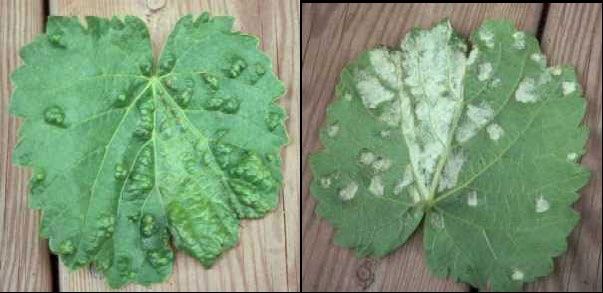
GUIDE TO PEST
MANAGEMENT IN
WINE GRAPES
Nova Scotia Guide to Pest Management in Wine Grapes 2021
[Grapes1-21]

Revised and Updated January 25, 2021 by
Jill MacDonald, Research Associate, Perennia
Francisco Diez, Viticulture Specialist, Perennia

Original Author
Bill Craig, Horticulturist, Perennia

                                   LIABILITY STATEMENT

Recommendations in this guide are given for general information only and do not give the
user the right to use a product in a manner not in accordance with the pesticide label or
Pest Control Products Act. Perennia, by funding and printing this publication, does not offer
any warranty or guarantee and does not assume any liability for crop loss, animal loss,
health, safety or environmental hazard caused by the use of any pesticide or
recommendation in this schedule. Pesticides used in this schedule are products labeled for
the target and crop. This information was retrieved from the Pest Management Regulatory
online Registered Products Database. The list of products presented in this schedule is
intended to be complete, but in no way is guaranteed to be complete. Some of the
products listed may not be available. Trade names are given as a convenience to producers
and are neither an endorsement of the product nor a suggestion that similar products are
not available or effective.

All products listed in this guide are registered for use in Canada; however, foreign markets may
have specific restrictions on which pesticides can be used on the crop they are buying. It is a good
idea to check with the receiving shed or processor you are selling to, for an allowable inputs list.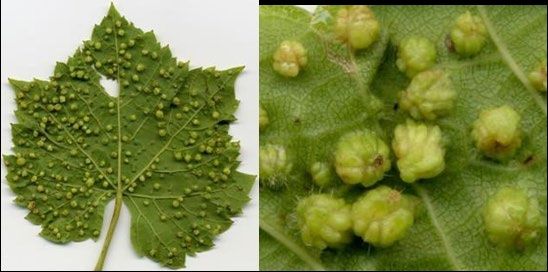
Contents
LIABILITY STATEMENT ................................................................................................................................... 1
PESTICIDE EMERGENCY CONTACT INFORMATION ....................................................................................... 3
ABBREVIATIONS & CONVERSIONS ................................................................................................................ 3
Toxicity table ................................................................................................................................................. 4
Emergency and First-Aid Procedure for Pesticide Poisoning ........................................................................ 4
Table 1: Pesticides listed in this schedule ..................................................................................................... 5
Table 2 : Effectiveness of fungicides for grape disease control. ................................................................... 8
Table 3: Relative disease susceptibility and sensitivity to sulphur and copper. ........................................... 9
Weed Control in Grape Production ............................................................................................................ 10
Table 4: GRAPE WEED MANAGEMENT SCHEDULE. .................................................................................... 10
NOTES ON INSECTS ..................................................................................................................................... 16
LABEL DEFINITIONS ..................................................................................................................................... 18
STAGES OF GRAPEVINE DEVELOPMENT ..................................................................................................... 19
INTEGRATED PEST MANAGEMENT TIPS ..................................................................................................... 20
   Non-chemical pest management strategies ........................................................................................... 20
   Monitoring for insects and diseases ....................................................................................................... 20
Table 5: GRAPE INSECT MANAGEMENT SCHEDULE. ................................................................................... 21
Table 6: GRAPE DISEASE MANAGEMENT SCHEDULE. ................................................................................. 22

                                                                                                                                                                2
PESTICIDE EMERGENCY CONTACT INFORMATION
 Poison Control Centres
 Nova Scotia                        1.800.565.8164 or                   Regional Poison Centre, Halifax,
                                    1.902.470.8161 or 911               NS
 New Brunswick                      911                                 Ask for Poison Information
 Prince Edward Island               1.800.565.8161 or                   Regional Poison Centre, Halifax,
                                    1.902.470.8161                      NS
 Newfoundland                       709.722.1110 or                     Dr. Charles A. Janeway Child
                                    1.866.727.1110                      Health Care Centre, St. John’s,
                                                                        NF

 Environmental Emergencies (Pesticide Spills)
 Transport Canada Regional Operations Centre (24 hours)
 Nova Scotia                                       1.800.565.1633
 New Brunswick                                     1.800.565.1633
 Prince Edward Island                              1.800.565.1633
 Newfoundland                                      1.800.563.9089

ABBREVIATIONS & CONVERSIONS
 Formulation and Measurement Abbreviations
 DF             Dry flowable                          g             gram
 EC or E        Emulsifiable concentrate              kg            kilogram
 L              Liquid                                kPa           kiloPascal
 WDG            Wettable dry granule                  l             litre
 WP or W        Wettable powder                       ml            millilitre

 Label Abbreviations
 PHI                                                  Pre-harvest Interval
 REI                                                  Restricted Entry Interval

 Helpful Conversions*
 kPa X 0.14 = pounds per square inch (psi)            millilitres X 0.035 = fluid ounces
 hectares X 2.47 = acres                              litres X 35 = fluid ounces
 kilograms X 2.2 = pounds                             litres X 0.22 = imperial gallons
 kilograms per hectare X 0.89 = pounds per acre       litres per hectare X 14.17 = fluid ounces per acre
 kilograms per hectare X 0.40 = kilograms per acre    litres per hectare X 0.40 = litres per acre
* Pesticide Units of Measurement

It is not recommended to convert label rates to imperial units because there is a high likelihood of
mathematical errors creeping in to the results. Present day pesticides are formulated to have greater
toxic effects in smaller amounts. Therefore, even small conversion errors can lead to the use of incorrect
dosages (either too high or too low). Use metric – you will be glad you did!

                                                                                                           3
Toxicity table
LD50 (mg/kg) Hazard Rating Relative Toxicity Rating
Above 500 Very low hazard 1
101-500 Low hazard 2
21-100 Moderate hazard 3
11-20 Very high hazard 4
10 and less Extremely hazardous 5
Emergency and First-Aid Procedure for Pesticide Poisoning
Become familiar with the chemicals you are using. Keep a list of common names in case of accidents or
emergencies. This information can be found on product labels cross-referenced in this publication.
If a pesticide has come in contact with the skin or has been spilled on clothing, remove the clothing and
wash the skin thoroughly with soap and warm water.
If a person suspects poisoning from exposure to a pesticide by swallowing, inhalation or contact with
skin or eyes, read the label of the pesticide container and carry out first-aid treatment as suggested.
Immediately after first-aid treatment has been given, wrap the patient in a coat or blanket and rush
him/her to the nearest hospital. Take the list of chemical common names with you and identify the one
being used.
If a person is unconscious or lapses into unconsciousness, call 911 immediately.
Emergency advice on pesticide poisoning is available from the Regional Poison Centre, Halifax, NS.
Phone 1-800-565-8161 (NS & PEI).
4This listing includes all the commercially registered products detailed in the Grape Pest Guide.
Table 1: Pesticides listed in this schedule
Chemical Name Trade name Group Re-entry Days to Disease/Pest Controlled
Time harvest (PHI)
(hrs)
Acetamiprid Assail 4 12 3 Phylloxera
Ametoctradin/ Zampro 40, 45 12 14 Downy mildew
dimethomorph
Bacillus Double Nickel 44 - 0 Powdery mildew, botrytis bunch rot
amyloliquefaciens 55*
Bacillus Serifel 44 4 0 botrytis gray mold (Botrytis cinerea) and
amyloliquefaciens powdery mildew (Erysiphe
necator)
Bacillus subtilis Serenade* 44 - 0 Powdery mildew, botrytis bunch rot
Boscalid Cantus 7 12 14 Powdery mildew
Boscalid + Pristine 7, 11 21 days 1 14 Anthracnose, powdery mildew, downy mildew,
pyraclostrobin black rot and botrytis bunch rot
Carfentrazone-ethyl Aim 14 12 3 Sucker control
Captan Captan/Maestro M 72 7 Black rot, downy mildew, phomopsis cane and
leaf spot
Clothianidin Clutch 4A 12 1 Phylloxera
Copper hydroxide Kocide 2000 M1 48 2 Downy mildew
Copper oxychloride Copper Spray* M1 1 Powdery and downy mildew
Tri-basic copper Copper 53W* M1 1 Black rot, downy mildew, Phomopsis cane and
sulphate Basicop leaf spot
Copper Octanoate Cueva* M1 4 1 Powdery and downy mildew
Cypermethrin Ripcord 400EC 3 - 2 Yellow Jackets or Multicoloured Asian Ladybird
Beetles
Cyprodinil Vangard 9 48 7 Botrytis bunch rot
Cyprodinil + fludioxanil Switch 9, 12 12 7 Botrytis bunch rot
Citric, lactic acid Tivano - 4 0 Downy mildew
5Chemical Name Trade name Group Re-entry Days to Disease/Pest Controlled
Time harvest (PHI)
(hrs)
Dichlobenil Casoron G-4 20 12 - Weed control
Difenoconazole Inspire 3 12, 24 7 Powdery mildew
Dimethenamid Frontier Max 15 24 30 Weed control
Dimethomorph Acrobat 40 12 14 Downy mildew
Diuron Karmer XP or DF 7 12 - Weed control
Fenhexamid Elevate 17 4 7 Botrytis bunch rot
Ferbam Ferbam M - 7 Black rot
Flazasulfuron Chikara 25WG 2 12 75 Weed control
Fluazifop-P-butyl and S- Venture L 1 12 30 Weed control
isomer
Fludioxonil + Miravis Prime 7, 12 12 14 Botrytis bunch rot
pydiflumetofen
Flumioxozin Chateau WDG 14 12 60 Weed control
Fluopyram/pyrimethanil Luna Tranquility 7, 9 24 7 Powdery mildew, botrytis bunch rot
Folpet Folpan M 24 1 Black rot, downy mildew, Phomopsis cane and
leaf spot
Glyphosate Glyphosate 9 12 14 Weed control
Glufosinate ammonium Ignite SN 10 12 40 Weed control
Iprodione Rovral 2 12 Before bunch Botrytis bunch rot
closure
Kresoxim-methyl Sovran 11 48 14 Black rot, powdery and downy mildew
Mancozeb + dinocap Dikar M, U 48 30 Powdery and downy mildew
Mancozeb + zoxamide Gavel M3, 22 48 66 Downy mildew
Mandipropamid Revus 40 12 14 Downy mildew
Mefentrifluconazole Cevya 3 12 14 Powdery mildew
Metiram Polyram M2 - 45 Black rot, downy mildew
Metalaxyl-M & S- Ridomil Gold 4, M 24 66 Downy mildew
isomer, mancozeb MZ
Metrafenone Vivando 50 12, 96 14 Powdery mildew
6Mineral oil Purespray - - - Red mites and powdery mildew
Green Spray Oil
13E
Mono- and dibasic Phostrol 33 12 0 Downy mildew
sodium, potassium, and
ammonium phosphite
Myclobutanil Nova 3 When dry 14 Powdery mildew, black rot, anthracnose
Napropamide Devrinol 50DF 15 12 - Weed control
Paraquat Gramoxone 22 24 - Weed control
Polyoxin D zinc salt Diplomat 5SC 19 - 0 Powdery mildew, grey mold
Potassium bicarbonate Milstop* or - 4 0 Powdery mildew
Sirocco
Pyraclostrobin + Merivon 7, 11 14 Powdery mildew
Fluxapyroxad
Pyrethrins Pyganic - 12 - Aphids, leafhoppers
Pyrimethanil Scala 9 24 7 Botrytis bunch rot
Quinoxyfen Quintec 13 12 14 Powdery mildew
Reynoutria Regalia Maxx* P5 - - Powdery mildew, botrytis bunch rot
sachalinensis
Rimsulfuron Prism SG 2 12 21 Weed control
Sethoxydim Poast Ultra 1 12 30 Weed control
Simazine Princep Nine-T 5 12 - Weed control
Simadex
Simazine
Spirotetrament Movento 23 12 7 Phylloxera
Sulphur Kumulus* M2 24 21 Powdery mildew, erineum mite
Microscopic
Sulphur
Trifloxystroblin Flint 11 5 days2 14 Powdery mildew, black rot
Tea tree oil Timorex Gold* 46 4 2 Powdery mildew, Downy mildew, botrytis bunch
rot
Tetraconozole Mettle 3 12 15 Powdery mildew, black rot
*Permitted substances for organic production but may have restrictions on their use. Check with your certifying body as to their permissible use.
1
For hand labour, otherwise when dry. 2 For hand labour, otherwise 12 hrs.
7Table 2 : Effectiveness of fungicides for grape disease control.
Group Black rot Downy Powdery Botrytis Phomopsis
Mildew Mildew Cane & Leaf
Spot
Cantus 7 0 0 +++ + 0
Captan M ++ +++ 0 + +++
Copper M ++ ++ ++ 0 +
Dikar M, U +++ +++ +++ 0 +
Elevate 17 0 0 + +++ 0
Ferbam M +++ ++ 0 0 +
Flint 11 +++ + +++ ++ +
Folpan M ++ +++ 0 0 +++
Gavel M3,22 ? +++ 0 ? ?
Inspire 3 0 0 +++ 0 0
Kocide 2000 M 0 +++ 0 0 0
Luna 7,9 0 0 +++ +++ 0
Tranquility
Mettle 3 +++ 0 +++ 0 0
125ME
MilStop - 0 0 ++ 0 0
Polyram M 2
+++ +++ 0 0 ?
Pristine 7,11 +++ +++ +++ ++ +
Quintec 13 0 0 +++ 0 0
Nova 3 +++ 0 +++ 0 0
Revus 40 0 +++ 0 0 0
Ridomil 4 + +++ 0 0 +
Rovral 2 0 0 0 ++ 0
Scala 9 0 0 + +++ ?
Serenade 44 ? 0 + ++ ?
Sovran 11 +++ ++ +++ ++ +
Sulphur M 0 0 +++ 0 0
Switch 9,12 0 0 + +++ 0
Vangard 9 0 0 + +++ +
Vivando 50 0 0 +++ 0 0
Zampro 40, 45 0 +++ 0 0 0
Although a fungicide may control several diseases only use fungicides for diseases that are listed on the
product label. Ratings based upon information from OMAFRA Pub. 360 and NY Pest Management Guide
for Grapes.
0 = ineffective
+ = slightly effective/suppression, not recommended for very susceptible cultivars or at critical stages of
infection
++ = moderately effective
+++ = very effective
8Table 3: Relative disease susceptibility and sensitivity to sulphur and
copper.
Susceptibility Sensitivity
Cultivar
BR DM PM Bot Phom Eu CG S Cu
Baco noir +++ + ++ ++ + ++ +++ No ?
Cabernet Franc +++ +++ +++ + ? ? +++ No ?
Cabernet +++ ++ +++ + +++ +++ +++ No ?
Sauvignon
Canadice +++ + + ++ ? ? ++ ? ?
Chancellor + ++ ++ + +++ + +++ Yes +++
Chardonnay ++ +++ +++ +++ +++ ++ +++ No +
Concord +++ ++ ++ + +++ +++ + Yes +
De Chaunac + +++ ++ + +++ +++ ++ Yes +
Einset Seedless +++ + +++ + ? ? + ? ?
Frontenac ++ +++ ++ ++ + ? ? No ?
Gewürztraminer +++ + +++ +++ ? ? +++ No +
Himrod ++ +++ ++ + ? ? ? No ?
L’Acadie + + + + + + ? ? ?
Léon Millot + +++ +++ + + + ? Yes ?
Lucie Kuhlmann ++ + ++ ++ ++ ++ ? ? ?
Marechal Foch ++ + ++ + ++ ++ ? Yes ?
NewYork Muscat + + ++ + + + ? ? ?
Pinot gris +++ +++ +++ ++ ? +++ +++ No ?
Pinot noir +++ +++ +++ +++ ? ? +++ No +
Reliance +++ +++ ++ + ++ ? ? No +
Riesling +++ +++ ++ + ++ ? ? No +
Sauvignon blanc +++ ++ +++ +++ ? ? +++ No +
Seyval ++ + +++ +++ ++ + ++ No +
Vidal + ++ +++ + + + ++ No ?
Key BR= black rot; DM = downy mildew; PM = powdery mildew; Bot = Botrytis; Phom = Phomopsis; Eu =
Eutypa; CG = crown gall; S = sulphur; C = copper
Key to ratings: + = slightly susceptible or sensitive; ++ = moderately susceptible or sensitive; +++ = highly
susceptible or sensitive; No = not sensitive; Yes = sensitive; ? = relative susceptibility or sensitivity not
established.
Slight to moderate sulphur injury may occur even on tolerant cultivars when applied at temperatures of
29˚C or higher, immediately prior to or after application.
Copper applied under cool, slow-drying conditions is likely to cause injury.
9Weed Control in Grape Production
Site preparation before planting is very important when establishing perennial fruit crops like grapes. Grapes are very sensitive to competition in
the first couple of years of establishment so every effort should be made to keep the area within the row, under the vines, weed free.
Before planting, it’s important to do a weed survey and determine if the weed species are annual or perennial. Perennial weeds reproduce
through vegetative means and most effectively treated the summer/fall before planting with a broad-spectrum herbicide like glyphosate.
Annual weeds reproduce through seeds and there may be a significant weed seed bank in your soil that will necessitate you having to control
weeds on a regular basis while your vines are getting established.
The use of cultivation, mulches or cover crops between the rows will aid in water penetration as well as weed control. It’s a good idea when
planting to use milk/juice cartons or grow tubes around each vine to protect the young vines from any herbicide damage especially in the
planting year.
Note: Herbicide rates per hectare/acre refer to the area actually treated with herbicide. Unless specified, apply all treatments in 150 -
300L/ha water.
Caution: Simazine, Karmex, and Devrinol residues, high enough to harm many crops, may persist for several years after removal of the
vineyard.
Table 4: GRAPE WEED MANAGEMENT SCHEDULE.
Weeds/Timing Active Product Rate Notes
Ingredient
Soil Applied Grass Dimethenamid- Frontier 963 ml/ha Bearing and non-bearing grapes.
Herbicides P Max(720g/L) Applied as a single pre-emergent (before weeds emerge)
application directed to the base of the vines. Do not apply during
bud swell, bud break or at time of first flush new growth.
Do not harvest within in 2 years of application on 1st year grapes.
Do not harvest within one year of application on 2nd year grapes.
PRE-Rainfall is required within 10 days of application to achieve
sufficient herbicide activation.
10Single application directed under the vines.
Do not apply by air.
Use a minimum spray volume of 170 L/ha
Do not enter within 24 hours of application.
Apply to weed-free soil, after planting or hilling. PHI = 30 days.
Soil Applied Grass Dichlobenil Casoron G-4 110- Established plantings only.
and Broadleaf (4G) 225Kg/ha PRE – apply to cool moist but unfrozen soil in late fall or spring
Herbicides before weeds emerge. Do not apply if air temperatures are above
10-15°C to avoid injury from volatilization. Apply to dormant
healthy vines only.
Do not apply to vines until they have been established for at least
two full years.
For annual weeds, use 110-175Kg/ha.
For quackgrass and broadleaf perennial weeds, use 175-225kg/ha.
REI- 12 hours
Flumioxazin Chateau 0.28 - 0.42 Established plantings only.
WDG (51.1%) kg/ha Do not apply to grapes established for less than 2 years.
Maximum 2 applications per growing season at least 30 days apart.
Do not apply within 100m of non-dormant pears.
Apply using ground application only.
Moisture required to activate Chateau in soil for residual weed
control.
Do not apply after bud break unless using hooded or shielded
equipment. PHI = 60 days.
REI- 12 hours
Diuron Karmex XP 2.256.75 Established plantings only (at least 3 years old).
Karmex DF kg/ha PRE- Apply as a directed spray to a 1m strip under vines before
weeds emerge. Apply in at least 300L/ha water.
On soils low in clay or organic matter (1-2%), use 2.25-3.25Kg/ha (of
area actually sprayed); on soil high in clay or organic matter use
3.25 – 6.75 Kg/ha.
Apply just prior to germination and growth of annual weeds, usually
in the spring. It may be desirable to make a fall treatment or divide
11Soil Applied Grass Diuron applications equally between fall and spring treatment. Do not
and Broadleaf (Continuted) exceed the above rates per year as injury may result.
Herbicides When a second application is performed, observe a minimum
interval of 90 days between first application and retreatment.
REI- 12 hours
Simazine Princep 4-5Kg/ha Established Plantings only.
Nine –T Pre – Apply after hills are removed but before weeds emerge.
(90wg); Apply in at least 300L/ha water.
Simadex 7.2-9 L/ha Maximum one application per year (Princep Nine-T)
(500g/L); Use higher rates on perennial weeds.
Simazine 7.5-9.4 Use only in vineyards established for at least 3 years.
480 (480g/L) L/ha May be tank mixed with Ignite and Glyphosate.
REI- 12 hours
Flazasulfuron Chikara 150-200 Apply to broadleaf weeds and grasses less than 10 cm tall and
25WG g/ha before tillering of grasses. Use sufficient spray volume to obtain
complete and uniform coverage. Use higher water volumes on
larger weeds. Adjuvant use recommended.
Apply only to 3rd year planted vines and older. Apply only as a
directed spray to the soil beneath the vines to prevent injury to the
foliage and bark of young vines. Use of a protective sleeve is
required for third year vines to minimize injury potential. Do not
apply to areas where roots are exposed or suckers are actively
growing and have not hardened off. Once the application has been
made, the soil surface should not be disturbed. For postemergence
application, use an adjuvant (refer to Additive Use Requirements
section on the label). Rates listed above are for broadcast
application. If making a banded application, see product
information section of the label for calculating appropriate use rate.
Do not apply to stony soils.
Maximum one application per year.
REI: 12 hours PHI: 75 days
12Post Rimsulfuron Prism SG 60 g/ha May be applied twice per year. Make a single application early post-
Emergence Grass 25.0% emergence to actively growing weeds, plus a recommended non-
Herbicides and ionic surfactant at 2L per 1000 L spray solution. Do not apply more
Broadleaf Herbicides than 60 grams per hectare on a broadcast application basis per
year. Use on grapes that have gone through at least one growing
season, and are in good health and vigor. Do not apply within 21
days of harvest.
Post Fluazifop-p- Venture 0.6-2L/ha New, 2nd year non-bearing grapevines and established plantings.
Emergence Grass butyl & S- L (125 g/L) Apply POST to actively growing grasses before tillering. Apply as
Herbicides isomer banded application to the base of the grapevine.
Apply at 0.6L/ha at 2-5 leaf stage of volunteer corn.
Apply at 0.8L/ha at 2-5 leaf stage of volunteer wheat or barley.
Apply at 1L/ha at 2-5 leaf stage of annual grasses (2-4 leaf for
foxtails).
Apply at 2L/ha at 3-5 leaf stage of quackgrass and wirestem muhly.
Apply only once per year.
Grasses emerging after the treatment will not be controlled.
Do not use this product on grapes for export to the U.S.
REI- 12 hours PHI- 30 days
Sethoxydim Poast Ultra 0.32 – Bearing plantings, and non-bearing 1st and 2nd year plantings.
(450 g/L) + 1.1(L/ha) Single Post emergent application.
Merge +0.5-2.0 Apply as a banded application directed to the base of the grape
L/ha vine. Rates will vary dependent on grass species targeted, see label
for details. Targeted grass leaf stages vary by species, see label for
details.
Do not exceed 1.1L/ha. PHI = 30 days.
Post Emergence Carfentrazone- AIM EC 36.5- New and established plantings.
Broadleaf Herbicides ethly plus non- (240g/L) 150ml/ha + Apply POST with a hooded sprayer between the rows.
ionic surfactant plus Agral 2.5L/1000L Apply to actively growing weeds up to 10cm tall.
90 or Or Apply only once per growing season.
Ag-Surf or 1L/1000L) AIM EC may cause crop injury if the spray is allowed to come in
Merge contact with the green bark, leaves, bloom or fruit.
REI- 12 hours, PHI- 3 days
13Non-Selective Glyphosate Glyphosate Established plantings only.
Herbicides and Tank (360 g/L) 2.25–12L/ha For actively growing weeds. Do not apply to coarse, gravely, or
Mix Options (480 g/L) 1.69-9L/ha sandy soil.Do not use on vines less than 3 years old. Direct spray to
(500 g/L) 1.62- avoid leaves and green stems of grapevines. Do not mow or till
8.64L/ha weeds for at least 5-7 days after application – longer if cool. Only
(540 g/L) 1.5-8L/ha weeds emerged at application time will be controlled. Additional
weed control programs will be necessary to control weeds
germinating later. Repeat application to regrowth may be
necessary for complete control. Do not apply closer than 14 days to
harvest.
*Various formulations of Glyphosate are available. Always consult
the product label before using a pesticide.
Glyphosate + Glyphosate Established plantings of at least 3 years ONLY.
Simazine (360 g/L) 2.25–12L/ha Use as a directed spray avoiding leaves, suckers and green bark on
(480 g/L) 1.69-9L/ha vines.
(500 g/L) 1.62- Use higher rates for perennial weeds and heavy weed infestations.
(540 g/L) 8.64L/ha To control emerged weeds with residual control of germinating
1.5-8L/ha annual weeds.
See precautions for glyphosate and simazine.
Princep Do not use within 40 days of harvest.
Nine-T (90wg) 2.5-5Kg/ha
Paraquat Gramoxone 5.5L/ha Established plantings ONLY.
(200 g/L) Apply in 1100 L/ha water. Use on vines established on trellises.
Avoid contact with green bark, leaves or fruit REI- 24 hours
Paraquat + Gramoxone 5.5L/ha Established plantings only.
Napropamide (200g/L) + Add Devrinol to tank first, then agitate and add Gramoxone. Apply
Devrinol DF- 9Kg/ha in 1100 L/ha water. Avoid contact with foliage, fruit, and green
XT (50DF) vine bark.
14Non-Selective Glufosinate Ignite SN 2.7-5 L/ha Established plantings of at least 3 years only.
Herbicides and Tank Ammonium (150g/L) Apply as a directed spray before annual weeds are 30 cm high.
Mix Options Avoid suckers and green bark. Use 110-330L/ha water.
Where weed growth is heavy, use the higher rate and larger water
volume. Do not apply closer than 40 days to harvest. Do not apply
more than twice a year. Do not apply more than 6.7L/ha product
per year.
Glufosinate Ignite 2.7-5 L/ha Established plantings of at least 3 years of age only.
ammonium + (150g/L) + + Use as a directed spray avoiding leaves, suckers, and green bark on
Simazine Princep nine- 4-5Kg/ha or vines. To control emerged weeds with residual control of
T (90WG) 7.2-9L/ha germinating annual weeds. See precautions for Ignite and Simazine.
Or Simadex Do not harvest until 40 days after application.
(500g/L)
15NOTES ON INSECTS
Nova Scotia grape growers are very fortunate in that very few insect pests have reached population
levels requiring control measures. The most commonly observed pests to date have been the grape
Erineum mite and Phylloxera. The occurrences of these pests are still sporadic within Nova Scotia
vineyards. Insecticide should only be applied once a pest has been identified and reached a population
level that will have an impact on the crop and quality of grape produced.
Erineum Mite
In many North American grape growing regions the grape erineum mite is considered to be a minor pest
causing little economic damage. The fact that Nova Scotia grape growers do not apply insecticides to
control other pests may allow for the buildup of this pest. Severe infestations can reduce photosynthesis
and cause early leaf drop. At first glance an infestation may be confused with phylloxera as both
produce bumpy blistering and gall-like formations on the upper surface of the leaf. Once the leaf is
turned over the two are easily distinguished by white hairy erinea resulting from the feeding of the
erineum mite.
Photos from OMAFRA Factsheet.
The only pesticide registered in Canada for erineum mite is sulphur. The timing of treatments is based
upon when erineum mites are first observed which can occur in the prebloom period. Repeated
applications may be required to control this mite. Microscopic Sulphur WP at 3 kg/ha, Kumulus DF at 3.4
kg/ha and Microthiol Disperss at 3.4 kg/ha have registrations for erineum mite. The rate of sulphur to
control erinium mite is only one quarter of the rate used to control powdery mildew. Certain cultivars
exhibit photoxicity symptoms to sulphur which further complicates control of the pest. These three
labels instruct not to apply to Concord, Foch, De Chaunac and van Buren varieties. It is important when
applying sulphur to control erineum mite that it is applied with sufficient water volume to obtain good
coverage on the underside of the leaf.
16Grape Phylloxera
There are two forms of this tiny aphid-like insect, a root form which can be very destructive, and a less
destruction form which creates galls. Many cultivars can withstand extensive galling. The leaf form is
more commonly observed in Nova Scotia. The insect overwinters as an egg under the bark of the vine.
The egg hatches in the spring with the nymph crawling onto the upper surface of a new leaf where it
develops a gall. Once mature the female begins to lay eggs within the gall. Nymphs which hatch from
these eggs will crawl out of the gall and move onto the upper surface of new leaves near the tip of the
vine. The nymphs form new galls and start the process all over again. Several generations can occur
during the growing season.
http://www.ento.okstate.edu/ddd/insects/grapephylloxera.htm
Control
There are several pesticides registered for the control of phylloxera in Canada with Movento 240 and
Clutch being recommended as being the better options for control. Movento 240 SC is systemic, moving
to the roots and growing tips of the vines. It has one drawback, being slow acting, and therefore growers
should apply it as soon as nymphs are observed and not wait until a high number of galls are observed.
Based upon past history and early observation it can be applied at the 20-25 cm shoot stage and later.
The recommended rate is 88-140 mL/ha with the higher rate used for high pest pressure. The minimal
interval between applications is 30 days with a maximum allowable annual application of 920 mL/ha.
The pre-harvest interval is seven days. Clutch 50 WDG was recently registered for phylloxera control on
grapes. Apply at a rate of 140-210 g/ha prior to population reaching damaging levels. If pest pressure
continues apply a second application 14 days later. Do not apply more than two applications per
growing season and do not exceed 420 g/ha per season. The pre-harvest interval is one day. The
product is toxic to bees and should not be applied when bees are present or during bloom.
Additional information: http://www.omafra.gov.on.ca/english/crops/facts/88-125.htm.
17LABEL DEFINITIONS
DAYS TO HARVEST - Is the minimum number of days from the last application of the product to first
harvest. This interval has been set to ensure that any residue of the pesticide left on the fruit at harvest
is within an acceptable tolerance. Read the label and do not spray nearer to harvest than recommended.
TOXICITY TO BEES - If a pesticide must be applied during the bloom period, choose products with the
least toxicity to bees. Spray in late evening or early morning when bees are not present. Spray deposit
should be dry before bees begin foraging. If you have rented bees, notify the beekeeper that you intend
to spray. Give enough advance notice so that the bees can be moved. Do not allow pesticide spray to
drift onto hives. The presence of large numbers of dead bees at the hive entrance may indicate pesticide
poisoning.
TOXICITY TO APPLICATOR - Poisoning as a result of pesticide exposure can result from inhalation,
ingestion (Oral), or absorption through the skin (Dermal). It is essential that protective clothing,
respirator and eye protection are worn when handling products listed as having a high or moderate
toxicity. However, since pesticides may also have adverse effects after long term sublethal exposures, it
is recommended that protective equipment be worn when using all pesticides. Some of the wettable
powder (WP) formulations recommended in this guide are now available in low exposure packaging
(Instapak, Solupak) or low dust formulations such as dry flowable (DF). Use of these products reduces
inhalation exposure during handling.
RESISTANCE MANAGEMENT - The use of some products leads to selection of some pests which are
more tolerant. Current disease concerns are for the development of resistance in the Botrytis blight
fungus to Elevate, Senator and Lance (they are from different chemical families). To slow the
development of resistance, use the products at full rates and rotate with other fungicides from different
chemical families or groups. Avoid application of more than two consecutive sprays of the same
fungicide or fungicides from the same group. If additional protection or control is required, choose a
product from another chemical family. Refer to the labels for more detailed information on resistance
management.
PESTICIDE POISONING - If you suspect poisoning from exposure to a pesticide, consult the label for
immediate first-aid instructions. Transport the person to the nearest hospital or call 911. Take the label
information or the sealed pesticide container with you since it supplies treatment information. The Pest
Control Products Act Number (P.C.P. No.) on the label will enable the attending physician to obtain
specific treatment guidelines from the Regional Poison Centre.
18STAGES OF GRAPEVINE DEVELOPMENT
To help growers accurately time pest management strategies, a classification system of growth stages
has been developed.
Grape Vine – Growth Stages
Bud Swell
First Leaf ~1.25-5 cm shoot length
3-5 leaves unfolded ~10-15 cm shoot length
Shoot Length ~20-25 cm shoot length Trace
Bloom
Post Bloom
Berries ~ pea sized
Berry Touch to Cluster Closure
Veraison (ripening)
19INTEGRATED PEST MANAGEMENT TIPS
Non-chemical pest management strategies
Pesticides should be utilized as a tool of last resort in any cropping system and the grapevine
management system is no different. There are many management decisions that can minimize or reduce
pest pressures, so that pesticide applications can be reduced. This not only reduces environmental risk
but can lower input costs to the grower.
Some studies have shown that creating buffer zones of diverse plant communities (eco-zones) around
fields can also help minimize pest pressures. Certain pest species of insects overwinter, or live, in the
tree line surrounding a field, and a physical barrier may limit accessibility for these insects. With the tree
line pushed back at least 10 meters, the zone can be promoted to grow vegetation that is good habitat
or feeding grounds for beneficial insects (e.g. wild flowers for pollinators, parasites, and predators).
Monitoring for insects and diseases
Monitoring requires visiting vineyards at least once a week throughout the growing season. With a
minimum of equipment, and some experience, you can learn to prevent pests from becoming
unmanageable. Using pesticides only when and where needed is the responsible thing to do and is cost
effective.
Monitoring for insects and diseases is normally done visually (occasionally with a hand lens to magnify
images) by walking throughout the vineyard and randomly selecting vines or leaves to examine. Try to
walk through all areas of the vineyard or divide your scouting in blocks. Generally, you will find diseases
first in areas that tend to be shaded or take longer to dry in the mornings after a heavy dew or rainfall. If
you suspect a disease and would like it identified, you can call one of our Perennia horticulturalists to
help you.
Excellent record keeping is a must for a successful integrated pest management system. All samples
should be labeled with information on location, sample number and date. It is important that records of
pest problems in fields are kept over the years as this can help to understand what is happening in the
field both within the season and among years.
20Table 5: GRAPE INSECT MANAGEMENT SCHEDULE.
Insect Active Product Rate Timing Notes
Ingredient
Erineum Sulphur Microscopic 3 kg/ha Pre-bloom Some varieties are sensitive to sulphur application – please
Mites Sulphur WP or see Table 3. Apply sulphur with sufficient water volume to
Kumulus DF 3.4 kg/ha as soon as obtain good coverage on the underside of the leaf.
mites are Do not use on Concord, Foch, de Chaunac and Van Buren
noticed varieties.
Table grapes - Do not apply later than 1 day before harvest.
Wine grapes - Do not apply later than 21 days before harvest.
Grape Acetamiprid Assail 70 WP 80 g/ha Aerial form Use only 2 applications per season, minimum of 14 days
Phylloxera Aceta 70 WP only apart. REI: 5 days. PHI: 3 days (mechanical harvest); 5 days
(hand harvest).
Clothianidin Clutch 50 140-210 Before If pest populations persist apply again 14 days later – do not
WDG g/ha population apply more than two applications per season and do not
reaches exceed 420 g/ha per season.
damaging PHI: 1 day.
levels *toxic to bees – do not apply during bloom.
Spirotetramat Movento 365-585 When Use higher rate for higher pest pressure. Minimal interval
240 SC ml/ha nymphs between applications is 30 days and a maximum allowable
are first rate of 920 ml per season.
noticed PHI: 7 days.
Yellow Cypermethrin Ripcord 400 150 ml/ha Apply prior Apply in no less than 400 L water per hectare. Ensure enough
Jackets or EC to harvest water volume is used to provide thorough coverage of
Multicoloured when foliage. For hand harvest, maximum of 2 applications & PHI: 7
Asian treatment days. For mechanical harvest, maximum of 3 applications &
Ladybird thresholds PHI: 2 days. Not all grape varieties have been tested. A small
Beetles have been area should be treated before widespread sprays are applied.
reached. Leave a 15-metre buffer zone between sprayed area and any
body of water.
Aphids Pyrethrins Pyganic 2.32-4.65 - Do not reapply more often than every 7 days.
Leafhoppers L/ha Toxic to bees.
21Aphids
Leafhoppers Cypermethrin UP-Cyde 240 ml/ha For Grape Grape Leafhopper and Grape Berry Moth - Additional sprays
2.5EC Leafhopper, should be applied as insects or damage appear. PHI: 7 days.
apply when Do not apply more than 3 times per season with a minimum
insects first of 7 days between applications.
appear. For Multicolored Asian lady beetle and Yellow Jackets (foliar
Grape Berry spray using airblast equipment) – Apply at 245 mL/ha. Apply
Moth, apply in no less than 400 L water per hectare. Ensure enough water
shortly volume is used to provide thorough coverage of grapevine
before foliage. Apply prior to harvest when treatment thresholds
bloom and have been reached, as determined by local monitoring.
repeat Consult local spray calendars or extension specialists for
immediately timing. Repeat application if required. DO NOT USE ON TABLE
after bloom. GRAPES.
Toxic to bees.
Table 6: GRAPE DISEASE MANAGEMENT SCHEDULE.
Disease Active ingredient Product Rate Notes
Phomopsis Captan Maestro 2 kg/ha Fungus is active from bud break through pea-size berries, but the
Cane 80DF majority of infection takes place between bud break and bloom.
and Leaf Supra 1.2 kg/1000 L Apply to susceptible cultivars early if history of phomopsis and it’s
Spot Captan water a wet spring. Use sufficient water volume of water to provide
80WDG complete coverage. Rachises are quite susceptible when cluster
first becomes visible. Apply when new shoots are 1 to 5
centimetres long and again when 10 to 15 centimetres long.
Cannot be used after May 10, 2021.
Maestro 2.0 kg/ha Do not use within 14 days of oil or as tank-mix or sequential
80 WSP applications with products such as Timorex Gold. Maximum 2
applications per year for Phomopsis.
Folpet Folpan 80 1.25 kg/ha in 1000 Apply when new shoots are 2.5 to 5.0cm long, and repeat when
WDG L/ha growth is 10 to 15 cm long. Do not apply within 1 day of harvest.
22Phomopsis Copper Copper 3.0 kg + 6.0 Apply according to local spray calendar recommendations. Add 6
Cane 53W + lime kg/1000 L Kg of hydrated lime per 1000 L. Copper 53W wettable powder
and Leaf cannot be used on French hybrid or vinifera varieties.
Spot
Black Rot If black rot was a serious problem last year begin treatments at the 3-5 leaf stage, otherwise start at shoot length 20-25 cm.
Folpet Folpan 80 1.25 kg/ha in 1000 Apply just before bloom, just after bloom, and in first cover spray.
WDG L/ha Do not apply within 1 day of harvest. Do not apply more than 4
applications per season.
Metiram Polyram DF 2.0 kg/ha in 1000 L Apply in Pre-Bloom, Post-Bloom and First Cover Sprays. Do not
make more than three applications per season. Do not apply later
than 45 days before harvest. Cannot be used after June 21, 2021.
Ferbam Ferbam 76 2.0kg in 1000 L Apply just before bloom, just after bloom, 14 days after bloom
WDG and in supplemental applications as recommended by local
authorities. Do not apply within 7 days of harvest. Cannot be
used after December 14, 2021.
Myclobutanil Nova 40 200 g/ha Begin application at prebloom and continue application on a 14
WSP day schedule during infection periods. PHI: 14 days.
Tryfloxystrobin Flint 50WG 105-140 g/ha Do not apply to Concord grapes. Begin applications when shoots
are 3-9 cm (1-3 in.) in length and continue as needed on a 7-14
day interval. Maximum 4 applications/season. PHI: 14 days.
Kresoxim-methyl Sovran 240 g/ha Apply at 14-day interval.
50WG Maximum 4 applications/season. PHI: 14 days.
Boscalid + Pristine WG 735 g/ha Do not apply more than 6 applications per growing season. Do
pyraclostrobin not apply to Concord Fredonia and like cultivars due to possible
injury. REI: 21 days for hand labour tasks. PHI: 14 days.
Tetraconazole Mettle 292-365 ml/ha Begin first application at 2.5 to 7.6 cm of new shoot growth and
125ME continue at 14-day intervals. Use higher rate under heavy disease
pressure. When heavy disease pressure requires a shorter
Mettle application interval, use alternate chemistries in between Mettle
210ME 174-217 ml/ha 125 ME applications. Max 2 applications/season. PHI: 15 days.
Difenoconazole + Inspire 1475 ml/ha Begin applications prior to disease onset when conditions are
Cyprodinil Super conducive for disease. Apply on a 15 to 21 day schedule. If
disease pressure is high, use the shortest interval.
23Black Rot Copper Copper 3.0 kg + 6.0 Apply according to local spray calendar recommendations. Add 6
53W + lime kg/1000 L Kg of hydrated lime per 1000 L. Copper 53W wettable powder
cannot be used on French hybrid or vinifera varieties.
Powdery If mildew was a problem the previous season start applications as the 3-5 leaf stage, otherwise start at 20-25 cm shoot length.
Mildew Fungicides may control more than one disease – select one that best fits your control program.
Folpet Folpan 80 1.25 kg/ha in 1000 Apply 2 to 3 weeks after bloom and repeat at 2 weeks intervals as
WDG L/ha needed. Do not apply within 1 day of harvest.
Pyraclostrobin + Merivon 0.3 L/ha Begin applications prior to onset of disease development. Use on
Fluxapyroxad a spray interval of 7-14 days, with a maximum of 6 applications
per year. Do not tank mix with any other products. Do not use on
table grapes.
Myclobutanil Nova 40 200 g/ha Begin application at prebloom and continue application on a 21
WSP day schedule. PHI: 14 days.
Tryfloxystrobin Flint 50WG 105-140 g/ha Do not apply to Concord grapes. Begin applications preventively
and continue as needed on a 14-21 day interval.
Maximum 4 applications/season. PHI: 14 days.
Kresoxim-methyl Sovran 240-300 g/ha Can be applied to grapes through pre- and post-bloom for control
50WG of powdery and downy mildew. Apply at 240 g/ha under low to
moderate disease pressure and at 300 g/ha under heavy disease
pressure. Use a 14-day interval under moderate to heavy disease
pressure and a 21-day interval under low disease pressure.
Maximum 4 applications/season. PHI: 14 days.
Boscalid + Pristine WG 420-735 g/ha Do not apply more than 6 applications per growing season. Do
pyraclostrobin not apply to Concord Fredonia and like cultivars due to possible
injury. REI: 21 days for hand labour tasks. PHI: 14 days.
Tetraconazole Mettle 219-365 ml/ha Begin application at prebloom (30.5 - 45.7 cm shoots) and
125ME continue applications using spray intervals up to 21 days in low to
moderate disease pressure. Use a 14-day spray interval when
Mettle disease pressure is severe or conditions are favorable for
210ME 130-217 ml/ha powdery mildew. Maximum of 2 applications per season. PHI: 15
days.
Boscalid Cantus 315 g/ha For powdery mildew control, sprays may begin as of budbreak,
WDG repeat on a 10-14 day schedule. Use the shorter interval when
disease pressure is high. PHI: 14 days.
24Powdery Metrafenone Vivando SC 750 ml/ha Begin applications at bud break prior to onset of powdery
Mildew mildew. Use a 14-21 day spray interval during periods of rapid
growth; if conditions are conducive to high disease pressure use a
14-day interval. For resistance management do not apply more
than 2 consecutive applications of fungicides from the same class
(group U8) in a season, and then alternate with at least one
application of a fungicide with a different mode of action.
Maximum of 6 applications/season. PHI: 14 days.
quinoxyfen Quintec SC 300 ml/ha Use before symptoms appear, will not control established
infections. Do not apply more than 5 times per season.
REI: 12 hours. PHI: 14 days. Cannot be used after June 30, 2021.
Mancozeb+dinocap Dikar 80WP 5.5 kg/ha Apply in the prebloom, postbloom and cover sprays. Repeat
applications for additional powdery mildew control in accordance
with local recommendations. Do not use Dikar in combination
with Zolone on Foch and Chelois as injury may result. When
applying Dikar to Foch use at least 600 L of water per hectare as
more concentrated sprays may cause injury. Do not apply Dikar
under slow drying conditions or temperatures above 27°C as
some injury may result. PHI: 30 days.
Copper Copper 3.0 kg + 6.0 Apply at pre-bloom at 1500 L per ha and at postbloom and in
Spray + lime kg/1000 L cover sprays at 2000 L per ha until mid-August. Do not apply on
Or Seibel varieties. Apply a maximum of 7 applications per year and
Guardsman leave a minimum of 3 days between applications.
Copper
Oxychloride
Copper Octanoate Cueva Use a 0.5% to 2% Do not mix with lime. Certain Vitis vinifera and French hybrid
solution, applied at varieties may be sensitive to copper sprays resulting in marginal
470-940 L per leaf burn. Make test sprays before spraying these varieties.
hectare
Sulphur Kumulus DF 12.6 kg/ha Can be phytotoxic to certain grape cultivars. Do not use on
Microscopic 4.5 kg/1000 L of Concord, Foch, De Chaunac, Van Buren or other sulphur sensitive
sulphur water cultivars. Sulphur sprays will suppress and may fully control
erineum mite.
25Powdery Potassium Milstop 2.8-5.6 kg/ha Use the high rate and short spray intervals when conditions
Mildew bicarbonate 85WP or favour disease development. Complete coverage is required, use
Sirocco a minimum water volume of 500 l/ha. Do not mix with products
that are not compatible with a mildly alkaline solution.
Bacillus subtilis Serenade 1.7-3.3 kg/ha Begin application when new shoots are 1-3 cm high. Make a
Opti repeat application when shoots are 6-10 cm high, and when
shoots are 18-20 cm high, then at 7-10 day intervals thereafter.
Difenoconazole Inspire 292 ml/ha Begin at budbreak and apply on an 11-21 day interval making no
more than 2 sequential applications before alternating to a
fungicide with a different mode of action. Use the shorter interval
when conditions are more conducive to disease, and do not use
more than 6 applications per season. Minimum spray volume of
150 L/ha is recommended. REI: 2 days. PHI: 7 days.
Difenoconazole + Inspire 836 ml/ha Begin at bud break and apply on a 15 to 21 day interval.
Cyprodinil Super
Mineral oil Purespray 10 L/ha Do not apply in less than 1000 l water/ha (1% solution) as
green spray phytotoxicity may result. Make the first application pre-bloom
oil 13E and continue every 10-21 days depending on the level of disease
pressure. Use shorter spray intervals when disease conditions are
severe. PHI is 14 days for table grapes. Oil will remove the bloom
on grapes. Do not tank mix oil and copper more than once per
season and never when fruit is present. Do not use oil within 14
days before or after Captan fungicide. Since not all grape varieties
have been tested, it’s recommended to spray a small area of each
variety to confirm tolerance prior to adoption as a general field
practice.
Bacillus Double Foliar application: Start applications when new shoots are 1-3 cm long. Repeat at 6-
amyloliquefaciens Nickel 55 1-2 kg/ha 10 cm, 18-20 cm, and then at 7-10 day intervals as long as disease
Low disease conditions persist. Under moderate to high disease pressure, or
pressure: when environmental conditions and plant stage are conducive to
0.5 kg/ha-1 kg/ha rapid disease development, use higher label rates (1 to 2 kg/ha),
apply more frequently (every 3 to 7 days) or rotate Double Nickel
55 with other fungicides for improved performance. Lower rates
26Powdery Double (0.5 to 1 kg/ha) may be applied under low disease pressure or to
Mildew Nickel 55 smaller (e.g. newly-emerged) plants.
(Continued)
Bacillus Serifel 0.25-0.5 Begin foliar applications at bud break or prior to onset of disease.
amyloliquefaciens kg/ha Repeat applications if needed on 5 –10 day intervals.
strain MBI 600 Under low-level disease conditions, the minimum application
rates can be used while maximum application rates and the
shorter spray intervals are recommended for severe or
threatening disease conditions. Apply in sufficient water to
ensure thorough coverage of foliage, bloom, and fruit.
DO NOT apply during periods of dead calm.
Reynoutria Regalia 0.125 – Apply preventatively or when disease symptoms first appear in
sachalinensis Maxx 0.25% v/v 500-1500 litres water per hectare after shoot emergence and new
shoots are approximately 1-3 cm in length. Repeat applications at
7- 14 day intervals depending upon crop growth and disease
pressure. When environmental conditions and plant stage are
conducive to rapid disease development, use in a rotational
program with other registered fungicides.
fluopyram/ Luna 600 ml/ha Begin applications preventatively and continue as needed on a 7-
pyrimethanil Tranquility 14 day interval. Do not apply more than 3 applications to control
powdery mildew if fewer than 12 fungicide applications are made
in a season. Where 12 or more fungicide applications are made in
total, a maximum of 4 applications of Group 9 containing
fungicides can be applied per season. Do not exceed 4 L per
hectare per season. To limit the potential for development of
disease resistance to these fungicide classes do not make more
than 2 sequential applications of Luna Tranquility or any Group 7
or Group 9 containing fungicide before rotating with a fungicide
from a different Group. PHI: 7 days.
27Powdery Mefentrifluconazole Cevya 190 – 250 ml/ha Begin applications of Cevya prior to disease development. Apply
Mildew an additional application at an interval of 14 days if disease
persists or weather conditions are favourable for disease
development. Under high disease pressure and during rapid
growth, use the higher rate. DO NOT apply more than 1.125 L/ha
per year. DO NOT enter or allow worker entry into treated areas
during the restricted entry interval (REI) of 35 days to perform
cane turning and girdling in table grapes.
Tea tree oil Timorex 1.5 – 2.0 L/ha Do not tank-mix or alternate with Supra Captan, Maestro or
Gold sulphur products. See label for precautions on compatibility.
Polyoxin D Zinc Salt Diplomat 259 – 926 ml/ha Apply as a foliar spray in sufficient water to provide thorough
5SC coverage of foliage (and fruit when present). For Powdery
mildew, begin as a preventative application when conditions
favour disease development and continue on a 7-14-day interval
as needed to maintain control. Do not apply more than 150g
a.i./ha/season. PHI: 0 day.
Downy Fungicides may control more than one disease; select one that best fits the control program. Refer to table for options.
Mildew Captan Maestro 2 – 3.5 kg/ha Apply just before bloom, just after bloom and in first cover. For
80DF downy mildew, an additional application 2 to 3 weeks later may
Supra 1.2 – 1.5 kg/1000 L be needed. Do not apply within 7 days of harvest. Cannot be used
Captan water after May 10, 2021.
80WDG
Maestro 2.0 kg/ha Do not use within 14 days of oil or as tank-mix or sequential
80 WSP applications with products such as Timorex Gold. Maximum of 1
application per year for Downy Mildew.
Folpet Folpan 80 1.25 kg/ha in 1000 Apply just before bloom, just after bloom, and in first cover spray.
WDG L/ha Do not apply within 1 day of harvest. Do not apply more than 4
applications per season.
Metiram Polyram DF 2.0 kg/ha in 1000 L Apply in Pre-Bloom, Post-Bloom and First Cover Sprays. Do not
make more than three applications per season. Do not apply later
than 45 days before harvest. Cannot be used after June 21, 2021.
28Downy Kresoxim-methyl Sovran 240-300 g/ha Can be applied to grapes through pre- and post-bloom for control
Mildew 50WG of powdery and downy mildew. Apply at 240 g/ha under low to
moderate disease pressure and at 300 g/ha under heavy disease
pressure. Use a 14-day interval under moderate to heavy disease
pressure and a 21-day interval under low disease pressure.
Max. 4 applications/season. PHI: 14 days.
Boscalid + Pristine WG 675-735 g/ha Do not apply more than 6 applications per growing season. Do
pyraclostrobin not apply to Concord Fredonia and like cultivars due to possible
injury. REI: 21 days for hand labour tasks. PHI: 14 days.
Mancozeb+dinocap Dikar 80WP 5.5 kg/ha Apply in the prebloom, postbloom and cover sprays. Do not use
Dikar in combination with Zolone on Foch and Chelois as injury
may result. When applying Dikar to Foch use at least 600 L of
water per hectare as more concentrated sprays may cause injury.
Do not apply Dikar under slow drying conditions or temperatures
above 27°C as some injury may result. PHI: 30 days.
Mancozeb + Gavel 75DF 2.25 kg/ha Application should start when new shoots are 1 to 4 cm long,
zoxamide repeat at 8 to 12 cm and at 20 to 25 cm. Continue applications on
a 7-10-day interval when conditions are favourable to disease
development. Max. 6 applications per season. PHI: 66 days.
Metalaxyl-m and Ridomil 2.5 kg/ha Make only one application per year as a pre-bloom spray.
mancozeb Gold MZ PHI: 66 days.
68WP
Mandipropamid Revus SC 500 ml/ha The use of a non-ionic adjuvant (0.25% v/v) is recommended.
Apply prior to disease development. Max. 4 applications per
season.
Copper Copper 3.0 kg + 6.0 Apply at pre-bloom at 1500 L per ha and at postbloom and in
Spray + lime kg/1000 L cover sprays at 2000 L per ha until mid-August. Do not apply on
Or Copper Seibel varieties. Apply a maximum of 7 applications per year and
53W or leave a minimum of 3 days between applications.
Guardsman
Copper
Oxychloride
29Downy Copper hydroxide Kocide 2000 1.6 kg/ha Apply product in 500-1400 l/ha of water. Make one application
Mildew every 7-14 days starting at bud break with subsequent
applications throughout the season depending on disease
severity, up to a maximum of 7 applications per year.
Note: foliage injury may occur on copper sensitive varieties such
as Concord, Delaware, Niagara and Rosette. Always test for
sensitivity. The addition of 454-1360 g hydrated lime per 454 g of
Kocide 2000 may reduce phytotoxicity. PHI: 1 day.
Copper Octanoate Cueva Use a 0.5% to 2% Do not mix with lime. Certain Vitis vinifera and French hybrid
solution, applied at varieties may be sensitive to copper sprays resulting in marginal
470-940 L per leaf burn. Make test sprays before spraying these varieties.
hectare
Citric/Lactic Acid Tivano 12-16 L/ha Partial suppression. Under conditions of moderate to high disease
pressure, use the higher rate and shorter application intervals.
For maximum effectiveness, apply prior to, or at the early stages
of disease development. Apply in sufficient volume (200 l/ha) to
ensure full coverage for effective control. Addition of a surfactant
can increase coverage and ultimately effectiveness.
Dimethomorph Acrobat 450 g/ha Acrobat MUST be tankmixed with another fungicide registered for
50WP downy mildew in grapes. Begin applications prior to disease
infection and repeat at 7-10-day intervals – shorter interval if
disease pressure is high. For resistance management do not
apply more than 2 consecutive applications of fungicides from the
same class (group 40) in a season, and then alternate with at least
one application of a fungicide with a different mode of action. Do
not use more than 4 applications per season. PHI: 14 days. REI:
12 days for hand labour tasks.
Ametoctradin / Zampro 0.8-1.0 L/ha Begin applications prior to disease development and continue on
Dimethomorph a 7-10-day interval. Use the higher rate and shorter interval when
disease pressure is high. The addition of a spreading/ penetrating
adjuvant is recommended to improve disease control
performance. Do not make more than two sequential applications
of Zampro before alternating to another effective fungicide with a
different mode of action for at least one application. Do not enter
30Zampro treated areas for cane turning within 20 days after application; or
(Continued) for training, thinning or hand pruning within 12 days after
application. For all other activities in grapes, do not enter treated
areas within 12 hours after application. DO NOT use less than 200
litres of water per hectare.
Mono- and dibasic Phostrol 2.9-5.8 L/ha Due to varietal sensitivity, determine crop sensitivity prior to use.
sodium, potassium, For preventative control of downy mildew, begin foliar
and ammonium applications when conditions favouring disease development
phosphites exist and continue on a 7-day interval, when required. Apply in a
minimum of 500 L water/ha ensuring thorough coverage of the
foliage. May be applied up to the day of harvest. Use the higher
rate when disease pressure is moderate to high. Maximum of 4
applications/season.
Tea tree oil Timorex 3 – 4 L/ha Suppression only. Do not tank-mix or alternate with Supra
Gold Captan, Maestro or sulphur products. See label for precautions
on compatibility.
Mono- and Rampart 2.5-5 L/ha For suppression of downy mildew (Plasmopara viticola):
dipotassium salts of Apply at 1-3-week intervals, using the higher rate and shorter
phosphorous acid interval when disease pressure is severe. The suggested water
volume is 500 L/ha when the plants are first starting to grow and
1000 L/ha when leaves, vines and fruit increase the surface area
of the plant. DO NOT make more than five applications per
season on a given area. DO NOT apply to plants that are
DORMANT or HEAT STRESSED. To avoid undesirable copper
phytotoxicity, DO NOT apply as foliar to plants treated with
copper based compounds at less than 20 day intervals. Allow
foliage to completely dry after application. DO NOT apply when
conditions favour wet tissue for prolonged periods (> 4 hours).
PHI: 1 day
Botrytis Direct spray to the fruiting zone of the grape canopy. Use at least 1000 L of water to provide good coverage. Susceptible
Bunch Rot cultivars, vinifera and hybrids may require more than 1 application during the bunch closing period. If late summer, early fall
weather conditions are wet and humid, additional fungicide applications may be required to control botrytis during this
period (especially important for late harvest for ice wine).
31You can also read


