High LET-Like Radiation Tracks at the Distal Side of Accelerated Proton Bragg Peak - Frontiers
←
→
Page content transcription
If your browser does not render page correctly, please read the page content below

ORIGINAL RESEARCH
                                                                                                                                                published: 10 June 2021
                                                                                                                                         doi: 10.3389/fonc.2021.690042

                                              High LET-Like Radiation Tracks at
                                              the Distal Side of Accelerated Proton
                                              Bragg Peak
                                              Dakota Horendeck 1†, Kade D. Walsh 1†, Hirokazu Hirakawa 2, Akira Fujimori 2,
                                              Hisashi Kitamura 3 and Takamitsu A. Kato 1*
                                              1Department of Environmental & Radiological Health Sciences, Colorado State University, Fort Collins, CO, United States,
                                              2National Institute of Radiological Sciences, National Institutes for Quantum and Radiological Science and Technology,
                                              Chiba, Japan, 3 Radiation Emergency Medical Assistance Team, National Institutes for Quantum and Radiological Science
                                              and Technology, Chiba, Japan

                           Edited by:
                                              Proton therapy is a type of hadron radiotherapy used for treating solid tumors. Unlike
               Sandeep Kumar Shukla,          heavy charged elements, proton radiation is considered to be low LET (Linear Energy
 Institute of Nuclear Medicine & Allied
                                              Transfer) radiation, like X-rays. However, the clinical SOBP (Spread Out Bragg Peak)
                Sciences (DRDO), India
                                              proton radiation is considered to be higher in relative biological effectiveness (RBE) than
                       Reviewed by:
                   Pradeep Goswami,           both X-ray and their own entrance region. The RBE is estimated to be 1.1–1.2, which can
 Institute of Nuclear Medicine & Allied       be attributed to the higher LET at the SOBP region than at the entrance region. In order to
               Sciences (DRDO), India
                    Sunil Dutt Sharma,
                                              clarify the nature of higher LET near the Bragg peak of proton radiation and its potential
     Bhabha Atomic Research Centre            cytotoxic effects, we utilized a horizontal irradiation system with CHO cells. Additionally,
                          (BARC), India
                                              we examined DNA repair mutants, analyzed cytotoxicity with colony formation, and
                      Walter Tinganelli,
  GSI Helmholtz Center for Heavy Ion          assessed DNA damage and its repair with g-H2AX foci assay in a high-resolution
                   Research, Germany          microscopic scale analysis along with the Bragg peak. Besides confirming that the
                   *Correspondence:           most cytotoxic effects occurred at the Bragg peak, extended cytotoxicity was observed
                     Takamitsu A. Kato
         Takamitsu.Kato@Colostate.edu
                                              a few millimeters after the Bragg peak. g-H2AX foci numbers reached a maximum at the
     †
      These authors have contributed
                                              Bragg peak and reduced dramatically after the Bragg peak. However, in the post-Bragg
                 equally to this work         peak region, particle track-like structures were sporadically observed. This region
                                              contains foci that are more difficult to repair. The peak and post-Bragg peak regions
                     Specialty section:
                                              contain rare high LET-like radiation tracks and can cause cellular lethality. This may have
           This article was submitted to
                     Radiation Oncology,      caused unwanted side effects and complexities of outputs for the proton
                 a section of the journal     therapy treatment.
                   Frontiers in Oncology

              Received: 02 April 2021         Keywords: DNA damage, proton radiotherapy, linear energy transfer, Bragg peak, gamma-H2AX
              Accepted: 10 May 2021
             Published: 10 June 2021

                              Citation:
                                              INTRODUCTION
Horendeck D, Walsh KD, Hirakawa H,
  Fujimori A, Kitamura H and Kato TA
                                              Proton therapy (PT) is a type of hadron radiotherapy for treating mainly solid tumors (1).
(2021) High LET-Like Radiation Tracks
      at the Distal Side of Accelerated
                                              Accelerated protons have a unique dose distribution along their path due to the nature of
                    Proton Bragg Peak.        hadron radiation. The initial radiation dose is small at the entrance region. However, when
             Front. Oncol. 11:690042.         protons reach the end of their path, all of the energy is deposited in a region known as the Bragg
      doi: 10.3389/fonc.2021.690042           peak (2). In the post-Bragg peak region, a small amount of dose is produced by the reaction products

Frontiers in Oncology | www.frontiersin.org                                          1                                          June 2021 | Volume 11 | Article 690042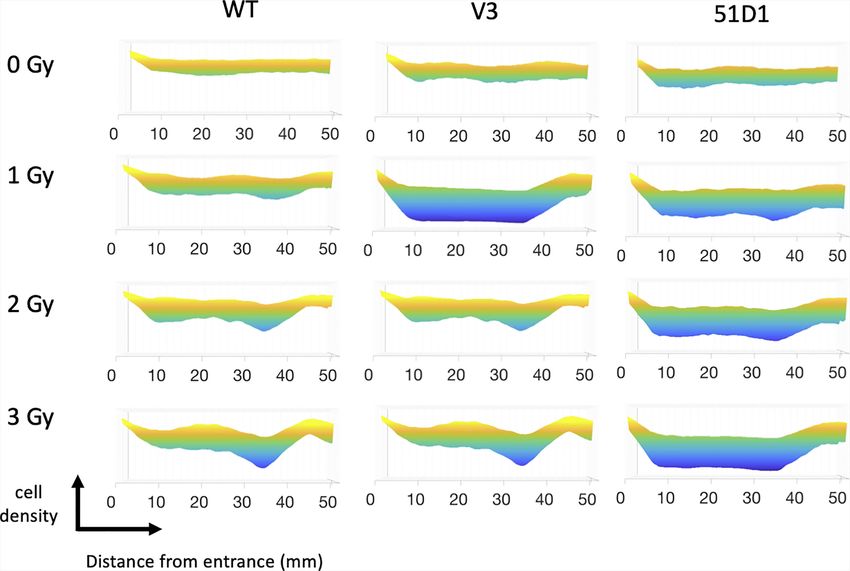
Horendeck et al.                                                                                                       DNA Damage Proton Bragg Peak

(2). Therefore, protons can target tumors located in the body                  joining repair deficient) (32) and 51D1 (Rad51D, homologous
without harming the surrounding normal tissues. In general,                    recombination repair deficient) (33) were kindly supplied by Dr.
hadron radiation has a superior dose distribution than                         Larry Thompson at the Lawrence Livermore National Laboratory
conventional photon radiation therapy (3). Among hadron                        (Livermore, CA, USA). Cells were maintained in Alpha-MEM
radiation, proton radiation has less of a tail region than                     (ThermoFisher, Waltham, MA) with 10% heat inactivated Fetal
carbon-ion radiotherapy and less uncertainty for side effects                  Bovine Serum (Sigma, St. Louis, MO), antibiotics (Anti-Anti;
due to the higher biological effectiveness of carbon ion                       Invitrogen, Grand Island, NY) and were cultured in 37°C
radiotherapy (4). Therefore, PT is the preferred modality for                  incubators with 5% CO2 and humidity. We utilized CHO cells
patients with younger ages to avoid potential secondary tumors                 rather than human cells for the following reasons (1): colony size
(5, 6). However, the proton beam can contains neutron                          and shape: CHO cells produce dense, tightly packed colonies and the
contamination and scattered particles, leading to poorer beam                  colony shape of CHO cells is very circular. On the other hand,
profile (7). Unexpected side effects were recently reported after               colonies of many cells of human origin often spread flat and large and
PT, such as brain injury (6, 8–11).                                            form uneven shapes. In this manuscript, the location of survival
     The proton beam has less tail regions than carbon-ions (12, 13),          colonies has to be accurately recorded. Therefore, using CHO cells
but utilizing a computer simulation by Monte Carlo calculation                 was of the utmost importance.
suggested some dose distribution after the Bragg peak (14, 15). These
tail regions in the proton beam contain relatively high LET particles in
a range up to 10 keV/mm, but up to 30 keV/mm (16) or 40 keV/um
                                                                               Irradiation
                                                                               Proton beam irradiation was conducted at the QST (National
(17) were also reported. The LET range around 30–40 keV/mm is still
                                                                               Institutes for the Quantum and Radiological Sciences and
not considered as high as the biological maximum LET value of 100
                                                                               Technology) in Chiba, Japan. Protons were accelerated to 70
keV/mm, but it can cause a significant increase of relative biological
                                                                               MeV using the NIRS-930 cyclotron (24). Proton beam was
effectiveness (RBE). In our previous studies, carbon-ion
                                                                               delivered for the circular field of 7 cm diameter with 95%
monoenergetic beams with LET values between 13 and 30 keV/mm
                                                                               uniformity. Dose rate was set at 3 Gy/min. Monoenergetic 70
could produce RBE values of 1.1–1.5 (18, 19). Besides RBE, other
                                                                               MeV protons have a LET value of 1 keV/mm on entrance.
important cellular responses such as the oxygen enhancement ratio
                                                                               Exponentially growing cells were irradiated at room
(OER) can also be slightly affected by radiation within this range of
                                                                               temperature. Dosimetry was carried out with a Markus ion
LET (18). LET values in the proton entrance region are approximately
                                                                               chamber (PTW 23343, PTW, Freiburg GmbH, Germany) with
1 keV/mm and cannot result in high RBE or low OER (20). Currently,
                                                                               the container filled with water or complete cell culture media.
the RBE of clinical proton beams in the proton SOBP region is
                                                                               The LET values were calculated by SRIM (Stopping and Range of
estimated to be approximately 1.1 to 1.2 (7, 21–23).
                                                                               Ions in Matter) program from the range of the proton beam (16).
     In order to clarify the true nature of the proton RBE from
                                                                                  Irradiation was carried out as previously described (28)
biological responses at the Bragg peak and the surrounding area, a
                                                                               (Figure 1). Prior to irradiation, cell culture flasks or SlideFlasks
position dependent analysis was carried out with 0.5 mm to a few
                                                                               were placed upright with the capped end opposite to the proton
millimeter increments to cover the proton beam paths (24–27). We
                                                                               beam source. The thickness of the flask and SlideFlask was 1 mm
utilized a horizontal irradiation system, which we previously
                                                                               of polystyrene, which is equivalent to water thickness of
developed (28). This irradiation system can visually show cellular
                                                                               1.0368 mm (34). Therefore, the analysis started 1 mm from the
cytotoxic locations in the flasks. Additionally, we combined it with a
                                                                               proton entrance for cell survival analysis. The geometric location
microscopic analysis to clarify DNA damage and distribution near
                                                                               of the SlideFlask was matched with a micrometer and an M
the Bragg peak to detect any specific changes in this narrow area.
                                                                               Processor (LASICO, Los Angeles, CA) geometric recorder.
Interestingly, DNA damage with track structures produced by
protons and fragments can be a good indicator of energy
deposition/LET of the fragments (29). Without using expensive                  Colony Formation and Manual Colony
deconvolution software or super high-resolution microscopy,                    Distribution Analysis
clustered foci can be denoted as a particle track-like structures by           Two hours before irradiation, 10,000 cells were plated onto a T25
using this method (30, 31). Monoenergetic proton beams in this                 flask, which has 25 cm2 of growing area to produce a density of
study will provide clear dose and LET distribution along their path.           an average of four cells per mm2. After irradiation, cells were
The findings in this study will provide micro-bio-dosimetry analysis            disturbed minimally during transportation from the irradiator to
for the biological significance of the proton beam.                             the incubator and kept in an incubator for 8 days to form
                                                                               colonies. Colonies were fixed and stained 8 days later using
                                                                               100% ethanol followed by 0.1% crystal violet. Macroscopic
MATERIALS AND METHODS                                                          colonies containing more than 50 cells were marked as
                                                                               survivors (35). The cellular attachment was confirmed after
Cell Culture                                                                   testing medium changes at different times. No colonies were
CHO wild type (CHO 10B2) was kindly supplied by Dr. Joel Bedford               observed at the highest dose Bragg peak region, which supports
of Colorado State University (Fort Collins, CO, USA). DNA repair               that there were no-floating cells during the trip from irradiation
deficient CHO mutants, V3 (DNA-PKcs, non-homologous end                         to incubation.

Frontiers in Oncology | www.frontiersin.org                                2                                    June 2021 | Volume 11 | Article 690042
Horendeck et al.                                                                                                                          DNA Damage Proton Bragg Peak

               A                                                                    B

              C

                                                                                    D
                                                                                                                        E

 FIGURE 1 | Colony formation after horizontal proton irradiation. (A) Proton irradiation set-up and dose distribution measurement and calculated LET values of
 protons from the entrance, Bragg peak, and post-Bragg peak. The black lines indicate relative doses in water; the blue points indicate relative doses in cell culture
 media, and the red line indicates the calculated LET values. (B) Representative images of colony distribution after 0–3 Gy of initial proton irradiation to CHO wild type,
 V3, and 51D1 cells. The proton beam traveled from left to right. (C) Cell survival score after 0–3 Gy of initial proton irradiation to CHO wild type, V3, and 51D1 cells.
 Dashed lines represent the unirradiated control. (D) Heat map of cytotoxicity after proton radiation. Maximum cytotoxicity was observed at 38 mm with 35–41 mm
 from the entrance. The first 1 mm represents the flask wall. The right bar, scaled 0–4, indicates that a cell survival of 0 represents cell death, while 4 indicates the
 highest cell survival. (E) Colony reappearance range in different radiosensitive cells. Error bars indicate the standard error of the means. * means statistically
 significant differences (P < 0.05).

   For a rough geometrical analysis of colony distribution,                              Digital Colony Distribution Analysis
locations of survivors were recorded with a ruler. The flasks                             With MATLAB
used have a wall that is 1 mm thick. From the end of the flask, the                       To eliminate the risk of subjective analysis of manual counting,
proton beam entry side for every 1 mm of colony existence was                            three-dimensional surface plots were created using MATLAB
judged and recorded from the entrance up to 50 mm. Five lines                            software. Flasks were imaged with the BIO-RAD ChemiDoc
were analyzed per flask. The survival score was defined as the                             chemiluminescent imager (BIO-RAD, Hercules, CA) via
presence of colonies at each distance. Five evenly different                             ImageLab 2.0.1 software (BIO-RAD, Hercules, CA) under epi-
locations were analyzed with a ruler for the presence or                                 white, trans-white illumination utilizing a copper stain emission
absence of colonies. The survival score of five indicated the                             filter. These images were visualized using intense bands and
representation of all of the colonies that survived. The colony                          converted into black and white .JPG formats. The files were
distribution was presented in graphs and in a heat map with                              cropped to exclude ridges of the T-25 flasks and narrowing neck of
Graphpad Prism 8 software (GraphPad, La Jolla, CA, USA).                                 the bottle. These images were entered into an executable script
   In order to evaluate the cytotoxic range of the proton beam                           created previously (28) via the MATLAB software
and maintain a fine geometrical analysis of the colony                                    (MATHWORKS, Natick, MA). The script allows .JPG files to be
distribution, the reappearance of colony formation following                             analyzed by pixel shade to create three-dimensional surface plots
the Bragg peak was recorded with a ruler. Colony reappearance                            that can be adjusted to create virtual cell survival plots.
was defined as the average distance from the entrance for the first
observable colonies after the Bragg peak. Thirteen lines were                            DNA Damage Distribution Analysis
analyzed for each flask to obtain a sensitive analysis of the                             In order to estimate proton irradiation induced DNA damage
extension of the cytotoxic range.                                                        and repair, g-H2AX foci were used for a DNA double strand

Frontiers in Oncology | www.frontiersin.org                                          3                                           June 2021 | Volume 11 | Article 690042
Horendeck et al.                                                                                                    DNA Damage Proton Bragg Peak

break marker (36–38). CHO wild type cells were plated on a                   (Figure 1B). The cell survival score test and heat map analysis
SlideFlask (ThermoFisher) the day before irradiation. This did               presented that CHO wild type had maximum cytotoxicity
not change the cell cycle distribution compared to re-plating                between 37 and 39 mm, where the lowest survival scores were
2 h before irradiation. At 30 min and 24 h after irradiation,                found (Figures 1C, D). At 3 Gy of initial irradiation, elevated
cells were fixed in 4% paraformaldehyde for 15 min, washed                    cytotoxicity was observed from 34 to 39 mm. There are no clear
three times in PBS for 10 min each, permeabilized for 5 min in               signs of cellular cytotoxicity after 41 mm for the CHO wild type.
0.2% Triton X-100, and blocked with 10% goat serum in PBS                    Radiosensitive DNA repair deficient mutants V3 and 51D1
overnight at 4°C. The cells were incubated with anti-g-H2AX                  showed an even greater reduction of surviving colonies.
mouse monoclonal antibody (Upstate, Charlottesville, VA) for                 Overall, they denoted the extension of the cytotoxic range. At
1 h, washed three times in PBS for 10 min each, and incubated                40 mm, the survival scores decreased a statistically significant
with Alexa Fluor-conjugated goat anti-mouse secondary                        amount compared to the un-irradiated control (P < 0.01).
antibody (Molecular Probes, Eugene, OR) for 1 h at 37°C.                         Additionally, the extension of the cytotoxic range was
Cells were washed four times in PBS for 10 min each and                      analyzed more precisely based on the reappearance of colonies
mounted by using DAPI in Prolong Gold (Molecular Probes).                    after the Bragg peak (Figure 1E). CHO wild type showed the
Multi-dimensional fluorescence images were captured by using                  reappearance of colonies at 38.5 mm for 1 Gy and 39.5 mm for 3
a Zeiss Axioplan fluorescent microscope (Zeiss, Jena, Germany)                Gy. Statistically significant extension was observed between them
with a motorized z-stage and CoolSNAP HQ Cooled CCD                          (p < 0.05). 51D1 also showed reappearance of colonies at
camera (Photometrics, Tucson, AZ) and Metamorph software                     3.93 mm for 1 Gy and 40 mm for 3 Gy, and increased doses
(Molecular Devices, San Jose, CA). The microscope was                        extended the cytotoxic range with statistical significance (p <
equipped with an M Processor (LASICO, Los Angeles, CA)                       0.05). Additionally, the location of reappearance for 51D1 cells
to record the geometric location of slides.                                  was extended compared to the CHO wild type (p < 0.05). V3
    Images were captured every 3.69 mm from the entrance of the              showed reappearance of colonies at 40 mm for 1 Gy with
protons to near the Bragg peak and every 0.46 mm or 0.92 mm                  statistically significant extension compared to the CHO wild
from the Bragg peak to the post-Bragg peak. At each data point,              type, but 3 Gy of initial irradiation did not extend the
the number of g-H2AX per cell was manually obtained from at                  reappearance of colony location. This geometric recording of
least 30 cells per experiment for the quantitative analysis. In              the survival analysis data showed that proton induced cellular
order to investigate the repair-ability of foci at the different             lethality was produced beyond the Bragg peak. The additional
depths, the residual foci number was divided by the initial foci             lethality was observed in the 39 to 40.5 mm region. Since double
number. A track-like structure of DNA damage distribution was                strand break repair deficient mutants showed additional
visually observed as a solid or dashed line of foci, which was also          cytotoxicity compared to repair proficient wild type cells,
obtained quantitatively, per cell to estimate intermediate-high              involvement of DNA double strand break formation is
LET radiation induced damage.                                                suggested. Since V3 did not show any additional cytotoxicity
                                                                             after 2Gy, it may suggest that the “dose” of fragments causing
Statistical Analysis                                                         DNA damage are rapidly decreased after the end of the
Experiments were conducted independently three times. The                    Bragg peak.
survival score was obtained from five locations. The colony                       The survival analysis was confirmed with a digital image
reappearance was obtained from 13 locations, and at least 30                 analysis to avoid any subjective colony counting (Figure 2). This
cells were analyzed for foci analysis. All experimental data was             analysis is based on the survived cellular density, not the
analyzed via Prism 8 software. One-way analysis of variance                  clonogenic activity measured by colony formation as manual
(ANOVA) and Dunnett’s multiple comparison test were                          scores. Ultimately, while survivor colonies provide cellular
conducted for statistical significance. P-values of
Horendeck et al. DNA Damage Proton Bragg Peak
FIGURE 2 | MATLAB image analysis of cell survival after proton irradiation. Yellow color indicates more cells; blue color indicates less cells. Three flasks were
merged for analysis.
A
B
FIGURE 3 | g-H2AX foci after 1 Gy of proton beam irradiation for CHO wild type cells. (A) Representative images of foci number and patterns at the specific
distance for CHO wild type cells after proton 1 Gy irradiation. Two images were chosen for each distance. (B) Representative images of foci alignment like a track
structure for CHO wild type cells after 1 Gy of proton beam. Green signals indicate g-H2AX foci. Blue signals are nuclei stained with DAPI. Arrows indicate track like
structures of foci distribution.
Frontiers in Oncology | www.frontiersin.org 5 June 2021 | Volume 11 | Article 690042Horendeck et al. DNA Damage Proton Bragg Peak
A B
C D
FIGURE 4 | Analysis of g-H2AX foci after proton beam irradiation for CHO wild type cells. (A) Initial DNA damage 30 min after 1 Gy of irradiation. (B) Residual DNA
damage 24 h after 1 Gy of irradiation. (C) Fraction of residual DNA damage obtained by residual foci number divided by initial foci number. (D) Track like foci pattern
formation at 30 min after irradiation. Vertical lines indicate the peak of Bragg peak at 39.75 mm of initial foci formation. Horizontal line indicates the fraction of residual
foci of 0.05. Error bars indicate the standard error of the means. * indicates statistically significant differences (P < 0.05).
g-H2AX Foci Distribution Beyond Bragg approximately two foci per cell were observed and no
Peak of Proton Beam statistically significant increase was observed compared to the
DNA damage, especially in the form of DNA double strand foci number of the control. At the Bragg peak region, 39.7 mm, a
break, is the most reasonable way to cause cytotoxicity beyond statistically significant greater number of foci than the entrance
the Bragg peak of the proton beam. The fragments of targets were observed as 6.0 foci per cell (P < 0.05). Beyond the Bragg
including proton, neutron and electrons can cause ionization and peak, a noticeably greater number of foci were seen compared to
DNA breaks (2). Therefore, DNA damage was quantitatively or the initial foci, which rapidly decreased after the Bragg peak.
qualitatively analyzed, with number and distribution of g-H2AX Track-like foci alignments were not observed in the cells 24 h
foci at the specific location corresponding to the proton beam after irradiation.
path (Figure 3A). Track-like line alignments were sporadically in The greater number of residual foci may be simply attributed
10–30% of cells observed near the Bragg peak, especially between to the higher doses initially irradiated near the Bragg peak. In
39 and 42 mm, where clear line-like foci alignment was order to normalize and obtain a fraction of residual foci, we
visible (Figure 3B). divided the residual foci number by the initial foci number
For the initial DSB formation after 1 Gy, g-H2AX foci (Figure 4C). These un-repaired residual foci are highly
formation was analyzed 30 min after irradiation (Figure 4A). associated with complex or clusters of DNA damage that can
From the entrance of the proton beam to 34.2 mm, the number resemble HZE (high atomic number and energy) particle
of g-H2AX foci was steady at approximately 30 foci per cell. At irradiations. The fraction of residual foci was approximately
the Bragg peak region, 49 foci per cell at 37.9 mm and 64 foci per 0.01 to 0.1 at the entrance region. The fraction of residual foci
cell at 39.7 mm were observed and increases were statistically was increased near the Bragg peak. In particular, a fraction of
significant when compared to the entrance region (P < 0.05). 0.05 and above was observed from 39.7 to 44.4 mm. It was
After the Bragg peak, the foci number rapidly decreased and similar to the Bragg peak of the proton beam observed with
returned close to the background level of 3.5 foci per cell. At initial damage at 39.7 mm, but shifted beyond the Bragg peak.
40.7 mm, 36 foci per cell and 15 foci at 41.6 mm were observed. This may be associated with DNA damage produced at the Bragg
Generally, not many foci were observed after the Bragg peak. peak, while the slightly extended post-Bragg peak contained
Twenty four hours after irradiation, the number of residual complex DNA damage that is difficult to be repaired.
foci was analyzed in the same manner (Figure 4B). Foci number In order to understand unrepaired residual foci at the post-
was dramatically reduced at all points compared to initial Bragg peak region, foci distribution was qualitatively analyzed.
number of damages. From the entrance to 34.2 mm, Sporadically track-like structures of DNA damage were observed
Frontiers in Oncology | www.frontiersin.org 6 June 2021 | Volume 11 | Article 690042Horendeck et al. DNA Damage Proton Bragg Peak
in 10–30% of cells near the Bragg peak (Figure 4D). The track near the Bragg peak. These damages cause not only cytotoxicity but
number per cell was obtained to estimate DNA damage with the also genotoxicity, which may increase normal tissue complication
track structure, which may be associated with higher LET than probability. Further analysis needs a low background and high
regular 1 keV/mm. The track structure was seen exclusively from induction assay such as reporter assays to confirm the biological
37.9 to 42.5 mm with the highest fraction at 40.7 mm. The effects other than cytotoxicity at the post-Bragg peak. Moreover, the
distribution of the tracks per cell was also shifted to the post- nature of fragments should be clarified because the proton cannot be
Bragg peak region. This suggests that track DNA damage should disintegrated into smaller fragments as heavy charged particles. The
contribute to the stronger biological effectiveness of protons. The particles causing high LET track-like structures at the post-Bragg
distribution of unrepaired foci and track was seen up to 42.5 mm. peak region may be recoiled neutrons or scattered protons. This
This is matched with the cellular toxicity observed in DNA repair needs to be confirmed with advanced physics instruments (41).
deficient cells (Figure 1C). With slightly higher LET values, should PT be discouraged?
The secondary tumor risk from this middle range LET radiation
may answer this (4). However, this finding provides useful
information for proton radiotherapy. If the Bragg peak contains
DISCUSSION a significant fraction of intermediate range LET (10–30 keV/mm)
or higher LET as observed for foci patterns, this will answer why
Proton therapy (PT) is favorable when compared to photon therapy
RBE values are 1.1–1.2 and slightly higher than the plateau region
because PT uses the same low LET radiation and focuses dose
and photon radiation (7, 21, 22). From the foci patterns, the
distribution to tumors more effectively (2). For CIRT, (Carbon Ion
intermediately high LET portion of the proton beam is limitedly
Radiotherapy) it may be dangerous to have high LET components
distributed at the narrow region near the Bragg peak. Therefore,
with unexpected side effects, including secondary tumors and
the distal portion of the SOBP should be rich in high LET
stronger late effects with a longer tail range and uncertainty of
radiation and is expected to have higher RBE as previously
biological effects (3). The present work with horizontal irradiation to
shown (39, 42). However, within the SOBP region getting wider,
a monolayer cell culture showed that the proton beam has minimal
this high LET radiation would be diluted with abundant low LET
effects, but enough to cause cytotoxicity in the post-Bragg peak
protons. If treatment can be conducted with multiple short SOBP
region (Figure 1). As previously shown, our results confirmed that a
from multiple directions, proton therapy could gain the advantage
LET increase occurs at a greater depth slightly beyond the Bragg
over CIRT partially. It will have lower oxygen effects and higher
peak, resulting in a small extension of the biologically effective dose
RBE effects. Due to limited LET value, it is hard to expect the same
(12). The nature of the post-Bragg peak region of the proton seems
degree of advantage from CIRT. The degree of improvement is still
interesting. It is obviously much lower in dose than the entrance and
unclear, but it is worth investigating for the future. Additionally, in
the Bragg peak region. However, within a few millimeters after the
order to decrease the potential side effects, the distal portion after
Bragg peak of a 70 MeV proton beam, it delivers relatively higher
the SOBP should be monitored with extra caution to determine
LET radiation and damage that effectively cause lethality to cells.
the irradiation volume.
Using a clinical proton SOBP beam with stronger energy and longer
In conclusion, the horizontal irradiation confirmed that the
paths of protons, the post-Bragg peak effect may be observed in a
Bragg peak and slightly shorter range of the post-Bragg peak
wider area than that currently studied. Horizontal irradiation to the
region of proton radiation contain relatively high LET radiation
three dimensional target systems such as phantom will provide
and induce significant biological effectiveness. This may be due
more information in future. Although the track-like structure of foci
to complex DNA damage produced with a track-like structure
produced by proton radiation at the distal edge and the post-Bragg
observed near the Bragg peak. This finding may explain the
peak region was not as frequently observed as carbon ion or other
partially unwanted side effect observations, but proton therapy
HZE particles (Figure 3), some of them resembled HZE induced
can be improved with a narrower SOBP treatment.
dense track-like foci patterns (29), which may explained previously
reported higher RBE along distal edge of proton Bragg peak (39, 40).
In the clinically relevant doses of irradiation tested in this study, an
average of 6.59 keV/mm of LET values was calculated at the Bragg DATA AVAILABILITY STATEMENT
peak (Figure 1A), but not all cells had tracks and are relatively rare
and sporadic events. This suggests that the cells at the Bragg peak The original contributions presented in the study are included in
and the post-Bragg peak regions would be irradiated with very the article/supplementary material. Further inquiries can be
heterogenic LET qualities of radiation and might respond differently directed to the corresponding author.
depending on the damages produced by low to high LET
irradiation. It is not a surprise that researchers could not find the
significant biological effectiveness in the post-Bragg peak region AUTHOR CONTRIBUTIONS
with the standard colony formation assay, that is unless the dose
distribution profile of irradiation was conducted with at least a Conceptualization, TK. Methodology and formal analysis, DH,
millimeter sensitivity or horizontal irradiation (24, 25), both of KW, HK, TK, and AF. Resources data curation, DH, KW, HH,
which were successfully achieved in this study. Heterogenic DNA HK, and TK. Writing—original draft preparation, DH and TK.
damage amount and distribution were observed by foci analysis Writing—review and editing, KW and TK. Funding acquisition,
Frontiers in Oncology | www.frontiersin.org 7 June 2021 | Volume 11 | Article 690042Horendeck et al. DNA Damage Proton Bragg Peak
AF and TK. All authors contributed to the article and approved Culture, Science and Technology (MEXT) Grants-in-Aid for
the submitted version. Scientific Research on Innovative Areas (JP15K21745, AF).
ACKNOWLEDGMENTS
FUNDING
We thank to QST Cyclotron facility. We thank Dr. Joel Bedford
This research was partially funded by Dr. Akiko Ueno and Dr. Larry Thompson for kindly supplying cell lines. We
Radiobiology Fund (TK) and Japan Ministry of Education, thank Mr. Austin Bank for his technical assistants.
REFERENCES 17. Dahle TJ, Rykkelid AM, Stokkevag CH, Mairani A, Gorgen A, Edin NJ, et al.
Monte Carlo Simulations of a Low Energy Proton Beamline for Radiobiological
1. Mohan R, Grosshans D. Proton Therapy - Present and Future. Adv Drug Experiments. Acta Oncol (2017) 56:779–86. doi: 10.1080/0284186X.2017.1289239
Delivery Rev (2017) 109:26–44. doi: 10.1016/j.addr.2016.11.006 18. Cartwright IM, Su C, Haskins JS, Salinas VA, Sunada S, Yu H, et al. Dna
2. Zeitlin C. Physical Interactions of Charged Particles for Radiotherapy and Space Repair Deficient Chinese Hamster Ovary Cells Exhibiting Differential
Applications. Health Phys (2012) 103:540–6. doi: 10.1097/HP.0b013e3182611125 Sensitivity to Charged Particle Radiation Under Aerobic and Hypoxic
3. Tsujii H, Kamada T. A Review of Update Clinical Results of Carbon Ion Conditions. Int J Mol Sci (2018) 19(8):2228. doi: 10.3390/ijms19082228
Radiotherapy. Jpn J Clin Oncol (2012) 42:670–85. doi: 10.1093/jjco/hys104 19. Maeda J, Fujii Y, Fujisawa H, Hirakawa H, Cartwright IM, Uesaka M, et al.
4. Imaoka T, Nishimura M, Daino K, Takabatake M, Moriyama H, Nishimura Hyperthermia-Induced Radiosensitization in CHO Wild-Type, NHEJ Repair
Y, et al. Risk of Second Cancer After Ion Beam Radiotherapy: Insights From Mutant and HR Repair Mutant Following Proton and Carbon-Ion Exposure.
Animal Carcinogenesis Studies. Int J Radiat Biol (2019) 95:1431–40. doi: Oncol Lett (2015) 10:2828–34. doi: 10.3892/ol.2015.3732
10.1080/09553002.2018.1547848 20. Luo WR, Chen FH, Huang RJ, Chen YP, Hsiao YY. Effects of Indirect Actions
5. Bagley AF, Grosshans DR, Philip NV, Foster J, McAleer MF, McGovern SL, et al. and Oxygen on Relative Biological Effectiveness: Estimate of DSB Inductions
Efficacy of Proton Therapy in Children With High-Risk and Locally Recurrent and Conversions Induced by Therapeutic Proton Beams. Int J Radiat Biol
Neuroblastoma. Pediatr Blood Cancer (2019) 66:e27786. doi: 10.1002/pbc.27786 (2020) 96:187–96. doi: 10.1080/09553002.2020.1688883
6. Indelicato DJ, Bradley JA, Rotondo RL, Nanda RH, Logie N, Sandler ES, et al. 21. Paganetti H. Relative Biological Effectiveness (RBE) Values for Proton Beam
Outcomes Following Proton Therapy For Pediatric Ependymoma. Acta Oncol Therapy. Variations as a Function of Biological Endpoint, Dose, and Linear Energy
(2018) 57:644–8. doi: 10.1080/0284186X.2017.1413248 Transfer. Phys Med Biol (2014) 59:R419–472. doi: 10.1088/0031-9155/59/22/R419
7. Paganetti H. Nuclear Interactions in Proton Therapy: Dose and Relative 22. Guan F, Geng C, Ma D, Bronk L, Kerr M, Li Y, et al. Rbe Model-Based
Biological Effect Distributions Originating From Primary and Secondary Biological Dose Optimization for Proton Radiobiology Studies. Int J Part Ther
Particles. Phys Med Biol (2002) 47:747–64. doi: 10.1088/0031-9155/47/5/305 (2018) 5:160–71. doi: 10.14338/IJPT-18-00007.1
8. Gentile MS, Yeap BY, Paganetti H, Goebel CP, Gaudet DE, Gallotto SL, et al. 23. Bright SJ, Flint DB, Chakraborty S, McFadden CH, Yoon DS, Bronk L, et al.
Brainstem Injury in Pediatric Patients With Posterior Fossa Tumors Treated Nonhomologous End Joining Is More Important Than Proton Linear Energy
With Proton Beam Therapy and Associated Dosimetric Factors. Int J Radiat Transfer in Dictating Cell Death. Int J Radiat Oncol Biol Phys (2019)
Oncol Biol Phys (2018) 100:719–29. doi: 10.1016/j.ijrobp.2017.11.026 105:1119–25. doi: 10.1016/j.ijrobp.2019.08.011
9. Giantsoudi D, Sethi RV, Yeap BY, Eaton BR, Ebb DH, Caruso PA, et al. Incidence 24. Fujisawa H, Genik PC, Kitamura H, Fujimori A, Uesaka M, Kato TA. Comparison
of CNS Injury for a Cohort of 111 Patients Treated With Proton Therapy for of Human Chordoma Cell-Kill for 290 MeV/n Carbon Ions Versus 70 MeV
Medulloblastoma: LET and RBE Associations for Areas of Injury. Int J Radiat Protons In Vitro. Radiat Oncol (2013) 8:91. doi: 10.1186/1748-717X-8-91
Oncol Biol Phys (2016) 95:287–96. doi: 10.1016/j.ijrobp.2015.09.015 25. Genet SC, Maeda J, Fujisawa H, Yurkon CR, Fujii Y, Romero AM, et al.
10. McGovern SL, Okcu MF, Munsell MF, Kumbalasseriyil N, Grosshans DR, Comparison of Cellular Lethality in DNA Repair-Proficient or -Deficient Cell
McAleer MF, et al. Outcomes and Acute Toxicities of Proton Therapy for Lines Resulting From Exposure to 70 MeV/n Protons or 290 MeV/n Carbon
Pediatric Atypical Teratoid/Rhabdoid Tumor of the Central Nervous System. Ions. Oncol Rep (2012) 28:1591–6. doi: 10.3892/or.2012.1982
Int J Radiat Oncol Biol Phys (2014) 90:1143–52. doi: 10.1016/j.ijrobp.2014.08.354 26. Chaudhary P, Marshall TI, Perozziello FM, Manti L, Currell FJ, Hanton F, et al.
11. Haas-Kogan D, Indelicato D, Paganetti H, Esiashvili N, Mahajan A, Yock T, Relative Biological Effectiveness Variation Along Monoenergetic and Modulated
et al. National Cancer Institute Workshop on Proton Therapy for Children: Bragg Peaks of a 62-MeV Therapeutic Proton Beam: A Preclinical Assessment. Int
Considerations Regarding Brainstem Injury. Int J Radiat Oncol Biol Phys J Radiat Oncol Biol Phys (2014) 90:27–35. doi: 10.1016/j.ijrobp.2014.05.010
(2018) 101:152–68. doi: 10.1016/j.ijrobp.2018.01.013 27. Britten RA, Nazaryan V, Davis LK, Klein SB, Nichiporov D, Mendonca MS, et al.
12. Suit H, DeLaney T, Goldberg S, Paganetti H, Clasie B, Gerweck L, et al. Proton Variations in the RBE for Cell Killing Along the Depth-Dose Profile of a Modulated
vs Carbon Ion Beams in the Definitive Radiation Treatment of Cancer Proton Therapy Beam. Radiat Res (2013) 179:21–8. doi: 10.1667/RR2737.1
Patients. Radiother Oncol (2010) 95:3–22. doi: 10.1016/j.radonc.2010.01.015 28. Buglewicz DJ, Banks AB, Hirakawa H, Fujimori A, Kato TA. Monoenergetic 290
13. Cheng CW, Das IJ, Srivastava SP, Zhao L, Wolanski M, Simmons J, et al. MeV/n Carbon-Ion Beam Biological Lethal Dose Distribution Surrounding the
Dosimetric Comparison Between Proton and Photon Beams in the Moving Bragg Peak. Sci Rep (2019) 9:6157. doi: 10.1038/s41598-019-42600-4
Gap Region in Cranio-Spinal Irradiation (CSI). Acta Oncol (2013) 52:553–60. 29. Jakob B, Splinter J, Taucher-Scholz G. Positional Stability of Damaged
doi: 10.3109/0284186X.2012.681065 Chromatin Domains Along Radiation Tracks in Mammalian Cells. Radiat
14. Parisi A, Chiriotti S, De Saint-Hubert M, Van Hoey O, Vandevoorde C, Res (2009) 171:405–18. doi: 10.1667/RR1520.1
Beukes P, et al. A Novel Methodology to Assess Linear Energy Transfer and 30. Noon AT, Shibata A, Rief N, Lobrich M, Stewart GS, Jeggo PA, et al. 53BP1-
Relative Biological Effectiveness in Proton Therapy Using Pairs of Differently Dependent Robust Localized KAP-1 Phosphorylation is Essential for
Doped Thermoluminescent Detectors. Phys Med Biol (2019) 64:085005. doi: Heterochromatic DNA Double-Strand Break Repair. Nat Cell Biol (2010)
10.1088/1361-6560/aaff20 12:177–84. doi: 10.1038/ncb2017
15. Jiang B, Wang X, Zhang Y, Guan F, Li Y, Wang X, et al. Power-Law 31. Bewersdorf J, Bennett BT, Knight KL. H2AX Chromatin Structures and Their
Relationship in the Long-Tailed Sections of Proton Dose Distributions. Sci Response to DNA Damage Revealed by 4Pi Microscopy. Proc Natl Acad Sci
Rep (2018) 8:10413. doi: 10.1038/s41598-018-28683-5 USA (2006) 103:18137–42. doi: 10.1073/pnas.0608709103
16. Jones B, Hill MA. Physical Characteristics at the Turnover-Points of Relative 32. Whitmore GF, Varghese AJ, Gulyas S. Cell Cycle Responses of Two X-ray
Biological Effect (RBE) With Linear Energy Transfer (LET). Phys Med Biol Sensitive Mutants Defective in DNA Repair. Int J Radiat Biol (1989) 56:657–
(2019) 64:225010. doi: 10.1088/1361-6560/ab52a5 65. doi: 10.1080/09553008914551881
Frontiers in Oncology | www.frontiersin.org 8 June 2021 | Volume 11 | Article 690042Horendeck et al. DNA Damage Proton Bragg Peak
33. Hinz JM, Tebbs RS, Wilson PF, Nham PB, Salazar EP, Nagasawa H, et al. Proton Bragg Peak as Measured by Deoxyribonucleic Acid Double-Strand Breaks.
Repression of Mutagenesis by Rad51D-mediated Homologous Recombination. Int J Radiat Oncol Biol Phys (2016) 95:62–9. doi: 10.1016/j.ijrobp.2016.02.018
Nucleic Acids Res (2006) 34:1358–68. doi: 10.1093/nar/gkl020 40. Guan FD, Bronk L, Titt U, Lin SH, Mirkovic D, Kerr MD, et al. Spatial
34. Lourenco A, Shipley D, Wellock N, Thomas R, Bouchard H, Kacperek A, et al. Mapping of the Biologic Effectiveness of Scanned Particle Beams: Towards
Evaluation of the Water-Equivalence of Plastic Materials in Low- and High- Biologically Optimized Particle Therapy. Sci Rep (2015) 5:9850. doi: 10.1038/
Energy Clinical Proton Beams. Phys Med Biol (2017) 62:3883–901. doi: srep09850
10.1088/1361-6560/aa67d4 41. Halg RA, Schneider U. Neutron Dose and its Measurement in Proton
35. Maeda J, Roybal EJ, Brents CA, Uesaka M, Aizawa Y, Kato TA. Natural and Therapy-Current State of Knowledge. Br J Radiol (2020) 93:20190412. doi:
Glucosyl Flavonoids Inhibit Poly(ADP-Ribose) Polymerase Activity and 10.1259/bjr.20190412
Induce Synthetic Lethality in BRCA Mutant Cells. Oncol Rep (2014) 42. Jones B, McMahon SJ, Prise KM. The Radiobiology of Proton Therapy:
31:551–6. doi: 10.3892/or.2013.2902 Challenges and Opportunities Around Relative Biological Effectiveness. Clin
36. Rogakou EP, Boon C, Bonner WM. Formation of a Novel Histone Derivative, H2AX Oncol (R Coll Radiol) (2018) 30:285–92. doi: 10.1016/j.clon.2018.01.010
Phosphorylated on serine-139, is an Immediate Cellular Response to non-Lethal and
Lethal Amounts of Ionizing Radiation, and is Also Found During Apoptosis and in Conflict of Interest: The authors declare that the research was conducted in the
Germ Cells. Mol Biol Cell (1997) 8:1858–8. doi: 10.1074/jbc.273.10.5858 absence of any commercial or financial relationships that could be construed as a
37. Costes SV, Chiolo I, Pluth JM, Barcellos-Hoff MH, Jakob B. Spatiotemporal potential conflict of interest.
Characterization of Ionizing Radiation Induced DNA Damage Foci and Their
Relation to Chromatin Organization. Mutat Res (2010) 704(1–3):78–87. doi: Copyright © 2021 Horendeck, Walsh, Hirakawa, Fujimori, Kitamura and Kato. This
10.1016/j.mrrev.2009.12.006 is an open-access article distributed under the terms of the Creative Commons
38. Jakob B, Scholz M, Taucher-Scholz G. Biological Imaging of Heavy Charged- Attribution License (CC BY). The use, distribution or reproduction in other forums is
Particle Tracks. Radiat Res (2003) 159:676–84. doi: 10.1667/0033-7587(2003) permitted, provided the original author(s) and the copyright owner(s) are credited and
159[0676:BIOHCT]2.0.CO;2 that the original publication in this journal is cited, in accordance with accepted
39. Cuaron JJ, Chang C, Lovelock M, Higginson DS, Mah D, Cahlon O, et al. academic practice. No use, distribution or reproduction is permitted which does not
Exponential Increase in Relative Biological Effectiveness Along Distal Edge of a comply with these terms.
Frontiers in Oncology | www.frontiersin.org 9 June 2021 | Volume 11 | Article 690042You can also read


