How to Improve Integration of Climate Change Aspects into Urban Development Instruments, Strategies and Initiatives - International Dialogue Forum ...
←
→
Page content transcription
If your browser does not render page correctly, please read the page content below
How to Improve Integration of Climate Change Aspects into
 Urban Development Instruments, Strategies and Initiatives

     International Dialogue Forum on Climate-Proof Urban Development
                            14 – 16 February 2017 | Durban, South Africa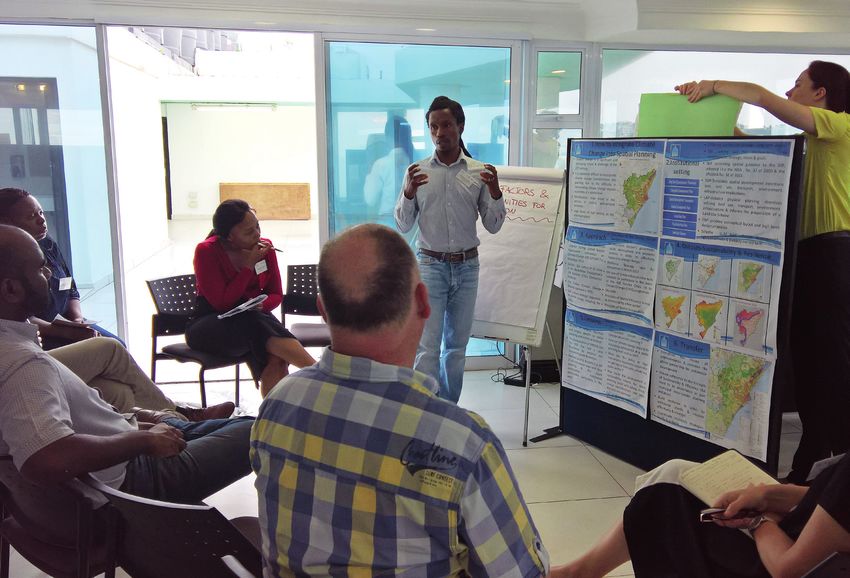
As a federally owned enterprise, GIZ supports the German Government
in achieving its objectives in the field of international cooperation for
sustainable development.

The project ‘Cities Fit for Climate Change’ is part of the International Climate Initiative (IKI).
The Federal Ministry for the Environment, Nature Conservation, Building and Nuclear Safety (BMUB)
supports this initiative on the basis of a decision adopted by the German Bundestag.
Responsible division within the BMUB: SW I 1, Urban Development Policy, Federal Institute for Research
on Building, Urban Affairs and Spatial Development (BBSR), Dr Oliver Weigel.

Published by
Deutsche Gesellschaft für
Internationale Zusammenarbeit (GIZ) GmbH

Registered offices
Bonn and Eschborn, Germany

Project: ‘Cities Fit for Climate Change’

Section Governance and Human Rights
Friedrich-Ebert-Allee 36 + 40
53113 Bonn, Germany
T +49 228 4460-37 62
F +49 228 4460-17 66
E info@giz.de
I www.giz.de

Responsible
Dr Daphne Frank
Head of Project Cities Fit for Climate Change
T +49 228 44 60-33 62
E daphne.frank@giz.de

Cities Fit for Climate Change team
Philipp Kühl, Amina Schild, Lea Kulick, Karen Pacheco,
Andrea Palma, Sudakhar Krishnan, Elizabeth Dubbeld

Commissioned Authors
Toni Redman, the markewicz redman partnership
Durban, South Africa

Design and layout
EYES-OPEN, Berlin

Photo credits
© Amina Schild: Front cover upper and lower pictures, images 01–02, 07, 11–13, 15–16, 19
© Eva Prediger: Front cover circle, back cover upper and lower circle, images 05–06, 08–10, 14, 17
© Felix Volgmann: Image 03
© CFCC: Image 04
© Lea Kulick: Image 18
© Adobe Stock: Back cover lower picture

URL links
This publication contains links to external websites.
Responsibility for the content of the listed external sites always lies with their respective publishers.

GIZ is responsible for the content of this publication.

As at
Bonn, Germany, March 2017
Content

Content

I. Cities Fit for Climate Change Project .  .  .  .  .  .  .  .  .  .  .  .  .  .  .  .  .  .  .  .  .  .  .  .                                                     3
Coping with Climate Change Begins in Cities .  .  .  .  .  .  .  .  .  .  .  .  .  .  .  .  .  .  .  .  .  .  .  .  .  .  .  .  .  .  .                             3

Trajectories for a Climate-Friendly Future  .  .  .  .  .  .  .  .  .  .  .  .  .  .  .  .  .  .  .  .  .  .  .  .  .  .  .  .  .  .  .  .  .                       3

Climate-Proofing Provides Orientation  .  .  .  .  .  .  .  .  .  .  .  .  .  .  .  .  .  .  .  .  .  .  .  .  .  .  .  .  .  .  .  .  .  .                         4

Our Partners in Chile, India and South Africa .  .  .  .  .  .  .  .  .  .  .  .  .  .  .  .  .  .  .  .  .  .  .  .  .  .  .  .  .  .  .                           4

International Learning Exchange Workshops . .  .  .  .  .  .  .  .  .  .  .  .  .  .  .  .  .  .  .  .  .  .  .  .  .  .  .  .  .  .  .                             5

II. The Durban Workshop  .  .  .  .  .  .  .  .  .  .  .  .  .  .  .  .  .  .  .  .  .  .  .  .  .  .  .  .  .  .  .                                                6
Participants  .  .  .  .  .  .  .  .  .  .  .  .  .  .  .  .  .  .  .  .  .  .  .  .  .  .  .  .  .  .  .  .  .  .  .  .  .  .  .  .  .  .  .  .  .  .  .  .        6

Workshop Objectives  .  .  .  .  .  .  .  .  .  .  .  .  .  .  .  .  .  .  .  .  .  .  .  .  .  .  .  .  .  .  .  .  .  .  .  .  .  .  .  .  .  .  .                7

Methodology  .  .  .  .  .  .  .  .  .  .  .  .  .  .  .  .  .  .  .  .  .  .  .  .  .  .  .  .  .  .  .  .  .  .  .  .  .  .  .  .  .  .  .  .  .  .  .            8

III. Success Factors & Opportunities for Replication  .  .  .  .  .  .  .  .  .  .  .  .  .  .  .  .  .                                                             9
Motivation  .  .  .  .  .  .  .  .  .  .  .  .  .  .  .  .  .  .  .  .  .  .  .  .  .  .  .  .  .  .  .  .  .  .  .  .  .  .  .  .  .  .  .  .  .  .  .  .          9

Mainstreaming  .  .  .  .  .  .  .  .  .  .  .  .  .  .  .  .  .  .  .  .  .  .  .  .  .  .  .  .  .  .  .  .  .  .  .  .  .  .  .  .  .  .  .  .  .  .            10

Multi-Stakeholder Engagement  .  .  .  .  .  .  .  .  .  .  .  .  .  .  .  .  .  .  .  .  .  .  .  .  .  .  .  .  .  .  .  .  .  .  .  .  .  .                     11

Multi-Functional Solutions  .  .  .  .  .  .  .  .  .  .  .  .  .  .  .  .  .  .  .  .  .  .  .  .  .  .  .  .  .  .  .  .  .  .  .  .  .  .  .  .                 12

Modelling  .  .  .  .  .  .  .  .  .  .  .  .  .  .  .  .  .  .  .  .  .  .  .  .  .  .  .  .  .  .  .  .  .  .  .  .  .  .  .  .  .  .  .  .  .  .  .  .  .       12

IV. Integrating Climate Change into Projects  .  .  .  .  .  .  .  .  .  .  .  .  .  .  .  .  .  .  .  .  .                                                        15
Development of City Action Plans  .  .  .  .  .  .  .  .  .  .  .  .  .  .  .  .  .  .  .  .  .  .  .  .  .  .  .  .  .  .  .  .  .  .  .  .                       15

How to Better Integrate Climate Change into the Buckingham Canal Project – Chennai  .  .  .  .  .  .  .  .  .                                                      16

How to Better Integrate Climate Change into the Alameda Providencia Corridor Project – Santiago de Chile                                                           17

How to Better Integrate Climate Change into the Ciudad Parque Bicentenario Project – Santiago de Chile  .  .                                                       18

How to Better Integrate Climate Change into Spatial Planning – Durban  . .  .  .  .  .  .  .  .  .  .  .  .  .  .  .  .                                            20

V. Conclusion and Next Steps  .  .  .  .  .  .  .  .  .  .  .  .  .  .  .  .  .  .  .  .  .  .  .  .  .  .  .  .                                                   21

Annexure: Dialogue Forum Participants  .  .  .  .  .  .  .  .  .  .  .  .  .  .  .  .  .  .  .  .  .  .  .                                                        22

                                                                                                                                                                         1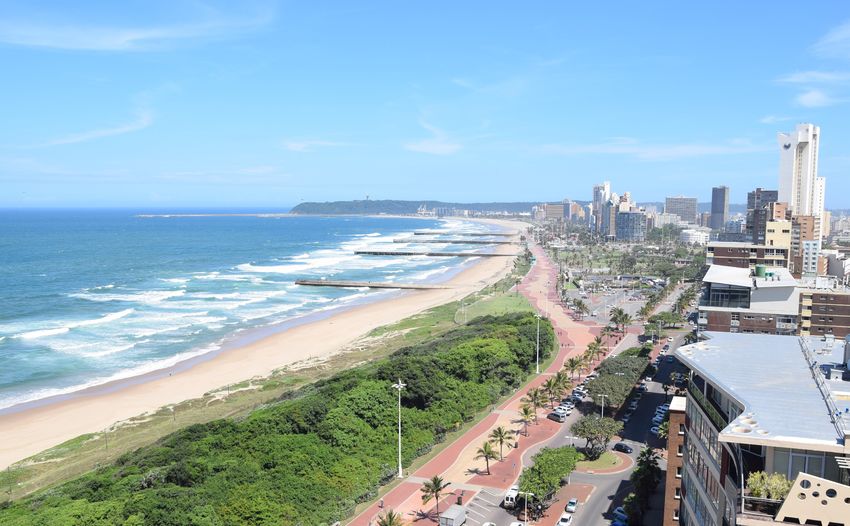
How to Improve Integration of Climate Change Aspects into Urban Development Instruments, Strategies and Initiatives

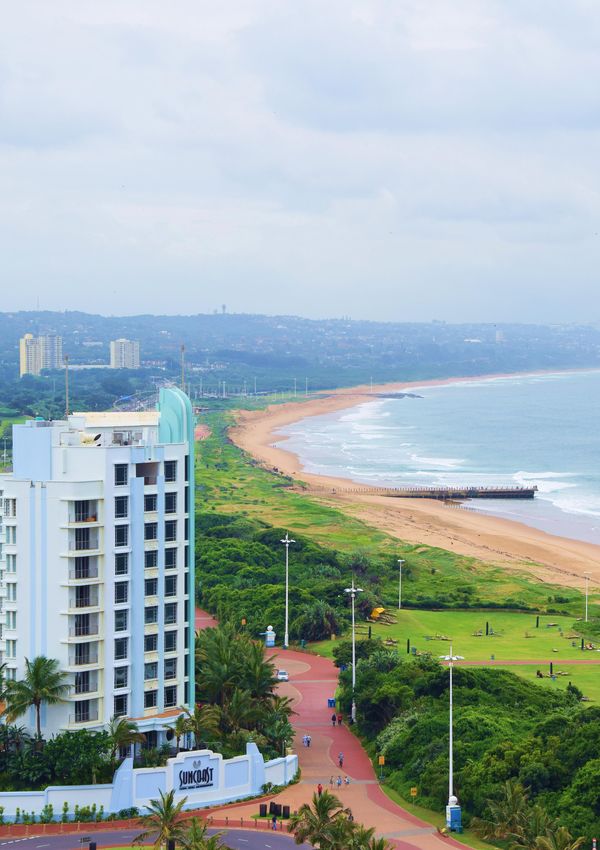
       Image 01: Durban‘s Beachfront

2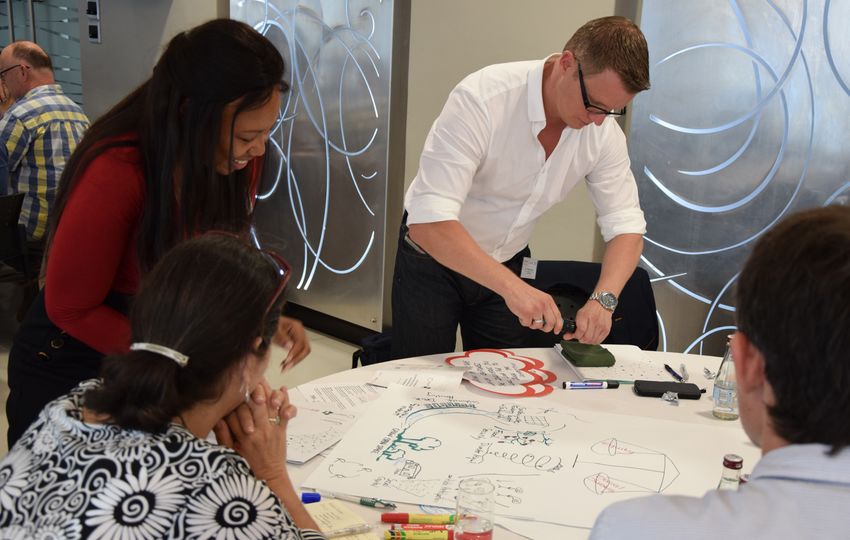
I. Cities Fit for Climate Change Project
I. Cities Fit for Climate Change Project
The global project ‘Cities Fit for Climate Change’ im- ners internationally, in Germany and in particular with
plemented by GIZ on behalf of the Federal Ministry for its three partner countries Chile, India and South Af-
the Environment, Nature Conversation, Building and rica. The project aims to strengthen cities as actors of
Nuclear Safety (BMUB) cooperates with various part- sustainable development.
Coping with Climate Change Begins in Cities
Our cities are both contributing to and affected by cli- up urban landscape. Accelerated urbanisation exacer-
mate change: they consume 70 per cent of the world’s bates these problems.
energy and heat up the earth’s atmosphere by producing
By 2050, 6.5 billion people, or two thirds of the world’s
over 75 per cent of global CO2 emissions. At the same
population, are expected to live in sprawling metropo-
time, many urban agglomerations already suffer from
lises. Therefore, new forward-thinking strategies for
the negative impacts of climate change: in low-lying
mitigation and adaptation to the impacts of climate
coastal areas they are threatened by rising sea levels and
change need to be integrated into conventional concepts
storm surges; in drier climate zones they must contend
of urban development in order to safeguard urban ways
with droughts and water shortages; and cities every-
of life.
where have to deal with heat islands in the densely built-
Trajectories for a Climate-Friendly Future
How can cities as drivers and victims of climate change randum 'Urban Energies-Urban Challenges'. The im-
cope with the risks and become custodians of a liveable portant issue of securing financing for required infra-
climate? This global project is focused on finding an- structure investments will also be addressed.
swers to this question.
The experiences of our partner cities will be shared at
Because there are no universally applicable solutions, international conferences. The knowledge thus gained
existing concepts for resilient low carbon urban develop- will help to support the process of the United Nations
ment are to be analysed and compiled in a sourcebook, Framework Convention on Climate Change (UNFCCC)
and selected cities are to be supported in developing and contributes to the implementation of the 'New
case-specific climate-friendly strategies. Urban Agenda', the international agreement of the
Habitat III process.
This work will be guided by the 'Leipzig Charter on
Sustainable European Cities' and the BMUB Memo-
3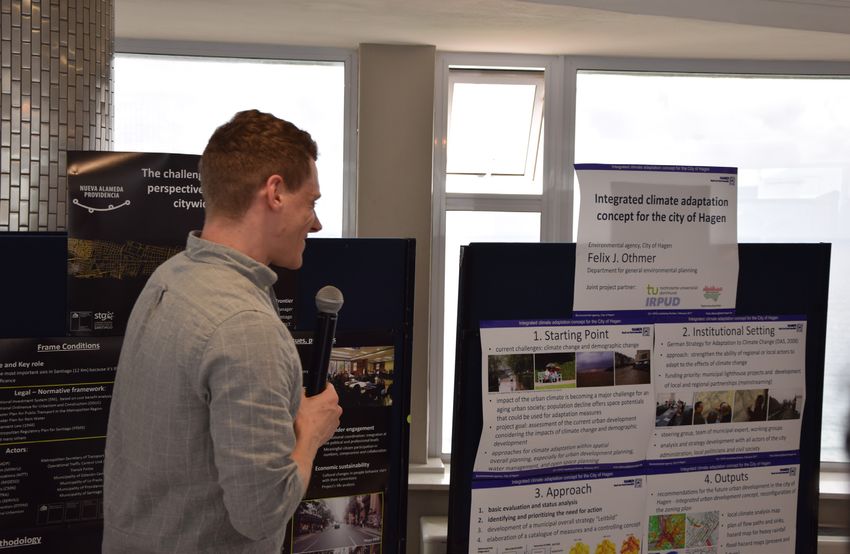
How to Improve Integration of Climate Change Aspects into Urban Development Instruments, Strategies and Initiatives
Image 02: Crowded Street in India Image 03: Street View in Durban
Climate-Proofing Provides Orientation
The existing urban development guidelines and con- These steps will provide the basis for designing an indi-
cepts of our partner cities are to be adapted according vidualised climate-proof urban development model for
to climate-proofing principles. Climate-proofing means each city. An example of how carbon emissions can be
that city development strategies, urban designs, land use reduced while at the same time adapting to climate
and master plans, and all related investments are resilient change impacts is through urban green spaces, which
and adaptable to the current and future impacts of cli- help prevent heat island effects and flooding, absorb
mate change. Furthermore, corresponding climate pro- carbon from the atmosphere and improve air quality
tection measures need to be taken, and they must be and citizens' quality of life - a win-win situation for the
aimed at decarbonisation. inhabitants, city budgets, and the climate.
Our Partners in Chile, India and South Africa
The partner cities, Santiago de Chile in Chile, Chennai facilitate this, each of the partner cities will host an
in India and Durban in South Africa, were selected in annual workshop where representatives from German
agreement with the relevant national ministries and au- cities and the other partner cities will come together to
thorities: the decisive factors were the commitment of share their insights into climate-appropriate urban
the mayors and city councils, and the cities' level of development.
climate change vulnerability. The cities determine their
project priorities, which might be, for example, the
climate-proofing of instruments, strategies and re
gulations, the implementation of participatory city
development strategies, or the development of financing
options for realising available climate protection and
adaptation concepts.
The partner cities are to exchange knowledge with each
other and with German and further international cities
within the framework of the exchange workshops. To
4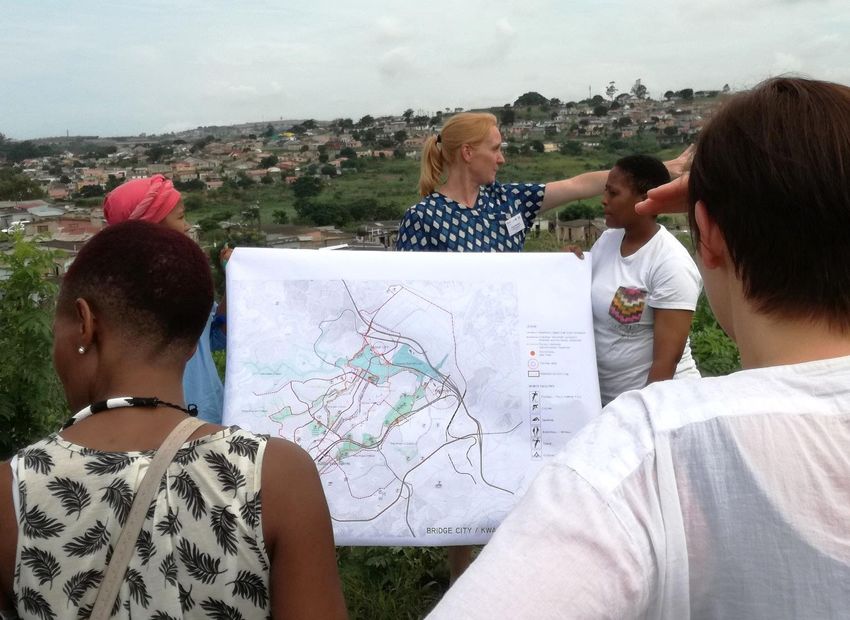
I. Cities Fit for Climate Change Project

   Image 04: Partner Cities Map

                                                                               Chennai,
                                                                               India

                       Santiago                                 Durban,
                  de Chile, Chile                               South Africa

International Learning Exchange Workshops
The exchange sessions are intended to enable and fa-        The overall objectives of the workshops are:
cilitate peer-to-peer knowledge sharing, support and
                                                            • To strengthen the exchange of experiences among
collaboration, the joint generation of new knowledge,
                                                              the CFCC partner cities as well as with German cit-
and the promotion of innovation with regards to the
                                                              ies at different levels and areas of intervention;
planning of low-carbon and resilient urban develop-
ment.                                                       • To identify good practice examples from the cities
                                                              that can be used for an international exchange with
Three ‘inter-connected’ workshops are planned in each
                                                              other cities around the world;
of the participating partner cities, where a bottom-up
approach to conceptualising new elements of climate-        • To provide peer-to-peer advisory services for plan-
sensitive urban planning can be incrementally developed       ning instruments in application and processes in a
into a new urban development model that draws on real         conducive and creative workshop environment;
city-level case studies, as opposed theoretical discus-
                                                            • To conceptualize and prepare joint planning inter-
sions. Such a model would see analysis tools, city devel-
                                                              ventions that will be developed further in the course
opment strategies, planning approaches, implementa-
                                                              of the workshop series;
tion frameworks etc. revised to reflect climate change
considerations with the resultant outcome: to make          • To initiate a practice oriented learning process over
cities low-carbon and resilient to the impacts of climate     the duration of the project that includes different
change.                                                       exchange and learning formats and seeks to strength-
                                                              en capacities of urban practitioners;

                                                            • To interrogate innovations in spatial planning and
                                                              policy which can lay the groundwork for conceptu-
                                                              alizing a new urban development model

                                                                                                                           5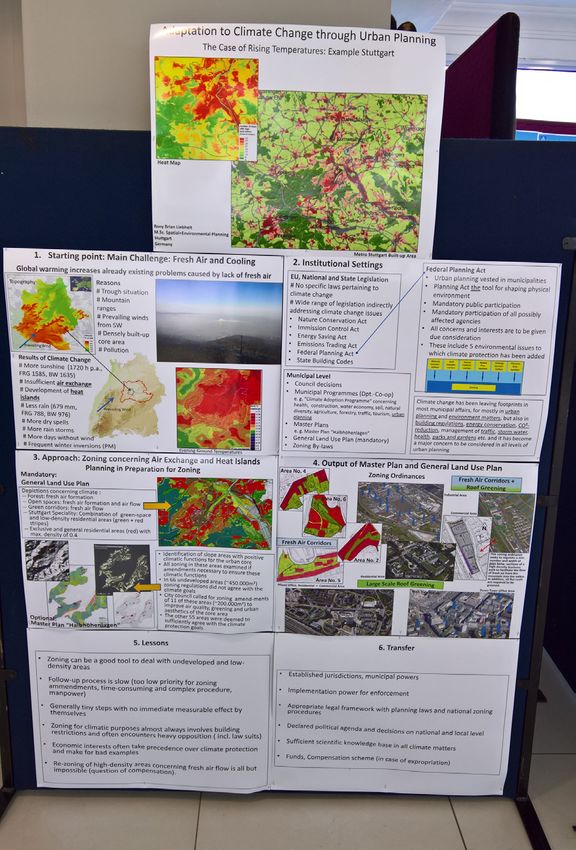
How to Improve Integration of Climate Change Aspects into Urban Development Instruments, Strategies and Initiatives

    II. The Durban Workshop

    Participants
    The first of the three workshops, held in Durban from          Support Program). Furthermore, the workshop was of-
    14 to 16 February 2017, pulled together a number of            ficially opened by Dr Oliver Weigel, Head of Division
    urban practitioners from the partner cities of Durban          on Fundamental Aspects of Urban Development Policy,
    (South Africa) Chennai (India) and Santiago de Chile           Federal Institute for Research on Building, Urban Af-
    (Chile) in a learning exchange with the German cities          fairs and Spatial Development, at the Federal Ministry
    of Hagen, Nuremberg and Stuttgart, the Swedish City            for the Environment, Nature Conservation, Building
    of Malmö, South African Local Government Associa-              and Nuclear Safety. See Annexure for a full list of par-
    tion (SALGA) and members from GIZ SA (Climate                  ticipants.

       Image 05: Presentation on the Situation of Durban in One of the Sessions

6
II. The Durban Workshop
Workshop Objectives
The workshop objectives were: • To identify synergies between the existing urban
development instruments and strategies;
• To establish the status quo regarding the integration
of climate change issues in urban development in- • To develop a roadmap for the workshop series with
struments and strategies of the partner cities; the intermediate steps needed for conceptualizing a
new climate-sensitive urban development model.
• To learn from existing practices and innovations in
climate sensitive urban development;
Workshop Presentations
Official Opening by Dr Oliver Weigel, Head of Division on Fundamental Aspects of Urban Development Policy,
Federal Institute for Research on Building, Urban Affairs and Spatial Development, Federal Ministry for the
Environment, Nature Conservation, Building and Nuclear Safety
PROJECT CONTEXT
• Global Project “Cities Fit for Climate Change”, Dr Daphne Frank
• Connective Cities: International Community of Practice for Sustainable Urban Development,
Ms Eva Prediger
GOOD PRACTICE
• Enhanced Climate Finance Access: Good Practice from Eastern and Southern Africa, Belynda Petrie
• Connective Cities: International Community of Practice for Sustainable Urban Development,
Ms Eva Prediger
Climate Aspects in Integrated Urban Development
• Adaptation to Climate Change through Urban Planning – The Case of Rising Temperatures:
Example Stuttgart, Mr Rony Liebheit
• Urban Development Innovation Challenges in Santiago: Ciudad Parque Bicentenario, Ms Paulina Wolff
Integrated Urban Climate Strategies and Plans
• Integrating Climate Change into Spatial Planning in the City of Durban, Mr Emmanuel Letebele
• Climate Protection Timetable. Climate Pact for the City of Nuremberg, Dr Stefan Bege
• Integrated Climate Adaptation Concept for the City of Hagen, Mr Felix J. Othmer
Climate Adaptation and Mitigation in Specific Subjects
• How to handle heavy rains in Malmö?, Ms Monika Månsson
• Planning for Biodiversity: the Durban Metropolitan Open Space System, Mr Cameron Mclean &
Ms Nongcebo Hlongwa
• The Challenge of Changing the Perspective: From Streets To Citywide Projects in Santiago,
Ms Silvana Frontier
CHALLENGES
• Integration of Climate Change into Urban Development in Santiago, Ms Silvana Frontier
• How to get more for the money? Multi-functionality as a smart Use of Resources, Malmö,
Ms Monika Månsson
• Keep Energy In Mind, Nuremberg, Dr Stefan Bege
• How To Build a New Urban Hub Around Public Transport, Durban, Ms Sino Makongwana
7
How to Improve Integration of Climate Change Aspects into Urban Development Instruments, Strategies and Initiatives

    Methodology
    In order to generate possible solutions for taking             addressed in specific case studies provided the platform
    through to the next workshop, the primary aim of the           for small break-away group sessions to share experi-
    Durban workshop was to unpack lessons for success and          ences and glean ideas by all participating cities and
    replicability from the various projects and programmes         practitioners
    presented by the participating cities
                                                                   The information presented in session was also augment-
    Presentations focussing on how climate aspects have            ed with a visioning exercise around what a climate re-
    been integrated into urban development projects, ex-           silient city would look like and a site visit to Bridge City,
    amples of integrated urban climate strategies and plans        KwaMashu on the northern periphery of Durban
    and how climate adaptation and mitigation have been

                             Image 06: What Does A Climate Resilient City Look Like?

                 —> A city that is spatially equitable.
                 —> A city with diverse and quality neighbourhoods.
                 —> A city that is both dense and dispersed.
                 —> A city that is socially integrated.
                 —> A city with engaged citizens.
                 —> A city with good governance.
                 —> A city where there are equal economic opportunities for all.
                 —> A city with a thriving green economy.
                 —> A city that is able to feed itself.
                 —> A city that has lots of green open spaces for recreation and ecological functioning.
                 —> A city that is prepared for climate disasters.
                 —> A city that has low carbon emitting transport and sustainable mobility.
                 —> A city that understands its interdependence with its rural hinterland.
                 —> A city where business is committed to low carbon production.
                 —> A city that generates its own energy from alternate energy sources e.g. wind or solar.
                 —> A city that is uses its water efficiently.
                 —> A city that minimises waste production at source i.e. reduce, re-use, recycle.

8
III. Success Factors & Opportunities for Replication
III. Success Factors & Opportunities for
Replication
After much discussion and debate, five themes emerged Within these themes, some important lessons were
that represent whether climate change considerations at learned regarding how to conceptualise and frame cli-
a city level would be successful and could be replicated mate change responses; how national and city-level
in other contexts and/or project processes. These are: policies can support cities in dealing with the impacts
of climate change; how valuable the contributions of
• Motivation
civil society can be, working in partnership with govern-
• Mainstreaming ments; the value of hard science and building scenarios;
and what kind of institutional arrangement within cities
• Multi-Stakeholder Engagement
and across government are helpful in promoting climate
• Multi-Functional Solutions change resilience at the local level. The following are the
main points of shared learning, which the participants
• Modelling
gathered from the good practice case studies.
Motivation
Strength of leadership in decision making and guiding
cities as they navigate the impacts of climate change is
vital in ensuring that strategies, policies and plans put
“The challenge of
into place are realised and real change in how cities “do climate change is truly
business” is affected.
global and every city,
The appointment of champions and strong, competent
leaders are key elements in the success of projects in country and continent
Durban and Europe. must play a part in
The institutional capacity for a city to deliver is a nother
crucial element. In South Africa, cities currently battle
tackling it.”
to spend their capital budgets. Investment in climate Zandile Gumede, Mayor of Durban
change infrastructure will need a ramping up of cities’
abilities to deliver en-masse.
A strong, coherent and coordinated future vision that is
The life-cycle of climate change projects, their scale and
owned, not only by city officials and politicians, but by
complexity invariably outlive the political terms of local
the residents, will assist in embedding climate change
governments and without long-term commitment to
adaptation and mitigation measures into local level plan-
climate change goals, the fluidity of leadership can un-
ning and hold leaders accountable. A common vision
dermine and hinder projects set in motion by previous
can pull together communities, departments within a
political regimes. Sustaining long-term political will is
city and the various government agencies that operate at
a challenge for all.
the local level and galvanise these actors into action.
9How to Improve Integration of Climate Change Aspects into Urban Development Instruments, Strategies and Initiatives
There is also an opportunity to use extreme events to Demonstration projects that signal action and a com-
motivate for new ways of planning and doing business. mitment by cities to a climate change agenda are an-
Extreme events resonate with communities who have other useful way of gaining support and motivation for
experienced the impacts of climate change first hand. further investment in climate change projects. Ciudad
Malmö used an extreme flood event in 2014 to prepare Parque Bicentenario was built in advance of new
a “Skyfall” policy for the city and how to manage such development being realised in Santiago.
events going forward.
Recognition awards, as in the case of Nuremberg, assist
in reinforcing the good work being undertaken in a
region.
Image 07: City of Durban
Mainstreaming
In order for climate change adaptation and mitigation s trategic direction for the development of the five year
strategies to gain traction in cities, there is a strong be- Integrated Development Plan (IDP).
lief that these strategies need to be mainstreamed into
The City Strategy Department is currently integrating
urban planning development and not viewed as a sepa-
a climate change scenario to its long term planning.
rate discipline or an add-on.
In a number of the case studies it was evident that cities
In Durban, the municipality is in the process of em
had been doing good work that either responded to
bedding climate change responses into their Spatial
climate change through mitigation or adaptation strat-
Development Plan. This plan provides the platform and
egies but had not necessarily been couched in the
10III. Success Factors & Opportunities for Replication
Image 08: Map Showcased in the Dialogue Forum Image 09: Example of the City of Stuttgart
r hetoric of climate change. In the Durban case study,
the adoption of the Durban Metropolitan Open Space
System some twenty years ago was not framed as a cli-
mate change strategy, however today it provides the City
of Durban with a unique opportunity to mitigate the
effects of climate change and has been embedded with-
in the city’s Spatial Development Framework (SDF).
The cities of Hagen, Nuremberg and Stuttgart have used
their climate change modelling projects to give effect to
meaningful land use and forward planning c hanges in
their respective cities as they plan for sustainable and
resilient German cities.
accessible to local communities. Using pop culture, ce-
There was a very strong call to popularise climate change lebrities and social media is a means to embed the idea
and to de-mystify and make the subject matter more of climate action into the broader society society.
Multi-Stakeholder Engagement
There needs to be both vertical and horizontal alignment Meaningful engagement with local communities who
between government stakeholders. are often at the coalface of climate change impacts is
key to developing meaningful strategies to protect en-
National, regional and local level policy and plans must
vironmental assets. These communities, whilst not nec-
align and reinforce each other. The departments in the
essarily understanding the science, are a source of in-
various spheres of government must not only work to-
novative techniques that can be learnt from by urban
gether within their own institutions but must also seek
practitioners.
to work with cities at the local level. ‘Think global, act
local’ is very much the adage in which meaningful steps There is also consensus that upfront engagement, al-
towards climate change mitigation and adaptation will beit time-consuming at the start of a project, is the best
occur, but the cities cannot do it in isolation of each way to ensure long-term “buy-in” from communities,
other, their nation-states or the global community. the private and public sector.
11How to Improve Integration of Climate Change Aspects into Urban Development Instruments, Strategies and Initiatives
Making use of other institutions such as research agen- tion. Even if it is not possible for teams to remain in the
cies, universities and universities of technology is a vital same composition over the entire project period, they
of source of resources, information and data that can galvanise around a strong development vision of what
feed into city planning. needs to be delivered to the residents.
Keeping projects alive and with their original intent also
requires a dedicated team and capacity for implementa-
Multi-Functional Solutions
Solutions for climate changes need to address a multi- In Santiago there are plans in place to redevelop the
plicity of issues for a city and cannot merely be about historic Alameda Providencia Corridor into an inte-
climate change adaptation and/or mitigation alone. grated transport corridor for both mass transit and non-
motorised transport. The provision of quality public
In Malmö, the provision of new areas of open space, not
space and trading areas along the route contribute to a
only provide for enhanced recreation opportunities for
multi-use of the space.
the residents of the city and the beautification of the
town but also provide attenuation areas for increased The Ciudad Parque Bicentenario project was able to
storm-water run-off associated with heavy rains that the include 50ha park into the project that seeks to re-stich
city is experiencing the city through the mixed use development of the for-
mer municipal airport.
Modelling
There is a prevailing mystery around climate change and Malmö and Chennai, and to a limited extent in Durban.
what it really means for the world as we know it. The This includes preparing systematic conservation plans,
ability to demonstrate its impact and effect on com- projecting population growth (or decline), vulnerabil-
munities and cities through the use of scientific models ity assessments, modelling flooding risks, heat islands,
and scenario plans is therefore of the utmost importance air flows and CO2 sinks.
in planning for long-term futures where communities
In Durban, Nuremberg and Malmö, the preparation of
are unable to imagine what climate change may do to
a cost-benefit analysis and the costs associated with not
their city in over one hundred years’ time.
taking action provided additional evidence at the po-
Scientific based evidence planning is especially evident litical level to garner support in the adoption of climate
in the case studies from Hagen, Nuremberg, Stuttgart, change plans and policies.
Image 10: The Five Different Themes of the Dialogue Forum
12III. Success Factors & Opportunities for Replication
Image 11: Risk Analysis Prensentation of the City of Hagen
Image 12: Collaborative Work of Participants in One of the Sessions
13How to Improve Integration of Climate Change Aspects into Urban Development Instruments, Strategies and Initiatives
Image 13: Site Visit: Kwamashu Open Space Project
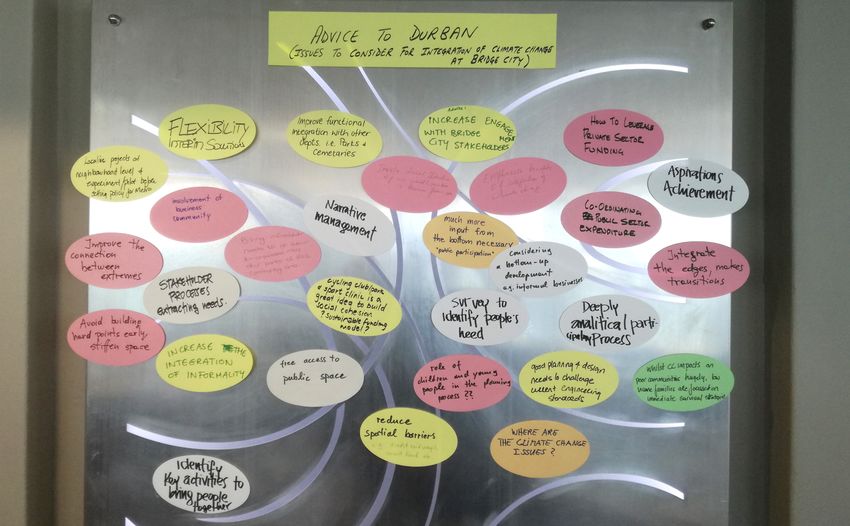
Participants had the opportunity to visit Bridge City/KwaMashu to see first-hand some of the challenges
that the City of Durban is facing when it comes to integrating climate change aspects into development
plans in areas of great need.
The open space associated with the Piesangs River is uniquely positioned within the broader KwaMashu
area to perform the role of a regional park serving almost 500,000 residents. To date, it effectively has been
a barrier between different neighbourhoods and precincts in the Urban Hub, and through the open space
project has the potential to perform the important role of a focus of activity and integrator of communities.
It is the aim of the project to make the space safe, presentable, appropriately managed and well utilised
by all surrounding communities.
The project is a pilot investigating the rehabilitation and rejuvenation of riverine open spaces, as well as
looking at other aspects such as:
• community needs and aspirations,
• community development,
• economic potential linked to open space systems,
• urban agriculture and small scale food production in the face of climate change and high levels of
poverty,
• sports activities aimed at appropriately addressing the needs of youth and schools within the area,
• non-motorised transport development, including cycling training and education of youth,
• storm water issues in the face of climate change and altering rainfall patterns,
• water quality and filtering at source (tributaries) through the introduction of check weirs and wetlands.
14IV. Integrating Climate Change into Projects
IV. Integrating Climate Change into Projects
Development of City Action Plans
With the benefit of dialoguing around good practice The projects for which action plans were developed
and development challenges, the participating partner include:
cities were given the opportunity to develop concrete
• How to Better Integrate Climate Change into the
approaches to improve the integration of climate change
Ciudad Parque Bicentenario Project - Santiago de
aspects into their urban development instruments, strat-
Chile
egies and initiatives, in collboration with a number of
urban practitioners. • How to Better Integrate Climate Change into Spa-
tial Planning - Durban
In a peer-to-peer approach, participants were able to
jointly develop action packages to tackle immediate • How to Better Integrate Climate Change into the
challenges in their respective cities. The resulting draft Buckingham Canal Project - Chennai
action plans provide the basis for further elaboration in
• How to Better Integrate Climate Change into Urban
the remaining workshop series related to this project.
Development - Santiago de Chile
Image 14: Advice for Durban Team – Observations from the Site Visit
15How to Improve Integration of Climate Change Aspects into Urban Development Instruments, Strategies and Initiatives
Table 01: How to Better Integrate Climate Change into the Buckingham Canal Project – Chennai
Activities
Success of Pilot Project will Timeline Resources External Support
Drive the Large-Scale Funding
Proposal for the Whole Canal
Identify multi-stakeholders Project preparation: commit EFL (NGO) and Sudhakar Process management
staff time, identify budget, Krishnan Sripathy moderator/facilitator
Host dialogue meetings on procure facilitator, develop
best practice Community Research support
project plan
Municipality Creative people
Identify and articulate a
shared vision Cost for renting rooms Goethe Institute
for 2 meetings
Identify and articulate what
the benefits for the community Long-term budget
are perspective
Identify innovative, low-tech, - Cost-benefit analysis
space-saving beneficiation - Water quality
projects to resolve problems assessment
in line with community needs - Hydrology analysis
i.e. s ewerage, solid waste, - ‘fun’ activities
flooding, recreation and so on
Project management processes
Monitor implementation
Communicate success and
learn from challenges
Image 15: Interaction during one of the sessions
16IV. Integrating Climate Change into Projects
Table 02: How to Better Integrate Climate Change into the Alameda Providencia Corridor Project – Santiago de Chile
Challenges Activities Timeline Resources External Support
Climate change Prepare a climate March 2017 External advice Local Municipal
issues in the change factsheet Associations
Intermediate exchange
project
between municipalities Contribution from
universities
Capacity building
Commercial Chambers
Raise awareness March 2017 Intermediate exchange
amongst stakeholders between municipalities Funding applications
Capacity building Global networks
Prepare an implemen- March to September External advice
tation policy 2017
Intermediate exchange
between municipalities
Public and private
sector involvement
Capacity building
Review governance March to September External advice
structures 2017
Intermediate exchange
between municipalities
Public and private
sector involvement
Capacity building
Motivate for political March to September Intermediate exchange
will to support the 2017 between municipalities
project
Capacity building
Share data with December 2017 Intermediate exchange
stakeholders between municipalities
Capacity building
Develop a toolbox of April 2017 Durban toolkits to
measures for imple- analyse and implement
mentation
– – – Budget management
– – – Thematic workshops
– – – Data
Need to prepare a Urban improvement – –
business model precinct (e.g. Durban)
Advertising – –
Need to improve Make the place – –
the experience attractive
17How to Improve Integration of Climate Change Aspects into Urban Development Instruments, Strategies and Initiatives
Table 03: How to Better Integrate Climate Change into the Ciudad Parque Bicentenario Project – Santiago de Chile
Overall Resources/
Activities Timelines External Support
Objective Responsibilities
Integration and Analysis of the chal- Priority 2 Information exist, but Expert for drafting
raising awareness lenges of climate need of an individual contracts, the c ontent
of climate change change: water, air etc. to analyse information and the b idding
aspects into the and draw conclusions documents
project
Metropolitan Secretary Integration with NGOs
Risks of Housing and and environmental
Urbanism (SEREMI groups to promote
- Who is really
MINVU) climate change
interested in
awareness
climate change Integration of climate URGENT – Priority 1 Task of Metropolitan
- Who is the change requirements Secretary of Housing Model from the City of
main responsi- Sales have started
into bidding documents and Urbanism (SEREMI Nuremberg on how to
ble agent for MINVU) create awareness
this project,
Partner with Ministry Expert assistance for
(MINVU or
for Environment integrating climate
SEREM)
change requirements
- Currently no
Raise awareness of Priority 5 Metropolitan Secretary into city development
municipal
climate change issues of Housing and strategies, use good
individual or
e.g. education centre, Urbanism (SEREMI examples from other
unit responsible
museum MINVU) cities
for climate
change issues Create an overview of Priority 3a Metropolitan Secretary Workshop for discus-
the city with respect of Housing and sion with responsible
to a network of paths, Urbanism (SEREMI entities – “where are
ventilation, taking into MINVU) proposes the problems”
account overall city strategies
development
Partner with Ministry
for Education
Proposals to change Priority 4 Metropolitan Secretary
policies, define roles of Housing and
and responsibilities Urbanism (SEREMI
MINVU)
Verification and inter- Priority 3b Metropolitan Secretary
pretation of bicycle of Housing and
paths and connections Urbanism (SEREMI
to city MINVU)
Housing and Urbaniza-
tion Service (SERVIU)
18IV. Integrating Climate Change into Projects
Image 16: Presentation by a Representative from Santiago de Chile
Image 17: Presentation of a Vision for a Climate-Proof City of Durban
19How to Improve Integration of Climate Change Aspects into Urban Development Instruments, Strategies and Initiatives
Table 04: How to Better Integrate Climate Change into Spatial Planning – Durban
Challenges Activities Timeline Internal Resources External Support
Recognising Translate coastal By 2019 Environmental Climate Support
resource erosion line into Planning and Climate Programmes (GIZ)
limitations zoning plans Protection Department
Academia (UKZN, DUT)
Generating Translate risk profile By 2018 Central KZN Climate
Knowledge Partner-
knowledge to into land use planning Change Compact
ships, e.g. Stuttgart
plan with (include a climate Coastal and Storm-
change vulnerability DEA (Cities Resilience
Participating in water Management
assessment) Programme)
Global Networks Unit
Map climate impacts ASAP by 2018 SANBI
Adopting a new Catchment Manage-
way of thinking for SDF, including ment Unit DBSA
water impacts
eThekwini Water Global Climate Fund
Analysis of data gaps ASAP by 2017 Services (later in project)
Collaboration with From February 2017 Parks and Recreation International Climate
neighbouring munici- Initiative
Energy Office
palities Sustainable Energy
Strategic Planning
Africa (SEA)
Develop modes, action By 2020 Department (appoint
plan and strategies a specialist resource) OneWorld Consulting
around food security ICLEI
and agro-ecology
(include study tour to
Tshwane)
– Prepare a water By 2020
security strategy
– Create a standing From July 2017
steering committee
within the city struc-
tures for climate-
related issues
20V. Conclusion and Next Steps
V. Conclusion and Next Steps
It was evident from the various presentations that each The lessons learned during this workshop highlighted
of the partner cities has embraced planning for climate the need for climate change responses to be:
change in varying degrees. In European cities, a scien-
• Motivated
tific approach dominates and cities are well advanced in
integrating climate impacts into urban development • Mainstreamed
planning tools. In Africa, climate change issues are
• Multi-Stakeholder Adopted
placed alongside the need to address major backlogs in
service delivery and infrastructure provision. Whilst • Multi-Functional
seen as important, they can be marginalised by the need
• Modelled
to address poverty issues and rapid urbanisation. In
South America, climate change is not considered to be Many ideas were mooted and many tools presented but
on the mainstream agenda yet and therefore cities are context matters. What is a good idea and works in one
left to respond in a void of guidance from national and city is not necessarily appropriate for adoption in an-
regional policy and strategies. other.
The partner cities were given the opportunity to glean
appropriate ideas from the workshop participants as well
as to action plans for their own cities which now need
to be refined within their own organisations. They will
be supported by their national GIZ advisors for further
engagement at the second Dialogue Forum of the Cities
Fit for Climate Change project, which is planned in
Santiago de Chile.
Image 18: Santiago de Chile, Chile Image 19: Chennai, India
21How to Improve Integration of Climate Change Aspects into Urban Development Instruments, Strategies and Initiatives
Annexure: Dialogue Forum Participants
No Family name First name Country City Institution/Department
1 Akkiah Puvendra South Africa Durban eThekwini Municipality, IDP Office
2 Bialluch Godje South Africa Pretoria GIZ/Governance Support Programme
3 Chauke Intelligent South Africa Pretoria South African Local Government
Association
4 Clement Martin South Africa Durban eThekwini Municipality, Durban Botanic
Gardens
5 Bege Stefan Germany Nuremberg City of Nuremberg, Urban Development
Department
6 Dubbeld Elizabeth South Africa Durban GIZ/Cities Fit for Climate Change
7 Epstein Helene South Africa Durban eThekwini Municipality, Strategic Spatial
Planning Branch
8 Frank Daphne Germany Bonn GIZ/Cities Fit for Climate Change
9 Frontier Silvana Chile Santiago de Metropolitan Government of Santiago,
Chile Project “Nueva Alameda Providencia”
10 Hlongwa Nongcebo South Africa Durban eThekwini Municipality, Climate
Protection Branch
11 Jardine Aziz South Africa Johannesburg GIZ/Connective Cities
12 Kammertöns Viola Rebekka Germany Berlin GIZ/Connective Cities
13 Krishnan Sripathy Sudakhar India Chennai GIZ/Cities Fit for Climate Change
14 Kühl Philipp Germany Berlin GIZ/Cities Fit for Climate Change
15 Letebele Emmanuel South Africa Durban eThekwini Municipality,
Strategic Spatial Planning Branch
16 Liebheit Rony Brian Germany Stuttgart City of Stuttgart, Department of Urban
Planning and Renewal
17 Makongwana Sino South Africa Durban eThekwini Municipality, Economic
Development
18 Månsson Monika Sweden Malmö City of Malmö, Environment Department,
Urban Development and Strategy
19 Masenya Itumeleng South Africa Durban eThekwini Municipality, Climate Change
Mitigation, Energy Office
20 McLean Cameron South Africa Durban eThekwini Municipality, Biodiversity
Branch
21 Mehrtens Helge South Africa Durban eThekwini Municipality, Duzi Umgeni
Conservation Trust
22Annexure: Dialogue Forum Participants
No Family name First name Country City Institution/Department
22 Mkhwanazi Sibusiso South Africa Durban eThekwini Municipality, Parks
Department
23 O'donoghue Sean South Africa Durban eThekwini Municipality, Climate
Protection Branch
24 Othmer Felix Germany Hagen City of Hagen, Environment Department
25 Palma Andrea Chile Santiago de GIZ/Cities Fit for Climate Change
Chile
26 Peters Adrian South Africa Durban eThekwini Municipality, City Strategy
27 Petrie Belynda South Africa Capetown OneWorld
28 Prediger Eva Germany Bonn GIZ/Connective Cities
29 Ramayia Jonathan South Africa Pretoria GIZ/Climate Support Programme
30 Redman Toni South Africa Durban The Markewicz Redman Partnership for
GIZ/Cities Fit for Climate Change
31 Schild Amina-Laura Germany Bonn GIZ/Cities Fit for Climate Change
32 Dr. Weigel Oliver Germany Berlin Federal Ministry for the Environment,
Nature Conservation, Building and
Nuclear Safety, Urban Development
Division
33 Wolff Paulina Chile Santiago de City of Santiago, Plans and Programs
Chile Department, Housing and Urban
Development Metropolitan Secretary
23Deutsche Gesellschaft für Internationale Zusammenarbeit (GIZ) GmbH Registered offi ces Bonn and Eschborn Friedrich-Ebert-Allee 36 + 40 53113 Bonn, Deutschland/Germany T +49 228 44 60-0 F +49 228 44 60-17 66 Dag-Hammarskjöld-Weg 1–5 65760 Eschborn, Deutschland/Germany T +49 61 96 79-0 F +49 61 96 79-11 15 E info@giz.de I www.giz.de
You can also read


