Improving transport efficiency - Advances and opportunities to accelerate sustainable transport
←
→
Page content transcription
If your browser does not render page correctly, please read the page content below
—
W H I T E PA P E R

Improving transport efficiency
Advances and opportunities
to accelerate sustainable transport
2                      IMPROVING TR ANS PORT E FFICIE NC Y

—
Transporting more people
and freight with less energy
Transportation is an essential and integral part of our lives, and the world
is looking for ways to reduce emissions and eliminate the use of fossil fuels.
Therefore, we require cleaner and more sustainable modes of transport.

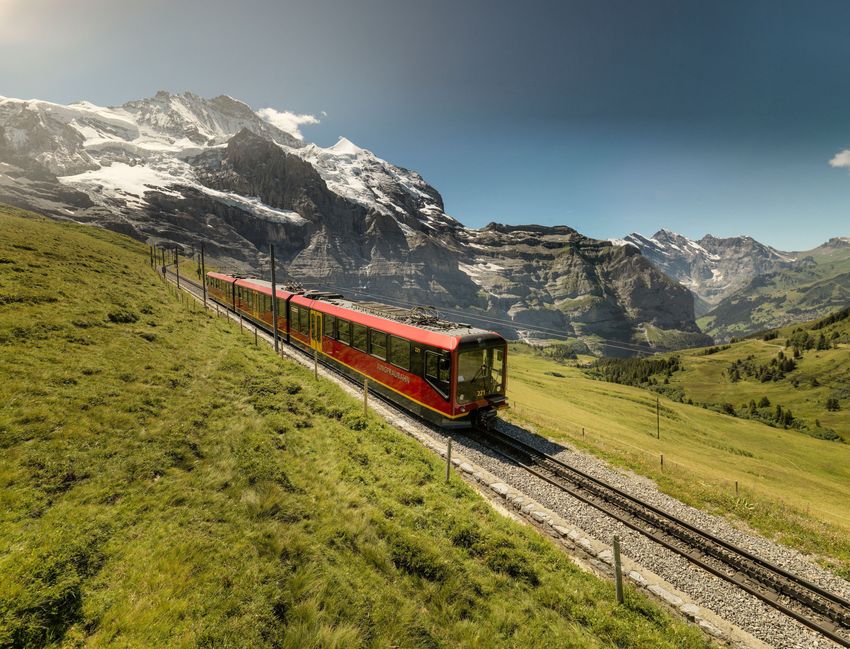
Rail transport and efficiency                                      Railways are highly energy efficient for several reasons, the
When we think of efficient methods of transport, our first         most important of which are their large carrying capacity
thoughts are often about electric or hybrid cars and trucks        of both passengers and freight, the high efficiency of the
and only rarely about mass transportation. Electric trains         traction chain, and the very low rolling resistance of steel
have been in use for well over 100 years and they are one of       wheels on steel tracks. On average, trains are nearly 12 times
the most efficient modes of transport available. Even when         more energy efficient than cars per passenger kilometer and
trains are powered by fossil fuels, they are still significantly   8 times more efficient than trucks per tonne of freight.²
more efficient than cars and trucks. In fact, only 3% of the
world’s energy is consumed by railways even though they
account for 9% of the world’s passenger transport and 7%
of freight transport. 1
A D VA N C E S A N D O P P O R T U N I T I E S TO A C C E L E R AT E S U S TA I N A B L E T R A N S P O R T                   3

Technology developments have ensured that railways have
steadily reduced their greenhouse gas emissions while
improving their energy efficiency. 3 Because of this, rail is
currently being promoted and developed in many areas of
the world. Urban transit and high-speed rail infrastructure
have expanded rapidly over the past decade in addition to
the further development of commuter and inter-regional
services, laying the foundation for a convenient and environ-
mentally friendly transport system within and between
cities.

2021 is “The European Year of Rail” and with this initiative
the EU aims to highlight the benefits of rail as a sustainable,
smart and safe means of transport. Currently, the EU is
calling for massive investments in energy effiency as it aims
to decarbonize transport as well as support the shift to rail
and increase its share of both passenger and freight
transport. 3

The importance of rail as a sustainable and efficient means
of transport is not restricted to one particular geographical
region. For example, the development of metro and high
speed rail is proceeding at an astonishing pace in China, with
over 41,000 km of high-speed rail tracks built in the last 10
years. 2 Other large economies like India are also rapidly elec-                   Opportunities for improvement
trifying their railway network and set to triple the length of                     Rail, as described above, is a clean and efficient mode
its metro network within the next few years. In Russia, $84                        of transport when compared to others but that does not
billion is expected to be invested in railways by 2026, while in                   mean that there is no scope for further improvement.
the USA some $621 billion will be spent over the next eight                        The question, then, is how can we improve the efficiency
years in improving infrastructure, including rail systems. Rail                    of rail transport and in particular that of the rolling stock?
is therefore an integral part of both infrastructure and sus-
tainable transition planning all over the world with increased                     One way is to specify higher energy efficiency requirements,
investments in both new and existing rail networks.                                which are possible with technologies already available
                                                                                   today, while procuring new rolling stock. For new invest-
                                                                                   ments, train operators should choose the most efficient
                                                                                   traction systems available – this is especially important
2021 is the European Year of Rail.⁴
                                                                                   in the investment phase because energy consumption
In the EU, rail accounts for:
                                                                                   accounts for a significant part of the life cycle costs of
                                                                                   a train. Therefore, investing in energy efficient rolling stock
                                                                                   not only accelerates the transition to sustainable mobility
                                                                                   but also reduces the total cost of ownership for the
                                                                                   operator.

                      7%
                      of passengers
                                                                                   Existing rolling stock which have not reached their end
                                                                                   of life can have their energy efficiency improved by upgrad-
                                                                                   ing to more efficient traction systems, by adding on-board
                                                                                   energy storage systems, or reducing auxiliary power con-
                                                                                   sumption with intelligent load management and more
                                                                                   energy efficient propulsion and auxiliaries.

                      11%
                                                                                   In addition, implementing eco-driving assistance systems
                                                                                   can also reduce energy consumption. 5

                      of goods                                                     Let’s take a look at some of the technologies available to
                                                                                   improve the efficiency of rail vehicles.

                                                                                   —
                                                                                   Transport accounts for ¼ of
                      Less than 0.5% transport-
                                                                                   the EU's greenhouse gas emissions.⁶
                      related GHG emissions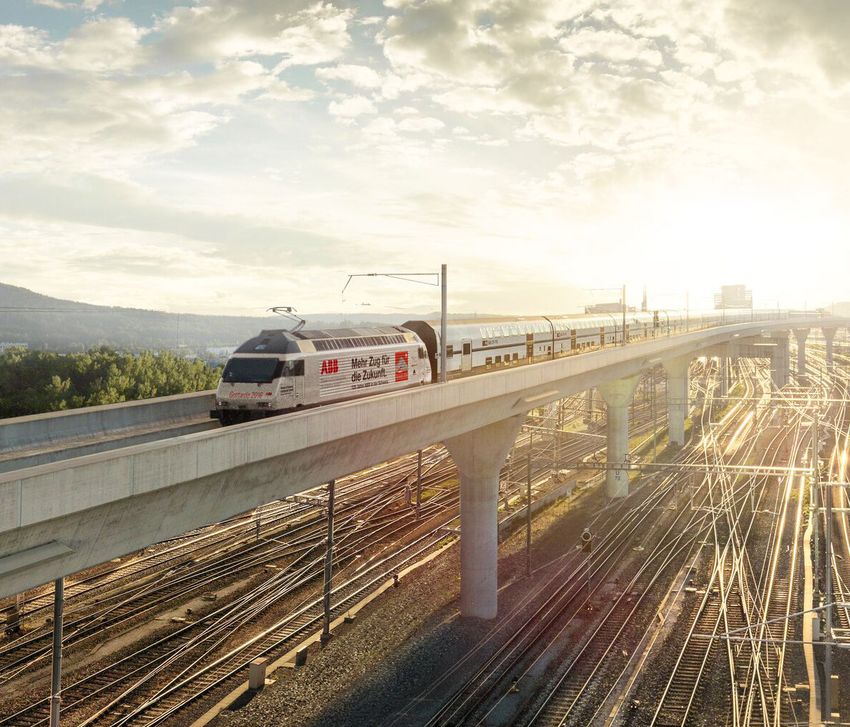
4                 IMPROVING TR ANS PORT E FFICIE NC Y

—
More efficient
traction systems

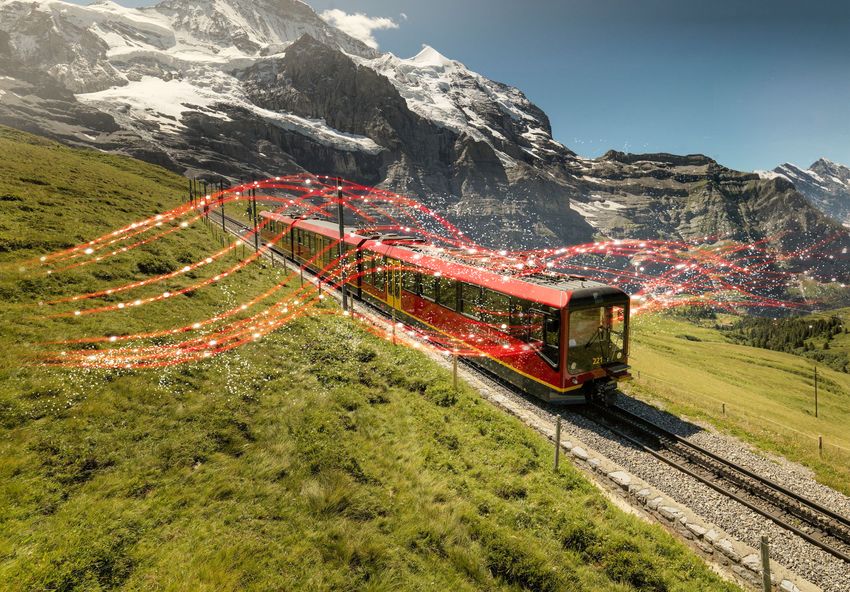
In general, railway vehicles either operate with electricity (AC or DC supply) sourced
via an overhead catenary or 3rd rail or are powered by on-board diesel engines.
On an electric train, the traction system includes a traction transformer (only in
vehicles with AC supply), traction converter, and traction motors. In diesel electric
trains, the traction system is composed of alternators, traction converters and
traction motors. Irrespective of the power supply system, the technology used
in the traction system will have a significant effect on energy efficiency.

                          Traction                 Traction    Auxiliary       Energy
                      transformer                 converter   converter       storage

      Train control                  Traction                       Battery                 Diesel
    and monitoring                     motor                        charger             alternator
            system
A D VA N C E S A N D O P P O R T U N I T I E S TO A C C E L E R AT E S U S TA I N A B L E T R A N S P O R T 5
Improving traction chain efficiency Hybrid drivetrains
The traction converter converts the electrical supply While electricity is commonly used to power trains, a signif-
from the power source into a variable voltage and variable icant proportion still use diesel power where overhead pow-
frequency output according to the needs of the train. The erlines are not available. For example, in Europe, although
choice of traction converter is therefore key to reducing almost 100% of urban rail networks are electrif ied, only
the energy consumption of all other components in the 60% of the mainline networks are. Because these lines carry
traction chain. a low density of traffic, it is often economically unviable to
electrify them and, for this reason, it is unlikely that they
— will be electrified in the near future.
ABB’s BORDLINE® traction The on-board energy storage system can be used to store
converters can reduce the energy the energy regenerated during braking. The stored energy
can then be re-used to provide motive power support to
consumption of a commuter train the vehicle during the acceleration phase and also to feed
by up to 20%.7 on-board auxiliary loads at station stops, obviating the
need to operate the diesel engine and thereby reducing
local emissions. The use of on-board energy storage also
The traction chain based on ABB’s multi-level traction allows the downsizing of the diesel engine, and the possibil-
converter is among the most efficient on the market. ity of operating it more often at optimal efficiency, due to
ABB’s BORDLINE® Compact Converters utilize the latest the energy storage system acting as the buffer storage
generation of Insulated-gate Bipolar Transistors (IGBT). providing peak power.
This, together with the multi-level topology and high switch-
ing frequency and Best Efficieny Control (BEC) allows total
optimization of the traction transformer and motors and
significantly reduces the losses in the traction chain apart
from other accrued benefits like the lowering of audible
noise and reduced mechanical stress of the drive train. A
typical commuter train can reduce its energy consumption
by up to 20% which not only lowers the environment impact —
but also the operating costs.8
Using a hybrid system, a 2-car
diesel-electric hybrid train can
reduce its energy consumption
by up to 15 to 20%.8
Image credit: Stadler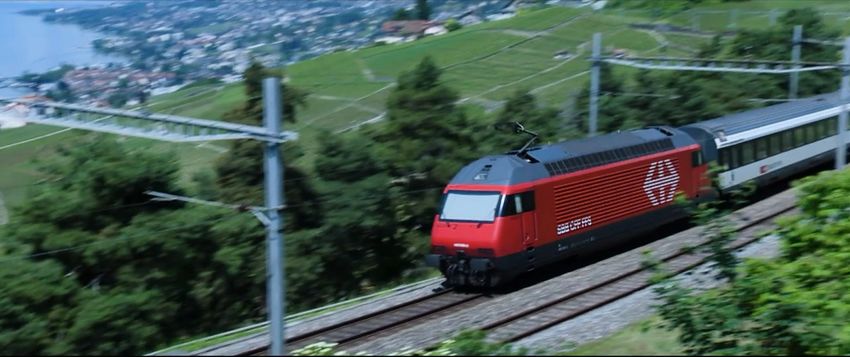
6                     IMPROVING TR ANS PORT E FFICIE NC Y

Hybridisation of diesel-electric drive trains indeed helps to     railways, trolley buses and electric buses must have high
reduce the environmental impact but does not eliminate the        power charging capabilities, endure continuous use and
need for fossil fuels entirely. Therefore, two other alterna-     withstand higher charging cycles multiple times. This is be-
tives have emerged and are gaining significant traction in        cause, while passenger cars are typically used for less than a
the railway market:                                               few hours per day, on average, public transport vehicles are
                                                                  in use 16 to 18 hours a day. Further, they must meet safety
a.   trains equipped with hydrogen fuel cells in combination      requirements taking into consideration the number of pas-
     with batteries                                               sengers carried and the infrastructure on which they are
b.   electric trains equipped with on-board batteries to en-      deployed (such as operating in tunnels and on bridges).
     able catenary free operation.
                                                                  To meet these demands, ABB has developed the BORDLINE®
ABB is already serving both those approaches with traction        Energy Storage System (ESS), a powerful new lithium-ion
converters and traction batteries which are particularly opti-    battery technology. BORDLINE® ESS is already used in
mized for such hybrid technologies.                               a wide variety rail and road vehicles ranging from diesel
                                                                  hybrid multiple units, light rail vehicles, electric multiple
Batteries for mass transportation                                 units and trolleybuses.
Energy storage systems are becoming an integral part of
electric vehicles in both road and rail transport, and they
will play a key role in the transition towards energy efficient
mobility. The increasing prevalence of these technologies
will help to de-carbonize transport and deliver many other
benefits, including better operational flexibility and lower
total cost of ownership.

The requirements for the batteries used in public transport
vehicles are quite different from those used in electric cars.
The batteries used in mass transportation applications like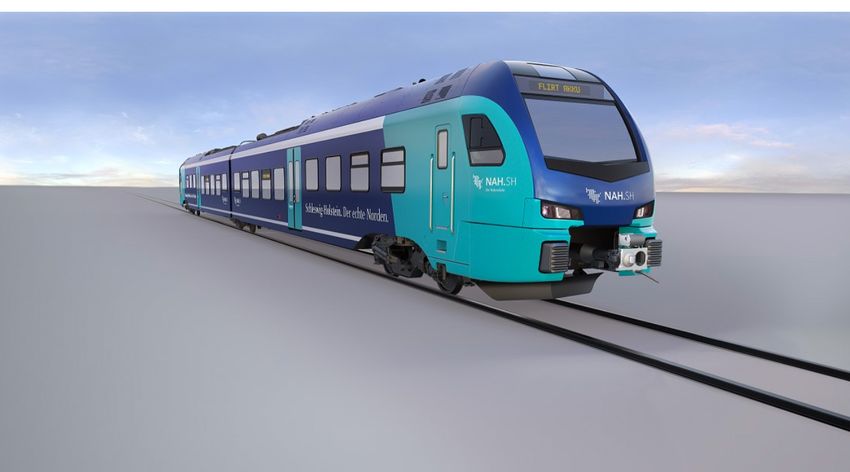
A D VA N C E S A N D O P P O R T U N I T I E S TO A C C E L E R AT E S U S TA I N A B L E T R A N S P O R T           7

Trolleybuses                                                          CUSTOMER CASE
Just like rail vehicles, trolleybuses are
usually powered by overhead lines. And,
also like rail vehicles, this limits their range
to routes that have an overhead power net-
work. As a result, cities often use diesel
buses to serve routes that don't have over-
head electrical infrastructure. Thanks to
advances in battery technology, the range
of a trolleybus can now be expanded be-
yond the limits of the overhead power net-
work. This reduces pollution, noise, emis-
sions, network investment and energy use.

                                                                      The benefits of on-board energy storage
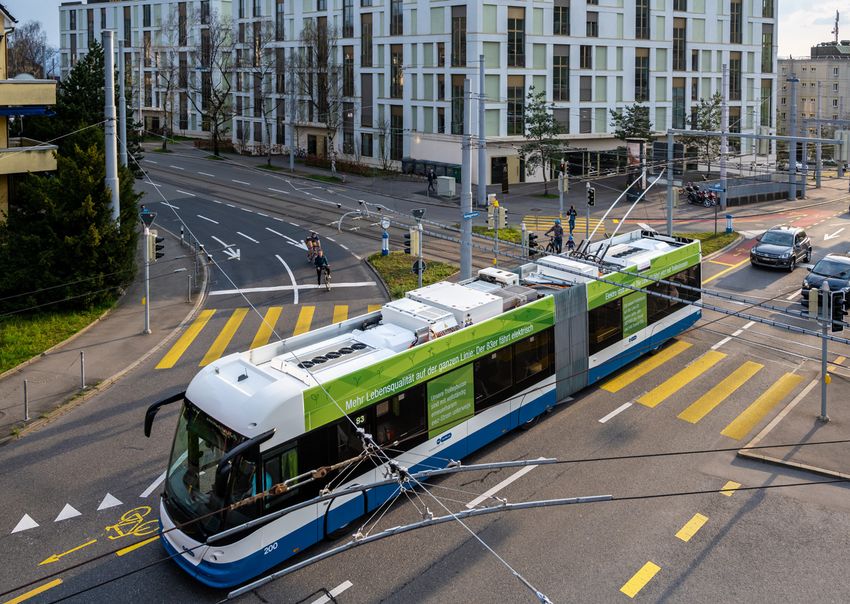
                                                                      The city of Zurich recently replaced their diesel buses on route 83
                                                                      with eight electric trolleybuses equipped with ABB traction convert-
                                                                      ers, electric motors, and battery technology. The trolleybuses use
                                                                      overhead lines where possible and they use the batteries to power
                                                                      them wherever the overhead lines are unavailable. The batteries
                                                                      are charged by the overhead lines during normal use. The battery
                                                                      system also allows 100% regenerative braking which reduces energy
                                                                      use by about 15% compared to a conventional trolleybus. Altogether,
                                                                      the switch from diesel to electric vehicles saves over 200,000 liters
                                                                      of diesel and 540 tonnes of CO₂ emissions a year.

Retrofits                                                             CUSTOMER CASE
In existing rail networks, the rolling stock
can be several decades old. Even if the
traction systems in these trains are still in
working order, there has been huge prog-
ress in power electronics and control tech-
niques since they were commissioned. This
means that retrofitting older trains with
state of the art components not only
extends their operational life but also
significantly improves their efficiency and
reliability, and reduces both operating and
maintenance costs. Depending on their
condition and age, one or more of the
components in the traction chain (for                                 Modernizing SBB locomotives
example the traction converter) can be
upgraded to improve performance, or                                   As part of a project to modernize the Swiss Federal Railways (SBB)
new systems such as ESS can be added.                                 rail fleet, ABB has retrofitted 119 locomotives with modern traction
                                                                      converters and control systems. The retrofit work includes removing
                                                                      the older and less efficient GTO (gateturn-off thyristor) converters
                                                                      and replacing them with more efficient and flexible IGBT converters.
                                                                      The improvements are expected to deliver savings of around
                                                                      27 GWh/year, which is equivalent to the consumption of 6,750 Swiss
                                                                      households.7
8 IMPROVING TR ANS PORT E FFICIE NC Y
—
Conclusion
Continuing the journey to better efficiency Globally, the railway industry is working hard to meet effi-
Electric trains have been in use for over 100 years, and ciency and emissions targets, and the technology to de-
technology has come a long way since then. Today, we liver significant improvements is already here. Altough we
have much more powerful and efficient traction equip- have come a long way, improving the efficiency of our
ment, which can further lower the environmental impact transport systems is a journey that must continue.
of railway rolling stock and other vehicles used for mass
transportation. At the moment, change and improvement
in the transport sector is strongly driven by both urban-
ization and by targets and regulations which aim for sus-
tainable, low-carbon solutions. In addition, advances in
technology are also likely to transform the industry
further.
(1) https://www.iea.org/reports/rail
(2) IEA, The Future of Rail, Opportunities for energy and the environment,
https://iea.blob.core.windows.net/assets/fb7dc9e4-d5ff-4a22-ac07-
ef3ca73ac680/The_Future_of_Rail.pdf
(3) EU sustainability factsheet, https://www.unife.org/wp-content/
uploads/2021/04/Sustainability-Factsheet-February.pdf
(4) EU press release, The journey begins – 2021 is the European Year of Rail!,
https://ec.europa.eu/commission/presscorner/detail/en/IP_20_2528
(5) https://uic.org/sustainability/energy-efficiency-and-co2-emissions/
(6) EU sustainable transport page, https://ec.europa.eu/transport/themes
sustainable_en
(7) Based on ABB calculations
(8) Based on ABB calculations and measurementsA D VA N C E S A N D O P P O R T U N I T I E S TO A C C E L E R AT E S U S TA I N A B L E T R A N S P O R T 9
—
ABB Motion
P.O. Box 1
FI-00232
Helsinki, Finland
9AKK108421 EN-072021
© Copyright 2021 ABB. All rights reserved.
Specifications subject to change without notice.You can also read


