Inclusive And Equitable Urban Transport - A Planning Guide for Cities - | MobiliseYourCity
←
→
Page content transcription
If your browser does not render page correctly, please read the page content below

Inclusive And
Equitable Urban
Transport
A Planning Guide for Cities

Glossary                                                                                                       Contents
    An expanded glossary can be found in the Annex to this guide.                                                  4 Section 1. Introduction
    Community engagement: The process of involving citizens that fit profiles identified by the city
    as representing specific communities. For the purposes of this guide, they are the members of the              5 Section 2. Scope and limitations
    community who have an interest in, influence on, or are impacted (directly or indirectly) by the
    local plan, policy or action.                                                                                  6 Section 3. The case for rethinking inclusivity through public transport
    Co-creation: The active involvement of different interest groups in a project’s design and processes.
    Equality: Having equal status, rights or opportunities.                                                        8 Section 4. The five ‘A’s for an inclusive urban transport reset

    Equity: The possibility of accessing opportunities in an equal manner.                                         10 Section 5: The four-step inclusive planning process
    Informality: Pertaining to part of an economy that is not overseen or taxed by government. In an
    employment context, it refers to ‘off-the-books’ workers. In a land context, it refers to unplanned                      Step 1. Preparation and analysis - city diagnostic and needs assessment
    settlements. In a transport context, it refers to popular or unregulated modes of transport.
                                                                                                                             Step 2. Stakeholder enegagement
    Intersectionality: How different aspects of an individual or group’s social and political identities
    overlap. In a transport context, this also includes how different areas of municipal actions may inter-
    sect with transport, such as health or education.
                                                                                                                             Step 3. Co-design the project

    Leave no one behind: The central tenet of 2030 Agenda for Sustainable Development aimed at                               Step 4. Implementation, monitoring benefits and measuring distribution
    ending poverty in all its forms and reducing inequality. It explicitly requires actions to ensure that
    more vulnerable or marginalised people and groups progress at an equal rate to those who are
    better off.
                                                                                                                   14 Developing a needs assessment

    Underserved: Communities that are not well served by the current transport system (spatially,                  15 Conclusions
    economically or socially), typically including women, the elderly, the less educated, people living
    with disabilities, those with limited local language proficiency, single parents and zero-vehicle              16 References
    households. The underserved also include groups referred to as communities of concern or vulnera-
    ble communities.
                                                                                                                   18 Annex I
    Vulnerability: A lack of capacity to cope with, adapt to and recover from natural, political, social
    and economic shocks and stresses. It may refer to both people and transport infrastructure and is
    closely linked to resilience.                                                                                   About the C40 Cities Finance Facility:
                                                                                                                    The C40 Cities Finance Facility (CFF) is a collaboration of the C40 Cities Climate Leadership Group
                                                                                                                    and Deutsche Gesellschaft für Internationale Zusammenarbeit (GIZ) GmbH. The CFF supports cities in
    Acronyms
                                                                                                                    developing and emerging economies to develop finance-ready projects to reduce emissions to limit global
    COVID-19     Coronavirus Disease 2019                                                                           temperature rise to 1.5°C and strengthen resilience against the impacts of a warming climate. The CFF is
                                                                                                                    funded by the German Federal Ministry for Economic Cooperation and Development (BMZ), the Children’s
    CSO          Civil-society organisation                                                                         Investment Fund Foundation (CIFF), the Government of the United Kingdom and the United States Agency
                                                                                                                    for International Development (USAID).
    ILO          International Labour Organization

    LGBTQ        Lesbian, gay, bisexual, transgender and queer

    NGO          Non-governmental organisation

    UITP         International Association of Public Transport

    UNECE        United Nations Economic Commission for Europe

    UNSDG        United Nations Sustainable Development Group

    WBCSD        World Business Council for Sustainable Development

2                                                                                                             33                                                                                                               3
1
Introduction
2
Scope
Cities are major economic and The guide aims to provide a set of actions and checklist to Inefficient urban transport systems
help city decision makers, transport authorities and planners Case Study: Jakarta, Indonesia
multicultural centres contributing to to rethink urban transport as a core component of their have a major effect on marginalised
national and local economies. The recovery plans and encourage them to address gaps and and underserved communities. Jakarta suffers from high levels of urban congestion,
inequalities in their transport systems. The rationale for such preventing vulnerable populations from accessing key
impacts of the COVID-19 pandemic a reset is twofold. First, inclusive public transport systems For the purposes of this planning guide, we use terms public services. The travel times and costs associated
on the global economy have affected deliver more equitable outcomes for everybody, not just the
few. Second, cities with good walking and cycling networks
such as ‘inclusive’ or ‘underserved’ solely in a transport with reaching health and education facilities, for
context. The transport underserved, for instance, may instance, reveal a high level of spatial inequality.
everyone and put many people at risk and inclusive, robust public transport systems are more include women, the elderly, the young, those who are Residents living in an ‘average’ Jakarta neighbourhood
of falling into poverty. The pandemic resilient due to the health, economic, environmental, and
social benefits these networks provide(C40, 2020b; C40,
mobility impaired, on low income or unemployed, people take around 40 minutes to reach a regional public
who are socially excluded or poorly integrated and migrant
has both reinforced and deepened 2021; World Bank, 2019). By addressing the transport needs communities. Transport underserved groups are often
hospital on public transport, while for some residents,
the travel time is more than two hours, putting women
many existing inequalities. As cities of different groups, cities can boost social equity and their
resilience to unforeseen shocks at the same time.
those who rely on urban transport most, as they have and people with disabilities at a particular disadvantage.
limited access to private vehicles or taxi services. However,
look to ‘build back better’ within a they face numerous barriers to using it ‒ physical, financial, Jakarta is home to one of the world’s longest bus rapid
This guide looks at the different aspects and needs of
green and just framework, improving those who are currently underserved and maps out the
cognitive and emotional. What’s more, these groups are transit systems, the TransJakarta Bus Rapid Transit (BRT).
also often the most difficult to engage, and data and
access to jobs, education, health, issues that these groups face as they move around the city.
information on them are often incomplete, especially if
There are ongoing efforts to improve its spatial coverage
Furthermore, it sets out the case for leveraging actions and accessibility by installing minimum disabled-
parks, cultural facilities and leisure will within the project preparation cycle to reinforce both they live in informal, unmapped settlements. friendly standards throughout the city. A flat fare of IDR
be a crucial element of the recovery. the societal and climate benefits for a city, outlining new To deliver more inclusive transport systems, cities need to 3,500 (US$ 0.24) with a one-tap smart card that allows
opportunities for cities to become more inclusive. understand the multiple levels of inequality and transport interchanges makes the system very affordable. It also
poverty and address the inefficiencies in the current recognises 14 categories of people who can travel for
transport system that fuel them. Elected officials, transport free. Furthermore, there are measures underway to
professionals, local businesses, activists, non-governmental address gender-based violence, including women-only
organisations (NGOs) and civil-society organisations (CSOs) buses, separate seating, stickers at transit stops, hotline
need to come together in an open and transparent process and complaint-handling mechanisms, and off-board fare
to address the transport poverty of the underserved. purchasing (to avoid large crowds where harassment is
most likely).
This guide shows that while trade-offs between
stakeholders are often needed, this is not always the case. The TransJakarta BRT is also making efforts to increase
The guide is not exhaustive, but rather a tool that can help prosperity through greater diversity in the workforce,
cities take action and learn by doing. It is based on existing with quotas for female drivers and diversity- and gender-
work and includes lessons from six CFF case studies conscious policies, such as maternity/paternity and
in Monterrey, Guadalajára and Mexico City (Mexico), unpaid leave entitlements.
Bangalore (India), Jakarta (Indonesia) and Quito (Ecuador)
and a literature review. Source: CFF (2020d)
4 5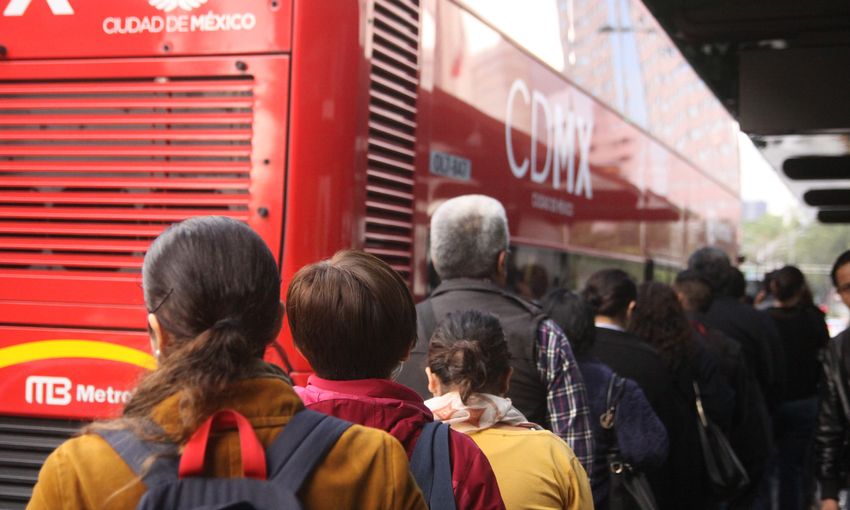
3
    The Case For Rethinking Inclusivity Through
                                                                                                                                     Transformational
                                                                                                                                      change does not
                                                                                                                                     happen in a linear
                                                                                                                                    fashion but is more
    Public Transport                                                                                                                often triggered by a
                                                                                                                                   shock, or crisis, as has
    COVID-19-induced travel restrictions,                          When it comes to the post-pandemic recovery, for many            been the case with
                                                                   of these groups, economic resilience is strongly correlated
    reduced transport capacity and the                             to physical mobility. Research by C40 shows that a Green
                                                                                                                                         COVID-19
    need for social distancing have had                            Recovery could create more than 10 million transport jobs
                                                                   between 2020 and 2030 across the nearly 100 cities in
    widespread and far-reaching impacts                            the C40 network and their supply chains (ILO & UNECE,
    on those who use public and shared                             2020). At a time of mass unemployment and economic
    transport and those who provide it.                            hardship in many parts of the world, creating jobs will
                                                                   benefit millions of families in addition to ensuring that the
    Mass transit has traditionally been designed and planned       recovery delivers transport justice.
    to maximise the efficient transport of volumes of people
    on certain routes, typically from wealthier commuting          Transformational change does not happen in a linear
    areas to the inner city (McArthur et al., 2020). This has      fashion, but is more often triggered by a shock or crisis,
    resulted in central municipal areas being well served by       as with COVID-19 (WBCSD, 2020). Cities now have the
    public transit, while outlying communities face fewer,         opportunity to redefine and reframe their transport
    lower-frequency services. This approach is now being           systems (Coxon, 2020; World Bank, 2020) and deliver
    questioned, with lower capacity and social-distancing          mobility in ways that respond better to the needs and
    requirements affecting the carrying capacity of vehicles       requirements of the transport underserved. Rethinking city
    and people more worried about being in close proximity         transport systems to make them more inclusive requires
    to others in confined spaces.                                  looking at the entire transport ecosystem in an integrated
                                                                   fashion. Nonetheless, it is up to the city to plan and decide
    The purpose, length and timing of many trips has changed.      how it wants or needs to reframe transport (and land-use)
    Higher-income earners have been working predominantly          planning processes as part of its recovery plans.
    from home, significantly reducing their need for daily                                                                                  Case Study: Durban, South Africa
    travel, and this is likely to continue for the foreseeable     In short, the COVID-19 pandemic offers a once-in-
                                                                   a-lifetime opportunity to address the structural                         Inequality is a major concern in African
    future. Essential workers of all kinds, in contrast, still
                                                                   imbalances of urban transport and to shift to a more                     cities, and this includes both spatial and
    need to get to work. A significant percentage of people,
                                                                   inclusive and resilient urban transport future.                          economic segregation for historical reasons.
    especially those on low incomes, have to travel to their
                                                                                                                                            Outlying city areas are often the poorest
    workplaces. Key and frontline workers, school children and
                                                                                                                                            and suffer from inefficient transport links to
    students, those employed in the informal economy who
                                                                                                                                            the main, central areas and business districts
    cannot afford to miss work, the elderly, those with medical
                                                                                                                                            where jobs can be found. The city of Durban
    conditions, and many others all need public transport to
                                                                                                                                            recently took a new approach as a first
    get around.
                                                                                                                                            step and launched 150 new Euro 5 buses
                                                                                                                                            in low-income (rather than high-income)
    According to the International Association of Public
    Transport (UITP), between March 2020 and May 2020,
                                                                     “The necessity to deliver                                              communities. The community response
    the fall in ridership associated with government bans and        inclusive and sustainable                                              was overwhelming: the city was not only
    stay-at-home orders reduced farebox revenues by up to            transport should be visible to                                         able to test the buses but witnessed and
    90% (World Economic Forum, 2021; UITP, 2020). Recent                                                                                    benefitted from an increase in civic pride in
    statistics for 2020 from Bogotá, Colombia, home to the
                                                                     the city residents, as seeing with                                     this otherwise disenfranchised community a
    high-capacity TransMilenio Bus Rapid Transit (BRT) system,       their own eyes that transport                                          ‘win-win’ situation.
    show that almost 52% of residents used public transport          projects that are sustainable and                                      “We were absolutely humbled by the
    less than in 2019. Many cities have also seen an upsurge in
    car or motorcycle purchases and use, as people choose to         inclusive (for them) also deliver                                      response the communities gave; they simply
                                                                                                                                            could not believe that these modern buses
    revert to individual rather than shared travel. This poses a     better outcomes for society at                                         were coming to them.”
    challenge for long-term public-transport sustainability, but
    also presents an opportunity to build systems that work
                                                                     large.”
                                                                                                                                            Malcolm Joshua, Head of City Fleet,
    for users.                                                                                                                              eThekwini Municipality, in an interview
                                                                     Mariana Bulos, Director of Public Transport Revenue,                   conducted on 10 February 2021
    The significant changes in urban transport behaviours
                                                                     Guadalajára, in an interview on 25 January 2021
    caused by the COVID-19 pandemic give us the
    opportunity to do things differently.

6                                                                                                                                                                                            7
4
Five A’s for an Inclusive Urban Transport Reset
Accessibility
Ensure everyone has access to transport
options that enable access to key
destinations and services. There are many
dimensions (physical, financial, cognitive
Affordability
and emotional) to accessibility for the
Inclusive transport system planning Take, for example, the second ‘A’ – affordability. Studies underserved, going well beyond physical
show that women, especially those with families and on low accessibility.
can be guided by five core principles, incomes, typically rely more on public transport than men
All planning and improvements should
which we call the five ‘A’s for an urban and have less money to spend on transport. They also tend
look to improve the efficiency and
to make more multi-destination trips (Buenos Aires Ciudad,
transport reset. Both the perception 2019) as they often have additional responsibilities on top cost-effectiveness of transport, of
and the reality of these attributes greatly of paid work, such as childcare or domestic chores, due to both people and goods, both for those
who use the system and those who
affect transport choices and decisions for traditional social norms. For them, affordability is a critical
provide the services. This does not mean
issue. Thus, fares based on what men might be willing to pay
the underserved. could exclude women. that everyone’s fare should be priced
Attractiveness
below market value, but that social and
Consequently, different measures, policies and actions concessionary fares, combined with
need to be mapped against the 5 ‘A’ principles (listed in no integrated ticketing, can help those on
particular order) to test their feasibility. low incomes.
Organisational and service delivery
models need to provide attractive
services to all sectors of the population,
not just those that are easiest to serve.
Availability
Attractiveness and reliability are closely
interwoven with other attributes such as
safety (vehicle, infrastructure, policies and
measures/standards), personal security,
comfort and reliability. The distance required to access services
(first- and last-mile connections) and the
frequency of services (and accompanying
real-time or other passenger information)
can greatly affect how many groups use
transport. Planners need to understand
the whole-journey requirements of these
Assessability
groups to ensure that they respond to
their needs. If the first- and last-mile
sections are too difficult, dangerous or
time consuming, it does not matter how
Many projects do not document
attractive the public transport is, these
or assess all the options available
groups will find them difficult to use, or
or the learning accumulated during
choose not to use them at all.
the process in order to refine and
improve approaches, evaluate success
(and failures) and build institutional
knowledge. Cities often fail to reflect
on feasibility levels compared with
other transport projects or neglect to
define what success should look like.
Determining both common and varying
Case Study: Monterrey and Guadalajára, Mexico
perceptions of success by working with
Monterrey and Guadalajára have used the SIMONE methodology to develop gender action plans to increase the those involved can be very valuable.
equality of their transport systems. An example of this can be found in the external resources. The methodology serves Understanding constraints (financial,
as a guide for analysing gender perspective over a full project lifecycle and includes aspects of institutional design. The legal and otherwise) and complexity,
analysis is split into two parts: (1) the public policy lifecycle and (2) the institutional setup making and implementing or setting reasonable time frames for
public policy. The approach includes methodology for better incorporating the public transport needs of women, along assessment and evaluation, are often
with an evaluation matrix showing the main and sub-projects, specific actions, reference documentation, desirable challenging. If procedural milestones and
goals (optimal outcomes), current situation, level of difficulty and a traffic-light go/no-go ranking. The methodology evaluation are not transparent, this can
is intended to help cities analyse the situation over the whole lifecycle of their transport project, be it in terms of the lead to stakeholder disappointment and
governance and/or institutional changes required or the involvement of public players or stakeholders, construction have political consequences.
companies, service operators, or monitoring and evaluation entities.
Sources: CFF (2020b; 2020c)
8 9
5
The Four-Step Inclusive Planning Process:
Checklist for Action
Preparation and Analysis:
1 City diagnostic and needs assessment 2 Stakeholder Engagement
Define the desired outcomes and vision for Identify key data and knowledge gaps and Identify the key user groups (categories)
Case Study: Quito, Ecuador
inclusive transport discuss how to fill them. and plan engagement outreach. Identify key
and secondary beneficiaries with input from The City of Quito has been using electric mobility
The starting point for inclusive transport planning has Undertake a needs assessment that maps the current communities, as well as those who may be for its well-known Corrido Trole Bus Rapid Transit
to be a conscious decision by policymakers to shift to transport situation for target groups and includes current missing from the process. (BRT) system since 1995. Women use the current
an inclusive, consensus-led planning process. It is useful barriers, challenges and transport deserts (areas where system more than men, so with CFF support, the
to reflect on desirable outcomes and set them out as a the system either does not exist or does not function Informed by the stakeholder mapping, develop a vision
city is working to better understand their mobility
‘vision’. Key beneficiaries (from the city’s perspective) can adequately). This should include a review of the datasets based on a classification and categorisation of target user
needs and, thus, improve transport inclusion. Quito is
provide useful input in this preparatory phase, for example, and information available, who owns the data and groups most exposed to transport inequalities. Based on
exploring how the electrification of public transport
through workshops or meetings. Such an approach can whether there are any gaps. These may be spread over the discussions in step 1, target groups can be sorted into
could allow it to better respond to women’s needs
help to build political support and clarify the timeframes several institutions and agencies. This information can be user categories based on characteristics most relevant
and redefine transport routes in line with women’s
and political economy aspects that may need to be summarised to build the case for developing the project to the expected project outputs. These can be the
multifaceted role as caregiver, homemaker and
included in project development. and to build momentum. demographic characteristics of users (gender, age, family
income generator (formal and informal).
or residency/location/status), socioeconomic aspects
Analyse what resources are available (human, (income levels, employments status), or quality of current Sources: CFF (2020b; 2020c)
institutional, financial) for planning and set mobility options (informed by different aspects of the five
up appropriate working and participation Step 1 activities can take place in parallel, depending on ‘A’s). Another approach is to map potential beneficiaries’
structures. the local context, resources and capacities available. Based inputs to the project cycle based on four simple priorities:
on the needs analysis and inputs, the preparation phase Why are we including them? Who are they (stakeholder
Management, resourcing, roles and responsibilities should should bring together the main players, map roles and profile)? How are we going to contact and engage with It is useful to gain information from a wider group of
be set out at this early stage. The core project team responsibilities, create the core team, agree the vision and them? When do we include them in the project? stakeholders and interested parties at this time, for
should be appointed with the support of all relevant local identify the main area(s) of action. This creates the base
Define communication processes between all example, transport service operators, the private sector,
institutions, authorities, elected and non-elected officials for the stakeholder activities in step 2.
parties. public amenities (such as schools, health facilities, local
that have an interest in and/or influence on the project,
business communities, security or traffic agencies) or other
as well as any requirements for additional staff and/or
Identifying and engaging with those groups identified interested parties (such as NGOs that may be positively or
resources.
as primary and secondary project beneficiaries is key negatively affected) by the project. Different perspectives
Ensure political support and map any political to being able to take informed and inclusive planning can provide valuable insights into framing the scope, scale
events to the project process. decisions. Processes on how to engage with them and and content of the final project and how it aligns with the
understand their needs are vital in this stage. Mechanisms original vison. While there is typically more debate on how
Map key stakeholders and interested parties. for communication and partnering need to be planned to achieve the vision than the vision itself, it is better to
and resourced. Through participation, define expected modify the vision at this stage if required. This information
Identify factors that may impact the planning outcomes so there is a common, strategic, shared contributes to the project definition and actions taken in
process and project. understanding with clear milestones. step 3.
Analyse the mobility situation from the Map the 5 reset principles from different
perspective of likely key beneficiaries using the perspectives.
data available and outline potential areas of
action. Workshops and meetings can be organised to better
understand how underserved segments of the population
make transport choices. The five ‘A’s for an urban transport
reset should be explored from their perspective.
10 11
Implementation, monitoring benefits and
           3            Co-design the project                                                                                               4            measuring distribution
            Check that the common vision is being used to define the project and revisit the five A principles (page 9)                      Identify and access technical support needed
                                                                                                                                                                                                   Case Study: Bengaluru, India
            Identify any outstanding data gaps or technical assistance in respect to the project definitions and                      Technical support can be provided through internal
                                                                                                                                      expertise or an external organisation, such as the CFF.      A review of gender and social-inclusion initiatives
            boundaries.                                                                                                                                                                            undertaken in 2020 by the CFF showed a number
                                                                                                                                             Plan and implement pilot or test phase,               of gaps, including a limited understanding of the
            Create effective and trustworthy feedback loops                                                                                  document the experience and adjust the main           challenges and barriers faced by people with
                                                                                                                                             project components if required.                       disabilities, caregivers and trans persons when it came
            Discuss possible risks and unforeseen consequences                                                                                                                                     to using public transport services in Bengaluru, India.
                                                                                                                                      Further stakeholders may also need to be included to cover
                                                                                                                                                                                                   The Bengaluru Metropolitan Transport Corporation
            Identify project timelines and key milestones                                                                             the technical aspects of the pilot or test phase, such as
                                                                                                                                                                                                   (BMTC) provides concessional travel for people with
                                                                                                                                      academics or practitioners.
                                                                                                                                                                                                   physical and visual impairments and has reserved
            Allocate or reallocate roles and responsibilities.                                                                                                                                     seats in all buses, identified by a notice referring
                                                                                                                                             Determine what success looks like & for whom
                                                                                                                                             (revisit expected benefits).                          to “physically challenged persons”. However, less
                                                                                                                                                                                                   than one-fifth of the buses (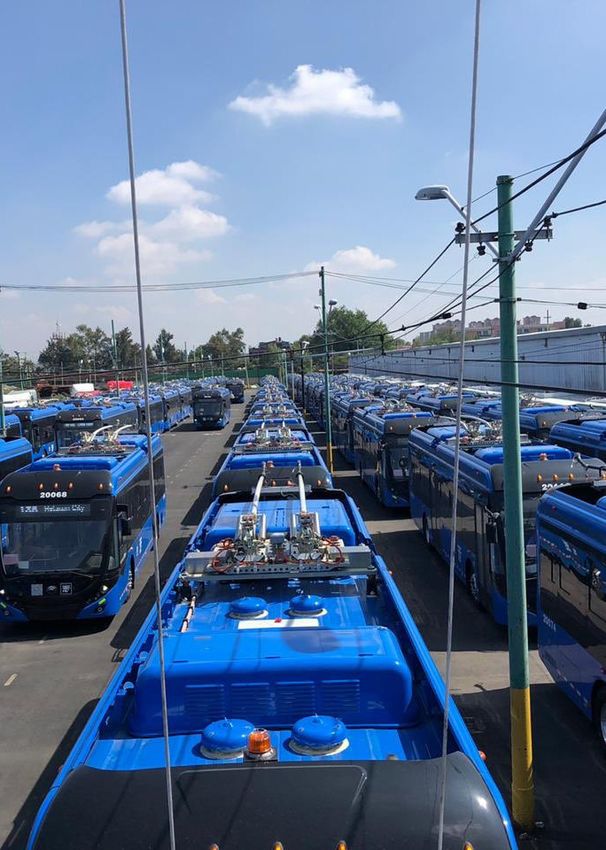
6
Developing a needs assessment
7
Conclusions
Sustainable and
equitable transport
has a clear role to
play in achieving
economically vibrant
cities.
To put people first, cities need to contributing knowledge, skills and capacity(Nguyen Long,
et al., 2019). In addition, by creating space for open and
understand how all communities inclusive dialogue, collaborative action and co-creation, the
currently use or are unable to use their potential for success is often higher and the project design
often more cost-effective. There are a growing number
transport systems, including those that of examples of successful stakeholder engagement. They
may be underserved. include managing resistance to the introduction of a
city-wide 30kpm speed limit in Graz, Austria; introducing
Such a needs assessment can be done by applying an a mobility forum in Krakow, Poland, that increased
equity lens to on-the-ground realities to identify the passenger satisfaction levels from 75% to 88% in three
communities most at risk. There are likely to be gaps in the years; and forging agreement on a traffic plan in Odense,
data used by most transport planning units when it comes Denmark (2006), that would lead to the closure of the
to the mobility behaviour of and challenges faced by these city’s two biggest through roads, linking the centre with
communities. Reaching out to grassroots organisations and the harbour to the north of the city. Previous attempts to
CSOs is often an efficient way of gathering information close those roads had failed due to concerns about traffic
and understanding the social and economic barriers these displacement. While such a move can initially be time
communities face. It can also spark ideas on how these consuming and require upfront investment, it is worthwhile
problems can be addressed. in the long term.
Building these relationships is a key part of the co-creation When looking at transport through an equity lens, both
process and can be very useful if additional data are direct (those directly associated with better transport)
needed from these typically hard-to-reach groups. Early and indirect benefits (where better transport has brought
engagement to identify concerns also boosts the likelihood benefits to other sectors) should be considered. For
of the project’s success and often results in useful ‘hidden’ instance, in Nigeria, the majority of urban trips are made
grassroots knowledge. An example is Slum Dwellers by informal or popular transport, but due to COVID-19-
International’s ‘Know Your City’ slum-mapping initiative, induced restrictions on capacity, fares have doubled or
which collects data on demographics, risks and access to even tripled in some cases (such as at night). This has left
basic services for informal settlement dwellers (SDI, 2018). people on low incomes having to make the difficult choice The impacts of the COVID-19 pandemic In the context of the recovery from the COVID-19
pandemic, therefore, it will be crucial to address inclusivity
Community engagement and participatory processes can
between paying for food for the family or paying for on the global economy have affected on the path to a more sustainable and just urban future, as
transport so their children can go to school. (Jennings, Allen
be used to build knowledge on needs, which can help
& Arogundade, 2020) everyone and put many at risk set out by C40 mayors in their Agenda for a Green and Just
to define better measures and indicators for success. In Recovery (C40, 2020a). It has become clear that for cities
some cases, the involvement of communities can also
of falling into poverty. With the to respond to further crises, they need to expand their
help relieve financial and political demands on the city by pandemic exacerbating many pre- concept of resilience to include inclusive urban transport.
Ultimately, this guide aims to show that this is the time to
existing inequalities, cities need to rethink and reset current planning approaches to urban
include marginalised and underserved transport and that there are benefits to be had from
applying an inclusiveness lens to urban transport planning.
people in recovery strategies,
Case Study: London, England especially those located in the Global While this may be challenging, linking the societal benefits
of inclusive urban transport is extremely worthwhile, as
London’s political commitment to diversity and inclusion has been in place for more than 20 years. As a multicultural
South. it has the potential to deliver a wide range of combined
city, London has extensive experience of the collection of data and information on the transport underserved. It has social, economic, health and climate benefits. Therefore,
Inclusive cities are more resilient cities. With the pandemic
built a good understanding of the needs of these various communities and developed a suite of policies and measures sustainable and equitable transport has a clear role to play
aggravating the daily transport challenges and barriers
to address them. Its inclusive policies include free travel with a Freedom Pass smartcard for all Londoners who are in achieving economically vibrant cities.
faced by marginalised and underserved groups, the need
registered disabled or over 60 years of age. In 2013, Transport for London undertook an initiative focusing on gender to act has become more pressing. Transport is not an end Looking at urban transport planning from an inclusive
gaps in five categories ‒ accessibility, safety and security, affordability, information and employment ‒ and was in itself, but a facilitator of wellbeing and prosperity, giving perspective will help bring about a change in mindset
involved in co-creating an action plan and a four-year initiative, called Action on Equality, with inputs from 140 different people access to opportunities such as jobs, education, that is long overdue.
women’s groups. The initiative took forward suggestions such as accessible bus stops, more legible maps, improved health and social contact. Ultimately, a well-functioning
lighting at bus stops, a diverse transportation workforce, priority seating for women and the elderly, and real-time public transport system facilitates equitable access to key
schedule information on buses. Passenger information, for example, now clearly shows the physical accessibility of the urban opportunities and services. Conversely, a lack of
transport system (stops, stations and vehicles). In addition, a recent report explores the needs of London’s lesbian, gay, transport, especially public transport, is inextricably linked
bisexual, transgender and queer (LGBTQ) community. to social disadvantage, exclusion and inequality.
Source: GLA (2011); Mayor of London (2018)
14 15
Bibliography
        Buenos Aires Ciudad (2018). Second Action Plan of the
        City of Buenos Aires. Buenos Aires: Local Governments
                                                                            International Labour Organization (ILO) & United
                                                                            Nations Economic Commission for Europe (UNECE)
                                                                                                                                          Transport for London (2019). Travel in London: Under-
                                                                                                                                          standing our diverse communities 2019. London
        Programme of the Open Government Partnership                        (2020). Jobs in green and healthy transport: Making the
        (available at https://www.opengovpartnership.org/                   green shift. Geneva, Switzerland                              Union Internationale des Transports Publics (UITP)
        wp-content/uploads/2018/12/Buenos-Aires_Action-                                                                                   (2020). ‘Cities for People: Public Transport for Better
     Anami, L. (2020). Death and destruction as floods rain                 International Transport Workers Federation & C40              Lives’. Policy Brief. Brussels: International Association of
        Plan_2018-2020_EN.pdf).
     havoc across East Africa. The EastAfrican, 18 May. Available           Cities (2021). ‘The Future is Public Transport’ [online].     Public Transport (available at https://cms.uitp.org/wp/
     at:Buenos
         https://reliefweb.int/report/kenya/death-and-
                  Aires Ciudad (2019). Plan de Genero y Movilidad.          Campaign. [Last accessed 26 June 2021]. https://thefuture-    wp-content/uploads/2020/07/Policy-Brief-CitiesForPeo-
     destruction-floods-rain-havoc-across-east-africa.
        Buenos Aires (available at https://www.buenosaires.gob.             ispublictransport.org/                                        ple-web.pdf).
        ar/sites/gcaba/files/plan_de_genero_y_movilidad_pdf.
     Bird, B. (2019). Draining Dar’s Economy - The Impact of Floods
        pdf).                                                               Jennings, G., Allen, H. & Arogundade, E. (2020).              United Nations Sustainable Development Group
     on Tanzania’s Commercial Capital. Blog, 1 October. Washington,
                                                                            Gaining or losing ground: Ensuring that post-covid-19         (UNSDG) (2021). ‘Universal Values Principle Two: Leave
     DC:  World
        C40      Bank. Available
              (2020a).  ‘A green, at:
                                    justhttps://www.worldbank.org/
                                          and job-rich COVID-19 recovery:   transportation serves the needs of women in low-income        No One Behind’ [online]. New York. [Last accessed 26 June
     en/news/opinion/2019/10/01/draining-dars-economy---the-
        How cities can rapidly boost good, local employment’                sub-Saharan African cities. South Africa: IMC Worldwide       2021]. https://unsdg.un.org/2030-agenda/universal-values/
     impact-of-floods-on-tanzanias-commercial-capital.
        [online]. London. [Last accessed 26 June 2021]. https://            (available at https://transport-links.com/download/gain-      leave-no-one-behind
        www.c40knowledgehub.org/s/article/A-green-just-and-                 ing-or-losing-ground-ensuring-that-post-covid-19-trans-
     Boulton, C., Dedekorkut-Howes, A., Holden, M. &
        job-rich-COVID-19-recovery-How-cities-can-rapidly-boost-            portation-serves-the-needs-of-women-in-low-income-            World Bank (2019). ‘Smarter cities for an inclusive,
     Byrne, J. (2020, November). Under pressure: Factors
        good-local-employment?language=en_US).                              sub-saharan-african-cities/).                                 resilient future’ [online]. Blog, 3 December 2019. https://
     shaping urban greenspace provision in a mid-sized city.
     Cities,                                                                                                                              blogs.worldbank.org/sustainablecities/smarter-cities-in-
        C40 106:  102816.
              (2020b).      Available cyclists
                         ‘Prioritising  at: https://www.sciencedirect.
                                                and pedestrians for a
     com/science/article/pii/S0264275119310960.                             Lucas, K., Mattioli, G., Verlinghieri, E. & Guzman, A.        clusive-resilient-future
        safer, stronger recovery’ [online]. London. [Last accessed
                                                                            (2016). ‘Transport poverty and its Adverse Social Conse-
        26 June 2021]. https://www.c40knowledgehub.org/s/
     Casmiri, D. (2008). Vulnerability of Dar es Salaam City to             quences’. Transport, 169(6)                                   World Bank (2020a). ‘COVID-19 to Add as Many as 150
        article/Prioritising-cyclists-and-pedestrians-for-a-safer-
     Impacts of Climate Change. Dar es Salaam: Environmental                                                                              Million Extreme Poor by 2021’ [online]. Press release, 7
        stronger-recovery?language=en_US).
     Protection and Management Services. Available at: https://             Mayor of London (2018). Inclusive London: The Mayor’s         October 2020. https://www.worldbank.org/en/news/
     pubs.iied.org/G02388/.
        C40 (2021). C40 Mayors Agenda for a Green and                       Equality Diversity and Inclusion Strategy. London (availa-    press-release/2020/10/07/covid-19-to-add-as-many-as-
        Just Recovery. London (available at https://www.                    ble at https://www.london.gov.uk/sites/default/files/may-     150-million-extreme-poor-by-2021
     Cusick, D. (2018). New Walls Aim to Hold Back Rising Seas              ors-equality-diversity-inclusion-strategy.pdf).
        c40knowledgehub.org/s/article/C40-Mayors-Agenda-for-
     off Tanzania. Scientific American, 4 September. Available                                                                            World Bank (2020b). ‘Rethinking India’s public transport
        a-Green-and-Just-Recovery?language=en_US).
     at: https://www.scientificamerican.com/article/new-walls-              McArthur, J., Smeds, E. & Singerman Ray, R. (2020).           after the COVID-19 lockdown is over’ [online]. Blog, 26
     aim-to-hold-back-rising-seas-off-tanzania/.
        CFF (2020a). Gender Equality and Social Inclusion                   ‘Coronavirus showed the way cities fund public transport      May 2020. (https://blogs.worldbank.org/endpovertyin-
        in Electrification of BMTC Fleet. Berlin (available at              is broken – here’s how it needs to change’. The Conversa-     southasia/rethinking-indias-public-transport-after-cov-
     Dewan, A. (2013). Floods in a Megacity - Geospatial
        http://cff-prod.s3.amazonaws.com/storage/files/                     tion [online], 8 September 2020. https://theconversation.     id-19-lockdown-over)
     Techniques in Assessing Hazards, Risk and Vulnerability.
        hUhdBtXYoxAw8uHD1Af83tmvZMjdZjlSoHA9mhUg.pdf).                      com/coronavirus-showed-the-way-cities-fund-public-
     Berlin: Springer Science & Business Media.
                                                                            transport-is-broken-heres-how-it-needs-to-change-145136       World Business Council for Sustainable Development
        CFF (2020b). Plan de acción para incorporar la perspectiva                                                                        (WBCSD) (2020). Unlocking systems transformation:
     European Environment Agency (2019). Forests can
        de género en proyectos de transporte: Área Metropolitana            McKinsey (2020). ‘COVID-19 and gender equality:               Vision 2050 issue brief. Geneva, Switzerland (available at
     help prevent floods and droughts [online], updated 10
        de Guadalajara. London. https://cff-prod.s3.amazonaws.              Countering the regressive effects’ [online], 15 July 2020.    https://docs.wbcsd.org/2020/06/WBCSD-Unlocking-sys-
     December. Copenhagen. Available at: https://www.eea.
        com/storage/                                                        New York. https://www.mckinsey.com/featured-insights/         tems-transformation.pdf).
     europa.eu/highlights/forests-can-help-prevent-floods.
                                                                            future-of-work/covid-19-and-gender-equality-counter-
        CFF (2020c). Plan de acción para incorporar la
     Hinkel, J.B. (2012). Sea-level rise impacts on Africa and              ing-the-regressive-effects                                    World Economic Forum (2021). ‘COVID made many of us
        perspectiva de género en proyectos de transporte:
     the effects of mitigation and adaptation: an application of                                                                          avoid public transport - what will it take to get us back on
        Zona Metropolitana de Monterrey. London.                            Moovit (2021). ‘Public Transit Statistics by Country and      the bus?’ [online]. Article, 4 February 2021. https://www.
     DIVA. Regional Environmental Change, 12: 207-224.
        https://cff-prod.s3.amazonaws.com/storage/files/                    City’ [online]. Last accessed 26 June 2021. https://moovi-    weforum.org/agenda/2021/02/public-transport-covid-da-
        nmYhMutg5C55hKEzbnHlj0AbuFt7CW7zfv5K5h8G.pdf
     IPCC   (2018). Global Warming of 1.5°C: An IPCC Special                tapp.com/insights/en/Moovit_Insights_Public_Transit_In-       ta/
     Report on the impacts of global warming of 1.5°C above                 dex-countries
        CFF (2020d). 100 E-Bus Trial Jakarta WP 2.6 Gender
     pre-industrial levels and related global greenhouse gas
        and LNOB Analysis. London. https://www.c40cff.org/
     emission pathways, in the context of strengthening the                 Mugena, R. (2021). ‘Ugandans to Rugunda: Transport
        knowledge-library/jakartas-vision-of-zero-emission-
     global response to the threat of climate change. Geneva,               fares killing us’. The Observer [online], 3 February 2021.
                                                                                                                                          Acknowledgements
        transport
     Switzerland: Intergovernmental Panel on Climate Change.                https://observer.ug/news/headlines/68331-ugandans-to-
     Available  at: https://www.ipcc.ch/sr15/.
        CFF (2020e).   CFF C40 E-Mobility for Quito: Asistencia             rugunda-transport-fares-killing-us
        técnica a la transición de autobuses diésel a e-buses y
     Jones, B. (2020). Kenya bears the brunt as floods devastate            Nguyen Long, L.A., Foster, M. & Arnold, G. (2019).
        la ampliación de la línea central de trolebuses. London.
     east Africa. The Guardian, 13 May. Available at: https://              ‘The impact of stakeholder engagement on local policy         This report was prepared by Heather Allen and Tommaso
        https://cff-prod.s3.amazonaws.com/storage/files/
     www.theguardian.com/news/2020/may/13/kenya-bears-                      decision making’. Policy Sciences, 52: 549571 (available      Bassetti (independent consultants), in collaboration with
        MJ4hlWTHFIpNNqlwJbhoowJmxct8zxo3xlFLZ9EJ.pdf
     the-brunt-as-floods-devastate-central-africa.                          at https://link.springer.com/article/10.1007/s11077-019-      Valerie Brown, Oliver Walker and Mehrnaz Ghojeh. We
        Coxon, S., 2020. ‘Rethinking public transport after                 09357-z).                                                     appreciate the input of all city officials interviewed in the
     Kebede, A.N. (2012). Exposure and vulnerability to climate                                                                           process of creating this report.
        COVID-19’. Lens, 5 June 2020. Melbourne, Australia: The
     extremes: population and asset exposure to coastal
        Melbourne Experiment, Monash University                             Null, S. & Smith, H. (2021). ‘The Long-Term Impacts of
     flooding in Dar es Salaam, Tanzania. Regional Environmental
                                                                            COVID-19: Transforming Transportation 2021’. The City Fix
     Change,
        Greater12:London
                   81-94. Authority (GLA) (2011). Assessment of
                                                                            [online], 5 February 2021. https://thecityfix.com/blog/the-
        the GLA’s impact on lesbian, gay and bisexual equality.             long-term-impacts-of-covid-19-transforming-transporta-
     Kebede, A.S. & Nicholls, R.J. (2012). Exposure and
        London                                                              tion-2021/
     vulnerability to climate extremes: population and asset

16                                                                                                                                                                                                        17
Annex I: Expanded Glossary
     Civil-society organisations (CSO): Independent actors, organised on a not-for-profit and                     Migrant : A person who has moved from one place to another,
     voluntary basis, active in different fields, such as poverty reduction, human rights and the                 often associated with those who move country to find better
     environment. They are usually completely independent of the state.                                           working and living conditions. Migrants include national and in-
                                                                                                                  ternational migrants, documented and undocumented migrants,
     Community engagement: The process of involving citizens that fit profiles identified by                      refugees and asylum seekers.
     the city as representing specific communities. For the purposes of this guide, they are the
     members of the community who have an interest in, influence on, or are impacted (directly                    Non-governmental organisations (NGOs): Non-profit groups
     or indirectly) by the local plan, policy or action.                                                          that function independently of government. They may be organ-
                                                                                                                  ised at community, national or international level to serve social
     Co-creation: The active involvement of different interest groups in a project’s design and                   or political goals, such as humanitarian or environmental causes.
     processes.
                                                                                                                  People with disabilities (PWD): Those who have long-term
     Engagement: For the purposes of this guide, a consultation process with different groups                     physical, mental, intellectual or sensory impairments that, in in-
     that urban transport is supposed to serve, which should build trust between various stake-                   teraction with various barriers, may hinder their full and effective
     holders over time.                                                                                           participation in society on an equal basis with others. The World
                                                                                                                  Health Organization estimates 15% of the world’s population is
     Equality: Having equal, status, rights or opportunities.                                                     estimated to live with a disability and, amid increasingly ageing
                                                                                                                  societies, this number is likely to increase. Those recovering from
     Equity: Having the possibility of accessing opportunities in an equal manner.                                illness may also experience ‘temporary’ disability.

     Gender-based violence and sexual harassment: Harassment, discrimination and violence                         Race and ethnicity: Race is defined as a category of humankind
     against a person due to their perceived sex or sexual identity.                                              that shares certain distinctive physical traits. Ethnicity is more
                                                                                                                  broadly defined as large groups of people classed according to
     Gender: A culturally defined set of economic, social and political roles, responsibilities,                  common racial, national, tribal, religious, linguistic or cultural
     rights, entitlements and obligations associated with being female and male, as well as the                   origin or background.
     power relations between and among women and men, and boys and girls. It is the terms
     used for socially constructed characteristics and includes norms, roles and relationships. Sex,              Social identity: A person’s sense of who they are based on their
     in contrast, is the classification of males and females, determined at birth based on biological             membership of a particular group or society.
     characteristics.
                                                                                                                  Stereotypes: A widely held, fixed and oversimplified image or
     Inclusive transport: Barrier-free transport in four dimensions - physical, financial, emotional              idea of a particular type of person, group of people or thing.
     and cognitive - which should also respond to the five ‘A’ principles (accessibility, affordability,          Bias and stereotyping may be visible or invisible (conscious or
     attractiveness, availability and assessability).                                                             unconscious).

     Informality: Pertaining to part of an economy that is not overseen or taxed by government.                   Underserved: Communities that are not well served by the
     In an employment context, it refers to ‘off-the-books’ workers. In a land context, it refers to              current transport system (spatially, economically or social-
     unplanned settlements. In a transport context, it refers to popular or unregulated modes of                  ly), typically including women, the elderly, the less educated,
     transport.                                                                                                   people living with disabilities, those with limited local language
                                                                                                                  proficiency, single parents and zero-vehicle households. The
     Intersectionality: How different aspects of an individual or group’s social and political identi-            underserved also include groups referred to as communities of
     ties overlap. In a transport context, this includes how different areas of municipal action,                 concern or vulnerable communities.
     such as health or education, intersect with transport
                                                                                                                  Vulnerability: A lack of capacity to cope with, adapt to and
     Leave No One Behind: The central tenet of 2030 Agenda for Sustainable Development                            recover from natural, political, social and economic shocks and
     aimed at ending poverty in all its forms and reducing inequality. It explicitly requires actions             stresses. It may refer to both people and transport infrastructure
     to ensure that more vulnerable or marginalised people and groups progress at an equal rate                   and is closely linked to resilience.
     to those who are better off.

18                                                                                                         1919                                                                          19
C40 Cities Climate Funding partners: Leadership Group 3 Queen Victoria Street, City London EC4N 4TQ United Kingdom Deutsche Gesellschaft für Internationale Zusammenarbeit (GIZ) GmbH Potsdamer Platz 10 10785 Berlin Germany E contact@c40cff.org W c40cff.org Implementing agencies:
You can also read


