Indonesia-Japan: Dynamic development for prosperity - Practices of South-South and Triangular Cooperation (SSTC)
←
→
Page content transcription
If your browser does not render page correctly, please read the page content below
Japan International Cooperation Agency

 Indonesia-Japan: Dynamic
 development for prosperity
Practices of South-South and Triangular
          Cooperation (SSTC)
Index                                                                                                             Foreword

Foreword                                                    2   JICA Indonesia Office has supported South-South and Triangular
                                                                Cooperation (SSTC) in Indonesia for more than thirty years.
Introduction                                                3
                                                                However, SSTC is rapidly changing its profile amidst the growth

     Capacity Development Layer                                 of emerging economies in the world. With Indonesia also actively
                                                                following this process, we have to transform our mindsets and
            Knowledge Management: Finding                   7   business practices for SSTC to cope with the change, based
            comparative advantages of Indonesia
                                                                on our recent experiences. Through the support to Indonesia,

            Evaluation Guideline: Building a system         8   numerous interactions took place with the Indonesian partners,
            to measure outcomes                                 Development Partners, other emerging countries, and beneficiary
                                                                countries. This booklet is an outcome of such interactions on how
            Comparative Study: Institutional                8
                                                                SSTC should be in our perspective, what would be the merit of
            arrangement: learning from other
            countries                                           Triangular Cooperation, what would be the role of Development
                                                                Partners, how we handle SSTC, how best we support the
     Project Implementation Layer                               Capacity Development of partner countries. Since we develop
                                                                the articles while we implement various projects, some of the
            Palestine: Political motivation drives          9
            development                                         ideas on the articles in this booklet might still be evolving, some
                                                           10   may require more researches, calibrations and remodeling. We
            Timor-Leste: A role of Development                  welcome further discussions on the contents and hope that
            Partner
                                                                our attempts to capture what we think would contribute to the
                                                           11
            Ethiopia: Past support of Development               development of SSTC and to achieve Inclusive and Dynamic
            Partners makes a difference                         Development in the world.
                                                           11
            Afghanistan: Alignment raises
            effectiveness
                                                           12
     Project List                                               Ediitorial Team
                                                                • Dinur Krismasari
                                                                • Nakazawa Shigeki
                                                                • Erina Nakamura Saragih
                                                                • Lingga Kartika

                                                                Art Director
                                                                • Axioma Grafis Indonesia

                                                                Photograph Credits
                                                                • BAPPENAS
                                                                • BBIB (AIC) Singosari, Ministry of Agriculture
                                                                • BPSDM (AAHRD), Ministry of Agriculture
                                                                • CESS
                                                                • EEPIS (PENS), ITS
                                                                • NAM-CSSTC
                                                                • State Secretariat
                                                                • UPI

                                                                Indonesia-Japan: Dynamic development for prosperity
                                                                Practices of South-South and Triangular Cooperation (SSTC)

                                                                Coyright ©2012 by JICA Indonesia Office. All rights reserved.

                                                                Published by JICA Indonesia Office
                                                                Sentral Senayan II, 14 floor, Jl. Asia Afrika 8, Jakarta 10270, Indonesia

                                                                This publication is JICA’s contribution to Indonesia’s efforts for the
                                                                development of South-South and Triangular Cooperation by National
                                                                Coordination Team of South-South and Triangular Cooperation.

 2   Indonesia-Japan: Dynamic development for prosperity
Introduction

                                     A Model of SSTC under JICA Indonesia

                                                      International Community
                                                   Dynamic Development

                       Political Commitment

                                                             Partnership
                                                                   Result
    Alignment                                                                                                            Asset
                                                    Mutual Benefit & Respect

Beneficiary                                                                                                                  Provider
                                                                   Pioneering
                                                                                                                        Capacity Development
        Scale Up

                                                                                       JICA - Development Partner

South-South and Triangular Cooperation (SSTC)                               Indonesia’s SSTC: rapid progress
for Dynamic Development                                                     Since early 2000s, the Indonesian government has rapidly
Growing developing countries will eventually change the                     mainstreamed SSTC in its national development plan. Its vision
development landscape of the world. The Busan High Level Forum              is now being crystalized in the form of a policy document called
in 2011 highlighted the cooperation between developing countries            Grand Design 2011-2025 and Blue Print 2011-2014. The
to “play a key role in the emerging development architecture.” The          coordination mechanism has been reshaped, though it is a transient
momentum given by South-South and Triangular Cooperation                    one to the full-fledged-operation in the future. New flagship projects
(SSTC) will reinforce JICA’s vision of Dynamic Development,                 are emerging as a sign of concrete actions. This series of initiatives
which creates self-reinforcing cycles of growth in a constantly             are backed by the remarkable economic growth that the country is
changing environment of developing countries. SSTC solidifies               experiencing. The country is set to become one of the 10 biggest
this self-reinforcing cycle through the spirit of partnership between       economies in the world within 15 years. It joined G20 as the
developing countries and JICA.                                              only country from the Southeast Asia region. Combined with the
                                                                            confidence gained from the growth, the government prepares itself
Meantime, Indonesia as one of these emerging economies enjoys               to become a full-fledged provider of SSTC. Indonesia’s ideology of
the successful promotion of SSTC, which has been supported                  “Diversity with integrity” would be an implication to achieve Dynamic
by JICA as one the country’s Development Partners. JICA’s                   Development in the international community as well.
experiences in support of this initiative show that there should
be certain standard sets of peculiarities, particularly when a
Development Partner supports developing countries in a Triangular
Cooperation.

                                                                                                Indonesia-Japan: Dynamic development for prosperity   3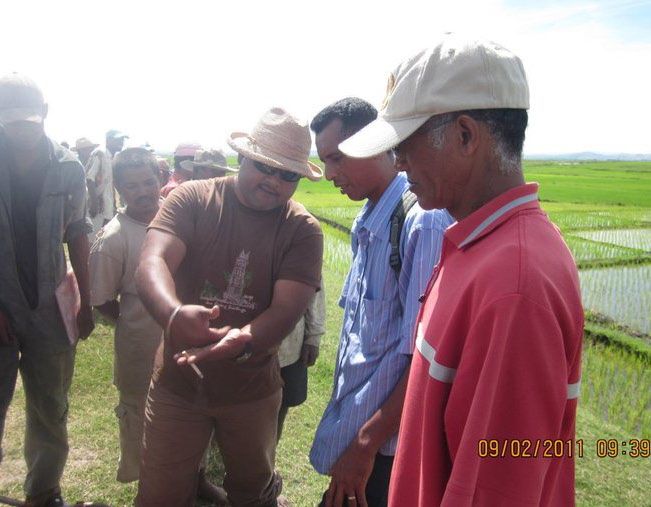
Introduction

Milestones: Indonesia’s promotion of SSTC
 2005               • The 50th Anniversary of Asian–African Conference

 2006               • Established Technical Cooperation Directorate in Ministry of Foreign Affairs.

 2008               • The 1st Bali Democracy Forum
                    • Pledged to support Palestine’s capacity building.

 2009               • Joined G20
                    • Mentioned SSTC as one of pillars of Jakarta Commitment

 2010               • Included SSTC in Mid-Term Development Plan.
                    • Established National Coordination Team on SSTC.

 2011               • Co-chaired task team of SSTC for Busan High Level Forum
                    • Drafted Grand Design and Blue Print
                    • Established Working Groups under the National Coordinating Team

 2012               • Drafted Evaluation Guideline of international trainings
                    • Issued a directory “Indonesia’s Capacities on Technical Cooperation”.
                    • Conducted Comparative Study on the Management of SSTC.
                    • Started Project on Knowledge Management for SSTC
                    • To hold High-Level Meeting, Toward Country-led Knowledge Hub

                                                                                                                                  JICA Supported

Values of JICA to support SSTC
As the world’s largest bilateral aid agency, JICA’s experiences on          2. Scale-up at the beneficiary side
development assistance would provide useful values within the                   Many SSTC programs are generally small in the scale of
SSTC programs. JICA’s support to SSTC for more than 30 years                    operation, which expected results are limited in the beneficiary
and Indonesia’s development of more than 50 years show 4 values:                countries. JICA provides beneficiary countries with opportunities
1. Capacity Development at the provider side                                    to apply the gained knowledge, by which the results of SSTC
                                                                                will be expanded. As a result, scale-up will further internalize the
      Values of JICA on SSTC                                                    application. Potential of scale-up operation can be learned from
      • Scale-up                                                                the article on Timor-Leste.
      • Capacity Development                                                3. Development experiences in beneficiary country
      • Development experiences                                                 JICA’s experiences and operation at each overseas office
      • Pioneering                                                              provide deep insight on specific professional issues and
                                                                                potential scale-up opportunities. The triangular cooperation for
   When a developing country considers becoming a full-                         Palestine can illustrate these experiences.
   fledged provider of SSTC and improving its capacity,                     4. Pioneering role to trigger innovation
   the improvement process should cover from individuals’                       Development Partners can play a role in pioneering new areas in
   improvement, regulations, mechanism, to national policies of                 SSTC. Through the practice of triangular cooperation to Timor-
   SSTC, which process is known as Capacity Development.                        Leste, networking relationships in Timor-Leste and Indonesia
   JICA Indonesia considers this process very important since                   have clearly been solidified, particularly among the officials of
   Capacity Development affects the quality of SSTC that the                    line ministries, whose initiative has smoothed out the trickle of
   country provides toward more result-based programs. The                      more bilateral cooperation.
   articles on Knowledge Management, Evaluation Guideline,
   and Comparative Study show our support on the Capacity
   Development of a provider country.

  4   Indonesia-Japan: Dynamic development for prosperity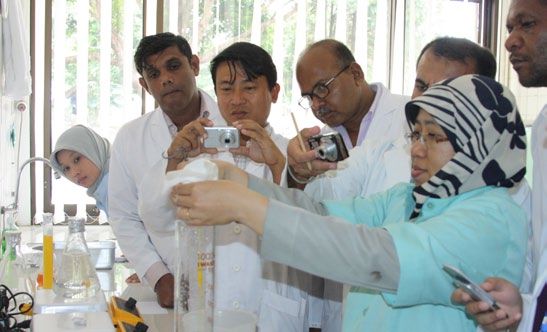
Introduction

                                                     Roadmap 2012-2015, Support to SSTC

                                                                Japan Indonesia
                                                          Partnership Programme (JIPP)

       Capacity Development Layer

           2012                                  2013                       2014                             2015
                Knowledge Management Project (KM-SSC)                       Capacity Development Project
                Evaluation guideline                                        (CADEP)

                               Intl Conference                    TICAD V

       Project Implementation Layer
                  Palestine            Afghanistan                                        New Flagship
                              Timor-Leste                Africa                             Projects
                                     Ethiopia

JICA’s practices in Indonesia show the following principles when               capacity building projects in the beneficiary country as well. The
SSTC projects are formulated:                                                  case to support Afghanistan shows this effect.
1. Mutual benefit and respect: All the three parties, provider              4. Political commitment: SSTC addresses political agenda at
   country, beneficiary country, and Development Partner, should               high level, which would become a driving force to transform
   gain equal benefit from the project with due respect to one                 SSTC into a new dimension. It also has a potential to cause
   another.                                                                    innovations, which is shown in the case of Palestine.

     Principles for SSTC                                                    Road Map 2012-2014 to support Indonesia’s SSTC
     • Mutual benefit & respect                                             JICA considers its future road map of support to Indonesia in
     • Asset in provider                                                    two layers: Capacity Development Layer and Project Layer. The
     • Alignment in beneficiary country                                     partnership program on the top of these layers determines longer
     • Political commitment                                                 term views.

   The nature of mutual benefits varies on specific situation on the        • Capacity Development Layer: supports improving management
   country or project. JICA’s support to the Comparative Study has            capacity of Indonesia
   shown that the benefits can be short-term profit and mid- to               From 2012, the Knowledge Management Project on South-
   long-term. The case of Timor-Leste also shows that mid- to                 South Cooperation has started to identify Indonesia’s
   long- term effect may accompany short-term profit.                         comparative advantages. After 2013, the project is expected to
2. Asset: In a provider country like in Indonesia, there are many             be succeeded by a project to support strengthening Capacity
   centers of excellence which have been supported by JICA.                   Development of SSTC in Indonesia. The project of Capacity
   In the case of Indonesia, JICA supported the construction of               Development will create a bridge between practitioners and
   many such centers whose capacity is outstanding compared                   policy makers, and facilitate in providing learning and socializing
   with the others. JICA considers these kinds of institutions as             opportunities, accompanied by actual joint projects in the project
   Assets. Generally, these successful institutions are providing             layer.
   opportunities of SSTC based on international standard. The               • Project Layer: supports development of beneficiary countries
   case of Ethiopia indicates strong evidence of this case.                   through joint projects
3. Alignment: When an SSTC project is aligned with an on-going                The Project Layer will implement various projects to support
   project in a beneficiary country, the result is readily disseminated       beneficiary countries through the Indonesia-Japan Partnership,
   and expanded. Particularly in the case of most SSTC projects               some of which would become flagship projects in the next
   which scale is relatively small, the alignment has multiplier effects      generation. The projects are based on specific country needs,
   after capacity building projects are implemented in Indonesia.             with a more organized joint formulation, monitoring and
   Furthermore, the alignment smoothen the implementation of                  evaluation mechanism.

                                                                                                Indonesia-Japan: Dynamic development for prosperity   5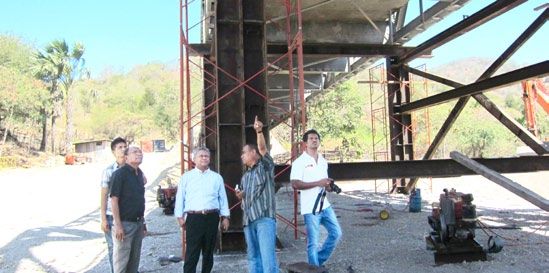
Introduction

Challenges
Partnership of Indonesia and Japan                                    Coordination system of Indonesia
Although there are many triangular projects under Indonesia-          The establishment of National Coordination Team on SSTC has
Japan Partnership, the fact remains that the projects are sparsely    resulted in a better national coordination. However, the National
implemented. The time has come to transform this old-fashioned        Coordination Team should aim to target higher degree of national
way into an innovative arrangement. The platform to accommodate       coordination, which should extend toward both horizontal and
this process was installed in Indonesia and Japan through the         vertical directions. The horizontal coordination strengthens inter-
Japan-Indonesia Partnership Program (JIPP), which is a high-level     ministerial communication to cover extensive stakeholders of SSTC.
agreement of extending joint SSTC in other developing countries.      The vertical coordination accelerates hierarchical communication
The partnership would be redefined so that Indonesia-Japan            between the top and the bottom levels. Meantime, coordination
SSTC will be able to comply with high-level agendas as future         within the Coordination Team would also be indispensable. It needs
directions. Based on this, projects can be considered in a more       to delegate responsibilities among its Working Groups to respond
comprehensive manner. This arrangement will increase predictability   to evolving issues adequately in preparation for further growth
to solicit necessary resources for the projects.                      and promotion of its SSTC. In the mid- to long-term perspective,
                                                                      Indonesia would need to consider whether the current arrangement
                                                                      of inter-ministerial coordination fulfills the vision of its motivation for
                                                                      growth.

  6   Indonesia-Japan: Dynamic development for prosperity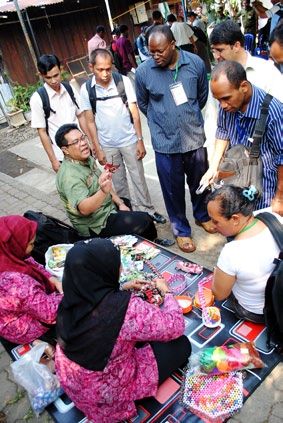
Knowledge Management
                                                                                                                     Capacity Development

Finding comparative advantages of Indonesia

When the Indonesian government started policy formulation of
SSTC with the support from JICA, the Indonesian policy makers
debated on what would be the essence of Indonesia’s SSTC.
There are various sectors and issues that Indonesia thinks
worth promoting. On the other hand, there are other emerging
countries which extensively operate SSTC in the world. As a newly
participating country, Indonesia has to strategically promote its
capacity. However, the pursuit of this comparative advantage is a
difficult task.

As a solution, Indonesia decided to employ a management method
of knowledge in thriving private sector in Japan, well known as
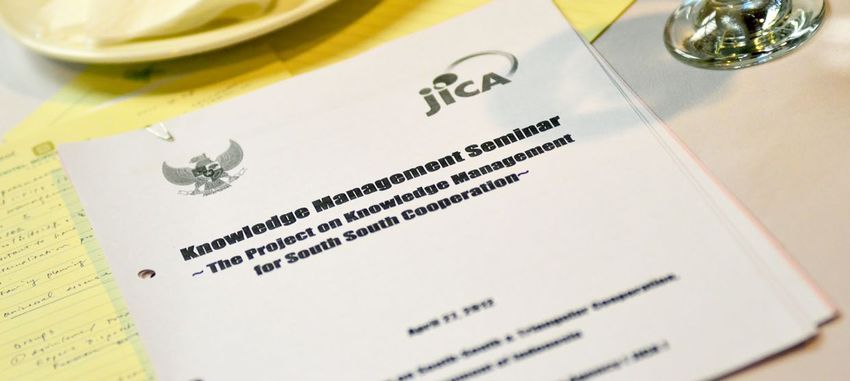
Knowledge Management. Knowledge Management is expected to               Knowledge Management Seminar
create a cycle of extracting the essence of Indonesia’s SSTC and
innovations.                                                           part of knowledge creation and management theory. Prof. Ryoko
                                                                       Toyama, one of Prof. Nonaka’s principal collaborators, has authored
Knowledge management theory explains how existing knowledge            a number of articles and books on knowledge management. She
can be optimized through enhanced organizational capacities            also teaches Master’s Degree courses on knowledge management
to produce innovative ideas. According to the theory, “tacit           at Chuo University, Tokyo. Prof. Nonaka and Prof. Toyama are
knowledge,” or highly-personal insights, skills and experiences        lecturers of JICA’s Knowledge-based Management Seminar where
held by certain individuals, can be shared with others through         groups of current and future leaders of Asia explore the possibilities
direct interaction with such individuals (This process is called       of applying methods of knowledge-based management for solving
“socialization”) at its initial stage, and then transformed into       development issues. The seminar, which started in 2004, attracts
explicit knowledge in the form of documents, diagrams, films           multiple participants every year.
etc. (“externalization”) at a later stage. Innovative ideas come
to life through unique combination of shared explicit knowledge        In recent years, it has become increasingly common for private
(“combination”) and their applications become habitual among           companies and non-profit organizations to adopt the essence
members who practice them at regular basis (“internalization”). This   of knowledge-based management. Examples of practicing
process of knowledge management is commonly referred to as the         knowledge-based management can be seen at large corporations
SECI model – a term made by combining the first letter of the four     and inventive NGOs. The case of Panasonic’s bread machine is
phrases describing each stage.                                         one such illustrative example. Ms. Tanaka, a Panasonic employee,
                                                                       mastered the kneading technique through her hands-on work
Prof. Ikujiro Nonaka, Professor Emeritus of Hitotsubashi University,   experience with a hotel’s head. After a year of countless trials, Ms.
Graduate School of International Corporate Strategy, is the one who    Tanaka and her colleagues invented the dough-twisting mechanism
first proposed the SECI model. Since then, he and his collaborators    that kneaded the dough to perfection. As a result, Panasonic’s
have further theorized the concept of knowledge management as          bread machine became a big hit in Japan.

                                                                       The application of knowledge management to the promotion of
                                                                       Indonesia’s SSTC is a unique attempt. Despite the successes found
                                                                       among private companies and non-profit organizations, applying
                                                                       knowledge management at the public sector is still nascent,
                                  In a preceding effort to this
                                                                       especially in Indonesia. The Knowledge Management Seminar for
                                  Knowledge Management
                                  project, JICA supported              South South Cooperation was the very first attempt of knowledge
                                  the National Coordination            management to be undertaken by the National Coordination Team.
                                  team in producing a book             Through knowledge management, the Indonesian government
                                  of capacities that Indonesia         aims at identifying the uniqueness of Indonesia’s development
                                  can provide. The book was            experiences and matching them with the development needs of
                                  launched in April 2012 by the        other partner countries.
                                  Minister of Foreign Affairs,
                                  Indonesia

                                                                                           Indonesia-Japan: Dynamic development for prosperity   7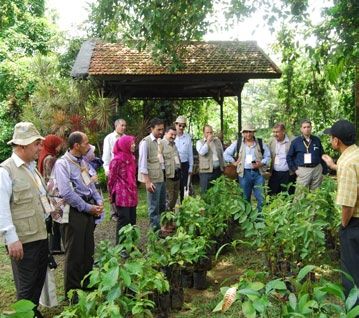
Evaluation Guideline
                                                                                                                  Capacity Development

Building a system to measure outcomes

                                            Having a long list of SSC    well as contributed to the program.
                                            programs that have been
                                            done since 1981, the         A major result of Indonesia’s participation in the program was
                                            Indonesian government        the formulation of a draft guideline on evaluation of Indonesia’s
                                            realized that results of     international training programs through the support of JICA’s
                                            these programs have not      follow-up cooperation. Although still awaiting to be processed by a
                                            been reviewed enough to      government regulation, the guideline is
Final workshop on the formulation of        plan new projects. In late   recognized as a national guideline
evaluation guideline                        2010, the government         that can be used by training
conveyed their necessity to confirm results of their programs for the    implementation agencies as
partner countries as well as for Indonesia.                              Indonesia’s own guideline.

To answer to the needs of Indonesia, JICA has been facilitating          The formulation of the evaluation
various trainings in Japan, one of which was done in a series from       guideline is to conform to the
JFY 2009-2011 for the improvement of SSTC activities. At least 12        needs of Indonesia to synergize
countries from Asia, Africa and the Pacific Islands participated in      and integrate SSTC in the
this training course to discuss issues to improve their international    implementation level toward result-
training programs. Participants from Indonesia’s Ministry of Foreign     based programs, as feedback for
Affairs, State Secretariat and National Development Planning             future program planning.
                                                                                                                  Draft Evaluation Guideline
Agency were among the active trainees who have gained from as

Comparative Study
                                                                                                                  Capacity Development

Institutional arrangement:
learning from other countries
When a country becomes conscious of deploying SSTC holistically,         As the result, JICA made four recommendations to the Indonesian
the country will have to manage SSTC both in and out of the              government to: have a common vision of SSTC, connect domestic
country, which often is not an easy task. When the Indonesian            development policies and SSTC vision, promote Indonesian
government started aiming at a full-fledged provider of SSTC,            principles of SSTC, and develop SSTC “in tandem” in both private
situation was less favorable. The government drafted the Grand           and public sectors.
Design and the Blue Print at a time when technical ministries were
still independently implementing SSTC without coordination. No           This would not be an end of the comparative study. More and
one knew how their own country implemented SSTC as a whole.              more useful experiences will be learned from other countries. We
National coordination was lost at that time and fragmentation took       expect that the Indonesian government would further explore other
place. The fragmentation issue caused a lot of debate. The country       experiences and utilize them for its institutional building.
consequently decided to learn from experiences of other emerging
countries and JICA supported this government initiative.

The comparative study covered three countries: Brazil, Thailand,
and Japan, considering future growth of business and geographical
setting, with document and site surveys. The Vice Minister of
National Development Planning Agency of Indonesia led two
respective site surveys to Brazil and Japan. The Brazil case showed
various new attempts as well as challenges as an emerging
economy. The Japan case highlighted the role of private sector,
while the Thailand case showed importance of national level
coordination.
                                                                         Site survey at Brazil

  8   Indonesia-Japan: Dynamic development for prosperity
Palestine
                                                                                                                                      Political Commitment

Political motivation drives developments                                                                                  Alignment

                                       Japan
    Palestine
                                                                                                   for implementation. Preceding experiences
                                                                                                   by the Indonesian government found that
                                                                                                   the restriction imposed to Palestine affected
                              Indonesia                                                            the implementation as well.

                                                                                                   In such circumstances, the triangular
                                                                                                   cooperation was designed to align the
                                                                                                   triangular projects in Indonesia with
                                                                                                   on-going JICA projects in Palestine. By
                                                 Business incubation Training held in Jordan
                                                                                                   the alignment, the on-going project can
                                                                                                   synergize the training outcome by providing
                                                                                                   training participants with opportunities of
                                                                                                   applying gained knowledge. In 2011, 1 visit
                                                                                                   and 3 trainings took place in alignment to
                                                                                                   Agriculture, Agro-industry Development,
                                                                                                   and SMEs Support in Palestine.

                                                                                                   Meantime, other challenges also exist. The
                                                                                                   three countries will have to revisit the sprit
                                                                                                   of mutual respect and benefit as the sign
                                                                                                   of partnership. More dialogues would be
                                                                                                   necessary, considering unusual limitation
                                                                                                   that Palestinians have to face. Practitioners
Training on vegetable and fruit production                                                         of both Indonesian and Japanese sides
                                                                                                   will have to grasp more of Palestine’s
Two different political commitments for          and discuss the actions under triangular          realities, so that the implementation can
the state-building of Palestine made by          arrangement. During his visit, the three          fit into the Palestine’s peculiar conditions.
the governments of Indonesia and Japan           countries agreed to implement projects in         First, a policy guidance will help address
have found a junction point as a series          three areas: Agriculture, SME development,        this issue. The second annual consultative
of triangular cooperation by Palestine,          and Health. They agreed to hold annual            meeting is expected to be held in 2012.
Indonesia and Japan. In 2008, Indonesia          consultative meetings as a platform to            Second, dispatches of Indonesian experts
committed the capacity building of 1,000         plan, monitor and evaluate the projects.          would surely increase the understanding of
Palestine people by 2013, as part of the         This framework helps triangular projects          Palestine situation despite the difficulties.
New Asian-African Strategic Partnership          overcome many administrative difficulties
(NAASP). Meantime, Japan held a high-level
consultative meeting in 2010 and identified
SSTC as one of seven priority areas, called
the “Co-operation of East Asian Countries
for the Middle East Peace.”

The three countries shaped the policy
directions into actions. A series of dialogues
took place to identify SSTC projects.
In 2011, The Minister of The Ministry of
Planning and Administrative Development
(MOPAD) of Palestine visited Indonesia to
identify potential capacities of Indonesia
                                                 Land Tax Training                                 Training on vegetable and fruit production

                                                                                               Indonesia-Japan: Dynamic development for prosperity           9
Timor Leste
                                                                                                                            Pioneering

A role of Development Partners                                                                                   Scale-up

                                          Japan

           Indonesia
                                 Timor Leste
                                                                        Training of Rehabilitation and Reconstruction

                                                                        working with Timor-Leste. The triangular cooperation witnessed
                                                                        improved relation of the two countries.

                                                                        Meantime, scaling-up effect by Development Partner is expected
                                                                        to boost this relationship by providing opportunities of utilizing
                                                                        the project in Timor-Leste. In March 2012, Japan has decided
                                                                        to provide its first ODA loan to Timor-Leste, a yen loan worth
                                                                        around 5.3 billion Japanese yen (approximately USD 65 million)
                                                                        in connection with the “National Road No.1 Upgrading Project,”
                                                                        which is the first loan for Timor-Leste. Timorese participants and
                                                                        Indonesian partners expect that the participants can utilize the
                                                                        knowledge they have learned through the trainings in Indonesia
                                                                        in the yen loan project. On the other hand, both Timorese and
                                                                        Japanese officials expect that the training effects will help smooth
Training of Construction and Maintenance                                the implementation of the yen loan project.

Development Partners are expected to play various roles when            The triangular project will complete in September 2012. At that
triangular cooperation takes place. The practice in Timor-Leste tells   time, it is expected that the three parties could confirm tangible
a unique expectation: the pioneering role of Development Partners.      results and discuss a future plan to elevate the partnership of the
                                                                        three countries to be further solidified.
Triangular cooperation of road sector started from 2010 among
Timor-Leste, Indonesia and Japan. When the Indonesian partners          Even when a triangular cooperation takes place, the principle
and JICA Indonesia Office first heard the idea, most of them            of mutual respect and benefit can be applied among the three
responded with very cautious eyes. In Indonesia, little was known       countries equally. On the other hand, benefit can imply various
on the latest relation between Indonesia and Timor-Leste at that        matters in multiple dimensions. Practitioners can measure the
time. Most of Indonesian people still remembered the uneasy             benefit by the effect given to the partnership of the three countries
atmosphere when Timor-Leste gained independence from                    as a whole.
Indonesia in 1999. Considering the reactions from Indonesian
partners, JICA took very careful steps to plan this project with
a series of meetings in Indonesia or another country. While the
meetings progress, it was found that the practitioners in the two
countries actually wanted to cooperate with each other. The project
progressed very smoothly. It also added motivation to Indonesian
practitioners to expand their own South-South Cooperation to
Timor-Leste. In parallel, the Indonesian government informed the
public of improved bilateral relationship with Timor-Leste, which
also helped accelerate the project implementation. The partner in
Indonesia, Ministry of Public Works, started dispatching its own
experts bilaterally. Indonesian private sectors also show interest in   Follow-up Team in Timor-Leste

 10   Indonesia-Japan: Dynamic development for prosperity
Ethiopia
Asset
Past support of Development Partners
makes a difference
JICA supported numerous institutions in Other developing countries also show great
Indonesia. Many of those became centers of interest to this practice. State Minister of
Japan each specialty as Assets. They now extend General Education in Ethiopia, Mr. Fuad Ibrahim,
services to other developing countries as well. observed UPIs’ practices and showed keen
The Assets exhibit outstanding capacities to interest during his visit to Indonesia in July 2011.
Ethiopia address international agendas. One of the The State Minister requested a series of training
Assets, a university for education in Bandung programs to Indonesia and JICA.
Indonesia city in Indonesia has started to support Federal
Ministry of Education in Ethiopia. The Ethiopian With the strong demands from Ethiopia, the
partner was convinced of the Asset’s capacity training program will consist of three components
that both Ethiopian and Indonesian partners have of training in Indonesia: study of relevant subjects
high degree of ownership to the project. in master course, on-the-job-training at UPI’s
teacher training institution, and participation in
Indonesia University of Education (UPI) received lesson study programs. After the training, the
JICA’s assistance from 2004 on teachers’ Ethiopian participants will share their experiences
practice to review their teaching practices to in Ethiopia and Federal Ministry of Education in
learn about how each student learns in the class, Ethiopia will formulate a further plan to introduce
known as Lesson Study. Lesson Study originated this practice. The 10-month training program in 3
in 1870s in Japan and is still widely practiced in years is planned to start from 2012.
many schools. Nowadays, the practice has been
transferred to Indonesia as well. UPI is one of the UPI’s capacity as an Asset in Indonesia is
academic institutions where the Lesson Study expected to produce next Assets in Africa as a
was introduced. Nowadays, UPI is known as a sign of partnership among the three countries of
center of excellence in the province, by providing Ethiopia, Indonesia, and Japan.
technical support to schools and education
(Center) State Minister of General Education, officers who try to introduce Lesson Study.
Ethiopia
Afghanistan
Alignment
Alignment raises effectiveness
Indonesia and Japan started the support sustainability of its programs by utilizing
for the rehabilitation and capacity building past or existing assets of Japanese
Japan
Afghanistan of Afghanistan in the year 2002 through cooperation or linking them with on-going
programs in the field of agriculture projects.
extension and later continued to expand
As an example, JICA and Indonesia is
in other sectors, such as public health and
currently implementing an international
Indonesia just recently in community development.
training on “Participatory Community
Indonesia’s strong commitment to assist
Development Training for Afghanistan”
Afghanistan was expressed initially at the
which is one component of a JICA
International Conference on Reconstruction
project in Afghanistan on “Strengthening
Assistance to Afghanistan in January 2002,
Community-led Rural Development Support
which was then followed by a request to
System in Afghanistan.” The project assists
JICA and several missions to discuss the
the Ministry of Rural Rehabilitation and
contents of the triangular cooperation. In
Development (MRRD) in integrating human
2011, the current President of Indonesia
resources development in rural areas. The
expressed once again the country’s
training introduces examples of successful
continued support for the capacity building
development programs in Indonesia, such
of 1000 Afghans. Considering the difficulty
as the National Program for Community
to operate in or travel to Afghanistan,
Development (PNPM). With the support
the use of JICA networks has been very
of the JICA project, follow-up activities or
beneficial.
implementation of action plans are better
Training of community development As with other south-south or triangular monitored and become feedback for the
cooperation, JICA needs to ensure the next programs.
Indonesia-Japan: Dynamic development for prosperity 11List of Projects
CD Layer: Capacity Development of the Indonesian Government
Partner Institution in Beneficiary Total
No. Title Type
Indonesia Country Participant
Formulation of Guideline on Evaluation Mechanism for
Indonesia Others N/A
Indonesia’s International Training Programs
1. Fiji
Mission 5
Ex-Post Evaluation case Study for Evaluation Guideline
Vietnam Mission 5
Comparative Study on the Management of International
Indonesia
Cooperation
2.
Site Survey to Brazil Brazil Mission 8
Site Survey to Japan National Coordination Japan Mission 9
Team of South-South and
Support for publication of Indonesia's Technical
3. Triangular Cooperation Indonesia Study N/A
Cooperation Capacities
Support on Strengthening Indonesia South-South and
4. Indonesia Study N/A
Triangular Cooperation
The international conference on south-south and triangular
5. Indonesia Others 200
cooperation: Toward country-led knowledge hubs
Project on Knowledge Management for South South
6. Indonesia Project N/A
Cooperation (KM-SSC)
Capacity Development Project for South-South and
7. Indonesia Project N/A
Triangular Cooperation (CADEP) pipeline
Project Implementation Layer: projects to assist other developing countries
TCTP: Third Country Training Programme, TCE: Third Country Expert, TEX: Technical Exchange, SUP: Supplementary Training
Partner Institution in Beneficiary Total
No. Title Type
Indonesia Country Participant
Finance
Finance Education and
Dialogue Program for the Improvement of Property Tax in TCTP
1. Training Agency, Ministry of Palestinian Authority 8
Palestine (In-bound)
Finance
Non-Aligned Movement,
The TCTP on Micro Finance for African Region: Managing Centre for South-South Ethiopia, Kenya, TCTP
2. 11
Micro Finance Institution Technical Cooperation Namibia, Uganda (In-bound)
(NAM-CSSTC)
Development plan, governance
Training for Strengthening the Monitoring and Evaluation
Capacity of the Ministry of Finance and Economic Planning National Development
TCTP
3. in Ghana with The Project for Planning and Budgeting Planning Agency Ghana 13
(In-bound)
Reform for the Performance-Based Budgeting (PBB) (BAPPENAS)
System Implementation in Indonesia
Timor-Leste,
Ethiopia,
Center for Economic and TCTP
4. Capacity Building for Poverty Reduction Cambodia, Kenya, 20
Social Study (CESS) (In-bound)
Laos, Vietnam,
Palestinian Authority
The Participatory Community Development Training for Center for Economic and TCTP
5. Afghanistan 16
Afghanistan (First Batch) Social Study (CESS) (In-bound)
Regional Development
Technical Exchange visit to the Rep. of Indonesia to Planning Agency
TEX
6. Sulawesi CD Project under the Local Govt. Decentralization (BAPPEDA), Sulawesi Bhutan 12
(In-bound)
Project Phase III of Bhutan Capacity Development
Project, Makassar
National Development
Planning Agency
Technical Exchange visit of the Project for Capacity (BAPPENAS), Ministry of
TEX
7. Development for Implementing the Organic Lav at Capital Home Affairs, Regional Cambodia 6
(In-bound)
and Provincial Level (PILAC2) Development Planning
Agency (BAPPEDA) of South
Sulawesi Province
12 Indonesia-Japan: Dynamic development for prosperityList of Projects
National Development
Planning Agency
(BAPPENAS), Ministry of
The Exposure visit of JICA Tanzania Cooperation Project to TEX
8 Home Affairs, Regional Tanzania 11
Sulawesi Capacity Development Project in Indonesia (In-bound)
Development Planning
Agency (BAPPEDA) of South
Sulawesi Province
The Preparation Mission for Training in Indonesia for BAPPENAS, RISE Project,
Mission
9 Promotion of Community Participatory Approach for Capacity Development Afghanistan 2
(In-bound)
Afghanistan Project Makassar
JICA's Country Focused Training Course in Community
Indonesia National Police SUP
10 Policing for Democratic Republic of Timor-Leste Timor-Leste 6
(INP) (In-bound)
(J1121990)
South-South and Triangular Cooperation
Project Formulation Mission for the East Asian Cooperation Mission
11 Ministry of Foreign Affairs Palestine 11
for the Palestinian Authority (In-bound)
Directorate of Technical
The Indonesia-Japan Joint Fact Finding Mission for Mission
12 Cooperation, Ministry of Palestine 6
Palestine Refugees (Out-bound)
Foreign Affairs
Public works & transportation
Infrastructure in Road Sectors, South-South and Triangular
13 Cooperation Between Indonesia, Timor-Leste And JICA 10
Batch I
Infrastructure in Road Sectors, South-South and Triangular
TCTP
14 Cooperation Between Indonesia, Timor-Leste And JICA 10
(In-bound)
Batch II
Education and Training
Infrastructure in Road Sectors, South-South and Triangular
Center, Secretariat General,
15 Cooperation Between Indonesia, Timor-Leste And JICA Timor-Leste 9
Ministry of Public Works
Batch III
(PUSDIKLAT-PU)
Infrastructure in Road Sectors, South-South and Triangular
16 Cooperation among the Govt. of Indonesia, the Govt. of 2
Timor-Leste, and the JICA, FU Team I Mission
Infrastructure in Road Sectors, South-South and Triangular (Out-bound)
17 Cooperation among the Govt. of Indonesia, the Govt. of 2
Timor-Leste, and the JICA, FU Team II
TEX
18 Third Country Technical Exchange from Cambodia Ministry of Transportation Cambodia 12
(In-bound)
The Exposure visit of JICA Sri-Lanka Cooperation Ministry of Public Works,
Project to the Project for Water Service Improvement Regional Development TEX
19 Sri-Lanka 6
in Mamminasata Metropolitan Area in South Sulawesi Planning Agency (BAPPEDA) (In-bound)
Province South Sulawesi Province
International Seminar on Urban Development in Asia and Mission
20 "Ministry of Public Works, Dakar, Senegal 4
Africa (Out-bound)
Private sector development
Directorate of Technical
Training on Business and Technology Incubator TCTP
21 Cooperation, Ministry of Palestinian Authority 17
Management for Palestine (In-bound)
Foreign Affairs
Directorate General of
International Industrial
Palestinian Industrial Estates and Free Zones Authority TEX
22 Cooperation, Ministry Palestine 5
(PIEFZA) (In-bound)
of Industry, Investment
Coordination Board
Indonesian Institute of
Seminar and Workshop on Measurement Standards in Science (LIPI), Calibration, Mission
23 Thailand 5
Indonesia Instrumentation, and (In-bound)
Metrology (KIM LIPI)
Agriculture & fishery
Sri Lanka, Sudan,
Kenya, Laos,
Directorate General of
Afghanistan,
Training Course of Artificial Insemination on Dairy Cattle for Livestock Services, Ministry TCTP
24 Vietnam, Myanmar, 19
Developing Countries of Agriculture (Singosari (In-bound)
Bangladesh,
Artificial Insemination Center)
Cambodia, Timor-
Leste, Thailand
Indonesia-Japan: Dynamic development for prosperity 13List of Projects
Project for Rice Productivity Improvement in Central Indonesia Center for
25 1
Highland in Madagascar Agricultural Engineering
Researcher Development
TCE
(ICAERD), Agency of MADAGASCAR
Project for Rice Productivity Improvement in Central Out-bound)
26 Agricultural Research 1
Highland in Madagascar Development, Ministry of
Agriculture
Agency for Agricultural
TCTP on Vegetable and Fruit Production (Including Post- Extension and Human TCTP
27 Palestinian Authority 12
Harvest and Agro-Processing) Resource Development, (In-bound)
Ministry of Agriculture
Directorate General of
TCT on Fish Seed Production & Aquaculture Technology TEX
28 Aquaculture, Ministry of Cambodia 10
for FAIEX-II Project of Cambodia (In-bound)
Marine Affairs and Fisheries
Health
International Training on Strengthening District Health
Laos, Vietnam, TCTP
29 Planning in the era of decentralization for improvement of Ministry of Health 7
Morocco (In-bound)
the health status of children and mothers
Directorate General of
Invitation of Kenyan Delegates as observers at Maternal & Mission
30 Nutrition, Maternal and Child Kenya 2
Child Health Handbook Third Country Training in Indonesia (In-bound)
Health, Ministry of Health
Education
Preparatory Survey on Triangular Cooperation in Capacity
Indonesia University of Mission
31 Development of Mathematics and Science Educators Ethiopia 2
Education (UPI) Bandung (In-bound)
(TCTP in Indonesia)
Botswana, Ethiopia,
Capacity Development for Research-based Policy
Indonesia University of Benin, Ghana, SUP
32 Formulation towards Quality Improvement in Education 12
Education (UPI) Bandung Zambia, Burkina (In-bound)
(J1100897)
Faso, Japan
Bureau of Planning and
The Study visit from JICA Non-Formal Education International Cooperation, TEX
33 Pakistan 12
Promotion Project in Pakistan Ministry of National (In-bound)
Education
Higher Education
Rwanda,
Kenya, Vietnam,
Electronic and Electronic Cambodia,
TCTP
34 Education for Computer based Industrial Automation Polytechnic Institute of Myanmar, 13
(In-bound)
Surabaya (EEPIS) Bangladesh,
Nepal, Palestinian
Authority, Tanzania
Electronic and Electronic
The Activity Course for the JICA project the Strengthening TCE
35 Polytechnic Institute of RWANDA 1
the Capacity of TCT Rwanda FY 2012 (Out-bound)
Surabaya (EEPIS)
Dispatch of Short-term Expert in Faculty Management
Electronic and Electronic
on the Project for Capacity Development of Faculty of Mission
36 Polytechnic Institute of Timor-Leste 1
Engineering Science and Technology National University of (Out-bound)
Surabaya (EEPIS)
Timor-Larosa'e (CADEFEST Project)
Others
Bhutan, Timor-
The Third Country Training (The International Training
Multi Media Training Center Leste, Myanmar, TCTP
37 Program on Documentary TV Program Production for 11
(MMTC) Cambodia, (In-bound)
Asian and African Countries)
Indonesia
Technical Exchange Study visit from Timor-Leste on TEX
38 JICA Indonesia Office Timor-Leste 5
ASEAN (In-bound)
Center for International
Supplementary Program for JICA's Training on Capacity
Cooperation in Management SUP
39 Development for Carbon Budget Measurement of Tropical Laos, PNG 6
of Tropical Peatland (In-bound)
Forests to Reach climate Change (CIMPRTOP)
(CIMTROP), Palangkaraya
Scholarship to Japan: Future Leader’s Program for University of Waseda, Tokyo,
40 2
International and Regional Cooperation (Master’s Degree) Japan Training in
Indonesia
Scholarship to Japan: Peace and Conflict Studies (Master’s Tokyo University of Foreign Japan
41 1
Degree: International Studies) Studies, Tokyo, Japan
14 Indonesia-Japan: Dynamic development for prosperityIndonesia-Japan: Dynamic development for prosperity 15
Japan International Cooperation Agency

Japan International Cooperation Agency (JICA)
Indonesia Office
Sentral Senayan II, 14 floor, Jl. Asia Afrika 8, Jakarta Pusat 10270,
Indonesia
Tel. (62-21) 5795 - 2112
Fax. (62-21) 5795 - 2116
Homepage: www.jica.co.jp
You can also read


