Solomon Iron Ore Project: Troglofauna Survey at Zion Deposit
←
→
Page content transcription
If your browser does not render page correctly, please read the page content below
Fortescue Metals Group

                                        Solomon Iron Ore
                                      Project: Troglofauna
                                            Survey at Zion
                                                   Deposit

  Final Report
Prepared Fortescue Metals Group Ltd
            by Bennelongia Pty Ltd

                   February 2013
                Report 2013/171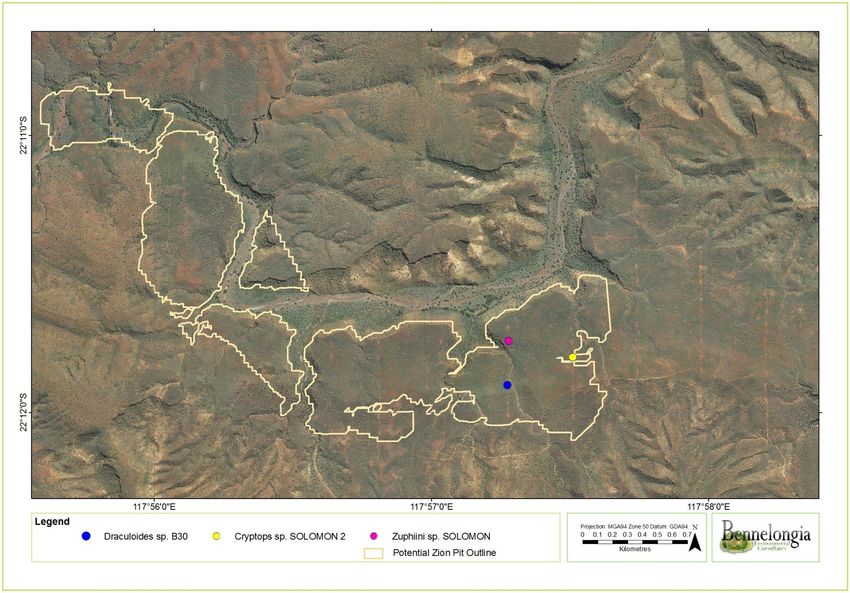
Bennelongia Pty Ltd            Solomon Iron Ore Project: Troglofauna Survey at Zion Deposit

                 Solomon Iron Ore Project:
             Troglofauna Survey at Zion Deposit

Bennelongia Pty Ltd
5 Bishop Street
Jolimont WA 6913
www.bennelongia.com.au
ACN 124 110 167

February 2013

Report 2013/171

                                                                                          i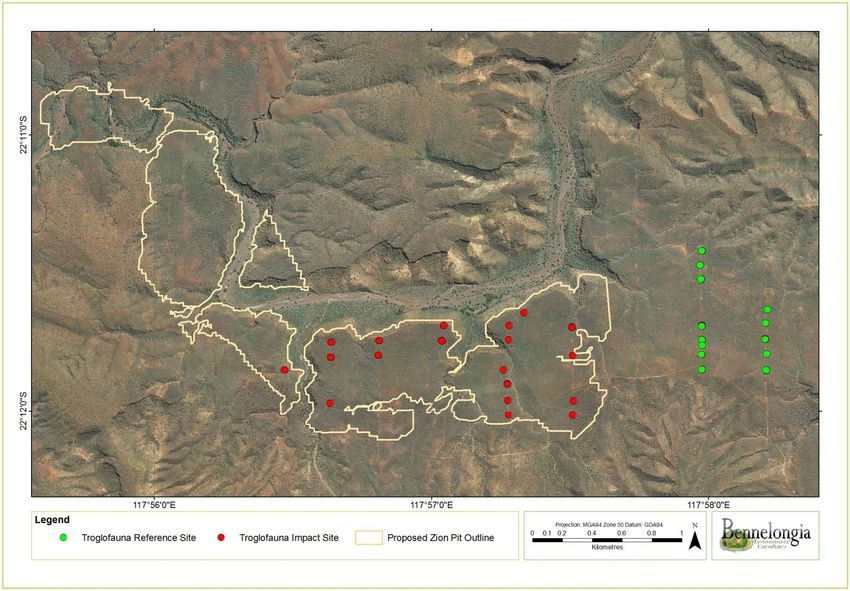
Bennelongia Pty Ltd                                                  Solomon Iron Ore Project: Troglofauna Survey at Zion Deposit

    Cover photo: Indohya sp. B01

LIMITATION: This report has been prepared for use by the Client and its agents. Bennelongia accepts no
liability or responsibility in respect of any use or reliance on the report by any third party. Bennelongia
has not attempted to verify the accuracy and completeness of all information supplied by the Client.

COPYRIGHT: The report has been prepared to the requirements of the Client. Copyright and any other
Intellectual Property associated with the document belong to Bennelongia and may not be reproduced
without written permission of the Client or Bennelongia.

Client – Fortescue Metals Group Ltd
 Report                   Version Prepared by                          Checked by              Submitted to Client
                                                                                              Method Date
 Draft report                    Vers. 1       Andrew Trotter          Stuart Halse           email    26.viii.2012
 Final report                    Vers. 1       Andrew Trotter          Stuart Halse           email    12.xi.2012
                                 Vers. 2       Andrew Trotter          Stuart Halse           email    19.ii.2013
                                               Rowan Lymbery
K:\Projects\B_FMG_18 Solomon trog monitoring\Zion\Final Report_BEC_Solomon_Zion Troglofauna_final_report_19ii13

                                                                                                                               ii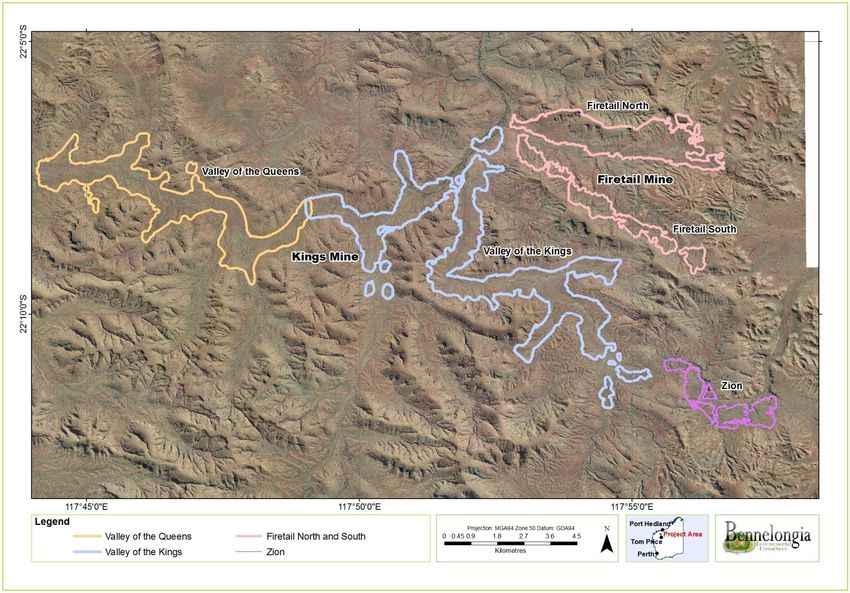
Bennelongia Pty Ltd                                    Solomon Iron Ore Project: Troglofauna Survey at Zion Deposit

                                    EXECUTIVE SUMMARY
Fortescue Metals Group is developing the Solomon Iron Ore Project (Solomon), which is located 60 km
north of Tom Price in the Pilbara region of Western Australia. It is proposed that Solomon will consist of
two mines, Kings and Firetail, and also include a rail spur that joins Fortescue’s Cloudbreak-Port Hedland
Railway. Kings mine comprises three Channel Iron Deposits (CID) known as the Valley of the Queens,
Valley of the Kings (previously known as Valley of the Kings and Trinity) and Zion. The Firetail mine
comprises two Bedded and Detrital Iron Deposits, which are divided into Firetail North and Firetail
South. In April 2011, the Minister for Environment issued conditional approval under Ministerial
Statement 862 for Solomon.

Among the conditions attached to Ministerial Statement 862 was a requirement for survey before
development of the approved Zion deposit at Kings. This Condition 13-4 states:

        Three months prior to commencement of ground disturbing activities associated with the Zion
        deposit, the proponent shall demonstrate that similar and connected troglofauna habitat exists
        outside of areas that have been or are likely to be impacted by mining to the satisfaction of the
        Chief Executive Officer of the Office of the Environmental Protection Authority on advice from the
        Department of Environment and Conservation.

The purpose of this report is to address Condition 13-4 and demonstrate that species collected from the
Zion deposit occur in surrounding areas that will not be threatened by any potential future mining.

Troglofauna were sampled at Zion in accordance with the recommendations of EPA Guidance Statement
54A. Each sample consisted of a trap and a scrape sub-sample. A total of 38.5 samples were collected
within the potential mine pits and 39 samples were collected from adjacent reference areas. The
number of impact samples was fewer than the recommended 60 samples because of the lack of drill
holes to sample; however, the average yield of animals per sample (1.74) was well above the historical
Pilbara capture rate of 0.25 animals per sample and the troglofauna community is likely to have been
adequately characterised.

A total of 27 troglofauna species belonging to 14 Orders were collected. This represents a relatively rich
troglofauna community for a survey area of the size of Zion. Seventeen of the 27 species were recorded
in potential mine pits. All but three of these species recorded from the potential mine pits have also
been recorded in reference areas, other deposits at Solomon or in the wider Pilbara. This indicates that
there is considerable connectivity in the strata surrounding the potential mine pits. The connectivity
occurs at two scales for troglobitic species confined to underground habitats: very locally within the
outcropping CID at Zion and more widely within Solomon. There is a third scale of connectivity whereby
most troglophilic species, with a surface stage in their lifecycle, have sub-regional or regional-scale
ranges.

The three species of troglofauna currently known only from the potential mine pits at Zion (Draculoides
sp. B30, Cryptops sp. SOLOMON 2 and Zuphiini sp. SOLOMON) represented by single animals. The
apparently localised ranges of these species were the result of being collected as single animals from
single holes, which provides very incomplete (and perhaps misleading) information about the range of a
species. However, information on the biology and distribution of related species suggests two of the
species (Draculoides sp. B30 and Zuphiini sp. SOLOMON) may actually have small ranges (although not
as localised as the potential mine pits), and therefore could potentially be restricted to the outcropping
CID in the Zion deposit.

                                                                                                                 iii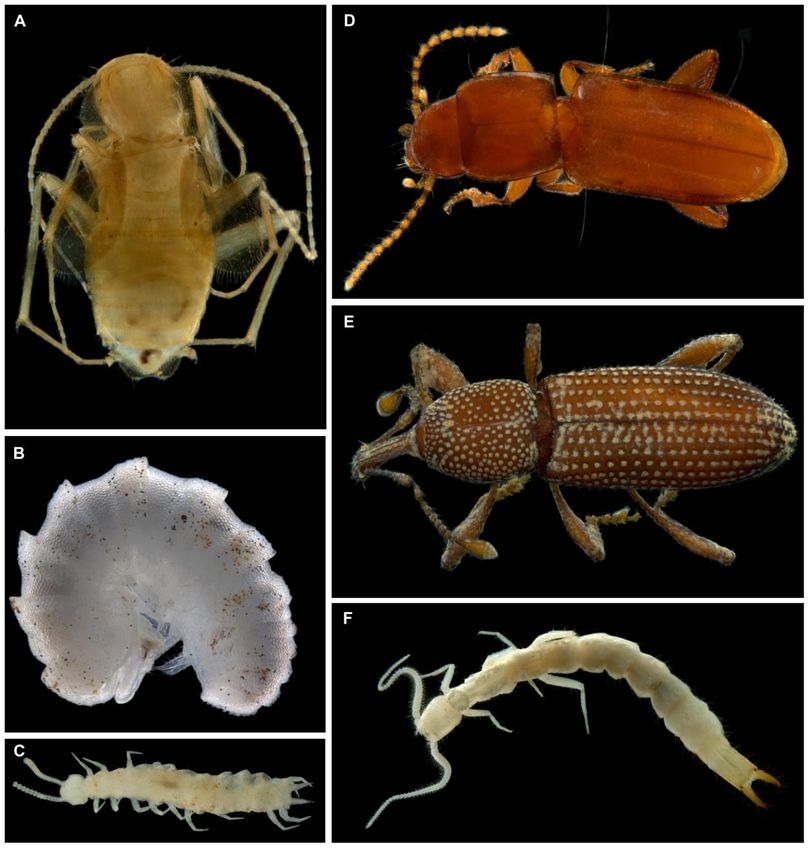
Bennelongia Pty Ltd                                   Solomon Iron Ore Project: Troglofauna Survey at Zion Deposit

The important issue from an assessment viewpoint is that being restricted to outcropping CID at Zion
does not mean that species will be threatened by mining. Outcropping CID is extensive outside the
potential mine pits and there is evidence of continuity between outcropping CID habitat inside and
outside the potential mine pits for two less restricted species (a schizomid and a symphylan). Therefore,
although Draculoides sp. B30 and Zuphiini sp. SOLOMON may be restricted to Zion deposit, the small
size of individual potential mine pits and the considerable amount of outcropping CID that will remain
after mining (36% of the 406 ha based on current data) make it unlikely these species occur only within
the proposed mine pits. On this basis, it is unlikely the persistence of any troglofauna species will be
threatened by mining at Zion.

                                                                                                                iv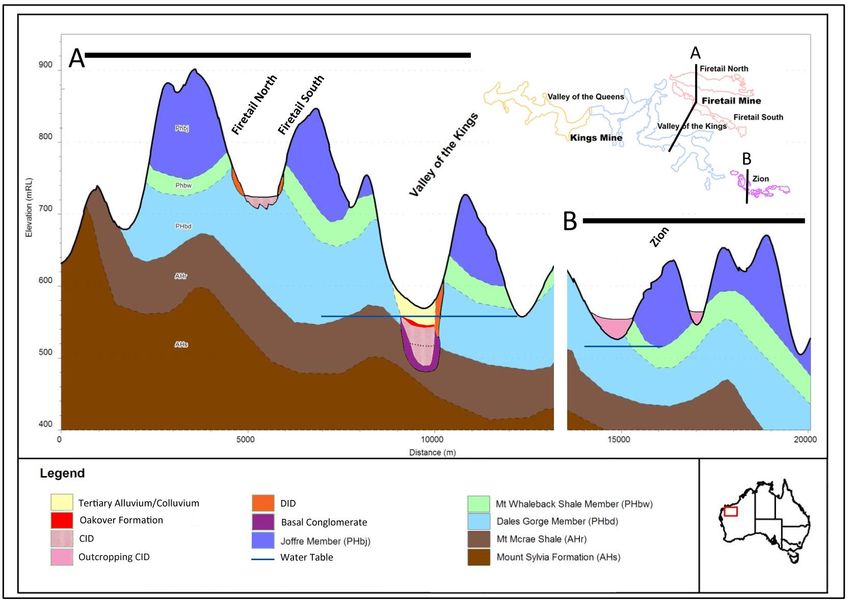
Bennelongia Pty Ltd                                                                          Solomon Iron Ore Project: Troglofauna Survey at Zion Deposit

                                                                            CONTENTS
EXECUTIVE SUMMARY .......................................................................................................................................... III
1. INTRODUCTION ................................................................................................................................................. 1
2. MINING AT ZION DEPOSIT.................................................................................................................................. 3
3. TROGLOFAUNA REVIEW..................................................................................................................................... 3
   3.1. HABITAT REQUIREMENTS OF TROGLOFAUNA.................................................................................................................3
   3.2. PREVIOUS TROGLOFAUNA SURVEYS AT SOLOMON .........................................................................................................3
4. HABITAT CHARACTERISATION AT ZION AND SURROUNDS ................................................................................. 4
   4.1. GEOLOGY ...............................................................................................................................................................4
      4.1.1. Zion and Surrounds as Troglofauna Habitat ...............................................................................................6
   4.2. HABITAT CONTINUITY AT ZION ...................................................................................................................................6
5. METHODS .......................................................................................................................................................... 7
      5.1.1. Survey Rationale .........................................................................................................................................7
      5.1.2. Sampling Methods ......................................................................................................................................7
      5.1.3. Sample Effort and Timing............................................................................................................................7
      5.1.4. Sample Sorting and Species Identification ..................................................................................................8
   5.2. PERSONNEL ............................................................................................................................................................8
6. RESULTS ........................................................................................................................................................... 10
   6.1. TROGLOFAUNA OCCURRENCE AND ABUNDANCE ..........................................................................................................10
   6.2. SPECIES IDENTIFICATION ISSUES ................................................................................................................................10
   6.3. PATTERNS OF TROGLOFAUNA DISTRIBUTION ...............................................................................................................10
   6.4. TROGLOFAUNA SPECIES OF THE POTENTIAL MINE PITS .................................................................................................16
   6.5. SAMPLING EFFICIENCY ............................................................................................................................................16
7. DISCUSSION ..................................................................................................................................................... 16
   7.1. SPECIES WITH APPARENTLY LOCALISED DISTRIBUTIONS AT ZION......................................................................................16
   7.2. HABITAT AND TROGLOFAUNA DISTRIBUTIONS .............................................................................................................17
   7.3. HABITAT CONNECTIVITY AT ZION ..............................................................................................................................18
   7.4. THREAT TO RESTRICTED SPECIES ...............................................................................................................................21
8. CONCLUDING SUMMARY ................................................................................................................................. 21
9. REFERENCES ..................................................................................................................................................... 22
10. APPENDICES ................................................................................................................................................... 24
      Appendix 1: Condition 13, Ministerial Statement 862. .......................................................................................24
      Appendix 2. Bores sampled for troglofauna at Zion. ..........................................................................................25
      Appendix 3. Specimens collected by Bennelongia and lodged at the Western Australian Museum...................26

                                                                        LIST OF FIGURES
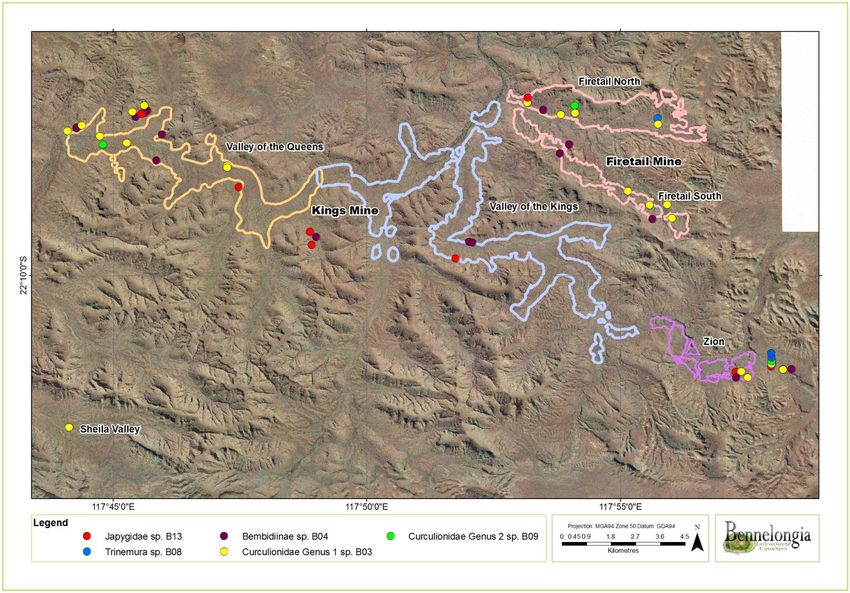
FIGURE 1.1. LOCATION OF THE TWO SOLOMON MINES, KINGS (VALLEY OF THE QUEENS, VALLEY OF THE KINGS AND ZION) AND FIRETAIL
     (FIRETAIL NORTH AND FIRETAIL SOUTH). ........................................................................................................................2
FIGURE 4.1. SCHEMATIC DIAGRAM OF THE GEOLOGY WITHIN THE SOLOMON AREA, AT FIRETAIL, VALLEY OF THE KINGS AND ZION. ..........5
FIGURE 5.1. DRILL HOLES SAMPLED FOR TROGLOFAUNA AT ZION. ................................................................................................9
FIGURE 6.1. CAPTURE ABUNDANCE OF TROGLOFAUNA SPECIES RECORDED AT ZION. ......................................................................13
FIGURE 6.2. TROGLOFAUNA PHOTOGRAPHS: (A) NOCTICOLA SP. B01; (B) TROGLARMADILLO SP. B28; (C) HANSENIELLA SP. B15; (D)
     BEMBIDIINAE SP. B04; (E) CURCULIONIDAE GENUS 1 SP. B03; (F) JAPYGIDAE SP. B13. ......................................................14
FIGURE 6.3. TROGLOFAUNA SPECIES KNOWN ONLY FROM THE POTENTIAL ZION MINE PITS ..............................................................15
FIGURE 7.1. DISTRIBUTION OF ARACHNID AND MYRIAPOD SPECIES KNOWN FROM BOTH ZION AND ELSEWHERE AT SOLOMON (EXCLUDING
     TROGLOPHILES). ...................................................................................................................................................... 19
FIGURE 7.2. DISTRIBUTION OF HEXAPOD SPECIES KNOWN FROM BOTH ZION AND ELSEWHERE AT SOLOMON (EXCLUDING TROGLOPHILES).
      ............................................................................................................................................................................20

                                                                         LIST OF TABLES
TABLE 5.1. SAMPLING EFFORT FOR TROGLOFAUNA SURVEY AT ZION. ...........................................................................................8
TABLE 6.1. TROGLOFAUNA SPECIES RECORDED AT ZION WITH KNOWN RANGE INDICATED. ..............................................................11
TABLE 6.2. ALL HIGHER ORDER IDENTIFICATIONS (IMMATURE OR INCOMPLETE SPECIMENS COLLECTED AT ZION). ...............................13
                                                                                                                                                                                  v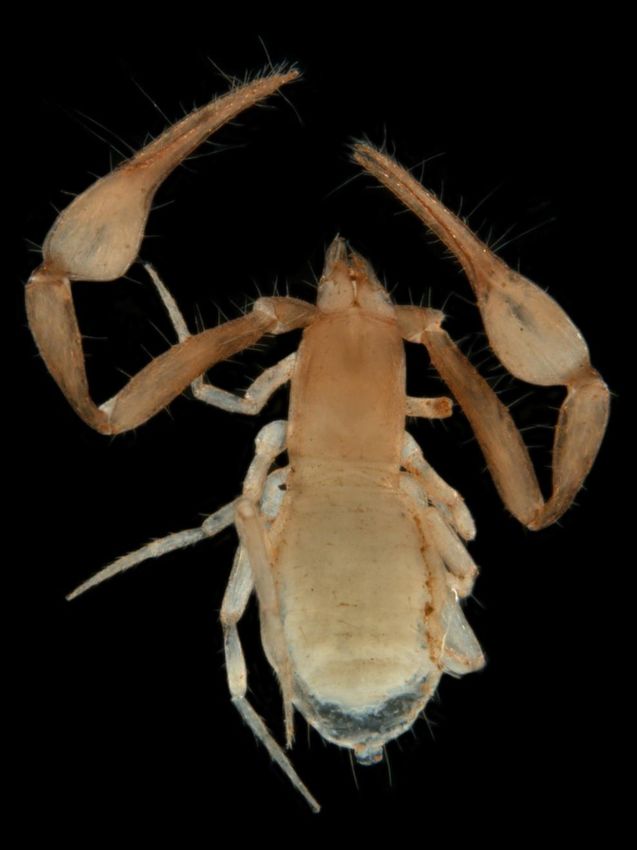
Bennelongia Pty Ltd                                    Solomon Iron Ore Project: Troglofauna Survey at Zion Deposit

1. INTRODUCTION
Subterranean fauna commonly have very limited ranges and, accordingly, they are particularly
vulnerable to extinction as a result of anthropogenic activities. About 70% of stygofauna in the Pilbara
meet the criterion for being a short-range endemic species (SRE) (Eberhard et al. 2009) and the
proportion of troglofauna that are SREs is likely to be even higher (Lamoreux 2004). Consequently, the
Environmental Protection Authority (EPA) usually requires that the risks to subterranean fauna are
considered when assessing proposed mine developments (EPA 2003).

Fortescue Metals Group (Fortescue) is developing the Solomon Iron Ore Project (Solomon), which is
located 60 km north of Tom Price in the Pilbara region of Western Australia. The Solomon Project will
consist of two mines, Kings and Firetail, and a rail spur that joins Fortescue’s Cloudbreak-Port Hedland
Railway. The Kings mine comprises three Channel Iron Deposits (CID) called Valley of the Queens, Valley
of the Kings (previously known as Valley of the Kings and Trinity) and Zion. The Firetail mine will
comprise two areas of Bedded and Detrital Iron Deposits (BID and DID), which are divided into Firetail
North and Firetail South (Figure 1.1). In April 2011, the Minister for Environment issued conditional
approval for Solomon under Ministerial Statement 862 (MS862).

Ministerial Statement 862 incorporated the EPA’s (2011) recommendations contained in Report 1386.
The following three points summarise the key assessments and recommendations of Report 1386 in
relation to subterranean fauna:

    1) It was concluded that the impact to subterranean fauna from the railway spur and mining at
       Firetail were unlikely to be significant and, thus stated, assessment would focus on the Kings
       mine;

    2) In relation to stygofauna at Kings, the report noted some stygofauna species had only been
       recorded at Kings but the EPA agreed with the proponent’s hypothesis that the stygofauna
       community extended beyond the impacted CID aquifer and concluded that the observed
       distributions were an artefact of sampling; and

    3) In relation to troglofauna at Kings, the report noted the higher proportion of troglofauna species
       restricted to Kings Mine, agreed with the proponent’s hypothesis that further survey would
       demonstrate troglofauna communities extended outside the impact, and recommended such
       survey to validate habitat connectivity beyond the impact area. These findings led to the
       development of Condition 13 of MS862 (provided in full in Appendix 1).

Among the approval conditions for the Solomon Project was a requirement for a troglofauna survey to
be undertaken prior to the commencement of any ground disturbing activities within the Zion deposit at
Kings. The purpose of this report is to address Condition 13-4 which states:

        Three months prior to commencement of ground disturbing activities associated with the Zion
        deposit, the proponent shall demonstrate that similar and connected troglofauna habitat exists
        outside of areas that have been or are likely to be impacted by mining to the satisfaction of the
        Chief Executive Officer of the Office of the Environmental Protection Authority on advice from the
        Department of Environment and Conservation.

                                                                                                                 1
Bennelongia Pty Ltd Solomon Iron Ore Project: Troglofauna Survey at Zion Deposit
Figure 1.1. Location of the two Solomon mines, Kings (Valley of the Queens, Valley of the Kings and Zion) and Firetail (Firetail North and Firetail South).
Indicative mine pits at each deposit are indicated.
2Bennelongia Pty Ltd Solomon Iron Ore Project: Troglofauna Survey at Zion Deposit
2. MINING AT ZION DEPOSIT
Any future mining of Zion deposit will be above watertable using open cut methods and covering an
area of approximately 258 ha.
3. TROGLOFAUNA REVIEW
While the earliest work on troglofauna was focussed on their occurrence in caves, surveys during the
past five years have shown that troglofauna are widespread in the landscape matrix of the Pilbara and
are represented by many invertebrate groups, including isopods, palpigrads, spiders, schizomids,
pseudoscorpions, harvestmen, millipedes, centipedes, pauropods, symphylans, diplurans, silverfish,
cockroaches, bugs, beetles and fungus-gnats. Although abundance and diversity of Western Australian
troglofauna appear to be greatest in the Pilbara, at a regional scale troglofauna are ubiquitous in
Western Australia outside caves and they have been recorded from the Kimberley (Harvey 2001), Cape
Range (Harvey et al. 1993), Barrow Island (Biota 2005a), Mid-West (Ecologia 2008) and Yilgarn
(Bennelongia 2009a), and South-West (Biota 2005b).
3.1. Habitat Requirements of Troglofauna
Troglofauna habitat is usually considered to occur from the lower layers of soil and sand below the
ground surface down to the interface with groundwater (Juberthie et al. 1981). Troglofauna occupy
interstices, vugs, cavities and fissures within this realm, so that their occurrence is closely linked to
geology. If no fissures or voids are present, no troglofauna will occur. When these subterranean spaces
are present, their pattern of occurrence will largely determine the pattern of abundance and
distribution of troglofauna. Vertical connectivity of voids with the surface is important for supplying
carbon and nutrients to maintain populations of different species (plant roots are an important surface
connection), while lateral connectivity is crucial to underground dispersal. Geological features such as
dykes may block off the continuity of habitat and act as barriers to dispersal, leading to species having
highly restricted ranges.
Troglofauna occur widely in the mineralized iron formations of the Pilbara (Bennelongia 2008a, b, c,
2009b, c; Biota 2006). There is relatively little information about the occurrence of troglofauna outside
mineralized habitats because mine development has been the primary reason for most of the sampling
programs. However, it has been shown that troglofauna occur in calcrete and alluvium in the Pilbara
(Edward and Harvey 2008; Rio Tinto 2008), Yilgarn (Barranco and Harvey 2008; Platnick 2008;
Bennelongia 2009a) and elsewhere (Biota 2005a, b).
3.2. Previous Troglofauna Surveys at Solomon
Subterranean fauna sampling associated with the environmental impact assessment of Solomon was
undertaken by Subterranean Ecology in the Kings area (Valley of the Kings, Valley of the Queens and
Zion deposits) and by Bennelongia in the Firetail area.
Subterranean Ecology (2010) collected and identified 28 species of troglofauna from 165 samples. Zion
supported the most species (14) of the three deposits within Kings, and only two of the species recorded
at Zion were not recorded elsewhere at Solomon. Altogether at Kings four arachnid Orders were
recorded: Pseudoscorpionida (2 species); Palpigradi (1 species); Schizomida (2 species) and Araneae (1
species). The only crustacean Order collected was Isopoda (1 species). One Order of centipede was
recorded: Scolopendromorpha (3 species); Millipedes were represented by one Order: Polyxenida (1
species). Pauropods were represented by the only known Order in this group (Pauropodina) (1 species).
3Bennelongia Pty Ltd Solomon Iron Ore Project: Troglofauna Survey at Zion Deposit
Symphyla were represented by unknown Orders (2 species). There were five Orders of hexapods
(Entognatha/Insecta): Diplura (4 species), Thysanura (2 species), Blattodea (1 species), Hemiptera (2
species) and Coleoptera (5 species).
Bennelongia (2010) collected 45 species of troglofauna from 356 samples at the Firetail area. Ten of the
Firetail species were also recorded at Kings (Subterranean Ecology 2011). At Firetail four arachnid
Orders were recorded: Pseudoscorpionida (5 species), Palpigradi (1 species) Schizomida (2 species) and
Araneae (7 species). The only crustacean Order collected was Isopoda (2 species). Two Orders of
centipede were recorded: Geophilomorpha (1 species) and Scolopendromorpha (3 species). Millipedes
were represented by two Orders: Juliformia (1 species) and Polydesmida (1 species). Pauropods were
represented by the only known Order in this group (Pauropodina) (1 species). There were five Orders of
hexapods (Entognatha/Insecta): Diplura (7 species), Thysanura (4 species), Blattodea (2 species),
Hemiptera (3 species) and Coleoptera (5 species).
A subsequent regional troglofauna survey around the Kings area and farther west and north west of
Solomon was conducted by Subterranean Ecology (2011). Fourteen species of troglofauna were
collected in c. 49 samples, with at least five of these species previously recorded at Kings. In 2011 and
2012, Bennelongia also undertook regional surveys around the Kings area.
4. HABITAT CHARACTERISATION AT ZION AND SURROUNDS
4.1. Geology
Solomon lies in the main Hamersley Range and contains a significant section of the Lower Proterozoic
Hamersley Group sedimentary sequence. The ranges within the Solomon tenements are typically
rugged, with prominent strike ridges and hills of outcropping Brockman Iron Formation that separate
palaeochannels incised into relatively flat lying basement rocks, in which thick sequences of iron-rich
infill have been locally deposited (MHW 2010).
Solomon deposits typically contain the following palaeochannel units (MWH 2010; Figure 4.1):
1. Alluvial/Colluvial and Detrital Deposits: valley in-fill sequence consisting clay, silt and gravel,
including DID derived from BID about 10 to 60 m thick.
2. Oakover Formation: calcrete and silcrete horizon typically overlying CID and varying in thickness
from barely present to several metres.
3. Upper CID: hard, goethite dominated CID which has been overprinted in places by a Hard Cap
zone of hydrated goethite up to 15 m thick.
4. Lower CID: vuggy, clay rich ochreous goethite dominated CID.
5. Basal Conglomerate: basal conglomerate and clay unit present at the base of the CID, typically
within the deepest parts of the palaeochannel system.
6. Brockman Iron Formation: relatively flat lying, predominately unmineralised BIF (Dales Gorge
and Joffre Members divided by Mt Whaleback Shale) with zones of mineralised BIF and DID
occurring in the adjacent valley walls and margins of the palaeochannels.
The Zion deposit is part of the same palaeochannel as the other Solomon deposits (Valley of the Kings,
Valley of the Queens) but is composed of a more elevated CID, which is referred to here as outcropping
CID although it has sometimes been described as Robe Pisolite. The outcropping CID sits entirely above
the watertable with little or no overlying alluvium (Figure 4.1). Brockman Iron Formation (BIF) and the
4Bennelongia Pty Ltd Solomon Iron Ore Project: Troglofauna Survey at Zion Deposit
Figure 4.1. Schematic diagram of the geology within the Solomon Area, at Firetail, Valley of the Kings and Zion.
Adapted and modified from MWH (2010), not drawn to scale and is designed to represent a general diagrammatic representation of troglofauna habitat in the Solomon area. Further detail of the
inset can be seen in Figure 1.1.
5Bennelongia Pty Ltd Solomon Iron Ore Project: Troglofauna Survey at Zion Deposit
underlying Mount McRae Shale form the northern and southern valley walls, hills and ridgelines, as well
as the palaeochannel valley floor at Zion.
4.1.1. Zion and Surrounds as Troglofauna Habitat
All of the mineralized lithologies found at Solomon (BID/CID/DID) are known to be porous and are well
recognised as troglofauna habitat in many other parts of the Pilbara (Biota 2006, Bennelongia 2009a,b,
2010, 2011a, 2012). The basement lithologies that occur throughout the tenement are predominantly
basal conglomerate, BIF and shales and are not recognised as prospective for troglofauna, particularly at
the depths at which they occur at Solomon. On the other hand, weathered surface BIF occurring on
ridgelines and hills (commonly known as the Hard Cap Zone) is considered to be troglofauna habitat
because of its porosity.
The colluvial and alluvial sediments that overlay the CID and flanking DID in the valleys are considered to
be less prospective troglofauna habitat, although troglofauna have been found in alluvium (often where
calcrete is present) in the Pilbara and elsewhere in Western Australia (Edward and Harvey 2008;
Barranco and Harvey 2008; Platnick 2008; Bennelongia unpublished data).
The outcropping CID at Zion, which lies above the watertable, represents classic troglofauna habitat
(Biota 2006). The flanking valley walls and hills comprise non-commercial grade BID (Dales Gorge and
Joffre Member) and Hard Cap. This Hard Cap zone is the most prospective troglofauna habitat at Zion
outside the potential mine pits.
Metadolerite sills and dolerite dykes are known to cut the BIF within the regional area around Solomon
(MWH 2010).
4.2. Habitat Continuity at Zion
Quantifying habitat connectivity for troglofauna in inherently difficult and in most cases connectivity is
inferred via the lack of obvious barriers to troglofauna movement. Landscape features that are
considered to be potential barriers include deep valleys, mesa formations, dolerite dykes and significant
faulting. Such features have the potential to block the continuity of voids and spaces that are required
for the presence of troglofauna. In contrast, a transition between lithology/strata (especially from
commercial to non-commercial grade mineralisation) rarely indicates a barrier to troglofauna
distribution (Bennelongia 2009a, b, 2011a, 2011b, 2012).
The outcropping CID at Zion represents an unusual geological formation in the Solomon area. However,
surveys elsewhere in the Pilbara have shown that some troglofauna species and community may occur
in both isolated CID and nearby mineralised BIF (Subterranean Ecology 2007), so there is expected to be
habitat continuity between Zion and surrounding deposits in Solomon, especially through the CID in the
Valley of the Kings and Valley of the Queens. While deep valleys, dolerite dykes and faulting are present
at Solomon, troglofauna species (including troglobitic species) have been observed either side of such
potential barriers in other areas of the Pilbara (Bennelongia 2009a, b, 2011a, 2012). At the same time, it
must be recognised that troglofauna species tend to have restricted distributions and uniform
assemblages are not expected at Zion and other Solomon deposits (see Lamoreux 2004; Harvey et al.
2008).
6Bennelongia Pty Ltd Solomon Iron Ore Project: Troglofauna Survey at Zion Deposit
5. METHODS
5.1.1. Survey Rationale
The troglofauna survey at Zion was conducted according to the general principles laid out in EPA
Guidance Statements Nos 54 and 54A (EPA 2003, 2007). Sampling was organised around clusters of
bores inside the potential mine pits. Reference areas, sampled to determine whether species recorded
within the potential mine pits occur more widely, were defined as areas in the vicinity of the potential
mine pits but outside them. Collectively the impact and reference areas are referred to as the ‘Zion
Survey Area’, likewise, the wider Solomon mining area is referred to as the ‘Solomon Area’, which
includes Firetail deposits (Firetail North and Firetail South) and other Kings deposits (Valley of the Kings,
Trinity and Valley of the Queens).
5.1.2. Sampling Methods
Each troglofauna sample consisted of two sub-samples collected by separate techniques. These were
scraping and trapping:
1. Scraping occurred immediately prior to setting traps. A troglofauna net (weighted ring net, 150
µm mesh, aperture varied according to bore diameter) was lowered to the bottom of the bore,
or to the watertable, and scraped back to the surface along the bore walls. Each scrape
comprised four sequences of lowering and retrieving with the aim of scraping all troglofauna
present on the walls of the bore into the net. After each scrape, the contents of the net were
transferred to a 125 ml vial and preserved in 100% ethanol.
2. Custom made cylindrical PVC traps (270 x 70 mm, entrance holes side and top) were used for
trapping. Traps were baited with moist leaf litter (sterilised by microwaving) and lowered on
nylon cord to within several metres of the watertable or end of the bore. Each bore was set
with two traps. Bores were sealed while traps were set to minimise the capture of surface
invertebrates. Traps were retrieved eight weeks later and their contents (bait and captured
fauna) were emptied into a zip-lock bag and road freighted to the laboratory in Perth.
5.1.3. Sample Effort and Timing
The scrape and trap (single or double) sub-samples collected at a site during each sampling round were
treated as a single sample in calculations of sample effort, according to currently recognised best
practice for troglofauna sampling (BHPBIO 2008; Halse and Pearson submitted). In instances where a
sample consisted of either trapping or scraping alone, an effort value of 0.5 was assigned to that
sampling event.
Altogether 38.5 troglofauna impact samples were collected from bores within the potential mine pits at
Zion, and a further 39 reference samples were collected (Table 5.1 and Figure 5.1). Sampling was
conducted over five rounds: Round 1 on 20 January 2010, Round 2 from 25 February to 2 March 2010,
Round 3 from 4 September 2011 until 1 November 2011, Round 4 from 1 March to 3 May 2012, and
Round 5 from 12 September 2012 until 7 November 2012. Rounds 1 and 2 sampling were conducted by
Subterranean Ecology; other sampling was conducted by Bennelongia. A complete list of drill holes
sampled and dates of sampling is provided in Appendix 2.
Results of all previous troglofauna surveys at Solomon conducted by Subterranean Ecology and
Bennelongia have been included in analysis of the status and distributions of species found at Zion
deposit.
7Bennelongia Pty Ltd Solomon Iron Ore Project: Troglofauna Survey at Zion Deposit
5.1.4. Sample Sorting and Species Identification
Troglofauna caught in traps were extracted from the leaf litter using Berlese funnels under halogen
lamps. Light drives troglofauna and soil invertebrates out of the litter into the base of the funnel
Table 5.1. Sampling Effort for Troglofauna Survey at Zion.
S Trap = single trap, D Trap = double trap.
Impact Reference
Round 1
Scrape 12 8
Samples 6.0 4.0
Round 2
Scrape 12 8
S Trap 13 10
Samples 12.5 9
Round 3
Scrape 10 10
S Trap 8 8
D Trap 2 2
Samples 10 10
Round 4
Scrape 10 10
S Trap 8 7
D Trap 2 3
Samples 10 10
Round 5
Scrape 6
S Trap 5
D Trap 1
Samples 6
Total Samples 38.5 39
containing 100% ethanol (EPA 2007). After about 72 hours, the ethanol and its contents were removed
and sorted under a dissecting microscope. Litter from each funnel was also examined under a
microscope for any remaining live or dead animals.
Preserved scrapes were elutriated to separate animals from heavier sediment and sieved into size
fractions (250, 90 and 53 µm) to remove debris and improve searching efficiency. Samples were then
sorted under a dissecting microscope.
All fauna were removed from samples and examined for troglomorphic characteristics (lack of eyes and
pigmentation, well developed sensory organs, long slender appendages, vermiform body shape).
Surface and soil-dwelling animals were identified only to Order level. Troglofauna were, as far as
possible, identified to species or morphospecies level, unless damaged, juvenile or the wrong sex for
identification (as stipulated by EPA 2007). Identifications were made under dissecting and/or compound
microscope and specimens were dissected as necessary. Unpublished and informal taxonomic keys
were used to assist identification of taxa for which no published keys exist.
Representative animals collected by Bennelongia have been lodged with the Western Australian
Museum (Appendix 3).
5.2. Personnel
Fieldwork by Bennelongia in 2011 and 2012 was undertaken by Jim Cocking and Sean Bennett. Sample
sorting was done by Mike Scanlon, Grant Pearson, Jim Cocking, Lucy Gibson, Jeremy Quartermaine, Sean
Bennett and Sabrina Cocking. Identifications were made by Jane McRae and Dean Main.
8Bennelongia Pty Ltd Solomon Iron Ore Project: Troglofauna Survey at Zion Deposit
Figure 5.1. Drill holes sampled for troglofauna at Zion.
9Bennelongia Pty Ltd Solomon Iron Ore Project: Troglofauna Survey at Zion Deposit
6. RESULTS
6.1. Troglofauna Occurrence and Abundance
Sampling at Zion yielded a total of 134 troglofaunal animals belonging to eight Classes, 14 Orders and 27
species (Table 6.1, Table 6.2). This includes four Orders of arachnids: Pseudoscorpionida (1 species),
Palpigradi (2 species), Schizomida (3 species), and Araneae (3 species). Crustaceans were represented
by Isopoda (1 species). One Order of centipede was recorded, Scolopendromorpha (2 species).
Millipedes were represented by one Order, Spirobolida (1 species). Pseudocentipedes were represented
by one Order, Cephalostigmata (2 species). Pauropods were represented by the only known Order in
this group, Pauropodina (1 species). There were five Orders of hexapods (Entognatha/Insecta): Diplura
(1 species), Thysanura (1 species), Blattodea (2 species), Hemiptera (2 species) and Coleoptera (5
species).
The numerically dominant species were Nocticola sp. B01, Draculoides sp. B28 and Curculionidae Genus
1 sp. B03 (Figure 6.1). All other species were collected in low abundance (≤10 specimens) and 15
species were recorded as singletons, i.e. only one animal of that species was collected. Six of these
singleton species have been previously recorded elsewhere at Solomon (Table 6.1).
Images of representative troglofauna species are provided in Figure 6.2.
6.2. Species Identification Issues
As foreshadowed in Section 5.4.1, in several cases animals could not be identified to species level
because they were damaged, juvenile or the wrong sex for species determination. Table 6.2 contains
seven taxa identified only to genus or family level. All of these specimens are considered very likely to
belong to species listed in Table 6.1.
Table 6.1 contains three taxa that are identified above species level but which clearly represent
additional species at Zion: namely, Pauropoda sp. (impact hole), Prethopalpus sp. (reference hole) and
Meenoplidae sp. (reference hole). In the case of Pauropoda sp., the specimen was juvenile, it is now
slide-mounted and the taxonomy cannot be advanced further using either morphological or molecular
techniques. Meenoplidae sp. specimens were nymphs that are very likely to belong to widespread
species (Bennelongia 2009a, b). The Prethopalpus sp. specimen was also juvenile and while taxonomy
could possibly be advanced using molecular techniques, it is not considered necessary as it was collected
outside the potential mine pits. All three taxa are not considered further in this assessment because
species identification would be unlikely to alter the assessment (Prethopalpus sp. and Meenoplidae sp.)
or because there is no way of comparing the specimen with other species collected inside the potential
mine pits or in reference areas and thus the taxon will always appear to be unique (Pauropoda sp.).
6.3. Patterns of Troglofauna Distribution
Three of the 27 species collected in reference and impact samples from Zion (Palpigradida sp. B01,
Nocticola sp. B01 and Hemiptera sp. B02) are known to occur widely in the central and eastern Pilbara
(Bennelongia 2009a,b; Subterranean Ecology 2010, 2011). Another 12 species have also been
10Bennelongia Pty Ltd Solomon Iron Ore Project: Troglofauna Survey at Zion Deposit
Table 6.1. Troglofauna species recorded at Zion with known range indicated.
Known from outside Linear
potential mines pits at range
Row Labels Impact Reference Zion Other occurrences (km)
Arachnida
Pseudoscorpionida
Indohya sp. B02 2 1 Yes Firetail North, Firetail South 9.6
(=Indohya SOLOMON)
Palpigradida
Palpigradi sp. SOLOMON 1 Yes Zion only -
1,2
Palpigradida sp. B01 1 1 Yes Widespread in the Central and Eastern Pilbara 473
Schizomida
Draculoides sp. B25 1 Yes Zion only -
Draculoides sp. B28 8 13 Yes Zion only 1.6
(=nr Draculoides sp. SOLOMON 1)
Draculoides sp. B30 1 No Zion only -
Araneae
Anapistula sp. B01 8 Yes Firetail North, Firetail South, Valley of the Queens 16
(=Anapistula sp. SOLOMON)
Linyphiidae sp. B01 1 Yes Firetail North 11
Prethopalpus sp. 1 Yes Uncertain due to taxonomic resolution -
Crustacea
Isopoda
Troglarmadillo sp. B28 1 1 Yes Zion only 0.4
Chilopoda
Scolopendromorpha
Cryptops sp. SOLOMON 2 1 No Zion only -
Scolopendridae sp. B05 1 Yes Firetail North, Firetail South 12
(=Scolopendridae sp. SOLOMON)
Diplopoda
Spirobolida
Spirobolida sp. B04 1 Yes Firetail South 9
Pauropoda
Pauropodina
Pauropoda sp. 1 ? Uncertain due to taxonomic resolution ?
Symphyla
Cephalostigmata
Hanseniella sp. B15 6 Yes Valley of the Queens 23
(=Hanseniella sp. SOLOMON)
Symphyella sp. B14 1 Yes Zion only -
11Bennelongia Pty Ltd Solomon Iron Ore Project: Troglofauna Survey at Zion Deposit
Known from outside Linear
potential mines pits at range
Row Labels Impact Reference Zion Other occurrences (km)
Entognatha
Diplura
Japygidae sp. B13 1 1 Yes Serenity, Valley of the Queens, Valley of the Kings 42
(=Japygidae sp. SER)
Insecta
Thysanura
Trinemura sp. B08 3 Yes Firetail North in approved mine pit 9.7
(=Trinemura sp. SOLOMON 1)
Blattodea
Blattidae sp. B04 1 Yes Firetail North, Firetail South, Valley of the Kings, Valley of the 14.9
Queens, Sheila Valley
1,2,3,4,5,6
Nocticola sp. B01 20 7 Yes Widespread in the central and eastern Pilbara 303
(=Nocticola sp. S3)
Hemiptera
Meenoplidae sp. 2 Yes Uncertain due to low taxonomic resolution but likely to be -
1,2
previously recorded widespread species
1,2,3,4
Hemiptera sp. B02 5 1 Yes Widespread in the central and eastern Pilbara 319
(=Fulgoridae sp. S1)
Coleoptera
Bembidiinae B04 2 2 Yes Firetail North, Firetail South, Valley of the Queens, Valley of the 26
(=Anillini sp. SOLOMON 2) Kings
Bembidiinae sp. B15 1 Yes Zion only -
Curculionidae Genus 2 sp. B09 1 Yes Valley of the Queens and Firetail North in approved mine pits 24
(=Curculionidae sp. SOLOMON 2)
Zuphiini sp. SOLOMON 1 No Zion only
Curculionidae Genus 1 sp. B03 4 11 Yes Firetail North, Firetail South, Valley of the Queens, Sheila Valley 33
(= Curculionidae SOLOMON 1)
1
Bennelongia 2009b; 2Bennelongia 2009c; 3Bennelongia 2011a, 4Bennelongia 2012; 5Subterranean Ecology 2010; 6Subterranean Ecology 2011.
12Symphyla
Arachnida
Number of Specimens Taxonomy
Araneae
Blattodea
Thysanura
Schizomida
35
30
25
20
15
10
5
0
Cephalostigmata
Nocticola sp.
Trinemura sp.
Linyphiidae sp.
Hanseniella sp.
Draculoides sp.
Bennelongia Pty Ltd
Nocticola sp. B01/Nocticola sp.
Draculoides sp. B28
Curculionidae Genus 1 sp. B03
6
1
1
2
Anapistula sp. B01
Impact
Hanseniella sp. B15/Hanseniella sp.
Draculoides sp.
Hemiptera sp. B02
Bembidiinae sp. B04
Trinemura sp. B08/Trinemura sp. 2
1
1
5
Indohya sp. B02
Reference
Linyphiidae sp. B01/Linyphiidae sp.
Japygidae sp. B13
Palpigradida sp. B01
Troglarmadillo sp. B28
Meenoplidae sp.
Bembidiinae sp. B15
Species
Blattidae sp. B04
Probable species
Nocticola sp. B01
Trinemura sp. B08
Draculoides sp. B25
Linyphiidae sp. B01
Hanseniella sp. B15
Figure 6.1. Capture abundance of troglofauna species recorded at Zion.
Draculoides sp. B30
Pauropoda sp.
Prethopalpus sp.
Spirobolida sp. B04
One of the Draculoides in Table 6.1
Symphyella sp. B14
Palpigradida sp. SOLOMON
Cryptops sp. SOLOMON 2
Curculionidae Genus 2 sp. B09
Table 6.2. All Higher Order Identifications (immature or incomplete specimens collected at Zion).
Zuphiini sp. SOLOMON
Scolopendridae sp. B05
Solomon Iron Ore Project: Troglofauna Survey at Zion Deposit
13Bennelongia Pty Ltd Solomon Iron Ore Project: Troglofauna Survey at Zion Deposit
Figure 6.2. Troglofauna photographs: (A) Nocticola sp. B01; (B) Troglarmadillo sp. B28; (C) Hanseniella sp. B15;
(D) Bembidiinae sp. B04; (E) Curculionidae Genus 1 sp. B03; (F) Japygidae sp. B13.
14Bennelongia Pty Ltd Solomon Iron Ore Project: Troglofauna Survey at Zion Deposit
Figure 6.3. Troglofauna species known only from the potential Zion mine pits.
15Bennelongia Pty Ltd Solomon Iron Ore Project: Troglofauna Survey at Zion Deposit
recorded from other deposits at Solomon, with linear ranges of between 9 and 24 km (Table 6.1). Of the
remaining 12 species, three have uncertain distributions or taxonomic status and were not considered in
assessment (as already discussed) and nine are known only from Zion.
6.4. Troglofauna Species of the Potential Mine Pits
Of the 17 species collected at the potential mine pits, three species are known only from the mine pits.
These were Draculoides sp. B30, Cryptops sp. SOLOMON 2 and Zuphiini sp. SOLOMON (Table 6.1 and
Figure 6.3).
A further 10 species were also found in reference areas at Zion outside the potential mine pits. Sixteen
of the 27 species recorded at Zion are known to occur beyond Zion at Solomon or more widely in the
Pilbara. Two species were excluded from assessment (Pauropoda sp. and Meenoplidae sp.).
6.5. Sampling Efficiency
Documenting the composition of troglofauna communities and accurate distributions of the species
within them is difficult because a high proportion of troglofauna species occur in low abundance. Two-
thirds of all species at Zion were represented by 17% of all troglofaunal animals. Only three species
were represented by more than ten animals (Nocticola sp. B01, Draculoides sp. B28, Curculionidae
Genus 1 sp. B03; Figure 5.1). Despite the low abundance of most individual species, the average number
of troglofaunal animals caught in the Survey Area was 1.75 per sample, which is well above the historical
capture rate of 0.25 for the Pilbara (Subterranean Ecology 2007). Capture rates were higher in the
impact than in the reference area around Zion (1.92 specimens per sample versus 1.54) as a result of
more of the widespread and abundant cockroach Nocticola sp. B01 being found in impact samples.
7. DISCUSSION
7.1. Species with Apparently Localised Distributions at Zion
The proportion of troglofauna species at Zion known from the potential mine pits, and apparently
restricted to these pits, is not overly high as a proportion of the number of species known from the
deposit (11%). The proportion of apparently restricted species at approved mining developments
typically ranges from 4-25% (e.g. Bennelongia 2008a, c, 2009b, d, e) but may be over 50% (EPA 2011).
The three species of troglofauna currently known only from Zion were all collected as singletons (Table
6.1). It is likely that the apparently restricted ranges of these species are artefacts of them occurring at
low abundance and, therefore, being recorded at very few holes. However, mining may pose a potential
conservation risk if any of the species are restricted to the potential mine pits.
In considering whether any of the three species may actually be restricted to potential mine pits, it
should be recognised that there is a preponderance of low-abundance species in the troglofauna
community at Zion. This pattern of a few relatively abundant species and a long tail of singleton species
is typical of troglofauna communities in the Pilbara. Defining the ranges of singleton species represents
a perennial biological problem that usually requires extensive additional sampling programs to collect
more animals, in conjunction with habitat measurements, and then niche-based distribution or similar
modelling techniques to define likely ranges based on known habitat information (Miller et al. 1989,
Guisan et al. 2006). In the absence of further sampling, the ranges of related species are often used to
interpret the likely ranges of low abundance species. Geology alone, without any information about the
habitat requirements of the species, cannot be used to predict the ranges of naturally restricted species.
16Bennelongia Pty Ltd Solomon Iron Ore Project: Troglofauna Survey at Zion Deposit
Biological information relevant to the likely distributions of the three apparently restricted species at
Zion is provided below, while relevant habitat is discussed in Section 7.2.
Draculoides sp. B30
Schizomids are probably the most studied troglofauna, in terms of distributions, in Western Australia.
Their ranges have been found to be quite variable. Harvey et al. (2008) reported that six species of
schizomid in the Robe Valley were each tightly restricted to single mesas (the largest only 989 ha),
although D. vinei in Cape Range south of Exmouth had a linear range of about 50 km.
While no firm statements can be made about the range of Draculoides sp. B30, it is likely that it extends
southwards from the potential mining area into terrain of similar landform and geology (see Figure 6.3,
Section 4). However, the absence of bores to the south of the mining limits the ability to test whether
this is the case. Given that the species was collected as a singleton, field records provide no information
on range and there is considerable uncertainty about the likely range of the species.
Cryptops sp. SOLOMON 2
All species of Chilopoda collected by Bennelongia in the Pilbara have been collected at very low
abundance (114 specimens from over 10,500 troglofauna samples), which makes determination of
range very difficult. In the rare cases where multiple records for a Chilopoda species exist, they have
indicated the species have relatively wide ranges for troglofauna. For example, Cryptops sp. B07 and
Cryptops sp. B10 have been shown to have linear ranges of at least 27 and 90 km, respectively
(Bennelongia unpublished data). Although Cryptops sp. SOLOMON 2 was collected as a singleton (Figure
6.3) and the likely range is therefore uncertain, it would be expected to extend farther than the
potential mining pits at Zion.
Zuphiini sp. SOLOMON
To date, Bennelongia has collected only three other species of Zuphiini. All display very pronounced
troglomorphies and have known ranges varying from 1-50 km (Bennelongia unpublished data). There is
uncertainty associated with the likely range of Zuphiini sp. SOLOMON, which was collected as a
singleton (Figure 6.3) but the species would be expected to occur in reference areas between the
potential mine pits even if restricted to the Zion area.
7.2. Habitat and Troglofauna Distributions
At present the understanding of factors controlling the distributions of individual troglofauna species in
the Pilbara is poorly developed. There is strong biological evidence that mesas comprise isolated habitat
for some (but not all) troglofauna species in the Robe Valley (Biota 2006; Harvey et al. 2008) but little
can be said about the degree of species isolation associated with dykes, faulting and valleys. All that can
currently be said about Zion is that some of its landscape features may act as barriers to troglofauna
movement.
Based on sampling in the Pilbara as a whole, it seems likely that the occurrence of troglofauna species is
driven by the extent and type of spaces within subterranean strata. In rock habitats, structure is
primarily driven by broad rock type (rocks such as granite contain few spaces) and the degree of
weathering (e.g. iron ore formations contain increasing quantities of internal spaces as they weather).
The main lithology representing troglofauna habitat at Zion is outcropping CID while, in the adjoining
elevated landscape to the north and south, troglofauna habitat is represented by the Hard Cap Zone of
highly weathered Brockman Iron Formation and Mount McRae Shale (Figure 4.1). Further afield at
17Bennelongia Pty Ltd Solomon Iron Ore Project: Troglofauna Survey at Zion Deposit
Solomon many lithologies are prospective for troglofauna and, as additional regional survey data have
been collected (see below), the extent of habitat connectivity between different Solomon deposits for
various species is becoming more apparent.
Of the 27 troglofauna species collected at Zion, five species are considered to be troglophiles, which
have capacity for surface dispersal (Palpigradida sp. B01, Nocticola sp. B01, the un-assessed
Meenoplidae sp., Hemiptera sp. B02 and Blattidae sp. B04). The remaining 22 species are either
troglobitic and are restricted to dispersal below ground or have not been classified as
troglobite/troglophile because of insufficient information. In the rest of this discussion it is assumed all
22 are troglobitic. The occurrence of 11 of the 22 species in at least one other Solomon deposit suggests
there is at least some habitat connectivity between Zion and other parts of Solomon (Figures 6.1 and
6.2). The type of connectivity appears to differ amongst taxonomic groups.
The arachnid and myriapod species occurring at Zion appear to have a strong relationship with the
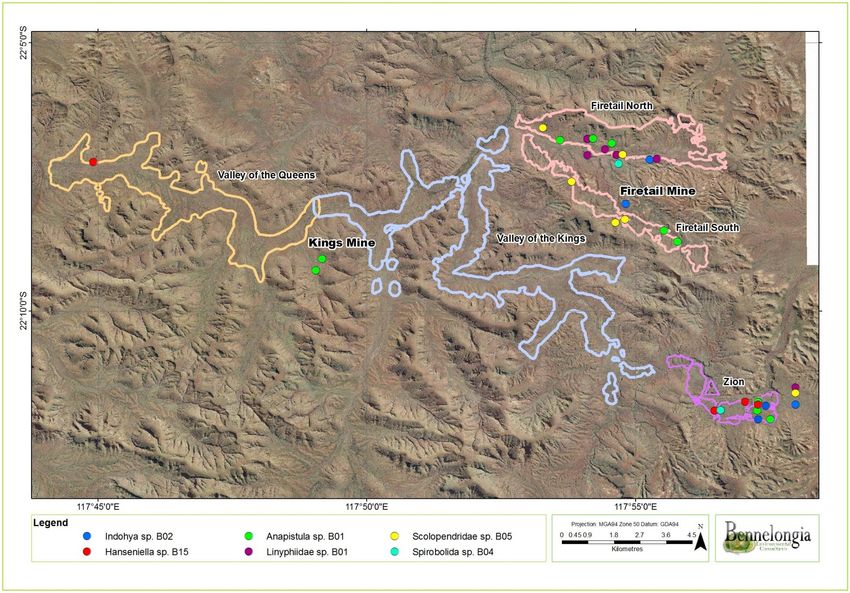
Firetail deposits but little affinity for other Solomon deposits, suggesting limited westwards connectivity
(Figure 7.1). In contrast, the hexapod species are typically distributed throughout the Solomon area
(Figure 7.2). A number of troglofauna surveys in the Pilbara have reported similar trends, whereby
troglofaunal arachnids (i.e. spiders, schizomids and pseudoscorpions) tend to have smaller ranges than
their hexapod counterparts (Halse 2010). Within the hexapods, the curculionids and japygids, in
particular, have been observed to have considerable ranges (using both morphology and genetics for
identifications), which suggests habitat connections are more easily formed for these groups.
7.3. Habitat Connectivity at Zion
In relation to Condition 13-4, which is the focus of this study, the following can be made about habitat
connectivity at Zion.
Based on survey data, it appears likely that the troglobitic species at Zion exhibit two scales of
distribution. First, nine species were collected only in outcropping CID. While some landscape features
within Zion may prevent these species occurring throughout the outcropping CID, connectivity is likely
to occur on a larger scale than the potential mine pits. In fact, the schizomid Draculoides sp. B28 was
collected both within and outside the potential mine pits and demonstrates this connectivity.
Secondly, 11 species recorded from Zion were also recorded elsewhere at Solomon. Four species were
also collected both at Firetail and Valley of the Queens and/or Valley of the Kings, five species also at
Firetail only, one species at Valley of the Kings and Valley of the Queens and one species at Valley of the
Queens only (Figures 7.1 and 7.2). Thus, there is considerable habitat connectivity between the
outcropping CID and surrounding colluvium/detrital deposits, CID deposits and the Hard Cap Zone and
more than half the troglobitic species have been shown to have a Solomon-scale distribution rather than
a Zion-scale distribution. Additional sampling is likely to show further examples of Solomon-scale
connectivity.
18Bennelongia Pty Ltd Solomon Iron Ore Project: Troglofauna Survey at Zion Deposit
Figure 7.1. Distribution of arachnid and myriapod species known from both Zion and elsewhere at Solomon (excluding troglophiles).
19Bennelongia Pty Ltd Solomon Iron Ore Project: Troglofauna Survey at Zion Deposit
Figure 7.2. Distribution of hexapod species known from both Zion and elsewhere at Solomon (excluding troglophiles).
20Bennelongia Pty Ltd Solomon Iron Ore Project: Troglofauna Survey at Zion Deposit The five troglophilic species were either wide-ranging or had a Solomon-scale distribution. The scale of distribution of the spider Prethopalpus sp. and Pauropoda sp. has not been defined here but both are possibly restricted to outcropping CID. 7.4. Threat to Restricted Species When assessing the threat from any future mining at Zion to any species restricted to outcropping CID, it should be recognised that the relatively small area of the potential mine pits (258 ha) in relation to the total area of outcropping CID (406 ha) means that 36% of habitat will remain undisturbed. Furthermore, the individual potential pits are all
Bennelongia Pty Ltd                                    Solomon Iron Ore Project: Troglofauna Survey at Zion Deposit

406 ha based on current data) make it unlikely the species will be found only in the potential mine pits.
On this basis, it is unlikely the persistence of any troglofauna species will be threatened by mining at
Zion.

9. REFERENCES
Barranco, P. and Harvey, M.S. (2008) The first indigenous palpigrade from Australia: a new species of
        Eukoenenia (Palpigradi:Eukoeneniidae). Invertebrate Systematics 22, 227-233.
Bennelongia (2008a) Troglofauna survey of the Orebody 18 Mine Modification. Report 2008/27.
        Bennelongia Pty Ltd, Jolimont, 21 pp.
Bennelongia (2008b) Troglofauna Survey: Area C Mine – E and F Deposits. Report 2008/39. Bennelongia
        Pty Ltd, Jolimont, 35 pp.
Bennelongia (2008c) Orebody 24/25 Upgrade Project: troglofauna assessment. Report 2008/40.
        Bennelongia Pty Ltd, Jolimont, 25 pp.
Bennelongia (2009a) Yilgarn Iron Ore Project: Carina Deposit, Subterranean Fauna Assessment. Report
        2009/69. Bennelongia Pty Ltd, Jolimont, 24 pp.
Bennelongia (2009b) Area C Mining Operation Environmental Management Plan (Revision 4) A, D, P1
        and P3 Deposits: Troglofauna Assessment. Report 2008/48. Bennelongia Pty Ltd, Jolimont, 65
        pp.
Bennelongia (2009c) Jimblebar Iron Ore Project: Troglofauna Assessment. Report 2009/61. Bennelongia
        Pty Ltd, Jolimont, 55 pp.
Bennelongia (2009d) Phil’s Creek Project: troglofauna assessment. Report 2009/70. Bennelongia Pty Ltd,
        Jolimont, 30 pp.
Bennelongia (2009e) Phil’s Creek Project: troglofauna assessment. Report 2009/70. Bennelongia Pty Ltd,
        Jolimont, 30 pp (in Addendum).
Bennelongia (2010) Troglofauna Assessment for the Solomon Project: Firetail Deposits. Report 2010/85,
        Bennelongia Pty Ltd, Jolimont, 34 pp.
Bennelongia (2011a) Pilbara Iron Ore Project: Blacksmith Subterranean Fauna Surveys. Report 2011/137,
        Bennelongia Pty Ltd, Jolimont, 70 pp.
Bennelongia (2011b) Yilgarn Iron Ore Project: Troglofauna Surveys. Report 2011/119, Bennelongia Pty
        Ltd, Jolimont, 27 pp.
Bennelongia (2012) Addendum: Pilbara Iron Ore Project, Blacksmith Subterranean Fauna Surveys.
        Report 2012/137A, Bennelongia Pty Ltd, Jolimont, 46 pp.
Biota (2005a) Barrow Island Gorgon gas development. Biota Environmental Sciences, North Perth, pp. 34
        +.
Biota (2005b) Ludlow Mineral Sands Project. Biota Environmental Sciences, Leederville, pp. 14.
Biota (2006) Mesa A and Robe Valley mesas troglobitic fauna survey. Project No. 291. Biota
        Environmental Sciences, Leederville, pp. 74++.
BHPBIO (2008) Regional subterranean fauna study: troglofauna sampling program methodology (draft).
        BHP Billiton Iron Ore, Perth, 10 pp.
Ecologia (2008) Koolanooka – Blue Hills Direct Shipping Ore (DSO) Mining Project, Troglofauna Biological
        Assessment. Ecologia Environment, West Perth, 22 pp.
Eberhard, S.M., Halse, S.A., Williams, M.R., Scanlon, M.D., Cocking, J.S. and Barron, H.J. (2009) Exploring
        the relationship between sampling efficiency and short range endemism for groundwater fauna
        in the Pilbara region, Western Australia. Freshwater Biology 54, 885–901.
Edward, K.L. and Harvey, M.S. (2008) Short-range endemism in hypogean environments: the
        pseudoscorpion genera Tyrannochthonius and Lagynochthonius (Pseudoscorpiones:
        Chthoniidae) in the semiarid zone of Western Australia. Invertebrate Systematics 22, 259–293.

                                                                                                                22
You can also read


