Interagency Transportation Guide for Gasoline, Mixed Gas, Drip-Torch Fuel, and Diesel
←
→
Page content transcription
If your browser does not render page correctly, please read the page content below
A Publication of the
National Wildfire
Coordinating Group

                       Interagency
                       Transportation Guide
                       for Gasoline, Mixed Gas,
                       Drip-Torch Fuel, and Diesel

PMS 442                                       April 2011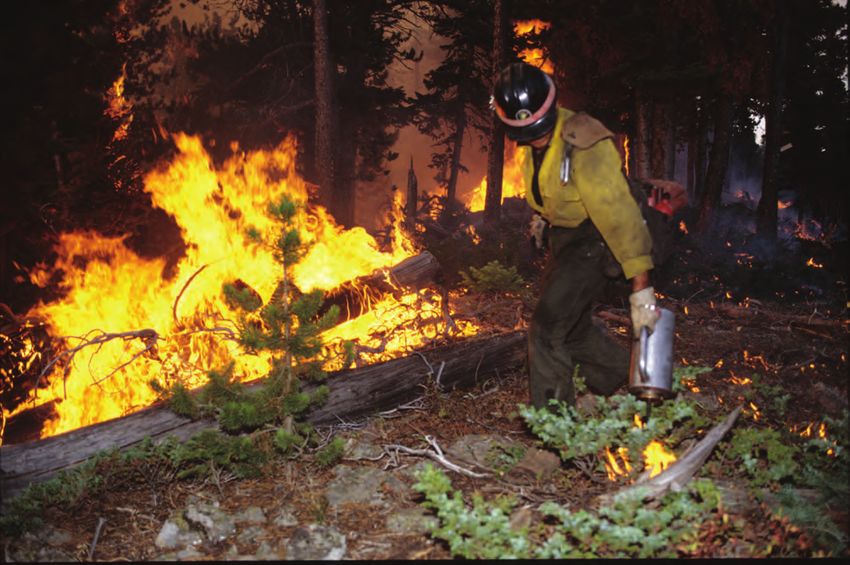
Interagency
                                      Transportation Guide
                                      for Gasoline, Mixed Gas,
                                      Drip-Torch Fuel, and Diesel
A publication of the
National Wildfire
Coordinating Group

PMS 442                April 2011

                                    Sponsored for NWCG publication by the
                                    NWCG Equipment Technology Committee

                                    Previous Edition 2009

                                    Prepared by
                                    Ground Ignition Subcommittee of the
                                    Equipment Technology Committee

                                    In cooperation with the
                                    USDA Forest Service
                                    Technology and Development Center
                                    Missoula, MT

                                    For more information, contact:
                                    Shawn Steber
                                    USDA Forest Service
                                    Missoula Technology and Development Center
                                    406–829–6785
                                    smsteber@fs.fed.us

                                    This publication is available at
                                    .

                                    The National Wildfire Coordinating Group (NWCG) has developed this information
                                    for the guidance of its member agencies and is not responsible for the interpreta-
                                    tion or use of this information by anyone except the member agencies. The use
                                    of trade, firm, or corporation names in this publication is for the information
                                    and convenience of the reader and does not constitute an endorsement by the
                                    National Wildfire Coordinating Group of any product or service to the exclusion
                                    of others that may be suitable.

                                    "National Wildfire Coordinating Group," "NWCG," and the NWCG logo are
                                    trademarks of the National Wildfire Coordinating Group.

                                                                                                                  i
Preface                                                         Part One
T
       his document establishes interagency guidance for    closely as practical on the U.S. Department of
       the ground transportation of gasoline, mixed gas,    Transportation (DOT) and U.S. Department of Labor
       drip-torch fuel, and diesel in Government vehicles   Occupational Safety and Health Administration (OSHA)
driven by Government employees. This guide is based as      regulations.

                        Director                                              Assistant Director
             Fire and Aviation Management                                     Fire and Aviation
             U.S. Department of Agriculture                             U.S. Department of the Interior
                     Forest Service                                      Bureau of Land Management

                    Assistant Director                                         Associate Director
               Human Capital Management                                 Visitor and Resource Protection
              U.S. Department of the Interior                           U.S. Department of the Interior
               Bureau of Land Management                                     National Park Service

  ii
Acknowledgments                                                 Part One
                     Gary Davis, U.S. Department of the Interior, Aviation Management Directorate
                 Emil Golias, U.S. Department of Labor, Occupational Safety and Health Administration
                         John Gould, U.S. Department of the Interior, Bureau of Indian Affairs
                                 Charles Hochman, U.S. Department of Transportation
                  Charles Mathwig, U.S. Department of the Interior, Aviation Management Directorate
          Louis Rowe, Richard Powell, and Dale Miracle, U.S. Department of the Interior, National Park Service
                       Ken Morin, U.S. Department of the Interior, Bureau of Land Management
                                     Keith Morris, U.S. Fish and Wildlife Service
                      Robert Stroud, U.S. Department of the Interior, Bureau of Land Management

                     Warren Appelhans, Steve Beall, Sunni Bradshaw, Ray Bryant, Daren Dalrymple,
                 Frank Esposito, Allison Good, Ian Grob, Chuck Harding, Dennis Haygood, Gary Hoshide,
                    Glenn Johnston, Jim Kautz, Scott Kesler, Jeff Koenig, Bert Lindler, Sara Lustgraaf,
                        Phil Mason, Eve Ponder, Dick Sawaya, and Geraldine Wolf, Forest Service

Firefighter using a drip torch.

                                                                                                                 iii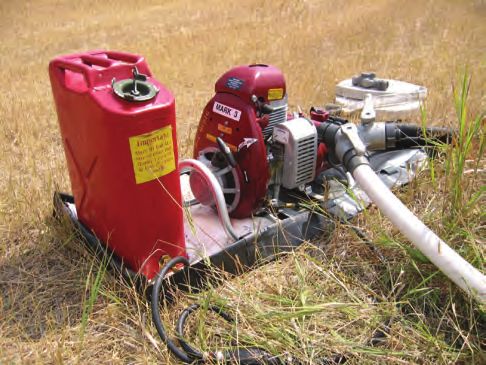
Contents                                                        Part One
      Part One                                             Leaking or Damaged Containers ________________ 21

Introduction___________________________________ 1 Fire Extinguishers_____________________________ 22

Summary Tables _______________________________ 2 Training _____________________________________ 23
                                                            OSHA Hazard Communication Training__________ 23
Approved Fuel Containers and Drums_____________ 7           DOT Materials of Trade Training To Transport
  Manufacturers’ Original Containers_______________ 7        Small Amounts of Hazardous Materials _________ 23
  Safety Transport Cans (UN 3A1 and UN 1A1) ______ 7        Training To Transport Large Amounts of
  Military-Style Metal Jerricans (UN 3A1)___________ 8       Hazardous Materials_________________________ 23
  Safety Cans (UL or FM)________________________ 9          Refresher Training ___________________________ 24
  Two-Compartment Fuel and Oil Containers (UL) ____ 9       Training Records_____________________________ 24
  Pump Fuel Tanks _____________________________ 9
  Plastic Fuel Containers ________________________ 10
  Drip Torches That Meet DOT Specifications (UN 3B1) 11
  Drip Torches That Do Not Meet DOT Specifications 11                    Part Two
  Aluminum Fuel Bottles________________________ 12 Information About Specific Types of
  Steel Drums (8 to 55 Gallons)___________________ 12 Fuel Containers, Drums, and Tanks_____________ 25
                                                            Drip Torches ________________________________ 25
Approved Fuel Tanks __________________________ 13           Safety Transport Cans and Metal and Plastic Jerricans_ 28
  Tanks 119 Gallons or Smaller for Flammable Liquids _ 13   Pump Fuel Tanks ____________________________ 33
  Tanks Larger Than 119 Gallons for Flammable Liquids 13    Safety Cans _________________________________ 35
  Tanks for Diesel _____________________________ 13         Two-Compartment Fuel and Oil Containers _______ 37
                                                            Consumer Plastic Containers ___________________ 39
Limiting Fuel Transported To Limit                          Aluminum and Plastic Fuel Bottles ______________ 41
 Regulatory Requirements _____________________ 15           Manufacturers’ Original Containers______________ 43
                                                            Fuel in Drums _______________________________ 44
Labeling, Marking, and Placarding ______________ 16         Drip-Torch Fuel, Gasoline, or Mixed Gas in Tanks __ 48
  Labeling ___________________________________ 16           Diesel in Tanks ______________________________ 52
  Marking____________________________________ 16            Fuel in Crew Carriers, Helitenders, and Engines ____ 55
  Placarding __________________________________ 17          Fuel Trailers ________________________________ 58
  United Nations Identification Numbers ___________ 17
                                                          Appendix A—Examples of Shipping Papers _______ 59
Shipping Papers and Emergency
 Response Information_________________________ 18 Appendix B—Trailer Inspection Checklists _______ 63
  Shipping Papers _____________________________ 18
  Emergency Response Guidebook ________________ 19 Appendix C—Estimated Weights of Full Containers 64
  Location of Shipping Papers and
   the Emergency Response Guidebook ____________ 19 Appendix D—Procurement Sources______________ 65
  MSDSs ____________________________________ 19
                                                          Appendix E—Sample Material Safety Data Sheets
Incompatible Materials ________________________ 20 for Gasoline and No. 2 Diesel Fuel ______________ 67

 iv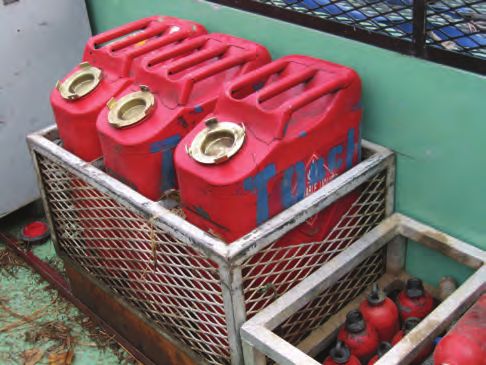
Introduction Part One
L
and management agencies use many liquid fuels, Spillproof containers, commonly referred to as CARB
such as gasoline, mixed gas, and drip-torch fuel, that (California Air Resource Board) compliant, are designed
are classified as flammable liquids. Special require to reduce air pollution caused by fuel that evaporates from
ments apply for containers and tanks used to transport overfilled containers or from containers that are left open.
flammable liquids, and for licensing and training drivers.
Diesel is classified as a combustible liquid. In some cases, the When this guide was prepared, regulations
requirements for transporting diesel may be less stringent did not require existing fuel containers to be
than for transporting flammable liquids. replaced. Existing nonspillproof fuel containers
approved by this guide may continue to be used
Gasoline, mixed gas, drip-torch fuel, and diesel must be until they are no longer serviceable.
transported in the approved fuel containers or tanks listed in
this guide. Most of the listed containers meet U.S. Depart
ment of Transportation (DOT) specifications for transporting Safety cans meeting OSHA requirements are exempt from
flammable liquids. DOT-specification containers are required, most States’ spillproof container regulations. Pennsylvania
because they meet rigorous testing standards established by does not exempt safety cans. Check with your State environ
the United Nations (UN) before they are accepted for use. mental regulatory agency for details and the applicability
DOT-specification containers can be identified by their mark of spillproof container regulations. At the time this guide
ings. For example, an approved closed-head steel drum will was prepared, States with these regulations included: Cali
be marked UN 1A1 (figure 1), and an approved steel jerrican fornia, Virginia, Maryland, Massachusetts, Pennsylvania,
will be marked UN 3A1. If a drum or jerrican does not Connecticut, New Jersey, New York, and Maine. Other
have the proper specification marking, do not use it! States, including Texas and Illinois, are considering adopting
these regulations.
The tanks listed for transporting gasoline, mixed gas, and
drip-torch fuel also meet DOT specifications. Most tanks
available at ranch supply stores do not meet the requirements
for transporting flammable liquid and must not be used to
transport gasoline, mixed gas, or drip-torch fuel, even
though they may be used to transport diesel.
A few types of nonspecification containers are allowed, such
as aluminum (Sigg) fuel bottles, plastic (Nalgene) fuel bottles,
and some drip torches. In addition, plastic two-compartment
Figure 1—An example of a UN 1A1 specification marking. fuel and oil containers (often called Dolmars) are also al
lowed, providing they meet Underwriters Laboratories (UL)
Regulations requiring retailers to sell only spillproof fuel specifications. Fuel also may be carried in the container it was
containers have been adopted by States (such as California) sold in, such as metal cans of Coleman stove fuel. Manufac
with air pollution problems. Individuals purchasing new fuel turers’ original containers must not be reused to transport
containers in these States must buy spillproof containers. other flammable liquids.
1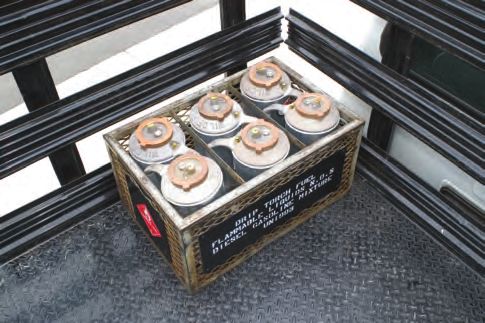
Summary Tables                                                    Part One
                                    APPROVED FUEL CONTAINERS
                              For Gasoline, Mixed Gas, and Drip-Torch Fuel
                                                                                                         Number
                                                                                  Marking             of containers
                                             Color            Label             (Depends on            that may be
 Container type        Specification      requirement       or placard           fuel type)           transported

Safety transport     UN 3A1 or UN 1A1   Red with yellow   FLAMMABLE              Required        Depends on driver
cans Page 28                            markings          LIQUID label                           licensing and training

Metal jerricans1     UN 3A1             Red with yellow   FLAMMABLE              Required        Depends on driver
Page 28                                 markings          LIQUID label                           licensing and training

Plastic jerricans2   UN 3H1             None              FLAMMABLE              Required        Depends on driver
Page 28                                                   LIQUID label                           licensing and training

Safety cans          UL or FM           Red with yellow   FLAMMABLE              Required        No container larger
Page 35                                 markings          LIQUID label                           than 8 gallons; total
                                                                                                 weight of all hazmat
                                                                                                 being transported is no
                                                                                                 more than 440 pounds

Dolmars              UL                 Red               None                   None            No container larger
Page 37                                                                                          than 8 gallons; total
                                                                                                 weight of all hazmat
                                                                                                 being transported is no
                                                                                                 more than 440 pounds

Consumer plastic     UL or FM           Red               None                   None            No container larger
containers2                                                                                      than 8 gallons; total
Page 39                                                                                          weight of all hazmat
                                                                                                 being transported is no
                                                                                                 more than 440 pounds

Plastic fuel         None               Red               None                   None            40 fuel bottles; no other
bottles2                                                                                         containers larger than
Page 41                                                                                          8 gallons; total weight
                                                                                                 of all hazmat being
                                                                                                 transported is no more
                                                                                                 than 440 pounds

Aluminum fuel        NSN 7240–          Red               None                   None            40 fuel bottles; no other
bottles              01–351–2133                                                                 containers larger than
Page 41                                                                                          8 gallons; total weight
                                                                                                 of all hazmat being
                                                                                                 transported is no more
                                                                                                 than 440 pounds

Pump fuel tanks      None               None              FLAMMABLE              On box, rack,   No more than needed
Page 33                                                   LIQUID label on        or crate        to operate the pump
                                                          box, rack, or crate
                                                                                                            Continued

 2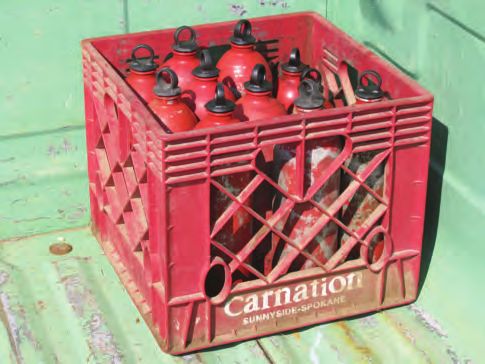
Summary Tables                                                             Part One
                                  APPROVED FUEL CONTAINERS
                       For Gasoline, Mixed Gas, and Drip-Torch Fuel (continued)
                                                                                                                       Number
                                                                                            Marking                 of containers
                                                Color                  Label              (Depends on                that may be
    Container type    Specification          requirement             or placard            fuel type)               transported

Drip torches         None                     None                 FLAMMABLE              On box, rack,         Transportation of full
(Nonspec)3                                                         LIQUID label or        or crate              nonspec drip torches
Page 25                                                            DRIP TORCH                                   not recommended
                                                                   FUEL tag

Drip torches         FS 5100-614              None                 FLAMMABLE              On box, rack,         Depends on driver
(DOT Spec)           UN 3B1                                        LIQUID label or        or crate              licensing and training
Page 25              UN 1B1                                        DRIP TORCH
                     UN 3A1                                        FUEL tag
                     Others

Manufacturer’s       Per manufacturer         Per manufacturer     Per manufacturer       Per manufacturer      No container larger
original container                                                                                              than 8 gallons; total
Page 43                                                                                                         weight of all hazmat
                                                                                                                being transported is no
                                                                                                                more than 440 pounds

Steel drums          UN 1A1/X or Y            None                 FLAMMABLE              Required              Depends on driver
8 to 55 gallons      UN 1A2/X or Y                                 LIQUID label                                 licensing and training
Page 44

Tanks 119 gallons    DOT E–11911 or           None                 FLAMMABLE              Required              Depends on driver
or smaller           UN 31A                                        LIQUID label                                 licensing and training
Page 48

Tanks larger than    DOT 406; MC 306;         None                 FLAMMABLE              Identification        Depends on driver
119 gallons          others per 49 CFR                             placard                number required       licensing and training
Page 48              173.242

1
  Metal jerricans used by Department of the Interior agencies must be retrofitted with a self-closing lid that vents. This lid shall be
  approved by a nationally recognized laboratory such as Underwriters Laboratories (UL) or Factory Mutual (FM).
2
 Use of plastic jerricans, consumer plastic fuel containers, and plastic fuel bottles shall be discontinued no later than June 2012.
3
  Drip torches not manufactured in accordance with DOT specifications must be replaced no later than June 2019.

                                                                                                                                      3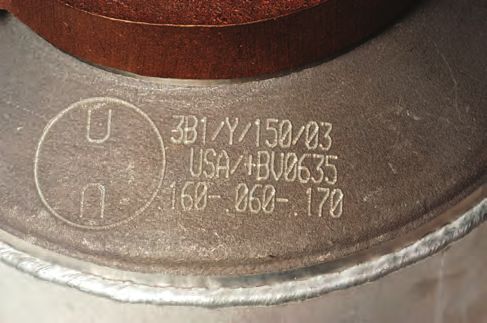
Summary Tables                                                         Part One
         REQUIREMENTS FOR GASOLINE, MIXED GAS, AND DRIP-TORCH FUEL
           That Depend on the Amount of Fuel and the Size of the Container
                                                 Shipping papers                                              Minimum fire
 Amount of fuel                                  and Emergency                                                extinguisher
      and                   Training           Response Guidebook Driver’s licensing         Placarding            size
 container size             Page 23                  Page 18          Page 15                 Page 17           Page 22

All containers            OSHA Hazard              Not required    Regular driver’s          Not required     One 5–B:C or
smaller than 8            Communication                            license                                    two 4–B:C
gallons. The total        training; DOT
amount of hazardous       Materials of Trade
materials being           training
transported is no
more than 440
pounds.

All containers            OSHA Hazard              Required        Regular driver’s          Not required     One 5–B:C or
smaller than 8 gallons.   Communication                            license                                    two 4–B:C
The total amount of       training; DOT
hazardous materials       general awareness,
being transported is      function specific,
more than 440 pounds      safety, security
and less than 1,001       awareness, and
pounds.                   driver training

Any container larger      OSHA Hazard              Required        Regular driver’s          Not required     One 5–B:C or
than 8 gallons but not    Communication                            license                                    two 4–B:C
larger than 119           training; DOT
gallons. The total        general awareness,
amount of hazardous       function specific,
materials being trans-    safety, security
ported is less than       awareness, and
1,001 pounds.             driver training

1,001 pounds or           OSHA Hazard              Required        Commercial driver’s       FLAMMABLE        One 10–B:C
more of hazardous         Communication                            license with hazard-      placard with
materials is being        training; DOT                            ous materials             identification
transported, regard-      general awareness,                       endorsement               number
less of container         function specific,
size                      safety, security
                          awareness, and
                          driver training

Any tank larger           OSHA Hazard              Required        Commercial driver’s       FLAMMABLE        One 10–B:C
than 119 gallons          Communication                            license with hazard-      placard with
                          training; DOT                            ous materials endorse-    identification
                          general awareness,                       ment. Some States         number
                          function specific,                       require a tank endorse-
                          safety, security                         ment as well.
                          awareness, and
                          driver training

 4
Summary Tables Part One
APPROVED FUEL CONTAINERS FOR DIESEL
Marking
Color Label (Depends on Number of containers
Container type Specification requirement or placard fuel type) may be transported
Safety transport UN 3A1 or None FLAMMABLE DIESEL Not limited
cans Page 28 UN 1A1 LIQUID label
Metal jerricans1 UN 3A1 None FLAMMABLE DIESEL Not limited
Page 28 LIQUID label
Plastic jerricans2 UN 3H1 None FLAMMABLE DIESEL Not limited
Page 28 LIQUID label
Safety cans UL or FM None FLAMMABLE DIESEL Not limited
Page 35 LIQUID label
Steel drums UN 1A1/X or Y None FLAMMABLE DIESEL Not limited
8 to 55 gallons UN 1A2/X or Y LIQUID label
Page 44
Tanks 119 gallons None None FLAMMABLE DIESEL Not limited
or smaller LIQUID label
Page 52
Tanks larger than None None FLAMMABLE 1202 identifi- Limited only by driver
119 gallons placard cation number licensing and training
Page 52 required
1
Metal jerricans used by the U.S. Department of the Interior agencies must be retrofitted with a self-closing lid that vents. This lid
shall be approved by a nationally recognized laboratory such as Underwriters Laboratories (UL) or Factory Mutual (FM).
2
Use of plastic jerricans shall be discontinued no later than June 2012.
5Summary Tables Part One
REQUIREMENTS FOR DIESEL
That Depend on the Amount of Fuel and the Size of the Container
Shipping papers Minimum fire
Amount of fuel and Emergency extinguisher
and Training Response Guidebook Driver’s licensing Placarding size
container size Page 23 Page 18 Page 15 Page 17 Page 22
All containers OSHA Hazard Not required Regular driver’s Not required One 5–B:C or
119 gallons or Communication license two 4–B:C
smaller, regardless training
of amount
transported
Any tank larger OSHA Hazard Required Commercial driver’s FLAMMABLE One 10–B:C
than 119 gallons Communication license with hazard- placard with 1202
training; DOT ous materials endorse- identification
general awareness, ment. Some States number
function specific, require a tank endorse-
safety, security ment as well.
awareness, and
driver training
6Approved Fuel Containers and Drums Part One
T
he following containers are approved for transporting
fuel. These containers must meet the specifications
shown in parentheses. Specific requirements for use
of these containers are described in part two of this guide.
Manufacturers’ Original Containers
Manufacturers’ containers, such as Coleman fuel cans,
may be used to transport their original contents, but shall
not be reused (figure 2).
Figure 3—A safety transport can.
• A relocated pour handle
• A linkage between the pour handle and the lid on the fill
opening that vents the can during pouring and allows
fuel to flow faster (figure 4)
• A quick-disconnect flexible pour spout and a clip on the
top of the can to store the spout
• A stiffening rib to make the can less prone to damage
during temperature changes
• A carrying handle spanning the top of the metal collar
Linkage Carrying
Figure 2—A manufacturer’s original fuel container. Pour handle
handle
Lid for
fill opening
Safety Transport Cans (UN 3A1 and UN 1A1)
Safety transport cans (figure 3) are containers that meet DOT
specifications for transporting fuel and the OSHA require-
Clip for
ments for safety cans. Safety transport cans meeting OSHA spout
requirements are exempt from most States’ spillproof con-
tainer regulations.
Figure 4—A top view of the Safety Transport LM can showing the linkage
between the pour handle and lid for the fill opening.
A redesigned jerrican-style safety transport can, the Safety
Transport LM can, is available from Safeway Products, See appendix D for ordering information.
Inc. These cans have the following features:
7Approved Fuel Containers and Drums Part One
Military-Style Metal Jerricans (UN 3A1)
Forest Service employees may use metal jerricans (figure 5)
without modification. Employees in Department of the
Figure 6—
Military-style
metal jerrican
retrofitted with
a self-closing
lid.
Figure 5—A military-style metal jerrican.
Interior agencies must retrofit metal jerricans with a self-
closing lid that vents (figures 6 and 7), such as Justrite part
number 11192. See appendix D for ordering information.
This self-closing lid shall be approved by a nationally recog
nized laboratory such as UL or Factory Mutual (FM). The
Figure 7—A detailed view of a self-closing lid.
self-closing lid may be removed and replaced with the jerri
can’s bung (leakproof screw-in top) when deemed necessary
to prevent leakage during transportation. The approved OSHA- and DOT-compliant self-closing lid becomes com
self-closing lid must be reinstalled when the jerrican is used mercially available, the remainder of the land management
for dispensing or is stored. agencies will phase in the compliant lid’s use over a 10-year
period. The Forest Service also will develop a means to
The Forest Service will evaluate the self-closing lid assembly minimize spillage when fuel is dispensed from a jerrican
and make improvements so it is DOT compliant. When an retrofitted with a self-closing lid.
8Approved Fuel Containers and Drums Part One
New metal jerricans that meet DOT, OSHA, and spillproof
fuel container (CARB-compliant) specifications are commer
cially available (figure 8). In addition, replacement spillproof
(CARB-compliant) spouts may be purchased to retrofit older
metal jerricans (figure 9).
Figure 10—A safety can.
Two-Compartment Fuel and Oil Containers
(UL)
Two-compartment fuel and oil containers (figure 11)—often
called Dolmars—may be used to transport fuel.
Figure 8—A military-style metal
jerrican with a spout that complies
with California Air Resources
Board standards.
Figure 9—A detailed view of a
spout that complies with California
Air Resources Board standards.
Figure 11—A two-compartment fuel and oil container, often called a Dolmar.
Safety Cans (UL or FM)
Safety cans (figure 10) meeting OSHA requirements, such
as those listed by UL or FM, are exempt from most States’
spillproof container regulations. Because safety cans do not Pump Fuel Tanks
meet the UN specifications, fewer can be transported at a Fuel tanks for the Mark-3 pump (figure 12) and fuel tanks
time. for other pumps are approved for transporting fuel.
9Approved Fuel Containers and Drums Part One
Figure 14—A consumer
plastic fuel container.
Figure 12—A fuel tank for the Mark-3 pump.
Figure 15—A Nalgene
plastic fuel bottle.
Plastic Fuel Containers
Three types of plastic fuel containers are now being used:
military-style plastic jerricans (UN 3H1, figure 13), consumer These plastic fuel containers are being phased out. The
plastic containers (UL, figure 14), and plastic fuel bottles, purchase of new military-style plastic jerricans, consumer
such as Nalgene bottles (figure 15). plastic containers, and plastic fuel bottles is prohibited.
Use of all military-style plastic jerricans, con
sumer plastic fuel containers, and plastic fuel
bottles shall be discontinued no later than June
2012.
This prohibition does not include plastic two-compartment
fuel and oil containers (often called Dolmars) that are used
for chain saws.
Figure 13—A
military-style
The only exception to the use of plastic jerricans, contain
plastic jerrican. ers, and fuel bottles after the phaseout period is when fuel
must be transported or dispensed in environmental conditions
that make the use of a metal container dangerous. An example
is when fuel must be transported in a saltwater environment
that can cause metal containers to corrode and leak. Under
10Approved Fuel Containers and Drums Part One
those circumstances, plastic jerricans and containers may be Drip Torches That Meet DOT Specifications
used only if the following conditions are met: (UN 3B1)
• The regional/station/State safety manager, regional struc All new drip torches must meet Forest Service specification
tural fire specialist, fire management officer, or structural 5100-614 and DOT specifications (UN 3B1, UN 1B1,
fire chief, who has been designated as the authority hav UN 3A1, and others, figures 16 and 17).
ing jurisdiction as defined by the National Fire Code,
approves in writing the storage and use of plastic jerri
cans and containers.
• The plastic jerricans and containers meet DOT specifica
tions or are approved by a nationally recognized laboratory,
such as UL or FM, for the storage of flammable liquids.
Figure
• The inside storage area for the plastic jerricans and con 16—A drip
tainers is equipped with a fire detection system. The fire torch.
detection system must be able to detect fires when they are
small and activate an emergency alarm to alert employees.
• Employees, except members of fire brigades, will be
totally evacuated from the container storage area as soon
as the fire is detected.
• If employees are expected to fight fire in the storage area:
—The storage area must be equipped with a fixed auto
matic fire suppression system designed to control, if not
extinguish, a fire involving plastic containers.
—The employees must be trained in specific methods for
fighting plastic container fires and recognize the hazards
associated with fighting fires in areas where plastic con
tainers are stored. Figure 17—The UN marking shows that this drip torch meets DOT speci
fications.
• The storage area for the plastic jerricans and containers
must be equipped with dikes or containment devices. If
the storage area is in a general purpose warehouse or other Drip Torches That Do Not Meet DOT
occupied facility, it shall have diking or curbing and Specifications
have drains installed to contain the volume of all the Drip torches that do not meet DOT specifications may be
stored liquid and extinguishing agent and drain it to a used, but:
safe location. The drainage paths must be designed so • They are not recommended for carrying fuel on public
they do not intersect, pass over, or pass under employee highways.
emergency exit routes. • They shall be phased out no later than June 2019.
• Parts shall not be interchanged between DOT specification
and nonspecification drip torches.
11Approved Fuel Containers and Drums Part One
Aluminum Fuel Bottles
Aluminum fuel bottles (often called Sigg bottles, General
Services Administration National Stock Number 7240–01–
351–2133) are approved for transporting fuel (figure 18).
Figure 18—An aluminum fuel
bottle (often called a Sigg bottle). Figure 19—A UN
1A1 drum. This drum
does not have a
removable head.
NOTE: Red aluminum fuel bottles must never
be used as beverage containers!
Steel Drums (8 to 55 Gallons)
• Use steel drums without removable heads (UN 1A1) to
transport flammable and combustible liquids (figure 19).
• Use steel drums with removable heads (UN 1A2, figure 20)
or without removable heads (UN 1A1) for aerial ignition.
• Use steel drums with removable heads (UN 1A2) to Figure 20—A UN 1A2 drum. This drum has a
transport hazardous waste or damaged fuel containers. removable head.
12Approved Fuel Tanks Part One
The following tanks are approved for transporting fuel.
All tanks that do not meet DOT specifications
that are being used to transport gasoline or drip-
torch fuel shall be replaced. [Note: Effective date
of replacement—June 2010.]
Tanks 119 Gallons or Smaller
for Flammable Liquids Figure 22—A Custom Metalcraft tank.
Transfer Flow refueling tanks (UN 31A, marked DOT-SP
11911, figure 21).
Tanks Larger Than 119 Gallons
for Flammable Liquids
• DOT 406 (figure 23)
• MC 306
• Other tanks (see 49 CFR 173.242)
Figure 21—A 100-gallon Transfer Flow tank.
• 30-gallon toolbox/tank, Transfer Flow part number 080–
01–12975
• 50 gallon, Transfer Flow part number 080–01–09417 Figure 23—A 240-gallon DOT-406 tank being used as a batch mixer.
• 50-gallon toolbox/tank, Transfer Flow part number 080–
01–13252
• 50/50-gallon split tank, Transfer Flow part number 080–
01–13244 Tanks for Diesel
• 74 gallon, Transfer Flow part number 080–01–09420 • Tanks that do not meet specifications for transporting
• 100 gallon, Transfer Flow part number 080–01–09416 or flammable liquids, such as the tanks found in ranch supply
080–01–09418 stores (figures 24a and 24b), may be used to transport
diesel.
Custom Metalcraft (UN 31A tanks)—The customer speci
fies the capacity of these tanks (figure 22).
13Approved Fuel Tanks Part One
Figure 24a.
Figure 24b.
Figures 24a and 24b—A typical nonspecification tank (24a) for transporting diesel. Note the label (24b) warning that this tank does not
comply with regulations for transporting gasoline. Regulations do not require a DOT-specification tank for transporting diesel. This photo
has been digitally manipulated to show the DIESEL marking.
14Limiting Fuel Transported To Limit Regulatory Requirements Part One
T
he type of driver’s license and training required When a shipment weighs 1,001 pounds or more or when
depend on the amount of fuel being transported and fuel is being carried in a container larger than 119 gallons,
the size and type of the fuel container. If no more the following are required:
than 440 pounds of hazardous materials (including the weight • A commercial driver’s license (CDL) with a hazardous
of the containers) are being transported in containers with a materials endorsement.
capacity of no more than 8 gallons, shipping papers are not
required. The only training needed is OSHA Hazard Com To avoid the need for a commercial driver’s license,
munication training and DOT Materials of Trade training. limit the total amount of fuel being transported to
The 440 pounds includes all hazardous materials being 119 gallons or less than 1,001 pounds.
transported, not just gasoline, mixed gas, or drip-torch fuel.
For example, if you are carrying 140 pounds of fusees, you
may carry only 300 pounds of fuel and containers. Empty • Shipping papers (carried in the vehicle, page 18).
containers that contain residual amounts of fuel also must be • The Emergency Response Guidebook (carried in the
included in the 440-pound weight limit. vehicle, page 19).
• Additional training (page 23).
If the overall weight being transported is more than 440 • In certain States—a tank endorsement.
pounds, but less than 1,001 pounds, or if the capacity of any
container is more than 8 gallons but is 119 gallons or less,
To avoid the need for shipping papers and to
the following are required:
reduce training requirements, limit the total
• Shipping papers must be carried in the vehicle (page 18).
amount of hazardous materials—including fuel
• A copy of the Emergency Response Guidebook (ERG)
being transported—to 440 pounds, with no fuel
must be carried in the vehicle (page 19).
container larger than 8 gallons.
• Additional training is required (page 23).
15Labeling, Marking, and Placarding Part One
L
abeling, marking, and placarding are required so • Aluminum fuel bottles that have the words Fuel Bottle
employees and emergency response personnel can on the body of the bottle are acceptable for use with no
identify the contents of a container or tank rapidly additional marking.
and respond appropriately in an emergency. • Plastic fuel containers that have the word GASOLINE
molded into the side of the container are acceptable for
use with no additional marking.
• Drip-torch fuel containers shall be marked FLAMMABLE
Labeling LIQUIDS N.O.S. (DIESEL GASOLINE MIXTURE)
The diamond-shaped (red background with white letters) UN1993. The abbreviation N.O.S. stands for not otherwise
FLAMMABLE LIQUID label (figure 25) is required on many specified. In addition, containers also may be marked with
gasoline, mixed gas, drip-torch fuel, and diesel containers of the words DRIP TORCH FUEL to help employees identify
119 gallons or less. These labels are available through sev the contents (figures 27a and 27b).
eral vendors. They must be maintained in good condition.
Figure 25—A
ch t
Figure 27b.
in u
es
4 Abo
FLAMMABLE LIQUID
label.
Figures 27a and 27b—A label
Figure 27a. (27a) and a tag (27b) that can
be used as markings for
drip-torch fuel containers.
Marking
Most containers must be marked with a description of its • Diesel containers shall be marked DIESEL.
contents and the UN identification number, if applicable.
• Metal gasoline or mixed gas containers (except for alumi The minimum size of the lettering depends on the con
num fuel bottles) shall be marked GASOLINE UN1203 tainer:
(figures 26a and 26b). • Safety transport cans, metal jerricans, safety cans: 3⁄16 inch
high by 1⁄8 inch wide
• 55-gallon drums: 1⁄2 inch high by 3⁄16 inch wide
• Tanks 119 gallons or smaller: 3⁄4 inch high by 3⁄16 inch wide
• Tanks larger than 119 gallons: 2 inches high by 1⁄4 inch
wide
Figure 26b.
Markings shall be printed on the surface of the container,
Figures 26a and 26b—A applied to the container as a sign or label, or attached to
Figure 26a. label (26a) and a tag (26b) the container as a tag (figure 28). They must be maintained
that can be used as markings
for gasoline containers. in good condition.
16Labeling, Marking, and Placarding Part One
United Nations Identification Numbers
If placards are required, the UN identification number also
must be displayed. The identification number may be shown
separately as an orange panel (figure 30) or may be included
as part of the placard (figure 31). The UN identification
number for:
• Gasoline or mixed gas is 1203.
• Drip-torch fuel is 1993.
• Diesel is 1202.
Figure 28—Plastic tags are available for marking gasoline, mixed gas, drip-
torch fuel, and diesel containers. See appendix D for ordering information.
Markings must be displayed on a background of sharply
contrasting color, not obscured by labels or attachments, and
be far enough away from other labels and signs to prevent
confusion. Figure 30—A FLAMMABLE placard
with a separate identification number.
Placarding
A FLAMMABLE placard (figure 29) is required when the
gross weight of all hazardous materials is 1,001 pounds or
more or when any tank is larger than 119 gallons. Placards
must be installed on each side and on each end of the trans
port vehicle or tank.
Figure 31—A FLAMMABLE
placard with the identification
number included.
nc t
s
Figure 29—A
4⁄ i ou
he
10 3 Ab
FLAMMABLE
placard.
17Shipping Papers and Emergency Response Information Part One
S
hipping papers and the Emergency Response Guide —For diesel, the identification number is UN1202.
book are used to help emergency responders during • The proper shipping name.
an accident. These materials must be carried so —For gasoline and mixed gas, the proper shipping name
they are available immediately to emergency responders is GASOLINE.
and accident investigators. —For drip-torch fuel, the proper shipping name is
FLAMMABLE LIQUIDS N.O.S (DIESEL GASOLINE
For transporting gasoline, mixed gas, and drip-torch fuel, MIXTURE).
shipping papers and the Emergency Response Guidebook —For diesel, the proper shipping name is DIESEL
must be carried in a vehicle when either: FUEL. Shipping papers are required only when the
• A container’s capacity is more than 8 gallons. container is larger than 119 gallons.
• More than 440 pounds of all hazardous materials, such • The hazard class or division number.
as fuel, fusees, or propane, are being carried. —For gasoline, mixed gas, drip-torch fuel, and diesel,
the hazard class is 3.
Shipping papers and the Emergency Response Guidebook • The packing group number designated by Roman numerals.
are not required for gasoline, mixed gas, and drip-torch fuel —For gasoline, mixed gas, and drip-torch fuel, the pack
when either: ing group number is II.
• All containers are 8 gallons or smaller and 440 pounds or —For diesel, the packing group number is III.
less of all hazardous materials, such as fuel, fusees, or • The total quantity of fuel.
propane, are being transported. —For containers and tanks 119 gallons or smaller, the
• Residual fuel (residue) is transported in containers 119 amount of each type of fuel being carried must be ex
gallons or smaller. pressed in gallons or liters.
—For tanks larger than 119 gallons, the total quantity of
Shipping papers and the Emergency Response Guidebook
fuel may be indicated by the words: 1 CARGO TANK.
are required only when diesel is transported in tanks larger
• The number and types of containers, including descriptions,
than 119 gallons.
such as 14 jerricans.
—The container specification number may also be iden
tified, for example, 14 UN 3A1 jerricans.
Shipping Papers —A separate description must be included for each type
Follow these steps when preparing shipping papers (see of container being transported.
appendix A for examples) and when determining how long • An emergency response telephone number and contact
to retain them: name.
• All entries must be legible and printed in English. —This phone number must be monitored at all times
• Codes and abbreviations are not allowed. when the material is in transit (including storage
• A copy of the shipping paper must be maintained at the incidental to transportation), and must be the phone
local unit for 2 years after the shipment. number of someone who has comprehensive knowledge
of the emergency response and incident mitigation
Information to be shown on a shipping paper: information for the material or has immediate access to
• The UN identification number. a person with this knowledge.
—For gasoline and mixed gas, the identification number —The emergency response phone number and contact
is UN1203. name must either be printed following the description
—For drip-torch fuel, the identification number is of the hazardous material or written once on the
UN1993. shipping paper in a clearly visible location. The toll
18Shipping Papers and Emergency Response Information Part One
free CHEMTREC (chemical transportation emergency • Within the driver’s immediate reach when the driver is
center) telephone number, commonly listed as an restrained by the seatbelt
emergency response phone number, cannot be used by • Readily visible to a person entering the driver’s compart
most land management agencies because the agencies ment, such as in plain sight on the seat or in a holder
do not subscribe to this service. When an emergency mounted to the inside of the driver’s side door
response provider (such as CHEMTREC) is used,
include the contract identification number with the When the driver is not at the vehicle’s controls, the shipping
emergency response phone number. In such cases a paper and Emergency Response Guidebook shall either be:
contact name is not required. • In a holder mounted on the inside of the driver’s side
door (figure 33)
• On the vehicle’s driver’s seat
Emergency Response Guidebook
The Emergency Response Guidebook (figure 32) must be
carried in the cab of each vehicle anytime shipping papers
are required. The Emergency Response Guidebook describes
the hazards of material being
transported so emergency
responders can take the appro
priate actions during an
accident. The potential hazards
and emergency response infor
mation for each hazardous
material are listed in the Figure 33—An example of an appropriate storage location for shipping
guidebook by guide number. papers and the Emergency Response Guidebook.
The guide number for gas Figure 32—The Emergency
oline, mixed gas, drip-torch Response Guidebook.
fuel, and diesel is 128. The
Emergency Response Guidebook is available from several MSDSs
vendors or can be downloaded from the DOT Web site at OSHA allows MSDSs to be kept at the “primary work
. place facility” as long as employees can “immediately
obtain the required information in an emergency.”
Employees must ensure that MSDSs for the hazardous ma
terials they will be transporting are available at their duty
Location of Shipping Papers and the station (ranger district, work center, fire camp, or other fa
Emergency Response Guidebook cility) and that they can immediately contact someone at the
The shipping papers and Emergency Response Guidebook duty station to obtain the information on the MSDS. If em
must be carried where they are easily available to the driver ployees will be working where they cannot contact their duty
and emergency responders. When the driver is at the vehicle’s station immediately, copies of the MSDSs for the hazardous
controls, the shipping paper and Emergency Response Guide materials they will be transporting and using must be car
book shall be: ried in the vehicle, regardless of the amount of fuel being
transported. Sample MSDSs are included in appendix E.
19Incompatible Materials Part One
D
o not transport liquid fuels, such as gasoline, mixed
gas, drip-torch fuel, or diesel in the same vehicle
with:
• Explosives.
• Poisonous gases.
• Oxidizers, such as plastic spheres filled with potassium
permanganate that are used for aerial ignition (figure
34). Oxidizers may be transported in the same vehicle
with fuels if the oxidizers are placed in a separate com
partment.
• Poisonous liquids.
Figure 34—Plastic spheres used for aerial ignition.
20Leaking or Damaged Containers Part One
L
eaking containers shall not be transported. If a evaporating the residue. To evaporate the residue from the
container is damaged in the field, empty the contents damaged container, make sure that the container has been
of the damaged container into an undamaged con emptied as thoroughly as possible into another undamaged
tainer. The damaged container may be transported from the container and remove the caps or prop open the spring-loaded
field to a proper disposal location by placing it in a UN 1A2 lids until the contents evaporate.
removable-head drum and installing the drum head or by
21Fire Extinguishers Part One
A
fire extinguisher must be carried on each vehicle Monthly inspections— OSHA requires that fire extinguish
transporting fuel or other hazardous materials. The ers be visually inspected monthly by facility personnel (who
required size of the extinguisher depends on the check the recharge dial and make sure that the pin is in place).
amount of hazardous materials being transported and the Typically, this information is documented on the back of the
capacity of any tank that is being used. annual inspection tag or on an additional tag.
If the amount of hazardous materials being transported is Annual inspections— OSHA requires that fire extinguish
less than 1,001 pounds or the tank capacity is 119 gallons ers be inspected annually by certified personnel. This inspec
or less: tion checks the condition of a variety of the extinguisher’s
• A minimum of one 5–B:C or two 4–B:C fire extinguish components including, but not limited to:
ers must be carried on the transport vehicle. • Whether the hose is in good condition
• Whether the extinguishing agent needs to be replaced
If 1,001 pounds or more of hazardous materials are being • Whether the extinguisher is due for hydrostatic testing
transported or the tank is larger than 119 gallons:
• A minimum of one 10–B:C (figures 35a and 35b) fire The annual inspection date must be recorded and maintained
extinguisher must be carried on the transport vehicle. for at least 1 year. Typically, this information is documented
on a tag (figure 36) or sticker secured to the fire extinguisher.
Figure 35b.
Figure 35a.
Figures 35a and 35b—A 10–B:C fire extinguisher (35a) and the label (35b) Figure 36—A fire extinguisher
showing that the fire extinguisher is UL listed and that it is rated 10–B:C. inspection tag.
22Training Part One
T
raining is required for all employees who transport, —Inspection for damage and leakage (page 26, 30, 33,
prepare for transport, load and unload, or are respon 36, 37, 39, 41, 43)
sible for the safety of hazardous materials that are —Size limitations (maximum size is 8 gallons)
being transported, such as gasoline, mixed gas, drip-torch —Weight limitations (maximum weight is 440 pounds
fuel, and diesel. The type of training required depends on for all hazardous materials)
the amount of hazardous materials being transported. —Requirements to secure containers so they cannot
move, protecting them from damage (page 26, 31, 33,
36, 38, 40, 42, 43)
All training must be completed. [Note: Effective • Identification of materials that should not be transported
date of training—June 2010.] with liquid fuels (page 20)
Training To Transport Large Amounts of
OSHA Hazard Communication Training Hazardous Materials
All employees who transport, prepare for transport, load When fuel is transported in any container larger than 8 gal
and unload, or are responsible for the safety of hazardous lons or when the total weight of hazardous materials being
materials that are being transported must complete OSHA transported is more than 440 pounds, regardless of container
Hazard Communication training. size, employees must have additional training. This training
consists of general awareness/familiarization, function-spe
cific, safety, security awareness, and driver training. Before
handling or transporting gasoline, mixed gas, or drip-torch
DOT Materials of Trade Training To Trans fuel, DOT regulations require that they:
port Small Amounts of Hazardous Materials • Attend this training
If fuel is being transported in containers 8 gallons or smaller • Pass a test
and the total weight of hazardous materials being transported • Be certified
is 440 pounds or less, employees must have the DOT Mate
rials of Trade training. For transporting diesel, this additional training is required
only for drivers transporting tanks larger than 119 gallons.
A training program designed specifically for Federal land-
management agencies is expected to be developed by the Here’s a little background about each component of the
Forest Service during Fiscal Year 2011. A thorough reading additional training:
and understanding of the following topics will fulfill the • General awareness/familiarization training acquaints
DOT Materials of Trade training requirement until a for employees with the general requirements of the DOT
mal training program is adopted: regulations and enables them to recognize and identify
• Identification of common hazardous materials, such as hazardous materials.
fuels, propane, and plastic spheres filled with potassium • Function-specific training addresses the requirements of
permanganate and their associated hazards. the DOT regulations and exemptions that apply directly
• Container requirements including: to the tasks employees are performing.
—Approved containers (page 7) • Safety training provides employees with the emergency
—Labeling and marking requirements (page 16) response information required by DOT regulations, mea
sures needed to protect them from the hazards of the
23Training Part One
materials they will be exposed to, and methods and pro to satisfy the referenced training requirements if the train
cedures for avoiding accidents. ing addresses the elements listed. Until a training program
• Security awareness training identifies security risks asso is designed specifically for Federal land management agen
ciated with handling hazardous materials and methods cies, training is available from the DOT training center in
designed to enhance transportation security. This train Oklahoma City and from commercial vendors.
ing also covers how to recognize and respond to possible
security threats.
• Driver training includes:
—Pretrip safety inspections Refresher Training
—Use of vehicle controls and equipment Employees must receive applicable training at least once
—Vehicle operation every 3 years.
—Procedures for maneuvering at tunnels, bridges, and
railroad crossings
—Times when the driver must be present at the vehicle
—Procedures for loading and unloading materials Training Records
—Specialized requirements for tanks Keep records of each employee’s training history for the
previous 3 years. Retain these records for 90 days beyond
The requirement for driver training can be met by obtain the last date of the employee’s employment. Training records
ing a CDL with a hazardous materials or tank endorsement. shall include:
For drivers who do not need a CDL, driver training must be • Employee’s name
taken as a separate course. • Date of most recent training
• Description, copy, or location of materials used during
Training programs required by other Federal or international training
agencies, such as OSHA Hazard Communication training • Name and address of trainer
or Environmental Protection Agency training, may be used • Certification of training
24Information About Specific Types of
Fuel Containers, Drums, and Tanks Part Two
DRIP TORCHES
The DOT-specification drip torches (figure 37) became Labeling—
available in April 2003. All new drip torches shall meet • All drip torches must have the diamond-shaped
Forest Service specification 5100-614. This specification not FLAMMABLE LIQUID label (figure 39) or the DRIP
only meets the DOT specification, but also requires that the TORCH FUEL tag.
container be red and that the breather valve be large enough • If more than a total of 440 pounds of hazardous material
to operate with a gloved hand. No drip torches manufac (including the weight of the containers) is being transported,
tured before 2003 meet DOT the diamond-shaped FLAMMABLE LIQUID label must
specifications. Nonspecification be applied to the box, rack, or crate used to secure the
drip torches shall be replaced drip torches while they are being transported.
with drip torches that conform
to Forest Service specification
5100-614 as nonspecification
drip torches wear out or be
come damaged beyond repair.
Only DOT-specification drip
DRIP TORCHES
torches should be transported
full of fuel.
Figure 37—A drip torch.
All drip torches that do not meet DOT specifi
cations shall be replaced by June 2019. Do not Figure 39—A FLAMMABLE LIQUID label.
interchange parts between DOT-specification
drip torches and those that do not meet DOT
specifications.
Marking—The following marking (see page 16 for addi
Container Specifications—UN 3B1 (figure 38), tional information) is required on the crate, rack, or box
UN 1B1, UN 3A1, and others (figure 40) used to secure drip torches during transport.
Figure 38—The UN marking shows that this drip torch meets DOT specifi Figure 40—This rack is marked properly for transporting drip torches.
cations.
25Information About Specific Types of Fuel Containers, Drums, and Tanks Part Two
DRIP TORCHES
• FLAMMABLE LIQUIDS N.O.S. (DIESEL GASOLINE Inspection Criteria—Inspect each drip torch before
MIXTURE) UN1993. transporting it full of fuel to make sure that the lock ring
• In addition, the box, rack, or holder also may be marked and plug gaskets are not cut, cracked, or weather checked,
with the words DRIP TORCH FUEL to help employees and to make sure that neither the body nor the cover of the
identify the contents. drip torch has been damaged. Replace or repair drip torches
that do not meet these criteria.
Markings must be at least 1⁄2 inch high by 3⁄16 inch wide
and must: Container Capacity Restrictions—Do not fill drip
• Be permanent. torches to more than 90 percent of their capacity to allow
• Contrast sharply with the background color of the crate, room for fuel to expand and to reduce the possibility that
rack, or box. they might leak.
• Not be obscured by any labels or attachments.
• Be far enough away from other markings or labels to Securing Drip Torches for Transport—
prevent confusion. • Make sure that the lock ring is tight, the vent is closed,
the plug is screwed into the cover, and that no closures
DRIP TORCHES
If a closed box is used to secure the drip torches, the box leak. Do not transport drip torches that leak.
shall be clearly marked with orientation arrows showing up • Wipe any fuel from the outside of each drip torch.
(figure 41). • Drip torches shall not be mounted on the bumper of a
vehicle.
• Secure the drip torches so they will not fall over or move
Figure 41—Orientation during transport by placing them in a crate, rack, or box,
arrows that are used to
show up on a closed box
or by restraining them in some other way (figure 43). If
of fuel containers. the drip torches are in a closed box, the box shall be clearly
marked with orientation arrows pointing up and the words
FLAMMABLE LIQUIDS N.O.S. (DIESEL GASOLINE
MIXTURE) UN1993. Secure each crate, rack, or box so
it cannot move or tip over while it is being transported.
Placarding—A FLAMMABLE placard (see page 17 for
additional information) with UN1993 identification number
(figure 42) is required on all four sides of the vehicle or trailer
only if 1,001 pounds or more of all hazardous materials are
being transported. Placarding is required to transport 67 or
more full drip torches, assuming no other hazardous mate
rials are transported.
Figure 42—A placard with the UN
identification number for drip-torch
fuel included. When the identifica
tion number is not included in the
placard, a separate identification
number (see figure 30) must be with
the placard.
Figure 43—Drip torches secured in a rack.
26Information About Specific Types of Fuel Containers, Drums, and TanksPart Two
DRIP TORCHES
• Remove or secure loose articles in the vehicle so they Shipping Papers and the Emergency Response
cannot damage the drip torches while they are being Guidebook—(See page 18 for additional information.)
transported. • If the total weight of all transported hazardous materials is
less than 440 pounds and no fuel container is larger than
Special Driver’s License Requirements— 8 gallons:
• If the total weight of all hazardous materials being trans —None required.
ported is less than 1,001 pounds and no container is larger —Up to 29 full drip torches can be transported, without
than 119 gallons: shipping papers and the Emergency Response
—No special licensing is required. Guidebook, assuming that no other hazardous materi
—Up to 66 full drip torches can be transported, assum als are being transported.
ing that no other hazardous materials are being trans • If the total weight of all hazardous materials being trans
ported. ported is more than 440 pounds or if any container is larger
• If the total weight of all hazardous materials being trans than 8 gallons:
ported is 1,001 pounds or more, or if any container is larger —Shipping papers and the Emergency Response Guide
than 119 gallons: book are required.
DRIP TORCHES
—A commercial driver’s license with hazardous materials —This requirement must be met if 30 or more full drip
endorsement is required. torches are being transported.
—This requirement must be met if 67 or more full drip
torches are being transported. Fire Extinguishers—
• If the total weight of hazardous materials being transported
Training— (See page 23 for additional information.) is less than 1,001 pounds:
• If the total weight of all hazardous materials being trans —A minimum of one 5–B:C or two 4–B:C fire extinguish
ported is 440 pounds or less and no fuel container is larger ers are required.
than 8 gallons, the following training is required: —Up to 66 drip torches can be transported, assuming that
—OSHA Hazard Communication training. no other hazardous materials are being transported.
—DOT Materials of Trade training. • If the total weight of hazardous materials being transported
—Up to 29 full drip torches can be transported, assuming is 1,001 pounds or more:
that no other hazardous materials are being transported. —A minimum of one 10–B:C fire extinguisher is required.
• If the total weight of all hazardous materials being trans —This requirement must be met if 67 or more drip torches
ported is more than 440 pounds, or if any container is are being transported.
larger than 8 gallons, the following training is required:
—OSHA Hazard Communication training.
—DOT general awareness/familiarization, function-spe
cific, safety, security awareness, and driver training.
—This requirement must be met if 30 or more full drip
torches are being transported.
27You can also read


