January 2021 - State of Oregon
←
→
Page content transcription
If your browser does not render page correctly, please read the page content below
Private Forests Division

                                                     January 2021

Cover illustration by Hugh Hayes August 1, 1914 - June 25, 2013
Following World War II Mr.Hayes worked for the Oregon State Department of Forestry in Salem, from 1945 until his retirement in 1993,
drawing fire protection maps and safety cartoons, designing plans for guard stations and bridges, and illustrating field guides of Oregon
trees.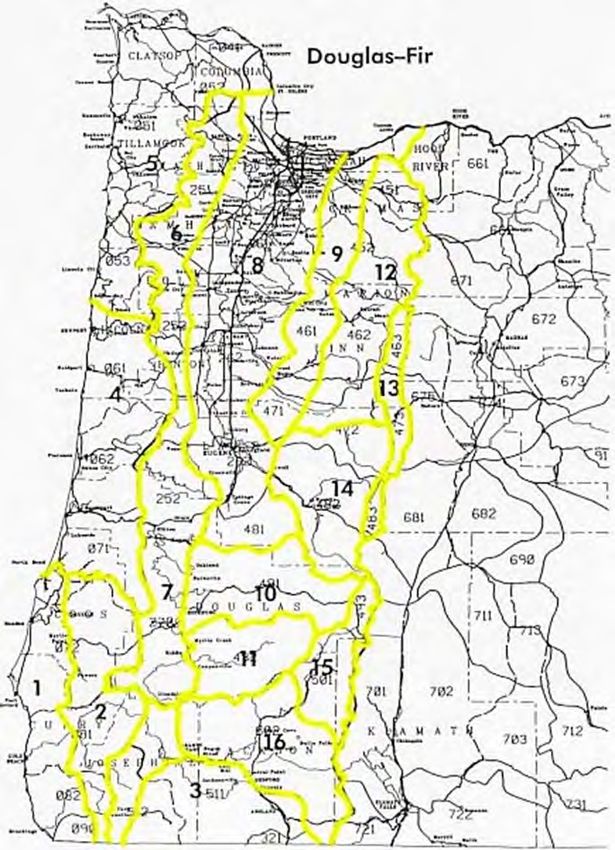
Contents
  Introduction . . . . . . . . . . . . . . . . . . . . . . . . . . . . . . . . . . . . . . . . . . . . . . . . . . . .        2
  Definition of Terms . . . . . . . . . . . . . . . . . . . . . . . . . . . . . . . . . . . . . . . . . . . . . .             3
  Producing Improved Seed . . . . . . . . . . . . . . . . . . . . . . . . . . . . . . . . . . . . . . . . .                   5
  Selection of Appropriate Seed Sources to Produce Seedlings . . . . . . . . . . . . .                                        8
  Future Direction in Tree Improvement . . . . . . . . . . . . . . . . . . . . . . . . . . . . . .                            11
  Impacts of the 2020 Fire Season and the Road to Recovery . . . . . . . . . . . . . .                                        13
  List of Forest Seedling Nurseries . . . . . . . . . . . . . . . . . . . . . . . . . . . . . . . . . . . .                   17
  Seed Zone Maps
         Old Tree Seed Zone Map of Oregon . . . . . . . . . . . . . . . . . . . . . . . . . . . . . . . . . . . . . . . . .   20

         Old and New Seed Zone Map for Douglas-Fir . . . . . . . . . . . . . . . . . . . . . . . . . . . . . . . .            21

         New Seed Zone Maps for Individual Species in Oregon . . . . . . . . . . . . . . . . . . . . . . . .                  22

         Oregon Port Orford Cedar Breeding Zones . . . . . . . . . . . . . . . . . . . . . . . . . . . . . . . . . .          23

  Additional Resources for Landowners . . . . . . . . . . . . . . . . . . . . . . . . . . . . . . .                           24
  Reforestation...Planting a new forest . . . . . . . . . . . . . . . . . . . . . . . . . . . . . . . .                       25

                     H    elping to meet the
                          changing needs of
                     family and non-industrial
                     private forestland owners.

                           Published by the Oregon Department of Forestry, Private Forests
                            Division with assistance from the USDA Forest Service, PNW
                                    Region, State & Private Cooperative Forestry.

Sources of Native Forest Nursery Seedlings                              January 2021                                      1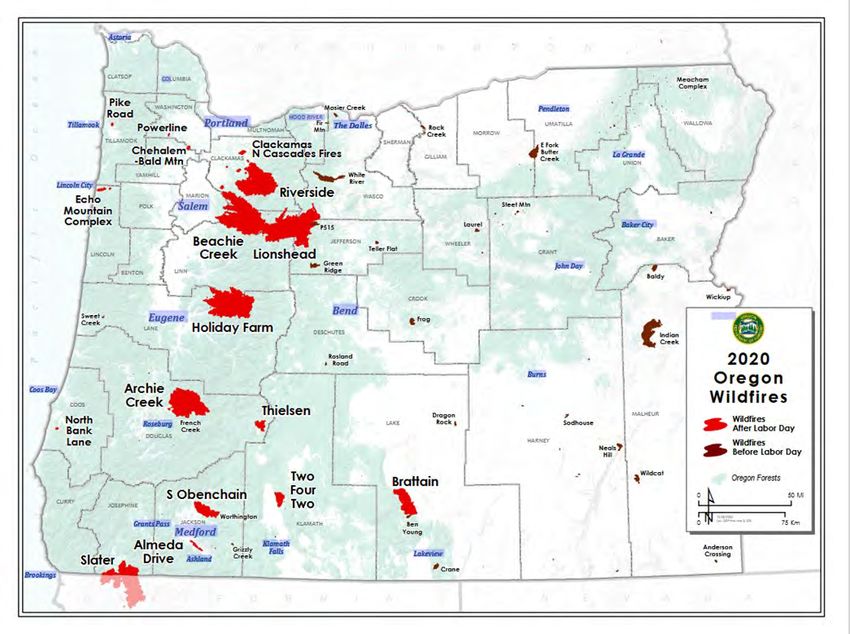
Introduction
This publication is a service provided by the Oregon     Reforestation is required under Oregon law if you
Department of Forestry to help meet the changing         harvest below stocking levels required by the
needs of family and non-industrial private forestland    Oregon Forest Practices Act. To learn more about
(NIPF) owners actively engaged in:                       stocking requirements or seed zone information,
                                                         contact your local ODF Stewardship Forester
           Afforestation                                 (https://www.oregon.gov/ODF/Working/Pages/
           Reforestation                                 FindAForester.aspx).
           Forest Management
           Tax Incentives                                In the last several years, seedling supplies have
           Timber Production                             been very tight. We expect continued high
           Riparian Management                           demand and limited seedling supplies for those
           Forest Pest Management                        landowners who do not plan ahead. We
           Watershed Enhancement                         encourage forest landowners to begin plans to
           Fish and Wildlife Habitat Improvement         secure seedlings at least 2 years before harvest is
           Marketing of Forestry Carbon                  completed. This should help assure seedlings are
           Offsets, etc.                                 available when needed.

                                Published annually,      Please contact individual nurseries (see pages 17-19)
                                this catalog helps       for stock information, current seedling inventories
                                landowners locate        and ordering procedures. You can learn more about
                                suitable tree stock to   each nursery by visiting their website or contacting
                                meet their unique        them directly.
                                and individual
                                resource objectives.     Nurseries growing seedlings for Family Forest
                                                         Landowners can obtain seed from the Oregon Seed
                                This is just one of      Bank. The Seed Bank supports Family Forest
                                several valuable         Landowners across the state of Oregon by providing
                                services that ODF        them access to superior tree seed for their
                                provides to family       reforestation needs. Seed availability is updated
                                and private non-         annually to assure that the best seed sources and
                                industrial forestland    most current, genetically improved seed is available.
                                owners. Other            Additional information is available at: https://
services include providing information and advice,       www.oregon.gov/odf/Working/Pages/Seed.aspx.
technical assistance, and financial incentive
guidance on: Forest Health Issues, Silvicultural
Practices, and Land Stewardship Activities.

Sources of Native Forest Nursery Seedlings               January 2021                           2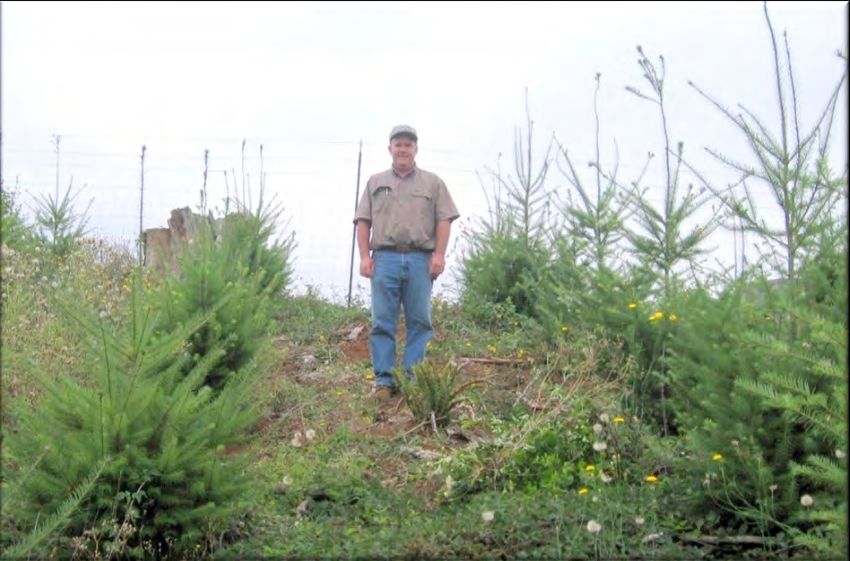
Definition of Terms
Species                                                  Genetically-Improved Seedlings
The common types of native forest tree species in        Formal tree improvement programs for Douglas-fir
Oregon.                                                  have existed for over 60 years in the Pacific
                                                         Northwest. These testing programs have used
Seed Zone                                                traditional breeding techniques to identify
The area where seed was collected and can be             appropriate seed sources and families that are
safely outplanted. The risk of planting a seedling       widely adapted, fast-growing, have desirable
outside its seed zones varies depending on the           growth forms, and can have improved disease or
species, site, climate, etc. Seed zone numbers           insect resistance. During the course of this testing,
correspond to the numbers shown on the maps on           thousands of different families have been tested and
pages 16-19. Maps are provided for both seed zone        the best families have been placed into seed
classification systems commonly used in Oregon.          orchards for seed production.
Genetic research shows that the wider seed
                                                         The cost of genetically-improved seedlings is often
movement generally allowed by the 1996 seed
                                                         slightly higher than that of seedlings grown from
zones poses little risk during reforestation.
                                                         wild or woods-run seed. However, the improved
                                                         growth of the genetically-improved seedlings will
Elevation Band
                                                         more than offset these costs.
The elevation where seed was collected and can be
safely outplanted. Some nurseries present this as a
range. Others present a single elevation value,
which represents the top of the elevation range
where seed was collected in 500-foot increments.
For example, if the elevation is noted as 1,500’, the
seed came from 1,000-1,500 feet in the seed zone
listed. It is important to follow elevational
guidelines when selecting seed or seedlings.

Woods-Run Seed and Seedlings
Wild or woods-run seed is collected from natural
forest stands in a given seed zone and elevation.
While woods-run seed can produce some trees with
excellent genetic characteristics, on average, trees
grown from these sources will be inferior to                     Heavy Cone Crop on Douglas-fir at ODF’s
improved seedlings derived from decades of tree                   Schroeder Seed Orchard in St. Paul, OR.
improvement.

Sources of Native Forest Nursery Seedlings              January 2021                            3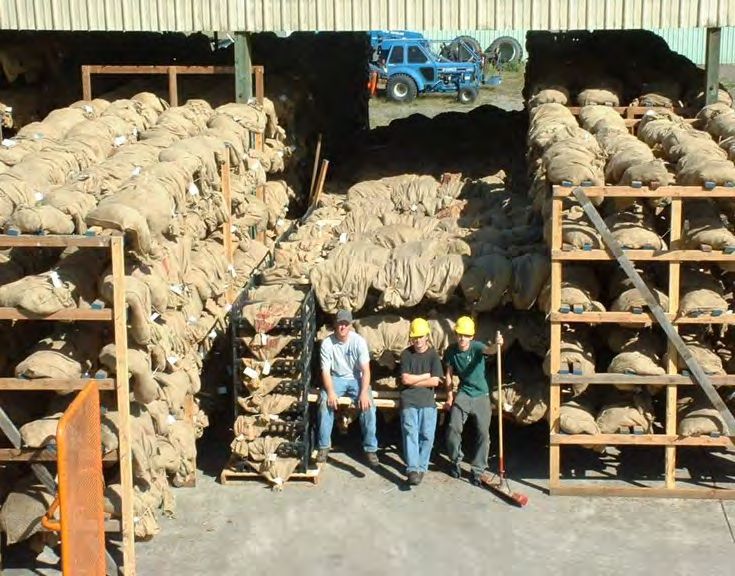
Definition of Terms
                                                       Container seedlings are also called “plug”
Stock Type                                             seedlings. They are typically grown in a
There are two basic types of planting stock:           greenhouse in a variety of container sizes and
bareroot and container-grown seedlings. Bareroot       extracted after one year. A styro-8 is a common
seedlings are sown and grown in nursery beds,          container seedling size grown in a styroblock
lifted, and then sold without soil on the roots.       container of 80 cells with a cavity size of 8 cubic
Container grown or “plug” seedlings are normally       inches.
grown in a greenhouse. The container’s cavities are
                                                       Disease Resistant
filled with growing medium and the seed is sown
                                                       Disease resistant western white pine, sugar pine,
on top. Nurseries extract plug seedlings from
                                                       and Port Orford cedar seed is available. In
containers before shipment.
                                                       addition, new genetic selections of Douglas-fir
There are many sizes and shapes of containers.         selected for swiss needle cast resistance have been
Some nurseries also offer Plug+1 seedlings, which      made and grafted into orchards. Seed from these
are grown in a greenhouse for 9-12 months, then        trees is now available at the Oregon Seed Bank.
transplanted into a bareroot nursery for one year.     More information on disease resistant pine and
                                                       Port Orford cedar is available on the web page of
For a discussion on the pros and cons of various       the USDA Forest Service Dorena Genetic
stock types, seedling sizes, and containers, see the   Resource Center (https://www.fs.usda.gov/goto/r6/
“Guide to Reforestation in Oregon 2006” by             dorena).
Robin Rose and Diane Haase (https://
www.oregon.gov/ODF/Documents/                          Price
WorkingForests/ReforestationGuide.pdf).                The cost per seedling vary by species, growing
                                                       method, and the genetic value of the seed used to
Age/Container                                          produce the seedlings. Seedlings are commonly
Bareroot seedlings are typically classified by the     sold as groups, not as individual seedlings. For
number of years grown in the nursery or transplant     example, if prices are quoted as $.30 each, cost for
bed. The first digit in “1+0,” “2+0,” “1+1,” etc.,     100 seedlings would be expressed as $30/100 or
represents the number of seasons a seedling was        cost for 1,000 seedlings would be $300/M.
grown in the nursery seedbed. “1+1” seedlings are
two-year-old seedlings grown in a nursery bed for
one season, then transplanted and grown in the
nursery bed for a second season. The second digit
is the number of seasons the seedling was grown in
a transplant bed. “P+1” indicates a seedling was
grown for one season in a container, plus one
season in a transplant bed.

Sources of Native Forest Nursery Seedlings             January 2021                          4
Producing Improved Seed
Steps in the Production of Improved Seed
                                                                 Once production of greenhouse grafted trees is
Genetically improved seed is generally derived                   completed, trees are shipped to the orchard site and
through long-standing tree improvement programs.                 planted once field conditions are suitable for
Seed is produced in highly-managed seed orchards.                establishment.
These orchards are managed with the overall
objective of producing heavy, consistent,
predictable cone crops at young ages to rapidly
make the best genetically improved seed available
for reforestation.

                                                                  Grafted Douglas-fir trees eight months following grafting
                                                                                     ready for planting.

                                                                 Orchard sites are typically intensively managed to
                                                                 promote rapid establishment and growth and high
                                                                 survival. Preplant site preparation and chemical site
                                                                 preparation treatments are used to eliminate
 Newly grafted Douglas-fir seedlings grown under greenhouse      competing vegetation. Soil physical conditions are
 conditions. Trees are typically grafted in February or March
              and planted in the field in October.               improved with subsoiling and disking to create
                                                                 conditions favoring root growth. Planting usually
Most seed is produced in clonal seed orchards                    occurs in October once fall rains have recharged soil
consisting of desirable parent scion wood grafted on             moisture. In the second growing season, herbicide
specially produced rootstocks. The type of                       treatments are applied to the tree rows to direct
production system is very analogous to fruit tree                water and nutrient resources to the new orchard
production systems where a given apple orchard                   trees rather than to competing vegetation. Trees are
may consist of different apple varieties such as                 staked and pruned to promote rapid upright growth.
golden delicious, red delicious, or honeycrisp apple             During drought conditions (typically June until
varieties. Clonal seed orchards are much the same.               September) in the first several growing seasons,
Scionwood is grafted upon the selected rootstocks                trees are watered to reduce stress and promote
either under greenhouse conditions or directly in the            growth. In the second and third growing season,
field. If grafted in the greenhouse, grafted trees are           nutrient amendments are added as needed to
generally grown for a period of 6 to 10 months                   promote growth and accelerate flowering.
before being planted in the field.

Sources of Native Forest Nursery Seedlings                      January 2021                               5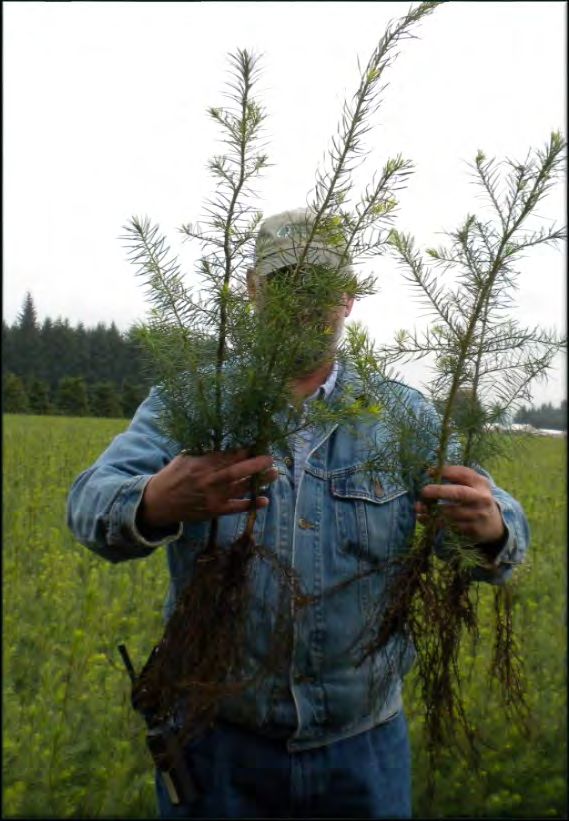
Producing Improved Seed
Given good growing conditions, trees are often
large enough to enter into their reproductive phase
by the 5th or 6th growing season. To assure early
and consistent cone crops, young trees are                                          Mature Douglas-fir orchard
                                                                                    tree showing partial stem
stimulated to produce early cone crops through a                                    girdles created with a chain-
combination of treatments including partial stem                                    saw to stimulate flowering.
girdling and injection of gibberellic acid. These
treatments alter plant hormone levels and
carbohydrate levels and flowering typically occurs
in the next spring.

                                                        Douglas-fir cones typically ripen four to five
                                                        months after flowering. For maximum seed yields,
                                                        cones are harvested when seed are fully ripe, but
                                                        before the cones begin to flare and disperse their
                                                        seeds. After picking, cones are placed in well-
                                                        ventilated drying sheds to reduce their moisture
                                                        contents. After several weeks of drying, cones are
                                                        shipped to processors and seed is extracted and
                                                        returned. Proper storage conditions are important
                                                        for long-term seed storage. Douglas-fir, ponderosa
                                                        pine, and western hemlock seeds can be stored for
                                                        decades without losing vitality.
  Young Douglas-fir orchard being stimulated with
                gibberellic acid.

Following the initiation of flower stimulation
treatments, orchards are typically stimulated at two
-year intervals so cone crops are collected every
two years. Once these orchards are mature,
stimulation treatments often consist of partial
girdling treatments alone without supplemental
gibberellic acid injections.

To assure high seed yields, cone crop must be
protected from damaging insect pests. To reduce
seed damage, registered insecticides are applied in
                                                        Cone drying facility filled with newly collected cones at
the spring.                                                  the Schroeder Seed Orchard in St. Paul, OR.

Sources of Native Forest Nursery Seedlings             January 2021                                 6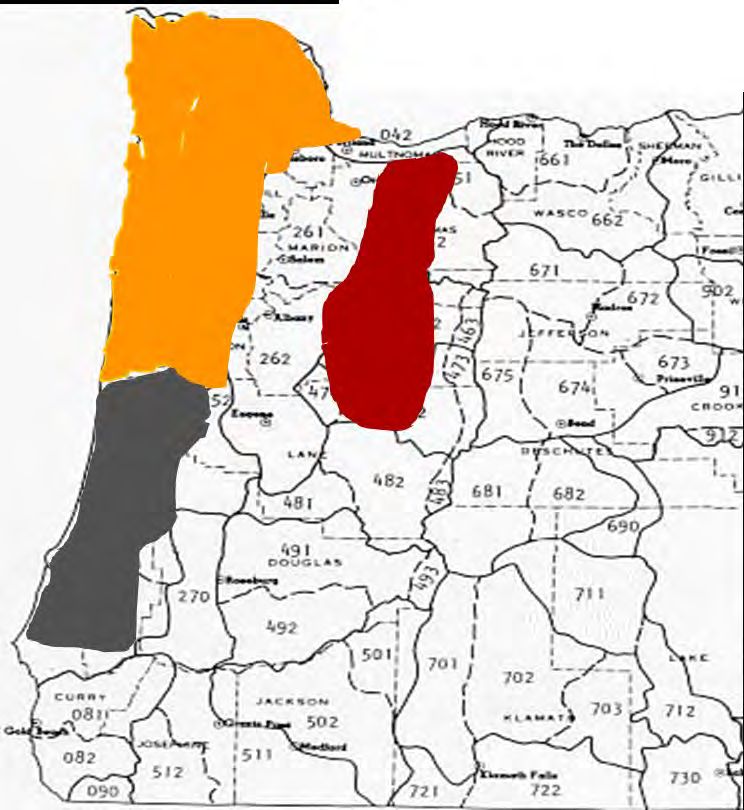
Producing Improved Seed
                   Flowering and Cone Development Processes in Douglas Fir

 Immature male and female flowers on Douglas-fir. At       Mature male and female flowers on Douglas-fir. At this
  this stage, female flowers are not receptive and male    stage, female flowers are fully receptive and pollination
             flowers will not yet shed pollen.            can take place..Male flowers are actively shedding pollen.

Mature Douglas-fir cones. At this stage of development,    Fertilized Douglas-fir cones. At this stage of pollination
   cones scales have opened and cones are actively        is complete and cones become pendant. Male flowers are
               shedding mature seeds.                                  no longer shedding any pollen.

Sources of Native Forest Nursery Seedlings                January 2021                              7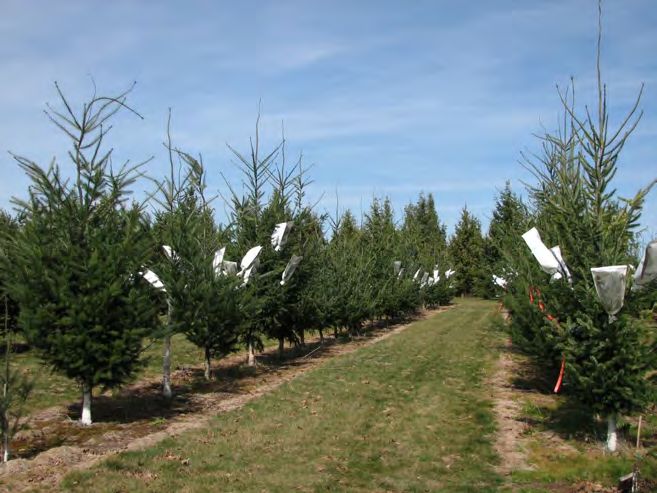
Selection of Seed Sources
                                                        Pacific Northwest, aggressive tree improvement
The Role of Tree Improvement to Assure                  efforts and the development of seed orchards to
Healthy, Productive Forests
                                                        produce improved seed has dramatically changed
When nurseries produce seedlings or landowners          the genetics of the trees being deployed. In the last
purchase these seedlings, one of the most important     10 years, approximately 95% of the Douglas-fir
considerations is the genetics of the seed. The seed    seedlings produced in the Pacific Northwest for
used to produce these seedlings can vary widely         deployment west of the Cascades have been derived
from wild seed collected from parents of unknown        from some level of tree improvement with only 5%
genetic composition to highly controlled                consisting of woods run seed collections.
pollinations between selected parents. To facilitate
                                                        Specific advantages of improved seed include
the deployment of genetically superior forest tree
                                                        increased growth, improved insect and disease
species, tree improvement programs in the Pacific
                                                        resistance, and for some seed sources, increased
Northwest were initiated in the late 1950’s. Of the
                                                        resistance to animal browse. Improved seed of
commercially important timber species, tree
                                                        Douglas-fir, western hemlock, and western red
improvement of Douglas-fir was the first to begin
                                                        cedar selected for increased productivity is widely
and is generally the most advanced program. Other
                                                        available for deployment in western Oregon.
commercially important tree species with active and
                                                        Disease resistance is also an important
long-standing tree improvement programs include
                                                        consideration for western white pine, sugar pine,
western hemlock, western red cedar, and ponderosa
                                                        and Port Orford cedar. For sugar and western white
pine.
                                                        pine, pine blister rust is an important disease that
Benefits of Improved Seed                               can kill or damage these species. Breeding work
There are many potential benefits of using              with both species has led to the development and
genetically improved seed. Production of this seed      production of seeds that will produce seedlings with
under controlled orchard conditions is generally far    increased levels of resistance to the disease.
more predictable than relying upon wild seed            Resistance to Phytophthora lateralis, a root rot
collections. Under natural conditions, seed             disease, is an important trait in Port Orford cedar
production can be highly variable and bumper seed       that the USDA Forest Service has developed in
crops often occur at erratic intervals interspersed     their selections. The
with low seed production, and even years with           Oregon Seed Bank is able
complete crop failures. In addition, management of      to purchase seed from
wild seed production areas and collection of seed       these selections and this
from these stands can be challenging. These factors     seed is made available to
combined with uncertain growth, form and disease        Family Forest Landowners
and insect susceptibility of these wild seed            through the Seed Bank.
collections make reliance on these sources
problematic. While wild seed collections once
comprised almost all of seedlings planted in the

Sources of Native Forest Nursery Seedlings             January 2021                          8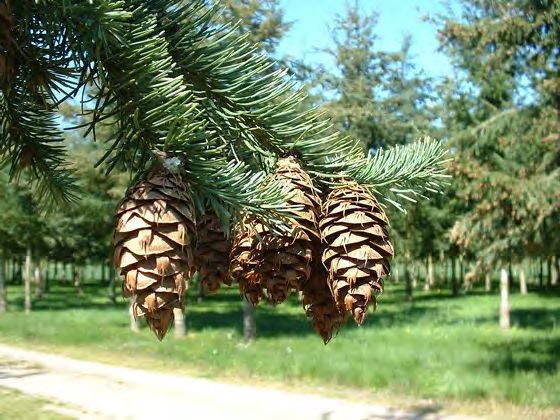
Selection of Seed Sources
How Much Gain Can Be Achieved Through                                quantified for characteristics such as height,
Deployment of Improved Seed?                                         diameter, or volume growth. Ye and Jayawickrama
Each cycle of a tree improvement program would                       (2006) estimated that deployment of Douglas-fir
be expected to shift the curve forward for the traits                derived from first generation seed orchards would
of interest. The relative proportion of good and                     result in volume gains of approximately 50% at age
outstanding trees relative to poor trees would                       15 compared to plantations established using
increase. This shifting of performance level would                   woods-run seed. They further estimated that use of
be expected to occur in each subsequent tree                         second generation seed would result in further
improvement cycle. This performance is illustrated                   volume gains of 25% compared to first generation
in the figure below. In this case, each shift                        seed and use of third generation seed could result
represents improvements from woods-run seed                          in further volume gains of approximately 22%
collections to first generation seed orchards to                     compared to second generation seed. Volume gains
second generation seed orchards.                                     of this magnitude can illustrate why the
                                                                     overwhelming percentage of Douglas-fir seedlings
The level of improvement that occurs in each cycle                   planted in the Pacific Northwest are derived from
of tree improvement is important to all forestland                   improved seed.
managers and owners. These gains can be

            Graphic representation of the gains possible through each round of tree improvement from woods-run
           seed to 1st generation selections to 2nd generation selections. Each round of tree improvement results in
                                          better stands being planted on the landscape.

Sources of Native Forest Nursery Seedlings                       January 2021                                   9
Selection of Seed Sources
How Much Does Genetically Improved Seed Cost?
While genetically-improved seed is often more
expensive on a pound-to-pound basis, in actuality,
improved seed represents a relatively small
component of the entire cost of reforestation. Woods-
run Douglas-fir typically sells for $75 to $150 per
pound when it can be obtained for a given
deployment area. Genetically improved Douglas-fir
seed can cost between $300 and $1,200 per pound
depending upon level of tree improvement and seed
scarcity. While this seems dramatically higher, there
are approximately 40,000 Douglas-fir seeds per
pound. Using these figures, unimproved Douglas-fir Young, vigorous Douglas-fir seed orchard in the mid-
dle of the 3rd growing season following planting at
seed will cost 0.19¢ to 0.38¢ per seed ($1.90 to $3.80 the Schroeder Seed Orchard complex in St. Paul, OR.
per thousand seeds). In comparison, improved
Douglas-fir seeds will cost 0.76¢ to 1.50¢ per seed
($7.60 to $15.00 per thousand seeds). Compared to
total reforestation costs, the percentage cost increases
attributable to use of improved seed is even lower.
Given the large growth increases attributable to
improved genetics, more rapid site occupancy and
grown closure, and other potential positive attributes
such as increased insect or disease resistance, use of
genetically superior seed sources are one of the best
options available when reforestation decisions are
being made.
Ten-year old Roseburg Low Elevation
Orchard at Schroeder Seed Orchard Complex
with heavy cone crop. This young 3-acre
orchard produced over 800 bushels in its’
second harvest and illustrates heavy seed
production possible in young, well-managed
Genetically improved Douglas-fir seedlings on right side of photo seed orchards.
vs. woods-run seedlings on the left side of photo.
Sources of Native Forest Nursery Seedlings January 2021 10Future Direction in Tree Improvement
To facilitate the deployment of genetically superior Although the specific details of each of these coopera-
forest tree species, tree improvement programs in the tive breeding cooperatives do differ, we can illustrate
Pacific Northwest were initiated in the late 1950’s. some of the broad details for breeding for the North
Tree improvement of Douglas-fir was the first to Coast Douglas-fir Breeding Cooperative. This is a
begin and is generally the most advanced program. large and comprehensive breeding effort. All this
Western hemlock is at a similar stage of development. work is conducted using traditional tree breeding
In the last few years, approximately 95% of the trees techniques. No genomic modification techniques are
planted in the Pacific Northwest have been derived being utilized. Some of the traits that are being im-
from orchard seed produced in conjunction with an proved are adaptability, increased growth rates, in-
established tree improvement programs. Seed of creased insect and disease resistance, and increased
many of our major timber species is being produced wood quality. The total breeding program calls for
in a combination of 1st and 2nd generation orchards. approximately 800 successful crosses to be made.
Currently, 1st generation seed orchards are producing This comprehensive breeding effort includes at least
the bulk of the seed utilized, but younger 2nd genera- 12 separate entities including private industrial, state,
tion orchards are beginning to produce seed and their federal, and university agencies. The land base cur-
production capacities will increase each year. Deploy- rently covered in this breeding effort encompasses
ment of seedlings produced with 2nd generation seed approximately 950,000 acres.
will become increasingly more important.
Breeding efforts are based on 500 1st and 2nd genera-
tion parents being bred in a subline-based breeding
While seed production from the 2nd generation or-
program consisting of 26 separate sublines. As of the
chards is increasing, efforts are underway to further
end of 2018, over 400 crosses have been completed.
improve tree characteristics with 3rd generation breed-
An additional 225 crosses were made in the spring of
ing programs. These 3rd generation breeding programs
2019. Breeding is expected to be completed in 2021.
are well-advanced for Douglas-fir and western hem-
The first progeny tests were established in January
lock and the first 3rd generation progeny tests have
2019. These tests are expected to be measured at ages
been established for these species. These are signifi-
7 and 11 and following the measurements and analy-
cant breeding efforts and while the first 3rd
sis, the best trees from
generation progeny tests have been estab-
the best crosses will be
lished, breeding efforts continue to complete
identified. Scion from
the 3rd cycle breeding programs. For western
these selected trees will
Oregon, major 3rd cycle Douglas Fir tree im-
be collected and grafted
provement programs include the North Coast,
on suitable rootstock
South Central Coast, CASTIC (Cascade Tree
and form the basis for
Improvement Cooperative), ROSETIC
the 3rd generation Doug-
(Roseburg Tree Improvement Cooperative,
las-fir seed orchards
and MEDTIC (Medford Tree Improvement
throughout western
Cooperative) Tree Improvement Coopera-
Oregon.
tives. Together, these cooperatives cover
much of western Oregon.
Sources of Native Forest Nursery Seedlings January 2021 11Future Direction in Tree Improvement
Young 3rd cycle Douglas-fir breeding or-
chard. Trees with white breeding bags on the
branches are trees on which breeding will
take place. The breeding bags contain
branches that have female flowers present.
Male flowers have been removed from the
branches. When the female flowers are fully
receptive, pollen from known male parents
will be injected into these bags to produce
controlled crosses with known female and
male parentage.
Breeding bag with controlled crosses maturing.
When cones are fully mature, the cones will be
collected to produce seed to grow the next series of
progeny tests for the cooperative members.
NORTH
COAST
Map showing the approximate coverage areas for
SOUTH the North Coast, South Coast, CASTIC, ROSETIC,
CENTRAL and MEDTIC tree breeding cooperatives in
COAST western Oregon
MEDTIC
Sources of Native Forest Nursery Seedlings January 2021 12Future Direction in Tree Improvement
The 2020 calendar year saw unprecedented fire impacts throughout the state or Oregon. In western Oregon, the
most significant fires were the Riverside Fire (138,054 acres), the Lionshead Fire (204,469 acres), the Beachie
Creek Fire (193,573 acres), the Holiday Farms Fire (173,393 acres), the Archie Creek Fire (131,542 acres), the
South Obenchain Fire (32,671 acres), and the Slater Fire (157,220 acres). Together, these major fires burned
more than one million acres in western Oregon and northern California. The impacts on communities within
these fire zones was dramatic, but direct impacts to forest lands within these fires areas was also significant. On
many acres, forest stands were completely consumed by the fires. Other forest stands within the overall fire
acreages were impacted to varying degrees. In many cases stands that were damaged, but not totally consumed
by the fires are scheduled for salvage logging to secure some timber value before wood degradation occurs.
Young stands killed by the fires are not candidates for salvage logging and these stands may need to be site-
prepped and replanted to assure new, rapidly-growing stands are successfully established.
Map of Oregon showing major 2020 fires and the area impacted by each respective fire.
Sources of Native Forest Nursery Seedlings January 2021 13Future Direction in Tree Improvement
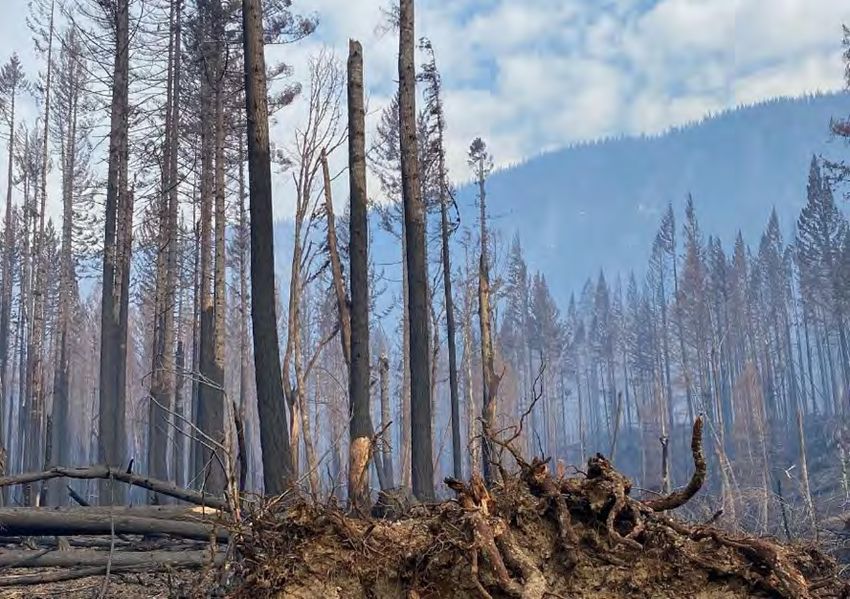
Overview of the Beachie Creek fire while the fire was still actively burning.
The unprecedented scale and damage caused by these fires has dramatically increased the need for reforesta-
tion of these impacted lands. When these impacted lands are being reforested, it is important that the correct
species are being planted, but it is equally as important that the correct genetic sources of the correct species
are being sourced and replanted in the appropriate areas. Selecting seed of the appropriate seed zone and ele-
vation for each fire zone is critically important. New stands established following these fires must be adapted
to the specific growing conditions of each fire zone. Planting seedlings of the appropriate seed sources will
assure that these new stands are long- term assets on the landscape, not liabilities if poorly adapted genotypes
are planted. If available, seedlings produced from genetically improved seed will grow faster and lead to the
establishment of more productive forests compared to seedlings grown from wild seed collections. This can
decrease recovery times and increase the long-term economic values derived from these new forests.
Sources of Native Forest Nursery Seedlings January 2021 14Future Direction in Tree Improvement
For each of the major fires of 2020. The general seed zones impacted are:
Riverside: Old seed zone 452. New seed zones 9 and 12.
Lionshead: Old seed zones 461, 462, and 463. New seed zones 9, 12, and 13.
Beachie Creek: Old seed zones 461 and 462. New seed zones 9 and 12.
Holiday Farm: Old seed zones 471 and 472. New seed zones 9, 12, and 14.
Archie Creek: Old seed zone 491. New seed zone 10.
South Obenchain: Old seed zone 502. New seed zone 16.
Slater: Old seed zones 511 and 512. New seed zone 3.
A view of an impacted area within the overall footprint of the Beachie Creek Fire. Not all areas within the fire footprint burned uni-
formly. Some areas burned completely, while adjacent stands of trees were undamaged.
Sources of Native Forest Nursery Seedlings January 2021 15Future Direction in Tree Improvement
Mature stand of trees within the Beachie Creek Fire completely killed by the fire.
The Oregon Seed Bank fortunately did have seed available to reforest many of these areas and seed distribu-
tion began while the fires were still burning. Other public agencies and private companies may also have seed
that they can make available to support these reforestation efforts. A significant challenge in reforesting these
vast areas will be securing sufficient seedlings to replant acres with significant mortality. In normal years,
seedling availability can be tight and demand for seedlings can exceed seedling availability. This problem can
be accentuated for Family Forest Landowners especially if they fail to plan ahead to reforest their lands fol-
lowing logging. The extent of these fires will exacerbate these preexisting seedling availability issues. Full
recovery from these fires will be a multi-year process before all these acres can be successfully reforested.
The Oregon Department of Forestry is working with federal, state, and other private constituencies to begin
formulating response to these fires. For Family Forest Landowners impacted by these fires, Oregon Depart-
ment of Forestry Stewardship Foresters can be a critical resource to begin recovery efforts.
Sources of Native Forest Nursery Seedlings January 2021 16Forest Seedling Nurseries
In the last few years, the supply of seedlings has been tight and landowners that need seedlings should begin
planning to secure these seedlings 2-3 years in advance of anticipated planting time. The following list of
nurseries typically grow seedlings for reforestation and contacting these nurseries is a good starting point to
secure planting stock. The Oregon Department of Forestry no longer runs a State Nursery to produce seed-
lings, but the Department does offer seed for sale through the Oregon Seed Bank. Each year the Seed Bank
updates its listing of seed sources and makes this seed available to nurseries and individuals needing to pro-
duce seedlings for reforestation. The Seed Bank often has the most advanced genetic sources of seed available
and this availability allows Family Forest Landowners access to the latest developments through tree improve-
ment programs.
Aldrich Berry Farm & Nursery, Inc. Drakes Crossing Nursery
190 Aldrich Rd 19774 Grade Rd SE
Mossyrock, WA 98564-9609 Silverton, OR 97381-9425
Phone: (360) 983-3138 Phone: (503) 873-4932
Fax: (360) 983-8588 Fax: (503) 873-4933
Email: galdrich@tds.net Email: info@drakescrossingnursery.com
Website: aldrichberryfarm.com Web: drakescrossingnursery.com
Althouse Nursery Fir Run Nursery
8576 Rogue River Hwy 17901 150th Ave E #765
Grants Pass, OR 97527 Orting, WA 98360
Phone: (541) 592-2395 Phone: (253) 221-3238
Email: plants@althousenursery.com Email: firrun@msn.com
Website: althousenursery.com Web: firrunnursery.com
Brooks Tree Farm, Inc. Heritage Seedlings, Inc. (shrubs)
9785 Portland Rd NE 71st Ave. SE
Salem, OR 97305-9721 Salem OR 97317
Phone: (503) 393-6300 Phone: (503) 585-9835
Fax: (503) 393-0827 Email: sales@heritageseedlings.com
Email: office@brookstreefarm.com Web: heritageseedlings.com
Website: brookstreefarm.com
IFA Nurseries, Inc.
Champoeg Nursery, Inc. 9450 SW Commerce Circle, Ste 370
9661 Yergen Rd. NE Wilsonville, OR 97070
Aurora, OR 97002 Cell: (541) 556-8907
Phone: (503) 678-6348 Email: sakehurst@ifanurseries.com
Fax: (503) 678-4348 Web: ifanurseries.com
Email: info@champoegnursery.com
Website: champoegnursery.com
Sources of Native Forest Nursery Seedlings January 2021 17Forest Seedling Nurseries
Kintigh’s Mountain Home Ranch Plant Oregon (shrubs)
38865 E. Cedar Flat Rd. 8677 Wagner Creek Rd
Springfield, OR 97478 Talent, OR 97540
Phone: (541) 746-1842 Phone: (541) 535-3531
Fax: (541) 746-1842 Fax: (541) 535-2537
Email: KMHRtree@aol.com Email: dan@plantoregon.com
Web: kintighs.com Web: plantoregon.com
Klamath Forest Nursery Plants of the Wild
Green Diamond Resource Co. P.O. Box 866
7680 Happy Hollow Lane Tekoa, WA 99033-0866
Bonanza, OR 97623 Phone: (509) 284-2848
Phone: (541) 545-6432 Fax: (509) 284-6464
Fax: (541) 545-6886 Email: Kathy@plantsofthewild.com
Email: Jeff.Dixon@GreenDiamond.com Web: www.plantsofthewild.com/
Lava Nursery, Inc. The Plantworks, LLC
5301 Culbertson Dr. 69465 Lantz Lane
Parkdale, OR 97041 Cove, OR 97824-8208
Phone: (541) 352-7303 Phone: (541) 963-7870
Email: lavanursery@aol.com Email: plantworks@oregontrail.net
Web: theplantworksllc.com
Lewis River Nursery
2821 NE 434th St PRT Oregon
Woodland, WA 98674 31783 South Meridian Rd.
Phone: (360) 225-6455 Hubbard, OR 97032
Phone: (503) 651-3266
76928 Mosby Creek Rd.
Lewis River Reforestation PO Box 1060
1203 NW Hayes Rd. Cottage Grove, OR 97424
Woodland, WA 98674 Phone: (541) 942-5516
Phone: 360-225-6357 Email: Tiffany.Roddy@prt.com
Fax: 360-225-1307 Web: prt.com
Email: bruces@lrrinc.com
Web: www.lrrinc.com
Scholls Valley Native Nursery, LLC
4036 NW Half Mile Lane
Pitkin Forest Nursery, Univ of Idaho Forest Grove, OR 97116
PO Box 441137 Phone: (503) 470-0420
Moscow, ID 83844-1137 Fax: (503) 624-2766
Phone: (208) 885-3888 Email: sales@schollsvalley.com
Fax: (208) 885-6564 Web: schollsvalley.com
Email: seedlings@uidaho.edu
Web: uidaho.edu/cnr/cfnsr
Sources of Native Forest Nursery Seedlings January 2021 18Forest Seedling Nurseries
Silvaseed Company Weyerhaeuser Company
P.O. Box 118 6051 S Lone Elder Rd.
Roy, WA 98580 Aurora, OR 97002
Phone: (253) 843-2246 Phone: 360-858-5709
Fax: (253) 843-2239 Website: https://www.weyerhaeuser.com/
Email: inquiries@silvaseed.com timberlands/seedling-sales/western-
Website: silvaseed.com seedlings/availability-and-ordering/
Tribal Nursery Plants
46411 Ti’mine Way
73820 Highway 331
Pendleton, OR 97801
Phone: (541) 278-8525
Email: tribalnativeplants@gmail.com
USDA Forest, J Herbert Stone Nursery
2606 Old Stage Rd.
Central Point, OR 97502
Phone: (541) 858-6100
Email: jbjustin@fs.fed.us
Website: https://rngr.net/resources/directory/ Grand fir
usdaforestservice-jherbertstonenursery
(Abies grandis) 1+ 0 container seedling.
WACD Plant Materials Center
16564 Bradley Rd
Bow, WA 98232 Willamette Seedling Nursery
Phone: (360) 757-1094 23625 S. Mulino Rd
Email: pmcsales@gmx.com PO Box 728
Website: wacdpmc.org Canby, OR 97013
Phone: (503) 263-6850
Fax: (503) 263-3872
Webster Forest Nursery, WA DNR Email: cparsons@canby.com
9805 Blomberg St SW (Physical Address)
MS 47017 (Mailing Address)
Olympia, WA 98504-7017
Phone: (877) 890-2626
Fax: (360) 664-0963
Email: bill.taylor@dnr.wa.gov
Website: dnr.wa.gov/programs-and-
services/forest-resources/webster-forest-
nursery
Sources of Native Forest Nursery Seedlings January 2021 19Seed Zone Maps
Old Seed Zones
Sources of Native Forest Nursery Seedlings January 2021 20Seed Zone Maps
Old and New Seed Zones
Sources of Native Forest Nursery Seedlings January 2021 21Seed Zone Maps Sources of Native Forest Nursery Seedlings January 2021 22
Seed Zone Maps

Sources of Native Forest Nursery Seedlings   January 2021   23
Additional Resources
    Seedlings:
            Forest Seedling Network (FSN)
            http://www.forestseedlingnetwork.com
            Oregon State University Ext Service
            https://extension.oregonstate.edu/forests/christmas-trees/tree-seedling-
            availability-2020
            Private Forest Lands Network—a refrigerated storage facility located in La
            Grande, Oregon. This facility can be used to store forest seedlings and shrub veg-
            etation for your stream enhancement, riparian plantings, and wind break projects.
            https://www.facebook.com/PrivateLandsForestNetwork

    Seed:
            Oregon Seed Bank
            The Seed Bank supports Family Forest Landowners across the state of Oregon by
            providing them access to superior tree seed for their reforestation needs.
            https://www.oregon.gov/ODF/Working/Pages/Seed.aspx

    Publications:
            Guide to Reforestation in Oregon, by Robin Rose and Diane Haase, 2006,
            OSU, OFRI, ODF
            https://www.oregon.gov/ODF/Documents/WorkingForests/
            ReforestationGuide.pdf

    Websites:
            Know Your Forest—Resources for Small Landowners
            http://www.knowyourforest.org/
            Oregon Department of Fish & Wildlife
            https://www.dfw.state.or.us
            Oregon Department of Forestry, Private Forests Program
            https://www.oregon.gov/ODF/Working/Pages/default.aspx
            Oregon Association of Nurseries—Nursery Guide
            http://nurseryguide.com/
            Oregon Forest Industry Directory
            http://www.orforestdirectory.com/
            OSU Forestry Extension Program
            http://extensionweb.forestry.oregonstate.edu/index.php
            Oregon Watershed Enhancement Board
            https://www.oregon.gov/OWEB
            USDA Forest Service Dorena Genetic Resource Center
            http://www.biologydir.com/dorena-tree-improvement-center-info-5490.html
            USDA Natural Resources Conservation Service
            http://www.or.nrcs.usda.gov/
            ODF Stewardship Forester Listing Lookup
            https://www.oregon.gov/ODF/Working/Pages/FindAForester.aspx
            Oregon Small Woodlands Association
            https://www.oswa.org/blog/

Sources of Native Forest Nursery Seedlings             January 2021                          24
Step 1: P l a n n i n g for snow-bound sites). Proper handling of
Planning to reforest your property should seedlings from the nursery through plant-
take place before harvest begins. Site ing is critical, as is the planting technique.
conditions will determine which seedling Plant more than the minimum number of
species and seedling size to order. trees per acre to allow for seedling losses.
Reforestation Crews can be
Legal Requirements hired to reforest your property. Con-
The landowner must replant within 24 months tact your local ODF office for a list of
after a clear-cut or heavy partial cut. Planting re-
quirements range from 200 trees per acre for most local crews.
of western Oregon to 100-125 trees per acre for
dry pine sites in eastern Oregon. By the end of the
sixth year, the trees must be “free-to-
grow” (healthy and above surrounding vegeta-
tion).
Step 4: F r e e - t o - g r o w
Inspect the seedlings each year to ensure
that they are alive and are free-to-grow.
Vegetation control and additional tree
Step 2: O r d e r i n g planting may be necessary for the next 5
Order seedlings no later than the fall before years after planting.
planting season. Select the proper seedling,
species, seed zone, and size for each site. Additional Resources:
Douglas-fir (western Oregon) and pondero- Reforestation Guidance
sa pine (eastern Oregon) are common https://www.oregon.gov/ODF/Working/Pages/
Replanting.aspx
species, but there is a lot of variation.
Please contact your local ODF office for Oregon State University Forestry Extension
information specific to your site. http://extensionweb.forestry.oregonstate.edu/
index.php
Step 3: P l a n t i n g Forest Seedling Network
http://www.forestseedlingnetwork.com
Once the site is prepared and the seed-
Seedling Orders for Small Landowners
lings have been ordered, planting can take http://www.mysaplings.com/
place from December through March (later
Private Forests Program — 2600 State St., Salem, OR 97310 — 503-945-7200 — https://www.oregon.gov/ODF/Working/Pages/default.aspxYou can also read


