JAPAN'S COMMITMENT TO AFRICAN DEVELOPMENT THROUGH TICAD PROCESS - KIYA Masahiko, Ambassador for TICAD, Ministry of Foreign Affairs, Japan ...
←
→
Page content transcription
If your browser does not render page correctly, please read the page content below
JAPAN’S COMMITMENT TO
AFRICAN DEVELOPMENT
THROUGH TICAD PROCESS
KIYA Masahiko, Ambassador for TICAD,
Ministry of Foreign Affairs, Japan

Pre-TICAD7 Event in Vienna organized by UNIDO, Japan and AUC
4 July 2019, at Vienna International Centre
OVERVIEW
1.   What is TICAD?
2.   Uniqueness of TICAD
3.   Expected discussions at TICAD 7
4.   Public-private business dialogue at TICAD 7
5.   Recommendations by the Japanese private sector
6.   Japan Business Council for Africa
7.   Looking ahead

                                                      2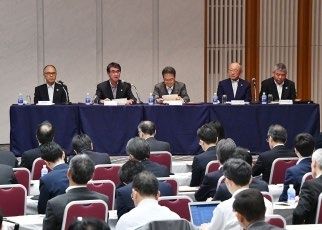
WHAT IS TICAD?
•   TICAD is the overall process of summit, ministerial and other
    meetings on African development initiated by Japan in 1993.
•   Summit meetings are held every five years until TICAD V
    (2013) and every three years from TICAD VI (2016).
•   Co-organized by Japan, UN, UNDP, World Bank, and AUC.
•   TICAD VI in Nairobi, Kenya in 2016 was attended by 53
    African countries and more than 11,000 participants.
•   TICAD 7 will be held in Yokohama, Japan in 2019.

                                                                    3
UNIQUENESS OF TICAD
•   Pioneering forum on African development
    -With a quarter of a century of history, forerunner in the international
    arena

•   Open and inclusive forum
    -Participants include not only African countries but also international
    organizations, partner countries, private sector and civil society

•   Upholding Africa’s ownership and international partnership as
    guiding principles
    -Alignment with Africa’s own agenda

•   Effective implementation with follow-up mechanism
    -Joint Secretariat, Joint Monitoring Committee, follow-up meetings

                                                                               4
EXPECTED DISCUSSION AT TICAD 7 (1)
Through TICAD 7, Japan aims to:
•   Lead global discussion on African development to materialize
    the outcomes of major international conferences including
    WAW!, G20, and G7
•   Focus on business and innovation as the driving force of
    TICAD, with quality infrastructure and human resource
    development which constitute the foundation of growth and
    human security
•   Provide an open and inclusive platform where collaboration
    and networking will further advance African development

                                                                   5
EXPECTED DISCUSSION AT TICAD 7 (2)
Theme of TICAD 7:
“Advancing Africa’s Development through People,
Technology and Innovation”
Three Pillars:
Accelerating Economic Transformation and
Improving Business Environment through
Innovation and Private Sector Engagement
Deepening resilient and sustainable society
Strengthening Peace and Stability
6PUBLIC-PRIVATE BUSINESS
DIALOGUE IN TICAD 7
Through TICAD 7, Japan is aims to:
• Further promoting public-private dialogue between
Africa and Japan
To achieve this aim, TICAD 7 will:
• Dedicate one plenary session to a
“Public-Private Business Dialogue”
to enhance trade and investment between Africa and Japan
allowing the voices of business sector to be heard by
African/Japanese leaders
7RECOMMENDATIONS BY THE
JAPANESE PRIVATE SECTOR
• Co-chairs of “TICAD 7 Public-Private Roundtable Meeting”
handed over “Recommendations by the Japanese Private Sector”
to Prime Minister Abe this April
• Overview of the recommendations:
Resolution towards TICAD 7 (establishment of a new framework)
Priority areas for realizing Africa’s sustainable growth
Enhancement of public support including finance scheme that meets the
needs of the private sector
Model change of the TICAD process and enhancement of public-private
partnership (the business sector as official partner)
• Currently being implemented
8TICAD7 Public-Private Roundtable Meeting April 2019
Second Africa
Recommendations by the Japanese Private Sector Division, MOFA
1. RESOLUTION TOWARDS TICAD7
The “TICAD brand” which has been established for 25 years is valuable.
Accelerating business with Africa is a shared challenge for the Japanese public and private sectors in the context of ensuring a
growth opportunity for Japan and contributing to structural transformation of Africa.
A framework to reflect the voice of Japanese companies in the TICAD process is to be established.
2. Priority Areas for Realizing Africa’s Sustainable Growth
(1) Future Strategies towards Africa
①Contribute to the achievement of SDGs and Agenda 2063,②Promote African regional economic integration for the enhancement of free and open
economic order,③Promote innovation and propose institutional design and improvement of operation leveraging Japan’s experiences and technologies,
④Present and share TICAD models/projects, ⑤Support small private businesses and their expansion to different African countries
(2) Foster a business environment conducive to economic growth and realize good governance (call on African countries to promote better business
environment, and enhance various partnerships including through international organizations and third countries)
(3) Develop quality infrastructure
(4) Enhance public-private partnership for developing human resources
(5) Improve agricultural productivity and enhance value addition
(6) Build a comfortable and healthy life environment by taking advantage of Japan’s strength (health and sanitation, preventive medicine, and nutrition
improvement)
(7) Support the realization of clean cities and healthy livelihood (environment/urban issues)
(8) Develop a framework that can take advantage of small/medium sized/start-up companies, including through innovation
3. Enhancement of public support including finance scheme that meets the needs of the private sector
Public support is essential and effective as the first driving force for creating a virtuous cycle of economic development of Africa.
(1) Ensure sufficient financial schemes, budgets and project expenses of each ministry and agency
(2) Coordinate with various schemes and ensure their flexibility
(e.g. increased yen loans and their expedited procedure, increased and improved Grant Aid schemes including Japanese Grassroots Projects, increased
JICA private-sector investment finance and JBIC overseas investment loans with relaxed conditions for financing and clear standards for those finances,
promotion of collaboration between JICA and AfDB, establishment of new scheme for small and medium sized /start-up companies, increased guarantees
through NEXI)
4. Model Change of the TICAD Process and Enhancement of Public-Private Partnership
Position the business sector as official partner in the TICAD process and engage them from the beginning (even the start of
drafting agenda)
Coordinate with the existing frameworks, including Japan-Africa Public-Private Economic Forum
Establish “Africa Business Public-Private Council”JAPAN BUSINESS COUNCIL
FOR AFRICA
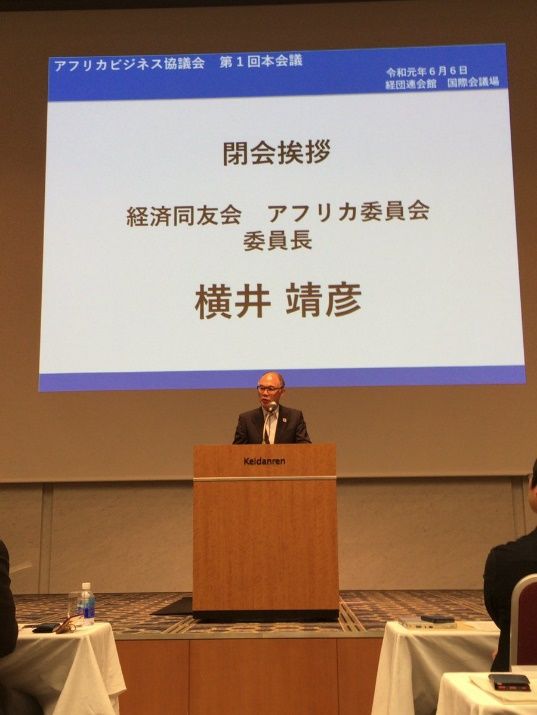
• The 1st meeting was held on 6 th June 2019, Tokyo.
• Co-chaired by: Foreign Minister Kono
METI Minister Seko
Representatives of Keidanren and Doyukai
From MoFA Japan TICAD7 website
From Doyukai’s Twitter (@KeizaiDoyukai)
10LOOKING AHEAD
• Upholding the principles, building on the achievements
• Exploring new opportunities including business and innovation
From Yokohama City TICAD7 website
11You can also read


