The UN Decade of Ocean Science for Sustainable Development - 03. 07 Youn-Ho Lee Korea Institute of Ocean Science and Technology - UN-GGIM
←
→
Page content transcription
If your browser does not render page correctly, please read the page content below
The UN Decade of Ocean Science
     for Sustainable Development

                  2019. 03. 07

                 Youn-Ho Lee

Korea Institute of Ocean Science and Technology
I. Background
✓ By Resolution A/RES/72/73, the UN General Assembly
  proclaimed the UN Decade of Ocean Science for Sustainable
  Development (2021–2030) and mandated the IOC to prepare
  an Implementation Plan in consultation with Member States,
  UN partners and other relevant stakeholders.

✓ A Roadmap, detailing the governance arrangements of the
  preparation phase, as well as the preliminary objectives and
  expected outcomes of the Decade, was developed.

✓ In the Roadmap, the Executive Planning Group is tasked with
  the development of the Implementation Plan.
II. Overarching Goals

✓ The vision of the Decade:
    Ocean Science for the future we want

✓ Goal 1: To generate the scientific knowledge and
  underpinning infrastructure and partnerships needed for
  sustainable development of the ocean.

✓ Goal 2: To provide ocean science, data and information to
  inform policies for a well-functioning ocean in support of all
  Sustainable Development Goals of 2030 Agenda.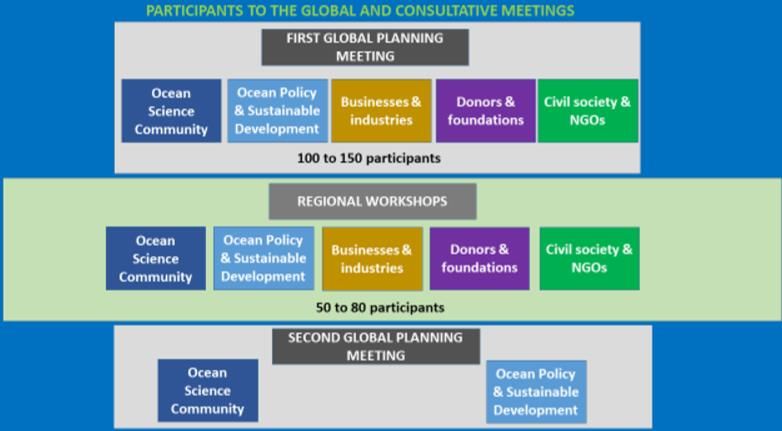
III. Six Societal Outcomes

 ✓ A clean ocean: pollution

 ✓ A healthy and resilient ocean: ecosystem

 ✓ A predicted ocean: understanding and ocean forecast

 ✓ A safe ocean: warning of ocean hazards

 ✓ A sustainably harvested, productive ocean: seafood security

 ✓ A transparent, accessible ocean: ocean data portal
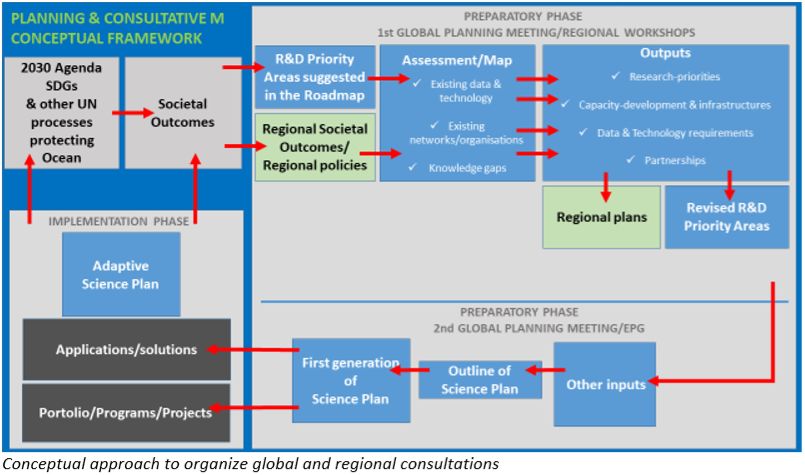
IV. Seven R&D Priority Areas
1. Comprehensive map (digital atlas) of the ocean: e.g. GEBCO
2. A comprehensive ocean observing system: e.g. GOOS
3. A quantitative understanding of ocean ecosystems and their
   functioning as the basis for their management and adaptation:
   e.g. OBIS, eDNA approach, deep-sea ecosystem
4. Data and information portal
5. Ocean dimension in an integrated multihazard warning system:
   e.g. Tsunami, tropical storms, HABs
6. Ocean in earth-system observation, research and prediction,
   with engagement of social and human sciences and economic
   valuation: e.g. Ocean/weather forecast, climate prediction
7. Capacity building and accelerated technology transfer, training
   and education, ocean literacy
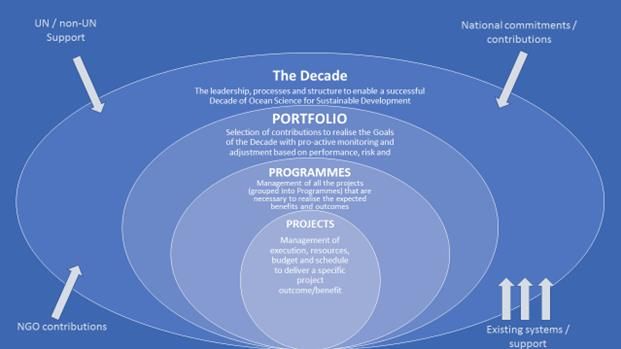
V. Structure of the Decade
VI. A brief of the Roadmap
         1) Key steps for the Preparation Phase
                 UN-Oceans        Planning Group
UNGA                                                              Interim report
                 Meeting          ToRs approved by
Resolution                                                        to IOC-XXX                                                  UNGA consideration
                                  IOC-EC 51 (July)                Assembly                               Endorsement
proclaiming                                                                                                                   of Implementation
                                                                                                         of plan by IOC
Decade                                                                                                                        plan
                                                                                                         EC-53

              Interim Planning
                                                     Global Meeting# 1                        Global
              Group established
                                                     + Stakeholder                            Meeting# 2
                                                     Forum (Q1)                               + Stakeholder
                                                                                              Forum (Q1)

               2018                                  2019                Regional
                                                                                        2020                     Imp. Plan      2021
                                      1st Meeting                        Workshops   2nd Meeting              review by MS
                                      EPG (Nov)                                      EPG (Nov)                   and other
                                                                                                               stakeholders             Official Start of
                                                                                                                                            Decade

                                                                Preparation phase
2) Executive Planning Group ✓ The purpose of the EPG is to serve as an expert advisory body to the IOC governing bodies to support the development of an Implementation Plan for the Decade and the delivery of other activities needed to establish the Decade. ✓ The EPG is an expert group composed of 19 experts. In addition, the IOC Chair and Executive Secretary will serve as ex-officio members.
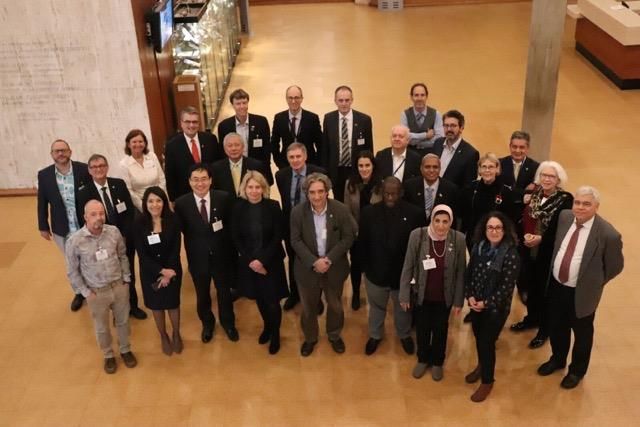
✓ First meeting of the EPG

   - Paris, France; 2018. 12. 17~19
   - Review the Roadmap and plan future activities
(First meeting of the EPG)

 ✓ Prepare the 1st Global planning meeting/Stakeholders’ Forum
   and Regional workshops

 ✓ Form a task group on the preparation of a high level science
   plan – outlining & updating with inputs from consultations

 ✓ Prepare engagement of philanthropic funders, NGO, and the
   private sector
VII. Global Planning Meeting/Stakeholders’ Forum
 (concept note)
1. Principles:
  - a top-down process coupled with a bottom-up process;
  - an adaptive process with revision;
  - a transformative process-any interested parties to organize
    consultation meetings-targeting env., societal and policy change

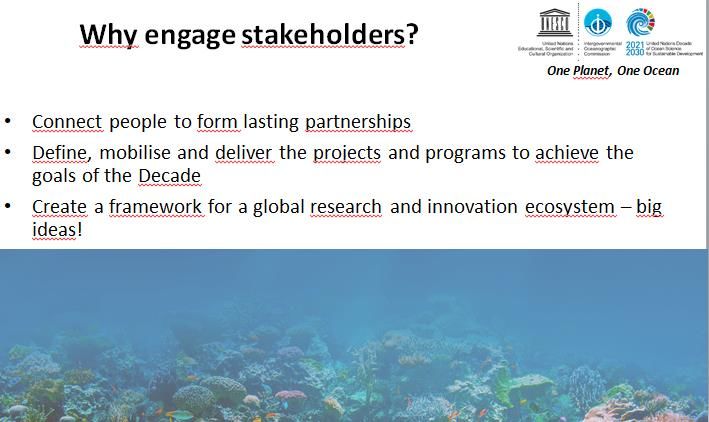
2. Purpose
   - engagement of various ocean communities in the Decade
(Denmark, 19.05)
Stakeholder         Potential sub-groups/examples
category/group
                    National research institutes
1 Ocean science     National research agencies and government departments
                    Regional research organisations/agencies/initiatives
  and technology    International organisations, networks, associations, academies
                    Governments
2 Ocean policy &    Regional organisations e.g. RFMOs, RSOs
                    Global intergovernmental organisations: Sectoral (e.g. ISA, IMO, FAO, IWC, IUCN)
  sustainable       Convening organisers e.g. G7, WEF,

  development
                    SMEs – new technology development for research to management
3 Business and      Industry – existing ocean industry (shipping, fishing, oil & gas, minerals)
                    technology firms (e.g. Google) and new (blue-tech, clean tech)
  industry          Business networks
                    Community groups
4 Civil society &   Environmental NGOs e.g. Pew, CI,
                    Scientific NGOs e.g. ICES
  NGOs              Technology providers e.g. Global Fishing Watch
                    Artistic, media (Science, Nature), communicators
                    Sport/expeditions e.g. yachting
                    Science funding and expeditions
5 Donors and        Conservation organisations

  foundations
Thank you very much for your attention!
You can also read


