JMA Status Report Masahiro Kazumori - Senior Coordinator for Data Assimilation Systems - National Weather Service
←
→
Page content transcription
If your browser does not render page correctly, please read the page content below
JMA Status Report

              Masahiro Kazumori

 Senior Coordinator for Data Assimilation Systems
Numerical Prediction Division, Forecast Department
          Japan Meteorological Agency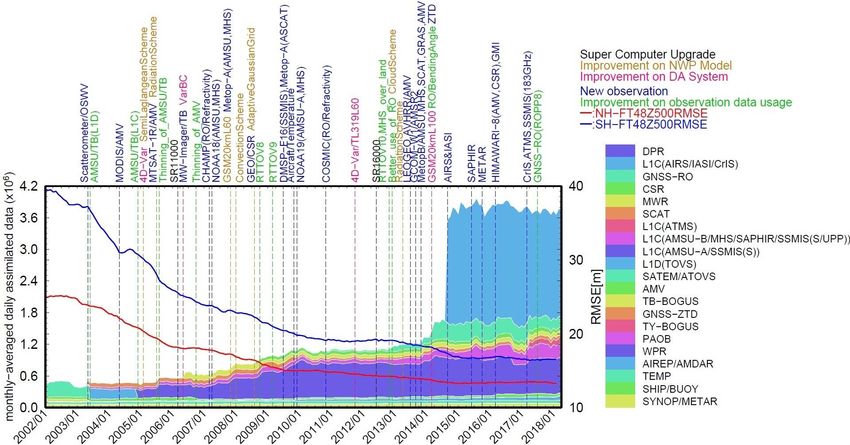
Three topics
• Current status and recent progress of JMA’s NWP

• Updates on Himawari-8/9
  (prepared by satellite program division)

• Status report of RTH Tokyo
  (prepared by RTH focal point for Tokyo)

                                                    1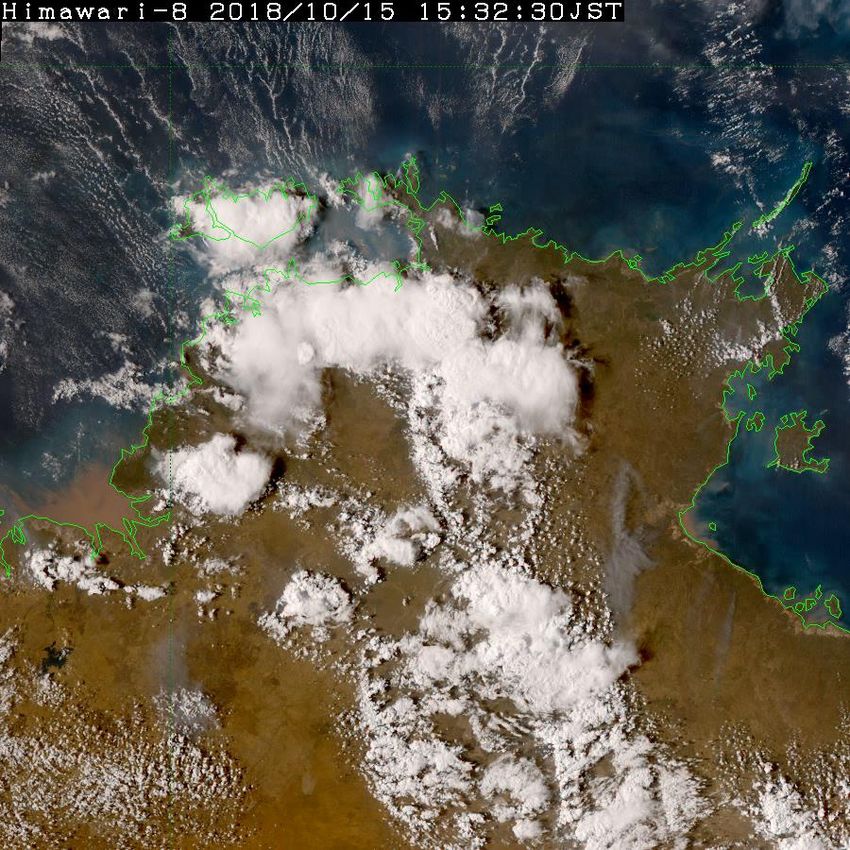
Current status and recent progress of JMA’s NWP

                  Masahiro Kazumori

     Senior Coordinator for Data Assimilation Systems
    Numerical Prediction Division, Forecast Department
              Japan Meteorological Agency

                                                         2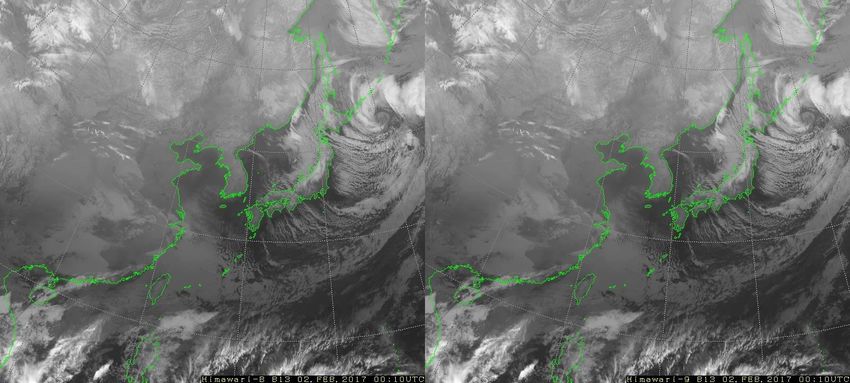
Current NWP      models
                                 In Operation
                                                in JMA                                                                               On trial
               Global Spectral         Meso-Scale           Local Forecast                                   Seasonal               Meso-scale
                   Model                Model                  Model             Global Ensemble
                                                                                                             Ensemble               Ensemble
                                                                                       GEPS                    CPS2                   MEPS
                    GSM                   MSM                    LFM
                                                                                 One-week forecast      Seasonal forecast
                Short- and                                                        Typhoon forecast      (three month forecast,
                                   Disaster reduction      Aviation forecast
objectives     Medium-range                                                       Early warning on        cold/warm season
                                   Aviation forecast       Disaster reduction     extreme weather              outlook)
                 forecast
                                                                                 One-month forecast      El Nino outlook
                   Global             Japan and its          Japan and its             Global            Coupled Global            Japan and its
                                      surroundings           surroundings                                Atmosphere and            surroundings
                                   (4080km x 3300km)       (3160km x 2600km)                                 Ocean               (4080km x 3300km)
Forecast
domain

Horizontal          TL959                                                          TL479 / TL319         Atmos.: 1.125 deg
                                           5km                    2km                                                                   5km
resolution       (0.1875 deg)                                                    (0.375 / 0.5625 deg)   Ocean:0.3-0.5x1 deg
                                                                                                         Atmos.: 60 (~0.1 hPa)
  Vertical            100                   76                    58                     100                                            76
                                                                                                         Ocean: 52 with BBL*
levels / Top       0.01 hPa               21.8km                20.2km                0.01 hPa          *Bottom Boundary Layer        21.8km

                                                                                  264 h (00, 12 UTC)
                  132 hours                                                      132 h (06, 18 UTC)*
Forecast                                                                                                                              39hours
                                         39 hours               9 hours              27 members         210 days (00UTC)
 Hours         (00, 06, 18 UTC)
                                    (00, 03, 06, 09, 12,      (00-23 UTC              Extend to           51 members /           (00,06,12,18 UTC)
 (Initial         264 hours                                                      432 h (4times/week)
                                     15, 18, 21 UTC)            hourly)                                      month                  21 members
  time)            (12 UTC)                                                      816 h (4times/week)
                                                                                     13 members
                                                                                   Global Analysis         JRA-55 with           Meso-scale Analysis
 Initial        Global Analysis     Meso-scale Analysis      Local Analysis        with ensemble             ensemble              with ensemble
Condition          (4D-Var)             (4D-Var)               (3D-Var)             perturbations          perturbations           perturbations
                                                                                    (SV, LETKF)               (BGM)                     (SV)

* when a TC of TS intensity or higher is present or expected in the RSMC Tokyo - Typhoon Center’s area of responsibility (0º–60ºN, 100ºE–180º).    3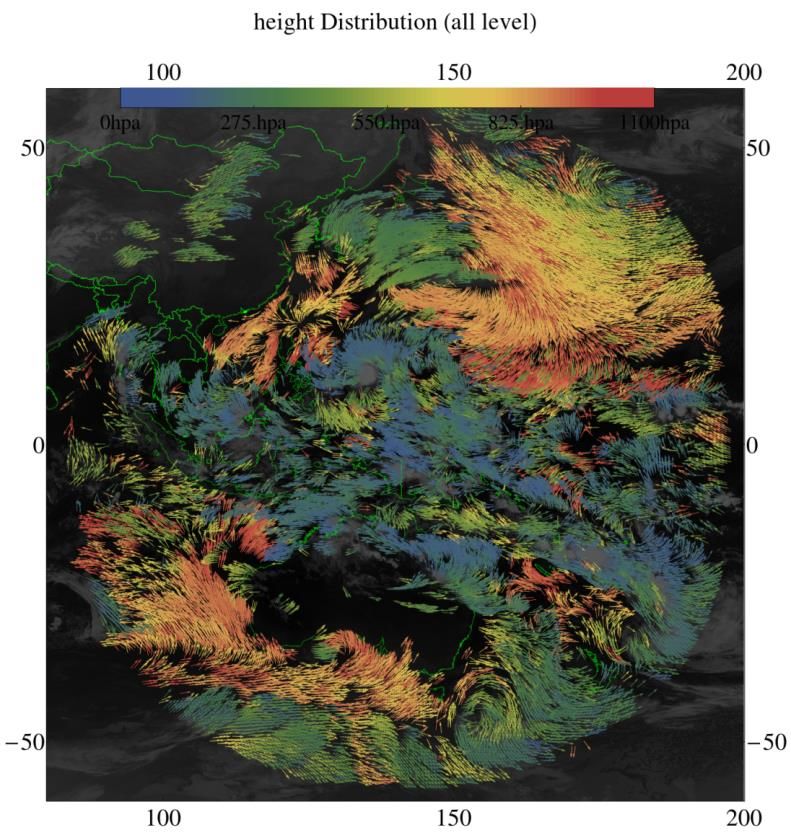
Operationally Assimilated Satellite Data
     Type                   Satellite/Instrument         Global Analysis     Meso Analysis         Local Analysis
                   NOAA15,18,19,Metop-A,-B,Aqua/AMSU-A      Radiance            Radiance             Radiance
                        NOAA18,19,Metop-A,-B/MHS            Radiance            Radiance             Radiance
 1. MW Sounder             DMSP-F17,18/SSMIS                Radiance                -                    -
                            Suomi-NPP/ATMS                  Radiance                -                    -
                         Megha-Tropiques/SAPHIR             Radiance                -                    -
                                Aqua/AIRS                   Radiance                -                    -
 2. IR Sounder                Metop-A,B/IASI                Radiance                -                    -
                             Suomi-NPP/CrIS                 Radiance                -                    -
                           DMSP-F17,18/SSMIS                Radiance       Radiance, Rain Rate       Radiance
 3. MW Imager                GCOM-W/AMSR2                   Radiance       Radiance, Rain Rate       Radiance
                              GPM-core/GMI                  Radiance       Radiance, Rain Rate       Radiance
                                Himawari-8                 CSR, AMV            CSR, AMV              CSR, AMV
                                 GOES-15                   CSR, AMV                 -                    -
                              Meteosat-8,11                CSR, AMV                 -                    -
4. VIS/IR Imager
                     NOAA15,18,19,Metop-A,-B/AVHRR            AMV                   -                    -
                            Aqua,Terra/MODIS                  AMV                   -                    -
                         LEOGEO composite image               AMV                   -                    -
5. Scatterometer            Metop-A,-B/ASCAT                 OSWV                OSWV                    -
                          GRACE-A,-B/Blackjack           Bending Angle         Refractivity              -
                            Metop-A,-B/GRAS              Bending Angle         Refractivity              -
   6. Radio
                            TerraSAR-X/IGOR              Bending Angle         Refractivity              -
  Occultation
                             TanDEM-X/IGOR                      -              Refractivity              -
                              COSMIC/IGOR                Bending Angle         Refractivity              -
   7. Radar                     GPM/DPR                         -           Relative Humidity            -
                             GCOM-W/AMSR2                       -                   -              Soil Moisture
8. Soil Moisture
                            Metop-A,-B/ASCAT                    -                   -              Soil Moisture

CSR: Clear Sky Radiance on water vapor channels, AMV: Atmospheric Motion Vector, OSWV: Ocean Surface Wind Vectors
                                                                                   (as of 6 June 2018)              4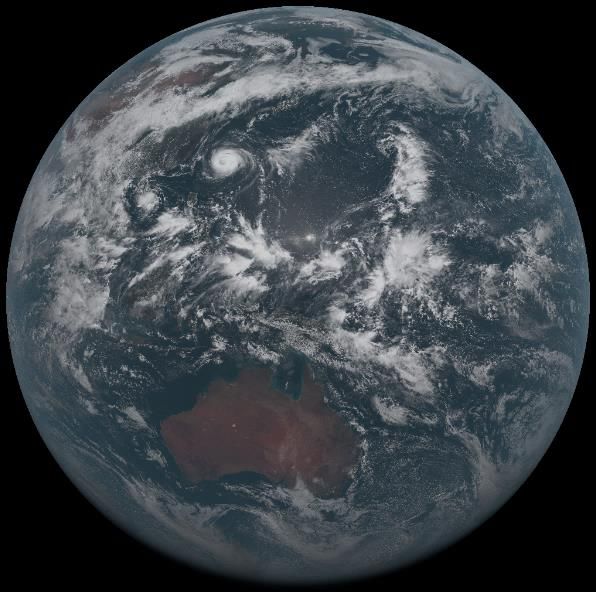
Assimilated Data Amount History
        - Global Analysis -

                                  5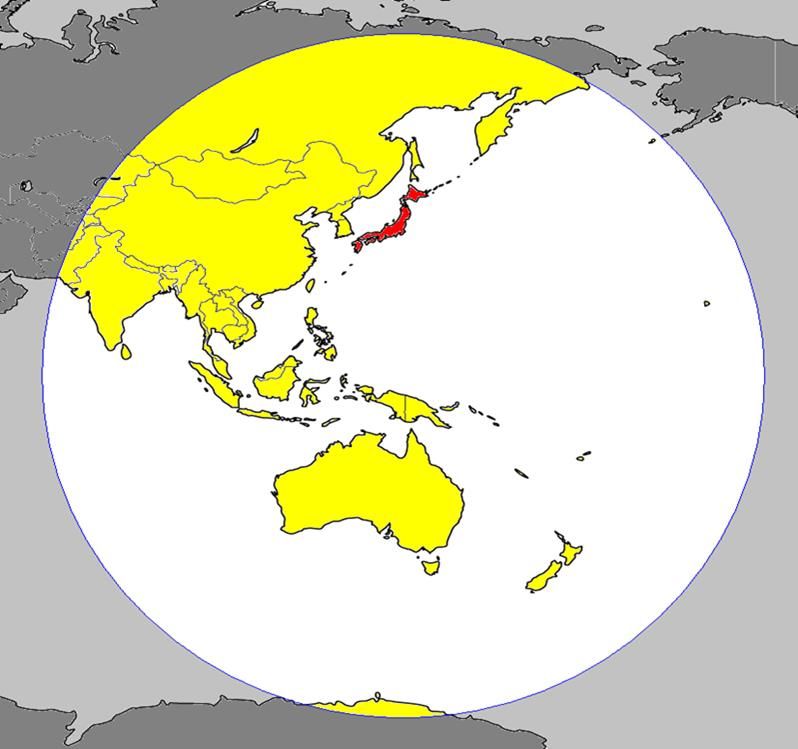
Recent Progress for 2017-2018
    GA: Global Analysis   MA: Meso-scale Analysis   LA: Local Analysis

(1) Jun. 2018: Upgrades of JMA supercomputer, Cray XC50

Updates of Observation data usage since 1st GODEX-NWP meeting

(1) May 2017: Enhancement of QC for GNSS-RO data in GA
(2) Mar. 2018: Switch-over from Meteosat-10 to Meteosat-11
    AMV and CSR
(3) Jun. 2018: Use of DBNet Suomi-NPP/ATMS in GA
(4) Oct. 2018: Enhancement of surface sensitive CSR data use in GA

                                                                         6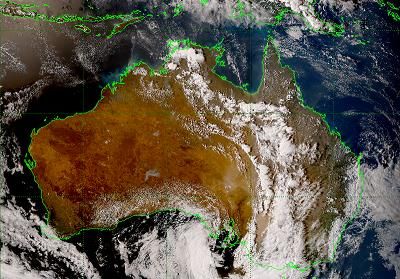
JMA 10th generation supercomputer system
JMA began the operation of its new supercomputer system on 5 June 2018.
Effective computer capacity (in terms of meteorological calculation) was
enhanced about 10 times.

 25th and 26th rank at the
 Top 500 in June 2018

               20km L100 132hr forecast 13km L128
      GSM
               40km L100 M27                           27km L128 M51
      GEPS
               5km L76                                  5km L96
      MSM
                                                        5km L96 M21
      MEPS
      LFM       2km L58                                 2km L76
                                 2018
                   Replacement of Super Computer System (Jun 2018)
                                                                           7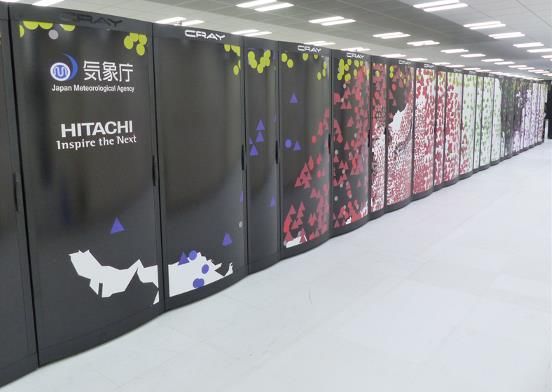
Enhancement of QC for GNSS-RO data in GA
• Changing bending angle’s threshold value of the gross error
  check in the tropics                                  Increased data use
• Changing the handling of quality flag
• Setting the lower limit of altitude (2km) for assimilating bending
  angle
• ROPP6 to ROPP8
           Normalized changes in STD of FG departure (O-B)

RAOB T                                                                     RAOB U
Tropics                                                                    Tropics

                                                                           The error bar represents
                        Improved                        Improved           a 95% confidence
                                                                           interval, and the dots
                                                                           represent statistically
                                                                           significant changes.

 Control run: previous operation equivalent, Test run: current operation
 Red: 10 Jun. to 11 Oct. 2015, Green: 10 Nov. 2015-11 Mar. 2016
                                                                                                8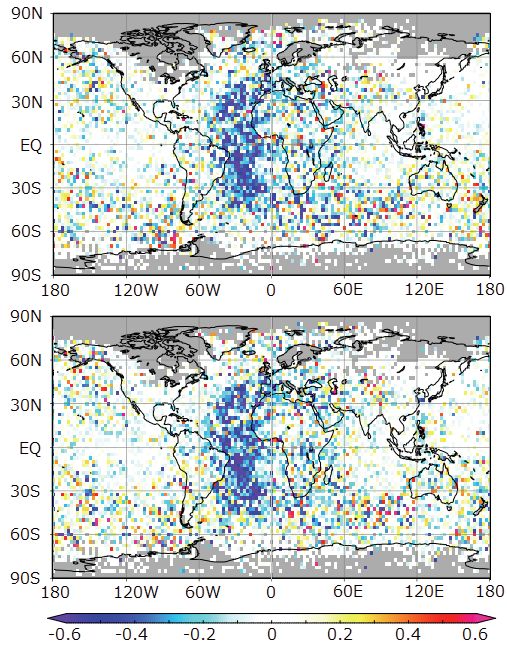
CSR and AMV: Switch-over from Meteosat-10 to Meteosat-11
  CSR data monitoring between Meteosat-10 and -11       Data counts of assimilated WV AMVs
                                                            in the southern hemisphere
BIAS
                                                                                     Increased

STD

Counts
                                                    Increase of available AMV data from
                                                    Meteosat-11.

                                                    Switch-over from Meteosat-10 to
 After QC, quality of Meteosat-11 CSR data are      Meteosat-11 was 6th March 2018 at JMA
 comparable to Meteosat-10 CSR data.
Impact on FG departure of other observations
Normalized change in FG STD Horizontal distribution of normalized changes
from Baseline experiment of FG departure’s STD (MHS Ch. 3)
MHS
Meteosat-11- Baseline Meteosat-10- Baseline
Improved
Aircrafts
(Wind)
Improved
Improved
Meteosat-10 AMV, CSR Improved FG fits to wind and humidity-sensitive observations.
Meteosat-11 AMV, CSR Especially, in the gap areas between GOES and Meteosat-8.Status/Plan for NOAA/Metop/JPSS Sounder data
DBNet DBNet DBNet DBNet Global
Satellite Sensor JMA/MSC AP EU SA DBRTN data
NOAA AMSU-A,MHS ◎ ◎ ◎ ◎ / ◎
Metop AMSU-A,MHS ◎ 2 ◎ ◎ ◎ / ◎
Suomi-NPP ATMS ◎ △ ○ - ○ ◎
1
NOAA-20 ATMS - - - - ○ ○
Suomi-NPP CrIS (NSR) ◎ △ ○ - ○ ◎
NOAA-20 CrIS (NSR) / / / / / / 4
Suomi-NPP CrIS (FSR) - - - - - 3◎
NOAA-20 CrIS (FSR) - - - - ○ ○
Metop IASI (500ch) ○ △ - - ○ ○using 616ch
◎: Receiving and using ○: Receiving, but not using yet -: Not receiving yet CrIS(NSR):Normal Spectral Mode (399ch)
/: No data available △: Receiving from several stations (not using) CrIS(FSR):Full Spectral Mode (431ch)
1. JMA has started to use direct readout Suomi-NPP/ATMS and CrIS at JMA/MSC.
2. and will start to use data from DBNet soon.
3. JMA has started to use CrIS(FSR) dataset instead of CrIS(NSR) dataset.
4. JMA has started to monitor passively NOAA-20/ATMS and CrIS.
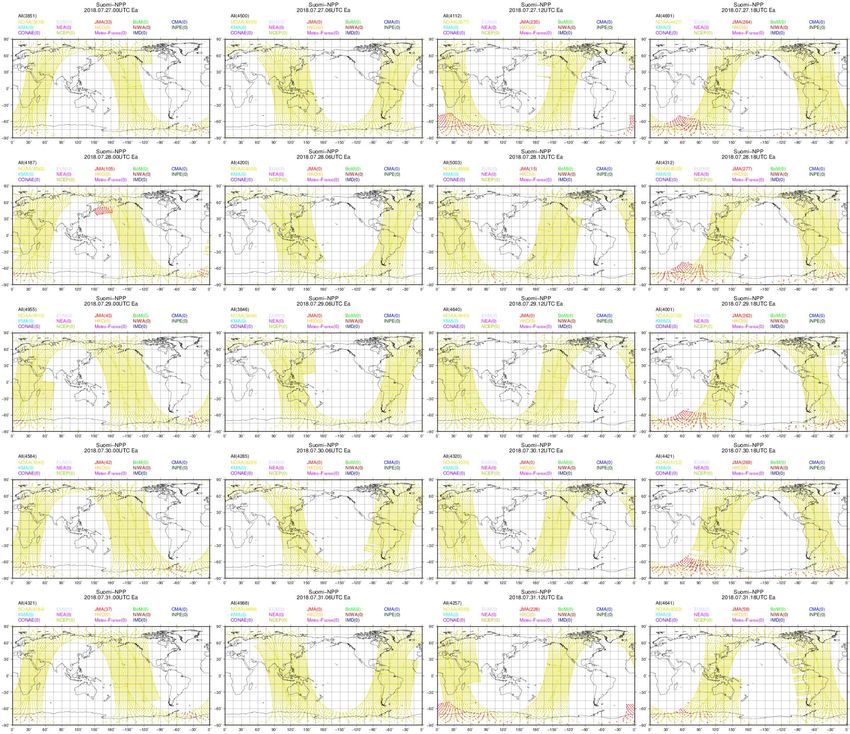
11Suomi-NPP/ATMS map used in JMA's Global NWP analysis
2018/ 00 UTC 06 UTC 12 UTC 18 UTC
07/27
JMA/MSC
(Kiyose,Tokyo)
07/28
Syowa station
(Antarctica)
2018/06/20-
07/29
JMA has started to use direct readout
data received at JMA/MSC
07/30
Global
07/31 JMA
12Enhancement of surface sensitive CSR data use in GA
1. Himawari Band 9, 10 and MSG Ch 6 CSR data are affected by land surface
– Use of land surface emissivity atlas and retrieved Land Surface
Temperature (LSTret ) from window channel observation
– CSR data at higher altitude ( > 4,000 m) are rejected
2. Use of hourly CSR data from GOES and MSG
90 % increase of available CSR data
MSG (SEVIRI) Himawari-8 (AHI)
Ch 6(7.35μm) Band 9(6.9μm) Band 10(7.3μm)
600 hPa
~ 4,000 m
13Use of LSTret in RTM calculation for CSR data
Base: Operational JMA NWP system with surface-sensitive CSR over ocean
Test 1: Base + surface-sensitive CSR over land using LSTFG .
Test 2: As Test 1 but LSTret was used over land.
Normalized Change in FG
Himawari-8, B10 Transmittance of Himawari-8 B10 STD of RAOB RH
O-B
Improved
QC passed data over land
January
2017
Improved O-B histogram (w/o BC) by using
retrieved LST in RTM Improved FG fits to RAOB by using surface-
sensitive CSR with LSTretImpacts on NWP forecasts
Normalized Change in FG STD of MHS Ch. 4 Relative improvement of
Dec. 2016 – Feb. 2017 24-hr specific humidity forecast
Test 2
Improvement
Addition of surface sensitive CSR data
(Himawari-8 B9, B10, MSG CH.6) Improvement of 24-h forecast
improved FG fits of MHS ch.4 over land of specific humidity in TropicsPlanned updates of observation use in
JMA’s NWP system for 2018-2019
GA: Global Analysis MA: Meso-scale Analysis LA: Local Analysis
(1) Enhancement of AMV QC in GA
(2) Use of GOES-16 AMV and CSR in GA
(3) Activation of NOAA-20 ATMS and CrIS in GA
(4) Use of ScatSat/OSCAT ocean surface wind in GA
(5) Use of TanDEM-X bending angle data in GA
(6) Use of Himawari-8 Band-9, -10 in MA
(7) Use of 12.5km ASCAT wind data in MA
(8) Use of high density Himawari-8 AMV in MA
(9) Activation of NOAA-20 ATMS in MA
(10) All-sky MW radiance assimilation in GA
16Updates on Himawari-8/9
Japan Meteorological Agency
17History of Himawari Satellites
GMS (Geostationary Meteorological Satellite)
GMS
(Himawari)
GMS-2 GMS-3
(Himawari-2)
GMS-4
(Himawari-3) (Himawari-4)
GMS-5
(Himawari-5) GOES-9
Back-up operation of GMS-5 with
GOES-9 by NOAA/NESDIS from
May 22, 2003 to June 28, 2005
ⒸNASDA ⒸNASDA ⒸNASDA ⒸNASDA ⒸNASDA
Launched in 1977 1981 1984 1989 1995 Observation
Satellite
period
GMS 1978 – 1981
MTSAT (Multi-functional Transport SATellite ) Himawari GMS-2 1981 – 1984
MTSAT-1R MTSAT-2 GMS-3 1984 – 1989
Himawari-8 Himawari-9
(Himawari-6) (Himawari-7) GMS-4 1989 – 1995
GMS-5 1995 – 2003
GOES-9 2003 – 2005
MTSAT-1R 2005 – 2010
MTSAT-2 2010 – 2015
ⒸSS/L ⒸMELCO Himawari-8 2015 – 2022
Himawari-9 18
2022 – 2029
Launched inin
Launched 2005
2005 20062006 Oct2014
2014 2016Himawari-8/9 Schedule
2005
2006
2007
2008
2009
2010
2011
2012
2013
2014
2015
2016
2017
2018
2019
2020
2021
2022
2023
2024
2025
2026
2027
2028
2029
FY
MTSAT-1R Operational In-orbit standby
Meteorological Mission
MTSAT-2 In-orbit standby Operational In-orbit standby
Meteorological Mission
Launch Operational In-orbit standby
Himawari-8 Manufacturing
Himawari-9 Launch In-orbit standby Operational
• Himawari-8: Operational since July 7, 2015
• Himawari-9: Standby for backup since March 10, 2017
• Switch over from H-8 to H-9 planned in 2022
19Himawari-8/9 Operational Status
• Himawari-8: operational at around 140.65 degE
– AHI (16-band Imager) and DCS (Data Collection System) operational
– AHI maintenance scheduled once a year
• H-9/AHI becomes operational during the maintenance
• This year (2018), conducted on February 13-14
• Himawari-9: standby at around 140.75 degE
– H-9 will becomes operational in case of H-8 anomaly
– AHI “Health Check” conducted several times a year to confirm AHI
functionality (this operation requires LHP(Loop Heat Pipe) startup)
• 2017: May 29 - June 12, Aug 29 - Sep 13, Nov 28 - Dec 12
• 2018: Jan 31 - Feb 16, Oct 2 - Oct 19
20Himawari-8/AHI Himawari-9/AHI
Band13(10.4um), February
Band 13, Feb 02, 2017 2nd, 2017
H-8 and H-9 are functionally identical
21Himawari-8/9 AMV
Atmospheric Motion Vector
• Himawari-8/9 AMV (VIS, IR, WV1,2,3) is derived
hourly using Full-Disk imagery and is distributed
in BUFR format via GTS.
• Himawari-8 AMV has been disseminated
operationally since July 2015.
• Himawari-9 AMV has also been ready for the
backup of Himawari-8 AMV.
Himawari-8 Himawari-9
Himawari-8 AMV (IR, 10.4um)
Height distribution
Sonde Statistics collocation condition
RAOB statistics of IR(10.4um) upper-level wind speed QI(w/ fcst) > 0.85
using the Himawari-9 health check operation data for within 150 km FM station
AMV Height within 50hPa (< 700hPa) 22
about two weeks (2 – 14 Feb 2018) AMV Height within 35hPa (>700hPa)Himawari-8/9 CSR
Clear Sky Radiance
➢ Area averaged clear sky brightness temperature
✓ All IR bands (3.9, 6.2, 6.9, 7.3, 8.6, 9.6, 10.4, 11.2, 12.4, 13.3 μm)
✓ Full disk, hourly produced and distributed via GTS mainly for NWP community
✓ Spatial resolution (averaging size): 16 x 16 pixel (IR) (i.e. 32 x 32 km @SSP)
✓ Band dependent clear pixel ratios for clear pixel detection
✓ Provided to NWP centers via GTS
Band #8 (6.2 μm) Band #9 (6.9 μm) Band #10 (7.3 μm) K
Weighting function of
WV bands
Brightness
Temperature
Clear Pixel
Ratio
00 UTC on
15 August 2015 23
(Courtesy of D. Uesawa)HimawariCast/Cloud Services
Communications Satellite (CS)
Himawari-8/9
HimawariCast
Service
Raw data C-band antenna
HRIT files,
LRIT files &
SATAID files
LNB
CS Operator
HSD files, DVB-S2 receiver
NefCDF files &
PNG files
PC & software
JMA HimawariCloud NMHSs
24
Service UsersNMHS users of Himawari
HimawariCast Receiving Systems HimawariCloud accounts Web service covers
21 users 42 areas
Already installed 32
(In addition to these, NOAA/NESDIS (including
Timor-Leste and
and EUMETSAT have accounts.)
Cook Islands)
Russia Observation Area of Himawari-8/9 Philippines
Mongolia Brunei
Korea Palau
China Timor-Leste
Hong Kong, China Micronesia
Macau Papua New Guinea
Nepal Hawaii (USA)
Bhutan Solomon Islands
Bangladesh Kiribati
Myanmar Tuvalu
Laos Fiji
Sri Lanka Samoa
Thailand Cook Islands
Vietnam Tonga
Cambodia Vanuatu
Malaysia New Caledonia (Fr.)
Singapore Australia
25
Indonesia New Zealand
(As of May 2018)HimawariRequest Service
• In January 2018, JMA launched a new international service
“HimawariRequest”, in collaboration with Australia’s Bureau of
Meteorology (BoM).
• The service allows NMHS users in WMO RA II and RA V to
request Himawari-8/9 Target Area observation covering a 1000
km x 1000 km area every 2.5 minutes.
Users are able to request
Target Area observation
conducted every 2.5 min!
26Current Status
12 Registrations
the Solomon Islands, Myanmar, Australia, Hong Kong, Bangladesh, New
Zealand, Malaysia, Samoa, Nepal, Thailand, Fiji and Russia
9 Users (preparations for request submission completed)
the Solomon Islands, Hong Kong, New Zealand, Nepal, Australia,
Malaysia, Fiji, Thailand and Russia
During Oct 16 – 17, 2018, Himawri-8 conducted the first
observation under the HimawariRequst service in response
to BoM’s request.
27Request-based Observation for BoM
JMA, NOAA/NESDIS, CSU-CIRA
True Color Reproduction imagery during
Himawari-8 Target Area observation requested
by Australia’s Bureau of Meteorology (BoM)
This request was intended to monitor
severe weather conditions associated
with convective cloud activity around
Darwin, in northern Australia.
28Status Report of RTH Tokyo
RTH focal point for Tokyo
Presented by
(Numerical Prediction Division of JMA)
Second Meeting on Global Operational Data Exchange
for NWP (GODEX-NWP-2)
(New Delhi, India, 27 to 30 November 2018)
GISC Tokyo/Japan Meteorological AgencyGTS Connections (Sep. 2018)
64Kbps Khabarovsk
Tokyo 2Mbps
Hanoi
2Mbps
10Mbps 10Mbps 100Mbps 2Mbps Doha
MPLS Network
MPLS Network (Managed by JMA)
WMO Information System
(WIS) Core Network
Internet Washington
Plan: Nov. 2018
Melbourne
Beijing
Vientiane
Offenbach Bangkok
Phnom Penh
Toulouse Internet Hong Kong
Exeter Manila
New Delhi
Seoul Dhaka
Nay Pyi Taw
Brasilia
GISC Tokyo/Japan Meteorological AgencyDaily Volume
• MPLS (WIS Core : WIS Core Network
Network) WIS Core
WIS Core
• Washington
• Melbourne
• Exeter
• Beijing
• Seoul
• New Delhi
• Toulouse
• Offenbach
GISC Tokyo/Japan Meteorological AgencyDaily Volume
JMA MPLS
• MPLS (managed
JMA MPLS
by JMA) JMA MPLS
• Hong Kong
• Bangkok
• Manila
GISC Tokyo/Japan Meteorological AgencyDaily Volume
GISC Tokyo/Japan Meteorological AgencySatellite Data Exchange GODEX-NWP1 to GODEX-NWP2
• Megha-Tropiques
ROSA (Radio Occultation Sensor for Vertical Profiling of Temperature and Humidity)
data from India
– May 2017
To Exeter, Melbourne, Offenbach, Toulouse, Beijing,
Seoul, Hong Kong, Manila, Doha
• FY3-C
GNOS GPS-RO data from China
– August 2017
To Exeter, Melbourne , Beijing, New Delhi, Seoul,
Hong Kong, Manila
MWHS2, IRAS data from China
– June 2018
To Exeter, Melbourne
GISC Tokyo/Japan Meteorological AgencySatellite Data Exchange GODEX-NWP1 to GODEX-NWP2
• Suomi-NPP
ATMS, CrlS data from Washington
– January 2018
To Seoul
ATMS, CrlS data from Seoul (received at Jincheon Station)
– August 2018
To Exeter, Melbourne, Offenbach, Toulouse, Beijing,
New Delhi, Hong Kong, Doha
• COMS
CSR data from Seoul
– April 2018
To Exeter, Melbourne, Offenbach, Toulouse, Beijing,
New Delhi, Hong Kong, Doha
GISC Tokyo/Japan Meteorological AgencyAP-RARS connectivity
Papeete Toulouse
Hong Kong
Singapore
Jincheon
Asia-pacific regional RARS center
Fiji
Melbourne Tokyo
Beijing
Guangzhou
Crib Point1 Urumuqi
Darwin
Perth
Townsville Kiyose
Casey Syowa
Davis Exeter Washington
New Delhi
Kelburn
Chennai
Maupuia
Guwahati
GISC Tokyo/Japan Meteorological AgencyThank you for your attention.
You can also read


