Keep your heart and blood vessels healthy
←
→
Page content transcription
If your browser does not render page correctly, please read the page content below

Number
                                                                                2
                                                                               in a

   Prevent diabetes problems                                                  Series
                                                                               of 7

  Keep your heart and
  blood vessels healthy

           U.S. Department
           of Health and
           Human Services

NATIONAL INSTITUTES OF HEALTH
NIH...Turning Discovery Into Health®   National Diabetes Information Clearinghouse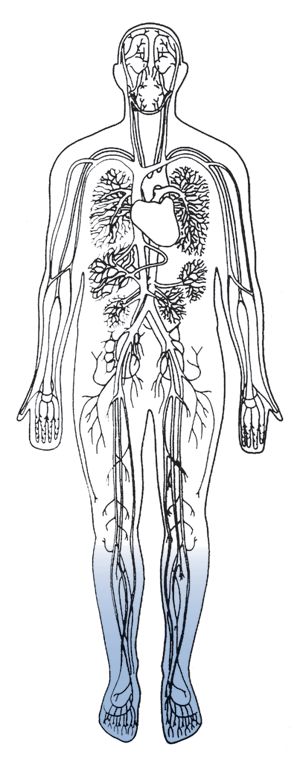
Prevent diabetes problems:
Keep your heart and
blood vessels healthy

         U.S. Department
         of Health and
         Human Services

NATIONAL INSTITUTES OF HEALTH   National Diabetes Information Clearinghouse
Contents What are diabetes problems?.................................. 1 What should I do each day to stay healthy with diabetes? ........................................................... 2 What do my heart and blood vessels do? ............... 3 What can I do to prevent heart disease and stroke?................................................................ 4 How do my blood vessels get clogged? .................. 6 What can happen when blood vessels are clogged? .............................................................. 7 What are the warning signs of a heart attack? ...... 8 How do narrowed blood vessels cause high blood pressure? ................................................ 9 What are the warning signs of a stroke? .............. 11 How can clogged blood vessels hurt my legs and feet? .......................................................... 12 What can I do to prevent or control PAD? .......... 12 Pronunciation Guide.............................................. 13 For More Information ........................................... 14 More in the Series .................................................. 17 Acknowledgments .................................................. 18
What are diabetes problems?
Too much glucose in the blood for a long time can
cause diabetes problems. This high blood glucose,
also called blood sugar, can damage many parts of
the body, such as the heart, blood vessels, eyes, and
kidneys. Heart and blood vessel disease can lead
to heart attacks and strokes, the leading causes of
death for people with diabetes. You can do a lot to
prevent or slow down diabetes problems.
This booklet is about heart and blood vessel
problems caused by diabetes. You will learn the
things you can do each day and during each year
to stay healthy and prevent diabetes problems.

 Blood
 vessels             Heart

                             High blood glucose can
                             cause heart and blood
                             vessel problems.

                                                      1
What should I do each day to stay
healthy with diabetes?
Follow the healthy eating plan that
you and your doctor or dietitian have
worked out.
Be active a total of 30 minutes most
days. Ask your doctor what activities
are best for you.
Take your medicines as directed.
Check your blood glucose every day.
Each time you check your blood
glucose, write the number in your
record book.
Check your feet every day for cuts,
blisters, sores, swelling, redness, or
sore toenails.
Brush and floss your teeth every day.
Control your blood pressure and
cholesterol.
Don’t smoke.
2What do my heart and blood
vessels do?
Your heart and blood vessels make up your
circulatory* system. Your heart is a muscle that
pumps blood through your body. Your heart
pumps blood carrying oxygen to large blood
vessels, called arteries, and small blood
vessels, called capillaries. Other
blood vessels, called veins, carry
blood back to the heart.
Heart
Artery
Vein
Capillary
*See page 13 for tips on how
to say the words in bold type.
3What can I do to prevent heart
disease and stroke?
You can do a lot to prevent heart disease and
stroke.
● Keep your blood glucose under control. You
can see if your blood glucose is under control
by having an A1C test at least twice a year.
The A1C test tells you your average blood
glucose for the past 2 to 3 months. The target
for most people with diabetes is below 7. In
some people with heart disease or other special
circumstances, their doctor may recommend
slightly higher levels of A1C.
● Keep your blood pressure under control. Have
it checked at every doctor visit. The target for
most people with diabetes is below 130/80.
● Keep your cholesterol under control. Have it
checked at least once a year. The targets for
most people with diabetes are
• LDL—bad—cholesterol: below 100
• HDL—good—cholesterol: above 40 in men
and above 50 in women
• triglycerides—another type of fat in the blood:
below 150
4l ake sure the foods you eat are “heart-healthy.”
M
Include foods high in fiber, such as oat bran,
oatmeal, whole-grain breads and cereals, fruits,
and vegetables. Cut back on foods high in
saturated fat or cholesterol, such as meats, butter,
dairy products with fat, eggs, shortening, lard, and
foods with palm oil or coconut oil. Limit foods
with trans fat, such as snack foods and commercial
baked goods.
l If you smoke, quit. Your doctor can tell you
about ways to help you quit smoking.
l sk your doctor whether you should take an
A
aspirin every day. Studies have shown that
taking a low dose of aspirin every day can help
reduce your risk of heart disease and stroke.
l Take your medicines as directed.
5How do my blood vessels
get clogged?
Several things, including having diabetes, can make
your blood cholesterol level too high. Cholesterol
is a substance that is made by the body and used
for many important functions. Cholesterol is also
found in some food derived from animals. When
cholesterol is too high, the insides of large blood
vessels become narrowed or clogged. This problem
is called atherosclerosis.
Narrowed and clogged blood vessels make it harder
for enough blood to get to all parts of your body.
This condition can cause problems.
Cross section of a healthy blood vessel
Cross section of a narrowed blood vessel
6What can happen when blood
vessels are clogged?
When blood vessels become narrowed and
clogged, you can have serious health problems:
l hest pain, also called angina. When you
C
have angina, you feel pain in your chest, arms,
shoulders, or back. You may feel the pain more
when your heart beats faster, such as when you
exercise. The pain may go away when you rest.
You also may sweat a lot and feel very weak. If
you do not get treatment, chest pain may happen
more often. If diabetes has damaged your heart
nerves, you may not feel the chest pain. If you
have chest pain with activity, contact your doctor.
l eart attack. A heart attack happens when a
H
blood vessel in or near your heart becomes
blocked. Then your heart muscle can’t get
enough blood. When an area of your heart
muscle stops working, your heart becomes
weaker. During a heart attack, you may have
chest pain along with nausea, indigestion,
extreme weakness, and sweating. Or you may
have no symptoms at all. If you have chest pain
that persists, call 911. Delay in getting treatment
may make a heart attack worse.
l Stroke. A stroke can happen when the blood
supply to your brain is blocked. Then your
brain can be damaged. See page 11 for more
information about strokes.
7What are the warning signs of a
heart attack?
You may have one or more of the following
warning signs:
l chest pain or discomfort
l pain or discomfort in your arms, back, jaw,
or neck
l indigestion or stomach pain
l shortness of breath
l sweating
l nausea
l light-headedness
Or, you may have no warning signs at all. Warning
signs may come and go. If you have any of these
warning signs, call 911 right away. Getting prompt
treatment can reduce damage to the heart.
8How do narrowed blood vessels cause
high blood pressure?
Narrowed blood vessels leave a smaller opening
for blood to flow through. Having narrowed blood
vessels is like turning on a garden hose and holding
your thumb over the opening. The smaller opening
makes the water shoot out with more pressure.
In the same way, narrowed blood vessels lead to
high blood pressure. Other factors, such as kidney
problems and being overweight, also can lead to
high blood pressure.
Many people with diabetes also have high blood
pressure. If you have heart, eye, or kidney
problems from diabetes, high blood pressure
can make them worse.
High pressure Low pressure
A smaller opening in a garden hose makes the water
pressure higher. In the same way, clogged blood vessels
lead to high blood pressure.
9You will see your blood pressure written with
two numbers separated by a slash. For example,
your reading might be 120/70, said as “120 over
70.” For people with diabetes, the target is to keep
the first number below 130 and the second number
below 80.
If you have high blood pressure, ask your doctor
how to lower it. Your doctor may ask you to take
blood pressure medicine every day. Some types of
blood pressure medicine can also help keep your
kidneys healthy.
You may also be able to control your blood
pressure by
l eating more fruits and vegetables
l eating less salt and high-sodium foods
l losing weight if you need to
l eing physically
b
active
l not smoking
l limiting alcoholic
drinks
To lower blood pressure, get to a
healthy weight.
10What are the warning signs
of a stroke?
A stroke happens when part of your brain is
not getting enough blood and stops working.
Depending on the part of the brain that is
damaged, a stroke can cause
l s udden weakness or numbness of your
face, arm, or leg on one side of your body
l sudden confusion, trouble talking, or
trouble understanding
l s udden dizziness, loss of balance, or
trouble walking
l s udden trouble seeing in one or both eyes
or sudden double vision
l sudden severe headache
Sometimes, one or more of these warning signs
may happen and then disappear. You might be
having a “mini-stroke,” also called a TIA or a
transient ischemic attack. If you have any of
these warning signs, call 911 right away. Getting
care for a TIA may reduce or prevent a stroke.
Getting prompt treatment for a stroke can reduce
the damage to the brain and improve chances for
recovery.
11How can clogged blood vessels
hurt my legs and feet?
Peripheral arterial disease,
also called PAD, can happen
when the openings in your
blood vessels become narrow
and your legs and feet don’t
get enough blood. You may
feel pain in your legs when
you walk or exercise. Some
people also have numbness
or tingling in their feet or
legs or have sores that heal
slowly.
What can I do to
prevent or control PAD?
● Don’t smoke.
● Keep your blood glucose and
blood pressure under control.
● Keep your blood fat levels close to
normal.
● Be physically active.
● Ask your doctor if you should take aspirin
every day.
You also may need surgery to treat PAD.
12Pronunciation Guide
angina (an-JY-nuh)
arteries (AR-tur-eez)
atherosclerosis (ATH-ur-oh-sklur-OH-siss)
capillaries (KAP-ih-lair-eez)
circulatory (SUR-kyoo-luh-TOR-ee)
peripheral arterial disease (puh-RIF-ur-uhl)
(ar-TEE-ree-uhl) (dih-ZEEZ)
transient ischemic attack (TRANZ-see-uhnt)
(iss-KEE-mik) (uh-TAK)
13For More Information Diabetes Teachers (nurses, dietitians, pharmacists, and other health professionals) To find a diabetes teacher near you, call the American Association of Diabetes Educators toll-free at 1–800–TEAMUP4 (1–800–832–6874), or look on the Internet at www.diabeteseducator.org and click on “Find a Diabetes Educator.” Dietitians To find a dietitian near you, contact the Academy of Nutrition and Dietetics at www.eatright.org and click on “Find a Registered Dietitian.” Government The National Heart, Lung, and Blood Institute (NHLBI) is part of the National Institutes of Health. To learn more about heart and blood vessel problems, write or call the NHLBI Health Information Center, P.O. Box 30105, Bethesda, MD 20824–0105, 301–592–8573; or see www.nhlbi.nih.gov on the Internet. 14
To get more information about taking care of
diabetes, contact
  National Diabetes Information Clearinghouse
  1 Information Way
  Bethesda, MD 20892–3560
  Phone: 1–800–860–8747
  TTY: 1–866–569–1162
  Fax: 703–738–4929
  Email: ndic@info.niddk.nih.gov
  Internet: www.diabetes.niddk.nih.gov
  National Diabetes Education Program
  1 Diabetes Way
  Bethesda, MD 20814–9692
  Phone: 1–888–693–NDEP (1–888–693–6337)
  TTY: 1–866–569–1162
  Fax: 703–738–4929
  Email: ndep@mail.nih.gov
  Internet: www.ndep.nih.gov
            www.yourdiabetesinfo.org

                                                15
American Diabetes Association 1701 North Beauregard Street Alexandria, VA 22311 Phone: 1–800–DIABETES (1–800–342–2383) Fax: 703–549–6995 Email: AskADA@diabetes.org Internet: www.diabetes.org JDRF 26 Broadway, 14th Floor New York, NY 10004 Phone: 1–800–533–CURE (1–800–533–2873) Fax: 212–785–9595 Email: info@jdrf.org Internet: www.jdrf.org 16
More in the Series
The “Prevent Diabetes Problems” Series has seven
booklets that can help you learn more about how
to prevent diabetes problems.

For free single copies of these booklets, write, call,
fax, or email the
  National Diabetes Information Clearinghouse
  1 Information Way
  Bethesda, MD 20892–3560
  Phone: 1–800–860–8747
  TTY: 1–866–569–1162
  Fax: 703–738–4929
  Email: ndic@info.niddk.nih.gov
These booklets are also available at
www.diabetes.niddk.nih.gov on the Internet.
                                                    17
Acknowledgments
The National Diabetes Information Clearinghouse
thanks the people who helped review or field-test
this booklet.
For the American For the Diabetes Research For the Grady Health
Association of and Training Centers System Diabetes Clinic
Diabetes Educators Albert Einstein Atlanta, GA
Lynn Grieger, R.D., School of Medicine Ernestine Baker, R.N.,
C.D.E. Norwalk Hospital F.N.P., C.D.E.
Arlington, VT Norwalk, CT Kris Ernst, R.N., C.D.E.
Celia Levesque, R.N., Jill Ely, R.N., C.D.E. Margaret Fowke, R.D.,
C.D.E. Sam Engel, M.D. L.D.
Montgomery, AL Pam Howard, A.P.R.N., Kay Mann, R.N., C.D.E.
Teresa McMahon, C.D.E.
Pharm.D., C.D.E. For the Indian Health
Seattle, WA Indiana University Service
Barbara Schreiner, R.N., School of Medicine Albuquerque, NM
M.N., C.D.E. Indianapolis, IN Ruth Bear, R.D., C.D.E.
Galveston, TX Madelyn Wheeler, M.S., Dorinda Bradley, R.N.,
R.D., F.A.D.A., C.D.E. C.D.E.
For the American Terry Fisher, R.N.
Diabetes Association VA/JDF Diabetes Lorraine Valdez, R.N.,
Phyllis Barrier, M.S., Research Center C.D.E.
R.D., C.D.E. Vanderbilt School of
Alexandria, VA Medicine Red Lake, MN
Linda Haas, Ph.C., R.N., Nashville, TN Charmaine Branchaud,
C.D.E. Ok Chon Allison, B.S.N., R.N., C.D.E.
Seattle, WA M.S.N., R.N.C.S.,
A.N.P., C.D.E. For the Medlantic
Kathleen Mahoney, Research Center
M.S.N., R.N., C.D.E. Barbara Backer, B.S.
James W. Pichert, Ph.D. Washington, DC
Drexel Hill, PA Resa Levetan, M.D.
Randi Kington, M.S., Alvin Powers, M.D.
R.N., C.S., C.D.E. Melissa E. Schweikhart For the Texas Diabetes
Hartford, CT Michael B. Smith Council
Kathleen Wolffe, R.N. Texas Department of
For the Centers for Health
Medicare & Medicaid Austin, TX
Services Luby Garza-Abijaoude,
Baltimore, MD M.S., R.D., L.D.
Jan Drass, R.N., C.D.E.
18National Diabetes
Information Clearinghouse
1 Information Way
Bethesda, MD 20892–3560
Phone: 1–800–860–8747
TTY: 1–866–569–1162
Fax: 703–738–4929
Email: ndic@info.niddk.nih.gov
Internet: www.diabetes.niddk.nih.gov
The National Diabetes Information Clearinghouse (NDIC) is
a service of the National Institute of Diabetes and Digestive
and Kidney Diseases (NIDDK). The NIDDK is part of the
National Institutes of Health of the U.S. Department of Health
and Human Services. Established in 1978, the Clearinghouse
provides information about diabetes to people with diabetes and
to their families, health care professionals, and the public. The
NDIC answers inquiries, develops and distributes publications,
and works closely with professional and patient organizations and
Government agencies to coordinate resources about diabetes.
Publications produced by the Clearinghouse are carefully
reviewed by both NIDDK scientists and outside experts.
This publication is not copyrighted. The Clearinghouse
encourages users of this publication to duplicate and
distribute as many copies as desired.
This booklet is available at www.diabetes.niddk.nih.gov.
This publication may contain information about medications.
When prepared, this publication included the most current
information available. For updates or for questions about any
medications, contact the U.S. Food and Drug Administration
toll-free at 1–888–INFO–FDA (1–888–463–6332) or visit
www.fda.gov. Consult your health care provider for more
information.
19h
national institutes of Health
niH...Turning Discovery Into Health®
NIH Publication 13–4283
November 2012
The NIDDK prints on recycled paper with bio-based ink.You can also read


