Louisiana Early Childhood Quality and Progress - 2019-2020 Performance Profiles
←
→
Page content transcription
If your browser does not render page correctly, please read the page content below
Louisiana Early Childhood Quality and Progress
        2019-2020 Performance Profiles
Agenda

Objective: Lead agencies and programs will be prepared for the 2019-2020 Performance Profile release
and understand next steps.

 •   Louisiana Early Childhood Vision and Act 3 Implementation Timeline
 •   Performance Profile Release
 •   2019-2020 Performance Results
 •   Supporting Improvement
 •   Updates and Next Steps
 • Louisiana Child Care Parent Poll
 •   Questions

                                                                                                       2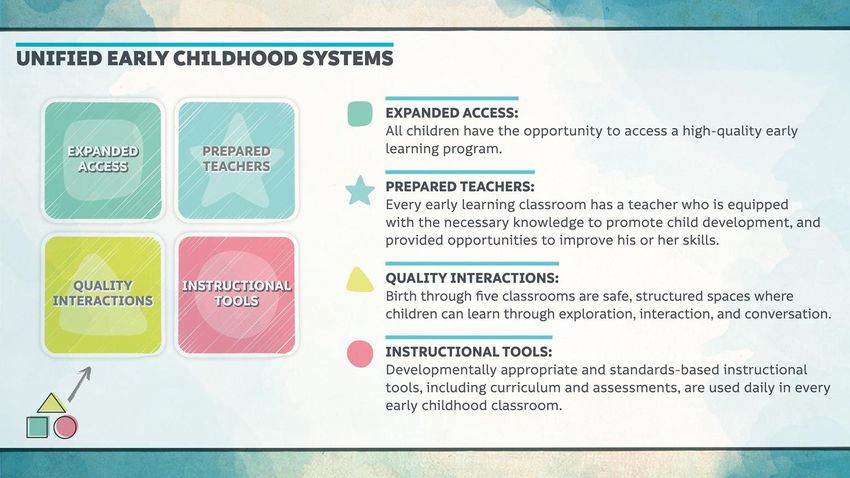
Louisiana Early Childhood Vision

                                   3
Louisiana Early Childhood Vision
Act 3 (2012) Implementation Timeline
 Louisiana’s early childhood system relies on locally-driven efforts; communities have been leading
 implementation of Act 3 since 2012.
                                         All communities                                                                           High Proficient rating is
                                         established Community                                                                     used in 2018-2019
                                         Networks                                                                                  results
 13 Early Childhood                                                                2016-2017 Performance
 Community Network                       Statewide                                 Profiles were published                         All infant classrooms
                                         implementation was                        on School and Center                            receive observations
 Pilots launched
                                         achieved                                  Finder                                          during 2019-2020

    2013-             2014-                 2015-                   2016-                 2017-                2018 -                    2019-                    Fall
    2014              2015                  2016                    2017                  2018                  2019                     2020                     2020

                16 additional                                 Practice Performance                       2017-2018 Performance                             Infant is fully
                Community Network                             Profiles were issued                       Profiles and Honor Rolls                          incorporated into the
                Pilots launched                               based on learning year                     released on School and                            2020-2021 Performance
                                                                                                         Center Finder                                     Profiles
                Legislation was passed                        Supports, funding, and
                to unify licensing,                           tax credits were aligned                   Site Improvement                                  Virtual Third Party
                enrollment, and                               to support programs                        Planning Process begins                           Observation Pilot
                funding                                       and engage families                                                                          Launched in Partnership
                                                                                                                                                           with Picard

                                                                                                                                                                                     5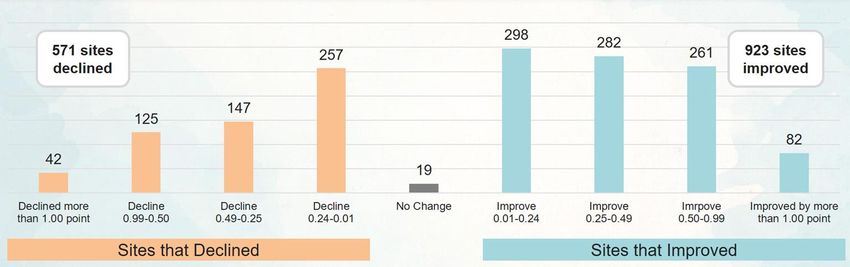
Louisiana Early Childhood Vision
The 2019-2020 Performance Profiles & COVID-19
The Department has taken steps to mitigate the effects of disruptions in CLASS® observations as a result
of the COVID-19 Pandemic and the Governor’s Stay at Home Order that went into effect on March 22.

 ●   Like previous years, Performance Profiles will include a Performance Score and Rating (based on CLASS® observations as
     well as Informational Metrics (such as curriculum quality, child/teacher ratios, and teacher credentials).
 ●   Due to COVID-19, the Department implemented a “hold harmless” approach for 2019-2020 Performance Profiles that
     honors improvement made by sites in 2019-2020 and allows sites to access much-needed tax credits and bonus
     payments:
       ○   Sites with a higher 2019-2020 Performance Score were given the opportunity to opt-in to receiving an updated
           Performance Profile based on 2019-2020 results.
       ○   For all other sites, the Department is not releasing an updated 2019-2020 Performance Profile, and will publish
           their 2018-2019 Performance results for an additional year.
 ●   The Fall 2019 Observation period was carried out without any of the disruptions associated with COVID and provides
     useful data for progress monitoring.

                                                                                                                              6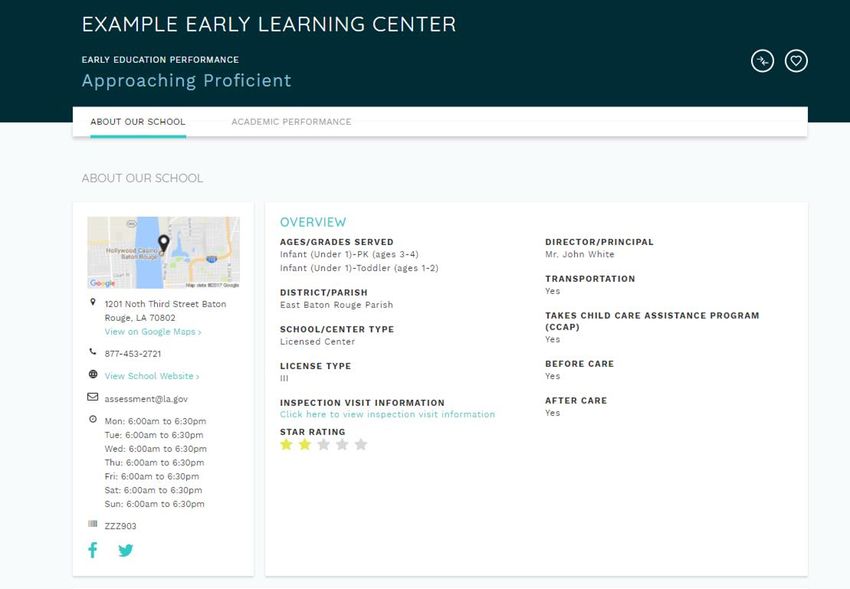
Louisiana Early Childhood Vision
Key Accomplishments
 The 2019-2020 release of Performance Profiles marks five years of full implementation of the statewide
 unified quality rating system for early childhood programs.
 •   More than 12,500 observations were conducted across 4,959 classrooms in 1,558 sites, amounting to more than 1
     million minutes of care and education observed.
 •   There is improvement across the board:
       •   122 more sites rated Proficient or above compared to last year.*
       •   The average Fall observation score for each dimension and each domain improved.
       •   The average Fall observation score for each program type (Head Start, child care, and schools) improved.
 •   Yet there are still too few young children who can access publicly-funded, high-quality early childhood programs.

                                 * These results reflect the Department’s ‘hold harmless’ approach, which allowed sites to opt into the higher score
                                 across the past two years.                                                                                            7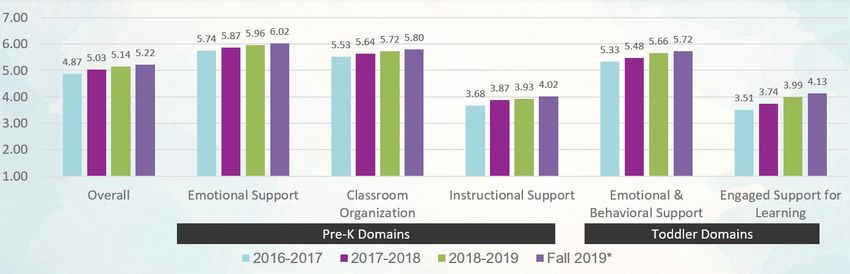
Performance Profile Overview

                               8
Performance Profile Overview
Measuring Classroom Quality
Louisiana uses the CLASS® rating tool to measure, inform and support improvement on the core elements
needed for early childhood classroom quality.
As a research-based, nationally regarded early childhood quality measure for all young children, CLASS® assesses how
well teachers interact with children, including how well they:

Expectations for the Classroom:                                              Pre-K Domains             Toddler Domains           Infant Domains*

Warm, positive environment with trusting relationships                     Emotional Support
                                                                                                         Emotional &
Daily routines are organized and disruptions are minimal                       Classroom              Behavioral Support
                                                                                                                                    Responsive
                                                                              Organization
                                                                                                                                    Caregiving
Children are supported to learn concepts, develop                             Instructional            Engaged Support
language, and connect ideas through dialogue and play                           Support                  for Learning
 *Infant CLASS® was implemented in every infant classroom during 2019-2020 for a practice year, and will be fully incorporated in 2020-2021.

                                                                                                                                                 9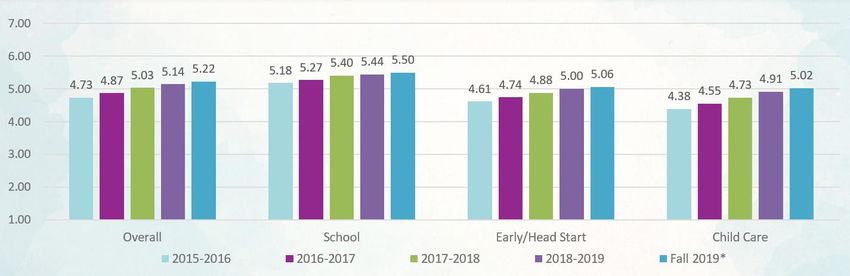
Performance Profile Overview
Major Components of Performance Profiles
Performance Profiles provide information about the quality of publicly-funded sites to families to inform
choice and to communities to guide improvement.
 Results in a Performance Profile for each site published on
 www.LouisianaSchools.com that contains two components:                             Louisiana’s Unified Rating System:
                                                                                    • Measures core elements needed for
 1.   Performance Rating: Each site receives a ratings based on                        positive child outcomes;
      CLASS® observations that measure the quality of adult-child                   • Provides a clear and focused path to
      interactions.                                                                    improvement;
 2.   Informational Metrics: Each site’s profile also reports on the                • Gives families an easy way to
      use of best practices, such as using curriculum, assessing                       compare choices in their community;
      children for learning, and credentialing of teachers.

 Researchers at the University of Virginia found that Louisiana observers are accurate, that children learn more in Louisiana classrooms
 with higher ratings, and that adding other quality measures does not help identify quality classrooms.

                                                                                                                                       10
Performance Profile Overview
Incentives & Supports
As in 2018-2019, there are incentives and supports tied to Performance Ratings for early childhood sites
based on 2019-2020 Performance Ratings.
CLASS® Score Star Rating for Tax Credit • Tax credits and bonuses for child care
Performance Rating centers are aligned to Performance
Range and Bonus Payments
Ratings to reward and incentivize
6.00 - 7.00 Excellent 5 Stars
performance and improvement
5.25 - 5.99 High Proficient 4 Stars • Programs that score below 3.75 will be
4.50 - 5.24 Proficient 3 Stars required to participate in a year-long
Site Improvement Planning process
3.75 - 4.49 Approaching Proficient 2 Stars
• Programs that score Unsatisfactory for
3.00 - 3.74 Approaching Proficient 1 Star
two years in any three year period may
1.00 - 2.99 Unsatisfactory 0 Stars lose Type III license or funding
11Louisiana School and Center Finder
12Louisiana School and Center Finder
2018-2019 Performance Profile Roll-Out
As with previous Performance Profile releases, the 2019-2020 Performance Profiles will be published on
Louisiana School and Center Finder.
Families and
providers can utilize
the search feature to
search for the
Performance Profile
of a particular site
www.LouisianaSchools.com
13Louisiana School and Center Finder
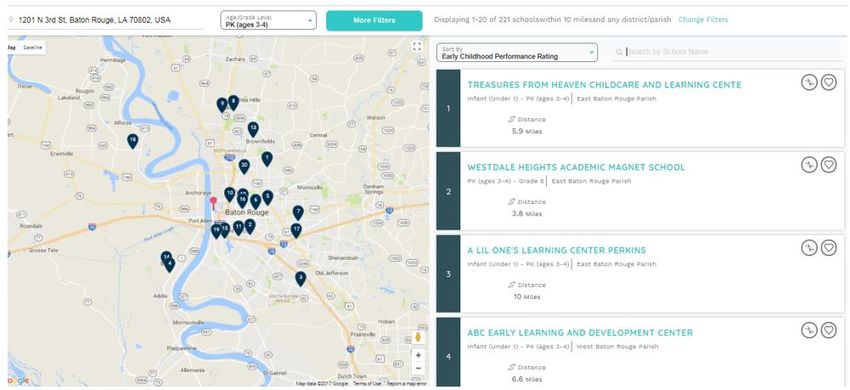
Map Browsing View
By typing in a home
or work address,
families can see a list
of programs in their
area
14Louisiana School and Center Finder
“About Our School”
Each site will have an
“About Our School”
page that has general
information, such as
phone number,
address, and hours of
operation
15Louisiana School and Center Finder
“Academic Performance”
Each site will have a
Performance Profile found
under the
“Academic Performance” tab.
There are downloadable and
printable one-page site profile
PDFs
16Louisiana School and Center Finder
“Academic Performance”
Each Performance Profile also
contains Informational Metrics that
include:
• Assessment information
• Classroom ratio
• Curriculum quality
• Teacher degrees & certifications
17Louisiana School and Center Finder
Data Limitations for 2019-2020
Each site’s Performance
Profile will have a banner
on the top of the page that
explains the Department’s
‘hold harmless’ approach
this year.
18Louisiana School and Center Finder
Data Limitations for 2019-2020
Due to COVID-19, domain-
level results were not
calculated for the 2019-
2020 school year. School
Finder continues to reflect
2018-2019 results.
192019-2020 Performance Results
202019-2020 Performance Results
Improvement in Performance Ratings since 2016-2017
This year*, nearly 92% of sites will receive a rating of Proficient or higher in the state’s unified quality
rating system.
* These results reflect the Department’s ‘hold harmless’ approach, which allowed sites to opt into the higher score
across the past two years. 212019-2020 Performance Results
Improvement by Domain
Across the state, the average overall score as well as the average score on each CLASS® domain has
increased incrementally and steadily in observations between 2016-2017 and Fall 2019.
* Because the Governor’s Stay at Home order prevented all CLASS observations from being conducted in Spring 2020,
the domain level averages from Fall 2019 are used to show year-to-year comparisons. 222019-2020 Performance Results
Description of Each Program Type
Results are provided at the statewide level, and organized by site type. While many sites have multiple
programs, each site is assigned a type based on how it is set up and funded.
Site Type Includes: Does not include:
School • Public and Nonpublic schools • School-based classrooms located in child
• Head Start programs located in schools care or Head Start centers
Early/ Head Start • Licensed Type III centers who serve • Early Head Start- Child Care Partnership
children entirely or almost entirely funded centers
through Head Start • Head Start programs in school buildings
Child Care Centers • Licensed Type III centers who serve • Schools or Head Starts that offer CCAP for
children through many sources, including before/after care
child care assistance, private pay, NSECD, • Schools with licensed classrooms to serve
LA 4, and Early Head Start funds three-year-olds
232019-2020 Performance Results
Improvement by Program Type
The statewide average score for each program type has improved steadily and incrementally each year,
indicating more sites are providing quality care and education for children.
* Because the Governor’s Stay at Home order prevented all CLASS observations from being conducted in Spring 2020,
the program type averages from Fall 2019 are used to show year-to-year comparisons. 242019-2020 Performance Results
Distribution of Change in Scores
61% of sites with Fall 2018 and Fall 2019 data had higher Fall 2019 scores, while 38% of sites
experienced a decline in score.
* Because the Governor’s Stay at Home order prevented all CLASS observations from being conducted in Spring 2020,
the year-to-year comparison on this slide compares fall-only results from Fall 2019 and Fall 2020 . 252019-2020 Performance Results
Informational Metrics
Sites vary in their implementation of classroom best practices that promote high-quality experiences for
children, but across programs, the large majority of sites have attained a quality curriculum and assessment.
262019-2020 Performance Results
Network Improvement and Performance
As a result of the disruptions in CLASS® observations due to COVID-19, the Department will not be
updating Community Network Profiles and will extend 2018-2019 Community Network Profiles.
• As a result of the number of sites that experienced a change of 25% or more in attendance and/or
were not operational for 18 or more consecutive days, the Department has designated all
Community Networks as “Severe Impact Networks”
• Bulletin 140 provides flexibility in how Community Network Performance Profiles are issued to
severe impact networks.
• Consistent with policy, the Department will not update Network Profiles with 2019-2020
data.
• The Department will extend 2018-2019 Community Network Profiles for all Community
Networks.
27Infant CLASS Learning Year Results
28Infant CLASS Learning Year Results
Implementation Timeline
Teachers in infant classrooms need high-quality feedback and support to grow. To increase the quality of infant care
and provide a pathway to improvement, Louisiana is adding Infant CLASS® to the state’s quality rating and
improvement system over three years.
2018-2019 2019-2020 2020-2021
Infant CLASS® Pilot Infant CLASS® Learning Year Full Implementation
● Lead agencies identified all ● All infant classrooms will be ● Infant CLASS® is fully
infant classrooms and set up observed for a learning year incorporated into the unified
those classrooms in the portal ● Performance Profile ratings quality rating system
● Sites participated in year two of released in fall 2020 will not be ● Performance Profile ratings
the Infant CLASS® Pilot impacted by Infant CLASS® released in fall 2021 will reflect
● Revisions to Bulletin 140 to results Infant CLASS® observations
include Infant CLASS® will be
submitted to BESE
29Infant CLASS Learning Year Results
Infant Dimension Results, Fall 2019
Results from CLASS observations conducted in infant classrooms in the fall of 2019 show relatively high results on
Relational Climate and Teacher Sensitivity, with lower results on Facilitated Exploration and Early Language Support.
30Infant CLASS Learning Year Results
Impact on Overall Scores, Fall 2019
The Fall 2019 results of Infant CLASS observations suggest that of the nearly 600 sites with infant classrooms as well as
pre-K and/or toddler classrooms, the vast majority (nearly 70%) are positively impacted by the inclusion of Infant CLASS
scores in the overall score.
Average Change
Impact on Score Percent of Sites
in Score
Score Improved with Infant 68.9% 0.22
No Change 2.5% 0.00
Score Declined with Infant 28.6% -0.13
31Early Childhood Access
32Early Childhood Access
Statewide Access to Quality
While sites across the state continue to make impressive gains in CLASS scores, there are still too few
economically disadvantaged children who can access publicly-funded, high-quality early childhood programs.
33Early Childhood Access
Geographic Disparities in Access, B-2 Year Olds
There are still far too few
communities that provide
economically disadvantaged
families with children under
three opportunities to enroll
their children in publicly-
funded, quality care.
34Early Childhood Access
Geographic Disparities in Access, 3 Year Olds
While most communities are
now serving more than 30%
of their economically
disadvantaged 3 year olds,
there are still many
communities where a small
fraction of 3 year olds are
served.
35Supporting Improvement
36Supporting Improvement
Unified Supports for Classrooms
Louisiana is providing supports and resources to child care centers to support improvement and provide
quality training and preparations for teachers.
Curriculum: Child care centers have access to the Child Care Curriculum Initiative, a $3 million investment in
supporting child care centers in accessing Tier I toddler and pre-K curriculum; and Centers receive training on
how to use and implement curriculum though R&R’s. Community networks will also be invited to apply for
SRCL/CLSD funding to support the use of high-quality instruction for B-5 classrooms in Super App.
Professional Development and Coaching: The Louisiana Leaders Academy is a year-long program that builds
instructional leadership knowledge and skills of center directors through executive learning. Through Resource
and Referral Agencies and the Mental Health Consultation program, centers can access targeted coaching that
is responsive to their CLASS scores. Other supports may be available through community networks.
Early Childhood Ancillary Certificate (ECAC): Lead teachers in Type III child care centers are required to have
their ECAC within 24 months of their start date as a lead teacher. Learn more about BESE-approved Early
Childhood Ancillary Certificate Programs here.
37Supporting Improvement
2019-2020 Site Improvement Planning
Early Childhood Site Improvement Planning connects low performing sites to available resources and
monitors the success of intervention efforts.
• In August 2020, 58 low-performing sites were notified regarding their mandated or recommended
participation in Early Childhood Site Improvement Planning based on 2019-2020 preliminary
performance scores.
• 12 sites mandated
• 46 sites recommended
• These sites were assigned a regional Department field support consultant and assisted to create an
improvement plan based on individualized site needs and self-assessment results.
• These sites receive prioritized resources that are included as part of improvement plans (e.g.,
Resource & Referral, curriculum support, mental health consultation).
38Next Steps
39Next Steps
Next Steps for Sites
1. Review your site’s Performance Profile information.
2. Use the resources from the Department to understand the site and network profiles.
• There are several resources including:
• Site Performance Profile Key and Guide
• Performance Profile FAQs and COVID-19 Performance Profile FAQs
• Performance Profile Calculator
3. Identify strengths, areas for improvement and next steps for your site.
• Use the Five Tips for Sites as a guide.
• Consider how you will share results with and support teachers.
• Consult the Department’s toolkit to plan your community’s next steps.
• Lead Agencies, Resource and Referral Agencies and Field Support are all available to help.
4. Review the LDOE 2019 School and Center Performance Communications Toolkit.
40Next Steps
Next Steps for Community Networks
• Super App:
• Lead agencies and school systems will be working together with other community partners to
complete the Super App, which will be released in November and due February.
• Performance Profile results should be part of the information used to complete the ECE
portion of Super App.
• Ready Start Network:
• Communities should consider whether they are ready to apply to be a Ready Start Network,
and use their sites’ Performance Profile results to help identify their areas of greatest need
and focus for their Ready Start work.
• The next Ready Start application will be released in Spring 2021.
41Louisiana Child Care Parent Poll
42Louisiana Child Care Parent Poll
The Department, United Way of SE Louisiana Women United, and the Louisiana Policy Institute for Children have
partnered to learn how the COVID-19 pandemic is impacting families with young children.
We ask that you to promote and solicit family responses for the
Louisiana Child Care Parent Poll.
• The Department will share a promotional toolkit with sample
social media posts, family letter, and partner letter.
• Share the Parent Poll link:
https://www.policyinstitutela.org/parentpoll
• Contact info@policyinstitutela.org or amanda.colon@la.gov
with any additional questions.
43Questions?
44You can also read


