Magenta Therapeutics Corporate Presentation - September 2021 (NASDAQ:MGTA)
←
→
Page content transcription
If your browser does not render page correctly, please read the page content below

Magenta Therapeutics
    Corporate Presentation

    September 2021

    (NASDAQ:MGTA)
1 (NASDAQ:MGTA)
Forward-Looking Statements

   This presentation may contain forward-looking statements within the meaning of The Private Securities Litigation Reform Act of 1995 and other federal
   securities laws, including express or implied statements regarding Magenta’s future expectations, plans and prospects, including, without limitation,
   statements regarding expectations and plans for presenting pre-clinical and clinical data, projections regarding our long-term growth, cash, cash
   equivalents and marketable securities, the anticipated timing of our clinical trials and regulatory filings, the development of our product candidates and
   advancement of our pre-clinical and clinical programs, the potential benefits of our product candidates, the timing, progress and success of our
   collaborations, as well as other statements containing words such as “may,” “will,” “could”, “should,” “expects,” “intends,” “plans,” “anticipates,” “believes,”
   “estimates,” “targets,” “predicts,” “projects,” “seeks,” “endeavor,” “potential,” “continue” or the negative of such words or other similar expressions that can
   be used to identify forward-looking statements.

   The express or implied forward-looking statements included in this presentation are only predictions and are subject to a number of risks, uncertainties
   and assumptions, including, without limitation: uncertainties inherent in clinical studies and in the availability and timing of data from ongoing clinical
   studies; whether interim results from a clinical trial will be predictive of the final results of the trial; whether results from pre-clinical studies or earlier clinical
   studies will be predictive of the results of future trials; the expected timing of submissions for regulatory approval or review by governmental authorities,
   including review under accelerated approval processes; orphan drug designation eligibility; regulatory approvals to conduct trials or to market products;
   whether Magenta's cash resources will be sufficient to fund Magenta's foreseeable and unforeseeable operating expenses and capital expenditure
   requirements; risks, assumptions and uncertainties regarding the impact of the continuing COVID-19 pandemic on Magenta’s business, operations,
   strategy, goals and anticipated timelines, Magenta’s ongoing and planned pre-clinical activities, Magenta’s ability to initiate, enroll, conduct or complete
   ongoing and planned clinical trials, Magenta’s timelines for regulatory submissions and Magenta’s financial position; and other risks concerning Magenta's
   programs and operations set forth under the caption “Risk Factors” in Magenta’s Quarterly Report on Form 10-Q filed on August 5, 2021 and its other
   filings made with the Securities and Exchange Commission from time to time.

   In light of these risks, uncertainties and assumptions, the forward-looking statements discussed in this presentation may not occur and actual results could
   differ materially and adversely from those anticipated or implied in the forward-looking statements. You should not rely upon forward-looking statements as
   predictions of future events. Although Magenta believes that the expectations reflected in the forward-looking statements are reasonable, it cannot
   guarantee that the future results, levels of activity, performance or events and circumstances reflected in the forward-looking statements will be achieved
   or occur. Any forward-looking statement included in this presentation speaks only as of the date on which it was made. Magenta undertakes no obligation
   to publicly update or revise any forward-looking statement, whether as a result of new information, future events or otherwise, except as required by law.

2 (NASDAQ:MGTA)
The Potential for the One-Time Curative Power of Stem Cell Transplants

   Potential Applicability Across Blood Cancers, Gene Therapies for Genetic Diseases
                                 and Autoimmune Diseases

3 (NASDAQ:MGTA)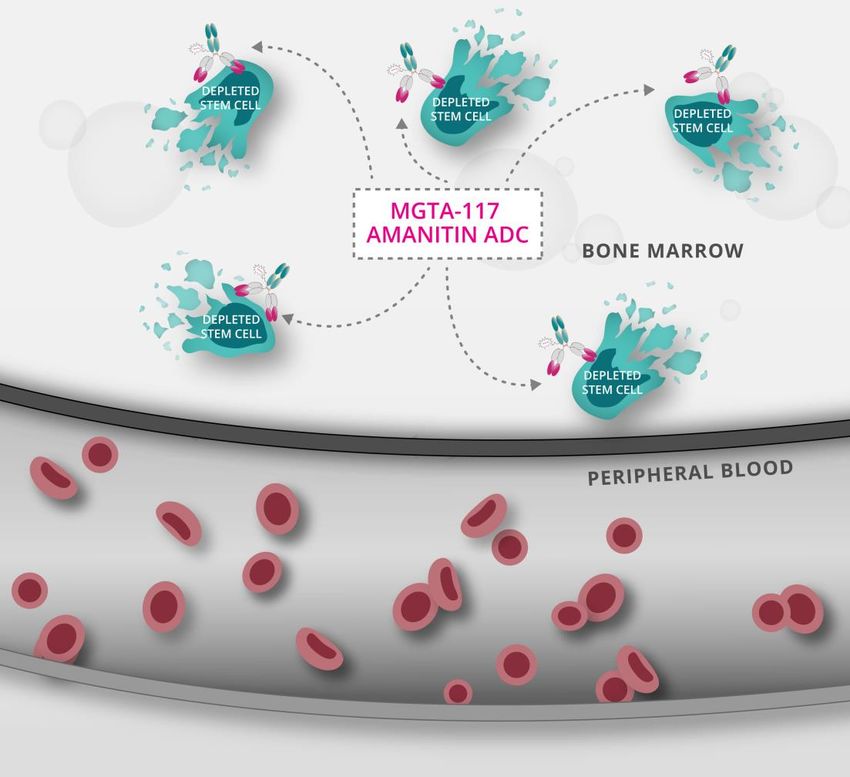
Magenta – Recent Updates

          Preliminary Results in                                     MGTA-117                                    $86.4M Capital
         MGTA-145 Phase 2 Trial in
            Multiple Myeloma                                        Clinical Plans                              Raise in May 2021

 • First clinical trial to evaluate MGTA-145 +          • MGTA-117 IND is active with the FDA          • Opportunity to welcome a new group of
   plerixafor for stem cell mobilization and                                                             long-term focused investors into the
   collection in a broad multiple myeloma               • Expects to open the Phase 1/2 clinical         Magenta story.
   patient population.                                    trial in Q4 2021
                                                                                                       • Capital boosts balance sheet – ending Q2
 • As of ASCO presentation:                             • The multi-center, open label Phase 1/2         2021 with approximately $207.8 million in
       • Primary endpoint met for stem cell               clinical trial with single-dose escalating     cash, cash equivalents and marketable
         mobilization and collection in all patients      cohorts will evaluate the safety,              securities and expect to fund company’s
         (15/15)                                          tolerability, pharmacokinetics (PK) and        operating plan into 2nd half 2023.
       • Timely and durable engraftment in all            pharmacodynamics (PD) of MGTA-117 as
         transplanted patients (12/12)
                                                          a single agent in relapsed/refractory AML
       • MGTA-145 was well-tolerated
                                                          and MDS patients.
 • Completed enrollment of all 25 patients
   with final clinical data expected in Q4
   2021.

 • Potential for MGTA-145 + plerixafor to
   become first-line, G-CSF-free standard-of-
   care regimen for stem cell mobilization.

4 (NASDAQ:MGTA)
Magenta - Key Highlights

           Anticipated 2021                                      Clinical                                          Corporate
             Milestones                                        Partnerships                                        Strengths

 • MGTA-117 IND – Phase 1/2 clinical trial     •   Value-creating, pipeline-expanding               •   Magenta is the only company
   expected to open in Q4 2021.                    partnerships:                                        addressing both mobilization and
                                                                                                        conditioning in stem cell transplant and
 • MGTA-145 Phase 2 autologous study in                                                                 HSC-based gene therapies.
   multiple myeloma – final 25-patient
   clinical data expected in Q4 2021.                  gene therapy         allogeneic transplant   •   Established relationships with top
                                                   in sickle cell disease       in leukemias
                                                                                                        transplant centers in U.S. and Europe.
 • MGTA-145 Phase 2 allogeneic study in
   leukemia – initial data expected Q4 2021.                                                        •   Well capitalized – ended Q2 2021 with
                                                     gene therapy in          gene therapy in
                                                      neuro disease           blood diseases            cash, cash equivalents and
 • MGTA-145 Phase 2 mobilization study                                                                  marketable securities of $207.8M
   in SCD collaboration with bluebird bio to                                                            (includes recently announced $86.4M
   initiate in Q4 2021.                        •   Non-exclusive research and clinical
                                                                                                        capital raise).
                                                   collaborations enable flexibility and
                                                   development opportunities.

                                               •   Magenta retains all product rights.

5 (NASDAQ:MGTA)
The Magenta Pipeline

                                                                                                         Clinical Trial
                              Disease Area          Preclinical       IND-Enabling   Phase 1   Phase 2                    Product Rights
                                                                                                          Partners

                            Multiple Myeloma      Autologous Transplant

 Stem Cell Mobilization        Leukemias          Allogeneic Transplant
 and Collection:
 MGTA-145
                           Sickle Cell Disease    Gene Therapy

                               Leukemias          Allogeneic Transplant

 Targeted Conditioning:   Lysosomal Disorders     Gene Therapy
 MGTA-117
                          Hemoglobinopathies      Gene Therapy

                          Autoimmune Diseases
 Conditioning
 Research Platform
                           CAR-T Conditioning

6 (NASDAQ:MGTA)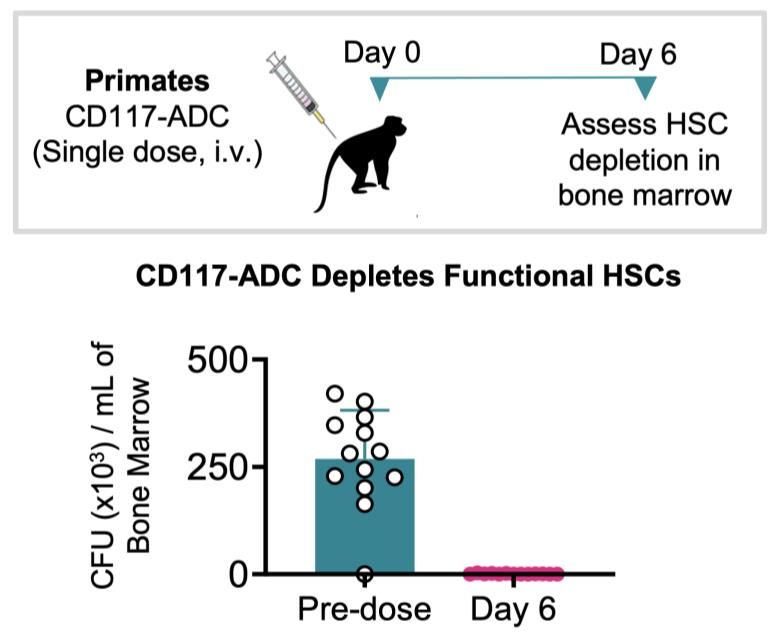
Stem Cell Transplants: Current Global Market and Growth Opportunities

                                                                                                Potential to Enable Future Growth:
               Large Current Global Market:
                                                                                                 >175k Stem Cell Transplants with
             ~90k Annual Stem Cell Transplants1
                                                                                                        All Eligible Patients2

     • One-time potentially curative treatment with decades                              • Opportunity for 100% of eligible patients to
       of proven clinical experience                                                       receive a stem cell transplant
     • But only ~60% of cancer patients, ~34% of genetic                                 • Significant growth opportunities across cancer,               = 10k patients
       disease patients, and ~5% of autoimmune patients                                    gene therapies and autoimmune diseases
       who are eligible receive a stem cell transplant today,                            • Market growth is synergistic across portfolio; each
       in part due to toxic conditioning2                                                  patient may receive multiple Magenta medicines

                  Sources: 1CIBMTR and EBMT Transplant Registry Data (2018); 2Magenta Market Research & Internal Analysis (2020), Data on File.
                  All data in this presentation cited from CIBMTR are preliminary and were obtained from the Center for International Blood and Marrow
7 (NASDAQ:MGTA)   Transplant Research. The analysis has not been reviewed or approved by the Statistical or Scientific Committees of the CIBMTR.
                  The findings are not the opinion of CIBMTR or CIBMTR's funding sources.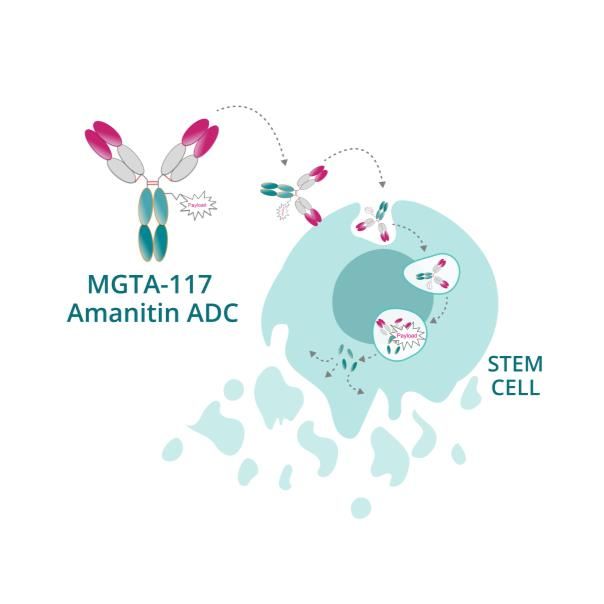
Three Types of Stem Cell Transplants – Many Diseases
                                 Step 1: Stem Cell                           Step 2: Patient                            Step 3: Patient
                                 Mobilization / Collection                   Conditioning                               Transplant

         1. Autologous
   Stem Cell Transplant
       Myeloma, Lymphomas

          2. Autologous                                       Gene
                                                            modification
          Gene Therapy
            Genetic Diseases

         3. Allogeneic
   Stem Cell Transplant
                  Leukemias
            (AML, MDS, ALL)

                               Stem cells must be mobilized out of the     The patient’s stem cells must be     Stem cells transplanted into patient via
                               bone marrow and collected from the          removed from the bone marrow to      infusion. They engraft in bone marrow
                               blood with a standard process known         make room for the new transplanted   to rebuild blood and immune system by
8 (NASDAQ:MGTA)                as apheresis                                stem cells                           growing into blood cells and platelets
Where Magenta’s Product Candidates Fit
                                  Step 1: Stem Cell                           Step 2: Patient                            Step 3: Patient
                                  Mobilization / Collection                   Conditioning                               Transplant

          1. Autologous
    Stem Cell Transplant
         Myeloma, Lymphomas     MGTA-145

                                                               Gene
            2. Autologous                                    modification

            Gene Therapy
                                MGTA-145                                    MGTA-117
             Genetic Diseases

          3. Allogeneic
    Stem Cell Transplant
                                                                            MGTA-117
                   Leukemias    MGTA-145
             (AML, MDS, ALL)

                                Stem cells must be mobilized out of the     The patient’s stem cells must be     Stem cells transplanted into patient via
                                bone marrow and collected from the          removed from the bone marrow to      infusion. They engraft in bone marrow
                                blood with a standard process known         make room for the new transplanted   to rebuild blood and immune system by
9 (NASDAQ:MGTA)                 as apheresis                                stem cells                           growing into blood cells and platelets
Magenta Plans to Deliver Clinical Data and Advance Platform

                                       Autologous: Final clinical data Q4 2021                Mobilization and
                                                                                              engraftment;
                                       Allogeneic: Initial data Q4 2021                       disease outcomes

                                       Gene Therapy: To initiate Q4 2021               Mobilization

                                       Anticipate opening study in               Assessment of safety
                                       Q4 2021                                   and PK/PD

                                                           New target identification and
                                                           approaches for cell depletion to enable
                                                           conditioning for autoimmune diseases
                                                           and cell therapies

10 (NASDAQ:MGTA)
MGTA-145
Program
(NASDAQ:MGTA)
11 (NASDAQ:MGTA)The MGTA-145 Opportunity
MGTA-145 Potential: Rapid, Reliable, Predictable
Limitations with Standard-of-Care
and Well-Tolerated Mobilization & Collection
5-8 day mobilization and collection process Rapid and reliable: HSCs mobilized and
with G-CSF +/- plerixafor collected in 1 to 2 days
Cells collected have low numbers of functional
Mobilizes high numbers of functional HSCs
HSCs
Multiple process days drive higher costs Streamlined process = lower system costs
G-CSF can cause significant bone pain and other
G-CSF Free - Favorable safety profile
safety issues (e.g., splenic rupture, death)
1
50% decline rate of unrelated allogeneic donors Rapid and safe donor experience
Gene therapy requires high number of functional
Applicable for all HSC gene therapies
stem cells often collected over multiple sessions
G-CSF cannot be safely used in sickle cell disease Opportunity for sickle cell disease to be
mobilization proof-of-concept for all HSC gene therapies
Sources: 1Be the Match Five-Year Strategic Plan (2018)
12 (NASDAQ:MGTA)
Note: Actual claims dependent on clinical trial results and FDA-approved labelThe MGTA-145 Opportunity: Rapid, Reliable, Predictable and Safe Mobilization
Can Improve Patient, Physician and System Experience
Current Mobilization Regimen: Unpredictable & Inefficient
Day 1 2 3 4 5 6 7 8 5-8 days of
mobilization &
Autologous G-CSF collection
MGTA-145 + plerixafor
(Blood
Target Profile*
Cancers) plerixafor ~40% of patients
require multiple
Collection collections1 Day 1 2
Day 1 2 3 4 5 6 5-6 days of
mobilization & collection MGTA 145 +
Allogeneic plerixafor
(Healthy G-CSF
Donors) ~15% of healthy
Collection donors require multiple Collection
collections1
Sickle Cell Day 1 2 … 16 17 … 31 32 Up to 32 days to collect
sufficient cells for gene therapy
Disease
plerixafor … …
(Gene
Therapy) ~75% of patients require
Collection … … multiple collections2
*Certain hard-to-mobilize patient populations may require an additional day of mobilization; claims dependent on clinical trial results and
13 (NASDAQ:MGTA) FDA-approved label
Sources: 1CIBMTR Real-World Data Analysis, Data on File (2020); 2Tisdale et al. Am J Hematol. 2020, 95 (9):E239-242.MGTA-145 with Plerixafor: Complementary Mechanisms of Action for Mobilization &
Collection of Stem Cells for Transplant
Complementary mechanisms of action
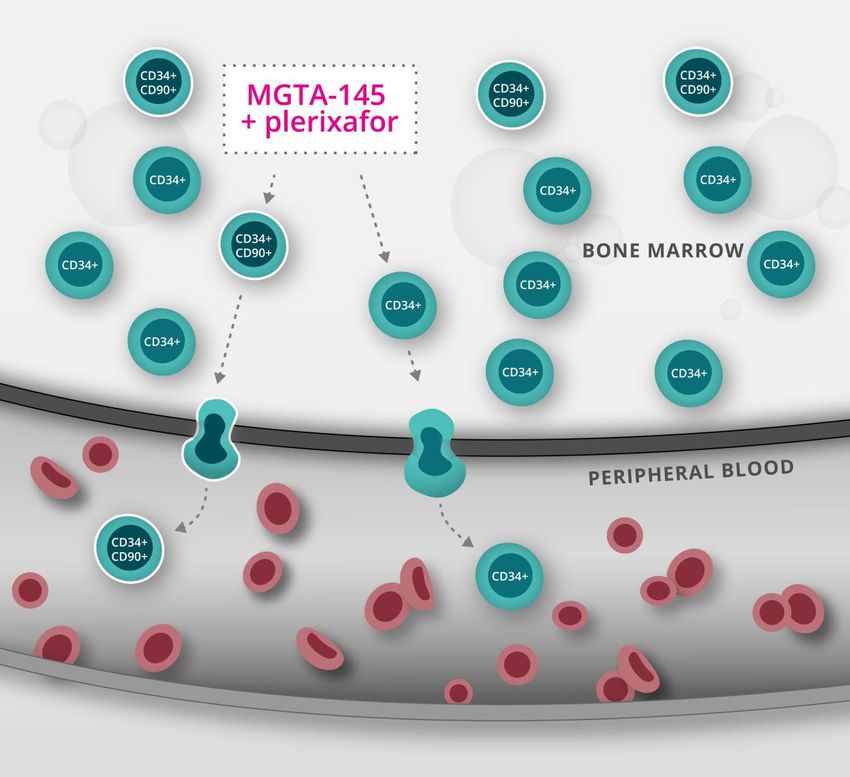
mobilize hematopoietic stem cells (HSCs)
MGTA-145 (GroβT) + plerixafor
CXCR2 agonist CXCR4 antagonist
Protein Small molecule
• MGTA-145 binds to CXCR2 on neutrophils which
triggers release of factors that stimulate HSCs to
easily migrate out of their niche in the bone
marrow
• Plerixafor disrupts CXCR4, which anchors HSCs
to bone marrow stromal cells
• Together, these actions release large numbers of
functional HSCs (CD34+CD90+ cells) from the
bone marrow niche into circulation, where they
can be collected for HSC transplant
14 (NASDAQ:MGTA)MGTA-145 Phase 1 Clinical Results: Demonstrated Rapid, Reliable, Predictable and
Well-Tolerated Mobilization of Functional Stem Cells in Study
Grade 2-4 side effects
50
MGTA-145 G-CSF2
1% 38%
p e/rµuLl ))
40
vs.
o d (( #
Double the target
30 number of stem cells
4 i n cbel lols
mobilized in hours Well-tolerated1
(compared to 5 days
20 minimum with G-CSF
+
lls
or G-CSF + plerixafor)
S t e mC CDe 3
Speed and predictability
10
MGTA-145 + G-CSF or
plerixafor1 G-CSF + plerixafor
0
0 2 4 6 8 10 12 14 24 88% vs. 0%
H oPuorss tP oAstd mP le
inistration (hours)
rix a fo r A d m in istra tio n (7 of 8 subjects)
Reliable, same-day dosing,
Mobilized large numbers of stem cells in hours1 mobilization and collection
15 (NASDAQ:MGTA) Sources: 1MGTA-145 Phase 1 Clinical Data: Goncalves et al. Blood. 2020, 136 (Supplement 1): 31-32;
2Pulsipher et al. Blood. 2009, 113 (15): 3604–3611.Stem Cells Collected from Healthy Subjects in MGTA-145 Phase I: Superior Engraftment,
Efficient Gene Modification and Mediated Prolonged Survival in Preclinical Models in Study
>3-fold increase in >20-fold increase in Gene editing rate in
collection of CD34+CD90+
functional stem cells
engraftment function
2 3 -fo ld
1000
p < 0 .0 0 1
1 1 -fo ld
>90% engrafted stem cells in
preclinical models
p < 0 .0 0 1
2 .0 Stem cells can be efficiently
)
8
800
gene-modified and are functional1
C o lle c t io n Y ie ld ( x 1 0
E n g ra ftm e n t
1 .5
600
1 .0
400 100
2 -fo ld
0 .5 80
200 p < 0 .0 5
P e r c e n t s u rv iv a l
MGTA-145
+ plerixafor
Collected cells
60
0 .0 0 are more immuno-
0 1 2 3 4 5
suppressive and
r
MGTA-145 G-CSF
r
)
MGTA-145 G-CSF fo 40
fo
ys
xa
xa
a
+ plerixafor (5 days) + plerixafor (5 days) prolong survival in
ri
d
ri
D a y s to c o lle c t
le
(5
le
20
p
P
a GvHD disease
F
+
S
G-CSF
5
-C
4
Higher number of model1
-1
0
G
A
Superior engraftment in
T
0 10 20 30 40 50 60
functional stem cells
G
M
collected1 preclinical models1 D a y s P o s t T ra n s p la n t
16 (NASDAQ:MGTA) Sources: 1Magenta Phase 1 Clinical Data: Goncalves et al. Blood. 2020, 136 (Supplement 1): 31-32.MGTA-145 Phase 2 Clinical Trials: Ongoing and Planned
Proof-of-Concept Across Multiple Disease Areas
Key Endpoints
2021 Anticipated Milestones
Safety & Engraftment Disease
Collection Yield
Tolerability (Rate and Durability) Outcomes
Multiple
Myeloma
(autologous) Q4 2021: Final clinical data
expected
Remission and
survival
Leukemias
(allogeneic – Q1 2021: Trial started
healthy donors)
Q4 2021: Initial data expected De-risked from De-risked from Remission and
Phase I* Phase I* survival; GvHD
Sickle Cell
Disease
(gene therapy) Q4 2021: Trial initiation
17 (NASDAQ:MGTA) *Healthy volunteer donors were successfully mobilized and collected in the Phase I study (similar donor population as allogeneic study)MGTA-145 Phase 2 Multiple Myeloma Clinical Trial Design
Purpose Evaluate the safety and efficacy of MGTA-145 in combination with plerixafor for the mobilization of hematopoietic stem
cells for autologous transplantation in patients with multiple myeloma
Design 25-patient, open label, single arm study, Stanford University
Broad and clinically representative patient population: patients aged 18-70 with multiple myeloma (MM), eligible for
Eligibility transplant per institutional guidelines and within one year of start of myeloma therapy.
criteria
Patients enrolled include patients with risk factors that could impact stem cell mobilization and collection, such as
myeloma-directed therapies that are known to impact stem cell collection, previous malignancy treated with
chemotherapy and/or radiation, and other co-morbid conditions. Mobilization agents may be less effective in patients
with multiple risk factors.
Endpoints Primary Endpoint: Collect ≥2M CD34+ cells/kg in up to two days of apheresis
[threshold number of cells for transplant]
Key Secondary Endpoints:
(a) Collect ≥4M CD34+ cells/kg in up to two apheresis sessions [target number of cells for transplant]
(b) Collect ≥6M CD34+ cells/kg in up to two apheresis sessions
(c) Time to neutrophil and platelet engraftment
(d) Assess engraftment at 30 and 100 days
Note: Protocol requires second day of mobilization for collection of 6M CD34+ cells/kg for potential
18 (NASDAQ:MGTA)
second transplant (cells beyond 4M CD34+/kg are frozen)Preliminary Data Show All Myeloma Patients (15/15) as of the Data Cut-Off Date
Met the Primary Endpoint in Up to Two Days of Mobilization and Collection
Stem Cell Collection (over two days*) As of the data cut-off date for the ASCO
18 presentation:
16
• All patients (15/15) met the primary endpoint of
collection of 2M CD34+ cells/kg in up to two
Day 1 days of same-day mobilization and apheresis;
14
Day 2 80% of patients achieved this endpoint in one
day
12
CD34+ cells x 106/kg
• The median number of stem cells collected on
10 day 1 and 2 (if needed) was 6.3 million CD34+
cells/kg
8
• Study criteria allowed for a broad clinically
6 representative patient population including
patients with multiple risk factors for poor
mobilization
primary 4
endpoint
• MGTA-145 + plerixafor regimen was well-
2
tolerated, with transient, drug-related Grade 1
bone or musculoskeletal pain observed in 40%
0
Patients of patients
• Day 2 needed only if day 1 yield < 6 x 10⁶ CD34+ cells/kg
19 (NASDAQ:MGTA) • Phase 2 study of MGTA-145 + Plerixafor for Rapid and Reliable Hematopoietic Stem Cell (HSC) Mobilization for Autologous Stem Cell Transplant in Multiple
Myeloma – ASCO, June 2021; EHA Congress; June 2021All Transplanted Patients Successfully Engrafted as of the Data Cut-off Date
As of the cut-off date for the ASCO
presentation:
Engraftment Data N=12
Engraftment, patients 12 (100%) • Neutrophil and platelet recovery within
transplant expectations in multiple myeloma
Neutrophil engraftment, ANC ≥ 500 x 12.5 days
106/L, median (range) (11-15)
• Six patients had completed day-100 follow
up, with demonstrated durable engraftment
Platelet engraftment ≥ 20,000 x 106/L, no 18 days
indicative of a successful transplant
transfusion in 7 days, median (range) (15-22)
• 40% of collected CD34+ stem cells
expressed CD90+CD45RA-, a cell
phenotype associated with durable
engraftment function, substantially greater
than G-CSF-mobilized grafts
20 (NASDAQ:MGTA) • Phase 2 study of MGTA-145 + Plerixafor for Rapid and Reliable Hematopoietic Stem Cell (HSC) Mobilization for Autologous Stem Cell Transplant in Multiple
Myeloma – ASCO, June 2021; EHA Congress; June 2021The MGTA-145 Opportunity in Autologous Blood Cancers:
Rapid, Reliable, Predictable and Safe Mobilization with Reduced System Costs
annual stem cell
26,000 transplants
for Multiple Myeloma and Lymphomas MGTA-145
in major global markets1
Large Existing Market Opportunity:
• Plerixafor is used in 55% of autologous
~40% of patients transplants, with sales of >$240M annually4
require multiple collections to achieve target stem cell yield Current Process is Unpredictable:
(after ≥ 5 days of G-CSF and/or plerixafor)2 • Unable to identify poor mobilizers before
initiation of process
• Patient experience is burdensome
of autologous
55% transplants $50-100k High System Costs:
Appx total cost of stem • Average cost of mobilization and collection for
in U.S. currently cell collection for hard- autologous blood cancer patients is $30-50k3
use plerixafor2 to-mobilize patients3 • Up to $50k-$100k for hard-to-mobilize patient
Major Global Markets: U.S., Germany, France, U.K., Italy, Spain, and Japan
1 2
21 (NASDAQ:MGTA) Sources: CIBMTR, EBMT, and APBMT Transplant Registry Data (2018); CIBMTR Real-World Data Analysis, Data on File (2020);
3Magenta Market Research, Data on File (2020); 4Sanofi Sales Data (2020)
Note: Actual claims dependent on clinical trial results and FDA-approved labelThe MGTA-145 Opportunity in Allogeneic Blood Cancers:
Safe Donor Experience, Durable Engraftment and Reduced Risk of GvHD
annual stem cell
15,000 transplants
For Acute Myeloid Leukemia (AML), Myelodysplastic
MGTA-145
Syndromes (MDS), and Acute Lymphocytic Leukemia
(ALL) in major global markets1
Large Existing Market Opportunity:
of donors
50% decline
• Leukemias and myelodysplastic syndromes are
of registered stem cell 100% common indications for stem cell transplant
Lengthy & Cumbersome Process for Donors:
donors decline to donate Of unrelated donor
when called upon2 transplants in U.S. • At least 5-day process with scheduling and
coordinated by Magenta’s logistical hurdles
partner, Be The Match • Negative impact on donor participation rates
days
GvHD Remains a Significant Unmet Need
minimum
Time required to complete
mobilization & donation
Up to 50% Partnership with Be The Match:
• Extensive network in coordinating allogeneic
Of allogeneic transplant transplants
experience
patients develop GvHD3
Major Global Markets: U.S., Germany, France, U.K., Italy, Spain, and Japan
22 (NASDAQ:MGTA) Sources: 1CIBMTR, EBMT, and APBMT Transplant Registry Data (2018); 2Be The Match Five Year Strategic Plan (2018);
3CIBMTR Real-World Data Analysis, Data on File (2020).
Note: Actual claims dependent on clinical trial results and FDA-approved labelThe MGTA-145 Opportunity in Gene Therapy: All HSC Gene Therapy Products
Require Collected Stem Cells – Sickle Cell Disease Data as Proof of Concept
projected annual
5,000 – 10,000 HSC gene therapy
patients
across indications by ~2030; in SCD, initial opportunity to treat Gene
modification
~25k prevalent patients with potential expansion up to ~150k1
MGTA-145
HSC-based All HSC Gene Therapies Require Collected Stem
>25 gene therapies ~75% Cells:
in clinical development • Large numbers of cells required
Of patients with SCD
(8 in sickle cell disease)2 require multiple days of High Unmet Need:
stem cell collection3 • G-CSF is not used in patients with SCD because it
can trigger crises and death
• Plerixafor is suboptimal in reliably mobilizing SCD
patients’ stem cells3
of patients
>70% with SCD • >70% of SCD patients experience sickle cell crisis
events during mobilization4
experience crisis Gene therapy company with
events during the most experience with Partnership with bluebird bio:
mobilization4 plerixafor in SCD patients • Gene therapy expertise and experience with plerixafor
23 (NASDAQ:MGTA) Major Global Markets: U.S., Germany, France, U.K., Italy, Spain, and Japan Note: Actual claims dependent on clinical trial results and FDA-approved label
Sources: 1Analyst reports; 2ClinicalTrials.gov; 3Tisdale et al. Am J Hematol. 2020, 95 (9): E239-242; 4Uchida et al. Haematol. 2020, 105: e500.MGTA-145 Competitive Positioning
MGTA-145 + BL-8040 + Plerixafor +
Plerixafor G-CSF G-CSF G-CSF
(Magenta) (BioLine) (Sanofi)
Target CXCR2 CXCR4 CXCR4
Stage of Development Ph 2 Ph 3 Approved Approved
1 – 2 Day Mobilization & Collection for
Transplant ✓ × × ×
Reduced System Costs vs. Current
Practice ✓ × × ×
Development in Non-Oncology
✓ × ✓ ×
Indications (plerixafor only)
G-CSF Free, Eliminating Risk of Severe
Bone Pain & Other Side Effects ✓ × × ×
24 (NASDAQ:MGTA) Note: Actual claims dependent on clinical trial results and FDA-approved labelThe MGTA-145 Potential Value Proposition
1-2 days to collect sufficient HSCs for transplant vs.
Rapid & Reliable 5-8 days with current options that rely on G-CSF
Broad Benefit Potential to achieve cell collection, engraftment and
for Patients disease outcomes across a range of indications
Improved safety and well-tolerated, allowing for all
G-CSF Free patients, including those living with sickle cell disease,
to potentially benefit
Improved process, shorter time to mobilize translate
Operational to overall cost savings and better experience for
Efficiency donors & patients
We are driving towards most efficient registration path based on Phase 2 data in 2021;
to leverage significant existing market opportunity
25 (NASDAQ:MGTA) Note: Actual claims dependent on clinical trial results and FDA-approved labelMGTA-117 Program
(NASDAQ:MGTA)
26 (NASDAQ:MGTA)The MGTA-117 Targeted Conditioning Opportunity: Eliminate Need for High Intensity
Chemotherapy Prior to Stem Cell Transplant or Gene Therapy
High-Intensity Chemo Conditioning Negatively Impacts Access & Outcomes
Oncology Patients HSC Gene Therapy Patients
(Allogeneic) (Autologous)
▪ Current choice: physicians/patients ▪ Busulfan (chemo) conditioning can
must decide between long-term cause long-term infertility and
efficacy vs. toxicity cancer
▪ Need to reduce relapse and extend ▪ Need to replace busulfan
survival
▪ Opportunity to expand HSC gene
▪ Opportunity to expand transplant therapy use across eligible patients
across eligible patients
27 (NASDAQ:MGTA)The MGTA-117 Targeted Conditioning Opportunity: Eliminate Need for High Intensity
Chemotherapy Prior to Stem Cell Transplant or Gene Therapy
Oncology Patients HSC Gene Therapy
(Allogeneic) Patients (Autologous)
Myeloablative Reduced-Intensity Busulfan
Conditioning Conditioning Conditioning
Efficacy1: Efficacy1: Efficacy2:
86% relapse-free* 52% relapse-free* >90% stem cell depletion
Safety1: Safety1: Safety3:
16% treatment- 4% treatment- Broad organ damage and
related mortality* long-term risks
related mortality*
MGTA-117
MGTA-117 Desired Clinical Profile: MGTA-117
MGTA-117
+
Reduced-Intensity
Efficacy Safety Desired Clinical Profile:
Efficacy Safety
Conditioning
*Relapse and treatment-related mortality rates at 18 months
28 (NASDAQ:MGTA) Sources: 1Scott, BL. Biol Blood Marrow Transplant. 2017, 26 (3), S11; 2Westerhof et al. Cancer Res. 2000, 60 (19), 5470-5478;
3BUSULFEX Package Insert (1999).Targeted Patient Conditioning Through MGTA-117 Antibody-Drug Conjugate
Target:
Selective binding
to target cells
MGTA-117
MGTA-117
Payload
Conditioning Payload:
Amanitin
Potent removal
of target cells
Engineering:
Rapid clearance of the
ADC from the body MGTA-117 binds to CD117 which is expressed selectively on
stem cells in the bone marrow and is taken up inside the cell.
The amanitin payload is released and causes cells to be
quickly depleted.
29 (NASDAQ:MGTA)Pre-Clinical Data With Anti-CD117 ADCs Support
Development for Transplant Conditioning
Amanitin CD117 ADC
Single Dose of Tool Anti-CD117 ADC
Payload Class Potently Depleted
11
Selectively Depleted Stem Cells in Primates
Human Stem Cells in vitro
HOURS
% Viable Human HSCs
Unconjugated Anti-CD117
Microtubule Inhibitor
100 Immunotoxin half-life clearance time
Amanitin
compared to
50
60 HOURS
0
10 -13 10 -12 10 -11 10 -10 10 -9 10 -8 10 -7 Anti-CD117 ADC engineered to
Concentration [M]
enable transplant window
Naked anti-CD117 antibody compared to 60 hours for
Ribosomal Inhibitor
Microtubule Inhibitor regular antibodies
Amanitin
✓ Anti-CD117 amanitin ADC ✓ Cleared quickly in primates to
robustly depleted human stem enable target dosing window ✓ Robustly depleted stem
prior to transplant2 cells in primates
cells in vitro1
30 (NASDAQ:MGTA) Sources: MGTA-117 Pre-Clinical Data: 1Pearse et al. Biol Blood Marrow Transplant. 2020, 26 (3): S35-S36;
2Boitano et al. Bone Marrow Transplantation. 2020, 55: 73.Pre-Clinical Data with Anti-CD117 ADCs Demonstrated Single Dosing Enabled
Successful Transplant Without Side Effects and Removed Tumor Cells
Side Effect Busulfan MGTA-117
• Non-GLP tox studies of
Veno-occlusive Disease yes ⎼ MGTA-117 vs separate
Wasting Syndrome yes ⎼ busulfan data;
Primate Diarrhea yes ⎼ • MGTA-117 well
tolerated with none of
Mucositis yes ⎼ the side effects of
Seizures yes ⎼ chemotherapy2
Emesis yes ⎼
Pulmonary Fibrosis yes ⎼
Reduction of leukemia tumors in mice
Survival
Treatment
100 (% alive at Day 100)
Human tumor cells 75
PBS Control
Chemo
0
0 • MGTA-117 efficiently
Gene marking @ 1-6 months Control ADC 0
killed patient-derived
MGTA-117 100
0.01-0.05 (Anti-CD117 ADC) 50 tumor cells and
0.004-0.08 (Busulfan) extended survival in
25
preclinical models2
✓ Tool Anti-CD117 ADC enabled 0
successful transplant of new gene 20 40 60 80 100 120 140 160
Single
marked stem cells in primates1 Dose
Days
31 (NASDAQ:MGTA) Sources: Pre-Clinical Data: 1Uchida et al. Biol Blood Marrow Transplant. 26 (3): S6;
2Pearse et al. Biol Blood Marrow Transplant. 2020, 26 (3): S35-S36MGTA-117 Competitive Positioning
MGTA-117 JSP191 Iomab-B GS-0174
(Magenta) (Jasper) (Actinium) (Gilead)
Target CD117 CD117 CD45 CD117
Antibody-Drug
Modality Conjugate
Antibody Radioconjugate Antibody
Stage of Development IND Ph 1/2 Ph 3 Ph 1
Combined with RIC or Nonmyeloablative
Conditioning (NMAC) ✓ ✓ ✓ ?
Engineered for Rapid Clearance,
Enabling Shorter Time to Transplant ✓ × × ×
Potent Depletion (Conjugated Payload) ✓ × ✓ ×
Selective Targeting of Stem Cells ✓ ✓ × ✓
Practical: No Requirement for Specialized
Nuclear Medicine Infrastructure ✓ ✓ × ✓
32 (NASDAQ:MGTA)MGTA-117 Program Status and
Next Steps for First-in-Human Clinical Trial in AML & MDS
Program Status Next Steps
• Investigational New Drug (IND) application • Expect to open the Phase 1/2 clinical trial in
for MGTA-117 is active with the U.S. Food Q4 2021 to evaluate MGTA-117 antibody-
and Drug Administration (FDA) drug conjugate (ADC) targeted conditioning
program.
• Planning gene therapy applications with
partners
33 (NASDAQ:MGTA)The MGTA-117 Opportunity in Allogeneic Blood Cancers:
Improve Survival Outcomes and Expand Use of Stem Cell Transplant
annual stem cell
11,300 transplants
MGTA-117
for AML and MDS in major
global markets1
Large Existing Market Opportunity:
of patients • Leukemias and myelodysplastic syndromes are
>50% with durable
cure* 40% of eligible
patients common indications for stem cell transplant
following stem cell transplant do not receive stem cell Significant Limitations of Current
with myeloablative transplant, in part due to Conditioning Options:
conditioning2 toxic conditioning3 • Tradeoff between efficacy of MAC and safety of
RIC that impact outcomes for all patients
Opportunity to Expand Use Across Eligible
Patients:
~50% relapse ~20% mortality • Patient risk/benefit analysis causes 40% of
eligible patients to choose not to receive stem
within 18 months for patients associated with high-
cell transplant3
receiving reduced intensity intensity myeloablative
conditioning2 conditioning regimens2
*Durable cure defined as relapse-free survival at 5 years post-transplant; Major Global Markets: U.S., Germany, France, U.K., Italy, Spain, and Japan
34 (NASDAQ:MGTA)Sources: 1CIBMTR, EBMT, and APBMT Transplant Registry Data (2018); 2Scott, BL. Biol Blood Marrow Transplant. 2020, 26 (3): S11;
3Magenta Market Research, Data on File (2020)The MGTA-117 Opportunity in HSC Gene Therapy:
Eliminate Toxic Busulfan Conditioning and Expand Patients Who Can Benefit
projected annual
5,000 – 10,000 HSC gene therapy
patients
MGTA-117
across indications by ~2030; in SCD, initial opportunity to treat
~25k prevalent patients with potential expansion up to ~150k1
All HSC Gene Therapies Require Patient
Conditioning:
of patients
• Conditioning clears space in bone marrow to make
>90% with
functional
cure*
5-10% of
patients
room for the new gene modified stem cells
following HSC gene therapy develop secondary Serious Long-term Consequences of Busulfan
in clinical studies2 malignancies after Conditioning:
chemo conditioning3 • Significant risk of long-term infertility and secondary
malignancies
• Gentler conditioning can expand gene therapy
opportunity to more patients who can benefit
>50% of
children
Expansion Partnerships with Beam and
experience long-term Magenta’s initial clinical AVROBIO:
infertility after busulfan partners for MGTA-117 in
• Partners are responsible for clinical trial costs
conditioning4 gene therapies
• Magenta can pursue additional partnerships
Major Global Markets: U.S., Germany, France, U.K., Italy, Spain and Japan
35 (NASDAQ:MGTA) Sources: 1Analyst reports; 2Thompson et al. Blood. 2020, 136 (Supplement 1): 16-17; 3Shimoni et al. Leukemia. 2013, 27, 829-835;
4Brachet et al. J Pediatr Hematol Oncol. 2007, 29 (7): 445-450.Future
(NASDAQ:MGTA)
36 (NASDAQ:MGTA)Magenta’s Research and Discovery Engine
TARGETS
Blood and immune
system reset
CAR-T patient preparation
TEAM
DISCOVERY Immunology
ENGINE Stem cell biology
Antibody & protein
MODALITIES
engineering
Antibody-drug conjugates
Bispecifics
Others
37 (NASDAQ:MGTA)Conclusion
Magenta is the leading immune and blood reset company
focused on bringing the potential curative power of stem cell transplant
to more patients across multiple disease areas
Multiple clinical trials in Financial position: cash Focused on execution,
2021, with expected reserves expected to fund advancing mobilization
clinical data across operations into Q3 2023 and conditioning clinical
mobilization program programs and research
platform
38 (NASDAQ:MGTA)You can also read


