Making the Digital Connection: Why Physical Retail Stores Need a Reboot - By the Digital Transformation Institute - Capgemini
←
→
Page content transcription
If your browser does not render page correctly, please read the page content below
Making the Digital Connection: Why
Physical Retail Stores Need a Reboot

                     By the Digital Transformation Institute
Executive Summary
Shopping in physical stores offers consumers something unique and valuable
compared to the digital domain: a social experience and a tactile experience.
But, our latest research shows that shoppers are now seeing less value and
pleasure in this core element of the physical retail experience. Our global survey
– spanning 6,000 consumers and 500 retail executives – found that one-third
of consumers would rather wash dishes than visit a retail store.
A key reason for this declining value is that consumers now expect a physical
user experience that rivals what they find online, from expecting goods to be
in stock to being able to choose from multiple delivery options. Consumers
wish to use technology to help them engage with the store at every step of the
shopping journey.
Unfortunately, these new expectations are not being met, and as a result
consumer satisfaction for retailers is worryingly low. Nearly one in two retailers
in our survey were given a negative NPS by consumers. While many retailers
are taking steps to remedy this through combining the virtues of physical stores
with new technologies, over half of retail executives in our survey feel that the
digitization of their stores is moving too slowly as they struggle with a range
of challenges, from adequate training for store associates to difficulties in
measuring the ROI of digital investments.
More concerning, many retailers are not implementing the digital initiatives
that consumers want, achieving significant scale, or delivering a return. We
only found a minority of Digital Leaders who have implemented relevant digital
initiatives in the majority of their stores and realized significant benefits.
The winners of the future will be those that are transforming the customer
experience through new technologies, digitizing operations, and putting in
place the right people capabilities. In this report, we provide a framework for
retailers to diagnose where they are in terms of becoming a Digital Leader
and the strategic priorities for ensuring they do not just match fast-changing
consumer expectations, but have the agility and vision to stay ahead of what
consumers want from the physical store.
2Introduction
The way we shop and buy has undergone a research shows that stores are struggling to meet
fundamental revolution, with consumers armed these heightened expectations:
with more knowledge, power and choice than they
have ever had. As consumer expectations have One third of consumers would rather wash
changed and demands intensified, the physical dishes than visit a retail store
retail experience needs to keep up. Consumers are
40% see in-store shopping as just a chore
bringing their online expectations – personalized and
to undertake. In one country – Sweden – this
hassle-free shopping – into the store. However, our
has even reached more than 1 in 2 consumers
(see Figure 1).
One- Figure 1: Percentage of Consumers Who See Shopping in Stores as a Chore and
Would Rather Wash Dishes or Clothes than Go Shopping in Stores
third
of consumers I would rather wash Shopping in stores
would rather Average dishes or clothes than is just a chore that
clean dishes
32% 40% go shopping in stores has to be done
than visit a
retail store
US China Germany France
17% 31% 22% 29% 32% 40% 41% 40%
UK Italy Spain Netherlands Sweden
22% 37% 39% 42% 37% 49% 35% 47% 47% 54%
Source: Capgemini Future of Retail Store Survey
In this Future of Retail Store Survey, we examine How are digital trends affecting consumer habits
the causes behind this trend and the solutions and expectations?
that retailers can put in place, drawing on research Why are consumer expectations from stores not
involving 6,000 consumers and 500 retail industry being met?
executives in 9 countries (the research methodology
Are retailers responding with enough firepower
is outlined in detail at the end of this report). In this
and speed to this challenge?
paper, we examine five key questions:
What does the future of the store look like?
What path do we take to the store of tomorrow?
3How are digital trends affecting
consumer habits and expectations?
Consumers expect a similar user experience consumers find same-day delivery of products
from physical stores as they find online. purchased in-store useful (see Figure 2). Physical
Shopping online offers a rich user experience stores opened by digital-native retailers, such as
and expectations for physical stores are therefore Bonobos, ship the product to consumers’ home
changing. As online makes price comparison easy, after an in-store purchase.
consumers are transferring those expectations to
physical stores. According to a UK store manager Consumers want a retail store+. Today, stores
we interviewed, “There has been an influx of cannot function only as a space for buying products.
customers challenging our prices for being higher Over half of consumers in our survey (57%) want
than the prices online. They expect us to do some stores to serve a higher function than simply selling
sort of price matching, but oddly enough it’s against the product. In China, almost 80% of consumers
ourselves and not our competitors.” In our survey, want other activities in a store. One store manager
30% of consumers said they had experienced lack we spoke to summed it up by saying: “Consumers
of consistency in discounts in-store versus a website want to be entertained in the store; stores need to
or app. Such an experience can eventually drive the engage the five senses.” For certain categories,
customer toward online channels, and potentially purchase behavior is also changing. One electronics
to online-only competitors. Expectations around store manager told us how customers buy online
information on stock levels are changing too. As one from the store’s website but then want to come in-
retail store manager told us, “Consumers now have store for setup or device support.
high expectations around stock levels and service.
They expect the products they are looking for to be Consumers want to check product availability.
available when they need it just as easily as online. Three out of four consumers would find it useful if
Consumers But since they are also making the effort to come they could check product availability before visiting
to the store, there had better be good service to a store. But this feature is not correspondingly high
want to be accompany the product.” on priority lists of retail executives. Only half of them
entertained have implemented this capability in a majority of their
Consumers want more delivery options from stores. Having the right systems and processes in
in the store;
physical stores. The home delivery service place to meet consumers’ expectations around
stores need to offered by pure-play ecommerce firms is affecting stock availability is still out of reach of many retailers.
engage the five expectations of physical retail stores: 73% of
senses.
Figure 2: What do Consumers Want from a Store?
- A Store Manager Consumer Expectation from Store Consumer Preference
Ability to check product availability before visiting a store 75%
Same-day delivery of products purchased in-store 73%
Need products quickly 70%
Need to touch and feel products 70%
Loyalty points for spending time in store and revisiting 68%
Prior appointment with store experts to fulfill your needs 62%
Lower prices with store membership (Like Amazon Prime) 61%
Social experience with friends/family 60%
Additional activities in-store 57%
Source: Capgemini Future of Retail Store Survey
4The Store is Becoming…an App
Tech entrepreneur Marc Andreessen famously said that “software is eating the world”, and while this claim was made in 2011,
it is increasingly apt for retail today. We found that less than a third of consumers around the world prefer a store to an app,
and for many the two channels are at best equal. Increasingly, the mobile app is seen as more relevant. Consumers find mobile
apps more useful than stores for finding information about products and promotions (55% vs 41%), comparing products (54%
vs 46%) and providing feedback (53% vs 46%). There is also a strong disconnect between retail executives’ perception and
consumer sentiment: while 81% of retail executives see the store as important, this drops to 45% for consumers.
Usefulness
Figure 3: Usefulness of Retail Store of Retail
and App Store and App
over over a Purchase
a Purchase Journey
Journey
Receiving help and providing feedback 53%
after purchasing the product 46%
Tracking information on the 59%
product's delivery 36%
55%
Buying the product
58%
Comparing products to help 54%
make a decision 46%
Finding information about 55% App
products and promotions 41%
Retail Store
Source: Capgemini Future of Retail Survey
Figure 4: Usefulness of Store According to Consumers and Retail Executives
According to Consumers According to Retail Executives
81% 81% 83% 82% 81%
80%
58%
46% 46% 45%
41%
36%
Finding Comparing Buying the Tracking product’s After purchase Usefulness of store
information products product delivery service across shopping
journey
Source: Capgemini Future of Retail Store Survey
Source: Wall Street Journal, “Why Software is Eating the World”, August 2011
5Why are consumer expectations from
stores not being met?
Overall, the 6,000 consumers we spoke to are not the average NPS score by retail executives is
satisfied with their in-store shopping experience, 34, this drops to 9 for consumers (see Figure
with very low Net Promoter ScoresSM (NPS®)1: 5). It is clear that retailers vastly underestimate
customer dissatisfaction in stores.
48% of brands were given a negative NPS
by consumers and we found a significant The crucial 18-24 demographic yielded
disconnect between consumers and retailers. a negative NPS score of -3. This is the
We evaluated the retail executives’ perception demographic that is most attracted to online
of NPS by asking them if they thought their shopping (see Figure 6).
customers would recommend their store. While
48% of Figure 5: Net Promoter ScoresSM comparison between Consumers and Retail Executives
40
brands received 37
a negative
Average: 34
NPS from 32
consumers
16
14
11
Average: 9
5 6
Grocery Fashion Electronics Home
Improvement
Retail Executives Consumers
Source: Capgemini Future of Retail Store Survey
-3 NPS Figure 6: NPS by Consumer Age Group, select countries, 2016
from the 18-24 38
demographic
group 28
13
10
8
Average: 9
-3
18-24 25-34 35-44 45-54 55-64 65-74
Consumer Age Group
Source: Capgemini Future of Retail Store Survey
Net Promoter Score measures the loyalty that exists between a provider and a consumer. It is calculated based on responses on a 0-10
1
scale to a single question: How likely is it that you would recommend our company/product/service to a friend or colleague?
Net Promoter, NPS, and the NPS-related emoticons are registered service marks, and Net Promoter Score and Net
6 Promoter System are service marks, of Bain & Company, Inc., Satmetrix Systems, Inc. and Fred ReichheldIn our survey, consumers pointed to a wide variety and non-availability of store employees. These
of reasons for their dissatisfaction. They include frustrations are common across sub-sectors, as
difficulty in comparing products, long queues at Figure 7 shows.
checkout counters, not being able to find products,
Figure 7: Top Frustrations Consumers face in Retail Stores
71%
2 in 3 66% 65% 65% 64%
consumers see
long queues
at checkout
counters as
their main
frustration
Difficult to compare Long queues at Not able to locate Discount/ Lack of in-store
products checkout counters products promotions are not associate
personalised guidance/demos
Source: Capgemini Future of Retail Store Survey
This dissatisfaction is a significant threat, particularly (Google Express), Apple, or Facebook if these
for large-format retailers. Our survey found that 71% players partnered with local retailers that handled
of consumers would be willing to bypass traditional the last-mile delivery. This trend would essentially
retailers to buy directly from manufacturers or disintermediate the traditional large-format retail
large internet players in the future, such as Google store (see Figure 8).
Figure 8: Consumers who will bypass traditional retailers to buy directly from
manufacturers or online giants
87%
79%
75%
70% 70% 71%
67% 68%
64%
57%
China France Germany Italy Netherlands Spain Sweden UK US Average
Source: Capgemini Future of Retail Store Survey 7Are retailers responding with enough
firepower and speed to meet this
challenge?
Introducing technology into the overall consumer to delivery. Retail professionals clearly understand
experience for physical stores will be key to that this is critical, with 78% saying that their C-level
addressing these falling satisfaction levels. Among executives classify in-store digitization as a top
consumers who visited stores offering digital management priority. At the same time, however,
technologies, 59% found them useful and 50% 54% of retail executives agree that the digitization of
use them frequently. And this was true not just in- their stores is moving too slowly (see Figure 9).
store, but in the overall purchase cycle, extending
Figure 9: Percentage of Retail Executives Who Believe that Digitization of Physical
54% Retail Stores is Too Slow
retail executives
who believe that 71%
the digitization 60% 58% 58%
60%
of their stores 51% 54%
is moving too
slowly
France Germany Italy Netherlands Spain UK Average
Source: Capgemini Future of Retail Store Survey
Retailers are not implementing the right In-store slowly, 43% pointed to the inability to measure the
digital initiatives. We found a mismatch between benefits from what has been implemented (see
the in-store initiatives that retailers are implementing Figure 11). This resonates with Douglas Baldasare,
and what consumers find useful. In Figure 10, the CEO of ChargeItSpot, a customer engagement
technologies in the “Bull’s-Eye” quadrant are those startup, who said: “I think one of the key challenges
that have been implemented in most retail stores is retailers getting comfortable with investments in
and are also rated as useful by consumers. But new technology that are not yet proven. It’s easy for
as the figure shows, retailers are also investing in retailers to put new technology into a few stores.
technologies that are less relevant. It’s easy for them to try cool, fun innovations in a
store of the future. But what may not be so easy and
Retailers suffer from an inability to measure obvious is how to prove the ROI on those various
return on investment. When we asked retail investments they make. What’s needed is a trusted
executives why digitization efforts were moving too outside partner to lead an analytical ROI study.”
8Figure 10: Retailer implementation in Majority Stores Vs Consumer Usefulness of
In-Store Digital Initiatives
+
Untargeted Bull’s Eye
Using a mobile app to Scanning products
support in-store shopping for checkout using
Retailer implementation in Majority Stores
Checking stock
mobile device availability
before visiting
Payment through NFC Associates using
Personalized alerts based Cards tablets/mobiles to be Same day delivery of
on your location in-store better informed products purchased in-store
Using tablets and kiosks to order
Personalized alerts and offers products which consumers trial &
when you are close to a store are not in stock
Digital shelves/interactive displays to help
compare products
Digital Free-for-all Under-Appreciated
Store employees using tech like
Virtual Reality/Smart Mirrors Smart Conveyor belt to automatically
scan all items for checkout
Consumer Usefulness
Low level of benefit High level of benefit
Source: Capgemini Future of Retail Store Survey
Figure 11: Top Reasons for Slow In-Store Digitization
43% 40% 40%
We are not able to gauge the Store managers/associates are Our organization is still
return on investment not promoting in-store digital implementing the foundation
linked to in-store digital initiatives to enable digital initiatives like
initiatives despite high usage in-store wifi, store data collection
Source: Capgemini Future of Retail Store Survey
9Retail executives think store associates are not Retailers lack a solid technology foundation and
doing enough – store managers think otherwise. data integration. The top technology challenges
Many retailers are behind the curve in digitizing the facing retailers are difficulty in integrating legacy retail
physical store. However, the reasons for this failure systems to in-store digital initiatives (58%) and lack
differ depending on who you are talking to. In our of real-time product inventory data across stores
research, 40% retail executives who stated in- (59%). Over 40% retail executives say they are still
store implementation is slow think store managers implementing foundational capabilities to enable
and associates are not promoting in-store digital digital, such as in-store Wi-Fi, store data collection,
initiatives. Healey Cypher, CEO, Oak Labs, a startup aggregation and visibility, point of sale with mobile
providing interactive fitting rooms, sympathizes with capabilities. On the data front, organizations are still
Technology is this point of view, saying: “Associates not adopting struggling with siloed information. Artem Mariychin,
only useful if technology is the primary reason that new in-store CEO of Zodiac Metrics, a startup applying predictive
technology fails.” But store managers point to the analytics to customer behavior, believes that “The
people know need to ensure their people are properly trained biggest challenge for retail companies is that data
how to use it. on new tools. One store manager at a leading assets are not consolidated.” Without this integrated
retail chain in London told us: “Technology is only view, retailers cannot meet the core expectations
That includes
useful if people know how to use it. That includes that consumers have today: that the products they
both the both the employees and the customers. We have want to buy will be available, as they invariably are
employees and to do employee training whenever new things come when they shop online.
in”. Digital sprinters – those that have implemented
the customers. digital technologies widely and generated significant
benefits – embrace this need. In our survey, 97%
of Digital sprinters’ executives say they train store
associates compared to 58% of laggards. See
“Understanding digital sprinters” section for more
A store manager
background on these successful digital retailers.
10Understanding Digital Sprinters
Digital Sprinters Combine Digital Initiatives Implemented in Majority of Stores and Strong Benefits
Strugglers Digital Sprinters
Implementation of Digital Initiatives In-Store
Digital initiatives are
implemented in majority
of stores 5% 18%
Laggards Early Gainers
Digital initiatives are not
implemented/ Implemented
in few stores 37% 40%
Benefits Realized
N=500 Low level of benefit High level of benefit
Where are Digital Sprinters found?
Digital Sprinters by size Digital Sprinters by sub-sector
28%
22%
18% 19% 19%
16% 16%
10%
$0.5 billion $1 billion $5 billion More than Grocery Fashion Electronics Home
- $1 billion - $5 billion - $10 billion $10 billion Improvement
N=88 N=88
Digital Sprinters by country
17% 31% 24% 24%
US China Germany France
18%
16%
13% 5%
11%
UK Italy Spain Netherlands Sweden
11 11DNA of Digital Sprinters
Digital Sprinters have Clear Vision of the Future of Retail Store
Laggards Digital Sprinters
Retailer has a clear vision of what the
65% store of the future will look like 97%
67% Store managers are aware of organisation's vision
to transform stores to the store of the future
95%
59% Retailer has a clear idea of where to invest in
new technologies and digital initiatives
99%
Digital Sprinters have Strong Governance Practices
Retailer is strongly integrating
67% online and brick & mortar initiatives 97%
across both channels
Retailer’s C-level executives
64% consider in-store digital transformation 94%
a top management priority
Laggards Digital Sprinters
Digital Sprinters Make Better Use of Data
Laggards Digital Sprinters
90%
84%
69% 67%
55%
35%
Provide differentiated experiences for different
Track customer search pattern on our website/app Use online customer data for in-store activities
types of shoppers, like generation X, Y & Z
Digital Sprinters keep their Store Associates Engaged to Enhance Customer Experience
97% 58% 89% 72%
Training for sales associates to Store associate feedback is Digital Sprinters
use in-store digital initiatives to taken to improve in-store
help customers in store customer experience initiatives Laggards
12 12What does the store of the future look like?
The store of the future will be one that immediately available in stock. However, only 47%
successfully meshes the physical with digital. of retail executives in our study have implemented
Consumers are increasingly comfortable using these technologies in their stores. This is in stark
digital devices and technologies in-store. Our survey contrast to leaders who are not only implementing
found that when technologies are available, 68% new technologies, but doing so in an integrated and
of consumers use in-store tablets and kiosks to strategic way across the entire customer experience,
order a product after testing it in-store or if it is not avoiding a piecemeal approach.
Figure 12: An integrated approach to digital
Target Lowe’s
Has a mobile app that shows consumers where products Has augmented reality showrooms that let consumers
are located in the store, using a pin feature similar to design an ideal kitchen or bathroom and visualize what
navigation maps, as well as the deals that are available. the outcome would look like in real life. Its “Virtual Room
Designer” allows consumers to create what they want
Has launched a pop-up store in New York, Target from home and then go to a store to have it finalized.
Wonderland, which uses personalized RFID tags to scan
items and add them to a virtual shopping cart. Consumers Is experimenting with an in-store robot to help consumers
can checkout and pay for the items at the end of their find products and show relevant advertisements and
visit, removing the need to carry their products around. coupons along the way.
Is testing the usage of robots inside stores to assist with Is working to personalize the consumer experience with
inventory from shelves to carts to track misplaced, 3D printing capabilities. Consumers can customize or
mispriced products and low inventory. scan items and print them in-store to see the right color
shade or replace difficult-to-find parts.
Is rolling out RFID “smart labels” on price tags that will
help improve Target’s accuracy on in-stock position. It will
help consumers identify correctly if a product they want is
available at a store before they get to it.
In the post- Source: Company Press Releases and News Articles
Amazon era,
A range of start-ups are developing technologies Internal Navigation: Point Inside, a startup
retail cannot for the store of the future, and a review of their that provides services on product search,
compete on capabilities points to some of the features that could recommendation, store maps and analytics, says,
define tomorrow’s physical-digital store: “Customers that interact with our services (including
proximity,
interactive store maps) are buying 22% more per
selection Visual experience: SaaS and cloud-based device trip4.”
and price - management solution provider, Moki, installs tablets
in aisles that help to create an interactive digitally- Personalized Messaging: Seed Digital Media, a
experience is driven, in-store visual experience. The company data-driven loyalty marketing startup, outlines the
the only way claims that these tablets have helped retailers impact this approach had for a supermarket client.
increase sales by 40% year on year2. “When people walk into the supermarket chain they
to win. receive a personalized message on SMS. We got a
Convenience: The technology itself does not 14% increase in the basket size, and also higher visit
need to be highly complicated to have an effect. frequency5.”
For instance, installing cell phone charging kiosks
- Healey Cypher,
can have a tangible impact. According to Douglas
CEO, Oak Labs
Baldasare, CEO of customer engagement startup
ChargeItSpot, “We put cell phone charging stations
into retail stores that are free for consumers to use.
When shoppers charge their phone, it’s proven
that they spend 2.15x the time in store, 29% more
dollars, and they convert at a 54% higher rate3.”
13The Store of the Future…From the Ecommerce Leader of the
Present?
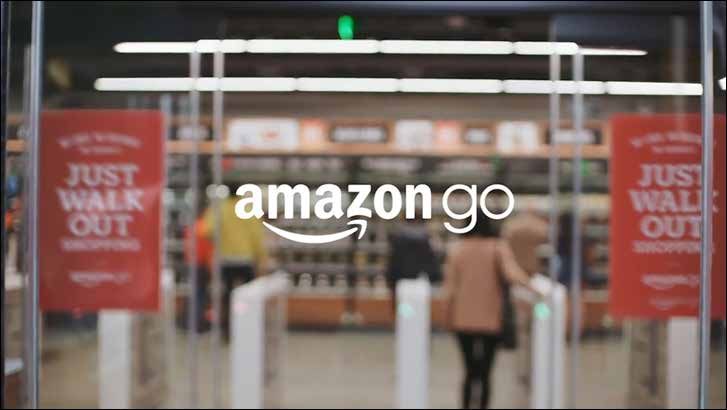
72% of the consumers in our survey told us that long queue at grocery checkout counter can drive them
to online shopping. While traditional retailers are addressing the problem of long lines and tedious barcode
scanning through initiatives such as self-checkouts, click and collect and same-day delivery; online tech
Transformation giant, Amazon has created a checkout-free store, Amazon Go.
for a physical
retailer
happens when
you transform
the store
associates
who service
customers.
- Ali Asaria, Customer scan their smartphones when they enter the store and with a combination of cameras,
CEO, Tulip Retail microphones, machine learning and aggregation of data from different sensors, Amazon’s “Just Walk
Out Technology” automatically detects when products are taken from or returned to the shelves
charging a customer’s Amazon account as they walk out with the items.
Source: Amazon press release
Social and inspiring experiences are at the through mobile platforms, says: “Transformation
core of the store of the future. Consumers want for a physical retailer happens when you transform
a retail store that goes beyond product sales the store associates who service customers. By
and creates a social and inspiring experience. In investing in people and giving them better tools, you
Boston, office supplies firm Staples is partnering are going to see experiential transformation that we
with a startup to use a portion of their stores as are all looking for.”
communal workspaces, where subscribers can
access desks and conference rooms for a monthly The store is a physical entity supported by
fee. The aim is to drive up store traffic and increase digital operations. Retailers also need to focus
sales6. Reebok FitHub stores include a gym7 to drive on the operations that enable an enhanced
fitness enthusiasts into the store. As Healey Cypher, customer experience. We found that over 85%
CEO of Oak Labs, a startup providing interactive of retail executives have focused on launching
fitting rooms, says: “In the post-Amazon era, retail consumer-facing digital initiatives in-store compared
cannot compete on proximity, selection and price— to only 34% retail executives who have launched
experience is the only way to win.” internal store operations initiatives (see Figure 13).
Eric Johnson, CEO of Moki, a SaaS and cloud-
The role of the store associates is re-imagined. based device management solution provider, feels
Digital stores need digitally-enabled sales that many are struggling in the operational domain:
associates. This means a sales associate who is fully “I think a lot of retailers are far behind on the
trained to use digital technologies to bring value to operational side. It is very hard for them to change
customers. As stores expand their delivery models, as well, because unless they can show any initiative
such as click-and-collect, this need for tech- is going to drastically reduce cost, it is hard for them
savvy associates grows. Ali Asaria, CEO of Tulip to implement it. In operations you don’t fix it if it is
Retail, a startup that empowers store associates not completely broken.”
14Figure 13: Retailers by Type of Initiatives Launched (Customer-Facing vs. Internal
Operations)
250 Internal Operations Initiatives Launched in stores Customer-Facing Initiatives Launched in stores
hours Vs 34% 85%
2-3 hours
Average
Electronics 20% 100%
Time taken
for humans
Fashion 43% 93%
Vs a robot
every week for Grocery 35% 79%
auditing, as per
Simbe Robotics Home Improvement 21% 79%
N = 140
Source: Capgemini Analysis
Digital technologies can enhance back-end Visibility. The digital store of the future will have a
operations, building better connections with the digital back-end operation that gives managers
consumer. Areas include: and associates full visibility of inventory across
channels, connecting to the supply chain. A number
Robotics for stock inventory management. Brad of startups have developed technologies that auto-
Bogolea, CEO of Simbe Robotics, a robotic shelf alert consumers who have a click-and-collect
auditing and analytics startup, says: “Today a large- order when they are in proximity to a store. If the
format mass-market retailer may spend 250 human customer opts to collect, it sets in motion a process
hours per week auditing. We can do the same job in whereby the parcel is ready to be collected when
that store in about 2-3 hours8.” the customer walks in-store.
In-store analytics. According to Bridget Johns, Head Associate-focused solutions. A number of start-
of Marketing and Customer Experience at in-store ups have developed solutions that help tie store
analytics company RetailNext: “Our retail customers associates to where consumers are. By deploying
typically see 6-8% increases on conversion from beacons throughout the store, retailers are able to
implementing ecommerce style in-store analytics. take that data and match it to video feeds of the
Another 6% increase when they align staff to physical store. Retailers therefore understand where
consumer traffic. For instance, for a multi-category consumers are versus their store associates, moving
retailer just focusing on the shoe department, we associates in real-time to where they are needed to
see 20 to 30% lift in sales through a combination serve consumers.
of staffing initiatives, merchandising initiatives, and
marketing initiatives9.”
15What path do we take to the store of
tomorrow?
The road to the store of the future will be different see four main groups (see Figure 14), with Digital
depending on the digital maturity of each Sprinters the most advanced.
organization. Drawing on our research data, we
Figure 14: Path to a Digital Sprinter
Digital initiatives Strugglers Digital Sprinters
are implemented
in majority stores
Implementation of Digital Initiatives In-Store
5% 18%
Laggards Early Gainers
Digital initiatives
are not
implemented/ 37% 40%
Implemented in
few stores
N=500 Benefits Realized
Low level of benefit High level of benefit
Source: Capgemini Future of Retail Store Survey
Early Gainers need to scale fast. Early Gainers Walmart Global eCommerce division. It did so by
have got one thing right – they have focused on digital consolidating its ecommerce activities around the
initiatives that deliver value. But Early Gainers cannot world, setting the stage for an organization-wide
just understand what works, they must also scale effort to build a digital footprint and integrate it with
those initiatives, with many having not yet delivered physical shopping experience11.
across a majority of stores. This means addressing
some of the key challenges of Early Gainers, such as Laggards Need to Inject a Dash of Aggression
their limited ability to use consumer data from online in their Digital Initiatives. Laggards perform
or in-store to improve the consumer experience and poorly in areas that include digital governance,
store operations. One way forward is dedicated data store associate empowerment, inventory data
labs. US-based retail chain Nordstrom, for instance, and consumer data usage. They have also limited
has set up the Nordstrom Data Lab to develop new implementation to a small subset of their stores.
offerings backed by data-driven insights10. Laggards need better governance, more use of
data to increase in-store personalization, and
Strugglers should invest in sound governance a transformation in associate empowerment.
mechanisms. Strugglers have implemented digital Laggards also need to have a greater level of
initiatives in a majority of their stores but are failing involvement from their C-level executives in store
to derive the desired benefits. Poor governance transformation. While over 94% of digital sprinters’
is a likely factor in this: Strugglers fare even worse executives considered in-store digital transformation
than Laggards in having a clear view of where to as a top management priority, only 64% of laggards
invest in new technologies and digital initiatives. One thought so.
way forward is to carve out these responsibilities to
a standalone unit. In 2010, Walmart established its
16CONCLUSION
Over the next decade, stores will face more change than they have experienced in the past half century as they
race to meet customer expectations. Retailers should see these heightened expectations as an opportunity
to accelerate their ongoing digital transformation. The importance of the physical store is evidenced by the
increasing number of ecommerce players who are opting for physical spaces. Stores are relevant in our
technology-enabled age, but only if bricks-and-mortar retailers make a digital connection with their consumers.
Research Methodology
The research for this study was conducted in the following phases:
Consumer Survey
Split of Consumers by Country Split of Senior Retail Execu
This phase involved conducting a survey of
6,000 consumers across the US, the UK, France,
Germany, Italy, Spain, Sweden, Netherlands and
Spain Chin
a Chin
a
China in November 2016. nd
s 9% 14% 11% 1
9% la
r
he
Italy
Net
11%
Survey of Retail Executives
13%
US
11%
This phase involved conducting a survey of
Italy
Sweden
11%
500 senior retail executives across the US, the
UK, France, Germany, Italy, Spain, Sweden,
%
11 den
Swe
11
UK
1%
%
Netherlands and China in November 2016.
1
ai n
Sp
11 % 11 % ny 11 %
The retail executives surveyed were part of the F ra n
ce G er m
a Ne th e r lan d s
retail operations or strategy teams. 47% of retail
executives surveyed belonged to organizations
that had revenues of more than $5 billion.
Split of Consumers by Country Split of Senior Retail Executives by Country
Focus Interviews with Retail Tech Startups
We interviewed 24 startups focusing on retail
Spain Chin
a Chin
a US
technologies to understandnds how 9% the upcoming
14% 11% 12%
9% la
retail innovations could transform stores.
r
he
Italy
Net
UK
11%
11%
13%
US
Focus Interviews with Store Managers
11%
Italy
ny
Sweden
11%
We interviewed select store managers for
11 %
G er m a
international brands with stores in London to
%
11 den
Swe
11
UK
1%
%
understand the level of implementation, benefits %
1
ai n 11 n
Sp
ce
11 % 11 % ny 11 % Fra
and challenges for in-store digitization
F ra n
ce
initiatives.
G er m
a Ne th e r lan d s
17Unlock the True Value of Retail with
The Smart Digital Store from Capgemini and Intel
Capgemini’s Smart Digital Store framework and platform offers a breadth of services, tools and accelerators, which can
help retailers kickstart their store transformation journey, regardless of where they start.
Our capabilities include:
Vision and strategy definition
Road mapping
Standard architecture, components and integration to leverage both new and existing solutions
Real-time analytics
Developing innovation agenda for retailers, including discovery, deployment and scale, through our Applied Innovation
Exchange Network
Specific ready-made solutions include:
-- Digital kiosks and endless aisles
-- Smart digital wall and connected tablet
-- Client-assist tablet and service tailoring
-- Context-based workforce management
-- Connected Bag (including facilitating cross-sell/ up-sell opportunities and streamlined checkout)
-- Point of Sale (POS) solutions
Why Us? Our priority is to create measurable business value for our retail clients. Our integrated approach within the
Smart Digital Store framework ensures that we tailor the right solution to suit each retailer’s specific needs while ensuring
that initiatives don’t operate in isolation. We help retailers shape their unique brand vision for what success looks like today
and tomorrow and provide the connective tissue between the key ingredients in the retail store experience – the customer,
the store associate, the product and the physical store itself.
Our partnership with Intel enables our clients to gain competitive advantage, through the latest, reliable and scalable
technology, along with real world industry experience. Together, Capgemini and Intel are building the Future of Retail.
Wondering where to start? Get in touch with us now.
Capgemini’s Smart Digital Store Framework
loyee
Emp Real-T Prod
cking im
Custo e Produ
uct
s Tra ement
e Sale Manag m
Tailore ized P t Trac c
l -tim f or ce d Add rod kin
k dor
Rea d Wor mbassa -
Assortme Endless on Se cts
u g
a se B rand A nt & P Ais rvic
xt-b geable Tailoring rice e l es
nte d e Diff
Co nowle Servic PDAs Dynam
ic La ere
K Smart bels ntia
tion
Produ RFID
s ct Ima
App
Persona tomer Pr Tracki toring
oom
ng nging R & Digi
tal A ng
gi
teli l Cha
ni
en g ita sse
Reco filing g
tom ior Mo
i i
ns
l D tM
n
C
Phy
atio
s
Mercha gt.
r
Ops
ce
ome
ndis
Res t & Frau
e
evi
end
r
sica
Tra
i
v
Sma
Sto n g
Dyn
eha
gt. SCM /P
Fau
rD
er
pon
M and L
ffic
Cust
&A
mm
o
HR and
l Stor
ers
rt Sto re Layout
og
B
amic eractive Media
e
l
Tra
Pricin istics
sive
om
ing ent
d
Off
e Cus
n
-base
i
n-ba s
ckin
e
Tra elopm g
t
gie
re Con
Cus
Sto
Sm
/ Int
Heat
sed
v
lized
g&
nolo
De
Cus
art D
In-stor
Location
d Dete
t.
ing an
Marke er Mg
Los cilities M
For Prevention
CRM gt.
CORE
Heat-
trol
ech
M
Fa
igital
mat
s
Locatio
ting
m
Tracking T
ction
d Lighting
Custo
map
Mgt.
Signage
Analytics | Platf orm | Data | Security
gt.
CAPABILITY END POINT PROCESS PROCESS END POINT CAPABILITY
18References
1 Net Promoter Score measures the loyalty that exists between a provider and a consumer. It is calculated based on responses
on a 0-10 scale to a single question: How likely is it that you would recommend our company/product/service to a friend or
colleague?
Net Promoter, NPS, and the NPS-related emoticons are registered service marks, and Net Promoter Score and Net
Promoter System are service marks, of Bain & Company, Inc., Satmetrix Systems, Inc. and Fred Reichheld
2 Capgemini Future of Retail Store Survey
3 Capgemini Future of Retail Store Survey
4 Capgemini Future of Retail Store Survey
5 Capgemini Future of Retail Store Survey
6 WSJ, “Staples Finds New Use for Its Stores: Office Space”, April 2016
7 Advertising Age, “Welcome to the ‘Unstore’ of the Future: Retailers Go Experiential”, April 2016
8 Capgemini Future of Retail Store Survey
9 Capgemini Future of Retail Store Survey
10 Github.IO, Presentation on Nordstrom Data Lab for the Strata Conference in 2013
11 For more details refer to Capgemini Consulting’s Digital Masters research paper on “Walmart - Where Digital Meets Physical”
https://www.capgemini-consulting.com/walmart-where-digital-meets-physical
19Discover more about our recent research on digital transformation
Privacy Please: Why Retailers Need Fixing the Cracks: Reinventing Loyalty Digital Dynasties: The Rise of Innovation
to Rethink Personalization Programs for the Digital Age Empires Worldwide
Update on Original Research “The Innovation Game: Why and How Businesses
are Investing in Innovation Centers”
Privacy please: Why Fixing the Cracks: Digital Dynasties:
Retailers Need to Rethink Reinventing Loyalty The Rise of Innovation
Personalization Programs for the Empires Worldwide
Digital Age
N°
N° 08
08 OCTOBER
OCTOBER 2015
2015
Consumer Insights: Finding and Guarding Rewired: Crafting a Compelling Customer
The
TheNew
NewInnovation
Innovation Paradigm for the
Paradigm for theDigital
DigitalAge:
Age:
the Treasure Trove Experience
Faster,
Faster, Cheaper and
and Open
Open
DIGITAL #DTR8
#DTR7
TRANSFORMATION
INSTITUTE
Consumer Insights: Digital Transformation Rewired: Crafting a
Finding and Guarding the Review n° 8: The New Compelling Customer
Treasure Trove Innovation Paradigm for Experience
the Digital Age: Faster,
Cheaper and Open
Organizing for Digital: Why Digital Walmart: Where Digital Meets Physical
Dexterity Matters
An interview with
Renée Gosline
Assistant Professor MIT Sloan School of Management
Remixing the Customer Experience
for a Digital World
Transform to the power of digital
Organizing for Digital: Walmart : Where Digital An interview with Renée
Why Digital Dexterity Meets Physical Gosline Assistant
Matters Professor MIT Sloan
School of Management
20About the Authors
Kees Jacobs
Vice President, Capgemini
kees.jacobs@capgemini.com
@kees_jacobs
Kees is an industry recognized practioner with Capgemini’s global sector for consumer products and retail, with more than 25
years of experience in these industries. Kees is responsible for Capgemini’s strategic relationship with The Consumer Goods
Forum and has co-authored many research reports on the consumer products and retail industry
Peter Lindell
Head of Consumer Products, Retail, Distribution and Transportation Sector, Capgemini
peter.lindell@capgemini.com
@peterlindell
Peter is a leader of Capgemini’s Consumer Products, Retail, Distribution and Transportation sector in Europe and globally
responsible for Innovation in the sector. With his 15+ years of experience in management consulting and IT, Peter is a key
adviser to global retail and consumer products companies.
Marc Rietra
Principal Consultant, Consumer Product & Retail, Capgemini
marc.rietra@capgemini.com
Marc has more than twelve years in retail working with leading brands in Europe. Marc leads Capgemini’s
consumer products and retail team in Germany.
Melissa Davisson
Principal Consultant, Capgemini
melissa.davison@capgemini.com
@melissaldavison
Melissa is a principal consultant in the Retail Operations capability of Capgemini Consulting UK. She has deep
experience in retail consulting with grocery, clothing, homeware retailers in the UK and Internationally.
Jerome Buvat
Head, Digital Transformation Institute
jerome.buvat@capgemini.com
@jeromebuvat
Jerome is head of Capgemini’s Digital Transformation Institute. He works closely with industry leaders and
academics to help organizations understand the nature and impact of digital disruptions.
Subrahmanyam KVJ
Senior Manager, Digital Transformation Institute
subrahmanyam.kvj@capgemini.com
@Sub8u
Subrahmanyam is a senior manager at the Digital Transformation Institute. He loves exploring the impact of
technology on business and consumer behavior across industries in a world being eaten by software.
Sumit Cherian
Senior Consultant, Digital Transformation Institute
sumit.cherian@capgemini.com
@SumitCherian
Sumit is a senior consultant at the Digital Transformation Institute. He is an avid follower of industry innovations and how
digital technologies disrupt the business landscape.
Digital Transformation Institute
DIGITAL
TRANSFORMATION
dti.in@capgemini.com
INSTITUTE The Digital Transformation Institute is Capgemini’s in-house think-tank on all things digital. The Institute publishes research on
the impact of digital technologies on large traditional businesses. The team draws on the worldwide network of Capgemini
experts and works closely with academic and technology partners. The Institute has dedicated research centers in the United
Kingdom and India.
The authors would like to thank Apoorva Chandna and Caroline Runge from Capgemini’s Digital Transformation Institute; Didier
Bonnet, Global Practice Leader at Capgemini Consulting; Carin Van Vuuren, Bill Lewis, Steve Obana, Ben Gilchriest, Genevieve
Erb, Chai QunFoong, Michele Cerwin from Capgemini North America; Alex Smith-Bingham from Capgemini UK; Steve
Hewett from Capgemini Consulting UK; Olivier Trouve, Sebastien Levy from Capgemini Consulting France; Vincent Lepleux
from Capgemini France; Katja van Beaumont from Capgemini Nederland B.V; Adgild Hop from Capgemini Consulting Global;
Vivekanand Sangle from Capgemini India; and Pete Maulik, Franco Roncoroni, and Filippo Del Carlo from Fahrenheit 212 for
their contribution to this research. 21For more information, please contact:
Global
Kees Jacobs Adgild Hop Peter Lindell
kees.jacobs@capgemini.com adgild.hop@capgemini.com peter.lindell@capgemini.com
Ruurd Dam Michael Petevinos Marc Rietra
ruurd.dam@capgemini.com michael.petevinos@capgemini.com marc.rietra@capgemini.com
France UK Germany, Austria and Switzerland
Olivier Trouvé Melissa Davison Ralph Becker
olivier.trouve@capgemini.com melissa.davison@capgemini.com ralph.becker@capgemini.com
Eric Masson
eric.masson@capgemini.com
North America Sweden and Finland The Netherlands
Bill Lewis Hakan Erander Arnoud Maas
bill.a.lewis@capgemini.com hakan.erander@capgemini.com arnoud.maas@capgemini.com
Asia
Julien Bourdiniere
julien.bourdiniere@capgemini.com
About Capgemini and the
Collaborative Business Experience
Capgemini Consulting is the global strategy and transformation With more than 180,000 people in over 40 countries, Capgemini
consulting organization of the Capgemini Group, specializing is one of the world’s foremost providers of consulting,
in advising and supporting enterprises in significant technology and outsourcing services. The Group reported
transformation, from innovative strategy to execution and with 2015 global revenues of EUR 11.9 billion. Together with its
an unstinting focus on results. With the new digital economy clients, Capgemini creates and delivers business, technology
creating significant disruptions and opportunities, the global and digital solutions that fit their needs, enabling them to
team of over 3,000 talented individuals work with leading achieve innovation and competitiveness. A deeply multicultural
companies and governments to master Digital Transformation, organization, Capgemini has developed its own way of working,
the Collaborative Business ExperienceTM, and draws on
drawing on their understanding of the digital economy and
Rightshore®, its worldwide delivery model.
leadership in business transformation and organizational
change.
Learn more about us at www.capgemini.com.
Find out more at: www.capgemini-consulting.com
Rightshore® is a trademark belonging to Capgemini
Capgemini Consulting is the strategy and transformation consulting brand of Capgemini Group. The information contained in this document is proprietary.
© 2017 Capgemini. All rights reserved.You can also read


