Marketing Smart Wi-Fi: The Key to Broadband Differentiation - Creating a new Wi-Fi service pillar for broadband service providers - Divitel
←
→
Page content transcription
If your browser does not render page correctly, please read the page content below

Publication date:
                               19 June 2020
                               Author:
                               Michael Philpott

Marketing Smart Wi-Fi: The
Key to Broadband
Differentiation

Creating a new Wi-Fi service
pillar for broadband service
providers

                    Formerly

                               Brought to you by Informa Tech
01

                                    Contents
                                    Summary                                                   2

                                    The importance of smart Wi-Fi in a post-COVID-19 world    4

                                    Introducing Wi-Fi as a service                            7

                                    Many ways to monetize Wi-Fi                              11

                                    Case studies                                             12

                                    Appendix                                                 24

© 2020 Omdia.
All rights reserved. Unauthorized
reproduction prohibited.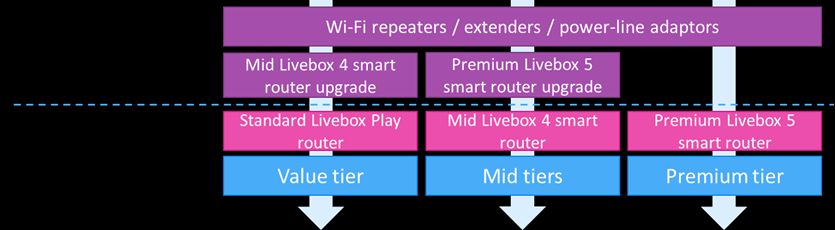
02

                                    Summary
                                    The chief marketing officer and corresponding marketing teams should be the real driving
                                    force behind the decisions to capitalize on the benefits of smart Wi-Fi and meet the
                                    needs of subscribers. Wi-Fi gateways were once seen as a basic tool that simply replaced
                                    the ethernet cable connecting the PC to the broadband network to allow some flexibility
                                    and convenience. However, today they can manage the connection to tens of devices,
                                    controlling and ensuring the quality of each application for every different type of device.
                                    They can also deliver a range of additional services and features that enhance the whole-
                                    home experience and generate new revenue opportunities for service providers of all
                                    types. Marketing departments must capitalize on this new service opportunity now if
                                    service providers are to confirm their position as the central provider of the connected
                                    home.

                                    Omdia view and recommendations
                                    •   Broadband quality of experience has never been so important. Even before the
                                        COVID-19 pandemic, broadband access was a vital service to many households.
                                        However, the crisis has emphasized how critical broadband is to everyday living, both
                                        during and beyond the pandemic, and how important it is that this is a high-quality
                                        service if it is to meet the new consumer demands.

                                    •   The home Wi-Fi network is central to delivering an overall quality experience.
                                        Quality of experience (QoE) goes far beyond just speed, and none of the important
                                        QoE metrics that consumers value and judge their service providers on can be
                                        delivered without first ensuring a high-quality home Wi-Fi service. It is therefore
                                        imperative for service providers to have a cloud-based management platform that
                                        monitors the QoE in the home in real time.

                                    •   Marketing departments must recognize Wi-Fi as a key differentiator. Broadband
                                        service providers have focused for too long on speed versus price, and these
                                        messages are starting to lose their impact. Marketing departments must focus on the
                                        overall quality of the service and highlight home Wi-Fi as a key element in their
                                        messaging.

                                    •   Explore the new targeting possibilities with customer insights. Smart Wi-Fi
                                        platforms are a key service differentiation. Best-of-breed service providers have
                                        therefore used all the standard marketing channels that get them the most exposure.
                                        The platforms themselves then provide a significant amount of customer data. These
                                        insights provided from the cloud can be used for more efficient marketing: targeting
                                        key services, enticing consumers to upgrade, and more. However, service providers
                                        are still exploring the best way to use this data for marketing purposes while still
© 2020 Omdia.
All rights reserved. Unauthorized       maintaining customer trust. Future opportunities could be significant, so all service
reproduction prohibited.                providers must explore all options here.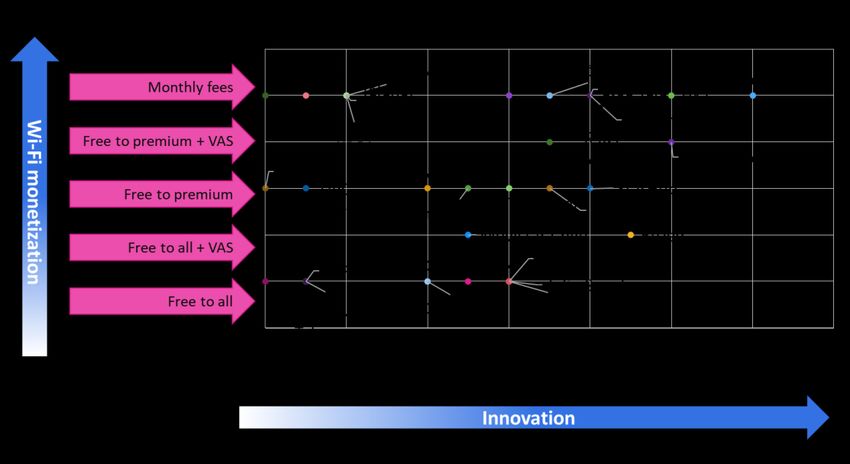
03

                                    •   Service providers must stop thinking of Wi-Fi as just a technology. Home Wi-Fi is
                                        often associated simply with hardware, and to give customers choice, many services
                                        offer a range of device options. However, this assumes consumers understand and
                                        will fix their issues for themselves. Service providers must think of Wi-Fi as a service
                                        with a focus on optimizing the customer experience by understanding and removing
                                        customer pain points.

                                    •   There are many ways to monetize home Wi-Fi. Consumers will pay for quality. By
                                        using a combination of next-generation access and smart Wi-Fi platforms, service
                                        providers can create new levels of service differentiation that they can monetize.
                                        There is no right or wrong way of creating this monetization, but it is clear that once
                                        a strategy is decided on it must have the full weight of the marketing department to
                                        convey the message to the customer.

                                    •   Advanced parental controls and Internet of Things (IoT) security are the current
                                        hot-ticket items. Smart Wi-Fi platforms offer a new and very efficient service delivery
                                        platform into the home. This offers a range of possibilities, but most service providers
                                        are currently focused on advanced parental controls and IoT security features.

                                    •   Vendors and service providers must continue to innovate to drive new value. To
                                        continue to engage consumers and open up new revenue opportunities, service
                                        providers and their vendor partners must continue to innovate to allow a wide range
                                        of services and applications that consumers can use to personalize their connected-
                                        home experience.

                                    •   Think of Wi-Fi as being part of the whole-home experience. Individual dedicated
                                        apps can be frustrating for consumers, offer limited value, and are easy to forget. To
                                        drive true customer engagement, service providers should either focus on other ways
                                        of engaging with their customer base or develop single integrated applications that
                                        encapsulate all service provider services and service features.

© 2020 Omdia.
All rights reserved. Unauthorized
reproduction prohibited.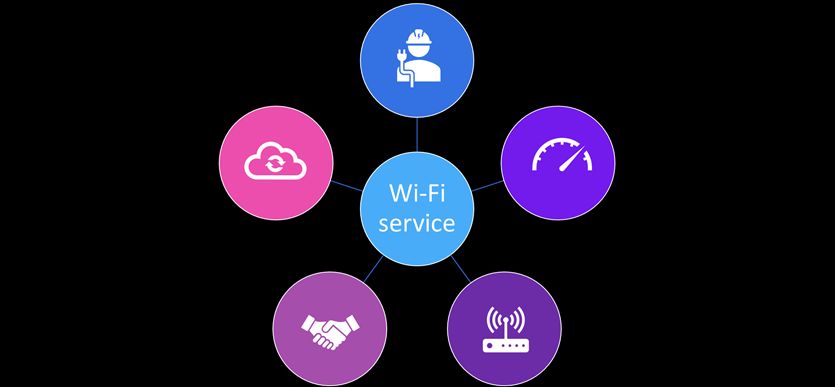
04

                                    The importance of smart
                                    Wi-Fi in a post-COVID-19
                                    world
                                    QoE was already a hot topic before COVID-
                                    19
                                    Marketing the overall QoE of a broadband service is critical in today’s market. In the past,
                                    broadband service providers focused their marketing efforts mainly on speed and price.
                                    This was adequate for the early stages of broadband, but as the average broadband
                                    speed has climbed into the hundreds of megabits per second, it has become increasingly
                                    difficult for service providers to differentiate services on speed alone. Focusing back on
                                    price will only induce further price wars to the detriment of all service providers.
                                    Differentiating on speed alone becomes difficult eventually: once a certain threshold has
                                    been reached, consumers believe that their speed requirements have been met .
                                    Previous Omdia surveys suggest this is currently between 50 and 100Mbps, depending on
                                    the customer. At this point, if there is little else to distinguish different offers, there is
                                    little to entice consumers to move or upgrade (see Figure 1).

                                    Figure 1: Broadband service providers must change their marketing strategy

                                    Source: Omdia
© 2020 Omdia.
All rights reserved. Unauthorized
reproduction prohibited.
                                    Therefore, in order to differentiate services in the future, service providers must focus
                                    less on speed and more on the overall QoE that they deliver. Broadband is now seen by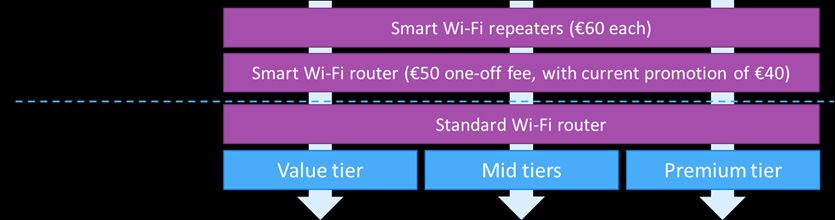
05

                                    most consumers as being an essential service, facilitating many aspects of their daily
                                    lives. Being seen as the service provider that delivers this in the best-quality way will
                                    bring significant service and brand differentiation.

                                    The critical metrics that make up broadband
                                    QoE
                                    So, beyond speed what do consumers value in a broadband service? Value for money, of
                                    course, comes into it, but when it comes down to it consumers will pay for quality, and
                                    based on Omdia surveys that means (in order of importance)

                                    •   A 100% reliable service

                                    •   Good and efficient customer service when things go wrong

                                    •   A good-quality Wi-Fi connection in every room

                                    •   Fast broadband speed

                                    •   Optimal delivery of high-quality media applications

                                    A service provider needs to have a number of qualities in order to meet all these
                                    requirements. However, what is clear is that none of them is possible without investing
                                    in, and managing, a high-quality Wi-Fi platform.

                                    COVID-19 has put a further spotlight on the
                                    Wi-Fi network
                                    If broadband was important to consumers before COVID-19, then the crisis has only
                                    served to heighten its importance. Certainly, in developed countries, most service
                                    providers are reporting steep rises in traffic because consumers are confined to their
                                    homes for work, educational, social, and entertainment purposes.
                                    However, it is not just traffic that is on the increase. Signal noise on the Wi-Fi networks
                                    has reached new highs as the number of connected devices trying to access the internet
                                    at any one time has risen. Cybersecurity-related attacks have also increased, in some
                                    cases by a reported 670%, and as highlighted by Comcast in the US, parental control
                                    applications have also never seen such high levels of engagement. The home Wi-Fi
                                    platform’s ability to handle this new reality, in terms of both monitoring and managing
                                    QoE and being able to deliver and manage new services and features, is critical to the
                                    continued delivery of a good-quality broadband service.

                                    Smart Wi-Fi is crucial to long-term success
                                    Although, hopefully, the COVID-19 pandemic will only be short term, it has created a step
© 2020 Omdia.
All rights reserved. Unauthorized
                                    change in consumer behavior that is unlikely to ever revert to what it was before the
reproduction prohibited.            crisis: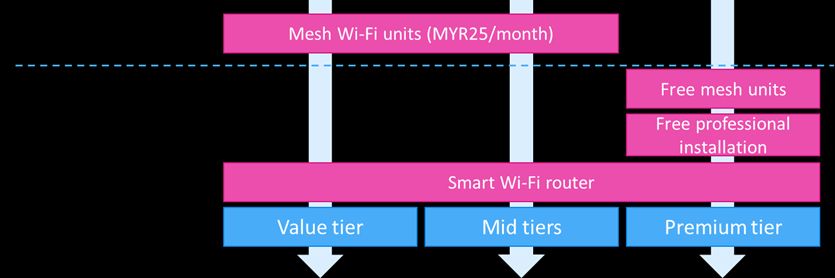
06

                                    •   Although people will start to return to the office, home working will become the
                                        norm for many as businesses and governments look to encourage this new way of
                                        working on a more long-term basis.

                                    •   Education (especially for older students) could become more of a mixture of face-to-
                                        face and distance learning.

                                    •   Demand for smart home devices (especially for assisted living and security) is
                                        expected to increase further in 2021 as consumers start to adapt to the new social
                                        norms.

                                    •   New growth in usage around applications such as over-the-top (OTT) video, video
                                        calling, and e-commerce is unlikely to ever be reversed.

                                    COVID-19 will have highlighted the importance of smart Wi-Fi to many, but it is this “new
                                    normal” that will truly accelerate the greater uptake.

© 2020 Omdia.
All rights reserved. Unauthorized
reproduction prohibited.
07
Introducing Wi-Fi as a
service
A new marketing opportunity
Service providers must now look at home Wi-Fi in a different way, as more of a service
element than just a piece of hardware. Wi-Fi is a key element of the broadband service,
yet many service providers either ignore it completely as a market differentiator or
simply offer a range of hardware routers and peripheral devices such as Wi-Fi extenders,
letting the consumer decide what it is they want or need. Taking a different approach and
offering the consumer a service that optimizes their broadband home experience offers
the customer better value and instantly takes away the pain points they might previously
have been expecting but did not know how to fix.
Consumers will not resolve their issues by
themselves
For many years, broadband service providers saw the broadband router largely as a cost
burden. Most, albeit not all, had to offer the device free to customers to remove any
potential cost barrier to service take-up and/or to remain competitive in what was
becoming an increasingly price-sensitive market. Because of this, for many years the
service providers’ strategy was to offer their customers a relatively rudimentary,
inexpensive Wi-Fi router that provided basic connectivity. If the customer wanted
something more advanced, they could upgrade to a more premium offering, either from
the service provider’s own online store or from a third-party store if they preferred.
There were two issues with this strategy:
• The vast majority of consumers did not have the technical knowledge to understand
what Wi-Fi issues they faced and thus how to solve them. Even if they did, most
would not be inclined to solve it by themselves because they saw the responsibility as
being on the service provider.
• Even if the consumer did wish to upgrade their Wi-Fi, they would normally just be
presented with a list of different hardware devices with names such as the AVM
FRITZ! Box 7590, followed by a list of technical acronyms that most people would not
understand, never mind know whether such technology would improve their
situation.
It is not surprising, therefore, that the vast majority of consumers stick with the router
© 2020 Omdia.
All rights reserved. Unauthorized they are offered by their service provider and then simply complain about their
reproduction prohibited.
broadband service or wait and churn to another service provider. According to the results
of previous Omdia interviews with service providers, up to 60% of all broadband support08
calls turn out to be Wi-Fi related. In one case in the US, a service provider calculated that
65% of customers who had faced Wi-Fi issues did not actually call the service desk but
waited until the end of their contract, when 50% of them would churn to another service
provider.
Communicate the experience, make it easy,
remove any barriers
Waoo in Denmark was one of the first service providers to position Wi-Fi as not a piece of
technology but a service. Waoo is a pure fiber-to-the-home (FTTH) provider and has
therefore naturally positioned itself as a high-quality broadband provider, but it is the
combination of FTTH and smart Wi-Fi that it believes delivers ultimate user experience.
Waoo, therefore, offers smart Wi-Fi as a service on top of broadband: the customer
receives a high-quality connected-home experience through a range of features.
Omdia has noticed a gradual shift in more innovative service providers moving in this
direction, providing guarantees and a range of service and technical features that make
up a new kind of home experience. Figure 2 illustrates some of the features that can be
included, although note that this is not an exhaustive list, nor must service providers
always include all of them.
Figure 2: Creating a new Wi-Fi service
Source: Omdia
The new features that make up the ultimate smart Wi-Fi experience
Step one for any service provider is to optimize the actual Wi-Fi connectivity experience
through a mix of hardware and software features:
• Rollout of the latest Wi-Fi standard (e.g., Wi-Fi 6)
© 2020 Omdia.
All rights reserved. Unauthorized • Deployment of mesh Wi-Fi capabilities for those households that need more than a
reproduction prohibited.
single access point09
• Adoption of advanced Wi-Fi features, specifically
– Dynamic channel selection
– Dynamic band steering
– Dynamic client steering
– Dynamic power management
– Application prioritization
Step two is to use the smart Wi-Fi platform to remotely and dynamically add a range of
new services and features that serve to either improve the overall broadband experience
or drive new revenue opportunities. Based on Omdia’s Service Provider Smart Wi-Fi
Tracker and Benchmark: 2020, Figure 3 shows the current availability of both these
“advanced” and “smart” Wi-Fi features in the most advanced countries.
Figure 3: Smart Wi-Fi features are gradually being added to the consumer experience
Advanced Smart
Source: Omdia
Advanced parental controls and IoT security are the current hot-ticket items
COVID-19 has further highlighted the need for more advanced parental controls and
whole-home cybersecurity services. It is no surprise, therefore, that in all Omdia’s
interviews with service providers and vendors, these two smart Wi-Fi features are always
at the top of the list when it comes to the current focus. Omdia expects continued
© 2020 Omdia.
All rights reserved. Unauthorized
development and service launches in both areas over the next 18 months.
reproduction prohibited.10
Cloud management is key
Service providers should have a cloud-based platform that continuously monitors home
networks by providing real-time, actionable insights into subscribers’ Wi-Fi performance.
These systems often provide remote monitoring and self-healing/troubleshooting. They
should help to quantify the quality experience of each household with actionable insights
and be able to provide proactive recommendations. These insights can then be used by
and benefit marketing departments and customer care and engineering teams alike.
Premium technical support and Wi-Fi motion are next in the pipeline
Two other features that are firmly on the roadmap are premium voice-enabled technical
support services and Wi-Fi motion detection (otherwise known as Wi-Fi Doppler
Imaging). Premium technical support uses artificial intelligence (AI) data analytics and
remote access to provide an advanced, voice-activated technical support service into the
home that can cover all connected devices and applications. As the connected home
becomes ever-more complicated, Omdia expects that such services will become
increasingly important and, therefore, potentially a new revenue opportunity for
broadband service providers. Although Omdia is not yet aware of any live deployment of
such a service, we are certainly aware of some small pilots and that both vendors and
service providers are actively researching the area.
Wi-Fi motion detection in itself is not a service but a technical feature that enables very
granular detection of movement (e.g., breathing or a heartbeat) using the standard Wi-Fi
radio waves already present in the home. This capability has a significant potential in the
areas of home security and assisted living that could open new business models for
service providers. It is therefore seen as a feature that offers good future promise.
© 2020 Omdia.
All rights reserved. Unauthorized
reproduction prohibited.11
Many ways to monetize
Wi-Fi
As illustrated in the case study section of this report, as service providers continue to
innovate around smart Wi-Fi they are also increasingly looking to monetize their
investments. Figure 4 shows the top-level results of Omdia’s Service Provider Smart Wi-Fi
Tracker and Benchmark: 2020. Although for historical reasons there are a few countries
where it is normal to charge a monthly fee for even the most basic home router, it is
clear from the chart that as service providers innovate around smart Wi-Fi, they
increasingly look to monetize the offering.
Figure 4: Omdia’s smart Wi-Fi benchmark shows that as service providers innovate,
they also look to monetize
Source: Omdia
Monetization can take various forms, from encouraging a higher percentage of
consumers to upgrade to more premium broadband tiers, to offering value-added-service
(VAS) features at additional cost, to moving to a more service-oriented approach where
the consumer pays a monthly fee for the premium hardware and additional feature set.
What is clear from the case studies, however, is that once a strategy has been decided it
must have the full backing of the marketing department to make sure the right message
© 2020 Omdia.
gets across.
All rights reserved. Unauthorized
reproduction prohibited.12
Case studies
Bell Canada
Initial smart Wi-Fi drivers
Canada has a specific issue when it comes to broadband delivery in that nearly every
house has a basement. Bell Canada found that when it came to the placement of the
broadband router, it tended to be either on the main floor of the home or in the
basement. As the number of connected devices in the home increased, it soon became
clear that a single gateway device was simply not going to be sufficient to cover the
whole home.
The initial driver for Bell Canada, therefore, was simply to create a distributed
architecture for basic whole-home coverage. However, Bell soon realized that consumer
Wi-Fi requirements went beyond just additional hardware and that, perhaps, by investing
in a smarter solution it could quite quickly own the space in the market. Broadband
competition in Canada, as in virtually all other countries, had been focused on speed and
price since services were launched, and Bell saw that there was an opportunity to find a
new differentiation. In Bell Canada’s opinion, this was a successful move because its
competitors were slower to spot the trend; thus it feels it leads the smart Wi-Fi space.
Positioning
Bell Canada has taken the stance that smart Wi-Fi should be a core part of its broadband
service for all customers, with premium upgrade options (mainly focused around Wi-Fi
mesh extenders) for those customers that need them (see Figure 5).
Figure 5: Bell Canada positions smart Wi-Fi as standard with premium upgrade options
Source: Omdia
All new customers are provided with a smart router. Fiber and TV customers receive the
premium Home Hub 3000, which comes with tri-band Wi-Fi capability, while xDSL-based
broadband customers receive the standard Home Hub 2000 but with the option to
© 2020 Omdia.
All rights reserved. Unauthorized
upgrade to the Home Hub 3000 for an additional one-off fee of C$199.95 ($147.60).
reproduction prohibited. Premium-tier broadband customers get the Home Hub 3000 as standard. Bell Canada
finds that for many customers, a single smart Wi-Fi router is enough to provide whole-13
home coverage. However, all customers can pay a premium monthly fee for Wi-Fi
extenders if they find they need them.
Marketing strategy
To market its superior Wi-Fi quality, Bell used all the standard traditional marketing
channels, especially TV adverts and online targeted ads when people were searching for
the term Wi-Fi. Customer service teams can also make recommendations on premium
options to customers who might be calling the service lines with Wi-Fi related issues. This
type of recommendation seems natural. However, Bell has stayed away from using
customer Wi-Fi data for any targeted marketing because the company feels this is too
invasive.
Success metrics to date
From a marketing perspective the number one success has been the increase in Bell’s Net
Promotor Score (NPS) due to the overall superior broadband experience created by FTTH
plus smart Wi-Fi. However, Bell has also seen other operational benefits. Customers who
take the Wi-Fi extenders tend to do so because they have more complex home networks:
bigger homes and more connected devices. Before smart Wi-Fi, these customers would
have been the ones disproportionately calling the customer service lines because they
tend to be more demanding. Because of the smart Wi-Fi capabilities and Wi-Fi extenders
for additional reach, call volumes have dropped significantly in that segment of the
market, falling back in line with the norm. Bell has also experienced a decrease in truck
rolls, saving significant operational cost.
COVID-19 impact
Like most countries, Canada has seen a significant increase in broadband traffic during
the COVID-19 pandemic. During this period, Bell Canada has seen an increase in demand
for its extenders, to some extent due to new and increased demands on the home
network but also because people are now more spread out in the home (e.g., several
people might be trying to work from home in different rooms) and therefore want full
coverage.
Bell believes that the pandemic has also increased the level of scrutiny on network
performance, which has gone in its favor because, with a full-fiber plus smart Wi-Fi
network, it offers low latency and a high level of performance in both down and
upstream bandwidth.
Finally, COVID-19 has driven greater engagement with its home app, especially around
greater parental control and resolving frozen device issues.
Next steps
At a macro level, the smart Wi-Fi platform provides Bell Canada with a much better
understanding of what is going on in its customers’ home networks, which it can
correlate with trends around service calls and truck rolls. To some extent, the company is
still learning how to fully use this data. It has certainly allowed the company to have
much smarter conversations with its customers, allowing it to give them greater
assistance.
© 2020 Omdia. The “holy grail” is for the company to also understand what is happening in real time so
All rights reserved. Unauthorized
reproduction prohibited. that as well as being able to fix some issues before the customer even notices, the
operator is able to handle other calls with an automated message to tell customers what14
the issue is and how long it is going to take to fix. Predicting why a customer might be
calling will provide great value to both the service provider and its customers.
Comcast
Initial smart Wi-Fi drivers
Comcast is one of the leading broadband service providers in the world and is currently in
first place in Omdia’s Service Provider Smart Wi-Fi Benchmark. It launched its xFi
platform in 2017 to help its broadband customers control and manage the rapidly
increasing number of connected devices in the home. The solution consisted of a new
advanced home gateway and a personalized dashboard that enables customers to set up
their home network, connect devices and control their access, troubleshoot, and set
parental controls.
Since launching the initial xFi platform, Comcast has also added a number of new
features:
• At CES 2018, Comcast announced a new Works with Xfinity program, which adds a
range of third-party devices to its smart home ecosystem from well-known brands
such as Honeywell, Lutron, and Nest.
• In January 2019, it launched a new subscription service, xFi Advanced Security, which
monitors and protects all connected devices in the home (including third-party and
IoT devices) from cyberattacks at a monthly fee of $6.
• Later in 2019, it launched a new, enhanced parental control feature that
automatically pauses network connectivity to all of a child’s devices once their daily
time limit is reached.
• In January 2020, it launched its new Wi-Fi 6 router and made its IoT security feature
free to all xFi customers.
Positioning
It is standard in the US for service providers to enable consumers to source their own
broadband router devices if they so wish. It is common, therefore, for service providers
to separate the broadband service and gateway rental fees, leaving the customer to
choose whether to purchase from the service provider or from a third-party retail store.
Comcast, therefore, positions xFi as a premium product on top of the broadband service
but works hard to differentiate the product by marketing the advanced features and
services that Comcast offers via its box over other compatible devices (see Figure 6).
© 2020 Omdia.
All rights reserved. Unauthorized
reproduction prohibited.15
Figure 6: Comcast positions its smart Wi-Fi as the premium option over retail
alternatives
Source: Omdia
Marketing strategy
Like many broadband service providers, Comcast has run dedicated marketing campaigns
on its Xfinity xFi gateway and its ability to provide a high-quality experience throughout
the home. The messaging has focused around the fact that Comcast offers not just high
speed but also IoT cybersecurity, wall-to-wall Wi-Fi coverage, and advanced user controls
for the Wi-Fi network through the xFi app. Its marketing strategy includes all traditional
channels including national TV, internet landing page, and paid media.
COVID-19 impact
As witnessed in other countries, Comcast has seen a sharp rise in usage over its
broadband networks. However, as well as an increase in usage, the crisis has pushed
consumers to engage more with the xFi platform, with the company seeing a 57%
increase in people logging on to xFi daily since the start of the pandemic. The most
common activities have been
• Pausing the internet at lunchtime or other family times
• Lengthening online hours to allow children to increase the time they spend online
• Tightening age-appropriate content filters
Maxis
Initial smart Wi-Fi drivers
The inflection point for Maxis came in 2018, when it saw parity between what all
competitors were offering in terms of speed and price. The company therefore took the
decision to separate itself from the rest of the market and differentiate instead around
the “best internet experience” with superior coverage in the home being a big part of
that new focus.
The smart Wi-Fi gateway is now an important competitive differentiator for the company
and fits into one of its key pillars for Maxis Fibre, which is “whole home Wi-Fi coverage.”
Positioning
© 2020 Omdia. Maxis positions smart Wi-Fi to all its fiber broadband customers, with a key marketing
All rights reserved. Unauthorized message being “whole home Wi-Fi coverage.” However, premium broadband customers
reproduction prohibited.16
(500Mbps and above) also get two free Wi-Fi mesh extenders and free professional
installation (see Figure 7).
Figure 7: Maxis offers smart Wi-Fi to all and a more premium service to its top
customers
Source: Omdia
Marketing strategy
Maxis has adopted a “free to premium customers” and “premium fee for the rest of the
customers” model in its marketing strategy when it comes to smart Wi-Fi. The company
strongly believes in delivering the optimal all-in-one Wi-Fi service to its premium
customers, while at the same time offering the same level of service to other customers
for just a small incremental fee.
To market these offerings, the company is currently focusing heavily on digital
advertising, which it believes is more in line with its target audience. However, when the
company first launched smart Wi-Fi in 1Q19, it also used traditional above-the-line
channels, so the message reached the widest possible audience, regardless of age and
media preference.
To date, Maxis has not yet used Wi-Fi data in its marketing strategies. The company,
however, states that it is looking into all the possibilities of what it could do with the big
data that is harvested from the smart Wi-Fi platform, such as the propensity of a
customer to upgrade their internet subscription plan based on the number of devices
connected and amount of data consumed, or offering customers matching value-added
subscription services based on the type/format of data that is consumed.
Success metrics
As well as having convinced more customers to take the more premium broadband
products, Maxis states that it has higher TP-NPS scores (+23) from its smart Wi-Fi
customers than from nonsmart Wi-Fi customers (+18). Additionally, smart Wi-Fi
customers have a lower level of Wi-Fi complaints (0.8%) than the nonsmart Wi-Fi
customers (1.2%).
COVID-19 impact
© 2020 Omdia. The unprecedented COVID-19 pandemic has changed the way the company thinks about
All rights reserved. Unauthorized
reproduction prohibited. the role of smart Wi-Fi plans for its customers. Smart Wi-Fi has increased in importance,
resulting in the company relooking at marketing to its customer base. For example, it is17
currently upselling smart Wi-Fi plans to customers who show increased data usage using
applications such as Zoom, Webex, and Microsoft Teams.
Orange
Initial smart Wi-Fi drivers
Orange recognized that the quality of the home network was an essential element for
consumers to receive a high-quality service and observed that for its customers this was
becoming an important consideration when they chose home broadband offers. In
Orange’s view this was driven by a combination of the increased number of connected
devices in the home and the continued rise in cloud-based services such as online
gaming, OTT video, and cloud-storage solutions.
Positioning
Orange France positions smart Wi-Fi as a part of its premium broadband offers, offering
its customers an increasingly superior QoE as they move up the broadband stack. All
customers have the option to upgrade their home network router for a one-off fee, and
Orange also offers additional hardware such as Wi-Fi repeaters, extenders, and power-
line adaptors, again as a one-off purchase (see Figure 8).
Figure 8: Orange positions smart Wi-Fi as a premium offering with upgrade paths for all
customers
Source: Omdia
Marketing strategy
Orange’s marketing is focused on offering the best broadband service on the market,
especially around its fiber-based, high-speed services. Orange, therefore, promotes a
tiered-gateway solution to offer a more premium offering as customers move up its
broadband tiering. Typical traditional marketing channels are used to promote these
offerings. However, customer care is also an important channel for Orange’s marketing
efforts. In a number of countries in Orange’s footprint, the company is proactively
offering, via after-sales campaigns, devices such as Wi-Fi repeaters to customers who
claim to have an issue with their home Wi-Fi.
Success metrics
The main success metric that Orange monitors is customer satisfaction via its NPS
© 2020 Omdia.
All rights reserved. Unauthorized surveys. Orange states that it currently observes a strong correlation between customer
reproduction prohibited.
satisfaction levels and in-home Wi-Fi speed and coverage.18
COVID-19 impact
Orange is seeing that across its footprint the COVID-19 situation is highlighting the
importance of Wi-Fi home-connectivity solutions, and changes in its offer proposals are
expected in this area in the future. However, it also recognizes that the impact on the
economy as a result of the crisis may also hurt customers’ purchasing power, and the
market will therefore need to adapt its approach to fit these new circumstances.
Sky
Initial smart Wi-Fi drivers
In the UK, Sky is the leading pay-TV service provider and the main broadband competitor
to the incumbent, BT. Within the pay-TV market, the company is largely recognized as a
satellite-TV company, but to remain relevant to its customer base, Sky was an early
innovator and adopter of OTT video services, both to extend its customer footprint and
to offer new and innovative services to its existing pay-TV base.
Sky’s focus, however, has always been on offering a high-quality service, and it did not
want its TV and video services to be compromised by a best-efforts OTT video service.
The company, therefore, was early to adopt smart Wi-Fi mesh technology in order to
distribute its video services around the home. As well as placing the technology in its Sky
Hub, it has developed its Sky Q TV set-top boxes with integrated smart Wi-Fi technology
that can also act as access points to extend the mesh network around the home.
Positioning
Sky is the main competitor to BT, the incumbent in the UK, and has invested heavily to
compete on quality as well as on price. Sky was an early adopter of smart Wi-Fi
technology and now offers its smart Wi-Fi hub, the Sky Hub, to all new and upgrading
customers (Figure 9). Uniquely, Sky then offers a Wi-Fi guarantee through its Sky
Broadband Boost service, which costs an additional £5.00 ($6.27) per month.
Broadband Boost guarantees customers Wi-Fi at at least 3Mbps in every room. If a
subscriber to the service is not receiving this minimum speed, Sky will send the customer
either a Sky Broadband Booster or a Sky Tech Team engineer to make sure the
customer’s home network is set up optimally. If after this the customer still has not
successfully received at least 3Mbps in every room, they are entitled to their money back
or they can have the service free for the remainder of the contract period so that they
can benefit from the other Broadband Boost features.
Figure 9: Sky offers smart Wi-Fi as standard, with an optional service for those that
need it
© 2020 Omdia.
All rights reserved. Unauthorized
reproduction prohibited.
Source: Omdia19
Marketing strategy
Sky has heavily marketed both its Sky Q video service and its whole-home Wi-Fi
capabilities including the fact that it offers a Wi-Fi speed guarantee in every individual
room in the house. Its marketing strategy includes all traditional channels including
national TV, internet landing page, and paid media.
Telefónica
Initial smart Wi-Fi drivers
In Spain, Telefónica saw the launch of its Home Gateway Unit (HGU) back in 2015 as one
of the most important milestones in the recent history of the company’s home
networking portfolio. This device became a big success for Telefónica, not only because it
improved overall broadband performance but also because it integrated the router,
optical network terminal (ONT), and 55GHz Wi-Fi into a single device, providing simplicity
and operational efficiency. In Telefónica’s view, the HGU set the ground for today’s smart
Wi-Fi product line.
Today, consumers understand that the role played by home networking devices is more
important than ever, and therefore, the evolution of its gateway portfolio is a critical part
of Telefónica’s strategic roadmap. Broadband routers and access points enable the
customer’s indoor experience, so it is essential for Telefónica to continue to lead in this
field.
Positioning
Telefónica positions smart Wi-Fi equipment as a premium offering for all broadband
customers. However, the cost is relatively low with just a one-off standard fee of €50
($51) (at the time of writing, there was a special offer of €40). Additional smart Wi-Fi
repeaters can be purchased if required at an additional cost of €60 per repeater (Figure
10).
Figure 10: Telefónica offers smart Wi-Fi at a premium to all customers
Source: Omdia
Telefónica is currently promoting its Connectivity Self Care feature (i.e., home network
diagnosis and self-help tips) as well as free standard parental control features with
advanced premium features (based on Qustodio). Telefónica will also soon launch a
© 2020 Omdia. network performance test, which includes an upstream/downstream speed test as well
All rights reserved. Unauthorized
reproduction prohibited.
as tips on improving connectivity (such as where to place the router).20
Marketing strategy
Telefónica’s aim is to provide the best connectivity service as a base for additional value-
added services, and that means delivering the best speed, reliability, and overall QoE
including security. QoE has become a key requirement for end customers, and Telefónica
sees smart Wi-Fi as a key enabler of this, not just by ensuring high-quality entertainment
services but also by providing adequate security and parental control features. As smart
Wi-Fi continues to develop, over time new features will be added to continually enhance
the customer’s service experience.
Telefónica uses all the traditional marketing channels to promote these features,
including
• App notifications
• Internet landing page
• Customer care channels
• Direct email marketing
• Direct SMS marketing
• A TV advert in 2019
• Paid media for the last two years
Telefónica also uses customers’ big data in order to inform and optimize its marketing
campaigns. While sticking with and, in fact, surpassing GDPR requirements, it can use
anonymized customer data to provide a powerful 360-degree vision of its clients,
gleaning very profitable knowledge for marketing strategies.
Success metrics
Telefónica looks at four key areas of key performance indicators (KPIs):
• Reductions in operational costs due to
– Increased visibility and traceability of customer connectivity issues, reducing
metrics such as customer churn and increasing operational efficiency because
operations teams can trace and quickly resolve the customer’s connectivity
problems
– Driving down service representative and field technician handling time through
automated call resolution
– A reduction in technical service calls related to Wi-Fi issues through proactive
care and self-healing features
• Increased NPS through measures such as
© 2020 Omdia.
All rights reserved. Unauthorized
reproduction prohibited. – Optimizing the network performance as well as quick diagnosis and response
when things do go wrong21
– Facilitating service and application onboarding through self-configuration and
self-management
• Lower churn rate due to
– Providing advice and a one-stop shop by curating the vast existing offer on
managed Wi-Fi and Wi-Fi mesh extenders
– Better customer service value through optimizing the home gateway
equipment and overall service performance
• Increased customer engagement thanks to
– Introduction of new VAS related to installations, verticalized solutions, and
premium equipment
– Gaining greater insights into application usage patterns and device behavior to
drive new innovative service offerings
COVID-19 impact
Because of the COVID-19 crisis, Telefónica has seen an increase in customer usage of the
home Wi-Fi versus on-the-go mobile data usage. Therefore, guaranteeing the best home
connectivity to allow for the traditional use cases but also newer (or at least significantly
increased) ones such as working from home, e-learning, and entertainment for different
members of the family is even more important.
Further evolving the home proposition to also incorporate new “peace of mind”
applications was already in Telefónica’s plans before COVID-19, but the company is now
exploring with greater emphasis an assisted-living element that could benefit the most
vulnerable (e.g., the elderly living alone) after this crisis.
Next steps
As well as peace of mind / assisted living, Telefónica believes there are new opportunities
around premium device installation and service support services. Telefónica is also
actively exploring the combination of cybersecurity of the home-connected devices with
the home’s physical security.
Waoo
Initial smart Wi-Fi drivers
Waoo is a competitive FTTH operator in Denmark and was one of the first service
providers to adopt smart Wi-Fi from a marketing perspective. For decades the focus
around broadband had been purely one of speed versus price; Waoo saw an opportunity
to move toward a more inspiring brand built around experience rather than just speed.
Waoo’s consumer surveys showed that Wi-Fi quality was the number one issue for
consumers after price, and although consumers always list price as their number one
concern, in Waoo’s experience, consumers will, in reality, pay for quality if they think it is
© 2020 Omdia. warranted. The old telco view was that if consumers wanted a better Wi-Fi experience,
All rights reserved. Unauthorized
reproduction prohibited. they would purchase a high-end retail solution, but this was only true for a niche, tech-
savvy segment. Most consumers would not have the technical know-how to trust they22
were making a wise purchasing decision. Waoo, therefore, saw an opportunity to
conceptualize Wi-Fi as more of an experience and to communicate Wi-Fi as an actual
service.
Positioning
Waoo positions smart Wi-Fi as a premium feature of its middle and top-tier broadband
services (see Figure 11), which has successfully driven a larger proportion of customers to
take these more premium offerings. FTTH plus smart Wi-Fi is marketed as the ultimate
service, cutting out any pain points in the broadband service. The Wi-Fi gateway comes
with an additional access point, free delivery, professional installation, and ongoing
customer support, providing a one-stop shop that offers both convenience and quality.
Figure 11: Waoo’s focus is on providing the best-quality service to its premium
customers
Source: Omdia
Marketing strategy
For Waoo it is important that customers see Wi-Fi as a service. Other more traditional
telcos have focused just on hardware to solve such issues, offering a range of routers,
extenders, and access points for customers to choose from and basically relying on them
to sort out their own problems. By treating Wi-Fi as a service, Waoo is focusing on
helping its customers receive the ultimate service, or as Waoo says: “internet as it should
be.”
To communicate this message, Waoo has typically used the biggest traditional channels,
especially TV. In Waoo’s opinion, this is a fundamental message to get across, and
therefore service providers need to use the traditional biggest channel. Marketing
messages focused around both the quality and the simplicity of the service emphasize
Waoo’s removal of all customer Wi-Fi pain points.
COVID-19
In Waoo’s case, everything was already in place to handle the COVID-19 crisis. Its
network has certainly been put to the test with the majority of its customers being home,
all accessing the internet and cloud-based applications more than ever before, but this
has only justified Waoo’s more premium service, and demand has only increased because
of it.
Next steps
Like other broadband service providers, Waoo has seen significant operational cost
© 2020 Omdia.
All rights reserved. Unauthorized
savings thanks to the reduction in Wi-Fi-related customer service calls. However, in the
reproduction prohibited. future Waoo wishes to take customer service to the next level by taking a more proactive
approach. Using predictive data, Waoo would like to be able to predict certain issues and23
then take action to prevent the need for the customer to make a call. For example, in the
future, if a service such as Netflix is not working as it should, Waoo would like to be able
to detect that and proactively contact the customer with a message advising them what
is wrong and what they need to do to resolve it.
Waoo also has ambitions to use Wi-Fi data. The data is already used in service delivery,
predicting certain issues and helping the customer support team provide a better
experience. Customers already accept and expect this.
However, Waoo is also exploring how this data could be anonymized for third-party
companies to use. The company sees this as a big opportunity but is currently still trying
to work out how to communicate with the customer about using their data as a type of
currency. This could create innovative new business models such as consumers getting
services free in exchange for their data, similar to the “zero-dollar car” concept outlined
by John Ellis. Such business models could revolutionize the industry, and Waoo has a lot
of ambition in this area, but the company is also conscious that customer messaging
around privacy and data security is imperative, and this will take time to work out.
© 2020 Omdia.
All rights reserved. Unauthorized
reproduction prohibited.Marketing Smart Wi-Fi: The Key to Broadband 24
Differentiation
Appendix
Methodology
This report is based on Omdia’s Digital Home research and data and on primary interviews with leading service
providers in the smart Wi-Fi market.
Further reading
Service Provider Smart Wi-Fi Tracker and Benchmark: 2020, CES006-000124 (February 2020)
Smart Wi-Fi: State of Market Report, CES006-000127 (March 2020)
The Road to 2023: The Ultra-Fast Connected Home, CES006-000089 (August 2019)
Author
Michael Philpott
Research Director, Service Provider - Consumer
michaelphilpott@omdia.com
© 2020 Omdia.
All rights reserved. Unauthorized
reproduction prohibited.Marketing Smart Wi-Fi: The Key to Broadband 25
Differentiation
Get in touch Omdia consulting
www.omdia.com Omdia is a market-leading data, research, and consulting business
askananalyst@omdia.com focused on helping digital service providers, technology companies, and
enterprise decision-makers thrive in the connected digital economy.
Through our global base of analysts, we offer expert analysis and strategic
insight across the IT, telecoms, and media industries.
We create business advantage for our customers by providing actionable
insight to support business planning, product development, and go-to-
market initiatives.
Our unique combination of authoritative data, market analysis, and
vertical industry expertise is designed to empower decision-making,
helping our clients profit from new technologies and capitalize on
evolving business models.
Omdia is part of Informa Tech, a B2B information services business
serving the technology, media, and telecoms sector. The Informa group is
listed on the London Stock Exchange.
We hope that this analysis will help you make informed and imaginative
business decisions. If you have further requirements, Omdia’s consulting
team may be able to help your company identify future trends
and opportunities.
© 2020 Omdia.
All rights reserved. Unauthorized
reproduction prohibited.Marketing Smart Wi-Fi: The Key to Broadband 26
Differentiation
Copyright notice and disclaimer
The Omdia research, data and information referenced herein (the “Omdia
Materials”) are the copyrighted property of Informa Tech and its
subsidiaries or affiliates (together “Informa Tech”) and represent data,
research, opinions or viewpoints published by Informa Tech and are not
representations of fact.
The Omdia Materials reflect information and opinions from the original
publication date and not from the date of this document. The information
and opinions expressed in the Omdia Materials are subject to change
without notice, and Informa Tech does not have any duty or responsibility
to update the Omdia Materials or this publication as a result.
Omdia Materials are delivered on an “as-is” and “as-available” basis. No
representation or warranty, express or implied, is made as to the fairness,
accuracy, completeness, or correctness of the information, opinions, and
conclusions contained in Omdia Materials.
To the maximum extent permitted by law, Informa Tech and its affiliates,
officers, directors, employees, and agents disclaim any liability (including,
without limitation, any liability arising from fault or negligence) as to the
accuracy or completeness or use of the Omdia Materials. Informa Tech
will not, under any circumstance whatsoever, be liable for any trading,
investment, commercial, or other decisions based on or made in reliance
of the Omdia Materials.
© 2020 Omdia.
All rights reserved. Unauthorized
reproduction prohibited.You can also read


