MET-METEOROLOGY Transport Canada - Aeronautical Information Manual (TC AIM) - Transports Canada
←
→
Page content transcription
If your browser does not render page correctly, please read the page content below
Next page >

                                                        TP 14371E

           Transport Canada
Aeronautical Information Manual
                     (TC AIM)

    MET—METEOROLOGY
                     March 28, 2019

 Table of Contents      Changes       Bookmarks Panel
< Previous page                                                                                       Next page >

         TC AIM                                                                                  March 28, 2019

                  TRANSPORT CANADA AERONAUTICAL INFORMATION MANUAL (TC AIM)
                                                    EXPLANATION OF CHANGES
                                                    EFFECTIVE—MARCH 28, 2019

          NOTES:
          1. Editorial and format changes were made throughout the
             TC AIM where necessary and those that were deemed
             insignificant in nature were not included in the “Explanation
             of Changes”.
          2. Effective March 31, 2016, licence differences with ICAO
             Annex 1 standards and recommended practices, previously
             located in LRA 1.8 of the TC AIM, have been removed and
             can now be found in AIP Canada (ICAO) GEN 1.7.

          MET
             (1) MET 1.1.1 Meteorological Responsibility
                 The date of the upcoming edition of the Manual of
                 Surface Weather Observations (MANOBS) was
                 changed to February 2019.
             (2) MET 1.1.8 Differences from International Civil
                 Aviation Organization (ICAO) Annex 3
                 Information on the pending new edition of Annex 3,
                 which will be available in November 2020, was
                 updated.
             (3) MET 8.3 Sample Message
                 In (k) Sky conditions, text was added to clarify when
                 the convective cloud types will be included in the
                 cloud group of the METAR.

                         Table of Contents                          Changes    Bookmarks Panel
< Previous page Next page >
TC AIM March 28, 2019
Table of Contents
MET—METEOROLOGY 121
1.0 GENERAL INFORMATION .........................................................................................................................121
1.1 General................................................................................................................................................................................................ 121
1.1.1 Meteorological Responsibility......................................................................................................................................... 121
1.1.2 Meteorological Services Available ................................................................................................................................. 121
1.1.3 Aviation Weather Services .............................................................................................................................................. 121
1.1.4 Weather Service Information........................................................................................................................................... 121
1.1.5 Weather Information from Air Traffic Service (ATS).................................................................................................... 122
1.1.6 Pilot Reports..................................................................................................................................................................... 122
1.1.6.1 Pilot Weather Reports (PIREPs)...................................................................................................................................... 122
1.1.7 Applicable International Civil Aviation Organization (ICAO) and World Meteorological
Organization (WMO) Documents................................................................................................................................... 122
1.1.8 Differences from International Civil Aviation Organization (ICAO) Annex 3............................................................. 123
1.1.9 Pilot Responsibility.......................................................................................................................................................... 123
1.2 Meteorological Observation and Reports ................................................................................................................................................. 123
1.2.1 Type and Frequency of Observations .............................................................................................................................. 123
1.2.2 Flight Weather Documentation ....................................................................................................................................... 123
1.2.3 Weather Services Definitions in Flight Publications ..................................................................................................... 123
1.2.4 Automated Weather Observation Systems (AWOS)....................................................................................................... 124
1.2.4.1 Overview........................................................................................................................................................................... 124
1.2.4.2 Visual Flight Rules (VFR) Weather Stations.................................................................................................................. 124
1.2.5 Automatic Aerodrome Routine Meteorological Reports (METAR AUTO) and Limited Weather Information
System (LWIS) Reports.................................................................................................................................................... 124
1.2.5.1 Automatic Aerodrome Routine Meteorological Reports (METAR AUTO) ................................................................. 124
1.2.5.2 Limited Weather Information System (LWIS) Reports ................................................................................................. 125
1.2.6 Automatic (AUTO) Reports............................................................................................................................................. 125
1.2.7 Weather Services in Support of Approach Unicom (AU)............................................................................................... 125
1.2.8 Runway Visibility Assessment........................................................................................................................................ 125
1.3 Meteorological Forecasts and Charts.............................................................................................................................................. 125
1.3.1 Flight Information Centre (FIC) Hours of Service and Telephone Numbers................................................................. 125
1.3.2 World Area Forecast System (WAFS) Charts ....................................................................................................................... 125
1.3.3 Aerodrome Forecasts (TAFs) .......................................................................................................................................... 125
1.3.4 Aerodrome Advisory Forecasts ...................................................................................................................................... 126
1.3.5 Coastal Weather................................................................................................................................................................ 126
1.3.6 Graphic Area Forecasts (GFAs) and AIRMET................................................................................................................ 126
1.3.7 Upper Level Wind and Temperature Forecasts (FDs) .................................................................................................................126
1.3.8 Air Traffic Control (ATC) Weather Assistance .............................................................................................................. 126
1.3.9 Supplementary Information ............................................................................................................................................ 127
1.3.9.1 Weather Radar ................................................................................................................................................................. 127
1.3.9.2 Environment Canada/DND Weather Radar Network..................................................................................................... 127
1.4 In-Flight Meteorological Information (VOLMET)....................................................................................................................... 128
2.0 PILOT WEATHER REPORTS (PIREPs).....................................................................................................128
2.1 General ............................................................................................................................................................................................... 128
2.1.1 Pilot Weather Report (PIREP) Example.......................................................................................................................... 128
2.2 Clear Air Turbulence (CAT)............................................................................................................................................................ 129
2.2.1 General.............................................................................................................................................................................. 129
2.2.2 Turbulence Reporting Criteria......................................................................................................................................... 129
2.3 Wind Shear ........................................................................................................................................................................................ 129
2.4 Airframe Icing ................................................................................................................................................................................... 130
2.5 Volcanic Ash ...................................................................................................................................................................................... 130
2.6 Pilot Estimation of Surface Wind ................................................................................................................................................... 130
3.0 CANADIAN WEATHER INFORMATION..................................................................................................132
3.1 Aviation Forecasts and Charts......................................................................................................................................................... 132
3.2 Aviation Weather Reports ............................................................................................................................................................... 133
3.3 Weather Charts ................................................................................................................................................................................. 134
4.0 GRAPHIC AREA FORECASTS (GFA) ........................................................................................................134
4.1 General ............................................................................................................................................................................................... 134
4.2 Issue and Valid Times ....................................................................................................................................................................... 134
4.3 Coverage Area.................................................................................................................................................................................... 134
Table of Contents Changes Bookmarks Panel i< Previous page Next page >
TC AIM March 28, 2019
4.4 Units of Measure ............................................................................................................................................................................... 135
4.5 Abbreviations and Symbols ............................................................................................................................................................. 135
4.6 Layout ................................................................................................................................................................................................. 135
4.7 Title Box ............................................................................................................................................................................................. 135
4.8 Legend Box......................................................................................................................................................................................... 135
4.9 Comments Box.................................................................................................................................................................................... 135
4.10 Weather Information ........................................................................................................................................................................ 136
4.11 Clouds and Weather Chart............................................................................................................................................................... 136
4.12 Icing, Turbulence and Freezing Level Chart................................................................................................................................. 139
4.13 Graphic Area Forecast (GFA) Amendments ................................................................................................................................. 141
4.14 Graphic Area Forecast (GFA) Corrections ................................................................................................................................... 141
5.0 AIRMETs ..........................................................................................................................................................141
5.1 Definition............................................................................................................................................................................................. 141
5.2 Issuance Criteria ............................................................................................................................................................................... 141
5.3 Coordinate Points.............................................................................................................................................................................. 142
5.4 Rules for the Use of Letters.............................................................................................................................................................. 142
5.5 Rules for the Use of Numbers........................................................................................................................................................... 142
5.6 Validity................................................................................................................................................................................................ 143
5.7 Location of the Phenomenon............................................................................................................................................................ 143
5.7.1 Circle................................................................................................................................................................................. 143
5.7.2 Line................................................................................................................................................................................... 143
5.7.3 Polygon.............................................................................................................................................................................. 143
5.8 Flight Level and Extent..................................................................................................................................................................... 143
5.9 Movement or Expected Movement.................................................................................................................................................. 144
5.10 Change in Intensity............................................................................................................................................................................ 144
5.11 Remark ............................................................................................................................................................................................... 144
5.12 Updated AIRMET............................................................................................................................................................................. 144
5.13 Cancellation........................................................................................................................................................................................ 144
5.14 Test AIRMET..................................................................................................................................................................................... 144
5.15 AIRMET Identifiers.......................................................................................................................................................................... 144
5.16 AIRMET Examples........................................................................................................................................................................... 145
6.0 SIGNIFICANT METEOROLOGICAL INFORMATION (SIGMET).......................................................146
6.1 Definition............................................................................................................................................................................................. 146
6.2 Issuance Criteria................................................................................................................................................................................ 146
6.3 Coordinate Points.............................................................................................................................................................................. 146
6.4 Rules for the Use of Letters.............................................................................................................................................................. 146
6.5 Rules for the Use of Numbers........................................................................................................................................................... 147
6.6 Validity................................................................................................................................................................................................ 147
6.7 Location of the Phenomenon............................................................................................................................................................ 147
6.7.1 Circle................................................................................................................................................................................. 147
6.7.2 Line................................................................................................................................................................................... 147
6.7.3 Polygon.............................................................................................................................................................................. 147
6.8 Flight Level and Extent..................................................................................................................................................................... 148
6.9 Movement or Expected Movement.................................................................................................................................................. 148
6.10 Change in Intensity............................................................................................................................................................................ 148
6.11 Remark................................................................................................................................................................................................ 148
6.12 Updated Significant Meteorological Information (SIGMET)...................................................................................................... 148
6.13 Cancellation........................................................................................................................................................................................ 148
6.14 Test Significant Meteorological Information (SIGMET) Message.............................................................................................. 148
6.15 Significant Meteorological Information (SIGMET) Message Identifiers................................................................................... 149
6.16 Significant Meteorological Information (SIGMET) Message Examples..................................................................................... 149
7.0 AERODROME FORECASTS (TAFs)............................................................................................................151
7.1 Aerodrome Forecast (TAF) Locations .......................................................................................................................................... 151
7.2 General................................................................................................................................................................................................ 152
7.3 National Variations............................................................................................................................................................................ 152
7.4 Sample Message................................................................................................................................................................................. 152
7.5 Aerodrome Forecasts (TAFs) from Automatic Aerodrome Routine Meteorological Reports (METAR AUTO) ................ 155
7.6 Amended Aerodrome Forecast (TAF)............................................................................................................................................. 155
8.0 AERODROME ROUTINE METEOROLOGICAL REPORTS (METARs) ............................................156
ii Table of Contents Changes Bookmarks Panel< Previous page Next page >
TC AIM March 28, 2019
8.1 The Aerodrome Routine Meteorological Report (METAR) Code ............................................................................................. 156
8.2 National Variations ........................................................................................................................................................................... 156
8.3 Sample Message ................................................................................................................................................................................ 156
8.4 Aerodrome Special Meteorological Reports (SPECI) .................................................................................................................. 160
8.4.1 Criteria for Taking Aerodrome Special Meteorological Reports (SPECI) .................................................................... 160
8.4.2 Local Criteria ................................................................................................................................................................... 161
8.4.2.1 Observer’s Initiative ........................................................................................................................................................ 161
8.4.2.2 Check Observations ......................................................................................................................................................... 161
8.5 Automatic Aerodrome Routine Meteorological Reports (METAR AUTO) and Limited Weather Information
System (LWIS) Reports.................................................................................................................................................................... 161
8.5.1 Automatic Aerodrome Routine Meteorological Reports (METAR AUTO) ................................................................. 161
8.5.2 Limited Weather Information System (LWIS) Reports.................................................................................................. 162
8.5.3 Automated Weather Observation System (AWOS) and Limited Weather Information System (LWIS) Performance
Characteristics.................................................................................................................................................................. 162
8.5.4 Automatic Aerodrome Routine Meteorological Reports (METAR AUTO) and Human Observation Comparison.... 163
8.6 Voice Generation Systems................................................................................................................................................................. 165
9.0 UPPER LEVEL WINDS AND TEMPERATURES.....................................................................................166
9.1 Canadian Forecast Winds and Temperatures Aloft Network...................................................................................................... 166
9.2 Upper Level Wind and Temperature Forecasts (FDs) ................................................................................................................. 166
10.0 SURFACE WEATHER MAPS........................................................................................................................167
11.0 UPPER LEVEL CHARTS ..............................................................................................................................168
11.1 Upper Level Analysis Charts............................................................................................................................................................ 168
11.2 Upper Level Prognostic Charts ....................................................................................................................................................... 168
12.0 SIGNIFICANT WEATHER PROGNOSTIC CHARTS .............................................................................169
12.1 Lower-Level Charts........................................................................................................................................................................... 169
12.2 High-Level Charts............................................................................................................................................................................. 170
13.0 VOLCANIC ASH PRODUCTS ......................................................................................................................172
14.0 ABBREVIATIONS—AVIATION FORECASTS .........................................................................................174
Table of Contents Changes Bookmarks Panel iii< Previous page Next page >
TC AIM March 28, 2019
MET—METEOROLOGY E-mail: ...........................................service@navcanada.ca
Enquiries relating to regulations and standards for
aviation weather services should be addressed to:
1.0 GENERAL INFORMATION
Flight Standards (AARTA)
Transport Canada
1.1 General Ottawa ON K1A 0N8
The Minister of Transport is responsible for the development Tel.:............................................................ 1-800-305-2059
and regulation of aeronautics and the supervision of all Fax: ...............................................................613-957-4208
matters connected with aeronautics. E-mail:.. TC.Flights.Standards-Normesdevol.TC@tc.gc.ca
The responsibility for the provision of aviation weather
services in Canadian airspace, and any other airspace in 1.1.2 Meteorological Services Available
which Canada accepts the responsibility for the provision Aviation weather information is available from
of air traffic control (ATC) services, has been designated to NAV CANADA FICs. Telephone numbers and hours of
NAV CANADA by the Minister of Transport. service are listed in the CFS and the CWAS.
NAV CANADA is responsible for a range of aviation weather 1.1.3 Aviation Weather Services
services, some of which are provided to it under a contractual
agreement with Environment Canada. These services include (a) Pilot briefing service—The pilot briefing service is
most civilian aviation weather forecasts. NAV CANADA provided by NAV CANADA FICs to accommodate
is responsible for determining the location and frequency pilots at the pre-flight planning stage and for information
of aviation weather observations and forecasts, and for the updates while en route. Flight service specialists can
dissemination of this information for aviation purposes. access and display a full range of weather charts, imagery
(e.g. satellite, lightning and radar) and aeronautical
In addition to the aviation weather services provided by information (such as NOTAM, RSC and CRFI). They
NAV CANADA, other aviation service providers may offer are qualified to provide briefings, consultation and
weather services in support of operations at local aerodromes advice, and to interpret meteorological information. (See
MET
that have light traffic, are private, and/or are used primarily RAC 3.2 for details).
in support of private industry, such as mining or other (b) Aviation weather web site (AWWS)—NAV CANADA’s
similar operations. aviation weather web site (AWWS), available
at , and
The Department of National Defence (DND) arranges for the collaborative flight planning system, available at
provision of aviation weather services at military aerodromes. , offer aviation weather
products, NOTAM and the ability to file flight plans.
1.1.1 Meteorological Responsibility For more information, visit .
Pilots operating near the border should note that U.S.
In accordance with CAR 804.01(1) the majority of standards METAR, SPECI and TAF must be obtained through
for aviation weather services are found in: ICAO Annex 3, the Aviation Digital Data Service (ADDS), available at
the Manual of Standards and Procedures for Aviation .
Weather Forecasts (MANAIR), and the Manual of Surface (c) Other pilot weather services—In accordance with an
Weather Observations (MANOBS). The two manuals can be arrangement with the U.S. National Weather Service,
obtained from Environment and Climate Change Canada’s digital upper level wind and temperature forecasts
Web site at , international flights. Digital forecasts are also available
while Annex 3 can be obtained from ICAO. An updated to the Gander OAC for planning transatlantic flights.
eighth edition of MANOBS is scheduled to be available in Aviation weather flight documentation is provided,
February 2019. subject to prior notification, as determined by the local
weather service outlet in consultation with the operator’s
Enquiries relating to the provision of aviation weather services local representative. Operators are responsible for
should be addressed to: notifying NAV CANADA’s aviation weather services of
NAV CANADA new requirements. (See MET 1.1.1 for the address.)
Aviation Weather Services
77 Metcalfe Street 1.1.4 Weather Service Information
Ottawa ON K1P 5L6
When planning a flight, pilots can obtain aviation weather
Tel. (toll-free in North America): ..............1-800-876-4693 and aeronautical information and file a flight plan through a
Fax: ............................................................... 613-563-3426 NAV CANADA FIC. (See RAC 3.2 for details).
Fax (toll-free in North America): ............. 1-877-663-6656
Table of Contents Changes Bookmarks Panel 121< Previous page Next page >
TC AIM March 28, 2019
Radio communication should be established with a FIC on a can be found on the back covers of the CFS and the CWAS.
FISE frequency if in-flight information is required to assist in More information on PIREPs can be found in MET 2.0.
making a decision or to terminate a flight, or to alter course
before adverse weather conditions are encountered. 1.1.6.2 Air Reports (AIREPs)
Pilot requests for initial pilot briefings while airborne are not AIREPs are appended to the routine position reports of some
encouraged because this practice leads to frequency congestion. flights as follows:
1.1.5 Weather Information from Air Traffic (a) international air carrier aircraft transiting Canadian
domestic FIRs north of 60˚N and east of 80˚W, and north
Service (ATS)
of 55˚N and west of 80˚W should use the AIREP format
All aerodromes with operational ATS will provide, on and report routine meteorological observations to Gander
initial contact or as soon as practicable, the current wind Radio at each designated reporting point or line;
and altimeter information unless it is known that the aircraft
already has this information. ATS procedures require that (b) all aircraft operating in the Gander OCA should use
wind information be transmitted with landing and take-off the AIREP format and report routine meteorological
clearance only when the wind speed is 15 kt or greater. Wind observations at each designated reporting point or line.
velocity (direction and speed) data is typically updated every The exception is that aircraft cleared on a designated
five seconds using a running 2-min average. Variations to the NAT track will give these reports only if the phrase
wind speed (gusts) and/or wind direction are based on wind “SEND MET REPORTS” is included in their oceanic
data from the previous 10 min. clearance.
At aerodromes with an operational ATIS, the full details of There are no special requirements for transmitting AIREPs
the most recent METAR or SPECI will be included in the with appended meteorological information other than those
recorded message. In rare circumstances, such as during specified in ICAO’s Regional Supplementary Procedures
rapidly changing weather conditions, this information will (Doc 7030).
be provided directly by ATS. Where ATIS is not operational,
updated current information about weather elements from 1.1.7 Applicable International Civil Aviation
MET
METAR/SPECI is available on request.
Organization (ICAO) and World
RVR observations are obtained by transmissometers and
Meteorological Organization (WMO)
forward-scatter sensors. Observations representative of Documents
the touchdown and, where available, midpoint and roll out Whereas ICAO determines the standards and recommended
visibility, averaged over 1 min and based on the light setting practices with respect to meteorological service for
in use, are automatically displayed in digital form in the international air navigation, the WMO determines and
local ATS unit. reports the internationally agreed upon code formats for the
reports and forecasts. ICAO and WMO documents applicable
RVR is included in METARs and SPECIs when it is 6 000 ft to aviation meteorology are as follows:
or less for the runway in use and/or the visibility is 1 SM or
less. The RVR is presented in ICAO format and is based on a (a) ICAO Annex 3—Meteorological Service for
10-min average of the maximum runway light setting. Refer International Air Navigation
to the METAR example in MET 8.3 for further details.
(b) WMO Doc 306—Manual on Codes
1.1.6 Pilot Reports
WMO documents may be ordered directly from the WMO
Secretariat in Geneva, Switzerland. ICAO documents may
1.1.6.1 Pilot Weather Reports (PIREPs) be purchased from ICAO Headquarters in Montréal. The two
Pilots are urged to volunteer reports of cloud tops, upper relevant addresses are listed below:
cloud layers, cruising level wind velocity, and other
meteorological information which may be significant to safe World Meteorological Organization (WMO)
or comfortable flight conditions. The information is also used Sales and Distribution of Publications
by Environment Canada meteorologists to confirm or amend 7bis, avenue de la Paix
aviation weather forecasts. PIREPs less than one hour old P.O. Box 2300
that contain information about conditions considered to be a CH-1211 Geneva 2, Switzerland
hazard to aviation are broadcast immediately to aircraft in the
affected area and will be included in subsequent scheduled Tel.: .......................................................... +41-22-730-8111
weather broadcasts. PIREPs are also transmitted under the Fax.: ......................................................... +41-22-730-8181
headings “UACN10” for normal PIREPs and “UACN01” or Web site:....................................................... www.wmo.int
“UUA” for urgent PIREPs. A suggested format for PIREPs
122 Table of Contents Changes Bookmarks Panel< Previous page Next page >
TC AIM March 28, 2019
International Civil Aviation Organization (ICAO) There are two distinct methods of reporting cloud bases. It
Distribution Sales Unit is vital for the pilot to be able to distinguish and recognize
Suite 305 which method of reporting is in use. Heights in METARs
999 Robert-Bourassa Boulevard and TAFs are always stated as height above ground level. On
Montréal QC H3C 5H7 the other hand, heights in GFAs and PIREPs are normally
stated as height above sea level, since terrain heights are
Tel.:................................................................514-954-8022
variable over the larger area covered. If heights are not ASL
Web site:........................................................ www.icao.int
in GFAs, this is always highlighted by statements such as
Pilots flying outside of North America should consult the “CIGS 2-4 AGL”.
differences filed by other member states as outlined in
WMO Doc 306 or in the AIP of each country. 1.2.3 Weather Services Definitions in Flight
Publications
1.1.8 Differences from International Civil
The terminology used in the CFS and the CAP to describe
Aviation Organization (ICAO) Annex 3
aviation weather services is as follows:
CAR 804.01(1)(a) incorporates standards contained in
ICAO Annex 3. The current version of Annex 3 includes (a) METAR—METAR and SPECI weather observations
Amendment 78, which will be superseded by Amendment 79 taken by a qualified human observer.
on November 5, 2020. In accordance with CAR 800.01(2),
the incorporation of Annex 3 as a standard “includes the (b) METAR AUTO—METAR and SPECI weather
differences notified to ICAO by the Government of Canada observations taken by a stand-alone AWOS with noted
in respect of the standards specified in that annex”. The enhancements (see MET 8.5). AWOS located outside
full details of these state differences are included in the of the CLDN coverage area do not receive lightning
AIP Canada (ICAO), as published and disseminated by data and therefore are unable to report thunderstorm or
NAV CANADA. lightning activity.
1.1.9 Pilot Responsibility Examples of METAR AUTO stations are the
NAV CANADA AWOS and DND AWOS.
MET
Pilots must be aware of the requirements of CAR 602.72: “The
pilot-in-command of an aircraft shall, before commencing a (c) LWIS—An automated weather system which produces an
flight, be familiar with the available weather information that hourly LWIS report containing wind speed and direction;
is appropriate to the intended flight.” temperature; dew point; and altimeter setting only.
(d) AUTO—An automated weather system that does not
1.2 Meteorological Observation and Reports meet requirements to produce a METAR AUTO,
SPECI AUTO or LWIS report. These systems can
1.2.1 Type and Frequency of Observations report a variety of observed weather elements. Contact
the aerodrome operator for further information on the
METARs are coded weather observations that are taken every specifics of the system. Some of these systems may have
hour on the hour at over 200 aerodromes and other locations associated VHF transmissions of their reports as stated
in Canada. In addition, SPECIs are issued whenever weather in the CAP or CFS.
conditions cross specified criteria. For details on how to
understand METARs, see MET 8.3. For details on SPECI (e) WxCam—Indicates that a NAV CANADA aviation
criteria, see MET 8.4. weather camera is installed at the site. Still images are
transmitted to the NAV CANADA AWWS at 10-min
The location of transmissometers or forward scatter sensors intervals.
used to determine RVR is specified on CAP aerodrome charts.
(f) Webcam—Indicates that one or more cameras not
1.2.2 Flight Weather Documentation belonging to NAV CANADA have been installed at this
location. Contact the aerodrome operator for further
Pilots must use the most recent weather information available information on the specifics of the camera system.
when flight planning and be aware of scheduled weather
information updates. Pilots must also remain vigilant for Stand-alone METAR AUTO and LWIS reports are available
pertinent unscheduled weather updates or amendments. during published hours through normal meteorological
information systems. At some sites an automated voice
Flight weather documentation should include, as appropriate: broadcast of the latest observation is available via VHF
the relevant GFAs, AIRMETs, SIGMETs, TAFs, METARs, transmitter. In these cases, the frequency is displayed in
SPECIs, PIREPs, and upper wind and temperature forecasts. the COMM entry of the CFS Aerodrome/Facility Directory
(e.g. COMM AWOS 124.7, COMM AUTO 122.025).
Table of Contents Changes Bookmarks Panel 123< Previous page Next page >
TC AIM March 28, 2019
The hours of coverage for METAR, METAR AUTO and 1.2.5 Automatic Aerodrome Routine
LWIS reports are given (e.g. METAR 09-21Z). At sites Meteorological Reports (METAR AUTO)
where coverage is 24 hr/day, the coverage is listed as H24 and Limited Weather Information
(e.g. METAR H24, METAR AUTO H24, LWIS H24). System (LWIS) Reports
1.2.4 Automated Weather Observation 1.2.5.1 Automatic Aerodrome Routine Meteorological
Systems (AWOS) Reports (METAR AUTO)
METAR AUTO reports are based on NAV CANADA or DND
1.2.4.1 Overview AWOS systems, which are comprised of a set of meteorological
AWOS, LWIS and AUTO refer to automated equipment sensors, a data processing system, a communications system,
used as a means to provide an aviation weather service. The and an optional VGSS and VHF transmitter. In addition,
services that can be provided by these systems are either full weather cameras are installed at most of these locations.
METAR AUTO/SPECI AUTO or some subset thereof. LWIS METAR AUTO reports may be used to support a TAF at the
provides a basic group of four elements and issues an hourly associated aerodrome.
report. Operators of automated weather stations that are
used to support instrument flight procedures are required to METAR AUTO reports depend on either a NAV CANADA-
document the characteristics of their systems and to provide or DND-developed system or on a commercial system that
aircraft operators with suitable descriptions, upon request. complies with TC requirements for aviation use. Pending
revisions to the CARs, the current standards for the operation
AWOS and LWIS operated by NAV CANADA have common of automatic weather stations for aviation use are contained
performance characteristics across the country. A description in a global exemption to CAR 804.01. Full details on this
of the performance characteristics of these systems can be exemption are available on the TC Web site or from TC
found in MET 8.5. regional offices.
The subset of weather elements provided by AUTO may Observations are distributed in the form of METAR AUTO
vary from only one element to almost a full METAR AUTO/ reports and must be properly coded and supplemented by
SPECI AUTO. Any automated system that is not capable of SPECI AUTO reports when SPECI thresholds are crossed. At
MET
reporting all the elements required to generate METAR AUTO/ a minimum, the following are observed and reported:
SPECI AUTO reports and support any associated TAF
should be referred to as AUTO or LWIS. Some local service (a) wind (direction, speed and gusts);
providers may refer to their systems as AWOS, but if they do
not support METAR AUTO/SPECI AUTO, then they will be (b) altimeter setting (these include multiple sensors as a
listed as AUTO in the CFS. fail-safe );
NOTE:
The United States uses the term “automated surface (c) air temperature;
observation system” (ASOS) as the equivalent to Canadian
AWOS that provide METAR AUTO reports. Typically, usage (d) dew point;
of the term AWOS in the United States is equivalent to the
Canadian LWIS but with several defined levels of observation (e) visibility;
capabilities. Further details regarding performance
characteristics and reporting practices can be found in the (f) cloud height;
FAA’s Aeronautical Information Manual.
(g) sky coverage (of detected cloud);
1.2.4.2 Visual Flight Rules (VFR) Weather Stations (h) precipitation occurrence and type;
Some weather stations are intended exclusively for local use by
VFR operators. These stations do not meet the requirements (i) fog, freezing fog, haze, blowing snow and mist;
of a usable altimeter setting or of wind reports for IFR
procedures. These stations are not permitted at aerodromes (j) thunderstorm detection capability; and
that have IAPs and they are not published in the CFS. Pilots
making use of these stations do so at their discretion for VFR. (k) icing.
If the reports from such stations are being broadcast as an
advisory, the frequency will be mentioned in the COMM In addition, reports may include RVR when required.
entry of the CFS Aerodrome/Facility Directory along with an
annotation stating that the reports cannot be used for IFR. For more information on METAR AUTO reports, refer to
Pilots should contact the aerodrome operator if they require MET 8.5.
additional information.
124 Table of Contents Changes Bookmarks Panel< Previous page Next page >
TC AIM March 28, 2019
1.2.5.2 Limited Weather Information System (LWIS) one of the two national exemptions to CAR 804.01(1)(c) that
Reports are in effect for these services.
A LWIS comprises automated meteorological sensors, a data The first national exemption establishes how two aircraft
processing system, a communication system, and an optional altimeters can be used to observe and report a usable altimeter
VGSS with VHF transmitter. The LWIS collects limited setting. The second establishes procedures to follow for the
meteorological data, produces LWIS reports and transmits data to human assessment of wind speed and direction, usable for
ATS facilities on the hour. The LWIS also transmits data updated the selection of the most into-wind runway. More details
every minute to the affiliated VGSS and VHF transmitter units. regarding these exemptions can be found on the TC Web site
or obtained from a TC regional office.
These systems were developed to meet a defined level of service
requirement for NAV CANADA. At a few AU locations, fully automated systems are used to
measure atmospheric pressure. This data is used to determine
Any LWIS used for civil aviation purposes must comply with the altimeter setting that is relayed to pilots. In these cases,
TC requirements and be equipped with sensors to report, at a the reported altimeter setting must comply with the same
minimum, the following: requirements applied to the altimeter component of METAR
AUTO/SPECI AUTO.
(a) wind (direction, speed and gusts);
Any weather information provided by a UNICOM, as opposed
(b) altimeter setting (these include multiple sensors as a fail- to an AU, is not usable for instrument procedures; alternative
safe); uses are entirely at the pilot’s discretion.
(c) air temperature; and 1.2.8 Runway Visibility Assessment
(d) dew point. At aerodromes where RVR is not provided, qualified persons
may, in accordance with the runway visibility assessment
Wind direction is reported in degrees true except for standards referenced in CAR 804, provide an assessment of
the VGSS, which reports wind direction in degrees magnetic runway visibility. Instrument-rated pilots may also provide
MET
in SDA. such assessments in accordance with CAR 602.131.
Except for the DND stations in the High Arctic that do not A runway visibility assessment is valid for only 20 min after
provide dew point information, any automated system that it has been established.
reports fewer elements than the standard four required for an
LWIS should be referred to as an AUTO. For more information
on LWIS, please refer to MET 8.5. 1.3 Meteorological Forecasts and Charts
1.2.6 Automatic (AUTO) Reports 1.3.1 Flight Information Centre (FIC) Hours of
Service and Telephone Numbers
The term AUTO is used to describe all other automated
aviation weather reports that have demonstrated compliance All FICs provide 24-hr service. FIC telephone numbers are
with TC requirements and are usable for IFR flight. However, provided in the CFS. Pilots dialing the common toll-free
they have a wide variety of performance characteristics and number 1-866-WXBRIEF (992-7433) will automatically
may be referred to locally by different labels, most often as be routed to the FIC serving the area from which the call is
AWOS. Contact the airport operator for more information on being made.
the characteristics of local systems.
1.3.2 World Area Forecast System (WAFS) Charts
1.2.7 Weather Services in Support of Approach
WAFS aviation weather charts are disseminated as required.
Unicom (AU)
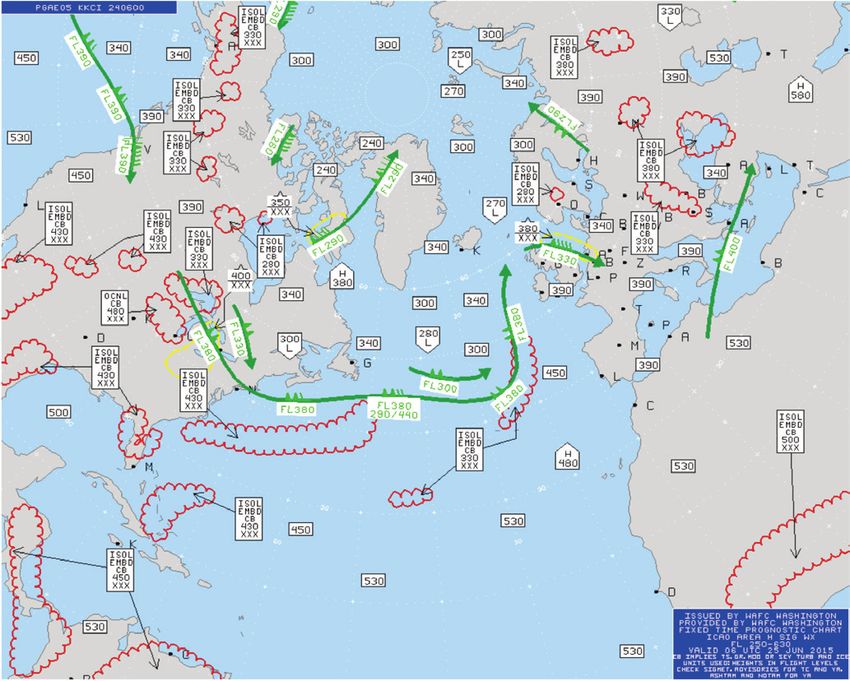
These include prognostic significant weather charts for the
Weather information is not usable for instrument procedures North Pacific, the Caribbean and northern South America,
unless it complies with the requirements of CAR 804 or a the North Atlantic, Canada and the United States.
related national exemption.
1.3.3 Aerodrome Forecasts (TAFs)
AU is an air-ground communications service that can provide
approach and landing information to IFR pilots. The altimeter TAFs are prepared for approximately 180 aerodromes across
setting and wind reports provided by an AU are usable in Canada. TAFs are limited to aerodromes for which METAR
support of an instrument procedure. Pending revisions to the and SPECI reports are available. The forecasts are generally
CARs, these services must be provided in accordance with prepared four times daily with periods of validity up to a
Table of Contents Changes Bookmarks Panel 125< Previous page Next page >
TC AIM March 28, 2019
maximum of 30 hr. See MET 7.0 for more information on produced by a super-computer model of the atmosphere called
TAFs, including where and when they are issued, their periods a NWP model, which is run twice per day at 00Z and 12Z after
of validity and decoding instructions. collecting and analyzing weather observation data from around
the world.
TAFs are issued in TAF code, with amendments as required.
FD forecasts based on the 12Z NWP model run on the fifth
1.3.4 Aerodrome Advisory Forecasts day of the month would include the following text in front of
the forecast data: “FCST BASED ON 051200 DATA”. The
Aerodrome advisories are forecasts that are issued in TAF text “DATA VALID 060000” in the FD forecast indicates
format except that ADVISORY is added immediately after the that the temperature and wind velocity data is forecast to be
period of validity group. They are issued in place of a TAF in most representative of conditions at 00Z on the sixth day of the
the following circumstances: month. FD forecast data can be used for several hours before or
after the stated valid time. This is indicated by the text “FOR
(a) Offsite—the forecast is based on observations that USE” followed by the time range. For example, “FOR USE
have been taken offsite and are not considered to be 21 – 06” means that this particular forecast may be used for a
representative of weather conditions at the aerodrome; 9-hr period from 21Z to 06Z.
(b) Observation incomplete—the forecast is based on observa- During flight planning, care must be exercised to ensure
tions which have regularly missing or incomplete data; or that the correct FD forecast is selected and the associated
“FOR USE” coverage is appropriate for the time of the
(c) No specials—the forecast is based on observations from proposed flight.
a station with a limited observing program that does not
issue SPECIs. Forecasts in digital form of the winds and temperatures aloft
(FB), an improvement over FD forecasts, are now available
In each case, after the period of validity group, the advisory over the phone. FB forecasts are updated four times per day.
forecast will be labelled with the word ADVISORY and the Over the next couple of years, FB forecasts will gradually
appropriate qualifier (OFFSITE, OBS INCOMPLETE, or replace FD forecasts for most flight planning purposes. Further
NO SPECI). information is available in the MANAIR, which can be found
MET
on Environment Canada’s Web site.
1.3.5 Coastal Weather
1.3.8 Air Traffic Control (ATC) Weather
Float plane operators can also obtain coastal marine weather
Assistance
on HF and VHF FM frequencies from some Canadian
Coast Guard stations. Frequencies and time of broadcast are ATC will issue information on significant weather and assist
contained in two Canadian Coast Guard Publications: Radio pilots in avoiding weather areas when requested. However, for
Aids to Marine Navigation (Pacific and Arctic) and Radio reasons of safety, an IFR flight must not deviate from an assigned
Aids to Marine Navigation (Atlantic, St. Lawrence, Great course or altitude/flight level without a proper ATC clearance.
Lakes, Lake Winnipeg and Arctic). These two publications are When weather conditions encountered are so severe that an
published annually and are available on the Canadian Coast immediate deviation is determined to be necessary, and time
Guard Web site. will not permit approval by ATC, the pilot’s emergency authority
may be exercised. However, when such action is taken, ATC
1.3.6 Graphic Area Forecasts (GFAs) and should be advised of the flight alteration as soon as practicable.
AIRMET
When a pilot requests clearance for a route deviation or for an
Messages
GFAs are issued as a series of temporally adjusted ATC radar vector and ATC operational boundaries have to be
weather charts for CDA and distributed on a routine or on-request crossed,the controller must evaluate the air traffic situation in
basis. These forecasts are prepared four times daily for seven the affected area and coordinate with other controllers before
regions across the country with a validity period of 12 hr and an replying to the request.
IFR outlook for a further 12 hr. See MET 4.0 for issue, periods
of validity and decoding instructions. Once issued, a SIGMET It should be remembered that the controller’s primary
or AIRMET message automatically amends the current and function is to provide safe separation between aircraft. Any
relevant GFA. A full description of AIRMET can be found in additional service, such as weather avoidance assistance, can
MET 5.0. only be provided to the extent that it does not detract from the
primary function. Also note that the separation workload for
1.3.7 Upper Level Wind and the controller generally increases when weather disrupts the
usual flow of traffic. ATC radar limitations and frequency
Temperature Forecasts (FDs)
congestion are also a factor in limiting the controller’s
Alphanumeric upper level wind and temperature forecasts (FDs) capability to provide additional services.
are routinely prepared for 142 sites in Canada. FD forecasts are
126 Table of Contents Changes Bookmarks PanelYou can also read


