Multi-species Action Plan for Pukaskwa National Park of Canada Proposed - Species at Risk Act - Species at risk public ...
←
→
Page content transcription
If your browser does not render page correctly, please read the page content below
Proposed                         Species at Risk Act
                                     Action Plan Series

Multi-species Action Plan for Pukaskwa
National Park of Canada [Proposed]

                                              2017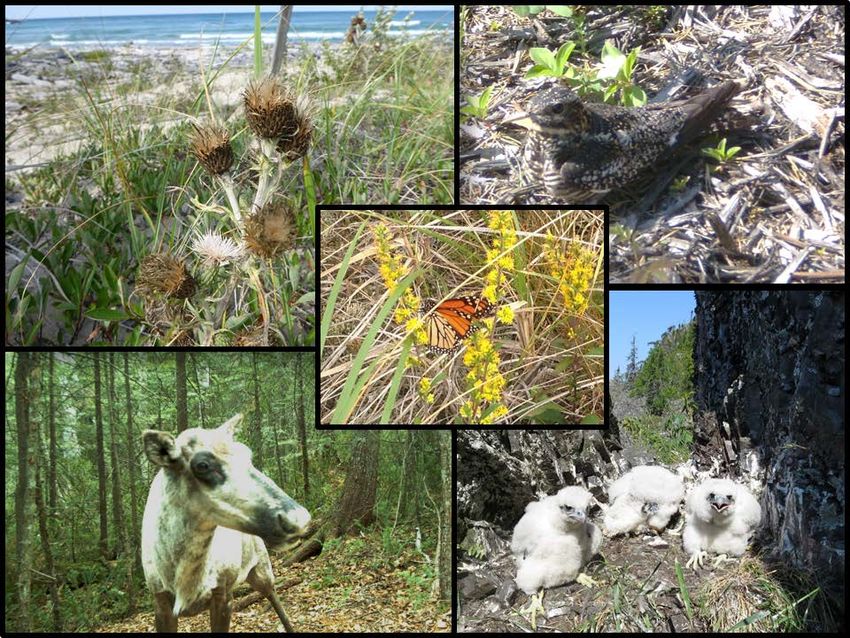
Recommended citation:

Parks Canada Agency. 2017. Multi-species Action Plan for Pukaskwa National Park of
Canada [Proposed]. Species at Risk Act Action Plan Series. Parks Canada Agency,
Ottawa. iv + 16 pp.

For copies of the action plan, or for additional information on species at risk, including
COSEWIC Status Reports, residence descriptions, recovery strategies, and other
related recovery documents, please visit the Species At Risk Public Registry 1.

Cover illustrations: © Parks Canada Agency.

Également disponible en français sous le titre:
Plan d’action visant des espèces multiples dans le parc national du Canada Pukaskwa
[proposition].

© Her Majesty the Queen in Right of Canada, represented by the Minister of the
Environment and Climate Change, 2017. All rights reserved.
ISBN ISBN to come
Catalogue no. Catalogue no. to come

Content (excluding the illustrations) may be used without permission, with appropriate
credit to the source.

1   http://www.registrelep.gc.ca/default.asp?lang=En&n=24F7211B-1

Multi-species Action Plan for PNP                                                      2017

Preface
The federal, provincial, and territorial government signatories under the Accord for the
Protection of Species at Risk (1996) 2 agreed to establish complementary legislation and
programs that provide for effective protection of species at risk throughout Canada.
Under the Species at Risk Act (S.C. 2002, c.29) (SARA), the federal competent
ministers are responsible for the preparation of action plans for species listed as
Extirpated, Endangered, and Threatened for which recovery has been deemed feasible.
They are also required to report on progress five years after the publication of the final
document on the Species At Risk Public Registry.

Under SARA, one or more action plan(s) provides the detailed recovery planning that
supports the strategic direction set out in the recovery strategies for the species. The
plan outlines what needs to be done to achieve the population and distribution
objectives (previously referred to as recovery goals and objectives) identified in the
recovery strategies, including the measures to be taken to address the threats and
monitor the recovery of the species, as well as the proposed measures to protect critical
habitat that has been identified for the species. The action plan also includes an
evaluation of the socio-economic costs of the action plan and the benefits to be derived
from its implementation. The action plan is considered one in a series of documents that
are linked and should be taken into consideration together with the COSEWIC status
reports, management plans, recovery strategies, and other action plans produced for
these species.

The Minister responsible for the Parks Canada Agency (the Minister of the Environment
and Climate Change) is the competent minister under SARA for the species found in
Pukaskwa National Park (PNP) of Canada and has prepared this action plan to
implement the recovery strategies as they apply to the park, as per section 47 of SARA.
It has been prepared in cooperation with Indigenous organizations, Environment and
Climate Change Canada, Fisheries and Oceans Canada and the province of Ontario as
per section 48(1) of SARA.

Implementation of this action plan is subject to appropriations, priorities, and budgetary
constraints of the participating jurisdictions and organizations.

Acknowledgments
Special thanks go out to all of those who contributed to the content of this plan and
especially those who participated in the site analysis workshop in the fall of 2015 and
contributed their time, expertise and information.

2   www.ec.gc.ca/media_archive/press/2001/010919_b_e.htm

                                                                                             ii
Multi-species Action Plan for PNP 2017
Executive Summary
The Multi-species Action Plan for Pukaskwa National Park of Canada applies to lands
and waters occurring within the boundaries of the park. The plan meets the
requirements for action plans set out in the Species At Risk Act (SARA s.47) for species
requiring an action plan and that regularly occur in these sites. Measures described in
this plan will also provide benefits for other species of conservation concern that
regularly occur at Pukaskwa National Park (PNP).
Where it has been determined that the site can conduct management activities to help
recover and/or manage a species, site-specific objectives are identified in this plan and
represent the site’s contribution to objectives presented in federal recovery strategies
and management plans. Species at risk, their residences, and their habitat are
protected by existing regulations and management regimes in national parks and
national historic sites as well as by SARA. Additional measures that will contribute to
the survival and recovery of the species at the sites are described in this plan. These
measures were identified based on threats and actions outlined in federal and provincial
status assessments and recovery documents, as well as knowledge of the status and
needs of each species at each site. Population monitoring measures are also identified
for the species for which management activities at the sites can contribute to recovery.
Critical habitat is not identified in this action plan.
Measures proposed in this action plan will have limited socio-economic impact and
place no restrictions on land use outside of PNP. Direct costs of implementing this
action plan will be borne by Parks Canada. Indirect costs are expected to be minimal,
while benefits will include positive impacts on ecological integrity, greater awareness
and appreciation of the value of biodiversity to Canadians, and opportunities for
engagement of local communities and Indigenous Peoples.
iiiMulti-species Action Plan for PNP 2017
Table of Contents
Preface .............................................................................................................................ii
Acknowledgments ............................................................................................................ii
Executive Summary ........................................................................................................ iii
Table of Contents ............................................................................................................iv
1. Context ..................................................................................................................... 1
1.1 Scope of the Action Plan .................................................................................... 2
2. Site-based Population and Distribution Objectives................................................... 4
3. Conservation and Recovery Measures .................................................................... 4
4. Critical Habitat .......................................................................................................... 6
4.1. Proposed Measures to Protect Critical Habitat................................................... 6
5. Evaluation of Socio-Economic Costs and of Benefits............................................... 6
1.1. Costs .................................................................................................................. 6
5.2. Benefits .............................................................................................................. 7
6. Measuring Progress ................................................................................................. 8
7. References ............................................................................................................... 9
Appendix A: Species information, objectives and monitoring plans for species at risk in
PNP. .............................................................................................................................. 11
Appendix B: Conservation and recovery measures that will be conducted by PNP ...... 14
Appendix C: Other conservation and recovery measures that will be encouraged
through partnerships or when additional resources become available. ......................... 15
Appendix D: Effects on the Environment and Other Species ........................................ 16
ivMulti-species Action Plan for PNP 2017
1. Context
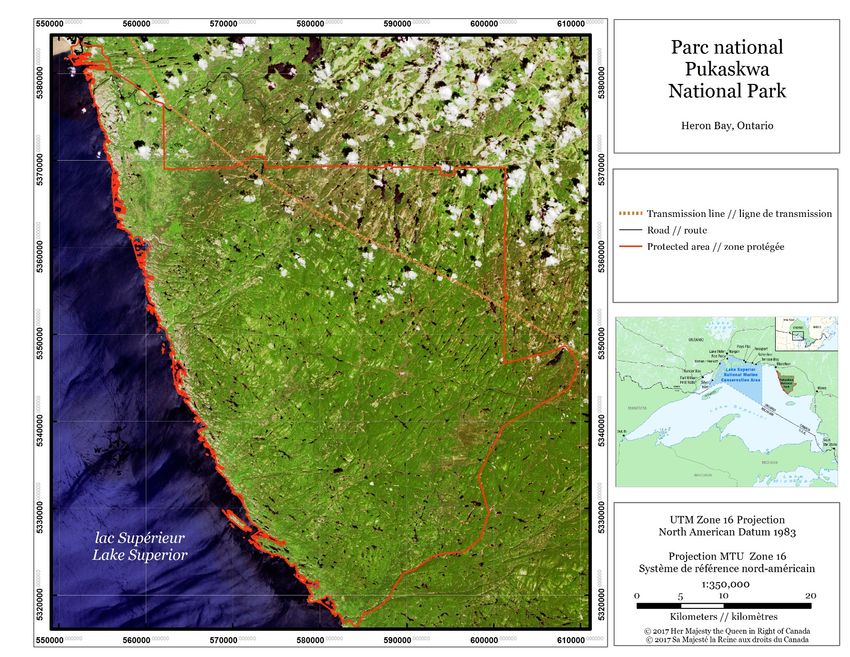
Pukaskwa National Park (PNP) is 1878km2 in size and is located on the northeast
corner of Lake Superior, Ontario, Canada (Figure 1). PNP is home to the Anishinaabek,
the people of the northern Superior region connected by a common language and
culture (Parks Canada Agency 2014). First opened as a national park in 1983, PNP
represents the Central Boreal Uplands natural region within Canada’s National Parks
System Plan and is characterized by rugged terrain, boreal forests, rushing rivers, and a
spectacular coastline (Parks Canada Agency 2014). Visitors to PNP enjoy wilderness
experiences in ways that include camping, hiking, interpretive programs and special
activities, and have opportunities to learn about the Anishinaabek people, plant and
animal species, and natural processes. The Park’s “signature” attraction is its 60-
kilometre coastal hiking trail and paddling route along Lake Superior (Parks Canada
Agency 2014).
Maintenance and restoration of ecological integrity is the first priority of national parks
(Canada National Parks Act s.8(2)). Species at risk, their residences, and their habitat
are therefore protected by existing national park regulations and management regimes.
In addition, the Species at Risk Act (SARA) prohibitions protecting individuals and
residences apply automatically when a species is listed, and all critical habitat in
national parks and national historic sites must be protected within 180 days of being
identified.
Recovery measures for species at risk will be integrated within the framework of Parks
Canada’s ongoing ecological integrity programs. National parks maintain
comprehensive, scientifically rigorous ecological integrity monitoring and restoration
programs that are organized according to the major ecosystems present in the park.
The recovery measures described in this action plan are therefore organized in the
same manner. Parks Canada’s ecological integrity programs make contributions to the
recovery of species at risk by providing inventory and monitoring data, and through the
implementation of habitat restoration projects and other conservation measures. The
species-directed measures outlined in this plan will in turn contribute to maintaining and
improving ecological integrity at both sites by improving the conservation status of
native species and their habitat and maintaining biodiversity.
A number of federal and provincial recovery strategies and plans, management plans,
and action plans have been prepared for species considered in this action plan. Along
with status assessments, those documents provide guidance for the recovery of
individual species, including strategic directions, recovery objectives, critical habitat, and
threats. This action plan was developed and will be implemented in a manner that is
consistent with those recovery documents, and should be viewed as part of this body of
linked strategies and plans.
1Multi-species Action Plan for PNP 2017
1.1 Scope of the Action Plan
The geographic scope of this action plan includes all federally owned lands and waters
managed by PNP (Figure 1). This multi-species action plan has been written specifically
for PNP because the Parks Canada Agency (PCA) is legally responsible for species at
risk on PCA lands and waters, has the ability to take direct conservation action, and
deals with different threats, legislation, and management priorities than areas outside
the park.
This action plan addresses SARA-listed species that regularly occur in PNP which
require an action plan under SARA (s.47), as well as other species of conservation
concern (Table 1). This approach both responds to the legislated requirements of the
SARA and provides the Parks Canada Agency with a comprehensive plan for species
conservation and recovery at these sites. The plan will be amended as required to meet
SARA requirements for action planning.
Table 1. Species included in the action plan for Pukaskwa National Park.
Species Scientific Name COSEWIC SARA Schedule
Status 1 Status
Barn Swallow Hirundo rustica Threatened Not Listed
Bank Swallow Riparia riparia Threatened Not Listed
Canada Warbler Cardellina canadensis Threatened Threatened
Common Nighthawk Chordeiles minor Threatened Threatened
Eastern Wood-pewee Contopus virens Special Concern Not Listed
Lake Sturgeon (Great Lakes – Upper Acipenser fluvescens Threatened Not Listed
St. Lawrence populations)
Little Brown Myotis Myotis lucifugus Endangered Endangered
Monarch Danaus plexippus Endangered Special Concern
Olive-sided Flycatcher Contopus cooperi Threatened Threatened
Peregrine Falcon (anatum/tundrius) Falco peregrinus Special Concern Special Concern
anatum/tundrius
Pitcher’s Thistle Cirsium pitcheri Special Concern Endangered
Rusty Blackbird Euphagus carolinus Special Concern Special Concern
Shortjaw Cisco Coregonus zenithicus Threatened Not Listed
Woodland Caribou (boreal population) Rangifer tarandus Threatened Threatened
Snapping turtle Chelydra serpentina Special Concern Special Concern
2Multi-species Action Plan for PNP 2017
Figure 1. Pukaskwa National Park, Ontario, Canada.
3Multi-species Action Plan for PNP 2017
2. Site-based Population and Distribution Objectives
The potential for PCA to undertake management actions at the site that will contribute to
the recovery of each species was assessed. Site-specific population and distribution
objectives were developed (Appendix A) to identify the contribution that the site can
make towards achieving the national objectives presented in federal recovery strategies
and management plans. Because they are directly linked to the site-based population
and distribution objectives, monitoring activities are reported in Appendix A rather than
in the tables of recovery measures (Appendices B and C). If there is little opportunity for
the site to contribute to the recovery of a species, site-specific objectives and
conservation measures may be limited to protection measures in place under the
Canada National Parks Act and SARA, population monitoring, habitat maintenance and
restoration through the existing management regime at the site. For some species,
population and distribution objectives for PNP are not meaningful at the scale of this
action plan for various reasons, including 1) threats cannot be controlled in the park or
do not exist in the park (e.g., wide-spread disease, loss of overwintering habitat
elsewhere); 2) species is only transient; 3) population within the site is a very small part
of the Canadian distribution or is unknown or unconfirmed.
3. Conservation and Recovery Measures
PNP contributes to the conservation and protection of several regularly occurring
species currently listed as special concern, threatened or endangered in Canada (Table
1). Largely intact unfragmented forest, the majority of the Park is managed as
wilderness, providing 187,800 hectares of predominantly mixed-wood forest, 14 primary
watersheds with abundant rivers and streams, 951 lakes, and numerous wetlands.
PNP’s coastal region also contributes to the largest stretch of undeveloped,
contiguously forested shoreline on the Great Lakes.
Ecological impacts of past activities on species at risk in this area have resulted in
altered predator-prey dynamics, an altered fire regime and contaminant exposure.
These impacts have resulted in the decline and extirpation of several species (e.g.
Woodland Caribou (Rangifer tarandus caribou), Common Nighthawk (Chordeiles
minor), and Peregrine Falcon (Falco peregrinus anatum/tundrius)) highlighting the need
for and importance of protected areas like PNP. Since the late 1980s, PNP has worked
with stakeholders, partners and volunteers to monitor and improve the ecological health
of the park, and increase opportunities to support the recovery of many listed species.
In addition, the site has played an important role in promoting awareness and
appreciation of species at risk, as well as providing opportunities for academic research
and studies that inform management and restoration efforts.
This action planning process identified measures to achieve the site-based population
and distribution objectives, along with measures required to protect the species and
learn more about them. The process of determining which measures will be conducted
4Multi-species Action Plan for PNP 2017
by the Park (Appendix B) and which measures will be encouraged through partnerships
or when additional resources come available (Appendix C) involved a prioritization
process. The process primarily considered ecological effectiveness of measures, and
also included consideration of opportunities to increase the value of visitor experience to
the park, opportunities to increase awareness through external relations, and budgetary
opportunities and constraints. Wherever possible, Parks Canada is taking an ecosystem
approach, prioritizing actions that benefit numerous species at once to effectively and
efficiently protect and recover species at risk.
Three themes emerge from these measures; habitat restoration, filling knowledge gaps,
and working together.
Habitat Restoration
PNP will continue habitat improvements for species at risk which depend on recently
burned habitat such as the Common Nighthawk, as well as certain young forests, such
as the Olive-sided Flycatcher, Rusty Blackbird and Canada Warbler, by using
prescribed fire and allowing wildfire to occur naturally when it is safe and desirable.
Through mitigating the threat of a suppressed fire regime, PNP expects to ensure the
persistence of habitat for many forest bird species at risk that are facing significant
declines across their ranges. At the same time, the park is also respecting the need that
Woodland Caribou have for large tracts of undisturbed forest habitat by ensuring that
prescribed fires planned by the park are minimized in caribou habitat, and wildfires are
monitored carefully, and suppressed when necessary, in order to achieve Recovery
Strategy goals for maintaining habitat within the range (Environment Canada 2012).
Filling Knowledge Gaps
Research and monitoring is needed to fill gaps in the knowledge base necessary to
build programs and ensure recovery for some species at risk. Many of these measures
will require partnerships and/or additional funding and will benefit from the opportunity to
work with the academic community, non-profit organizations as well as citizen scientists.
Peregrine Falcon monitoring in PNP, a collaborative initiative between Parks Canada,
Project Peregrine (Thunder Bay Field Naturalists), as well as citizen scientists, will
contribute information to lake-wide monitoring efforts to determine if this species
requires ongoing protection in the future. A study will be sought to evaluate the impact
of fire on forest bird habitat for species that are limited by the suppression of this
important natural disturbance process (e.g. Common Nighthawk (Environment Canada
2016a)). Educating visitors more about species at risk bats, species at risk forest birds
dependent on fire, and Woodland Caribou are also planned, as well as receiving and
contributing occurrence information to Ontario’s Natural Heritage Information Centre
and Fisheries and Oceans Canada from staff, visitors and citizen scientists (e.g. through
special events like Bioblitz’s).
Working Together
Visitor experience and outreach opportunities are key to the success of this multi-
species action plan. Reporting of incidental sightings of species at risk, like Snapping
Turtle and Woodland Caribou, will be promoted to visitors while in the park. While PNP
5Multi-species Action Plan for PNP 2017
can increase some habitat for Monarch butterflies, the park is only one small stop for
this migrating species. Through an education program – a live exhibit – the park can
contribute to global Monarch conservation by building awareness and encouraging off-
site action within the species’ range through the planting of native nectaring plants and
native milkweed. Furthermore, travelling exhibits will be developed for visitors and urban
audiences on species at risk in Canada that will inform and educate the public on
specific conservation actions. Finally, actions to support the recovery of the Pitcher
Thistle through the development of signs at old and newly established colonies will
inform and engage visitors in their sensitivity to trampling, and support their persistence
in Pukaskwa National Park for future generations.
4. Critical Habitat
Critical habitat is “the habitat that is necessary for the survival or recovery of a listed
wildlife species and that is identified as the species’ critical habitat in the recovery
strategy or in an action plan for the species” (SARA s.2(1)). At the time of writing of this
document it was not possible to identify additional critical habitat in PNP. Critical habitat
has already been identified in PNP in recovery strategies for Woodland Caribou and
Pitcher’s Thistle and more will be identified in the future when possible. Where critical
habitat identification is not complete, it will be identified in an upcoming or revised action
plan or revised recovery strategy; refer to the schedule of studies in relevant recovery
strategies for further details.
4.1. Proposed Measures to Protect Critical Habitat
Critical habitat identified in this action plan and in other recovery documents within PNP
will be legally protected from destruction as per section 58 of the SARA.
5. Evaluation of Socio-Economic Costs and of Benefits
The Species at Risk Act requires the responsible federal minister to undertake “an
evaluation of the socio-economic costs of the action plan and the benefits to be derived
from its implementation”.
1.1. Costs
The total cost to implement the action plan will be borne by Parks Canada out of
existing salaries and goods and services dollars. This includes incremental salary
costs, materials, equipment, and contracting of professional services for measures
outlined in Appendix B. No major socio-economic costs to partners, stakeholders or
Indigenous Peoples are expected as a result of this action plan. Additional resources or
partnerships will be sought to support the measures outlined in Appendix C.
Many of the proposed measures will be integrated into the operational management of
the sites and there will be few new costs. These costs to the government will be
6Multi-species Action Plan for PNP 2017
covered by prioritization of existing funds and salary dollars at the site and thereby will
not result in additional costs to society.
The action plan applies only to lands and waters in PNP, and does not bring any
restrictions to land use outside the sites. As such, this action plan will place no socio-
economic costs on the public. However, minor restrictions may be placed on visitor
activities on park lands and waters to protect and recover species at risk.
5.2. Benefits
Measures presented in this action plan for PNP will contribute to meeting recovery
strategy objectives for threatened and endangered species, and will also contribute to
meeting management objectives for species of special concern. These measures are
expected to have an overall positive impact on ecological integrity and enhance
opportunities for appreciation of the sites and the species by visitors and the general
public. This action plan includes measures that could result in benefits to Canadians,
such as positive impacts on biodiversity and the value individuals place on preserving
biodiversity.
The proposed measures seek a balanced approach to reducing or eliminating threats to
species at risk populations and habitats, and include protection of individuals and their
habitat (e.g., restrictions to human activities within areas occupied by the species,
combined with ongoing research and monitoring), and increasing public awareness and
stewardship (e.g., signage, visitor programs, and highlights in communication media).
Potential economic benefits of the recovery of the species at risk found in these sites
cannot be easily quantified, as many of the values derived from wildlife are non-market
commodities that are difficult to appraise in financial terms. Wildlife, in all its forms, has
value in and of itself, and is valued by Canadians for aesthetic, cultural, spiritual,
recreational, educational, historical, economic, medical, ecological and scientific
reasons. The conservation of wildlife at risk is an important component of the
Government of Canada’s commitment to conserving biological diversity, and is
important to Canada’s current and future economic and natural wealth.
Implementing this action plan is expected to have positive benefits for park visitors, local
residents, and Indigenous Peoples. Some activities in the plan may create
opportunities for local residents to become involved in the recovery of species at risk
and for cooperation and community partnerships in species at risk recovery. Benefits
should be relatively evenly distributed across individuals in local communities, and
opportunities for involvement will be available to all local residents. These include
opportunities to learn about and take part in the recovery of culturally important species
at risk, opportunities for visitors and local communities to be involved in conservation
issues, opportunities for integration of Indigenous Traditional Knowledge into
conservation approaches in PNP, and greater awareness of Indigenous Peoples values
and culture among local residents and visitors to the parks. In doing so the plan
supports the goals under the Species at Risk Act “the traditional knowledge of the
7Multi-species Action Plan for PNP 2017
aboriginal peoples of Canada should be considered in the assessment of which species
may be at risk and in developing and implementing recovery measures”.
6. Measuring Progress
Reporting on implementation of the action plan (under s. 55 of SARA) will be done by
assessing progress towards implementing the measures listed in Appendix B. Reporting
on the ecological and socio-economic impacts of the action plan will be done by
assessing progress towards meeting the site-based population and distribution
objectives.
8Multi-species Action Plan for PNP 2017
7. References
COSEWIC 2003. COSEWIC assessment and update status report on the Shortjaw
Cisco Coregonus zenithicus. Committee on the Status of Endangered Wildlife in
Canada. Ottawa. viii + 19 pp.
COSEWIC. 2006. COSEWIC assessment and update status report on the Lake
Sturgeon Acipenser fulvescens in Canada. Committee on the Status of Endangered
Wildlife in Canada. Ottawa. xi + 107 pp. (www.sararegistry.gc.ca/status/status_e.cfm).
COSEWIC. 2011. COSEWIC assessment and status report on the Barn Swallow
Hirundo rustica in Canada. Committee on the Status of Endangered Wildlife in Canada.
Ottawa. ix + 37 pp. (www.sararegistry.gc.ca/status/status_e.cfm).
COSEWIC. 2012. COSEWIC assessment and status report on the Eastern Wood-
pewee Contopus virens in Canada. Committee on the Status of Endangered Wildlife in
Canada. Ottawa. x + 39 pp. (www.registrelep-sararegistry.gc.ca/default_e.cfm).
Environment Canada. 2012. Recovery Strategy for the Woodland Caribou (Rangifer
tarandus caribou), Boreal population, in Canada. Species at Risk Act Recovery
Strategy Series. Environment Canada, Ottawa. xi + 138 pp.
Environment Canada. 2014. Management Plan for the Peregrine Falcon
anatum/tundrius (Falco peregrinus anatum/tundrius) in Canada [Proposed]. Species at
Risk Act Management Plan Series. Environment Canada, Ottawa. iv + 27 pp.
Environment Canada. 2015a. Recovery Strategy for the Little Brown Myotis (Myotis
lucifugus), Northern Myotis (Myotis septentrionalis), and Tri-colored Bat (Perimyotis
subflavus) in Canada [Proposed]. Species at Risk Act Recovery Strategy Series.
Environment Canada, Ottawa. ix + 110 pp.
Environment Canada. 2015b. Management Plan for the Rusty Blackbird (Euphagus
carolinus) in Canada. Species at Risk Act Management Plan Series. Environment
Canada, Ottawa. iv + 26 pp.
Environment Canada. 2016a. Recovery Strategy for the Common Nighthawk
(Chordeiles minor) in Canada. Species at Risk Act Recovery Strategy Series.
Environment Canada, Ottawa. vii + 49 pp.
Environment Canada. 2016b. Recovery Strategy for the Canada Warbler (Cardellina
canadensis) in Canada. Species at Risk Act Recovery Strategy Series. Environment
Canada, Ottawa. vii + 56 pp.
9Multi-species Action Plan for PNP 2017
Environment Canada. 2016c. Recovery Strategy for the Olive-sided Flycatcher
(Contopus cooperi) in Canada. Species at Risk Act Recovery Strategy Series.
Environment Canada, Ottawa. vii + 52 pp.
Environment Canada. 2016d. Management Plan for the Monarch (Danaus plexippus) in
Canada. Species at Risk Act Management Plan Series. Environment Canada, Ottawa.
iv + 45 pp.
Gonzales, E.K., P. Nantel, A. R. Rodgers, M. L. Allen, C. C. Drake 2015. Decision-
support model to explore the feasibility of using translocation to restore a woodland
caribou population in Pukaskwa National Park, Canada. Rangifer, 35, Special issue No.
23, 2015: 27-48 DOI: 10.7557/2.35.2.3626
Parks Canada Agency 2011. Recovery Strategy for Pitcher`s Thistle (Cirsium pitcher)
in Canada. Species at Risk Act Recovery strategy series. Parks Canada Agency.
Ottawa. X + 31 pp.
Parks Canada Agency 2014. Pukaskwa National Park of Canada, management plan.
Park Management Plan series. Parks Canada Agency. Ottawa. 64 pp.
Pratt, T.C., Gorman, O.T., Mattes, W.P., Mayers, J.T., Quinlan, H.R., Schreiner, D.R.
Seider, M.J., Sitar, S.P., Yule, D.L., and Yurista, P.M. 2016. The state of Lake Superior
in 2011. Gt. Lakes Fish. Comm. Spec. Publ. 16-01.
10Multi-species Action Plan for PNP 2017
Appendix A: Species information, objectives and monitoring plans for species at risk
in Pukaskwa National Park (PNP).
Species National objectives 3 Site-based Population Population monitoring 4 General information and
Population & Trend in PNP broad park approach
distribution
objectives
Canada Warbler Halt the decline of Increase the total Unknown Because the park is so Fire has been actively
populations in next 10 area of breeding inaccessible, monitoring managed in the park since
years & ensure positive habitat using fire. populations is not feasible, 1999. Prescribed fires will help
population growth for 10 therefore a habitat surrogate increase breeding habitat for
years after 2025. will be used. Total breeding these species.
Common Halt the decline of habitat will be measured every
Nighthawk populations in next 10 5 years.
years & ensure positive
population growth for 10
years after 2025.
Olive-sided Halt the decline of
Flycatcher populations in next 10
years & ensure positive
population growth in the
10-year population trend
in Canada. Maintain the
current extent of
occurrence in Canada.
Peregrine Falcon Population is self- Average number of Increasing Annual monitoring at each Population is doing well and
(anatum/tundrius) sustaining throughout its occupied territories historically occupied territory the park continues to monitor
Canadian range within over 5-years is ≥ 2.9 and new territories as they and provide education
next 10 years. and the average arise. opportunities.
breeding success is ≥
47% and that over a
ten year period, the
trend is stable or
increasing for each 5.
3 National objectives as per most recent versions of relevant recovery documents found in References section.
4 Where site-based population and distribution objectives have been established, monitoring is designed to directly measure success in achieving those goals.
5 Site-specific thresholds developed from monitoring Peregrine Falcon in PNP since 1999
11Multi-species Action Plan for PNP 2017
Species National objectives 3 Site-based Population Population monitoring 4 General information and
Population & Trend in PNP broad park approach
distribution
objectives
Pitcher’s Thistle Maintain two existing 1. Oiseau Bay & Increasing (due to Number of plants tallied each Three Pitcher’s thistle colonies
populations (Oiseau Bay Hattie Cove restoration efforts year (by rosette, seedling, or have been monitored annually
and Hattie Cove) at their populations are underway) flowering plant) per plot in each since 1983. After a natural
current locations. Use stable & restoration colony. disturbance in 1985 (beaver
existing populations to has begun by 2015. dam explosion causing
restore Pitcher's Thistle 2. Regional erosion), one colony was
into suitable habitat at population size (3 extirpated, and one is in
one new site by 2020. sites) totals decline (anticipated to be
Populations will not approximately 800 by extirpated). The park has
exhibit declines that 2021. initiated restoration at two new
represent an increased 3. All populations are sites to ensure three sites with
extirpation risk increasing or have 800 plants are maintained in
acceptable the Park.
fluctuations by 2021.
Lake Sturgeon Maintain and rehabilitate Rehabilitate Unknown Catch per unit effort Support Lake Superior’s
spawning populations spawning populations (number/305 m gillnet) binational Cooperative Science
so they become self- & Monitoring program for
sustaining as per the rehabilitation and maintenance
Lake Superior of Lake Sturgeon
Cooperative Science
& Monitoring program
goals (Pratt et al.
2016)
12Multi-species Action Plan for PNP 2017
Species National objectives 3 Site-based Population Population monitoring 4 General information and
Population & Trend in PNP broad park approach
distribution
objectives
Barn Swallow, Bank Swallow, Eastern No objective Unknown Record incidental observations The Park will continue to
Wood-pewee, Little Brown Myotis, Monarch, established because (additional monitoring for protect individuals and protect
Rusty Blackbird, Shortjaw Cisco, Snapping no threats known in Woodland Caribou in Appendix suitable habitat on park lands
Turtle, Woodland Caribou park or no park- B) and support partners where
specific management feasible on recovery and
actions can contribute protection of these species.
to conservation within
the park and/or PNP
is of limited
importance to the
species' national
recovery.
13Multi-species Action Plan for PNP 2017
Appendix B: Conservation and recovery measures that will be conducted by PNP
Species Measure Measure Desired Outcome Threat or recovery Timeline
# measure addressed
Pitcher’s Thistle 1 Add new sites, increase the total By 2021, two new sites have Succession, Erosion & 2021
number of plants, and ensure been seeded, total number of Blow-out
acceptable population fluctuations in plants is at least 800 with
Pukaskwa. populations not exhibiting
long-term declines.
Woodland Caribou 2 Collect scat for genetic analysis and Information on the genetic Population Monitoring 2017
(boreal population) mark/recapture information in similarity of animals occurring
collaboration with OMNRF. in Pukaskwa to surrounding
animals is known by 2017.
Woodland Caribou 3 Monitor use of calving habitat using Historical calving habitat is Population Monitoring 2021
(boreal population) wildlife cameras. monitored annually using
wildlife cameras.
Woodland Caribou 4 Monitor wildfires and minimize Protect critical habitat in the Habitat Alteration 2021
(boreal population) prescribed fires in critical habitat. Park.
Woodland Caribou 5 Inform visitors about the status & Visitors to Pukaskwa National Knowledge gaps Annually
(boreal population) reasons for decline of Woodland Park will have an
Caribou through a statue display understanding of caribou
outside of Visitor Centre in Pukaskwa status and reasons for
National Park. population declines on an
ongoing basis.
All species 6 Encourage staff and visitors to Incidental sightings are Knowledge gaps around Annually
record and report incidental sightings of reported annually to Ontario’s species occurrence and
species at risk (and share with Ontario Natural Heritage Information distribution
Natural Heritage Information Centre Centre and Fisheries and
and Fisheries and Oceans Canada). Oceans Canada.
Peregrine Falcon 7 Engage paddlers with a citizen science Citizen science program in Recreational activities, Annually
anatum/tundrius program to contribute to annual place with annual contributions Population monitoring
monitoring program. being made by visitors or
volunteers.
Little Brown Myotis 8 Display audio recorder with information Bat audio recording device Education & awareness Annually
panel at Visitor Centre for education displayed and information
and awareness on declines of bats. available to visitors on the
importance of bats to people,
ecosystem, biodiversity and
economies.
14Multi-species Action Plan for PNP 2017
Appendix C: Other conservation and recovery measures that will be encouraged
through partnerships or when additional resources become available.
Species Measure Measure Desired Outcome Threat or recovery
# measure addressed
Pitcher’s Thistle 9 Develop and install interpretive signage Interpretive signs are installed at two Accidental trampling,
about the Pitcher’s Thistle restoration Pitcher`s Thistle populations in knowledge gaps
project. Pukaskwa National Park.
Pitcher’s Thistle 10 Enhance knowledge of dune ecosystem Evidence that dune ecosystems have Succession
impairment and restore dune ecosystem been impaired as a result of change
if necessary in driftwood and subsequent
restoration if warranted
Canada Warbler, Common 11 Quantify and increase the amount of The amount of SAR bird (Canada Removal of habitat (shrub-
Nighthawk, Olive-sided habitat for Species at Risk birds created Warbler, Olive-sided Flycatcher, layer)
Flycatcher from Fire Management Program (wildfire, Common Nighthawk) habitat created
prescribed fire). through fire is known and has
increased over time and been verified
with ground truth surveys.
Monarch 12 Plant or encourage growth of native Nectaring flowers and interpretation of Nectaring habitat, education
nectaring flowers & install interpretive threats to species provided to visitors and awareness
signage where landscaping is required in using a panel display on an ongoing
day-use areas. basis (i.e. annually).
Peregrine Falcon 13 Band Peregrine Falcon nestlings and Research and monitoring support of Knowledge gaps, Population
anatum/tundrius deliver national media pitch to increase National Peregrine Falcon recovery monitoring, education and
awareness. goals and Canadians have an awareness
increased understanding of Peregrine
Falcon.
Snapping Turtle 14 Conduct surveys in suitable habitat to Occurrences/range in Pukaskwa Knowledge gaps
confirm if species occurs regularly in the National Park is known
park
All species at risk 15 Establish a presence at Toronto Zoo An exhibit or similar material is Outreach and Awareness
(related to Species at Risk). available related to species at risk in
Pukaskwa National Park and Canada.
All species at risk 16 Create a species at risk mobile exhibit An exhibit or similar material is Outreach and Awareness
(i.e. Interactive sign that features SAR available related to species at risk in
birds, sounds or similar), as well as ways Pukaskwa National Park is available
to report incidentals sightings, that can be in Pukaskwa and other engagements.
on display at the Visitor Centre or
elsewhere (i.e. schools, etc).
15Multi-species Action Plan for PNP 2017
Appendix D: Effects on the Environment and Other Species
A strategic environmental assessment (SEA) is conducted on all SARA recovery
planning documents, in accordance with the Cabinet Directive on the Environmental
Assessment of Policy, Plan and Program Proposals. The purpose of a SEA is to
incorporate environmental considerations into the development of public policies, plans,
and program proposals to support environmentally sound decision-making and to
evaluate whether the outcomes of a recovery planning document could affect any
component of the environment or achievement of any of the Federal Sustainable
Development Strategy’s 6 goals and targets.
Recovery planning is intended to benefit species at risk and biodiversity in general.
However, it is recognized that recovery actions may also inadvertently lead to
environmental effects beyond the intended benefits. The planning process, which is
based on national guidelines, directly incorporates consideration of all environmental
effects, with a particular focus on possible impacts upon non-target species or habitats.
The results of the SEA are incorporated directly into the plan itself, and are summarized
below.
Overall, it is anticipated that implementation of this action plan will have a beneficial
impact on non-target species, ecological processes, and the environment in PNP. This
plan puts into practice recovery goals presented in recovery strategies already
developed for some of the species at risk in this plan, which were subject to SEAs
during the development of those documents. Further, this action plan was developed to
benefit all species at risk that regularly occur in PNP; all of these species were
considered in the planning process, any potential secondary effects were considered
and mitigated, and where appropriate, measures were designed to benefit multiple
species. The planning process was also guided by priorities identified in the park’s
ecological integrity monitoring program and the park’s management plan (Parks
Canada, 2014). Consequently activities outlined in this plan address key management
priorities aimed at improving the broader ecological health of both sites. Finally, this
plan outlines stewardship actions, educational programs, and awareness initiatives that
will involve visitors, local residents, Indigenous Peoples, and the general public. This
will lead to greater appreciation, understanding, and action towards the conservation
and recovery of species at risk in general.
6 http://www.ec.gc.ca/dd-sd/default.asp?lang=En&n=F93CD795-1
16You can also read


