NET-ZERO BY DESIGN £12.6 - BILLION - BEAMA
←
→
Page content transcription
If your browser does not render page correctly, please read the page content below
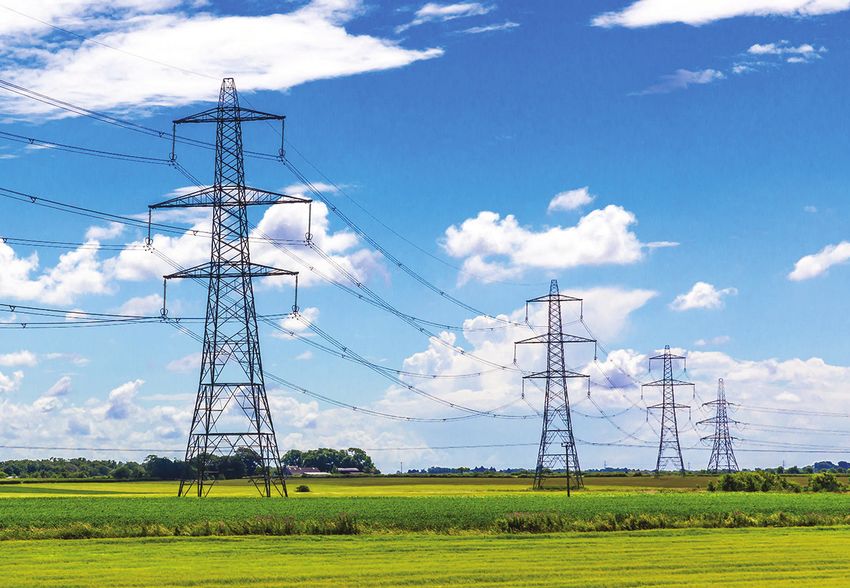
BEAMA SECTOR                                BEAMA SECTOR
                   TURNOVER                                     EXPORTS

                 £12.6                                         £4.2
                  BILLION                                     BILLION

NET-ZERO BY DESIGN
Developing a UK market for low carbon technologies

BEAMA industries back the net-zero emissions by 2050 target and agree to take action
in meeting the level of ambition required. The industry calls for urgent action and strong
leadership from Government to support their commitment.

SUMMARY

                                                                                    September 2019
ELECTRICAL INDUSTRY COMMITS TO
NET-ZERO 2050 EMISSIONS TARGET

 This letter sets out the electrical                       There will be a need for significant investment from
                                                           industry and Government to achieve these goals.
 equipment and system manufacturers’
                                                           As businesses we have invested and will continue
 commitment to the net-zero 2050                           to invest in the necessary R&D to bring suitable
 target. Represented by BEAMA,                             technologies and skills to market in the UK and phase
 the companies signed up to this                           out carbon-intensive energy products. This level of
                                                           market transition needs long-term regulatory and
 commitment agree that urgent action                       market clarity as it is essential to encourage and
 is needed in order to reduce the                          ensure private investment into the UK. The current
 devastating effects of climate change.                    policy and regulatory landscape is not delivering this
                                                           certainty.
 We support the Government’s work to regulate for
 this new target and as domestic and international         We will work with Government and other important
 businesses we commit to reducing our own emissions        stakeholders to ensure detailed strategic plans for
 as well as meeting the needs of the supply chain for      the deployment of low carbon technologies can be
 the transition to net-zero by 2050. Some BEAMA            developed with appropriate regulatory and financial
 members have already gone a step further and made         frameworks. Affordable market access for consumers
 the commitment to meet net-zero by 2030 for their         and businesses will be central to getting the
 global operations.                                        regulatory and market incentives right, and the finance
                                                           industry needs to be a positive and active player.
 The technologies required to enable decarbonisation
 of the building stock, transport and energy system        Here BEAMA, led by our membership, launch a
 are largely available today; however, the challenge is    commitment and views on the necessary steps along
 deployment at scale. Government and industry now          the journey to 2050, and through our Senior Sector
 need to elevate the level of ambition in order to drive   Council will work with Government to deliver on the
 the dramatic step change needed to ensure the net-        joint climate targets.
 zero target can be met, through long-term policy and
 regulatory frameworks and market incentives. This             Dr Howard Porter
 includes the delivery of low carbon heating and hot
 water, energy storage capacity, a robust and flexible
 energy system with appropriate market mechanisms,
 and the development of a national electric vehicle
                                                               CEO, BEAMA
 charging infrastructure.

                                                                                                                     2
Letter signatures

                        Neil Stewart
                        CEO, Glen Dimplex Heating & Ventilation

                        Richard Dick
                        Group Chairman and CEO, Lucy Group Ltd

                        Marcello Del Brenna
                        CEO, Prysmian UK

                        Carl Ennis
                        Managing Director, Products & Systems,
                        Siemens Smart Infrastructure

                        Mike Hughes
                        Zone President UK & Ireland
                        Schneider Electric

                        David Nicholl
                        Lead Division Manager
                        Northern Europe, ABB

                        Andy Myatt
                        Divisional Head of Sales and Marketing,
                        Power Grids UK, ABB

                        Patrick Caiger-Smith
                        CEO, Green Energy Options Ltd

                        Mitra Goodger
                        Energy Efficiency and Sustainability Manager
                        Legrand UK and Ireland
                                                                       M. Goodger
                        Nigel Hughes
                        Managing Director, Itron Metering
                        Solutions UK Ltd

                    ®   Mike Woodhall
                        Managing Director, Chameleon

                        Remi Volpe
                        Vice President & General Manager,
                        Drayton by Schneider Electric

                        Ian Steel
                        Managing Director, Sicame UK

                                                                                    33
Letter signatures

                    Andy Makin
                    Managing Director, EnviroVent Ltd

                    Andrew Stimpson
                    Chairman and CEO, Warmup plc

                    David Roberts
                    Managing Director, Nu Heat

                    Keith Ritchie
                    Executive Chairman, Titon Holdings

                    Klaus Jesse
                    Managing Director UK & Ireland, Vaillant

                    Stephen Currier
                    Country Manager UK&I, Eaton

                    Dr Jonathan Hiscock
                    Managing Director, Fundamentals Ltd

                    Neil Beardsmore
                    Executive Commercial Leader, Grid
                    Integration Systems – GE Renewable Energy

                    Ian Snadden
                    President of Honeywell Electrical Products

                    Steven Rooney
                    Director, Gaia Climate Solutions Ltd

                    Meirion Richards
                    Managing Director, BRUSH Transformers
                    and BRUSH Switchgear

                    Michael Bowers
                    Managing Director, Bowers Group
                    of Companies

                                                                 4
INTRODUCTION                                                             “Reaching net-zero emissions in
                                                                         the UK will require high levels
                                                                         of investment in zero carbon
BEAMA, led by our members, has set our
                                                                         technologies and considerable
commitment to deliver on the net-zero
by 2050 target. The success of this target                               development and expansion of
is dependent on industry and businesses                                  infrastructure, and innovation
adapting to stable and effective
                                                                         to reduce costs and improve
regulation, ensuring the appropriate
investment signals in the market.                                        the performance of low carbon
As outlined in the Committee on Climate Change Net Zero                  technologies. Its delivery relies
report, the target is feasible because the technology
                                                                         on business being able to invest,
is available and understood, but these can only
be implemented with strong leadership from                               which in turn requires that they
Government. In this report we outline areas where we
believe ambition is lacking and there is the need for urgent
                                                                         have confidence that they can
action – whether that’s regulation, policy, standards or market          earn a reasonable return.
design and incentives.

Technology is a key enabler for our low carbon future,                   However, a long-term target
and there is great potential for the UK to be seen as
a leader in innovation and new technology markets                        – even one in legislation – is
for smart flexible energy systems. As the first major
                                                                         not sufficient to provide the
economy in the world to set this target in law, we need to
harness the opportunity for growth in the UK economy                     confidence. It is essential to have
from this. UK leadership is a significant theme within the
Committee on Climate Change recommendations, and we
                                                                         clear, strong, effective policies.”
hope this theme will be continue to be applied to domestic
industries. BEAMA sees huge potential for the industry and                    Committee on Climate Change, 2019 –
growth in trade opportunities stemming from the transition                    Net Zero – The UK’s contribution to
to net-zero. In the lead up to COP26 we would like to start                   stopping global warming
work now to gain momentum in the UK market for our
transition to net-zero.

The current investment landscape for our sector is
however wavering, at a time when we should be seeing
a dramatic increase in the deployment of low carbon               electricity networks to meet net-zero. Ambition and radical
technologies. In this report we highlight the limitations         steps to reform regulation and market incentives (pricing) is
today for inward investment and export, and how as                urgently needed.
industry and Government we can tackle this together, and
de-risk the energy market for businesses in the UK looking        We know huge potential exists for decarboniation in the
to invest in green, low carbon technologies.                      built environment and from transport. In this report we have
                                                                  taken a deep dive into how to reform UK building regulations
Wedding ourselves to existing regulatory timetables and           and market incentives to drive the uptake of low carbon
frameworks for the energy market is limiting progress and         heating and hot water, alongside the required investment in
restricting investment. Recent action to tweak existing           network infrastructure to drive electrification. Our focus
regulations to enable new energy market services has              on these subjects is driven by the recognition there are
only created further limitations to UK investment, and            immediate near-term actions that must, and can, be taken to
spending pressures on UK network operators are today not          facilitate net-zero.
conducive of the level of investment needed in the UK

                                                                                                                                  7
                                                                                                                                  5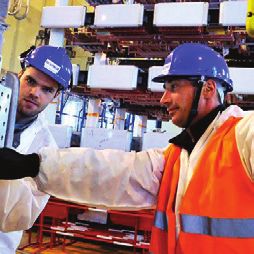
The trajectory to 2050 – critical regulatory and policy timetables and investment triggers

                                                       2020                2025                2030                2035                2040               2045             2050

         CCC targets and
       recommendations
                                                   Accelerated take     No gas in new            All new       End sale of new                                          F-gas emission
                                                  up of EVs and heat   build – 1.5 million    installations    petrol and diesel                                       reduction to near
                                                        pumps                homes           of heating are     cars and vans                                              net zero
                                                                                               low carbon
                                                                         Large scale                                                                                        Almost all
                                                                        deployment of                                                                                  transport/buildings
                                                                       low carbon heat                                                                                  to be low carbon

      Existing regulatory
                   levers
                      RIIO
                                                   RIIO T1 and GD1          RIIO T2 and GD2
                                                   ends March 2021,         ends march 2026,
                                                      ED1 2023                 ED2 2028
                                                                                                               “Immediate actions to be taken
                 Building
                                                                                                               in the next two years to reform
              regulations                                                     2025
                                               19/20 Part L                                                    policy and regulation. This will help
                                                 review                   Part L review
                                                 SAP 10                      SAP 11
                                                                                                               industry make clear investment
                  Market                                                                                       decisions. If these levers are not
                  design                                                                                       met with sufficient ambition
                                                Half hourly Energy industry Charging
                                                settlement   code review     review                            net-zero may not be achievable.”
                                                             retail market
                                                                reform
                  Smart
                metering
                              Complete smart meter rollout

        Investment           Energy white        Roadmap                           Future Homes        Regulatory            Variable ToU
                                                                 Halve energy                                                                       Asset
           triggers             paper             for heat                           standard          pathway to               tariffs                          Replace RHI with a low
                                                                  use in new                                                                     planning for
                                                                   build by                          phase out fossil                              network      carbon heat incentive to
                                                                                                      fuel in off gas        A robust UK                           tackle upfront cost
                              Ambitious building regualtion          2030          Carbon price                               market for         investment
                                reform and enforcement                               for heat            homes
                                                                                                                          flexibility services

6
17 million
                                               heat pumps installed and

                                                            5 million
                                                           homes connected to low

“
                                                           carbon heat networks by
    Lucy Electric is fully supportive of

                                                                2050
                                                                               1
    the aims of the BEAMA Net Zero
    campaign. Our business and the
    rest of the industry is working hard
    to manage the complex mix of
    new technologies, which is driving
    the decarbonisation of the UK’s                      £2-3bn
    electricity supply. But this must be             a year of required electricity
                                                   network upgrades will be needed
    supported by Government action.                             to meet
    The industry needs a regulatory
    framework which reflects the                       net-zero                 2

    Government’s green policy ambitions
    and enables innovation and the
                       “
    development of the marketplace,
                                                           BEAMA estimate a

                                                            1%
    if we are to meet the UK’s Net Zero
    Emissions target.

          John Griffiths, CEO, Lucy Electric
                                               annual decline in the number of hot water
                                               storage tanks in homes across the UK, thus
                                                   significantly reducing our capacity
                                                           for DSR in the future.

“   Strong, clear long-term policy
    signals and legislation ‘is a key driver
    for our business – Government
    need to limit business risk and in
    doing so, investment will move into
    the UK market. As of today, the UK
    Government is not reducing that
    risk and this does not warrant a
                                     “                17 million
                                                     house retrofits for insulation
    significant shift in resources.                      measures by 2030

    Mitsubishi Electric UK, Marc Overson

                                                                                            7
CONCLUSIONS AND
RECOMMENDATIONS
Setting the net-zero target in                                    the unprecedented levels of change implied by the target and
                                                                  trajectory to 2050.
legislation alone is not enough to
drive the unprecedented levels of                                 We believe there are strong actions that can be taken by
                                                                  Government now to set this trajectory, allowing time to
investment needed to ensure we                                    then build a more detailed roadmap in terms of technology
can deliver net-zero by 2050. For                                 development and more local infrastructure planning. These
BEAMA members to deliver on their                                 are actions that prevail in the research, and from our
                                                                  discussions with companies, that would set a clear signal to
commitment to the net-zero target
                                                                  investors and industry of the Government’s intentions.
further action is needed now to
provide market certainty.                                         Recommendations
                                                                  Buildings:
The uncertainty that exists in the market today following
recent political change and Brexit should not delay action by     •   Complete smart meter rollout, ensuring all UK
Government in ensuring net-zero can be delivered. This is a           customers are offered a smart meter.
co-ordination challenge at unprecedented scale, it is a cross-    •   Set ambition high within this round of the Part L review3
Government, cross-industry, global challenge and one that             – setting clear signals for the new build market (phase
requires collaboration. Changes to regulation and policy will         out high carbon technologies and enable storage
have knock on effects that need to be understood if we are            capacity), as well as setting higher standards for existing
to ensure the fair and equitable distribution of risk, cost and       homes in the UK, enabling the uptake of low carbon
finance.                                                              heating and hot water through SAP. Using the Building
                                                                      Regulations to set out a robust trajectory for energy
Action must be taken now to de-risk investment in the UK
                                                                      efficiency improvements in the UK alongside low carbon
energy sector to ensure our transition to net-zero remains
                                                                      technology deployment will produce economies of scale
commercially viable for business and consumers. The current
                                                                      for technologies like heat pumps and drive prices down
market is struggling to gain the levels of private investment
                                                                      for consumers.
needed to scale up UK market development of some key
technologies (e.g. storage, heat pumps and hot water storage)     •   Set a carbon price for heat and hot water and a long-
and action is needed now to make sure we make the most of             term trajectory for fuel subsidies.
this opportunity in terms of UK growth and manufacturing,         •   Replace RHI with a Capex based incentive for low
and retain business in the UK.                                        carbon heating and hot water products.
There are immediate actions that can be taken in the next         •   Maintain and enhance financial incentives through
two years to reform policy and regulation which will help our         reduced VAT rates for key low carbon technologies.
members make clear investment decisions. It is our firm belief    •   Increase enforcement to prevent non-compliance to
that if we pass these without sufficient ambition the net-zero        the Building Regulations.
target may not be met, and the UK supply chain will struggle
                                                                  •   Open data to enable local level energy planning,4 policy
to deliver the UK requirements for this. Fundamentally what
                                                                      design and compliance and enforcement.
is needed is clear long-term market signals set out in UK
law that will provide the confidence to manufacturers that        •   Amend the Energy Company Obligation to stop the
the UK WILL deliver on the net-zero target. Infrastructure            removal of water cylinders, and where suitable replace
planning is necessary to ensure a supply chain can gear up for        with new efficient low carbon water heating
                                                                      technologies.

                                                                                                                                    8
•   Enable green financing options including mortgages and

                                                                                    81%
    energy as a service models enabling whole house retrofit.
•   Engage the installer community in locally driven energy
    and heat planning – to drive retrofit and further
    economies of scale in the supply chain.
                                                                             OF UK RESIDENTIAL
Market design and services:                                                PROPERTIES HAVE GAS
•   Introduce variable Time of Use Tariffs and a market                   CENTRAL HEATING TODAY
    framework for Demand Side Response. This needs to
    happen in tandem with smart appliance regulation.
    Only when there is a clear market mechanism will smart
    appliances be economically viable in the UK.                     •   Make network maintenance more predictable, and
                                                                         subject to longer term planning, particularly with
•   Determine a clear market framework for flexibility
                                                                         increasing electrification of transport and in the
    services as a matter of urgency. Fudging the current
                                                                         longer-term heating
    regulatory framework is not enough and brings about
    gaps and uncertainty for the supply chain therefore              •   An improved mechanism is required from network
    limiting progress. Radical change is needed5 (e.g. forward           operators to provide visibility of innovation trials that
    and residual charging, retail market reform).                        have been completed and will actually move to Business
                                                                         as Usual (BaU).
•   Open the market to new energy service business
    models. Energy as a Service we believe presents a viable         •   Adopt a strategic focus on key energy systems challenges
    solution to the Capex issues associated with whole                   and move away from the trial and demonstration
    house retrofit and brings added benefits to consumers in             environment into a real-world environment with
    terms of cost, comfort and overall experience.                       innovation implemented at scale.

•   Target innovation funding at large scale projects to             •   Improve network efficiency by aligning responsibility for
    establish real world testing/ trial environments that can            network losses with those who are able to actively
    better enable commercialisation of new business models.              reduce them.
    BEAMA will continue to support the work by the Energy
    Systems Catapult to develop the energy as a service
    model and living lab opportunities for industry to trial
    new market propositions.

Network infrastructure and investment:                                     “We are very pleased to be
•   Enable consistent spend and investment strategies                      supporting this event and
    so that the supply chain can be ready to tackle the asset
    replacement needs in the UK.
                                                                           the publication of BEAMA’s
•   Consider current pressures on spend by network                         Net Zero by Design Report.
    operators and the impact this may have on our ability to               The industry is committed to
    deliver net-zero.
•   Invest in networks to enable net-zero. We will
                                                                           achieving the ambitious net
    increasingly see a shift of heat and transport loads relying           zero by 2050 targets but needs
    on the electricity network.
                                                                           the support of Government
•   Invest proactively in response to ‘triggers’ or ‘just in time’
    to improve the customer experience and maximise LCT                    with a clear policy framework
    connections.                                                           and pathway to make it
•   Be realistic on reinforcement. Whilst flexibility and
    capacity releasing technologies and solutions have a key
                                                                           happen” Mark Wilkins, Vaillant
    role to play, the fundamental shift in the way we fuel our
    transport and heat our homes and hot water will need
    well considered interventions and network upgrades.

                                                                                                                                     9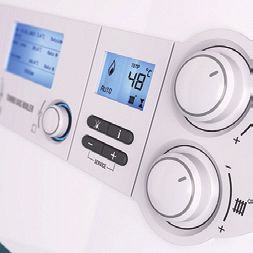
To get to net-zero by 2050 the following
principles must be met:

1. Create a proportion for the consumer –
   net-zero must be customer led

2. Guarantee a rate of return – setting a
   long-term trajectory for subsidies and
   pricing in the market

3. Incentivise a labor force.

Policy development to meet net-zero will have to
include a combination of creating customer demand
and choice editing (removing high carbon options
from the market, facilitating market take up of smart
                                                        “   For manufacturers like Glen Dimplex
                                                            Heating & Ventilation, energy costs and
                                                            fuel factors are key to determining future
                                                            investment decisions. The cost per kWh
                                                            of energy is largely policy dependent,
appliances and low carbon heating and hot water).
                                                            and with the current disparity in the
Enabling new market services will help to ensure the
customer proposition can be embedded, we have to
                                                            price of gas Vs electricity it is hard to
think radically to overcome upfront costs consumers         see how we will incentivise a market for
would otherwise face in the take up of new low              electrification. A trajectory therefore
carbon heating and hot water and Energy as a Service        needs to be set by government for these
models will do just that.

Brexit does pose a risk to industry in the UK, and
already we have felt the impact this is having on
                                                                                                  “
                                                            values and factors, so that manufacturers
                                                            can make confident investment decisions
                                                            and fulfil their role in delivering the
our sector, but if we ensure alignment with product         solutions needed to achieve net zero.
regulations and certification procedures in the EU
we can ensure manufacturers are not unnecessarily                 Neil Stewart, CEO, Glen Dimplex
burdened with additional costs to sell products into              Heating and Ventilation
the UK market and trade in the EU.

Net-zero is a huge opportunity
for the UK, for the wellbeing
of consumers, and for UK
manufacturing. This commitment
from BEAMA industries and the
report outlines our willingness to
work with Government and elevate
ambition to meet the target for the
benefit of UK plc.

                                                                                                         10
“
In the UK and across Europe, wind and solar power will dominate electricity
generation from the early 2020s due to powerful drivers including statutory
requirements to meet the global Paris climate agreement, the falling cost of solar
panels and wind turbines, rising carbon prices and the electrification of transport
and heating. As a result, electricity supply will also be increasingly variable. To avoid
resulting, higher system costs, flexibility must become the new cornerstone of the
grid. This will require Governmental policies that provide the regulatory certainty
“
needed to spur private investment in the flexibility technologies and business
models needed to smooth out this variability, for example by aligning peaks in
demand with peaks in supply of wind and solar power.
Stephen Currier, Country Manager UK&I, Eaton
“
ENDNOTES A manufacturer like Glen Dimplex
1 The Committee on Climate Change, 2019, net-zero Heating & Ventilation could spend a
technical report. long time developing a technology
2 Imperial College London (2018) – Analysis of Alternative that solves a problem within a
UK Heat Decarbonisation Pathways. CAPEX barrier to deployment, only
3 BEAMA will be publishing our full proposals on all for a policy to change the OPEX
relevant parts of the building regulations latter this requirements. They may have then
autumn. developed a product not suitable for
4 Smart Meter Energy Data Public Interest Advisory group the market – so the direction of travel
– A policy dialogue and work programme led by Centre as to how policy will affect CAPEX and
for Sustainable Energy and Sustainability First- Final OPEX is key. Core to our business is
report part 1, 2019. the principal that up-front investment
5 Redesigning regulation – Powering from the future, 2018 can bring long-term benefit, and
– Laura Sandys, Dr Jeff Hardy, Dr Rhodes, Professor we are eager that this mindset be
Richard Green (supported by BEAMA). applied to the challenge ahead of our
industry. There is no quick, cheap fix
for climate change, and consideration
“
of the overall lifetime contribution of
a technology is necessary if we are
to make substantial steps towards
addressing it.
Neil Stewart, CEO Glen Dimplex
Heating and Ventilation
11Report Sponsors
Supporting organisations
This work has been lead by the BEAMA Senior Sector Council, a strategy
committee within BEAMA providing a steer on our policy work and key industry
agendas including net-zero, Brexit, compliance and the overall industrial strategy.
The Council members are senior officials from our member companies and key
organisations we work with across the industry.
The non-manufacturing companies who are members of the BEAMA Senior Sector
Council have also shown their commitment to the net-zero target and have worked
closely with BEAMA in the formation of this report. As part of this commitment
BEAMA will continue to work closely with these supporting organisations to ensure
the requirements for net-zero can be met for our industry.
Follow us on:
BEAMA Ltd
@BEAMAUK #BEAMAnetzero SCAN MEYou can also read


