NORTH QUEENSLAND BEACH SAFETY - INFORMATION MAP - Surf Life Saving Queensland
←
→
Page content transcription
If your browser does not render page correctly, please read the page content below
INFORMATION MAP

NORTH QUEENSLAND
BEACH SAFETY
NORTH QUEENSLAND
PATROLLED BEACHES

               Four Mile Beach

 PORT DOUGLAS

                                     Ellis Beach
                                          Palm Cove
                                             Clifton Beach                          Green Island
                                               Kewarra Beach
                                                  Trinity Beach
                                                   Yorkeys Knob Beach
                                                      Holloways Beach

                                                            Cairns Lagoon
                                        CAIRNS

                                                                  Bramston Beach

ALWAYS SWIM
BETWEEN
THE RED AND
YELLOW FLAGS                                                               Etty Bay Beach
Visit lifesaving.com.au
for more beach safety
information.
  Patrolled 365 days a year
  Patrolled weekends from April to November
  Patrolled weekends from November to May
  Patrolled weekdays from November to May
  Patrolled on Christmas School Holidays                                 North Mission Beach
  Patrolled Christmas & Easter school holidays (stinger season)
                                                                            Mission Beach
  Patrolled Sundays April to November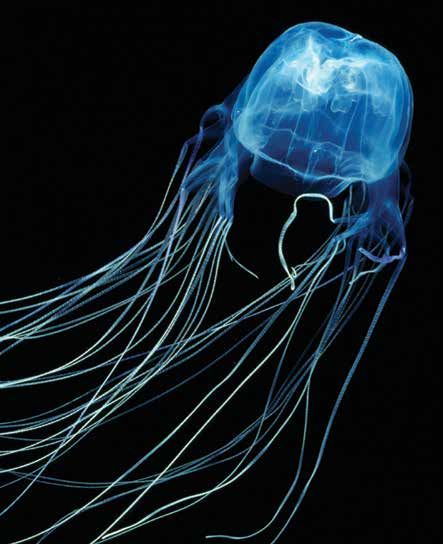
BEACH SAFETY STA
                       SUN SAFETY
To enjoy the beach it is important that you follow a
number of simple steps when it comes to sun safety.

SLIP on protective clothing

SLOP on SPF30+ sunscreen

SLAP on a hat

SEEK shade

SLIDE on sunglasses
Sun safety message supported by: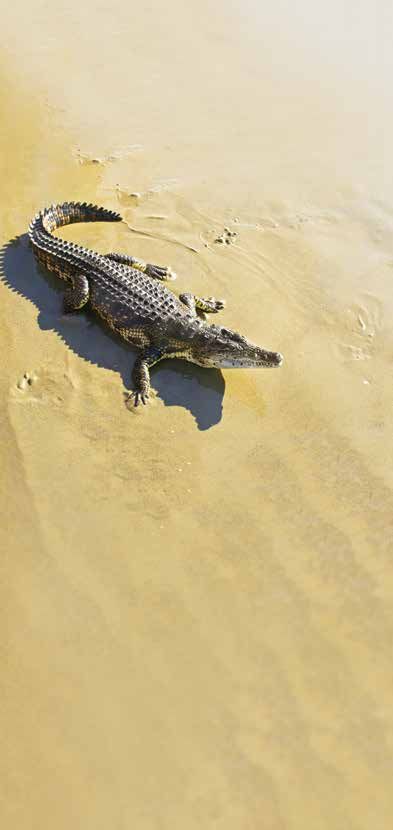
ARTS WITH YOU
                BEACH SIGNS
       Warning Signs (diamond shape, yellow and black)
      are used to warn you about a hazard(s) at the beach.

    WARNING NO        SWIMMING NOT
 LIFESAVING SERVICE      ADVISED       CROCODILES   SUBMERGENT OBJECTS

    Information Signs (square, blue and white) are used to
   provide you with information about features at the beach.

            PATROLLED BEACH     SURFBOARD       BODYBOARDS
               5KMS AWAY          RIDING

          IN AN
        EMERGENCY
              CALL 000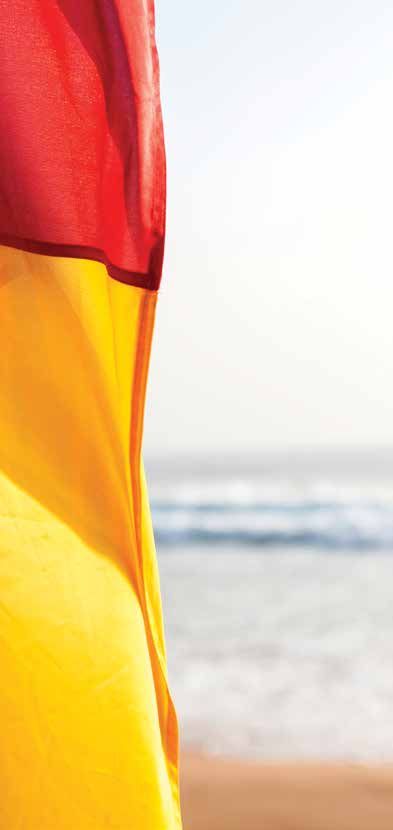
REMEMBER THE
         F-L-A-G-S
        AND STAY SAFE!
    F            L           A           G             S
  FIND         LOOK          ASK         GO         STICK
  the flags      at the  a lifesaver swimming      your hand
  to swim        safety  for advice.   with a        up for
 between.        signs.  Conditions    friend.        help.
   The red       Safety  can change Look out       Stay calm
  & yellow    signs help    quickly.  for each        if you
flags mark      identify   Talk to a other and      get into
  the best     potential   lifesaver get help if    trouble.
  place to       beach       before   needed.      Raise your
   swim at     dangers.    entering                 arm for
the beach.                the water.                  help.

              BEACH FLAGS
                     Always swim between the
                     RED and YELLOW flags.

                     RED FLAG:
                     No swimming.

                     YELLOW FLAG:
                     Caution required. Potential Hazards.

                     RED AND WHITE FLAG:
                     Evacuate the water.

                     BLACK AND WHITE FLAG:
                     Surfcraft riding area boundary.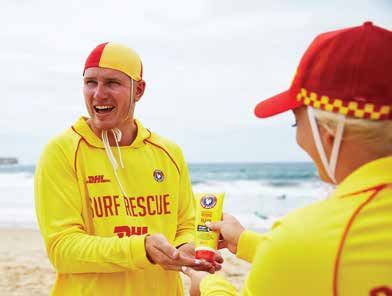
BEACH SAFETY
for Visitors to Australian Beaches

1

 ALWAYS SWIM BETWEEN
THE RED & YELLOW FLAGS

            lifesaving.com.au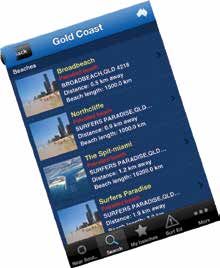
Read the safety signs
2            Surf Beach
                WARNING

                       Strong Currents

                       Shallow Water

                       Rough Surf

                       Submerged Rocks

                            Lifeguards on duty when

                            Please      s

             NO ALCOHOL NO LITTERING   NO FIRES

Ask a lifeguard for safety advice
3

 LIFEGUARD

Swim with a friend
4

If you need help, stay calm and attract attention
5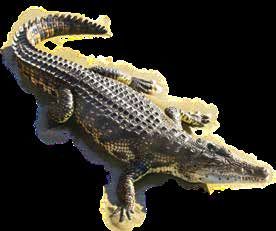
Detailed information about

                                                                   72
                                                                   NOW AVAILABLE IN

     Australia's approx 12,000 beaches
     including weather, tide, swell,
     water temperature, service patrol,                             LANGUAGES
     surf life saving clubs, and more!

      • Patrolled or unpatrolled beach        • Potential hazards you may
        details                                 encounter
      • Weather showing current               • Detailed patrol times (if patrolled)
        temperature and weekly forecast       • Swimming, surfing and fishing
      • Water temperature                       information
      • Swell forecast graph including        • Directions to the beach from your
        height and direction                    current location
      • Tide times                            • Display of real time hazards and
      • UV Index                                beach status

            FREE
     h s a fe t y in fo rmation
beac                     tips
    at your finger
         Proudly supporting Surf Life Saving Queensland’s ‘On
         The Same Wave’ Multicultural Water Safety Program
MARINE STINGERS
Australia’s waters contain many sea creatures, including
marine stingers. Although they are generally quite easy to
avoid, stingers can cause discomfort if you are stung and
some tropical species (the Irukandji and the Box Jellyfish,
for example) can be lethal. So, to ensure you enjoy your
day at the beach, always remember to swim at a patrolled
beach and look out for the safety signs.

STINGER STAFETY
• Wear protective clothing (lycra suit)
• Swim in designated areas
• Carry vinegar at the beach and on the boat
• Swim under supervision
• Have access to mobile or VHF radio

For more information visit:
lifesaving.com.au/marinestingers

      What to do if stung
   1. Call for help - 000 or lifeguard
   2. Emergency care - CPR if neccessary
   3. Treat the sting - douse with vinegar
   4. Seek medical attention
BE CROCWISE
 Northern Australia is home to the Estuarine Crocodile,
 which can be found in both salt and freshwater.
 Crocodiles mostly inhabit rivers and hunt in the
 shallows or near the water’s edge. Beaches are used
          by crocodiles to move between rivers. All
                  waterways are connected, so while
                   the risk of crocodile attack is low,
                     there's no such thing as a croc-free
                         zone in Northern Australia.
                             Make sure you stay safe and
                                    be Crocwise around
                                    our beautiful rivers
                                         and beaches.

                Cairns
      CROC
     COUNTRY
                  Townsville
                                             IF YOU SEE A
                         Mackay              CROCODILE,
                               Rockhampton
                                             REPORT IT
                                             1300 130 372

                                             Crocodile Country stretches
                                             from Gladstone all the way
                                  Brisbane    up and across Top End of
                                                      Australia.

 YOU CAN EASILY REDUCE YOUR RISK OF
 CROCODILE ATTACK BY:
 •   Swimming between the RED AND YELLOW FLAGS
     at patrolled beaches
 •   Not swimming at dawn, dusk, or at night
 •   Reading and obeying all crocodile warning signs
 •   Understanding that crocs can attack in knee-deep
     water, so wading can still be dangerous
                                                                           CA/IMAPS/01_2019

 •   If in doubt ask a lifeguard or your tourist guide or
     accommodation reception.
You can also read


