Northern Distance Learning (NDL) - A Guide for the In-class Support Persons (ISPs) - Education, Culture and ...
←
→
Page content transcription
If your browser does not render page correctly, please read the page content below
Northern Distance
Learning (NDL)
A Guide for the In-class Support Persons (ISPs)
OUR VISION
Students in small communities have access to equitable
academic programming enabling them to:

    STAY IN THEIR HOME COMMUNITY

    MEET THE GRADUATION REQUIREMENTS OF HIGH
    SCHOOL; AND
    PREPARE TO ENTER POST-SECONDARY PROGRAMS
    DIRECTLY FROM HIGH SCHOOL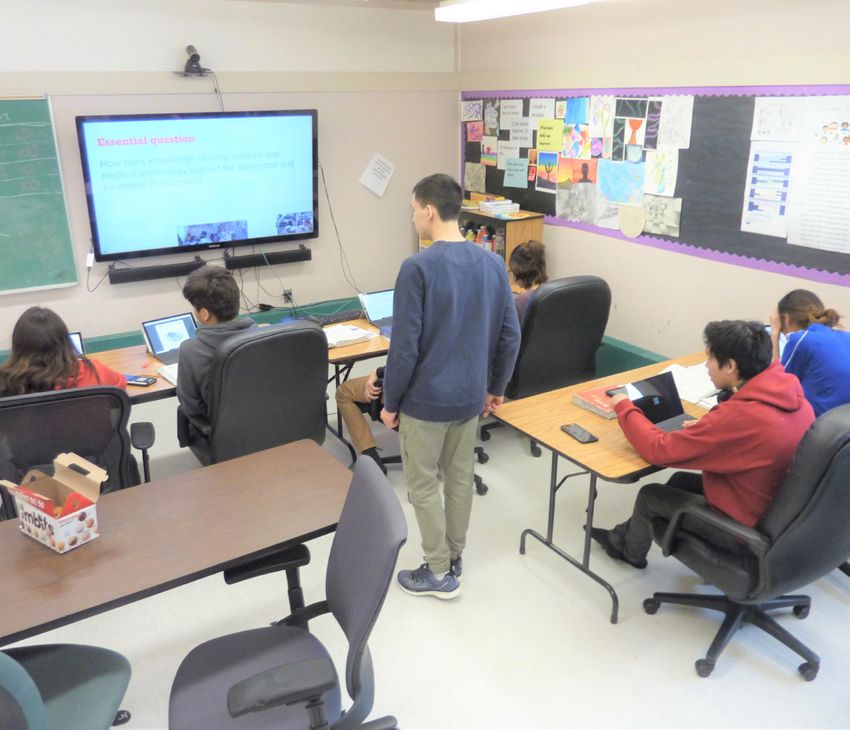
ISP GUIDE TO NDL
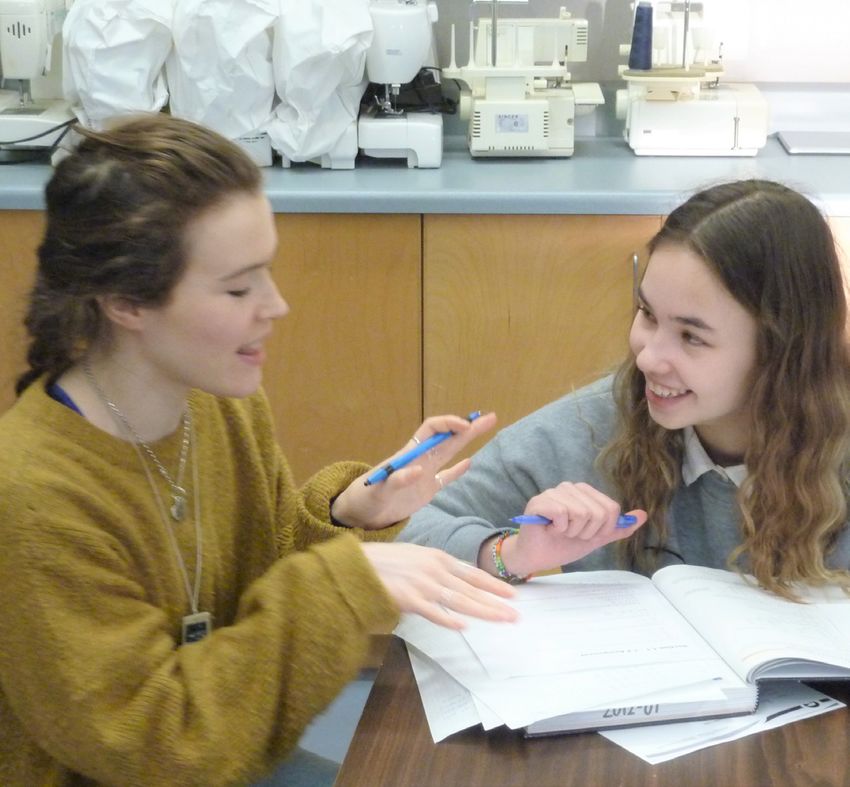
The success of the NDL program depends upon the                 progress along on this path. To ensure student success, you
students having an ongoing, patient and caring support          need to:
person in their physical classroom who has high
expectations of them. Learning at a distance can be             •   come to class on time to prepare the technologies and any
isolating. This program tries to overcome this isolation            materials provided by the teachers
through a number of policies and practices, but the key         •   model active learning and engagement
unwavering piece that helps the learners feel
supported is your active presence. You are there to help        •   stay in class to act as an extension of the teacher
students transition towards more confident and                  •   monitor students’ progress & unfinished assignments
independent online learners who are aware of their
own needs, can advocate for themselves and recognize            •   reduce distractions (e.g cell phones, off-topic
when they are struggling and how to get help.                       conversations)
                                                                •   advocate for further or repeated explanations when
You are part of their journey. They aren’t there yet. You act       students need it
as the bridge between teachers and learners to help them
                                                                •   spend a minimum of 2 days after school helping students

REVIEW THE NDL                                                  PREPARE THE WORK-
PROGRAM                                                         SPACE & MATERIALS
•      Visit the NDL page at the Education, Culture &           In consultation with the local principal, ensure appropriate
       Employment (ECE) website (https://www.ece.gov.nt.ca/     workspace and materials are in place:
       en/services/education-renewal/northern-distance-
       learning) to see the following documents:                •   Before the first day of class, check to ensure that workspace
                                                                    is equipped with the Mondopad(s) and functioning
          •   Guide for Parents/Guardians                           network. Ensure you have been trained on the use and
          •   Guide for Students                                    troubleshooting of the tools and equipment.
          •   Guide for Principals                              •   Make sure the workspace is equipped with a telephone
                                                                    capable of making long-distance calls (this is needed when
          •   Guide for Teachers
                                                                    there are network difficulties), and make sure you know
          •   NDL Factsheet                                         how to use it.
                                                                •   Ensure that a document camera is in place and ready to use.
    • Visit the NDL Facebook page (https://www.
          facebook.com/Northern-Distance-Learning-              •   Ensure that students are provided with textbooks and
             NDL-186226671747040/)                                  supplies as per course requirements made available by the
                                                                    NDL teachers in the spring. As of the 2020-2021 school
                                                                    year, course enrollment hinges on the principal ordering
                                                                    required materials. You should verify with the principal
                                                                    where these materials are. Making sure that everything is
                                                                    ready to go will make classes run much more smoothly.
                                                                •   As of the 2020-2021 school year, if the principal is new,
                                                                    there should be a New Principal Transition and Orientation
                                                                    Sheet in the principal’s office (ECE should also have been
                                                                    provided a copy). It shows the names of the NDL students
                                                                    and their 1st semester classes.
                                                                •   Communicate to the Inuvik-based NDL Coordinator during
                                                                    the first week of school about whether the number of
                                                                    Surface Pros required, match the number of students in
                                                                    the classes. A maximum allocation of 10 is projected in the
                                                                    event a school has 10 NDL students. The devices are owned
                                                                    by the school and are meant to be re-used as NDL students
                                                                    graduate.
                                                                •   Collect the Surface Pros from students not taking an NDL
                                                                    course in 2nd semester, and again at the end of the school
                                                                    year for summer storage.
SUPERVISION AND SUPPORT
Ensure appropriate supervision and support for
NDL students.
•   You are essential to student success in this program,                 learning preferences. You can use a learning preference
    which requires you to be in class, on time, every day,                survey to help structure this conversation if needed.
    and be available for extra help after school. This means              Ask the NDL Coordinator if a previous electronic survey
    you cannot be excused or removed from those duties to                 is available. This will help you to support the students
    perform other tasks out of the NDL classroom. If you are              in structuring their learning environment, and in self-
    absent, a substitute teacher must be in place to perform              advocating regarding their needs when appropriate.
    your duties.                                                      •   Ask the PST for advice if you are unsure how to implement
                                                                          or provide certain accommodations listed in a student’s
•   Ensure you are maintaining communication with teachers,               Student Support Plan (SSP). These should be kept up to
    principals, and parents regarding student progress,                   date and coordinated with local school support teams and
    supports, and attendance. While taking attendance is the              NDL teachers. It is a teacher’s responsibility to update
    NDL teacher’s responsibility, ISPs will be asked to record            and attend to students’ inclusive schooling needs (called
    students who come late.                                               SSPs), but as the ISP, you are an advocate for the student,
                                                                          and therefore should be aware of their particular needs to
•   At the beginning of the semester, share the student                   best support their learning. If you notice that a student is
    support forms with students so that they have seen them               struggling with a particular aspect of their learning, you
    and know what they are for. As the need arises, ensure                can discuss this with their teacher to ask how to support
    you are using the Student Support Attendance Form and                 that learner’s needs.
    Student Appeal Form as necessary. These are intended to
                                                                      •   Learning together is a foundational principle of student
    help students to see how their attendance is impacting
                                                                          learning and success in NDL. This means that part of
    their ability to be successful. This is a tool to help students       your role is to encourage students to actively engage with
    on their path to self-regulated learning.                             classmates both in your classroom and on the screen.
•   If you need support for behaviours that require                       This could mean discussing their understanding, helping
    disciplinary action, work with the school principal; NDL              one another, sharing ideas, working on activities together,
    administration can provide advice, but does not carry                 etc. Learning to speak up and share ideas is part of their
                                                                          development as self-regulated learners.
    disciplinary authority or take disciplinary action. Building
    good relationships with students will go a long way with
    classroom management.

If your school has two NDL classrooms (endpoint ), you
are in charge of both. Some tips to manage both:
•   Gather the students and explain that their independence

                                                                                            COURSES
    when you are not with them is a part of the NDL
    program; it mimics how they must partly depend on
    their own resources and partly on supports when they
    are at a post-secondary institution.
                                                                                     Northern Distance Learning
•   Near the beginning of the course, assess which student
    can keep ‘the ball rolling’ in each classroom until you
                                                                                      offers 19 different courses
    return.
                                                                          ENGLISH LANGUAGE ARTS (10-1, 20-1, 30-1)
•   Some past ISP-teacher strategies have included the
    teacher repeating the assignments at the end of the class;              MATH (10C, 20-1, 30-1) • SCIENCE 10
    this will not only accommodate what you missed in the
    other class, but also benefit the shy student who doesn’t
                                                                              SOCIAL STUDIES (10-1,20-1, 30-1)
    want to ask a question that the other students might                       BIO (20, 30) • PHYSICS (20,30)
    ‘know the answer for already’.
                                                                            CHEMISTRY (20,30) • ART (10, 20, 30)
•   Also, a previous suggestion of an ISP was to ask the
    teacher for a cheat-sheet of the objectives/concepts for
    the week.                                                                    NOTE: Beginning in 2021-2022, NDL will be able
                                                                                  to offer all 19 courses each year, eliminating
•   Early in the semester, meet with your students and the
                                                                                                 multi-year cycles.
    Program Support Teacher (PST) and ask about their
COMMUNICATION
•     You are NDL’s primary educational support. When                                    •     Contact parents:
      students are struggling, and upon meeting with the NDL                                   •   At the start of each semester
•     teacher, you may need to reach out to the student. If                                    •   To discuss student supports, goals and progress
      necessary, contact their parents/guardians, and/or the                                   •   When concerns arise regarding attendance or
      principal to let them know what is happening and ask how                                     progress
      to best support them. You will be in a good position to help
      the parent and NDL teacher meet when it is necessary or                            •     Contact the principal:
      beneficial.                                                                              •   At the start of each semester
                                                                                               •   For regular check-ins to update student attendance
•     You are the point person for parent contact. If a parent                                     and progress
      gets in touch with you to ask about their child’s progress,                              •   When concerns arise regarding attendance or
      you must alert the NDL teacher that a parent is looking                                      progress
      for an update. You can then communicate this information
      back to the parent and/or put them in touch with the NDL                           •     Contact the NDL teacher:
      teacher directly.                                                                        •   At the start of each semester
                                                                                               •   To clarify expectations for assignments and activities;
•     You can proactively find out when the next NDL parent-                                       or with tutoring questions
      teacher conference is and schedule a meeting to make it                                  •   To discuss concerns about student needs
      easy for parents to see and interact with the teachers over                                  (differentiation for example)
      the NDL technologies.                                                                    •   When concerns arise regarding attendance
                                                                                                   or progress
•     NDL is a new process for most of the students and parents.
      Don’t assume that they know how everything works.                                  •     Contact the NDL coordinator:
      You may find that students are not familiar with working                                 •   At the start of each semester
      outside of the class period. Keep the communication lines                                •   With questions regarding technology or internet
      open so you can offer services right after class or school                               •   With questions regarding work responsibilities
      for students struggling with completing assignments and
      projects.

POST-SECONDARY BRIDGING EXPERIENCE (PBE)
Some ISPs may be asked to chaperone NDL students during a week-long event that takes students to a post-secondary
institution for an immersive experience. COVID-19 has temporarily changed this event into a virtual experience.

YEAR AT A GLANCE

AUGUST                       SEPTEMBER                     OCTOBER                     JANUARY                      MARCH TO JUNE
Attend the New to            Orientation and               Formally support            & JUNE                       Support Principal in this work:
the North Educator           Introduction to NDL and       improved attendance and     Exams                        • confirm all Student Applications for the next school
Conference (N2NEC) in        teachers; meet students       achievement by using        Meet with continuing           year & email Acceptance of Course Supplies Terms are
Yellowknife just before or   and parents & discuss         the Student Support         students & their parents       submitted by the April 15 deadline
after your arrival in the    needs and supports            Attendance Form and         / guardians at the end of
community (depending on                                    Student Appeal Form                                      • after notification of students’ acceptance, confirm ready-
                                                                                       January and June to review     made order form for supplies is sent off by May 1
which community you are      AUGUST /                      when needed--especially     successes, challenges and
working in). NOTE: N2NEC                                   before Oct. 15 (and again   goals                        • make preparations for Gr. 11 students’ Post-secondary
will be modified to comply   SEPTEMBER                     before Mar. 15 for 2nd                                     Bridging Experience trip
with COVID-19 orders         Orientation to school,        semester)
                             local staff, classroom, and                                                            • if the principal is moving, assist with the New Principal
                             technology through the                                                                   Transition and Orientation Form
                             NDL Coordinator
                                                                                                                    • June Diploma Exams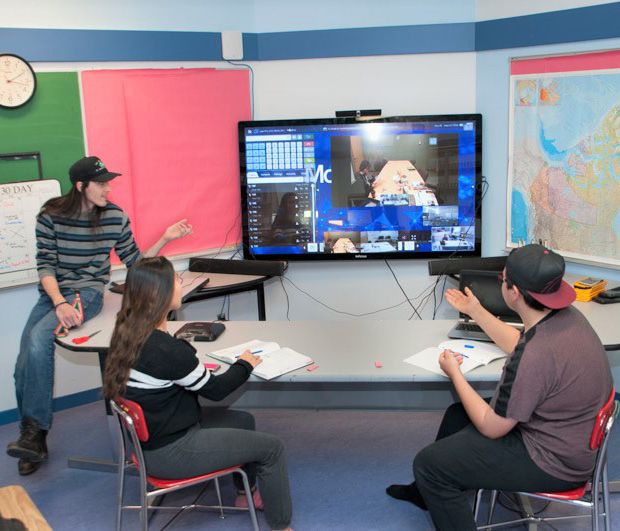
SUPPORT FOR THE ISP
 The role of an ISP can be challenging since many of you       •    arrated digital presentations
                                                                   N
 are able to come for only one year. It is a well-known fact       on Moodle and Canvas:
 that relationships are key to progress in education--and           • ISPs and Student Supports
 relationships take time. NDL would like to support you             • Northern Distance Learning Overview
 in your important role by offering live and on-demand              • Education in the Northwest Territories
 in-servicing. It is hoped that online meetings between ISPs
 and NDL leadership will:                                      •   Membership in an online ISP community space
 •    increase an ISP’s sense of connectedness and             •   Live professional events for ISPs
      belonging to other ISPs and the larger NDL web           •   Participation in the New to the NWT Educator’s
 •    advance the effectiveness of ISP work by having               Conference (N2NEC)
      opportunities to learn more about the NWT education      •    Bi-monthly web-conferences commencing with
      system                                                         September’s orientation between NDL leadership
 •    help ISPs adapt to the cultural context of the                 and ISPs
      community where they are now working                     •     The ISP page on Moodle will carry the links and
 •    enable ISPs to understand and manage the supports               dates for the above resources and events.
      their students require:                                  •      For more information, ISPs should contact
      • ISP health and well-being supports                             ndl@gov.nt.ca
      • CUSO volunteers have access to the Family
           Assistance Program as described in their CUSO
           “Volunteer Handbook”
      • Non-CUSO ISPs who are UNW members
           have access to the GNWT’s Employee Family
           Assistance Program (EFAP)
      • Professional documents and on-demand
           resources for ISPs
      • NDL Guide for the In-class Support Persons (ISPs)
You can also read


