OIL PALM IN INDONESIA - GOVERNANCE, DECISION MAKING, & IMPLICATIONS FOR SUSTAINABLE DEVELOPMENT SUMMARY FOR POLICY MAKERS & PRACTITIONERS
←
→
Page content transcription
If your browser does not render page correctly, please read the page content below
OIL PALM IN INDONESIA
GOVERNANCE, DECISION MAKING, & IMPLICATIONS
FOR SUSTAINABLE DEVELOPMENT
SUMMARY FOR POLICY MAKERS & PRACTITIONERS

Gary D. Paoli | Piers Gillespie | Philip L. Wells | Lex Hovani
Aisyah Sileuw | Neil Franklin | James Schweithelm

     FROM THE AMERICAN PEOPLE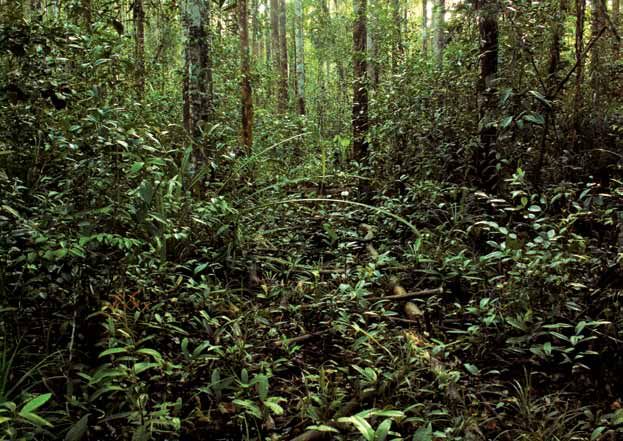
OIL PALM IN INDONESIA
                             GOVERNANCE, DECISION MAKING, AND
                                 IMPLICATIONS FOR SUSTAINABLE
                                                DEVELOPMENT
                               Summary for Policy Makers & Practitioners

                             By Gary D. Paoli , Piers Gillespie, Philip L. Wells , Lex Hovani,
                                   Aisyah Sileuw, Neil Franklin, and James Schweithelm

                              Published by: The Nature Conservancy Indonesia Program, Jakarta

             This research and analysis was conducted by Daemeter Consulting and The Nature
 Conservancy (TNC) with funding provided from the people of United Stated of America through
 the United States Agency for International Development (USAID) and Responsible Asia Forestry
                                                                           and Trade (RAFT).

   Responsibility for content of this report is attributable to the authors and does not necessarily
                                                      reflect the views of TNC or supporting donors.

 All material contained within this document may be freely copied and distributed provided such
 copies are made in full without modification, and proper citation is made to the original source.

   Recommended citation: Paoli G.D., P. Gillespie, P.L. Wells, L. Hovani, A.E. Sileuw, N. Franklin
and J. Schweithelm (2013) Oil Palm in Indonesia: Governance, Decision Making and Implications
                    for Sustainable Development. The Nature Conservancy, Jakarta, Indonesia.

                                  Cover photo credits: Gary D. Paoli, Piers Gillespie, R. Harjanthi.

                                                                          Acknowledgements
   The authors acknowledge The Nature Conservancy (TNC) for its foresight to commission this
study. The authors also wish to thank the people of United States of America through the United
 States Agency for International Development (USAID) and RAFT whose funding made this work
 possible. The authors wish to acknowledge contributions from Andiko, Rahayu Harjanthi, Rendi
     Dharma, Ciska, Dr Yohannes Samosir, Elinor Benami, Elizabeth Yaap and Erik Meijaard. The
    authors also gratefully acknowledge participants in a one-day seminar held in Jakarta in July
            2011, but make no claims that content presented in the report is endorsed by them.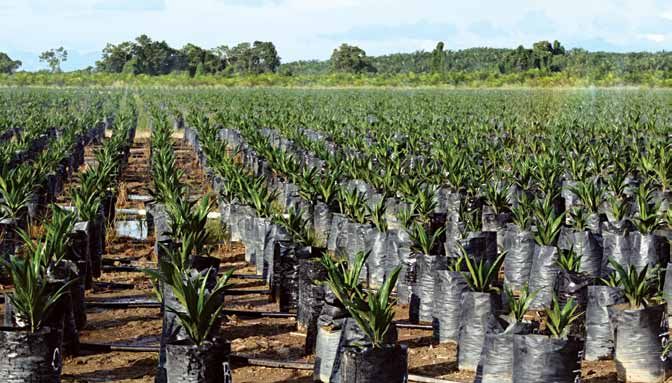
4 Oil Palm in Indonesia: Governance, Decision Making and Implications for Sustainable Development
TABLE O F CO N T E N T S
TABLE OF
CONTENTS
EXECUTIVE SUMMARY 6 4 KEY RECOMMENDATIONS 35
Context And Rationale For The Study 6 4.1 Strengthen And Improve Local
Government Systems For
Analytical Approach 6
Management Of The Palm Oil
Key Recommendations 7 Sector 36
4.2 Support A Multi-Stakeholder
Process To Strengthen And
Promote Ispo As A Valuable
1 THE CONTEXT 12 And Internationally Recognized
Part Of Indonesia’s Green
1.1 Palm Oil: A Strategic
Development Strategy 36
Development Opportunity And
Challenge 12 4.3 Update And Fully Operationalize
Suitability Criteria Consistent
1.2 Palm Oil Governance In
With Indonesia’s Green Growth
Indonesia 13
Objectives To Ensure That
1.3 Purpose And Rationale 16 Unsuitable Land Is Not Brought
Under Cultivation 38
4.4 Increase The Availability Of
Suitable, Low Impact Land For
2 RESEARCH APPROACH 17 Oil Palm Development 39
2.1 Identify Key Decision Points And 4.5 Promote Investments In Yield
Actors Involved 17 Enhancement And Reward
Good Performance To Optimize
2.2 Describe Expected Outcomes
Production On Existing And
Of Decisions 18
Future Plantations 40
2.3 Develop Recommendations
4.6 Develop Legal Tools And Build
To Promote Green Growth
Implementation Capacity To
Outcomes 19
Strengthen Management Of
2.4 Overview Of The Full Report 19 Areas With High Conservation
Value In Land Zoned For
Agricultural Use 40
4.7 Ensure Communities Are Well-
3 SUMMARY OF FINDINGS 21 Informed And Able To Participate
Effectively In Negotiations With
3.1 Decisions That Determine Where
Oil Palm Companies From
Oil Palm Licenses Are Issued 21
Earliest Phases Of Development,
3.2 Decisions Affecting Including Pre-Licensing
Environmental Impacts Of Consultations 42
Plantations And Mills 27
4.8 Develop Measures To Ensure
3.3 Decisions That Influence Levels Of Community Benefit
Company-Community Relations During Implementation Of
In Palm Oil 30 Smallholder Partnership
Agreements Are In Accordance
3.4 Cross-Cutting Findings 33
With Negotiated Terms And
Conditions 44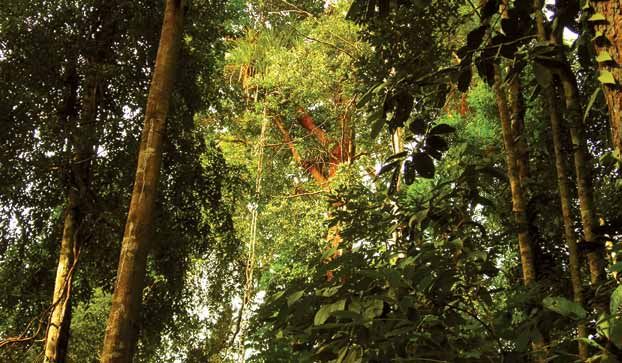
Oil Palm in Indonesia: Governance, Decision Making and Implications for Sustainable Development
                                                                                                                                                           5
                                                                                                                        TA B L E O F C O N T E N TS

    4.9   Develop Innovative Policy                       ANNEX 2 - SUMMARY OF DECISIONS
          Measures And Fiscal Tools                       Evaluated In The Full Report                                                                60
          To Promote And Reward
                                                          1. Where Licenses Are Issued For Oil
          Investments In Zero Waste
                                                             Palm Development                                                                         60
          Technologies To Maximize
          Net Positive Impacts Of Mill                           1.1 Power Relations Of The State,
          Operations                       45                        Companies And Individuals                                                        60
    4.10 Increase The Probability                                1.2 Boundaries And Management Of
         That Land Is Allocated To                                   The Forest Zone (Kawasan Hutan)                                                  60
         Responsible Companies             46
                                                                 1.3 Authority And Procedures For
                                                                     Issuance Of A Location Permit
                                                                     (Ijin Lokasi)                                                                    60
                                                                 1.4 Required Procedures Following
ANNEX 1 - LEGAL FRAMEWORK FOR OIL
                                                                     Issuance Of A Location Permit                                                    61
PALM DEVELOPMENT                           47
                                                                 1.5 Approaches To Monitor Decision
1. State Control Of Land                   47
                                                                     Making About Where OP Licenses
2. Regional Autonomy And The Division                                Are Issued                                                                       62
   Of Authority Between Central And
                                                          2. Environmental Impacts Of
   Local Authorities                       48
                                                             Plantations And Mills                                                                    62
3. Law On Plantations: UU No.18/2004       48
                                                                 2.1 Decision Making On Plantation
4. Spatial Planning                        49                        Development                                                                      62
   4.1 National Spatial Plan (RTRWN)       50                    2.2 Decision Making On Plantation
                                                                     Management                                                                       63
   4.2 Provincial, Regency And Mof
       Spatial Planning                    50                    2.3 Decisions Making On Mill
                                                                     Operations                                                                       63
5. Oil Palm Licensing                      52
                                                          3. Community-Company Relationships                                                          63
6. Management Of Environmental
   Impacts                                 54                    3.1 Defining Roles Of Communities And
                                                                     Companies                                                                        63
7. Plantation Performance And Legal
   Compliance                              56                    3.2 Community Consultation Before
                                                                     Issuing A Location Permit (Ijin
   7.1 Guidelines To Evaluate Plantation
                                                                     Lokasi)                                                                          63
       Businesses (Permentan No.7/2009)    57
                                                                 3.3 Community Consultation For
   7.2 Indonesian Sustainable Palm Oil
                                                                     Awareness Raising (‘Sosialisasi’)
       (Permentan No.19/2011)              58
                                                                     After A Location Permit Has Been
                                                                     Issued                                                                           64
                                                                 3.4 Key Terms Of Partnership
                                                                     Agreements                                                                       64
                                                                 3.5 Negotiation Of Partnership
                                                                     Agreements                                                                       65
                                                                 3.6 Plantation Operations And
                                                                     Smallholder Benefits                                                             65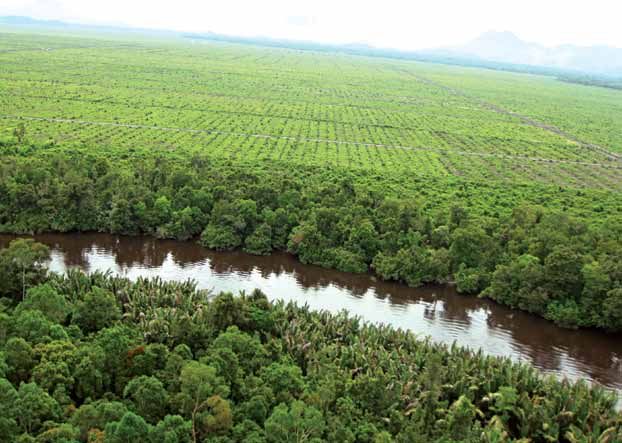
6    Oil Palm in Indonesia: Governance, Decision Making and Implications for Sustainable Development
     E XE CUT IVE SUMMARY

EXECUTIVE
SUMMARY
Context and                                                  Palm oil is a critical part of Indonesia’s national development strategy
                                                             and a source of significant local development benefits. At the same
Rationale for                                                time, past social and environmental impacts have drawn criticism
the Study                                                    from inside and outside Indonesia. The economic, social, and
                                                             environmental benefits and costs of palm oil are determined by a wide
                                                             range of decisions made by many different actors across the supply
                                                             chain. The purpose of this analysis is to describe Indonesian oil palm
                                                             decision-making processes in terms that are understandable to a
                                                             range of audiences, including government officials, the private sector,
                                                             civil society, international consumers, and donors. This report aims
                                                             to (a) provide a balanced perspective to help bridge between
                                                             proponents and critics of oil palm, and (b) highlight opportunities
                                                             to align decision-making more closely with Indonesia’s Green
                                                             Growth objectives.

                                                             This study organizes a selection of key decisions made by different
                                                             actors involved in palm oil development, explains how decisions affect
                                                             development outcomes, and recommends ways to support ongoing
                                                             improvements in performance. This information provides a basis for a
                                                             more informed policy dialogue, drawing attention to concrete means
                                                             for improving decisions, and giving actors a better sense of their role
                                                             and how they might collaborate more effectively to achieve particular
                                                             outcomes.

Analytical                                                   The study identifies key decision points and actors involved in
                                                             key oil palm decision processes, grouping decision points based on
Approach                                                     those that determine: (a) where oil palm licenses are issued; (b) how
                                                             plantation and mill management practices determine the environmental
                                                             impact of operations; and (c) how company-community partnerships,
                                                             including smallholder agreements, are formed and operate over time.
                                                             The study qualitatively describes expected outcomes of decisions,
                                                             focusing on the five different types of development outcomes from oil
                                                             palm commonly highlighted in government planning documents and
                                                             elsewhere: local (District) economic benefits, community benefits,
                                                             improved district oil palm governance, impacts on the natural
                                                             environment, and carbon emissions from oil palm development. The
                                                             study provides recommendations to promote Green Growth
                                                             outcomes with respect to those five dimensions. Since conditions
                                                             vary widely across Indonesia and among plantations, many of our
                                                             recommendations should be seen as working hypotheses that
                                                             merit further investigation through research, policy dialogue, or pilot
                                                             programs.
Oil Palm in Indonesia: Governance, Decision Making and Implications for Sustainable Development
                                                                                                                                                                  7
                                                                                                                                  E XE C U T I V E S U M M A RY

Key                                      The report provides a number of key recommendations for
                                         strengthening palm oil governance, practices and development
Recommendations                          outcomes. These include:

 Summary of key recommendations for strengthening oil palm governance and optimizing development
 outcomes. Recommendations are organized under headings corresponding to those used below to organize key
 findings in Section 3. Recommendations are elaborated in Section 4. (Note: MoA= Ministry of Agriculture, MoF=Ministry
 of Forestry, MoE=Ministry of Environment, MoFn=Ministry of Finance).

 MAIN                      SUB                                                                    MAIN                            IMMEDIACY &
 RECOMMENDATIONS           RECOMMENDATIONS                                                        AUDIENCE                        POTENTIAL IMPACT

                                               CR O SS-CU TTING ISSU ES

 Collaborate on making     Broad-based stakeholder support for ISPO                               MoA, ISPO,                      Short term and
 ISPO a valuable           can help markedly to ensure the standard is                            multi-lateral                   medium impact
 and internationally       implemented with maximum effectiveness.                                programs
 recognized part of
 Indonesia’s green         Increase leadership from the Indonesian Chamber                        KADIN, IBCSD,                   Short term
 development strategy.     of Commerce (KADIN), the Indonesian Business                           GAPKI
                           Council for Sustainable Development (IBCSD) and
                           palm oil producers association (GAPKI) to promote
                           and strengthen ISPO.

 Strengthen and            Central government agencies could strengthen                           MoA                             Medium term
 improve local             guidance, training, and related support programs
 government systems        to district governments to develop more uniform
 for management of the     capacity to regulate oil palm development.
 palm oil sector.
                           Provide districts with training, improved spatial                      MoA, BAPLAN                     Medium term
                           data, and decision support tools for spatial
                           planning and palm oil development planning.

                           Encourage and support local governments to                             Bupatis,                        Medium term
                           consider a fuller range of development benefits                        Dinas-level
                           and costs when issuing oil palm licenses to                            government
                           maximize positive secondary benefits.

                  DEC I S I ONS THAT DETER MINE WH ER E O IL PA LM LICENSES A R E ISSU ED

 Strengthen and            Develop, pilot and implement fully a transparent,                      MoA,                            Medium-long term
 improve local             on-line licensing registration system.                                 Dinas-level
 government systems                                                                               government
 for management of the
 palm oil sector.          Review and update the Joint Decree of MoA and                          MoA, National                   Medium term and
                           the National Land Agency (1999) on issuance of                         Land Agency                     high impact
                           Location Permits.
8          Oil Palm in Indonesia: Governance, Decision Making and Implications for Sustainable Development
           E XE CUT IVE SUMMARY

    MAIN                                      SUB                                                            MAIN             IMMEDIACY &
    RECOMMENDATIONS                           RECOMMENDATIONS                                                AUDIENCE         POTENTIAL IMPACT

    Update and fully                         Develop clear, national-level land suitability criteria         MoA, MoF, MoE    Medium term and
    operationalize suitability               for oil palm development including social, physical,                             high impact
    criteria consistent                      biodiversity, and GHG emissions considerations as
    with Indonesia’s Green                   a guide to local government licensing decisions on
    Growth objectives to                     land zoned for agricultural use.
    ensure that unsuitable
    land is not brought                      Improve the quality, credibility, and influence of the
    under cultivation.                       environmental impact assessment process.                        MoE              Medium-long term

                                             Review and where appropriate revise regulation on
                                             oil palm development on peatland.                               MoA, MoF         Short term and high
                                                                                                                              impact

    Increase the availability                Simplify and expedite mechanisms for making low-                MoF, MoA         High impact
    of suitable, low impact                  carbon, deforested areas within the Forest Zone
    land for oil palm                        available for agriculture.
    development.
                                             Explore opportunities for smaller mills that require            MoA, CEOs,       Medium-long term
                                             a smaller planted supply base.                                  district, CSOs

    Develop legal tools and                  Strengthen the legal right of plantation companies              MoA, MoF,        Medium-long term
    build implementation                     to retain and manage unplanted conservation                     district, ISPO   and high impact
    capacity to strengthen                   areas within the HGU for the plantation.
    management of areas
    with high conservation
    value in land zoned for
    agricultural use.

                    D E C IS I ONS AFFEC TI NG ENV I RONMENTA L IMPACTS O F P LA NTATIO NS A ND MILLS

    Develop legal tools and                  Create financial incentives for companies to                    MoA, MoFn,       Short term and high
    build implementation                     maintain undeveloped areas in plantations.                      RSPO, ISPO,      impact
    capacity to strengthen                                                                                   KADIN, CEOs
    management of land
    with high conservation                   Encourage local governments to enact additional                 Local govt,      Medium term
    value in land zoned for                  requirements for oil palm plantation licenses to                Bupati, DISBUN
    agricultural use.                        ensure that local environmental or social values
                                             are protected.

                                             Support private sector-led efforts to make explicit,            CEOs, RSPO       Medium term
                                             progressive goals for management of conservation                MoA, district,
                                             areas within oil palm plantations.

                                             Make plantation companies more accountable for                  CEOs             Medium term
                                             contractors hired for land clearing and improve
                                             systems for managing contractors.

                                             To reduce encroachment pressures by local                       CEOs, ISPO       Medium term
                                             communities into conservation areas, companies
                                             should consider voluntary limits on how much
                                             community land they are prepared to place under
                                             oil palm cultivation.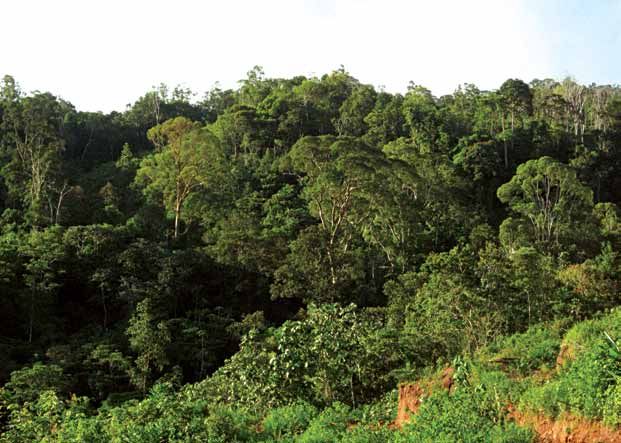
Oil Palm in Indonesia: Governance, Decision Making and Implications for Sustainable Development
                                                                                                                                                                   9
                                                                                                                                   E XE C U T I V E S U M M A RY

MAIN                        SUB                                                                    MAIN                             IMMEDIACY &
RECOMMENDATIONS             RECOMMENDATIONS                                                        AUDIENCE                         POTENTIAL IMPACT

Develop innovative          Increase industry-wide uptake of advanced                              MoA, MoE,                       Medium term
policy measures             waste treatment and utilization practices and                          ISPO, CEOs
and fiscal tools to         technologies, requiring that the following actors
promote and reward          make some or all of the following decisions.
investments in Zero
Waste technologies          Create fiscal and financial incentives to promote                      MoA, MoFn,                      Medium term
to maximize net             (a) methane capture, (b) increased use of                              ISPO, RSPO
positive impacts of mill    Land Application techniques for POME where
operations.                 appropriate, and (c) composting technologies
                            toutilize soild waste by-products productively,
                            produce electricity and reduce use of chemical
                            fertilizers.

Increase the probability    Link access to land for additional oil palm                            MoA, ISPO                       Short term and
that land is allocated to   development to successful company performance                                                          potentially high
responsible companies.      in the past.                                                                                           impact

                            Explore mechanisms to eliminate the involvement                        MoA, district,                  Medium term
                            of licensing agents, companies or individuals that                     Bupati
                            specialize in getting licenses, clearing land and
                            then on-selling licenses.

Promote investments         Promote industry-wide CPO yield improvements                           MoA, CEOs                       Short term and high
in yield enhancement        through encouraging specific actors to make some                                                       impact
and reward good             or all of the following decisions.
performance to
optimize production
on existing and future
plantations.

               DEC I S I ONS THAT I NFLUENCE CO MPA NY-CO MMU NITY R ELATIO NS IN PA LM O IL

Ensure communities          Make governments accountable for mandatory                             MoA, District,                  Medium-long term
are well-informed and       provision of accurate and readily understandable                       bupati                          and high impact
able to participate         information for candidate smallholder farmers and
effectively in              community members.
negotiations with oil
palm companies from         Develop guidelines for establishing a more                             MoA, District,                  Medium term
earliest phases of oil      structured approach for local government to                            bupati, CSO
palm development,           support company-led sosialisasi and later
including pre-licensing     negotiations.
consultations
                            Develop a set of standard guidelines for                               MoA, ISPO,                      Medium term and
                            community engagement.                                                  CSO                             high impact

                            Review and clarify minimum requirements for land                       MoA                             Short term
                            division between Company and Communities as
                            stipulated in MoA Regulation No. 26 (2007).

                            Through pilot trials, develop a mechanism for
                            district government to provide negotiation support                     MoA, District,                  Medium term and
                            for all parties during the formation of benefits                       bupati, CSO                     high impact
                            sharing agreements, especially smallholder
                            partnership arrangements.
10     Oil Palm in Indonesia: Governance, Decision Making and Implications for Sustainable Development
       E XE CUT IVE SUMMARY

 MAIN                                     SUB                                                            MAIN              IMMEDIACY &
 RECOMMENDATIONS                          RECOMMENDATIONS                                                AUDIENCE          POTENTIAL IMPACT

                                         Develop clear, binding agreements between                       District, CEOs,   Near term
                                         companies and communities regarding where and                   CSO, ISPO
                                         when smallholder plots will be developed.

                                         Develop and require use of model agreements                     District, CEOs,   Medium term
                                         for land release and smallholder partnership                    CSO, ISPO
                                         arrangements.

                                         Clarify and strengthen oversight of plantation                  MoA, ISPO,        Medium term and
                                         company obligations to support smallholder yields               CEOs              high impact
                                         and create incentives that promote compliance
                                         with existing requirements.

 Develop measures                        Support effective smallholder training by district              District, CEOs,   Medium term
 to ensure levels of                     government, extension support trainers, plantation              ISPO, RSPO,
 community benefit                       companies, supported financially by users and                   CSO
 during implementation                   buyers of oil palm products.
 of smallholder
 partnership agreements                  Job creation or other forms of community                        MoA, CEOs,        Medium term
 are in accordance with                  livelihoods support during the period when palms                ISPO
 negotiated terms and                    are maturing should be agreed upon between
 conditions.                             companies and communities during sosialisasi for
                                         land release.

                                         Consider development and use of a more flexible                 MoA, Provinces,   Medium term
                                         and transparent fresh fruit bunch (FFB) price                   GAPKI
                                         setting system that is easier for smallholders to
                                         understand and that creates opportunity for merit
                                         based pay that rewards good quality fruits.
OV E R V IE W OF PALM OI L I N I NDONES I A The palm oil industry is a vital but controversial element of Indonesia’s current economic growth trajectory. Discourse on economic benefits versus social and environmental costs of the industry has become increasingly polarized, a situation worsened by outspoken critics and proponents staking out extreme positions in pursuit of divergent agendas. Obscured in recent debate is the large area of common ground between opposing viewpoints where significant improvements to palm oil governance can be made in Indonesia, with direct benefits to the environment, local communities, and the industry’s performance and reputation as a whole. This study is an attempt to regain some of this common ground, by providing concerned stakeholders with an improved understanding of how key actors make decisions within a complex legal framework and norms of decision making that emerge from this. We highlight key areas for improving and strengthening decision-making processes supportive of Indonesia’s Green Growth commitments and recommend ways to achieve this. This document is a summary of a larger report under preparation based on research by a multi-disciplinary team of national and international researchers and practitioners working to promote sustainable palm oil in Indonesia.
12        Oil Palm in Indonesia: Governance, Decision Making and Implications for Sustainable Development
          T HE CONT E XT

1         THE
          CONTEXT

Oil palm nursery in East Kalimantan. Photo: Felicia Lasmana.

1.1 Palm Oil: A Strategic Development Opportunity for Indonesia

          Palm Oil is a vital component of Indonesia’s present and future development strategy.
          Indonesia is the world’s largest producer and exporter of crude palm oil (CPO), an important
          component of food security for Indonesia and consumer countries. Global demand for palm oil, with
          yields per hectare ten times that of other oil-seed crops, is growing rapidly. Oil palm plantation area in
          Indonesia has more than doubled over the past ten years, now covering five percent of the country’s
          total land area, and further expansion is underway to meet the Government targets for doubling CPO
          production to 40 million metric tons per annum by 2020. The nation is well positioned to achieve this
          target based on its favorable climate, abundance of suitable land, private sector expertise, and a large
          rural work force.
Oil Palm in Indonesia: Governance, Decision Making and Implications for Sustainable Development
13
T HE C O N T E XT
Palm oil exports are a key part of Indonesia’s national economic growth strategy, generating billions of
dollars in foreign exchange earnings annually and providing a stable base for local economies, access
to commodity markets and much-needed jobs in underdeveloped parts of the archipelago. At least
three million smallholder farmers cultivate oil palm, comprising an estimated 40% of total planted area,
and often earning incomes significantly higher than subsistence farmers or producers of other cash
crops. Private sector investment in oil palm often leads to improved public infrastructure, marketing
networks, and basic services such as healthcare and education, in addition to creating employment
opportunities and stimulating local economic activity.
The social and environmental impacts of palm oil can be high. Despite generating economic
benefits, Indonesia’s palm oil industry has attracted significant domestic and international criticism.
Critics argue that benefits come at a high a cost to Indonesia’s forests and rural communities who
depend on them, creating significant land-based Greenhouse Gas (GHG) emissions and degrading
biodiversity-rich habitat. In some cases, rural communities have been harmed by development, losing
access to land and livelihood resources without adequate compensation or legal recourse. Indigenous
ethnic groups can be particularly vulnerable due to higher dependence on natural ecosystems and
inexperience in complex business transactions or oil palm farming. Critics also note that in many cases
communities are not adequately consulted prior to issuance of palm oil licenses, putting them at a
disadvantage when negotiating land compensation and business arrangements with companies.
The palm oil sector is integral to Indonesia’s green development commitments. Since 1999, more than 8%
of Indonesia’s forests have been zoned for conversion to agriculture, including biodiversity rich tropical
forest and carbon-dense peat swamps. An estimated 80% of the nation’s GHG emissions originate
from land use and land cover change, driven in part by oil palm expansion. President Susilo Bambang
Yudhoyono has pledged dual targets of reducing national GHG emissions by 26% by 2020 while
maintaining annual GDP growth of seven percent (Vision 7-26). To realize this vision, conversion of
forests and peatlands to plantations and other uses will have to be reduced.
1.2 Oil Palm Governance In Indonesia
Decision-making in the oil palm sector is complex. Growth and management of palm oil
plantations is guided by a multi-level, multi-agent system of governance (Figure 1). There is a
complex legal framework defined by laws, regulations and ministerial decrees operating at different
spatial scales and issued by different levels and ministries of government. Government, business, and
community actors often have substantial discretion in designing and managing decision processes
and making decisions within this framework. A decentralized, uncoordinated system of development
planning reflecting diverse visions and targets for sectoral expansion further complicates efforts to
guide the development process within limits of this governance framework.14 Oil Palm in Indonesia: Governance, Decision Making and Implications for Sustainable Development
T HE CONT E XT
As part of Indonesia’s decentralized governance, substantial authority is granted to district
government agencies and officials. Oil palm governance is implemented in the context of
Indonesia’s decentralized system of democratic government, which assigns a great deal of decision-
making and regulatory authority to district (Kabupaten) governments and their elected leaders. These
officials have broad knowledge of local conditions, creating opportunities to fine-tune development
planning, but their decision-making processes are often constrained by inadequate technical capacity
and financial resources, as well as legal ambiguities and conflicting mandates to develop and protect
their region.
The legal framework is comprehensive, but not always consistent (for an overview see
Annex 1). Critical elements of the legal framework that influence development outcomes from palm
oil include:
• A Constitutional provision that gives the State control over land and natural resources; 1
• Decentralization laws that assign authority for various service functions to different levels of
government, giving districts the greatest leading authority over plantation and mill licensing,
monitoring, performance evaluation and enforcement;
• A spatial planning law that establishes requirements and procedures for allocating (zoning) land
to various uses at national, provincial and district levels of government;
• Land-related laws that establish conditions under which individuals, communities, and firms are
granted ownership or use rights of land; 1
• A Forestry law and implementing regulations that provides authority and guidelines for delineation
of the national Forest Zone, assigning forest use categories and management authority, and
procedures for release of Forest Zone land for non-forestry uses;
• A Plantation law and implementing regulations which outline specific requirements for oil
palm plantation licensing, management, and performance including community development and
environmental management; and
• Environmental management laws and regulations that establish requirements for
environmental assessment of plantation and mills including design, implementation, monitoring and
reporting of mitigation measures.
DECISIONS, DECISIONS
In this study the word ‘decision’ is used in a broad sense, including decisions over:
• High level policy provisions of national laws and regulations;
• Actions taken at district levels to enforce rules and regulations through processes and procedures under
their control;
• Decisions made by oil palm companies regarding corporate policy or development of individual
plantations; and
• Decisions made by communities facing options to accept or reject oil palm development and, if so,
under what terms.
Some decisions are made jointly through agreement of local government and companies or between local
communities and companies. In some cases, actors empowered to make a specific decision elect not to,
ceding authority to downstream parties, or allowing events to unfold in an ad hoc manner.Oil Palm in Indonesia: Governance, Decision Making and Implications for Sustainable Development
15
T HE C O N T E XT
Numerous actors participate in oil palm decision-making at district, provincial and national
levels. These actors can be divided into those functioning as Primary versus Secondary Actors.
Primary Actors include:
• Central government officials and legislators who set national policy, develop laws and
regulations, formulate development plans, oversee regulatory processes, establish the fiscal
framework, and approve spatial plans;
• District and provincial officials who formulate spatial plans and development strategies and
implement plantation licensing and monitoring for both legal compliance and performance;
• District and provincial legislators who formulate local regulations to supplement national law
and regulations at the local level;
• Private companies 2 that influence the location, scale and terms of oil palm investments,
and since 2004 lead negotiations with communities on land release for development, terms
of partnership agreements with small-holder farmers and scale of community development
investments; and
• Local communities that under law have power to accept or reject oil palm development on land
they claim and to negotiate terms of partnership agreements with companies.
A diverse group of Secondary Actors interacts with Primary Actors to influence decisions they make.
Such secondary actors include banks, research groups, standards organizations, media, international
consumers, and civil society organizations, among others.
Lowland rain forest in Kalimantan. Photo: Gary Paoli.
1 A recent landmark Constitutional Court decision on customary forest rights (MK35/2012) modifies the Constitutional provision of State
control over land by providing legal recognition of land rights to local communities that demonstrate customary rights over forested
areas consistent with a legal definition of “hutan adat”.
2 The terms plantation and company are used interchangeably in this report.16 Oil Palm in Indonesia: Governance, Decision Making and Implications for Sustainable Development
T HE CONT E XT
1
State Control
CG of Land
2
Division of Authority
CG versus LG
Authority to Enact Authority to Implement & Enforce
the Legal Framework the Legal Framework
CG LG
4 5 3
OP Plantation Spatial
LIcensing Laws & Regs Planning
National Legal Framework Defined by CG
6
LG
7
“Enriched” Legal Framework Produced by
Augmenting National Laws & Regulations with Implementation & Enforcement
Regional Regulations (“Perda”) LG
FIGURE 1. A schematic depiction of the legal framework governing palm oil development in Indonesia.
The role of Central (CG) and Local (LG) government actors for enacting and enforcing national and
regional laws & regulations is shown in relation to seven key features as described above. Size of
circles corresponds to relative importance of actors at each step; orange indicate a set of laws or
regulations related to the topic noted; dark green boxes represent discrete aggregations of the overall
framework.
Visions and targets for oil palm development vary widely and are often inconsistent. Actors
have diverse perspectives on sectoral expansion, reflecting institutional responsibilities and aspirations
of the government, business, and civil society groups they represent. For example, government actors
generally promote a vision of expanding the sector in line with a doubling of production by 2020, but
they vary in their stated targets for growth, either as plantation expansion or production output, and
in their emphasis on environmental and social safeguards. Overly ambitious production targets, and
incongruence between provinces and constituent districts in expanding the sector, further impede
efforts to optimize outcomes through careful planning.Oil Palm in Indonesia: Governance, Decision Making and Implications for Sustainable Development
17
T HE C O N T E XT
1.3 Purpose and Rationale
The purpose of the analysis summarized in this report is to describe Indonesian oil palm decision-
making processes in terms that are understandable to a range of audiences, including government
officials, the private sector, civil society, international consumers, researchers, donors and
development agencies. A recognized challenge to improving decision-making in the sector is the
sheer complexity of decision processes, and interactions among them, that, in aggregate, determine
palm oil development outcomes. This report aims to:
• Make oil palm decision-making processes more understandable to a range of audiences
by ordering some of this complexity, thus providing a more complete basis for informed policy
dialogue and national and international discourse.
• Provide a balanced perspective to help bridge between proponents and critics of oil
palm by offering a diagnosis of the underlying causes of outcomes that some observers consider
unreasonable, seeking to avoid generalized and subjective comments, and indicating areas for
collaborationthat should find support from both proponents and critics.
• Highlight opportunities to improve the legal framework and decision-making processes
and show how this can accelerate continued improvement of industry practices across the supply
chain.
In pursuit of these objectives, the study organizes the many decisions made by different actors
involved in palm oil development processes, explaining how decisions influence outcomes, and
recommending ways to improve the outcome of individual decisions or entire decision processes.
This information can help to inform ongoing policy dialogue by drawing attention to concrete means
for improving decisions, and giving actors a better sense of their role and how they might work more
effectively with other actors to achieve a particular outcome.
The study also provides a better understanding of the social and environmental impacts of specific
decisions by palm oil firms and other actors, providing a basis for continued discussion within and
among stakeholder groups to improve standards and practices, and to identify where modifications
to the regulatory framework shaping norms of decision making will be required to facilitate this.18 Oil Palm in Indonesia: Governance, Decision Making and Implications for Sustainable Development
RE SE ARCH APPRO AC H
2 RESEARCH
APPROACH
Oil palm is the most productive oil seed crop in the world. Photo: Rahayu Harjanthi.
2.1 Identify Key Decision Points and Actors Involved
The report draws attention to key decision-making processes that influence social and
environmental outcomes of oil palm. We describe processes, roles of decision makers and other
actors, the legal and regulatory framework in which they operate, and factors affecting how decisions
are made. The report isolates individual decision points embedded within a matrix of inter-related
processes and actors that determine: (a) where oil palm licenses are issued; (b) how plantation mill
management practices determine the environmental impact of operations; and (c) how company-
community partnerships are formed and operate over time. The approach isolates specific decision
points, but encourages readers to bear in mind that properly understanding how a specific decision is
made and outcomes that result requires a more detailed consideration of the complete web of actors,
related decisions and factors affecting them.
It is also recognized that in some parts of Indonesia, optimal decision-making in the palm oil sector is
undermined by rent-seeking behavior in spatial planning and licensing decisions. The report does not
address these constraints directly, focusing initially on providing a better understanding of decision
making processes as a preliminary step to identify in future work where rational decisions are
undermined by rent-seeking behaviors and how to overcome these constraints. Considerable work
is being done to address these issues nationally through diverse government and non-government
initiatives, and findings of this study are intended to support these efforts.Oil Palm in Indonesia: Governance, Decision Making and Implications for Sustainable Development
19
R E S E A R C H A PPR O A C H
2.2 Describe Expected Outcomes of Decisions
The study shows how decisions potentially contribute to or undermine five different types of
development outcomes from oil palm commonly highlighted in government planning documents and
other industry materials:
• Local (District) Economic Benefits – Positive local development benefits include job and wealth
creation, strengthening of local markets, improvements to infrastructure and delivery of basic
human services.
• Community Benefits – Community benefits from palm oil are highest where oil palm farmers and
community members capture an equitable share of financial benefits through effective consultation,
well-structured agreements, strengthening of local institutions and genuine capacity building for
local cooperatives and community enterprise.
• District Oil Palm Governance – Some regulatory and enforcement decisions contribute not only
to improved governance of the sector, but also catalyze other positive changes such as improved
quality and transparency of government services and natural resource management more broadly.
• Impacts on the Natural Environment – Reduced impacts of oil palm on biodiversity and
environmental services can be achieved through improvements to spatial planning, informed
licensing decisions, and conservation-oriented plantation design. Reduced impacts on water
and air quality can be achieved through improved design and operation of mills and supporting
infrastructure.
• Carbon Emissions from Oil Palm Development – Emissions from forests and peatlands during
the lifecycle of palm oil production can be reduced through explicit consideration of potential
emissions in spatial planning, licensing decisions, environmental impact assessment, and the
design and management of plantations and mills. These outcomes are facilitated by improved
spatial information, analytical capacity, transparency of decision-making, careful design and
operation of plantations and mills, and innovative measures (including legal tools) to maintain
forests within lands zoned for agriculture, where appropriate.
The evaluation of outcomes arising from decisions is qualitative in the current study. In future work,
quantitative approaches to describe and compare outcomes could be done with relative ease for
some parameters (e.g. GHG emissions originating from development of shallow peat20 Oil Palm in Indonesia: Governance, Decision Making and Implications for Sustainable Development
RE SE ARCH APPRO AC H
2.3 Develop Recommendations to Support
Green Growth Objectives
Based on the review of decisions and outcomes affected by them, the report provides
recommendations for how to enhance development benefits from palm oil. We emphasize that
judging outcomes and making trade-offs among them is inherently difficult in the real world. Yet,
experience to date suggests outcomes more supportive of Indonesia’s commitment to Green Growth
and rural development can be readily achieved by improving decision-making processes through (a)
strengthen procedures that are robustly implemented, (b) more inclusive participation, (c) enhanced
local and national oversight, and (d) better access to information and analysis to inform decisions.
Significant improvements can be achieved within the current legal framework to make
incremental improvements in the near term, while more substantial adjustments in policy,
especially spatial planning and boundaries of the Forest Zone (Kawasan Hutan), would
vastly improve future outcomes, but will require focused, coordinated effort over a longer
period of time.
Since conditions vary widely across Indonesia and among plantations, many of our recommendations
should be seen as working hypotheses that merit further investigation through policy dialogue, or
research and pilot programs tailored to local conditions. Some recommendations are quite specific
about key issues that should be addressed, but even here the report recognizes that understanding
can always be improved through critical evaluation and input from other parties. Our hope is that the
report will stimulate vigorous study and testing of our recommendations over the next several years
by stakeholders drawn to the sector.
2.4 Overview of the Full Report
The target audience for the full report is anyone who seeks a fuller understanding of the issues
presented in this summary. The full report describes decision-making and outcomes regarding (a)
where oil palm is planted, (b) how plantations and mills are developed and managed, and (c) how
companies and communities form partnership arrangements that determine social and development
impacts of plantations (Figure 2). Where oil palm is planted is an outcome of two distinct decision-
making processes, the first determining where licenses are issued, and the second where plantations
are developed on-the-ground within areas licensed for that purpose (Figure 3, below). The full report
addresses this question in two chapters, the first entitled “Where Oil Palm Licenses are Issued”
and the second “How Plantations and Mills are Developed and Managed”. This latter chapter also
describes outcomes arising from decisions over how plantations and mills are managed once they
become operational. In a subsequent chapter the study describes and analyzes decision processes
underlying how companies and communities form and implement partnership agreements covering
small-holder farming arrangements as well as broader community development programs deliveredOil Palm in Indonesia: Governance, Decision Making and Implications for Sustainable Development
21
R E S E A R C H A PPR O A C H
by companies. The concluding chapter of the full report provides structured recommendations for
how to improve development outcomes through incremental changes within the existing decision-
making framework, or through more significant modifications to it, building upon recommendations
provided in this summary report.
WHERE
WHERE oil palm development
is permitted
HOW
HOW plantations & mills are HOW local communities are
developed and managed engaged by companies
OUTCOMES
Environmental Social
Benefits & Impacts Benefits & Impact
FIGURE 2. Thematic areas and questions explored in the full report. Decision-making processes
determining where plantation licenses are issued and how plantations and mills are developed
and managed determine benefits and impacts on the environment. Decision-making about where
plantations are developed and in the process how communities are engaged by companies to form
and implement partnership agreements determine local development benefits and social impacts on
communities.22 Oil Palm in Indonesia: Governance, Decision Making and Implications for Sustainable Development
SUMMARY O F F IN D IN G S
3 SUMMARY OF
FINDINGS
Juvenile oil palm trees in an established plantation. Photo: R. Harjanthi.
The following three sections describe important decision points and decision-making processes that
affect oil palm development outcomes:
• Decisions that determine where oil palm licenses are issued
• Decisions affecting environmental impacts of plantations and mill
• Decisions that determine company-community relations in palm oil
In each of these sections, we identify decision points, actors involved, decision alternatives they face,
factors that influence how decisions are made, and outcomes that arise. This is followed by a section
that describes a selection of cross-cutting issues that influence the development and implementation
framework affecting decisions in palm oil.Oil Palm in Indonesia: Governance, Decision Making and Implications for Sustainable Development
23
S U M M A RY O F F I N D I N G S
3.1 Decisions That Determine Where
Oil Palm Licenses Are Issued
This section explores decision processes that determine where oil palm licenses are granted,
including: how decisions are influenced by the current legal and regulatory framework; outcomes of
permitting decisions; and observations on how to support, strengthen, and where appropriate modify
the framework to promote outcomes more consistent with Indonesia’s green growth objectives
for the sector (details provided in the full report). 3 Concerning where licenses are granted, there
is much opportunity to work within existing legal and regulatory frameworks to improve planning
and decision-making, but for some issues revision to the policy framework will likely be required to
achieve fully Indonesia’s vision for oil palm as a high-benefit, low-impact sector of the economy.
Decisions affecting where oil palm is licensed and ultimately planted operate at three spatial scales
(Figure 3):
Macro-scale – Spatial Planning Decisions determine the boundary of the national Forest Zone
and land available for agriculture outside this (Cultivation Areas for Non-forestry – Kawasan Budidaya
Non Kehutanan, KBNK), as well as within it (Production Forest for Conversion – Hutan Produksi
Konversi, HPK). It is legal to issue licenses for oil palm development on lands zoned as KBNK or
HPK, with development conditional on results of impact assessment studies conducted at more local
scales.
Meso-scale – Oil Palm Licensing Decisions determine areas within KBNK and HPK zones where
large-scale plantation development will be licensed and development approved. Licensing and
then screening decisions made at this “meso-scale” follow a legally mandated impact assessment
process to identify (a) environmentally sensitive areas based on biophysical conditions (e.g. deep
peat >3 meters) or (b) social factors that prevent development (e.g. customary lands managed
by communities that oppose plantation development). Meso-scale actions to inform licensing
and permitting decisions could include decisions by local government about areas prioritized for
production versus protection (e.g. promoting deforested non-peat areas for development), or by
company lead due diligence to aid compliance with the Indonesian Sustainable Palm Oil (ISPO)
standard or voluntary certification systems such as the RSPO.
Micro-scale – Plantation Planning Decisions made by companies, often in coordination with
local communities, delineate areas within their plantation licenses that may not be developed due to
legal restrictions (e.g., riparian zones, deep peat >3m or steep slopes), desires of local community
members (e.g. land that communities plan to retain for non-oil palm uses) or voluntary certification
standards (e.g. HCV areas under the RSPO).
3 The report examines how large-scale private sector or state owned oil palm plantations are sited, and does not consider decisions that
determine where independent smallholder plantings are established. This latter topic merits investigation in a separate study, including
geographic variation in norms of smallholder decision-making.24 Oil Palm in Indonesia: Governance, Decision Making and Implications for Sustainable Development
SUMMARY O F F IN D IN G S
The nation-wide spatial planning process delineates land zoned as permanent forest (the Forest
Zone) versus land for agricultural uses, including oil palm (Figure 4; Table 1). Spatial planning is
followed by decision-making by local governments and companies within areas zoned for agriculture
to (a) offer or request proposed licenses, (b) evaluate their suitability based on sensitive ecosystems
(e.g., deep peat, extensive flood plains) or other factors that preclude development under national
or local regulations (e.g. Moratorium 4 areas or community opposition), and (c) approve licenses for
development (Figure 4). Analysis to inform approval decisions at this scale is typically led by district
government, centering on government-mandated environmental impact assessments and related
permitting procedures (Figure 5). Such pre-licensing decision-making includes a requirement for
district government to consult local communities even before a location permit (Ijin Lokasi; Figure 5)
is issued, but adherence to this requirement varies. The quality of such pre-licensing consultation lays
the foundation for future company-community relations (discussed further in Section 3.3), especially
community preparedness and attitudes toward palm oil when companies seek a land release
agreement from them. National sustainability initiatives such as the ISPO hold potential to strengthen
meso-scale decision-making, by influencing company decisions about whether to seek high-risk
licenses in the first place, given future difficulties this will cause to comply with legal requirements
formalized under ISPO.
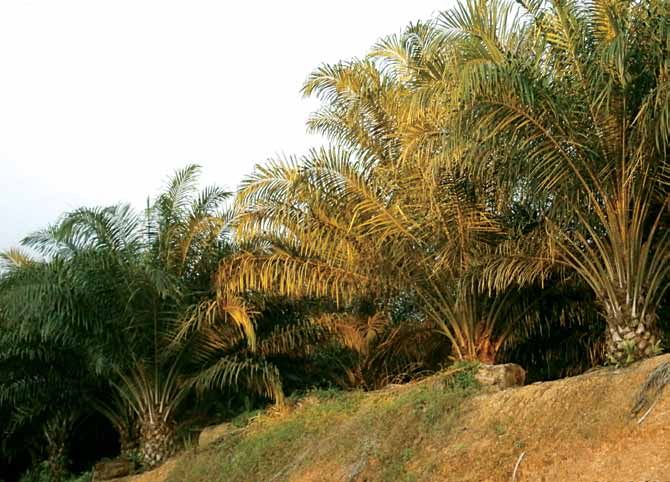
Mature oil palm plantation in Kalimantan. Photo: Bas van Balen.
4 In May 2011 Indonesian President Susilo Bambang Yudhoyono decreed a temporary moratorium on issuance of new logging and
plantation licenses over an area covering 65 million ha, providing temporary protection to areas of primary forest and peatlands.
The original decree expired early 2013 but was renewed for another two-year period, as part of a broad-based effort to promote
governance reform in the forestry and agricultural sectors.Oil Palm in Indonesia: Governance, Decision Making and Implications for Sustainable Development
25
S U M M A RY O F F I N D I N G S
MACRO-SCALE MESO-SCALE MICRO-SCALE
Spatial Planning Permitting Plantation Development
Decisions Decisions Decisions
Land
Land Surface Land Allocated Land Licensed Planted
of Indonesia to Agriculture to Oil
for Oil Palm Palm
FIGURE 3. Schematic depiction of decision processes at three different spatial scales that
determine where oil palm is planted. As described more fully in Section 3.2, meso-scale decision
making is followed by finer (micro) scale decisions within areas licensed for oil palm to avoid
areas unsuitable for planting.26 Oil Palm in Indonesia: Governance, Decision Making and Implications for Sustainable Development
SUMMARY O F F IN D IN G S
MACRO 1
Decision on national
spatial plan
Land potentially for Nationally protected
development areas
2
Decisions on Provincial/District spatial
plans & boundary of Kawasan Hutan
Land for non-forest Production forest for Provincial & regency
Production forest
uses conversion protected areas
MESO 3
Decision on area for oil
palm licenses
Area licensed for Areas not licensed
oil palm for oil palm
4
Decision on release
of Production Forest
for Conversion*
Released Not released
* where applicable
MICRO 5
Decision on areas to
plant within
approved license
Area established Area not planted to
in plantations oil palm
FIGURE 4. A schematic depiction of decisions related to (a) Indonesia’s Spatial Planning process, (b)
Licensing, and (c) Plantation development, corresponding to macro, meso and micro scale decisions
shown in Figure 3. The spatial planning process designates land legally permitted for agriculture
versus land to be maintained as part of the permanent Forest Zone (Kawasan Hutan) for protection
or production purposes such as logging. Numbers indicate steps with corresponding supporting laws
and regulations shown in Table 1.Oil Palm in Indonesia: Governance, Decision Making and Implications for Sustainable Development
27
S U M M A RY O F F I N D I N G S
TABLE 1. Laws and regulations relevant to decisions concerning where oil palm licenses are issued and where
plantations are developed within licenses.
1 UU 26 2007 Spatial Planning Law
PP 26 2008 Regulation on National Spatial Plan
PP 15 2010 Regulation on Implementation of Spatial Planning
2 UU 26 2007 Spatial Planning Law
PP 15 2010 Regulation on Implementation of Spatial Planning
UU 41 1999 Basic Forestry Law
PP 10 2010 revised by PP 60 2012 Procedures for change to the allocation and function of Forest Lands
P Menhut 32 2010 revised by P 41 2012 Exchange of Forest Lands
P Menhut 33 2010 revised by P 17 2011 Procedure for release of Conversion Forest
and P 44 2011
P Menhut 34 2010 Procedures for changing the function of Forest Lands
P Menhut 36 2010 Integrated Research Team for change of use and function of Forest
Lands
3 UU 41 1999 Basic Forestry Law
PP 10 2010 revised by PP 60 2012 Procedures for change to the allocation and function of Forest Lands
P Menhut 33 2010 revised by P 17 2011 Procedure for release of Conversion Forest
and P 44 2011
P Menhut 34 2010 Procedures for changing the function of Forest Lands
P Menhut 36 2010 Integrated Research Team for change of use and function of Forest
Lands
P Menhutbun 376/1998 Criteria for making Forest Lands available for Oil Palm Plantation
4 Permentan 26 2007 Regulations for Plantation Business Licensing (IUP)
UU 32 2009 Protection and Use of the Environment
PP 27 1999 AMDAL
Keputusan Kepala Bapadal 56/1994 Manual for Important Impacts
Peraturan Menteri Negara Agraria/ Joint decree on Location Permits (Ijin Lokasi)
Kepala Badan Pertanahan Nasional
No.2/1999
5 Permentan 14 2009 Manual for use of peatlands
Permentan 19 2011 ISPO
PP 27 1999 AMDAL28 Oil Palm in Indonesia: Governance, Decision Making and Implications for Sustainable Development
SUMMARY O F F IN D IN G S
NATIONAL LOCAL MINISTRY
LAND AGENCY GOVERNMENT OF FORESTRY
(& DISTRICT OFFICE) (IF LAND IN HPK)*
Ijin Lokasi
(1)
Obtaining AMDAL Process
Land-use & Approval
Rights (2)
Ijin Principal
Boundary Lingkungan Approval for
Mapping (3) Release of HPK
(4)
IUP
(5)
Boundary
HGU
Demarcation in
(6)
Kawasan Hutan
Land Clearing
Permit
Ministerial
Decree for
Release of HPK
Land Clearing (4)
& Planting
(1) Permen Agraria No. 2/ 1999 (5) Permentan 26/ 2007
(2) PP 27/ 1999 (6) PP 40/ 1996
(3) UU 32/ 2009 PP 24/ 1997
(4) Permenhut 32 2010
Permenhut 33/ 2010 * When principal spatial plans
Permenhut 17/ 2011 are completed, ijin lokasi will
Permenhut 44/ 2011 only be issued on APL & HPK
FIGURE 5. A flow diagram of the process for obtaining key permits and approvals required for oil palm
development in Indonesia. Foundational laws and regulations associated with each permit are noted.Oil Palm in Indonesia: Governance, Decision Making and Implications for Sustainable Development
29
S U M M A RY O F F I N D I N G S
3.2 Decisions Affecting Environmental Impacts
of Plantations and Mills
Decisions about where oil palm plantations are licensed determine the potential magnitude of negative
impacts they cause, by determining whether natural forests, hilly terrain or peat lands are placed at risk
of conversion. Yet, after a license is issued, myriad local decisions are made concerning how and where
plantations are developed and how mills will be operated, decisions that can lessen or intensify impacts
of licensing decisions made by government. In this way, licensing determines the location of the oil palm
footprint, whereas development decisions define its ultimate size and shape.
Palm oil companies are the most important actors making decisions in post-licensing stages of the
development process, determining where plantations and mills will be developed and how they will
be managed. Companies must balance multiple objectives in designing plantations across large
heterogeneous areas (c. 3,000–20,000 ha), often with insufficient data or time to make well-informed
decisions. The extent to which legal requirements guide company decisions depends as much on
corporate policy toward compliance as it does on government enforcement and perceived risk of penalty
for breach. Mitigating environmental impacts of plantations and mills is steadily becoming mainstream
corporate policy for oil palm companies, encouraging investment in impact mitigation measures as well
as pro-active forest protection and species conservation programs. Companies committing to voluntary
certification under RPSO can be especially progressive in this regard, but industry has shown that such
commitments are not a pre-requisite to take positive action.
In addition to companies, a mix of government and non-government actors also play an important
role in post licensing decisions. Central Government actors set (a) procedures to assess and mitigate
environmental impacts (AMDAL), (b) requirements to avoid environmentally sensitive areas such as steep
slopes and deep peat, (c) pollution control standards and (d) compulsory performance monitoring systems
(e.g. ISPO). In turn, local government actors have authority to (i) approve AMDAL reports; (ii) enforce
environmental management, monitoring and reporting requirements; and (iii) issue penalties, corrective
action requirements, or even initiate procedures to revoke licenses for chronic non-compliances. While
in principle local officials have broad authority to regulate performance of companies, in practice, local
agencies must temper their regulatory stance to maintain a business friendly environment, since districts
are effectively competing for palm oil investment. Local communities also play an important role in post-
licensing decisions, serving to dampen or amplify impacts of licensing through decisions concerning which
land to offer companies for planting and whether and how to pressure companies to improve practices that
impact their livelihoods (e.g. erosion protection and water quality).
Plantation Development: Companies make numerous decisions during plantation development that
affect environmental outcomes (Figure 6). Leading examples include: (i) how and where to construct
nurseries, buildings, roads, bridges and other infrastructure; (ii) which areas to plant and which to maintain
under existing land cover; (iii) how land clearance and debris removal is performed; and (iv) whether
contractors are used for land clearing and how they are controlled. As noted, plantation companies are
required to identify and avoid environmentally sensitive locally protected areas (e.g. riparian zones, and
steep slopes, etc), but can further mitigate cumulative impacts across a plantation through decisions
about whether conservation set asides will be delineated and managed pro-actively within the plantation.
If set-asides are delineated, companies must choose between retaining the area within the Business Use
Permit (HGU) or excising it. If the company retains the area, they are then faced with the responsibilityYou can also read


