PRIME LOGISTICS - International Property Consultants - Gerald Eve
←
→
Page content transcription
If your browser does not render page correctly, please read the page content below
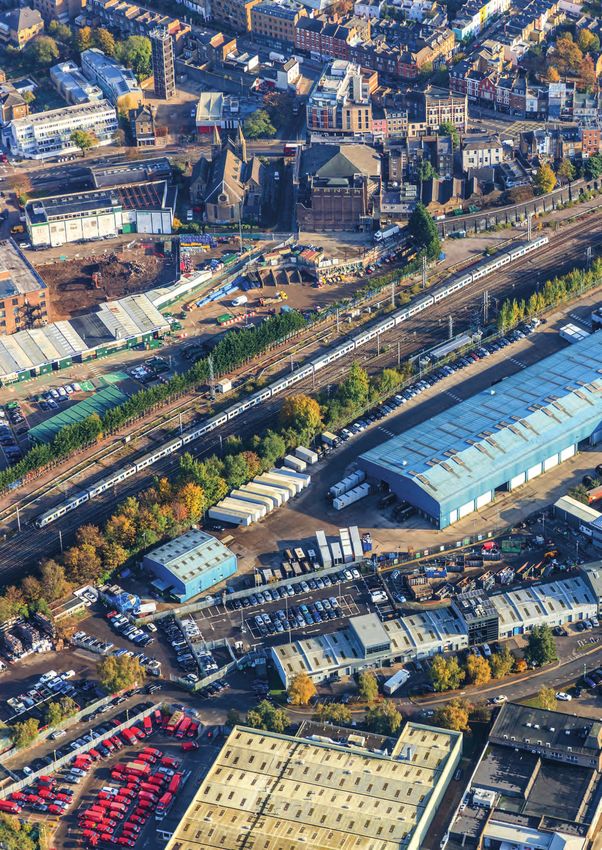
PRIME LOGISTICS
         The definitive guide to the UK’s distribution property market
         Spring 2019

International Property Consultants
www.geraldeve.com

CONTENTS

                                   Page

Introduction                          4
2018 highlights                       5
UK market overview                    6
Occupier demand                       8
Amazon warehouses                    12
Supply                               14
Development                          16
Rents and incentives                 19
Investment                           20
Outlook                              23

The Gerald Eve regions               29
Avon & Somerset                      30
Berkshire & Wiltshire                32
Buckinghamshire & Bedfordshire       34
Cambridgeshire                       36
Gloucestershire & Worcestershire     38
Greater Manchester                   40
Humberside                           42
Kent                                 44
London East                          46
London North                         48
London South                         50
London West                          52
Merseyside & Cheshire                54
North East                           56
Northern East Midlands               58
Northern West Midlands               60
Oxfordshire                          62
Scottish Central Belt                64
South Coast                          66
South Wales                          68
South Yorkshire                      70
Southern East Midlands               72
Southern West Midlands               74
Suffolk & Essex                      76
Surrey & Hampshire                   78
West Yorkshire                       80

Glossary                             82
Contacts                             83

                                          3
INTRODUCTION

Welcome to Prime Logistics 2019.
Our Prime Logistics research has been providing the industry with
detailed and impartial analysis on the UK logistics property market
since 2006. Covering buildings over 50,000 sq ft in size, this latest
update draws on 13 years of quarterly data across each of our
26 Gerald Eve regions and provides you with the tools to help
unlock the inner workings of this in-demand asset class.

UK prime logistics property remains one of the most compelling
investment propositions out of all commercial property asset
classes. Occupier demand is strong. Supply is restricted, developer
confidence is high and rents have grown strongly. However, 2019
has begun with a flurry of negative economic data and it seems that
the impact of Brexit is now taking its toll on the real economy.

Should we experience a disorderly Brexit, we would expect major
short-term disruption to both the economy and equity markets.
Commercial real estate, already late in the market cycle, is not going
to avoid these negative impacts. However, the logistics sector is
far less vulnerable than both the office and retail sectors given the
‘structural’ shift we have seen in the occupational market.

In November last year, online sales as a proportion of all retailing
exceeded 20% for the first time. This structural shift in shopping
patterns has translated into increased demand for logistics space
from both dedicated internet retailers and traditional high street
retailers increasing investment into their distribution networks.
Such a structural shift is likely to help insulate the asset class
against external economic shocks.

However, the industrial and logistics sector is not going to be immune
from negative movements in the broader economy. Whilst on the one
hand demand from internet retailers is high, on the other, demand
from the manufacturing sector, in particular the automotive sector,
what with recent announcements from Honda and Nissan, has been
weaker. In recognition of these downside risks, we have this year
reduced our overall rental growth expectations for the next five years.

We continue to invest in our industrial and logistics team, with senior
recruits and the creation of dedicated business groups focusing on the
issues and areas that are important to you. We will continue to adapt
our offering to keep pace with the changing nature of the market,
and, we look forward to helping you execute your 2019 industrial and
logistics strategies.

                                      John Rodgers
                                      Capital Markets
                                      Tel. +44 (0)20 3486 3467
                                      Mobile +44 (0)7810 307422
                                      jrodgers@geraldeve.com

www.geraldeve.com
2018 HIGHLIGHTS

                million     2018 take-up of big sheds
 50.5           sq ft          over 100,000 sq ft+
                                                         15%
 2018 take-up                                            of all take-up by
                                                         dedicated online
 second largest
 year on record                   40%                    retailers
                                                         in 2018

          million                                                      per
 7.3      sq ft             3.6%                         1.2%          year
 under construction         prime rental                 UK annual prime
 speculatively and          growth                       rental growth forecast,
 due to complete            in 2018                      2019-2023
 in 2019

     It’s at times like this, where granular, impartial data and insight, such
     as with our Prime Logistics research is crucial to identifying areas of
     potential outperformance. Together with Multi-let, our market-leading
     research on the small shed market, we are well placed to help you
     underwrite industrial and logistics assets of any size.

                                                                                   5
UK MARKET OVERVIEW

In this section we provide a long term national
overview of the UK logistics market of
buildings over 50,000 sq ft in size within our
26 Gerald Eve regions. This includes a review
of the following topics:

• Occupier demand
• Market supply
• The development market
• Rents and incentives
• The investment market
• A five year outlook

www.geraldeve.com
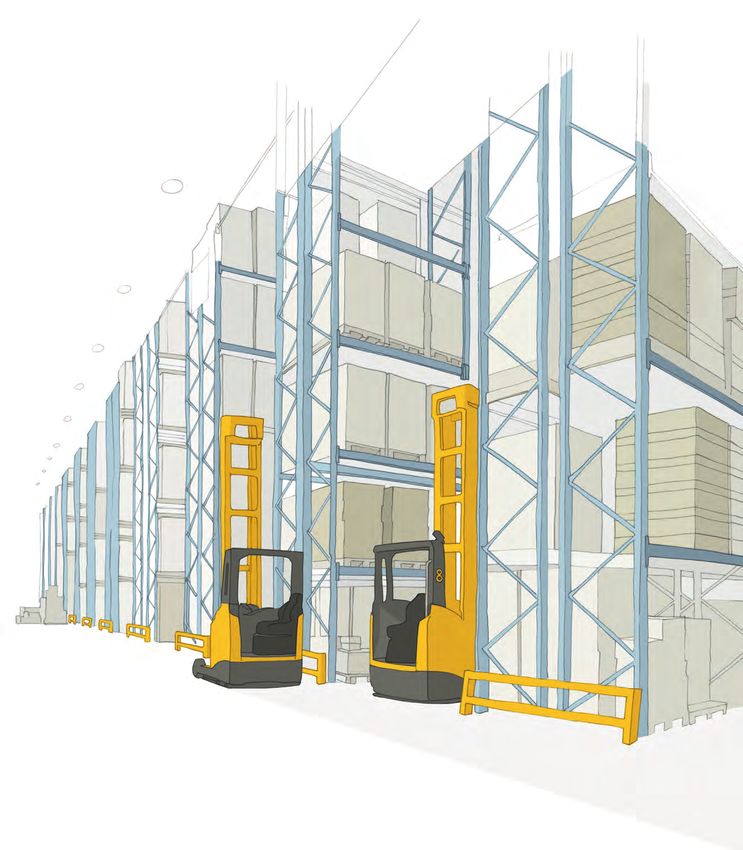
KT353, a 102,000 sq ft purpose-built parcel hub and UPS’ main Inner
London facility, was sold by Gerald Eve for £61 million during 2018.

                                                                       7
OCCUPIER DEMAND
Take-up
• 50.5 million sq ft of occupational space was transacted during • A slight difference with occupier demand in 2018 was the
2018; a 22% increase on 2017 and a whisker behind 2016’s nature of the transactions on new space. Straight letting activity
record-breaking level of 50.6 million sq ft of take-up. still drove the market in 2018, but we saw more pre-lets and
fewer occupier development sales in 2018. Occupiers chose
• 2018 turned out to be another very strong year for the UK
to sign pre-lets or agree to pre-sales with incumbent landlords
logistics market. This is particularly encouraging given the
more than purchase development land to develop facilities for
unusual economic and political environment in which the UK
themselves in 2018.
finds itself in. The uncertainty surrounding the UK’s future
relationship with the EU has dominated headlines through • There are several reasons why occupiers purchase land for
2018, as has the weak retail sales figures of several high street development. Retailers such as B&M Bargains and budget
retailers, but in some instances, these ostensibly negative food retailers such as Aldi and Lidl have favoured this option to
indicators have perversely fed through into increased demand secure bespoke logistics space, citing the supply shortage and
for UK logistics space. the offer of more choice as to location, labour pool and building
specification as the rationale. However, it was pre-letting activity
• This strong annual performance has cemented a new era of
which drove the take-up of new and refurbished space in 2018.
elevated levels of occupier demand for UK industrial property.
Indeed, for the last five years, the annual volume of space taken-up • Land suitable for warehouse development is in short supply
has been above the ten year average and 2018 ended up being and values are at very high levels. These may be factors in
24% up on the 10 year average. occupiers not purchasing development land at the same level
as in 2017, however, it may also be indicative of the enhanced
• Several parallels can be drawn between occupier activity in
deal packages which occupiers feel they can attain by agreeing
2016 and 2018, both in terms of volumes taken-up and in
to long leases in the current environment. There are a number
terms of the type of buildings occupied. 57% of all occupier
of landlords and investors willing to forward-fund developments
demand in 2018 was for new purpose-built or speculatively-built
and some occupiers may believe that they can leverage their
buildings. Demand for new space is now the driving force of
strength in the current market to best effect by agreeing to
the logistics market.
pre-let facilities.
Annual take-up, by property quality and ten year annual average, Annual take-up, by building size, 2005-2018
2005-2018 Source: Gerald Eve
Source: Gerald Eve
Million sq ft Million sq ft ‘000 sq ft
60 60 220
200
50 50 180
160
40 40
140
120
30 30
100
80
20 20
60
10 10 40
20
0 0 0
2005
2006
2007
2008
2009
2010
2011
2012
2013
2014
2015
2016
2017
2018
2005
2006
2007
2008
2009
2010
2011
2012
2013
2014
2015
2016
2017
2018
New purpose-built Secondhand 50-100,000 sq ft 250-500,000 sq ft
New speculative 10 year annual average 100-150,000 sq ft 500,000 sq ft
150-250,000 sq ft Average unit size (RHS)
www.geraldeve.com
•        The take-up of speculatively-developed space accounted for                                             •   The majority of the deals recorded by the manufacturing sector
         12% of all take-up in 2018, up on the 8% in 2017, but less than                                            involved smaller buildings and on this type of stock, we recorded
         the 17% in 2016. Occupier demand for speculative space was                                                 a number of automotive-linked and housebuilding-related
         focused on the Northern and Southern East Midlands in 2018,                                                manufacturers take space in 2018. We also saw a number
         with 29% of all demand for speculatively-developed space                                                   of medical and pharmaceutical manufacturers as well as
         taking place in these regions.                                                                             packaging manufacturers take space in 2018.
•        The North West also saw a large share of occupier demand                                               •   Retailers and wholesalers accounted for 38% of all demand
         for speculative space in 2018, with Greater Manchester and                                                 in 2018, recording over 19 million sq ft of take-up. Dedicated
         Merseyside & Cheshire together accounting for 23% of all                                                   online retailers were an important segment of this demand,
         speculative space taken-up.                                                                                although both the traditional retailers and budget food retailers
                                                                                                                    were also acquisitive during the year.
•        The elevated levels of demand for new space, in particular
         the commitment by occupiers to large pre-lets, has driven the                                          •   Demand from dedicated internet retailers, not including the
         average deal size agreed in 2018 to over 167,000 sq ft, the                                                parcel and post occupiers or those retailers which run online
         highest since 2010.                                                                                        delivery services alongside traditional retail logistics, has
                                                                                                                    increased substantially over the last six years.
•        On an annual basis, there was less space taken-up in buildings
         between 50,000-100,000 sq ft in size in 2018 than 2017,                                                •   With record-breaking levels of acquisitions by Amazon in 2016,
         perhaps in line with the drop in take-up from the manufacturing                                            when the company took over 8 million sq ft of space, volumes
         sector. For units over 100,000 sq ft, driven by retail occupiers,                                          dropped in 2017, but have once again risen in 2018 with the
         who often have larger requirements for space than manufacturers,                                           online retailer taking over 5 million sq ft of warehouse space.
         the volume of space taken-up increased by 40%.
                                                                                                                •   Amazon committed to the two largest warehouses of the year,
•        In a switch from the high levels of activity of manufacturers in                                           with a pre-let at Integra 61 for a 2 million sq ft multi-storey unit
         2017, where the occupier sector accounted for 34% of all take-up,                                          and a 1.5 million sq ft pre-let at Link 66 in Darlington. Over the
         the manufacturing sector represented just 18% of occupier                                                  past 5 years, Amazon have committed to almost 19 million sq ft
         space taken-up in 2018. Manufacturers accounted for just one                                               of space nationwide, across 51 deals.
         deal over 500,000 sq ft in 2018, with BSH Home Appliance’s
         pre-let of 945,000 sq ft at Midlands Logistics Park in Corby.

Total annual occupier take-up, by event, 2005-2017                                                              Retail and wholesale take-up, six year comparisons,
Source: Gerald Eve                                                                                              2007-2012 and 2013-2018
                                                                                                                Source: Gerald Eve

          Million sq ft
    60

    50

                                                                                                                2013–
    40                                                                                                           2018

    30

    20                                                                                                          2007–
                                                                                                                 2012

    10

     0
                                                                                                                        0               20              40                   60          80   100
              2005

                     2006

                            2007

                                   2008

                                          2009

                                                 2010

                                                        2011

                                                               2012

                                                                      2013

                                                                             2014

                                                                                    2015

                                                                                           2016

                                                                                                  2017

                                                                                                         2018

                                                                                                                                                             Million sq ft

              Development land purchase                               Occupier freehold purchase                            Other internet retail
              Letting                                                 Pre-let / pre-sale                                    Amazon
                                                                                                                            Retail and wholesale (excluding dedicated internet retail)

                     This strong annual performance has cemented a new era of elevated
                     levels of occupier demand for UK industrial property.

                                                                                                                                                                                                    9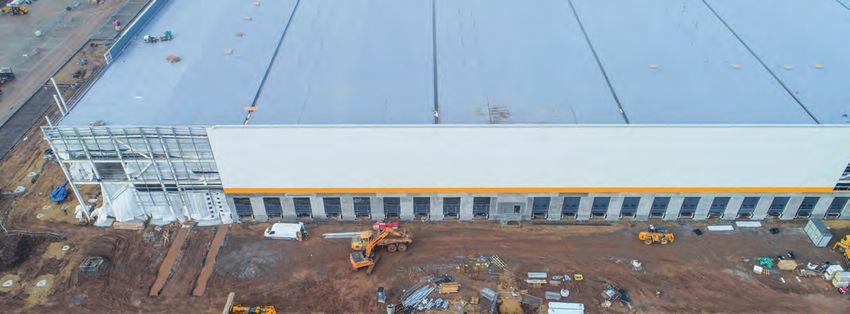
2018 take-up by occupier business sector
Source: Gerald Eve

Services 5%                                                                                                          2% Healthcare logistics

                                                                                                                           3% Parcel & post
Services 5%

Traditional retail 12%                                                                                                  23% Logistics

                                                                                                                    18% Traditional logistics

                                                                                                               2% Automotive manufacturing
Dedicated online retail 15%
                                                                                                            2% House building manufacturing

Retail & Wholesale 38%                                                                                          18% Manufacturing

                                                                                                               13% Traditional manufacturing

Budget food retail 10%

                                                                                                               Other/unknown 16%

Automotive retail 2%                                                                                                   Other/unknown 16%

•   Compared to the period 2007-2012, where internet retailers          •   The regions which saw the largest volume of occupier
    accounted for 15% of all retail and wholesale demand, between           take-up in 2018 were the North East and the East Midlands.
    2013 and 2018, dedicated internet retailers have both taken             Amazon’s decisions to take two very large buildings in the
    more space and accounted for an increased percentage of all             North East and large deals by occupiers including Wayfair,
    retail demand, at 33%.                                                  BSK Home Appliances, Eddie Stobart and Shop Direct,
                                                                            ensured a stellar year for these two regions.
•   As well as a strong showing from occupiers in the retail and
    wholesale sector, we also recorded a 21% increase in the volume
    of space taken by logistics occupiers in 2018. Central locations,
    including the Northern East Midlands and Southern East Midlands
    and Merseyside and Cheshire, were the focus of logistics
    occupier demand in 2018.

www.geraldeve.com
Total occupier take-up by region 2018
Source: Gerald Eve
M90
Over 4 million sq ft
M8
M73 SCOTTISH 3-4 million sq ft
M8 CENTRAL BELT 1-3 million sq ft
M74
Below 1 million sq ft
A74
M6
NORTH EAST
A1
WEST HUMBERSIDE
YORKSHIRE M62
M62
M1
M56
GREATER SOUTH
MANCHESTER YORKSHIRE
A1
MERSEYSIDE
& CHESHIRE
NORTHERN NORTHERN EAST
WEST MIDLANDS MIDLANDS
SOUTHERN
WEST MIDLANDS SOUTHERN CAMBRIDGESHIRE
EAST MIDLANDS A1 SUFFOLK
& ESSEX
BUCKINGHAMSHIRE A14
GLOUCESTERSHIRE & BEDFORDSHIRE M11
& WORCESTERSHIRE M1
M40
LONDON NORTH
M50
SOUTH OXFORDSHIRE
M25
WALESM4 LONDON LONDON
M4
BERKSHIRE WEST EAST
AVON & & WILTSHIRE
SOMERSET M25
LONDON
KENT
SURREY & M23 SOUTH
M5
M20
SOUTH M3 HAMPSHIRE
COAST
11AMAZON WAREHOUSES
Warehouses occupied by Amazon in the
Gerald Eve regions, Q4 2018
M90
M8
M73
M8
M74
A74
M6
A1
M62
M62
M1
M56
A1
A1
A14
M11
M1
M40
M50 M25
M4
M4
M25
M5
M23 M20
M3
www.geraldeve.comUK internet retail
AMAZON
million
19.8% 19 sq ft
Online sales as Take-up
a proportion of (2014-2018)
all UK retailing
(December 2018)
Every sq ft
Amazon
occupies
represents
2.9 UK residents
£1.86 billion Sources: ONS, Gerald Eve
Average UK weekly
internet sales
(December 2018)
14%
Annual growth
in weekly
spending online
(December 2018)
Source: ONS
13SUPPLY
Avaliability Annual volumes of availability by building quality, 2007-2018
Source: Gerald Eve
• Between 2009 and 2014, the volume of available space on
the market showed sharp reductions year-on-year. Despite the Million sq ft %
steadily increasing levels of speculative development since 2015, 120 18
this has done little to the overall volume of space on the market 16
100
for occupiers to choose from. 14
• Robust occupier demand has kept volumes low and since 2015 80 12
availability rates have largely flat lined at around 6%, culminating 10
60
in an availability rate of 6.2% at the end of 2018. The rate of 8
availability in the UK seems to have reached a natural nadir.
40 6
• With that said, the volume of new or modern space on the 4
market has been gradually increasing over the past five years, 20
2
and there is now over 15 million sq ft of new or modern space
0 0
available – the highest volume since 2010.
2007
2008
2009
2010
2011
2012
2013
2014
2015
2016
2017
2018
• In contrast, the volume of secondhand space has been
declining over this time period, as occupiers taking new space New or modern Availability rate (RHS)
have not been returning unwanted space back to the market. Secondhand
Warehouses continue to be occupied to maximum efficiency
in the UK and letting activity on new buildings has largely been
as a result of expansionary activities rather than consolidation.
On average, over the past five years, secondhand stock has Availability rates by building quality, 2009-2018
accounted for 75% of available space on the market. In 2018 Source: Gerald Eve
secondhand space accounted for just 63% of available space.
%
• 7.3 million sq ft of speculative space is currently under 26
24
construction and expected to complete in 2019, with the
22
largest volumes in Merseyside & Cheshire, Oxfordshire and 20
the Northern East Midlands. Whilst we expect there to be 18
strong occupier interest in speculative developments, it seems 16
likely that some of this space will enter our availability figures 14
12
throughout 2019, and perhaps drive up new and modern
10
availability rates further. 8
6
• At the end of 2018, there were five Gerald Eve regions with overall
4
availability rates over 10%. Locations such as Oxfordshire and 2
Avon & Somerset recorded the highest availability rates of all our 0
2009
2010
2011
2012
2013
2014
2015
2016
2017
2018
regions at 13.6% and 11.4%. Even though these markets had
an above average rate of availability at the end of 2018, for the
majority, this is due to some long standing secondhand buildings, New or modern All quantities
or, rates are driven from a low absolute volume of stock. In the Secondhand
majority of regions which had above average availability rates, the
new or modern availability rate was often a lot lower.
• At the other end of the spectrum, there are several markets with Indexed supply and demand, Q2 2007-Q4 2018
extremely limited supply. London South and Surrey & Hampshire Source: Gerald Eve
recorded 0% availability rateS at the end of 2018, which reflects
Index Q2 2007 = 100
the high levels of demand in these regions, as well as the 160
restricted levels of stock and land available for development. 150
• With strong levels of occupier activity in 2018 and a drop 140
in development completions, the availability rate across our 130
regions has remained low. We continue to see a supply 120
response from developers, with several speculative schemes 110
now underway, but levels of demand continue to outpace 100
supply on a rolling annual basis. 90
• We expect availability will continue to remain low in the short term 80
and for the proportion of new or refurbished space to continue 70
to rise as new developments enter our supply figures. The longer 60
Q2’07
Q4’07
Q2’08
Q4’08
Q2’09
Q4’09
Q2’10
Q4’10
Q2’11
Q4’11
Q2’12
Q4’12
Q2’13
Q4’13
Q2’14
Q4’14
Q2’15
Q4’15
Q2’16
Q4’16
Q2’17
Q4’17
Q2’18
Q4’18
term outlook for availability not only depends on the appetite for
further speculative development, but also the predicted volume
of secondhand space that could be returned to the market as a Availability
result of any malaise in the manufacturing sector. Rolling four quarter total take-up
www.geraldeve.comAvailability rates by Gerald Eve region, Q4 2018
Source: Gerald Eve
Oxfordshire
Avon & Somerset
London West
Buckinghamshire & Bedfordshire
South Coast
Merseyside & Cheshire
Greater Manchester
Southern West Midlands
Scottish Central Belt
Northern East Midlands
South Wales
Suffolk & Essex
London North
Northern West Midlands
West Yorkshire
Southern East Midlands
Humberside
Berkshire & Wiltshire
South Yorkshire
London East
Cambridgeshire
North East
Gloucestershire & Worcestershire
Kent
London South
Surrey & Hampshire
0 2 4 6 8 10 12 14
%
UK average
15DEVELOPMENT
• After four consecutive years of growth in the volume of annual
development completions, we recorded a substantial 41% drop in
2018 to 15.8 million sq ft. Whilst the overall volumes were down,
proportionately, the percentage of speculative space completing
development was the largest since 2008, at 57% of all completions.
• For the past decade, development volumes have been driven
by purpose-build schemes. In contrast, however, 2018 has
seen the volume of speculative developments reaching practical
completion surpass the volume of purpose-built development.
We recorded speculative development from a range of
developers, with db Symmetry, First Panattoni, Mountpark,
Prologis, and Segro all particularly active in the speculative
development market in 2018.
• We recorded a total of 71 speculative buildings reach practical
completion during 2018, totalling almost 9 million sq ft, the
average unit size of which was 130,000 sq ft. This is a significant
rise on the 46 speculative buildings we saw complete in 2017
and representative of the increased confidence of developers in
the UK speculative market.
• There were just 47 purpose-build completions in 2018, the total
volume of which was over 13 million sq ft less than the total
recorded in 2017. Rather than any slowdown in activity, this is
more a reflection of the longer time period of development for
larger buildings which has pushed the completion date of some
of the larger developments into 2019.
• In terms of average building size, purpose-builds were only slightly
larger than speculative units in 2018, measuring 146,000 sq ft on
average, compared to 130,000 sq ft. The largest speculative units
to complete in 2018 were Wolverhampton 450 (448,000 sq ft) and
375 Logistics North (375,000 sq ft) both of which were developed by
First Panattoni. The largest purpose-build development completion
was H&M’s 750,000 sq ft unit at Magna Park in Milton Keynes.
• In 2017 development completions were driven by units over
500,000 sq ft; however in 2018 just one unit completed over
500,000 sq ft in size. It was the completion of units between
100,000 and 150,000 sq ft and, 250,000 and 500,000 sq ft,
rather than the mega sheds, which drove the volume of
overall completions in 2018, for both purpose-built and
speculative buildings.
Development completions, by type, 2007-2018
Source: Gerald Eve
Million sq ft
35
30
25
20
15
10
5
0
2007
2008
2009
2010
2011
2012
2013
2014
2015
2016
2017
2018
Purpose built
Tritax forward-funded the development of this 1.5 million sq ft fulfilment
Speculative
centre located at Link 66 in Darlington. Upon practical completion in
September 2019, the cross-dock facility which has an eaves height of
18 metres, will be let to Amazon on a new 20 year lease.
www.geraldeve.com• This in turn has driven down the average size of development Development completions by unit size band and average
completions to 136,500 sq ft, the lowest on record. unit size, 2007-2018
Source: Gerald Eve
• Developers are proving more confident in commencing schemes
speculatively, and we continue to record heightened speculative Million sq ft ‘000 sq ft
activity from a range of developers. Whilst this has to date been 35 300
largely well thought through and targeted development, the average
30 250
size of scheme has started to creep up over the last two years as
developers have moved up the risk curve. 25
200
• This is borne out in the development starts recorded in 2018, 20
with over 12 million sq ft of speculative space getting underway 150
15
during the year. This drove the total development starts to almost
100
25 million sq ft, the largest volume of space to start in one year 10
since 2007, with an even 50% split between purpose-built and
5 50
speculative developments.
• Such an even split bodes well in terms of market regulation over 0 0
2007
2008
2009
2010
2011
2012
2013
2014
2015
2016
2017
2018
the next few years. Development completions are expected to
increase year-on-year, but a fairly even split between tenant-lead
500,000 sq ft + 250-500,000 sq ft
and speculative space is expected.
100-150,000 sq ft 50-100,000 sq ft
• When indexed back to Q4 2007, on a rolling annual basis, 150-250,000 sq ft Average unit size (RHS)
the volume of speculative space starting construction has
surpassed the position in 2007. On a rolling annual basis, there
Indexed rolling four quarter development starts by type,
is now more space starting construction speculatively than in
Q4 2007-Q4 2018
2007. However, we are in a new paradigm in terms of elevated
Source: Gerald Eve
demand. And, supply is a lot lower than it was in 2007. So, whilst
there are parallels in terms of the cumulative volume of space Index Q4 2007 = 100
being developed speculatively, current market conditions are 300
very different to 2007 and regionally, these speculative schemes 200
are in much more established markets.
100
• To emphasis this, the volume of purpose-built starts is now
0
more than double the activity recorded in 2007, a clear sign of
occupier demand for new space. -100
-200
• The drop in development completions recorded in 2018
was slightly surprising, but we predict that the volume of -300
completions will increase substantially in 2019. At the end of
-400
2018, we recorded just over 20 million sq ft of space under
construction and due to complete in 2019, 7.3 million sq ft of -500
Q4’07
Q2’08
Q4’08
Q2’09
Q4’09
Q2’10
Q4’10
Q2’11
Q4’11
Q2’12
Q4’12
Q2’13
Q4’13
Q2’14
Q4’14
Q2’15
Q4’15
Q2’16
Q4’16
Q2’17
Q4’17
Q2’18
Q4’18
which is speculative.
Purpose built
Speculative
Development starts, by type, 2006-2018
Source: Gerald Eve
Million sq ft
30
25
20
15
10
5
0
2006
2007
2008
2009
2010
2011
2012
2013
2014
2015
2016
2017
2018
New purpose built
Speculative
17• This will provide occupiers with an increased choice of new • The proximity of certain developments to up-and-built large
space in 2019 and with an average building size across the UK warehouses already let to high profile occupiers is another
of 138,000 sq ft, these buildings are likely to be well received by factor developers are considering before speculating in the UK.
occupiers. However, there are certain regions where there are a Occupiers are increasingly concerned about having a steady
number of speculative buildings expected to complete in 2019, supply of appropriately skilled labour to staff warehouses, and
and depending on the timings of the completions, this could the proximity of a speculative development to an existing large
have a dampening effect on rental growth in these regions if warehouse, which may have already attracted a large amount
occupiers have increased choice. London North and Oxfordshire of the labour pool of potential new occupiers, could be a limiting
have a number of speculative developments expected in 2019. factor on occupier demand for these buildings. Given the
potential threats to demand over the next few years, we expect
• The impact of additional speculative developments in larger
developers to continue to closely analyse the nuances of supply
markets such as the North West, Midlands and Yorkshire is likely
and demand before starting schemes.
to be more supportive of prime rental growth, given the historic
demand profile in these regions and the fact that speculative
developments in these regions are more geographically disparate.
Development completions, by type and 2019 outlook, 2019 expected speculative development completions by
2007-2019 broad region
Sources: Gerald Eve Source: Gerald Eve
Million sq ft 3%
35
15% West of England & Wales
West Midlands
30 19%
Forecast
South East England
25
20
15
10
22%
East Midlands 7.3
million sq ft
5 29%
Northern England
0
2007
2008
2009
2010
2011
2012
2013
2014
2015
2016
2017
2018
2019
12%
London
Purpose built
Speculative
www.geraldeve.comRENTS AND INCENTIVES
• The combination of a historically low level of availability and • Throughout 2018 there has been a significant rise in the volume
above average levels of occupier demand has resulted in further of units being developed speculatively, and we expect this trend
positive rental growth in the UK logistics market during 2018. to continue throughout 2019, with a large volume of speculative
space currently under construction. This influx of new space
• After prime rental growth lost momentum following the
is likely to drive rents in several supply-starved markets, but in
recession, the market has certainly recovered and rents
others, it could offer an increased choice to occupiers which
have continued to grow year-on-year. The UK logistics rental
could in turn increase competition and suppress rental growth.
market has continued to perform strongly against an uncertain
economic backdrop. • It is worth bearing in mind that occupiers remain under cost
pressures to be able to afford to pay ever-rising rents which could
• In line with our forecasts made at the start of the year, UK prime
increasingly become an issue in the medium term, especially if
logistics rents have grown by an average 3.6% during 2018.
Brexit-related issues affect underlying business conditions.
Whilst down on the 6.8% recorded in 2017, the All UK average
figure is now £7.39, the highest on record, and prime rents in
several markets are well in advance of previous highs.
Indexed regional prime rental growth, Q4 2012-Q4 2018
• We recorded over 10% prime rental growth in four of our Source: Gerald Eve
regions during 2018; the North East, Cambridgeshire,
Southern East Midlands, and Oxfordshire. For the most part Index Q4 2012 = 100
135
these regions are characterised as having a restricted volume
of supply, strong levels of occupier demand, and significant 130
volumes of new development space, on which new prime
125
rents could be achieved.
120
• Since the start of 2018, we have recorded the strongest
growth in prime rents in individual centres such as Enfield, 115
Peterborough, West Thurrock and Heathrow – locations which
110
are both prime and command a premium, or, those with low
supply and which have seen speculative schemes attract 105
elevated rents.
100
Q4’12
Q2’13
Q4’13
Q2’14
Q4’14
Q2’15
Q4’15
Q2’16
Q4’16
Q2’17
Q4’17
Q2’18
Q4’18
• The continued low levels of supply in several markets has
meant that certain speculative schemes that are currently being
developed are quoting rental profiles in excess of our recorded London West of England & Wales
prime rent series. Deals on such schemes are likely to continue Northern England South East England
to drive prime rents on in early 2019 as landlords on newly West Midlands Scotland
developed buildings seek the highest rents for the location. East Midlands
• In contrast, some Gerald Eve centres have not experienced
such positive movements in rents, and we have recorded a
flat rental profile in seven centres in 2018. For several centres, Indexed average UK prime headline rent, 2005-2018
such as London South and Surrey & Hampshire, rental growth Source: Gerald Eve
has been restricted by the demand and supply imbalance.
Index 2005 = 100
Low volumes of stock, limited development and below average 125
availability rates has restricted occupier activity and limited deal 120
evidence to move the rental profiles.
115
• In 2018, in conjunction with positive prime rental growth, tenant 110
incentives also remained low, with the average level of incentives
105
offered on a ten year lease remaining at 7-11 months’ rent free
100
on average across the UK.
95
• Current rent free incentives offered to occupiers are far lower
90
than average rent free periods offered at the end of 2012, which
used to be 14-20 months’ rent free. Incentives have remained 85
at a similar level since the end of 2015, and we seemed to have 80
2005
2006
2007
2008
2009
2010
2011
2012
2013
2014
2015
2016
2017
2018
reached the low point in terms of occupier inducements.
In line with our forecasts made at the start of the year, UK prime logistics
rents have grown by an average 3.6% during 2018.
19INVESTMENT
• 2018 was another exceptional year for industrial property 2018 investment volumes by property type and Gerald Eve region
investment, both in terms of volumes traded and overall Sources: Property Data, Gerald Eve
performance. The current occupier market conditions of
constrained supply and strong demand plus a reduced, but
still positive outlook for rental growth, has meant the logistics London North
sector has been subject to a great deal of attention from
investors in 2018. Southern West Midlands
• With the current political uncertainties, the sector has offered
Southern East Midlands
investors the potential for stable, income-producing assets, in a
market that is expected to continue to grow.
London East
• In 2018 we recorded the third largest volume of industrial
property investment on record, with strong levels of interest Merseyside & Cheshire
in industrial portfolios, standard industrials and distribution
warehouses. Excluding portfolios from the total volume North East
transacted, the volume of standard industrials and distribution
warehouses is marginally below the record-breaking levels Berkshire & Wiltshire
recorded in 2017, at £5.4 billion.
Scottish Central Belt
• On average, across the country, we recorded a 22 basis point
reduction in prime yields throughout 2018. Some locations,
Surrey & Hampshire
such as Heathrow and Park Royal achieved record low prime
yields of 3.75% and 3.5% at the end of 2018. Nearly every
Northern East Midlands
Gerald Eve centre now has a yield profile below that recorded
in Q4 2007.
West Yorkshire
• In 2018, it was London North which recorded the highest volume
of industrial investment – driven by the purchase of trading London West
estates such as Woodside and Martinbridge. The Southern
West Midlands was also a target for investors in 2018, as South Coast
several large transactions concluded, such as Kings Norton
Industrial Estate in Birmingham, which traded at £134 million, South Yorkshire
reflecting a 4.03% yield.
Greater Manchester
• In terms of distribution warehouse investment, London East
and Merseyside & Cheshire were the focus of investor attention,
Buckinghamshire & Bedfordshire
recording the highest number of transactions on distribution
warehouses. In terms of volumes, we saw a significant amount
Oxfordshire
traded in the North East and the Southern East Midlands in
distribution warehouses in 2018.
Avon & Somerset
Northern West Midlands
Annual industrial investment volumes including portfolios and
Heathrow prime yield, 2005-2018 Gloucestershire & Worcestershire
Sources: Property Data, Gerald Eve
Kent
£ billion %
12 8
London South
7
10
6 Cambridgeshire
8
5
Humberside
6 4
3 Suffolk & Essex
4
2
South Wales
2
1
0 0
2005
2006
2007
2008
2009
2010
2011
2012
2013
2014
2015
2016
2017
2018
0 100 200 300 400 500 600
£ million
Distribution warehouse Portfolio Standard industrial
Industrial Heathrow prime yield (RHS) Distribution warehouse
www.geraldeve.comGerald Eve advised Deutsche Bank on the sale of Unit B,
New Hythe Lane in Aylesford for £27.5 million in 2018.
• Property companies were on balance significant net sellers
during 2018, whilst UK institutions and overseas investors
were the most acquisitive purchasers of distribution
warehouses on a net basis.
• The most acquisitive investors in 2018 were Tritax Big Box REIT,
Ascendas REIT and M7 Real Estate, who together invested
over £1.3 billion, over 32% of the total volume of transactions
recorded for distribution warehouses.
• We also saw several high value development acquisitions
during 2018; including Citrus Group’s sale of Integra 61 in
Durham to Tritax, for £147.3 million. The 1.9 million sq ft unit
has been pre-let to Amazon and is set to be their second
largest warehouse in the UK. It is also expected to benefit
from significant capital investment from the occupier.
• Industrial property has once again delivered one of the best set
of investment performance results of all asset classes in 2018,
outperforming retail, office, residential, hotel and other sectors in
terms of 12 month total returns.
Distribution warehouse net investment by investor type 2018
Sources: Property Data, Gerald Eve
£ Million
800
600
400
200
0
-200
-400
-600
-800
UK Overseas Private Occupier Undisclosed Property
institutions investors individuals companies
Annual distribution warehouse total return and components,
2005-2018
Sources: MSCI, Gerald Eve
% per year
30
20
10
0
-10
-20
-30
2005
2006
2007
2008
2009
2010
2011
2012
2013
2014
2015
2016
2017
2018
Income return Market rental value growth
Equivalent yield impact Total return
21Annual UK retail, office and distribution warehouse equivalent Distribution warehouse equivalent yield, ten year government
yields, 2001-2018 bond and spread 2005-2018
Sources: MSCI, Gerald Eve Sources: Oxford Economics, Gerald Eve
% %
9.0 10
8.5 9
8.0 8
7.5 7
7.0 6
6.5 5
6.0 4
5.5 3
5.0 2
4.5 1
4.0 0
2005
2006
2007
2008
2009
2010
2011
2012
2013
2014
2015
2016
2017
2018
2001
2002
2003
2004
2005
2006
2007
2008
2009
2010
2011
2012
2013
2014
2015
2016
2017
2018
Distribution warehouse Gap
All office Government bonds
All retail Distribution warehouse equivalent yields
• UK distribution warehouse equivalent yields fell below that being • The reliable income component of warehouse investment
achieved by UK offices and retail in 2018. This is reflective of performance will hold it in good stead as we go through times
the structural change we are seeing in the UK logistics sector of potentially significant political and economic uncertainty over
and the changing nature of consumerism, with increasing levels the next few years. Whilst we expect the health of the occupier
of online shopping and reduced high street activity. This is now market to continue, there are competing pressures on the ability
clearly filtering through into the investment performance of these of investors to pay the yields currently being achieved, especially
buildings given the strong investor sentiment for the sector. against the current uncertain economic backdrop.
• With this said, in terms of performance, total returns for distribution • Despite record low yields, logistics (together with multi-let
warehouses marginally dropped by 3.5%, from 17% in 2017 to industrial) is forecast to outperform the rest of the UK real estate
13.5% in 2018, with a slow down in performance in the second market in terms of total returns in the short and medium terms.
half of 2018. While we saw very little change to rental growth and The best quality logistics properties still offer the opportunity to
income return compared to 2017, the drop was mainly driven by attract very strong tenants on long, often index-linked leases.
less positive equivalent yield impact which dropped by 3.4%, from
• These ‘long and strong’ opportunities (in any real estate sector,
8.6% in 2017 to 5.1% to 2018.
but especially industrial) currently have the greatest depth of
• The significant levels of yield compression we have recorded interest as some investors seek to reduce their risk exposure in
over the past few years has meant that many investors now the late run cycle. Arguably, long-let logistics is one of the most
consider the industrial sector too keenly priced. Therefore, defensive sub-sectors of the UK real estate market moving
certain investors are now turning to secondary logistics and forwards and the weight of capital should continue to maintain
vacant sites, where they believe there is more potential and pricing in the short term, even as other sectors potentially
value in the current market. begin to fall.
• With that said, even with falling yields, compared to ten-year
Government bonds, distribution warehouse yields still offer an
attractive spread of around 4%. To the footloose investor, there
is still margin to be had from the sector.
• We expect the total return profile to return to more ‘normal’
levels over the next five years. The outlook for capital values
is likely to be driven more by the impact of reduced, but still
positive rental growth, rather than further positive yield impact. Nick Ogden
With yields as low as they are, whilst it is feasible the current Capital Markets
level of investor activity could continue, it is unlikely that Tel. +44 (0)20 3486 3469
movements in yields are going to have the same impact on Mobile +44 (07825 106681
values as they did in 2017 and 2018. nogden@geraldeve.com
www.geraldeve.comOUTLOOK
• 2018 turned out to be another very strong year for UK Distribution warehouse annual total return and components,
logistics, both occupationally and in the investment market. Q4 2013-Q4 2018
This strong showing is despite the unusual economic and Sources: MSCI, Gerald Eve
political environment in which the UK finds itself in and the
weak sales figures of several high street retailers. % annual growth
25
• The headlines for the year involved strong occupier demand,
20
continued weak supply, despite a substantial increase in
speculative development starts, and, continued growth in rents.
15
This in turn fuelled the investment market and it was another
stellar year in terms of total returns for the asset class. 10
• However, towards the end of 2018 we did start to see a
5
slowdown in terms of quarterly performance. On a quarterly
basis, annual total returns for distribution warehouses, whilst
0
still one of the best performing of all commercial property
asset classes in 2018, did fall off in the second half of the -5
Q4’13
Q1’14
Q2’14
Q3’14
Q4’14
Q1’15
Q2’15
Q3’15
Q4’15
Q1’16
Q2’16
Q3’16
Q4’16
Q1’17
Q2’17
Q3’17
Q4’17
Q1’18
Q2’18
Q3’18
Q4’18
year. Rental growth and income return remained steady
throughout 2018, but the impact of positive yield impact on
the total return profile of warehouses started to reduce.
Income return Market rental growth
• Allied to this, 2019 also began with a flurry of negative Equivalent yield impact Total return
economic data. Oxford Economics lowered their GDP growth
forecasts for 2019 to 1.4% from 1.7%, reflecting the run of
UK business investment, contributions to GDP growth,
weak data and slowdown in world trade. The economy is
2006-2023
shrouded in a Brexit fog, the uncertainty of which is weighing
Sources: Oxford Economics
heavily on business investment, and is likely to continue to do
so in the short term. We are now starting to see the impact % per year
of the UK’s decision to leave the EU reflected in performance 10
data on the real economy.
Forecast
5
• Firms are in solid financial shape, but they have been reluctant
to spend, and we have seen business investment fall each
0
quarter in 2018. This is expected to be a drag on GDP growth
over the next five years.
-5
-10
-15
2006
2007
2008
2009
2010
2011
2012
2013
2014
2015
2016
2017
2018
2019
2020
2021
2022
2023
23• Should we experience a disorderly Brexit, we would expect
some major short term disruption to both the economy and
Liberty 163 is a speculative development at Stoford equity markets. Commercial real estate, already late in a market
Developments’ Worcester Six scheme, which has attracted cycle, is not going to avoid these negative impacts, but the
occupiers such as Kimal, Kohler Mira and Spire Healthcare. logistics sector is far less vulnerable than both the office and
retail sectors.
• One of the reasons for this expected resilience is the structural
shift we have seen in the occupier market. Online sales as
a proportion of total retail sales hit 20% in December 2018
and spending online grew by 14% in 2018. Dedicated online
retailers and high street retailers tethered to a long chain of
outdated high street shops are going to continue to invest in
their distribution networks. As will the dependant logistics firms
servicing contracts for these occupiers.
• Given the high levels of space under offer at the end of 2018,
and the general elevated levels of requirements in the market, we
expect that it will again be retailers and their desire for new space,
which will continue to drive demand in 2019. The structural shift
of consumer shopping patterns to the internet and the critical
importance of an effective supply chain to retailers are expected
to filter through into demand for industrial property in 2019.
• However, over a five year forecast horizon, there are both
structural and cyclical forces at work which could have an impact
on levels of demand – not least the potential impact of Brexit in
2019, which is likely to hasten any cyclical market movements.
It is the impact on the manufacturing sector and the knock-on
effect to overall demand for industrial space from this occupier
sector which is likely to have a dampening effect on demand.
• Whilst we are likely to see supply increase throughout 2019
through a combination of the addition of new speculative
space and the return of secondhand space, we expect
demand will remain robust enough to keep upward pressure
on prime rents, albeit not at the same growth rates recorded
over the last few years.
• Our baseline forecast for prime rents over the next five years is for
a UK average 1.2% growth per year, with the strongest growth in
rents, of 1.4%, expected in 2021. Since the end of 2014, average
UK prime rents have grown by 24%. This is significant growth
for a sector not historically known for its strong levels of rental
growth. Whilst there is the potential for a bounce in occupier
activity at the end of any Brexit transition period, there are
competing pressures at work over such a long forecast period,
not least the cost pressures on occupiers to be able to afford
further increases in rents.
• However, even with these pressures, we forecast that the
structural change we have seen in the market will translate into
all regions experiencing positive rental growth over the next five
years. In the current broader commercial property environment
and the likely economic uncertainty the UK is going to experience
over the next few years, this in itself is a positive for the sector
and one which is not replicated in other commercial property
asset classes.
www.geraldeve.comUK average prime headline rental growth and forecast, Annual development completions, by type and forecast based on
2013-2023 space under construction at the end 2018 to be delivered in 2019
Source: Gerald Eve Source: Gerald Eve
% per year %
8 100
7 90
80
6
70
5 60
Forecast
4 50
3 40
30
2
20
1 10
0 0
2013
2014
2015
2016
2017
2018
2019
2020
2021
2022
2023
2007
2008
2009
2010
2011
2012
2013
2014
2015
2019
2016
2017
2018
Purpose-built
Speculative
All retail sales and internet retail sales value growth, 2008-2023 • Whilst in prime markets the forces of supply and demand
Sources: ONS, Oxford Economics could push rents on, especially in those locations where there
is an acute shortage of supply and land for future development
160
Index 2016 = 100 such as London West and Cambridgeshire. There are
Forecast other markets, where the costs pressures on occupiers are
140 more acutely felt and whilst rents need to increase to make
120 developments viable, occupiers may not be in a position to
pay them. In such markets, this could limit both development
100
activity and growth in prime rents.
80
• Markets which have already seen step-changes in rents in
60
the current cycle, such as London South, are unlikely to grow
40 at the same high levels over the next five years, even though
upward pressure on rents remains. Those markets which have
20
not seen this significant growth can expect rents to move on
0 in excess of the UK average. As we enter 2018, based on
2008
2009
2010
2011
2012
2013
2014
2015
2016
2017
2018
2019
2020
2021
2022
2023
the amount of space under construction at the end of 2018
and due to complete in 2019, we expect, proportionately,
All retail sales value, excl fuel
that at 36% of all expected development completions that
Internal retail sales value
speculative developments will continue to be an important
driver of the market.
25• We are seeing developers move slightly up the risk curve in Internet sales as a percentage of total retail sales and take-up
terms of the sizes and locations of speculative developments. by online retailers as a percentage of total take-up
This will feed the market with new accommodation; however, Sources: ONS, Gerald Eve
the simultaneous delivery of several speculative schemes in
certain locations could test the depth of occupier demand and % per year
25
will certainly have an impact on the rental growth outlook.
• In the investment market, many investors realise that this is one 20
of the few sectors that has the real possibility of meaningful
income return and rental growth. The best quality logistics 15
properties still offer the opportunity to attract very strong tenants
on long, often index-linked leases. These ‘long and strong’
10
opportunities have the greatest depth of interest as some
investors seek to reduce their risk exposure in the late run cycle.
5
• However, it is possible that the yield spread between core and
core-plus, having shrunk over the last couple of years, could 0
2007
2008
2009
2010
2011
2012
2013
2014
2015
2018
begin to widen again. Core-plus assets could underperform
2016
2017
against core counterparts as investors apply a greater risk
premium to shorter leases and older properties. Whilst the Internet sales as a percentage of all retailing
background economic uncertainty could create some buying Linear average (Take-up by online retailers as a percentage of total take-up)
opportunities, broadly speaking, yields are at levels where Take-up by online retailers as a percentage of total take-up
investors are likely to find it increasingly difficult to gain access
to the sector at a reasonable entry price.
• If the UK leaves the European Union without a deal in place,
there will inevitably be border and international trade disruption Distribution warehouse forecast total return and components,
as checks and tariffs cause friction around entry and exit ports. 2012-2023
Underlying business conditions are likely to be threatened and Sources: MSCI, Gerald Eve
occupiers are likely to remain under cost pressures to be able to
% per year
afford to pay ever-rising rents. 25
Forecast
• Some industries will be more greatly impacted by a disorderly 20
UK withdrawal from the EU, and any accompanying exchange
rate movements, than others. In short, costs are likely to rise for 15
many businesses, particularly those dealing in overseas trade – 10
either import or export.
5
• Overseas supply chains are likely to become slower and more
expensive, and border frictions could have an impact on the UK 0
food and drink retailers, particularly for just-in-time perishable
-5
goods. Chilled and ambient storage is likely to be in high
demand, despite underlying business conditions weakening. -10
2012
2013
2014
2015
2016
2017
2018
2019
2020
2021
2022
2023
• It is the manufacturing sector which we think could be most at
risk of a disorderly Brexit. Oxford Economics specifically highlight Income return Yield impact on capital values
the chemicals and automotive sectors as being vulnerable, Rental growth Total return
but the construction industry will also come under pressure as
raw materials like steel and labour become more expensive.
• In short, there are several downside risks on the horizon, more
so than in recent years, and this will have an effect on the
performance of logistics property, just like all other sectors.
However, the ‘structural’ change we have witnessed in the
sector is likely to make it more resilient over the five year
forecast horizon than other sectors.
www.geraldeve.comPrime headline annual rental growth forecasts by Gerald Eve region
Average regional rental growth 2019-2023
Gerald Eve region Gerald Eve centres (included in averages)
(per year)
Merseyside & Cheshire Warrington & Liverpool 3.0%
Greater Manchester Manchester 2.8%
North East Newcastle & Sunderland 2.7%
Humberside Hull 2.3%
Berkshire & Wiltshire Reading & Swindon 2.1%
West Yorkshire Leeds, Bradford & Wakefield 2.0%
Avon & Somerset Bristol 2.0%
Southern West Midlands Birmingham, Coventry, Wolverhampton/Black Country 1.4%
Buckinghamshire & Bedfordshire Milton Keynes 1.4%
Northern East Midlands Leicester, Nottingham & Derby 1.3%
Northern West Midlands Stoke/Stafford, Burton upon Trent, Telford 1.3%
South Yorkshire Sheffield/Doncaster 1.2%
Southern East Midlands Northampton 1.1%
Oxfordshire Banbury & Wycombe 0.9%
South Wales Cardiff & Newport 0.9%
Gloucestershire & Worcestershire Gloucester 0.9%
London East Basildon & West Thurrock 0.9%
London South Crawley & Croydon 0.9%
Cambridgeshire Peterborough 0.9%
London North Enfield, Hemel Hempstead, Luton 0.8%
London West Heathrow, Park Royal & Slough 0.8%
Scottish Central Belt Glasgow & Edinburgh 0.7%
Surrey & Hampshire Basingstoke 0.6%
Kent Ashford & Maidstone 0.5%
South Coast Southampton & Portsmouth 0.3%
Suffolk & Essex Colchester & Ipswich 0.0%
Source: Gerald Eve
27THE GERALD EVE REGIONS The following market reports provide you with in depth analysis of each of our 26 Gerald Eve regions. We take an individual look at each region and analyse recent market activity and the prospects for each market over the next five years. www.geraldeve.com
Gerald Eve regions

                                        M90

                     M8
                          M73        SCOTTISH
                                M8   CENTRAL BELT
                     M74

                                        A74

                                                   M6
                                                            NORTH EAST

                                                                        A1

                                                                 WEST             HUMBERSIDE
                                                                 YORKSHIRE         M62

                                                                M62          M1
                                                   M56              SOUTH
                                                         GREATER    YORKSHIRE
                                                         MANCHESTER       A1

                                        MERSEYSIDE
                                        & CHESHIRE

                                                    NORTHERN      NORTHERN EAST
                                                    WEST MIDLANDS MIDLANDS

                                                         SOUTHERN
                                                         WEST MIDLANDS SOUTHERN CAMBRIDGESHIRE
                                                                         EAST MIDLANDS A1       SUFFOLK
                                                                                                & ESSEX
                                                                          BUCKINGHAMSHIRE      A14
                                                   GLOUCESTERSHIRE        & BEDFORDSHIRE M11
                                                   & WORCESTERSHIRE             M1
                                                                     M40
                                                                                LONDON NORTH
                                                          M50
                           SOUTH                                            OXFORDSHIRE
                                                                                               M25

                           WALESM4                                                     LONDON LONDON
                                                                      BERKSHIRE        WEST
                                                   AVON & M4          & WILTSHIRE               EAST
                                                   SOMERSET                               M25
                                                                                              LONDON
                                                                                SURREY &                     KENT
                                                                                HAMPSHIRE M23 SOUTH
                                              M5
                                                                                                       M20
                                                                        SOUTH M3
                                                                        COAST

                                                                                                                    29
AVON & SOMERSET
Brecon Stow-on-t
Ross-on-Wye Gloucester Cheltenham
Cirencester
Cwmbran
Newport Swindon
Cardiff
Bristol Chippenham M4
M5
Bath
Weston-super-Mare Trowbridge
Frome
Warminster
Bridgwater Shepton Mallet
Glastonbury
Salisbury
Taunton
This region is strategically located at the western end of the English stretch
Yeovil of the M4 and with several motorway links it stands as a gateway to the
South West, Wales and the Southern West Midlands. Shadowed by strong
er Dorchester
results in previous years, 2018 in comparison has been subdued in terms
B th of take-up and development volumes, but interest in the region remains
strong with several large scale schemes set to start imminently.
Avon & Regional
The largest occupier deal agreed in the region during 2018 was Apec Braking’s
Somerset Average
115,000 sq ft letting at Horizon 38 in Bristol, reportedly for £7.25 per sq ft, thereby
achieving prime rental value for the region. With only five deals recorded last year
Demand however, 2018 marks the lowest volume of take-up achieved in this region since 2003,
a poignant result following the two strongest years on record. The levels recorded in
Take-up (2018) 0.43 1.94
m sq ft m sq ft 2016 and 2017 were driven by two significant deals by The Range (1.2 million sq ft) and
Amazon (1.35 million sq ft) which would naturally cast a shadow on the 2018 results.
Average size of 86,767 167,306 Last year development was equally reserved with just 311,000 sq ft of development
building taken-up sq ft sq ft starts (all speculative) and 370,000 sq ft of development completions, including DHL’s
150,000 sq ft purpose-built unit at Avonmouth Logistics Centre.
Prime rents and incentives
Rents (Q4 2018) per sq ft
Key occupier deals
Bristol £7.25 £7.39
Location Occupier Event Sq ft
Typical rent-free 6-9 7-11
incentive (Q4 2018)* months months Horizon 38, Bristol Apec Braking Let 115,000
Hawkfield Business Park, Bristol Bristol City Council Sale 101,397
Availability and stock
Availability rate Pennywell Road, Bristol Confidential Sale 86,933
(Q4 2018) 11.4% 6.2%
Chippenham 79, Wilts
Wincanton Let 79,178
Stock 24.0 30.6 Distribution Hub
(Q4 2018) m sq ft m sq ft Western Approach
Gregory Distribution Let 51,326
Distribution, Bristol
Investment
Prime Yields (Q4 2018)
Bristol 4.5% 5.03% Key development completions
All industrial Location Sq ft Details
investment £95.4 £194.1
Volume (2018) million million Avonmouth Logistics Centre 150,000 D&B for DHL
*10 year lease Spec by St Francis Group/iSec
Horizon 38, Bristol 115,000
(let to Apec Braking)
Western 105, Western
105,000 Spec by Richardson and Curtis Hall
Approach, Bristol
Take-up Development completions Prime rents and availability
m sq ft m sq ft £ per sq ft %
7 4.5 16 16
6 4.0 14 14
3.5 12 12
5
3.0
10 10
4 2.5
8 8
3 2.0
6 6
1.5
2
1.0 4 4
1 0.5 2 2
0 0 0 0
2014 2015 2016 2017 2018 2014 2015 2016 2017 2018 Q4’14 Q4’15 Q4’16 Q4’17 Q4’18
Let/sold Speculative Bristol
Pre-let/pre-sold/occupier development Purpose built Availability rate (RHS)
Regional average Regional average
www.geraldeve.comYou can also read


