The Donegal Local Economic & Community Plan 2016 2022 - Appendix 2 Participation; Policy Context Review; Key Funding Programmes - HSE
←
→
Page content transcription
If your browser does not render page correctly, please read the page content below
The Donegal Local Economic &
 Community Plan 2016 - 2022

                  Appendix 2
Participation; Policy Context Review; Key Funding
                    Programmes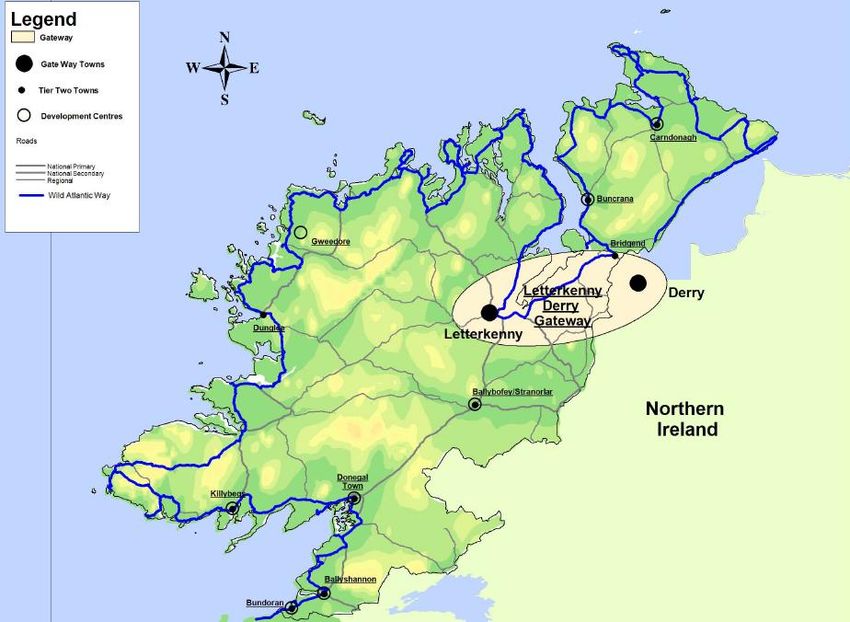
Contents
Chapter 1: Introduction                                                        1

Chapter 2: Outputs of the Participatory Process                                2

Chapter 3: Review of strategy and policy context                               14

Chapter 4: Summary Profile of Key Policy & Funding Programmes                  61

Figures:

Figure 1:     The Timeline for Participation
Figure 2:     Key Strengths, Weaknesses, Opportunities and Threats arising from the
              public submissions
Figure 3:     Dates of meetings of LCDC, EDC and Economic, Enterprise & Planning Policy
              SPC
Figure 4:     Tourism Forum S.W.O.T output
Figure 5:     Priority Areas Identified by the Economic Agencies operating in the County
Figure 6:     The Outputs of Business Sector Consultative Session
Figure 7:     Scope of Strategies and Policies Reviewed

Appendices:

Appendix 1:   Public authorities and publicly funded agencies that are carrying out
              functions in County Donegal
Appendix 2:   Representation of the LCDC, the Economic Development Committee and the
              Economic, Enterprise & Planning Policy SPC
Appendix 3:   Membership of the Extended SIM
Appendix 4:   Representation of the Social Inclusion Linkage Group.
Appendix 5:   Representation of the Social Inclusion Linkage Group
Appendix 6:   The Urban settlement Hierarchy for County Donegal
Appendix 7:   The Spatial Dimensions for the Development Centres/ Hubs
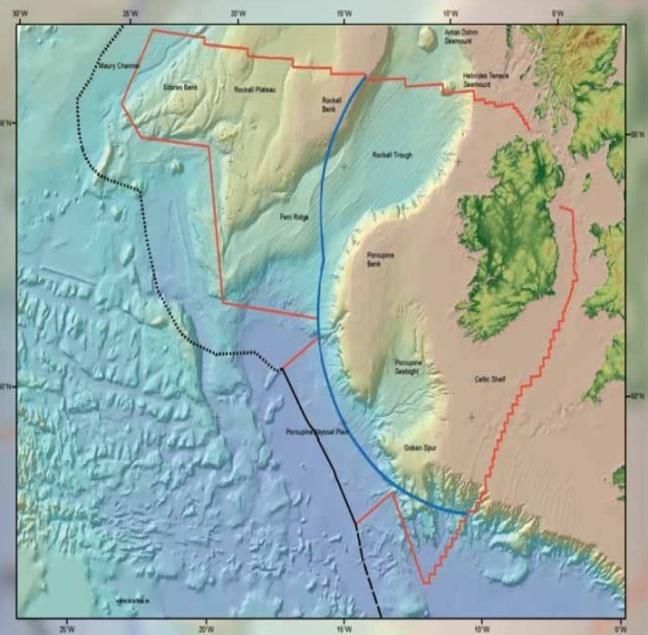
Appendix 8:   Irelands Offshore Natural Resources- The Real Map of Ireland
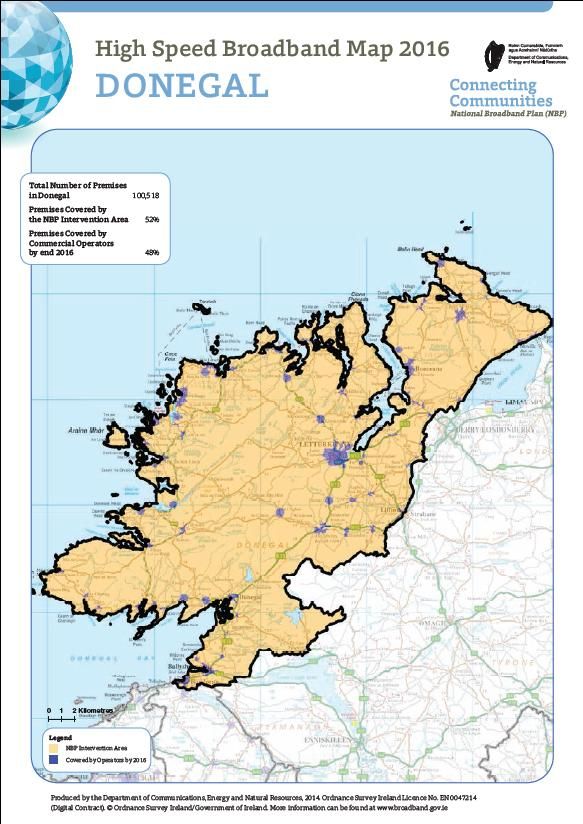
Appendix 9:   National Broadband Plan- Map of State Intervention Areas in County Donegal
Appendix 2: Participation; Policy Context Review; Key Funding Programmes

Chapter 1- Introduction
This document together with Appendix 1 to the LECP (‘The Profile of the County’) forms part
of the evidence base that has informed and shaped the development of the Donegal Local
Economic & Community Plan. The particular elements of information that are collated and
recorded in this document, ‘Appendix 2’ are:
    1. Outputs of participation providing the local and ‘bottom up’ approach of experience
        on the ground;
    2. Review of the national, regional and local strategies and policies within which the
        plan will be implemented and;
    3. A profile of the key policy and funding programmes

The combined impacts of the information contained hereunder and the ‘profile of the
County’ contained in Appendix 1 of the Plan, is to provide the evidence base from which the
7 priority Goals of the Donegal LECP have been formulated, together with the Objectives
and Actions. The evidence base will also be important for the further development of the
implementation, monitoring, evaluation and review framework.

Volume 1 of the LECP contains a ‘Socio- Economic Statement’ which is a statement of the
key messages coming from the evidence base that is set out across this document and
within Appendix 1.

The Priority Goals of the Donegal LECP

1. To Develop Donegal as a Connected Place

2. To Harness Donegal’s Natural and Human Capital

3. To Value, Sustain and Develop Our Culture and Creative resource

4. To Promote Sustainable, Inclusive and Healthy Communities

5. To Develop Donegal as a Lead region for Learning, Research and Innovation

6. To Develop the ‘Donegal’ Brand

7. To Promote Entrepreneurship, Investment and Enterprise

                                                                                 Page | 1
Appendix 2: Participation; Policy Context Review; Key Funding Programmes
Chapter 2- Outputs of the Participatory
Process
2.1 Background
As one of the key values underpinning the preparation of the Donegal Local Economic &
Community Plan, participation and engagement in the plan making process has been
prioritised. As a result, an extensive participatory process has been undertaken and this has
formed the building blocks enabling the preparation of a partnership plan by all of the
stakeholders in the County. Three key pathways of participation developed through (i)
Consultation with the wider public and with statutory consultees; (ii) The input of the Local
Community Development Committee, the Economic Development Committee and the SPC
for Community, Culture and Development Planning and; (iii) The input of a series of Sectoral
Focus Groups. The timeline for participation is outlined in Figure 1.
A record of each form of participation and their outputs is set out on the following pages.
Broadly, participation was facilitated through analysis of trends, sharing of information,
discussion of key issues and needs and identification of opportunities. These conversations
informed the emerging goals, objectives and actions of the LECP which were widely
circulated for review amongst all the stakeholders at the end of March 2015. After
considering feedback on the emerging goals, objectives and actions, the LCDC and EDC
agreed the Goals and high level Objectives of the Plan subject to further refinement of
actions.
Figure 1: The Timeline for Participation
August 2014 September 2014 September 2015
Public Consultation
Statutory Authorities
Meetings and input of LCDC, EDC & SPC
Sectoral Focus Groups
March 2015 April 2015 May 2015
Working Objs/ Feedback on Confirm Objs
Actions Working Objs/
Actions
Page | 2Appendix 2: Participation; Policy Context Review; Key Funding Programmes
2.2 Consultation with the Public and with Statutory Authorities
A ‘public consultation process’ was initiated on 11th August 2014 by the placing of a notice
in local newspapers and on the Donegal County Council website inviting the public to make
observations or submissions in writing regarding the preparation of the Plan. In total, 100
submissions were received made up of a combination of individual written submissions and
a number of submissions completed through an online questionnaire. A report on the public
consultation process was prepared at that time and can be accessed at www.donegal.ie
Figure 2 extracts the key Strengths, Weaknesses, Opportunities and Threats arising from the
public submissions. The submissions were solution and opportunity focused and a number
of particular sectors and areas for targeted growth and resources emerged as follows:
Tourism and the Wild Atlantic Way
The marine resource
Agriculture
The green economy
The creative economy
Education, learning and training
Capacity building within the community and voluntary sector
Health and wellbeing
Collaborative and partnership approaches
Figure 2 Key Strengths, Weaknesses, Opportunities and Threats arising from the public
submissions.
STRENGTHS WEAKNESSES
- Richness of county’s assets particularly for tourism - Lack of employment & high youth unemployment
such as landscape, natural environment, heritage, - Lack of quality cycle network
culture, geology, archaeology, built heritage, - Lack of adequate rural transport
wildlife, biodiversity, friendliness of Donegal - Lack of public access to places of interest
people, Donegal accent, fishing tradition, extent of - Lack of marine infrastructure
existing cultural facilities - Lack of tourism infrastructure such as information
- Quality of life on offer. boards, signage, picnic areas, lay- bys
- Existing economic base - Lack of financial support to SME’s
- The Donegal Gaeltacht - Diminished capacity in community organisations
- Proximity to Derry - Lack of training in social enterprises
- Strengths in a number of key towns referred to - Lack of consistent funding stream in respect of
including Ballybofey- Stranorlar, Bundoran, community and voluntary sector
Killybegs, Donegal Town, Ardara - Lack of appropriate physical spaces for services
- Extent of community & Voluntary sector and activities across the sectors.
- Established - Geographical location in North West
- Significant community capacity and experience is - Lack of adequate brand
established - Inadequate water and wastewater systems
- The multi- cultural nature of the county - Lack of control on a number of external
- ‘Healthy Ireland’ already enshrined through determinants
national policy
- Wild Atlantic Way Strategy
OPPORTUNITIES THREATS
- Important sectors with good opportunities are - Reliance on community and voluntary sector
tourism, the marine and agriculture. especially volunteers, to reach marginally
- To further develop the County’s green economy. excluded groups.
- To further develop the County’s Creative - Lack of alternative to drink culture undermining
economy. the objectives of the LECP e.g. Donegal Brand and
- To further grow tourism in the County particularly Tourism.
Page | 3Appendix 2: Participation; Policy Context Review; Key Funding Programmes
in the areas of: Heritage, culture, walking, cycling, - Sustainability of community organisations.
Irish language, angling, fishing, marine, town - That heritage is not harnessed in an appropriate
regeneration manner.
- To promote to Donegal as ‘Healthy Donegal.’ - Further closure of services and facilities such as
- To improve health through walking and cycling. Garda Stations.
- To be an exemplar in Donegal for the natural - Threat of windfarms on health, natural
environment. environment and landscape.
- Opportunities to further develop the potential of a - Overdevelopment of the landscape.
number of particular locations including Malin - Limited number of existing employers therefore
Head, Killybegs. levels of employment are vulnerable.
- Further opportunities to work in partnerships and - Brain drain due to emigration/ exodus of young
collaborate across all the sectors. people.
- Provide creative waste solutions - Impact of Irish water on the County’s water and
- Enable people through increased training and waste water infrastructure and planned
learning opportunities. programmes.
- Positively use vacant buildings. - Impact of charges and taxes on SME’s.
- To establish a Donegal Energy Agency.
- To set a community development levy on
windfarm proposals.
- To learn new heritage and culture from the
County’s multi- cultural population.
Appendix 1 of this document identifies the public authorities and publicly funded agencies
that are carrying out functions in relation to economic and community development in
County Donegal and notification was sent to each agency identified to set out the process to
prepare the plan and to seek their participation in the process. Following this notification,
the input of statutory consultees occurred primarily throughout the focus group workshops
and this input is integrated into the record of these workshops.
2.3 Meetings and Input of LCDC, EDC and SPC
The preparation of the LECP has been led through the LCDC and the Economic Development
Committee of Donegal County Council. Donegal County Council resolved to adapt the final
plan at their meeting on 25th January 2016. The Committees, though their representation
across the sectors, connected at the initial phase of participation with the grass roots groups
and organisations that are critical to the economic and community dimensions of the
county. Reflecting the integrated nature of the Plan, the LCDC and EDC have held joint
meetings to consider and discuss the LECP. The Economic, Enterprise & Planning Policy SPC
also consistently considered the preparation of the LECP and endorsed the
recommendations of the EDC and LCDC as regards the confirmation of the high level
objectives. The dates of the joint meetings of the LCDC and EDC together with a note of the
stage in the process considered at each meeting are set out in Figure 3. Appendix 2 of this
document sets out the representation of the LCDC, the Economic Development Committee
and the Economic, Enterprise & Planning Policy SPC.
Page | 4Appendix 2: Participation; Policy Context Review; Key Funding Programmes
Figure 3: Dates and Note of Meetings of LCDC, EDC and Economic, Enterprise and Planning
Policy SPC
Joint LCDC and EDC meetings
1st October 2014 Outline of the legislation, purpose, process and context setting
11th November 2014 Description of what the socio- economic profile will consist of (Data &
policy context)
Update on the participative process
Outline of the emerging goals and examples of high level objectives
flowing from the goals
2nd Feb 2015 Update on the participative process undertaken
Outline of the emerging goals
Outline of the methodology to develop the objectives and actions from
the information collated
31st March 2015 Circulation and presentation on a comprehensive working draft of the
emerging goals, objectives and actions and feedback requested over
consequent weeks.
27th May 2015 Circulation and presentation on the integration of feedback and
participation in relation to the working draft of the emerging goals,
objectives and actions. Goals and high level objectives were confirmed.
9th July 2015 Outline of the intervening communications and ongoing participative
process.
Outline of DECLG. Guidelines note.
Indicative pathway ahead to lead to a draft LECP
30th September 2015 Circulation of the draft Donegal LECP to LCDC and EDC and agreement to
advance consultation with MDs of Donegal County Council and the
Northern and Western Regional Assembly.
22nd December 2015 Consideration of the outputs of consultation with MDs and NWRA and
agreement to advance the Plan to Donegal County Council meeting (25th
January 2016) for final adoption.
SPC for Community, Culture & Development Planning
22nd Jan 2015 Update on the participation process undertaken
Outline of the emerging goals
Outline of the methodology to develop the objectives and actions from
the information collated
24th March 2015 Verbal update that we were etching towards emerging goals, objectives
and actions for 31st march
30th June 2015 SPC Endorsed the goals and objectives as agreed by LCDC and EDC
11th January 2016 SPC endorsed advancement of the Plan to Donegal County Council
meeting (25th January 2016) for final adoption.
2.4 Sectoral Focus Groups
A number of targeted focus groups were identified as important groups from which sector
specific participation is sought. The focus groups opened up ongoing exchange of
information, consideration of the evidence base, identification of issues and needs through
SWOT analyses, collaboration and input into the plan occurring from August 2014 leading
right through to the publication of the draft LECP. The focus groups feeding into the Plan
are:
Page | 5Appendix 2: Participation; Policy Context Review; Key Funding Programmes
Social Inclusion Measures Group
Community Development Alliance
Social Inclusion Linkage Group
Public Participation Network Secretariat
Digital Action Plan Working Group
Tourism Forum
Economic agencies
Business community
Education & Training Board
Letterkenny Institute of Technology
Health Service Executive
Farming representatives
Creative Industries
2.5 The Social Inclusion Measures Group
The SIM group and extended SIM is a multi- agency structure working in the area of social
inclusion and poverty. The SIM aims to improve access to services for vulnerable individuals
and target groups, to provide a co-ordinating role amongst the relevant agencies, to feed
into plans and projects such as the LECP and to promote actions to address social inclusion
and poverty. (NB: Appendix 3 identifies the Extended SIM demonstrating the overlap with
representation on other groups including the PPN Secretariat, Social Inclusion Linkage
Group and the Community Development Alliance).
The SIM group first came together to discuss the preparation of the LECP on 3rd November
2014 at which time key statistical data in the form of a S.W.O.T analysis was presented. The
group discussed the types of issues and needs relevant for the LECP and for the
development of goals, objectives and actions, in the context of social inclusion and poverty.
Key areas discussed at the workshop were:
That there is a threat due to the importance of and reliance on community groups
and volunteers in the delivery of services and programmes.
That there is an identified need to improve access to services and tailoring access to
services around individual needs.
That an opportunity exists to make better use of existing facilities especially on an
outreach basis through a collaborative approach.
That the barriers to accessing services are as a result of limitations in transportation,
limitations of broadband availability and effect of digital exclusion, and language
barriers.
That an opportunity exists to map services and assets currently available so as to
enable identification of opportunities for collaborative service delivery.
That an opportunity exists to reduce digital exclusion through supported access to IT
at a local level using existing community and cultural infrastructure.
That an opportunity exists to improve the sustainability of community organisations
by working with the LEO to provide training.
The SIM group came together on 22nd April 2015. A draft of goals, objectives and actions
was circulated to the group and individual and agencies provided direct written feedback on
Page | 6Appendix 2: Participation; Policy Context Review; Key Funding Programmes
the content. A further facilitated workshop of the SIM and Extended SIM groups was
convened on the 3rd September 2015. The workshop focused solely on the detailed actions
of Goal 4 and this integrated further refinement and re- shaping in the context of addressing
community development and improving social inclusion and combating poverty.
2.6 Community Development Alliance
Having participated in individual capacity through the SIM and/ or PPN Secretariat,
representatives of the Community Development Alliance came together on 16th June 2015
in response to the need to further refine the actions of the plan with a particular reference
to community development, social inclusion and poverty. As a consequence, a facilitated
workshop of the SIM and Extended SIM groups was convened on the 3rd September 2015
focusing solely on the detailed actions of Goal 4 and this integrated further refinement and
re- shaping in the context of addressing community development and also improving social
inclusion and combating poverty.
2.7 Social Inclusion Linkage Group (PPN Linkage Group)
Similar to the Community Development Alliance and the SIM Group, the PPN Social
Inclusion Linkage Group, reaching a number of additional groups and organisations working
in the County met on 20th June 2015. The Group were briefed on the process undertaken to
develop the goals, objectives and actions and discussed a number of areas where further
work and refinement was considered to be appropriate. The members of the Social
Inclusion Linkage Group undertook to participate in the Extended SIM workshop on 3 rd
September 2015 which focussed on the community development, social inclusion and
poverty elements of Goal 4. Appendix 4 consists of the representation of the Social Inclusion
Linkage Group.
2.8 Public Participation Network Secretariat
A PPN Secretariat workshop took place on 23rd April 2015 at which point the emerging
goals, objectives and actions were circulated and discussed. Individual members and
agencies provided direct written feedback on the content of the emerging goals, objectives
and actions. Representation of the PPN Secretariat also participated in the workshop of the
Extended SIM on 3rd September 2015 which focussed on the actions of Goal 4. Appendix 5
consists of the representation of the PPN Secretariat.
2.9 Digital Action Plan Working Group
A working Group to prepare a County Donegal Digital Action Plan was convened in March
2014 and consistent alignment of the processes to prepare the Digital Action Plan and to
prepare the LECP has been ensured. This alignment responds to the early identification of
digital technology including broadband availability and quality, and digital skills as a cross
cutting priority theme in the LECP and as a critical enabler of community and economic
development. A synopsis of the Digital Action Plan is contained in Chapter 3 of this
document, of this document together with an outline of the consistency and integration
Page | 7Appendix 2: Participation; Policy Context Review; Key Funding Programmes
with the LECP and identification of objectives of the LECP that have particular relevance. The
Digital Action Plan was adopted in September 2015.
2.10 Tourism Forum
The Tourism Forum came together on 5th December 2014 to discuss the needs and
opportunities from a tourism perspective. The outputs are demonstrated as a S.W.O.T in
Figure 4.
Figure 4: Tourism Forum S.W.O.T output
STRENGTHS WEAKNESSES
- The Wild Atlantic Way strategy - Availability and quality of Broadband
- The built heritage of the County. - Progress on the A5 road upgrade
- Natural Resources - Loss of the Derry to Dublin flight
- Existing capability in craft and creative industries. - Number of physical leisure facilities
- Numerous well known Donegal people with a - Level of collaboration within the tourism industry.
proven track record. - Level of community representation within the
- Remoteness tourism sector.
- Promotion and marketing work through existing - Level of awareness of community- led tourism
vehicles such as www.govisitdonegal.com projects.
- Provision for cruise tourism products and services.
- The distance perception-‘it’s too far away’
- Capacity in relation to digital knowledge
- Tourism signage
OPPORTUNITIES THREATS
- Product development: - Vulnerability of rural transport
Continue to improve a sustainable tourism product - Regulatory Frameworks as barriers to harnessing
including through a Donegal Greenway; a Spiritual natural resources.
Trail; Ards Sculpture Park; architectural heritage; - The loss of traditional skills
historic towns; linguistic heritage; physical leisure - Funding opportunities and ability to extend
facilities for day trippers; WiFi availability in tourism projects.
hotpots; cruise tourism opportunities, creative
industries, development of a cultural tourism project
on the WAW.
- Collaboration and marketing:
Encourage collaboration and partnerships through
tourism forum meetings. Through this platform
examples of the type of outputs possible are: sharing
knowledge and success stories, identifying County
ambassadors and ensuring consistency between
localised tourism strategies and the WAW strategy.
- Education, training & supports:
Opportunities focussed on traditional skills, eco-
tourism, agricultural tourism; learning courses for
communities such as digital marketing and
hospitality; a tourism education programme.
Entrepreneur module for schools; economic research
study of the benefits of the WAW; development of a
Tourism Research Centre in Killybegs.
Page | 8Appendix 2: Participation; Policy Context Review; Key Funding Programmes
2.11 Economic agencies
On 3rd November 2014, a consultative session with the Economic Agencies operating the
County was convened. Given the early stage in the process, the previous goals of An Strateis
2012 were discussed as potential priority themes and the outputs of the discussion are set
out in Figure 5.
Figure 5: Priority areas identified by the Economic Agencies operating the County
Theme: Areas of discussion:
The Green economy - It is necessary to influence the regulatory frameworks to support the
development of clean technology.
- There is an opportunity to scope, design and implement a localised Smart
Grid pilot project in Killybegs to integrate different energy sources and
connect with the national grid.
Theme: Areas of discussion:
Enterprise and skills - Promote seaweed development
development - Deliver the coordinated promotion of entrepreneurship and enterprise in
Donegal. Target: an increase in the number of start ups over three years.
- Provide business environments, services and supports appropriate to the
needs of businesses in Donegal. Target: Further develop the model of ‘First
Stop Shop’ services for business.
- Encourage and pursue inward investment utilising Diaspora linkages. Target:
a three- year inward investment plan targeted at Massachusetts.
- Encourage and pursue inward investment by ensuring effective
communication with IDA Ireland.
- Ensure coordinated delivery of ‘Connectivity’ investment to support
enterprise and employment including A5 road upgrade and reinstatement of
Derry to Dublin air route.
- Design and implement community digital hubs at strategic locations in the
county - change in the ability of local communities and business sector to
take advantage of business, societal and community advantage of the digital
environment
Theme: Areas of discussion:
Education - Develop educational links to promote greater capability and human capital
and develop research and innovation.
- Continue the established links with M2D2.
- Develop a skills linkages between ETB and Pramerica to target further training
linked to industry needs.
- Carry out research and development in relation to the aquaculture industry.
- To establish a satellite centre for marine aquaculture at LYIT.
- To review the LifeLong Learning programme.
- To develop learning in Digital Media at secondary level education.
- To encourage the uptake of STEM subjects at secondary level.
Theme: Areas of discussion:
The ‘Donegal’ Brand - Promote the Brand of Donegal as the ‘People’ and the ‘Place.’
- To develop a coherent communication strategy in relation to the Donegal
brand.
- To establish an all- Ireland Entrepreneurial Programme and Clusters of
Page | 9Appendix 2: Participation; Policy Context Review; Key Funding Programmes
Entrepreneurship.
Theme: Areas of discussion:
Access to services - Provide for the availability of Broadband in rural areas.
- Maximise the potential of Project Kelvin
- Examine the potential of a community broadband scheme in a rural area of
the county.
- Provide WiFi in public buildings.
-
Theme: Areas of discussion:
Natural Resources and - Promote and support further development of the WAW.
Tourism - Integrate food and tourism strategies
- Develop opportunities for eco- tourism
- Support the development of localised tourism strategies to create linkages,
networks and scaling up to the WAW.
- Develop and support appropriate cultural, arts, heritage and craft clusters
within the tourism sector.
- Develop the Ards Sculpture Park.
- Develop and implement language plans including harnessing the potential of
the Irish language as regards tourism.
2.12 Business community
On 3rd December 2014, a facilitated consultation session with the business sector was
convened at which, in workshop format, consideration was given to the action areas under
each of the 7 emerging goals. The outputs of the sessions in relation to each goal are set out
in Figure 6.
Figure 6: The outputs of the business sector consultative session
Goal 1: Priority areas identified:
To develop Donegal as a - Target: Journey time by road from Dublin to Letterkenny to be 2 hours by
Connected Place 2020.
- Further develop infrastructure between smaller urban centres throughout
the county.
- Market Donegal as one connected place, not a series of separate areas.
- Create a PR campaign emphasising how close Donegal is to Dublin.
- Target: Broadband connectivity of 100mb or more for 15 towns by 2020.
- Investigate how to make vacant premises throughout the county available for
business.
Goal 2: Priority areas identified:
To Harness Donegal’s - Develop eco- tourism and expand to include activity based tourism
Natural & Human Capital - Improve water quality throughout the county
- Further develop the Food Coast
- Support the fisheries and aquaculture sector.
- Promote natural resources such as wind power
- Develop a scoping document to ascertain the economic value of wind power
for Donegal.
- Develop a concerted litter campaign.
- Improve mapping of the WAW
- Encourage closer links between industry and education, science and
mathematics.
- Improve skills of graduates entering engineering and technology sectors
employment through internships.
Goal 3: Priority areas identified:
To Value, Sustain & - Develop and support appropriate cultural, arts, heritage and craft clusters
Develop Our Culture and within the tourism sector.
Page | 10Appendix 2: Participation; Policy Context Review; Key Funding Programmes
Creative Resource - Develop the creative industries
- Commit to a dedicated annual programme of events for the Regional Cultural
Centre in Letterkenny
- Promote cultural and artistic festivals around the County.
- Develop and support projects that foster closer links between culture,
heritage and tourism.
Goal 4: Priority areas identified:
To Promote Sustainable, - Stimulate local communities by using state owned vacant enterprise units for
Healthy & Inclusive community and social enterprise.
Communities - Prioritise community broadband schemes to create employment and support
sustainable communities.
- Pilot a model of community projects which will create local business
opportunities.
- Further support cottage industries through funding, IT skills, and human
resources.
- Identify local community champions and acknowledge their contributions.
- Introduce an annual County Regeneration Week.
Goal 5: Priority areas identified:
To Develop Donegal as a - Create closer cross border educational links
Lead Region for Learning, - Develop open data exchanges especially with the public sector.
Research & Innovation - Develop EU twinning to further learning for educational bodies and state
agencies.
- Continue supports for small businesses.
- Extend STEM to second level with the assistance of industry partners,
mentoring and site visits.
- Use broadband to further link STEM with industry.
Goal 6: Priority areas identified:
To develop the ‘Donegal’ - Strengthen the Gaeltacht aspects of the Donegal Brand
Brand - Develop ‘Donegal’ brand under one agreed font and style to be used across
all sectors and to be supported by a dedicated PR campaign- rolled out
initially by the food, tourism and state sectors.
- Promote the ‘Work Life Balance’ offered in Donegal and develop a campaign
around local champions extolling this lifestyle.
Goal 7: Priority areas identified:
To Promote - Promote enterprise modules in schools and colleges
Entrepreneurship, - Investigate how to directly create employment from opportunities presented
Enterprise and Investment by Donegal Diaspora.
- Ensure the relevant information on locating or relocating to Donegal is readily
available online
- Promote the Donegal Portal.
- Develop a joint approach from Donegal County Council and Chambers of
Commerce in working with State Agencies on issues affecting local business.
2.13 Donegal Education & Training Board (ETB) & Letterkenny Institute of Technology
(LYIT)
Direct engagement with the ETB and with LYIT took place on 3rd December 2014 and 16th
January 2015 respectively followed by written inputs into the preparation of the plan and
through the representation of both educational authorities on the LCDC and the EDC. The
key areas identified included:
Establishment of a Countywide Community Education Forum providing for
coordination in the sector, connections between all levels of education providers and
Page | 11Appendix 2: Participation; Policy Context Review; Key Funding Programmes
providing a forum to establish clear links with industry to identify the skills needs of
industry.
Coordination is required of the delivery of community- based education
opportunities.
An emphasis should be placed on ‘healthy’ communities as well as sustainable and
inclusive communities- education, learning, training, Lifelong learning, up- skilling
and re- skilling all contribute to healthy people.
Key areas building upon our human capital include coordination of educational
activity; up- skilling, re- skilling and Continuous Professional Development;
Identification of industry needs; integration of new technologies through the
lifecycle of education i.e. Primary, post primary, Further Education & Training and 3rd
level; provision of effective paths from FET to Higher Education.
Emphasis on Science, Technology, Engineering, Arts and Mathematics as the key
skills of the Knowledge Economy.
The priorities for Donegal as a Connected Place are in the areas of (i) Partnership
(Regional/ National/ Cross border and internationally) (ii) Strategic access
infrastructure such as roads and ports (iii) Broadband (iv) Donegal Diaspora and (v)
the County energy network.
The key natural assets for the County are: marine resources, energy, adventure/
activity tourism, landscape, culture, language, arts and music.
The Creative Industries should be further developed.
Emerging Smart Regional Specialisations are in the areas of marine resources,
renewable energy and food.
Entrepreneurship should be integrated into teaching in schools and higher
education.
Supports for female entrepreneurs, established entrepreneurs and immigrant
entrepreneurs.
Key areas and/ or important projects for investment and enterprise include marine
engineering in Killybegs and the regional importance of CoLab/ North West Science
Park.
2.14 Health Service Executive (HSE)
Direct engagement with the HSE took place on 29th April 2015 in the context of feeding in
the written feedback of HSE to the emerging goals, objectives and actions, and furthermore
through the representation of HSE on the LCDC and the EDC. The key areas identified for
further consideration included:
Emphasis on ‘healthy’ communities as well as sustainable and inclusive.
The importance of partnership working and collaborative opportunities.
Emphasis on social and natural capital as a resource for the County as well as
economics.
Two particular areas of strategy require appropriate integration into the plan
namely; (i)’Healthy Ireland’ and how this can be implemented through local
structures so as to improve health and wellbeing and; (ii) ‘Connect Donegal Suicide
Prevention Action Plan.’
Page | 12Appendix 2: Participation; Policy Context Review; Key Funding Programmes
Rural transport is identified as an important enabling factor in accessing services. A
collaborative forum to develop, resource and implement innovative solutions to
rural transport needs should be established.
Options should be explored around the capacity of local community organisations
and the potential to resource organisations with Community Development Workers.
2.15 Farming representatives
Direct engagement with farming representatives took place on 10th December 2014 and
furthermore through representation on the LCDC. Key issues identified in relation to the
LECP include:
1. Connectivity: Rural broadband and mobile phone coverage is critical for Farmer- led
Health and Safety.
2. Food: Opportunities exist to work collaboratively in relation to food e.g. Creevy Co-
Operative realise tourism opportunities as well as farming and food opportunities.
Other collaborations that will provide opportunity include the establishment of
farmers markets promoting locally produced goods; collaboration to identify and
utilise land banks by renting to new farmers.
3. Learning: A number of areas of need and opportunity were identified:
- Learning in relation to food traceability- food to plate.
- collaborative provision of training to farmers including digital training
- The need for an audit to identify training needs particularly in relation to skills
such as sheepdog trials, thatching.
4. Other: A number of other areas of opportunity were identified:
- Opportunities to protect water quality with benefits for the environment and
fishing.
- The potential for the development of Greenways in the county so as to harness
the opportunities of our landscape, waterways, rivers and built heritage.
- Recommendations of the CEDRA report in relation to rural development.
2.16 Creative Industries
The Donegal County Council Local Enterprise Office (LEO) engaged with the creative sectors
and other stakeholders to inform the development of a Strategic Action Plan for Creative
Entrepreneurship for Donegal through workshop formats commencing in October 2014.
Consistent alignment of the processes to prepare the Strategic Action Plan and to prepare
the LECP has been ensured. This alignment responds to the identification of the creative
sector, as an important economic sector in the county with a particular contribution to the
tourism sector. The Strategic Action Plan was launched on 18th May 2015 and it is consistent
with the LECP and its actions are important to the delivery of high level objectives of the
LECP.
A synopsis of the Strategic Action Plan for Creative Entrepreneurship for Donegal is
contained in Chapter 3 of this document together with an outline of the consistency and
integration with the LECP and identification of objectives of the LECP that have particular
relevance.
Page | 13Appendix 2: Participation; Policy Context Review; Key Funding Programmes
Chapter 3- Review of Strategy and Policy
Context
3.1 Background
The review of the strategy and policy context is considered in 4 key areas:
The Spatial Planning & Development Strategies
The Economic Strategies
The Community Strategies
The Local Sectoral Strategies and Sectoral Organisations
Sections 3.2 to 3.5 provide a description of each strategy and an outline of how the strategy
has impacted the LECP in terms of consistency and integration. A number of particular
objectives that are most distinctly related to each strategy are identified. Figure 7 lists the
scope of the strategies and policies reviewed.
Figure 7: Scope of Strategies and Policies Reviewed
The Spatial Planning & Development Strategies (section 3.2)
- National Spatial Strategy 2002- 2020
- The Regional Planning Guidelines for the Border Region, 2010
- The County Donegal Development Plan 2012- 2018 (as varied)
- An Stratéis – Donegal Strategy for Social, Cultural and Economic Development 2012-2018
- Town Development Plans for Letterkenny, Buncrana & Bundoran
- The Gateway and Hubs Development Index (GHDI) 2012
- Development Centres/ Hubs
The Economic Strategies (section 3.3)
- Action Programme for Effective Local Government- Putting People First, DECLG, 2012
- Construction 2020
- Making it Happen- Growing Enterprise for Ireland, Forfás, 2010
- OECD LEED (Local Economic and Employment Development) Report on Delivering Local Development, 2014
- Energising Irelands Rural Economy- The report of the Commission for the economic Development of Rural
Areas (CEDRA) 2014
- IDA Ireland, Winning Foreign Direct Investment 2015- 2019
- Driving Enterprise, Delivering Jobs, Strategy to 2016, Enterprise Ireland
- Údarás na Gaeltachta, Strategic Plan 2014- 2017
- Integrated Marine Plan (IMP), ‘Harnessing Our Oceans Wealth,’ July 2012
- The Offshore Renewable Energy Development Plan, 2014
- Bord Iascaigh Mhara Strategy 2013- 2017
- Delivering on Green Potential – Government Policy Statement on growth and Employment in the Green
Economy, 2012
- Developing a Green Enterprise, Department of Jobs, Enterprise and Innovation, 2011
- EirGrid, Your Grid, Your Views, Your Tomorrow, A Discussion Paper on Irelands Grid Development Strategy,
2015
- Failte Ireland
- Border Region Action Plan for Jobs
- National Broadband Plan, Department of Communications, Energy & Natural Resources, 2012
Page | 14Appendix 2: Participation; Policy Context Review; Key Funding Programmes
The Community Strategies (section 3.4)
- Our Sustainable Future: A Framework for Sustainable Development for Ireland , 2012
- OECD LEED (Local Economic and Employment Development) Report on Delivering Local Development
- Energising Irelands Rural Economy- The report of the Commission for the economic
- Development of Rural Areas (CEDRA) (2014)
- Corporate Social Responsibility Plan, Good for Business, Good for the Community 2014- 2016.
- 20 Year Strategy for the Irish Language 2010- 2030
- Ireland’s National Action Plan for Social Inclusion 2007- 2016 (NAP inclusion)
- Social Inclusion and Community Activation Programme (SICAP) 2015
- Report of the High Level Group on Traveller Issues in 2006 and the National Strategy for Traveller/ Roma
Integration, 2011
- Better Outcomes Brighter Futures, The National Policy Framework for Children & Young People 2014 –
2020
- Building a High Quality Health Service for a Healthier Ireland, HSE Corporate Plan 2015- 2017
- Healthy Ireland - Framework for Improved Health and Wellbeing 2013 – 2025
- Further Education & Training Strategy 2014- 2019, SOLAS and Department of Education & Skills
- An Garda Síochána Strategy Statement 2013- 2018
- National Broadband Plan, Department of Communications, Energy & Natural Resources, 2012
- National Disability Strategy Implementation Plan 2013
The Local Sectoral Strategies and Sectoral Organisations (section 3.5)
- Donegal County Council Corporate Plan 2015- 2019
- The One Plan for Derry- Londonderry
- North West Partnership Board
- North West Region Cross Border Group (NWRCBG)
- Irish Central Border Area Network (ICBAN)
- Active Donegal - Strategic Plan 2011-2014
- Donegal Diversity Plan, 2011 – 2013
- Donegal Intercultural Platform
- Donegal Traveller Interagency Group
- Donegal Youth Service
- Donegal Women’s Network
- Connecting For Life Donegal, Preventing Suicide Together, Action Plan 2015- 2012
- North West Regional Drug & Alcohol Task Force Plan 2011- 2014
- Local Development Companies
- Enterprise Development on the Gaoth Dobhair Business Park, 2015, Údarás na Gaeltachta
- Coillte Northwest Business Area Unit (BAU) Strategic Plan 2011- 2015
- Donegal Road Safety Plan 2010- 2015, Donegal County Council
- The County Donegal Heritage Plan 2014- 2019, County Donegal Heritage Forum
- LYIT Strategic Plan, Our Commitment to the North West Gateway Learning Region, 2014- 2017
- Donegal ETB Education Plan 2011 – 2015
- Donegal Digital Action Plan, 2015
- Strategic Action Plan for Creative Entrepreneurship in Donegal
Page | 15Appendix 2: Participation; Policy Context Review; Key Funding Programmes
3.2. The Spatial Planning & Development Strategies
Plan/ Strategy Description Consistency & integration with Objectives of the LECP of particular
LECP relevance
National Spatial The National Spatial Strategy (NSS) 2002-2020 is a The LECP replicates the NSS as regards GOAL 1 OBJ: 1.6; 1.7
Strategy 2002- 2020 planning framework designed to achieve a the identification of the Letterkenny-
sustainable balance of social, economic and Derry Gateway as the regional driver of GOAL 2 OBJ: 2.4; 2.5; 2.8; 2.10
physical development and population growth growth and opportunity and furthermore
across the Country. It identifies Letterkenny- reinforces the importance of balanced GOAL 3 OBJ: 3.5; 3.6; 3.11; 3.12;
Derry as a linked Gateway to function as an growth within the region through its 3.13
economic driver for the Northwest region. The objectives for the strengthening of Tier 2 GOAL 4 OBJ: 4.8; 4.9; 4.10; 4.16;
NSS ‘Update and Outlook Report, ’ 2010, towns and Development Centres and 4.21
identified future areas of priority action including through its objectives to maximise on the GOAL 5 OBJ: 5.2; 5.3; 5.4; 5.5; 5.6;
implementation of the Governments Smart rural economic opportunities and 5.7; 5.8; 5.9; 5.11; 5.17;
Economy Policy Objectives and development of strengths of the County. 5.18
economic strategies, harnessing of rural GOAL 6 OBJ: 6.1; 6.2; 6.3
economic development opportunities,
environmental protection, cross border GOAL 7 OBJ: 7.1; 7.2; 7.3; 7.4; 7.6;
coordination, integration of strategic planning 7.7; 7.8; 7.18
and investment prioritisation, preparation of Core
Strategies for land use plans and reduction of
dependence on fossil fuels.
The Regional Planning
Guidelines for the The Regional Planning Guidelines recognise the The LECP draws significantly from the
GOAL 1 OBJ: 1.1; 1.3; 1.6; 1.7; 1.8
Border Region, 2010 people as the region’s most important asset and strategy of the RPG’s, identifying the
therefore emphasize the importance of making economic importance of the growth of
GOAL 2 OBJ: 2.2; 2.4; 2.5; 2.6; 2.8
improvements to quality of life. The key strategic the Gateway and the strengthening of
goals relate to the development of Letterkenny as Tier 2 towns/ Development Centres,
GOAL 3 OBJ: 3.1; 3.4; 3.5; 3.6; 3.9;
the strategic driver of growth for the County; to particularly targeting areas such as
3.10; 3.11
facilitate integrated sustainable development research and innovation and the digital
GOAL 4 OBJ: 4.2; 4.7; 4.8; 4.9; 4.10;
between urban and rural areas; to improve economy. In tandem and to build upon
4.21
connectivity and mobility links; to promote the County’s strengths and opportunities
GOAL 5 OBJ: 5.2; 5.4; 5.5; 5.6; 5.7;
innovation, economic growth and as a substantially rural economy, the
5.8; 5.9; 5.11; 5.16; 5.18
Page | 16Appendix 2: Participation; Policy Context Review; Key Funding Programmes
Plan/ Strategy Description Consistency & integration with Objectives of the LECP of particular
LECP relevance
competitiveness; to facilitate emerging sectors to LECP targets future economic growth and GOAL 6 OBJ: 6.2
provide sustainable jobs and; to protect and competitiveness in Rural Economic
enhance the quality of the natural environment Development, focussing on areas GOAL 7 OBJ: 7.3; 7.4; 7.3; 7.6; 7.7;
and built heritage. The RPG’s identify a Core including tourism, culture, heritage, 7.8; 7.9; 7.10; 7.11; 7.12;
Strategy for the Region that establishes the natural resources and agri- food. 7.13; 7.14; 7.19
population growth framework for each local
authority to be incorporated into the relevant
Development Plan.
The County Donegal The County Donegal Development Plan (CDP) Similar to the frameworks of the National GOAL 1 OBJ: 1.1; 1.3; 1.6; 1.7; 1.11
Development Plan 2012- 2018 delivers a Core Strategy and Spatial Strategy and Regional Planning
2012- 2018 (as varied) settlement hierarchy for the County of 5 levels Guidelines, the LECP is consistent with
GOAL 2 OBJ: 2.1; 2.4; 2.7; 2.8; 2.11
(Appendix 6 of this document refers) with a focus the spatial planning framework set out in
on the Letterkenny- Derry Gateway followed by the Core Strategy of the CDP 2012- 2018
GOAL 3 OBJ: 3.1; 3.3; 3.4; 3.5; 3.11
the strategic towns (Buncrana, Carndonagh, as regards its settlement hierarchy, led
Bridgend, Ballybofey/Stranorlar, Donegal town, through the identification of the linked
GOAL 4 OBJ: 4.1; 4.2; 4.5; 4.8; 4.9;
Ballyshannon, Bundoran, Killybegs, and Dungloe). Gateway and supported through Tier 2
4.10; 4.21
The Core Strategy recognises the importance of towns/ Development Centres. Significant
GOAL 5 OBJ: 5.5; 5.6; 5.11; 5.12;
the Donegal rural area and the extent to which objectives of the LECP and their related
5.16; 5.17; 5.18;
future growth should occur there. The CDP activities support the implementation of
the hierarchy. The LECP also recognises GOAL 6 OBJ: 6.1; 6.2
emphasises the need for the coordinated,
planned and joined up approach to investment the potential of the rural areas of the
county to contribute to culture, GOAL 7 OBJ: 7.1; 7.3; 7.6; 7.8; 7.9;
and new development so as to contribute to the
community and the economy and 7.12; 7.14; 7.15; 7.16; 7.21;
recovery of the national and regional economy
therefore targets rural and hard to reach 7.22
and to improve quality of life indicators such as
access to services. In particular, the following areas, isolation, the power of broadband
areas are identified as important policy areas for and the distinct rural resources that, if
development: tapped appropriately, have the potential
Investment in research and innovation in to result in significant and sustainable
renewable energy development, knowledge economic growth.
based services, agri- food sector &
environmental products.
Development of sustainable economic
Page | 17Appendix 2: Participation; Policy Context Review; Key Funding Programmes
Plan/ Strategy Description Consistency & integration with Objectives of the LECP of particular
LECP relevance
models.
Strengthen cross border collaboration.
Maximise technology and digital capabilities.
Develop Killybegs as a Centre of Excellence
for Renewable Energy.
Develop educational collaboration.
Develop vibrant, sustainable communities
ensuring social inclusion and equality.
Facilitate a coordinated approach to the
delivery of social, community and cultural
infrastructure and services.
Develop the potential of the rural economy.
Integrate environmental considerations in
decision making.
Develop sustainable tourism opportunities.
Ensure the development of strategic access to
the County
An Stratéis – Donegal The Donegal Strategy for Social, Cultural & The strong foundations of programmes GOAL 1 OBJ: 1.2; 1.3; 1.4; 1.8; 1.12;
Strategy for Social, Economic Development 2012- 2014, prepared by and activities that have been delivered 1.13
Cultural and Economic the County Donegal Development Board has through implementation of An Stratéis
Development 2012- performed to date as an integrated strategy are reflected in the continuum of the
GOAL 2 OBJ: 2.4; 2.5; 2.7; 2.8
setting out a shared vision through aims and County’s economic and community
2018
objectives for the economic, social and cultural strategy that is now contained in the
GOAL 3 OBJ: 3.1; 3.3; 3.4; 3.5; 3.8;
development of County Donegal. The strategy Local Economic & Community Plan. The
3.10; 3.11; 3.15
provides the impetus and context for a range of LECP builds upon the success of An
GOAL 4 OBJ: 4.1; 4.2; 4.3; 4.4; 4.5;
innovative projects and for the identification and Stratéis, both in relation to the very
4.6; 4.9; 4.10; 4.12; 4.13,
accessing of new and additional funding for the tangible and visual achievements that
4.14; 4.15; 4.17; 4.19; 4.20
region. The strategy provides a well developed have been delivered and also in relation
GOAL 5 OBJ: 5.1; 5.2; 5.5; 5.6; 5.7;
foundation from which the LECP has been further to the collaborative and partnership
5.8; 5.9; 5.12
evolved. The 6 Goals of An Stratéis are: environment that has been strongly
established in the County. GOAL 6 OBJ: 6.1; 6.2; 6.3; 6.4; 6.5
Goal 1: To Ensure Best Access to Supports and
Page | 18Appendix 2: Participation; Policy Context Review; Key Funding Programmes
Plan/ Strategy Description Consistency & integration with Objectives of the LECP of particular
LECP relevance
Services for All in Donegal GOAL 7 OBJ: 7.3; 7.4; 7.6; 7.9; 7.11;
Goal 2: To Ensure the Continued Development 7.12; 7.13; 7.14; 7.15; 7.19;
and Sustainability of the County’s 7.22
Cultural Resources
Goal 3: To promote Enterprise and Skills
development in the region
Goal 4: To develop a Donegal Brand across all
sectors
Goal 5: Tourism Destination Development for
Donegal
Goal 6: To develop Donegal as a lead region for
the Green Economy
Town Development Development Plans for Letterkenny, Buncrana Similar to the consistency with the GOAL 1 OBJ: 1.4; 1.6; 1.7; 1.11
Plans for Letterkenny, and Bundoran address the strategic role of these County Development Plan 2012- 2018,
Buncrana & Bundoran centres of population growth. In particular, the the LECP reflects the spatial strategies
GOAL 2 OBJ: 2.1; 2.4; 2.6; 2.7
Letterkenny Plan recognises the regionally provided for through the statutory
significant role of the town as the linked Gateway development plans, particularly as
GOAL 3 OBJ: 3.1; 3.3; 3.4; 3.5; 3.9
with Derry and as a key centre within which the regards objectives and their activities to
economic growth of the County is to be driven. strengthen and regenerate town centres;
GOAL 4 OBJ: 4.2; 4.3; 4.4; 4.5; 4.17;
Each of the Development Plans consist of a Core to provide for urban renewal; to unlock
4.19; 4.21
Strategy that is consistent with the Core Strategy the potential of the built and cultural
GOAL 5 OBJ: 5.10; 5.11; 5.16; 5.18
of the County Development Plan 2012- 2018 (as heritage of the towns and to deliver
varied). The relevant plans are: strong communities participating in
The Letterkenny & Environs Development place- making. GOAL 6 OBJ: 6.1; 6.2; 6.3; 6.4; 6.5
Plan 2009- 2015 (as varied);
The Buncrana & Environs Development Plan GOAL 7 OBJ: 7.1; 7.3; 7.5; 7.6; 7.8;
2014- 2020 and; 7.9; 7.10; 7.21; 7.22
The Bundoran & Environs Development Plan
2009- 2015 (as varied)
Page | 19Appendix 2: Participation; Policy Context Review; Key Funding Programmes
Plan/ Strategy Description Consistency & integration with Objectives of the LECP of particular
LECP relevance
The Gateway and Hubs The Gateway and Hubs Development Index 2012 The LECP directly addresses
GOAL 1 OBJ: 1.1; 1.4; 1.6; 1.11; 1.13
Development Index presents an overview of the performance and opportunities and challenges that are
(GHDI) 2012 progression of Ireland’s primary urban centres. In evidenced both in the GHDI and also
GOAL 2 OBJ: 2.7; 2.10
the case of the Letterkenny- Derry linked through the Socio- Economic Statement
Gateway, the report identifies the importance of that forms part of the Plan. Direct
GOAL 3 OBJ: 3.3; 3.8; 3.9; 3.12;
the cross border context, evidenced in particular references in the LECP relate to activities
3.14; 3.15
by the extent of cross border commuting to work to support the growth and strengthening
GOAL 4 OBJ: 4.1; 4.3; 4.4; 4.16; 4.19
and recognises that Derry does have a significant of the Gateway including the
economic impact upon Letterkenny and its reaffirmation of our important cross
GOAL 5 OBJ: 5.3; 5.4; 5.5; 5.6; 5.7;
surrounding hinterland within east Donegal, border linkages particularly in the areas
5.9; 5.11; 5.12; 5.13; 5.14;
reinforcing the linked Gateway status of the two of strategic infrastructure, research and
5.16; 5.17
adjacent settlements. The Index also reports innovation, learning and health. Indirect
positive growth and activity in the Letterkenny references that are appropriate for GOAL 6 OBJ: 6.5
Gateway such as growth of 10.43% in the implementation throughout the County
Gateway population which is ahead of the have also a distinct resonance and GOAL 7 OBJ: 7.1; 7.2; 7.3; 7.13;
Gateway average; 7.51% increase in third level foundation in the Gateway such as the 7.18; 7.21; 7.22;
qualified workforce and a 47.30% increase in opportunities to build upon our strengths
broadband connectivity in the Gateway. The identified in the GHDI in the domain of
Letterkenny Gateway is also reported to have Health and Wellness through the further
performed well in the Health and Wellness development of ‘Healthy Letterkenny’
domain including a higher life expectancy than and drawing from the framework of
the Gateway average. ‘Healthy Ireland.’
Challenges are identified in areas such as the
performance of new firm formation rate which is
lower than the national Gateway average, and a
higher than average Gateway unemployment
rate. In addition, the Index reports that the
Letterkenny Gateway has one of the highest
deprivation rates of all the Gateways.
Page | 20Appendix 2: Participation; Policy Context Review; Key Funding Programmes
Plan/ Strategy Description Consistency & integration with Objectives of the LECP of particular
LECP relevance
Development Centres/ Donegal County Council identified 7 Development The LECP reflects the collaborative GOAL 1 OBJ: 1.4; 1.7
Hubs Centres/ Hubs in the County, the objective of approach to the delivery of actions plans
which is to identify areas of potential to advance in respect of each Development Centre
GOAL 2 OBJ: 2.4; 2.6; 2.7
economic development through integrated particularly through objective 7.8. The
Action Plans, one in respect of each Development focus of the implementation of
GOAL 3 OBJ: 3.3; 3.5; 3.8; 3.9
Centre. This work requires a coordinated and Development Centres through the LECP
integrated approach that will involve all is to:
GOAL 4 OBJ: 4.3; 4.4; 4.5; 4.6; 4.7;
stakeholders across the community, private, To promote and support
4.12; 4.13, 4.14; 4.15; 4.19;
public and agency sectors. The shared ownership collaborative community activity
4.20; 4.21
of this work is critical including the and build capacity.
GOAL 5 OBJ: 5.10; 5.17; 5.18
implementation phase of actions identified. The To engender a true sense of place,
Development Centres identified (their areas of belonging and pride of place.
focus listed below) largely reflect the Tier 2, To enable economic activity and job GOAL 6 OBJ: 6.1; 6.2; 6.3; 6.4; 6.5
‘Strategic Support Towns’ identified in the CDP creation and reduce deprivation.
2012- 2018 (as varied): To effectively coordinate and utilize GOAL 7 OBJ: 7.1; 7.4; 7.5; 7.6; 7.8;
Bundoran - Marine Tourism the work of the community, business, 7.9; 7.15; 7.21; 7.22
Ballyshannon - Cultural Heritage & voluntary and public sectors to
Enterprise inform strategic development.
Donegal Town -Tourism Focus To identify and implement priorities
Ballybofey / Stranorlar - Sports Theme and actions for economic and
Buncrana / Carndonagh -Tourism community growth of each centre.
Gweedore - Business Development To encourage sustainable
development.
Appendix 7 of this document shows the spatial To improve and enhance the evening
dimension of the Development Centres. The and night time economy of the
Council’s work in relation to Development identified Development Centres
Centres aims to develop the existing assets and including potential achievement of
potential that exists. Purple Flag Status.
To explore options to reduce vacancy
in town centres.
Page | 21You can also read


