OPST-3 NATIONAL GROUPS PRESENTATION (1 SLIDE PER SYSTEM) - OPST-3, GOTO MEETING - 7, 8 AND 10 DECEMBER 2020
←
→
Page content transcription
If your browser does not render page correctly, please read the page content below
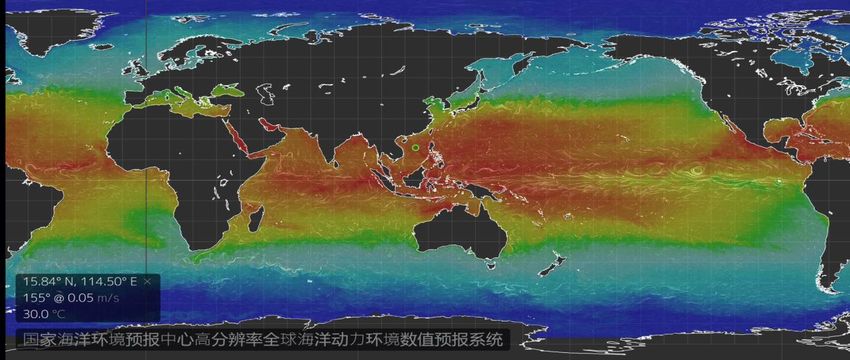
OPST-3
National Groups presentation
     (1 slide per system)

       OPST-3, GoTo meeting – 7, 8 and 10 December 2020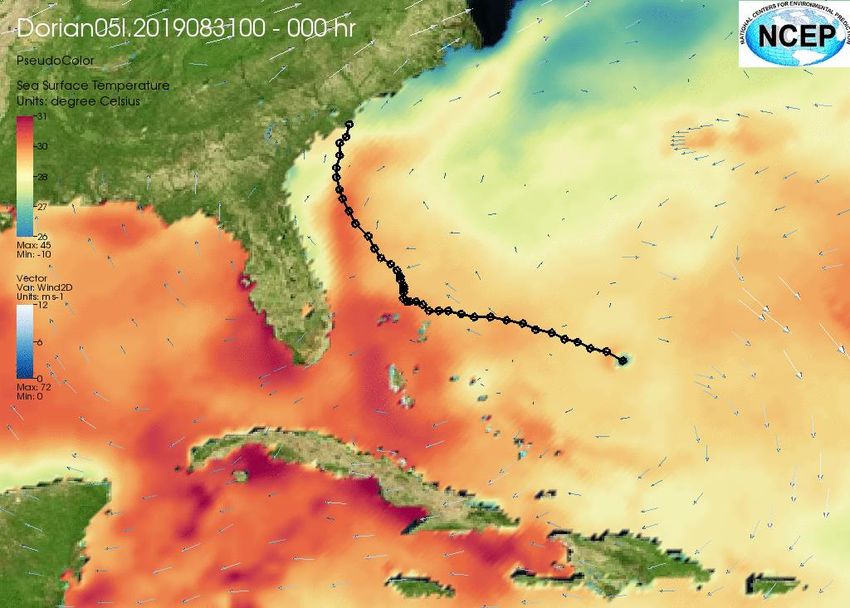
Systems represented in Deck:
              System                        Rep                                     Email
              China (NMEFC)                 Guimei Liu                              liugm@nmefc.cn

              Canada (CONCEPTS)             Gregory Smith                           Gregory.Smith2@Canada.ca

              UK/Europe (ECMWF)             Kristian Morgensen                      kristian.mogensen@ecmwf.int

              UK (FOAM)                     Matt Martin                             matthew.martin@metoffice.gov.uk

              India (INCOIS)                Abhisek Chaterjee                       abhisek.c@incois.gov.in

              Japan (MRI/JMA)               Goro Yamanaka                           gyamanak@mri-jma.go.jp

              South Korea (KHOA/KIOST)      Do Seong Byun                           dsbyun@korea.kr

              Brazil (REMO)                 Clemente Tanajura                       cast@ufba.br

              Norway (TOPAZ) USA            Laurent Bertino                         Laurent.bertino@nersc.no

              USA (RTOFS)                   Avichal Mehra                           avichal.mehra@noaa.gov

              France (MOI / CMEMS)          Elizabeth Remy                          eremy@mercator-ocean.fr

              Italy (CMCC)                  Giovanni Coppini                        giovanni.coppini@cmcc.it

              Australia (Bluelink)          Gary Brassington                        Gary.brassington@bom.gov.au

                                     OPST-3, GoTo meeting – 7, 8 and 10 December 2020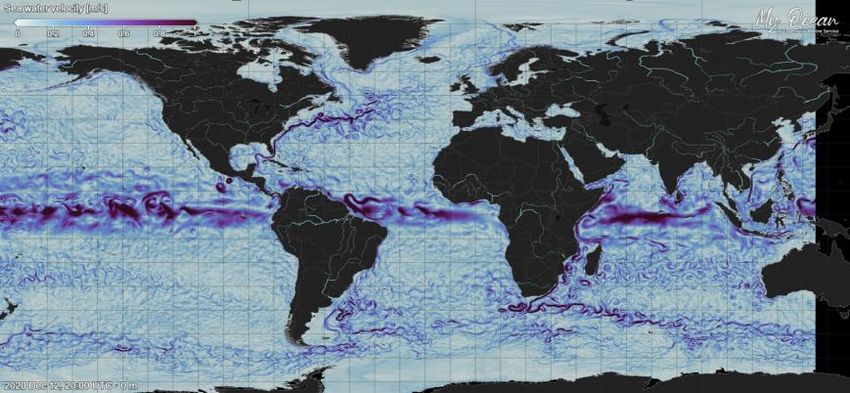
China Global Forecasting System: status and future
          NMEFC High Resolution Forecasting System based on NEMO
Status                                                                             Improvement of NEMO forecasting system
                                 ✓   Code --NEMO3.6 + LIM3                        ➢ Assimilation of Sea Ice, Salinity and Current
                                 ✓   Horizontal resolution --1°/12
                                                                                  ➢ Two-way nest between Global and Regional systems
                                 ✓   Effectiveness--7~10 days
                                 ✓   Forcing-- NCEP GFS or ECMWF
                                                                                  ➢ Coupled with Ocean Wave and Atmospheric systems
                                                  2019          Bias     RMSE
                                                                                     MCOM:Mass Conservation Ocean Model
               Assimilation

                                     SLA        SLA(cm)        -0.071    5.223
                   Data

                                  Current     velocity(cm/s)   -21.369   32.461
                                 (TOGA)        direction(°)    19.154    27.681
             Data Input                            SST         0.178     0.409
                                  T(℃)
         (SLA,SST,ARGO)                          T profile     0.029     0.726

                                 S(PSU)          S profile     -0.024    0.239

                                                                                  ◆    A new press coordinate Ocean Model
                                                                                  ◆    Multi-grid inclued tripole, cubic with global and regional
                                                                                  ◆    High quality partition for parallel computing and load
                                                                                   balancing
                                                                                  ◆ GPU Acceleration
                                                                                                                                     Future

                                            OPST-3, GoTo meeting – 7, 8 and 10 December 2020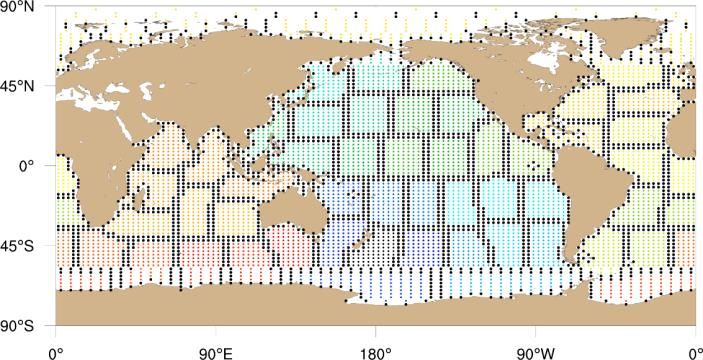
CONCEPTS System Status and Plans
Status                                       Plans
Global System - GIOPSv3                      For next operational roll out (Sept 202,IC3)
SEEK DA + 3DVar T/S Bias correction          • Incl. diurnal SST variability to analysis           Innovations of SLA (2016-19)
•   2x daily coupled 10day fcst + 16day      • Ice parameterization (P*,C*,z0ai) to reduce ice
                                                 drift error
    ensemble fcst                            • Monitoring package using NEMO XIOS and
•   Weekly: 32-day coupled ensemble              python
    forecasts (20 member)                    R&D:
•   seasonal forecasts initialization        Ensemble analyses

Regional System - RIOPSv2                    For next operational roll out (Sept 2021, IC3)
SEEK DA + online dynamic harmonic analysis   • 3Dvar T/S Bias correction
for tides                                    • k-ε vertical mixing + wave breaking
•   4 x daily 48 hr uncoupled forecasts      • upgrades as in GIOPS (above)
•   2 x daily 48 hr coupled forecasts (for
                                             R&D:
    YOPP) ending spring 2021
                                             OSEs in Arctic
Coastal Port Systems:                        Port Ocean Models for routine prediction 4 x day to
R&D on Nested NEMO downscaling from          support E-NAV
RIOPSv2 to 6 ports with max resolution 20m
– 100 m                                      Best effort Demos    March 2021-March 2022 for 6
                                             ports
[G,R,C]IOPS=[Global,Regional, Coastal] Ice Ocean Prediction System
IC3: Innovation Cycle 3. Operational Sep. 2021                                                       Smith et al., GMDD, 2020
                                               OPST-3, GoTo meeting – 7, 8 and 10 December 2020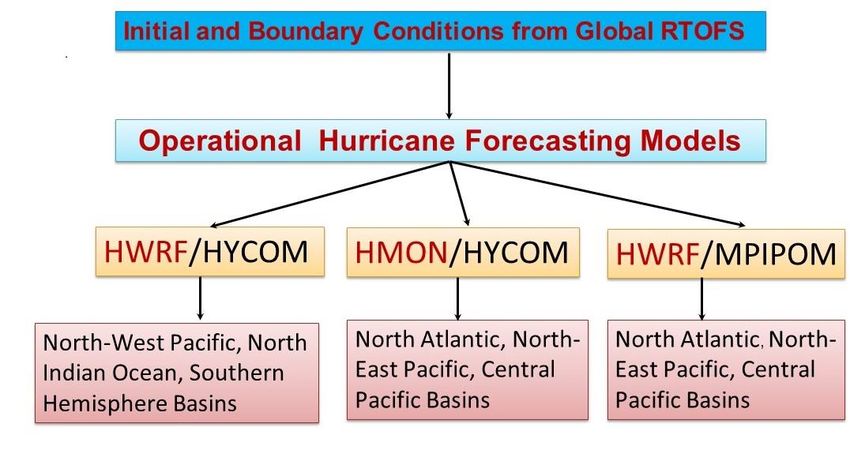
Summary and plans for current ECMWF operational systems
• Ocean model configurations
    • Current ocean model is based on NEMO V3.4.1 with local ECMWF modifications
    • Same ocean grid with about 0.25 degree resolution used for all operational systems
• Ocean analysis systems (BRT and RT):
    • ocean5: NEMOVAR 3D-VAR FGAT
        • T/S/SLA/SIC observations, SST via relaxation
• All forecasting systems are coupled (atmospheric resolution list below)
    • HRES CY47R1 (30/6-2020) 9 km deterministic 10 days twice daily
    • ENS CY47R1 18 km 51 members 15 days twice daily
    • Monthly CY47R1 36 km 51 member 46 days Monday and Thursday 0z
    • SEAS5 CY43R1 (November 2017) 36 km 7 months every month, 13 months every 3 months
• Plans for the next ocean model upgrade (2022 target)
    • Upgrade to NEMO V4. Biggest change is the LIM2 (mono-cat) to SI3 (multi-cat) sea ice model
    • Resolution will likely stay the around 0.25 degree for the ocean.

                                       OPST-3, GoTo meeting – 7, 8 and 10 December 2020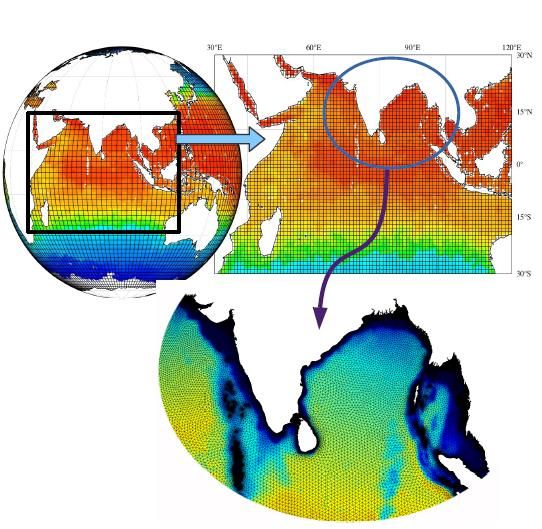
FOAM-UK overview of status and plans
New and upcoming operational system developments:
• Operational implementation of global 1/12° FOAM will go live in Dec 2020. Developed for UK Royal Navy.
• Coupled NWP development and implementation. Deterministic 10km resolution atmosphere/land, 1/4°
  ocean/sea-ice, with weakly coupled DA. Coupled ensemble (with 1/4° ocean). Planned for operational
  implementation in 2021.
• Development of a global ocean ensemble and hybrid ensemble/variational DA. Planned for operational
  implementation in 2023 to improve the ocean component of coupled NWP ensemble system. (Long time-
  scale partly due to new supercomputer system expected in 2021/22 and the associated porting work).

Assimilation of new data types:
• Assimilation of sea-ice thickness: daily along-track freeboard from Cryosat2 and thickness from SMOS.
• ESA A-TSCV project: testing impact of assimilating Total Surface Current Velocity (TSCV) from future missions
  like SKIM (in collaboration with Mercator-Ocean).
• SWOT preparation: work started in 1.5 km shelf-seas configuration, global next year.
• Operational ocean colour assimilation in shelf-seas physical/biogeochemical model.

                                    OPST-3, GoTo meeting – 7, 8 and 10 December 2020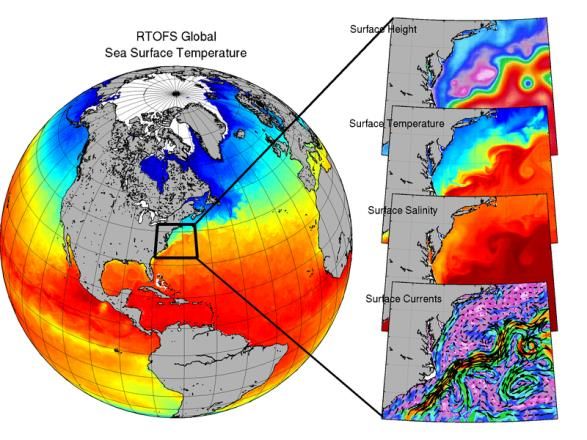
India-INDian Ocean FOrecasting System (INDOFOS)
Present Operational Systems                                                       Future Plans: An unified ocean modeling and forecasting system
High-resolution Operational Ocean Forecast and reanalysis System (HOOFS)
[Francis et. al 2020.]                                                            Existing ocean modeling system will be replaced by the following systems in phased manner

• Global : INCOIS-GODAS (MOM4.0+3DVAR)                                            • MOM6 for global to regional level applications.
• Regional: ROMS v3.6 + LETKF                                                     • LETKF based DA system in MOM6
                                                                                  • FVCOM for coastal/shelf sea/estuary applications.
• Coastal : ROMS v3.6                                                             • WAVEWATCH III for global to coastal wave forecast
INCOIS Tentral Ocean Prediction System for Indian Ocean (ITOPSI)                  • ADCIRC+SWAN for tsunami and storm surge prediction
                                                                                  • MOM6+WRF coupled system
• Global : HYCOM (HYCOM+TSIS)
• Regional: HYCOM
   (HYCOM+TSIS)
Wave Forecasts
• Global : WAVEWATCH III
• Regional: WAVEWATCH III
• Coastal : SWAN
Storm Surge
• Regional: ADCIRC+ SWAN

                                                           OPST-3, GoTo meeting – 7, 8 and 10 December 2020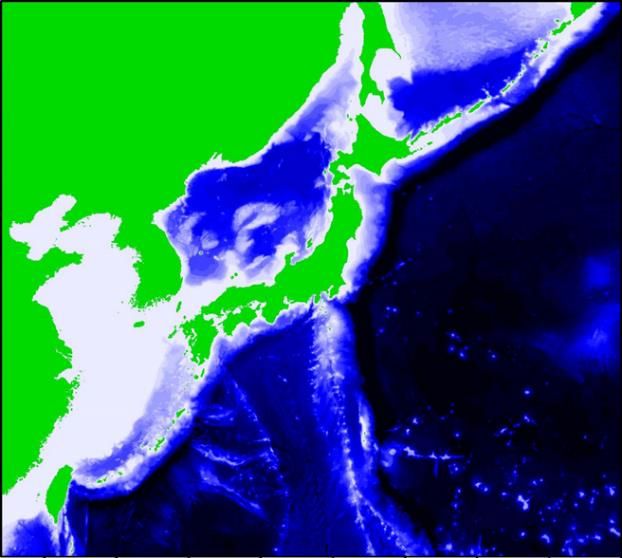
JMA Ocean Prediction System Updated in Oct. 2020
◆ 4DVAR Model (30-day prediction)                               MOVE/MRI.COM-NP/JPN
➢ Domain: 15˚S-65˚N, 100˚E-75˚W (Extended)
➢ Resolution: 10km (1/9˚×1/11˚)                                                                4DVAR model
                                                                                                    (10km)
◆ Japan-Area Model (11-day prediction)
➢ Domain: 20-52˚N, 117-160˚E (Extended)
➢ Resolution: 2km (1/50˚×1/33˚)                                                   Old System
➢ Initialized using the 4DVAR Model fields by
   IAU Down-Scaling                                                                    IAU Down-
    SST (4DVAR Model)           SST (Japan-Area Model)                                   Scaling

                                                                                          Old System
                                                                                    Japan-area model (2km)
  ☺ Mesoscale variability is
                                        ☺ Fine-scale structures are
    well analyzed by the
                                          additionally resolved
    4DVAR scheme.
                               OPST-3, GoTo meeting – 7, 8 and 10 December 2020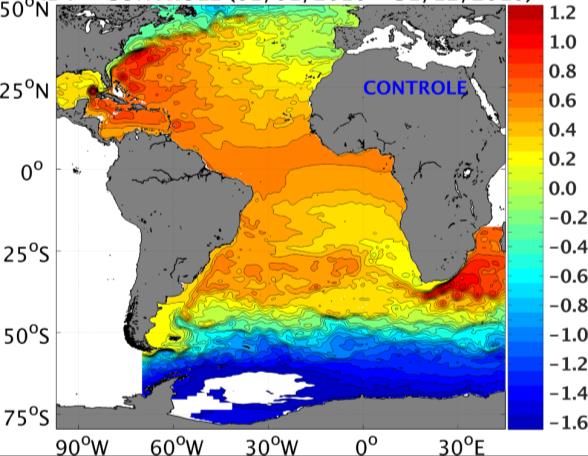
KHOA’s KOOFS
                STATUS                                                                               PLAN
           KOOFS (2015~2020)                                                                  KOOFS (2021 ~ 2025)

           PREDICTIVE                                                                       PREDICTIVE
FOCUS                             APPLICATION                             FOCUS                                  APPLICATION
           TIME SCALE                                                                       TIME SCALE

 Local       day         Coastal Modeling System                           Local              day        Coastal Modeling System
                         Atmosphere (WRF: ~4 km)                                                         Circulation (ROMS)
                         Circulation (ROMS: 0.1 ~ 1 km,                                                  - UlleungdoㆍDokdo (~300 m)
                                      MOHID: ~300 m)                                                     - East Korea Coastal (1 km)

Regional     day         Regional Modeling Systems                       Regional             week       Regional Modeling System
                         Atmosphere (WRF: ~20 km)                                                        Circulation (MOM5: ~4 km)
                         Circulation (ROMS)                                                              - East Sea & Yellow and East China
                         - Yellow and East China Seas (3 km)                                             Seas (1 km)
                         - East Sea (3 km)                                                               - Northwest Pacific Ocean ( ~4 km)
                         - North Pacific Ocean (1/4°)

                                         OPST-3, GoTo meeting – 7, 8 and 10 December 2020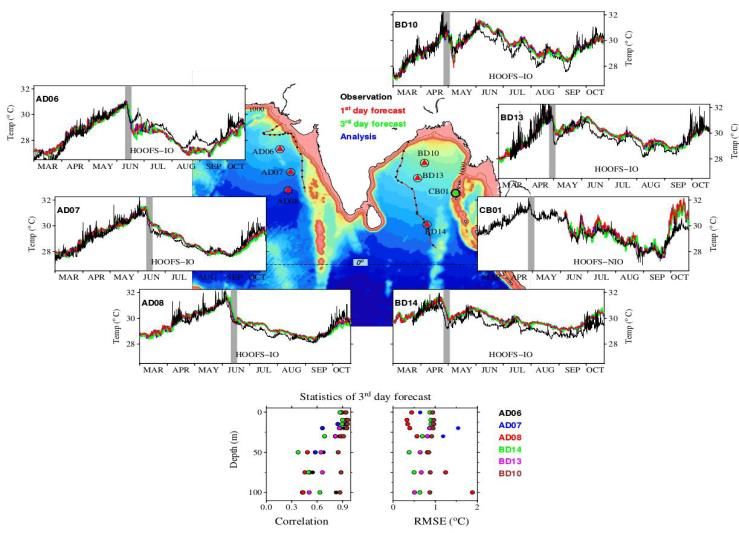
KIOST’s KOOS
                STATUS                                                                             PLAN
           R&D (2018~2022)                                                        National Program (2022 ~ 2029)

           PREDICTIVE                                                                    PREDICTIVE
FOCUS                          APPLICATION                             FOCUS                               APPLICATION
           TIME SCALE                                                                    TIME SCALE

                                                                                           hour           AI (Deep Learning)
                         Coastal Modeling System
                         Atmosphere (WRF: ~4 km)
 Local       day                                                        Local
                         Circulation (MOHID: ~300 m ,
                                      TELEMAC: ~10 m)                                      day        Coastal Modeling System
                         Wave        (SWAN: 300 m)
                                                                                                      Atmosphere (MPAS-A)
                                                                                                      Circulation
                                                                      Regional                           (MOM6, MOHID, TELEMAC)
                                                                                           week
Regional     week                                                                                     Wave (SWAN, TOMAWAC)
                         Circulation (MOM5: ~4 km)

                                                                                           month      Global Modeling System
                                                                                                      - Coupled Model
 Global                  Global Modeling System                        Global
                                                                                                        Atmosphere – Ocean –Ice
                              (under developing)                                                        – Land – Ecosystem
                         Atmosphere (MPAS-A: ~15 km)                                       year
                         Circulation (MOM6: ~9 km)

                                      OPST-3, GoTo meeting – 7, 8 and 10 December 2020
The Oceanographic Modeling and Observation Network (REMO)
is a research group formed by Federal Univ. of Bahia (UFBA), Federal Univ. of Rio de Janeiro (UFRJ), Petrobras Research
Center (CENPES) and the Brazilian Navy Hydrography Center (CHM), that holds the REMO-CHM ocean operational
forecasting system (OOFS) for the Atlantic. HYCOM 1/4o 1/12o 1/24o
• The OOFS uses HYCOM and the REMO Ocean Data Assimilation System (RODAS)
based on EnOI. HYCOM+RODAS assimilates Argo T/S data, UK MetOffice OSTIA
SST and along-track AVISO SLA data.
• Assimilation is performed twice a week, but 5-day forecasts are performed daily
forced by a combination of CHM-COSMOS atmospheric forecasts (3-d window) and
NOAA/NCEP/GFS forecasts (4 to 5-d window).
• A system with 3 nested grids is employed today
• A new OOFS - operational since March 2020 - will replace the current system in the
first semester of 2021.
HYCOM 1/12o 1/24o
• UFBA and UFRJ produced 4 10-yr reanalysis in 2019-2020 from 2008 to 2017.
• UFBA develped a preliminar version of an EnKF with 11 members only, and will
improve it to 30-members in 2021.
• Efforts on OSSEs with SWOT and on OSEs with SSS are underway.
OPST-3, GoTo meeting – 7, 8 and 10 December 2020Status and (immediate) plans, pan-Arctic
products, Norway
NRT forecasts Reanalyses
• TOPAZ4, EnKF 100 mems @12 km • TOPAZ4b,
TOPAZ4, EnKFEnKF,100mems
100 mems @12 km
@12km
• Addition of CS2SMOS ice thickness since Nov 20 • From 28 to 50 vertical layers
• NORWECOM,
• Partial release EnKF,
15th Dec80
2020mems @ 25 km
• TOPAZ5, EnKF 100 mems @ 6km • Assimilation
• ECOSMO BGC forecasts @6km scheduled for • ECOSMO, EnKS 80ofmems
surface
@ chl.
25 km
May 2021, • Assimilation of surface chl and nutrients profiles
• Coupling to CICE 5.1 ongoing • Parameter estimation
• Release of physical variables planned Dec 2021 • Partial release 15th Dec 2020
• TOPAZ6, including s. surge & tides @ 3km • WAM @3km wave hindcast
• neXtSIM stand-alone @3km • Partial release 15th Dec 2020
• Forced by TOPAZ4 ocean
• Nudged daily to ice concentrations
• New BBM rheology 15th Dec. 2020
• WAM @3 km forecast
OPST-3, GoTo meeting – 7, 8 and 10 December 2020Operational Real Time Ocean Forecast System (RTOFS) at
NOAA/NWS/NCEP
● Operational Eddy Resolving Ocean Modeling and Initialization
● Coupled Modeling for Hurricanes (Air- Sea- Wave flux interactions,
mixing)
● Inputs to operational Global (GFS v16) and Coastal (NWPS) wave models
to admit wave-current interactions
● Coupled Ecosystem Forecasting (Biogeochemical, NPZD, tracers)
● RTOFS v2 upgrade scheduled for FY21 with a new data assimilation system
● Strong collaboration with US Navy, leveraging core HYCOM and ocean
data assimilation developments at NRL.
Department of Commerce // National Oceanic and Atmospheric AdministrationMercator Ocean International :
Global systems
Global Analysis & Forecast:
• PHY (GLO12)
New products available: 3D 6h-instantaneous fields
New global 1/12° under development.
• BGC (BIO4)
OC assimilation
• WAV (MF system at 1/12°)
Updated system assimilating new satellite observations (S3, CFOSAT)
Daily 10 days forecasts
Global Reanalyses:
• PHY (GLORYS12 + GREPv1/v2)
GREPv1/v2 multi system ensemble reanalysis
Switch to ERA5 in GLORYS for all reanalysis extension
• BGC (BIORYS & MICRORYS)
BIORYS & MICRORYS at 1/4°
MICRORYS at 1/12° in 2021
Assimilation of OC in BGC reanalysis postponed
• WAV (WAVERYS) 1/4°
Available on Copernicus New RAN planned for Copernicus 2
Marine Service • Interim RAN production
Department ofunder
Commercedevelopment
// National Oceanic and(monthly update)
Atmospheric AdministrationOverview of ITALIAN NATIONAL SYSTEMS (CMCC Contribution)
Future Plan:
Global Ocean
Z*, Include tides in AN FCST system
AN FCST: GOFS16 @ 1/16o + 98 vert levs (NEMO)
New Global Reanalysis using ERA5
REA (CMEMS): 1/4o + 75 vert levels (NEMO) ERA-Interim –
1993-2019
Mediterranean Sea (CMEMS System) Future Plan:
AN FCST: MedFS @ 1/24° hor res. + 141 vert lev Include tides in the AN FCST system +
(NEMO+WW3) improved river forcing
REA: 1/16° hor res. + 72 vert lev (NEMO) ERA-Interim – New Med Sea Reanalysis 1/24° hor res.
1987-2018 + 141 vert lev (NEMO) ERA5 – 1987-
2019
Data Provision within IV-TT:
Global and Mediterranean Sea Inter-comparison & Validation metrics (Global will enter in 2021, Med Sea
should be re-included….)
Department of Commerce // National Oceanic and Atmospheric AdministrationNational report - Australia
• Modeling – MOM5 (current), MOM5+CICE5 (developed; Kiss et al., 2020), ROMS 1/50x1/50
• Data assimilation – EnKF-C/EnOI (current), FGAT/Low-mode multiscale (developed), EnKF (developed)
• Observations – VIIRS Metop-B and NOAA-20
• Systems – OceanMAPSv3.3 (current) – Bulk fluxes, ACCESS-G3
- v3.4 (op-testing) FGAT+Low-mode assim,
- v4.0i (final hindcast) EnKF (target 2021)
- v4.0 (prelim) EnkF+MOM5/CICE5 (target 2022)
• Verification – CLASS4 ocean current (detailed analysis with Mercator)
• Reanalysis – BRAN2020 completed (JRA-do and Multiscale assimilation)
• Viewer – New viewer on AWS (https://www.seedragon.org)
• Other
- Bureau committed to coupled NWP (initial system ORCA025, next gen ORCA12) with UM partnership
- Regional ocean models scheduled for operational 2021
- Development project for coupled BGCYou can also read


