Orthopedic Surgery 2018 Year in Review - NYU Langone
←
→
Page content transcription
If your browser does not render page correctly, please read the page content below

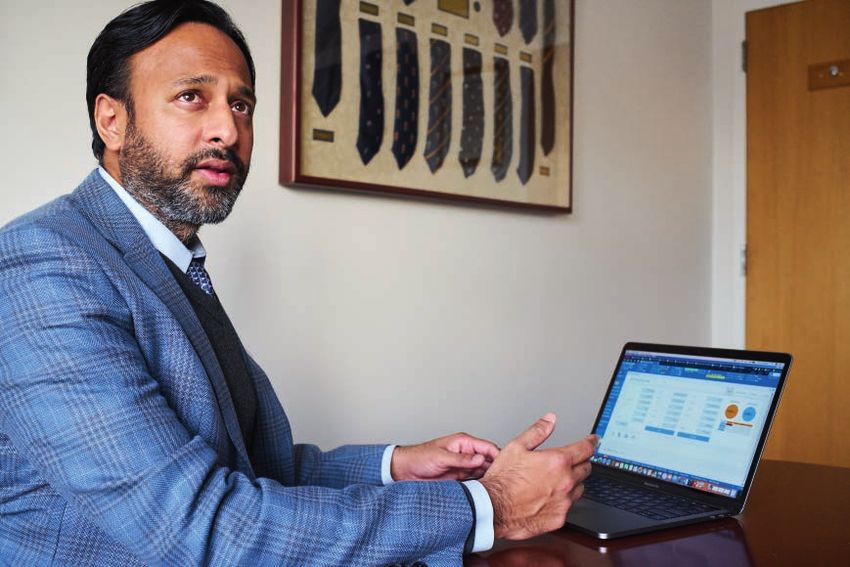
Orthopedic Surgery 2018 Year in Review
MESSAGE FROM THE CHAIR                                      CAMPUS TRANSFORMATION                         DEPARTMENT OF ORTHOPEDIC SURGERY
                                                            In 2018, NYU Langone Health opened a new,
                                                            830,000-square-foot inpatient facility, the
High-value orthopedic care                                  Helen L. and Martin S. Kimmel Pavilion.

is not just what happens in
                                                            Set within the building are four operating
                                                            rooms where our spine and pediatric
                                                            orthopedic specialists are performing
                                                                                                          Top 10
                                                            surgery.                                      IN THE COUNTRY
the surgical suite. We are                                  (Photo credit: Jeff Goldberg)
                                                                                                          FOR ORTHOPEDICS
                                                                                                          in U.S. News & World Report’s

deploying innovative ideas to                                                                             “Best Hospitals” and the

                                                                                                          ONLY HOSPITAL IN NEW YORK

improve patient outcomes.                                                                                 TO BE RANKED THE TOP 10
                                                                                                          in orthopedics, rheumatology,
                                                                                                          and rehabilitation

Last year, the Department of Orthopedic Surgery at
NYU Langone Health continued to tackle challenges in
healthcare. Our faculty members refined digital tools
for predicting patient risk, launched new delivery models
to provide more personalized care, and pooled our
                                                                                                          1,000+
                                                                                                          SAME-DAY JOINT REPLACEMENTS
expertise to significantly decrease opioid use.
                                                                                                          since 2015

These innovations are all part of our commitment to
work collaboratively to ensure the best possible outcomes
for our patients and for orthopedic surgery patients
across the country.
                                                                                                          Largest Residency
                                                                                                          IN THE COUNTRY
                                                                                                          with 72 positions

                                                                                                          197
                                                                                                          FACULTY

JOSEPH D. ZUCKERMAN, MD
                                                                                                          20
Walter A.L. Thompson Professor of Orthopedic Surgery                                                      FELLOWS
Chair of Orthopedic Surgery
Surgeon-in-Chief
NYU Langone Orthopedic Hospital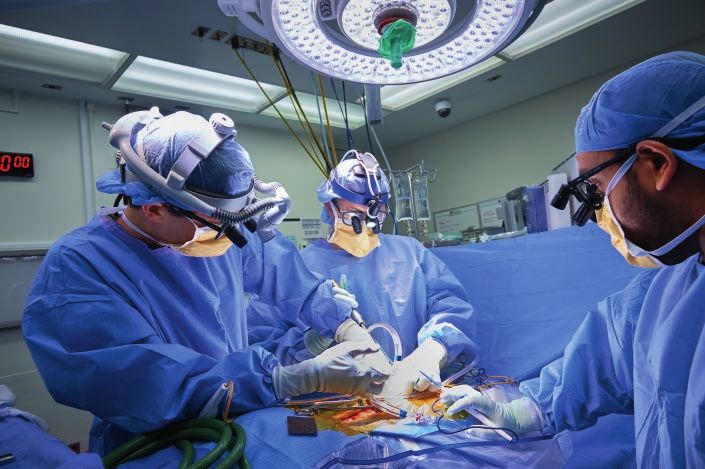
Mobilizing Our Resources
                                   to Reduce Opioid Use                                                    OPIOID-SPARING PATHWAYS
                                                                                                           Starting in 2017, the department’s divisions strategized
                                                                                                           opioid-free or “opioid-light” postoperative pain regimens
                                                                                                           for their subspecialty procedures.
                                                                                                               Roy I. Davidovitch, MD, Julia Koch Associate Professor
                  The Department of Orthopedic Surgery at NYU Langone Health                               of Orthopedic Surgery, spearheaded efforts to develop an
         is leading an institution-wide effort to rethink the role of opioids in patient care.             opioid-sparing protocol for patients undergoing hip
               Through a series of linked initiatives developed over the past two years,                   arthroplasty. The pathway includes acetaminophen and
              the department has reduced—and in some cases eliminated—the use of                           meloxicam on the day before surgery, and only minimal
                                                                                                           opiates are given intraoperatively. Following surgery,
                    opioids for postoperative pain control in orthopedic surgery.                          patients continue with non-opiate pain control and receive
                                                                                                           12 milligrams of tramadol as a drug of last resort.
                                                                                                               “Education is the key point,” says Dr. Davidovitch. “We    Since 2016, the Department
                                                                                                           instruct patients to take the tramadol only on an as-needed       of Orthopedic Surgery
                                                                                                           basis after they have exhausted the other medications—                 has reduced
                                                                                                           and only if their pain is greater than the pain they had
                                                                                                           before surgery.”                                                 postoperative morphine
                                                                                                               Dr. Davidovitch and colleagues trialed the new pain        milligram equivalent (MME)
                                                                                                           regimen in late 2017 with same-day hip replacement patients.           pain control
                                                                                                           Among this group, in-hospital opioid consumption was
                                                                                                           reduced by about 75 percent. “The new standard of care is            by approximately

                                                                                                                                                                                35%
                                                                                                           multimodal pain management,” he says.

                                                                                                           The new standard of care is multimodal
                                                                                                           pain management.”

                                                                                                           —Roy I. Davidovitch, MD

Joseph A. Bosco III, MD, and Claudette M. Lajam, MD

2                                                                                     NYU Langone Health   Orthopedic Surgery 2018                                                                     3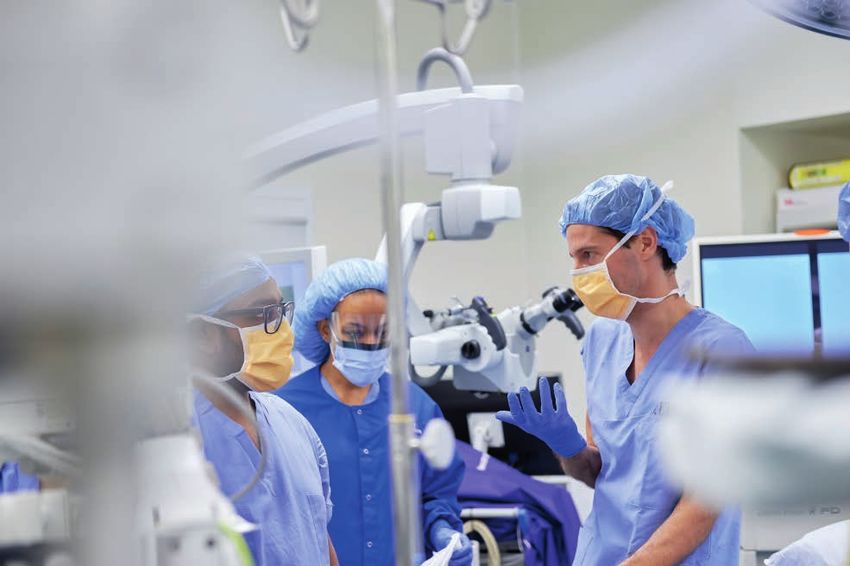
Mobilizing Our Resources
to Reduce Opioid Use
Kirk A. Campbell, MD
DIVERSE COLLABORATORS
The Department of Pharmacy played a key role in
efforts to revise pain management protocols.
Lisa Anzisi, MS, PharmD, BCPS, pharmacy utilization We have collaborated with departments
manager, worked with orthopedic surgeons to establish from anesthesia and pain management
morphine milligram equivalent (MME) conversion
to pharmacy and healthcare IT, so this
factors for all pain medications in use, stratifying the
department’s MME data by procedure using a pain effort is truly a cross-functional response
threshold scale. She also worked with faculty to establish to the opioid epidemic.”
clinical protocols based on morphine equivalents. For
example, physicians now offer naloxone to any —Joseph A. Bosco III, MD
patient receiving 50 mg or more of MME pain control
per day. Patients receiving MME > 90 mg/day are referred
for a pain consult, and MME > 120 mg/day triggers an
automatic alert for potential overutilization.
“It’s not always clear how the different pain drugs
compare milligram for milligram,” Joseph A. Bosco III, MD, A CULTURAL SHIFT
professor of orthopedic surgery, vice chair for clinical affairs, To embed the opioid reduction initiatives into orthopedic
says. “Calculating morphine milligram equivalents is a way care, the department held several professional development
to standardize doses across medications.” programs in 2018 aimed at educating faculty, residents,
Healthcare IT provided critical back-end support for and medical students on opioid-sparing pain management
these efforts, working with orthopedic surgery and strategies. These events included a free continuing medical
pharmacy to specify MMEs for all opioid analgesic order education (CME) webinar on the use and misuse of opioids in
sets in the electronic health record (EHR), with embedded postoperative care, convening experts in medicine, law
opioid-specific alerts. Now, for instance, when a physician enforcement, and government to provide a multidisciplinary
prescribes an opioid for a patient on a benzodiazepine, perspective on the opioid crisis. The webinar was organized
the EHR generates a contraindication alert. In addition, by Claudette M. Lajam, MD, associate professor of orthopedic
patients who receive an opioid prescription automatically surgery and chief safety officer for the Department of
get a system-generated document with up-to-date Orthopedic Surgery, and Lorraine Hutzler, MPA, associate
instructions on safe disposal of unused medications. program director for the department’s Center for Quality
These initiatives have had a significant effect on opioid and Patient Safety.
usage among orthopedic surgery patients, reducing “It’s one thing to say you want to reduce opioid
average postoperative MMEs by approximately 35 percent consumption, but it’s not as easy as simply prescribing
Division leaders have carefully studied the impact of American Academy of Orthopaedic Surgeons (AAOS) and since 2016. fewer pills,” says Dr. Bosco. “All of us in orthopedic surgery
new pain regimens on patient satisfaction. For example, a published in a recent issue of Arthroscopy, found that patients need to look at our surgeries, reexamine our protocols,
group led by Kirk A. Campbell, MD, clinical assistant on an opioid-sparing pathway experienced no significant and work across our institutions to minimize opioid use
professor of orthopedic surgery, compared standard opioids differences in pain control or satisfaction with care. There while still maximizing patient comfort and recovery.”
with oral nonsteroidal anti-inflammatory drugs (NSAIDs) was also no difference in one-week opioid use between the
for patients undergoing arthroscopic meniscectomy. Their two groups, suggesting that patients nationwide are
study, highlighted at the 2018 Annual Meeting of the currently overprescribed opioids after this procedure.
4 NYU Langone Health Orthopedic Surgery 2018 5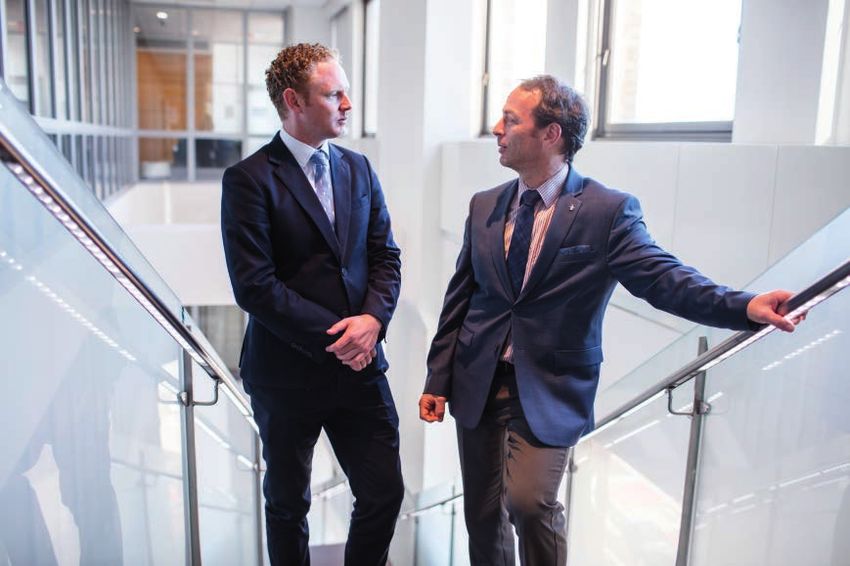
Our department attracts and
                                                                                                                                                                       supports creative thinkers. Future
                                                                                                                                                                       success in healthcare will be defined
                                                                                                    SPORTS MEDICINE CENTER ADDS FOCUSED EXPERTISE FOR                  by organizations who recognize
                                                                                                    ACTIVE WOMEN
                                                                                                                                                                       the importance of innovation and
                                                                                                    The unique needs of athletic and active women are the focus
                                                                                                                                                                       maintain the infrastructure to identify
                                                                                                    of the newly established NYU Langone Women’s Sports
                                                                                                    Medicine Center, which offers services in primary-care sports      unmet needs—then implement their
                                                                                                    medicine, orthopedic surgery, physiatry, sports psychology,        solutions efficiently and effectively.”
                                                                                                    physical therapy, nutrition, and other specialties—all aimed
                                                                                                    at helping women recover and return to their active lives.         —Thomas J. Graham, MD
                                                                                                        “Research shows that female athletes are more likely
                                                                                                    than men to sustain an anterior cruciate ligament (ACL)
                                                                                                    tear, report a concussion, and suffer overuse injuries,”
                                                                                                    says Cordelia W. Carter, MD, clinical associate professor of
                                                                                                    orthopedic surgery, who joined the center in August as
                                                                                                    director of women’s sports medicine and pediatric
                                                                                                    sports medicine. “Unfortunately, studies also show that
                                                                                                    female athletes are less likely to return to play following a
                                                                                                    sports injury.”
                                                                                                        Dr. Carter and colleagues provide the multidisciplinary
                                                                                                    care that is vital in cases of female athlete–associated
                                                                                                    conditions such as relative energy deficiency in sport (RED-S),
                                                                                                    also known as the female athlete triad. RED-S can include
                                                                                                    low estrogen levels, resulting in the loss of a normal period
                                                                                                    and a heightened risk of stress fractures. “For a challenge like
                                                                                                    this, you really need a full team of people who understand
                                                                                                    that interaction,” says Dr. Carter, who came to NYU Langone
                                                                                                    Health from Yale University School of Medicine. “That means
                                                                                                    not just an orthopedic surgeon, but an endocrinologist, a
                             Enhancing Patient Care                                                 nutritionist, and a sports psychologist.”

                         Through Growth and Innovation                                              BUILDING AN INFRASTRUCTURE TO PROMOTE
                                                                                                    ORTHOPEDIC INNOVATION
                                                                                                    The development of novel ideas that improve access,
                                                                                                    outcomes, patient experience, and cost-containment in
                                                                                                    orthopedic care delivery is the focus of a new initiative led by
                        With the addition of noted orthopedic leaders and                           the department’s first director of strategic planning and
               groundbreaking new initiatives, the Department of Orthopedic Surgery                 innovation, Thomas J. Graham, MD. Dr. Graham, who also
                         at NYU Langone Health expands its capacity for                             serves as associate chief of the Division of Hand Surgery,
                                                                                                    came to NYU Langone Health from Cleveland Clinic. In his
                                   innovative specialty care.                                                                                                          Thomas J. Graham, MD
                                                                                                    new role, he is establishing an innovation architecture that
                                                                                                    includes a process for vetting intellectual property such as
                                                                                                    medical devices and information technologies.

Cordelia W. Carter, MD

6                                                                              NYU Langone Health   Orthopedic Surgery 2018                                                                                      7
Enhancing Patient Care Through Complex Case
Growth and Innovation
Surgical Collaboration Yields Transformative
Joan H. and Preston Robert
Tisch Center at Essex Crossing
is the latest addition to
Outcome for Long-Term Spinal Deformity
NYU Langone’s expanding
footprint for orthopedic
care in and around New York
City. The new space has
four operating rooms and
a gym and is home to the
When a patient with a history of adolescent idiopathic scoliosis developed proximal
department’s new Women’s
Sports Medicine Center.
junctional kyphosis as a result of previous surgery, she turned to experts at
NYU Langone’s Spine Center for surgical consultation. The multidisciplinary team,
drawing on its extensive neurosurgical and orthopedic expertise in complex
spinal reconstructions, developed a radical, innovative surgical solution for her
long-standing deformity.
“Innovation is a discipline we practice by implementing NEW LEADERSHIP IN THE DIVISION OF FOOT AND
a set of validated instruments for judging ideas in an ANKLE SURGERY
objective fashion,” he says. “This includes a peer-review John G. Kennedy, MD, joined NYU Langone Health in early
process for evaluating both clinical and practical merit.” The 2019 as chief of the Division of Foot and Ankle Surgery. An
initiative will also include an industry and investor advisory international leader in surgery of the foot and ankle who
board to assess the economic potential of innovations. came to NYU Langone from the Hospital for Special Surgery,
According to Dr. Graham, the department’s goal is to Dr. Kennedy brings a special interest in articular cartilage
transform the paradigm of orthopedic care for patients, injury and joint preservation.
physicians, and payors. “Innovation is a core competency at
NYU Langone Health, particularly in our department,” notes
Dr. Graham. “Our department attracts and supports creative
thinkers. Harnessing the power of ideas from our gifted
colleagues to solve problems and push the frontiers of our
specialty will help us to maintain our leadership position in
orthopedic surgery, while serving our patients and
community.”
Michael L. Smith, MD (Photo credit: Juliana Thomas Photography)
8 NYU Langone Health Orthopedic Surgery 2018 9
CAREFUL PLANNING AND CLOSE
COLLABORATION GUIDE DELICATE
Complex Case: Surgical Collaboration Yields
SPINAL REALIGNMENT
Transformative Outcome for Long-Term Spinal Deformity
The surgical plan was essentially to
reconstruct the patient’s failing spine
architecture by disconnecting and then
reconnecting her cervicothoracic spine.
REDESIGNING THE SPINE TO CORRECT associate professor of orthopedic
To begin, the patient was placed in the
A LONG-STANDING DEFORMITY surgery and neurosurgery. “This patient
prone position on the operating table,
needed part of the bone removed, the
A 57-year-old woman with a long, and the vertebral column was exposed,
vertebral column resected, and her head
complex history of spinal deformity and including the previously placed spine
repositioned, since her chin had fallen
surgery presented with worsening instrumentation. After removal of the
to her chest—and we were able to draw
head drop, neck and upper back pain, rods, previously placed pedicle screws
on our extensive body of research to
numbness, and loss of horizontal gaze. were replaced from T1 to T10 to achieve
meticulously plan the perfect alignment.”
She had undergone Harrington rod good purchase and new screws were
placement for scoliosis as an adolescent, A T2 vertebrectomy with dorsal placed from C2 to C7.
later developing proximal junctional placement of an expandable cage was
A wide laminectomy was performed,
kyphosis at T5. Although some identified as the safest approach to
with careful dissection of scar tissue
improvement was initially achieved with correcting the deformity. This
from the dura to expose the thecal sac.
a pedicle subtraction osteotomy (PSO) nontraditional strategy would help to
Circumferential decompression of the
at T4 with posterior spinal fusion from circumvent the risks of paralysis from
spinal cord allowed visualization of any
T1 to T10, subsequent progression of spinal cord injury and hand weakness
spinal nerve impingement prior to
recurrent C7-T1 kyphosis had resulted in from C8 nerve injury. “With this approach,
performing the correction. “Our goal
severe pain and functional disability. we could reduce the potential for a
was to ensure that at the critical moment
disabling neurological injury while
The patient’s major structural when we did the alignment correction,
increasing the space available for us to Preoperative imaging shows the structural problems Postoperative imaging shows that the deformity has been
problems demanded far more than a there would not be any compression
fully correct the spinal alignment,” causing the patient’s functional decline. corrected and the patient now has normal alignment.
traditional PSO, typically done at C7. that could put the spinal cord at risk,”
says Michael L. Smith, MD, assistant
“The geometry of this bone limits any notes Dr. Smith.
professor of neurosurgery.
potential correction,” explains
Themistocles S. Protopsaltis, MD, Temporary stabilizing rods were placed, with fixation spanning T10 to C2, SHARED EXPERIENCE REDUCES
and the transverse processes were including C2 pedicle and laminar INTRAOPERATIVE RISK TO CORRECT
removed before resection of the posterior screws and thoracic pedicle screws. COMPLEX DEFORMITY
lateral bony elements and bilateral T2 Intraoperative imaging confirmed
Themistocles S. Protopsaltis, MD; Michael L. Smith, MD and Anand Segar, MD (Photo credit: Juliana Thomas Photography) Vertebral column resection is a long
pedicles. Careful dissection around the adequate reconstruction before
and challenging surgical procedure, and
T2 vertebral body to the ventral midline arthrodesis was performed from
the extraordinary complexity of this
was achieved without injury to the soft C2 to T3. There were no changes in
particular case required a critical
tissue structures and the great vessels. intraoperative neuromonitoring,
combination of expertise, planning, and
The vertebrectomy was performed from with motor function confirmed before
collaboration in executing the plan. The
inferior T1 to the superior T3 endplates, the patient was extubated and
deformity corrected, the patient now
the epidural plane was opened, and the transferred to recovery.
walks with normal alignment and is able
posterior longitudinal ligaments were
“By taking the correction down to a to look left and right with a more typical
tamped into the defect. A titanium
lower level, we were able to achieve the horizontal gaze, without any loss of
expandable cage was placed and packed
radical correction needed to address neurological function.
with bone graft harvested from the
this patient’s profound deformity,”
iliac crest. “In the case of a major spinal deformity
Dr. Protopsaltis explains. “With our
and alignment loss like this one, there are
To close the osteotomy, the Mayfield detailed preoperative planning we
no intermediate options—a technically
head holder was released and attained the necessary deformity
challenging reconstruction drawing upon
repositioned while spinal instrumentation correction and the anterior column
our shared experience was needed to
was used simultaneously to apply lengthening using a high-grade
get her standing upright again,” says
correction forces. These maneuvers osteotomy and the expandable device.”
Dr. Smith. “Fortunately, our experience
placed the patient’s cervicothoracic spine
and expertise enabled us to provide her
into ideal alignment. A five-rod construct
with a definitive solution.”
was placed across the vertebrectomy,
10 NYU Langone Health Orthopedic Surgery 2018 11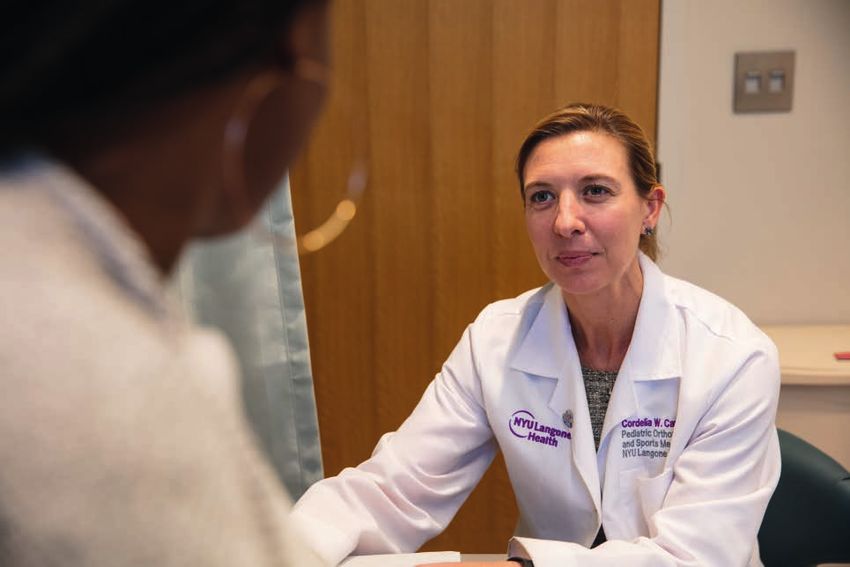
Rather than admitting the patient to
a unit where costs will accumulate rapidly,
we can offer appropriate care in a less
Based on a statistically validated risk algorithm, care- and cost-intensive setting.”
PersonaCARE supports informed care decisions for a
growing patient population. —Sanjit R. Konda, MD
“We created this software to fill a growing need to
better manage orthopedic fracture patients age 55 and older,”
says Sanjit R. Konda, MD, clinical assistant professor of
orthopedic surgery. “This population has been growing
rapidly, and studies show that it is stressing the financial APPROACH ALIGNED WITH VALUE-BASED CARE
capability of hospitals to provide quality care.” By more accurately predicting emergency room costs,
The heart of PersonaCARE is the Score for Trauma Triage procedure costs, and inpatient costs for hip fracture patients,
in the Geriatric and Middle Aged (STTGMA), a peer- PersonaCARE enables physicians to make decisions based
reviewed algorithm developed by Dr. Konda and colleagues. on care value.
The software also integrates with hospital accounting “A risk profile might show us that a certain patient does
systems, enabling it to generate cost predictions. not need to spend any time in the ICU and can be safely
Orthopedic trauma surgeons at NYU Langone now use monitored in either a step-down unit or even a regular room,”
PersonaCARE to more accurately predict quality measures, says Dr. Konda. “So, rather than admitting the patient to a
such as length of stay, need for blood transfusion, risk of unit where costs will accumulate rapidly, we can offer
major and minor complications, and mortality risk, up to appropriate care in a less care- and cost-intensive setting.”
one year after a hospital stay for all older hip fracture patients. Cost profiles generated by PersonaCARE can predict
The system also can predict inpatient and outpatient costs hospital accounting and loss for an entire 90-day episode of
up to 90 days post-discharge. care. According to Dr. Konda, this could help clinicians
manage patients under bundled payment programs, such as
TOOL ENABLES EARLY DECISION-MAKING Medicare’s Bundled Payments for Care Improvement
(BPCI) Initiative.
PersonaCARE uses data collected in the emergency
department during a standard history and physical
EXPANDING ALGORITHMS TO IMPROVE DATA ACCURACY
Predictive Software
examination. Based on physiological variables, including
age, medical comorbidities, vital signs, and anatomic Dr. Konda and colleagues are using machine learning
injuries, the software calculates a risk score and a cost techniques to refine PersonaCARE. They recently studied
Helps Optimize Efficient Care score, allowing surgeons to promptly initiate appropriate
clinical pathways.
whether the addition of frailty markers—such as existing
disability, need of an assistive device, and malnutrition—
for Older Fracture Patients “For example, the system might identify that a certain
patient has a high cardiac risk, so we can put that patient
could improve the software’s underlying algorithms, though
they were found to be insignificant in predicting inpatient
immediately into a cardiology pathway with an echo mortality. “We are going to continually test new markers to
cardiogram and a cardiology consultation,” Dr. Konda says. see if there is anything we could do to improve on the
“Getting these consultations early makes the entire accuracy we already have,” notes Dr. Konda.
A new tool developed by orthopedic trauma surgeons at NYU Langone Health process more efficient—in fact, it often helps us get hip NYU Langone plans to roll out a commercial version of
fracture patients to the operating room within 24 hours.” the PersonaCARE platform in 2019. “Our goal is to help
is helping to more accurately predict mortality risk, functional outcomes, more orthopedic surgeons and other trauma specialists
and costs for geriatric and middle-aged fracture patients. deliver value-based care that decreases hospital costs while
improving patient outcomes,” he says.
Sanjit R. Konda, MD
12 NYU Langone Health Orthopedic Surgery 2018 13
Hip Arthroplasty:
New Risk Assessment Tool and High-Risk According to Aaron J. Buckland, MD, clinical assistant
professor of orthopedic surgery and director of spine
ALIGNING RISK WITH NEW CLINICAL PATHWAY
Pathway Reduce Dislocation Rate Sixfold
All patients who undergo hip arthroplasty at NYU Langone
research, the research is rooted in a growing understanding are now screened with the new risk assessment tool, which
of the spine’s role in hip implant stability. then assigns patients to risk categories based on spinal
“In the last few years, we have learned that spinal pathology and other recognized risk factors.
pathologies markedly change the way the pelvis moves “The highest-risk patients are those with severe lumbar
during posture changes,” Dr. Buckland says. “For example, spinal degeneration, lumbar flat back deformity, and those
Researchers at NYU Langone Health have identified several new risk factors people with spinal pathologies display much less posterior who have multiple lumbar fusion levels,” Dr. Buckland says.
pelvic tilt when they go from standing to sitting.”
for implant dislocation following total hip replacement surgery, informing The screening also takes into account known dislocation
This effect is notable in patients with spinal degeneration risk factors, including age greater than 75 years, female sex,
the development of a new preoperative screening tool and treatment algorithm or spinal deformity and in patients who have undergone diagnoses such as femoral neck fracture or osteonecrosis,
to better identify high-risk patients based on these factors. previous fusion surgeries. “By reducing the change in and neurological diseases like Parkinson’s or dementia.
posterior pelvic tilt in sitting, these conditions lead to a less “These are all intermediate risk factors, but a combination of
protective anteversion acetabular component,” he says. them can make you a high-risk patient,” Dr. Buckland notes.
“When this happens, it increases the risk of impingement “This group also includes patients who engage in activities
and subsequent implant dislocation.” that put their hips into more extreme ranges of motion, such
as yoga instructors or surfers.”
CALCULATING THE RISK
To explore the impact of spinopelvic mechanics on hip
implant stability, Dr. Buckland, and Ran Schwarzkopf, MD,
clinical associate professor of orthopedic surgery and
colleagues, led a study analyzing 1,082 patients who had
total hip replacement surgery in 2014 or 2015. The team
identified an overall implant dislocation rate for this group
of 1.8 percent; among the 320 patients demonstrating In a group of patients who
evidence of lumbar spinal degeneration or deformity, the were put into our high-risk pathway,
dislocation rate was 3.1 percent. there was
Based on these data, the researchers developed a dislocation
risk prediction model, which was used prospectively to
screen patients undergoing hip replacement in 2016. Out of
a total of 1,009 patients, 192 individuals were identified as
One
DISLOCATION,
high risk and were treated under a high-risk algorithm.
an
“In the group of patients who were put into our high-risk
83%
pathway, there was only one dislocation, which suggests a
rate of 0.5 percent,” Dr. Buckland says. “Compared to the
previous group of patients with spinal pathologies treated
with traditional strategies, these results represent a sixfold DECREASE IN DISLOCATION RATE
decrease in the dislocation rate.”
Aaron J. Buckland, MD, and Ran Schwarzkopf, MD
14 NYU Langone Health Orthopedic Surgery 2018 15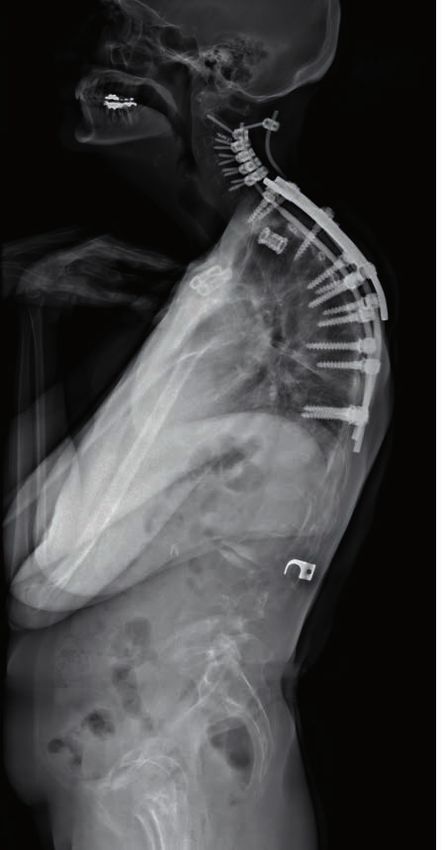
Hip Arthroplasty: New Risk Assessment Tool and
High-Risk Pathway Reduce Dislocation Rate Sixfold

    Patients categorized as high risk are automatically
assigned to the special treatment algorithm, a pathway that
begins with a nonstandard imaging plan that more                                                                           Joseph A. Bosco III, MD, Named Second Vice President
accurately assesses spinopelvic function. While traditional                                                                of the American Academy of Orthopaedic Surgeons
preoperative imaging for hip patients comprises a single
anteroposterior (AP) radiograph in the supine position,
                                                                                                                           Joseph A. Bosco III, MD, was named second            include Dr. Bosco’s appointment as president
high-risk patients receive sitting and standing X-rays, in both
                                                                                                                           vice president of the American Academy               of the Academy in 2020–21. In his newly
the AP and lateral views, under the new algorithm. “These
                                                                                                                           of Orthopaedic Surgeons (AAOS) board of              named role, Dr. Bosco will continue to prioritize
additional views provide critical information on functional       The high-risk algorithm also includes                    directors at the organization’s 2018 Annual          and respond to the needs of the 38,000 AAOS
position, such as how much the pelvis tilts posterior when                                                                 Meeting. Dr. Bosco is a longtime active member       members, in order to advance the Academy’s
the patient sits,” Dr. Buckland says.
                                                                  advanced intraoperative technologies.
                                                                                                                           of the AAOS, first elected to its board of           objectives all with the end goal of delivering the
    Radiographic assessment then informs hardware choice.         Tools like intraoperative navigation,                    directors in 2013. His appointment is the first      highest quality care.
“If the sitting and standing radiographs show very little         laser guidance, and robotics help us place               in a four-year term of volunteer service that will
leeway in both directions, we use a dual mobility implant,”
Dr. Buckland continues. “The dual mobility bearing allows
                                                                  the implant precisely where we want it.”
increased range of motion and gives the hip replacement
                                                                  —Aaron J. Buckland, MD
more inherent stability.”
    The high-risk algorithm also includes advanced
intraoperative technologies. “The imaging studies help us
plan the optimal position of the cup within the acetabulum,
but then we still need to make sure we can achieve that
placement during surgery,” he says. “Tools like intraoperative
navigation, laser guidance, and robotics help us place the
implant precisely where we want it.”

        Best Poster at 2018 AAOS Annual Meeting

        “A New Risk-Assessment Score and Treatment Algorithm
        for Patients at High Risk of Dislocation Following Total Hip                                                       Joseph A. Bosco III, MD

        Arthroplasty” was selected by the AAOS Central Program
        Committee as the best poster in the adult reconstruction
        hip classification at the 2018 AAOS Annual Meeting.

16                                                                                            NYU Langone Health   Orthopedic Surgery 2018                                                                                           17
Referenced Publications NYU Langone Health
Campbell KA, Pham H, Pickell M, Konda SR, Lott A, Egol KA. The coming Konda SR, Saleh H, Lott A, Egol KA. Vigdorchik JM, Elbuluk AM, Carroll KM,
Yagnatovsky M, Kramarchuk M, Alaia MJ, hip and femur fracture bundle: a new Predicting discharge location among Mayman DJ, Iorio R, Buckland A,
Jazrawi L. The utility of oral nonsteroidal inpatient risk stratification tool for care low-energy hip fracture patients using the Jerabek SA. A new risk-assessment score
anti-inflammatory drugs compared to providers. Geriatric Orthopaedic Surgery Score for Trauma Triage in the Geriatric and treatment algorithm for patients at
standard opioids following arthroscopic & Rehabilitation. September 25, 2018; and Middle-Aged (STTGMA). Advances in high risk of dislocation following total
meniscectomy: a prospective observational 9: 2151459318795311. Orthopedics. November 18, 2018; 9793435. hip arthroplasty. American Academy of
study. Arthroscopy. December 2018; Orthopedic Surgeons Annual Meeting.
34(12): e33. Konda SR, Lott A, Saleh H, Gales J, Egol KA. Lott A, Haglin J, Saleh H, Hall J, Egol KA,
Use of the STTGMA Tool to risk stratify Konda SR. Using a validated middle-age March 2018.
Graham T. Innovation the Cleveland Clinic 1-year functional outcomes and mortality and geriatric risk tool to identify early
Way: Powering Transformation by Putting in geriatric trauma patients. Journal of (Top 10 Leader Largest IN THE COUNTRY FOR ORTHOPEDICS IN QUALITY AND RESIDENCY in U.S. News & World Report’s “Best Hospitals” PATIENT SAFETY in the country with 72 positions for six consecutive years NYU LANGONE HEALTH 550 First Avenue, New York, NY 10016 NYULANGONE.ORG
You can also read


