OWN YOUR FUTURE - uct.ac.za
←
→
Page content transcription
If your browser does not render page correctly, please read the page content below

OWN
YOUR
F UTUR E
01 Introduction                05 Toolkit
02 About Us                    06 Grad Gallery
03 Career Focus                07 Employer Directory
04 Career Development

      On the web               On social platforms

      www.careers.uct.ac.za    FB: UCTCareers
      www.mycareer.uct.ac.za   Twitter: @UCTCareers
      www.vula.uct.ac.za       Youtube: UCTCareersService

      In your pocket
                                                            1
      UCT Mobile App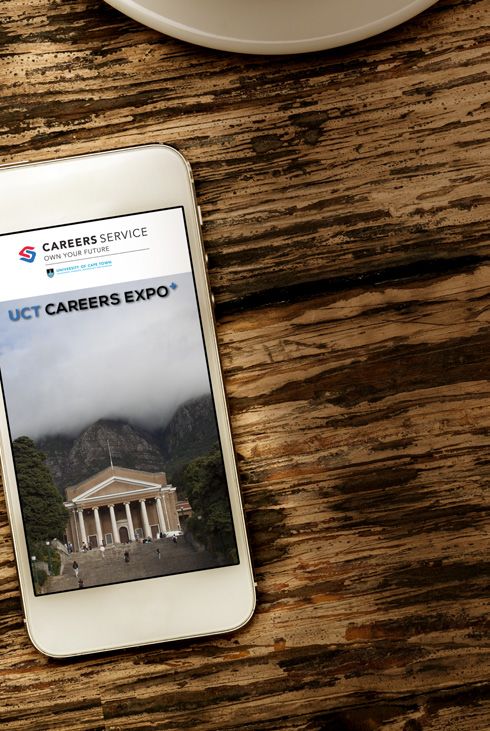
Welcome to your
                                                                                         Careers Service Guide 2017

          CO NS ULT. D E S I G N . D EL I VER .
                                                                                    The Careers Service offers information,       In the Guide you will find tips and tricks to
                                                                                    advice and opportunities to registered        assist with your career-development journey
                Spec ia list s in Ba n king & Insurance                             UCT students in order to support their        during your time at UCT. Get assistance
                                                                                    career planning, job-search preparation,      on submitting applications for your future
                                                                                    and ongoing personal and professional         career, read case studies from careers
    Take your unrivalled passion for financial services to the next level in a      development. Our programmes help              advisors, employers and graduates, and
                                                                                    students to realise their potential and to    engage with ‘how-to’ sections by alumni
    market-leading organisation that is the cutting edge of financial consulting.   contribute meaningfully to the communities    in our Grad Gallery who share advice and
    Be a part of our innovative firm that helps transform leading banks and         in which they work and live.                  experiences and have been through the
                                                                                                                                  same process you might be facing.
     financial institutions by providing a superior bespoke consultancy service.    Page through, and engage with, this annual
                                                                                    publication designed to assist you with       Send us your valuable feedback on our
    At Monocle, we combine your relevant Honours degree and career-driven           your career, postgraduate and future plans.   services anytime through the 'Submit your
                                                                                    Find out how to engage with hundreds of       feedback' button on the website, or email us
          ambition to help you realise your inner consultant potential.             employers offering bursaries, internships     directly at careers.service@uct.ac.za. Also
                                                                                    and graduate opportunities across multiple    stand a chance to win a tablet when you
                                                                                    sectors and areas of work who are looking     complete our Guide Survey on Page 13.
                                                                                    to recruit UCT students and graduates
    To become a part of Monocle, follow the link provided on our career webpage:    locally, continentally and globally. Get      Learn how to begin your career-planning
                                                                                    information, advice, tips, and a fresh/       process today. Let’s go!
                                                                                    real perspective from people who know
                           www.monocle.co.za/careers                                and understand the career-development         Wishing you every success as you embark
                                                                                    landscape best.                               on your future.
        Registrations for our Graduate intake commencing January 2018
                                                                                                                                  David Casey
                            & closes 31st August 2017.                                                                            Director: UCT Careers Service

2                                                                                                                                                                                 3
Employer Partners Contents
About us 6
UCT Careers Service would like to acknowledge the continued annual Meet the team 8
commitment from our Employer Partners who have supported various At your service: FAQs 10
career development initiatives for UCT students. Ways to connect 12
Survey 13
Career Focus 14
Common career queries 16
Ten career myths 20
Career scene investigation 22
Getting real value from a humanities degree 26
Career Development 32
Taking charge of your career: from first to final year 34
First to final year: planning your career 40
A personal journey 42
Design Thinking: a key new skill in the workplace 44
Are you made for the Digital Revolution? 46
Toolkit 48
10 steps to awesome applications 50
How to work an expo 52
Using social media to get a job 56
LinkedIn: connect. find. be found 58
Selection interviews 60
Workplace assessments: are you prepared? 64
Before you sign on the dotted line 66
What should you expect to earn? 68
Grad Gallery 70
UCT Grad Gallery 72
Jess Schulshenk 73
Namatirai Zinyohwera 76
Arielle De La Roche 78
Tsepo Ngwenyama 80
Where do UCT graduates go? 84
Employer Directory 86
A-Z directory of employers
Acknowledgements
Significant thanks to the many UCT Careers Service staff No part of this publication may be reproduced, stored or
- Jointly Awarded Best Work
Position #1
South Africa Student Survey 2015 and colleagues at UCT who made this publication a reality. transmitted without the written consent of the UCT Careers
2014, 2016 Best Career Service Rating Readiness Initiative 2015
Photography: Team photography: Fuad Abrahams | UCT Service. Disclaimer: While every effort has been made to
MACE Location and student photography: Michael Hammond | ensure that information is correct, reliable and verified at the
- Awarded Best Careers Service
2010, 2011, 2012, 2013, 2014, 2015, 2016
Position #2
Global Student Survey 2016 'A personal journey story' photography: from author time of going to print, the UCT Careers Service cannot be held
AWARDS Career Services Satisfaction - Awarded Best Careers Fair Design development: DEEP Agency, Cape Town | responsible for inaccuracies or the outcome of any action or
2010, 2011, 2012, 2013, 2015, 2016 www.deepagency.co.za decision based on the information contained in this publication.
Production and editing: COMPRESS.dsl | www.compressdsl.com Copyright © Careers Service, University of Cape Town 2017.
Printing: RSA Litho
4 5
Careers Service 2017
      Chapter 1

    About us

                             Working in partnership with academic and other colleagues, the Careers
                             Service aims to enhance the quality of UCT's graduates and help ensure
                             that you are equipped with the skills to compete in a global workplace.
                             We work to enable you to make informed choices about your future,
                             fulfil your career ambitions and make a meaningful contribution to the
                             communities in which you will live and work.

                             Meet the team
                             At your service: FAQs
                             Ways to connect
                             Survey

6                                                                                                      7
OW N
             1st row left to right:

             Hishamodien Hoosain
             Graduate Recruitment Coordinator

                                                YO U R
             Nawaal Boolay
             Head: Employer Relations

             David Casey
             Director

             Ricky Mathebula
             Peer Career Support

             Nadia Waggie
                                                FUTURE
             Manager: Operations
             & Administration

             2nd row left to right:
                                                Whether you are in your first year, post-graduate
             Melikhaya Hempe
                                                or up to three years after graduation, from any
             Design Assistant
                                                faculty and degree, come and connect with our free
             Nomakwezi Magazi                   services to shape your future professional journey.
             Peer Career Support

             Nosiphiwo Lawrence
             Peer Career Support
                                                Services
             Dale Choudree
             Careers Advisor                    1.    Discuss career options with career advisors
                                                      Read inspiring graduate stories
             Athi Matinise
                                                2.    Email, call or visit peer career support
             Careers Advisor
                                                      staff and advisors
             3rd row left to right:             3.    Check out self-reflexive career path online
                                                      resources
             Fuad Abrahams                      4.    Look for up-to-date and relevant info
             Departmental Assistant
                                                      on our website

    M E ET   Nobi Rululu                        5.    Personalise your www.mycareer.uct.ac.za
             Careers Advisor                          student portal
                                                6.    Watch talks and presentations
             Monica Gqoji                       7.    Find job opportunities: part-time, ‘earn-as-you-

    T HE
             Careers Assistant
                                                      learn’ and full-time employment
             4th row left to right:             8.    Access funding and bursaries
                                                9.    Get CV support, job search resources and
             Stephanie Sayers                         application reviews
             Graduate Recruitment Intern

    T E AM
                                                10.   Network with employers
                                                11.   Attend Expos and ‘World of Work’ festivals
             Winfull Msipa
             Peer Career Support                12.   Go to company showcases and presentations
                                                13.   Access internships, graduate employment
             Germaine Grammer                         opportunities and immigration advice for work
             Head: Digital Development                throughout Africa and globally
             & Engagement
                                                14.   Access career talks spotlight on multiple
             5th row left to right:                   sectors, per faculty!
                                                15.   Develop your entrepreneurial self and mindset
             Ingrid van der Merwe                     with tools and business games
             Head: Careers Advisory             16.   Check out curriculum enhancement
                                                      programmes (UCT+)
             Nabeelah Croeser
             Graduate Recruitment Coordinator   17.   Access Beyond School careers programme
                                                18.   Find pop-up stalls around campus, including
             Natalie Kammies                          Main Library
             Communications Manager             19.   Make use of our facilities including virtual
                                                      interview rooms, computers, and resource
             Candice Egan
             Funder Liaison Coordinator               centre

             Rita-Sue McCormick
             Careers Advisor

8                                                                                                        9
At your service: FAQs

     1. How can the Careers Service help me?           Log in to MyCareer at                              Continue exploring your career options, use our
                                                                                                          CV and covering-letter resources to assist you in
     We offer a wide range of services and             www.careers.uct.ac.za to have                      your work and further-study applications, and take
     resources designed to help students at            24/7 access to our offerings!                      advantage of the part-time work opportunities listed
     any stage of study with all aspects of                                                               on MyCareer so as to gain work experience and
     career and job-search planning and                                                                   additional skills.
     preparation. We can help you explore your         2. How do I join the Careers Service’s
     career options, connect with personal and                                                            If you’re feeling less confident, pop in for a
                                                       mailing list?
     professional-development opportunities                                                               consultation with a careers advisor to talk through
     (e.g. part-time work experience, internships                                                         your concerns. We’ll support you in regaining
                                                       MyCareer is our online Careers Service
     and employer showcases), compile job-                                                                direction and confidence in your career journey.
                                                       platform designed to make our services and
     search materials (CVs, covering letters, etc.),   facilities easily accessible to all students for
     and prepare for the job search.                   up to three years after graduation. Current
                                                       students are automatically registered, so          4. How do I book to see a careers advisor?
     Visit our office for a career consultation,       go to www.careers.uct.ac.za and log in
     attend career talks and participate in our        to MyCareer to customise your account              Go to www.careers.uct.ac.za and log in to MyCareer
     employer networking events.                       and receive notifications about events,            to set up a consultation or visit our office in the
                                                       opportunities and resources of particular          Hoerikwaggo Building and book an appointment at
                                                       interest to you. You can also book a career        reception. These initial 15-minute appointments are
                                                       consultation, stay informed about employer         available throughout the week. Online appointment
                                                       activities on campus, and keep up to date          bookings open at 1pm. the day before. Longer
                                                       with Careers Service news and events.              appointments are available but must be arranged
                                                       MyCareer also serves alumni and employers.         during the 15-minute consultation with the careers
                                                                                                          advisor.
                                                       3. If I’m not a final-year student, what
                                                       can the Careers Service offer me?                                                                         Appointments can
                                                       Whether you are happy with your studies                                                                   be booked online
                                                       and career choices or anxious and uncertain
                                                       about them, we have services and resources                                                                or at our reception.
                                                       that will benefit all students.

                                                       If you’re already confident about your career
                                                       plans, build on this by getting a head start
                                                       on career-development strategies in order
                                                       to improve your career and employment
                                                       prospects.

10                                                                                                                                                                                      11
Have your
Sur
3 1 A v ey c l
u os
w i n g u st 2 0 e s
ners 17 &
Ways to connect
con
tact will be
S ep ed ea
say
tem r
ber. ly
We value your input. Please take a few moments to tell us what you think of this guide.
One er
yp
WIN! Fill in the form below and drop it off in the red post
box at our office (Hoerikwaggo Building, Level 1, North
Lane, Upper Campus) and you could win a tablet!
Newsletter
This newsletter brings insights and
Log in to MyCareer today to update your
contact details under the profile tab.
entr ent
st u d
a tablet! T&Cs apply.
opportunities customised for your faculty
and stage of study. New students: your details are automatically
loaded after registration, but check that Q1 Do you regularly read the Q5 What topics would you like Q8 If you would like to be
UCT App these are correct. You can divert your myuct Careers Service Guide? to see featured in future entered into the draw and
Have on-the-go access to our complete email to another address. See the link on Yes, annually editions? stand a chance to win one of
range of opportunities via the UCT Mobile MyCareer to do this. Sometimes ........................................................ our prizes we need to be able
app in one easy-to-use interface. Download to contact you. Can we?
No, this is my first copy ........................................................
and install the app through the iTunes app Social Media
........................................................ Yes, I want to enter the draw.
store or the Google Play store and search It has never been easier to stay in-the-know Q2 What is your favourite
for UCT Mobile. by engaging with us on social media. ........................................................ Please contact me if I win a prize:
section(s)?
........................................................ Name
If you use a different mobile operating On the web Everything ........................................................ ............................................................
system, or don't want to download the app, www.careers.uct.ac.za Career Focus ........................................................ ............................................................
you can also access it from a web browser www.mycareer.uct.ac.za Career Development Student No
on your mobile device. Visit uct.ombiel. www.vula.uct.ac.za Q6 What do you like best about
Career Toolkit ................................................................
co.uk/ the guide?
In your pocket Graduate Gallery ................................................................
Walk-in UCT Mobile App Employer Directory ........................................................ Faculty
If you prefer a personal approach, don’t ........................................................ ................................................................
hesitate to pop into our office Monday to On social platforms Q3 How would you rate the overall ........................................................ ................................................................
Friday from 8.30am to 4.30pm, all year FB: UCTCareers value of the guide for you?
........................................................ Year of Study
round (excluding public holidays). Our Twitter: @UCTCareers
friendly staff are waiting to welcome you. Super helpful ........................................................ ................................................................
Youtube: UCTCareersService
We will gladly guide you through our online I’m undecided ........................................................ ................................................................
and offline resources and the host of Visit Us Not helpful at all ........................................................ Cell
services on offer to you. Level 1, Hoerikwaggo Building, North Lane, ................................................................
Upper Campus Q4 As a result of the guide, how Q7 Are you aware that many ................................................................
Website likely are you to engage with more vacancies and
Connect with us 24/7 through our up-to- the Careers Service? organisations are advertised
date website www.careers.uct.ac.za for all on MyCareer after this book No thanks, I don’t want
your career needs. Registered students and Very likely is printed? to enter the draw.
alumni also have an all-access, behind-the- Somewhat likely No, but I know now
scenes pass by logging into MyCareer. Neutral Yes, I know this
Somewhat unlikely
This online portal allows you to book an
appointment with a careers advisor; book Highly unlikely
into careers education and employer events;
search for full-time, vacation and/or part- Thank you for completing the survey. Now all you have to do is tear it out (along the
time jobs and internships, bursaries and perforated edge) and drop it off in the red post box at our office at the UCT Careers Service,
scholarships.
Hoerikwaggo Building, Level 1, North Lane, Upper Campus.
12 13
Careers Service 2017
        Chapter 2

     Career Focus

                               Some decisions in life are straightforward: what to cook for supper, or
                               which movie to stream. Others are more puzzling, and choosing a future
                               career is one of these. Many people make choices that are influenced by
                               myths or don’t know how to research their options properly. This section
                               will keep you on track as you navigate your choices.

                               Common career queries
                               Ten career myths
                               CSI: Career scene investigation
                               Getting real value from
                               a humanities degree

14                                                                                                        15
Common career queries

     How can I use my subject?                       I don’t know what to do when
                                                     I graduate
     Are you wanting to use the knowledge
     content of your subject? (So, if you are        This can certainly make you feel insecure.
     studying History, doing something history-      Remember that there are various outcomes
     related.) Or the methods of work and skills     to degrees: some are clearly vocationally
     gained from your subject? (That is, using the   based, like medicine or chartered
     research and writing skills you have gained     accountancy, whereas others are broad-
     through studying History.)                      based, providing a general education with
                                                     no single, obvious career outcome. The
     Here are some suggestions:                      latter is not a weakness, by the way – just
                                                     a difference. Interestingly, many graduates
     •   Use the Careers Service section             can (and do) work in an area that bears
         ‘Options With My Degree’ at                 no relation to the subject matter of their
         www.careers.uct.ac.za/options-my-           degree. But, be careful: some professions
         degree to see particular ideas and links    have specific requirements.
         that are subject-related.
                                                     The point is, many don’t have such
     •   Find out what people who have studied       criteria, and what employers require is for
         what you are studying do for a living.      employees to display a broad range of skills
         Go to ‘Where Do UCT Graduates               and attributes: interpersonal skills, self-
         Go’ at www.careers.uct.ac.za/cs/            awareness, problem-solving skills, flexibility
         graduate-gallery and watch out for the      and teamwork to name just a few. None
         networking and careers talks organised      of these is unique to a particular subject
         by the Careers Service that feature         or degree, but can be acquired through a         What if I don’t like the career options             There is no rule that says
         graduates talking about what they do.       range of study areas as well as part-time or     directly related to my degree?
                                                     voluntary work and extramural involvement.                                                           you have to follow
     •   Many companies visit career expos on                                                         There is no rule that says you have to follow
         campus, and you can visit their exhibits    Other parts of the Careers Service website       the obvious outcomes of your degree.                the obvious outcomes
         to find out what work they offer and                                                         Remember that employers look for skills,
         what their organisation offers.
                                                     (www.careers.uct.ac.za) that will help you:
                                                                                                      and you may already have skills that can            of your degree.
                                                     •   The section on employability skills;         open up alternative options.
     •   Learn more about the various skills,        •   The section, ‘Options With My Degree’;
         that most organisations are wanting.        •   MyCareer – look at what is happening         Think about your options by:
                                                         here in order to keep in touch with the
                                                         various employer and career-education        •   Looking at what you are good at and         •   Interviewing people in jobs that
                                                         networking events on campus; and                 what you enjoy.                                 fascinate you (This is called
                                                     •   Careers advisors – make an                                                                       ‘informational interviewing’. There is
                                                         appointment and discuss your situation       •   Keeping in touch with employers that            a tutorial on how to do that at:
                                                         by with a career advisor.                        visit the campus and with career-               www.quintcareers.com/informational_
                                                                                                          education events (Make sure your                interviewing.html); and
                                                                                                          MyCareer profile is up to date);
                                                                                                                                                      •   Looking at 'Skills Employers Look For'
                                                                                                                                                          on our website.

16                                                                                                                                                                                                 17
CAREERS CAFÉ:
     What if I am not enjoying my subjects          Some practical steps you can take:             INDUSTRY SPOTLIGHT ON...
     or my degree?
                                                    •   See a careers advisor to work through
     Start by asking yourself why you chose             your options and get ideas.
                                                                                                   These panel format talks take
     this course in the first place. Did you have
     limited access to information about your       •   Consult a curriculum advisor in your       place on campus between 5pm
     options? Did you not get into your first           faculty to find out the possibilities of   and 7pm. Panels for Science,
     choice and are now landed with a second            changing streams or majors.
     choice you put down just for the sake of
                                                                                                   Humanities and Law Degrees
     it? Or were you heavily influenced by your     •   If you are looking to change to a degree   are focal this year. Listening to
                                                        in another faculty, consult a curriculum
     peers, a sibling, parent or teacher?
                                                        advisor in that faculty to see if you
                                                                                                   the career journeys of others
     Some students even take on a course                would get credits for courses you have     can help you figure out what
     because, with it, they could get a bursary,        already passed.                            works – or not – when entering
     but, without this funding, they would not                                                     the industry.
     be able to study. Also look carefully at       •   Ask other students in courses you want
     whether it is your whole degree that you are       to move to if you can have a look at
     unhappy with or just one or two courses or         their textbooks or course outlines.        #Network
     even a part of a course. Sometimes, that can                                                  #LearnFromPros
     put things into perspective and help you to    •   If you are a bursary holder, rather be
                                                        honest about being unhappy than
                                                                                                   #UCTAlumni
     identify the reason for your unhappiness.
     If you look back and identify that you took        keeping quiet, failing, and losing your
     your degree for the wrong reasons, imagine         bursary anyway. Discuss the options
     that you were back at the beginning. Using         available to you.
     the knowledge and experience gained, what
                                                    •   Realise that if you are down,
     would you study if you could choose all over
     again? Look thoroughly at your options and         unmotivated and unhappy, it is very        UCT CAREERS CAFÉ
     make sure you research the course content.         difficult to perform – you may need
                                                        support from the UCT Student Wellness
                                                        Service. Visit www.uct.ac.za/students/     Science Career Café
                                                        health/wellness/clinical/ for more
                                                        information.
                                                                                                   25 May 2017
                                                                                                                                                        Sign up for alerts on
                                                                                                   5pm                                                  www.mycareer.uct.ac.za
                                                    •   Use the section on our website
                                                        ‘Options With My Degree’ and look
                                                        at the resource that is linked to your     Humanities Career Café
                                                        subjects.                                  30 May 2017
                                                    •   Find out what people do who have           5pm
                                                        studied what you are studying.

                                                                                                   Law Careers Café
                                                                                                   TBC

                                                                                                                                       On the web               On social platforms

                                                                                                                                       www.careers.uct.ac.za    FB: UCTCareers
                                                                                                                                       www.mycareer.uct.ac.za   Twitter: @UCTCareers
                                                                                                                                       www.vula.uct.ac.za       Youtube: UCTCareersService

                                                                                                                                       In your pocket

                                                                                                                                       UCT Mobile App

18                                                                                                                                                                                           19
Ten career myths
Well-meaning friends and relatives have no #2 Aptitude or psychometric tests #5 I can’t make a living from #7 Making a lot of money will make
doubt offered you career advice at some will tell me exactly what career my hobby. me happy.
point. Unfortunately, much of this advice is right for me.
is based on common-sense assumptions There are many examples of people who do, While salary is important, it isn’t the only
or stereotypes that frequently are just not Assessments (aptitude, interest and and one should not exclude one’s hobbies factor you should look at when choosing
true. These myths or ill-founded, uncritically personality) can be used as a starting point in the generation of possibilities for your a career. Countless surveys have shown that
held beliefs can be very misleading and for developing more self-awareness and for career. However, one’s passions don’t always money alone doesn’t necessarily lead to job
undermining to your career planning. Here generating career options, but they do not translate practically into a career, but they satisfaction. For many people, enjoying what
are ten of the most popular career myths take the place of you actively engaging with can be used as a springboard for thinking they do at work is much more important.
that you shouldn’t fall for: these in a holistic and in-depth way. While creatively about your career options. It’s When deciding on a job or occupation, it is
tests might generate suggestions, these still also important to find work that you can advisable to look at salary along with other
#1 I must know what I want to become need to be examined against circumstance enjoy and find meaningful most of the time. criteria in order to make your decision.
from day one. and context. They cannot provide a perfect
match for you and you still need to #8 Once I choose a career, I’ll be stuck
Actually, choosing a career is not a once-off do further reality-checking and research in it forever.
activity. Your career evolves over time as in order to make informed decisions.
you do, and it is part of an ongoing, lifelong Not true. Many people change careers
process of learning, developing, exploring #3 A careers advisor can tell several times over the course of their
and consolidating. The more you invest me what career to choose. lifetimes. If you change careers, your skills
in learning about yourself (your interests, will not go to waste – they are yours to
values, motivations, strengths, etc.) and No one can tell you what career is best for keep and you transfer them from one
your options, the better your career you. Careers advisors, and others whose job to another. Most skills are not unique
decisions and the more rewarding and opinions you trust, can help you identify to one career area. Proactively seeking
successful your career journey. career possibilities, understand how to make other options if you feel stuck involves
informed decisions, and point you to useful understanding how to transfer your skills,
Some things are beyond your control and information to help you in this regard – but and then actively looking to make a change.
these will also influence the direction of you will need to explore these possibilities
your career and life path, but the more further. You are also the person best placed #9 Postgraduate studies will always
proactive you are in your day-to-day career- to make choices and decisions that will suit make you more marketable.
development activities, the better your you.
chances of discovering or creating a career
Not necessarily. What makes you marketable
niche for yourself that suits you.
#4 A tertiary qualification will is a whole lot of factors, including work
get you a job. experience, your field, and other activities
you were involved in that developed
Very few qualifications alone guarantee skills. It also depends on the area of your
a job. A degree is often taken as a starting postgraduate studies.
point by many employers. Over and #6 Humanities, Social Science and
above that, they look for evidence of a Natural Science majors have fewer #10 There is one perfect job for me.
diverse range of skills, competencies and job options after varsity.
experience – which are gained in all aspects Many jobs have the potential to satisfy
of your life, not just your academic career. Studying in the Arts and Sciences develops your career goals. Furthermore, your job
Even academic success needn’t guarantee marketable skills like communication, writing, preferences are likely to change as you gain
anything! There are many success stories research, and critical thinking. These skills experience, skills and more self-knowledge.
that indicate otherwise (Bill Gates, are transferable, that is, they are learnt in one So, for now, define what you are looking for
Steve Jobs, to name a few)! area and utilised in a wide range of other in a career, and you will find that you have
contexts. Arts and Sciences graduates are several options. Having these options is
employed in a wide range of careers where a positive rather than a negative, and your
the job title may not be obviously related to goal at this point should only be to take the
the title of their academic subject matter. right ‘next step’.
20 21Professional bodies and
institutions can also be
a very useful source
CSI: Career scene of information.
investigation Go undercover
For some job sectors, finding someone
to talk to is less straightforward. You may
have to ‘turn detective’ and do some
networking. Networking is about asking
Don’t become a victim of serial indecision Look for a motive people for information and advice with a
where your career is concerned. Grab your Get online view to building your knowledge of a field
CSI Career Development Kit and investigate As well as skills, our interests can be a and getting contacts. When networking,
your career options. legitimate basis for finding a career that The websites targetjobs.co.uk or www. potential contacts can come from almost
fits – don’t disregard them! Spend some prospects.ac.uk are good places to start anywhere, so think carefully about who you
Some decisions in life are straightforward: time thinking about those things that are researching what specific jobs involve, know, and, more importantly, whom they
what to cook for supper or which movie important to you, whether recreational from typical activities and working might know. For example, a friend’s brother
to stream. Others are more puzzling, and interests or your personal beliefs. They may conditions through to entry-level may work in the sector you are targeting
choosing a future career is one of these. lead you towards certain types of work or a requirements and typical employers. and could be persuaded to have an informal
It requires rather more brainpower than particular sector. Professional bodies and institutions can discussion with you (called an ‘informational
opening the fridge door and locating those also be a very useful source of information. interview’). Networking can be a good way
items that don’t require DNA analysis to Having active interests can also be an They often have a section on careers of ‘getting a foot in the door’ and should
tell you what they are! So, when it comes to important factor when employers recruit and are important places to start if your not be overlooked, especially for the types
piecing together your skills and experiences, graduates and can provide evidence of chosen career requires specialist training, of work where work-experience schemes are
and finding a link between these and what motive. Applicants often have the same for example: the South African Institute of competitive or rare, for example advertising
motivates you – where do you start? Let’s academic results, so employers use this Chartered Accountants at www.saica.org for and environmental work.
look! ‘evidence’ to differentiate between them. accounting, the Health Professions Council
of SA at www.hpcsa.co.za for health-related Carry out a field investigation
Build a profile disciplines, the Engineering Council of SA at
www.ecsa.co.za for engineering fields, etc. When it comes to work experience, you are
When it comes to choosing your ideal in a win–win situation. Employers regard
career, the clues are all there – you just need Visit the section on our website 'Options work experience highly and as evidence
to know where to look. We are all good at with my degree' for more ideas. of motivation and ability. For a potential
something, and having a clear understanding candidate, what better way of finding out
of your skills and personality can lead to INSIDER TIP Interview the witnesses what a career might be like than to spend
areas where your strengths will be an asset. time in that environment? Many graduate
Knowing your weaknesses and working on Talking to people about their careers and recruiters offer vacation work and industrial
them is equally important. Have a look at the Grad placements – the Careers Service is a good
the organisations they work for can be a
Gallery section of our good way of sussing out whether certain place to find out about these.
• Speak to friends about your strengths. website for career ideas career areas would be right for you. What
and a better understanding do they like about their job? What sort of If you can’t find a ready-made placement in
• Prospects Planner asks you questions experience do they look for in potential your chosen career area, don’t despair. Many
about your skills and interests then of what jobs involve. students get work experience by contacting
entrants?
suggests occupations that match this employers directly, sending a targeted CV or
‘profile’. Find this on www.prospects. www.gradgallery.uct.ac.za even ringing them up! Work experience does
Each year, employers from a range of
ac.uk. industries visit the University, giving you not have to be paid and full-time to be of
the opportunity to find out more about value – work shadowing and voluntary work
• Explore a variety of jobs and what they what they do. They might give a are also legitimate in the eyes of potential
involve at www.targetjobs.co.uk. presentation or exhibit at one of the employers.
Career Expos. This is especially true of the
well-known graduate recruiters in sectors
such as business and finance. Use these
opportunities to speak to them.
22 23CISCO VIRTUAL INTERVIEW ROOM
Talk to an expert
Students of the University of Cape Town
have access to a team of careers advisors.
These advisors can help you sort through
your options and make realistic decisions
about your future. Contact the Careers FURTHER
Service for more information about how INFORMATION
we can help, or visit our website:
www.careers.uct.ac.za.
Look for the following
Adapted from The Manchester resources on our website
Careers Guide published by GTI Media.
Used with permission and grateful thanks! Watch 'Can I have a few Minutes This room stemmed from the
of your Time' need of students who wanted
a virtual room, and employers
Login to MyCareer and look
under resources
who use virtual interview
platforms.
Look at
www.careers.uct.ac.za/options- The room is available to all
my-degree
registered UCT students, who
View Career Café talk recordings We have a dedicated virtual are encouraged come to the
on our YouTube channel interviewing space that is ideal UCT Careers Service office on
for Webex, Skype and other Upper Campus to enquire
Other useful sites:
www.careerplayer.com
virtual interview platforms. The about bookings or email
www.icould.com room is equipped with audio- careers.service@uct.ac.za
visual equipment and a secure
internet connection. There are also dedicated
computers for
The aim is to help UCT students career-related research.
connect with employers in a
virtual space. Even though Get friendly and fast frontline
campus is Wi-fi enabled, no support from our Peer Career
room exists to book a space for Support staff.
a virtual job interview.
On the web On social platforms
www.careers.uct.ac.za FB: UCTCareers
www.mycareer.uct.ac.za Twitter: @UCTCareers
www.vula.uct.ac.za Youtube: UCTCareersService
In your pocket
UCT Mobile App
24 25A career from a humanities degree? If humanities degrees don’t lead directly
Getting real value from At the heart of the debate about whether
into a profession, what they, like commerce
and science degrees, do is help form a
a humanities degree
a humanities education can provide a valuable foundation which can lead onto a
useful career base is usually the wish or personally satisfying career when managed
expectation that these degrees should well. They give a broad education about
create a vocation. In other words, the major life and living, which also helps to soundly
subject(s) should both provide career develop a number of insights and high-level
direction and qualify the person to begin abilities, and provides a grounding for work
working as a professional in that field. in many fields (in a way that more focused
Does a humanities degree ‘lead to’ a degrees don’t).
profession? Frankly, the answer is ‘No’, in
the sense that an undergraduate humanities
degree rarely leads directly to the kind
of professional job that we hear about in
the media. It is tempting to set one’s eyes
on immediately doing the kind of work
that experienced professionals do. But it
is usually only after postgraduate study,
and qualifying exams and an internship or
preliminary experience, that one can work as
a professional or an academic in one’s major
field of study. (Becoming a psychologist is a
well-known example.)
Very few graduates of any
discipline follow careers directly
related to their majors.
Maybe you’re doing your degree because ‘So how many jobs are there for Political
you love the subject matter. Maybe you’re Studies majors?’ ‘But what else can you do
doing it because you really haven’t been with languages aside from journalism or In practice, while Engineering, Architecture
sure what to do afterwards, or because it translating?’ You may feel confident about and Medicine aim to provide professional
has been the most practical study option work after graduating, but then find with a training and entry qualifications, university History, sociology, political or religious
for you. Regardless of the shape of your shock that your Organisational Psychology education for most other graduates has a studies, psychology and languages: in
academic career to date, though, the issue major doesn’t automatically lead to offers different role in an initial career choice, the their own ways, these disciplines each
of what happens after graduating always from employers. Or you may struggle with transition to work, and the evolution of a help develop our understanding of, and
rears its head and needs to be addressed not knowing where to start when it comes career. Very few graduates of any discipline sensitivity to, how people think and live:
constructively and actively so that we can to finding your direction. follow careers directly related to their they can increase our tolerance of different
honour our lifelong talents and needs and majors. And entry-level work from a first perspectives and our compassion, and
find our contributing role in society. At the end of the day, there are two broad, degree is usually much more general, and they develop our ability to communicate
interrelated issues around the humanities at a lower level, than we are popularly led with, and relate to, others. They help in
Getting launched in one’s career these degree and its role in launching a successful to think. (When have we ever seen a developing imagination and tolerance of
days is rarely a straightforward matter. The career: TV sitcom about a 22-year-old’s typical ambiguity, in synthesising information, and
world is a fast-changing, unpredictable and personal struggles and misunderstandings in developing critical thinking, complex
increasingly technological place in which • Will my degree lead on to a viable during their first, maybe unsatisfactory, problem-solving, and our ability to ask
work patterns are changing – to patchworks career? job?) It’s what we make of our questions and to learn.
of jobs, often interspersed with periods • Will I manage to find work after opportunities, and how we build on them,
of unemployment, and in which new jobs graduating? that is significant in the long term. These perspectives and abilities are
are emerging. High-profile, ‘popular’ jobs particularly useful in fields such as
seem to need commercial, technological Can a humanities degree really help? Yes marketing and sales, advertising, the
or specialist qualifications or experience. it can! It has real value when its role is media, management, client services, public
On top of this, the value of a humanities understood correctly, and when one makes administration, and much work undertaken
degree is often questioned. Do any of the full use of the educational and personal- by non-governmental organisations (NGOs)
following questions sound familiar? ‘Does growth opportunities it provides so as to (to name a few areas). But there are
it actually qualify you to do anything?’ create a foundation for one’s future. countless other work options out there,
26 27have of the years ahead, exploring and will be competent in a variety of ways, will Where to find work
confronting career choices, and building fit in personally, and will actively further the
onto your core education in ways that business or organisation. The issue is how What can be overlooked in finding a job
will lay a strong foundation for your very to get your degree to assist your overall is that it is not only necessary to have
personal future. personal employability, and then how to attributes that make one practically
communicate the whole package effectively employable, but also to have realistic,
You have chosen to do a humanities degree to potential employers. appropriate expectations about where to
for a reason: get in touch with that reason, find – or create – employment, and to look
respect it and learn from it, for it can be a This means that it is very important not to for it effectively. These issues concern not
rich source of personal growth and later life expect your humanities degree alone to your humanities degree itself, but more
rewards. launch your working career. Your choice of broadly how you launch your working career
subjects and your marks may help show an given your educational background. One of
A question of marketability employer some of your ability, commitment the keys is understanding where and how
and interests, but they are not drawcards in your humanities education can be an asset.
Will a humanities background actually help themselves. To make yourself marketable, We tend to have stereotypes about the kind
you land the kind of work you want? your academic subjects need to be of work available, and where we can find it.
deliberately combined with other activities – Work opportunities include not only those
Humanities degrees are sometimes labelled such as extramural activities, part-time work few competed-for jobs in large businesses,
as having limited relevance to the world of and volunteering. Why and how you’ve done but also a countless variety of others, often
more than we typically know about, and work and as not being useful for finding what you’ve done is usually more important not advertised – for instance, jobs in NGOs
available to be taken on – or created! The employment. A humanities education that is than exactly what you’ve done. The purpose or informal businesses, contract work, part-
gains from a humanities education are not grounded in broader, practical life and is to deliberately build a strong, broad base time work … and those gaps in the market
generally valuable in helping to understand work experience can lend itself to creating of work and life experience and practical waiting for a committed entrepreneur.
and to interact effectively in any work hazy and idealised perceptions of work skills.
environment. and the world, and to developing more Today, people’s working careers start off
general, ‘high-level’ skills than concrete In addition, it can be valuable to take courses and continue in all sorts of ways and need
Many areas of work don’t have fixed ones. This can translate into unrealistic that will help give your qualifications more to be actively managed throughout. A
‘entrance requirements’: they instead require expectations about first jobs (which often immediate relevance to the entry-level job reality is that there are very few ‘high-flying’
a combination of skills and experience require very practical contributions) and market. This can mean including business- jobs especially designed and waiting for
that can be gained in various ways. Others into poor work skills. Humanities graduates related courses in your undergraduate inexperienced graduates. Many entry-level
may require a specific set of skills that can also be passed over by employers who studies – or adding onto your degree a jobs can seem ordinary, but, realistically,
need to be learnt through some kind of are not aware of the value of a humanities practical qualification such an advertising a lot of work is relatively straightforward
training programme (such as those run at education and want immediate, obviously or desktop publishing diploma, or one of and practical. It is important to get a
universities of technology, training colleges relevant qualifications and experience. the Faculty of Commerce’s postgraduate realistic feeling for where you can make
or sometimes in-company), and that can be diplomas (which are especially designed for a contribution and satisfy your interests
learnt alongside or after one’s degree. You those without a commerce background). so that you can focus your job search
may not have apparent, direct use for some
of your degree education in your early days
The insights you have gained It is when your general degree is combined
with, for example, business and technology
appropriately. You may not find your perfect
job immediately, but aiming for appropriate
of work, but the insights you have gained can be woven into the fabric of exposure to create a diverse combination ‘stepping-stone’ jobs and building on those
can be woven into the fabric of your life and
career for years to come. You may choose to
your life and career for years to of qualifications and skills that you can
promise to add special value. To be clear
is one key to a successful working career.
Humanities graduates can sometimes take
express your degree interests recreationally come. on this point, extra qualifications won’t in longer initially to get established in working
and focus on other areas at work. You themselves land you a job if you haven’t careers than others with professional or
may also not be able to get straight into grown in other areas. And you may not commercial qualifications.
an area in which you are interested, but, Realistically, where do you stand? If one necessarily have to add to your degree
if you maximise the role of your degree stereotypes a humanities graduate as academically if you have developed your
as a launching pad, there is potential for emerging with a degree certificate and skills and experience in a coherent way.
opportunities and a fulfilling career to little else, concerns about employability can
have some merit. However, there is more
emerge later.
to ‘being employable’ than simply having a What is important is to make
Because of their general nature, humanities particular kind of qualification. In practice, sure that your educational
employers almost always aim to employ
degrees demand that you have conscious
self-ownership of your career path: rather a competent person, viewed as a whole qualifications contribute
than do it for you, your degree will provide ‘package’. They have certain key minimum to developing your career
requirements (and a degree may or may
a context for your self-development. This
not be one of them), but, beyond that, they foundation as a whole.
means challenging any idealised views you
look for someone who will be motivated,
28 29The initial return on investment for Get as much life and work experience Your humanities degree creates the even the state of the job market – but
newly qualified graduates can be low for as possible. Become fully involved in opportunity for you to give yourself an our real ownership and the ongoing
employers, and you are likely to compete recreational and work activities – ones interesting education and to grow at creation of our personal careers into
with experienced and clearly committed which you enjoy – and through these expose the same time. We do all periodically an unpredictable future. Recognise
people. Therefore, you do need to pay yourself to further opportunities. experience setbacks during our careers, that your humanities degree creates
particular attention to how you look for and at some points early in your career a particular set of challenges for your
work. You need to be able to show clearly Consciously review what you learn and how it could be tempting to focus on the next career step, challenges which you
(and this takes preparation and practice) you grow through all your experiences, role your humanities degree may be can identify and address. If you lay
that, despite having a general degree, you good and bad, and keep records of it. playing. But the bottom line is that enough of the necessary foundations
can make a real contribution, intellectually Updating working drafts of your CV is it is ultimately not things ‘out there’ along the way, the next phase of your
and practically. For this, clear goals and one very good way of doing this. Through which determine our career success career will come together – and you can
expectations, a detailed understanding of reflecting systematically, you’ll become – such as our degree certificates, or reap the value of your education.
what you can offer, an excellent CV, and aware of your values, your aspirations,
effective interview and other job-search recurring themes in your life, your natural
skills can tip the balance in your favour. talents that you can draw on, as well as the
progress you’re making in building skills and
relevant experience.
Conduct an ongoing, personal research ADD THESE THINGS TO • Leadership and organisational
project around exploring career options, skills – such as completing
YOUR REPERTOIRE projects successfully against
the workplace, and how to be competent at
job-hunting. Challenge societal stereotypes standards, identifying problems
and your own assumptions about work and Build up your skills, qualifications and needs, managing resources
career: develop, instead, your own healthy and experiences one way or effectively, and taking
and informed perspective on ‘success’, and another – through your studies, responsibility;
on careers and sectors of the job market extramural activities on and off
relevant to you. Because your degree campus, vacation work, part-time • Interpersonal and teamwork
is not vocational, be very active about work, volunteering, informational skills – such as speaking and
exploring ideas and options. Read up on interviews, the Careers Service listening effectively, using
careers, career development and the job offerings and personal self- tact and discretion, handling
search, participate in the Mock Interview development. customers, adapting to a new
Programme, attend Career Café events, talk workplace, and fitting in with
to people with work experience, arrange Employers generally want: ‘the team’;
visits to a variety of organisations, and try
out work roles for yourself (that’s called • Concrete indications that you • Good work habits – such as
‘action research’!). Your academic skills have a minimum level of ability following instructions, time
can be very usefully applied to your career and potential competence; management, punctuality, and
development. presentable dress; and
• Evidence of realistic goals,
personal initiative and drive, • Practical, day-to-day work skills
Create a network of resources and personal stability; – such as computer literacy,
for yourself that can support using administrative systems,
• Courses that have direct writing reports, communicating
your exploration and personal application in an organisational effectively on the telephone,
Adding value to a humanities degree growth. context – such as business, and doing tasks accurately and
management, marketing, timeously.
Not only make use of the Careers Service, economics, business
If your time at university is about giving
but also find and draw on mentors, begin a communication, public As a guide to understanding what
yourself a really good, all-round education
network of contacts in the working world, speaking, useful languages, employers would want, ask yourself:
in its broadest sense, and laying a solid
build up your own career file. finance, law, statistics, ‘Who would I want to employ if I
foundation for your future, what can you do
accounting, mathematics or IS were running my own business –
to make the most of it – from your first year
Out of your explorations of the world and (information systems) courses; and my reputation and livelihood
onwards?
your knowledge of yourself, develop realistic were on the line?’
goals and plans – which can evolve – for • Work experience (the more
Make sound academic choices and include
your career development while at university the better) and some business
courses that will reflect your abilities and
and for entering the job market. sense;
interests, give your degree flexibility, and
support your plans for the future.
30 31Careers Service 2017
Chapter 3
Career Development
Careers are developed, not chosen as a once-off decision when you
leave school. Developing your career involves getting involved on many
levels throughout your time at university, ensuring your personal growth,
learning skills and widening your options. It also involves understanding
what today's working world requires of you and making sure you are
prepared for multiple opportunities on graduation.
Taking charge of your career:
from first to final year
First to final year: planning your
career
A personal journey
Design Thinking
Are you made for the Digital
Revolution?
32 33Taking charge of your career:
from first to final year
Coursework, assignments and exams will For this reason, you have to make sure that
take up a lot of your time at university. you are as attractive a package as possible
It is important to focus on achieving and within the graduate-recruitment market. If
maintaining the best grades you can in you do all the important groundwork during
all your subjects. Alongside studying, it your first year, it will give you more time
is also important to complete the career to develop and be the best you can be on
groundwork, for this will help you when you graduation.
reach your final year and need to take the
next step. You don’t want to leave thinking about
‘what next’ to your final year. The ability to
Many students may overlook the important demonstrate ongoing personal development
first steps needed to build their career. In over a period of time will make you stand
the excitement of starting university studies out from other potential candidates and will
and choosing a degree, first-years may think help you become that sought-after package.
that any further action to do with their long-
term career can wait until the final year.
However, a degree alone does not guarantee Career planning: what to do at each Career framework/model
a job in an increasingly competitive and stage of university
changing job environment.
Each year of university presents different
challenges, demands and rewards.
Knowledge combined with skills The best start to career planning is to First year
establish a balance between meeting Explore
and experience make up the academic demands and your personal and
‘skilled graduate’ package. professional development. Asking yourself
key questions can help keep you on track.
Intermediate
Ask yourself the questions in the exercises years
The reality is that employers are looking that follow. The questions are specific to Build
for skilled graduates. These are graduates each year of your degree. It is a great way
who have achieved a degree with good for you to start reflecting on where you are
grades and have developed skills through now and where you would like to be going
involvement in other activities during their in your career.
time at university. Knowledge combined Final year
with skills and experience make up the Answering honestly and keeping a record
‘skilled graduate’ package, and, with the will help you reflect. Challenging yourself Prepare
growing competition for jobs each year, this in this way will inspire you to take action!
package becomes increasingly essential.
34 35QUESTIONS TO ASK YOURSELF
AT EACH STAGE OF YOUR DEGREE
Explore Can I take on any other activities? How could I use this degree?
It is your first year at university. Check your schedule to see if you Consider how you can use your
Explore your new environment have time to take on additional qualification. Identify how you can
and what it has to offer you. activities as part of developing apply the skills and knowledge
other skills. Try to give an equal you are gaining to other interests,
amount of time to everything you activities and opportunities that
do – spending too much time on present themselves during the year.
FIRST YEAR additional activities just for the
sake of it will harm you in the long Think about what you enjoy and
run. Stay true to your interests. at which part of your studies
What do I enjoy about my course?
you excel. Use Careers Service
Do I know myself? resources and services to explore
This can relate to subject content,
how your qualifications and
activities, engagement with other
It is important that you skills can be used in different job
students, kind of assignments,
acknowledge your skills, interests, sectors and occupations. You can
lecturers, etc.
experience, passions, strengths, then identify a fit or possibilities
weaknesses, and values. Refer to for your career.
What makes me stand out now?
the ‘Tips and Tools’. Make contact
What will make me stand out?
with the Careers Service for some Do I really need a careers advisor
help with this task. now?
• This could be grades,
achievements, questions
How do I develop my experience? Yes, everyone should see a careers
you ask in class, how you
advisor at some stage during their
interact with other students,
Experience is a product studies, even if you are sure that
involvement with on-and-off
of engaging with people, you are on the right career path.
campus interests, including
information, knowledge and Careers advisors will help you
clubs, societies, sports,
opportunities. Think about the think holistically about your career
volunteering, part-time work
kinds of experiences that can path. They may provide advice
or entrepreneurial initiatives,
help you grow and develop. Build that will open up possibilities you
etc.
enough time into your life for might never have considered.
these activities.
• Describe what you do within
When should I see the careers
these areas.
Think ‘out of the box’ to come advisor?
up with creative solutions in
• What can you change?
order to build both personally Go to www.mycareers.uct.ac.za
What can you improve?
and professionally rewarding and log it to MyCareer to book
Are there things you can
experiences into your life. Work a career consultation. Careers
add to your repertoire of
experience is just one example. advisors also deal with specific
skills, experiences and
queries. Typically, these include
achievements?
career options, CV and other
application material feedback,
and job-search resources.
Consultations are free to
registered UCT students.
36 37You can also read


