Planning Statement Broughton Shopping Park Unit 1 (former Carphone Warehouse) Update March 2021 - creative minds safe hands - Flintshire
←
→
Page content transcription
If your browser does not render page correctly, please read the page content below
Planning Statement

Broughton Shopping Park
Unit 1 (former Carphone Warehouse)

Update March 2021

www.wyg.com                  creative minds safe hands
WYG Planning & Environment,
5th Floor, Longcross Court,
47 Newport Road,
Cardiff
CF24 0AD
Tel: 02920 829200
Email: planning.cardiff@wyg.com

www.wyg.com                       creative minds safe hands
Document Control

Project: Broughton Shopping Park

Client: Broughton Unit Trust

Job Number: A118364

File Origin: W:\A118000-A118999\A118364 - Broughton Shopping Park\A118364 - Carphone
Warehouse COU (December 2020)

Document Checking:

Prepared by:
                      Louise Darch

Checked by:           Peter Waldren

Verified by:          Peter Waldren

Issue          Date                                  Status

1              August 2020                           DRAFT

2              September 2020                        FINAL

3              Update March 2021                     REVISED TO REFLECT THE ADDITIONAL
                                                     PROPSOED 14 SQM GIA CUSTOMER TOILETS

A118364

                                          1
Contents Page
1.0 Introduction ............................................................................................... 3
2.0 The Proposals & Context ............................................................................ 4
3.0 Planning Policy........................................................................................... 7
4.0 Key Considerations .................................................................................. 11
5.0 Summary & Conclusions .......................................................................... 16
A118364
21.0 Introduction
1.1 Background
1.1.1 This Planning Statement has been prepared on behalf of the Broughton Unit Trust (“the applicant”)
in support of a full planning application for the conversion of Unit 1 (former Carphone Warehouse),
Broughton Shopping Park to a drive-thru Tim Horton’s coffee-shop (Class A3).
1.2 Structure
1.2.1 The following report assesses the requirements of local and national planning policy relevant to the
location and the proposals. The report is structured as follows:
Section 2 – describes the site, the proposed development, the prospective tenant and the
relevant planning history of the shopping park;
Section 3 – provides a summary of the local and national planning policy context;
Section 4 – addresses other considerations material to the proposal;
Section 5 – provides a summary and conclusions.
A118364
32.0 The Proposals & Context
Site
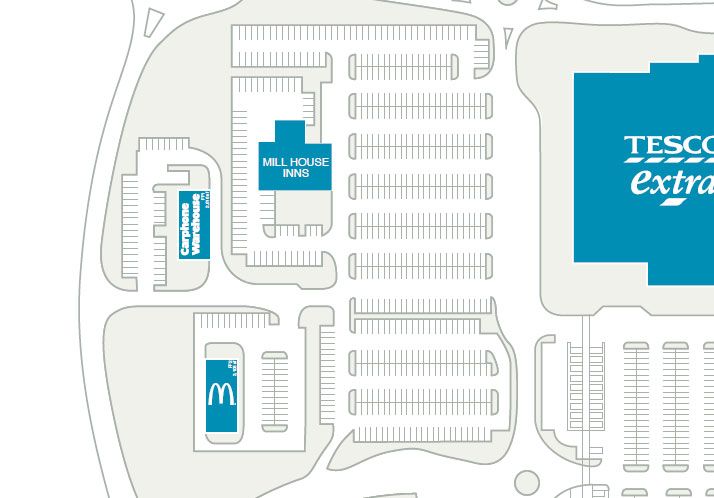
2.1.1 The application site comprises Unit 1 (246 sqm gross) and the immediately surrounding car
parking area, situated to the west of the main Broughton Shopping Park core. The unit is located
to the west of a Greenking Pub (the Mill House Inn), to the north of a McDonalds drive-thru and to
the east of Chester Road. Broughton Shopping Park forms an established modern park, comprising
c.40 retail / leisure units over c. 33,000 sq m gross floorspace. Anchor tenants include Tesco Extra,
M&S Simply Food, Cineworld and Primark. The park forms a major regional shopping and leisure
destination and is a strategically important source of employment in the locality.
2.1.2 In terms of environmental considerations, the site lies within Flood Zone A on NRW’s development
advice maps. There are no other known statutory or non-statutory designations relevant to the
site.
Figure 1 – Unit 1 (former Carphone Warehouse) Location
A118364
4Planning History
2.1.3 Broughton Shopping Park has been subject to various planning applications since opening in 1999
to enable the centre to continue to ‘keep-pace’ with the wider retail provision across the UK.
2.1.4 The initial planning permission for the retail park is ref: P/96/11/00242 which was granted 14th
January 1998. This planning permission included the main retail terrace area, a petrol filling
station, a standalone pub and two fast food restaurants (now McDonalds and Carphone
Warehouse). Carphone Warehouse took occupation during March 2014. This planning application
therefore now seeks to revert the unit back to the initially intended use of the unit – being Class
A3.
The Prospective Tenant
2.1.5 Tim Horton’s is an iconic Canadian coffee shop brand, best known for coffee and doughnuts. In
2017, Tim Horton’s began opening stores in the UK in locations such as Cardiff, Glasgow and
London. The Tim Horton’s franchise is currently being rolled out across the UK, with the proposed
Broughton operation forming the first drive-thru unit in Wales.
2.1.6 In terms of direct employment, each drive-thru store typically provides up to 40-50 jobs, offering
roles such as managers, baristas, maintenance operatives and cleaners. Indirect job opportunities
will also arise during the construction / fit-out stage and in terms of servicing the unit.
The Proposal
2.1.7 The proposals relate to the change of use and associated physical conversion of Unit 1 (formerly
Carphone Warehouse) from Class A1 (retail) to a Tim Horton’s drive-thru coffee shop (Class A3 -
food and drink).
Various external alterations to the existing elevations including:
o Introduction of new cladding treatment over existing facades to reflect the Tim Horton’s
branding colour palette (brown, beige, black and red);
o Introduction of new cladding parapet walls to conceal the existing sloped roof;
o Introduction of various new windows and customer entrance doors; and
A118364
5o Introduction of a drive-thru counter and associated canopy.
Layout alterations associated with the establishment of the drive-thru lane including:
o Introduction of entrance-only / exit only routes via the two existing vehicular junctions
serving this part of the site, to accommodate the proposed one-way drive-thru layout;
o Various alterations to car park layout and introduction of delivery zone resulting in the
net reduction of 17 car parking spaces;
Erection of a bolt-on cold room / dry store and associated fence on northern elevation;
Introduction of a 14 sqm GIA customer toilet area to comprise two WCs;
Introduction of external seating area, cycle parking, landscaping and all other associated
works.
2.1.8 In terms of opening hours, Tim Horton’s are seeking consent for a 24-hour operation, albeit it is
likely that the drive-thru only will operate during late night / early hours. Several retail / leisure
tenants at Broughton Shopping Park open late nights / early mornings outside of ‘typical’ shopping
hours including Tesco Extra (and associated petrol filling station) and McDonald’s. Likewise,
Cineworld, the Mill House restaurant, Nando’s, Prezzo and Frankie & Benny’s open late into the
evening. As such, unrestricted opening hours is sought to allow the flexible operation of the unit.
2.1.9 In respect of deliveries, Tim Horton’s replenishment stock will be made 2 – 3 times a week. Waste
collection will likewise take place 2-3 times a week.
2.1.10 The key intention of the proposals is to bolster the Shopping Park’s refreshment provision and
supplement the existing retail services, adding to the overall enjoyment of the centre, as well as
providing a viable use for a currently vacant unit.
A118364
63.0 Planning Policy
3.1.1 The statutory development plan for Flintshire County Council is the Flintshire Unitary Development
Plan (UDP) (2000-2015), albeit time-expired since 2015. Work has commenced on a new Local
Development Plan, which has reached the Deposit stage with public consultation concluding during
November 2019. Material considerations in this case include national policy in the form of Planning
Policy Wales (PPW) Edition 11 (2021), the supporting Technical Advice Note (TANs), specifically
TAN 4 (Retail) and TAN 12 (Design).
Local Planning Policy
3.1.2 In terms of the Flintshire UDP designations, the park is unallocated and lies outside of the defined
settlement boundaries of Broughton and Bretton. Although Broughton Shopping Park is not defined
as a Key Shopping Centre under Policy S1 (retail and commercial allocations), paragraph 12.8 of
the UDP retail chapter states: “The most modern centre of retail investment in the County is
Broughton Retail Park (BRP) which makes a significant contribution to the retail offer of
Flintshire…”.
3.1.3 The following policies are deemed relevant to the proposals:
Policy STR 1 (New Development) indicates new development will be, inter alia; (a)
generally located within existing settlement boundaries; (b) required to incorporate a high
standard of design; and (c) create a safe, healthy and secure environment;
Policy GEN1 (General Requirements for Development) highlights that new
development is to be located on land in accordance with the criteria set out in the policy
wording, which includes; that development should harmonise with the site and
surroundings in terms of siting, scale, design, layout, use of spaces, materials, external
appearance and landscaping;
Policy D1 (Design Quality, Location and Layout) indicates all development must
incorporate good standards of design, whilst Policy D2 (Design) highlights development
will be permitted only where:(a) the proposed building and structures are of a good
standard of design, form, scale and materials; and (b) it protects the character and
amenity of the locality and adds to the quality and distinctiveness of the local area;
A118364
7 Policy S3 (Integrating New Commercial Development) highlights that all
commercial proposals will be required to consider the siting of buildings and building
entrances to ensure the provision of safe and convenient access for users and to enhance
the surrounding commercial environment and specifically requires developers to: (a) site
the proposed development within easy walking distance of existing commercial
development and other facilities; (b) provide building entrances in locations which relate to
existing commercial developments, other facilities and pedestrian routes; and (c) if
relevant, provide car parking to the rear of the development.
Policy STR5 (Shopping Centres and Commercial Development) highlights that the
plan seeks to maintain and enhance the vitality, attractiveness and viability of existing
town, district and local centres.
Policy S8 (Hot Food Takeaways, Restaurants and Cafes) indicates proposals for the
change of use of existing establishments to sell hot food for the consumption on or off the
premises will be permitted where they meet the following criteria: (a) the amenity of local
residents, including residents living above the property are not unduly harmed, (b) on-site
provision is made for the disposal of casual litter and wastes; and the use will not result in
traffic hazards or disturbance arising from street parking.
Policy AC1 (Facilities for the Disabled) outlines that the proposals will be permitted
only if the appropriate facilities are provided to meet the special needs of people with
disabilities.
Policy AC2 (Pedestrian Provision) advises development will be permitted only where,
inter alia, there is safe, direct and overlooked foot access to main local pedestrian routes.
Policy AC8 (Buses) indicates development proposals will be required, where appropriate,
to be adequately serviced by public transport either through existing bus services or
through the provision of new or extended bus services.
Policy AC13 (Access and Traffic Impact) outlines development proposals will only be
permitted if: inter alia, safe vehicular access can be provided to and from the main
highway network; and
Policy AC18 (Parking Provision and New Development) indicates new development,
including change of use, must provide appropriate parking.
A118364
8National Planning Policy
3.1.4 PPW 11 sets out the land use planning policies of the Welsh Government and is supported by
Technical Advice Notes (TANs). The primary objective of the latest version of PPW is to ensure that
the planning system contributes to the delivery of sustainable development and improves the
social, economic, environmental and cultural wellbeing of Wales, as required by the Planning
(Wales) Act 2015, the Well-being of Future Generations (Wales) Act 2015 and other key legislation.
3.1.5 The Well-Being of Future Generations Act (2015) places a duty on public bodies to carry out
sustainable development. This concept has expanded under the Act and now includes all four
aspects of well-being: social, economic, environmental and cultural.
3.1.6 Key sections relevant to the proposals include:
Previously Developed Land - PPW 10 indicates that previously developed land should,
wherever possible, be used in preference to greenfield sites where it is suitable for
development (para 3.55). This is one of the ‘Key Planning Principles’ is to ensure the
efficient use of resources (including land) to deliver sustainable development.
Placemaking - Paragraph 4.0.2 highlights that “…when planning and managing future
development planning authorities need to ensure that residents of existing and new
communities have access to jobs and an appropriate range of community facilities
including recreation, leisure, health and education”.
Economy & Jobs - Section 5 of PPW 11 indicates at Paragraph 5.4.2 that “Economic land
uses include the traditional employment land uses (offices, research and development,
industry and warehousing), as well as uses such as retail, tourism, and public services”.
It likewise clarifies that: “Productive and Enterprising places are those which promote our
economic, social, environmental and cultural well-being by providing well connected
employment and economic development in pleasant surroundings. These places are
designed and sited to promote healthy lifestyles and tackle climate change by making
them easy to walk and cycle to and around, access by public transport, minimising the use
of non-renewable resources and using renewable and low carbon energy sources”.
Paragraph 5.4.1 specifies that: “For planning purposes the Welsh Government defines
economic development as the development of land and buildings for activities that
generate sustainable long term prosperity, jobs and incomes. The planning system should
A118364
9ensure that the growth of output and employment in Wales as a whole is not constrained
by a shortage of land for economic uses”.
Accessibility - PPW sets out that the planning system has a key role to play in reducing
the need to travel and supporting sustainable transport, by facilitating developments which
for example: “are sited in the right locations, where they can be easily accessed by
sustainable modes of travel…” (Paragraph 4.1.10). Paragraph 4.1.32 continues to indicate
that: “Planning authorities must ensure new housing, jobs, shopping, leisure and services
are highly accessible by walking and cycling”.
Building Better Places (July 2020) Placemaking and the COVID-19 Recovery
3.1.7 The Welsh Government have recently published its policy position on how the planning system can
assist in the COVID-19 recovery period within the ‘Building Better Places’ document - Placemaking
and the COVID-19 Recovery (July 2020). The Ministerial forward makes clear that “We need an
environmental, social, cultural and economic recovery which is sustainable” and notes that PPW
“contains the principles and policies needed for us to recover from this situation in a positive
manner” and that “This guide pinpoints the most relevant policy priorities and actions to aid in the
recovery”. It is clear, therefore, that the document is a “guide” intended to sit alongside PPW and
therefore forms a material consideration in the determination of planning applications of somewhat
less weight than PPW itself. This is further underscored in the document’s introduction which
confirms that “the Welsh Government’s policy direction towards better places and placemaking
[largely contained in PPW] has not changed.”
3.1.8 The Building Better Places document develops on the recent letter issued to the Chief Planning
Officers from Julie James (7th July 2020) which sets out the anticipated economic consequences of
the COVID-19 pandemic, including the impacts on construction and the built environment. The
document emphasises the need to encourage ‘place-making’, as advocated by PPW, at the heart of
the recovery process. Building Better Places identifies eight key issues drawing on the key
objectives of PPW, which, it is emphasised, should be applied immediately to ensure we affect
future change in the most positive way possible. A principal issue focus relates to the ‘stay local’
objective and the importance of outdoor space in allowing to continue to operate effectively.
A118364
104.0 Key Considerations
4.1.1 This section addresses the key considerations relating to the proposed development, which are
considered to be:
Acceptability of Class A3 (Food and Drink) use;
Highways (including access and parking); and
Design
Acceptability of Class A3 (Food and Drink) Use
4.1.2 The Class A3 proposals will strengthen and diversify the food and drink refreshment offer at the
park, also providing landscaped outside space for customer use and enjoyment. The proposals
seek to ensure that the existing customers are appropriately served in terms of food / drink
provision, improving customer choice and enabling the Shopping Park to ‘keep pace’ with similar
shopping / leisure destinations across the UK. The site itself occupies a sustainable location within
an established Shopping Park.
4.1.3 The proposals will create a number of skilled jobs relating to the refreshment and hospitality
industry, much needed in the current climate. Such jobs include managerial, baristas, sales staff,
administrative and cleaning roles. Enabling the prompt re-occupation of the unit would therefore
have a positive impact on economic growth and local employment, whilst ensuring the continued
vitality and viability of Broughton Shopping Park is maintained. These factors are considered to be
ever more important in the current post-COVID 19 lockdown economic context.
4.1.4 Although occupying an out-of-centre location in retail policy terms, the proposal will not negatively
impact the vitality and viability of nearby town and district centres or conflict with UDP Policy STR5
(Shopping Centres & Commercial Development). It is noted that a minor increase in GIA floorspace
by 14 sqm is proposed to accommodate two customer toilets, however this will not impact upon
the overall trading space and is focused simply towards customer convenience. A drive-thru use in
this location is deemed to be highly unlikely to divert trade away from the nearby designated
centres of Buckley, Saltney and Queensferry, which have limited opportunity for drive thru
facilities. Indeed, given the proposal relates to a change of use of an existing building away from
Class A1, the proposal will prevent retail reoccupation. The proposals therefore may arguably
reduce any limited trade draw that could have occurred from neighbouring centres when trading
A118364
11as Carphone Warehouse. This is likely to have a potential positive impact on nearby centres. In
view of the above, and the small quantum of floorspace involved, there is not considered to be a
need to assess the proposals against the retail tests.
4.1.5 In regard to Policy S6 (hot food takeaways, restaurants and cafes), although the policy wording is
clearly targeted towards in-centre units, the proposals would nonetheless not harm the amenity of
local residents, delivers on-site provision for the disposal of litter and waste and would not result in
traffic hazards or disturbance arising from street parking.
4.1.6 In summary, the proposed Class A3 use is considered an entirely acceptable use in the context of
the existing Shopping Park and should be considered as a valuable positive investment in the
current post COVID-19 lockdown economic climate.
Highways / Parking / Access
Access / Highways
4.1.7 The proposals include the setting out of a new drive-thru lane, new internal one-way vehicular
route and associated revised parking arrangement. In highways terms, the proposed drive-thru is
favourably located within a relatively self-contained area of the Shopping Park site, where it is
unlikely to have any negative impacts on vehicular movements across the site (not least because
the unit was originally designed as a drive thru facility). The introduction of entrance-only / exit
only routes via the two existing car park aisle junctions, to accommodate the proposed one-way
system, is sought to ensure a logical and convenient layout. It likewise seeks to ensure no
congestion at the vehicular access point which otherwise could cause queuing back onto Chester
Road. Pedestrian zones are identified in the car parking area, providing separation between
pedestrians and vehicles. All deliveries and refuse collection will take place from the delivery /
servicing area. Deliveries will generally be undertaken early mornings, prior to the store opening.
4.1.8 In terms of visits, the proposal is not anticipated to give rise to any notable increase in dedicated
vehicular trips to the site particularly when compared to the extant Class A1 use. The co-location
of the proposed Class A3 unit with the rest of the retail / leisure offer means that the facility is
more likely to be used by existing visitors to the park in the form of ‘linked trips’ or potentially
attracting ‘pass-by trips’. The site is sustainably located, directly served by regular bus services and
with good connectivity to cycle / pedestrian routes, therefore visits to the Shopping Park take place
A118364
12by a range of means of transport. Sheffield cycle stands will be provided adjacent to the main
customer entrance for those visiting the site by bicycle.
Parking Capacity
4.1.9 At the outset, it should be noted that the proposal results in the reduction in parking by 17 spaces.
Nevertheless:
The unit is located in a relatively quiet area of the Shopping Park’s car park;
The replacement of a Class A1 shop (the majority of visitors to which will require a parking
space) with a drive-thru facility (the majority of visitors to which will ‘drive through’, and
not require a parking space) clearly results in a reduced parking requirement; and
The parking area to be demised to Tim Hortons is considered by them to be sufficient for
their operation.
4.1.10 Nonetheless, we have also considered the site-wide car parking study undertaken during 2017 in
support of planning application ref: 055736 for the erect of two Class A3 units together with
associated public realm improvements and car parking re-configuration (Granted 14th June 2017).
A total of 2,067 spaces were surveyed (which excludes the McDonalds demise and the petrol filling
station). The surveys were undertaken during the first week of the school half term (when several
new films were released at the on-site cinema) on Friday (7.30am to 8.30pm) and Saturday
(7.30am to 7.30pm) the 17th and 18th February 2017. The survey results were noted to have been
influenced by the following:
Airbus staff were understood to be parking within the car park during this period;
Shopping Park staff were understood to be parking in the customer car park;
Works were being undertaken to the car park, reducing capacity by up to 15%.
4.1.11 The survey confirmed that the maximum occupancy of the car park was reached at 1pm on the
Friday (at 61% occupancy – 806 spaces remaining vacant) and at between 2pm and 2.30pm on
the Saturday (at 85% - 310 spaces remaining vacant).
4.1.12 Even factoring in the development approved planning application ref: 055736 (which has not been
implemented) the study concluded there would be in excess of 200 spaces vacant during the peak
hours. This conclusion was accepted by the LPA as part of the determination and approval of
application ref: 055736.
A118364
134.1.13 Since the 2017 survey, the following development has been approved:
Siting of temporary retail pod zones comprising Class A1 and / or A3 units (ref: 060237);
Unit 3 sub-division, insertion of mezzanine and part change of use to gym (Class D2)
(floorspace increased from 862 sqm net gross to 1,069 sqm) (ref: 060959).
4.1.14 Neither of the above applications resulted in any reduction in parking provision. The Class A1 / A3
retail pods proposal was held to be ancillary, serving a purely ancillary function for existing visitors
at the park. The gym proposal was acknowledged to have differing peak hours of usage to typical
A-class uses and therefore tend to add to parking demand during non-peak hours when the
shopping park would have ample available capacity.
4.1.15 Accordingly, it is considered that the c. 200 space available capacity during the peak hour will
remain available to serve the proposed development and that the reduction in provision brought
about by layout alterations proposed would not give rise to issues within the wider retail park site
and certainly not on the adjacent highway network. As such, there is not considered to be any
negative highways or parking issues arising from the drive-thru coffee shop use and the proposal
is therefore is deemed to accord with policies AC2, AC8, AC13 and AC18.
Design
4.1.16 In terms of design, the proposals represent a contemporary approach and investment into an
underutilised unit which has not been subject to modernisation for a number of years. The
introduction of the iconic tenant specific cladding approach and colour palette (brown, beige, black
and red) is considered appropriate for the commercial location, adding to the overall quality and
distinctiveness of the Shopping Park. The proposed design approach will likewise assist wayfinding,
in view of the gateway location of the unit and will improve the overall visual amenity in this
locality.
4.1.17 The increased expanse of glazing / windows across the facades will enhance the perception of
activity and of safety in this area. The positioning of the external seating area and landscaping,
adjacent to the customer entrance will likewise improve activity levels and use of outside space at
the Shopping Park. This is a key consideration outlined by Building Better Places in the post
COVID-19 lockdown context, which encourages outdoor social and interaction. Cycle parking is
provided at the main customer entrance, which is highly visible and offers a safe location to store a
bicycle.
A118364
144.1.18 In terms of layout, the proposals have been developed to provide a high standard of amenity for
its visitors, with pedestrian separation from vehicular circulation routes. All entrances and
movement routes will be Equalities Act compliant and provide safe, convenient and level threshold
access to customers.
4.1.19 In conclusion, the proposals are considered to comply with policies STR1, AC1, D1 and D2.
A118364
155.0 Summary & Conclusions
5.1.1 This Planning Statement has been prepared in support of the conversion of Unit 1 at Broughton
Shopping Park to accommodate a drive-thru coffee shop operator. To summarise:
The proposals look to alter an existing, vacant unit within an established Shopping Park to
allow occupation by a national multiple operator, diversifying the existing food and
drink refreshment provision on offer;
The site is highly accessible and sustainably located given its location within
Broughton Shopping Park, which is well-served by bus routes and the adjoining cycle /
pedestrian network;
As discussed in detail, there remains sufficient parking provision to serve the
proposals, notwithstanding the fact that is it likely the unit will principally attract users
already visiting the wider shopping park and customers not wishing to park;
A number of local jobs will be created including c.40-50 jobs such as managers, baristas,
maintenance and cleaning. The development will also support indirect employment via the
construction/fit-out stage and in terms of servicing the unit;
There are no ecological, flood, heritage, landscape or other statutory / non-
statutory issues which would preclude development at this site.
5.1.2 Having regard to the above, it is considered that the proposed economic development represents
an appropriate and policy compliant scheme. Accordingly, it is considered that the proposed
development is acceptable, and we would respectfully request that the application is approved.
A118364
16You can also read


