Playbook for K-12 School Spring Events 2021 - Proposed Guidance for Prom, Graduation, and other Spring Events in the 2021 School Year - Rhode ...
←
→
Page content transcription
If your browser does not render page correctly, please read the page content below

Playbook for
K-12 School
Spring Events
2021
Proposed Guidance for Prom,
Graduation, and other Spring
Events in the 2021 School Year
Updated: 6/10/21
Purpose of playbook and directions for use

The purpose of this document is to provide school       Please keep this playbook in an area that is easily
leaders health and safety guidance for planning and     accessible for reference.
executing Spring Events and activities during the
COVID-19 pandemic.                                      This playbook is intended to share general best
                                                        practices and health and safety guidance for hosting
This guidance was created by a working group            Spring Events that can be used by all schools.
consisting of more than a dozen school leaders,
including superintendents and principals, in            * Note: PreK-12 schools and childcare providers
collaboration with the RIDOH, RIDE, and EdOC.           may adopt policies that are stricter than State
                                                        guidelines.
The goal of this guidance is to help schools maintain
a level of normalcy, while using mitigation measures
to reduce the spread of COVID-19.

                                                                                                2
Table of Contents
Spring Events Planning
Face Coverings 5
Appointing Key Leaders 6 Graduation Planning
Completing a Control Plan 7 Testing and Consent 21
Capacity of Venues and Spaces 8 Social Interaction 22
Timing of Subsequent Events 9 Diplomas 23
At-The-Door Screening 10 Space Layout 24
Disinfecting and Cleaning 11-12 Additional Mitigation Areas 25
Post-Event Guidance 13 Further Reading and References 26
Prom Planning Sample Pre-Screening Form 27
Testing and Consent 15
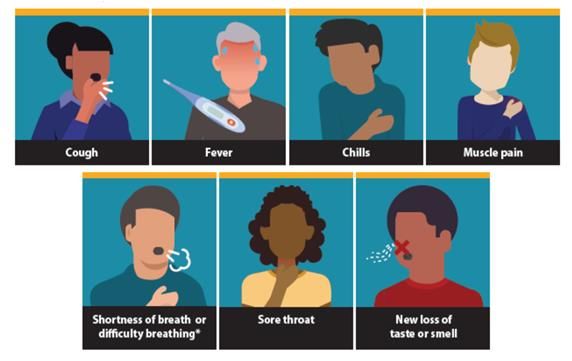
Symptoms of COVID-19 28
Dancing & Masking 16
Dining 17 Glossary 29 - 32
DJs or Bands 18
Additional Mitigation Areas 19
3Planning for Spring Events 2021
General Guidance for All School
Sponsored Spring EventsFace Coverings
As the CDC guidance and Rhode Island Executive Orders continue to evolve, this guidance has been adjusted to
reflect the variety of Spring Events held by schools.
Outdoor Pk-12 Events:
• Rhode Islanders and visitors to Rhode Island, both fully vaccinated and unvaccinated, generally do not need to wear
masks outdoors. People who are unvaccinated are encouraged to wear masks outdoors in crowded settings or
during activities where they are in close contact with other people who are not fully vaccinated. Close contact means
you’ve been within six feet of someone with COVID-19 for a total of 15 minutes or more in a 24-hour period.
Indoor Pk-12 Events:
• Per the CDC school recommendations, all in attendance must wear a mask.
5Pre-Event Planning: Appointing Key Leaders
It is recommended that schools create Planning Teams, members of which should
include an Event Organizer that liaises directly with RIDOH and a Contact Tracing
Specialist (typically the school nurse).
The Planning Team's key responsibilities would include:
• Ensuring that event plans stay in compliance with published guidance
• Working directly with contractors, chaperones, and staff to ensure compliance
• Compile contact info and vaccination date (if applicable) of all attendees
• Ensuring mass communication system is in place in case there is a positive case
and attendees need to be contacted in a timely manner
• Once venue location, day, time are definitive, complete the COVID-19 Control Plan
and communicate the key aspects of the plan to school leaders and other
necessary school staff
6Pre-Event Planning: Completing a Control Plan
Schools will be required to complete a COVID-19 Control Plan before
the start of the event. This will serve as the written planning document.
• Having a written record allows transparency with the community.
• If a venue has an existing COVID-19 plan, the planning teams should
work to ensure it is compliant with guidance and is integrated within
the school's plan.
7Pre-Event Planning: Capacity of Venues and Spaces
• It is recommended schools utilize venues with robust circulation
and ventilation systems.
• Beginning May 21, capacity limits were lifted for both catered
events and venues of assembly. There are currently no capacity
limits for school-hosted spring events as long as the required
social distancing requirements can be upheld.
8Pre-Event Planning: Timing of Subsequent Events
Option 1: Consider holding other Spring Events (i.e. Prom and Graduation) on
the same weekend to minimize cost (if renting a tent and/or other supplies)
and minimize possible contact tracing efforts.
Option 2: Consider having ample time between Prom and Graduation to
minimize the number of students who would have to miss one event if there
was a positive case following the initial event.
9Event Day Management: At-The-Door Screening
• All attendees must be pre-screened for COVID-19 symptoms at
the door before entry to the event. See sample screening tool on
slide 27.
• Schools are encouraged to use “touchless” registration and pre-
screening by leveraging use of digital ticket sales and pre-
screening programs.
10Event Day Management: Disinfecting and Cleaning
• Plan to schedule additional janitorial or other staff devoted to cleaning
and disinfecting high-traffic or high-touch areas.
• Plan for conveniently placed sanitation stations (i.e., at entry/exit points,
high touch areas, and/or each table).
• Limit the number of shared items, such as eating utensils or drinking
glasses. Use disposable or single-use items where feasible.
• Clean microphones between users.
• Only use EPA approved disinfectants or 1/3 cup of bleach per gallon of
room temperature water for cleaning and disinfecting high-traffic or high-
touch areas.
11Event Day Management: Disinfecting and Cleaning (cont.)
• To verify that a product is effective against the SARS-COV2 virus, search
the EPA’s List N using the product’s EPA number found on the product
label.
• Follow the product manufacturer’s cleaning instructions.
• EPA website: www.epa.gov/pesticide-registration/list-n-disinfectants-
coronavirus-covid-19
12Post-Event Guidance
• Attendees who become symptomatic after the event will contact
the event planning team's contact tracing specialist and
schedule a COVID-19 test.
• Encourage safe post-event activities.
• Consider hosting in-school PCR or rapid testing events for
students and staff who attended events.
13Planning for High School Prom 2021
Pre-Prom Planning
Prom Day Management
Post-Prom GuidancePre-Prom Planning: Testing and Consent
• Testing is strongly recommended. Schools may choose to accept a PCR or Rapid Antigen
Test result, or both types equally. Proof of vaccination is acceptable in place of a test.
RIDOH and EdOC may be able to help with mass testing before Prom. Contact Raquel
Woodmansee, raquel.woodmansee@ride.ri.gov, for more information.
• Letters of understanding should be shared with the school community to outline the 2021
Prom plans and requirements for attendance (e.g., testing, contact tracing procedures,
dancing guidelines, mitigation measures, etc.). The recommendation is that the letter of
understanding is signed by each student/guardian as a condition of purchasing a ticket for
the event.
• Schools should develop a plan for screening attendees for COVID-19 symptoms. One option
is to use the questions included on the template on slide 27.
15Prom Day Management: Dancing and Masking
• Open dance floors permitted
• Recommended that event organizers discourage excessive crowding
on dance floors.
• At this time, all indoor Prom participants must remain masked except in
the following circumstances:
• While eating and drinking at assigned table.
• While taking formal Prom pictures.
• Prom participants generally do not need to wear a mask outdoors. See
slide 5 for details.
16Prom Day Management: Dining
• There are no longer any table capacity limits.
• Tables must be spaced 3 feet apart indoors.
There are no spacing limits outdoors.
• Assigned seating and seating plan are required.
• Self-service stations and buffets are now allowed.
17Prom-Day Management: DJs or Band
• Indoors: If masks are not worn by performers, there must
be at least 6 feet of physical distance between
performers and any other person, including other
performers. If masks are worn, there must be at least 3
feet of physical distance between all performers.
• Outdoors: Performers do not need to wear masks or
maintain 3 feet of social distancing.
18Prom Day Management: Additional Mitigation Areas
• CI/CT: Table seating plans are required. Prom Planning Teams must keep the seating plans
and all attendees' contact information on record for at least 30 days. It is recommended that
schools have a mass communication plan to rapidly notify/message all attendees if
widespread transmission occurs.
• Additional Mitigation Measures:
• Pre-plan ingress and egress to allow for minimum of 3 feet of physical distancing
• Plan to reduce number of students in restroom at the same time
• Conduct regular disinfecting of common areas
• Make hand sanitizer readily available
19Planning for High School Graduation
2021
Pre-Grad Planning
Grad Day Management
Post-Grad GuidancePre-Grad Planning: Testing and Consent
• Testing for all indoor graduation events is strongly recommended. Proof of vaccination is
acceptable in place of a test.
• RIDOH and EdOC may be able to facilitate mass testing events for schools before
events. Contact Raquel Woodmansee, raquel.woodmansee@ride.ri.gov, for more
information.
• Schools should develop a plan for screening attendees for COVID-19 symptoms. One
option is to use the questions included on the template on slide 27.
• Schools are encouraged to be transparent with families for conditions for graduation
attendance.
21Grad Day Management: Social Interaction
• Indoors:
• All attendees are required to wear properly fitting masks if indoors. Graduates may remove
their masks to have their picture taken while receiving their diploma.
• Visitors of one graduate can be seated together as a stable group. There must be at least 3
feet of spacing between each stable group. Graduates must be seated at least 3 feet from
one another.
• Outdoors:
• Graduation attendees are not required to wear a mask. See slide 5 for details.
• Recommend that schools space out guests as they can, but there is no longer the
requirement of 3 feet of spacing between graduates or stable groups.
• Schools will choose to adopt methods of establishing stable groups using seating charts.
Guidance is flexible to allow for differing sizes and spaces of venues.
22Grad Day Management: Diplomas
• Diplomas may be distributed hand to hand as long as masking guidelines and proper
hand hygiene are followed before and after diploma acceptance.
• Potential alternative plans include:
• Have students pick up their diploma cover (without the diploma) before graduation
day. Have them carry it to the stage to hold for a photo opportunity.
• Have a table with diplomas in their covers. Clearly label covers on the outside.
Have students pick up their diplomas on arrival at the venue. Have students carry
their own diplomas to the stage as their names are called.
• Before graduation day, distribute template diplomas with generic information that
students can carry up to the stage to use for a photo opportunity.
23Grad Day Management: Space Layout
• Assigned seats are required for both graduates and attendees.
• Pre-plan entrance and exit to allow for minimum of 3 feet of physical
distancing as possible. Plan to have separate entrance and exits and
staggered arrivals and releases to avoid congestion at the entrances and
exits.
• Consider having local fire/police to help usher families to their vehicles
after the event has concluded.
• Consider live stream options for those unable to attend in person.
• For indoor events, schools should limit the length of the event and hold
ceremonies in well-ventilated spaces.
24Grad Day Management: Additional Mitigation Areas
• CI/CT: Graduation planning team keeps all attendees' contact information on record for at
least 30 days. It is recommended to have a mass communication plan to rapidly
notify/message all attendees if widespread transmission occurs.
• Additional Mitigation Measures:
• Clean microphones between users, especially if speakers are not wearing a mask
• Limit numbers allowed in restrooms and schedule frequent cleanings
• Conduct regular disinfecting of common high-touch areas
• Make hand sanitizer readily available at entrances/exits
25Further Reading and References
Coronavirus disease 2019 (COVID-19). (n.d.). Retrieved March 18, 2021, from https://www.cdc.gov/coronavirus/2019-ncov/
COVID-19 Screening Tool [PDF]. (n.d.). Rhode Island: State of Rhode Island.
Event Template: COVID-19 Control Plan [PDF]. (2020). Rhode Island: State of Rhode Island.
Events and Gathering: Readiness and Planning Tool [PDF]. (n.d.). The Center for Disease Control.
List N: Disinfectants for coronavirus (covid-19). (2020, December 15). Retrieved March 18, 2021, from
https://www.epa.gov/pesticide-registration/list-n-disinfectants-coronavirus-covid-19
Phase III Guidelines for Restaurants [PDF]. (2020, November 6). Rhode Island: State of Rhode Island.
Protect Your Household Guidance [PDF]. (2021, March 12). Rhode Island: State of Rhode Island.
Van den Berg, P., Schechter-Perkins, E. M., Jack, R. S., Epshtein, I., Nelson, R., Oster, E., & Branch-Elliman, W. (2021). Effectiveness of
three versus six feet of physical DISTANCING for CONTROLLING spread of COVID-19 among primary and secondary students and
STAFF: A Retrospective, STATE-WIDE cohort study. Clinical Infectious Diseases. doi:10.1093/cid/ciab230
26Event Day Management: Sample Pre-Screening Form
HAVE YOU EXPERIENCED ANY OF THE FOLLOWING SYMPTOMS YES NO
IN THE PAST 24 HOURS?
FEVER OR CHILLS (School Name) Prom 2021 COVID Attestation Form Template
SHORTNESS OF BREATH
Student Name:
NEW LOSS OF TASTE OR SMELL
Date:
HEADACHE Parent/Guardian Name:
COUGH Grade:
NAUSEA OR DIARRHEA
MUSCLE OR BODY ACHES School Name (if different):
RUNNY OR STUFFY NOSE
I hereby attest that the following information is accurate and legitimate to
FATIGUE
the best of my knowledge.
HAVE YOU BEEN IDENTIFIED AS A CLOSE CONTACT BY A SCHOOL
OFFICIAL OR THE DEPRATMENT OF HEALTH AND DIRECTED TO Signature of Student/Parent/Guardian:
QUARANTINE FOR THIS DATE?
HAVE YOU TESTED POSITIVE FOR COVID-19 WITHIN THE PAST 10 Date:
DAYS?
HAVE YOU TRAVELED OUTSIDE THE 50 STATES OR DISTRICT OF
COLUMBIA IN THE PAST 10 DAYS? Crosswalk grid to left with updated screening tool
HAVE YOU TRAVELED TO RHODE ISLAND FROM A HOT SPOT
WITHIN THE 50 STATES AND THE DISTRICT OF COLUMIA WITH at link below—don’t know on my end what differs
THE PAST 10 DAYS? for schools (Erin Dugan)
This form is available online at health.ri.gov/forms/screening/COVID19_Employee_Screening_Tool.pdf [only include if consistent]
27Symptoms of COVID-19
•Fever or Chills
•Cough
•Shortness of breath or
difficulty breathing
•Fatigue
•Muscle or body aches
•Headache
•Sore throat
•New loss of taste or smell
•Congestion or runny nose
•Nausea or vomiting
•Diarrhea
https://www.cdc.gov/coronavirus/2019-ncov/symptoms-testing/symptoms.html
28Glossary
Term Definition
In reference to COVID-19 screening, attestation is the act of providing written verification or
Attestation proof that you do not meet the probable criteria of being currently ill with COVID-19
Being within 6 feet of an infected person, with or without a face mask, for a total
Close contact 15 minutes over a 24-hour period or having unprotected direct contact with secretions or
excretions of a person with confirmed COVID-19 during the infectious period
Community Occurs when individuals acquire COVID-19 through contact with someone in their local
transmission community, rather than through travel to an affected location
Confirmed case A person who has tested positive for SARS-CoV-2 infection (the virus that causes COVID-19)
Process of identifying individuals who have had close contact (see definition above) with
Contact tracing
someone infected with COVID-19
A consistent group of students and staff who interact with each other but not with members of
Consistent/Stable other groups on a regular basis. Groups should be as small as possible, with maximum numbers
Group outlined in the different reopening scenarios. When in a stable group, each group member must
physically distance themselves from each other and from other consistent groups.
29Glossary
Term Definition
COVID-19 Abbreviation for the disease caused by the novel coronavirus SARS CoV-2
Education Operation Center. The Education Operations Center (EdOC) is an interagency center
EdOC located at the RI Department of Education that brings together expertise from a range of state
agencies to collaborate, coordinate, and communicate efficiently with schools
The time between exposure to an infection and the appearance of first symptoms. The virus that
Incubation period
causes COVID-19 has an incubation period of 2-14 days
Infectious period
2 days before testing (the date the swabbing was conducted) until CDC criteria to discontinue
(asymptomatic
isolation are met
cases)
Infectious period
(symptomatic 2 days before symptom onset until CDC criteria to discontinue isolation are met
cases)
30Glossary
Term Definition
RIDE Rhode Island Department of Education
RIDOH Rhode Island Department of Health
Assessing individuals for symptoms of COVID-19 verbally or via self/parent attestation.
Screening
Temperature checks may be performed by the school if desired.
Symptomatic A person who is experiencing one or more of the symptoms of COVID-19 as defined in CDC
individual guidelines
Two types of tests are available for COVID-19: viral tests and antibody tests. Viral tests indicate if
Testing you have a current infection while antibody tests indicate a previous infection. Throughout this
document, 'testing' refers to the viral test to diagnose a person with COVID-19.
Used interchangeably with immunization or inoculation. A person who is vaccinated for COVID-
19 is not required to quarantine as a close contact. Some other restrictions are also reduced for
Vaccination
those who are vaccinated.
31Glossary
Term Definition
Process of separating individuals who are infected with COVID-19 from others. Isolation lasts a
minimum of:
Isolation 10 days from symptom onset if symptomatic.
10 days from the date of specimen collection (test) if asymptomatic.
20 days for individuals with severely immunocompromising conditions.
Protocol Recommended actions to follow if a probable or confirmed case of COVID-19 occurs
Individual who has at least one of the following symptoms: cough, shortness of breath, difficulty
breathing, new loss of smell or new loss of taste, OR at least two of the following symptoms:
Probable case fever (measured > 100.4 degrees Fahrenheit or subjective) or chills (rigors), body aches
(myalgia), headache, sore throat, nausea or vomiting, diarrhea, fatigue, or congestion or runny
nose
Process of separating and restricting the movement of individuals who were in close contact
with someone who tested positive or had symptoms of COVID-19. Persons in quarantine should
Quarantine self-monitor for 14 days for symptoms and seek medical advice as needed. RIDOH recommends
all close contacts of people with COVID-19 get tested on day 5 of quarantine or later. Close
contacts who are vaccinated are not required to quarantine. Details at covid.ri.gov/whattodo
32You can also read


