POLICY BRIEF From lockdown to Thuma Mina Impact of economic reform on South Africa's prospects Jakkie Cilliers - Africa Portal
←
→
Page content transcription
If your browser does not render page correctly, please read the page content below
POLICY BRIEF
From lockdown to Thuma Mina
Impact of economic reform on
South Africa’s prospects
Jakkie Cilliers

   Long-term forecasts show that the country’s development trajectory is increasingly untenable.
   With the economic impact of COVID-19, growth rates will be too low to alleviate poverty, inequality
   and unemployment. South Africa does however have options. A pro-growth social compact and
   evidence-based economic policy could, by 2044, dramatically improve the country’s prospects.
Key findings

           	South Africa is at a crossroads. The current        	If President Cyril Ramaphosa successfully uses
             development trajectory is increasingly                the coronavirus crisis to build a pro-growth
             untenable and the country is not only steadily        social compact and implements evidence-based
             falling further behind its global peers but may       economic policies, South Africa’s economy
             be headed for a crisis.                               could, by 2044, be almost 50% larger than the
                                                                   Current Path forecast for that year.
           	The COVID-19 pandemic and its impact on the
             economy results in a long-term growth forecast      	In the Current Path forecast, 51% of South
             of 1.9% to 2044 – significantly below any rate        Africa’s population will be living in extreme
             that would alleviate poverty, reduce inequality       poverty by 2044. In the Thuma Mina scenario
             and grow employment.                                  that portion could be just 39%.

        Recommendations

          	In health: Improve healthcare through better           information and communications technology
            management and increased efficiencies in               (ICT) infrastructure, with an emphasis on
            the public sector, while driving down costs            widespread internet access. Support and
            in the private sector. Once the economy has            promote value-added technology exports in
            stabilised pursue a national health scheme             partnership with the private sector.
            that levers benefits from a partnership with
                                                                 	In investment and economic freedom: Grow
            the private sector towards the provision of
                                                                   domestic investment, pursue foreign direct
            universal healthcare.
                                                                   investment and adopt policies to reduce
            In education: Improve primary, secondary and           the regulatory burden, and enhance
            tertiary survival and graduation rates with a          economic freedom.
            deep focus on improved quality. Prepare the
                                                                 	In land and agriculture: Pursue land reform in the
            country for the Fourth Industrial Revolution by
                                                                   former homelands by providing tenure security
            focusing on science, technology, engineering
                                                                   and ability to legally transfer ownership. Support
            and mathematics.
                                                                   commercial agriculture, reduce food waste and
            In energy: Amend the Integrated Resource Plan          improve water management.
            2019 to pursue a least-cost energy solution
                                                                 	Forge a social compact between business,
            as proposed by the Council for Scientific and
                                                                   labour, communities and government that can
            Industrial Research (CSIR).
                                                                   pivot the country towards more rapid inclusive
          	In manufacturing: Invest in research and               economic growth based on evidence and in
            development and accelerate the expansion of            partnership with the private sector.

2   FROM LOCKDOWN TO THUMA MINA: IMPACT OF ECONOMIC REFORM ON SOUTH AFRICA’S PROSPECTS
Introduction Global growth in 2020 is expected to contract to -4.1%
and then rebound to 2.8% in 2021. Thereafter growth
The COVID-19 crisis has shaken South Africa, and indeed
would probably resume along a slightly more modest
the world, to its core. But addressing the nation on 21
trajectory, although it would probably take up to a decade
April 2020 President Cyril Ramaphosa sought to turn the
for the global economy to fully recover from the economic
crisis into an opportunity, promising ‘not merely to return
impact of the virus.
our economy to where it was before the coronavirus, but
to forge a new economy in a new global reality.’1 The second step imposes the Thuma Mina scenario that
was developed for the previous paper on the revised IMF
That, he argued, required a new social compact to growth forecast. The scenario and its interventions are
accelerate the structural reforms needed to reduce summarised below and models improved outcomes in six
the cost of doing business, promote localisation and thematic areas that have led to economic stagnation.
industrialisation, overhaul state-owned enterprises and
strengthen the informal sector.
Until COVID-19 hit, limited electricity
This policy brief updates the findings contained in a longer
research paper, South Africa First! Getting to Thuma
supply was the dominant constraint
Mina, published shortly before the global pandemic hit.2 on economic growth
The paper argued that South Africa had been caught
in a classic middle-income growth trap and that it was These are poor health outcomes, bad education, lack
steadily falling further behind the average for high-growth of electricity, a capital-intensive manufacturing industry
middle-income countries. that is now experiencing deindustrialisation, an
The reasons for this situation stem from the country’s inhospitable investment climate, and failed land reform
apartheid legacy but were further worsened by the and water management that leave large rural areas
trapped in poverty.
global financial crisis of 2007/8 and the impact of poor
governance and state capture. It occurs despite the The final step compares the Current Path, reflecting
country’s demographic dividend, political transition and South Africa’s expected growth to 2044 without reform,
substantial natural assets. With COVID-19 the situation is with the impact of the positive Thuma Mina scenario
increasingly precarious. along various dimensions e.g. the rate of extreme poverty
and average income, before concluding.
Structure and method
The forecast horizon is 2044 – 24 years into the future
The analysis that follows was developed in three steps. It and 50 years after the 1994 elections. That was
relies on the International Futures forecasting system (IFs), when Nelson Mandela was elected president amid
hosted by the University of Denver, that was also used for unprecedented international acclaim and huge domestic
the more comprehensive previous research paper.3 expectations for a better future.
The first step was to update global growth forecasts From load shedding to COVID-19
with the most recent ones released on 14 April by the
Until COVID-19 hit South Africa in April 2020, limited
International Monetary Fund (IMF) that now include the
electricity supply was the dominant constraint on
fund’s understanding of the likely impact of COVID-19.
economic growth. In 2019 South Africa experienced
Rather than its normal five-year growth forecast, the
the worst year on record of electricity load shedding
uncertainties associated with COVID-19 are such that
with Stage 6 being implemented in December 2019.
these forecasts are only up to 2021.
Amid that crisis, government released its updated
The IMF forecast projects a deep recession in 2020 Integrated Resource Plan (IRP 2019) in October
followed by a global recovery in 2021 – an optimistic that highlighted the short-term electricity supply gap
V-shaped recession premised on the discovery and rapid that was expected to last until 2022 and set out the
global rollout of an effective vaccine. country’s energy mix to 2030.
POLICY BRIEF 142 | MAY 2020 3Shortly thereafter, in January 2020, the Council for Figure 1 compares the April 2020 updated growth
Scientific and Industrial Research (CSIR) released its forecast from the IMF (red line) with the growth forecast
response to the IRP 2019 confirming that the impact presented by Mboweni when he presented his annual
of the limited electricity supply from ESKOM on South budget in Parliament on 28 February 2020 (blue line).
Africa’s economic growth would limit economic growth
to 1% in 2021 and 2022.
The CSIR modelled the implementation of the IRP 2019
The SA economy will be only
and offered a number of recommendations.4 At that point marginally larger in 2023 than
South Africa was still expected to register modest 0.9% it was in 2019
growth in 2020. This was reflected in Finance Minister
Tito Mboweni’s annual budget vote presentation to
Parliament a few weeks later during which he reaffirmed Even with the sharp economic recovery in 2021 as
the constraint that limited electricity supply was placing expected by the IMF, the South African economy will
on growth in 2021 and 2022. be only marginally larger in 2023 than it was in 2019.
The gap between the two indicates a significant easing
The April 2020 IMF growth forecast that now factors
of electricity demand until at least 2023. The economic
in the impact of COVID-19, is that the South African
contraction in 2020 due to COVID-19 is therefore so
economy will probably register a contraction of -5.8% in
substantive that energy demand will inevitably be
2020, followed by a rebound to 4% in 2021. Thereafter
much lower.
South Africa’s growth will moderate (we expect 1.5%
in 2022).5 Other forecasts, including the scenarios As a result, it is unlikely that the limited electricity supply
presented to the various Parliament committees by the from ESKOM is still a cap on economic growth. This
South African Treasury, are significantly more pessimistic is provided it uses the intervening period to invest in
with a worst case of -16.1% GDP contraction in 2020.6 maintenance, and that the government relaxes the
Figure 1: Size of the South African economy
570
550
530
Billion 2019 US$
510
490
470
450
2015 2016 2017 2018 2019 2020 2021 2022 2023
Mboweni growth forecast SA Current Path
Source: IFs 7.45
4 FROM LOCKDOWN TO THUMA MINA: IMPACT OF ECONOMIC REFORM ON SOUTH AFRICA’S PROSPECTSconstraints on additional renewables and self-generation, This first group of interventions doesn’t rely on reform
some of which has occurred. of the healthcare system beyond better management
and increased efficiencies, so in the health scenario the
The constraint on sufficient electricity supply does,
interventions gradually begin to take effect in 2021, and
however, reassert itself as a medium- to long-term
steadily ramp up to 2044.
constraint on growth. This includes the impact the
country’s highly polluting coal-fired power plants have on The second group simulates the successful
health and the associated inefficiency that comes with implementation of an affordable national health scheme
efforts to constrain the loss of jobs in the coal sector at that eventually allows for universal healthcare for all. The
the expense of a more rapid transition to renewables. effects begin to be felt in 2026.8 The results improve
child and maternal health and reduce the prevalence of
In the words of CSIR lead analyst Jarrad Wright,
communicable and non-communicable diseases.
‘IRP 2019 is not a long-term visionary plan, does not
report transparently and comprehensively and still
applies arbitrary new-build constraints on variable COVID-19 and its impact results in a
renewable energy.’7 long-term economic growth forecast
The COVID-19 pandemic and its impact on the economy of 1.9% to 2044
results in a long-term growth forecast of 1.9% to 2044 –
significantly below any rate that would alleviate poverty,
The biggest obstacles to achieving improved health
reduce inequality and grow employment. On this Current
outcomes are over-servicing and inflated costs in the
Path forecast South Africa will fall even further behind its
private healthcare system,9 a poorly functioning public
global peers and social turbulence is bound to increase.
healthcare system and public debt. Better management
From lockdown to Thuma Mina and more competition is vital, and it’s clear that South
Africa won’t be able to implement and cannot afford the
So what is possible should Ramaphosa be successful
National Health Insurance scheme as originally envisioned
in using the coronavirus crisis to build a pro-growth
in the 2017 White Paper.
social compact?
Education
The analysis and full content of the Thuma Mina scenario
is detailed in the previous Thuma Mina paper released The education cluster emulates a transition in South
in March 2020. It models the resolution of South Africa’s Africa’s education system to prepare the country to
economic stagnation through reform in six key areas that take full advantage of the Fourth Industrial Revolution. It
currently constrain growth. These are health, education, improves primary school survival through secondary and
energy, modern industrialisation, investment and tertiary intake rates.
economic freedom, and finally, agricultural reform. The Likewise, tertiary graduation is improved, and the
content of each intervention cluster is summarised below. proportion of science, technology, engineering and
mathematics (STEM) students increases to around
Health
a quarter. In addition, there is an increased focus on
Signing the Presidential Health Compact in July 2019, vocational training at the secondary level as an alternative
Ramaphosa publicly acknowledged the crisis in South to tertiary education.
Africa’s health system.
Finally, aggressive but reasonable quality improvements
The health intervention cluster focuses on reducing are modelled at both the primary and secondary levels
premature mortality through modestly lower death as measured by test scores. These improvements
rates from traffic accidents, interpersonal violence, are possible only if the ruling party can constrain the
malnutrition in the form of undernutrition among children impact of powerful unions on the administration and
and obesity among adults, modelled on historical and management of South Africa’s fragmented and inefficient
comparative precedent. education system.
POLICY BRIEF 142 | MAY 2020 5Similar to many challenges in safety, security and health These improvements in investment are underpinned by
it is likely that only much more rationalisation and firm a more conducive policy environment that eases doing
political leadership can unlock improvements. business, increases labour market flexibility, enhances
economic freedom e.g. through simplification and
Energy
reduction of onerous black economic empowerment
The energy intervention cluster is benchmarked to the requirements, and modestly reduces firm tax rates.
70% renewable potential by 2050 as modelled by the
CSIR in its November 2018 release of a least-cost energy
Land and agriculture
scenario. This is unconstrained by ideology and the The final cluster focuses on improving agricultural
impact of particular lobby groups on planning.10 production, reducing food waste and ensuring better
To emulate the CSIR least-cost energy scenario, the water management. It focuses on effective land reform
cluster reduces the capital cost per output unit of in communal areas and government-owned land. At the
energy to reflect more rapid technological advancement heart of such reform is the need for tenure security in
that results from an enabling policy environment, as the former homelands and the ability to legally transfer
well as the impact of off-grid and mini-grids solutions such ownership.14
using renewables.
It also increases labour participation rates to reflect the Commercial agriculture is already quite
impact of a less capital-intensive shift to renewables
productive in South Africa, but further
and the effective implementation of a ‘just’ transition
programme that creates green jobs that replace and improvements in yields are possible
exceed those lost from coal production. Coal inevitably
still dominates in the energy scenario, but is overtaken
The intervention models an increase in land under
by renewables a decade earlier than in the Current
cultivation, in accordance with spatial estimates of
Path forecast.11
the available state-owned land and former homeland
The transition to a more distributed renewables-based areas that are suitable for cultivation. Yields per hectare
energy sector is foundational to modern industrialisation improve as a result of reforms in land administration
in South Africa. and improved support for smallholder farmers. Though
commercial agriculture is already quite productive in
Modern industrialisation12
South Africa, further improvements in yields are possible
In the industrialisation intervention South Africa reaches and included in the intervention.
its goal of allocating 1.5% of GDP to research and
development by 2030 and accelerates the expansion The intervention also envisages streamlined value chains
of information and communications technology (ICT) and support for on-farm practices that result in less food
infrastructure, with an emphasis on fixed and mobile waste on the farm and in transit to market, modelled
broadband internet access. The interventions include an through investment in improved road infrastructure in
export shift to promote manufactured and ICT exports. rural areas.
This is a future of ‘glocalisation’, characterised by shorter Since demand for water is likely to outpace current
value chains with fewer intermediaries and openings plans, the intervention increases groundwater
for new and smaller market entrants engaged in more withdrawals – a currently underutilised source – and
distributed small-scale and local manufacturing.13 expands wastewater treatment. In addition, demand
is mitigated by reducing the loss of non-revenue water
Investment and economic freedom (e.g. through the War on Leaks campaign).
The investment intervention starts by growing domestic
Impact of the Thuma Mina scenario
investment in the economy which is followed by
measures to attract skilled foreigners and increase net By 2044, South Africa’s population will have increased
foreign direct investment inflows. by a quarter – from the current estimate of 60 million
6 FROM LOCKDOWN TO THUMA MINA: IMPACT OF ECONOMIC REFORM ON SOUTH AFRICA’S PROSPECTSto around 75 million. The successful implementation of in 2044, in the Thuma Mina scenario that number is
Thuma Mina could increase average incomes by about US$1.230 trillion.
62% (or US$7 900) per person by 2044. The Current
Each of the six economic sectors is larger in the Thuma
Path forecast is for GDP per capita to grow by only
Mina scenario in 2044 than in the Current Path forecast
25% to 2044 representing a modest improvement of
for that year. But less obvious from Figure 3 is the change
US$3 300 in average incomes.
in the sectoral composition, with the percent contribution
The difference in GDP per capita of around US$4 600 in of the agriculture, ICT tech, materials and manufacturing
2044 between the Thuma Mina and Current Path forecast sectors larger than they would be in the Current Path
is a clear indication that it is possible for South Africa to forecast, and the contribution from the energy and
regain its economic footing and get on a convergence services sectors smaller.
pathway with that of its upper-middle-income peers.
In Thuma Mina, by 2044 South Africa’s economy will be Successful implementation of
US$735 billion or almost 50% larger than the Current
Path forecast for that year. Simply put, instead of an
Thuma Mina could increase
economy that increases by 70% from 2020 to 2044, incomes by about 62%
the Thuma Mina economy will have grown by 150%.
Moreover, by 2044 South Africans can, on average,
The 2.5% increase in the size of the manufacturing
expect to live more than five years longer than in the
sector as a portion of the total economy by 2044 above
Current Path forecast, to almost 72 years.
the Current Path forecast is particularly important given
The sectoral composition of the economy is presented the forward and backward linkages of manufacturing
in Figure 3. Whereas the Current Path forecast for the to improved productivity in the services and agricultural
size of the South African economy is US$834 billion sectors. It reverses South Africa’s trend towards
Figure 2: Growth rates
6
4
2
Percent
0
-2
-4
-6
2018 2020 2022 2024 2026 2028 2030 2032 2034 2036 2038 2040 2042 2044
Current Path Thuma Mina
Source: Forecast in IFs 7.45 initialising from World Development Indicators
POLICY BRIEF 142 | MAY 2020 7Figure 3: Sectoral composition of the South African economy
1 400
US$1.23 trillion
1 200 47
1 000
US$834 bn
Billion 2019 US$
33 746
800
600 US$496 bn
491
15
400
299 268
200 195
110 87
28 70
12 32 11 34 65 15
0
2020 2044 Current Path 2044 Thuma Mina
Agriculture Energy Materials Manufacturing Services ICTech
Source: IFs 7.45. This is a forecast taken from IFs that initialises from 2015 and is based on data from the Global Trade Analysis Project. It may differ from
other allocations.
deindustrialisation and is a critical component of a more of GDP. Coming from such a small base, even large
productive economy. improvements in productivity by e.g. bringing portions of
traditional land into production have limited impact on the
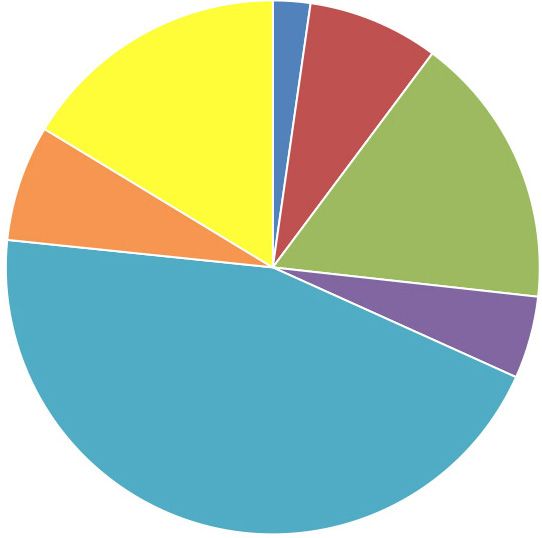
Figure 4 presents the contribution of each intervention
total economy.
cluster to improvements in income in 2044. New
industrialisation contributes the most, followed by
energy. The third largest contribution, however, comes New industrialisation contributes most
from the agglomeration effect. This means the various to growth, followed by energy
interventions are mutually reinforcing and interact to
provide an additional boost to incomes. South Africa is however one of the few African countries
that is largely food secure. According to Agricultural
For example, while the contributions from improved
Business Chamber president Francois Strydom, South
health and education are individually quite small,
Africa has about 38 value chains, of which 24 are net
collectively they improve the human capital contribution
exporters for eight out of every 10 years, providing
to multifactor productivity within IFs and hence increase
two thirds of the food required in the Southern African
income growth.
Development Community region.15 The future situation
It is no surprise that new industrialisation does best, for is, however, less promising.
it includes a number of powerful general accelerators to
In the Current Path forecast we expect the country’s
growth such as increased levels of investment in research
net agricultural import dependence, when expressed as
and development.
percent of demand, to increase from less than 5% to
The relatively modest contribution from agriculture/ above 30%. In the Thuma Mina scenario the country is
water also needs some context. The agricultural sector able to constrain that increased import dependency to
in South Africa is small, accounting for less than 3% account for only 9% of food demand by 2044.
8 FROM LOCKDOWN TO THUMA MINA: IMPACT OF ECONOMIC REFORM ON SOUTH AFRICA’S PROSPECTSFigure 4: Percentage contribution to increase in average income from different intervention clusters in 2044
Agriculture and water
2%
Agglomoration effect
16% Education
8%
Energy
Investment and 17%
economic freedom
7%
Health
5%
New industrialisation
45%
Source: IFs v 7.46
Had South Africa not been able to rely on its domestic and have helped reduce inequality, the only real solution
agricultural sector for food provision during the COVID-19 to this quandary is job growth in the formal sector.
lockdown, significant food imports would have been
Meanwhile the government has also committed itself
needed from elsewhere at a time when global trade had to ‘strengthen’ the informal sector as a cushion to
almost ground to a halt. extreme deprivation.
Poverty Conclusion
More than half of South Africa’s total population of South Africa is at a crossroads, and should the
60 million people currently survive on US$5.50 average COVID-19 pandemic extend towards the end of 2020
income per person per day or less, which is the extreme and into 2021, the country may be headed for a crisis.
poverty income threshold for upper-middle income The worst scenario that the National Treasury presented
countries established by the World Bank. That portion to Parliament on 30 April 2020 implies an official
will peak at 55% in 2025 and could range from anything unemployment rate of close to 55%. This would mean
between 51% and 39% by 2044, depending on whether the proportion of working-age individuals would fall
South Africa stays on the Current Path or implements the from four out of 10 to three out of 10 with unfathomable
reforms required to achieve the Thuma Mina scenario. results for social stability. Public debt is likely to stabilise
The forecasts are presented in Figure 5.16 only at around 95% of GDP.17
The result of South Africa’s extraordinarily high levels of A perfect storm of bad governance, economic policy
inequality is that little of the benefits of economic growth indecisiveness, an inchoate governing party, the
trickle down to the poorer sections of South Africa’s COVID-19 pandemic and Moody’s recent downgrade
population. Beyond social grants, which already play an of South Africa to junk investment status highlight the
important role in constraining further increases in poverty difficult choices confronting the country’s leadership.
POLICY BRIEF 142 | MAY 2020 9Figure 5: Extreme poverty using US$5.50 income per person per day
39
37
35
Millions of people
33
31
29
27
25
2018 2020 2022 2024 2026 2028 2030 2032 2034 2036 2038 2040 2042 2044
Current Path Thuma Mina
Source: IFs 7.45
Note: In April 2019 Statistics South Africa updated its food poverty line to R561 per person per month. Its upper bound poverty line was calculated at ZAR1 227 per
person per month.
In the original Thuma Mina paper released early in March partnership with the private sector, the only remaining
2020, the ISS warned that a ‘business as usual’ scenario source of capital.
was untenable. It pointed to the urgent need for South
The potential of a Thuma Mina high-growth scenario is
Africa to develop and rapidly implement policies based on
achievable. But only if the executive can show the same
evidence, i.e. of what works in a modern economy, rather
level of public engagement, commitment to evidence-
than ideology or race.
based policies and action relating to economic growth
as seen in the initial response to the coronavirus.
South Africa will need a broad It must then sustain that commitment year on year
partnership with the private sector for successive decades. Without such commitment
and implementation, South Africa is set to become
increasingly unstable, more unequal and its people
Evidence, communication and leadership have driven steadily poorer.
South Africa’s response to the COVID-19 crisis and must
now also drive economics. Even then investment and Acknowledgements
growth will inevitably now depend on the private sector.
Thanks to Prof Philippe Burger for useful comments
South Africa has probably reached the end of the road on an earlier draft, some of which has been worked
in its pursuit of the developmental state model and into the conclusion, as well as to Stellah Kwasi and
needs a comprehensive reset that will require a broad Kouassi Yeboua.
10 FROM LOCKDOWN TO THUMA MINA: IMPACT OF ECONOMIC REFORM ON SOUTH AFRICA’S PROSPECTSNotes
1 President Cyril Ramaphosa: Additional Coronavirus COVID-19 largely unchanged and the IRP 2019 decisions sometimes lacked
economic and social relief measures, www.gov.za/speeches/ evidence-base or contradicted the established evidence-base. JG
president-cyril-ramaphosa-additional-coronavirus-covid-19-economic- Wright, Energy in South Africa, brief contribution to workshop on
and-social-relief, 21 April 2020. South Africa’s development trajectory to 2044, prepared for the
2 A Markle and J Cilliers, South Africa first! Getting to Thuma Mina, Institute for Security Studies, 2–3 December 2019, Cape Town,
Institute for Security Studies, Southern Africa Report, https://issafrica. PowerPoint presentation, slide 30.
org/research/southern-africa-report/south-africa-first-getting-to- 11 The energy interventions include a more prominent role for gas from
thuma-mina, 6 March 2020. sources such as the Brulpadda find and either a pipeline from the
3 Frederick S Pardee Center for International Futures, Understand Rovumbu basin or the construction of a liquid natural gas terminal at
the Interconnected World, https://pardee.du.edu/understand- one of the sites in KwaZulu-Natal or the Eastern and Western Cape
currently under consideration.
interconnected-world.
12 In this policy paper the original industrialisation cluster intervention
4 JG Wright and J Calitz, Setting up for the 2020’s: Addressing South
detailed in Annex 1 to the Thuma Mina paper has been divided
Africa’s electricity crises and getting ready for the next decade, CSIR:
into two. Investment and ease of doing business are now
Energy Centre, Pretoria, v1.1., https://researchspace.csir.co.za/
grouped in the investment and economic freedom cluster. The
dspace/handle/10204/11282?show=full, January 2020.
modern industrialisation cluster therefore consists of research and
5 The South African Reserve Bank expects a contraction to 6.1% in development, trade and strengthening digital infrastructure.
2020 and only 2.2% growth in 2021.
13 J Hagel et al, The future of manufacturing: Making things in a
6 Briefing by National Treasury on Financial Implications of COVID-19 on changing world, Deloitte University Press, https://www2.deloitte.com/
both the Economy and the Budget, 20 April 2020, slide 19. tr/en/pages/manufacturing/articles/future-of-manufacturing-industry.
7 JG Wright, Energy in South Africa, brief contribution to workshop html, 2015.
on South Africa’s development trajectory to 2044, prepared for the 14 Land tenure reform can take the form of individual or communal
Institute for Security Studies, 2–3 December 2019, Cape Town, tenure, but in the case of the latter the constitution requires the
PowerPoint presentation, slide 38. establishment of appropriate elected structures (as opposed to
8 A growing number of studies show that the quality of healthcare allocating this to chiefs and traditional councils). First set out in law in
plays a much larger role than previously understood in preventing 2003, traditional authorities have largely been absent in the application
premature mortality in low- and middle-income countries where, of the law, with very few holding elections. Land tenure security will
as with education, the focus has typically been on access. Quality need additional upstream and downstream measures since small-
implies ‘augmenting population-based and clinical-based coverage scale farmers typically have much larger input costs per hectare when
of effective health services; prioritising sensitive health conditions compared to large-scale farms.
and enforcing the clinical pathways related to better care of these 15 M Arnoldi, Pandemic to shift focus to localisation, says Agbiz,
conditions; developing effective, accessible, and integrated health- Engineering News, www.engineeringnews.co.za/article/pandemic-to-
care networks; and developing and achieving quality targets for these shift-focus-to-localisation-says-agbiz-2020-04-28/rep_id:4136, 28
prioritised health-care problems’. See A Rubinstein et al, Quality first April 2020.
for effective universal health coverage in low-income and middle- 16 Using the lower US$1.90 rate (roughly equivalent to South Africa’s
income countries, The Lancet Global Health, 6, 11, 2018, e1143. lower bound poverty line) for extreme poverty to report on progress
9 This was, among others, the reason for a five-year health market towards achieving the elimination of this scourge by 2030, in line
inquiry by the Competition Commission, which tabled its final report in with Goal 1 of the Sustainable Development Goals, South Africa will
late 2019. probably have around 20% of its population living in extreme poverty
10 JG Wright et al, Formal comments on the Draft Integrated Resource in 2030 on the Current Path and the rate would be increasing. In the
Plan (IRP) 2018 (Rev 1.2), https://researchspace.csir.co.za/dspace/ Thuma Mina scenario the portion would be around 18% but the trend
handle/10204/10493, October 2018. In subsequent comment on would be downward.
the IRP 2019 Jarrad Wright noted that although some considerations 17 Private communication from Prof Philippe Burger to the author, 4 May
and focus areas had shifted from previous versions, others remained 2020.
POLICY BRIEF 142 | MAY 2020 11About the author
Dr Jakkie Cilliers founded the Institute for Security Studies. He was executive director until
2015, and is now Board of Trustees chair and head of the African Futures and Innovation
programme. He is an Extraordinary Professor in the Centre of Human Rights and Department
of Political Sciences, Faculty of Humanities, University of Pretoria, and a renowned author
and analyst. His most recent book, Africa First! Igniting a growth revolution, was published in
March 2020.
About ISS Policy Briefs
Policy Briefs provide concise analysis to inform current debates and decision making. Key
findings or recommendations are listed on the inside cover page, and infographics allow busy
readers to quickly grasp the main points.
About the ISS
The Institute for Security Studies (ISS) partners to build knowledge and skills that secure
Africa’s future. The ISS is an African non-profit with offices in South Africa, Kenya, Ethiopia
and Senegal. Using its networks and influence, the ISS provides timely and credible policy
research, practical training and technical assistance to governments and civil society.
Development partners
Co-funded by
the European Union
This policy brief is funded by the Hanns Seidel Foundation, the European Union and
the Swedish International Development Cooperation Agency. The contents are the sole
responsibility of the authors and do not necessarily reflect the views of these partners.
The ISS is also grateful for support from the members of the ISS Partnership Forum: the
Hanns Seidel Foundation, the European Union and the governments of Canada, Denmark,
Finland, Ireland, the Netherlands, Norway, Sweden and the USA.
© 2020, Institute for Security Studies
Copyright in the volume as a whole is vested in the Institute for Security Studies and the author, and no part
may be reproduced in whole or in part without the express permission, in writing, of both the author and
the publishers.
The opinions expressed do not necessarily reflect those of the ISS, its trustees, members of the Advisory
Council or donors. Authors contribute to ISS publications in their personal capacity.
Cover image: GCIS/FlickrYou can also read


