PROJECT BOOKLET HAT MEPP 1 (2018 TO 2021) - HUMAN AFRICAN TRYPANOSOMIASIS MODELLING AND ECONOMIC PREDICTIONS FOR POLICY
←
→
Page content transcription
If your browser does not render page correctly, please read the page content below
HUMAN AFRICAN TRYPANOSOMIASIS
MODELLING AND ECONOMIC PREDICTIONS FOR POLICY
       HAT MEPP 1 (2018 TO 2021)
           PROJECT BOOKLET
Contents                                                                                                              Sleeping Sickness

Sleeping sickness........................................................................................03                                 Gambiense Human African trypanosomiasis (gHAT), or sleeping sickness, is a
                                                                                                                                            neglected tropical disease that threatens the lives of millions of the poorest
                                                                                                                                            populations in Central and West Africa. Caused by the parasite Trypanosoma
About HAT MEPP.........................................................................................03                                   brucei gambiense, it is transmitted to humans through the bite of an infected tsetse
                                                                                                                                            and is often fatal if untreated. The control of sleeping sickness is challenging as
Core gHAT intervention toolbox..............................................................04                                              populations at risk generally live in remote, rural settings, people can be infected for
                                                                                                                                            a long time and the symptoms are not specific in early infection.

The modelling cycle: A dynamic process...............................................06                               Sleeping sickness has been targeted by the World Health Organization (WHO) for global elimination
                                                                                                                      of transmission (EOT) by 2030 and, despite a 95% decline in cases since 2000, many questions remain
The HAT MEPP transmission model.........................................................08                            about the economic feasibility of achieving this, particularly in countries facing resource constraints and
                                                                                                                      competing health needs. As we move closer to elimination, understanding the most efficient and cost-
                                                                                                                      effective strategies to reach zero transmission and secure disease suppression will be vital to achieving
Putting the model to use                                                                                              and sustaining success.
      Democratic Republic of Congo......................................................... 10
      Chad...................................................................................................... 12
      Guinea................................................................................................... 14                                      About HAT MEPP
      Uganda................................................................................................. 15
      Ivory Coast............................................................................................ 16                               In 2018 the Human African Trypanosomiasis Modelling
                                                                                                                                               and Economic Predictions for Policy (HAT MEPP) team set
                                                                                                                                               out to develop mathematical models capable of guiding
Graphical User Interface (GUI)                                                                                                                 resource efforts in endemic countries. The models would
      How to access HAT MEPP’s results.................................................18                                                      be used to:

                                                                                                                                                 • Provide support to sleeping sickness programmes
Economic evaluation of gHAT elimination.............................................20                                                             and implementing parties through evidence and
                                                                                                                                                   costings of disease control strategies
Glossary.........................................................................................................21
                                                                                                                                                 • Understand the feasibility and costs of elimination of
                                                                                                                                                   transmission by creating an Elimination Investment
HAT MEPP & related publications............................................................22                                                      Case (EIC)

Acknowledgments......................................................................................23
                                                                                                                                               Since 2018 HAT MEPP have developed sophisticated,
                                                                                                                                               mathematical models that:

                                                                                                                                                 • Estimate past, current and future transmission

                                                                                                                                                 • Take into account local variation, likelihood and
                                                                                                                                                   impact of animal reservoirs, and interruptions to
                                                                                                                                                   interventions caused by other disease outbreaks

                                                                                                                                                 • Provide results, intervention costs and
                                                                                                                                                   recommendations for the most cost-effective way
                                                                                                                                                   forward at a sub-national level

2     HAT MEPP 1 (2018 TO 2021) PROJECT BOOKLET
Core gHAT intervention toolbox

ACTIVE SCREENING                                   CHALLENGES:                                        TREATMENT                                         CHALLENGES:
                                                   • Some people do not participate in screening.                                                       • The fexinidazole course of treatment is still too
Control of sleeping sickness has                   • Due to the low prevalence of gHAT,               Treatment regimens have historically relied         complex to administer without parasitological
predominantly relied upon mobile teams               technicians performing confirmations may         on complex intravenous or intramuscular             confirmation.
travelling to at-risk regions, performing active     not observe the parasite for years. The          administration on an in-patient basis. In 2018,   • Fexinidazole can have side effects and
screening (AS) using the Card Agglutination          preservation of skills necessary to perform      the first orally available drug, fexinidazole,      adherence to the course of treatment requires
Test for Trypanosomiasis (CATT) or rapid             these tests is challenging.                      was approved for first-line treatment of most       direct observation by trained staff.
diagnostic tests (RDTs), followed by                                                                  gHAT cases, without the necessity for lumbar
parasitological testing to confirm cases.          THE FUTURE:                                        puncture. This was a major step forward in        THE FUTURE:
                                                   • Tests in the development pipeline (e.g.          gHAT treatment.                                   • Acoziborole, a promising new oral, single-
                                                     g-iELISA and molecular assays) may allow                                                             dose drug, currently in clinical trials, would
                                                     remote post-hoc diagnostic confirmation                                                              potentially enable treatment without
                                                     in regional laboratories, offering new                                                               confirmatory tests.
                                                     perspectives for case finding strategies and
                                                     post-elimination monitoring.
                                                   • Video confirmation of parasites can provide
                                                     quality assurance for diagnosing cases.

                                                                                                      VECTOR CONTROL                                    CHALLENGES:
                                                                                                                                                        • It would be extremely challenging and possibly
                                                                                                      Reducing tsetse populations in endemic              unnecessary to deploy Tiny Targets across all
PASSIVE SCREENING                                  CHALLENGES:
                                                                                                      areas, particularly near riverine-forest
                                                                                                      habitats, can reduce the opportunity for
                                                                                                                                                          gHAT endemic areas.
                                                                                                                                                        • It is challenging to understand when VC should
                                                   • Specific skills and equipment are needed to
Passive screening (PS) is a vital mechanism                                                           them to transmit the parasite to humans.            be scaled back to optimise cost-effectiveness
                                                     confirm cases and may only be available at
for detecting disease in communities. People                                                          Vector control (VC) can lower populations           whilst reducing the possibility of resurgence.
                                                     certain facilities. RDT positive people can be
displaying symptoms can be tested in fixed                                                            sufficiently to interrupt the transmission of
                                                     required to travel further; consequently many
health centres where RDTs are available,                                                              gHAT to humans. A range of methods exist to       THE FUTURE:
                                                     do not present for confirmation.
however, parasitological confirmation is still                                                        control tsetse, however, one relatively cheap     • Scaling up VC should be targeted to specific
                                                   • A weak health system can result in poor
required following a positive RDT. Cases                                                              and easy-to-deploy method is “Tiny Targets” -       hotspots based on higher disease burden or
                                                     attendance at health facilities.
found in PS can be used to trigger reactive                                                           small, blue insecticide-impregnated targets.        areas predicted to miss EOT goals.
                                                   • PS generally identifies people who have been
screening or vector control if they are not          infected for a long time.
currently happening in that area.
                                                   THE FUTURE:
                                                   • As cases decline and other interventions are
                                                     scaled back PS can contribute to monitoring
                                                     for resurgence.

4     HAT MEPP 1 (2018 TO 2021) PROJECT BOOKLET
                                                                                                      Health Facility in Guinea (Kat Rock)
The modelling cycle:
A dynamic process

                            BUILDING A STRATEGY
We have outlined some of the currently available       This booklet focuses on four strategies that are
tools for gHAT elimination. Together these tools       based on currently available tools: Average or
form strategies that aim to reduce gHAT incidence      intensified active screening without vector control           Generate outputs
through the reduction of the parasite reservoir        (medical-only interventions) as well as average or            New data, which is becoming more
in humans and the reduction of transmission by         intensified active screening with vector control.
vector control. These strategies can be adapted        All of the strategies considered include passive
                                                                                                                     detailed and reliable, plays an important
(scaled back or intensified) for specific localities   screening with some also incorporating enhanced               role in updating model results.
depending on a number of factors e.g. case             passive screening. Future HAT MEPP work will                                                                      WHO objective
reporting. Novel tools or approaches may be            expand the range of strategies in the analyses.                                                                   deadline missed
included in new, future strategies.

                                                                                                                                                WHO objective deadline
                                                                                                             INFECTIONS
      Create or adapt the model
     A constant cycle of building
       and refining the model to
   produce results. Evaluation of
 performance based on data and
          collaborator feedback.
                                                                                                                          2014   2020                     2030                        2040

                                                                                                                                            TIME

                                                            NEW TOOLS &
     Collate updated information                             STRATEGIES
        New strategies, which may
                                                                                                                                                              Evaluate results with partners
   include emerging tools, will be
                                                                                                                                                              Regular meetings, during which
  included in model refinements.
                                                                                                                                                              modelling results are dicussed,
  As information changes or new
                                                                                                                                                              allowing refinement of model inputs.
 data are available so the models
    will be updated to reflect this.                         + NEW DATA

6     HAT MEPP 1 (2018 TO 2021) PROJECT BOOKLET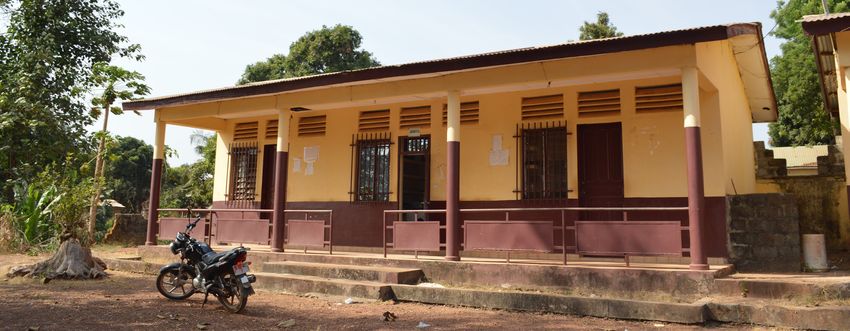
The HAT MEPP
transmission model

                      KEY DATA
    Development of the HAT MEPP model utilised:

    • 20 years of case data collected under national
      sleeping sickness programmes, NGOs and
      current BMGF supported projects. These data
      are collated and verified through the WHO
      HAT Atlas, which comprises one of the largest                                                                        TRANSMISSION MODELS
      repositories of routine surveillance data for
                                                                                                                                                                                                                                  WHO objective
      neglected tropical diseases and has been                                                                                                                                                                                    deadline missed
      frequently utilised for our modelling
    • Descriptive data of past strategies including

                                                                                                                                                                                                         WHO objective deadline
      when and how variations in medical, diagnostic

                                                                                                                                                                          INFECTIONS
      and vector control activities have occurred and
      when they have been interrupted.
    • Up-to-date, geographically located data

                     THE MODEL                                                                                                                                                         2014   2020                 2030                        2040
    A suite of bespoke HAT MEPP models matched to                                                                                                                                                     TIME
    regional case data to quantify:

    • How transmission has changed over time
    • How transmission has changed in response to
      regional intervention strategies
    • How variations in medical, diagnostic and                                                                    EXAMPLE STRATEGIES FOR A SPECIFIC LOCATION
      vector control strategies have and will impact
      transmission                                                                               BASIC STRATEGY                             MODERATE STRATEGY                                    AMBITIOUS STRATEGY
    • Evidence for transmission from non-human
      animals

                     THE OUTPUT                                                                   COST PER YEAR                                  COST PER YEAR                                       COST PER YEAR
    Understanding the economic feasibility of each

                                                                                                             $                                          $$                                             $$$
    strategy is key to providing policy guidance.
    Outputs from the models are being used in
    economic evaluations to provide:                     NOT INFECTED
                                                                                                    TOTAL COSTS                                    TOTAL COSTS                                       TOTAL COSTS
    • Tailored analyses and decision support for         INFECTED – NOT DETECTED

                                                                                                          $$                                         $$$                                                $$
      specific strategies                                (E.G. NOT PRESENTING AT HEALTH
    • Country and regional costs and benefits required   CARE FACILITY, ASYMPTOMATIC)
      to inform programme planning
    • The most robust and cost-effective use of          INFECTED – CASE DATA
      resources to ensure intervention success                                            MEETS WHO OBJECTIVE                             MEETS WHO OBJECTIVE                                  MEETS WHO OBJECTIVE

                                                                                                             x                                              ?
                                                                                          *Less ambitious or different strategies could be sufficient in some locations
8      HAT MEPP 1 (2018 TO 2021) PROJECT BOOKLET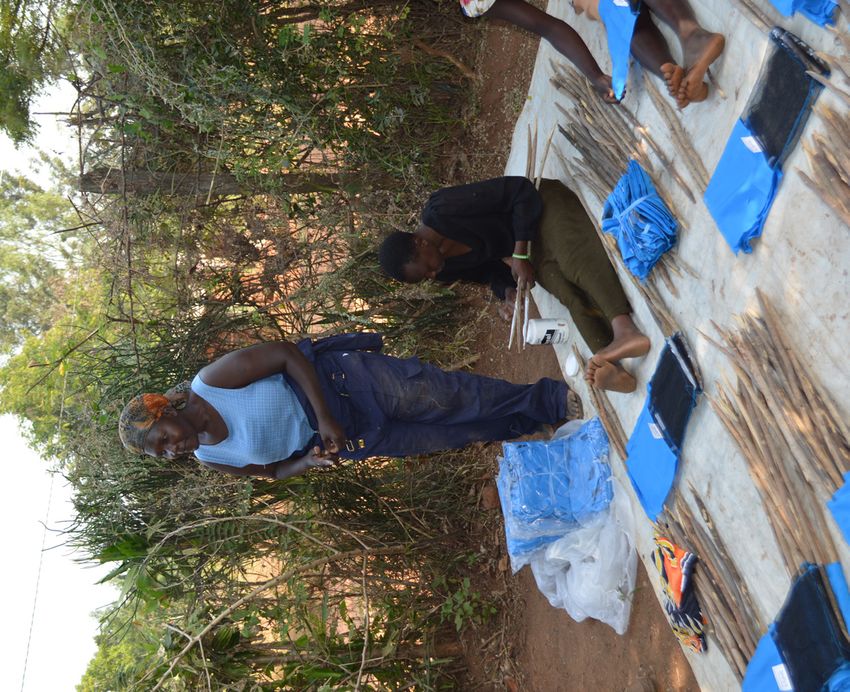
Putting the model to use
Democratic Republic of the Congo (DRC)
THE ROAD TO ELIMINATION OF TRANSMISSION
SETTING THE SCENE
Almost 70% of gHAT cases are found in the DRC and
one region alone, the former Bandundu province*,
STRATEGY PROJECTIONS OPTIMAL INTERVENTION STRATEGY: STRATEGIES CONSIDERED
accounts for around half the global cases. This province Of the 168 health zones EOT 2030
Pr(EOT by 2030)>90% IN THIS ANALYSIS
in particular, has been scaling up medical and vector investigated, the model predicted
interventions in recent years to reduce burden in the that by implementing medical- AVERAGE AS
highest-prevalence settings. Across this vast country case only interventions (blue strategy),
numbers have fallen, but an important question is which only 25% of health zones were
regions may need extra support to meet the ambitious likely, with >90% probability, to
goal of EOT by 2030. achieve EOT by 2030. Increased
INTENSIFIED AS
active screening (red strategy)
* Mai-Ndombe, Kwilu and Kwango brought forward elimination in +
a further 6% of health zones.
PROGRESS IN CONTROLLING gHAT Nevertheless, several health
zones were highlighted as AVERAGE AS + VC
For the first time, a model using location-specific gHAT requiring further intervention.
case data from 2000 to 2016, supplied by the WHO HAT By implementing vector control
Atlas, was generated across the whole of the DRC. It (purple and green strategies) in AVERAGE AS
identified that three former provinces (Équateur§, Kongo those health zones (which include
Central and Bandundu) achieved >89% reduction in several in Mai-Ndombe and
INTENSIFIED AS INTENSIFIED AS + VC
transmission since 2000 due to medical interventions. Kwilu province) the probability AVERAGE AS + VC +
The model also indicated that animals are unlikely to be of achieving EOT by 2030 was
maintenance reservoirs of gHAT (i.e. infection in animals predicted to substantially increase. INTENSIFIED AS + VC
cannot sustain transmission alone, if they contribute
1.00
1.00
at all) but there is a risk animal infections could delay
elimination. ASSESSMENT OF INVESTMENTS
Probability of Pr. EOT by 2030
Mean AS Mean AS & VC 0.75
In low-income countries, such as the DRC, efficient 0.75
in each health zone
Int. AS Int. AS & VC
in each health zone
§
Nord-Ubangi, Sud-Ubangi, Mongala, Tshuapa, Équateur use of resources is vital. It is not enough to
Pr. EOT by 2030
identify strategies for gHAT elimination without 0.50
0.50
considering the underlying cost implications and
PNLTHA-DRC and the HAT MEPP team in Kinshasa (Kat Rock) health benefits. Coupling the strategy projections 0.25
0.25
above with detailed costs and health projections
have identified optimal strategies for a series 0.00
0.00
of investment levels and objectives. In some Status quo $0
Status $0 $250 $500 $750 $1,000 $1,500 $2,000 By 2030By 2040
$250 $500 $750 $1k $1.5k $2k By By
health zones, optimal strategies would reap cost- quo
Additional WTP per DALY averted Pr(EOT)>90%
2030 2040
savings within 20 years. In many others, moderate Additional WTP
Mean ASper DALY
Mean averted
AS & VC Pr(EOT)>90%
investments, consistent with typical public health AVERAGE AS
Int. AS Int. AS & VC
AVERAGE AS +VC
policy in low-income settings, would raise the INTENSIFIED AS INTENSIFIED AS +VC
probability of elimination in a substantial number
Each circle represents one of the 168 Health Zones. Grey
of health zones. However, strategies likely to lead line indicates the overall proportion of all health zones that
to EOT are not cost-effective in all settings. will reach EOT by 2030 with >90% probability. See glossary
for a detailed description of terms used.
NEXT STEPS
Future work will expand the range of strategies being modelled including the use of acoziborole and
new modes of screening as well as providing assessments for total cost of elimination across the country.
Improvements will include developing ways to geographically link regions at different spatial scales.
10 HAT MEPP 1 (2018 TO 2021) PROJECT BOOKLET
Putting the model to use
 Chad

                                                                                                                              New transmissions
                                                           PROGRESS IN CONTROLLING gHAT
                                                           The HAT MEPP model developed for Chad combines
                                                           human case data collected between 2000 and 2019 (data
                                                           provided by WHO HAT Atlas, PNLTHA of Chad and Trypa-
                                                           NO!). The model suggests that EOT is likely to have already
                                                           been achieved in the Mandoul focus, however the last
                                                           remaining cases are likely to continue to be reported until                                                  Year
                                                           2023. Quantification of the intervention impact in Mandoul                                       Figure 1 - Reduction in new
                                                                                                                                                              transmission over time
                                                           indicates that there was a 99.6-100% drop in transmission
                                                           between 2013 and 2015, of which approximately 75% may

                                                                                                                              Years spent infected
                                                           be attributed to vector control. Counterfactual scenario
                                                           analysis indicates that without the enhanced strategy, EOT
                                                           would be very unlikely by 2030 (Figure 1). Furthermore,
                                                           improvements to passive screening have shortened the
                                                           time people spend infected if they are not detected in
                                                           active screening (Figure 2).

                                                                                                                                                                        Year
Tiny Target in Chad (Inaki Tirados)                                                                                                                    Figure 2 - Estimated change in time spent
                                                                                                                                                     infected if not picked up by active screening

      SETTING THE SCENE                                               THE ROAD TO ELIMINATION OF TRANSMISSION
      Following a peak in 2002 there has been a
      significant decline in reported gHAT cases in
      Chad. The country made substantial progress
                                                           STRATEGY PROJECTIONS                     ASSESSMENT OF INVESTMENTS
      through the medical interventions of active          With such low case numbers               Through retrospective cost-effectiveness analysis the HAT
      and passive screening. This success was further      currently being reported combined        MEPP team identified whether the decision to intensify
      accelerated by the introduction of vector control    with large numbers of people being       interventions in Mandoul was an efficient use of resources. In
      and improved passive screening in the Mandoul        screened, higher-specificity local       the enhanced strategy, costs were increased to pay for vector
      focus since 2014 - this focus was known to be        testing (e.g. mAECT) or laboratory       control and passive
      the highest transmission area in Chad. Despite       follow-up (e.g. trypanolysis) is         screening. This has
      this, challenges remain before Chad is eligible to   recommended. These tests could           meant, however,
      claim gHAT elimination has been achieved.            reduce the incidence of false            that vertical

                                                                                                                          Cost ($K)
                                                           positives and would help to better       interventions (active
                                                           monitor progress towards EOT.            screening and
                                                           Future scale back of interventions,      vector control) can
                                                           guided by sustained zero case            stop much sooner
                                                           reporting, may be possible sooner if     than under the
                                                           these additional tools are utilised.     previous strategy
                                                                                                    (Figure 3).                                 Year
                                                                                                                                                           Figure 3 - Strategy costs per year

                                                             NEXT STEPS
                                                             Mandoul is not the only focus in Chad. Moissala and Maro have comprised 19-54% of Chad’s cases in
                                                             the previous five years. Maro is a relatively new focus with an influx of refugees, and so the challenges
                                                             there are different to Mandoul, where protecting the gains may be easier. On-going modelling work in
                                                             these areas (Maro and Moissala) will assess projections.

 12     HAT MEPP 1 (2018 TO 2021) PROJECT BOOKLET
Putting the model to use Putting the model to use
Guinea Uganda
SETTING THE SCENE SETTING THE SCENE
Guinea’s current gHAT foci are in coastal regions, In Uganda, seven gHAT endemic districts are located in the north of the country. Since 2000
particularly along mangroves and small islands. cases have fallen from relatively high burden to very low case reporting in recent years.
Former foci, within the interior of the country,
now appear to be extinct. The current gHAT-
endemic regions coincide with the area of Guinea
hit strongly by the 2014-16 West African Ebola
epidemic, impacting communities and health
systems across the region. During 2016 to 2019
Guinea had around 5-10% of globally reported
gHAT cases.
Tiny Target being deployed in Guinea (Kat Rock)
Boffa East
The national control programme has performed a combination of medical interventions and, since late
Cases in
2011, vector control was gradually scaled up across all districts. Between 2018 to 2020 only four Ugandan
cases were reported across the districts with two additional cases being imported from South Sudan and
PROGRESS IN CONTROLLING gHAT diagnosed in Uganda. With Uganda on the cusp of elimination, are the current interventions sufficient to
maintain the gains and ensure transmission is permanently interrupted?
During the last decade Guinea has reinforced
their gHAT interventions in a variety of ways. This
includes the use of Tiny Targets, first deployed
in Boffa East in 2012. The Ebola epidemic in
PROGRESS IN CONTROLLING gHAT
Boffa West
By fitting to historic case and intervention data
Cases in
2014 led to active screening in Guinea being
(provided through the WHO HAT Atlas, national
New transmissions
suspended until 2016. This can be observed as a
dip in case reporting between 2014 to 2015. In programme of Uganda and Trypa-NO!), preliminary
many foci suspension of active screening resulted modelling suggests that local elimination of
in a surge in cases in 2016 and 2017. Figure 1 transmission has already been met in all districts
shows how Boffa East and West both saw case (Figure 2). If interventions remain in place, it may be
Year
reductions during Ebola, however Boffa East, expected that the last cases due to local transmission
Figure 1 - Case reporting in the two halves which continued to deploy vector control during are reported by 2021.
of the Boffa focus
the epidemic, did not see the substantial case
increase observed elsewhere (data provided by Scaling back vector control should be done with
Year
WHO HAT Atlas). careful monitoring in place, especially due to the
Figure 2 - Estimated reduction in the number of potential of imported cases from South Sudan to
annual transmissions across Uganda cause resurgence.
Since 2016 improvements have been made to
passive screening and vector control has been
expanded to the three main foci (Boffa, Dubréka
and Forécariah).
NEXT STEPS
The HAT MEPP team are working with the
Ugandan sleeping sickness elimination
NEXT STEPS programme and their implementing partners to
The HAT MEPP team are working with PNLTHA- assess how interventions could be safely scaled
Guinea and IRD to quantify the impact of Ebola back across the districts.
on case detection rates and transmission. Future
predictions for transmission and case reporting The costs and cost-effectiveness of future
will be made under a range of strategies. interventions will be assessed.
The PNLTHA-Guinéa and HAT MEPP Teams
(Xia Wang-Steverding)
14 HAT MEPP 1 (2018 TO 2021) PROJECT BOOKLET
Active Screening in Uganda (Kat Rock)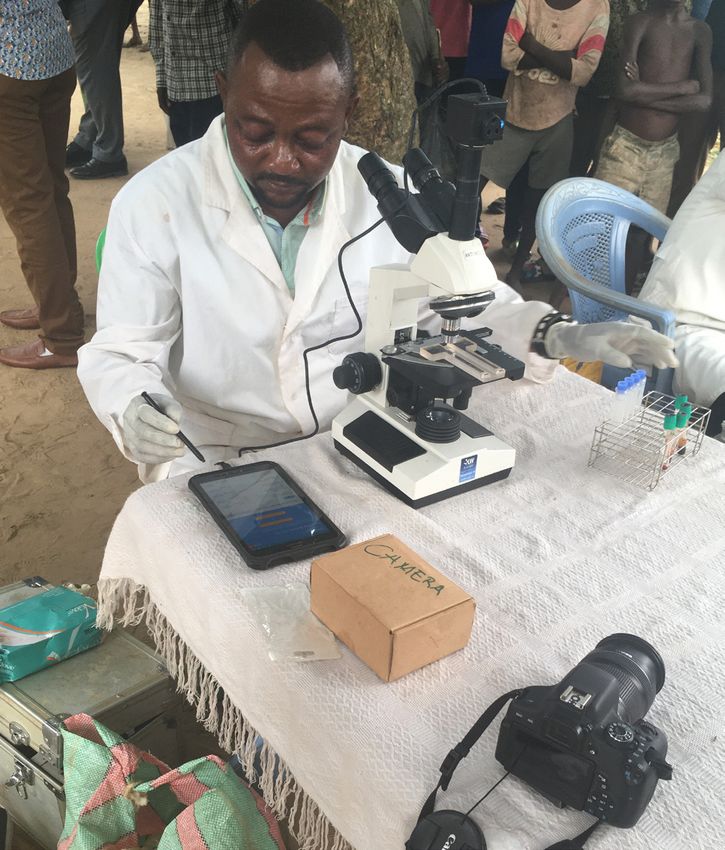
Putting the model to use
Ivory Coast

SETTING THE SCENE                                                                                    PROGRESS IN CONTROLLING gHAT
Before 2001 there were more than 100 gHAT cases                                                      In Bonon, following a peak in 2000 in which
reported each year in the Ivory Coast. Since 2012,                                                   108 gHAT cases were reported, numbers have
cases have declined to single figures. Bonon and                                                     declined by more than 98%. Since 2014, the
Sinfra, the remaining endemic foci, are found in the                                                 number of cases reported have been between
Central-Western part of the country. Until 2016 the                                                  0 and 2 per year. Similarly in Sinfra, since a peak                                              Village in endemic focus of Ivory Coast (Kat Rock)
gHAT strategy has comprised primarily of active                                                      of 37 cases in 2003, cases have declined, with
and passive screening, with the recent addition of                                                   between 0 and 1 reported per year from 2012.
vector control in Bonon (2016) and Sinfra (2017)
and improvements to passive screening in 2017.                                                       Disentangling how the coverage and frequency
                                                                                                     of screening activities impacts the number
                    100                                                                              of gHAT cases reported is challenging. For
                                                                                                     example, both Bonon and Sinfra observed
                                                                  Vector control
Cases in
 Bonon
 Bonon

                                                                                                     the highest number of cases reported when
Cases

                        50
                                                                                                     the highest number of people were tested in
                        0
                        2000        2005       2010        2015
                                                                                                     active screening. Modelling carried out by the
                                                                                                     HAT MEPP team aims to address this issue by
                        40                                                                           estimating how transmission has already reduced
                                                                                                     and is predicted to change in the endemic foci of
      in

                                                                                   Vector control
Cases in
 Sinfra

                                                                                                     the Ivory Coast.
        Sinfra
Cases

                        20

                        0
                        2000        2005       2010        2015
                                              Year
                               Figure 1 - Cases reported in the                                                                                                                                       Health Facility Ivory Coast (Kat Rock)
                                   remaining endemic foci
    New transmissions

                                                                                                                                                           Making Tiny Targets in Uganda (Kat Rock)
                                            Year
                                Figure 2 - Transmission
                                      Reduction

NEXT STEPS
Passive screening identified the small number
of reported cases in the endemic foci. This led
to active screening being replaced by reactive
screening following passive case detection.
HAT MEPP are working with the PNETHA
and IRD to assess the impact and cost-
effectiveness of this and other future strategies
to achieve elimination of transmission.                                                             PNETHA-Ivory Coast, IRD, FIND and HAT
                                                                                                    MEPP Teams (Kat Rock)

16                      HAT MEPP 1 (2018 TO 2021) PROJECT BOOKLET
                                                                                                                                                           Tiny Targets in Uganda (Kat Rock)          Active Screening in DRC (Kat Rock)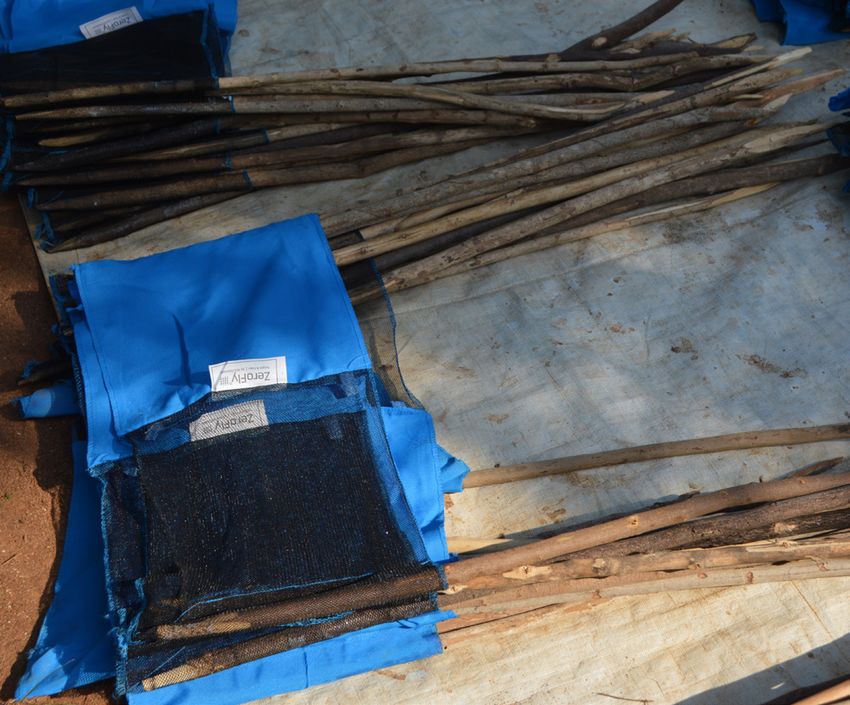
Graphical User Interface (GUI)
How to access HAT MEPP’s results
HISTORIC CASE DATA COST EVALUATIONS
Click here to view Historic Case Data
GUI Click here to view Cost Evaluations Data
Lowest cost $250 per $500 per $1000 per
intervention DALY averted DALY averted DALY averted
Explore past case data, covering up to 20 years, The GUI is a data analysis The GUI can be used to understand the economic implications of implementing each
2020−2030
available at province and health zone level: tool providing access to the data strategy, as well as to identify optimal strategies:
and results from HAT MEPP in a user-
friendly way. The data can be viewed $0/ DALY $250/ DALY
AVERAGE AS $979,599.11
averted averted
and downloaded as maps and charts and is
designed to support policy makers and INTENSIFIED AS Lowest cost $1,406,754.15
$250 per $500 per $1000 per
2020−2040
donors in making relevant policy and intervention DALY averted DALY averted DALY averted
AVERAGE AS + VC $1,017,310.72
investment decisions in relation to
2020−2030
AVERAGE AS
intervention strategies. INTENSIFIED AS + VC $1,366,768.13
Click here for GUI link
$500/ DALY $1000/ DALY
2020−2050
averted averted INTENSIFIED AS
Cost (USD)
2020−2040
Stage 2, 2nd-line treatment Stage 1 treatment
AVERAGE AS + VC
Passive surveillance (PS) Active screening
Stage 2 treatment Vector control (VC) Mean AS Mean AS & VC
INTENSIFIED AS + VC
Additional active screening Max AS Max AS & VC
2020−2050
A breakdown of the total costs for one Degree of certainty in optimal
health zone for each of the four strategies. strategies at different levels of
investment (increased willingness to
pay [WTP]) denominated in dollars
Mean AS per
MeanDALYs averted. See glossary for a
AS & VC
Reported gHAT case data Explore trends in transmission FUTURE PROJECTIONS Max AS detailed
Max AS & description
VC of terms used.
Click to view Future Projections Data
Passive Detections
Predict timeline to EOT and identify regions requiring intensified interventions:
Transmission
AVERAGE AS
Passive Detections
AVERAGE AS + VC
Transmission
Year Year
Health-zone-level fits to retrospective gHAT Health-zone-level estimation of passive
case data (2000-2016), aggregated to gHAT case detections (2000-2016). Box and
province level. Solid line = case data. Box whiskers = trend in new infections.
and whiskers = model fitting to case data. Year Year
Estimated numbers of passive detections Estimation of transmission (2020-2035) in the
(2020-2035) in the absence (blue boxes) or absence (blue boxes) or presence of vector
presence of vector control (purple boxes). control (purple boxes).
18 HAT MEPP 1 (2018 TO 2021) PROJECT BOOKLETEconomic evaluation of Glossary
gHAT elimination
Active screening (AS) Mobile teams travelling to at-risk villages to test any person willing to
gHAT elimination strategies can represent a justifiable use of resources even
participate
in resource-constrained settings. Cost-effectiveness analysis (CEA) is a way
of comparing the health impact and costs of each intervention strategy. See Animal reservoirs Domesticated and wild animal infected populations which contribute to
Glossary for a detailed description of terms used. continued transmission in a region
Case data Available data on the number of diagnosed gHAT cases
Cost-effectiveness analysis (CEA) A way to examine both costs and health outcomes of intervention
AVERAGE INTENSIFIED AVERAGE INTENSIFIED
AS AS AS + VC AS + VC strategies. Measured as costs to gain a unit of health outcome e.g.
additional $ per DALY (disease burden) averted
INTERVENTION
STRATEGY DALYs (disability-adjusted life years) A metric used to describe years of life lost and morbidity caused by a
+ + disease
DALYs averted The number of DALYs (disease burden) saved by switching strategy
OUTPUTS FROM THE HAT Elimination investment case (EIC) Analysis of the feasibility and cost of elimination
MEPP TRANSMISSION MODEL OUTPUT OUTPUT OUTPUT OUTPUT
WERE PROCESSED USING Elimination of transmission (EOT) Reduction to zero of the incidence of infection caused by a pathogen in
A PROBABILITY MODEL OF a defined geographical area with minimal risk of reintroduction
DISEASE OUTCOMES
Intervention Tools, treatments or approaches used to prevent or treat the infection
PROBABILITY MODEL OF
DISEASE OUTCOME Passive screening (PS) Testing self-presenting individuals for gHAT at fixed health facilities
PROBABILITY OF HEALTH
PNETHA Programme national d’elimination de la Trypanosomiase humaine
OUTCOMES FOR gHAT africaine (National HAT Elimination Programme)
PATIENTS
PNLTHA Programme national de lutte contre la Trypanosomiase humaine
DALYs USED AS A METRIC TO DALYs DALYs DALYs DALYs africaine (National HAT Control Programme)
COMPARE DISEASE BURDEN
FOR EACH STRATEGY Strategy A combination of different interventions possibly with some criteria on
cessation or when to scale back
Transmission Biological transfer of a disease from one infected human or animal
Treatment COST-EFFECTIVENESS ANALYSIS to another. In the case of sleeping sickness transmission occurs when
Vector Control Establish the optimal intervention strategies for a range of either tsetse infected with Trypanosoma brucei gambiense bite an
COSTS uninfected human or when uninfected tsetse bite an infected human
Active Screening costs allocated to alleviate disease burden measured as
Passive Screening willingness to pay (WTP) per DALY averted.
Vector control (VC) Methods used to reduce, but not necessarily eliminate, the vector
population (i.e. tsetse) that transmit the infection
Willingness to pay (WTP) Amount a donor is prepared to pay to avert one DALY (disease burden)
EXAMPLE HIGH-INCIDENCE HEALTH ZONE $5.0M
In some high-incidence health zones cost-effectiveness
AVERAGE AS WHO HAT Atlas An initiative, launched by the World Health Organisation, to map the
$4.0M number of HAT cases and screening coverage for HAT across sub-
analysis identified that implementing average AS + VC
Saharan Africa
(purple strategy) is likely cost-effective and expedites the $3.0M INTENSIFIED AS
Cost
EOT goal. Early cessation of active screening and vector
control activities mean costs are expected to decrease $2.0M
AVERAGE AS + VC
during the 2020s and investments in vector control $1.0M
could be recovered by late 2030. In low-incidence health
zones, as disease burden is small, low-cost intervention $0.0M INTENSIFIED AS + VC
strategies may be sufficient to achieve EOT. 2020 2025 2030 2035 2040
Year
20 HAT MEPP 1 (2018 TO 2021) PROJECT BOOKLETHAT MEPP & Acknowledgments
related publications
FURTHER DETAILS OF HAT MEPP’S RESEARCH: RESEARCHERS
• Economic evaluation of disease elimination: an extension to the net benefits framework and
application to human African trypanosomiasis. MedRxiv [Preprint] Paper summaries: English Version
Antillon, M et al (2021)
• Cost-effectiveness of sleeping sickness elimination campaigns in five settings of the Democratic
Republic of Congo. MedRxiv [Preprint] Paper summaries: English Version / French Version Antillon,
M et al (2020)
• Cost-effectiveness modelling to optimise active screening strategy for gambiense human African
trypanosomiasis in the Democratic Republic of Congo. MedRxiv [Preprint] Paper summaries:
English Version / French Version Davis, CN et al (2020)
• Shrinking the gHAT map: identifying target regions for enhanced control of gambiense human
African trypanosomiasis in the Democratic Republic of Congo. MedRxiv [Preprint] Paper summaries:
English Version / French Versions Huang, C et al (2020)
PARTNERS & DATA PROVIDERS
• Quantifying epidemiological drivers of gambiense human African Trypanosomiasis across the
Democratic Republic of Congo. PLoS Computational Biology Paper summaries: English Version / Dr Alexandra Shaw
French Version. Crump, RE et al (2021) Dr Paul Bessell
• Human African trypanosomiasis: current status and eradication efforts CAB Reviews Davis, CN et al
(2020)
WHO & the
• Village-scale persistence and elimination of gambiense human African trypanosomiasis PLoS
Neglected Tropical Disease 13(10) Davis, CN et al (2019) WHO HAT
Atlas team
• Modelling to quantify the likelihood that local elimination of transmission has occurred using
routine gambiense human African trypanosomiasis surveillance data Clinical Infectious Diseases
Davis, CN et al (2021)
RELATED RESEARCH:
• Predicting the impact of COVID-19 interruptions on transmission of gambiense human African
trypanosomiasis in two health zones in the Demoncratic Republic of Congo Transactions of The
Royal Society of Tropical Medicine and Hygiene 115, Issue 3 (245–252) Aliee, M (2021)
• Screening strategies for a sustainable endpoint for gambiense sleeping sickness The Journal of
Infectious Diseases 221:S539 Castano, MS et al (2019)
• Adding tsetse control to medical activities contributes to decreasing transmission of sleeping
sickness in the Mandoul focus (Chad) PLoS Neglected Tropical Disease Mahamat, MH et al (2017)
FUNDING
Bill and Melinda Gates
Foundation
22 HAT MEPP 1 (2018 TO 2021) PROJECT BOOKLETMODÉLISATION ET PRÉVISIONS ÉCONOMIQUES POUR LA POLITIQUE
RELATIVE À LA TRYPANOSOMIASE HUMAINE AFRICAINE
HAT MEPP 1 (2018 À 2021)Sommaire La maladie du sommeil
La maladie du sommeil...............................................................................03 La trypanosomiase humaine africaine dans sa forme ‘gambiense’ (gTHA), ou maladie
du sommeil, est une maladie tropicale qui représente une menace pour la vie de
millions de personnes des pays le plus pauvre en Afrique centrale et occidentale.
Concernant HAT MEPP...............................................................................03 Causée par le parasite Trypanosoma brucei gambiense, la maladie, souvent fatale sans
traitement, est transmise aux humains par la piqûre d’une tsé-tsé infectée. Le contrôle
Les outils d’intervention gTHA.................................................................04 de la maladie du sommeil présente un défi car les populations à risque vivent souvent
dans des zones rurales isolées, également car le parasite peut être porté pendant un
temps très long, et que les symptômes au début de maladie ne sont pas spécifiques.
Le cycle de modélisation : Une procédure dynamique.......................06
L’Organisation Mondiale de la Santé (OMS) vise l’élimination de la transmission (EdT) de la maladie du
Le modèle de transmission HAT MEPP...................................................08 sommeil au niveau mondial d’ici 2030. En dépit d’une réduction de 95% du nombre de cas depuis 2000,
de nombreuses questions subsistent quant à la faisabilité économique de cet objectif, notamment dans
les pays confrontés à des ressources restreintes et à des défis sanitaires très divers. Alors même que
L’application du modèle nous nous rapprochons de l’EdT, pour assurer un succès pérenne il sera essentiel comprendre quelles
République démocratique du Congo.............................................. 10 sont les stratégies les plus efficaces et les plus viables sur le plan économique pour atteindre un taux de
transmission zéro, et soutenir la suppression de la transmission au fil du temps.
Tchad..................................................................................................... 12
Guinée................................................................................................... 14
Ouganda............................................................................................... 15 Le HAT MEPP
Côte d’Ivoire......................................................................................... 16
En 2018, l’équipe du projet de modélisation et prévisions
L’interface d’utilisateur graphique économiques pour la politique relative à la trypanosomiase
humaine africaine (HAT MEPP) a entrepris de développer
Comment accéder aux résultats du HAT MEPP............................18 des modèles mathématiques, lesquels vont nous permettre
de proposer une priorisation d’attribution des ressources
L’évaluation économique de l’élimination de la gTHA.......................20 dans les pays endémiques. Les modèles serviront à :
• Fournir un soutien aux programmes de contrôle de la
Le glossaire...................................................................................................21 maladie du sommeil ainsi qu’aux acteurs chargés de
la mise en œuvre, en procurant des stratégies de lutte
Le HAT MEPP et les publications associées...........................................22 sur la base des évidences et des évaluations du coût
• Comprendre la faisabilité et les coûts de l’élimination
de la transmission en créant un Argumentaire
Les remerciements.......................................................................................23 d’Investissement aux fins de l’Élimination
Depuis 2018, le HAT MEPP a développé des modèles
mathématiques sophistiqués qui :
• Évaluent la transmission passée, actuelle et future
• Prennent en considération les variations locales, la
probabilité et l’impact des réservoirs animaux dans la
maintenance de la transmission et les perturbations
des opérations de lutte contre la gTHA en raison des
éclosions des autres maladies
• Fournir les résultats, les coûts d’intervention ainsi que
des recommandations quant à la voie la plus efficient
du point de vue économique, de procéder au niveau
sous-national
26 LIVRET HAT MEPP 1 (2018 À 2021)Les outils d’intervention de
base contre la gTHA
LE DÉPISTAGE ACTIF LES DÉFIS : LE TRAITEMENT LES DÉFIS :
• Certaines personnes ne participent pas au • Le traitement au fexinidazole demeure trop
Le contrôle de la maladie du sommeil a dépistage. Les protocoles de traitement ont complexe pour être administré en l’absence de
reposé principalement sur des équipes • En raison de la faible incidence de gTHA, traditionnellement reposé sur une confirmation parasitologique.
mobiles se déplaçant dans les zones à risque les techniciens réalisant les confirmations administration intraveineuse ou • Le fexinidazole peut produire des effets
pour réaliser un dépistage actif (DA) en pourraient passer des années sans observer intramusculaire complexe, nécessitant secondaires et l’adhérence au traitement
utilisant des tests sérologiques, tels le « Card le parasite. Il est difficile de maintenir les une hospitalisation. En 2018, le premier nécessite une observation directe par du
Agglutination Trypanosomiasis Test » (CATT) compétences nécessaires pour réaliser ces traitement oral disponible, le fexinidazole, a personnel formé.
ou des tests de diagnostic rapides (TDRs), tests. été autorisé pour le traitement en première
suivis de tests parasitologiques afin de ligne de la plupart des cas de gTHA, sans L’AVENIR :
confirmer les cas. L’AVENIR : recours à une ponction lombaire. Cela a • L’acoziborole, un nouveau traitement
• Les tests en cours de développement représenté une avancée majeure dans le prometteur, à l’administration orale en une
(par exemple le g-iELISA et les dosages traitement de la gTHA. seule dose, est actuellement en cours d’essais
moléculaires) pourraient permettre une cliniques et permettrait potentiellement
confirmation à distance après coup dans des de traiter même en l’absence de tests de
laboratoires régionaux, offrant de nouvelles confirmation.
perspectives en matière de détection de cas et
de surveillance post-élimination.
• Une confirmation vidéo des parasites peut
fournir un élément de contrôle qualité lorsque
des cas sont diagnostiqués.
LA LUTTE
ANTIVECTORIELLE LES DÉFIS :
• Le déploiement des petits écrans sur toutes
les zones où la gTHA est endémique serait
LE DÉPISTAGE La réduction des populations de tsé-tsé extrêmement compliquée. En outre, il est
LES DÉFIS : dans les zones endémiques de gTHA par la incertain que ce déploiement soit nécessaire.
PASSIF • Des compétences et des équipements
spécifiques sont nécessaires pour confirmer
lutte antivectorielle (LAV), notamment dans
les environnements composés de forets
• Comprendre quand la LAV peut être allégée
afin d’optimiser le rapport cout-efficacité tout
les cas et peuvent n’être disponibles que dans riverains, peut réduire la possibilité pour en réduisant le risque d’une recrudescence.
Le dépistage passif (DP) est un mécanisme certains centres. Il peut s’avérer nécessaire que eux de transmettre la parasite aux êtres
essentiel pour la détection de la maladie les personnes ayant un résultat positif au TDR humains. Il existe plusieurs méthodes pour L’AVENIR :
au sein des communautés. Les personnes doivent se déplacer relativement loin, et en contrôler les tsé-tsé, toutefois une méthode • Le renforcement de la LAV doit être ciblé sur
présentant des symptômes peuvent conséquence un grand nombre d’entre eux ne relativement peu onéreuse et facile à mettre les zones prioritaires, en fonction d’un fardeau
être testées dans des centres de soins se présentent pas pour la confirmation. en œuvre est l’utilisation des « petits écrans de la maladie plus élevé ou sur des zones où
permanents où les TDRs sont disponibles. • Un système de santé fragile peut entrainer une » : des petits morceaux de tissu bleu et noir, l’on prévoit que les objectifs d’EdT ne seront
Une confirmation parasitologique demeure faible utilisation des établissements de santé. imprégnés d’un insecticide. pas atteints.
nécessaire à la suite d’un résultat de TDR • Le DP identifie généralement les personnes
positif. Les cas détectés pendant le DP ayant été infectés de longue date.
peuvent déclencher le dépistage réactif ou
la lutte antivectorielle s’ils ne sont pas déjà L’AVENIR :
implémenté dans la zone concernée. • Avec la diminution du nombre de cas et
la réduction des autres activités, le DP
peut contribuer à la surveillance de la
recrudescence.
28 LIVRET HAT MEPP 1 (2018 À 2021)
Établissement de santé en Guinée (Kat Rock)Le cycle de modélisation:
Une procédure dynamique
DÉVELOPPER UNE STRATÉGIE
Nous avons présenté certains des outils pour l’élimination Dans ce livret, nous allons nous focaliser sur quatre
de la gTHA actuellement disponibles. L’association de stratégies basées sur les outils actuellement disponibles.
ces outils constituent des stratégies visant à réduire Le dépistage actif standard ou intensifié sans lutte Produire des résultats
l’incidence de la gTHA par la réduction des réservoirs antivectorielle (interventions médicales uniquement)
parasitaires chez l’homme et la réduction de la ainsi que le dépistage actif standard ou intensifié avec Des nouvelles données, qui deviennent plus
transmission par la lutte antivectorielle. Ces stratégies lutte antivectorielle. Toutes les stratégies que nous allons détaillées et fiables, jouent un rôle important
peuvent être adaptées (réduites ou renforcées) à des prendre en considération comprennent le dépistage dans la mise à jour des résultats du modèle.
localités spécifiques, en fonction de différents facteurs passif. Certaines comprennent également le dépistage
tels que le nombre de cas rapporté. Des outils et passif renforcé. Les futurs travaux du HAT MEPP élargiront Échéance objective de
des méthodes novateurs peuvent être inclus dans les la gamme de stratégies comprises dans nos analyses. l’OMS non atteinte
nouvelles stratégies pour l’avenir.
Échéance objective de l’OMS
Créer ou adapter le modèle
INFECTIONS
Nous effectuons un cycle continu
de développement et d’affinement
de notre modèle afin d’obtenir
des résultats. Nos évaluations
de performances sont basées
sur les données et les retours de
collaborateurs.
2014 2020 2030 2040
TEMPS
LES NOUVEAUX
La compilation d’informations à jour OUTILS & LES
De nouvelles stratégies, qui NOUVELLES STRATÉGIES L’évaluation des résultats avec
pourraient comprendre des outils les partenaires
émergents, seront incluses dans Des réunions régulières, au cours
l’affinage des modèles. Lorsque desquelles nous examinons les
l’information évolue, ou que de résultats de la modélisation, nous
nouvelles données deviennent permettent d’affiner les éléments
disponibles les modèles seront mis à + LES NOUVELLES entrants de notre modèle.
jour en conséquence. DONNÉES
30 LIVRET HAT MEPP 1 (2018 À 2021)Le modèle de
transmission du HAT MEPP
LES CHIFFRES CLÉS
Le développement du modèle HAT MEPP utilisé:
• Des données relatives aux cas recueillies pendant
20 ans dans le cadre de programmes nationaux de
lutte contre la maladie du sommeil, auprès d’ONG
et de projets actuellement soutenus par la BMGF. Ces
données sont compilées et vérifiées par le biais de
l’Atlas de la THA de l’OMS, qui représente l’un des MODÈLES DE TRANSMISSION
plus grands répertoires de données de surveillance de
Échéance objective de
routine pour les maladies tropicales négligées. L’Atlas l’OMS non atteinte
de la THA de l’OMS a souvent été utilisé dans le cadre
de notre modélisation.
Échéance objective de l’OMS
• Des données descriptives des stratégies précédentes,
incluant les activités médicales, de diagnostic et de lutte
INFECTIONS
antivectorielle ont eu lieu ainsi que leurs dates de fin.
• Des données mises à jour et localisées
géographiquement
LE MODÈLE 2014 2020 2030 2040
Une série de modèles HAT MEPP sur mesure assortis de
TEMPS
données régionales sur les cas afin de quantifier :
• L’évolution de la transmission avec le temps
• L’évolution de la transmission à la suite aux stratégies
d’intervention régionales
• L’impact sur la transmission des variations des stratégies
médicales, de diagnostic et de lutte antivectorielle EXEMPLES DE STRATÉGIES POUR UNE ZONE SPÉCIFIQUE
• Les possibilités de transmission à partir des animaux
STRATÉGIE DE BASE STRATÉGIE MODÉRÉE STRATÉGIE AMBITIEUSE
LES RÉSULTATS
La détermination de la faisabilité économique de
chacune des stratégies est essentielle pour fournir une COÛT ANNUEL COÛT ANNUEL COÛT ANNUEL
orientation politique. Les résultats obtenus à partir
$ $$ $$$
du modèle sont utilisés dans le cadre d’évaluations
économiques afin de fournir :
PAS INFECTÉ
• Une analyse adaptée aux observations et un soutien
pour faciliter la prise de décision des stratégies COÛT TOTAL COÛT TOTAL COÛT TOTAL
spécifiques INFECTÉ - PAS DÉTECTÉ
$$ $$$ $$
(PAR EX. NE S’EST PAS PRESENTÉ À UN
• Les coûts et les avantages nationaux et régionaux afin ÉTABLISSEMENT DE SANTÉ, ASYMPTOMATIQUE)
d’orienter la planification des programmes
• L’utilisation la plus robuste et financièrement efficace
des ressources, afin d’assurer le succès des interventions INFECTÉ - DONNÉES SUR LES CAS
OBJECTIF OMS ATTEINT OBJECTIF OMS ATTEINT OBJECTIF OMS ATTEINT
x ?
*Des stratégies moins ambitieuses ou différentes pourraient être suffisantes dans certaines zones
32 LIVRET HAT MEPP 1 (2018 À 2021)L’application du modèle
La République démocratique du Congo (RDC)
LA VOIE VERS L’ÉLIMINATION DE LA TRANSMISSION
LE CONTEXTE
Près de 70% des cas de gTHA se trouvent dans une seule région
de la RDC, l’ancienne province du Bandundu*, et représentent LES PRÉVISIONS STRATÉGIE D’INTERVENTION OPTIMALE : LES STRATÉGIES EXAMINÉES DANS
Pr(EOT by 2030)>90%
environ la moitié des cas au niveau mondial. Cette région en STRATÉGIQUES EdT 2030 LE CADRE DE CETTE ANALYSE
particulier a intensifié les interventions médicales et vectorielles
Sur les 168 zones de santé étudiées,
au cours des dernières années afin de réduire le fardeau dans DA MOYEN
le modèle a prédit qu’avec la mise
les zones où la prévalence est la plus élevée. Le nombre de cas a
en œuvre d’interventions médicales
diminué dans ce vaste pays, cependant une question significative
uniquement (stratégie bleue), seulement
subsiste, à savoir quelles régions pourraient nécessiter un
25% des zones de santé étaient
soutien supplémentaire afin d’atteindre l’objectif ambitieux de
susceptibles d’atteindre l’EdT d’ici
l’EdT d’ici 2030.
2030, avec une probabilité de >90%. DA INTENSIFIÉ
* Provinces de Mai-Ndombe, Kwilu et Kwango
Une augmentation du dépistage actif
(stratégie rouge) a permis d’anticiper
+
l’élimination dans 6% de zones de santé
LES PROGRÈS RÉALISÉS DANS LE supplémentaires. Toutefois, plusieurs
zones de santé ont été identifiées DA MOYEN + LAV
CONTRÔLE DE LA gTHA comme nécessitant des interventions
Pour la première fois, un modèle a été généré pour la totalité supplémentaires. Avec la mise en DA MOYEN
de la RDC, comprenant des données de cas de gTHA dans des œuvre de la lutte antivectorielle (les
zones spécifiques pour la période entre 2000 et 2016, fournies stratégies violettes et vertes) dans ces DA INTENSIFIÉ
par l’Atlas de la THA de l’OMS. Trois anciennes provinces zones de santé, dont plusieurs dans les DA INTENSIFIÉ + LAV
(Équateur§, Kongo Central et Bandundu) ont été identifiées provinces de Mai-Ndombe et de Kwilu, DA MOYEN + LAV
comme ayant atteint une réduction de la transmission >89% la probabilité d’atteindre l’EdT d’ici 2030 +
depuis 2000, grâce à des interventions médicales. Le modèle devrait augmenter significativement. DA INTENSIFIÉ + LAV
a également indiqué qu’il est peu probable que les animaux
forment un réservoir de maintenance de la gTHA. Les animaux
infectés seuls ne peuvent pas assurer la transmission, si toutefois L’ÉVALUATION DES INVESTISSEMENTS 1.00
1.00
ils y contribuent, mais il existe un risque que les infections Dans les pays à faiblesMean AS tels que
revenus Mean AS une
la RDC, & VC
Probabilité Pr. EdT d’ici 2030
dans chaque zone de santé
animales pourraient retarder l’élimination. utilisation efficace des ressources
Int. AS estInt.
essentielle.
AS & VC Il est 0.75
0.75
insuffisant d’identifier des stratégies pour l’élimination de
in each health zone
Pr. EOT by 2030
§
Nord-Ubangi, Sud-Ubangi, Mongala, Tshuapa, Équateur la gTHA sans prendre en considération les répercussions
0.50
0.50
financières sous-jacentes ainsi que les avantages pour la
santé. En combinant les prévisions stratégiques ci-dessus
avec le décompte détaillé des coûts et les prévisions 0.25
0.25
Le PNLTHA-RDC et les équipes HAT MEPP (Kat Rock) pour la santé, nous avons identifié les stratégies
optimales pour une série de paliers d’investissement et
0.00
0.00
d’objectifs. Dans certaines zones de santé, les stratégies Status quo $0 $250 $500 $750 $1,000 $1,500 $2,000 By 2030By 2040
Status $0 $250 $500 $750 $1k $1.5k $2k d’ici d’ici
optimales permettraient de réaliser des économies quo
Additional WTP per DALY averted Pr(EOT)>90%
2030 2040
dans un délai de 20 ans. Dans plusieurs des autres, des DAP supplémentaire
Mean AS par
MeanAVAI
AS évité
& VC Pr(EdT)>90%
investissements modérés – alignés sur une politique Int. AS Int. AS & VC
de santé publique typique de mise en œuvre dans les DA MOYEN DA MOYEN + LAV
zones à faible revenus – augmenteraient la probabilité DA INTENSIFIÉ DA INTENSIFIÉ + LAV
d’élimination de la maladie du sommeil dans un nombre
Chaque cercle représente l’une des 168 Zones de Santé.
considérable de zones de santé. Toutefois, les stratégies La ligne grise représente les régions ayant une probabilité
susceptibles d’atteindre l’EdT ne sont pas financièrement de >90% d’atteindre l’EdT d’ici 2030. Veuillez consulter le
efficaces dans tous les contextes. glossaire pour une définition détaillée des termes utilisés.
LES PROCHAINES ÉTAPES
Les travaux futurs élargiront l’éventail des stratégies que nous modélisons, y compris l’utilisation de l’acoziborole
et des nouvelles méthodes de dépistage, ainsi que la réalisation d’évaluations du coût total de l’élimination
pour le pays. Les améliorations de la modélisation comprendront le développement de méthodes pour relier
géographiquement les régions à différentes échelles spatiales.
34 LIVRET HAT MEPP 1 (2018 À 2021)You can also read


