Prospect of ASEM: A Bet on EU and ASEAN as Possible Pillars in Asian (Maritime) Security
←
→
Page content transcription
If your browser does not render page correctly, please read the page content below
Prospect of ASEM: A Bet on EU and ASEAN as Possible Pillars in Asian (Maritime) Security
Pierre Ferrebeuf and Dr. Eric Frécon

                                                Reading time: 17 minutes*

    Prospect of ASEM: A Bet on EU
   and ASEAN as Possible Pillars in
      Asian (Maritime) Security
                                       Pierre Ferrebeuf1 and Dr. Eric Frécon2

  1    Pierre Ferrebeuf is graduated with a MSc in strategic studies from RSIS, Nanyang Technological University in Singapore. He has both
       public sector and think tank experience, mainly in Singapore. His research and analysis are focused on maritime security, naval
       strategy, and defense-security issues in Asia. You can follow him on Twitter: pierre_frbf.

  2    Dr. Eric Frécon, who is now based in Singapore, was Lecturer at the French Naval Academy in 2012-2018. He is Coordinator of
       the Observatory on Southeast Asia within the Asia Centre, in Paris, since 2012, Adjunct fellow at IRASEC (Research Institute on
       Contemporary Southeast Asia in Bangkok), IRSEM (Institute for Strategic Research in Paris) and at the French Naval Academy-
       Sorbonne, as well as a member of the EU Committee of the Council for Security Cooperation in the Asia Pacific (CSCAP).
       Since 2018, he is part of the AVI board of directors.

       In 2011-2012, he was Deputy Chief Editor of the bimonthly policy and international politics magazine, Diplomatie. Previously, he
       served as a research fellow within the S. Rajaratnam School of International Studies (Singapore), where he stayed for three years. He
       gave lectures on Southeast Asia at Sciences Po (Paris), Sciences Po (Lyon) and at IRIS (Institute on International and Strategic Relations)
       in Paris.
       He completed his Ph.D. at Sciences Po (Paris) in 2007. His last book is entitled Chez les pirates d’Indonésie [Among the Indonesian
       Pirates] (Fayard, 2011). He has also co-directed Asie du l’Est et du Sud-est : de l’émergence à la puissance [East and Southeast Asia:
       from Emergence to Power] (Ellipses, 2015) and the special issue of Monde Chinois-Nouvelle Asie on China and Southeast Asia (Eska,
       2018).

92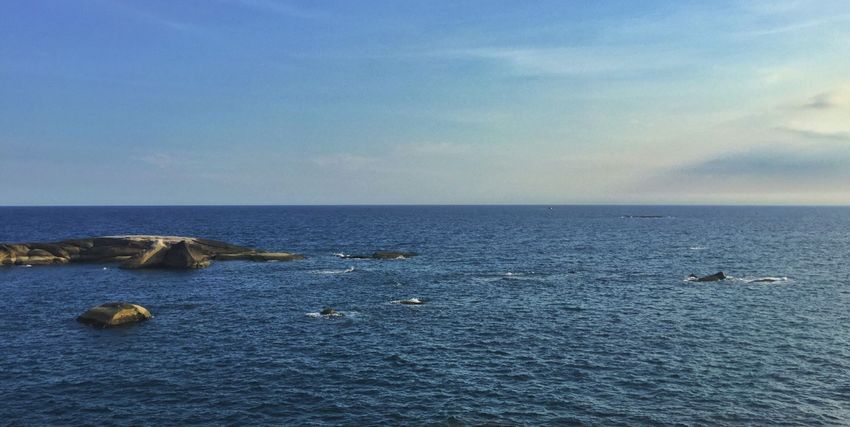
THE ASIA-EUROPE MEETING 2020 (ASEM)

Introduction                                                         ute in the Indo-Pacific (as well as Indo-Pacific
                                                                     powers interfere sometimes in Europe). Actu-
Asia emerged not only along a tectonic rift but                      ally, it is no more only a matter of distance,
above all on a geopolitical one. Asia keeps bal-                     physical borders or direct relationships but
ancing between its East and its West, between                        also a matter of values and global influence.
the continent and the sea, between MacKind-                          Concretely, some Indo-Pacific countries are
er and Mahan; in short, between Europe (and                          more and more tempted to go beyond the
Russia!) and the Pacific. The duet “Asia-Europe”                     China-Quad dilemma, through newer part-
(for example in “ASEM”) had “Asia-Pacific” as a                      nerships and bridges across the geopolitical
rival in most of the diplomatic fora since the                       areas. Previously, the ASEAN States opted for
1990s (for example in “CSCAP”, “APEC” and                            the “minilateralism” to take over a failed re-
“APR”).3 It has now to deal with the growing                         gionalism in security issues, like the Haze in
“Indo-Pacific” wave, on which the world seems                        2015-2017 or even terrorism5 among other
to focus. As a symbol, the EAS (East Asia Sum-                       challenges; for instance, littoral states, which
mit) now follows the ASEAN (Association of                           felt directly concerned by piracy and armed
Southeast Asian Nations) yearly summits,                             robbery against ships, did not expect anything
without any European countries or EU (Euro-                          from the ASEAN secretary; they preferred to
pean Union) representatives. Besides, while                          take their own initiatives to set up patrols in
European historians and anthropologists still                        the Malacca Straits in the 2000s and in the
choose Asia in general and Southeast Asia in                         Sulu Sea in the late 2010s. Now, due to the
particular to conduct field research (cf. SOAS                       possible interference of peripheral powers
in London, EHESS in Paris, Goethe-Universität                        (like the Chinese and American, both in the
in Frankfurt) , it is slightly more difficult to find
                4
                                                                     Malacca Straits and the Sulu Seas, between
European political scientists, because they are                      2004 and 2019), is it time for something like
mostly more interested.                                              a “maxilateralism”, across the traditional re-
                                                                     gional spheres, to by-pass both Washington
What does it mean for the future of ASEM                             and Beijing ascendancies? Similarly, after the
(Asia-Europe Meeting)? Is it definitely out-dat-                     fascination (to choose as the main diplomatic
ed? Would it be the ineluctable “move of his-                        partner either China or USA) and the hedging
tory”, echoing the geopolitical drift from the                       (to satisfy both China and USA) – is it time (es-
Atlantic to the Pacific and highlighted by An-                       pecially after the last two Shangri La Dialogues
dré Malraux (1901-1976) in the 1970s, among                          and Lee Hsien Loong’s speech in June 2019)
others?                                                              for independence (to follow neither China nor
                                                                     USA)?
Not so sure. Raymond Aron (1905-1983), who
was always concerned by nuance and balance,                          In this strategic game, what can Europe – i.e.,
rejected this kind of fast historical conclusions                    in this text, Brussels, the European Union, and
and, indeed, Europe has still a lot to contrib-                      not its members – offer to Asian states? In the
                                                                     longer term, is it an opportunity for regionalist
  3   Respectively “Council for Security Cooperation in the Asia
      Pacific”, “Asia-Pacific Economic Cooperation” and “Asia-       actors like ASEAN to get a second wind and
      Pacific Roundtable

  4   Respectively “School of Oriental and African Studies” and
      “Ecole des hautes études en sciences sociales” or School for     5    In spite of the ASEAN Convention on Counter-Terrorism
      Advanced Studies in the Social Sciences.                              (ACCT) which came into force in 2011.

                                                                                                                                    93
Prospect of ASEM: A Bet on EU and ASEAN as Possible Pillars in Asian (Maritime) Security
Pierre Ferrebeuf and Dr. Eric Frécon
new energy? The EU is definitely very active ASEAN and the EU Have More in
for trade, economy, culture, education and – Common than Expected
sometimes – human rights, especially within
the ASEM. But what about the security sphere The EU authorities published the 2018 Mari-
– even according to a broad definition (like the time Security Strategy reaffirming the impor-
United Nations “human security”, which fo- tance of “promoting maritime multilateralism
cus more on the individuals than the states)? and the rule of law at sea, the universal ap-
Is there anything (concrete) to expect from plication of [UNCLOS]” which is regarded as
Brussels, on this field, beyond the numerous critical for maintaining a rules-based order at
so-called “strategies” and “reports”? seas.7 In this document, the European Com-
mission calls for five key areas for immediate
This paper argues that there has always been action: 1) external action, 2) maritime aware-
an underestimated and structural legitimacy ness, surveillance and information sharing,
for the EU to be an actor in Asian security (1.). 3) capability development and capacity shar-
Based on it and because of the current diplo- ing, 4) risk management, protection of critical
matic conjuncture, Brussels can now reach a maritime infrastructure and crisis response,
new stage within the security fora (2.). In this 5) maritime security research and innovation,
wake, some promising avenues can be identi- education and training.8 In the Southeast Asia
fied as relevant diplomatic paths for stronger context, the European Union is likely to rein-
partnerships and to make the relationships force its exchange of best practices but also
more obvious for the external observers (3.). streamline cooperation between EU agencies
and ASEAN member states maritime security
Legitimacy for the EU to be a agencies. One of the European Union’s goals
Growing Actor within ASEM for the region is to promote multilateral coop-
(Security) eration between ASEAN countries but also to
be a bridge amongst ASEAN countries when
The EU can shamelessly apply for a position of local political or diplomatic fights occurred be-
key strategic actor within ASEM in general and tween them. ASEAN nations and EU member
close to the ASEAN in particular. This is due states share the same challenges which can
less to its history – as colonisation and west- bring them closer. These challenges are IUU
ern languages cannot be used as an argument (Illegal, Unreported and Unregulated) fishing9
– or to its geography – in spite of the European illegal migration, the threat of terrorist attacks,
Islands in this area – , than to, firstly, its po-
6
drug and illicit trafficking, smuggling (mainly
litical nature – surprisingly not so far from the cigarettes and wildlife across the straits), dif-
ASEAN one, in a certain way, in spite of being ficult coordination between a broad range of
sui generis – as well as, secondly, to its long models to enforce law at sea10 and, last but
term efforts from and to Jakarta.
7 European Commission, “Maritime Security Strategy”,
Maritime affairs committee of the European Commission,
published on June 26, 2018, see: https://ec.europa.eu/
maritimeaffairs/policy/maritime-security_en.
6 See the EU Overseas Countries and Territories (OCTs) like 8 Ibid.
the French Réunion Island in the Indian Ocean, New-
Caledonia and French Polynesia in the Pacific Ocean. 9 See the “Scallop war” in August 2018 when French and
British fishermen clashed in the English Channel.
10 See for example the difference between the French
94THE ASIA-EUROPE MEETING 2020 (ASEM)
not least the Chinese Belt and Road Initiative speak with one voice.
(BRI – workers, loans, interference in domestic
affairs, etc.). All these challenges have a mar- “ASEAN nations and EU member
itime dimension. They also share some com- states share the same challenges
mon principles and mechanisms designed which can bring them closer.”
with security.
Eventually, both organisations speak the
At the international stage, the European Un- same diplomatic and administrative language,
ion is often criticized for being too weak diplo- through their respective commission or secre-
matically or military, relying heavily on the US tariat. Both are usually concerned by compre-
worldwide military presence or NATO. These hensive and multidimensional approach – to
critics are somehow well-founded. However, associate patrol and development in coastal
in the context of Southeast Asia and ASEAN, areas; both take time to meet and discuss, via
it could be a strength. Indeed, despite lack- ministers, senior officials and scholars: see
ing military power, the European Union is a the ASEAN-ISIS (Institutes of Strategic and In-
significant international actor, especially with ternational Studies) and the EU ISS (Institute
the solidarity of its member states and its for Security Studies) – which has restarted the
Common Foreign and Security Policy (CFSP). EU-CSCAP committee in the mid-2010s, as a
The European Union foreign policy approach good way to facilitate dialogue – as well as the
is based on consensus and not supranation- European Security and Defence College. Last,
alism meaning that all member states keep based on “variable geometry”, both organi-
their own diplomacy, except in some areas. sations are also pragmatic enough to switch
On one hand, it may reassure ASEAN coun- to “minilateralism” or specific missions, with
tries in that the European Union does not contributions on a voluntary basis (cf. infra), if
have an aggressive or unpredictable foreign necessary or in case of emergency.
policy when China and the United States may
have one. On the other, the European Union EU and ASEAN: From Words to Acts
message can be weaker compared to other
international actors. For instance, in the past, Did Brussels turn its eyes to ASEAN faute de
Hungary and Greece supported or did not mieux? It is true that the EU focused primar-
comment on Chinese actions in the South Chi- ily on China, in the early stages of its foreign
na Sea.11 Both countries benefit from Chinese policy, when it helped Beijing to join the WTO
infrastructure investments, especially under (World Trade Organisation). Nevertheless,
the BRI programs. One of the biggest fears of in return, China quickly preferred to opt for
the European Union is to lose its capability to bilateral relationships, either because of the
structural weaknesses of the European insti-
“State Action at Sea”, under maritime prefects, and the tutions or to deal with weaker actors. Never
proper coast-guards agencies in many other countries;
or the difference between the Indonesian Bakamla mind: the EU focused on what it is at its best:
(Maritime Security Agency), the MMEA (Malaysian Maritime
Enforcement Agency) and the Philippine NCWC (National peace processes. It took part into negotia-
Coast Watch Center).
tions about Aceh in Indonesia and Mindanao
11 Alfred Gerstl, “The EU’s interest and policy towards East Asia
maritime security”, Maritime Issues, published on October
in Southern Philippines; it helped Cambodia
26, 2018, see: http://www.maritimeissues.com/politics/ and Timor-Leste to raise (again) as proper,
the-eu39s-interest-and-policy-towards-east-asia-maritime-
security.html. mature and sovereign states. In the wake of
95Prospect of ASEM: A Bet on EU and ASEAN as Possible Pillars in Asian (Maritime) Security
Pierre Ferrebeuf and Dr. Eric Frécon
The photo displays the South China Sea, which is of tremendous strategic importance to the global
trade and market. It is currently subject to martime territory disputes between Brunei, China,
Indonesia, Malaysia, the Philippines, Singapore, and Vietnam.
this diplomatic activity, it accessed to the Trea- ically at fisheries policy, IUU fishing and
ty of Amity and Cooperation (TAC) in 2012 and marine natural environment.12
joined the ASEAN Regional Forum (ARF) as a
member. The EUGS (EU Global Strategy) 2016 stressed
the need to “build maritime capacities and
Progressively, the EU became more familiar of support an ASEAN-led regional security archi-
the ASEAN. As Dr Eva Pejsova pointed out: tecture.” As a co-chair of the ARF ISM on Mar-
itime Security, the EU has set up workshops
Since 2013, the EU held five rounds of on Maritime Law Enforcement, promoting
EU-ASEAN High-Level Dialogues on Mari- best practice-sharing and concrete measures
time Security Cooperation, […] Maritime for reducing regional tensions, enhancing
security, preventive diplomacy and me- Maritime Domain Awareness (MDA), land-sea
diation were the focus of EU-ASEAN Sem- and civil-military nexus (EU’s ‘comprehensive
inars on Security and Defence organised approach’ to maritime crisis management),
annually by the European Security and and IUU fishing.13 In parallel, the CRIMARIO
Defence College (ESDC) since 2014. Finally, program14 includes Southeast Asian countries
the Enhanced Regional EU-ASEAN Dialogue
Instrument (E-READI) is another platform
12 Eva Pejsova, “Increased Relevance for EU Policy and Actions
dedicated to advance political-security in- in the South China Sea”, ISEAS-Perspective, 2019-52, 26 June
2019.
tegration of ASEAN, looking more specif-
13 Ibid.
14 Critical Maritime Routes Indian Ocean Programme.
96THE ASIA-EUROPE MEETING 2020 (ASEM)
like Singapore. ters. These activities are generating tensions
and are requiring new approaches for ASEAN
Back to China: after the attempt to seduce countries such as the increase of coordination
Beijing, then – maybe – the deception or dis- between civilian agencies and the military or a
illusion, Brussels must react. The EU, which comprehensive maritime domain awareness
positions itself as a normative superpower, is strategy. The new diplomatic context in the
increasingly concerned by the PRC (People’s region gives today a unique opportunity to
Republic of China). It sees Beijing as a growing the EU to provide its experience, its expertise
threat to the rules-based global order, which and its financial tool in the maritime security
is Brussels’ raison d’être. In results, although domain.
the comments by the European Commission
following the decision by the Permanent The Neutrality of ASEAN Countries is
Court of Arbitration in July 2016 regarding the More and More Complex
Chinese activities in the South China Sea had
been very cautious, times are changing. The The pragmatism of ASEAN States towards
EU becomes more vocal on this critical topic. their foreign policies, especially their relation-
And European think tanks are now advising ships with the so-called great powers – name-
for a stronger position on this specific matter ly China and the United States – has become
and on the freedom of navigation, based on 15
increasingly complex. They are facing more
the United Nations Convention on the Law of and more pressure from both sides to choose
the Sea (UNCLOS). in which side they are.
With such solid and diplomatic basements During the 2019 IISS Shangri-La Dialogue,
and because of the worrying context regard- Singaporean Prime Minister Lee emphasized
ing the fundaments and core values of the EU, the importance for ASEAN nations to stay out
Brussels has been urged to go one step fur- of the current global powers’ competition.16
ther in its relationship with the ASEAN states. However, this strategy is more and more cost-
ly and could be a failure.17 Indeed, nowadays,
Window of Opportunity to Go some ASEAN countries have already chosen
Further, with ASEAN as the their major partner between China and the
Main Partner United States. For example, some countries
such as Laos, Cambodia, or Myanmar fell into
Over the last years, the Southeast Asia mar- China’s bosom. Others have close links with
itime security environment has seen the in- the United States such as Singapore or the
crease of multiple risks. Piracy, transnational Philippines, especially on security-defence
activities and terrorism in the maritime do- relations. Singapore is a good example of the
main have been the norm for many years.
Nowadays, they are also facing aggressive
16 Lee Hsien Loong, “Speech at the 2019 IISS Shangri-La
actions and strategies from State-nation such Dialogue”, Prime Minister’s Office Singapore, published on
May 31, 2019, see: https://www.pmo.gov.sg/Newsroom/PM-
as the current Chinese activities in some wa- Lee-Hsien-Loong-at-the-IISS-Shangri-La-Dialogue-2019.
17 Bilahari Kausikan, “No sweet spot for Singapore in US-China
15 Mathieu Duchâtel, François Godement, “Europe and 5G: the tensions”, The Straits Times, published on May 30, 2019,
Huawei Case – Part 2”, Policy Paper, Institut Montaigne, June see: https://www.straitstimes.com/opinion/no-sweet-spot-
2019 for-spore-in-us-china-tensions.
97Prospect of ASEM: A Bet on EU and ASEAN as Possible Pillars in Asian (Maritime) Security
Pierre Ferrebeuf and Dr. Eric Frécon
current dilemma for ASEAN countries. Sin- foreign policy into account and to reinforce EU
gaporean Prime Minister Lee suggested that structure.
Western powers should accept China’s rise at
the international stage and reach a compro- The New Unpredictability of the
mise with China’s aspiration to increase its United States
international security role.18 The first trade
partner of Singapore is China, meanwhile, the Since the 2008 financial crisis, the Southeast
City-state’s armed forces are close to the US region is the engine of worldwide economic
with a “western-minded” system for security growth. The so-called “European Union pivot”
and defence issues. To stay neutral or to avoid toward Asia should speed up, despite the fact
disruptions, ASEAN countries may search for that Asia in large is the second trade partner
a third partner and reinforce their relations of the European Union nowadays.19 Most of
with it. The European Union is clearly in a Southeast Asia nations look the European
strong position. continent as being a “permanent political cri-
sis area”.20 The way how important issues in
Great Powers Competition is the New Europe such as sovereign debt, immigration,
Norm terrorism or Brexit are managed will have an
impact on how Southeast Asian countries look
The increase of competition between China at Europe and the European Union. For exam-
and the United States is critical for the future ple, the Brexit will reduce the EU influence at
of the European Union in Southeast Asia. The the international stage, especially in security
Trump administration is sending confusing and defence issues the United Kingdom being
signals to both Europeans (for instance with a permanent member of the United Nations
NATO – North Atlantic Treaty Organization) Security Council and a nuclear power (after
and Southeast Asian people (for instance with Brexit, the only EU member state with both of
the Trans-Pacific partnership). However, the these characteristics will be France). However,
current US administration is reinforcing the President Trump’s actions at the international
feeling in Bruxelles that the European Union stage are boosting the EU’s strategic interests
should play a strongest worldwide role in or- and views in Southeast Asia. They should al-
der to be a credible international actor, espe- low the EU to play a biggest role to promote
cially in the international security and mari- good order in this region. For instance, for
time security domains. The US political – not many experts, US acting defence secretary
military – influence in Europe is withdrawing, Patrick Shanahan performed a “poor speech”
particularly to allow them in reinforcing their during the 2019 IISS Shangri-La Dialogue in
military presence in the Indo-Pacific region, Singapore, showing unassertiveness from the
a policy started from the Obama presidency. former Boeing employee.21 He clearly missed
The European Union and its member states
are obliged to take the Trump administration 19 Jérémy Bachelier, « Enjeux et perspectives de la France
en Asie du Sud-Est » (in French), Conseil Supérieur de
la Formation et de la Recherche Stratégiques (CSFRS),
published on December 6, 2017, see: https://www.
18 Lee Hsien Loong, “Shangri-La Dialogue: Lee Hsien Loong geostrategia.fr/documents/enjeux-et-perspectives-de-la-
on why US and China must avoid path of conflict”, The france-en-asie-du-sud-est-jeremy-bachelier/.
Straits Times, published on June 1, 2019, see: https://www.
straitstimes.com/opinion/why-us-and-china-must-avoid- 20 Ibid.
path-of-conflict-pm-lee.
21 Michael Fullilove, « Superpower scrutiny at Shangri-La”, The
98THE ASIA-EUROPE MEETING 2020 (ASEM)
a note. For a succeeded “European pivot” the region. Indeed, one favourite tactics from
toward Asia, the EU should demonstrate a Chinese forces is to explicitly threat the oth-
bigger political and strategic unity – solidary er coastal states, which are all ASEAN mem-
amongst the member states. It will reinforce ber states. For examples, Chinese coastguard
the fact that the EU is a credible partner for ships intimidated civilian ships from the Span-
promoting and safeguarding the international ish energy company Repsol from developing
law, international security and diplomacy. As a gas fields in the Exclusive Economic Zone
new step in this direction and contrary to her (EEZ) of Vietnam but claimed by China.23 In
American counterpart, Federica Mogherini, the Philippines, the authorities can’t renew
the High Representative of the Union for For- their gas resources to produce electricity.
eign Affairs and Security Policy in 2014-2019, The current offshore gas field, Malampaya, is
delivered a speech which has been very well decreasing and the country will face a critical
received by the audience at the Shangri La Di- energy shortage soon if it cannot exploit the
alogue.22 large gas resources under the Reed Bank in
the South China Sea. This area is also claimed
“For a succeeded “European by China and according to President Duterte
pivot” toward Asia, the EU should of the Philippines, Chinese President Xi Jinping
demonstrate a bigger political and clearly threat him that there would be “war” if
strategic unity – solidary amongst Manila tried to exploit the gas resources.24 In
the member states.” conclusion, on total contradiction with the EU
foreign policy approach and EU values, Chi-
China is Moving Fast in the Region, nese actions and China’s strategy in the South
Especially in the Maritime Domain China Sea are threatening the international
rule of law but also the security (defence, so-
China has a more aggressive approach in the cial, energetic, political) of the coastal states
maritime domain in the region, especially in which can bring a critical conflict in the re-
the South China Sea’s maritime territorial gion.
disputes as mentioned below. In September
2013, China began the building of artificial is- Finally, the diplomatic harvest could have
lands in the Spratly islands and finished them come for the EU: it would be time to push
in 2018. China justified these installations as further the initial efforts and to highlight the
being civilian infrastructure only, but satellite similar goals and practices to take advantage
imagery reveals the presence of military facil- of the current situation, which has been set up
ities such as hangars, bunkers, missiles, and by the American behaviour, the Chinese initia-
weapons systems. The primary goal of these
artificial islands is to give Beijing the capacity 23 Bill Hayton, “How Europe can make a difference in the South
China Sea”, Berlin Policy Journal, published on February 7,
to maintain a large-scale presence of naval, 2019, see: https://berlinpolicyjournal.com/how-europe-can-
make-a-difference-in-the-south-china-sea/.
coastguard and militia ships on contradiction
24 Manuel Mogato, “Duterte says China’s Xi threatened
with the promotion of security and peace in war if Philippines drills for oil”, Reuters, published on
May 19, 2017, see: https://www.reuters.com/article/us-
southchinasea-philippines-china/duterte-says-chinas-xi-
Interpreter, Lowy Institute, published on June 4, 2019, see: threatened-war-if-philippines-drills-for-oil-idUSKCN18F1DJ.
https://www.lowyinstitute.org/the-interpreter/superpower-
scrutiny-shangri-la.
22 The Spanish Josep Borrell took over in July 2019.
99Prospect of ASEM: A Bet on EU and ASEAN as Possible Pillars in Asian (Maritime) Security
Pierre Ferrebeuf and Dr. Eric Frécon
tives and the Southeast Asians reactions. Here “The maritime sea lines of
are some possible avenues to scout. communications in Asia are
important for the European Union
New Paths to Explore and its member states alike. Many
of their shipping companies sail
Capacity building, training, strategic dialogues: through these waters.”
all these usual tools are part of the first-aid
diplomatic kit, to send first signals and to put To secure these sea-lanes of communications
a foot in the chancelleries’ doors. Having said (SLOCs), the EU should share its knowledge in
that, let us see towards which specific fields MDA/MSA (Maritime Domain Awareness/Mar-
the efforts should focus – in priority at sea. itime Situational Awareness). There is certain-
ly something to learn – as bad or good expe-
EU and the Non-traditional Security in riences – from the common management of
Southeast Asian Seas the sea borders along the Atlantic Ocean and
the Mediterranean Sea. Would the Frontex
Asia region is important for the European Un- (renamed European Border and Coast Guard
ion, both strategically and economically. In- Agency) pattern be replicable in Southeast
deed, China is the second trading partner of Asia via the ASEAN, even at a different degree
the European Union and the ASEAN its third. 25
or level of cooperation? Can the Southeast
At the regional level, after a pause in 2009, the Asian maritime agencies find any interests
European Commission (in charge of negoti- in the European Straits Initiatives or in the
ating treaties) and the ASEAN are discussing specialized agencies such as the European
“the prospects towards the resumption of re- Maritime Safety Agency (together with the EU
gion-to-region negotiations”.26 Consequently, Satellite Centre) and the European Fisheries
stability in the region, especially in the mar- Control Agency (and its Coordination Cen-
itime domain is required. The maritime sea tre)?27 Besides the migrants, Brussels has to
lines of communications in Asia are important face the terror threat, like the littoral states of
for the European Union and its member states the SOMS (Straits of Malacca and Singapore)
alike. Many of their shipping companies sail and of the Sulu-Sulawesi Seas, hence the
through these waters. For example, Maersk EU-NAVFOR (Naval Force) Sophia for a better
and CMA-CGM are the first and third biggest understanding of the maritime activities, set
shipping companies in the world; these Dan- up in the Mediterranean Sea in 2015, and its
ish and the French seamen occupy strong po- cooperation with NATO (North Atlantic Treaty
sitions respectively in Tanjung Pelepas (Malay- Organization), which has substituted its Active
sia) since 2000 and in Singapore since 2016. Endeavour mission by the Sea Guardian mis-
sion in 2016. At this stage, one could imagine
(more) sharing sessions between the officers
25 Alfred Gerstl, “The EU’s interest and policy towards East Asia involved in these Mediterranean missions,
maritime security”, Maritime Issues, published on October
26, 2018, see: http://www.maritimeissues.com/politics/ the MSP (Malacca Straits Patrols) and the TMP
the-eu39s-interest-and-policy-towards-east-asia-maritime-
security.html.
26 Press release from the European Commission, “Fact sheet 27 The idea is to work on a Common Information Sharing
on EU-ASEAN relations”, last update on 7 May 2019, see: Environment (in about 2020) and on an Integrated Maritime
http://ec.europa.eu/trade/policy/countries-and-regions/ Surveillance, mainly based on a better interoperability
regions/asean/. across the European Enforcement Agencies.
100THE ASIA-EUROPE MEETING 2020 (ASEM)
(Trilateral Maritime Patrols) in the Sulu-Su- Southeast Asia and pursues a strategy based
lawesi (or Celebes) Seas. Regarding all these on the promotion of multilateral ocean gov-
threats, both ASEAN and EU members opt for ernance and concrete collaboration meas-
the same method, namely the “fusion” of the ures. The European Union does not take part
information: the IFC (Information Fusion Cen- or does not have a stance on the territorial
tre) in Singapore and the MSC-HOA (Maritime maritime disputes in the South China Sea be-
Security Centre – Horn of Africa) both in Brest tween China and some ASEAN countries. Each
(France) and Spain. Isn’t it time now to share of the countries argues that it is the legal own-
experiences in another domain: the feedback er of entire groups of reefs. China, Taiwan and
from the shipping community, to get a better Vietnam claim the Paracel and Spratly islands.
picture of the maritime traffic (cf. the French The Philippines, Malaysia claim some reefs
“Voluntary Naval Control” or the French-Brit- close to Borneo. Brunei claims one reef in the
ish MDAT-GOG, Marine Domain Awareness same area and Indonesia wants to reinforce
for Trade – Gulf of Guinea, in Brest, France)? its position on the Natuna islands.30 The Euro-
Furthermore, Denmark and Netherlands are 28
pean Union authorities are concerned about
parts of the ReCAAP (Regional Cooperation some illegal actions and strategies pursued by
Agreement on Combating Piracy and Armed some countries in the region, especially China,
Robbery against Ships in Asia) in Singapore, as previously mentioned. The European Un-
while France is still knocking on its door. Last, ion emphasizes multinational solutions, calls
the Chinese investments in Southern Europe- for the respect of international norms and
an ports, especially in Italy and Greece, ques- the promotion of dialogue based on interna-
tion the other governments of the EU, as well tional law (here UNCLOS).31 Unlike the United
as the Chinese infrastructures in Sumatra, in States, both the European Union itself and
Mindanao or across the Malaysian peninsula its member states signed the United Nations
puzzle the ASEAN community. How did each Convention on the Law of the Sea. Unlike the
of them react? Are there any mistakes to avoid United States too, the European Union lacks
in the business models or the pre-agree- military capabilities of its own, even more,
ments? This issue leads to switch to the more military power projection capabilities and rely
traditional threats and concerns, particularly on its member states when they are volun-
in the so-called “East-Asian Mediterranean” teered to project military forces in Southeast
Sea according to French historians – another 29
Asia, mostly France and the United Kingdom.
evidence or example of the geopolitical com- It does not seem that the situation will evolve
monalities between the European and East- in the next years.
Asian sphere.
From a military and defence point of view,
The European Union and the Maritime the European Union itself is lacking military
Disputes in the South China Sea
30 Bill Hayton, “How Europe can make a difference in the South
The European Union has clear interests in China Sea”, Berlin Policy Journal, published on February 7,
2019, see: https://berlinpolicyjournal.com/how-europe-can-
make-a-difference-in-the-south-china-sea/.
28 As well as Norway and the United Kingdom in Europe. 31 Robin Emmott, “EU’s statement on South China Sea
reflects divisions”, Reuters, published on July 15, 2016, see:
29 See Fernand Braudel, Yves Lacoste, Denys Lombard and https://www.reuters.com/article/southchinasea-ruling-eu-
more recently François Gipouloux. idUSL8N1A130Y.
101Prospect of ASEM: A Bet on EU and ASEAN as Possible Pillars in Asian (Maritime) Security
Pierre Ferrebeuf and Dr. Eric Frécon
capabilities. However, if the situation in the sion will not be a threat to any country, even
region should deteriorate, the European Un- China. On the contrary, the task force should
ion bodies may support its member states to make at least one port call in China during its
send more warships to Asia and Southeast mission to show the goodwill and that the Eu-
Asia. The European Union sent official observ- ropean Union and its member states defend
ers on board of some French warships. The UNCLOS and the current international order.
possibility to have a so-called “European task The task force’s goals should be to reaffirm
group” based on volunteer member states is the importance of Asia for EU’s strategic in-
not impossible. During the 2016 IISS Shangri- terests as previously mentioned through port
La Dialogue, former French Defence Minister calls in the region, training, exercises, confer-
and currently Foreign Affairs Minister Le Drian ences and exchanges of experience with Asian
called for the increase of European countries navies. Observers should be fair and point
warships presence and patrols in the region, out that the European Union can impose
especially in the South China Sea against the sanctions in case of a consensus amongst EU
illegal activities - according to UNCLOS - from member states on nations violating interna-
some countries.32 Senior EU diplomats in Sin- tional law, like those against Russia after the
gapore admitted that they had been “taken by illegal annexation of Crimea.
surprise” when they heard him. Eventually, in
April 2017, the French Defence Ministry invit- A last idea would be to reinforce military stu-
ed a dozen of EU officers, beside an EU offi- dents exchanges with creating a European
cial, to cross the South China Sea, outside of Union program allowing selected maritime
the 12 nautical miles of the Spratleys Islands, law enforcement agents to take a training
on a Mistral-class ship – the Royal Navy per- course in the European Union. The selection
sonal and their two helicopters stayed until process could be done by the European Un-
the end of the mission, in July 2017. In 2018, ion delegations to ASEAN member states and
the speech of the new French Minister of the it could follow the example of the program
Armed forces, Mme Parly, was also and – sur- Erasmus Monde and Marie Curie.
prisingly? – equally firm towards China – with
a feeling of diplomatic-naval bids with her Conclusion
British counterpart. More recently, France
sent its nuclear-propelled aircraft carrier for After having wisely and patiently consolidat-
the last Shangri-La Dialogue; however, after- ing the basement of its strategy towards Asia
wards, this is a frigate, which sailed across the in general and towards its geopolitical core in
South China Sea, without any specific Europe- the ASEAN in particular, the EU has now the
an crew. opportunity to take advantage of a new con-
text. For that, it will take to deepening first in-
At the end, a coalition with the support (prob- itiatives and to find new paths towards close
ably mostly financially) of the European Union cooperation.
bodies could happen in the future. Their mis-
In parallel, it makes sense for Brussels to sus-
32 Tan Hui Yee, “France calls for European patrols in South
tain bilateral partnerships, primarily in trade:
China Sea”, The Straits Times, published on June 6, 2016,
see: https://www.straitstimes.com/asia/se-asia/france-calls-
for-european-patrols-in-south-china-sea.
102THE ASIA-EUROPE MEETING 2020 (ASEM)
for example, Singapore in October 2018, nine global trends in the only longue durée: deci-
years after the first negotiations33 and Viet- sional processes, especially in diplomacy, still
nam in June 2019 34
have signed free trade rely a lot on individuals.
and exchange agreements, while Indonesian
trade negotiators have sat down with their EU
counterparts in Jakarta for an eighth round
of negotiations in June 2019 as well. All these
various diplomatic beachheads will be useful
in the short term.
Will it be enough to get an observer status
within the ADMM-Plus (ASEAN Defence Min-
isterial Meetings – Expanded) or to deepen
its partnership with ASEAN, as planned? The
answer mainly lies within its state members.
Indeed, their own national policies towards
specific states, like China, regarding sensi-
tive topics like arms exports or human rights,
can a minima highlight a lack of consistence
or harmonisation within the members. Much
worse, it can also interfere with Brussels’
Common Foreign and Security Policy. Last, let
us see whether countries like France will play
their own card or the European one get a seat
within the ADMM-Plus first. The EU could lose
key-players if Paris, after London – even if in
a more frontal way – decided to choose the
national option.
The recent appointments, in Singapore and
within the European diplomats, in EU Dele-
gations and at the European External Action
Service (EEAS), will certainly give some clues.
As a historian, Fernand Braudel did not want
to be “terrorised by the events”. Nevertheless,
political scientists have to be careful with the
33 Press release from the European Commission, “EU-Vietnam:
trade agreement – investment protection agreement”, last
update on 23 May 2019, see: http://ec.europa.eu/trade/
policy/in-focus/eu-singapore-agreement/.
34 Press release from the European Commission, “EU-
Singapore: free trade agreement – investment protection
agreement”, last update on 25 February 2019, see: http://
ec.europa.eu/trade/policy/in-focus/eu-vietnam-agreement/.
103You can also read


