Recycled Rubber as an Aggregate Replacement in Self-Compacting Concrete-Literature Overview - MDPI
←
→
Page content transcription
If your browser does not render page correctly, please read the page content below
materials
Article
Recycled Rubber as an Aggregate Replacement in
Self-Compacting Concrete—Literature Overview
Robert Bušić, Ivana Miličević * , Tanja Kalman Šipoš and Kristina Strukar
 Faculty of Civil Engineering, University of Osijek, Vladimira Preloga 3, Osijek HR-31000, Croatia;
 rbusic@gfos.hr (R.B.); tkalman@gfos.hr (T.K.Š.); kstrukar@gfos.hr (K.S.)
 * Correspondence: ivana.milicevic@gfos.hr

 Received: 7 August 2018; Accepted: 7 September 2018; Published: 14 September 2018

 Abstract: In the past few decades, due to the exponential increase of the world’s population,
 the number of discarded waste tires has become a serious ecological and environmental problem.
 Decomposition of waste tire rubber can take longer than 50 years, and every year the number of
 discarded tires is rapidly growing. With the inclusion of waste tire rubber into self-compacting
 concrete this global problem can be reduced. Waste tire rubber can be incorporated in self-compacting
 concrete by partially replacing the natural fine and coarse aggregate, reducing consumption of sand
 and gravel and preserving these natural materials. In addition, recycling and reusing waste tire
 rubber avoids the need for tire landfilling, as one of the major ecological problem of the near future.
 Replacement of natural aggregate with waste tire rubber can have an undesirable influence on
 the mechanical properties of self-compacting concrete, i.e., compressive strength, flexural strength,
 splitting tensile strength, and modulus of elasticity, however. On the other hand, replacing natural
 gravel or sand with waste tire rubber can improve impact resistance, ductility, and fatigue resistance.
 This paper presents an overview of the literature investigating recycled waste tire rubber used as a
 fine and/or coarse aggregate replacement in self-compacting concrete and its influence on several
 essential fresh and hardened self-compacting concrete properties.

 Keywords: self-compacting concrete; rubberized concrete; recycled rubber; aggregate replacement

1. Introduction
      The number of unusable waste tires from different kinds of vehicles is rapidly growing and is in
fact turning out as one of the major ecological and environmental problems of the present day. Nearly
one-billion waste tires are discarded each year [1], and are predicted to be almost 1.2 billion per year by
2030 [2]. Nearly 8.3 million tons of waste tires are discarded per year just in Europe and United States
of America (USA) [3], some of which were probably disposed illegally, compromising human health as
the aesthetics of nature. In the US, 289 million of waste tires are disposed annually [4]. In Australia,
this number is near 51 million [5] and because of the overwhelming number of disposed tires, landfills
are being cluttered with scrap tires and causing additional exposure to potential environmental threats,
such as mosquitoes, mice, other insects, rats, and an increased risk of fire hazards [4,6].
      Furthermore, common ways of disposing of the scrap tires, such as landfilling and burning,
may cause grave ecological problems, either because of the fast depletion of the site or air pollution,
respectively [6–8]. According to the European Tyre and Rubber Manufacturers Association (ETRMA),
the number of end of life tires (ELT) has grown from 2.48 to 2.88 million tonnes from year 2004 to
year 2013 [9]. Still, thanks to different types of associations across the world that promote a circular
economy and sustainable development, recycling of waste tires and reuse of tire derived rubber has
become very popular in the last few years. Recycling of waste vehicle tires has become very popular
topic among scientists and engineers.

Materials 2018, 11, 1729; doi:10.3390/ma11091729                                www.mdpi.com/journal/materials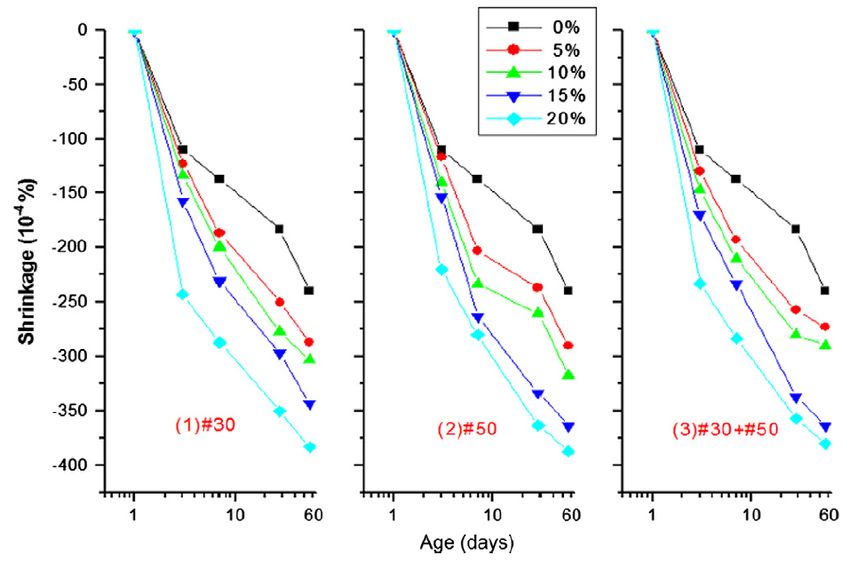
Materials 2018, 11, x FOR PEER REVIEW 2 of 24
Materials 2018, 11, 1729 2 of 25
rubber has become very popular in the last few years. Recycling of waste vehicle tires has become
very popular topic among scientists and engineers.
Due to
Due to the
the fact
fact that
that the
the waste
waste tire
tire rubber,
rubber, as as aa non-biodegradable
non-biodegradable material, material, has has aa relatively
relatively longlong
lifetime, interest
lifetime, interest in in replacing
replacing natural
natural river
river aggregate
aggregate in in concrete
concrete mixtures
mixtures withwith rubber
rubber derived
derived fromfrom
waste tires, i.e., rubberized concrete (RC), has attracted the attention of
waste tires, i.e., rubberized concrete (RC), has attracted the attention of civil engineers and building civil engineers and building
industry to
industry to provide
provide environmental-friendly
environmental-friendly concrete concrete with with recycled
recycledtire tirerubber.
rubber.
The concrete
The concrete industry
industry is is one
one ofof the
the biggest
biggest industries
industries in in the
the world.
world. According
According to to the
the European
European
Ready Mixed Concrete Organization statistics (ERMCO),
Ready Mixed Concrete Organization statistics (ERMCO), the average concrete production the average concrete production in in
2015
2015in
the European Union (EU), Russia, USA, and Japan was 344.3,
in the European Union (EU), Russia, USA, and Japan was 344.3, 62.0, 365.0 and 138.0 million m3,, 62.0, 365.0 and 138.0 million m 3
respectively [10].
respectively [10]. Overall,
Overall,the theworld
worldproduces
producesaround around5 5billion
billion tonnes
tonnes of of concrete
concrete a year
a year [11].[11].
FromFroman
an ecological point of view, by implementing rubber derived from waste
ecological point of view, by implementing rubber derived from waste tires in concrete, the amount of tires in concrete, the amount
of disposed
disposed waste
waste tirestires would
would become
become smaller
smaller andand provide
provide a source
a source of eco-friendly
of eco-friendly concrete.
concrete. From Froman
an engineering point of view, adding waste tire rubber into concrete
engineering point of view, adding waste tire rubber into concrete could produce a material with could produce a material with
improved dynamic
improved dynamic and and durability
durability properties,
properties, such such as as ductility,
ductility, damping
damping capacity,
capacity, chloride-ion
chloride-ion
penetration resistance,
penetration resistance, carbonation
carbonation resistance,
resistance, etc. etc.
Similar to traditional concrete, self-compactingrubberized
Similar to traditional concrete, self-compacting rubberizedconcrete
concretehowever
however has lower
has lower levels
levelsof
emitted radiation and thus safer to building users. Because of its high
of emitted radiation and thus safer to building users. Because of its high ductility, improved impact ductility, improved impact
resistance, and
resistance, and energy
energy dissipation
dissipation properties
properties [12], [12], rubberized
rubberized concrete
concrete has been used
has been used in in several
several
applications so far, i.e., road barriers, sidewalks, and pavement [13–15].
applications so far, i.e., road barriers, sidewalks, and pavement [13–15]. Murugan et al. [16] concluded Murugan et al. [16] concluded
that the
that the rubberized
rubberized concrete
concrete couldcould be be used
used in in sidewalks,
sidewalks, sportsport courts,
courts, andand traffic
traffic noise
noise barriers
barriers on on
highways, i.e.,
highways, i.e.,nonstructural
nonstructuralapplications.
applications.Nevertheless,
Nevertheless, because
because of improved
of its its improved impact
impact resistance
resistance and
ductility, other researchers have suggested that self-compacting rubberized concrete could becould
and ductility, other researchers have suggested that self-compacting rubberized concrete used forbe
used for structural
structural elements elements
subjectedsubjected
to dynamic to loads
dynamic [13].loads
Before [13].
thisBefore
can bethis can be accomplished,
accomplished, it is suggested it is
that experimental investigation on self-compacting rubberized concrete needs to be carried out. out.
suggested that experimental investigation on self-compacting rubberized concrete needs to be carried
The main
The mainobjective
objective of of
thisthis review
review article article is to provide
is to provide an overview
an overview of fresh
of fresh and hardenedand properties
hardened
properties
of of self-compacting
self-compacting concrete withconcretepartiallywith replacedpartially replaced
fine and/or fineaggregate
coarse and/or coarse aggregate
with waste with
tire rubber.
waste tire rubber. The fact that fine and coarse aggregate makes
The fact that fine and coarse aggregate makes approximately 50% of weight of the self-compactingapproximately 50% of weight of the
self-compacting concrete can be used as a motivation to thoroughly
concrete can be used as a motivation to thoroughly study the influence of partially replacing natural study the influence of partially
replacing natural
aggregate with waste aggregate with not
tire rubber, wasteonly tire
to rubber,
providenot only to provide
lightweight lightweight
self-compacting self-compacting
concrete (SCC) and
concrete (SCC) and to preserve natural resources, but also
to preserve natural resources, but also to maintain or even improve the mechanical properties to maintain or even improve and the
mechanicalofproperties
durability SCC. and durability of SCC.
2. Mixing Procedure and Rubber Aggregate Properties
Currently, there
Currently, there is
is no
no standardized
standardized methodology
methodology to to design mixes of self-compacting rubberized
concrete [17]. However, there are several mixture
However, there are several mixture designdesign methods
methods for for
self-compacting concrete.
self-compacting Shi
concrete.
et al.et[18]
Shi al. classified thesethese
[18] classified methods in fivein
methods categories: empirical
five categories: design methods,
empirical compressive
design methods, strength
compressive
methods,methods,
strength close aggregate packing methods,
close aggregate statisticalstatistical
packing methods, factorial factorial
models, and rheological
models, paste models.
and rheological paste
Flow charts of two relatively new mixture design procedures published in 2014
models. Flow charts of two relatively new mixture design procedures published in 2014 and 2013 areand 2013 are given
in Figures
given 1 and 12,and
in Figures respectively.
2, respectively.
Figure
Figure 1. Mixture design
1. Mixture design procedure
procedure of
of method
method proposed
proposed by
by Ghazi—compressive
Ghazi—compressive strength
strength method
method [18].
[18].
Reproduced with permission from C. Shi, Z. Wu, K. Lv and L. Wu, A review on mixture design methods
Reproduced with permission from C. Shi, Z. Wu, K. Lv and L. Wu, A review on mixture design methods
for self-compacting concrete; published by Elsevier, Construction and Building Materials, 2015.
for self-compacting concrete; published by Elsevier, Construction and Building Materials, 2015.
Materials 2018, 11, 1729 3 of 25
Materials 2018, 11, x FOR PEER REVIEW 3 of 24
Figure 2.
Figure 2. Mixture
Mixture design
design procedure
procedure ofof method
method proposed
proposed by
by Khaleel
Khaleel –– empirical
empirical design
design method
method [18].
[18].
Reproduced with permission from C. Shi, Z. Wu, K. Lv and L. Wu, A review on mixture design
Reproduced with permission from C. Shi, Z. Wu, K. Lv and L. Wu, A review on mixture design methodsmethods
for self-compacting
for self-compacting concrete;
concrete; published
publishedbybyElsevier,
Elsevier,Construction
Constructionand
andBuilding
BuildingMaterials,
Materials,2015.
2015.
So far,
So far,there
thereisisnono mixture
mixture design
design method
method thatthat
fullyfully
meets meets
all of all
theof the requirements,
usual usual requirements, i.e.,
i.e., widely
widely applicable,
applicable, fit aof variety
fit a variety ofrequirements,
technical technical requirements, sustainability,
sustainability, strongfor
strong robustness robustness
variable raw for
variable raw
materials, andmaterials,
cost [18]. and cost [18].
However, However,
to avoid SCC to avoid
fresh SCC
state fresh state
problems, i.e., problems,
segregationi.e.,
andsegregation
bleeding,
and bleeding,
Najim and HallNajim and Hall [17]
[17] summarized thesummarized the mixing
mixing procedures procedures
of several authorsof and
several authorsa few
proposed and
proposed amixing
important few important
steps: mixing steps:
• all dry mix components should first be mixed from 1 to 5 min
all min before
before progressively
progressively adding water;
• after water is added, mixing should continue for another 3
after water is added, mixing should continue for another 3 to 5 min; to 5 min;
• satisfactoryresults
satisfactory resultscan
canbebeobtained
obtainedbyby mixing
mixing aggregates
aggregates andand powder
powder for for
30 s,30without
s, without adding
adding any
any water, then adding one-third of the required superplasticizer, and then
water, then adding one-third of the required superplasticizer, and then mixing for an additionalmixing for an
additional
90 s; and, 90 s; and,
• final step
final step is
is to
to add
add the
the remaining
remaining amount
amount ofof superplasticizer
superplasticizer with
with all
all other
other admixtures
admixtures and
and mix
mix
for an extra 210
for an extra 210 s. s.
Pretreatment of rubber aggregate is also desirable to improve adhesion between waste tire
Pretreatment of rubber aggregate is also desirable to improve adhesion between waste tire rubber
rubber and cement matrix. Waste tires have been used in experimental investigations to partially
and cement matrix. Waste tires have been used in experimental investigations to partially replace the
replace the aggregate in traditional concrete and self-compacting concrete for two and a half decades.
aggregate in traditional concrete and self-compacting concrete for two and a half decades. Mostly, fine
Mostly, fine and coarse aggregate were replaced with rubber aggregate from mechanical grinding of
and coarse aggregate were replaced with rubber aggregate from mechanical grinding of end-of-life
end-of-life tires. Rubber particles in concrete are obtained from waste tires. There is a mechanical
tires. Rubber particles in concrete are obtained from waste tires. There is a mechanical procedure
procedure occurring either at cryogenic or ambient temperatures. As can be seen in Figure 3, the
occurring either at cryogenic or ambient temperatures. As can be seen in Figure 3, the waste tire
waste tire rubber can be classified into four categories, depending on rubber size, rubber shape, and
rubber can be classified into four categories, depending on rubber size, rubber shape, and replaced
replaced material [17]
material [17]
Chipped/shredded rubber aggregate (coarse rubber), used as coarse aggregate replacement, i.e.,
• replacement
Chipped/shreddedfor naturalrubber aggregate
gravel; (coarse rubber),
rubber particles used13asand
are between coarse
76 mm.aggregate replacement,
Crumb rubber, commonly used as sand replacement; grain size is between mm.
i.e., replacement for natural gravel; rubber particles are between 13 and 76 0.425 and 4.75 mm.
• Ground
Crumb rubber,
rubber, used as cement replacement; grain size is less than 0.425 mm. and 4.75 mm.
commonly used as sand replacement; grain size is between 0.425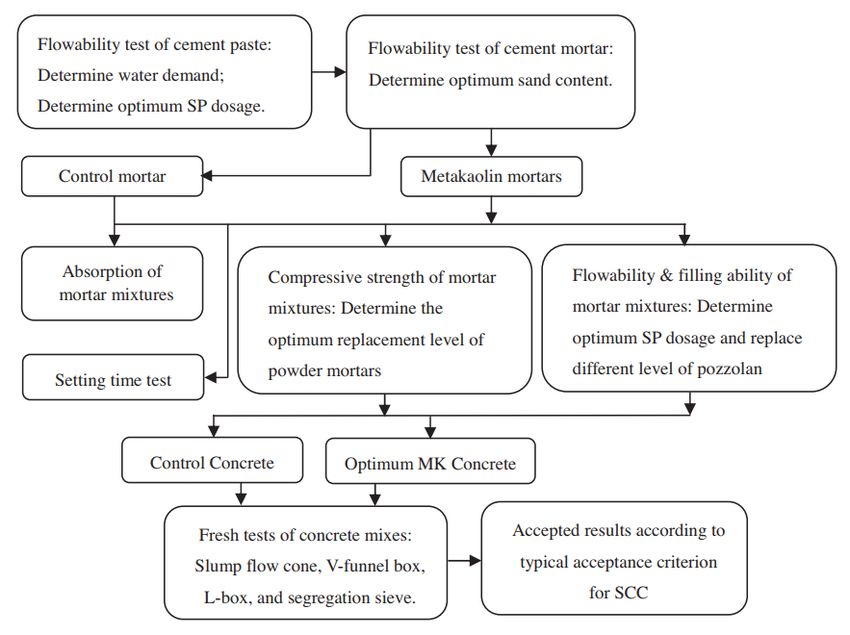
Materials 2018, 11, 1729 4 of 25
•Materials
Ground rubber, used as cement replacement; grain size is less than 0.425 mm.
2018, 11, x FOR PEER REVIEW 4 of 24
• Fibre rubber aggregate; the shredded rubber is in the form of short fibres with an average of
12.5 mm
Fibre rubberlength.
aggregate; the shredded rubber is in the form of short fibres with an average of 12.5
mm length.
Figure 3. Categorization of waste rubber aggregates: (a) chipped, (b) crumb, (c) granular and (d) fibre
Figure 3. Categorization of waste rubber aggregates: (a) chipped, (b) crumb, (c) granular and
[17]. Reproduced with permission from K. B. Najim and M. R. Hall, A review of the fresh/hardened
(d) fibre [17]. Reproduced with permission from K. B. Najim and M. R. Hall, A review of the
properties and applications for plain- (PRC) and self-compacting rubberised concrete (SCRC);
fresh/hardened properties and applications for plain- (PRC) and self-compacting rubberised concrete
published
(SCRC); by Elsevier,
published Construction
by Elsevier, and Building
Construction Materials,
and Building 2010. 2010.
Materials,
3. Fresh SCC Properties
3.1. Flowability, Viscosity,
3.1. Flowability, Viscosity, Passing
Passing Ability
Ability and
and Segregation
Segregation Resistance
Resistance
Regardless
Regardless of of rubber
rubber type,
type, rubber
rubber size,
size, rubber
rubber replacement
replacement level, level, and
and replaced
replaced material,
material, mostmost
authors havehave reported
reportedsimilar
similarfresh
freshSCCSCCbehaviour,
behaviour, i.e.,i.e.,
a reduction
a reduction in flowability,
in flowability,passing ability
passing and
ability
segregation resistance, and an increase in viscosity with an increase
and segregation resistance, and an increase in viscosity with an increase of rubber content. A few of rubber content. A few authors
have
authors claimed
have essentially the opposite,
claimed essentially i.e., Mishra
the opposite, and
i.e., Pandaand
Mishra [19]Panda
reported [19]anreported
increasean in increase
flowability in
and the reduction
flowability and the inreduction
viscosity and Ganesanand
in viscosity et al. [20], Zaoiai
Ganesan et al.et[20],
al. [21],
ZaoiaiMishra
et al.and
[21],Panda
Mishra [19]
andreported
Panda
an
[19]increase
reportedinan passing
increase ability with an
in passing increase
ability with ofanrubber
increase aggregate
of rubberreplacement level. Si et level.
aggregate replacement al. [14],
Si
however,
et al. [14], described a reduction
however, described in flowability
a reduction and an increase
in flowability and aninincrease
viscosity in due to increase
viscosity due toin rough
increase
surface
in rough and surfaceand
surface friction of rubber
surface frictionparticles.
of rubber A similar explanation
particles. A similar wasexplanation
given by AbdelAleem
was givenand by
Hassan [22], who explained similar fresh SCC behaviour as
AbdelAleem and Hassan [22], who explained similar fresh SCC behaviour as being caused being caused by the sharp edges of rubber
by the
particles
sharp edges causing blockages;
of rubber more
particles energyblockages;
causing is required to move
more energy rubber particles
is required to because
move rubberof these sharp
particles
edges, hence a reduction in flowability and passing ability occurs.
because of these sharp edges, hence a reduction in flowability and passing ability occurs.
Replacement levels, as given in Table 1, show that only a few authors replaced natural aggregate
with rubber aggregate above level of 40% (Emiro (Emiroğlu ğlu et al. [6], Ismail and Hassan [7], and Uygunoğlu Uygunoğlu
and Topçu [23]); in most experimental investigations the replacement
Topçu [23]); in most experimental investigations the replacement level was 15% (Bideci level was 15% (Bideci et al.et
[24])
al.
or 20%
[24]) or(Ganesan
20% (Ganesanet al. [20], Mishra
et al. [20], and
MishraPanda and[19],
PandaZaoiai et al.
[19], [21]),etallal.
Zaoiai for[21]),
the purpose
all for theof maintaining
purpose of
acceptable
maintaining fresh SCC properties.
acceptable fresh SCC Except for the similar
properties. Exceptfinal for test
the results
similargiven
final above, most given
test results authors were
above,
prone to use different kind of chemical admixtures to maintain or even
most authors were prone to use different kind of chemical admixtures to maintain or even to improve to improve fresh SCC properties,
i.e.,
freshsuperplasticizer
SCC properties, (SP)i.e.,
[1,5,6,19,20,23–27];
superplasticizerviscosity modified admixture
(SP) [1,5,6,19,20,23–27]; (VMA)modified
viscosity [5,20,26,27]; or, high
admixture
range water reducer admixture (HRWRA) [7,14,22,28,29].
(VMA) [5,20,26,27]; or, high range water reducer admixture (HRWRA) [7,14,22,28,29].
To improve
improve the the bond
bond connections
connections between rubber aggregate and binder, Ganesan et al. [20]
pretreated rubber aggregate with poly-vinyl alcohol, Aslani et al. [5] using a water soaking method
and Si et al. [14] with sodium hydroxide (NaOH). Si et al. [14] reported reduction in flowability of
self-compacting rubberized concrete (SCRC) when the rubber particles were were pre-treated
pre-treated with NaOH; NaOH;
the water soaking method proved to be a cost effective method to improve
to be a cost effective method to improve bonding [5]. bonding [5].
Most of ofthethetest results
test thatthat
results are discussed
are discussedaboveabovewere performed
were performed in accordance with the European
in accordance with the
Guidelines for Self-Compacting
European Guidelines Concrete [30],
for Self-Compacting which means
Concrete that, despite
[30], which meansthe negative
that, despite effect
the of rubber
negative
effect of rubber aggregate on SCC fresh state properties observed, acceptable test results could be
obtained with the proper amount of rubber aggregate replacement level.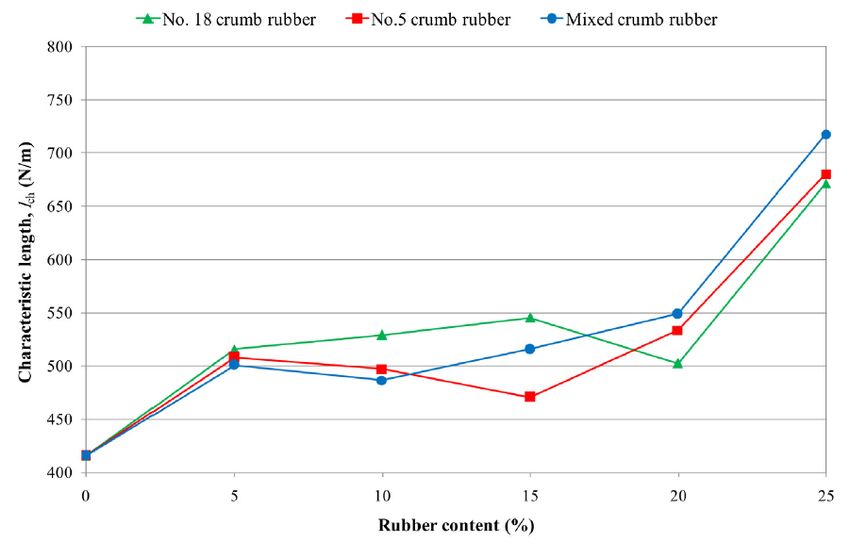
Materials 2018, 11, 1729                                                                                                         5 of 25

aggregate on SCC fresh state properties observed, acceptable test results could be obtained with the
proper amount of rubber aggregate replacement level.

      Table 1. Flowability, viscosity, passing ability, and segregation resistance of self-compacting concrete
      with increasing of rubber aggregate content.

                                   Rubber        Replacement         Replaced                               Passing     Segregation
           References                                                            Flow-Ability   Viscosity
                                  Sze (mm)        Level (%)          Material                               Ability      Resistance
                                                  10, 20, 30, 40       FA by
    Uygunoğlu and Topçu [23]        1–4                                           reduced      increased       -            -
                                                     and 50           volume
                                                                       FA by       slightly                  slightly
        Ganesan et al. [20]         0–4.75          15 and 20                                   increased                    -
                                                                      volume       reduced                  increased
                                                                      CA by
        Emiroğlu et al. [6]         5–12       15, 30, 45 and 60                  reduced          -           -            -
                                                                      weight
                                                5, 10, 15, 20, 25,     FA by
      Ismail and Hassan [7]          0–4                                           reduced      increased   reduced      reduced
                                                 30, 40 and 50        volume
                                  length 75,                           CA by
         Bideci et al. [24]                       5, 10 and 15                     reduced          -       reduced      reduced
                                  50 and 25                           volume
                                                                     FA and CA
         Aslani et al. [5]        2, 5 and 10   10, 20, 30 and 40                  reduced      increased   reduced          -
                                                                     by volume
                                                                       FA by
          Güneyisi [25]              0–4          5, 15 and 25                     reduced      increased   reduced          -
                                                                      volume
                                                 5, 10, 15, 20, 25     FA by
   AbdelAleem and Hassan [22]       0–4.75                                         reduced      increased   reduced      reduced
                                                      and 40          volume
                                                 5, 10, 15, 20, 25     FA by
      AbdelAleem et al. [28]        0–4.75                                         reduced      increased   reduced      reduced
                                                      and 30          volume
        Rahman et al. [1]            1–4                28              FA         reduced      increased   reduced          -
                                                                       CA by
    Turatsinze and Garros [26]       4–10       10, 15, 20 and 25                  reduced          -           -        reduced
                                                                      volume
                                    0.5–2.0                            FA by
   Bignozzi and Sandrolini [27]                   22.2 and 33.3                    reduced          -       reduced          -
                                   0.05–0.7                           volume
                                                                      CA by
      Mishra and Panda [19]        5 and 10     5, 10, 15 and 20                   increase     reduced     increased        -
                                                                      weight
                                                                       FA by
           Si et al. [14]         1.44–2.83         15 and 25                      reduced      increased   reduced          -
                                                                      volume
                                                                      FA by
       Topçu and Bilir [31]          0–4        8, 16.9 and 26.87                  reduced      increased       -        reduced
                                                                      weight
                                                                       FA by
         Khalil et al. [29]          0–2        10, 20, 30 and 40                  reduced          -       reduced          -
                                                                      volume
         Zaoiai et al. [21]       0/3 or 3/8        5 and 20         FA and CA     reduced          -       increased    reduced
                                                                       CA by
         Aslani et al. [32]          5–10               20                         reduced      increased   reduced          -
                                                                      volume
                                                 5, 10, 15, 20, 25     FA by       slightly
      Ismail and Hassan [33]        0–4.75                                                      increased   reduced      reduced
                                                      and 30          volume       reduced
                                           Note: FA—fine aggregate, CA—coarse aggregate.

3.2. Porosity/Air Content
     Uygunoğlu and Topçu [23] reported an increase in the apparent porosity of self-consolidating
mortar mixtures when partially replacing fine aggregate with scrap rubber particles (size 1–4 mm)
by volume. With a water to powder ratio (w/p) = 0.47, the increases in apparent porosity were
approximately 23%, 29%, 30%, 41% and 41% with inclusion of 0%, 10%, 20%, 30%, 40% and 50%
rubber aggregate content, respectively. Ismail and Hassan [7] reported an increase in air content of
SCC mixtures by partially replacing fine aggregates with crumb rubber (size 0–4 mm) by volume.
The increase in air content was from 1.5% to 6.8% with increasing crumb rubber content from 0% to
40%. AbdelAleem and Hassan [22] partially replaced fine aggregates in SCC mixtures with rubber
aggregates (size 0–4.75 mm). Rubber aggregate replacement by volume of fine aggregates was 0%, 5%,
10%, 15%, 20%, 25% and 40%; the increase in air content was from 2.70% to 4.20% for SCC mixture
with rubber content 0% and 20%, also containing silica fume (SLF). Another investigation on the
influence of different rubber aggregate pre-treatment on mechanical and dynamic properties of SCRC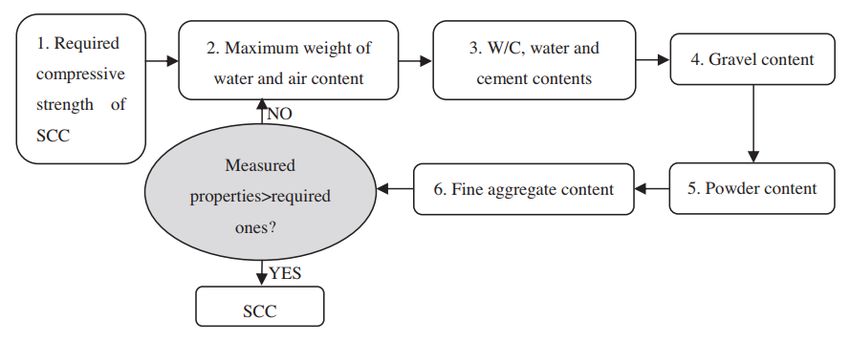
Materials 2018, 11, 1729                                                                                       6 of 25

was carried out by Najim and Hall [34]. They reported an increase in apparent porosity by 19% when
rubber aggregate was pre-treated with mortar pre-coating technique. Ismail and Hassan [33] reported
an increase in air content of SCC mixtures by partially replacing fine aggregates with crumb rubber
(maximum size 4.75 mm) at different levels, by volume. Decrease in air content was from 5% to 1.5%
with reducing rubber aggregate content from 30% to 0%.
      From the test results that are discussed in Section 3.2 and summarized in Table 2, it can be
highlighted that with an increase of rubber aggregate in SCC mixtures an increase in porosity occurs.
The increase in porosity can be explained well by the same reason as in Section 3.1: rubber particles
have rough surface [14] and sharp edges [22], thus entrapping air and increasing the porosity of
self-compacting concrete.

      Table 2.   Relationship between rubber aggregate replacement and porosity/air content in
      self-compacting concrete.

                                                      Replacement                                 Porosity/Air
             References          Rubber Size (mm)                            Replaced Material
                                                       Level (%)                                    Content
                                                     0, 10, 20, 30, 40
     Uygunoğlu and Topçu [23]         1–4                                     FA by volume         increase
                                                          and 50
                                                    0, 5, 10, 15, 20, 25,
       Ismail and Hassan [7]           0–4                                     FA by volume         increase
                                                       30, 40 and 50
                                                    0, 5, 10, 15, 20, 25
   AbdelAleem and Hassan [22]          0), shear
thickening behaviour was noticed. Decreasing rubber content in SCC mixture systematically reduced
exponent n and coefficient c/µ, which means a greater shear thickening behaviour. The same behaviour
occurred with replacement with different types of sizes of rubber aggregate. With rubber aggregate
sizes No. 18, No. 5, No. 18 + No. 5, and tire chips, an increase in exponent n was from 0.253 to 0.391,
1.054, 0.876 and 1.788, respectively, while the increase in coefficient c/µ was from 1.135 to 1.205, 1.410,
1.363 and 1.543, with increase in rubber content ranging from 0% to 25%, respectively.
Materials 2018, 11, 1729 7 of 25
As in Section 3.3, it can be noted that rheological properties of self-compacting concrete with waste
tire rubber as partial replacement for natural fine or coarse aggregate still needs further investigation.
Due to the lack of experimental investigations and test results to compare, the rheological properties
of SCRC should be an area of interest for further laboratory tests because of the importance of
understanding the workability properties of this self-compacting concrete type.
4. Hardened SCC Properties
4.1. Compressive Strength
Reduction in the compressive strength of SCC is inevitable when different types of rubber
aggregate were used as a partial replacement of natural aggregate, regardless of rubber particle size,
rubber replacement level, or replaced type of aggregate. In all cases, a reduction in compressive
strength was reported and with higher level of rubber replacement, reduction in compressive strength
was more pronounced, as shown in Table 3 and Figure 4. This reduction effect can be attributed to
poor adhesion and bond strength between rubber particles and cement paste, low rubber modulus of
elasticity as compared to natural aggregates and a greater amount of air entrapped between rubber
particles and cement paste [5,22]. According to Hilal [36], rubber particles act like voids in the hardened
Materials 2018, 11, x FOR PEER REVIEW 8 of 24
concrete specimens causing a reduction in compressive strength.
However,
Bignozzi and in several
0.5–2.0experiments
and in which supplementary cementing materials (SCMs) were used,
22.2 and 33.3 FA by volume 33 25 and 39
enhancements in SCRC compressive strength was reported. Metakaolin (MK) was found to be the
Sandrolini [27] 0.05–0.7
Mishra and Panda
best SCM [19]
in terms of improvement
5 and 10 of SCRC
5, 10, 15 andcompressive
20 CA bystrength
weight [7,37].65.4
When 20% MK 11, 31,was
39 andadded
47
as a SCMs to
Si et al. [14] SCRC mixtures,
1.44–2.83 the relative increase
15 and 25 in compressive
FA by volume strength was
approx. 65 44%, 47%
33 and 52 56%
and
Khalil et al. [29] 0–2 10, 20, 30 and 40 FA by volume
with 20%, 30% and 40% rubber aggregate contents, respectively [7]. Furthermore, Ganesan approx. 27 17, 26, 37et
and 40 [20]
al.
0/3 5 FA 37
observed
Zaoiai et.althe[21]influence of steel fibres (SLFs) on compressive strength of37.9
3/8 20 CA an SCRC with 15% 36 rubber
content. With inclusion ofMaterials 2018, 11, 1729 8 of 25
Table 3. Influence of rubber size, replacement level and replaced material on 28-days compressive
strength of self-compacting concrete (SCC).
Rubber Replacement Initial Value
References Replaced Material Reduction (%)
Size (mm) Level (%) (MPa)
Ganesan et al. [20] 0–4.75 15 and 20 FA by volume 58.86 7 and 13
Length–25 17, 20 and 47
Bideci et al. [24] Length–50 5, 10 and 15 CA by volume 53.8 52, 54 and 52
Length–75 60, 61 and 58
AbdelAleem and Hassan [22]Materials 2018, 11, 1729 9 of 25
test procedure, most likely due to the elastic behaviour of rubber particles [23]. However, opposite
results, an increase in flexural strength with inclusion of waste tire rubber, were also observed, due to
the better load carrying capacity of the rubber aggregate [20]. Similar to the conclusion in Section 4.1,
the enhancement of flexural strength of rubberized self-compacting concrete is possible by using
different kind of supplementary cementing material, i.e., metakaolin (MK), which can improve 7-day
and 28-day flexural strength of SCRC specimens, and in that way significantly mitigate the decrease
of flexural strength [37]. With 20% MK as SCMs in SCRC mixtures, the relative increase in flexural
strength was 18%, 5% and 11% with inclusion of 20%, 30% and 40% CR content, respectively [7].
Table 4. Influence of rubber size, replacement level and replaced material on 28-days flexural strength
of SCC.
Rubber Replacement Replaced Initial
References Reduction (%)
Size (mm) Level (%) Material Value (MPa)
AbdelAleem and Hassan [22]Materials 2018, 11, 1729 10 of 25
Table 5. Influence of rubber size, replacement level and replaced material on 28-days splitting tensile
strength of SCC.
Rubber Replacement Initial
References Replaced Material Reduction (%)
Size (mm) Level (%) Value (MPa)
AbdelAleem and Hassan [22] < 4.75 5, 10, 15 and 20 FA by volume 4.73 17, 32, 34 and 41
5, 10, 15, 20, 25,
Ismail and Hassan [7] 0–4 FA by volume 4.19 1, 8, 20, 31, 38, 42 and 57
30 and 40
2 FA by volume 8, 23, 27 and 39
Aslani et al. [5] 5 10, 20, 30 and 40 FA by volume 3.7 17 (increase), 15, 15 and 33
10 CA by volume 21, 27, 32 and 50
0, 5, 10, 15, 20, 25
AbdelAleem et al. [28]Materials 2018, 11, 1729 11 of 25
Table 6. Influence of rubber size, replacement level and replaced material on modulus of elasticity
of SCC.
Rubber Replacement Initial
References Replaced Material Reduction (%)
Size (mm) Level (%) Value (GPa)
5, 10, 15, 20, 25,
Ismail and Hassan [7] 0–4 FA by volume 33.61 6, 8, 18, 31, 32, 40 and 54
30 and 40
10, 20, 30, 40
Uygunoğlu and Topçu [23] 1–4 FA by volume approx. 27 7, 15, 24, 35 and 44
and 50
0, 5, 10, 15, 20, 25
AbdelAleem et al. [28]Materials 2018, 11, 1729 12 of 25
Pedro et al. [40] reported an increase in impact resistance of concrete specimens containing rubber
aggregate instead of fine aggregate. They reported an increase in the height of the rupture when rubber
aggregate was used as partial replacement; the dent diameter of rubberized concrete was between 1.67
and 2 times larger than in traditional concrete. Miller and Tehrani [4] reported no significant tendency
between determined maximum net impulse and rubber aggregate content. Vadivel et al. [41] partially
replaced fine aggregate, coarse aggregate, and fine-coarse aggregate with rubber crumb and rubber
chips (size 0–20 mm). They reported increases and decreases in impact resistance with inclusion of
rubber aggregate content. Drop-weight test results showed an increase in N1 and N2 numbers by 15%
Materials
and 2018,
19% 11, x FOR
when PEER
fine andREVIEW
coarse aggregate were partially replaced with 6% rubber aggregate content 12 of 24
overall (3% fine + 3% coarse). On the other hand, test results showed a reduction in the same values by
Thus,
18% andto19%
summarize,
when fine the inclusion
aggregate wasof rubberwith
replaced particles in SCC
6% rubber or traditional
content and by 42% concrete
and 39% appears
when to
cause enhancement
coarse in impact
aggregate was replacedresistance. This performance
with 6% rubber content. can be attributed to the low stiffness of
Thus, to summarize, the inclusion of rubber particles
rubber particles, which causes increase in post-cracking resistance in SCC orand
traditional
enhancesconcrete appears of
the ductility to the
SCCcause enhancement
specimens [28,33].inHowever,
impact resistance.
there areThis
stillperformance
many unknownscan be attributed to the low
in the behaviour of stiffness
SCRC and of its
rubber particles, which causes increase in post-cracking resistance and enhances the ductility
impact resistance, hence further experimental investigations are worthy to pursue due to the possible of the
SCC specimens
application of SCRC [28,33]. However,
in concrete there are still many unknowns in the behaviour of SCRC and its
structures.
impact resistance, hence further experimental investigations are worthy to pursue due to the possible
4.6. application
Ductility andof Brittleness
SCRC in concrete structures.
4.6. Ductility
Hilal and Brittleness
[36] reported an increase in ductility of SCC specimens by partially replacing fine particles
in SCC mixtures
Hilal [36] with rubber
reported particles
an increase (size 0–4ofmm).
in ductility As can be by
SCC specimens seen in Figure
partially 6, their
replacing fineresults showed
particles in
an increase in characteristic
SCC mixtures length(size
with rubber particles by 0–4
20.55%, 17.11%,
mm). As can be 24.07%, 32.07%
seen in Figure andresults
6, their 72.74% whenanfine
showed
aggregates
increase were replaced with
in characteristic 5%,
length by10%, 15%,
20.55%, 20% and
17.11%, 25%32.07%
24.07%, crumband
rubber
72.74%(size
when0–4fine
mm) by volume,
aggregates
were replaced with 5%, 10%, 15%, 20% and 25% crumb rubber (size 0–4 mm) by volume, respectively.
respectively.
Figure 6. Relationship
Figure between
6. Relationship betweencharacteristic
characteristic length and rubber
length and rubberreplacement
replacement level
level [36].
[36]. Reproduced
Reproduced
withwith permission
permission from
from Hilal,N.N.
Hilal, N.N.Hardened
Hardened properties
properties of
ofself-compacting
self-compactingconcrete
concretewith different
with different
crumb rubber size and content; published by Elsevier, International Journal
crumb rubber size and content; published by Elsevier, International Journal Sustainable Sustainable Built
Built
Environment,
Environment, 2017.2017.
Due to lack of experimental results, this hardening property of SCC with waste tire rubber still
needs more investigation. However, other authors also investigated the ductility of traditional
concrete with waste tire rubber replacing fine or coarse aggregate and results of these authors are
given below. Vadivel et al. [41] reported an increase in ductility with inclusion of rubber aggregate
content. The ductility index, i.e., the ratio of energy consumed at ultimate failure and energy
consumed at first crack of drop weight test, were 6.4% and 2.7% higher when 6% of coarse and 6% ofMaterials 2018, 11, 1729 13 of 25
Due to lack of experimental results, this hardening property of SCC with waste tire rubber
still needs more investigation. However, other authors also investigated the ductility of traditional
concrete with waste tire rubber replacing fine or coarse aggregate and results of these authors are given
below. Vadivel et al. [41] reported an increase in ductility with inclusion of rubber aggregate content.
The ductility index, i.e., the ratio of energy consumed at ultimate failure and energy consumed at
first crack of drop weight test, were 6.4% and 2.7% higher when 6% of coarse and 6% of fine/coarse
aggregate, respectively, were partially replaced with rubber crumb and chips. Gesoğlu et al. [8]
investigated the influence of different types and particle sizes of rubber aggregate on concrete ductility.
They reported an enhancement in ductility when fine crumb rubber (1.00–4.00 mm) was used, while a
reduction in ductility was reported if tire chips (size up to 10 mm) or very fine crumb rubber (size
0.1–1.00 mm) were used. The maximum enhancement in characteristic length was 168% with inclusion
of 20% fine crumb rubber, while the maximum reduction was 62% with inclusion of 10% tire chips and
10% very fine crumb rubber. Youssf et al. [42] also studied the influence of crumbed scrap tyre rubber
(size 1.18, 2.36 mm, and 0.15 to 2.36 mm) in concrete with additional confinement being obtained with
fibre reinforced polymer (FPR). They partially replaced fine aggregate with crumb rubber by 0% to
20% of fine aggregate volume and reported enhancement of concrete ductility with increasing rubber
aggregate content by volume of fine aggregate and with an increasing confinement level. Increase
in concrete ductility, which was defined as concrete ultimate strain and concrete yield strain ratio,
was 42% with the inclusion of 20% well graded rubber aggregate content, with one confinement layer
being used in both concrete samples.
Zheng et al. [43] reported improvement in ductility when coarse aggregate was replaced with
rubber powder or tire chips. The reduction in brittleness index, which was defined as a ratio of the
reversible (elastic) to irreversible (plastic) deformations, was 45%, 52% and 54% when coarse aggregate
was replaced with 15%, 30% and 45% by volume with rubber powder, respectively, and 27%, 46% and
64%, respectively, with same replacement level with tire chips. Elghazouli et al. [12] investigated the
influence of rubber content on the ductility of rubberized concrete specimens. Rubber aggregate particle
size varied from 0 to 20 mm with replacement levels of 45% and 60%. Test results showed enhancement
in ductility with increase of rubber aggregate content. Improvement in concrete rotational capacity
was up to 50% compared to concrete without rubber aggregate, which contributed to appropriate and
desirable ductile crushing behaviour of rubberized concrete under cyclic loading. Gesoğlu et al. [44]
reported improvement in concrete ductility when rubber aggregate was added as replacement for
natural aggregate. With only 5% rubber aggregate, the characteristic length was approximately
1.85 times higher than the control specimen without rubber aggregate. Similar results were obtained
when the replacement level was higher than 5%, except the results with a mix of crumb rubber and
tire chips showed even greater enhancement in concrete ductility with increasing rubber aggregate
content, approximately 3.4 times higher values with the inclusion of 20% rubber content.
The test results that are analysed above are summarized in Table 7. In order to firmly conclude
about the influence of rubber implantation in SCC, further investigation needs to be done, due to
the lack of test results on the ductility of SCRC. However, results from authors listed in Table 7 are
promising, due to the fact that increase of ductility of rubberized concrete (RC) was shown in most of
the experimental investigations. With appropriate replacement levels of waste tire rubber and rubber
particle size, an improvement in SCC ductility could be achieved.Materials 2018, 11, 1729 14 of 25
Table 7. Influence of rubber inclusion on ductility of self-compacting rubberized concrete (SCRC) and
rubberized concrete (RC).
Concrete Rubber Replacement Replaced
References Rubber Type Ductility
Type Size (mm) Level (%) Material
Hilal [36] SCRC crumb rubber 0–4 5, 10, 15, 20, 25 FA increased
crumb rubber tire
Vadivel et al. [41] RC 0–2.36 and 20 3, 6 FA and CA increased
chips
crumb rubber 1–4 5, 10 and 20 FA increase
Gesoğlu et al. [8] RC tire chips < 10 5, 10 and 20 CA decreased
fine crumb rubber 0.1–1.00 5, 10 and 20 FA decreased
1.18 and 2.36
Youssf et al. [42] RC crumb rubber 0 to 20 FA increased
and 0.15–2.36
rubber powder or
Zheng et al. [43] RCcrumb rubber, respectively. However, the fracture energy increased up to 42% with inclusion of 10%
tire chips or 20% mix of tire chips and fine crumb rubber. Moustafa and ElGawady [45] investigated
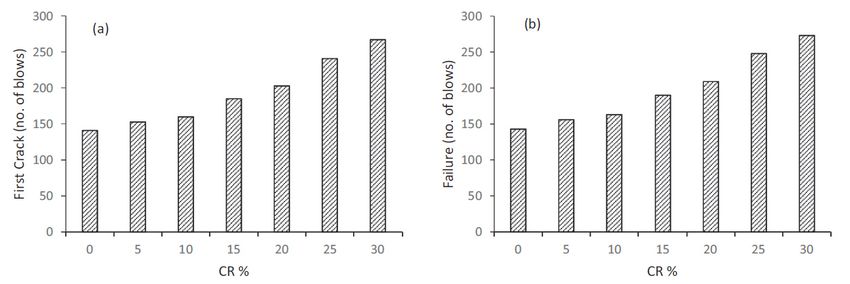
the dynamic properties of high performance concrete with rubber aggregate. As shown in Figure 7,
they reported a decrease of concrete fracture energy with a decrease of rubber aggregate content. The
increase in fracture energy of constant slump (CS) concrete mixture with 30% rubber replacement
Materials 2018, 11,Furthermore,
was 85.2%. 1729 they reported that the mid-span deflection of rubberized concrete 15 of 25
was
larger than that of traditional concrete.
VS CS
20
18
Fracture energy (J)
16
14
12
10
8
0 5 10 15 20 25 30
Rubber content (%)
Figure 7. Relationship between fracture energy and rubber replacement level [45]. Reproduced with
Figure 7. Relationship between fracture energy and rubber replacement level [45]. Reproduced
permission from A. Moustafa, M. ElGawady, Dynamic Properties of High Strength Rubberized
with permission from A. Moustafa, M. ElGawady, Dynamic Properties of High Strength Rubberized
Concrete; published by American Concrete Institut (ACI), Special Publication, 2017.
Concrete; published by American Concrete Institut (ACI), Special Publication, 2017.
Materials 2018, 11, x FOR PEER REVIEW 15 of 24
Gesoğlu
4.8. Water et al. [44]
Absorption tested Sorptivity
and Water two types of scrap tire rubber, crumb rubber (size 0–4 mm) and tire
chips
4.8. (size
Water10–40 mm),and
Absorption individually and mixed. Replacement level was 5%, 10%, 15%, 20%, 25% and
Water Sorptivity
30%Uyguno
by volumeğlu and Topçu
of fine [23] reported
or coarse anRegardless
aggregates. increase inofwater
rubber absorption (WA) ofinself-consolidating
type, an increase fracture energy
mortar Uygunoğluby
specimens and Topçu [23]
partially reported
replacing an aggregate
fine increase in water
with absorption
scrap (WA)
rubber of self-consolidating
particles (size
occurred up to a replacement level of 15%. The enhancement in fracture energy was up to 1–4
35%mm)
with by
mortar
volumes specimens by partially replacing fine aggregate with scrap rubber particles (size 1–4 mm) by
15% ofofcrumb
0%, 10%, 20%, 30%,
rubber. 40% and
However, 20%,50%.
25%Asandshown
30%inreplacement
Figure 8, four different
levels showedwatera to powder
smaller
volumes of 0%, 10%, 20%, 30%, 40% and 50%. As shown in Figure 8, four different water to powder
ratios were used, 0.4, 0.43, 0.47 and 0.51. When the water to powder ratio increased,
enhancement in fracture energy, approximately 26%, 21% and 20%, respectively, when crumb rubber water absorption
ratios were used, 0.4, 0.43, 0.47 and 0.51. When the water to powder ratio increased, water absorption
also increased.
was used. A similar behaviour occurred when rubber content increased. With w/p = 0.4, increase
also increased. A similar behaviour occurred when rubber content increased. With w/p = 0.4, increase
in water absorption
in From
water the
absorptionwas
above, it approximately
can
was be concluded
approximately 38%,
that38%,
38%, 46%,43%
test results
38%, 46%, 43%
from and
andboth77%
77% with
types
with of inclusion
rubberized
inclusion of
of 0%, 0%, 10%,
concrete,
10%, 20%,
SCC
20%,
and
30%, traditional
40% and 50% concrete,
rubber gives
aggregatescattered results.
content, Increases
respectively.
30%, 40% and 50% rubber aggregate content, respectively. and decreases in fracture energy were
reported, and thus it cannot be clearly concluded whether rubber inclusion improves or reduce
fracture energy. However, with a proper amount and rubber particle size, fracture energy can be
improved, and because of this, further investigations on fracture energy of SCRC are promising and
should be carried out.
Figure
Figure 8. Effect
8. Effect of rubber
of rubber aggregatecontent
aggregate content on
on water
waterabsorption
absorptionof of
self-consolidating mortar
self-consolidating [23]. [23].
mortar
Reproduced with permission from T. Uygunoğlu and I.B. Topçu, The role of scrap rubber particles
Reproduced with permission from T. Uygunoğlu and I.B. Topçu, The role of scrap rubber particles on
on the drying shrinkage and mechanical properties of self-consolidating mortars; published by
the drying shrinkage and mechanical properties of self-consolidating mortars; published by Elsevier,
Elsevier, Construction and Building Materials 2010.
Construction and Building Materials 2010.
Bideci et al. [24] reported an increase in water absorption of SCC specimens with an increase of
Bideci et al. [24] reported an increase in water absorption of SCC specimens with an increase of
rubber aggregate (RA) content obtained from waste bladder tyres. With inclusion of up to 15% rubber
rubber aggregate
aggregate (RA)incontent
content obtainedthe
SCC mixtures, from wasteinbladder
increase tyres. With
water absorption inclusion
was of up
up to 88% forto 15% rubber
different
aggregate content in SCC mixtures, the increase in water absorption was up to 88% for different
rubber aggregate length sizes (25, 50 and 75 mm). Bignozzi and Sandrolini [27] partially replaced the rubber
aggregate length sizes (25, 50 and 75 mm). Bignozzi and Sandrolini [27] partially replaced
natural fine aggregate in SCC mixtures with untreated tyre rubber (TR) aggregates by volumes of the natural
fine aggregate in SCC
0%, 22.2% and mixtures
33.3%. with untreated
They reported tyre rubber
a small increase (TR)
in water aggregates
absorption by with
(WA) volumes of 0%, 22.2%
an increasing
rubber They
and 33.3%. content in SCC a
reported specimens. The enhancement
small increase in water absorption
in water absorption (WA) withwas 4% and 10%
an increasing with the
rubber content
inclusion
in SCC of 22.2%
specimens. Theand 33.3% tyre rubber,
enhancement respectively.
in water absorption was 4% and 10% with the inclusion of 22.2%
and 33.3%Gesoğlu and Güneyisi
tyre rubber, [46] reported an increase in water absorption by partially replacing fine
respectively.
aggregate in SCC mixtures with crumb rubber content (size 0–4 mm) by volumes of 0%, 5%, 15% and
25%. Increase in 28-day and 90-day water absorption was approximately 3%, 11%, 34% and 3%, 8%,
29% with the inclusion of 5%, 15% and 25% rubber aggregate content, respectively. However, when
greater amounts of fly ash (FA), i.e., 40% or 60%, were combined with the inclusion of crumb rubber,
water absorption reduced. Furthermore, Gesoğlu and Güneyisi [46] reported an increase in water
sorptivity by partially replacing fine aggregate in SCC mixtures with crumb rubber content (size 0–4
mm) by volumes of 0%, 5%, 15% and 25%. Increase in the 28-day sorptivity coefficient wasMaterials 2018, 11, 1729 16 of 25
Gesoğlu and Güneyisi [46] reported an increase in water absorption by partially replacing fine
aggregate in SCC mixtures with crumb rubber content (size 0–4 mm) by volumes of 0%, 5%, 15%
and 25%. Increase in 28-day and 90-day water absorption was approximately 3%, 11%, 34% and 3%,
8%, 29% with the inclusion of 5%, 15% and 25% rubber aggregate content, respectively. However,
when greater amounts of fly ash (FA), i.e., 40% or 60%, were combined with the inclusion of crumb
rubber, water absorption reduced. Furthermore, Gesoğlu and Güneyisi [46] reported an increase in
water sorptivity by partially replacing fine aggregate in SCC mixtures with crumb rubber content
(size 0–4 mm) by volumes of 0%, 5%, 15% and 25%. Increase in the 28-day sorptivity coefficient
was approximately 5.26%, 25%, 39.47% and the 90-day sorptivity coefficient 10%, 29%, 43% with the
inclusion of 5%, 15% and 25% rubber aggregate content, respectively.
For comparison purposes, several test results from different authors of the water absorption
of traditional concrete with waste tire rubber are given below. Bjegović et al. [47] investigated the
influence of partially replacing natural fine aggregate in conventional concrete with different sizes
of rubber aggregate (size 2–3.5 mm, 2–4 mm, and 0.5–2 mm), by volumes of 5%, 10% and 15%.
They reported reduction in water absorption by 78% with increasing rubber aggregate content from 5%
to 15%. Gupta et al. [48] partially replaced fine aggregates with rubber ash particles (size 0.15–1.9 mm)
derived from a pyrolysis technique and with rubber fibres (size 2–3 mm width and maximum 20 mm
length) derived from mechanical grinding. For a water to cement ratio (w/c) = 0.45, increase in water
absorption was 17% and 4% with the inclusion of 20% rubber ash content and 25% rubber fibres,
respectively. Kumar et al. [49] reported an improvement in water absorption by partially replacing fine
and coarse aggregate with rubber powder and chipped rubber. Increase in water absorption was 45%,
29%, 26% and 23% with the inclusion of 40%, 30%, 20% and 10% rubber aggregate content, respectively.
Thomas et al. [50] reported an increase in water absorption with increasing rubber aggregate content
in concrete. When compared to control specimens (0% replacement level), water absorption was up to
two times higher, with a 20% replacement level. The results of water absorption test carried out by
Pedro et al. [40] showed that with a 15% inclusion of rubber aggregate, water absorption is higher by
3.84% and 11.62% when mechanically shredded rubber and cryogenic rubber were used as substitute
aggregate, respectively.
From the above, it can be remarked that the inclusion of waste tire rubber in both types of
concrete, SCC and traditional concrete, causes an increase in water absorption. This behaviour can be
attributed to entrapment of air of interfacial transition zone (ITZ) between rubber particles and cement
paste [23,27], and to some deviations of rubber particles, i.e., rough surface of rubber particles [46].
Furthermore, an increase in water absorption can be achieved by increasing the water to powder
ratio [23].
4.9. Shrinkage
Uygunoğlu and Topçu [23] reported an increase in shrinkage of self-consolidating mortar
specimens by partially replacing fine aggregate with scrap rubber particles (size 1–4 mm) by volumes of
0%, 10%, 20%, 30%, 40% and 50%. With w/p = 0.51, increase in 180-day shrinkage was approximately
1.74, 1.83, 1.96, 3 and 4 times higher with the inclusion of 0%, 10%, 20%, 30%, 40% and 50% rubber
aggregate content, respectively. Furthermore, they reported increase in shrinkage by increasing the
water to powder ratio. Si et al. [14] partially replaced fine aggregate in SCC mixtures with crumb rubber
granules (size 1.44–2.83 mm). Crumb rubber replacement, as measured by replacement volume of sand,
was 0%, 15% and 15% for NaOH pre-treated rubber and 25% NaOH pre-treated rubber. They reported
an increase in shrinkage with increasing rubber content. The reduction alkali silica reaction (ASR)
was 24% and 7% with the inclusion of 25% NaOH treated rubber content, 15% NaOH treated rubber
content and 15% untreated rubber content, respectively. Yung et al. [38] reported shrinkage increases
of SCC specimens by partially replacing fine aggregate (sand) with tire rubber powder (size #30, #50),
by volumes of 0%, 5%, 10%, 15% and 20%. Average length change was 35% higher than the length
change of the control specimen with inclusion of 5% rubber powder content. As rubber powder contentreplacement volume of sand, was 0%, 15% and 15% for NaOH pre-treated rubber and 25% NaOH
pre-treated rubber. They reported an increase in shrinkage with increasing rubber content. The
reduction alkali silica reaction (ASR) was 24% and 7% with the inclusion of 25% NaOH treated rubber
content, 15% NaOH treated rubber content and 15% untreated rubber content, respectively. Yung et
al. [38] reported shrinkage increases of SCC specimens by partially replacing fine aggregate (sand)
Materials 11, 1729powder (size #30, #50), by volumes of 0%, 5%, 10%, 15% and 20%. Average length
2018,rubber
with tire 17 of 25
change was 35% higher than the length change of the control specimen with inclusion of 5% rubber
powder content. As rubber powder content became higher, the average length change was greater.
became higher, the average length change was greater. With inclusion of 20% rubber powder content,
With inclusion of 20% rubber powder content, average length chance was 95% higher than length
average
changelength
of the chance was 95% higher
control specimen (Figurethan
9). length change of the control specimen (Figure 9).
Figure
Figure 9.9.Effect
Effectofofrubber
rubberaggregate shrinkage[38].
aggregate on shrinkage [38].Reproduced
Reproduced with
with permission
permission from
from W. W. H. Yung,
H. Yung,
L. L.C.C.Yung,
Yung,andand L.L. H. Hua,
Hua,AAstudy
studyof of
thethe
durability properties
durability of waste
properties tire rubber
of waste appliedapplied
tire rubber to self- to
compacting concrete;
self-compacting published
concrete; by Elsevier,
published Construction
by Elsevier, and Building
Construction Materials,
and Building 2013. 2013.
Materials,
Another investigation on shrinkage of SCC with rubber aggregate was carried out by
Zaoiai et al. [21]. They partially replaced the natural fine and coarse aggregate with rubber aggregate
(size 0/3 and 3/8) at different levels and reported a reduction in 28-, 90-, 200-, and 300-day shrinkage
when increasing rubber aggregate content. Shrinkage reduction was most expressed after 300 days.
The results showed that after 300 days, reduction in shrinkage was 16.09%, 33.30%, 19.79% and 59.47%
with the inclusion of 2.5%, 5%, 10%, and 20% rubber aggregate content, respectively.
Shrinkage can be crucial factor for the design of structural members because of the length variation
in time [21], and due to this reason, in order to compare a larger number of different test results and to
reliably understand the influence of rubber incorporation on concrete shrinkage, several test results
from different authors of shrinkage of traditional concrete with waste tire rubber are given below.
Turatsinze et al. [51] observed concrete shrinkage behaviour in ring testing by replacing fine
aggregate with rubber. The test time was 55 days and they reported the reduction in concrete shrinkage
when rubber aggregate was incorporated in concrete. With 30% of rubber aggregate inclusion, the time
to first crack initiation was prolonged by 2.83 times, the number of cracks was reduced by four times,
main crack length was reduced by 36%, and maximum crack opening was reduced by 90%. Another
investigation on shrinkage behaviour was carried out by Pedro et al. [40]. They reported an increase in
shrinkage when the rubber aggregate replaced fine aggregate by 15% of volume. 90-days shrinkage
was approximately 40% and 63% higher when mechanically shredded rubber and cryogenic rubber
were used as the replacement. Bravo and de Brito [52] replaced natural fine and coarse aggregate
with tyre rubber aggregate (size less than 4 mm and less than 11.2 mm) by total volume of natural
aggregate, by different replacement levels of 5%, 10% and 15%. Different types of tyre aggregate
obtained by cryogenic or mechanical grinding were used as well. They reported increase in shrinkage
with increasing rubber aggregate volume in the concrete mixture. Increase in 90-days shrinkage was
approximately 45% higher with fine aggregate replaced with rubber aggregate at a replacement level
of 15%.
From the above, it can be noted that shrinkage of SCC and traditional concrete becomes higher as
more waste tire rubber was added in concrete, regardless to rubber particle size. Shrinkage is in direct
link with water to powder ratio. As the water to powder ratio increases, porosity is also increasing,
causing an increase in concrete shrinkage [23]. Nevertheless, the inclusion of waste tire rubber in SCC
causes increases in shrinkage, which is probably due to elasticity modulus, i.e., stiffness of rubberYou can also read


