Report on heat pump installation and industry in Adriatic-Ionian region - SEADRION
←
→
Page content transcription
If your browser does not render page correctly, please read the page content below
Fostering diffusion of Heating & Cooling technologies using the seawater pump in the Adriatic-
                                           Ionian Region

                                       Report on heat pump installation and
                                           industry in Adriatic-Ionian region

Fostering diffusion of Heating & Cooling technologies using the seawater pump in the
                                Adriatic-Ionian Region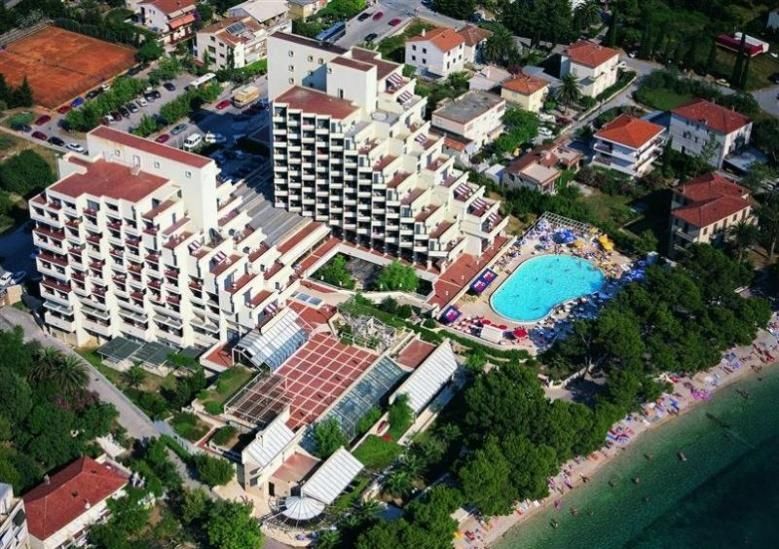
Document name: Report on heat pump installation and industry in Adriatic-
Ionian region
Document identifier: D 1.1.1
Document Class: Public
Version: final

Report on heat pump installation and industry in Adriatic-Ionian region   1
Project Details:
Programme: Adriatic-Ionian Programme INTERREG V-B Transnational 2014-2020
Priority Axis: 1. Innovative and Smart region
Objective: 1.1. Supporting the development of a regional innovation system for the Adriatic-Ionian
Region
Project Title: Fostering diffusion of Heating & Cooling technologies using the seawater pump in the
Adriatic-Ionian Region
Project Acronym: SEADRION
Project Code No: 539
Lead Partner: University of Zagreb, Faculty of Mechanical Engineering and Naval Architecture
Total Budget: 823 656.00 €
Time Frame: 01.02.2018-31.01.2020

Deliverable Details
Component: WP T1 - State of the art analysis, network building and strengthening
Task Title: Mapping and current state situation
Deliverable Title: Report on heat pump installation and industry in Adriatic-Ionian region
Responsible Partner: CERTH
Involved Partners: all
Date & Place of delivery: 31.10.2018
Authors where appropriate: all partners
Contractual Date: 30.04.2018

This document has been produced with the financial assistance of the European Union. The content of the
document is the sole responsibility of CERTH and can under no circumstances be regarded as reflecting the
position of the European Union and/or ADRION programme authorities.

 Report on heat pump installation and industry in Adriatic-Ionian region                              2

Table of Contents
PURPOSE OF THIS DOCUMENT .............................................................................................................. 4
1     INTRODUCTION .............................................................................................................................. 5
2     EXISTING HEAT PUMP INSTALLATIONS IN ADRIATIC – IONIAN AREA ............................................ 6
3     REFERENCES .................................................................................................................................... 9
ANNEX .................................................................................................................................................. 10

 Report on heat pump installation and industry in Adriatic-Ionian region                                                                               3

Purpose of this document
The scope of the present document is to present the existing installations that use seawater heat
pumps in buildings. In this Activity T1.1 each partner will collect and analyse data and information
about:
- Existing installations of seawater heat pumps in buildings from different sectors located in the
Adriatic-Ionian area;
The coordinator of the Action T1.1 “Mapping and current state situation” is CERTH, who prepared a
common datasheet for collection of data regarding the existing seawater heat pump installations in
the Adriatic – Ionian area. Each partner will collect data from national energy agencies, EU
Commission, local administration, universities, research institutions and previous EU projects.

 Report on heat pump installation and industry in Adriatic-Ionian region                         4
1 Introduction
The SEADRION project aims to support the development of a regional innovation system for the
Adriatic-Ionian area with the installation of 3 renewable energy facilities in public buildings located
in Greece and the western and southern part of Adriatic Croatia. These facilities are seawater heat
pumps, an innovation system that uses the thermal energy contained in a reservoir (sea) to achieve
the cooling and thermal energy in the buildings which are close to the sea.
The main objective of the SEADRION is to identify benefits and barriers associated with the use of
this technology and to find a system solution designed to improve the use of the seawater heat pump
technology and to make the building's energy self-sufficient and independent from fossil fuels.
The main outputs of the SEADRION project are a transnational seawater heat pump network
•   to support sustainable development in the ADRION region, science and technology cooperation
    between research institutions and enterprises,
•   to enhance innovation capacity of the heat pump sector with the aim to improve their innovation
    skills, capacities and competencies and common strategy to enhance the use of seawater heat
    pump based heating and cooling in the ADRION region.
Because of the diverse geographical features of MED countries, five countries were involved within
the activity in order to present as good as possible the installed applications within each territory so
as to obtain a comprehensive picture of already installed seawater heat pump applications. Within
this activity the following partners were involved:
        CROATIA – UNIZAG and DURA
        GREECE - CERTH
        ITALY - CORTEA
        SLOVENIA - GOLEA
        ALBANIA - AKBN
Information for the compilation of the data sheets as depicted in the annex, are collected by partners
through questionnaires, from literature available on the internet and secondarily on invited expert
advice, as indicated in each case description.

 Report on heat pump installation and industry in Adriatic-Ionian region                             5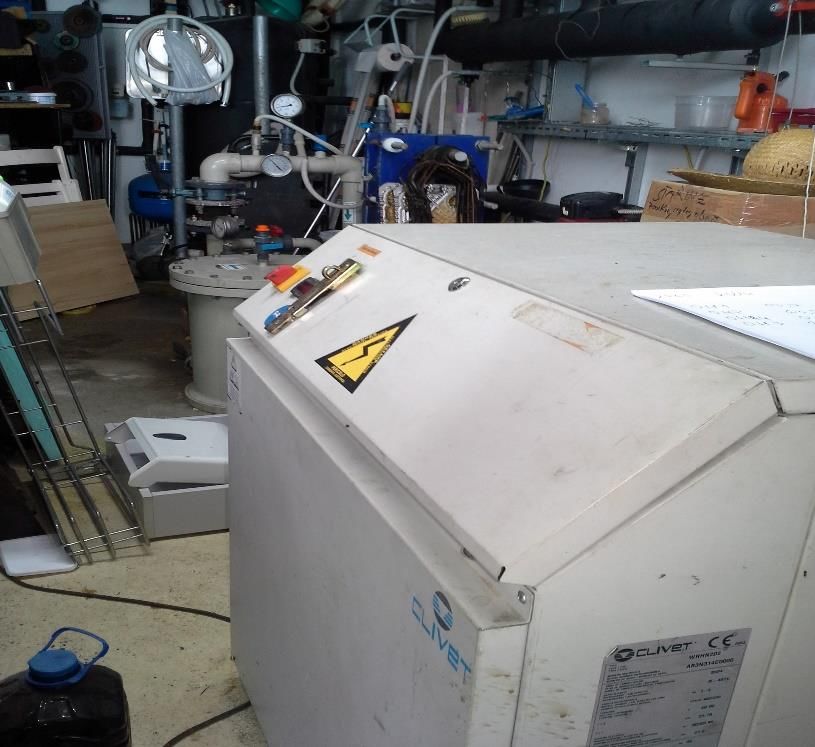
2 Existing heat pump installations in Adriatic – Ionian area
From the answers to the questionnaires, presented in the Annexes, we can see that sea water as a
source is mainly used in medium and large-sized heat pump systems, such as small settlements of
mixed use development (as described by CORTEA) and in many hotel complexes (as presented by
CERTH, UNIZAG FSB and Dura). It is worth mentioning that in Slovenia, a SWHP system has been
installed through an ESCO financial mechanism.

 Figure 1: Type and amount of buildings having SWHPs in each country (no records are existing for
                                             Albania)
According to GOLEA, in Slovenia, one system that uses SWHP for heating and cooling is installed in
the Faculty of Maritime Studies and Transport, in Portorož. The second installation is in a hotel also
located on the coast in Portorož. In this case, high operational costs due to fossil fuel use led to the
decision of refurbishment of the system, which was made through the ESCO financing model.
According to CORTEA, in Italy, Porto piccolo – Sistiana, is a small village set in the Gulf of Trieste.
Great attention to the protection of the environment has been given in the design and
implementation of the project and entire complex construction, which uses solar and geothermal
energy. Sea water is used for covering of cooling and heating needs and also for DHW for the different
buildings of the village (hotel, spa, residential units, commercial areas etc.). The village also uses solar
energy for DHW needs with total 200 m2 of solar panels. Also, Darsena of Savona has been
restructured forming a complex of buildings with mixed use development: residential and
commercial. In this case, water-to-water heat pumps are used for air conditioning and DHW. Due to

 Report on heat pump installation and industry in Adriatic-Ionian region                                 6
architectural constraints imposed by the buildings linear design there is no use of any other RES. Last
but not least, there is a work in progress in Genova (Complesso San Benigno), which involves the
construction of a low-enthalpy thermal and refrigeration energy distribution infrastructure, taken
from sea water. The typology of the intervention will be able to serve the mixed use development
blending residential, commercial, cultural, institutional, or entertainment uses. SWHP are also used
in the Aquarium of Genova, providing heating and cooling of tropical fish and seal tanks.
The use of heat pumps for heating, cooling and DHW is widespread in the hotel sector in Greece.
There are many installations using sea water as heat source and a few using open loop GSHPs
exploiting saline water near the coast. According to CERTH, in Greece 10 hotels use geothermal
systems for covering cooling needs during summer months. The total installed capacity is
approximately 6.7 MW for heating and 9.4 MW for cooling. Some of these hotels, five in number,
have also a supplemental renewable energy system installed in order to cover their energy needs.
This system is mainly solar panels with a total area of 4.850 m2 for the production of DHW.
According to UNIZAG FSB and Dura, two installations in private properties were found in Croatia
which use geothermal heat pump systems. These systems were put in use in 2007-2008 and cover
the energy needs of two apartment buildings with COP in the heating mode 5.5 and the energy
efficiency ratio (EER) in passive cooling from 25 to 30. Also, eight hotels in the Adriatic coastal area
of Croatia use SWHP for heating and cooling, and at the same time for the preparation of DHW,
including heating of pools, where they exist. In one case, for the needs of DHW, solar collectors are
used.
According to AKBN in Albania there are no seawater heat pump installations. Thus Albania has not
been included in this report.

 Report on heat pump installation and industry in Adriatic-Ionian region                             7
Figure 2: Other RES used in facilities

Regarding the water intake in the various applications, most partners are directly sourcing the water
from the sea, apart from Greece, where it is more common to source water through drillings in order
to avoid time consuming permission procedures (administrative reasons) for the water abstraction
but also in order to avoid technical implications such as expensive filtering procedures to avoid
clogged filters and a possible shut down of the facility (technical and economic reasons).
For the partners who are sourcing water directly from the sea, the distance is varying from
approximately 5 until 500 meters.

 Report on heat pump installation and industry in Adriatic-Ionian region                          8
3 References
As indicated in each case description.

 Report on heat pump installation and industry in Adriatic-Ionian region   9
Annex

1. Country/Region: SLOVENIA

1. Responsible contact person
Name                                       Tomaž Lozej
Institution/company                        GOLEA, Nova Gorica
Address                                    Trg Edvarda Kardelja 1, 5000 Nova Gorica
Phone                                      00386 5 39324 62
e-mail                                     tomaz.lozej@golea.si
Position in institution/company            Project manager

2. Existing installations: Faculty of maritime studies and transport
2.1. Sea Water Heat Pump for (select appropriate):
 X       Heating                     X     Cooling                             DHW

2.2. Description of the application
The selected case study is located in Portorož, Slovenia. The main purpose of the application is heating and
cooling of the building – Faculty of Maritime Studies and Transport. System uses heat pump, which benefits
on sea water temperatures, which are lower in the summer and higher in the winter in comparison with
outside air temperatures. That makes the heat pump run on a higher efficiency which means more
convenient costs of heating and cooling. Nominal heating power in winter time is 66 kW and nominal cooling
power in summer time is 55 kW. Distance between machine room and seawater intake is about 60 m. The
year of system’s construction was 2004.
Regarding previous experience, it is similar with traditional heat pumps, except the maintenance works, that
are related with the system for sea water.
Because heat pump system was constructed more than decade ago, there are no detailed data of investment
costs. Similar system with available technology nowadays could be constructed for about 30,000€. In the
planning phase payback period was calculated to be about 7 years. For smaller systems, a great share of
investment costs can present construction of intake and discharge pipelines in case the heat pump is in
distant onshore.
Name of the building (where
                            Location: Latitude                            Location: Longitude
technology is installed)
Faculty of Maritime Studies
and Transport               13°34'39"E                                    45°30'58"N
Average air temperature (year)                                            13,4°C
Average seawater temperature (year)                                       15,8°C

Report on heat pump installation and industry in Adriatic-Ionian region                                 10
Type of the building
(domestic, Heated area of the Year of construction Renovation (Yes/No, what type,
commercial, building of the building year)
industrial)
Educational N.A. N.A. N.A.
Nominal power COP / EER
Type of appliance
heating/cooling heating/cooling
66 kW / 55 kW 3.26 / 3.02
Other RES installed
(technical data) N.A.
Hours of operation
Yearly produced heat/cold heating/cooling Distance of seawater (intake)
91,000 / 75,000 kWh 3,195 / 3,195 h/a 60 m
2.3. General information
Location of the application
Pot pomorščakov 4
6320 Portorož
Owner:
Faculty of maritime studies and
transport
Source: field visit and data collection
Report on heat pump installation and industry in Adriatic-Ionian region 112. Existing installations: Grand Hotel Bernardin
2.1. Sea Water Heat Pump for (select appropriate):
X Heating X Cooling DHW
2.2. Description of the application
Grand Hotel Bernardin is located on the coast in Portorož, Slovenia it has 240 hotel rooms with more than
12,000 m2 of hotel area in total. In 2014, new seawater heat pump system was launched in the hotel
complex. Old boiler room was worn out with unreliable operation. Heating system operational costs were
high and due to the fossil fuel use it was environmental unfriendly. The decision of renovation of the
system was accepted and seawater heat pump system was chosen. To reduce investment costs, hotel
owner chose model of ESCO financing with ESCO partner company Resalta d.o.o. (former GGE). All the
investment costs (500,000€) were carried out by GGE, which is now paid to produce and supply energy to
the Grand Hotel. Energy costs for the hotel owner were reduced from 300,000 € per year to approximately
200,000 € per year. Estimated payback period for ESCO partner GGE is less than 10 years. As seen by this
case study, there is great potential in renovation of old worn out heating systems with installation of new
heat pump systems. In this case study solution for financing is illustrated with ESCO model, where
interested partner company invests and further manages energy.
Machine room is with pipelines connected to the seawater intake and discharge elements, which were
designed as artificial marine reef. There are two heat pumps installed in the system, each with 500 kW
thermal power. Heat pumps are used as heat source in winter as well as cold source in summer. In
comparison with old system, CO2 emissions are reduced for about 500 tons per year.
Name of the building (where
Location: Latitude Location: Longitude
technology is installed)
Grand Hotel Bernardin 13°34'08"E 45°31'03"N
Average air temperature (year) 13,5°C
Average seawater temperature (year) 16,8 °C
Type of the building
(domestic, Heated area of the Year of construction of Renovation (Yes/No,
commercial, building the building what type, year)
industrial)
Hotel 12,000 m2 N.A. N.A.
Nominal power COP / EER
Type of appliance
heating/cooling heating/cooling
1000 kW N.A.
Other RES installed
(technical data) N.A.
Hours of operation
Yearly produced heat/cold heating/cooling Distance of seawater (intake)
3,000,000 / N.A. kWh N.A. 130 m
2.3. General information
Report on heat pump installation and industry in Adriatic-Ionian region 12Location of the application Obala 2, 6320 Portorož Owner: Resalta d.o.o. Šlandrova ulica 4b 1231 Ljubljana – Črnuče Source: https://www.resalta.com/references/grand-hotel-bernardin-slovenia Report on heat pump installation and industry in Adriatic-Ionian region 13
2. Country/Region: Italy / Friuli Venezia Giulia

1. Responsible contact person
Name                                       Lucia Gorostidi
Institution/company                        CORTEA
Address                                    Padriciano 99
Phone                                      +39 0403755631
e-mail                                     info@cortea.org
Position in institution/company            Project manager

2. Existing installations: Porto piccolo – Sistiana
2.1. Sea Water Heat Pump for (select appropriate):
 X       Heating                     X     Cooling                             DHW

2.2. Description of the application
Porto piccolo – Sistiana
This small village, set in the Gulf of Trieste, located directly on the Adriatic Sea, 460 residential units, public
and private beaches, parks, bars and restaurants, hotel, marina with 124 berths and a large spa make
Portopiccolo a real city. Born from a 245 million euro project lasted about 20 years for the environmental
requalification of an abandoned stone quarry in Sistiana, PortoPiccolo has been nicknamed the “Little
Monte Carlo” of the Italian Northeast.
Great attention to the protection of the environment has been given in the design and implementation of
the project and entire complex construction, with uses solar and geothermal energy. For the project sea
water is used as the source of the heat exchange. This renewable resource is stable all over the year and
supplies water at favourable temperature to the loop serving the high efficiency Clivet Heat Pumps. These
produce chilled and hot water plus domestic hot water for the different buildings (hotel, spa, residential
units, commercial areas etc.).
The entire village boasts Class A energy efficiency, whose achievement has been made possible by using
the sea as the thermal energy source for the heat pumps, with more than 600 Clivet air conditioning units.
The solution:
The plant engineering solution of PortoPiccolo is based on a water loop system that uses the sea water as
an energy source. The plant has also the preparation for the exploitation of ground water, which emerges
from the limestone which forms the floor of the quarry and then continues to the seabed. This renewable
resource is stable all over the year and supplies water to the loop serving all the bay with 17 heating and
cooling plants, which use the high efficiency packaged reversible Clivet heat pumps. These produce chilled,

Report on heat pump installation and industry in Adriatic-Ionian region                                          14
hot water and domestic hot water for the different buildings: hotel, spa, residential units, commercial
areas etc.
The distribution of hot and cold fluid in the different buildings is through radiant panels, Clivet fan-coils
and heated towel rails. The system uses different renewable energy sources such as sea and sun, with real
energy saving and very low operating costs. All of the heat pumps are fuelled exclusively by electricity, as
well as the induction cookers, completely eliminating the use of gas or oil.
In the village there are also 200 square meters of solar panels, positioned on the roofs of the modern
buildings, contributing to the hot domestic water high efficiency heating.
The results:
The completely electric power supply of both the heat pumps and the various domestic users has made it
possible to completely eliminate the emissions of combustion gas for a completely green city. Even the
cars cannot circulate in the village and all the parking lots are underground.
The system:
17 reversible water-water heat pumps on the refrigeration circuit. 611 terminal units. Total cooling
capacity 3 MW. 200 m2 thermal solar panels for the production of domestic hot water.
Cost:
Mechanical, electrical and sanitary facilities for a total of around € 25 million. The only air conditioning
system for about 2.5 ÷ 3 M €, of which 1.6 M € only for the central sea and the ring with technical water.
Name of the building (where
                            Location: Latitude                            Location: Longitude
technology is installed)
Porto Piccolo – Sistiana            37.067                                15.300
Average air temperature (year)                                            1 °C to 28 °C
Average seawater temperature (year)                                       13 °C to 22°C

Type of the building
(public, domestic,         Heated area of the Year of construction of Renovation       (Yes/No,
commercial,                building           the building            what type, year)
industrial)

460 residential units,
parks,    bars    and                                    April 2014
restaurants and hotel
                                    Nominal power                         COP / EER
Type of appliance
                                    heating/cooling                       heating/cooling
                                    18 Clivet heat pump water-water
Cooling and heating                 (3 MW overall)                        COP 4,4 - 4,9
Other RES installed
(technical data)                    200 m2 of solar panels for the production of domestic hot water

Report on heat pump installation and industry in Adriatic-Ionian region                                    15
Hours of operation
Yearly produced heat/cold heating/cooling Distance of seawater (intake)
(……kWh) 3,8 m
2.3. General information
The engineer Stefano Longhi of SGM Consulting comments: "All the houses of the village are in Class A and
equipped with geothermal systems for heating and cooling, thermal-acoustic insulation at the highest
levels, ventilation controlled mechanics, low emissive windows, green roofs, hanging gardens and
underground parking. High technology is here applied to maximum comfort with minimal impact, so much
so that PortoPiccolo has received an important certificate from the Ministry of the Environment that
certifies the very low emissions in terms of polluting substances in the air and in the water.
"The engineer Masoli continues: the expected savings, based on the energy analysis done and on the high
efficiency of the installed systems, they are between 30 and 40% compared to a traditional system. These
forecasts will be subject to timely verification during the coming seasons thanks to a system of supervision
and accounting that will provide the final energy parameters ".
Location of the application Photo of the application
Porto Piccolo Sistiana, Duino-
Aurisina
Owner:
The team
- Client: Serenissima SGR,
Rilke.
- Architectural project: arch.
Francesco Luparelli.
- Architectural and structural
project development:
Archest
- Plant design: SGM Porto Piccolo – Sistiana
Consulting and SIMM
engineering company
Masoli Messi. 18 heat pump water-water (3 MW overall) produce hot and chilled fluids
for indoor climate and hot water production, supported by solar thermal
- Plant engineering fields
companies: Fabbro Vanni,
Ranzato Impianti, Buttro
Hydrothermal, Tecnoterm.
- Management: Bovis
Lendlease.
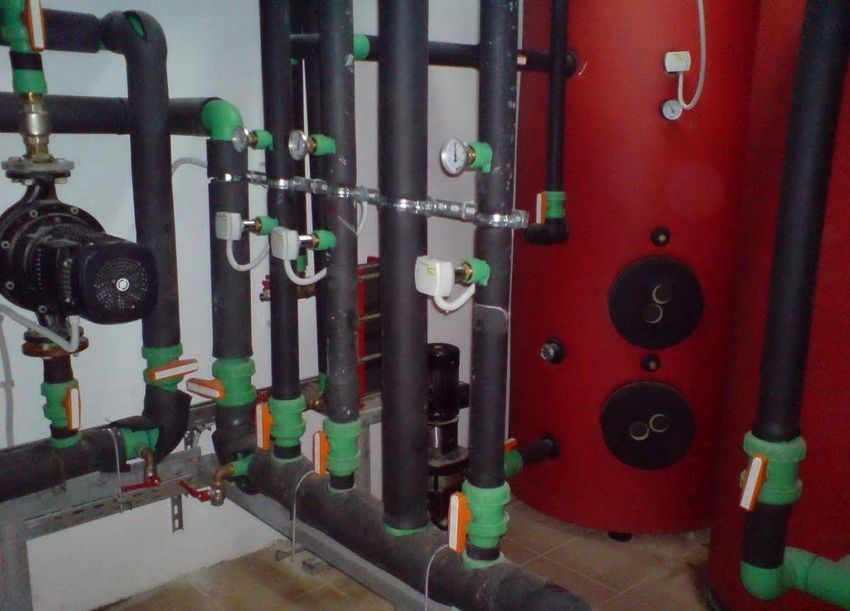
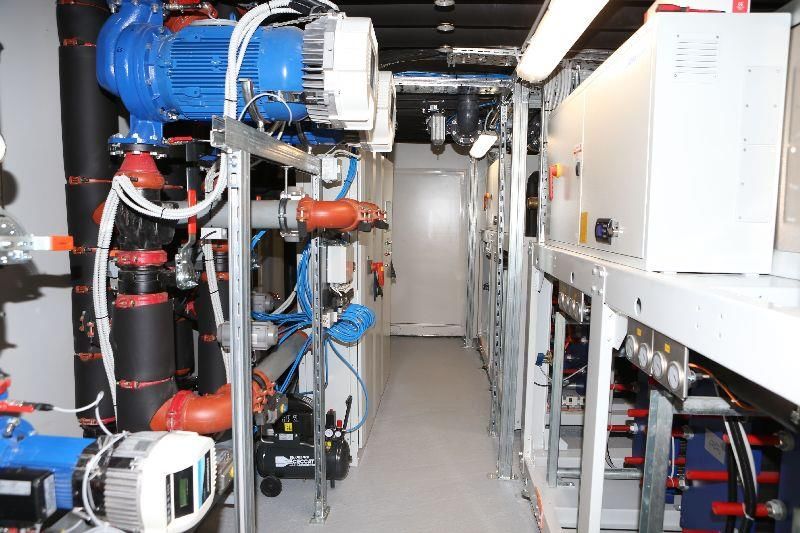
Report on heat pump installation and industry in Adriatic-Ionian region 16Internal view of the power station, where the heat exchange takes place
between the sea water and the heat transfer fluid (glycol water) that runs
through the technical chain, allowing the heat pumps to work
The water circuit forms a loop that extends for about 2 km and, thanks to
the operating temperature always below 35 ° C, was entirely made with
polyethylene pipes.
Source: https://www.clivet.com/en/porto-piccolo-di-sistiana
2. Existing installations: Darsena of Savona
2.1. Sea Water Heat Pump for (select appropriate):
X Heating X Cooling DHW
2.2. Description of the application
Savona, renovation of the ex Darsena
Report on heat pump installation and industry in Adriatic-Ionian region 17The Darsena of Savona has been restructured forming a complex of buildings with mixed destination: residential, commercial and receptive, which directly overlooks the sea. The solution: After deep analysis, the air conditioning and domestic hot water production of the whole Complesso della Torre was entrusted to an ocean-thermal water-sea-heat-pump (WSHP) system based on heat pump technology. Temperatures vary from 14°C in winter to 24°C in summer. Moreover, it is easily available, as the Complesso della Torre faces directly the sea. A concrete duct with an air intake grill and a shut-off damper that flows through a 60 m3 settling tank draws seawater. By means of electric pumps, water is sent to filtering devices and then to three titanium steel exchangers with the same capacity. Water is finally returned to the source with 3°C difference in temperature. The exchanger utility side is represented by the WSHP water loop with reverse return circuiting, which supplies several water-to-water heat pumps serving the different users. The hotel has a centralized solution with two heat pumps of 400 kW each for the production of cooled water, hot water and domestic hot water at 55°C. The distribution is committed to 190 ductable water terminal units. Air exchange is managed by four air-to-air heat pumps with thermodynamic heat recovery and by four hydronic air-handling units. 150 individual water-to-water heat pumps that supply more than 680 ductable water terminal units provide the air conditioning of residential and commercial users. The centralized domestic hot water production is realized by other heat pumps. Each residential and commercial unit is provided with its own ELFO Control device for its automatic air conditioning management. All devices are connected to the Clivet centralized control and management system. The results: Each user is independent respect to heating and cooling, throughout the year, with immediate accounting on its own electricity meter. The use of heat pumps for domestic hot water avoided the construction of heating plants with the associated bureaucracy and costs of installing gas pipes. Areas reserved for plant rooms were reduced to a minimum, consequently the commercialized surfaces, and the Complesso della Torre value, increased. Thanks to the use of sea water as the heat pumps’ energy source, design analysis over a one year period highlighted an average saving of 70% with respect to a traditional system that uses methane gas as an energy source for heating. The system: 4 Clivet water-to-water heat pumps for the hotel air conditioning and domestic hot water production. 150 Clivet ELFOEnergy water-to-water heat pumps for the commercial and residential units air conditioning. 4 make-up units ELFOFresh Large and 4 air handling units by Clivet for the hotel common areas. More than 800 Clivet hydronic terminal units. 150 Clivet ELFOControl devices for the automatic management of each commercial and residential system. 2 storage tanks for domestic hot water. About 7,4 MW total thermal potential installed Cost: Report on heat pump installation and industry in Adriatic-Ionian region 18
For a conventional plant life cycle, about 15 years, savings are equal to 2,5 million euros, including
maintenance and energy costs. Environmental impact too has been drastically reduced, as direct CO 2
emissions have been thoroughly eliminated and indirect have been practically halved.
Name of the building (where
                            Location: Latitude                            Location: Longitude
technology is installed)

Vecchia Darsena – Savona            44° 14' 43'' N                        8° 29' 33'' E
Average air temperature (year)                                            8 °C to 25°C
Average seawater temperature (year)                                       14°C to 24°C

                           Heated area of the Year of construction of Renovation (Yes/No, what
Type of the building
                           building           the building            type, year)

NH Hotel with 96
rooms and conference
                           69.000 m3                   2007
centre, 103 flats, 20
offices and 31 shops
                                    Nominal power                         COP / EER
Type of appliance
                                    heating/cooling                       heating/cooling

                                    7,4 MWt potential installed

Other RES installed                 No

(technical data)
                                    Hours of operation
Yearly produced heat/cold           heating/cooling                       Distance of seawater (intake)

673.480 kWh - electricity                                                 x
2.3. General information
The Spanish architect Ricardo Bofill has been inspired by naval architecture to design the new housing
estate that overlooks Savona’s dock, near Genoa. Comprising of two modern buildings, a nineteen-floor
tower and a large pedestrian yard, the structure has a hotel, shops, offices and luxurious residences.
The Challenge. The main objectives of investors and town and port authorities was to provide a new image
for the city of Savova, recovering and transforming radically the degraded area of the old dock. The
programme idea: the new area would have high visibility structures for different types of end users, from
tourists to traders and residents. The integration with the urban and maritime surroundings should be both
architectural and environmental. The new buildings façades would be formed by large glass surfaces with
different exposures to the sun: this could require simultaneous heating and cooling in different rooms.
This behaviour would be further amplified by the different uses and variable occupancy for each area. On
the other hand external technical areas, such as roofs and balconies, would not be available because of
architectural constraints imposed by the building linear design. Naturally the customer wanted all options
to increase the value of the investment, both for energy savings and for installation and management
simplicity. The operation autonomy of all users and the ease in consumption accounting were in fact among
the specific objectives.

Report on heat pump installation and industry in Adriatic-Ionian region                                   19
Photo of the application
Location of the application
Darsena di Savona, Savona.
The team:
- Investor GF Group, Italy.
- Architectural project
Ricardo Bofill Studio, Spain.
- Plant project Ing. Marco
Gaminara, Italy.
Simplified description of the Savona plant
- Exec. project and
architectural project
management.
- Arch. Armellino and
Poggio, Ital
Oceanothermal heat exchangers and heat pumps
Source: http://www.repowermap.org/installations/563587126/it/Pompa-di-calore-Savona
http://www.clivet.lt/wp-content/uploads/2012/03/12_1-COMPLESSO-DELLA-TORRE-Multipurpose-
complex.pdf
2. Existing installations: Aquarium of Genova
2.1. Sea Water Heat Pump for (select appropriate):
X Heating X Cooling X DHW
2.2. Description of the application
Aquarium of Genova
The Genoa Aquarium, built by the architects Renzo Piano and Peter Chermayeff, is one of the most visited
places in the world. It has been realized in 1992 on the occasion of Expo '92 for the celebration of the fifth
centenary of the discovery of the New World by Christopher Columbus with the goal of restructuring the
Port area. In 2007 the technological systems of the aquarium have been totally renovated in order to
improve its functionality and efficiency.
Report on heat pump installation and industry in Adriatic-Ionian region 20The solution:
The three Carrier 30HXC 375 refrigeration units (freshwater- or seawater-cooled chillers) that control the
air conditioning of the rooms and provide heating and cooling of tropical fish and seal tanks, are located
in an underground room at level -2.
The plant consists of three refrigeration units that produce chilled water at a temperature of 6-7 ° C for
cooling the common areas and seal tanks.
The tempered water, disposed during the condensation, is instead used for the air conditioning of the
tropical fish tank at a temperature of 45-50 ° C.
Heat exchangers are installed to guarantee the correct functioning of the refrigeration units ensure
dissipation and complete the cooling cycle, while water distribution is entrusted to suitable circulators. An
interesting technical note of the system is that the cooling units use water from sea for the disposal of
unused energy. In the face of this, special arrangements have been made in the plant plate exchangers
designed for this particular operation.
The system:
Gross yield 1.181 kW. Group absorption 388.00 kW. Power Compressor 388.00 kW. C.O.P 3,04 . Minimum
capacity 10.00%. Refrigerant R-134a.
Cost:
The plant has guaranteed to the customer the saving of about 800 euros a day of methane gas, being the
boilers replaced most of the time by heat pumps. The saving for the production of cold water is also
sensitive due to the greater efficiency of the refrigeration units, but on this we do not have a comparison
data due to the continuous application changes (number and parameters of the tanks).
Name of the building (where
Location: Latitude Location: Longitude
technology is installed)
Aquarium of Genova 44° 24' 22.22" N 8° 55' 21.33" E
Average air temperature (year) 6°C to 28°C
Average seawater temperature (year) 13°C to 23°C
Heated area of the Year of construction Renovation (Yes/No, what
Type of the building
building of the building type, year)
Cooling common areas
Aquarium 2007
and seal tanks
Nominal power COP / EER
Type of appliance
heating/cooling heating/cooling
1,1 MW 3,04
Other RES installed
(technical data)
Report on heat pump installation and industry in Adriatic-Ionian region 21Hours of operation
Yearly produced heat/cold heating/cooling Distance of seawater (intake)
(……kWh)
2.3. General information
On 23 July 2010 a technical visit was organized to the Aquarium of Genoa entitled "The high efficiency of
seawater heat pumps", a meeting dedicated to designers and professionals in the sector in order to
present prestigious Carrier case histories. The event, planned in collaboration with the Territorial Delegate
AICARR and with the on-site coordination of the Labella agency, saw the participation of 25 designers and
allowed the large group of professionals to confront one of our most important plant designs.
Photo of the application
Aquarium of Genoa
Location of the application
Ponte Spinola, Genova
Owner:
Installation of the Aquarium
Source: file:///C:/Users/Utente/Downloads/Carrier_on_air_Acquario_di_Genova%20(1).pdf
Report on heat pump installation and industry in Adriatic-Ionian region 222. Existing installations: Complesso San Benigno – Genova
2.1. Sea Water Heat Pump for (select appropriate):
X Heating X Cooling X DHW
2.2. Description of the application
Complesso San Benigno – Genova (work in progress)
The project involves the construction of a low-enthalpy thermal and refrigeration energy distribution
infrastructure, taken from sea water, implemented with a fresh water ring with a flow rate suitable to
supply thermal energy to the main centralized users of the district.
The typology of the intervention will be able to serve directional centers, shopping centers, hotels,
condominiums, tertiary sector in general, but also residential areas. The service provides for the
distribution of fresh water through a circuit that receives heat by drawing from the sea in the port basin
of Genoa. The infrastructure provides for a seacock in the port area. The intake at sea consists of two
communicating tanks, the first used for the antibiofouling and pumping treatment, the second for heat
exchange with the fresh water circuit that implements the distribution.
The primary energy consumption of the complex (considering the national yield indicated by AEEG 0.46)
ad today it is 15,272 MWht. After the intervention it is estimated that consumption will be reduced to
9.202 kWht with an expected savings of 39.7% and a reduction in emissions of 1,274 tons of CO2 / year.
Furthermore, substantial reductions in greenhouse gases, fine dust and other pollutants are expected.
Cost:
In economic terms, the estimated savings are almost € 400,000 / year.
The total amount of expenditure calculated is around 3 and a half million euros.
Name of the building (where
Location: Latitude Location: Longitude
technology is installed)
Complesso San Benigno 44.40678 8.93391
Genova
Average air temperature (year) 6°C to 28°C
Average seawater temperature (year) 13°C to 23°C
Heated area of the Year of construction of Renovation (Yes/No,
Type of the building
building the building what type, year)
Mixed use development
(residential, commercial,
work in progress
cultural, entertainment
etc. uses)
Nominal power COP / EER
Type of appliance
heating/cooling heating/cooling
Report on heat pump installation and industry in Adriatic-Ionian region 23Heating and cooling 4,50 / 2,90
Other RES installed
(technical data)
Hours of operation
Yearly produced heat/cold heating/cooling Distance of seawater (intake)
(……kWh)
2.3. General information
Domenico Carmosino, manages San Benigno from a condominium point of view and is the creator of the
project with the engineer Avanzini, who is one of the theorists in Italy of marine climatization. Domenico
Carmosino, explains that "The biggest obstacle is obviously the bureaucratic part. In itself the
infrastructure to be done is not complex and the actual work to be carried out is estimated in just over a
year. Genoa is part of the Smart Cities project that promotes technological projects aimed at improving
the level of Eco sustainability of the city. To this is added the interest in the project by private individuals,
who could invest on this idea”.
Photo of the application
General scheme of operation Complex San Benigno
Location of the application
Complesso San Benigno,
Genova
Owner:
- Domenico Carmosino
manages San Benigno.
- Ing. Avanzini creator of the
project Tanks at sea
https://www.ligurianautica.com/mercato-nautica/climatizzazione-marina-il-progetto-ecosotenibile-per-
il-complesso-san-benigno/13286/
Report on heat pump installation and industry in Adriatic-Ionian region 24Report on heat pump installation and industry in Adriatic-Ionian region 25
3. Country/Region: Greece

1. Responsible contact person
Name                                       V. Ketikidis, E. Mylona
Institution/company                        CERTH/CPERI
Address                                    4th km Ptolemais - Bodossakio Hospital
Phone                                      +30 2463055300
e-mail                                     ketikidis@lignite.gr, mylona@lignite.gr
Position in institution/company            Research associates

2. Existing installations: Hotel Amalia in Nafplio
2.1. Sea Water Heat Pump for (select appropriate):
 X       Heating                     X     Cooling                         X   DHW

2.2. Description of the application
Use of heat pumps for heating, cooling and sanitary hot water is widespread in the hotel sector in Greece.
There are many installations using sea water as heat source and a few using open loop GSHPs exploiting
saline water near the coast. One such example is the Amalia hotel in Nafplio, a building with around 9000
m² air-conditioned spaces. Hotel heating and cooling needs are covered by 4 GSHPs supplying 740 kW
heating and 566 kW of cooling with fan-coils.
The GSHPs are fed through a heat exchanger by an open loop geothermal doublet comprising one
production and one reinjection well 60 m deep each, supplying 60 m³/h of groundwater at 18 °C. System
SPF values are 4.77 in heating and 3.65 in cooling mode.

Name of the building (where technology is
                                          Location: Latitude                     Location: Longitude
installed)

Hotel Amalia, Nafplio                             37°35'19.08"N                  22°47'54.58"E
Average air temperature (year) *                                                 17 oC (year 2017)
Average seawater temperature (year) **                                           20 oC (year 2017)
Type of the building (public,
                                      Heated area       of   the Year of construction Renovation (Yes/No,
domestic, commercial,
                                      building                   of the building      what type, year)
industrial)
                                                                                        Renovation of the
Hotel                                 9000 m2                        n/a                entire      building
                                                                                        during 2007-2008
Type of appliance                                 Nominal power                  COP / EER

Report on heat pump installation and industry in Adriatic-Ionian region                                  26
heating/cooling heating/cooling
Geothermal Heat Pump System with 740 kW heating and 566 kW
vertical open loop exchanger (boreholes) cooling 4.77 / 3.65
Other RES installed
(technical data) n/a
Hours of operation Distance of seawater
Yearly produced heat/cold heating/cooling (intake)
(……kWh) n/a n/a
2.3. General information
Location of the application
Photo of the application
Amalias str., N. Tiryns, 21 100,
Nafplio, Greece
Information from the official site of the company Climaveneta (http://www.climaveneta-
hotels.gr/)
2. Existing installations: Thessaloniki Concert Hall
2.1. Sea Water Heat Pump for (select appropriate):
Heating X Cooling DHW
2.2. Description of the application
The Thessaloniki concert hall is a building of 27.000 m² with a capacity for 1500 persons, located at the port
of Thessaloniki. What is important about this building, is that it is cooled by water source chillers, fed by
seawater during the summer. The system includes 3 water source chillers, plate heat exchangers, and
provides 1800 kW of cooling through 214 fan-coils, 40 central air-handling units and a piping network of 15
kilometres. Although not used for heating, a very similar system with heat pumps instead of chillers could
provide low temperature heating as well.
Report on heat pump installation and industry in Adriatic-Ionian region 27Name of the building (where technology is
Location: Latitude Location: Longitude
installed)
Thessaloniki concert hall 40.598152 22.948594
Average air temperature (year) * 16 oC (year 2017)
Average seawater temperature (year) ** 19 oC (2017)
Type of the building (public, Renovation
Heated area of the Year of construction
domestic, commercial, (Yes/No, what type,
building of the building
industrial) year)
Public 27000 m2 n/a n/a
Nominal power COP / EER
Type of appliance
heating/cooling heating/cooling
3 water source chillers, plate heat
exchangers 1800 kW cooling n/a
Other RES installed
(technical data) n/a
Hours of operation Distance of seawater
Yearly produced heat/cold heating/cooling (intake)
(……kWh) n/a n/a
2.3. General information
Location of the application Photo of the application
25 Martiou str., Thessaloniki
Information from “Use of geothermal heat pumps for heating of buildings in Greece” by Dimitrios
Mendrinos, Dr Michalis Karagiorgas, Dr Kostantin Karytsas, Presented during the LowExx workshop
“Low Temperature Systems in Existing/Historical Buildings”, 7 March 2002, Maastricht,
Netherlands.
Report on heat pump installation and industry in Adriatic-Ionian region 282. Existing installations: Mirragio Thermal Spa Resort
2.1. Sea Water Heat Pump for (select appropriate):
X Heating X Cooling X DHW
2.2. Description of the application
The hotel has an accommodation capacity of 1.000 beds and a 32.500 m² total built-up area.
Τhe installation received the first gold award in the category «Green City – Utilization of ‘green’ and
renewable energy”, where Yfantis Engineering LTD (SYCHEM group) did the electromechanical application
studies and planning. SYCHEM constructed the innovative combined sea water geothermal, heating
recovery and desalination system. An advanced BMS / electronic management system has been installed at
the hotel, that was also designed and constructed by SYCHEM. This combined system saves annually
1,680,000 kWh electricity, 64 tons of gas, reducing carbon dioxide emissions by 632 tn/year.
Name of the building (where technology is installed) Location: Latitude Location: Longitude
Mirragio thermal spa resort 39.927795 23.707848
Average air temperature (year) * 16 oC (year 2017)
Average seawater temperature (year) ** 19 oC (2017)
Year of Renovation
Type of the building (public, domestic, Heated area of the
construction of (Yes/No, what
commercial, industrial) building
the building type, year)
32.500 m2 (total build-
Hotel 2013-2016 -
up area)
Nominal power COP / EER
Type of appliance
heating/cooling heating/cooling
Cooling capacity
→2.400kW
Heating capacity
n/a →1.300kW n/a
Other RES installed
(technical data) -
Hours of operation Distance of seawater
Yearly produced heat/cold heating/cooling (intake)
Not available.
Probably through
(……kWh) n/a drillings.
Report on heat pump installation and industry in Adriatic-Ionian region 292.3. General information
Location of the application
Kanistro, Paliouri, 630 85 Photo of the application
Halkidiki, Greece
Information from the official site of the company Sychem (https://www.sychem.gr/en/)
2. Existing installations: Elounda Porto De Lux Resort
2.1. Sea Water Heat Pump for (select appropriate):
X Heating X Cooling X DHW
2.2. Description of the application
The hotel has an accommodation capacity of 620 beds or 29.594 m2 of build-up area.
Construction of combined Sea water geo-exchange system
• Central HVAC system
• Central DHW system
• BMS system
• Thermal Solar Field
In addition, 3 drillings for the sea water intake are used.
Report on heat pump installation and industry in Adriatic-Ionian region 30Name of the building (where technology
Location: Latitude Location: Longitude
is installed)
Elounda Porto De Lux Resort 35.241891 25.729876
Average air temperature (year) * 19 oC (year 2017)
Average seawater temperature (year) ** 20 oC (2017)
Type of the building (public,
Heated area of the Year of construction Renovation (Yes/No,
domestic, commercial,
building of the building what type, year)
industrial)
29.594 m2 (total build up
Hotel 2004 2015
area)
Nominal power COP / EER
Type of appliance
heating/cooling heating/cooling
Cooling capacity → 1.265kW
n/a Heating Capacity → 170kW n/a
Other RES installed
(technical data) Solar panels → 950m²
Hours of operation
Yearly produced heat/cold heating/cooling Distance of seawater (intake)
No direct seawater intake.
Water intake through drillings
(……kWh) n/a (3 in total).
2.3. General information
Report on heat pump installation and industry in Adriatic-Ionian region 31Location of the application
Sxisma, Elounda, 720 53, Crete Photo of the application
Information from the official site of the company Sychem (https://www.sychem.gr/en/)
2. Existing installations: MarBella Corfu Resort
2.1. Sea Water Heat Pump for (select appropriate):
Heating Cooling X DHW
2.2. Description of the application
The hotel was built in 1971 and renovated in 2017, after five years of refurbishment works. It has an
accommodation capacity of 730 beds. Total build up area is 25.602,68 m2.
Construction of combined Sea water geo-exchange system:
• Installation of new high efficiency water cooled Chiller, 365kW
• Construction of sea water geo-exchange DHW system
• BMS system
Name of the building (where technology
Location: Latitude Location: Longitude
is installed)
Report on heat pump installation and industry in Adriatic-Ionian region 32MarBella Corfu Resort 39.507937 19.921735
Average air temperature (year) * 18 oC (year 2017)
Average seawater temperature (year) ** 20 oC (2017)
Type of the building (public,
Heated area of the Year of construction Renovation (Yes/No,
domestic, commercial,
building of the building what type, year)
industrial)
25.602,68 m2 (total build
Hotel 1971 2012-2017
up area)
Nominal power COP / EER
Type of appliance
heating/cooling heating/cooling
Cooling capacity → 1.265kW
Heating capacity → 1.164kW
DWH Heating Capacity →
n/a 170kW n/a
Other RES installed
(technical data) Solar panels → 327m²
Hours of operation
Yearly produced heat/cold heating/cooling Distance of seawater (intake)
Not available.
(……kWh) n/a Probably through drillings.
2.3. General information
Location of the application
Photo of the application
Ag. Ioannis, Peristerion, Corfu, Greece
Report on heat pump installation and industry in Adriatic-Ionian region 33Information from the official site of the company Sychem (https://www.sychem.gr/en/)
2. Existing installations: Belvedere Royal and Imperial Belvedere Hotels
2.1. Sea Water Heat Pump for (select appropriate):
X Heating X Cooling X DHW
2.2. Description of the application
The hotels have an accommodation capacity 1.340 beds on 20.400m² total built-up area.
ROYAL BELVEDERE HOTEL has 330 rooms and IMPERIAL BELVEDERE HOTEL has 341 rooms.
Construction of combined Sea water geo-exchange system including:
• Central HVAC system
• Central DHW system
• Design of central Thermal Solar Field.
• Design and construction of two additional High Temperature heat pumps and BMS extensions.
Name of the building (where
Location: Latitude Location: Longitude
technology is installed)
Belvedere Royal Hotel 35.304270 25.401765
Imperial Belvedere Hotel 35.305671 25.402055
Average air temperature (year) * 19 oC (year 2017)
Average seawater temperature (year) ** 20 oC (2017)
Type of the building (public,
Heated area of the Year of construction Renovation (Yes/No,
domestic, commercial,
building of the building what type, year)
industrial)
20.400m² (total built-up
Hotel 2006 2012
area)
Type of appliance Nominal power COP / EER
Report on heat pump installation and industry in Adriatic-Ionian region 34heating/cooling heating/cooling
Cooling capacity → 1.130kW
n/a Heating capacity → 360kW n/a
Other RES installed
(technical data) Solar panels → 2.470m²
Hours of operation
Yearly produced heat/cold heating/cooling Distance of seawater (intake)
Not available.
(……kWh) n/a Probably through drillings.
2.3. General information
Location of the application Photo of the application
Hersonisos, 700 14, Crete
Information from the official site of the company Sychem (https://www.sychem.gr/en/)
Report on heat pump installation and industry in Adriatic-Ionian region 352. Existing installations: Elounda Diamond Residences
2.1. Sea Water Heat Pump for (select appropriate):
X Heating X Cooling X DHW
2.2. Description of the application
Complex of 21 villas with a build-up area of 85 – 440 m2 each.
Yfantis Engineering LTD (SYCHEM group) did the complete design of MEP installations. Consulting services
and site inspection of MEP installations. Sea water distributed geothermal system. Separate water source
heat pump for each residence on common geothermal water network. Central heat pumps for pools
heating.
Name of the building (where technology is
Location: Latitude Location: Longitude
installed)
Elounda Diamond Residences 35.241051 25.733533
Average air temperature (year) * 19 oC (year 2017)
Average seawater temperature (year) ** 20 oC (2017)
Type of the building (public,
Heated area of the Year of construction Renovation (Yes/No,
domestic, commercial,
building of the building what type, year)
industrial)
21 villas with a build-up
Residences area of 85 – 440 m2 2009-2014 -
each.
Nominal power COP / EER
Type of appliance
heating/cooling heating/cooling
Cooling capacity → 275kW
n/a Heating capacity → 300kW n/a
Other RES installed
(technical data) -
Hours of operation Distance of seawater
Yearly produced heat/cold heating/cooling (intake)
(……kWh) n/a n/a
2.3. General information
Report on heat pump installation and industry in Adriatic-Ionian region 36Location of the application Photo of the application
Elounda, Crete, Greece
Information from the official site of the company Sychem (https://www.sychem.gr/en/)
2. Existing installations: Ikaros Beach Resort & Spa
2.1. Sea Water Heat Pump for (select appropriate):
X Heating X Cooling X DHW
2.2. Description of the application
Hotel has an accommodation capacity of 245 rooms or 855 beds.
Construction of combined Sea water geo-exchange system including:
• Complete MEP design for SPA (2008)
• Consulting services and site inspection of MEP installations (2008)
• Design & construction of Sea water geo-exchange HVAC, DHW & BMS System (2016)
Name of the building (where
Location: Latitude Location: Longitude
technology is installed)
Ikaros Beach resort and spa 35.291600 25.448718
Average air temperature (year) * 19 oC (year 2017)
Average seawater temperature (year) ** 20 oC (2017)
Report on heat pump installation and industry in Adriatic-Ionian region 37Type of the building (public,
Heated area of the Year of construction Renovation (Yes/No,
domestic, commercial,
building of the building what type, year)
industrial)
Hotel and spa 245 rooms or 855 beds 1971 2010
Nominal power COP / EER
Type of appliance
heating/cooling heating/cooling
Cooling capacity (Hotel) →
330kW
Cooling capacity (SPA) →
348kW
Cooling capacity (Hotel 2016
addition) → 348kW
DHW heating capacity (Hotel
n/a 2016 addition) → 127kW n/a
Other RES installed
(technical data) -
Hours of operation
Yearly produced heat/cold heating/cooling Distance of seawater (intake)
(……kWh) n/a n/a
2.3. General information
Location of the application
Photo of the application
Malia, 700 07, Crete
Report on heat pump installation and industry in Adriatic-Ionian region 38Information from the official site of the company Sychem (https://www.sychem.gr/en/)
2. Existing installations: Elounda Mare
2.1. Sea Water Heat Pump for (select appropriate):
X Heating X Cooling X DHW
2.2. Description of the application
Hotel complex consisting of 74 rooms with an accommodation capacity of 160 beds.
Construction of combined Sea water geo-exchange system including:
• Complete design of MEP installations for extensions.
• Consulting services and supervision of MEP installations.
• Construction of Sea Water geothermal HVAC, DHW, pools heating and BMS plants.
Name of the building (where technology
Location: Latitude Location: Longitude
is installed)
Elounda mare 35.246563 25.730191
Average air temperature (year) * 19 oC (year 2017)
Average seawater temperature (year) ** 20 oC (2017)
Type of the building (public,
Heated area of the Year of construction Renovation (Yes/No,
domestic, commercial,
building of the building what type, year)
industrial)
Hotel complex n/a 2003 -
Nominal power COP / EER
Type of appliance
heating/cooling heating/cooling
Report on heat pump installation and industry in Adriatic-Ionian region 39Cooling capacity → 290 kW
n/a Heating capacity → 385 kW n/a
Other RES installed
(technical data) Solar panels → 550 m²
Hours of operation
Yearly produced heat/cold heating/cooling Distance of seawater (intake)
(……kWh) n/a n/a
2.3. General information
Photo of the application
Location of the application
Elounda, Crete, Greece
Information from the official site of the company Sychem (https://www.sychem.gr/en/)
Report on heat pump installation and industry in Adriatic-Ionian region 402. Existing installations: Star Beach Village
2.1. Sea Water Heat Pump for (select appropriate):
X Heating X Cooling X DHW
2.2. Description of the application
Hotel complex consisting of 1.200 beds.
Construction of combined Sea water geo-exchange system including:
• Complete design of MEP installations for extensions.
• Consulting services and supervision of MEP installations.
• Construction of Sea Water geothermal HVAC, DHW, pools heating and BMS plants.
Name of the building (where technology is
Location: Latitude Location: Longitude
installed)
Star Beach Village 35.307292 25.404972
Average air temperature (year) * 19 oC (year 2017)
Average seawater temperature (year) ** 20 oC (2017)
Type of the building (public,
Heated area of the Year of construction Renovation (Yes/No,
domestic, commercial,
building of the building what type, year)
industrial)
Hotel n/a 2009 2016
Nominal power COP / EER
Type of appliance
heating/cooling heating/cooling
Cooling capacity → 290 kW
n/a Heating capacity → 385 kW n/a
Other RES installed
(technical data) Solar panels → 550 m²
Hours of operation Distance of seawater
Yearly produced heat/cold heating/cooling (intake)
(……kWh) n/a n/a
2.3. General information
Report on heat pump installation and industry in Adriatic-Ionian region 41Location of the application Photo of the application
Hersonissos, Crete, Greece
Information from the official site of the company Sychem (https://www.sychem.gr/en/)
2. Existing installations: Atlantica Sensatori Resorts
2.1. Sea Water Heat Pump for (select appropriate):
Heating Cooling DHW
2.2. Description of the application
Hotel complex consisting of 330 rooms.
Construction of combined Sea water geo-exchange system including:
• Re-design and of main HVAC and DHW plantroom and BMS system.
• Construction of Sea water geo-exchange HVAC & DHW system.
Name of the building (where
Location: Latitude Location: Longitude
technology is installed)
Atlantica Sensatory Resort 35.335219 25.349177
Average air temperature (year) * 19 oC (year 2017)
Report on heat pump installation and industry in Adriatic-Ionian region 42Average seawater temperature (year) ** 20 oC (2017)
Type of the building
Heated area of the Year of construction Renovation (Yes/No,
(public, domestic,
building of the building what type, year)
commercial, industrial)
n/a n/a n/a -
Nominal power COP / EER
Type of appliance
heating/cooling heating/cooling
Cooling capacity → 976kW
Heating capacity → 1280kW
DHW heating capacity →
n/a 587kW n/a
Other RES installed
(technical data) -
Hours of operation
Yearly produced heat/cold heating/cooling Distance of seawater (intake)
(……kWh) n/a n/a
2.3. General information
Photo of the application
Location of the application
Hersonissos, Crete, Greece
Report on heat pump installation and industry in Adriatic-Ionian region 43Information from the official site of the company Sychem (https://www.sychem.gr/en/)
2. Existing installations: Kontokali Bay Resort & Spa
2.1. Sea Water Heat Pump for (select appropriate):
X Heating X Cooling X DHW
2.2. Description of the application
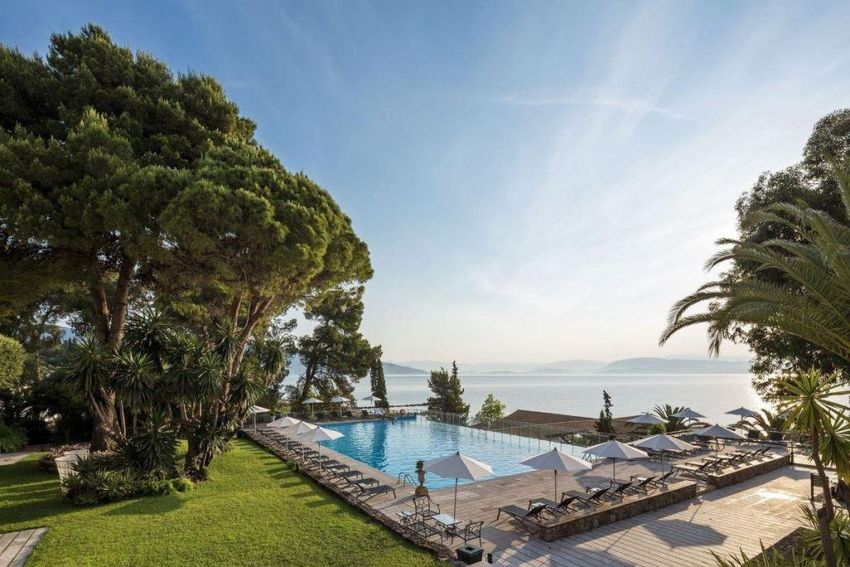
The hotel has an accommodation capacity of 260 rooms.
Construction of combined Sea water geo-exchange system including:
• Design and construction of sea water geothermal HVAC and hot water system.
• BMS system.
Name of the building (where technology
Location: Latitude Location: Longitude
is installed)
Kontokali Bay 39.649354 19.860312
Average air temperature (year) * 18 oC (year 2017)
Average seawater temperature (year) ** 20 oC (2017)
Type of the building (public,
Heated area of the Year of construction Renovation (Yes/No,
domestic, commercial,
building of the building what type, year)
industrial)
n/a n/a n/a -
Nominal power COP / EER
Type of appliance
heating/cooling heating/cooling
Cooling Capacity → 910kW
n/a Heating Capacity → 105kW n/a
Report on heat pump installation and industry in Adriatic-Ionian region 44You can also read


