SIGNS AND LINES PROGRAM GUIDANCE DOCUMENT - 2021 Application Period Opens: August 18, 2021
←
→
Page content transcription
If your browser does not render page correctly, please read the page content below
SIGNS AND LINES PROGRAM
     GUIDANCE DOCUMENT
                       2021
      Application Period Opens: August 18, 2021
   Informational Webinar: August 18, 2021 at 2 p.m.
                (Click here to register)
Applications Due: September 17, 2021 by 5 p.m. Eastern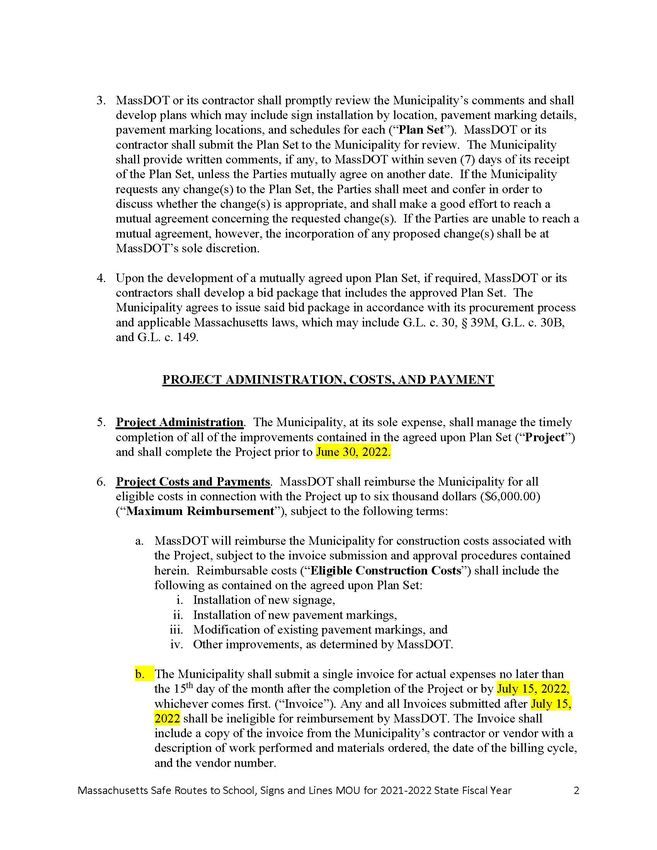
MASSACHUSETTS SAFE ROUTES TO SCHOOL
                                        SIGNS AND LINES PROGRAM
                                           GUIDANCE DOCUMENT

TABLE OF CONTENTS
I.    Introduction ..................................................................................................................... 1
      Safe Routes to School Program Overview ............................................................................................ 1
           Education ...................................................................................................................................... 1
           Encouragement ............................................................................................................................ 1
           Engagement .................................................................................................................................. 1
           Evaluation ..................................................................................................................................... 2
           Equity ............................................................................................................................................ 2
           Engineering ................................................................................................................................... 2

II.   Signs and Lines Program ................................................................................................... 3
      Program Eligibility ................................................................................................................................. 3
      Eligible Projects ..................................................................................................................................... 3
      Program Funding .................................................................................................................................. 5
            Other Project Considerations ....................................................................................................... 5

III. Application Process .......................................................................................................... 6
      Application Instructions ........................................................................................................................ 6
      Application Review ............................................................................................................................... 8
           Evaluation Criteria ........................................................................................................................ 8
      Notification of Application Approval .................................................................................................... 9

IV. Appendix ........................................................................................................................ 10
      1.     Signs and Lines Application ........................................................................................................ 10
      2.     Memorandum of Understanding (MOU) .................................................................................... 12
      3.     Sample list of acceptable signage and pavement markings ....................................................... 16
      4.     Sample timeline .......................................................................................................................... 19
      5.     Planning for success.................................................................................................................... 20

TABLE OF CONTENTS                                                                                                                               Page |i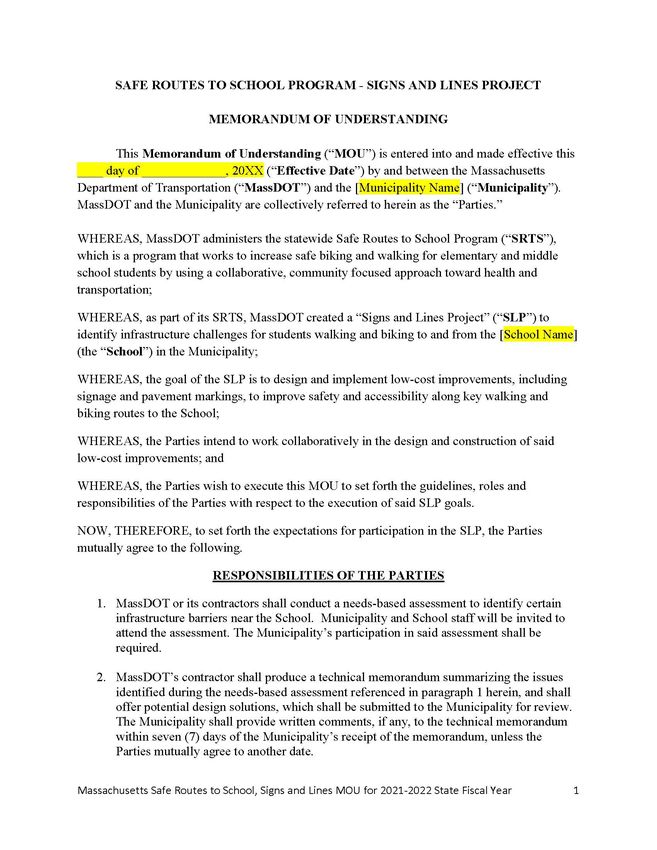
Massachusetts Safe Routes to School
Signs and Lines Program Guidance Document

I.        INTRODUCTION
          Safe Routes to School Program Overview
The Massachusetts Safe Routes to School (SRTS) Program is a federally-funded initiative of the Massachusetts
Department of Transportation (MassDOT). Safe Routes to School works with schools, communities, students,
and families to increase active transportation among public elementary and middle school students in the
Commonwealth. SRTS promotes a collaborative, community-focused approach that fosters mutual partnerships
between advocacy groups, law enforcement, education leaders, and public health departments to promote safer
routes for elementary and middle school students to get to school. The SRTS Program seeks to reduce air
pollution and traffic congestion near schools, while increasing the health, safety, and physical activity of
elementary and middle school students.

SRTS partners with schools and school districts to provide resources that support the mission of active
transportation, safety, and congestion mitigation. The Program encourages children to walk and bicycle to
school by making bicycling and walking to school a safer and more appealing transportation alternative. The
initiatives and resources promote a healthy and active lifestyle from an early age. The Program also facilitates
the planning, development, and implementation of activities and projects that will improve safety and reduce
traffic, fuel consumption, and air pollution in the vicinity of schools. SRTS utilizes the “six e’s” to implement its
program: education, encouragement, engagement, evaluation, equity, and engineering. Each of the six e’s are
essential to the program and are detailed below. Learn more about the SRTS Program and find helpful program
materials on the SRTS website1.

          Education
The SRTS team provides school communities with the resources to promote, educate, and empower smart and
safe pedestrians and bicyclists. This involves teaching children about a broad range of transportation choices and
instructing them in important lifelong bicycling and walking safety skills. Educational resources are provided and
customized for: students/educators, parents/guardians, and community stakeholders.

          Encouragement
The SRTS team assists school communities in organizing programs and events that encourage students, parents,
teachers, and the community to choose active, healthy, and safe modes of transportation. These activities
include our Flagship days: iWalk, Winter Walk, and Massachusetts Walk, Bike, and Roll to School Day; providing
incentives such as safety items; and helping create walking school bus and bike train routes.

          Engagement
SRTS partners with stakeholders including bike/ped committees, school/district task forces, and local law
enforcement officials to promote engagement with the local community to support proper walking and bicycling
behaviors are observed and followed in the vicinity of schools. The Program also initiates community traffic and
safety enforcement initiatives such as crossing guard programs and the annual student Yard Sign Contest.

1
    https://www.mass.gov/safe-routes-to-school

2021-2022 State Fiscal Year                                                                       Page |1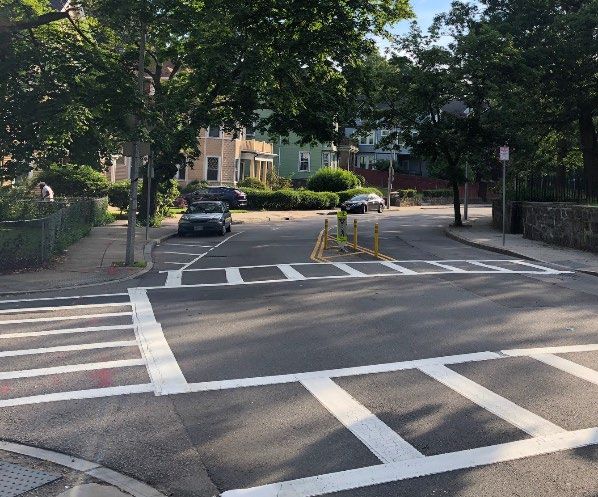
Massachusetts Safe Routes to School
Signs and Lines Program Guidance Document

        Evaluation
The SRTS Program evaluates the physical transportation environment, as well as how community members
interact with that environment. The evaluation process includes monitoring and documenting outcomes and
trends through the collection of data, including the collection of data before and after SRTS interventions.
Through the parent survey and zip code mapping, SRTS evaluates travel modes to and from school and provides
resources to help increase walk and bike mode share.

        Equity
SRTS works to support safe, active, and healthy opportunities for children and adults in all communities
regardless of ability, socio-economic status, and/or race. This is an all-encompassing “e” that is built into each
aspect of the SRTS Program.

        Engineering
This component of the SRTS Program facilitates bicycle and pedestrian infrastructure improvements to benefit
students who walk, bicycle, or use a wheeled mobility device to get to school. Infrastructure projects seek to
improve safety, access, and mobility for students in kindergarten through eighth grade, while also encouraging
more students to walk and bicycle to school. The SRTS Program facilitates such improvements by providing
funding for infrastructure projects of various sizes through its Infrastructure Project Funding Program and Signs
and Lines Program. The remainder of this document describes the process and instructions for eligible
communities to apply for funding through the Signs and Lines Program.

2021-2022 State Fiscal Year                                                                      Page |2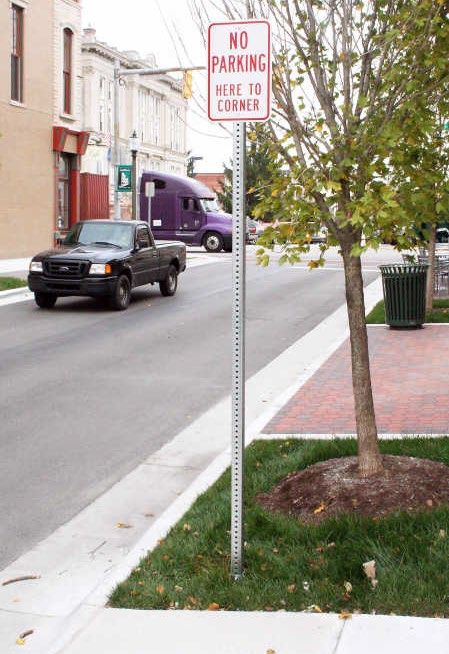
Massachusetts Safe Routes to School
Signs and Lines Program Guidance Document

II.     SIGNS AND LINES PROGRAM
The SRTS Signs and Lines Program will provide design services and up to $6,000 in construction funding to a
selected municipality for a low-cost infrastructure project around a public elementary or middle school. The goal
of these projects is to eliminate small barriers that students encounter when walking, bicycling, or using a
wheeled mobility device to get to school. Examples of a Signs and Lines Project could include the purchase and
installation of new signage such as No Parking, Bus Only, and School Zone signs; installation of new pavement
markings such as crosswalks; removal of existing signage and pavement markings; and other low-cost
improvements as approved by MassDOT. This is a reimbursement-based funding program; MassDOT reimburses
the municipality for eligible spending after the project is complete. This document provides step-by-step
guidance on the requirements of the funding, how to apply, and the timeline for project completion and
reimbursement.

Program Eligibility

Both a school applicant and a municipal co-applicant are required for the Signs and Lines Program. Municipalities
selected to receive Signs and Lines funding will be required to enter into a Memorandum of Understanding
(MOU) with MassDOT regarding program terms and conditions. This MOU can be found in the Appendix.

To be eligible for a Signs and Lines project, the receiving school must have already built a partnership with the
SRTS Program. Schools must be a partner for at least six months prior to applying. All SRTS partners are
committed to implementing SRTS initiatives. For more information on becoming a SRTS partner, contact the
SRTS Team at 888-426-6688 or complete the school partner enrollment form found at the following link:
https://gis.massdot.state.ma.us/forms/srts_partner/.

Only schools which receive public funding are eligible to receive a Signs and Lines Program project. Equity is also
an important consideration of the SRTS Program. Communities which represent diverse socio-economic
communities in urban, suburban, or rural environments are encouraged to apply.

Eligible Projects

Eligible low-cost projects include signage and pavement markings to improve safety and accessibility along key
walking and biking routes to a school. Projects must be within 1/2 mile of schools that serve children in any
grade from kindergarten to 8th grade. Schools with grades higher than grade 8, but which include grades that
fall within the eligible range, e.g. a middle-high school campus, are eligible to receive funding through the Signs
and Lines Program.

The scope of the project must be intended to improve safety and/or increase the number of children walking
and biking to school. The project must be within the public right of way (ROW) or any bicycle or pedestrian
pathway or trail. This may include projects on private land that have public access easements or public property
that is owned by a public entity.

All potential projects must have local support from community and municipal partners.

2021-2022 State Fiscal Year                                                                      Page |3
Massachusetts Safe Routes to School
Signs and Lines Program Guidance Document
All project elements must be MUTCD 2-compliant when applicable. Please see Appendix 3 for a more detailed
review of acceptable signage and pavement markings. The following are the types of low-cost projects that may
be eligible for Signs and Lines funding:
• Installation of new MUTCD-compliant signage
o Examples include:
School speed limit sign
In-street school crossing (yield)
School zone sign
Pick up and drop off sign
Bus only zone sign
• Installation of new pavement markings
o Examples include:
Thermoplastic high visibility crosswalk in school zone
Standard marked crosswalk outside of school zone
Stop line
Yield lines (“shark’s teeth”)
“Bus Only” text
“School Zone” text
• Modification of existing pavement markings
o Examples include:
Upgrading a standard marking crosswalk to a high visibility crosswalk
Removing parking markings near an intersection to improve sightlines
Changing the directionality of a street or travel lane
• Other improvements, as determined appropriate by MassDOT
The following project elements are not eligible for funding through the Signs and Lines Program:
• Permitting, utility relocation, or temporary and permanent ROW acquisition
These costs must be covered by the municipality for any project.
• Recurring costs:
Recurring costs such as salaries for crossing guards and walking school bus leaders.
• Pavement maintenance:
Pavement resurfacing, or pavement preservation.
• School bus improvement projects:
School bus safety projects or improvements to school bus stops.
• Signage not in compliance with MUTCD or not in line with SRTS program goals:
Signage not related to improving pedestrian and bicycle safety and mobility.
2
Manual on Uniform Traffic Control Devices for Streets and Highways (https://mutcd.fhwa.dot.gov/) and Massachusetts
Amendments to the MUTCD (https://www.mass.gov/service-details/mutcd-massachusetts-amendments)
2021-2022 State Fiscal Year Page |4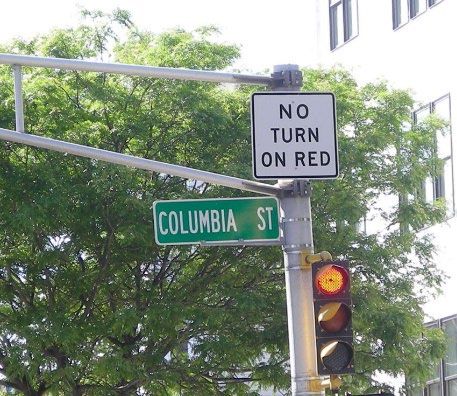
Massachusetts Safe Routes to School
Signs and Lines Program Guidance Document

        •    Other:
             Portable enforcement equipment or gifts.

Program Funding

        Signs and Lines Program projects include a needs assessment, project design, bid package, and up to
        $6,000 in reimbursement for costs incurred by the municipality for construction materials and labor.
        Costs incurred prior to this project are not eligible for reimbursement. All labor and materials for
        completed work will be reimbursed directly to the municipality up to $6,000. Project payment terms are
        described in the MOU in the Appendix. The SRTS Program will provide the needs assessment, project
        design, and bid package with input from the municipality and school at no cost. Below is a sample
        project budget for a Signs and Lines Project.

        Sample Project Budget 3
                                      Item                                  Quantity     Unit      Unit      Amount
                                                                                                   Cost
         30x30 Stop Sign                                                   2             Each     $63        $126
         24x24 No Left Turn Symbol Sign                                    6             Each     $40        $240
         30x30 Do Not Enter Sign                                           6             Each     $63        $378
         One Way - Double Sided Sign                                       4             Each     $45        $180
         24x48 School Speed Limit when Flashing Sign                       8             Each     $120       $960
         24x30 School Speed Limit Sign                                     4             Each     $75        $300
         4” Single Lines Pavement Marking Removal                          500           LF       $.30       $150
         4” White Single Line Thermo Pavement Marking                      500           LF       $.45       $225
         12” Crosswalk and Stop Thermo Line Pavement Marking               2,000         LF       $1.60      $3,200
         4” Double Yellow Thermo Pavement Marking                          280           LF       $.85       $238
                                                                  TOTAL                                       $5,997

    Other Project Considerations

        Projects constructed with SRTS funds must be accessible to persons with disabilities, per the Americans
        with Disabilities Act Accessibility Guidelines (ADAAG) at 28 CFR Part 36, Appendix A, as enforced by the
        U.S3. Department of Justice and FHWA, and as required under Section 504 of the Rehabilitation Act.
        Projects may indirectly benefit high school age youth or the public; however, these constituencies
        cannot be the sole or primary beneficiaries.

        Project applicants are encouraged to involve a local official responsible for the maintenance of local
        roadways (e.g. Public Works Director or Town/City Engineer) either as co-applicant or as a letter of
        support signatory.

        There may be a school need for a project larger than the $6,000 Signs and Lines Program maximum. This
        could include sidewalk improvements, traffic calming and speed reduction improvements, pedestrian,
        and bicycle crossing improvements, on and off-street bicycle and pedestrian facilities, secure bicycle

3
 This sample project budget reflects a scenario in which a municipality provides their own labor for construction in order to
utilize the funding solely for materials.

2021-2022 State Fiscal Year                                                                               Page |5
Massachusetts Safe Routes to School
Signs and Lines Program Guidance Document

         parking facilities, and traffic diversion improvements. These types of projects could be funded through
         the SRTS Infrastructure Project Funding Program. This is geared towards projects with larger anticipated
         costs. Please visit the SRTS website for more information about this funding opportunity.

III.     APPLICATION PROCESS
The Signs and Lines Program utilizes a competitive application process. In collaboration with SRTS partner
schools, municipalities must complete a funding application. The application is an Excel document, which can be
found in Appendix 1, or on the SRTS website. Interested schools and a representative from their municipality
(Director of Public Works, Town or City Engineer, Planning Director, Town Manager, or similar) must complete
the application and submit it in .XLS format to Diane.Hanson@aecom.com by the deadline on the application.
The application must be filled out completely and signed (digital signature) by the appropriate individuals
authorized to commit resources on behalf of the school and municipality, respectively. As mentioned previously,
only SRTS partner schools are eligible to receive a Signs and Lines project. The application must be emailed back
in Excel format and additionally you may include a scanned PDF of the signature page and/or other back-up
documents as described in the application.

Application Instructions

The following table provides step-by-step guidelines for completing the application.

 A. Municipality and School Applicant Information
 1. Name of Applicant School:       What is the official name of the school?
 2. Municipal Applicant Contact:   Engineering or Public Works preferred-This person will be the lead
                                   on the project and must be a municipal employee authorized to
                                   commit resources on behalf of municipality
 3. Title/Role:                     Municipal employee’s title/role
 4. Phone Number:                   Municipal employee’s phone number
 5. Email Address:                  Municipal employee’s email address
 6. Address:                        Municipal employee’s work address
 7. Address 2:
 8. Town/City:
 9. Zip Code:
 10. School Applicant Contact:      Must be a school or district employee
 11.   Title/Role:                    School or district applicant’s title/role
 12.   Phone Number:                  School or district applicant’s phone number
 13.   Email Address:                 School or district employee’s email address
 14.   Address:                       School address
 15.   Address 2:
 16.   Town/City:
 17. Zip Code:

2021-2022 State Fiscal Year                                                                   Page |6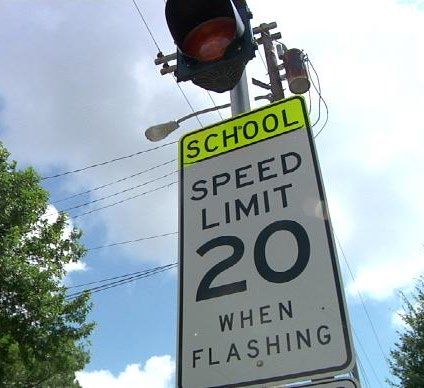
Massachusetts Safe Routes to School
Signs and Lines Program Guidance Document

 B. Safe Routes to School Partnership Information
 1. Are you a Safe Routes to      Partnership of six months or more is required
 School Partner?
 2. Partnership level with Safe   Provide if known, or contact your Outreach Coordinator
 Routes to School:
 3. Describe your involvement     Which SRTS activities does your school participate in each year?
 with the SRTS program:           Information is available on the SRTS Program Dashboard. Please note
                                  the frequency of noted activities over the last two years.

 C. Project Information
 1. Grades Served                   Please indicate the which grades the school serves. Only schools
                                    serving Kindergarten through 8th grade are eligible to apply.
 2. Total Number of Students        Provide the most recent enrollment data.
 3. Daily Number of Walkers         Provide an estimate based on a recent arrival/dismissal observation or
                                    SRTS parent/guardian travel survey.
 4. Daily Number of Bikers          Provide an estimate based on a recent arrival/dismissal observation or
                                    SRTS parent/guardian travel survey.
 5. Describe the project: You       Provide a brief description of the project. Please be as specific as
 may include one additional         possible, including road names and proposed improvements. Briefly
 page with a map and/or photo       note the identified issues that will be addressed by the improvements.

 6. How would this project          By implementing the project improvements described above, how
 benefit your students?             would your students benefit? Be specific as it relates to the goals of
                                    SRTS.

 7. How many more walkers and       Based on all student with the ability to walk or bike to school, how
 bikers will you see because of     many more students that are currently being driven would chose to
 this project?                      walk or bike after the improvements are implemented?

 8. Please describe the school      Which stakeholders from the school (principal, teachers, parents, etc.)
 and municipal support of this      and from the municipality (Engineering, DPW, BOH, Select Board,
 project: You may include letters   Mayor, etc.) support this project. Please include letters of support in
 of support with this application   your application, if applicable.

After completing the application, an authorized individual from the municipality must sign the form and agree to
the following statements:

    •   We understand that this is a reimbursement-based project and that the municipality must pay for all
        costs in advance.
    •   If our project is selected, we agree to adhere to all the terms and conditions of the Memorandum of
        Understanding (MOU) and sign the MOU prior to beginning any project-related tasks.
    •   We understand that the description of the project outlined in our application may not be the actual
        work approved by MassDOT/SRTS and a needs assessment conducted by the SRTS Program will
        determine the eligible project components.

2021-2022 State Fiscal Year                                                                     Page |7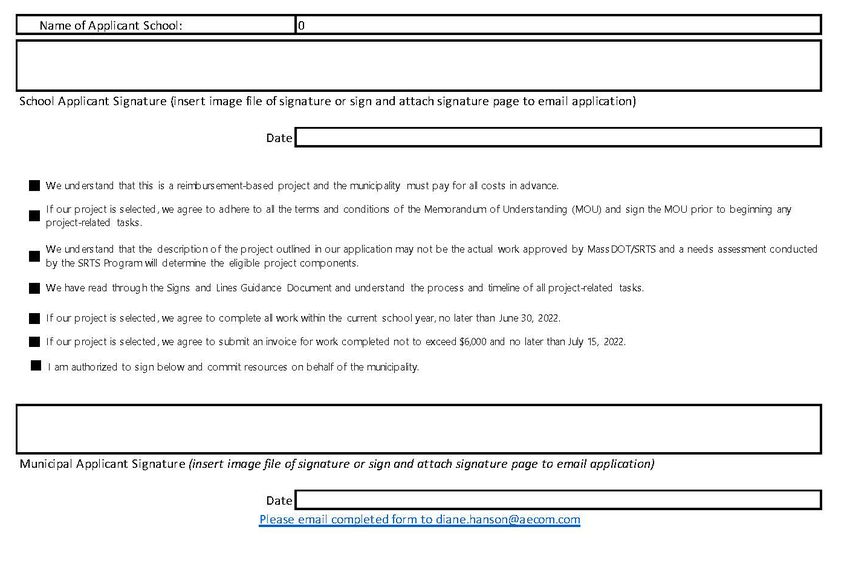
Massachusetts Safe Routes to School
Signs and Lines Program Guidance Document

    •   We have read through the Signs and Lines Guidance Document and understand the process and timeline
        of all project-related tasks.
    •   If our project is selected, we agree to complete all work within the current school year, no later than
        June 30, 2022.
    •   If our project is selected, we agree to submit an invoice for work completed not to exceed $6,000 and no
        later than July 15, 2022.
    •   I am authorized to sign below and commit resources on behalf of the municipality.

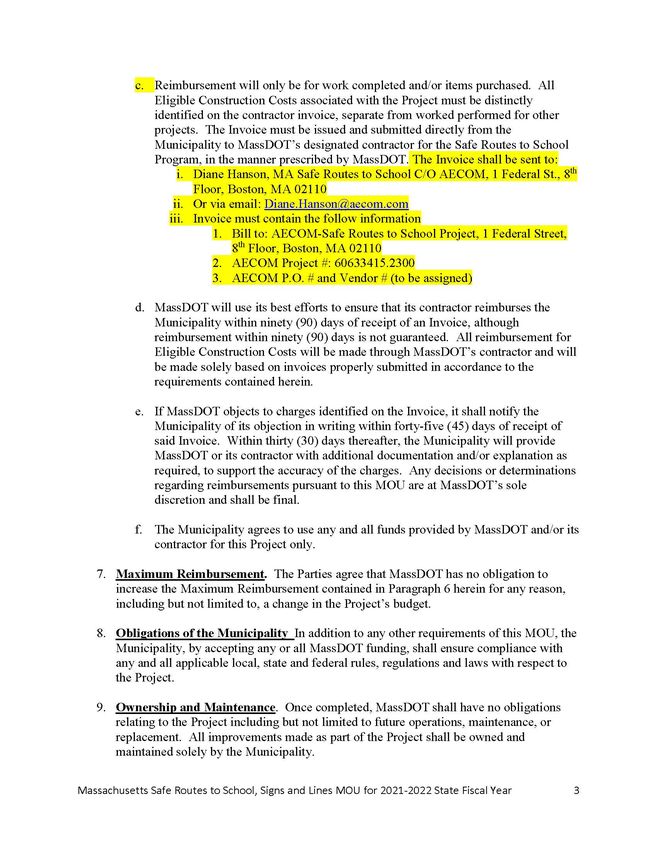
Completed applications must be emailed by the September 17, 2021 5 p.m. Eastern deadline to:

        Diane Hanson, Program Director, Safe Routes to School
        C/O AECOM
        Diane.Hanson@aecom.com

Application Review
Applications will be reviewed in a timely manner by a specially convened committee consisting of SRTS Program
and MassDOT staff. The committee will review and score applications based on the evaluation criteria detailed
below. Based on this evaluation, projects will be selected to move forward in the process.

   Evaluation Criteria
        Applications are evaluated based on the extent to which the school is currently involved in the SRTS
        Program and the extent to which the proposed project may improve safety and accessibility for walking
        and bicycling based on project scope, the school's population, and information about the school setting
        and existing bicycle and pedestrian access and safety. The total score for the SRTS application form is
        100. Some application responses are for reviewer information only.

        A summary of the maximum score for each section of the application form is provided below:

                                                                                          Maximum
            Section                                 Name                                  Score per
                                                                                           Section
               B      SRTS Partnership Information                                            25
               C      Project Information                                                     75
                              Questions 2-4                                                   10
                              Question 5                                                      20
                              Question 6                                                      20
                              Question 7                                                      10
                              Question 8                                                      15
                      Total Score                                                            100

2021-2022 State Fiscal Year                                                                  Page |8
Massachusetts Safe Routes to School Signs and Lines Program Guidance Document Notification of Application Approval All applicants will be notified of acceptance or denial of applications. Successful applicants will be given a list of next steps. Included in Appendix 4 and 5 is guidance for accepted applicants regarding project timelines and tips for project success. Applications not accepted during this application period can be resubmitted during the next application period if desired. 2021-2022 State Fiscal Year Page |9
Massachusetts Safe Routes to School
Infrastructure Application and Planning Process Guidance Document

IV.     APPENDIX
1. Signs and Lines Application

2020-2021 State Fiscal Year                                         P a g e | 10
Massachusetts Safe Routes to School
Infrastructure Application and Planning Process Guidance Document

2020-2021 State Fiscal Year                                         P a g e | 11
Massachusetts Safe Routes to School
Infrastructure Application and Planning Process Guidance Document

2. Memorandum of Understanding (MOU)

2020-2021 State Fiscal Year                                         P a g e | 12
Massachusetts Safe Routes to School
Infrastructure Application and Planning Process Guidance Document

2020-2021 State Fiscal Year                                         P a g e | 13
Massachusetts Safe Routes to School
Infrastructure Application and Planning Process Guidance Document

2020-2021 State Fiscal Year                                         P a g e | 14
Massachusetts Safe Routes to School
Infrastructure Application and Planning Process Guidance Document

2020-2021 State Fiscal Year                                         P a g e | 15
Massachusetts Safe Routes to School
Infrastructure Application and Planning Process Guidance Document

3. Sample list of acceptable signage and pavement markings
Signage and marking must be compliant with the 2009 Edition of the Manual on Uniform Traffic Control
Devices (MUTCD) and the Amendments for the MUTCD for Streets and Highway of Massachusetts
(2012), including Chapter 7E – Official Standards for School Zones. Acceptable signage and marking
include but are not limited to the following:

Sample of Acceptable Signage

 Sign                                            MUTCD Sign Designation             MUTCD Section
 Stop                                                        R1-1                         2B.05*
 Yield                                                       R1-2                         2B.08
 In-street school crossing (yield)                           R1-6b                        2B.12*
 No left/right turn                                       R3-1 or R3-2                    2B.18
 Do not enter                                                R5-1                         2B.37
 One-way                                                     R6-2                         2B.40
 No parking any time                                         R7-1                         2B.46
 No parking (symbol) (times)                                 R7-2                         2B.46
 No parking (times)                                          R7-2a                        2B.46
 No parking except (days)                                    R7-3                         2B.46
 No standing any time                                        R7-4                         2B.46
 No parking loading zone                                     R7-6                         2B.46
 No parking bike lane                                        R7-9                         2B.46
 No turn on red                                            R10-11a/b                      2B.54*
 Turning vehicles yield to pedestrians                    R10-15(L&R)                     2B.53*
 School zone                                                  S1-1                         7B*
 School bus stop ahead                                        S3-1                          7B
 (20 M.P.H Speed Limit) School zone ahead                    S4-5a                         7B*
 School speed limit sign when flashing                        S5-1                         7B*
 Advance pedestrian crossing sign                           W11-2                         2C.50*
 Pick up and drop off                                         n/a                          n/a
 Bus only zone                                                n/a                          n/a
* - denotes applicable Massachusetts Amendment to MUTCD

Examples of Acceptable Signage

 Figure 1 School zone speed limit (MUTCD-S5-1)              Figure 2 In-street school crossing (yield) (MUTCD R1-6b)

2020-2021 State Fiscal Year                                                                                 P a g e | 16
Massachusetts Safe Routes to School
Infrastructure Application and Planning Process Guidance Document

 Figure 3 No parking any time (MUTCD R7-1)                     Figure 4 No turn on red (MUTCD R10-15)
Sample of Acceptable Markings

 Marking                                     Standard                                               MUTCD Section
 Stop line                                   Used with a STOP sign (R1-1) and striped no less       3B.16*
                                             than 4’ from the crosswalk
 Yield line (“shark’s teeth”)                Used with a YIELD sign (R1-2) at unsignalized          3B.16*
                                             crosswalks
 Thermoplastic high visibility               12” wide bars spaced 4’ on center perpendicular to     3B.18*
 crosswalk (“continental”)                   the path of travel, and two 12” wide transverse
                                             lines placed 10’ apart.
 Thermoplastic standard marked               Two 12” wide transverse lines placed 10’ apart,        3B.18*
 crosswalk (“transverse”)                    parallel to the pedestrian path of travel
 Directional arrows                          Used for parent pick-up and drop-off, bus only         3B.20
                                             lane, or one-way travel lane.
 “Bus Only” text                             Used with a Bus only sign                              3B.20
 “School Zone” text                          Used with School zone ahead sign                       3B.20*
 “No parking” markings                       May be used with No parking sign                       3B.23
* - denotes applicable Massachusetts Amendment to MUTCD

Examples of Acceptable Markings

                                                         Figure 6 “School Zone” text

 Figure 5 Thermoplastic high visibility crosswalks

2020-2021 State Fiscal Year                                                                                  P a g e | 17
Massachusetts Safe Routes to School Infrastructure Application and Planning Process Guidance Document Figure 7 Standard crosswalk (outside of school zone) Figure 8 Yield line (“shark’s teeth”) 2020-2021 State Fiscal Year P a g e | 18
Massachusetts Safe Routes to School
Infrastructure Application and Planning Process Guidance Document

4. Sample timeline

 Duration in    Signs and Lines Task                                Approximate Dates
 Calendar
 Days
                MassDOT announces Signs and Lines application       Wednesday, August 18, 2021
                period open
 31             Applications are due                                Friday, September 17, 2021
 15             Selection committee meets to select up to five      Friday, October 1, 2021
                projects
 7              MassDOT approval for selected projects              Friday, October 8, 2021
 10             Selected Schools/Municipalities are notified        Tuesday, October 19, 2021
 14             Signed MOUs are due back from Municipalities        Tuesday, November 2, 2021
 1              Begin scheduling scoping meetings and walk audits   Wednesday, November 3, 2021
 24             Complete all Walk Audits and Scoping Meetings by    Wednesday, November 24, 2021
                this date
 30             Needs assessment/technical memo is sent to          Friday, December 24, 2021
                School/Municipality for review
 7              Written comments due from School/Municipality       Friday, December 31, 2021
 36             Plan sets delivered to School/Municipality          Friday, February 4, 2022
 7              Written comments due from School/Municipality       Friday, February 11, 2022
 33             Final plan sets and bid packages is delivered       Friday, March 18, 2022
                Project work commences                              Monday, March 21, 2022
                Work completed (last day to complete to be          Thursday, June 30, 2022
                eligible for reimbursement)
                No later than June 30, 2022
                Invoice from Municipality due to AECOM (with        Friday, July 15, 2022
                back-up from vendors)
                No later than July 15, 2022

2020-2021 State Fiscal Year                                                                 P a g e | 19
Massachusetts Safe Routes to School
Infrastructure Application and Planning Process Guidance Document
5. Planning for success
The following guidelines should be used by successful applicants to ensure successful completion of
each project:
• Stakeholders for the project should include:
o School principal, property manager, or designee
o Municipality’s Department of Engineering – or equivalent (for design and regulations)
o Municipality’s Department of Public Works – or equivalent (for construction)
o School District’s Facilities Department, where applicable (for construction)
o Depending on each community, also include:
• Planning Department
• School District’s Assistant Superintendent for Business and Finance (school
safety readiness and school bus/van contracts) or school transportation
manager
• School’s Safe Routes representative (PTO or staff)
• Your local Metropolitan Planning Organization (MPO)
• The initial scoping meeting and walk audit should be attended in-person (or virtually) by all of
the stakeholders listed above as applicable.
• An approved arrival and dismissal plan that considers the proposed infrastructure design should
be agreed upon by both the school and municipality.
• The school and municipality must communicate to ensure compliance of any proposed
regulatory signage and marking changes to the area. This includes abutters, neighboring
businesses, school bus/van drivers, parents, faculty, and staff, as well as public safety officials.
MassDOT and SRTS will not be responsible for communicating regulatory signage and marking
changes to the community.
• Municipal staff will need to bring changes requiring Council or Board approval, such as altering
the directionality of streets or removal of parking spaces, to the governing body in advance of
the anticipated construction period. Such changes should be identified by Stakeholders during
the needs assessment. MassDOT and SRTS will not prepare or present materials to governing
bodies for approval.
• In order to develop the plan set, within five days of submitting the signed MOU, the Municipality
should provide SRTS with GIS base layer data for the project area if available.
• SRTS will not develop a plan set with more than $6,000 estimated in suggested improvements
and can only provide one round of edits on the plan set (after receiving comments from the
municipality).
2020-2021 State Fiscal Year P a g e | 20Massachusetts Safe Routes to School
Infrastructure Application and Planning Process Guidance Document
• When proposing the project, keep in mind the long-term viability of the project at the proposed
location. If any signage needs to be moved (or is upgraded) after the project is complete, we
require that it remain in a school zone.
• It is important to disclose if the school is planning to merge, close, relocate, or change the
grades served within the next two to three years of the project year
• To minimize payment delays to the Municipality, all selected Municipalities will be issued a
Purchase Order from AECOM for $6,000 and must invoice against that purchase order before
the 7/15/2022 deadline.
2020-2021 State Fiscal Year P a g e | 21You can also read


