SMARTER FLIGHT MEASURES - NETWORK COLLABORATIVE MANAGEMENT (NCM) - Supported by: SESAR Joint ...
←
→
Page content transcription
If your browser does not render page correctly, please read the page content below
SMARTER
       FLIGHT
       MEASURES
       NETWORK COLLABORATIVE
       MANAGEMENT (NCM)

Supported by:
02

CONTENT
03

04   ABOUT SESAR
06   NETWORK COLLABORATIVE MANAGEMENT

08   THE EXERCISES

10   NETWORK AWARENESS

12   BETTER FLIGHT AND FLOW MEASURES

14   MULTI-AIRPORT NETWORK COORDINATION

16   EXPECTED RESULTS
18   OUTLOOK FOR THE FUTURE

04

                                                                                              THE OBJECTIVE OF SESAR IS
                                                                                              TO MODERNIZE AND IMPROVE

ABOUT
                                                                                              EUROPEAN ATM PERFORMANCE
                                                                                              Europe’s ATM system is based on ageing         define, develop and implement what is
                                                                                              technology and procedures and needs            needed to increase ATM performance and
                                                                                              updating, particularly in light of the ex-     build Europe’s intelligent air transport

SESAR
                                                                                              pected traffic growth.                         system. It was launched in 2004 with the
                                                                                                                                             main objective of delivering high perform-
                                                                                              The role of SESAR (Single European             ing airport operations, advanced air traf-
                                                                                              Sky ATM Research), as one of the most          fic and optimized ATM network services
                                                                                              innovative infrastructure projects ever        and enabling aviation infrastructure.
                                                                                              launched by the European Union, is to

      Extended                    Short Term Air Traffic                    Free Route                           Rolling              Network Collaborative         Extended Arrival
     Flight Plan                   Flow and Catpacity                        Airspace                     Airspace Management          Management (NCM)               Management
                                  Management Measures

     4D
   3D                                                                                                                                                                     05:19

 Example of other collaborative SESAR measures that are supported by Lufthansa Group and ATEAM members
05
                                                                                                                   KEY FEATURES

                                                                                                                   High-performing        Advanced air
                                                                                                                   airport operations     traffic services

                                                                                                                   Optimized ATM          Enabling aviation
                                                                                                                   network services       infrastructure

                                                                                                                   DELIVERING PERFORMANCE

                                                                                                                   Fuel consumption and   Flight time
                                                                                                                   emissions per flight   variance

Planning         Pre-departure           Taxi-out                 Climb   Cruise   Descent   Landing      Post
                                        & take-off                                           & taxi-in   routing   Airport                En-route
                                                                                                                   capacity               capacity

     SESAR and NCM concepts contribute to all phases of flight.                                                     Features and performance addressed by NCM
06

NETWORK
COLLABORATIVE
MANAGEMENT
(NCM)SMARTER FLIGHT MEASURES
     We all know the feeling: You are on your way to the air-
     port, your bags are packed and you are ready to catch a
                                                                                FMP Working Position at MUAC

                                                                     impact on the economy, environment and the general
                                                                     public, the project NCM, including five major European
     flight. You arrive in time, get through check-in and secu-      airlines, air navigation service providers, the Network
     rity quickly, but at the gate you realize that your flight is   Manager and airports, was set up under the umbrella
     delayed or even cancelled and there is a good chance you        of the European Commission.
     will miss your connecting flight …
                                                                     The project aims to demonstrate performance im-
     Unfortunately, this scenario is very common, especially as      provements to all actors by identifying and applying
     air traffic is growing rapidly every year. To minimize the      smarter, more synchronized measures and closer
     negative effects on travellers as well as the negative          cooperation throughout the European network.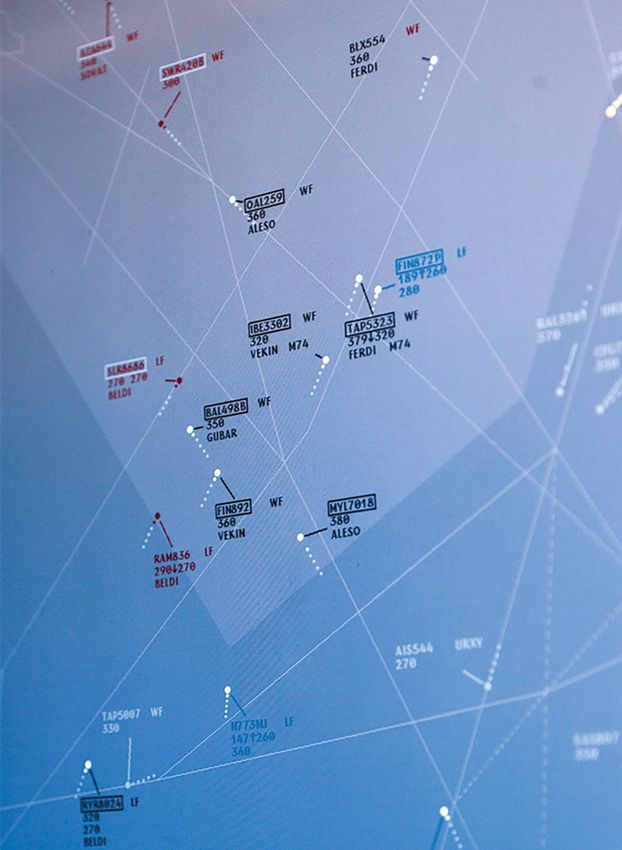
STATUS QUO
The airspace over Europe is limited. With increasing air traffic,                                                                                        07
these limits create delays if the full airspace and airport capacity
is not used wisely and in a coordinated manner. Today, mainly be-
cause there are many actors (airports, Area Control Centres [ACC])
in the network that are not connected, this leads to numerous
local measures to balance demand and capacity. These measures
are optimal from a local point of view, but might worsen the per-
formance of the overall network. Consequently, many flights are
affected by various restrictions that may result in delays.

 Today’s local solutions

                                                                       NCM concept of linked solutions

                                                                                              There are, however, ways to reduce that impact. Sup-
                                                                                              ported by intelligent support and communication tools,
                                                                                              sharing and linking available information and by working
                                                                                              closer together, more targeted flight and flow measures
                                                                                              for airspace and airport bottlenecks are possible.
08

THE
EXER-                                Working together in the European network
                                     requires intensive day-to-day planning
                                     and operational coordination. The NCM
                                                                                    for the implementation of additional
                                                                                    surgical measures to individual flights.
                                                                                    In addition, it will allow for much better

CISES
                                     demonstrations ultimately aim to improve       control of situations where deviations to
                                     coordination between partners so that          the original plan are required, e.g. in case
                                     better flow and flight measures are agreed     of weather disturbances.
                                     amongst all relevant operational actors.
                                     Some exercises focus on bilateral co-          AIRLINE PARTICIPATION
                                     ordination improvements; others focus          Five major European airlines – Lufthansa
SIX EXERCISES, VARIOUS ITERATIONS,   on improvements in connecting with the         Group Airlines, Air France including Hop!
                                     network. All will contribute to faster, more   and Transavia France, Ryanair, British
AND ONE GOAL: MAKING BETTER USE      efficient communication, information           Airways, EasyJet – covering 80% of Euro-
OF NETWORK RESOURCES WHILE TAK-      sharing and cooperation between stake-
                                     holders, resulting in more predictability,
                                                                                    pean air traffic, formed the ATEAM (Airline
                                                                                    Team for the Enhancement of Air Traffic
ING INTO ACCOUNT THE COMPLEXITY      higher efficiency and less delays.             Management) consortium to contribute to
                                                                                    SESAR activities such as the NCM project.
AND DYNAMICITY OF THE ENTIRE AIR     Faster and more structured coordination        Lead by Lufthansa, the airlines are work-
                                     using support tools will allow for more        ing closely with the NCM project team to
TRAFFIC SYSTEM.                      dynamicity and the fine-tuning of pro-         develop, test and implement tools and
                                     posed measures compared to traditional         processes for the improvement of ATM in
                                     coordination means such as telephone           Europe. This includes simulations as well
                                     and email coordination. This also allows       as flight trials in all regions of the network.
09

AVOIDING REGULATIONS WITH                        SUB-REGIONAL COORDINATION                          OPTIMIZATION OF ATFCM
COORDINATED RE-ROUTES                            BETWEEN ADJACENT CENTRES                           MEASURES WORKFLOW
DSNA developed the Collaborate Advanced          Even with a perfect ATFCM daily plan and AO        ENAIRE of Spain will demonstrate that the
Planning tool (CAP), used to coordinate op-      flight planning, ATC operation needs to deal       support of their new tool iACM (by Indra) will
tions to avoid busy French sectors, in direct    with deviations for various reasons, especially    contribute to efficient identification and imple-
coordination with airlines. In NCM, DSNA will    when considering the unpredictability of certain   mentation of ATFCM measures. ENAIRE will
demonstrate the benefits of CAP coordination     weather phenomena. For example, the Balkan         test a number of coordinated ATFCM measures
and measures to airlines by extending the use    area can experience heavy thunderstorms in         in the NCM demonstrations such as:
of the CAP tool to cross-border operations and   the summer. As a result, traffic planning may
                                                                                                    • ground delay measures for flows and flights
other ANSPs, such as DFS in their busy Karls-    need to be changed at the very last moment.
ruhe sectors. DSNA supports the connection of    For these reasons, fast and simple tactical co-    • cross-border level capping measures in co-
CAP with the Network Manager’s systems to        ordination is vital. Supported by new tools, the     ordination with France using the CAP tool
provide transparency and improvement of CAP      ANSPs of Austria, Croatia and Serbia/Monte-        • targeted flow measures using the PLANTA tool,
measures to operational actors and airlines.     negro will demonstrate the benefits of a highly      developed by Eurocontrol
A wide range of flight trials (CAP) as well as   interactive tool (ECOSYSTEM by Thales) that has
                                                                                                    The results of the demonstrations will contrib-
shadow mode trials (NCAP) with live data and     the ability to coordinate and implement pre-
                                                                                                    ute to the further implementation of iACM.
simulations are performed.                       agreed targeted measures to specific flights.
10

NETWORK
AWARENESS
CONNECTING AIRSPACE AND AIRLINE
OPERATORS WITH TRANSPARENT
MEASURES IN THE NETWORK
11
 	More than 200 A/C   Aircraft operators in the European network deal with
 	100 to 200 A/C      68 control centres in 43 countries that all aim to bal-
 	50 to 100 A/C       ance demand and capacity in their area. Local tools
 	20 to 50 A/C        to reduce delays will be connected to the network sys-
 	10 to 20 A/C        tems to ensure local measures are validated against
                       the European operational environment and then shared
 	Busiest traffic     amongst all partners.
   07/09/2018
   Daily figures

                                                                                  OPS room Karlsruhe UAC

                                                                                 Karlsruhe UAC aims to connect local re-route proposals
                                                                                 (RRP) to solve their capacity problems and provide trans-
                                                                                 parency to the network and airspace users. As a result,
                                                                                 Karlsruhe can check measures against network constraints
                                                                                 and airspace users will receive fully validated RRPs via
                                                                                 the network system. This allows airlines to plan better,
                                                                                 optimize their flights, and reduce the impact of capacity
                                                                                 constraints.
12
BETTER FLIGHT
AND FLOW USING AVAILABLE CAPACITY THROUGH
FINE-TUNED AND TARGETED FLIGHT
MEASURES AND FLOW ADJUSTMENTS
Coordination between network
and local tactical capacity
The Maastricht Upper Area
Control Centre (MUAC) simu-
managers currently takes place lates the impact and coordi-
through ad-hoc and inefficient nates proposed measures with
telephone communication. the network using B2B con-
Linking local support tools with nection before applying them.
network tools via B2B messag- This enables a wider application
es will enable standardized, of targeted flight measures
time-efficient and dynamic co- such as delay exclusions and
ordination processes. This will improvements. In addition,
provide the possibility to test airspace users are in close
and coordinate targeted flight coordination with MUAC and
and flow measures that create NMOC to optimize the allocation
less disturbance to traffic and of targeted measures to flights
have less or even no impact on that are critical in respect to
certain flights. night curfew, passenger con-
nections or crew duty times. Better traffic distribution by optimizing level assignments
13
In the United Kingdom, UK ANSP In Germany, Munich ACC, which
NATS will test the performance operates in close proximity to
of several ATFCM measures several adjacent ACCs, has a
via B2B connection with the strong interest in better sim-
network to improve daily ulating the effect of re-route
planning. In addition, NATS will measures on off-load areas.
simulate the impact of targeted Munich flow managers will test
flow measures in comparison to whether improved simulation
common delay measures in the results will benefit the creation
London TMA. The demonstra- of the daily airspace use plan
tions will provide early experi- and therefore the cooperation
ences on the use of intelligent and coordination with adjacent
information provided by local centres. In addition, Munich, like
tools to harmonize local and London ACC, will simulate the
network procedures. effect of targeted flow mea-
sures supported by network
simulations on the Prototype
Local and Network Tool for ATF-
CM (PLANTA by EUROCONTROL).
SIGNIFICANT
BENEFITS14
MULTI-AIRPORT
NETWORK
AIRPORT ARRIVALS AND DEPARTURES
CONNECTED WITH THE NETWORK TO
COORDINATION
IMPROVE AIRPORT PERFORMANCE
The complexity of airport operations provides challenges
to overall network planning. Logically, both airport capacity
and airspace capacity need to be used to the maximum.
However, many factors contribute to deviations that dete-
riorate one or the other, and the coordination required
to find an acceptable balance is currently missing.
Spanish airports and London Heathrow will demonstrate
that AOP-NOP integration will improve network perfor-
mance by sharing airport planning information with the
network. Harmonization of both plans will make intelli-
gent use of the available capacity by better coordinating
arrivals and departures with available enroute airspace.
Participating airlines will share their flight planning earlier
than done previously to enable the airports of Alicante,
Barcelona, London Heathrow and Palma de Mallorca to opti-
Hub and OPS Control Centre Lufthansa Munich mize multi-airport planning and arrivals into these airports.Airports are important partners of the The TTs are defined at local level in
network. Their seamless integration close cooperation between airports and 15
is essential for a common situational airlines and shared with the Network
awareness. This integration consists of Manager (NM) through the AOP. NM will
a rolling exchange of data between the manage the delivery of arriving flights
Airport Operations Plan (AOP) and the by assigning and refining Calculated
Network Operations Plan (NOP), leading Take-Off Times (CTOTs) according to
to better planning and better aircraft the requested TTs.
delivery into airports. NCM exercises
address airport integration into the net- Similar to the Spanish airport trials,
work and bring it closer to reality. Heathrow Airport will demonstrate the
benefits of sharing early DPI information
NCM includes trials at Barcelona, Palma at airport and network level. TTs will be
and Alicante Airports as well as at Heath- defined and shared with the NM for arriv-
row Airport, using AOP by INDRA. The ing flights at Heathrow to solve capaci-
trials at the Spanish airports address ty-demand imbalances and avoid conges-
the planning phase, while the trials at tion and delays in the terminal area.
Heathrow go a step further and include
the execution phase as well. In order to demonstrate the benefits from
a network point of view, the airport exer-
The project aims to demonstrate an im- cises will run in parallel and share early
provement in planning and increase in DPI information among all the airports
predictability by sharing early Departure in the exercise to identify the benefits for
Planning Information (DPI) that provides flights to and from the involved airports.
the most up-to-date take-off times accord-
ing to the traffic situation. In addition, this NCM will demonstrate the benefit of in-
exercise will define and request Target formation sharing and target time setting
Times (TTs) for arriving flights in the plan- for improved planning and more punctu-
ning phase to solve demand-capacity im- al airport arrivals and departures.
balances, thus minimizing reactionary delays.16
EXPECTED
RESULTS
FASTER COORDINATION, BETTER
USE OF AVAILABLE AIRSPACE
AND AIRPORT CAPACITY
NCM demonstrations are expected more time to find fine-tuned and tar-
to improve the connectivity between geted measures for specific flights
operational stakeholders by sharing or flows. These smarter measures
operational information and by using are expected to facilitate better use
improved coordination processes. of available or unused capacities
Supported by local tools that are and therefore contribute to reducing
connected with network tools, it is the impact of ATFM measures on
expected that this will result in sig- airlines and their passengers.
nificant time savings and will create12 15 4111
17
BETTER PREDICTABILITY BETTER FLEET MANAGEMENT
Cooperation between operational FOR AIRSPACE USERS
stakeholders will also contribute to With improved awareness and co-
developing agreeable and accept- ordination possibilities for capacity
able concepts and raising aware- issues within the network, airspace OUT OF
ness of other operational interests. users will be in a better position to
This may have a positive influence analyze the impact on airline opera-
on predictability within the network tions and dynamically use the avail- POTENTIAL “LIMITED”
and allow all stakeholders to opti- able options to reduce the negative REGULATIONS COULD
mally plan scarce resources. impact on airline performance with BE AVOIDED BY APPLYING
respect to punctuality, efficiency THE CAP MEASURE
MINUTES OF REGULATION
and passenger comfort. Much of the DELAYS WERE AVOIDED THANKS
coordination and analysis of options TO APPLYING THE CAP PROCESS
is expected to be automated with IN A 14 DAY TRIAL
0.0 %
the support of local airline tools
that contain airline preferences and
IMPROVED
50.0 % connect to the network systems.
100.0 %
AWARENESS
Better predictability for ANSP
Better efficiency of DCB
Increased capacity
Fewer/softer regulations AND COORDI-
Reduction of ATFCM delays
NATION18
OUTLOOK
FOR THE
FUTURE
DEVELOPING, TESTING, DEMONSTRATING
AND IMPLEMENTING: THE SESAR VISION
BECOMES REALITY
The participants in the NCM demonstrations appreciate The findings of the NCM demonstrations will also
the platform provided by SESAR. Preparations of the provide the basis for operational implementation
exercises have already resulted in an increased mutual guidelines to support the deployment of NCM func-
understanding of the different operators. This coop- tionalities at European airlines, air navigation service
eration will contribute significantly to more efficient providers and airports, with benefits for all actors. This
operational implementation which is expected to take will enhance overall air traffic efficiency in Europe, with
place after the finalization of the NCM demonstrations. additional positive effects for European citizens, the
environment and the economy.CONTACTS & PARTNERS 19
Founding members
NCM Project Lead Realisation Picture credits
Pascal Hop (EUROCONTROL) Siedepunkt Kreativagentur GmbH Title and back: ENAV | p. 2, p. 11, p. 16 DFS Deutsche
pascal.hop@eurocontrol.int Sülzburgstraße 95 Flugsicherung GmbH, H.-J. Koch | p. 3, p. 10 shut-
50937 Köln terstock, Anton Balazh | p. 5, p. 7, p. 13 Siedepunkt
This project has received funding from the SESAR Joint Undertaking ATEAM Project Lead Kreativagentur GmbH | p. 14 Deutsche Lufthansa AG
under the European Union’s Horizon 2020 research and innovation Frank Nagel (Lufthansa) kontakt@siedepunkt.de
programme under grant agreement (783117, 733021). frank.nagel@lhind.dlh.de www.siedepunkt.de Logos are sorted in alphabetical order.Founding members SESAR Joint Undertaking Avenue de Cortenbergh 100 B-1000 Bruxelles communications@sesarju.eu @SESAR_JU www.sesarju.eu
You can also read


