Solar Airfield Lighting Solution - CASE STUDY - www.avlite.com We believe technology improves navigation
←
→
Page content transcription
If your browser does not render page correctly, please read the page content below
CASE STUDY

Solar Airfield Lighting Solution
Chatham Islands, New Zealand

                                                   www.avlite.com
                                   We believe technology improves navigation™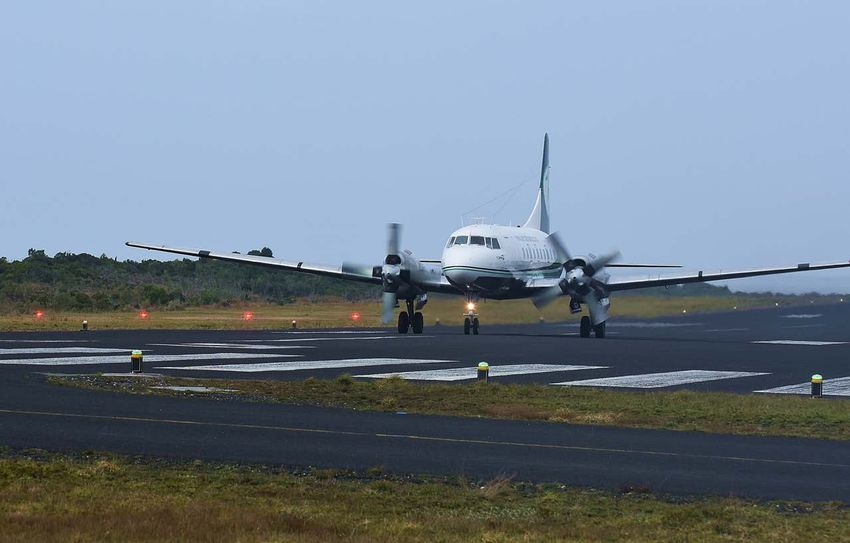
Project Overview
    Application
    Complete solar airfield lighting system

    Product
       AV-426 for approach, runway edge and
       threshold lighting
       AV-155 in White and Yellow for aerodrome and
       warning beacon respectively
       REIL systems x2
       Full PAPI systems x2
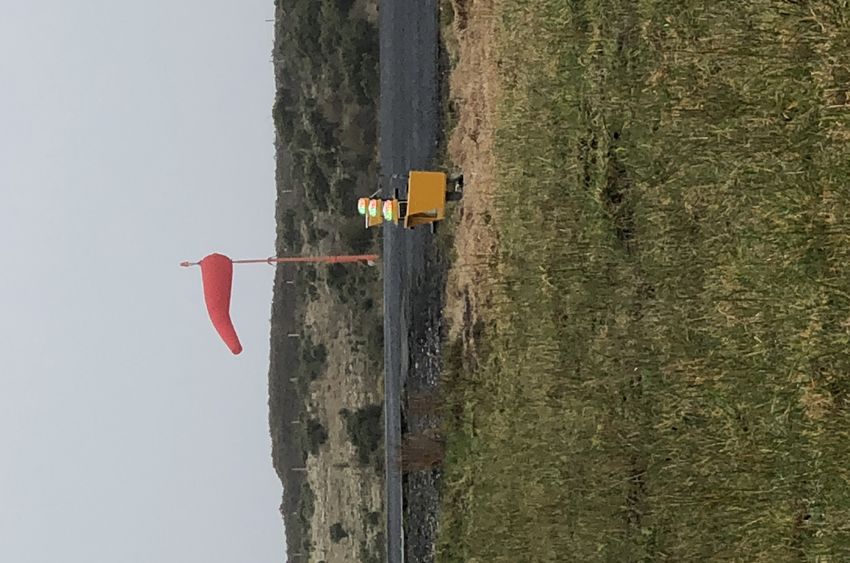
       Windsock x2
       PALC and manual control systems

    Location
    Chatham Islands (Chatham Island, approx. 800km off
    east coast of New Zealand South Island)

    Date
    September 2018

Background
The Chatham Islands are located approximately 800 km east of
Christchurch, at the end of the Chatham Rise, in an area of the
pacific known as the Roaring Forties. The Island’s lifeline to New
Zealand is provided by both aviation and shipping services, with
the aviation link relying on the Part 139 certificated Inia William
TUUTA aerodrome. TUUTA has a 1370-metre-long asphalt runway
built in 1981. A current project is the lengthening of the runway to
1800 m and strengthening it for code 4 C aircraft. The air link is
vital to both domestic and commercial undertakings through the
provision of a mixed passenger and freight operation provide by
the Air Chatham’s operated Convair 580 aircraft. This service is
a single flight per weekday from New Zealand to Chatham Island
(destination city varies by day of the week – Auckland, Wellington
and Christchurch are served).

The Airport has employed solar powered runway lighting (circa
late 1990s) and mains powered PAPIs (circa 1981), to facilitate night
and poor weather operations, both of which were showing their
age. In late 2016 the activation system for the runway lights and
the PAPI system failed necessitating all lights to be individually
activated. Parts for the old systems where no longer available,
and slowly the systems were becoming unsupportable and very
unreliable. In addition, the airport did not have approach lighting
which, in an area completely devoid of any artificial lights to use
as reference points for night approaches, posed significant risks
to night operations. The regular air service provider avoided
night flying wherever possible and the air ambulance service
flatly refused to operate at night unless there were significantly
compelling reasons to do so and the weather condition
guaranteed a clear night.

www.avlite.com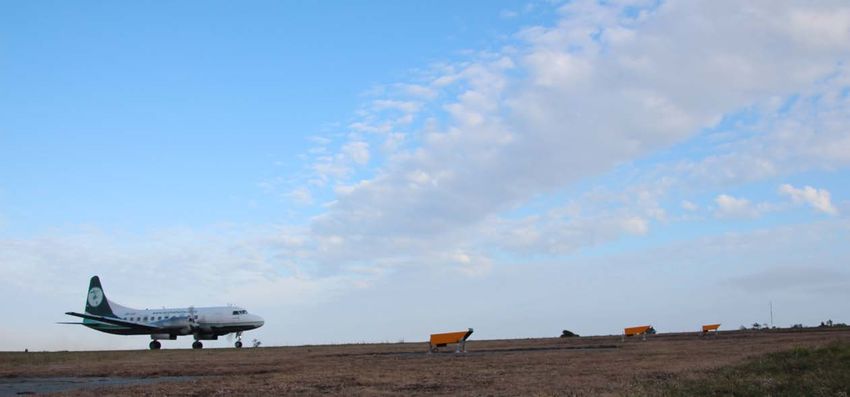
As maintenance is a big issue on the islands, a major requirement
is a modular design with each component being independent of the
other but linked by way of radio for operation. This means that failed
components can be replaced from spares held on site, meaning no
loss of operational effectiveness. A final positive is that given the
desire to extend the runway, the process of relocating all components
onto the new runway, and adding further lighting will be an extremely
simple process.

Allan MacGibbon
Chairman
Chatham Islands Airport Company Ltd

The Challenge
Access to Chatham Island is extremely challenging, with access being
only via 4-6 flights per week from New Zealand, or a 6-10 weekly
ship. Due to the challenging location, maintenance of the lights needs
to be minimal and able to be carried out locally.

Along with the freight and maintenance issues, the lighting needed
to be replaced immediately, but the potential future runway extension
will need to include additional lights that will have to be integrated at a
later date and the approach lighting will have to be relocated.

The Solution
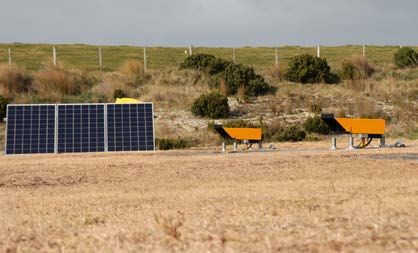
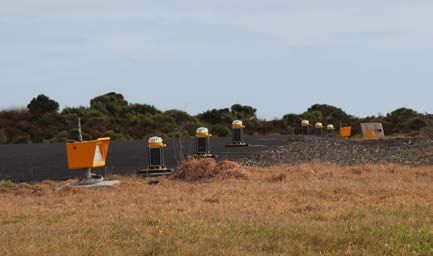
The AV-426 are an ideal choice in a remote location as they
are independent and solar powered. By being standalone and
communicating by a self-realizing and self-maintaining mesh
network, lights can be added, removed or relocated as required
without the system needing to be shut down and without major
groundworks costs typically associated with the upgrade of an AGL
system. With the integration of a Pilot Activated Lighting Controller, it
removes the responsibility of activating the lighting from the ground
crew and gives the pilots control. However, there is a need for the
ground crew to be able to activate the lights in an emergency, by
as simple means as possible. Additional requirements included an aerodrome beacon to attract the eye of a pilot unfamiliar
with the area (for example Life Flight on an emergency Medevac) and a warning beacon to indicate that there is less than
10 minutes remaining before the airfield lights are extinguished. This combination of requirements led to the design of a
control box, which integrated the PALC, warning and aerodrome beacons, and simple manual on/off and intensity control.
Integration was carried out with the assistance of our local distributors, Reid Technology, who are experienced in
installation of Solar Technologies and also provided the solar system for the PAPIs, along with a containerised workshop
powered by solar to facilitate ongoing maintenance.
All Avlite Systems products are manufactured
to exacting standards under strict quality
control procedures. Avlite’s commitment
to research and development, investing
in modern equipment and advanced
manufacturing procedures has made us
an industry leader in solar aviation lighting.
By choosing Avlite Systems you can rest
assured you have chosen the very best.

        Experienced & Trained Personnel                  Precision Construction

        Worldwide Distribution Team                      Total Quality Management

        Agile Manufacturing                              ISO9001:2015

        Product Innovation                               Rapid Turnaround

AVLITE SYSTEMS                 REID TECHNOLOGY
11 Industrial Drive,           Unit D, 15 Saturn Place
Somerville VIC 3912            Rosedale
AUSTRALIA                      North Harbour
t +61(0)3 5977 6128            0632 New Zealand
f +61(0)3 5977 6124

61 Business Park Drive
Tilton, New Hampshire 03276
USA
t +1 (603) 737 1311
f +1 (603) 737 1320

8 Wilkie Road
#03-01, Wilkie Edge
SINGAPORE 22809
t +65 (0) 6829 2243
f +65 (0) 6829 2253

www.avlite.com
info@avlite.com                                                             We believe technology improves navigation™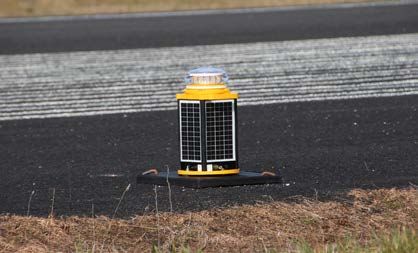
You can also read


