Southwestern US 2018 Wildfire Season: An Overview june 2019 - Forest Stewards Guild
←
→
Page content transcription
If your browser does not render page correctly, please read the page content below
2018 Wildfire Season: An Overview

Southwestern US
          j u n e 2 019
Intermountain West Frequent-fire Forest Restoration
     Ecological restoration is a practice that seeks to heal degraded ecosystems by
     reestablishing native species, structural characteristics, and ecological processes.
     The Society for Ecological Restoration International defines ecological restoration
     as “an intentional activity that initiates or accelerates the recovery of an ecosystem
     with respect to its health, integrity and sustainability….Restoration attempts to
     return an ecosystem to its historic trajectory” (Society for Ecological Restoration
     International Science & Policy Working Group 2004).

     Most frequent-fire forests throughout the Intermountain West have been degraded
     during the last 150 years. Many of these forests are now dominated by unnaturally
     dense thickets of small trees, and lack their once diverse understory of grasses, sedges,
     and forbs. Forests in this condition are highly susceptible to damaging, stand-replacing
     fires and increased insect and disease epidemics. Restoration of these forests centers on
     reintroducing frequent, low-severity surface fires—often after thinning dense stands—
     and reestablishing productive understory plant communities.

     The Ecological Restoration Institute at Northern Arizona University is a pioneer in
     researching, implementing, and monitoring ecological restoration of frequent-fire forests
     of the Intermountain West. By allowing natural processes, such as low-severity fire,
     to resume self-sustaining patterns, we hope to reestablish healthy forests that provide
     ecosystem services, wildlife habitat, and recreational opportunities.

     The Southwest Fire Science Consortium (SWFSC) is a way for managers, scientists,
     and policy makers to interact and share science. SWFSC’s goal is to see the best available
     science used to make management decisions and scientists working on the questions
     managers need answered. The SWFSC tries to bring together localized efforts to develop
     scientific information and to disseminate that to practitioners on the ground through
     an inclusive and open process.

     Authors: Michael Lynch and Alexander Evans

     Reviewers: Barb Satink Wolfson, Southwest Fire Science Consortium, and Abie Carabajal, US Forest Service

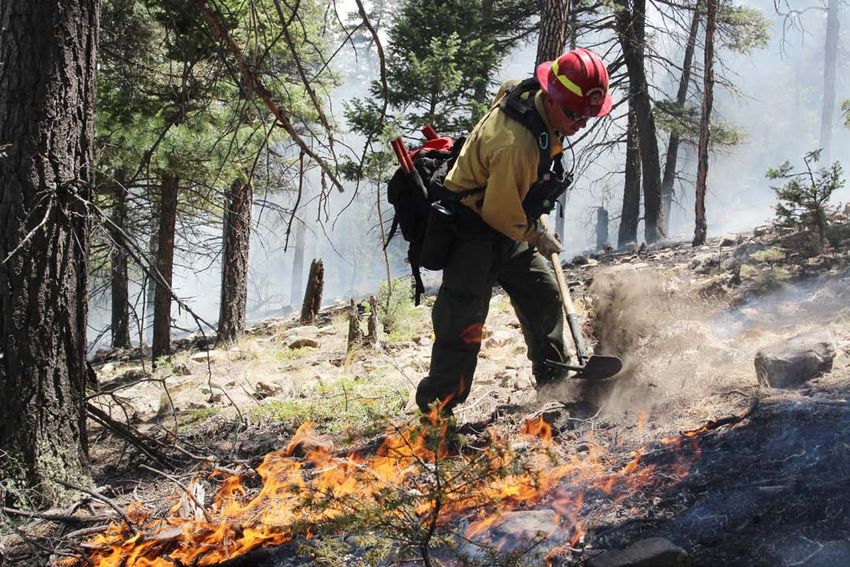
     Cover photo: Task Force Leader Doug Niemynski scrapes a fire line around a hotspot on the 2018 Ute Park Fire,
     New Mexico. Photo by Mike McMillan, Ute Park Fire PIO. Photo courtesy of the USDA Forest Service, via InciWeb,
     https://inciweb.nwcg.gov/incident/photograph/5820/15/78317

     Please use the following citation when referring to this report:
     Lynch, M., and A. Evans. 2019. 2018 Wildfire Season: An Overview, Southwestern US. Special Report. Ecological
     Restoration Institute and Southwest Fire Science Consortium, Northern Arizona University. 19 p.

     Northern Arizona University is an Equal Opportunity/Affirmative Action Institution.
     This report was funded by a grant from the USDA Forest Service.

     In accordance with Federal law and U.S. Department of Agriculture policy, this institution is prohibited from discriminating on the
     basis of race, color, national origin, sex, age, or disability. (Not all prohibited bases apply to all programs.)

     To file a complaint of discrimination, write USDA, Director, Office of Civil Rights, Room 326-W, Whitten Building, 1400
     Independence Avenue, SW, Washington, DC 20250-9410 or call (202) 720-5964 (voice and TDD). USDA is an equal opportunity
     provider and employer.

2018 WILDFIRE SEASON: AN OVERVIEW / SOUTHWESTERN US                                                                  Ecological Restoration Institute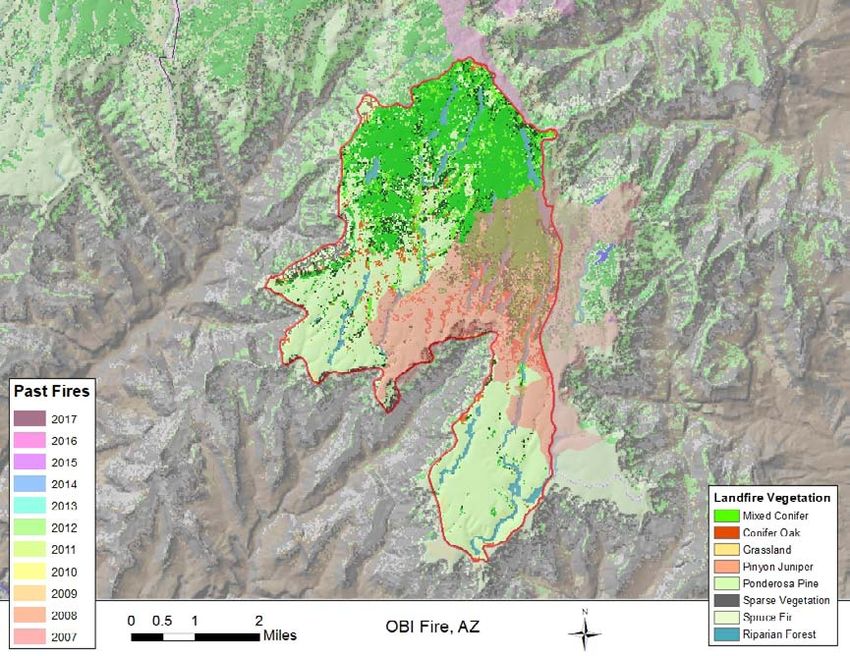
Table of Contents
Introduction................................................ 1

Wildfire Management................................ 1

The 2018 Fire Season................................. 1

Regional Context........................................ 2

Data Sources............................................... 2

Stateline Fire, New Mexico....................... 5

Rattlesnake Fire, Arizona........................... 6

Diener Canyon Fire, New Mexico.............. 7

206 Fire, New Mexico................................. 8

380 Fire, New Mexico................................. 8

OK Bar Fire, New Mexico........................... 8

Tinder Fire, Arizona.................................... 9

San Luis Fire, New Mexico...................... 10

Buzzard Fire, New Mexico....................... 11

Ute Park Fire, New Mexico...................... 12

Emily Fire, New Mexico........................... 13

Stubbs Fire, Arizona................................. 14

OBI Fire, Arizona....................................... 15

Conclusion................................................. 16

Appendix I. Fire Statistics........................ 19
Introduction                                                                         resources, and, values to be protected, dictate the
                                                                                     appropriate response to the fire.”2
Wildfire is part of the landscape in the Southwest. It can be a
threat to lives and property, but it is also crucial to maintaining
                                                                                A full range of wildland fire response strategies may be
healthy ecosystems. Forests in the Southwest are adapted
                                                                                employed to meet these objectives, including containing,
to fire and many trees can easily survive low-intensity fires
                                                                                confining, or suppressing the wildfire. The national Incident
burning along the forest floor. For example, ponderosa pine
                                                                                Management Situation Report identifies the percentage of
forests need regular, low-severity fires to remain healthy. Over
                                                                                each fire managed with a monitor, confine, point protection,
decades without fire on the landscape, fuel loads accumulated
                                                                                or suppression strategy. This report compiles these figures to
and facilitated more intense, high-severity fire. Each fire is
                                                                                better understand how fires were managed in 2018.
different, and while some burn in ways that increase ecosystem
resilience, others burn with greater severity than forests are
adapted to, killing even the toughest trees and threatening lives               Wildland fire management strategies are based on a thoughtful
and homes. Weather, climate, vegetation type, fuel conditions,                  and systematic risk-based approach that considers firefighter
and topography all influence how an individual wildfire burns                   and public safety, cause of the wildfire, location, existing land
on the landscape and whether it has beneficial effects. Some                    management plans, availability of resources, values at risk, and
fires will leave many unburned patches, creating a mosaic burn                  social factors. Federal policy dictates that “initial action on
pattern, whereas others will burn more contiguously.                            human-caused wildfire will be to suppress the fire.”3 The same
                                                                                federal policy allows naturally ignited wildfires (or parts of
This report is the sixth in a series of annual overviews available              wildfires) to be managed for resource benefits, such as mitigating
from the Southwest Fire Science Consortium and the                              fuel loads to reduce the risk of high severity, enhancing wildlife
Ecological Restoration Institute. The goal of this overview is                  habitat, improving watershed health, and reducing risk to
to provide a concise summary of the fire season and to facilitate               neighboring communities. Though multiple strategies are used
comparison with past fires. It follows the format of past years’                to manage wildfires, it is important to note that federal agencies
overviews1 and describes the impacts of the 13 largest fires in                 only recognize two types of fires: prescribed fires and wildfire.
Arizona and New Mexico in 2018 (all fires greater than 8,000
acres in the Southwest region). As in previous overviews, this
report covers: when the fire burned, fire management costs,
                                                                                The 2018 Fire Season
vegetation types, previous burn footprints, and burn severity,                  In 2018, wildfire burned 547,701 acres in the Southwest
where available. The conclusion section summarizes these same                   (Arizona and New Mexico), which is 3 percent less than 2017
measures for the large wildfires in the region and touches on                   and significantly less than the average for the previous 10 years
how these fires burned in proximity to human communities.                       (627,893 acres). New Mexico had more wildfire (382,345 acres)
                                                                                than its 10-year average, while Arizona had less (165,356 acres)
                                                                                than its 10-year average. Both states had less prescribed fire
Wildfire Management                                                             than the 10-year average (75,837 acres in Arizona and 71,027
Managers can approach each wildfire with multiple objectives                    acres in New Mexico).
that range from managing the wildfire for public safety to
managing the fire to improve natural resources. Federal                         In 2018, wildfires over 100 acres represented 93 percent of the
wildland fire management policy states:                                         total acreage burned by wildfire in Arizona and New Mexico.
     “Response to wildland fires is based on                                    Less detailed information is available on the choice of strategies
     ecological, social and legal consequences of the                           managers used on fires greater than 100 acres in 2018 than in
     fire. The circumstances under which a fire occurs,                         other recent years. Of the 141,180 acres of wildfire for which
     and the likely consequences on firefighter and                             strategy is recorded in the Southwest Coordination Center’s
     public safety and welfare, natural and cultural                            data, 97 percent were managed with a fire suppression strategy.

                      Figure 1. Wildfires and prescribed fires acres burned in Arizona and New Mexico, 2002 to 2018.3

1 2017, 2016, 2015, 2014, and 2013 Wildfire Season: An Overview, Southwestern   3 National Interagency Coordination Center Wildland Fire Annual
  U.S. https://cdm17192.contentdm.oclc.org/digital/search/searchterm/wild-        Reports www.predictiveservices.nifc.gov/intelligence/intelligence.htm
  fire%20season%20overview/field/type/mode/exact/conn/and/order/date/ad/asc
2 Guidance for Implementation of Federal Wildland Fire Management Policy www.
  nifc.gov/policies/policies_documents/GIFWFMP.pdf

Ecological Restoration Institute                                                  2018 WILDFIRE SEASON: AN OVERVIEW / SOUTHWESTERN US                     1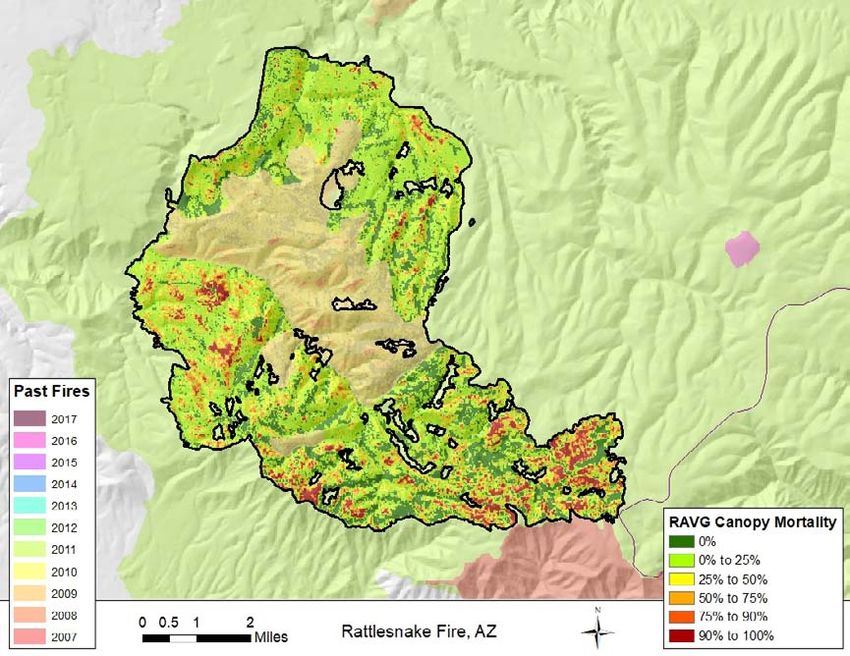
Figure 2. Map indicating the location of the 13 large fires in 2018 analyzed in this report.

This overview focuses on the 13 largest fires (Figure 2), which                  to reduce human ignitions. Some restrictions and closures also
includes nine New Mexico fires: OK Bar, Buzzard, 206, Ute                        likely played a role in reducing unwanted human ignitions.
Park, Stateline, San Luis, 380, Diener Canyon, Emily; and
four Arizona fires: Rattlesnake, Tinder, OBI, and Stubbs. The                    The Energy Release Component (ERC) is an index that
13 largest fires in this report represent 63 percent of the acres                estimates potential available energy released per unit area in
burned by wildfire in 2018.                                                      the flaming front of a fire based on the fuel model and live and
                                                                                 dead fuel moistures. The ERC is often used to track seasonal
                                                                                 fire danger focused on fuel loading, woody fuel moistures,
Regional Context                                                                 and larger fuel moistures (lighter fuels have less influence and
Warm and dry conditions during the winter of 2017—2018                           wind speed has no influence on ERC). A graph of ERC show
combined with below normal precipitation resulted in a                           the 2018 fire season (blue line) in comparison to the 10-year
meager snow pack. February provided a significant mid to late                    average (gray line) and 10-year maximums (red line).4 In much
winter precipitation across portions of central and southern                     of the Southwest, ERCs were above the 10-year average,
Arizona into southern New Mexico. The El Niño-Southern                           approaching the 10-year maximums, in May and June. ERCs
Oscillation (ENSO) was in a neutral phase leading into the                       dropped quickly when monsoons brought moisture in July.
spring of 2018. Temperatures were above average across much
of the region for much of the spring while precipitation in
April was below normal. Long term drought increased across                       Data Sources
the region with moderate to severe drought across most of                        Management, Objectives, and Cost
the region in April. Large areas of northern Arizona and                         The InciWeb website (inciweb.nwcg.gov) provides background
New Mexico experienced the driest water year (October                            information on most large fires such as location and start date.
2017 to June 2018) on record. Hurricane Bud brought some                         InciWeb is an interagency information management system
precipitation to the region in June, usually a very dry month.                   designed to provide the public a single source of incident-
Though temperatures were warmer than average in June, no                         related information. Because InciWeb only sporadically
extreme heatwave hit the region as in previous years. Though                     reports costs, Incident Status Summary (ICS-209) reports
the monsoon season started a little later than usual, it brought                 were collected to document suppression or management
above average precipitation to much of the region, including                     costs. These costs do not reflect any post-fire costs such as
an approximately 4-inch rain event in Santa Fe, New Mexico                       rehabilitation or soil stabilization. The cost data from each fire
that caused significant damage.                                                  is collected in a final table at the end of the document. Incident
                                                                                 Status Summaries also provide “strategic objectives,” which
Given the dry winter and significant fine fuel carryover from                    briefly describe the desired outcome for the incident, high-
2017, the 2018 fire season could have been more active than                      level objectives, and in some cases strategic benefits. Though
it was. It may be that June precipitation helped moderate fire                   strategic objectives often change during a fire, review of the
activity (at least in southern Arizona). It is also possible that                most common or persistent strategic objectives for each fire
though conditions were primed for more fire activity, lack of                    provides some insight into the overarching management goals.
ignitions reduced the acreage burned. Although not easily
quantifiable, something should be said of the efforts of federal                 4
                                                                                     Graphs produced by Charles Maxwell and Jay Ellington, Predictive Services
and state agency fire personnel in getting the message out about                     Meteorologist, Southwest Coordination Center. For more information see http://
the conditions during the mid-late spring and early summer                           gacc.nifc.gov/swcc//predictive/fuels_fire-danger/nfdrs_charts/Areawide.htm

  2   2018 WILDFIRE SEASON: AN OVERVIEW / SOUTHWESTERN US                                                                      Ecological Restoration Institute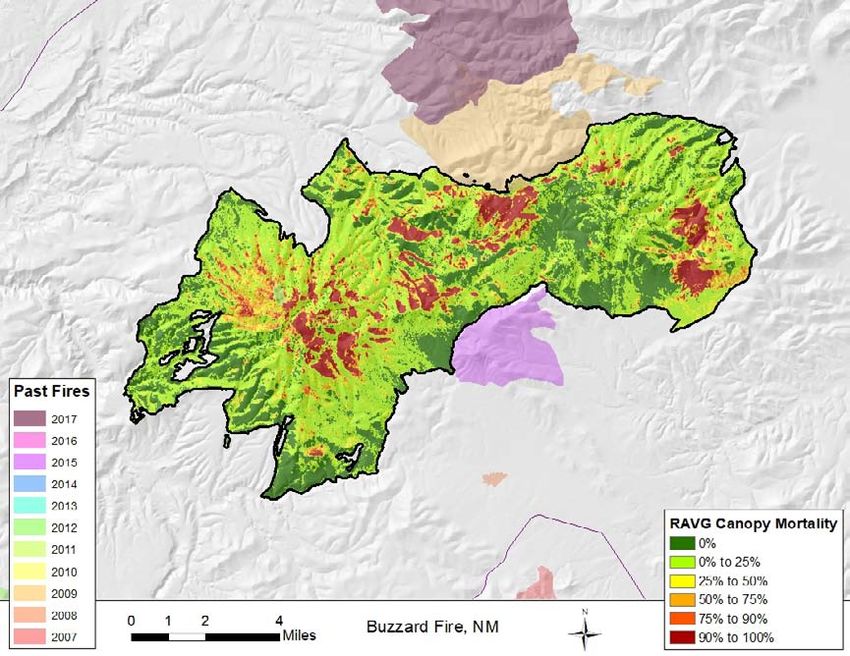
Figure 3. Energy release component (ERC) index for the 2017 fire season in the south-central mountains of New Mexico. Note the
              elevated ERCs at the start of the Buzzard Fire (black circle) and around the time of the Rattlesnake Fire (black triangle).

Perimeters                                                                      and remote sensing change detection products derived from
Boundaries for each fire were taken from the Geospatial Multi-                  the differenced Normalized Burn Ratio (dNBR). The dNBR
Agency Coordination (GeoMAC) archive of fire perimeter                          measures change in the ratio of near infrared reflected by healthy
maps (rmgsc.cr.usgs.gov/outgoing/GeoMAC/). GeoMAC                               green vegetation to the shortwave infrared reflected by bare soil
also provides perimeters of fires dating back to 2000, which                    and rock. Most soil burn severity maps have four classes: high,
provided a historic context for this year’s fires.                              moderate, low, and unburned; but some combine the last two
                                                                                categories into a “low/unchanged” category. The distribution of
Vegetation                                                                      soil burn severity is included in the individual fire discussions
Basic information about vegetation and topography of burned                     (where available) as well as in the final summary table.
areas was available from LANDFIRE (www.landfire.gov).
LANDFIRE provides nationally consistent, scientifically based                   Rapid Assessment of Vegetation Condition
maps of existing vegetation as well as Vegetation Condition                     after Wildfire
Class (VCC). Vegetation Condition Class was formerly referred                   Rapid Assessment of Vegetation Condition after Wildfire
to as Fire Regime Condition Class (FRCC). Vegetation                            (RAVG) maps estimate canopy mortality (www.fs.fed.us/
Condition Class is a map of how existing vegetation has                         postfirevegcondition). The USDA Forest Service (Forest
departed from an estimated natural or historic condition. In the                Service) Remote Sensing Applications Center provides RAVG
Southwest, this departure is generally due to fire exclusion, past              analysis as a first approximation of areas that may require
logging, and grazing and results in greater density of trees and                reforestation treatments because of canopy killed by high-
less healthy conditions. Vegetation Condition Class is a useful                 severity fire. RAVG maps are created for wildfires that burn
metric because it integrates information on existing vegetation,                greater than 1,000 acres of forested Forest Service land or for
historic vegetation, and fire regimes into one variable and has                 fires where it is requested. The maps are produced by measuring
been used to help determine where to focus restoration efforts.                 the change between a satellite image before and immediately
The most current VCC maps (2014) were used in this report.                      after a wildfire using an algorithm called relative differenced
                                                                                Normalized Burn Ratio (RdNBR), which is sensitive to
Soil Burn Severity                                                              vegetation mortality resulting from the wildfire event. The
Soil burn severity maps provide Burned Area Emergency                           RdNBR is derived directly from the dNBR but is more
Response (BAER) teams a tool to quantify soil impacts and                       sensitive to vegetation mortality than the dNBR.
assess potential for post-fire erosion (https://fsapps.nwcg.gov/
afm/baer/download.php). In the immediate aftermath of a fire,                   While soil burn severity maps and RAVG canopy mortality
BAER teams perform an emergency assessment of post-fire                         maps use similar satellite change detection methods, they
soil conditions based on a combination of field observations                    measure fundamentally different forest attributes. In many

Ecological Restoration Institute                                                  2018 WILDFIRE SEASON: AN OVERVIEW / SOUTHWESTERN US           3
areas, canopy mortality and soil burn severity patterns are           or more structures per 40 acres) and interface (three or more
similar. However, in some vegetation types, such as chaparral or      structures per acre, with shared municipal services).
grass, it is possible for a fire to cause complete canopy mortality
with little effect on soils.                                          Caveats
                                                                      There are important caveats for all the data used in this
Wildland Urban Interface                                              summary. First, the fire information presented here was taken
Another geospatial dataset that helps put fires in context is         from official sources between December 2018 and February
the location and density of housing, often referred to as the         2019 and may not include updates or revisions. Second, the
wildland-urban interface, or WUI. The Silvis Lab at the               geospatial data used to generate the maps and tables are also
University of Wisconsin developed a nationwide map of the             based on the best available information, but these data have
WUI based on US Census data (http://silvis.forest.wisc.               errors and uncertainties. For example, the remote sensing data
edu/data/wui-change/). The Silvis map uses fairly standard            used in all these datasets can include errors introduced during
definitions of the two main WUI conditions: intermix (one             collection, processing, and interpretation.

  4   2018 WILDFIRE SEASON: AN OVERVIEW / SOUTHWESTERN US                                                Ecological Restoration Institute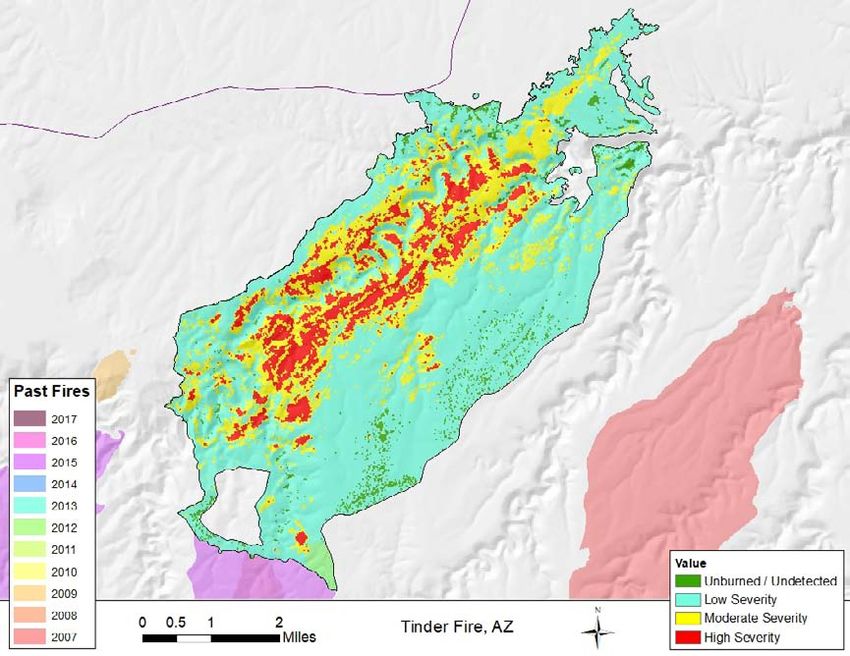
Figure 4. Landfire vegetation in the Stateline Fire burn area.

Stateline Fire, New Mexico
The Stateline Fire burned 28,105 acres of mostly grass 35                   Vegetation and Past Fires
miles north of Clayton, New Mexico on the Colorado and                      Over 97 percent of the area burned by the Stateline Fire
New Mexico state line. The fire crossed two state lines and                 was grass (81 percent) or piñon-juniper (16 percent). There
ended up burning about 18,000 acres in New Mexico, 10,000                   were no documented fires in the area over the last 10 years.
acres in Colorado, and an additional 112 acres in Oklahoma.                 Ninety-five percent of the vegetation within the Stateline Fire
The Stateline Fire burned across state and private land. The                had low departure from historic conditions according to the
fire started in Union County, New Mexico, but the cause has                 LANDFIRE Vegetation Condition Class analysis (Figure 4).
not been determined. It started on March 8 and burned for 19
days. State and federal fire managers used a full suppression               Fire Severity
strategy on this fire due to the presence of some residential               No fire severity data was available for the Stateline Fire.
structures, remote rugged terrain, lack of communication
system, and the potential loss of agricultural resources such as
cattle grazing. Ultimately, only one minor abandoned structure
was destroyed. The Stateline Fire cost $2.3 million to manage,
or $81.84 per acre.

Ecological Restoration Institute                                             2018 WILDFIRE SEASON: AN OVERVIEW / SOUTHWESTERN US          5
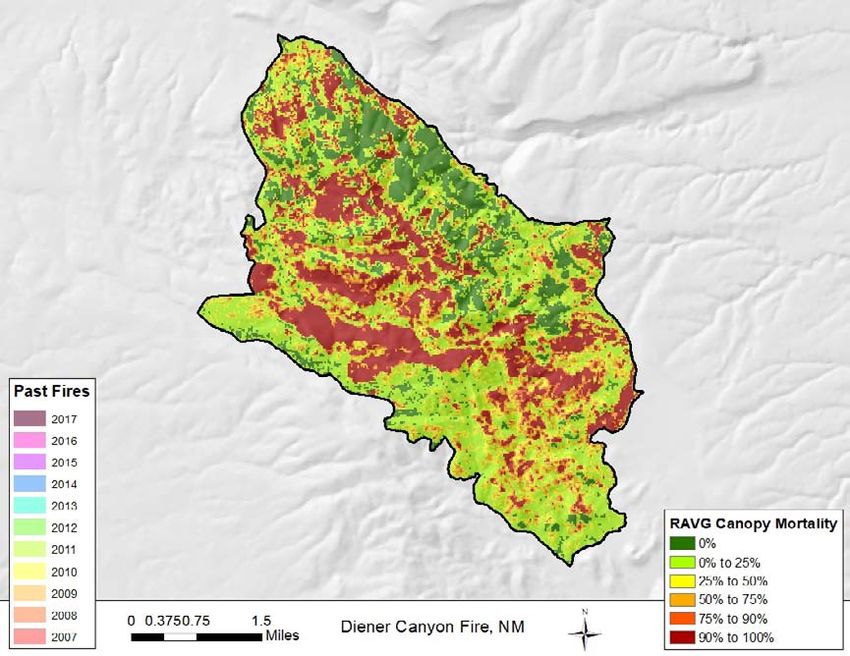
Figure 5. RAVG canopy mortality in the Rattlesnake Fire. Note the footprint of the 2009 Reno Fire in the center of the Rattlesnake
           Fire. The entire area was previously burned in the 2011 Wallow Fire.

Rattlesnake Fire, Arizona
The cause of the 26,000-acre Rattlesnake Fire is unknown.                           Vegetation and Past Fires
This fire started on April 11 and burned for 46 days in Apache                      The area effected by the Rattlesnake Fire was predominantly
County. This isolated area included sections of the San Carlos                      ponderosa pine (44 percent), mixed conifer (34 percent), and
Apache Reservation, White Mountain Apache Reservation,                              grass (13 percent) with lesser components of conifer-oak (6
and Apache National Forest. The area consisted of steep                             percent) and riparian forest (3 percent). The entire Rattlesnake
canyons and ridgetops within the 2011 Wallow Fire footprint.                        Fire fell within the perimeter of the 538,000-acre Wallow Fire
As a result of the previous high-severity wildfire, all fuel types                  of 2011. It also shared a roughly two-mile perimeter with the
were available and receptive including timber litter and heavy                      2007 Chitty Fire and encompassed all of the 6,000-acre Reno
dead/down. Live fuels contributed to isolated and group                             Fire of 2009. Nearly half (48 percent) of the Rattlesnake Fire
torching and spotting.                                                              had a high departure from historic vegetation conditions based
                                                                                    on the Vegetation Condition Class analysis; including nearly all
Fire managers chose to use a 100 percent full suppression                           the northern part of the burn area.
approach to protect the identified values and infrastructure
from adverse fire effects while ensuring public and firefighter                     Fire Severity
safety. The planned end-state was for the fire to burn in                           Fire severity was generally low in the Rattlesnake Fire. RAVG
ponderosa pine, dry mixed-conifer, and aspen with mixed                             maps identified nearly three quarters of the area to have zero
severity, including areas of low to moderate severity. No                           (23 percent) or less than 25 percent (51 percent) canopy
structures were affected by the Rattlesnake Fire, but road and                      mortality. However, 1,000 acres experienced greater than 90
area closures were put in place during the fire. Fifteen injuries                   percent mortality; nearly a third of which was grass (Figure 5).
or illnesses were reported for responders. The causes varied                        The soil burn severity analysis indicated a lower severity fire
from a broken hand to smoke-related asthma issues and non-                          with nearly all of the acres exhibiting low severity (78 percent)
fire related illnesses. Management of the wildfire cost $11.4                       or undetected (21 percent). In fact, the soil burn severity
million, or $437.25 per acre.                                                       analysis identified only one acre of high severity.

   6   2018 WILDFIRE SEASON: AN OVERVIEW / SOUTHWESTERN US                                                                     Ecological Restoration Institute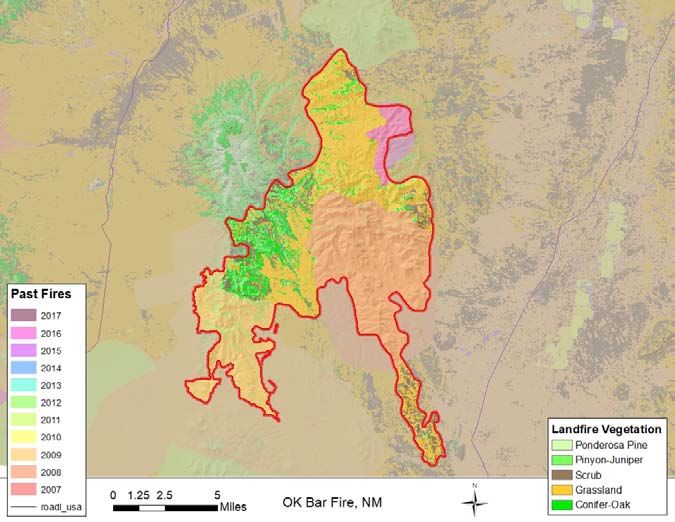
Figure 6. Canopy mortality in the Diener Canyon Fire.

Diener Canyon Fire, New Mexico
The Diener Canyon Fire was reported on April 12 about 7             Vegetation and Past Fires
miles south of Bluewater, New Mexico on Mount Sedgwick.             The area burned by the Diener Canyon Fire had not burned
This fire predominantly burned through ponderosa pine litter        in the previous 10 years, nor had any of the surrounding
and short grasses. Fire managers chose to use a full suppression    landscape. The Diener Canyon Fire burned into the perimeter
strategy, using the road system as containment features to          of the 2004 Sedgwick Fire. Most of the Diener Canyon area
protect the communities of Bluewater Acres and La Jara              was ponderosa pine (82 percent) with smaller areas of mixed
Subdivision. Fire investigators determined that multiple spot       conifer (7 percent), piñon-juniper (6 percent), and riparian
fires from the Redondo prescribed burn started the Diener           forest (4 percent). Ninety-nine percent of the Diener Canyon
Canyon Fire. The fire burned for 21 days and covered 9,338          Fire showed moderate departure from historic vegetation.
acres. No injuries or damaged structures were reported. The
wildfire cost $3.5 million to manage, or about $347.81per acre.     Fire Severity
                                                                    The RAVG analysis indicates that nearly half of the area had
A full description of the Redondo prescribed fire and the           less than 25 percent canopy mortality, while nearly a quarter of
escape that lead to the Diener Canyon Fire is available in the      the area had over 90 percent mortality (Figure 6). The soil burn
Redondo Escaped Prescribed Fire – Facilitated Learning Analysis.5   severity analysis showed a slightly different story. Nearly 80
The assessment of the escape concludes, “A well designed,           percent of the area was classified as low severity (50 percent) or
well implemented 2,600-acre prescribed fire was impacted by         unburned/undetected (29 percent). This analysis indicated only
mechanical failure, a larger than expected inversion, an 11-hour    3 percent of the Diener Canyon Fire had high severity. This
wind event with gusts in excess of 65 mph, and a suspected          high severity area was concentrated to a ridge on the western
serial arsonist.” It is worth emphasizing that the Redondo          edge of the burn area.
prescribed fire was not responsible for other wildfires because
there was significant public confusion about these other,           5 Redondo Escaped Prescribed Fire – Facilitated Learning Analysis. 2018.
human-ignited wildfires.                                              USDA Forest Service, Cibola National Forest https://www.fs.usda.gov/
                                                                      Internet/FSE_DOCUMENTS/fseprd586174.pdf

Ecological Restoration Institute                                     2018 WILDFIRE SEASON: AN OVERVIEW / SOUTHWESTERN US                 7
206 Fire, New Mexico OK Bar Fire, New Mexico
The cause of the 206 Fire on April 12 is unknown, but it Lightning ignited the OK Bar Fire on April 22, approximately
spread rapidly through the grasslands between Tatum and 40 miles south of Animas, NM on the Diamond A/Gray
Milnesand in Lea County, consuming vegetation on over Ranch in far southwestern New Mexico, approximately 5
44,000 acres of state and private land in just two days. This miles from Mexico and 15 miles from Arizona. This Hidalgo
extreme running and spotting behavior led to the evacuation County fire burned for 21 days and covered nearly 62,000
of 12 primary structures and the destruction of one primary acres. It was the largest fire in New Mexico or Arizona during
structure along with two other minor structures. Aside from the 2018 season. Managers working on the fire opted to use
these structure losses there were no other reports of impacts on a combination of monitor (40 percent), confine (20 percent),
civilians or responders. A full suppression approach was used by and point zone protection (40 percent) strategies. This contain
fire managers on this fast-moving grass fire. The management and confine strategy followed the guidelines of a landscape-
cost of the fire was $96,000, or about $2.17 per acre. scale fire management plan in place for over 20 years. These
tactics were previously used in the area and the extreme
A fire perimeter shapefile was not made available in far eastern topography, lack of road access, and problems with logistics
New Mexico, and therefore assessment of the vegetation and would have made it difficult to support a large management
past fires is quite limited. response. Using a small, efficient type 3 organization to burn
out and secure the appropriate perimeter was determined
to be the most effective way to suppress/manage this fire to
380 Fire, New Mexico meet resource objectives, ensure the safety of firefighters, and
The 380 Fire started on April 17 eight miles west of Tatum reduce cost based on the values at risk. No citizens, responders,
in Lea County. The cause of the fire is unknown, but it spread or structures were affected by the OK Bar Fire. Wildfire
rapidly through the area’s grasslands. It covered more than management cost $1.4 million, or about $22.72 per acre.
20,000 acres in a single day, leading the fire manager to employ
a full suppression approach. The 380 Fire burned across state Vegetation and Past Fires
and private land. The cost for managing the 380 Fire was More than 75 percent of the OK Bar Fire burned through
$38,000, or about $1.71 per acre. grass, with conifer-oak (11 percent), piñon-juniper (6 percent),
and scrub (4 percent). The OK Bar fire reburned approximately
A fire perimeter shapefile was not made available in far eastern 3,000 acres of the 2016 Cowboy Fire, 11,000 acres of the
New Mexico, and therefore assessment of the vegetation and 2009 Pasco Fire, and 19,000 acres of the Center Peak Fire. It
past fires is limited. also shared a 1.5-mile perimeter with the 2011 Godfrey Fire.
Ninety-six percent of the vegetation within the OK Bar Fire
had moderate (54 percent) or low (42 percent) departure from
historic conditions according to the LANDFIRE Vegetation
Condition Class analysis (Figure 7).
Fire Severity
No fire severity data was available for the OK Bar Fire.
Figure 7. Landfire vegetation in the OK Bar Fire burn area.
8 2018 WILDFIRE SEASON: AN OVERVIEW / SOUTHWESTERN US Ecological Restoration InstituteFigure 8. Soil burn severity map of the Tinder Fire.
Tinder Fire, Arizona
The Tinder Fire burned for 27 days, from April 27 to May the Tinder Fire had a high departure from historic vegetation
24, and covered 16,309 acres in Coconino County, Arizona conditions based on the Vegetation Condition Class analysis.
just northeast of the Blue Ridge Reservoir in the Coconino The Tinder Fire shared a 2.4-mile boundary with the 2015
National Forest. This fire was caused by an abandoned illegal Rebel Fire. Only about 100 acres of the Tinder Fire had burned
campfire. Fire managers used a full suppression strategy. Crews in the last 10 years (small unnamed 2012 fire). Other nearby
focused on protecting residential neighborhoods as the fire fires include the 2015 General Fire and the 2007 Wilkins Fire
threatened more than 1,700 residencies and destroyed 33 of in the neighboring drainage.
them along with 63 minor structures. There were no reported
injuries, but 300 civilians were evacuated in response to the fire Fire Severity
in addition to area and road closures. The area included many The soil burn severity maps showed about 10 percent of the
hazards including significant rocky slopes on the eastern flanks burn area in the highest severity class (Figure 8). Eighty-six
and propane tanks. The cost for managing the Tinder Fire was percent of the area was in low (64 percent) or moderate
$7.5 million, or about $459.87 per acre. (22 percent) severity categories. The RAVG data indicated a
higher severity with 27 percent (4,200 acres) of the burn area
Vegetation and Past Fires experiencing greater than 90 percent mortality. Ponderosa pine
The Tinder Fire burned through a primarily ponderosa pine made up 82 percent of the vegetation in the Tinder Fire and 82
(82 percent) area with scattered grasslands (7 percent) and areas percent of the highest canopy mortality class. This represented
of mixed conifer along Clear Creek. Eighty-three percent of 22 percent of the total ponderosa pine acreage.
Ecological Restoration Institute 2018 WILDFIRE SEASON: AN OVERVIEW / SOUTHWESTERN US 9Figure 9. LANDFIRE vegetation in the San Luis Fire. Note: this fire extended into Mexico. San Luis Fire, New Mexico The San Luis Fire started in Mexico from an unknown cause resource objectives, ensure firefighter, and reduce cost based on and crossed the US/Mexico Border after Mexican Forestry the value at risk. The cost to manage the fire was $300,000, or officials were unable to control its spread. The fire started about $14.57 per acre. on May 16 and burned more than 20,000 acres in Hildalgo County 10 miles west of Antelope Wells over four days. Vegetation and Past Fires The fire was likely much larger than 20,000 acres, as this Nearly 88 percent of the San Luis Fire burned through grass only counts the area burned in the US. This fire burned on with conifer-oak (9 percent) and piñon-juniper (3 percent). private lands southeast of the OK Bar Fire. Fire managers The entire area affected by the San Luis Fire had previously chose to use a combination of monitor (50 percent), confine burned in the 2009 Pasco Fire or the 2011 Truck Top Fire. (45 percent), and point zone protection (5 percent) as a fire Roughly 3,100 acres burned in all three fires. Ninety-six suppression strategy. This contain and confine strategy followed percent of the vegetation within the San Luis Fire had the guidelines of a landscape-scale fire management plan in moderate (62 percent) or low (34 percent) departure from place for over 20 years. These tactics were previously used in historic conditions according to the LANDFIRE Vegetation the area and the extreme topography, lack of road access, and Condition Class analysis (Figure 9). problems with logistics would have made it difficult to support a large management response. Using a small, efficient type 4 organization to burn out and secure the appropriate perimeter Fire Severity was the most effective way to suppress/manage this fire to meet No fire severity data was available for the San Luis Fire. 10 2018 WILDFIRE SEASON: AN OVERVIEW / SOUTHWESTERN US Ecological Restoration Institute
Figure 10. RAVG canopy mortality in the Buzzard Fire.

Buzzard Fire, New Mexico
The Buzzard Fire was the second largest fire in this report. It       and piñon-juniper (8 percent). Nearly half (48 percent) of the
consumed more than 50,000 acres in a 51-day span from May             vegetation within the Buzzard Fire had a high departure from
22 to July 12. This human-caused fire burned near the Eagle           historic conditions according to the Vegetation Condition Class
Peak Lookout in the Gila National Forest about 10 miles east          analysis. The area affected by the Buzzard Fire had not burned in
of Reserve, NM. Fire managers chose to use a full suppression         the last 10 years, but had seen several nearby fires. The Buzzard
approach, using multiple strategies to protect natural resource,      Fire was only about a mile from the edge of the 2017 Kerr Fire,
cultural, and private property values within the fire planning        which burned nearly 12,000 acres to the north. It also shared
area. The steep terrain and lack of road access on the western        nearly six miles of perimeter with the 2009 Willow Fire and
side of Eagle Peak led crews to monitor the fire as it progressed     another four miles of shared perimeter with the 2015 Pinon Fire
to lower elevations, where it was eventually starved for fuel.        to the south. These recent fire perimeters served as an effective
Crews constructed and controlled fire lines around the                break line. The Buzzard Fire also burned through the 1995 HB
remainder of the fire. Safety concerns led to an area closure,        Fire perimeter, where it consumed dead and down fuel.
which included the shutdown of several area roads and portions
of the Continental Divide Trail. No citizens or structures were       Fire Severity
affected by the Buzzard Fire, but five responders suffered            Nearly 75 percent of the 50,000-acre fire had less than 25
injuries or illnesses. Suppression of the Buzzard Fire cost $15.1     percent mortality in the RAVG analysis (Figure 10). Nearly
million, or about $300.22 per acre.                                   14,000 acres exhibited 0 percent mortality. However, more
                                                                      than 4,000 acres had over 90 percent mortality. These areas
Vegetation and Past Fires                                             were primarily on eastern slopes with a mixed conifer or
The majority of the Buzzard Fire burned through ponderosa             conifer oak component. Soil burn severity maps were not
pine (64 percent, nearly 32,000 acres), mixed conifer (20 percent),   available for this fire.

Ecological Restoration Institute                                       2018 WILDFIRE SEASON: AN OVERVIEW / SOUTHWESTERN US           11
Figure 11. Soil burn severity from the Ute Park Fire.
Ute Park Fire, New Mexico
The Ute Park Fire burned for 19 days (May 31–June 19) on in the last 10 years. In fact, there had not been a significant
both sides of US Highway 64 just east of the town of Ute Park fire within 35 miles of the Ute Park Fire in the last 10 years.
in Colfax County, NM. The cause of this 36,740-acre fire is Seventy-three percent of the vegetation within the Ute Park
unclear. This fire moved rapidly with strong winds that led to Fire perimeter had moderate departure from historic conditions
spotting about a half-mile out of the flame front. The fire also according to the LANDFIRE Vegetation Condition Class
featured two heads, one moving south and another moving analysis. Only 1 percent had high departure.
northeast. Given the values at risk, the fire managers chose a
full suppression approach that used direct attack tactics where Fire Severity
possible. Control features to the southwest of the fire were Over 70 percent of the Ute Park Fire had high (36 percent)
limited, leading to more indirect tactics. The response to this or moderate (35 percent) severity according to the Soil Burn
fire included many fire personnel, a variety of aircraft, and the Severity analysis (Figure 11). This included 80 percent of
New Mexico National Guard, which was dispatched to assist the mixed conifer and ponderosa pine areas. Only 13 percent
law enforcement with security. exhibited low severity but there was a large area that remained
unburned or undetectable north of US Highway 64. RAVG
Nearly 3,500 civilians, including the residents of Ute Park and canopy analysis was not available for this fire. The Soil Burn
Cimarron and all 1,100 employees of the Philmont Boy Scout Severity map is available because of a special request from the
Camp, evacuated as a result of the fire. Fourteen outbuildings state because the fire occurred on state and private land. A
were confirmed destroyed, along with damage to power lines report on the post-fire impacts noted that the Ute Park Fire
and fiber optic lines along US Hwy 64, which was closed damaged and disrupted watershed function on mostly private
for several days due to trees and boulders strewn across the lands. Fortunately, because the fire burned through the canopy,
road. Five responders suffered some sort of illness or injury. watershed condition was not as severely impacted as initially
Additionally, the municipal water supplies for Cimarron and anticipated.6 However, post-fire flooding after the Ute Park Fire
Philmont were impacted and several bridges were damaged by caused a debris flow that damaged the community of Ute Park
the fire and heavy machinery crossings. Suppression of the Ute and is likely to continue to have significant adverse impacts to
Park Fire cost $10 million, or $272.18 per acre. water quality.
Vegetation and Past Fires
The Ute Park Fire burned primarily through mixed conifer (38
percent), ponderosa pine (32 percent), and piñon-juniper (24 6 Ute Park Fire Damage Assessment and Burned Area Emergency Rehabil-
itation Plan https://allaboutwatersheds.org/groups/ute-park-fire-recovery/
percent), with small amounts of scrub, riparian forest, and grass. ute-park-fire-recovery-public-group-folder/ute-park-fire-damage-assess-
None of the area affected by the Ute Park Fire had burned ment-and-burned-area-emergency-rehabilitation-plan
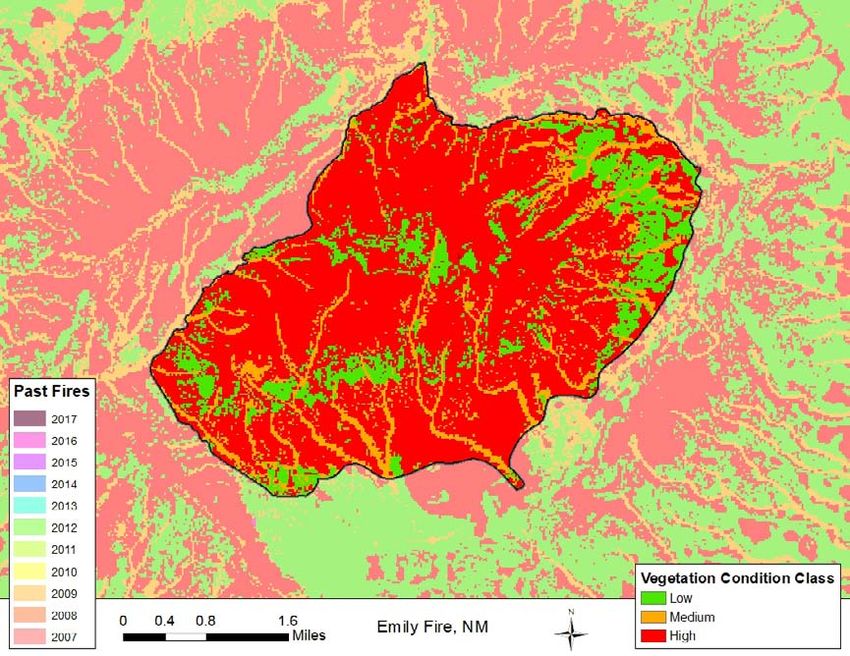
12 2018 WILDFIRE SEASON: AN OVERVIEW / SOUTHWESTERN US Ecological Restoration InstituteFigure 12. Vegetation Condition Class showing departure from historic conditions in the Emily Fire. Emily Fire, New Mexico The Emily Fire was reported on June 28 approximately 25 Vegetation and Past Fires miles north of Las Vegas, NM and burned nearly 8,500 acres Most of the area affected by the Emily Fire was ponderosa pine over 20 days until monsoonal rains arrived. The Emily Fire (45 percent) or piñon-juniper (36 percent). Riparian forest (8 burned on private land. As reported in the Incident Status percent), scrub (7 percent), mixed conifer (2 percent), and grass Summaries, also known as the ICS-209s, fire managers used (2 percent) were also affected. None of the area burned in the a full suppression strategy with the strategic objective to Emily Fire had burned in the past 10 years. Seventy percent of successfully protect and eliminate damage to power lines, the vegetation within the Emily Fire had high departure from the high-value Turkey Mountain communications site, and historic conditions according to the LANDFIRE Vegetation private grazing land. It was also important to prevent the Condition Class analysis (Figure 12). fire from impacting Interstate 25. No injuries were reported, unfortunately there was some structural damage to the Turkey Fire Severity Mountain repeater site. The Emily Fire cost $1.8 million to No fire severity data was available for the Emily Fire. manage, or about $216.95 per acre. Ecological Restoration Institute 2018 WILDFIRE SEASON: AN OVERVIEW / SOUTHWESTERN US 13
Figure 13. Canopy mortality map for the Stubbs Fire.

Stubbs Fire, Arizona
The 8,500-acre Stubbs Fire was reported on July 8 on the           Fire mainly burned through ponderosa pine (39 percent),
Prescott National Forest 25 miles northwest of Prescott,           piñon-juniper (38 percent), conifer-oak (10 percent), and
Arizona. This lightning/natural caused fire was characterized      chaparral (8 percent) but also affected small areas of riparian
by short duration understory burning with isolated torching        forest, grass, and scrub. One disjunct burn area to the south was
in brush. Management chose a 100 percent monitor approach          added to the Stubbs Fire perimeter. The majority (73 percent)
to provide for firefighter/public safety and restore fire to its   of the Stubbs Fire was mapped as low departure from historic
natural role in ponderosa pine and chaparral vegetation types.     conditions, yet 25 percent showed high departure.
Success of this approach was defined as reducing future risk to
the ecosystem. The fire burned for 39 days and cost $145,000       Fire Severity
to manage, or about $17.06 per acre.                               Nearly 90 percent (7,300 acres) of the Stubbs Fire exhibited
                                                                   little to no canopy mortality. Less than 300 acres had more
Vegetation and Past Fires                                          than 25 percent canopy mortality according to the RAVG
Approximately 15 percent (1,400 acres) of the Stubbs Fire          analysis (Figure 13). Those higher severity acres were
burned the previous year as part of the Hyde Fire. No other        primarily located in and around the area that burned in the
fires occurred in this area over the last 10 years. The Stubbs     2017 Hyde Fire.

  14   2018 WILDFIRE SEASON: AN OVERVIEW / SOUTHWESTERN US                                            Ecological Restoration Institute
Figure 14. Vegetation and past fires in the OBI Fire burn area. OBI Fire, Arizona Lightning started the OBI Fire on July 21 and it burned until affected small areas of riparian forest (6 percent), conifer-oak August 31. During those 41 days, it burned 11,656 acres on (4 percent), non-vegetated/developed (2 percent), spruce-fir the Walhalla Plateau of the Grand Canyon National Park. (1 percent) and grassland (1 percent). Over half (56 percent) This fire was managed using a 100 percent confine strategy. of the OBI Fire was identified as high departure from historic The terrain in the area made access to the fire difficult and led conditions according to the Vegetation Condition Class to a heavy reliance on aircraft. Grand Canyon National Park analysis (Figure 14). Roughly one-third of the area affected by implemented a number of temporary closures as part of the fire the OBI Fire (approximately 4,000 acres) burned in the 2007 response, but no injuries or damaged structures were reported. Roosevelt Fire. Otherwise the area had not been burned in The management cost of the wildfire was $250,000, or $21.45 recent years; however, it shared a nearly two-mile perimeter per acre. with the 2016 Fuller Fire. Vegetation and Past Fires Fire Severity The OBI Fire mainly burned through ponderosa pine (48 Fire severity information was not available for the OBI Fire. percent) and mixed conifer (38 percent) forests, but also Ecological Restoration Institute 2018 WILDFIRE SEASON: AN OVERVIEW / SOUTHWESTERN US 15
Conclusion
This report covers the 13 largest wildfires of 2018 and                         of the high soil burn severity acres in this report were from
more than half of the acreage burned. Grassland was the                         the Ute Park Fire.
most commonly burned vegetation type closely followed
by ponderosa pine, making up roughly 90,000 acres each                          RAVG maps were available for five fires in this analysis and
(Figure 15). Far more acres of grassland and ponderosa pine                     show the majority (68 percent) of acres analyzed experienced
were burned in the largest wildfires of 2018 than 2017, while                   less than 25 percent canopy mortality (Figure 17). Eleven
fewer acres of piñon-juniper, conifer-oak, chaparral, and scrub                 percent of the area analyzed burned with greater than 90
burned. Nearly 50,000 more acres of ponderosa pine were                         percent canopy mortality. The Buzzard and Tinder fires
burned in these large 2018 fires than those in 2017. Most of                    account for nearly 72 percent of the highest canopy mortality
the burned grassland was from the three large fires occurring                   areas. These fires were both primarily ponderosa pine, and
on the northern and southern boundaries of New Mexico.                          canopy mortality can be more ecologically significant in this
This number would likely have been much higher if data were                     plant community than fires that mainly burn in low-statue
available for the 206 and 380 fires in eastern New Mexico.                      vegetation (grass, scrub, chaparral). Nearly 3,500 acres of
                                                                                ponderosa pine in the Tinder Fire and an additional 1,600
Soil burn severity maps analyzed in this report account for                     acres of ponderosa pine and 2,100 acres of mixed conifer
only 16 percent of the total acres burned in 2018. For the four                 in the Buzzard Fire had greater than 90 percent mortality
fires in this report with soil burn severity maps, 62 percent                   (Figure 18). RAVG maps were not available for the Ute Park
of the the acres burned with low or undetectable soil burn                      Fire but this would likely have significantly increased the
severity (Figure 16). Nearly 15,000 acres (17 percent) of this                  acreage in this highest canopy mortality class.
area experienced high soil burn severity. More than 87 percent

                  Figure 15. Summary of acres burned in the largest fires by vegetation type. Note: Fire perimeters were not
                  available for the 206 and 380 fires and were therefore left out of this analysis.

                  Figure 16. Summary of acres burned by soil burn severity class.

  16   2018 WILDFIRE SEASON: AN OVERVIEW / SOUTHWESTERN US                                                                Ecological Restoration Institute
Only a quarter of the area in this analysis was highly departed only limited overlap. For example, recent burn perimeters
from historic conditions based on the LANDFIRE vegetation facilitate control of the Buzzard Fire. The Rattlesnake Fire
condition class analysis. It is reasonable to assume that the burned entirely within the fire scar of the 538,000-acre 2011
high proportions of wildfire burning with low severity and the Wallow Fire. The Rattlesnake Fire is also likely an example
high portion of the area burned close to the historic condition of a reburn that is likely to have had low burn severity at least
are related. Most of the 68,000 acres of high departure from in part because of previous fires. In contrast, the Ute Park
historic conditions was isolated to three fires: Buzzard (35 Fire did not interact with recently burned areas and burned at
percent), Tinder (20 percent), and Rattlesnake (18 percent). high severity. Of course, many factors in addition to past fires
These were among the most intense fires with over 4,000 help determine wildfire severity.
acres of the Buzzard and Tinder fires having greater than 90
percent canopy mortality. The Tinder Fire was also the most On the other end of this range was the Ute Park Fire, which
destructive fire in this report to human communities, leading to burned in an area without a significant fire within 35 miles
the loss of 33 residencies and 63 minor structures. in the last 10 years. Further, the utility of this metric is
particularly relevant to the woody vegetation types. The 2009
Human communities were most affected by the Tinder and 2011 fires within the OK Bar and San Luis fire perimeters
and Ute Park fires. The Tinder Fire threatened over 1,700 were unlikely to play a significant role in these primarily grass
residences and required the evacuation of 300 civilians, in fires. Fires in this report, such as Diener Canyon and Buzzard
addition to area and road closures. It ended up destroying 33 Fires, burned into older fire perimeters.
of residences along with 63 minor structures. The Ute Park
Fire led to the evacuation of nearly 3,500 civilians in Ute The 13 fires in this analysis cost nearly $54 million dollars to
Park, Cimarron, and the Philmont Boy Scout Camp. This fire manage (with a range of strategies) for an average of $157 per
consumed 14 outbuildings and damaged power lines and fiber acre. This was half the average cost in our 2017 analysis. As
optic lines along US Hwy 64, which was closed for several days noted above, managers identify the most appropriate strategy
with trees and boulders strewn across the road. for each part of a wildfire to minimize threats and maximize
positive outcomes. Using the percentage of strategies reported
The cause of most fires in this report was undetermined at the in the ICS-209 forms allows a portioning of acres and costs
time of this writing. Fire investigators identified two of them by the strategy used. In 2018, managers used full suppression
as human caused, including the Tinder and Diener Canyon strategies on 70 percent of the acres burned in the large fires
fires. The Tinder Fire was caused by an abandoned illegal summarized in this report. Limited data make it difficult to
campfire, while the cause of the Diener Canyon Fire was spot assess how this percentage compares to all fires over 100 acres
fires from a prescribed burn. in the Southwest. It is worth noting that managers were able to
use strategies other than full suppression on all three naturally
The role of past fires was highly variable in the fires ignited fires (OBI, Stubbs, and OK Bar). The 100,000 acres
summarized in this report. Past fires played a role in most where managers were able to use strategies other than full
fires in this analysis and in many cases the edge of these suppression is only a third less than the number of acres treated
10-year-old or less fire scars served as a fire break within with prescribed fire in the Southwest during 2018.
Figure 17. Summary of acres burned by canopy mortality class.
Ecological Restoration Institute 2018 WILDFIRE SEASON: AN OVERVIEW / SOUTHWESTERN US 17Figure 18. Summary of acres burned by vegetation condition class. Note: Fire perimeters were not available for the 206
and 380 fires and were therefore left out of this analysis.
18 2018 WILDFIRE SEASON: AN OVERVIEW / SOUTHWESTERN US Ecological Restoration InstituteAppendix 1. Fire Statistics
General Vegetation Departure
Name Acres Cost cost/ac Low Medium High
OK Bar 61,620 $1,400,000 $22.72 42% 54% 4%
Buzzard 50,296 $15,100,000 $300.22 37% 15% 48%
206 44,162 $96,000 $2.17 - - -
Ute Park 36,740 $10,000,000 $272.18 24% 73% 1%
Stateline 28,105 $2,300,000 $81.84 95% 4% 0%
Rattlesnake 26,072 $11,400,000 $437.25 27% 25% 48%
San Luis 20,586 $300,000 $14.57 34% 62% 4%
380 20,480 $35,000 $1.71 - - -
Tinder 16,309 $7,500,000 $459.87 14% 2% 83%
OBI 11,656 $250,000 $21.45 18% 26% 56%
Diener Canyon 9,338 $3,500,000 $374.81 1% 99% 0%
Stubbs 8,500 $145,000 $17.06 73% 2% 25%
Emily 8,432 $1,829,302 $216.95 16% 14% 70%
Soil Burn Severity RAVG canopy mortality
Name Unburned Low Moderate High 0% < 25% < 50% < 75% < 90% ≥ 90%
OK Bar - - - - - - - - - -
Buzzard - - - - 27% 47% 9% 5% 3% 8%
206 - - - - - - - - - -
Ute Park 16% 13% 35% 36% - - - - - -
Stateline - - - - - - - - - -
Rattlesnake 21% 78% 1% 0% 23% 51% 13% 7% 3% 4%
San Luis - - - - - - - - - -
380 - - - - - - - - - -
Tinder 3% 64% 22% 10% 2% 35% 18% 12% 6% 27%
OBI - - - - - - - - - -
Diener Canyon 29% 50% 17% 3% 16% 32% 14% 10% 5% 23%
Stubbs - - - - 88% 8% 1% 1% 0% 1%
Emily - - - - - - - - - -
Ecological Restoration Institute 2018 WILDFIRE SEASON: AN OVERVIEW / SOUTHWESTERN US 19P.O. Box 15017 Flagstaff, AZ 86011-5017 nau.edu/eri
You can also read


