Splenic Abscess in the New Millennium: A Descriptive, Retrospective Case Series
←
→
Page content transcription
If your browser does not render page correctly, please read the page content below
Open Forum Infectious Diseases
    MAJOR ARTICLE

Splenic Abscess in the New Millennium: A Descriptive,
Retrospective Case Series
Christopher Radcliffe,1, Zeyu Tang,1 Savanah D. Gisriel,2 and Matthew Grant1,3
1
 Yale University School of Medicine, New Haven, Connecticut, USA, 2Department of Pathology, Yale University School of Medicine, New Haven, Connecticut, USA, and 3Section of Infectious
Diseases, Department of Internal Medicine, Yale University School of Medicine, New Haven, Connecticut, USA

   Background. Splenic abscess is a rare infection often resulting from hematogenous spread. Immunocompromised states are
commonly comorbid, and the microbiology is heterogeneous.
   Methods. We conducted a retrospective review of 33 cases identified by convenience sampling. Cases were treated in our

                                                                                                                                                                                          Downloaded from https://academic.oup.com/ofid/article/9/4/ofac085/6530317 by guest on 24 June 2022
institution’s hospital system between May 2012 and February 2021 and classified as proven or probable based on predetermined
criteria.
   Results. The median age was 57 years, and 58% were men. Common underlying diseases included diabetes mellitus (30%),
pancreatic disease (30%), and hematological malignancy (15%). The most common mechanism of pathogenesis was hematogenous
spread (n = 13). Escherichia coli, enterococcal spp., and anaerobes were frequently implicated. One case was discovered at autopsy
and excluded from subsequent analyses. The median duration of antimicrobial therapy (range) was 45 (5–525) days, and the median
length of index hospitalization was 20 days. Percutaneous drainage by interventional radiology was common (17 of 32; 53%), and
6 patients underwent splenectomy. Treatment success was achieved in 14 of 32 cases (44%), with clinical stability in 3 of 32 cases
(9%). Failures occurred in 13 of 32 (41%) cases, 2 of whom died from splenic abscesses. Two patients (2 of 32) were lost to follow-up.
   Conclusions. To our knowledge, this is the largest North American series since the turn of the century and the first to distin-
guish between proven and probable cases. As reflected in our series, patients with splenic abscess may require prolonged hospitaliza-
tions and courses of antimicrobial therapy. Improvements in management are needed.
   Keywords. diabetes mellitus; malignancy; pancreas; splenectomy; splenic abscess.

References to the spleen and splenic diseases have appeared in                                       melioidosis is not uncommon in Thailand [12, 13]. Contrarily,
the medical literature since antiquity. Egyptian anatomists were                                     gram-positive bacteria, Enterobacterales, and anaerobic bacteria
charting the vasculature of the spleen as early as the second                                        account for a sizeable number of culture-positive infections in
millennium BCE, and the sages of traditional Chinese medicine                                        studies from Taiwan [10, 11], India [14, 15], and the United
placed it among the 5 zang organs [1]. The understanding of                                          States [4, 8, 16]. In general, management strategies center on
splenic function has continued to develop in recent centuries,                                       antimicrobial therapy and achievement of source control
and numerous diseases are known to affect this solid organ.                                          through percutaneous drainage or splenectomy.
One rare form of splenic pathology is abscess [2, 3].                                                   Few large series from North America have focused on splenic
   Classically, splenic abscess results from hematogenous                                            abscess [4, 8, 17], and modern evidence is confined to case re-
seeding, preceding trauma, or other mechanisms [2, 4, 5].                                            ports and small case series. In the last 4 decades, the largest data
Clinical factors associated with splenic abscess include splenic                                     set from a US center was published on 39 cases treated between
artery embolization [6, 7], endocarditis [8, 9], immunocom-                                          1981 and 1996 [4]. We hypothesized that this clinical entity has
promised states [4, 5], and, less commonly, pancreatic disease                                       since undergone transformation due to significant changes in
[10, 11]. Microbiology is contingent upon the host and their                                         the epidemiology of solid organ and hematological malignan-
respective global region. For example, splenic abscess due to                                        cies [18–20], HIV [21], and immunosuppressive therapies [22].
                                                                                                     Resultantly, we conducted a retrospective review of 33 cases
  Received 28 September 2021; editorial decision 10 February 2022; accepted 15 February 2022;        treated in our institution’s hospital system. We aimed to charac-
published online 17 February 2022.                                                                   terize (1) demographics and pathogenesis, (2) microbiology, (3)
  Correspondence: Christopher Radcliffe, Yale Infectious Diseases, PO Box 208022, New
Haven, CT 06520 (christophervradcliffe@gmail.com).                                                   management strategies, and (4) clinical outcomes.
Open Forum Infectious Diseases®2022
© The Author(s) 2022. Published by Oxford University Press on behalf of Infectious Diseases
Society of America. This is an Open Access article distributed under the terms of the Creative       METHODS
Commons Attribution-NonCommercial-NoDerivs licence (https://creativecommons.org/
licenses/by-nc-nd/4.0/), which permits non-commercial reproduction and distribution of the           Study Overview
work, in any medium, provided the original work is not altered or transformed in any way, and that
                                                                                                     Our study population consisted of all patients receiving care
the work is properly cited. For commercial re-use, please contact journals.permissions@oup.com
https://doi.org/10.1093/ofid/ofac085                                                                 in the Yale New Haven Health System between May 2012 and

                                                                                                                           Splenic Abscess in the New Millennium • OFID • 1
February 2021. Our institution’s electronic medical record factors preceding the diagnosis of splenic abscess were col-
(EMR) database is searchable as early as 2012, which corres- lected. For each case, the following immunocompromising or
ponds to when departments’ Epic records were configured in a gastrointestinal comorbidities were noted: HIV/AIDS, solid
searchable format by our institution’s Joint Data Analytics Team organ transplantation, hematopoietic stem cell transplantation,
(JDAT). As a result, the present series represents a convenience end-stage renal disease (ESRD), active hematological or solid
sample. To identify cases, we manually reviewed the EMRs of organ malignancy, cirrhosis, diabetes mellitus, inflammatory
all patients with diagnoses associated with 1 or more of the fol- bowel disease, pancreatic disease (eg, malignancy, pancreatitis,
lowing International Classification of Diseases 10th Revision pseudocyst, etc.), and receipt of immunosuppressive therapy
(ICD-10) codes: splenic abscess (D73.3), splenic cyst (D73.4), for an underlying condition (eg, prednisone, infliximab, etc.).
splenic infarction (D73.5), splenic lesion (D73.89), and splenic History of prior splenic artery embolization was also recorded.
hematoma (S36.029A). For patients who received care before We sorted the presumptive mechanism of abscess pathogenesis
the implementation of the ICD-10, their institution-specific into the following categories: hematogenous spread, contiguous
codes corresponding to ≥1 of the above-listed ICD-10 codes of spread, superinfection of hematoma or infarcted tissue, multi-
interest were identified and converted to ICD-10 when the EMR factorial, and idiopathic.
Downloaded from https://academic.oup.com/ofid/article/9/4/ofac085/6530317 by guest on 24 June 2022
database was searched by JDAT. Our institutional pathology Length of initial hospital stay was recorded for each case.
database was also queried. The Yale University Institutional Readmissions and complications directly related to the splenic
Review Board approved our study protocol and waived the abscess were noted. All relevant microbiological and patholog-
need for informed consent. All data were stored in a secure, en- ical data were extracted. Length of appropriate therapy was re-
crypted fashion over the course of this study’s review period. corded, as were the identities of treatment regimens. We defined
appropriate therapy as antimicrobial therapy offering adequate
Case Definition coverage for the inciting pathogen(s). Resultantly, length of ap-
We defined splenic abscess as a focal area of splenitis due to propriate therapy includes both empiric and targeted regimens
a proven or probable infectious etiology and contained within that cover the isolated pathogen(s). For culture-negative cases,
the splenic capsule. Perisplenic collections were deemed to be the entire length of empiric antimicrobial therapy was recorded
the sequelae of other intra-abdominal processes (eg, peritonitis) as the length of appropriate therapy. The following adverse
and were resultantly excluded. In order to be included, cases had events related to antimicrobial therapy were recorded if present:
to have demonstrable findings compatible with splenic abscess dermatological or musculoskeletal complaints, gastrointes-
on imaging studies, intraoperative reports, and/or pathological tinal complaints, liver or kidney abnormalities, creatine kinase
examination in addition to clinical (eg, fever, leukocytosis, etc.) (CK) elevation, and neurological complaints. Discontinuation
or microbiological data (eg, aspirate culture) consistent with an of therapy due to adverse events was recorded. We also re-
infectious process. corded surgical or procedural interventions related to manage-
Cases with (1) a positive aspirate culture resulting from ment of splenic abscesses. Procedural complications (eg, drain
drainage of a splenic collection and/or (2) pathological con- mispositioning, peritonitis, etc.) were recorded when present.
firmation of abscess via tissue examination were defined as
proven. Probable cases were defined as having (1) clinical signs Classification of Outcomes
and symptoms (eg, rigors) consistent with infection, (2) im- For summary purposes, outcomes were divided into 4 groups:
aging studies with 1 or more discrete splenic lesions measuring treatment success, clinical stability, treatment failure, and loss
≥5 mm, (3) supporting microbiological (eg, positive blood cul- to follow-up. Treatment success was defined as resolution of
ture, antigen test, etc.) or procedural data (eg, purulence noted symptoms and/or radiographic response to therapy without the
during percutaneous drainage), and (4) a clinical or radio- need for additional antimicrobial therapy or procedural inter-
graphic response temporally related to antimicrobial therapy. ventions during the patient’s follow-up period at our institution.
Probable cases were required to meet all 4 criteria. Cases not When applicable, the following symptoms and clinical factors
satisfying either proven or probable criteria were excluded. were assessed: vital sign derangements, fever curves, leukocy-
During case identification and all subsequent data collection, 2 tosis trends, vasopressor requirements, and patient-reported
authors (C.R., M.G.) were required to reach consensus on cases symptoms (eg, pain). Radiographic response was defined as re-
with incomplete or ambiguous information documented in the duction in abscess cavity size or complete resolution.
EMR. Cases with clinical stability were defined as patients with
interval improvement in clinical factors and/or interval de-
Data Collection crease in abscess size after initiation of therapy without evi-
Basic demographic information was recorded from the EMR. dence of complete resolution or further decompensation due to
Data concerning abdominal trauma, intraperitoneal surgery, the splenic abscess during their follow-up periods. Treatment
injection drug use, bacteremia/fungemia, and other clinical failures were defined as cases who lacked response to therapy,
2 • OFID • Radcliffe et alhad uncontrolled progression of the infectious process while with multifocal abscesses had
Table 1.     Summary of Splenic Abscess Cases

                                                                                   Infection                                                                    Largest Abscess      Length
                                                                                   Type                                                                          Dimension on        of Ap-
                             Age (y),       Comorbidities and Clinical In-         (Proven or   Presumptive                                                      Initial Imaging    propriate   Procedural Intervention(s)
                             Sex            formation                              Probable)    Mechanism       Relevant Microbiological Data                     Studies (cm)     Therapy, d   for Splenic Abscess                Outcome

                             51, female     Pancreatic cancer on chemo-            Probable     Contiguous      Escherichia coli and Streptococcus anginosus           4.4            206       None                         Failure (uncontrolled
                                              therapy                                             spread          bacteremia; concurrent polymicrobial he-                                                                     progression on

4 • OFID • Radcliffe et al
                                                                                                                  patic abscess                                                                                                initial therapy)
                             57, female     Recent intraperitoneal surgery         Probable     Contiguous      Polymicrobial bacteremia and candidemia                2.7              56      None                         Success
                                                                                                  spread          preceding splenic abscess diagnosis; con-
                                                                                                                  current intra-abdominal collections with
                                                                                                                  polymicrobial cultures
                             46, female     Recent intraperitoneal surgery         Proven       Contiguous      Splenic drainage culture grew Bacillus spp.;           8.3              17      Percutaneous drainage        Success
                                                                                                  spread          polymicrobial peritoneal fluid culture
                             80, female     Concurrent perinephric abscess         Probable     Contiguous      Splenic drainage culture negative; concurrent          5                28      Percutaneous drainage        Success
                                              and chronic renal calculi                           spread          perinephric abscess drainage culture nega-
                                                                                                                  tive with gram stain 3+ hyphae
                             29, male       Remote history of necrotizing          Proven       Contiguous      Splenic drainage culture grew Group B Strep-           3                16      Percutaneous drainage        Success
                                              pancreatitis with multiple com-                     spread          tococcus
                                              plications
                             30, male       Endocarditis, DM, IBD with recent      Proven       Hematogenous Staphylococcus lugdunensis bacteremia                     5.8              43      Percutaneous drainage;       Failure (uncontrolled
                                              prednisone course, remote his-                      spread                                                                                          splenectomy                  progression on
                                              tory of necrotizing pancreatitis                                                                                                                                                 initial therapy)
                                              with chronic collections
                             78, male       DM                                     Probable     Hematogenous MSSA bacteremia preceding splenic abscess                 2.1              43      None                         Success
                                                                                                  spread      diagnosis
                             57, female     Acute myelogenous leukemia             Probable     Hematogenous Candida kefyr fungemia preceding diagnosis
Table 1. Continued
Infection Largest Abscess Length
Type Dimension on of Ap-
Age (y), Comorbidities and Clinical In- (Proven or Presumptive Initial Imaging propriate Procedural Intervention(s)
Sex formation Probable) Mechanism Relevant Microbiological Data Studies (cm) Therapy, d for Splenic Abscess Outcome
30, male HIV (CD4 13, VL 140 000) off Probable Hematogenous Histoplasma urine antigen >15 ng/mL (refer- 1.4 365 None Success
HAART spread ence range 1 percutaneous drainage Failure (need for
splenic abscess diagnosis; multiple re-intervention;
polymicrobial splenic drainage cultures death)
71, male Cirrhosis without ascites, Proven Multifactorial Cutibacterium avidum bacteremia preceding 16 158 >1 percutaneous drainage Failure (need for
hepatocellular carcinoma, splenic abscess diagnosis; splenic drainage re-intervention)
splenic artery embolization culture grew C. avidum
40, male Acute promyelocytic leukemia on Proven Multifactorial Escherichia coli and Streptococcus anginosus 12 68 Percutaneous drainage; Failure (uncontrolled
chemotherapy, DM bacteremia preceding diagnosis of splenic splenectomy progression on
abscess; splenic drainage culture grew initial therapy)
Escherichia coli
53, male Necrotizing pancreatitis, splenic Proven Multifactorial Escherichia coli and Pseudomonas aureginosa 12 63 Percutaneous drainage; Failure (uncontrolled
artery embolization bacteremia; polymicrobial splenic and pan- splenectomy with open progression on
creatic drainage cultures; concurrent he- drainage of pancreatic initial therapy)
patic abscess drainage culture grew E. coli fluid collections and par-
tial pancreatectomy
51, male Abdominal trauma with splenic Proven Superinfected Splenic fluid culture grew Staphylococcus 24 5 Splenectomy Success
artery embolization for hema- hematoma lugdunensis
toma, HIV (CD4 126, VL 22) on
HAART
70, female Gastric cancer, splenic artery Proven Superinfected Splenic drainage culture grew pan-susceptible 16 32 Percutaneous drainage Success
embolization for spontaneous hematoma Enterococcus spp.; concurrent intra-
splenic rupture, DM abdominal collections grew VRE
47, female Undifferentiated connective tissue Proven Superinfected Splenic drainage culture grew Clostridium 6 22 Percutaneous drainage; Failure (uncontrolled
disease on hydroxychloroquine splenic in- spp. splenectomy progression on
Splenic Abscess in the New Millennium • OFID • 5
farct initial therapy)
Downloaded from https://academic.oup.com/ofid/article/9/4/ofac085/6530317 by guest on 24 June 2022once: non–Clostridium difficile diarrhea, altered mental status,
Abbreviations: CFU, colony-forming unit; CoNS, coagulase-negative Staphylococcus; DM, diabetes mellitus; HAART, highly active antiretroviral therapy; IVIG, intravenous immunoglobulin; IBD, inflammatory bowel disease; MSSA, methicillin-sensitive
Failure (uncontrolled
Failure (uncontrolled
CK elevation, tendon pain. Five patients had antimicrobial
re-intervention)
progression on
progression on
initial therapy)
initial therapy)
Failure (need for
Outcome
agents discontinued due to adverse events.
Percutaneous drainage by interventional radiology was
Success
used in the majority of cases (17 of 32; 53%), and 6 cases un-
derwent splenectomy. Five of 6 splenectomies were per-
>1 percutaneous drainage
>1 percutaneous drainage
formed after an inadequate percutaneous drainage procedure.
Procedural Intervention(s)
Percutaneous drainage
Splenectomy complications included a pleural effusion (n = 1)
for Splenic Abscess
and pancreatic ductal injury (n = 1), whereas percutaneous
drainage procedures were complicated by severe pain due to
drain mispositioning (n = 1) and peritonitis (n = 1). Two cases
None
were notable for requiring repeat drainage procedures months
(range, 3–8 months) after their initial presentations.
Therapy, d
Treatment success was achieved in 14 of 32 cases (44%).
propriate
Downloaded from https://academic.oup.com/ofid/article/9/4/ofac085/6530317 by guest on 24 June 2022
Length
of Ap-
67
11
50
164
Three cases (9%) had stable disease, and all 3 cases had deaths
not attributable to the splenic abscess (range, 8–42 days after di-
agnosis). Failures occurred in 41% (13 of 32) of cases, with 2 of
Largest Abscess
Dimension on
Initial Imaging
Studies (cm)
13 patients having had deaths attributable to the splenic abscess
9.5
19.7
(range, 12–428 days after diagnosis). The median durations of
8
8
antimicrobial therapy for successes and failures were 45 days
and 63 days, respectively. The majority of treatment failures
(9 of 13; 69%) resulted from progression of disease while still
bacteremia; polymicrobial splenic drainage
Escherichia coli and gamma-hemolytic Strep-
Enterococcus faecalis and Lactobacillus spp.
Escherichia coli bacteremia; splenic drainage
being treated with an initial antimicrobial regimen, and 5 pa-
tients underwent splenectomy due to inadequate source control
Splenic drainage culture grew CoNS
afforded by percutaneous drainage. For patients with pancre-
atic pathology, 6 of 10 (60%) had treatment failures. Two pa-
Staphylococcus aureus; TIPS, transjugular intrahepatic portosystemic shunt; VL, viral load; VRE, vancomycin-resistant Enterococcus.
Relevant Microbiological Data
tococcus spp. bacteremia
tients (2 of 32) were lost to follow-up. Notably, 1 was clinically
improving at an office visit 2 weeks after discharge, and 1 had
cultures negative
outpatient abdominal imaging showing interval decrease in the
size of the splenic lesion.
culture
DISCUSSION
We report individualized information on 33 cases of splenic ab-
Superinfected
Superinfected
Superinfected
Superinfected
splenic in-
splenic in-
splenic in-
splenic in-
Presumptive
scess treated in our institution’s health care system. Half of all
Mechanism
cases were proven, and this is the first series to apply criteria
farct
farct
farct
farct
for distinguishing between probable and proven cases. Diabetes
mellitus, pancreatic pathology, and splenic artery emboliza-
(Proven or
Probable)
tion were common comorbidities, and 18% of infections were
Probable
Probable
Infection
Proven
Proven
polymicrobial. The median duration of antimicrobial therapy
Type
was roughly 6 weeks, and half of the patients underwent pro-
cedural interventions. Treatment success was only achieved in
cirrhosis with ascites and TIPS,
for bleed related to distal pan-
DM, splenic artery embolization
Post–essential thrombocytosis
createctomy for neuroendo-
44% of cases, and attributable mortality was 6% (2 of 32). To
myelofibrosis on ruxolitinib,
splenic artery embolization
Comorbidities and Clinical In-
Pancreatic cancer on chemo-
our knowledge, this is the largest North American series from a
intraperitoneal surgery
Colon cancer and recent
single health care system in over 2 decades.
Optimal duration of antimicrobial therapy for splenic ab-
crine tumor
scess remains an open question, and we report a median du-
therapy
formation
ration of 45 days. Only 2 other modern series have reported
Continued
mean durations of 5.6 weeks in patients (n = 27) with endocar-
ditis and splenic abscess [8] and 46 days in a subgroup of pa-
62, female
tients (n = 33) who did not undergo procedural interventions
61, male
93, male
70, male
Table 1.
Age (y),
[10]. These lengths of therapy are consistent with those reported
Sex
for pyogenic liver abscesses, a more common intra-abdominal
6 • OFID • Radcliffe et alA B
∗
Downloaded from https://academic.oup.com/ofid/article/9/4/ofac085/6530317 by guest on 24 June 2022
C D
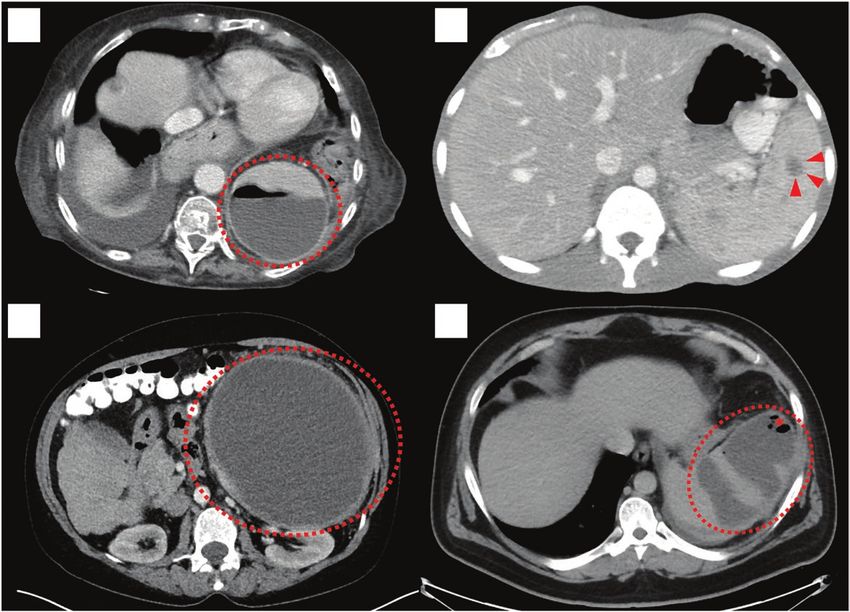
Figure 1. Representative computed tomography scans of splenic abscesses. A, Polymicrobial case in an 83-year-old woman with low-grade follicular lymphoma and pan-
creatic cancer. An abscess (interrupted circle) with an air–fluid level (asterisk) is visualized. B, Splenic histoplasmosis in a 30-year-old man with HIV. Arrowheads denote a
1.4-cm abscess. C, Coagulase-negative Staphylococcus case in a 62-year-old woman with cirrhosis and post–essential thrombocytosis myelofibrosis. An abscess (interrupted
circle) is visualized. D, Escherichia coli case in a 40-year-old man with acute promyelocytic leukemia. A complex abscess (interrupted circle) with internal foci of gas (asterisk)
is present.
solid organ abscess with somewhat comparable pathogenesis infections (ie, tuberculosis and histoplasmosis) requiring
and microbiology [23–25]. For example, Yu et al. reported months of therapy per standard treatment guidelines. Despite
6-week courses for all liver abscess cases (n = 64) in their pro- the known risk of overwhelming postsplenectomy infections
spective study on drainage techniques [23]. Duration of anti- that may require antibiotic prophylaxis or vaccination [27], we
microbial therapy for abscesses is dependent upon multiple do report 1 successful case of just 5 days of antibiotics after sple-
factors including site, causative organism(s), and achievement nectomy for a 24-cm abscess due to Staphylococcus lugdunensis
of source control. The Study to Optimize Peritoneal Infection in a 51-year-old man with well-controlled HIV.
Therapy (STOP-IT) trial found shorter courses to be satisfac- Diabetes mellitus was the most common comorbidity in our
tory if source control is first achieved [26]. It is important to series, and others have reported similar findings (prevalence
note that intraperitoneal solid organ infections were underrep- 22%–51%) [10, 11, 14, 15]. By impacting microvasculature and
resented in the STOP-IT trial, and only 5% and 2% of cases in immune function [28], its epidemiology likely affects a number
the control and experimental arms, respectively, arose from the of other pyogenic infections like brain abscess [29], liver abscess
liver. No infections of splenic origin were explicitly reported. As [25], and pyomyositis [30]. Another common comorbidity was
a result, shorter treatment courses may not be appropriate for active malignancy, and both deaths occurred in patients with
pyogenic infections of the spleen and liver. malignancies. Although HIV has been reported as a common
Prompt attainment of source control proved challenging comorbidity accompanying splenic abscesses [4], our present
in our study given that 9 cases required multiple procedures, study only identified 2 cases. This shift in epidemiology is likely
and this contributes to our relatively protracted length of anti- attributable to the advent of highly active antiretroviral therapy
microbial therapy. Additionally, 2 patients had disseminated for patients with HIV.
Splenic Abscess in the New Millennium • OFID • 7Table 2. Microbiology of Blood and Splenic Drainage Cultures With splenic abscess exist in the literature [31, 32]. It is interesting
Speciated Results
to note that both cases were cardiac patients [31, 32], and 1 had
undergone cardiac catheterization before developing splenic
Percutaneous or Intraoperative
Splenic Drainage Culture abscess [32]. In our case, angiography was also performed as the
Blood Culture (n = 35) (n = 24) patient had undergone splenic artery embolization in the weeks
Atopobium rimae Bacillus spp. preceding diagnosis. We also report a case of splenic abscess
Bacteroides fragilis (n = 2) Bacteroides thetaiotaomicron due to Solobacterium moorei and Atopobium rimae bacteremia
Burkholderia cepacia Candida albicans
in a 48-year-old man with recent Nissen fundoplication. To our
Candida albicans Clostridium difficile
Candida glabrata Clostridium spp.
knowledge, this stands as the first report of either species being
Candida kefyr CoNS (n = 2) identified as the etiology of splenic abscess.
Candida tropicalis Cutibacterium avidum There is a conspicuously low incidence of S. aureus in our
CoNS Eikenella corrodens series when compared with historical data [4, 8]. Two of the
Cutibacterium avidum Enterococcus faecalis
largest series from the United States report on cases from the
Enterococcus faecalis (n = 2) Enterococcus spp.
latter 20th century and note a higher incidence of both S. au-
Downloaded from https://academic.oup.com/ofid/article/9/4/ofac085/6530317 by guest on 24 June 2022
Enterococcus faecium (VRE; n = 2) Enterococcus spp. (VRE)
Escherichia coli (n = 6) Escherichia coli (n = 3)
reus and injection drug use in their study populations [4, 8]. By
Klebsiella pneumoniae Klebsiella spp. contrast, the present study only identified 1 patient with injec-
Klebsiella spp. Lactobacillus spp. tion drug use, and it is interesting to note that a recent US series
Lactobacillus spp. Morganella morganii on splenic abscess only reported 1 case [17]. The significance
MSSA Pseudomonas aureginosa
of this finding is unclear given the myriad infectious complica-
Pseudomonas aeruginosa (n = 2) Saccharomyces cerevisiae
tions of injection drug use [33], and the relatively modest size
Serratia marcescens (n = 2) Serratia marcescens
Solobacterium moorei Staphylococcus lugdunensis of our study may not represent the true incidence of S. aureus
Staphylococcus lugdunensis Veillonella parvula splenic abscess. It is important to note, however, that one of the
Streptococcus anginosus (n = 2) Group B Streptococcus abovementioned series only included patients with concurrent
Streptococcus pneumoniae endocarditis, and 78% of patients (21 of 27) were reported to
Streptococcus spp. (gamma hemolytic)
inject drugs [8]. This large proportion likely skewed the micro-
Salmonella serotype Typhi
biology of that series. Infectious endocarditis can lead to splenic
Unless otherwise stated, each individual entry signifies that the species was isolated from
1 case. It is important to note that several individual splenic abscess cases led to the iso- infarcts, which radiographically mimic splenic abscesses, but all
lation of multiple species. cases in that series would be classified as proven based on our
Abbreviations: CoNS, coagulase-negative Staphylococcus; MSSA, methicillin-susceptible
Staphylococcus aureus; VRE, vancomycin-resistant Enterococcus. proposed criteria [8].
Although we developed a rigorous case definition and
present a large series for this type of infection, the present study
Pancreatic disease (eg, malignancy, acute or chronic pancre- has limitations. Principally, the strength of our study’s conclu-
atitis, pancreatic pseudocyst, etc.) has less commonly been re- sions is limited by its small population size, single geographic
ported as comorbid with splenic abscess [10, 11], but our study’s locale, and retrospective nature. Use of ICD-10 codes to iden-
data corroborate this observation. No unifying mechanism ac- tify cases also limited our ability to definitively identify all
counted for splenic abscess in patients with pancreatic disease; cases during our study period, and we are resultantly unable to
however, the anatomical proximity of the spleen and pancreas comment on changes in incidence or prevalence. The present
accounts for cases resulting from contiguous spread. In our convenience sample likely underestimates the total number of
series, the high treatment failure rate (60%) for patients with splenic abscesses treated during our study period. Additionally,
pancreatic disease may be skewed by our small sample size, but the reasoning behind management decisions was the product of
the observation is likely multifactorial. Possible contributions individual physicians, and we are unable to fully ascertain how
include nonpancreatic comorbidities and challenges associated length of therapy or need for intervention was determined.
with the inflammatory state that often accompanies pancreatic
pathology.
CONCLUSIONS
The wide spectrum of bacterial and fungal species isolated
in the present study is largely consistent with prior reports [4, Our review of 33 splenic abscess cases treated between 2012
10, 11, 14, 15], and polymicrobial splenic abscesses have been and 2021 confirmed this infection to be a significant source of
reported to range from 1% to 18% [10, 11, 14]. Nonetheless, morbidity and mortality. The median duration of antimicro-
there were 2 cases in our study with exceptionally rare anaer- bial therapy was 45 days, and 6 patients underwent splenec-
obic species as the cause of splenic abscess. One case of splenic tomy despite the availability of modern percutaneous drainage
abscess in a 71-year-old man with cirrhosis was caused by techniques. In contrast to prior reports from North America
Cutibacterium avidum, and only 2 prior cases of C. avidum [4, 8], we identified a large proportion of cases with active
8 • OFID • Radcliffe et almalignancies or pancreatic disease as opposed to injection drug 11. Chang KC, Chuah SK, Changchien CS, et al. Clinical characteristics and prog-
nostic factors of splenic abscess: a review of 67 cases in a single medical center of
use, infectious endocarditis, or HIV. Further studies on op- Taiwan. World J Gastroenterol 2006; 12:460–4.
timal management strategies for select patient populations are 12. Sangchan A, Mootsikapun P, Mairiang P. Splenic abscess: clinical features, micro-
biologic finding, treatment and outcome. J Med Assoc Thai. 2003; 86:436–41.
indicated. 13. Churuangsuk C, Chusri S, Hortiwakul T, Charernmak B, Silpapojakul K.
Characteristics, clinical outcomes and factors influencing mortality of patients
with melioidosis in Southern Thailand: a 10-year retrospective study. Asian Pac J
Acknowledgments Trop Med 2016; 9:256–60.
Financial support. None. 14. Sreekar H, Saraf V, Pangi AC, Sreeharsha H, Reddy R, Kamat G. A retrospective
Potential conflicts of interest. The authors have no conflicts of interest study of 75 cases of splenic abscess. Indian J Surg 2011; 73:398–402.
to disclose. The author has submitted the ICMJE Form for Disclosure of 15. Singh AK, Karmani S, Samanta J, et al. Splenic abscess in a tertiary care centre
Potential Conflicts of Interest. Conflicts that the editors consider relevant to in India: clinical characteristics and prognostic factors. ANZ J Surg 2021;
91:1819–25.
the content of the manuscript have been disclosed.
16. Ho HS, Wisner DH. Splenic abscess in the intensive care unit. Arch Surg 1993;
Author contributions. C.R. decided study concept and design, col-
128:842–6; discussion 846–8.
lected data, and wrote the manuscript. Z.T. assisted with data collection 17. O’Connor LF, Buonpane CL, Walker CW, et al. Splenic abscess: characterizing
and revised the manuscript. S.D.G. assisted with data collection and revised management and outcomes for a rare disease. Am Surg 2020; 86:e130–3.
the manuscript. M.G. decided study concept and design, revised the man- 18. Shallis RM, Wang R, Davidoff A, Ma X, Zeidan AM. Epidemiology of acute
uscript, and conducted study supervision. All authors contributed to the
Downloaded from https://academic.oup.com/ofid/article/9/4/ofac085/6530317 by guest on 24 June 2022
myeloid leukemia: recent progress and enduring challenges. Blood Rev 2019;
manuscript and its review. 36:70–87.
Patient consent. The study protocol was reviewed and approved by 19. Desrichard A, Snyder A, Chan TA. Cancer neoantigens and applications for im-
Yale University Institutional Review Board (protocol #2000030275). All munotherapy. Clin Cancer Res 2016; 22:807–12.
20. Vincent A, Herman J, Schulick R, Hruban RH, Goggins M. Pancreatic cancer.
work performed during the study period was in accordance with the ethical
Lancet 2011; 378:607–20.
standards of our institution as well as those detailed by the 1964 Helsinki
21. De Cock KM, Jaffe HW, Curran JW. The evolving epidemiology of HIV/AIDS.
Declaration and its later amendments. Need for informed consent was AIDS 2012; 26:1205–13.
waived by Yale University Institutional Review Board. 22. Davis JS, Ferreira D, Paige E, Gedye C, Boyle M. Infectious complications of
biological and small molecule targeted immunomodulatory therapies. Clin
Microbiol Rev 2020; 33:e00035-19.
References 23. Yu SC, Ho SS, Lau WY, et al. Treatment of pyogenic liver abscess: prospective
1. Paraskevas GK, Koutsouflianiotis KN, Nitsa Z, Demesticha T, Skandalakis P. randomized comparison of catheter drainage and needle aspiration. Hepatology
Knowledge of the anatomy and physiology of the spleen throughout antiquity 2004; 39:932–8.
and the early middle ages. Anat Sci Int 2016; 91:43–55. 24. McNeil T, Daniel S, Gordon DL. Management of pyogenic liver abscess: a South
2. Nelken N, Ignatius J, Skinner M, Christensen N. Changing clinical spectrum of Australian experience. ANZ J Surg 2020; 90:2274–8.
splenic abscess. A multicenter study and review of the literature. Am J Surg 1987; 25. Rahimian J, Wilson T, Oram V, Holzman RS. Pyogenic liver abscess: recent trends
154:27–34. in etiology and mortality. Clin Infect Dis 2004; 39:1654–9.
3. Karaosmanoglu AD, Uysal A, Onder O, et al. Cross-sectional imaging findings of 26. Sawyer RG, Claridge JA, Nathens AB, et al. Trial of short-course antimicrobial
splenic infections: is differential diagnosis possible? Abdom Radiol (NY) 2021; therapy for intraabdominal infection. N Engl J Med 2015; 372:1996–2005.
46:4828–52. 27. Davidson RN, Wall RA. Prevention and management of infections in patients
4. Phillips GS, Radosevich MD, Lipsett PA. Splenic abscess: another look at an old without a spleen. Clin Microbiol Infect 2001; 7:657–60.
disease. Arch Surg 1997; 132:1331–5; discussion 1335–6. 28. Peleg AY, Weerarathna T, McCarthy JS, Davis TM. Common infections in dia-
5. Llenas-Garcia J, Fernandez-Ruiz M, Caurcel L, Enguita-Valls A, Vila-Santos J, betes: pathogenesis, management and relationship to glycaemic control. Diabetes
Guerra-Vales JM. Splenic abscess: a review of 22 cases in a single institution. Eur Metab Res Rev 2007; 23:3–13.
J Intern Med 2009; 20:537–9. 29. Bodilsen J, Dalager-Pedersen M, van de Beek D, Brouwer MC, Nielsen H. Risk
6. Bundy JJ, Hage AN, Srinivasa RN, et al. Intra-arterial ampicillin and gentamicin factors for brain abscess: a nationwide, population-based, nested case-control
and the incidence of splenic abscesses following splenic artery embolization: a study. Clin Infect Dis 2020; 71:1040–6.
20-year case control study. Clin Imaging 2019; 54:6–11. 30. Radcliffe C, Gisriel S, Niu YS, Peaper D, Delgado S, Grant M. Pyomyositis and
7. Elfeki MA, Paz-Fumagalli R, Tiemeier AM, et al. Choice of partial splenic embo- infectious myositis: a comprehensive, single-center retrospective study. Open
lization technique in liver transplant recipients correlates with risk of infectious Forum Infect Dis 2021; 8:XXX–XX.
complications. Transplant Proc 2015; 47:2932–8. 31. Dunne WM, Jr, Kurschenbaum HA, Deshur WR, et al. Propionibacterium avidum
8. Robinson SL, Saxe JM, Lucas CE, Arbulu A, Ledgerwood AM, Lucas WF. Splenic as the etiologic agent of splenic abscess. Diagn Microbiol Infect Dis 1986; 5:87–92.
abscess associated with endocarditis. Surgery 1992; 112:781–6; discussion 786–7. 32. Vohra A, Saiz E, Chan J, Castro J, Amaro R, Barkin J. Splenic abscess caused
9. Hasan LZ, Shrestha NK, Dang V, et al. Surgical infective endocarditis and concur- by Propionibacterium avidum as a complication of cardiac catheterization. Clin
rent splenic abscess requiring splenectomy: a case series and review of the litera- Infect Dis 1998; 26:770–1.
ture. Diagn Microbiol Infect Dis 2020; 97:115082. 33. Ronan MV, Herzig SJ. Hospitalizations related to opioid abuse/dependence and
10. Tung CC, Chen FC, Lo CJ. Splenic abscess: an easily overlooked disease? Am Surg associated serious infections increased sharply, 2002-12. Health Aff (Millwood)
2006; 72:322–5. 2016; 35:832–7.
Splenic Abscess in the New Millennium • OFID • 9You can also read


