STRATEGIC PLAN 2018 2021 - "Ensuring Quality in Higher Education" - Higher Education Authority
←
→
Page content transcription
If your browser does not render page correctly, please read the page content below
“Ensuring Quality in Higher Education”

    2018 – 2021
STRATEGIC PLAN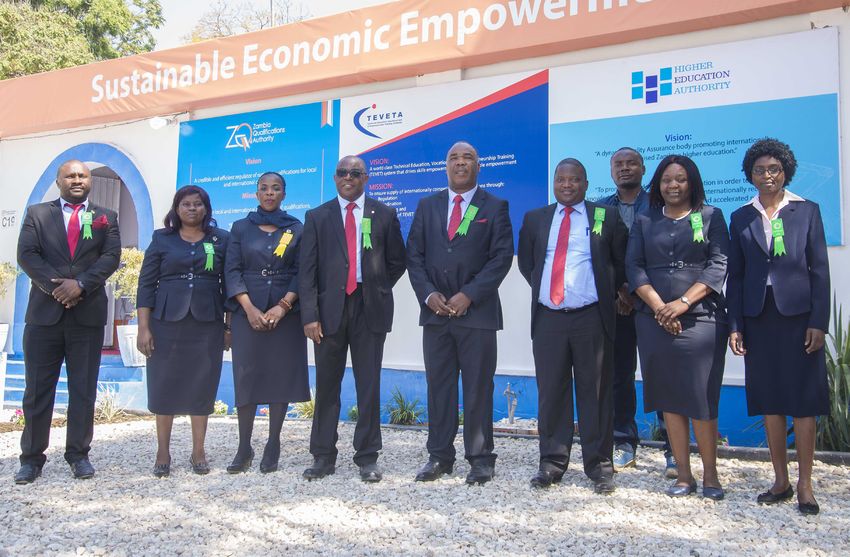
“Ensuring Quality in Higher Education” Mukuba Pension House Dedan Kimathi Road P.O. Box 50795 Lusaka, Zambia +260 211 227 084 / +260 950 470 444 info@hea.org.zm / www.hea.org.zm Join the conversation @HeaZambia on #HEAZambia #HigherEducationZambia Chief Subeditor by Birbal Boniface Musoba birbal.musoba@hea.org.zm Design and Layout by Birbal Boniface Musoba Printing by Venture Connections Ltd © 2019 Higher Education Authority. All rights reserved. Unauthorised duplication contravenes applicable laws. 2 HEA 2018 - 2021 STRATEGIC PLAN

“Ensuring Quality in Higher Education”

                 2018 – 2021
               STRATEGIC PLAN

Prepared in Collaboration with Management Development Division, Cabinet Office
4 HEA 2018 - 2021 STRATEGIC PLAN
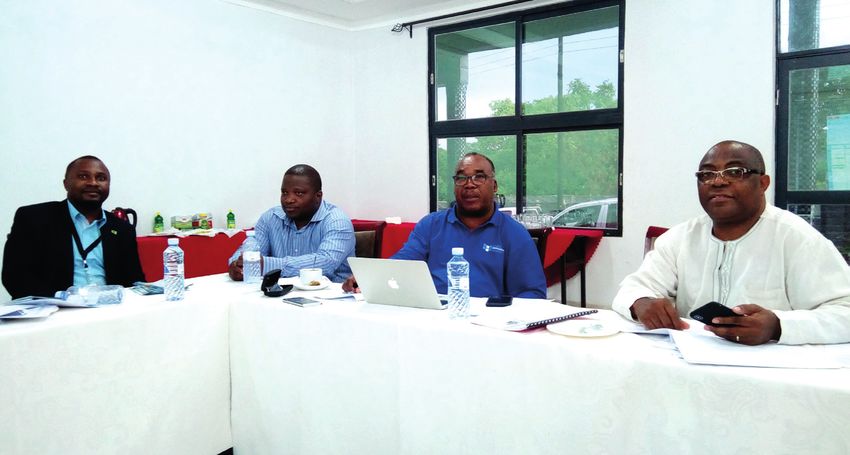
TABLE OF CONTENTS

Abbreviations and Acronyms                                                                       2
Foreword                                                                                         3
Acknowledgements                                                                                 4
Executive Summary                                                                                5
Introduction                                                                                     8
Background                                                                                       8
Plan Coverage                                                                                    10
Environmental Analysis                                                                           12
External Environmental Analysis                                                                  12
Institutional Capability Assessment                                                              13
Strategic Direction                                                                              15
Vision                                                                                           15
Strategic Themes and Strategic Results                                                           15
Mission Statement                                                                                15
Core Values                                                                                      15
Strategic Objectives, Intended Results, Measures, Targets and Strategies                         16
Enabling Factors                                                                                 21
Preconditions                                                                                    21
Assumptions                                                                                      21
Plan Implementation (Strategic Plan – Budget Linkage)                                            22
Monitoring and Evaluation                                                                        23
Structural Implications (Core Functional Structure)                                              24
Appendix I: Reporting Structure for the Authority                                                25
Appendix II: Core Teams                                                                          26
Appendix III: Terms of Reference for the Core Team                                               27
Appendix IV: HEA Clients and their Needs                                                         28
Appendix V: HEA Stakeholders and their Interests                                                 29
Appendix VI: Summary of HEA SWOT Analysis                                                        30
Appendix VII: Balanced Score Card                                                                32
Appendix VIII: Balanced Score Card Implementation Plan                                           34

                                                                HEA 2018 - 2021 STRATEGIC PLAN    1
ABBREVIATIONS AND ACRONYMS

7NDP		          Seventh National Development Plan

COL             Commonwealth of Learning

EAQAN 		        East African Quality Assurance Network

HCD 		          Human Capital Development

HEA		           Higher Education Authority

HEIs		          Higher Education Institutions

HES 		          Higher Education Standards

IA              Institutional Capability Assessment

ICT		           Information and Communication Technology

IDOE 		         Institutional Development and Operational Excellence

IT		            Information Technology

KRAs            Key Result Areas

LPs 		          Learning Programmes

M&E		           Monitoring and Evaluation

MDD		           Management Development Division

MIS		           Management Information Systems

MoF		           Ministry of Finance

MoHE		          Ministry of Higher Education

OD              Organisational Development

PESTEL		        Political, Economic, Social, Technological, Environmental and Legal

PF              Patriotic Front

SAIDE           Southern African Institute of Distance Education

SAQAN           Southern African Quality Assurance Network

SWOT            Strengths, Weaknesses, Opportunities and Threats

TOR		           Terms of Reference

UNESCO          United Nations Educational, Scientific and Cultural Organisation

2          HEA 2018 - 2021 STRATEGIC PLAN

FOREWORD

           The Higher Education Authority (HEA) is a statutory body established
           by the Higher Education Act No. 4 of 2013. The mandate of the
           Authority is to regulate and monitor standards in Higher Education
           Institutions (HEIs) in order to ensure quality services and contribute
           to the enhancement of human capital and accelerated national
           development.

           The Authority has developed this Strategic Plan to set out an
           operational framework to execute its mandate from 2018 to 2021.
           The Plan outlines the vision, mission, strategic objectives and key
           result areas. The Strategic Plan will enable the Authority to be
           practical and responsive to the dynamics in the environment, as
           well as, to build confidence and trust among its stakeholders in
           discharging its mandate.

           In this regard, the Ministry of Higher Education (MoHE) expects HEA
           to effectively and efficiently promote standards of higher education
           in order to ensure knowledgeable, skilled and well-disposed
           internationally recognised graduates for enhanced human capital
           and accelerated national development. In carrying out its mandate,
           the Authority will also promote its shared values, namely, honesty,
           integrity, confidentiality, transparency, team work, courtesy, and
           commitment.

           Through this Strategic Plan, Management, and the entire Staff of
           the Authority have made a commitment to building a “dynamic
           quality assurance body that promotes an internationally recognised
           Zambian higher education.”

           Professor Nkandu Luo, M.P.
           Minister
           MINISTRY OF HIGHER EDUCATION

                                      HEA 2018 - 2021 STRATEGIC PLAN           3
ACKNOWLEDGEMENTS
The process of developing this Strategic Plan was consultative and
comprehensive. It involved the consultation and participation of
many stakeholders at different levels.
It is with this background that I wish to thank all those who
contributed to the successful development of this Plan. In
particular, I wish to pay tribute to the following for their significant
contributions:
The Management Development Division (MDD) of
Cabinet Office for technical guidance and facilitating the
development of the Plan;
The Ministry of Higher Education (MoHE) for policy guidance
and technical support;
Management and Staff of HEA for their technical input; and,
All the representatives of the various organisations who
provided valuable information during the strategic planning
process.
It is my hope that the implementation of this Plan will enable HEA
successfully execute its mandate.
Professor Stephen Simukanga
Director General
HIGHER EDUCATION AUTHORITY
4 HEA 2018 - 2021 STRATEGIC PLAN
EXECUTIVE SUMMARY
The Higher Education Authority (HEA) is a statutory             institutions and programmes to be
body established by the Higher Education Act No. 4              responsive to the human resource, economic
of 2013. The mandate of the Authority is to regulate            and development needs of the Republic;
and monitor standards in Higher Education                 8)    Promote the access of students to higher
Institutions (HEIs) in order to ensure quality services         education institutions;
and contribute to the enhancement of human
                                                          9)    Design and recommend an institutional
capital and accelerated national development.
                                                                quality assurance system for higher
The establishment of the Authority became                       education institutions, and recommend to
imperative after the University of Zambia Act of                the Minister institutional quality assurance
1965 was repealed in 1992 in order to allow for                 standards for:
private sector participation in the provision of
                                                                a)     The establishment, standardisation
higher education services. Further, the University
                                                                       and registration of higher education
Act No. 26 of 1992 was repealed and replaced with
                                                                       institutions, including standards of
the University Act No. 11 of 1999, which introduced
                                                                       plant and equipment;
affiliation of colleges to public universities. These
lagislative changes led to the proliferation of                 b)     The preparation and amendment of
private institutions that provided higher education.                   statutes;
In addition, HEIs, in general, were not regulated               c)     The development of curricula;
and, thus, the quality of higher education was not
assured.                                                        d)     Libraries, laboratories, workshops and
                                                                       other facilities; and,
In this regard, in 2013, the Government of the
Republic of Zambia repealed the 1999 Act and                    e)     Student transfers between academic
replaced it with the Higher Education Act No. 4 of                     programmes among higher education
2013, which provided for the establishment of HEA.                     institutions;

The functions of the Authority as provided for in         10)   Advise the Minister on the funding
Part II Section 6 (1) of the Act are outlined below:            arrangements for public higher education
                                                                institutions;
1)    Advise the Minister on any aspect of higher
      education;                                          11)   Advise the Minister on staff development for
                                                                higher education;
2)    Develop and recommend policy on higher
      education, including the       establishment        12)   Promote equity in access to higher education
      of public higher education institutions and               through the provision of student assistance
      the registration of private higher education              programmes; and,
      institutions;                                       13)   Promote international cooperation and
3)    Establish a coordinated higher education                  facilitate exchange through the provision of
      system     which    promotes    corporate                 student assistance research and teaching.
      governance and provides for a programme             In addition to the aforementioned functions,
      based higher education;                             Statutory Instrument No. 25 of 2016 was issued
4)    Regulate higher education institutions              to provide for the Accreditation of Learning
      and coordinate the development of higher            Programmes (LPs) function.
      education;                                          Institutional Capability Assessment
5)    Promote quality        assurance    in   higher     In developing the 2018 to 2021 Strategic Plan,
      education;                                          the Authority undertook a Management Audit to
6)    Audit the quality assurance mechanisms of           determine its current status. The Audit revealed
      higher education;                                   that HEA had systems to manage staff, finances,
                                                          procurement and its fleet of vehicles. It further
7)    Restructure and transform higher education

                                                                     HEA 2018 - 2021 STRATEGIC PLAN        5
EXECUTIVE SUMMARY

revealed that staff exhibited shared values of                            1)      Review the Higher Education Act;
commitment and hard work.
                                                                          2)      Procure a Management Information System (MIS);
In terms of staff strength, the Audit revealed that                       3)      Enhance collaboration with professional
the Authority operated at 38% for both Permanent                                  bodies and other relevant organisations within
and Pensionable, as well as, Contractual Staff, and,                              and outside the country in evaluation of LPs;
therefore, that there was need to fill all vacancies in
                                                                          4)      Introduce annual renewal of registration of
order to ensure efficiency and effectiveness.
                                                                                  HEIs; and,
The inflow of finances showed an upward trend                             5)      Conduct accreditation simultaneously with
from 2015 to 2016, from 30% to 69% funding                                        registration of Private HEIs.
against the budget allocation. Further, an inventory
                                                                          An analysis of the Strengths, Weaknesses,
of movable and fixed assets and office furniture and
                                                                          Opportunities and Threats (SWOT) HEA was also
equipment was adequate and in good condition
                                                                          carried out. The strengths identified included
to support the current Staff compliment in the
                                                                          qualified and committed Management and Staff
execution of the Authority’s mandate. However,
                                                                          to participate in the Strategic Plan development,
there was need to develop a mechanism for
                                                                          structure review, training, and the existence of
maintaining the assets.
                                                                          some of the required Systems. These, amongst
The Audit further revealed that the Authority was                         others, will be enhanced in order to optimise
facing some challenges in the execution of its                            institutional performance.
mandate. Therefore, the 2018 to 2021 Strategic
                                                                          Furthermore, the opportunities available to the
Plan includes strategies that address the following
                                                                          Authority included sections in the 2016-2021
challenges faced by the Authority:
                                                                          manifesto of the ruling Party, the Patriotic Front
1)      Low staffing levels;                                              (PF), which talked about commitment to capacitate
                                                                          the Authority under Chapter One: Education
2)      Inadequate legal framework;
                                                                          Development, Section (h) Priorities for University
3)      Inadequate structure; and,                                        Education, technical support from stakeholders
4)      Poor visibility.                                                  such as Management Development Division
                                                                          (MDD), and training institutions for tailor-made
Further, the following suggestions for                                    capacity building programmes.
improvement were given:

 Participants of the Strategic Planning Workshop which was held from 3rd - 13th December, 2017, and facilitated by Management Development
 Division, Cabinet Office, during which the Strategic Plan was drafted.
 In the picture, (L-R) Mr. Birbal Boniface Musoba, Information, Education and Communication (IEC) Officer; Mr. Ronald Chulu, Manager Finance
 and Administration; Professor Stephen Simukanga, Director General; and, Dr. Vitalicy Chifwepa, Director - Registration and Accreditation.

6           HEA 2018 - 2021 STRATEGIC PLAN
EXECUTIVE SUMMARY
Strategic Direction
The Authority’s strategic direction for the period 2018 - 2021 is set out the this Strategic Plan under the
following Vision, Mission and Values.
“A dynamic quality assurance body promoting internationally recognised Zambian
Vision:
higher education.”
Through this vision, the Authority will strive to promote standards of higher education
in order to ensure knowledgeable, skilled and well-disposed internationally recognised
graduates for enhanced human capital and accelerated national development. To realise its
vision, the Authority has identified three (3) areas of focus and their related strategic results
as follows:
1) Institutional Development and Operational Excellence (ID&OA) resulting into Quality
Service;
2) Human Capital Development (HCD) resulting into a Positive Image; and,
3) Higher Education Standards (HES) resulting into Satisfied Clients.
MISSION: “To promote standards of higher education in order to ensure knowledgeable, skilled
and well-disposed internationally recognised graduates for enhanced human capital
and accelerated national development.”
Values
1 2 3 4
Honesty Integrity Confidentiality Transparency
5 6 7
Team work Courtesy Commitment
This Plan will be implemented within the existing policy, regulatory and institutional frameworks of
higher education in Zambia. The Authority commits to pursuing the strategic objectives with associated
intended results, measures, targets and strategies (initiatives). In order to operationalise the Strategic
Plan, a four (4) year Implementation (Operational) Plan has been developed and broken down into
annual Departmental and Individual work plans, and costed accordingly. Further, in order to facilitate
successful implementation of this Plan, M&E will be undertaken and necessary interventions made to
ensure good performance.
HEA 2018 - 2021 STRATEGIC PLAN 7INTRODUCTION
a) The establishment, standardisation
and registration of higher education
Background institutions, including standards of
Statutory Mandate plant and equipment;
The Higher Education Authority (HEA) is a b) The preparation and amendment of
statutory body established by the Higher statutes;
Education Act No. 4 of 2013. The mandate of the
c) The development of curricula;
Authority is to regulate and monitor standards
in Higher Education Institutions (HEIs) in order d) Libraries, laboratories, workshops and
to ensure quality services and contribute to the other facilities; and,
enhancement of human capital and accelerated e) Student transfers between academic
national development. programmes among higher education
Specific Functions institutions;
The Higher Education Act No. 4 of 2013 Part II 10) Advise the Minister on the funding arrangements
Section 6 (1) outlines the specific functions of for public higher education institutions;
HEA as follows: 11) Advise the Minister on staff development for
1) Advise the Minister on any aspect of higher higher education;
education; 12) Promote equity in access to higher education
2) Develop and recommend policy on higher through the provision of student assistance
education, including the establishment of programmes; and
public higher education institutions and 13) Promote international cooperation and
the registration of private higher education facilitate exchange through the provision of
institutions; student assistance research and teaching.
3) Establish a coordinated higher education In addition to the aforementioned functions,
system which promotes corporate Statutory Instrument No. 26 of 2016 was issued to
governance and provides for a programme provide for the Accreditation of LPs function.
based higher education;
Management and Operational Structure
4) Regulate higher education institutions
and coordinate the development of higher The Authority is answerable to the Ministry of Higher
education; Education (MoHE) the Board of the Authority which
provides policy direction to the Authority. The day
5) Promote quality assurance in higher to day operations of the Authority are managed
education; by a team of three (3) Directors headed by the
6) Audit the quality assurance mechanisms of Director General. The Directorates are Registration
higher education; and Accreditation, Finance and Administration,
and Corporate Affairs.
7) Restructure and transform higher
education institutions and programmes Refer to Appendix I for the Management and
to be responsive to the human resource, Operational Structure.
economic and development needs of the Strategic Operational Linkages
Republic;
In carrying out its functions, HEA collaborates with
8) Promote the access of students to higher various stakeholders, which include, the Zambia
education institutions; Qualifications Authority (ZAQA), Teaching Council
9) Design and recommend an institutional of Zambia (TCZ), Health Professions Council of
quality assurance system for higher Zambia (HPCZ), General Nursing Council of Zambia
education institutions, and recommend to (GNC), Engineering Institution of Zambia (EIZ),
the Minister institutional quality assurance Zambia Institute of Advanced Legal Education
standards for:
8 HEA 2018 - 2021 STRATEGIC PLANINTRODUCTION
(ZIALE), Examination Council of Zambia (EIZ), clearly indicate that they hinge on the Authority’s
Patent and Company Registration Agency (PACRA), mandate, including the following:
professional bodies, and other government
a) Private sector education participation
institutions.
promotion;
The main areas of collaboration include registration
b) Curriculum assessment and evaluation
of HEIs, accreditation of LPs, and auditing of HEIs.
enhancement;
The Authority also collaborates with international
c) Standards monitoring enhancement; and,
organisations and cooperating partners.
These include the United Nations Educational, d) Curriculum framework standardisation.
Scientific and Cultural Organisation (UNESCO), A Core Team of 5 members of Staff representing
Commonwealth of Learning (COL), Southern all the Departments and Units of the Authority
African Institute of Distance Education (SAIDE), was constituted to spearhead the development of
Southern African Quality Assurance Network the 2018 – 2021 Strategic Plan. A consulting team
(SAQAN), and East African Quality Assurance consisting of 3 members from MDD, Cabinet Office,
Network (EAQAN). provided technical support. The list of members of
Rationale and Methodology for Developing the the Core Team and their Terms of Reference are
2018 – 2021 Strategic Plan attached as Appendix II and III, respectively.
The development of the 2018 – 2021 Strategic A two-pronged approach constituting of the
Plan was necessitated by the need to establish key Institutional Capability Assessment (IA) on one
priorities relating to the mandate of HEA as stated hand and Organisational Development (OD) on the
in the Higher Education Act No. 4 of 2013, the other, was adopted. The IA involved assessing the
Seventh National Development Plan (7NDP) and performance of the Authority through engagement
the Manifesto of the ruling party the Patriotic Front of various stakeholders and conducting an internal
(PF). capability assessment of the Authority, as well as,
analysing the macro-environment using various
The 7NDP under Pillar 4, “Enhancing Human
tools, such as, the McKinsey 7S model, Lewin’s
Development”, Development Outcome Number
Simple Change Management Model, and Objective
2: Improved Education and Skills Development,
and Problem Trees. The Strengths, Weaknesses,
outlines the following strategies that have informed
Opportunities and Threats (SWOT) and Political,
the Authority’s Strategic Plan: Economic, Social, Technological, Environmental
a) Enhance access to quality, equitable and and Legal (PESTEL) Analyses were also used.
inclusive education; The information collected facilitated the
b) Enhance private sector participation; determination of the strategic direction for HEA
for the next 4 years in terms of the Strategic
c) Continuous review of curriculum; and,
Themes, Vision, Strategic Results, Mission, Strategic
d) Enhance role of science, technology and Objectives, Intended Results, Measures, Targets
innovation. and Strategies, as well as, core functions using an
These strategies are part of the Authority’s mandate. integrated IA/OD – Balanced Scored Card Strategic
Further, some programmes in Strategies 3 and 4 Planning process.
HEA 2018 - 2021 STRATEGIC PLAN 9INTRODUCTION
Plan Coverage execution of its mandate.
The rest of the 2018 – 2021 HEA Plan is laid out d) Mission
as follows: This Section describes the Authority’s
a) Environmental Analysis fundamental purpose for its continued
existence for the next four 4 years. It
This Section analyses both the external and underscores the underlying philosophy and
internal environments within which HEA has core business of the Authority.
been operating in the last 3 years, and an
outlook for the next 4 years. Under the external e) Strategic Results
analysis, the key political, economic, social, The Section describes the desired outcomes
technological, and legal developments are in relation to the strategic themes and
identified and their associated opportunities taking into account the mission and vision
and/or threats are highlighted together with of the Authority, thereby, highlighting the
optimisation and mitigating measures. In Authority’s priorities to be pursued in the next
addition, the national priorities as highlighted four years.
in the 7NDP in general, and those relating to
f) Strategic Objectives
the mandate of HEA, are discussed. Further,
under this section, the Authority’s clients and This Section identifies continuous
stakeholders are analysed, highlighting their improvements to be made to accomplish
needs and interests/concerns. the strategic results, the mission and,
ultimately, the vision, taking into account the
Under internal analysis, the Authority’s
4 perspectives, namely, organisation capacity,
capabilities are analysed, revealing strengths
internal processes, financial/stewardship and
and weaknesses and their associated
customer/stakeholder satisfaction.
optimisation and/or mitigating measures.
g) Intended Results
From the analyses, key issues, which if not
addressed, could lead to the Authority failing to Under this Section, milestones or short to
effectively execute its mandate and contribute medium term targets or outputs are presented,
to the development outcomes, missing a great demonstrating progress being made towards
opportunity, and/or losing public confidence achieving the strategic objectives and
or revenue are identified. ultimately, the strategic results.
The analysis of both external and internal
environments, including review of the 7NDP,
provided the policy context for determining
the strategic direction of the Authority for
the next 4 years in terms of vision, strategic
themes, mission, strategic results, strategic
objectives, intended results, targets and
strategies or initiatives.
b) Vision
The Section provides a vision statement,
describing the Authority’s desired future
successful state of being, taking into account
the Authority’s internal capability deficiencies,
clients’ needs and stakeholders’ interests and
concerns expressed.
c) Strategic Themes
This Section describes the key result areas
(KRAs) where the Authority must perform if
it is to survive, prosper and be effective in the
10 HEA 2018 - 2021 STRATEGIC PLANINTRODUCTION
h) Core Values l) Enabling Factors
This Section provides a value statement for the This section presents Pre-conditions and
Authority, describing the core values or beliefs, Assumptions. Pre-conditions are critical
norms that will govern the behaviour and success factors that need to be in place for
conduct of staff in the performance of their effective implementation of the Strategic
duties, thereby, forming part of the Authority’s Plan. These factors include the inherent risks.
positive organisational work culture in order Assumptions are also factors that are crucial to
to live up to the expectations of its clients and the successful implementation of the Strategic
stakeholders. Plan but which are largely outside the control
of the Authority.
i) Strategy Maps
m) Strategic Plan – Budget Linkage (Plan
This Section provides a visual/graphical
Implementation)
representation of the value chain created or
the logical cause and effect between and/or The successful implementation of the
among the various strategic objectives across Strategic Plan depends to a large extent
the 4 perspectives. on how resources are planned, mobilised
and allocated to the activities associated
j) Measures
with the identified strategies to achieve the
This Section describes the units to be used intended results, strategic results and strategic
to measure the achievement of the intended objectives. Accordingly, this Section provides
results and, ultimately, the strategic results. general guidelines and underscores the
The units are in terms of percentages (%), importance of linking the Strategic Plan to the
number, time, standard, index and/or ratio. budgeting process to ensure that resources
k) Strategies are made available for its implementation.
The Section identifies the most feasible n) Monitoring and Evaluation Mechanism
courses of action to achieve the intended Monitoring and Evaluation (M&E) is crucial to
results and, ultimately, the strategic results, the successful implementation of the Strategic
taking into account available resources, the Plan and, ultimately, to the achievement
philosophy of the Authority, and the views of of the set strategic results. This Section
the stakeholders. provides general guidelines and underscores
the importance of an M&E mechanism or
framework to the successful implementation
of the Strategic Plan and the realisation of the
desired impact.
o) Structural Implications of the Strategic Plan
This Section presents the inevitable structural
changes arising from the Strategic Plan
developed to address the key issues affecting
the Authority and effectively contribute to
the realisation of the country’s development
outcomes as espoused in 7NDP of creating a
diversified and resilient economy for sustained
growth and socio-economic transformation of
the country without leaving anyone behind.
The structural implications are in terms of the
core functions or business of the Authority
derived from the Strategic Plan.
In the picture, Professor Nkandu Luo, M.P., (C) Minister of Higher
Education, looks on during a demonstration at Michael Sata Medical
School in Ndola, Zambia.
HEA 2018 - 2021 STRATEGIC PLAN 11ENVIRONMENTAL ANALYSIS
External Environmental Analysis culture remodelling programmes will enable
the Authority introduce systems to inculcate
The external environmental analysis of HEA was
shared values. This will be achieved through
conducted using the PESTEL model. The analysis
developing TORs and engage consultants to
revealed developments that had or may have
develop culture remodelling programmes.
an impact on the operations of the Authority as
outlined below: b) Political Goodwill
Developments The ruling PF party’s Manifesto commits
to capacity-build the Authority amongst
Technological
its priority areas for development. The
The advent of fibre-optic came with high speed Authority, therefore, will engage MoHE
internet access which increased platforms for for capacity building support in order to
interaction with clients and stakeholders through mitigate the challenge of inadequate skills,
mobile devices and the internet. The Authority will especially in the area of quality assurance.
optimise the developments by engaging the SMART
c) Availability of off-the-shelf ICT packages
Zambia Project over procurement and installation
of ICT equipment in order to increase platforms of The availability of off-the-shelf ICT packages
interaction with clients and stakeholders. provides an opportunity for the Authority to
develop and implement all requisite systems.
Opportunities
In this regard, the Authority will develop
The following opportunities were identified: specifications and procure off-the-shelf ICT
a) Availability of Consultants packages.
The Authority will take advantage of the Threats
availability of Management Consultants and a) Non-release of Budgeted Funds
IT specialists at Cabinet Office. In this vein,
The non-release of budgeted funds to
the Authority will engage Management
the Authority will delay the review and
Development Division (MDD) and SMART
development of the structure and the
Zambia over the development of the new
recruitment of Staff. As a mitigation measure,
structure and procurement and installation
the Authority will engage MoHE and Ministry
of IT Systems, respectively. Further, the
of Finance (MoF) for the timely release of
Authority will partner with ICT training
funds.
providers in the development of ICT
platforms. b) High Cost of off-the-shelf ICT packages
In addition, the availability of consultants in The high cost of off-the-shell ICT packages
labour, salary and benefits survey matters will will hinder the development and
enable the Authority to conduct a Salaries implementation requisite systems. This
and Benefits Survey. The results of the survey will be mitigated through the preparation
will be utilised to improve conditions of of a budget that takes cost escalation into
service. consideration.
Furthermore, the availability of consultants c) Hacking of the MIS
in the development of a competency-based The possibility of the MIS being hacked would
capacity building programmes will enable pose a security threat and, consequently,
the Authority develop capacity in Quality jeopardise efforts to maintain confidentiality
Assurance Mechanisms. This will be achieved and the conduct of monitoring and
through the development of TORs for the evaluation. In order to mitigate this, the
consultancy in the development competency Authority will establish an Information
based capacity building programmes. Security System.
Lastly, the availability of consultants in
12 HEA 2018 - 2021 STRATEGIC PLANENVIRONMENTAL ANALYSIS
In the picture, Professor Nkandu Luo, M.P., (C) Minister of Higher Education, hands a qualification to a graduate at the Northern Technical
College (Nortec) in Ndola, Zambia. Standing besides Professor Luo was NORTEC Principal, Mr. Victor Mulenga.
d) Non Approval of the Competitive Conditions f) Assurance of Good Standards in HEIs.
of Service by the Board of the Authority and
Furthermore, an analysis of the Stakeholders
MoHE
revealed that their major interest/concerns include
The non-approval of the competitive the following:
conditions of service by the Board and MoHE
a) Assurance that HEIs meet required standards;
would hinder the recruitment and retention
of qualified Staff. This will be mitigated b) Assurance that LPs meet Required Standards;
through the engagement of the Board of the c) Collaboration in quality assurance of higher
Authority and MoHE over the approval of education; and,
competitive conditions of service once they
are developed. d) Assurance that graduates meet required
standards.
e) High Cost of Engaging Consultants
Refer to Appendices IV and V for a list
The high cost of engaging consultants would of Clients and their Needs, as well as,
hinder the development and implementation Stakeholders and their Interests/Concerns,
of the much required skills training and respectively.
culture remodelling programmes, and the
conduct of the labour, salary and benefits Institutional Capability Assessment
survey. The Authority will, therefore, lobby An Institutional Capability Assessment (IA) was
the MoHE for increased budgetary allocation. undertaken to identify the Authority’s Strengths
Clients and Stakeholder Analysis and Weaknesses.
An analysis of the Authority’s Clients’ needs a) Strengths
revealed that the major needs that HEA should be The following strengths were identified:
addressing to their full satisfaction are as follows:
(i) Availability of an approved
a) Registration; establishment
b) Accreditation of LPs; The availability of an approved
c) Capacity Building; establishment with vacant positions
will enable the Authority to
d) Information on Registered HEIs; immediately recruit qualified Staff and,
e) Information on Accredited of LPs; and thereby, increase capacity to execute
HEA 2018 - 2021 STRATEGIC PLAN 13ENVIRONMENTAL ANALYSIS
its mandate. This will be preceded by The Authority had inadequate Staff
the constitution of a Staff recruitment to undertake training in requisite
committee that will facilitate the skills, facilitate the review and
recruitment exercise. development of a new structure and
conduct a salaries and benefits survey.
(ii) Availability of the Current Structure
Furthermore, there were no Staff to
The current structure provides a manage the provision of IT services,
starting point for the development despite there being a provision in the
of an optimal structure. Therefore, structure.
the Authority will review the current
As a mitigation measure, the Authority
structure to align it to the Strategic
will prioritise filling all vacant positions
Plan.
in the IT Unit. Furthermore, the
(iii) Existence of Systems Authority will fill all other vacant
The existing Systems will provide positions with qualified Staff before
the basis for developing and embarking on the review and
implementing an integrated MIS. The development of the new structure. In
Authority will, therefore, develop and addition. The Authority will conduct
implement an MIS in the early stages training in requisite skills.
of the implementation of this Strategic (ii) Lack of documented shared values
Plan.
The Authority did not have
(iv) Dedicated Management and Staff documented shared values and this
The availability of committed made it difficult to inculcate them in
Management and Staff will ease the the Staff. The Authority will, therefore,
development and implementation document and disseminate the
of all requisite Systems. As an requisite values.
optimisation measure, the Authority (iii) Uncompetitive conditions of service
will build capacity in its Staff to enable
The Authority had been unable
them develop requisite Systems.
to recruit and retain Staff due to
Furthermore, the Authority will uncompetitive conditions of service.
develop and implement a skills This compounded the challenge
training programme in order to of inadequate Staff. The Authority,
ensure that all Management and Staff therefore, will develop TORs and
are trained. engage external consultants to carry
In addition, the Authority will make a out a salaries and benefits survey in
deliberate effort to inculcate shared order to improve the conditions of
values in Management and Staff by service.
sensitising and engaging them in the Refer to Appendix VI for a summary of
development of the Code of Ethics. SWOT Analysis.
b) Weaknesses
The IA further identified a number of
weaknesses that needed to be mitigated in
order to improve institutional performance.
The following weaknesses were identified:
(i) Inadequate Staff
14 HEA 2018 - 2021 STRATEGIC PLANENVIRONMENTAL ANALYSIS
STRATEGIC DIRECTION
Having analysed the internal and external inculcating shared values. This will be achieved by
environment within which HEA was operating, the increasing human capital, enhancing management
Authority has set out an operational framework to systems and maintaining a sustainable financial
execute its mandate from 2018 to 2021. base. Focusing on these areas will lead to client
satisfaction.
Vision
Higher Education Standards
The Authority envisions:
The Authority commits itself to promoting
“A dynamic quality assurance body promoting
standards of higher education. This entails
internationally recognised Zambian higher
addressing the current legislative challenges. In this
education.”
vein, the Authority will recommed amendments
Through this vision, the Authority will strive to be of the Higher Education Act No. 4 of 2013 to
practical and responsive to the dynamics in the incorporate clauses on accreditation of LPs and
environment, as well as, build confidence and trust a provision for annual renewal of registration, as
among its stakeholders in discharging its mandate. well as, transitional registration through university
Strategic Themes and Strategic Results colleges. This will result into internationally
recognised graduates.
To realise its vision, the Authority has identified 3
areas of focus and their related strategic results as Mission Statement
follows: To realise the vision and achieve the strategic
a) Institutional Development and results the Authority commits itself to the mission
Operational Excellence (IDOE) resulting stated below:
into quality service; “To promote standards of higher education in
b) Human Capital Development (HCD) order to ensure knowledgeable, skilled and well-
resulting into satisfied clients; and disposed internationally recognised graduates
for enhanced human capital and accelerated
c) Higher Education Standards (HES) national development”
resulting into internationally recognised
graduates. Through this mission, the Authority shall endeavour
to proactively provide regulatory services in an
Institutional Development and Operational efficient and effective manner.
Excellence (IDOE)
Core Values
The Authority commits itself to institutional
development and operational excellence, which The operations of the Authority for the next 4 years
entails addressing challenges such as inadequate will be anchored on seven (7) core values. The
structure, inappropriate structure, inadequate values are:
systems, inadequate equipment, inadequate a) Commitment: We will be dedicated to duty.
logistical support, and the backlog of accreditation
b) Confidentiality: We will be trustworthy
of LPs. This will be achieved by improving
by not revealing or disclosing privileged
operational capacity, enhancing management
information to unauthorised persons.
systems, improving financial management systems,
increasing financial base, improving service c) Team work: We shall cooperate with others
delivery, and enhancing stakeholder support. This and work to the best of our abilities, despite
will in turn result into quality service. any personal conflict that may arise between
individuals to foster unity of purpose.
Human Capital Development (HCD)
d) Courtesy: We will be polite in our internal
The Authority commits itself to develop human
and external interactions.
capital that will meet the requirements of its
mandate. This entails addressing the inadequacy e) Honesty: We will uphold trustworthiness in
of Staff, conditions of service, developing skills and all our dealings.
HEA 2018 - 2021 STRATEGIC PLAN 15STRATEGIC DIRECTION
Participants of the revamped Zambia National Broadcasting Corporation (ZNBC) TV series, Your Platform, pose for a picture with Director
Registration and Accreditation, Dr. Vitalicy Chifwepa (C), on 19th October 2018. The episode focused on Loans and Scholarships Repayment.
f) Integrity: We will put HEA’s obligations having satisfied clients.
above our personal interests and conduct
Strategic Objective 3: Improve Operational
ourselves in a manner that is beyond
Capacity
reproach.
The Authority commits itself to improving
g) Transparency: We will act visibly,
operational capacity. This entails reviewing,
predictably and understandably to promote
developing and implementing an organisation
participation and accountability.
structure that is aligned to the strategic plan,
Strategic Objectives, Intended Results, developing and implementing performance
Measures, Targets and Strategies management systems, procurement plan and
a recruitment and placement programme, and
In the next 4 years, the Authority commits to
developing an implementation plan. These
pursuing the following six (6) strategic objectives
interventions will result in quality service delivery.
with associated intended results, measures, targets
and strategies (initiatives): Strategic Objective 4: Enhance Higher
Education Legislative Framework
Strategic Objective 1: Improve Service Delivery
The Authority commits itself to engaging MoHE in
The Authority commits itself to improving service
order to enhance the Higher Education Legislative
delivery in its quest to attain positive image. This
Framework. This entails engaging MoHE over the
entails developing and implementing an audit plan
review of the Higher Education Act No 4 of 2013
for HEIs, an inspection plan for HEIs, stakeholder
and Statutory Instrument No 25 of 2016. Further,
sensitisation programme, a communication
the Authority will develop and implement capacity
strategy and stakeholder feedback mechanisms.
building programmes for HEIs. These interventions
These interventions will result into the production
will result into the production of internationally
of internationally recognised graduates
recognised graduates.
Strategic Objective 2: Enhance Human Capital
Strategic Objective 5: Enhance Management
The Authority commits itself to enhancing human and Technical Systems
capital. This entails developing and implementing
The Authority commits itself to enhancing
a recruitment and placement programme,
management and technical systems. This entails
reviewing conditions of service, developing
developing and implementing all requisite systems
and implementing a training needs assessment,
and an integrated MIS, developing, reviewing
developing and implementing a training plan
and implementing efficient technical systems,
to increase Staff competencies, and developing
collaborating with strategic partners, engaging
and implementing a work culture remodelling
programme evaluators, as well as, developing and
programme. These interventions will result into
16 HEA 2018 - 2021 STRATEGIC PLANSTRATEGIC DIRECTION
implementing M&E mechanisms. These interventions will result in quality service delivery.
Strategic Objective 6: Increase financial base
The Authority commits itself to increasing its financial base. This entails developing and implementing a
Resource Mobilisation Strategy. This will result in quality service delivery.
For a more detailed log frame refer to Tables 1and 2 below.
Table 1: Strategic Themes, Strategic Results and Strategic Objectives
Strategic Themes Strategic Results Strategic Objectives
1 Higher Education Internationally Enhance Higher Education Legislative
Standards Recognised Framework
Graduates
Improve Service Delivery
2. Human Capital Satisfied Clients Enhance Human Capital
Development
Improve Service Delivery
3 Institutional Quality Service Improve Operational Capacity
Development and
Operational Excellence Enhance Management and Technical
Systems
Increase Financial Base
HEA 2018 - 2021 STRATEGIC PLAN 17Table 2: Strategic Themes, Strategic Results, Strategic Objectives, Intended Results, Measures, Key Performance Indicators and Strategies (Initiatives)
18
STRATEGIC THEME: Institutional Development and Operational Excellence
STRATEGIC RESULT: Quality Service
STRATEGIC OBJECTIVE 3: Improve Operational Capacity
Intended Result Measures Key Performance Indicators (KPIs) STRATEGIES
STRATEGIC DIRECTION
Productive workforce % Staff performance rating 80% Staff performance rate annually Review, develop and implement an
organisation structure that is aligned to the
strategic plan
Develop and implement Performance
Management Systems
Develop and implement Procurement Plan
HEA 2018 - 2021 STRATEGIC PLAN
Develop an Implementation Plan
STRATEGIC OBJECTIVE 6: Increase Financial Base
Increased and consistent funding % increase in share of budget 2.5% increase in share of budget from Develop and implement a Resource
from other sources other sources annually Mobilisation Strategy
% Budget Deficit Zero annual Budget Deficit
STRATEGIC OBJECTIVE 5: Enhance Management and Technical Systems
Increased efficiency and % outputs against targets 100% outputs against targets annually Develop and implement all requisite
effectiveness systems
% Staff satisfaction 80% Staff satisfaction annually
Improved processing time Develop and implement an integrated
% audit queries Zero audit queries annually
Management Information System
Timely and quality decision
% activities within budget 70% activities within set time and budget
making Develop and implement a M&E mechanism
annually
Reduced wastage of financial
resources
Increased accountability
Reduced backlog of % reduction of backlog of 20% reduction of backlog of unaccredited Develop, review and implement efficient
unaccredited LPs unaccredited LPs LPs annually technical systems
Collaborate with strategic partners
Engage programme evaluatorsSTRATEGIC THEME: Higher Education Standards
STRATEGIC RESULT: Internationally Recognised Graduates
STRATEGIC OBJECTIVE 4: Enhance Higher Education Legislative Framework
Intended Result Measures Key Performance Indicators (KPIs) STRATEGIES
Increased compliance to higher % compliance to higher 100% compliance to higher education Engage MoHE over the review of the
education standards education standards standards annually Higher Education Act No 4 of 2013
Develop and implement capacity building
programmes for HEIs.
STRATEGIC OBJECTIVE 1: Improve Service Delivery
Increased compliance by clients % compliance by clients 100% compliance by clients annually Develop and implement an Audit Plan for
HEIs
Satisfied stakeholders % positive feedback from 60% positive stakeholder feedback from
stakeholder surveys annual surveys Develop and implement an Inspection
Reduced client complaints Plan for HEIs
% client complaints 70% client complaints reduction by 2021
Develop and implement a Stakeholder
Sensitisation Programme
Develop and implement a Communication
Strategy
Develop and implement Stakeholder
Feedback Mechanisms
HEA 2018 - 2021 STRATEGIC PLAN
19
STRATEGIC DIRECTION20
STRATEGIC THEME: Human Capital Development
STRATEGIC RESULT: Satisfied Clients
STRATEGIC OBJECTIVE 2: Enhance Human Capital
Key Performance Indicators
Intended Result Measures STRATEGIES
(KPIs)
Optimal staffing levels % Staff compliment 80% Staff compliment by 2019 Develop and implement a recruitment and
STRATEGIC DIRECTION
placement programme
Increased retention of % Staff turnover Zero annual Staff turnover Review conditions of service
Staff
Increased competencies % trained Staff 100% trained Staff against annual Develop and implement a Training Needs
training plan Assessment
HEA 2018 - 2021 STRATEGIC PLAN
Develop and implement training plan to increase
Staff competencies
Develop and implement a work culture
remodelling programme
Refer to Appendix VII for a Balanced Score Card for HEA.ENABLING FACTORS
The successful implementation of this Strategic Assumptions
Plan is centred on the following preconditions and
These are critical factors for successful
assumptions:
implementation of the Plan but outside the control
Preconditions of HEA. It will be imperative for the Authority to
constantly monitor these factors and put in place
Preconditions are key factors to the successful
measures to mitigate the effects to effectively
implementation of the Strategic Plan that are
execute its mandate. The following are the
within the control of HEA. These factors being
assumptions:
within the control of HEA should be actualised to
the fullest to realise its vision. The following are the a) Appointment of the Board of the Authority;
preconditions:
b) Availability of enabling legal and policy
a) The attainment of an optimal structure; framework;
b) Availability of adequate, qualified, c) Stakeholder buy-in;
competent and motivated Staff;
d) Government support;
c) Availability of adequate equipment and
e) Stable macroeconomic environment;
logistical support;
f) Availability of Programme Evaluators; and,
d) Availability of management systems;
g) Adequate and fully funded Grant from
e) Availability of inspirational leadership;
Government.
f) Availability of adequate internally generated
funds;
g) Ownership of the Strategic Plan by Staff;
and,
h) Prudent management of financial resources.
HEA participated in the Public Service Day commemorations at EastPark Mall in Lusaka, Zambia, from 20th - 22nd June, 2018, under the theme
“Entrenching Citizen-Centered Service Delivery Culture: Partnering with the Youth for Africa’s Transformation.”
In the picture, (L-R) Mr. Birbal Boniface Musoba, Information, Education and Communication (IEC) Officer; Mrs. Elizabeth N. Hamvumba,
Registration and Accreditation Officer; Dr. Vitalicy Chifwepa, Director - Registration and Accreditation; Mr. Ronald Chulu, Manager - Finance
and Administration; and, Mr. Christopher Imakando, Driver.
HEA 2018 - 2021 STRATEGIC PLAN 21PLAN IMPLEMENTATION (STRATEGIC PLAN – BUDGET LINKAGE) In order to operationalise the Strategic Plan, it will be translated into a 4 year Implementation (Operational) Plan, broken down into annual departmental and individual work plans, and costed accordingly. The Implementation Plan and annual plans will have realistic targets and schedules of activities taking into account the available resources. The Director General will be responsible for the development and implementation of the plans, as well as, submission of progress reports to the Board of the Authority by December of each year for review and approval. HEA’s Balanced Score Card Implementation Plan for 2018 – 2021 Strategic Plan is shown in Appendix VIII. HEA participated in 92nd Zambia Agriculture and Commercial Show, which was held from 1st - 6th August, 2018, with the theme, “Sustainable Economic Empowerment.” In the picture, (L-R) Mr. Birbal Boniface Musoba, Information, Education and Communication (IEC) Officer; Mrs. Betty Mwiinga Lungu, Registry Officer; Mrs. Patricia Bwalya, Assistant Accountant; Dr. Vitalicy Chifwepa, Director - Registration and Accreditation; Professor Stephen Simukanga, Director General; Mr. Ronald Chulu, Manager Finance and Administration; Mr. Julius Phiri, Driver; Mrs. Elizabeth N. Hamvumba, Registration and Accreditation Officer; and, Mrs. Getrude Mweetwa Mubika, Office Manager. 22 HEA 2018 - 2021 STRATEGIC PLAN
MONITORING AND EVALUATION

Monitoring and Evaluation (M&E) of the Strategic                          done biannually (internally) and annually (with
plan will be vital for effective implementation and                       stakeholders).
ascertaining its impact. The M&E mechanism will
                                                                          Accordingly, quarterly and annual progress
be strengthened to track progress and evaluate its
                                                                          reports on the implementation of the Plan will be
performance against set strategic results, strategic
                                                                          coordinated by the Director – Registration and
objectives, intended results and targets, as well as,
                                                                          Accreditation. The Director will ensure that each
institute corrective measures timely. A Performance
                                                                          Unit prepares reports and submits to Management
Management System will be developed to monitor
                                                                          and, ultimately, to the Board of the Authority for
and evaluate the implementation of the Strategic
                                                                          consideration. A mid-term evaluation will be
Plan. The M&E will be done at individual and
                                                                          undertaken in July, 2019 to assess the progress
departmental levels.
                                                                          being made towards achieving set objectives. A
At individual level, a Performance Appraisal System                       terminal evaluation will then be conducted in 2021
will be developed to monitor and evaluate the                             to determine the full extent of Plan implementation
performance of Staff. With regard to departmental                         and the overall impact, as well as, inform the
level, the M&E of the Implementation Plans will                           preparation of the 2022 - 2026 Strategic Plan.
be done quarterly, while institutional M&E will be

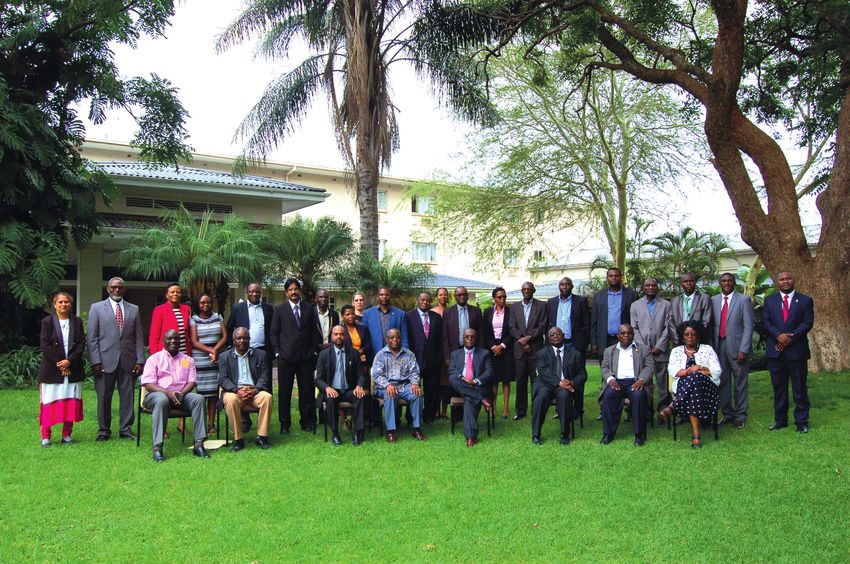
Participants of the client consultation workshop held in Lusaka on 13th November, 2017.

Participants included representatives from Ambassador International University; University of Africa; Northrise University; Rusangu
University; Lusaka Apex Medical University; ZCAS University; DMI.St Eugene University; Southern University; University of Zambia;
Evangelical University; Cavendish University; Mulungushi University; University of Barotseland; Information and Communications
University; Zambia Research and Development Centre; St Dominic’s Seminary; Zambia Catholic University; Paglory University;
Mansfield University; Hone FM Radio; Texila American University; Pamodzi University; and, Harvest Institute of Missions University.

                                                                                          HEA 2018 - 2021 STRATEGIC PLAN              23
STRUCTURAL IMPLICATIONS
(CORE FUNCTIONAL STRUCTURE)
The strategic planning process culminated into f) Increase Financial Base.
the development of an indicative core functional
The objectives were grouped into specialised
structure for the Authority, underscoring the
functional areas using the following criteria:
key areas where results will be expected for the
Authority to succeed in improving service delivery a) Similarity of objectives;
and meeting the clients’ needs. The indicative core b) Uniqueness of the objectives;
functional structure for the Authority was arrived
at by grouping the following objectives: c) Accountability for the objectives; and,
a) Enhance Higher Education Legislative d) Coordination of the objectives.
Framework; The following were the identified core functions:
b) Enhance Human Capital; a) Management and Support (Objectives c & f), and
c) Enhance Management and Technical Systems; b) Quality Assurance (Objectives a, b, d & e).
d) Improve Operational Capacity; For a pictorial presentation of the indicative Core
e) Improve Service Delivery; and, Functional Structure, refer to Figure 1 below.
Quality
HEA
Management
Assurance
and Support
Objective(s)
Objective(s) c, f
a, b, d, e
Figure 1: Core Functional Structure for the Higher Education Authority
24 HEA 2018 - 2021 STRATEGIC PLANAppendix I: Reporting Structure for the Authority
Board
Director General
(HEA 01)
Director Registration Director Finance and
Board Secretary
and Accreditation Administration
(HEA 02)
(HEA 02) (HEA 02)
Manager - Quality Assurance, Manager Finance and Head-Internal
Registration and Accreditation (HEA03) Administration Manager Auditor (03)
(HEA 03) (HEA 03) (H EA 03)
Quality Assurance Registration and
Accreditation *
(HEA 04) Officer (x2) (HEA 05)
(HEA 04)
(HEA 05)
INSPECTORATE UNIT
(HEA 05) Assistant Assistant
Accountant(x2) Internal Auditor
(HEA 06)
(HEA 06) (HEA 06)
(HEA 05)
(HEA 07)
Driver (x2)
HEA 2018 - 2021 STRATEGIC PLAN
(HEA 08)
25
(HEA 09) *Information, Education and Communication OfficerAppendix II: Core Teams
Higher Education Authority (HEA)
Name Designation
Dr. Vitalicy Chifwepa Director – Registration and Accreditation
Mr. Ronald Chulu Manager – Finance & Administration
Ms. Elizabeth Namonje Quality Assurance Officer
Mr. Birbal Boniface Musoba Information, Education and Communication (IEC) Officer
Mrs. Patricia Bwalya Assistant Accountant
Management Development Division (MDD)
Name Designation
Mr. Kashell Mwenya Director – Strategic Planning
Mrs. Priscilla Musole-Mulenga Specialist – Strategic Planning
Mr. Remmy Chibiya Management Analyst
26 HEA 2018 - 2021 STRATEGIC PLANAPPENDIX
Appendix III: Terms of Reference for the Core Team
(a) Draw a work plan for coordinating and undertaking the Strategic Plan review and development
activities and submit to the Director General for approval;
(b) Secure appointments, arrange and organise review meetings and field visits;
(c) Review all data collection tools and provide feedback;
(d) Undertake literature review;
(e) Liaise with Departments/Sections/Units to collect the required information;
(f ) Verify and consolidate Management Audit submissions from Departments/Sections/Units into the
Management Audit Guide and submit to the Director General for clearance;
(g) Provide comments on the Literature Review Report for submission to the Director General for
clearance;
(h) Provide comments on the Clients and Stakeholders survey reports and for submission to the Director
General for clearance;
(i) Provide comments on the Management Audit Report for submission to the Director General for
clearance;
(j) Provide comments on the first draft of the 2018 – 2021 Strategic Plan and submit to the Director
General for clearance and subsequent circulation to Clients and Stakeholders for comments; and,
(k) Provide comments on the final 2018 – 2021 Strategic Plan draft and submit to the Director General
for clearance.
HEA 2018 - 2021 STRATEGIC PLAN 27You can also read


