Strategy 2016-2021 Queensland - Queensland Ambulance Service
←
→
Page content transcription
If your browser does not render page correctly, please read the page content below
Department of Health

Queensland
   Ambulance Service
         Strategy
         2016-2021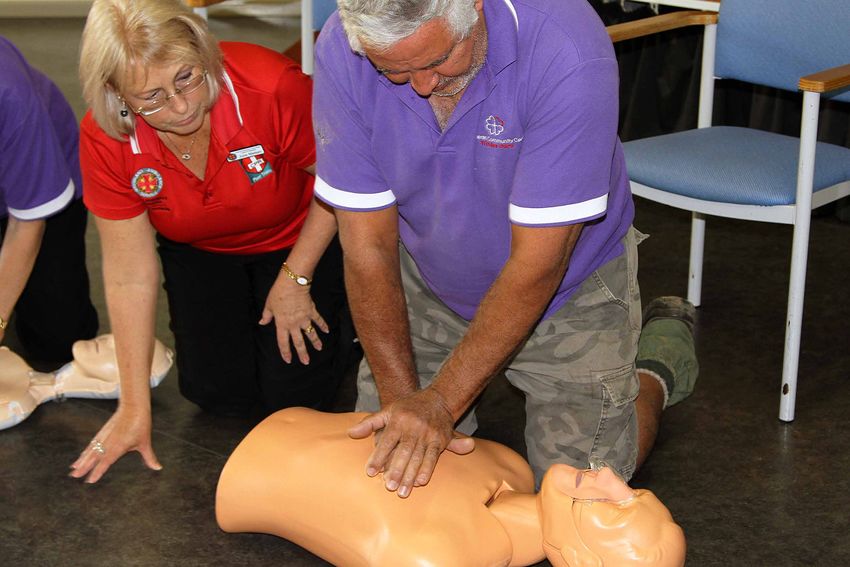
ii
Contents
Minister’s foreword                                        2

Commissioner’s foreword                                    3

Introduction                                               4

Our future service environment and our future challenges    5

Our organisation                                           6

Key service performance targets                            8

Our vision                                                 9

Our mission                                                9

Our strategic intent                                       9

Our values and behaviours                                  10

The QAS Strategy map                                       12

Our strategic objectives and performance targets           14

                                               1
Minister’s foreword
             Every day across Queensland, the men and women who operate at
             the front line of our health system work to realise our vision to make
             Queenslanders among the healthiest people in the world. Officers of the
             Queensland Ambulance Service (QAS) are often the first point of contact
             that patients in need of care will have with our health system. The QAS
             provides one of the major entry points for patients into Queensland’s
             hospital network and the health and wellbeing of Queenslanders relies
             significantly on having an ambulance service available to them in times
             of need.

             As Minister for Ambulance Services, I believe that the QAS continually
             delivers on its mission to deliver timely, quality and appropriate, patient
             focused ambulance services to the Queensland community. Our health
             system faces complex challenges posed by a growing and ageing
             population which is experiencing greater levels of chronic illness. The
             QAS is not immune to these challenges. That is why it is so important
             that the QAS not only delivers high quality ambulance services to today’s
             patients but that it is also well-positioned to respond to the future
             challenges which will be posed to our health system. In this regard, this
             Strategy will provide the QAS with an effective pathway to:
             »» ensure the provision of timely and quality care to our patients
             »» develop improved and better integrated pathways of patient care
             »» enhance the capability of the QAS as a valued partner within the
                health system
             »» drive the continual improvement of the capabilities of our
                organisation and its workforce.
             I endorse the QAS vision of ‘Excellence in Ambulance Services’. This
             vision will provide the impetus for QAS to continually seek to improve the
             health care outcomes of patients, and by providing greater value for the
             community. I am confident that the QAS will play its part in ensuring that,
             by 2026, Queenslanders will be among the healthiest people in the world.

             I am committed to achieving this vision, and I am confident that through
             pursuing the objectives defined by this Strategy the QAS will continue
             to deliver improved health care outcomes for our patients and the
             Queensland community.

             Hon. Cameron Dick MP
             Minister for Health and Minister for
             Ambulance Services

                                     2
Commissioner’s foreword
            Through the delivery of timely, quality and appropriate, patient focused
            ambulance services to the Queensland community, the QAS plays a
            critical role in delivering a better quality of life for all Queenslanders.

            Our organisation is often the first point of contact that many
            Queenslanders will have with our State’s healthcare system, and forms
            an integral part of the overall continuum of patient care. Operating 24
            hours a day on a state-wide basis, we are trusted by the community to
            provide a timely response and provide care for those in need, when care
            is needed most.

            The QAS believes that better organisational performance will deliver
            better outcomes for our community and patients, particularly in the face
            of changing future demands. Further, our ability to deliver care is highly
            dependent on the skills, capability and performance of our workforce.
            In this regard, the changing demographics within our workforce require
            a specific strategic focus to ensure that we harness the benefits of a
            more diverse workforce. As such, through consultation with our key
            stakeholder groups, we have developed this five year Strategy to provide
            our organisation with a focus to ensure that our services are aligned to
            Queensland Government priorities, and always meet the needs of our
            patients and the wider community.

            Our vision is for ‘Excellence in Ambulance Services’, and it is through the
            implementation of this Strategy that we will achieve a better quality of life
            for all Queenslanders through improved outcomes for our patients, our
            community, and our employees and volunteers.

            Russell Bowles ASM
            Commissioner
            Queensland Ambulance Service

                                     3
Introduction
This Strategy provides an organisational
roadmap for the QAS to ensure that, looking
to the future, the organisation is capable of
continuing to provide the health care outcomes
that Queenslanders need. The objectives set
by this Strategy have been designed to confirm
that the organisation remains entirely focused
on its mission to deliver timely, quality and
appropriate, patient focused ambulance services
to the Queensland community.

Ensuring that our patients and the community
continue to receive care that is both timely, and
of a high standard of clinical quality requires
the QAS to work as an important partner in the
health system. Our continued ability to deliver
timely and quality care relies directly on the
continued improvement of those systems that
support our performance. Our ability to meet
changing demand is further strengthened by
our ability to utilise our resources in the most
effective way, and by our capability to leverage
new technologies where there is a benefit to our
patients.

As such, the QAS Strategy 2016–2021 has been
developed to ensure ongoing service innovation
across our organisation, to drive the continual
improvement of our performance, to build the
capability of our workforce, and to focus our
efforts on delivering the services and quality
required by our community and our patients in a
constantly changing service environment.

Our overall commitment to Queensland is
to ensure that we continue to deliver timely
and quality patient care, by ensuring that our
vision for ‘Excellence in Ambulance Services’ is
realised.

                                                    4
Our future service environment and our future
challenges
Over the coming years, Queensland is predicted to experience significant social and demographic
changes. By 2026, Queensland’s population is projected to increase by one-third to approximately
6.3 million people. Of these, 1.1 million people will be aged over 65, an 83% increase on 2011.
Most of this growth will occur in Queensland’s south-east corner.

These expected changes to the size and age of Queensland’s population indicate that
presentations to emergency departments will likely increase over time, and demand for public
hospital inpatient services within Queensland will continue to grow.

In addition to a larger, ageing population, the Queensland health system will also face challenges
posed by high levels of chronic disease, health-related risk behaviours and greater health
challenges within certain areas of the community.

In addition to a changing societal demographic, the composition of our operational workforce is
also changing. In recent years the professionalisation of our workforce has grown, with our new
paramedic recruits now entering the service almost exclusively as university graduates. Further,
the knowledge and capability of our workforce also continues to increase, with the range of clinical
interventions and drug management practices utilised by our paramedics having expanded in
scope significantly over the last 10 years. It is anticipated that this scope will continue to expand
as the clinical capability of our staff continues to develop to meet community requirements.

Notably, the recruitment intake of women into the QAS workforce is now higher than the intake
of men. As we deliver our services, it is important that our workforce continues to reflect the
diversity found within our community. An inclusive and diverse workforce brings with it many
benefits, including improved organisational culture, greater innovation, and stronger community
engagement. These benefits drive better patient outcomes and as such, the requirement for our
organisation to build a workforce where inclusion and diversity is both cultivated and promoted,
continues to grow.

The unique nature of our work environment also presents challenges for the QAS. In providing care
to patients and the community, our employees and volunteers often find that their workplace is,
unlike most workplaces, not controlled by the organisation and may involve hazardous emergency
situations. The QAS believes that while operational ambulance activity and emergency response
can be hazardous, it does not have to lead to injury. In this regard, given the critical role of our
employees in the chain of patient care, managing the safety and wellbeing of our workforce is
fundamental to the continued effectiveness of our organisation as a whole.

These issues will have significant implications for our organisation as we strive to continually
enhance our services, and play our part in the broader health system reforms that will improve
healthcare outcomes for the community. Enabling our organisation to effectively meet these
challenges through timely and quality patient care requires a coordinated organisational
commitment to the objectives and initiatives prescribed by this Strategy. Improved organisational
systems, models of patient care and stakeholder partnerships, combined with the ongoing
investment in the capability of our organisation and its employees is critical to ensuring a better
quality of life for Queenslanders in an environment of increasing demand for service.

                                                 5
Our organisation
Established by the Ambulance Service Act 1991, the QAS operates as a part of the broader system
of Queensland Health, and is accountable for the delivery of:
      »» state-wide pre-hospital ambulance response services
      »» emergency and routine pre-hospital patient care and transport services
      »» coordination of aero medical services
      »» inter-facility ambulance transport
      »» planning and coordination of multi-casualty incidents and disasters and casualty room
         services.

Our services are delivered through
15 Local Ambulance Service
Networks (LASNs) which are
aligned to the State’s Hospital and
Health Services (HHSs).                                    Torres
                                                            and
The alignment of the QAS as an                              Cape

integrated state-wide service
provides a more cohesive, patient-
                                                               Cairns and
centric focus across the patient                               Hinterland
care value chain, ensuring a safe
and effective conduit for patients            North
into the State’s broader health               West                   Townsville
system.
                                                                                   Mackay
A 16th state-wide LASN comprises
QAS’s Operations Centres                              Central West                     Central
(OpCens). There are seven OpCens                                                     Queensland
                                                                                                  Wide
throughout Queensland that are                                                                    Bay
                                                                                                             Sunshine Coast
responsible for emergency call
                                                                                             Darling         Metro North
taking, operational deployment                                        South West             Downs            Metro South
and dispatch, and coordination                                                                                 Gold Coast
of non-urgent patient transport                                                                          West Moreton

services.

We utilise a fleet of over 1,300 vehicles to deliver service, and our organisation is comprised of
over 4,100 employees. An enduring and strong connection to our community is enhanced via
Local Ambulance Committees (LACs) operating in about 150 locations all over Queensland. These
volunteers, numbering more than 1300, take an active interest in supporting ambulance services
in their communities and provide a direct link between the ambulance service and the community
it serves. The type of support provided by LACs includes raising awareness of ambulance services
through community engagement; helping to build more resilient communities through delivering
important programs such as the CPR Awareness Program in conjunction with QAS staff; and
providing enhancements to our service by funding additional training equipment and professional
development opportunities for staff.

                                                      6
Our business model defines how our organisation delivers value – in essence it is the blueprint
for the implementation of Strategy through our organisation’s structure, systems and processes.
Our lines of service are founded through communication and deployment services, emergency
ambulance response services, and patient transport services. These lines of service are
supported by the organisation’s leadership, internal services, and by a small corporate support
area providing information technology, finance, human resource, procurement, facilities and
planning services within the organisation. Key stakeholder partnerships further enable our lines
of business. This business model ensures that our services are effectively aligned, appropriately
supported, and transparently governed to deliver valuable outcomes to the community and our
patients.
Ambulance Service Act 1991
Whole of QAS support and QLD Health
Leadership and management Services External to QAS
internal services Services
15 state-wide Includes:
Planning and Research
Internal Audit
Legal Services
Infrastructure and Procurement
Commissioner QAS
Clinical Quality and Patient Safety
Human Resources and WHS
Training and Development
Fleet and Equipment
Finance
ICS Systems and Governance
Information Support
Deputy LASNs Information Systems
Commissioner, 7 OpCens Professional Services
Service Planning 290 response Operational ICT Systems
and Performance locations Mobile Devices
Deputy People ICT Support and Services
Commissioner, LACs QLD Shared Services (payroll and finance)
State LASN Supplies and services
Operations Warehousing
Medical Director Drugs and medical supplies
Assistant Motor vehicle supplies and services
Commissioner, Telecommunication services
Capability and Building maintenance services
Development
Executive Director,
Corporate Services Internal to Managed Commercial
Assistant Government Services and Contracts
Commissioner, Service Level Commercial
Strategic Agreements Arrangements
Operations
Line of Service 1 – Deliver Communication and Deployment Services
QAS Vision
Line of Service 2 – Deliver Emergency Ambulance Services
‘Excellence
in
Ambulance
Line of Service 3 – Deliver Pre-Hospital Ambulance Services Services’
Line of Service 4 – Deliver Specialised Patient Transport Services
Line of Service 5 – Deliver Community Education Services
Government Priorities Queensland Health Objectives
7
Key service performance targets
Our primary performance targets, which are contained within our annual Service Delivery
Statement, are to attend 50% of Code 1 incidents within 8.2 minutes, and 90% of Code 1
incidents within 16.5 minutes. We also aim to have 90% of triple zero calls answered within 10
seconds. Our key performance challenge is to continue to deliver high quality performance into
the future in the face of increasing demand for services.

Each year, the QAS responds over 1.1 million times to requests for assistance, from 290 response
locations across Queensland, and operates with a budget of over $670 million.

The continued strengthening of relationships between the QAS and our partners within the health
system at the HHS level will facilitate an ongoing focus on local relationships. These relationships
enable local solutions, service development and accountability, and provide a greater opportunity
for coordinated solutions to manage and respond to the growing demand for emerging health
services.

                                                 8
Our vision
Our vision defines the goal that we are working towards through undertaking our mission.
Excellence in Ambulance Services.
Our mission
Our mission defines our purpose for existence as the State’s ambulance service, operating within
the Queensland system of healthcare. It is the primary focus of our organisation’s Strategy, and
guides our current and future operations.
We will deliver timely, quality and appropriate, patient
focused ambulance services to the Queensland community.
Our strategic intent
To achieve our mission and realise our vision we will:
»» focus on timeliness and be there when our patients need us
»» continually strive to achieve better outcomes for patients
»» ensure the safety of our patients and employees
»» ensure our organisation’s financial and other resources are effectively and efficiently
managed
»» ensure our key performance targets are met or exceeded, and provide value for money
to the community
»» foster innovation and research that contributes to quality patient care and outcomes,
and play our part in overall health system improvements
»» build our technical and information capabilities to the benefit of our patients and our
organisation to enable better decisions to be made
»» continue to enhance our capability and capacity to operate as an organisation with a
reputation for performance and innovation
»» innovate to deliver services that are reliable, and valued by the community
»» work hard to ensure our stakeholders and community partners value our relationship
»» ensure our workforce is well led, informed and engaged, capable and professional
»» work hard to remain the community’s most trusted profession.
9Our values and behaviours
Our values are the foundation upon which the success of our organisation is built. These values
and behaviours underpin every aspect of this Strategy, and align the culture of our organisation
towards our vision.
Patients first
»» everything we do must contribute positively towards excellent patient care
»» we will be there when our patients need us
»» we take the time to understand the needs of our patients and the community.
Health and safety
»» we continually seek to ensure the safety of ourselves, our patients, and others
around us
»» we recognise that our ability to care for our patients relies directly on our own
safety
»» we are fit for duty.
Ideas into action
»» we must challenge the norm to ensure the delivery of the best healthcare
outcomes for Queenslanders
»» we are focused on solutions that are aligned to the needs of our patients
»» we continually seek to provide better services and value to the community
»» we proactively embrace ideas for improvement.
Unleash potential
»» we sponsor creativity, learning, and the sharing of ideas, which allows our
organisation to do excellent things
»» we cooperate with those around us to achieve the aims and objectives that
could not be realised on our own
»» we ensure that all of our efforts and resources are directed towards providing
the best service and response possible for our patients and the community.
10Be courageous
»» to achieve the best outcomes for the patient and the community, we take
calculated risks, and always act with integrity and transparency
»» we own our actions, our successes and our mistakes
»» we keep our commitments, and we constructively challenge for a better way
»» we are committed to an environment free from all forms of harassment.
Empower people
»» we show respect in all our actions, and we act ethically
»» we empower and trust our people to perform when called upon and we take
responsibility for our own performance
»» when working we utilise our strengths, and seek to continually develop
ourselves and others around us to ensure the delivery of timely and quality care
to our patients
»» we capture and share knowledge
»» we will ensure an inclusive and supportive culture, where we harness the
benefits of our diverse workforce.
11The QAS Strategy map
A Balanced Scorecard Strategy Map view of our Strategy has been developed. This map “tells the
story” of our Strategy in terms of the cause and effect relationships of our strategic objectives and
our mission, and further defines our value proposition. Within this map, each strategic objective
has been identified across four perspectives:
1. Community and patient service outcomes
This perspective defines the source of our organisation’s value proposition to our
stakeholders and patients.
2. Internal processes to deliver service outcomes
This perspective defines our organisation’s key strategic processes, in which we must
excel to create value.
3. High performing organisation
This perspective defines those intangible assets, or capitals (e.g. workforce,
organisational and information) that must align strategically in order to support the
Strategy, and deliver value.
4. Financial
This perspective contains our strategies to ensure value for money for our stakeholders,
and our achievement of results in an efficient manner.
12OUR VISION
Excellence in Ambulance Services
OUR MISSION
We will deliver timely, quality and appropriate, patient focused ambulance services to the Queensland community.
We will ensure our We will deliver services We will provide ambulance
We will work hard to
services are of high that are reliable, services for current and
remain the community’s
quality, timely and innovative, and represent future needs as a partner
most trusted profession.
appropriate. value to the community. within the health system.
FINANCIAL COMMUNITY AND PATIENT SERVICE OUTCOMES
S01: S02:
Deliver a timely response Provide quality patient care
to patients We will care for our patients by PATIENTS
We will provide a timely providing a professional
response when our ambulance service driven
patients need us. by high clinical standards.
INTERNAL PROCESSES TO DELIVER SERVICE OUTCOMES
S011:
Ensure effective
resource and S04:
S03: S05:
financial Adapt models of service to
Deliver effective and efficient Build strong stakeholder
management future needs
ambulance services partnerships
We will manage As a partner in the health system, SERVICE
We will ensure our services are We will build strong partnerships DELIVERY
our organisation we will utilise appropriate and
well planned, managed, and and networks across the
effectively, and innovative care and service models,
executed and our performance community and Queensland’s
ensure value tailored to the needs of local
is continually improved. health systems.
for money in communities and patients.
the services we
provide.
HIGH PERFORMANCE ORGANISATION
S06:
S07: S08: S09: S010:
Build a capable,
Enhance workplace Strengthen our Build technological Facilitate better
high performing
health and safety organisational capability decisions driven by
workforce
performance capability We will leverage new better information ORGANISATIONAL
We will build a well PERFORMANCE
We will continue We will strengthen technology where We will use quality,
led, high performing
to build a safe our organisation’s there is a benefit to integrated data to
professional
organisation for our capability to the patient or the enable us to make
workforce, driven
patients and staff. perform. business. better decisions.
by our values.
Workforce Capital Organisational Capital Information Capital
13Our strategic objectives and performance targets
Strategic
Initiative Descriptor Our Measure Our Target
Objective
SO1: 1a. Ambulance response is at the ‘core’ Ambulance response TARGET:
Deliver a timely Improved of ambulance service delivery and times to Code 1 incidents: »» 50th percentile
response to ambulance is critical to the success of our »» 50th percentile response time:
patients response integration within the broader health »» 90th percentile 8.2 minutes
system. QAS aims for continual »» 90th percentile
improvement of our response response time:
capability, ensuring that our 16.5 minutes
organisation is capable of meeting the
needs of a changing community and Percentage of Triple Zero TARGET:
environment. (000) calls answered »» 90% of triple zero calls
within 10 seconds will be answered within
10 seconds
Percentage of Code 3 TARGET:
incidents attended to by »» 70% of non-urgent
the appointment time incidents will be
attended to by the
appointment time
Percentage of Code 4 TARGET:
incidents attended to by »» 90% of non-urgent
the patient at ready time incidents will be
attended to by the
patient at ready time
SO2: 2a. Heart attack remains the most Cardiac arrest survival TARGET:
Provide quality Improved cardiac common cause of sudden death rate (to hospital)* »» Improve current
patient care outcomes across the State. A strong ‘Chain * NB: Per Utstein measure performance by 10%
of Survival’ can improve chances by 2021
of survival and recovery for victims
of heart attack, stroke and other
emergencies. The goal of this initiative
is to support this chain of survival, and
contribute to improved patient cardiac
outcomes as per the broader ‘Cardiac
Services Strategy for Coronary Heart
Disease, Heart Failure and Rheumatic
Heart Disease for Queensland
2005–2015’.
Cardiac arrest survival TARGET:
rate (to discharge) »» Improve current
performance by 10%
by 2021
Number of out of hospital TARGET:
cardiac arrests where CPR »» 70% by 2021
is being performed by a
member of the public on
paramedic arrival
Percentage of patients TARGET:
with chest pain having 12 »» Greater than 95% by
lead ECG acquired within 2021
10 minutes of paramedic
arrival
142b. Stroke is Australia’s second biggest Number of suspected TARGET:
Improved stroke killer and a leading cause of disability. stroke patients »» Increase by 25% by
outcomes Emergency medical treatment soon transported to a stroke 2021
after stroke symptoms begin improves centre
the chances of survival and successful
rehabilitation. The QAS aims to ensure
high quality acute stroke services
deliver improved outcomes for stroke
patients across the community.
2c. Approximately 3.61 million Australians Development of localised TARGET:
Improved have diabetes or pre-diabetes, and diabetes strategies within »» 100% of LASNS to
diabetes diabetes is Australia’s fastest growing LASNS have developed and
outcomes chronic disease with one person implemented localised
diagnosed every 5 minutes. The QAS diabetes strategies
aims to reduce the long-term health within 2 years
effects for patients, and ease system
burden of chronic diabetes across the
community by working in partnership
with the relevant HHS to allow for the
early assessment and treatment of
patients.
2d. Our care for our patients forms Patient satisfaction TARGET:
Improved clinical the heart of our service. The QAS »» 97% of patients very
quality clinical framework and risk and satisfied or satisfied
incident management framework with ambulance
help to ensure the quality of this response services
care by driving individual and
organisational learning and clinical
quality improvement upward. The QAS
aims for continuous improvement in
response to the quality of the care we
provide, and the safety of our patients.
Proportion of patients TARGET:
who report a clinically »» Continue to perform
meaningful pain above the national
reduction* benchmark
* NB: Per ROGS measure
Transition to a new TARGET:
dynamic model of case »» Implementation of
audit, with a high focus new model of audit for
on quality of care clinical quality
15SO3: 3a. We know that we will face increased Case cycle time (minutes) TARGET:
Deliver effective Improved pressures on the broader health from creation of ‘incident’ »» Maintain at current
and efficient effectiveness and system due to significant social and to arrival at hospital levels despite
ambulance efficiency of our demographic changes. In this regard, increasing demand for
services services the value and effectiveness of our services
organisation relies totally on our
operational model and our supporting Gross expenditure per TARGET:
business systems and assets. As incident
such, the QAS aims to ensure that »» Cost per incident
the effectiveness and efficiency of maintained below
our systems and assets that support national benchmark
our service delivery capability are
continually improved, and our services Implementation of TARGET:
are delivered to the community Dynamic Deployment »» Dynamic Deployment
through a timely response and quality System System implemented
patient care. within 2 years
SO4: 4a. Changing demographics and Utilisation of Low Acuity TARGET:
Adapt models of Adapted models increased demands on our Response Unit (LARU) »» 65% utilisation of
service to future of service organisation require that we adapt our resources per shift LARU resources per
needs models of service delivery to ensure shift
that we remain capable of meeting
the needs of the community and
Percentage of LARU TARGET:
our patients. The QAS will continue
identified responses »» 65% identified
to focus on the development of
attended by LARU Unit responses attended by
innovative models of service that
compliment patient care and the LARU unit
effectiveness of the health system in
Queensland. To achieve this, we will Establishment of TARGET:
seek to enhance access to services, Extended Paramedic »» Successful introduction
remove duplication across our Practice (EPP) for of EPP within 2 years
organisation, negate the inappropriate paramedics in rural
use of resources associated with poor operational settings
preventative practices, and drive
heightened efficiencies of scale in
health service delivery.
SO5: 5a. Operating as a valued partner within Introduction of nurse/ TARGET:
Build strong Improved the system of health, allows our paramedic practice model »» In collaboration
stakeholder services organisation to achieve the aims and with Hospital Health
partnerships delivered through objectives that could not be realised Services, the nurse/
partnerships on our own. As such, the QAS will paramedic practice
forge, support, and leverage new model will be
and innovative partnerships across introduced in locations
the system of health, and wider with hospital based
community, to deliver quality and ambulance services
timely ambulance services towards
the community and our patients. Implementation of TARGET:
Community Partnership »» 100% of LASNS with
Plans Community Partnership
Plans developed in
consultation with LAC
representatives
16SO6: 6a. Our most valuable asset is our Delivery of a workforce TARGET:
Build a capable, Improve workforce. We are committed to plan that is integrated »» Workforce plan
high performing workforce continually improving the capability of into the business, is delivered and
workforce capability our workforce, and we will ensure that performance and financial implemented
our organisation is supported by the planning processes of
right people, with the right skills, at the organisation. This will
the right time. ensure that the workforce
plan is aligned to, and
focused on achieving the
organisation’s service
delivery outcomes
Percentage of staff Reduce by 20% by 2021
accessing on or over
96 hours of sick leave -
Operational
Percentage of staff Reduce by 20% by 2021
accessing on or over 72.5
hours of sick leave - PS
Employees
Job engagement and TARGET:
satisfaction - percentage »» Maintain our current
positive response based performance
on employee opinion
survey
Organisational fairness TARGET:
- percentage positive »» Improve by 10% by
response based on 2021
employee opinion survey
Foundational workforce TARGET:
diversity targets are »» Established workforce
established, and met diversity targets are
through the life of this met
Strategy
Development of a plan TARGET:
to facilitate transition »» Transition to
of paramedics towards registration plan
registration is delivered and
implemented
SO7: 7a. Workplace healthy and safety is Percentage reduction TARGET:
Enhance Improved foundational to our business. As in Lost Time Injury »» 50% reduction by 2021
workplace health workplace health safety standards are absolute, safety Frequency Rate (LTIFR)
and safety and safety is everyone’s responsibility, and
performance performance working safely is a condition of service
for all our employees. Further, the
Percentage reduction in TARGET:
creation of a safe work environment
Injury Downtime Rate »» 50% reduction by 2021
is critical to the success of QAS and is
(IDR)
one of the best ways we can retain our
staff and maximise productivity. We
are committed to the development,
implementation and continual
improvement in the performance of
our safety systems, technology and
work practices aimed at ‘zero-harm’ in
the workplace.
17SO8: 8a. To ensure that our organisation is Leadership, culture, and TARGET:
Strengthen our Improved capable of meeting emerging and values maturity rating »» Level 5 Maturity
organisational organisational growing community and patient (per approved QAS
capability capability needs, the QAS is committed to the Organisational
cycle of continuous improvement Capability Strategy)
and an ongoing deepening of our »» Vision, Mission and
organisational capability. We will organisational Values
continue to integrate the skills and are fully integrated
culture of our workplace with the into the operations
organisation’s systems processes, and culture of the
practices and structures to strengthen organisation
our organisational capability, and
deliver stronger, sustainable business TARGET:
and service delivery outcomes.
»» Level 5 Maturity
(per approved QAS
Organisational
Capability Strategy)
»» Leaders model values
and engage with
the organisation to
empower and drive
performance and value
realisation
Strategy and alignment TARGET:
maturity rating »» Level 5 Maturity
(per approved QAS
Organisational
Capability Strategy)
»» Strategy is clearly
articulated
through planning
processes, which
drives performance
and allows for the
realisation of value
across the organisation
»» Organisational
structures, systems
and processes are
tangibly linked to the
organisation’s Strategy
Governance maturity TARGET:
rating »» Level 5 Maturity
(per approved QAS
Organisational
Capability Strategy)
»» Strategy is supported
via governance, which
is integrated into the
organisation’s structure
and operations to such
an extent that risks are
effectively managed,
and compliance is
routine
18Performance management TARGET:
maturity rating »» Level 5 Maturity
(per approved QAS
Organisational
Capability Strategy)
»» Organisational
performance is
comprehensively
measured and
measurement
methodologies
continually revised for
improvement. A culture
of accountability
operates across the
organisation and
decisions are made
based on evidence of
performance
Continuous improvement TARGET:
maturity rating »» Level 5 Maturity
(per approved QAS
Organisational
Capability Strategy)
»» The organisation
is committed
to continuous
improvement, and
effective and efficient
systems are embedded
across the organisation
to ensure improvement
of practice, and
sustainable realisation
of value
SO9: 9a. Information and Communication Human resources TARGET:
Build Improved Systems (ICS) are the foundation upon information system »» Achievement of HRIS
technological technological which an effective, modern ambulance implementation program plan and
capability capability service is built. The QAS objective is to objectives
improve and deploy its technological
capability to enhance services that
Downstream benefits of TARGET:
ultimately benefit our patients.
systems implementation »» All approved ICS
initiatives are delivered
as per the QAS ICS
Strategy
19SO10: 10a. Effective information management Data accuracy across key TARGET:
Facilitate better Improved drives better service and patient QAS systems »» All internal key
decisions, decision making care decisions, and is the DNA of performance indicator
driven by better through better our organisation - our ability to reporting aligned to
information information make better decisions is reliant reporting framework
on our ability to access better and undertaken to 99%
information. Effective knowledge accuracy within 2 years
management facilitates decision-
making capabilities across the
organisation, builds a learning Service improvements TARGET:
organisation by making learning resulting from enhanced
routine and stimulates cultural change »» All investments in
business intelligence business intelligence
and innovation. As such, our future function
business intelligence Strategy will to deliver benefits
be to grow our capability to unite as per established
our data, technology, analytics and business case
knowledge to optimise the decisions
we make into the future.
20Queensland Ambulance Service
Strategy
2016-2021
307QASYou can also read


