Sustainable Trade Champions 2019 - Fair and ethical trade practices in EU cities
←
→
Page content transcription
If your browser does not render page correctly, please read the page content below
Sustainable Trade
       Champions 2019

Fair and ethical trade practices
          in EU cities

                                   1
This report was prepared by the International Trade Centre
(UN/WTO) and its Trade for Sustainable Development (T4SD)
Programme, as a compilation of case stories gathered and
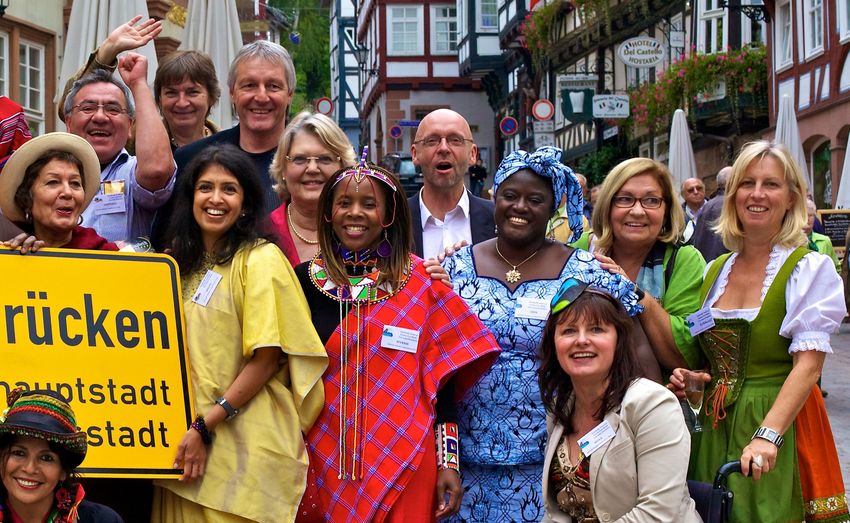
synthesised from the applications submitted for the EU Cities
for Fair and Ethical Trade Award 2019. The applications were
received between March and April 2018. The EU Cities for Fair
and Ethical Trade Award project is generously funded by the
European Commission, Directorate-General for Trade.

The authors would like to thank the following cities featured
in this publication, who also provided additional clarifications,
quotes and narratives for this report, in addition to their original
applications (in alphabetical order): Bruges, Cologne, Dortmund,
Ghent, Hamburg, Hannover, Lyon, Madrid, Malmö, Münster,
Rostock, Saarbrücken, and Vitoria-Gasteiz.

Readers will find further examples of actions by cities worldwide
in the previous ‘Living Book’, prepared as a reference document
prior to the first edition of the EU Cities for Fair and Ethical Trade
Award.

©International Trade Centre
The photos and images in this report
have been provided by the cities or
associated organisations and individuals,
who also retain copyright to all the
photos or images.

 2
Acronyms

EU      European Union
ICLEI   Local Governments for Sustainability
ITC     International Trade Centre
NGO     Non-government organization
SDG     Sustainable Development Goals
UN      United Nations

                                               3
Table of Contents
Acknowledgements                                                               2
Acronyms                                                                       3

Good trade for sustainable development                                        6

EU Cities for Fair and Ethical Trade Award                                    8

About this report                                                             9

Being a front runner city                                                     10

Putting sustainable trade on the city agenda                                  11

Masterplan Fair Trade 20-Now – Saarbrücken                                    13
Sustainable Consumption Plan – Madrid                                         14
Localizing the SDGs for global impact – Ghent                                 16
Developing a 2030 multistakeholder strategy – Münster                         17

Supporting sustainable business models                                        18

Fair Company Award – Saarbrücken                                              19
Working towards a sustainable chocolate supply chain – Bruges                 19
Pioneering a city sustainability label – Lyon                                 21
Sustainable businesses in the German trade hub - Hamburg                      22

Using the city’s purchasing power for sustainable trade                       22

Increasing transparency in the textile supply chain – Ghent                   23
EU cities collaborating for socially responsible procurement – Dortmund       25
Training city staff on sustainable procurement – Vitoria-Gasteiz              26
Expanding sustainable procurement to non-traditional products – Saarbrücken   27
Sustainable workwear pilot – Cologne                                          27

Ensuring the impact of city initiatives                                       28

Sourcing 100% ethical food by 2020 – Malmö                                    29
Targeting fully sustainable procurement by 2024 – Ghent                       31

 4

Tracking procurement for sustainability – Vitoria-Gasteiz              32
Setting targets for sustainable procurement – Münster                  33

Changing consumption through citizen awareness                         33

Leading the fair fashion revolution – Ghent                            34
Channelling tradition and diversity into awareness-raising – Cologne   35
Building knowledge through public information – Saarbrücken            36
Mapping sustainable businesses – Bruges                                37
Giving visibility to sustainable businesses – Lyon                     38
Promoting sustainable textile consumption – Malmö                      39
Integrating sustainable consumption into public events – Madrid        39

Educating the responsible consumers of tomorrow                        40

Citywide fair daycare certification – Dortmund                         41
Action alliance for sustainable trade education – Hamburg              43

Involving civil society to drive positive change                       44

Action Alliance for Fair Trade – Dortmund                              45
Municipal Fair Trade Committee – Rostock                               45
Vibrant ecosystem of local engagement – Lyon                           45
Municipal Fair Trade Forum – Madrid                                    46

Global partnerships for sustainable trade                              47

Organic and fair trade shea products – Lyon                            48
Supporting sustainable cocoa farming in Colombia – Hannover            49
Fair trade study trips – Saarbrücken                                   50
Promoting fair trade in Ibero-American cities – Madrid                 51

Appendices                                                             52

Appendix I: Award concept                                              52
Appendix II: Eligible applicants in 2018                               52
Appendix III: Shortlisted cities in 2018                               52
Bibliography                                                           57

                                                                       5
→Good trade for
 sustainable
 development←
Good trade can be a powerful tool for          Good trade is particularly critical for the
advancing      sustainable    development      achievement of SDG 12 on responsible
as reflected by the 2030 Agenda for            consumption and production.
Sustainable     Development      and    the
Sustainable Development Goals (SDGs),                More and more consumers are
adopted by all United Nation Member States           conscientious about the way
in 2015 as a roadmap for progress across a           the goods and services that
wide spectrum of development issues.                 they buy are produced, and
                                                     many are seeking assurance
Targets   across    a   number   of    goals         that certain economic, social
directly reference trade as a means of               and environmental standards
implementation, including Zero Hunger                are met in production, for
(SDG 2), Good Health and Well-Being (SDG             example, providing decent
3), Decent Work and Economic Growth                  work and pay, protecting
(SDG 8), Reduced Inequalities (SDG 10),              human rights or safeguarding
Responsible Consumption and Production               the environment.
(SDG 12), Life below Water (SDG 14) and
Partnerships for the Goals (SDG 17). Beyond    Businesses continue to respond to this trend
these direct references, trade also relates    to manage reputational and economic
indirectly to the achievement of most, if      risks and to harness the benefits from
not all, of the SDGs.                          moving towards more responsible business
                                               models. As a result, a number of trade
                                               schemes such as voluntary standards,
                                               internal sustainability codes and codes
                                               of conduct have emerged over the years.
                                               Compliance with such schemes typically
                                               differentiates products (and services) that
                                               respond to certain social, environmental
                                               and/or economic criteria from those made
                                               through conventional methods.

 6
While there are a number of differences                                  Cities are already leading the way as
between these schemes, they have some                                    pioneers on many different sustainability
commonalities :        1
                                                                         issues, developing innovative solutions
                                                                         for environmental, social or economic
         1. How trade is being conducted, i.e.
                                                                         challenges.            Better        knowledge             about
            how prices are determined and how
                                                                         specific local conditions, including issues,
            buyers and sellers agree on terms
                                                                         priorities and stakeholders, allows them
            and conditions, including technical
                                                                         to develop and promote context-specific
            support or credit conditions;
                                                                         solutions that are more likely to resonate
         2. What conditions need to be fulfilled                        with their citizens and have greater
             by the value chain partners, i.e.                           impact.
             the social, environmental and
             economic standards that must be                             Many         cities      have       further       taken        the
             met;                                                        conscious decision to align their local
                                                                         policies and strategies with the SDGs.
         3. What evidence is required to prove
                                                                         At a local level, this helps them send a
             that these conditions have been
                                                                         clear signal about the city’s priorities
             met, i.e. the certifications and
                                                                         and direction. It also helps ensure that
             (typically) third-party verification
                                                                         future decisions and actions contribute
             systems.
                                                                         to      sustainable           development.              At     the
                                                                         global level, localization of the SDGs is
The application of these schemes in
                                                                         an important step in moving forward the
international value chains is one way to
                                                                         implementation of the global sustainability
contribute to the achievement of many
                                                                         goals given the growing economic and
of the SDGs2. Increasing awareness and
                                                                         political power of cities around the world.
understanding of these schemes, and of
sustainable, fair and ethical trade more
                                                                         The       active       engagement              of cities          in
generally among both consumers and
                                                                         sustainable, fair and ethical trade is
producers, is therefore important.
                                                                         an extension of these efforts. Any such
                                                                         engagement often naturally resonates
This requires all relevant stakeholders
                                                                         with a city tradition or core values. For
to    play their part.                 Besides        national
                                                                         some cities, it forms an integral part of
governments, businesses and civil society
                                                                         their local SDG implementation strategy.
organizations, cities are important actors
in this effort. Cities are home to more
than half of the world’s population and
80% of the global economic output3. The
European Union (EU) is one of the most
urbanized regions worldwide.

1 EU Cities for Fair and Ethical Trade Award (2018). Living Book. Available from [add once the original file uploaded onto the new website]
2 Compared with, for instance, the recent benchmarking exercise ‘Voluntary Sustainability Standards and Sustainable Development Goals’ by the
   United Nations Forum on Sustainability Standards. Available from https://unfss.org/vss-and-the-sustainable-development-goals/
3 The World Bank (2019). Urban Development. Available from https://www.worldbank.org/en/topic/urbandevelopment/overview

                                                                                                                                          7
→EU Cities for
  Fair and Ethical
  Trade Award←

The EU, as one of the world’s largest                                      The       International            Trade        Centre         (ITC)
trade blocs, is committed to a more                                        is the joint agency of the World Trade
responsible trade and investment policy.                                   Organization and the United Nations.
The European Commission’s Trade for All                                    ITC       assists       small       and        medium-sized
strategy, released in 2015, puts a strong                                  enterprises in developing and transition
emphasis on economic development that                                      economies to become more competitive
is aligned with social justice, respect for                                in global markets, thereby contributing
labour rights and environmental standards.                                 to sustainable economic development
The strategy explains how the EU will use                                  within the frameworks of the Aid-for-Trade
‘trade agreements and trade preference                                     agenda and the United Nations’ SDGs. For
programmes               as      levers        to      promote,            more information, visit www.intracen.org.
around the world, values like sustainable
development, human rights, fair and ethical                                          In the EU, demand for sus-
trade and the fight against corruption’ and                                          tainable consumption is strong.
plans for the ‘future EU agreements to                                               A recent market study conduc-
improve the responsibility of supply chains.’4                                       ted by ITC revealed that sour-
                                                                                     cing of goods that were pro-
The strategy also announced the European                                             duced in line with sustainability
Commission’s initiative for the EU Cities                                            criteria have become a priority
for Fair and Ethical Trade Award. The first                                          for retailers in key EU markets
cycle of the Award was launched in 2017.                                             (France, Germany, Italy, the
Implemented by the International Trade                                               Netherlands and Spain).5
Centre (ITC), it focuses on EU citizens’
awareness of the external trade realities
and the role that purchasing decisions
play in supporting better trade. The Award
highlights the overall role of EU cities play
in making sure that those purchasing
decisions are well-informed.

4 European Commission (2015). Trade for all: Towards a more responsible trade and investment policy. Available from https://trade.ec.europa.eu/
   doclib/docs/2015/october/tradoc_153846.pdf
5 International Trade Centre (2019). The European Union Market for Sustainable Products. The retail perspective on sourcing policies and consumer
   demand. ITC, Geneva.

 8
The       Award          therefore          celebrates            EU       and enables initiatives to spread and
cities who champion sustainable trade,                                     be scaled up through replication and
consumption and production in their                                        collaboration.6 The Network of EU Cities
communities, while at the same time                                        for Fair and Ethical Trade, which brings
creating          opportunities              for      producers            together the Award’s shortlisted cities,
elsewhere. The Award contributes to                                        is an important platform for facilitating
sharing ideas, knowledge and lessons,                                      continuous exchange and learning.7
enhances cities’ motivation to be leaders,

  →About this report←

Applications for the first EU Cities for Fair                              They include:
and Ethical Trade Award in 2018 revealed an
                                                                                   → Putting sustainable trade on the
impressive number of fair and ethical trade
                                                                                     city agenda
initiatives led by EU cities and their citizens.
                                                                                   → Supporting sustainable business
It also gave insights into how exactly EU cities
                                                                                     models
are already driving positive change.
                                                                                   → Using the city’s purchasing power
                                                                                     for sustainable trade
The purpose of this report is to share
                                                                                   → Ensuring the impact of city
these initiatives to inspire action in other
                                                                                     initiatives
EU and possibly non-EU cities. The report
                                                                                   → Changing consumption through
showcases tried-and-tested examples of
                                                                                     citizen awareness
policies, activities and tools which cities
                                                                                   → Educating the responsible
and their citizens use to drive sustainable,
                                                                                     consumers of tomorrow
fair and ethical trade. The 2018 applications
                                                                                   → Involving civil society to drive
showed that EU cities are taking a variety
                                                                                     positive change
of approaches towards fair trade practices
                                                                                   → Global partnerships for
but there are some common features that
                                                                                     sustainable trade
emerged in the management and actions
of shortlisted ‘front runner’ cities. These are                            After a brief description of each action
highlighted in the report.                                                 area,     the   most     inspiring,   powerful,
                                                                           innovative and replicable city initiatives
The Award              guidelines          identified         eight        are presented, exclusively drawn from
key action areas as critical for a strong,                                 the applications for the 2018 Award.
successful and comprehensive city approach                                 This report only compiles good practices
towards promoting sustainable, fair and                                    from the available applications and does
ethical trade.                                                             not endorse or promote any particular
                                                                           sustainable trade scheme.

6 To find out more about the Award concept, please refer to Appendix I.
7 https://www.trade-city-award.eu/the-network/

                                                                                                                         9
This report will support cities interested       and educational institutions. Ultimately,
in participating in the next round of            the frameworks, tools and examples of
the Award by providing them with real,           good practice will be useful for everyone
practical examples. The report targets all       interested in responsible consumption,
city stakeholders, including city officials,     production and sustainable development.
businesses,    civil   society   organizations

 →Being a front
 runner city←
The 2018 Award applications revealed that              What further sets leading
EU cities are taking a variety of approaches           cities apart from their peers
towards driving sustainable, fair and                  is their comprehensive and
ethical trade. While these approaches                  coherent     approach     that
reflect local contexts and circumstances,              encompasses a clear and
some common features emerged in the                    strong vision, translated into
review of the applications.                            a concrete strategy, followed
                                                       up with relevant and impactful
From a management perspective, leading                 initiatives.
cities typically put into place some form
of personnel support structures to help          When these efforts are directly connected
them fully integrate sustainable, fair and       to the city’s unique strengths, they have
ethical trade considerations in the city         the potential to be particularly powerful as
policies and activities. This ranges from        they address the city’s economic or cultural
setting up a dedicated office and/or             ethos and are more likely to get businesses
hiring staff to specifically deal with these     and citizens on board. For example, Ghent,
issues, to engaging external consultants         with its long-standing textile history,
or participating in city networks that           focuses much of its efforts on textiles/
facilitate    the   sharing   of information,    clothing, while Lyon, as the gastronomic
experiences and good practices.                  capital of Europe, is particularly engaged in
                                                 its food scene. Bruges, a leading chocolate
                                                 hub, is concentrating on making the cocoa
                                                 supply chain more sustainable.

10
Interestingly, commonalities also exist at the responsible consumption choices;
level of individual activities and initiatives.
→ Organize dedicated events
Front runner cities often:
to enhance awareness and
→ Target public procurement to understanding amongst citizens;
make it more sustainable;
→ Focus on educational initiatives to
→ Produce sustainable shopping, sensitize and inform the youngest
catering and restaurant guides; of their citizens;
→ Organize guided city tours and/ → Develop online information and
or labels to inform citizens and tools.
visitors about opportunities for
→Putting sustainable
trade on the city
agenda←
Having a concrete vision, strategy and goals in place typically helps guide
cities in taking decisions and developing specific initiatives that drive
sustainable, fair and ethical trade.
Vision Goals Strategy
A vision statement crystallizes Goals are a translation of the A strategy is a city’s framework,
a city’s aspirations for its future vision into actions, though these roadmap or high-level action
direction. It describes where actions are still broad and long plan for achieving its vision and
the city sees itself in the future. term. goals. It makes the connection
A strong vision should be clear, between the city’s current state
descriptive and actionable. and its aspirations by identifying
the necessary choices and steps
for the city to take.
11By anchoring sustainable, fair and ethical
trade in its vision, a city sets a foundation
for developing more specific objectives,
targets and activities in a strategic
and coherent manner to contribute to
sustainable consumption and production
through international trade. It can help
serve as a high-level guiding principle for
decision-making across many areas and
actors.
The linkage of local sustainable
development strategies to the SDGs,
anchored in the city’s vision, emerged as
a common trend across the applications.
Some cities went further, explicitly making
sustainable, fair and ethical trade one
of the building blocks in their overall
sustainable development strategy.
©Dominik Schmitz, Engagement Global
Clear commitment by the city leadership,
such as the mayor and city council, is key
to the success of the vision and strategy.
However, achieving a vision further
requires all relevant city stakeholders,
such as local officials, businesses, civil
society organizations, educational or
faith-based institutions to work towards
it. Involving these stakeholders in defining
and developing the vision and strategy
can significantly enhance such a buy-in.
A number of applicants have elaborated
their vision and/or strategy through a
consultative multistakeholder process,
thus paving the way for successful
implementation of more concrete
activities.
12Masterplan
Fair Trade 20 - Now
Saarbrücken
The German city of Saarbrücken is guided and not the exception’, where
by a clear vision, strategy and leadership fair and ethical trade is seen as
commitment, which has been instrumental a practice that economically
in ensuring a coherent and comprehensive and socially benefits all involved
approach towards fair and ethical partners, while respecting the
trade. Overall, the SDGs serve as guiding environment.8
principles and Saarbrücken makes a
conscious effort to link its activities on fair To ensure that its decisions and activities
and ethical trade to the global goals. are strategic, the city of Saarbrücken
has launched a participatory process to
Saarbrücken’s vision is to ‘make develop the Masterplan Fair Trade 20-
fair and ethical trade the rule Now. Initiated by the city’s fair trade
8 Saarbrücken (2018). Application to the EU Cities for Fair and Ethical Trade Award.
13steering committee, the city developed for Sustainable Development. She further the strategy in cooperation with multiple signed a letter to local enterprises stakeholders, identifying four focus areas: encouraging them to consider fair trade education, businesses, administrations products in their offers. The city council was and civil society. The city hall then also one of the first German cities to sign established contacts with organizations the draft resolution of the 2030 Agenda for in these four areas and brought them Sustainable Development. Moreover, since together to discuss which measures to 2017, Saarbrücken has been employing two consider in the Masterplan. In total, 13 development policy coordinators whose organizations including universities, the mission is to anchor and advance fair trade chamber of commerce, the chamber of and the local implementation of SDGs. workers, non-government organizations (NGOs), cooperatives and administrations took part. Participating organizations built working groups and developed measures for their working groups. Overall, the Masterplan aims to anchor fair and ethical trade principles in the city for the long term by identifying new goals, target groups and measures. It encompasses more than 50 measures covering education, businesses, administrations and civil society, for example supporting and advising event organizers to adopt fair and sustainable criteria for events, or training employees across city departments on fair trade. One of its pilot measures is the launch of a new company award that recognizes shops and businesses for their engagement in sustainable, fair and ethical trade (see Saarbrücken’s Fair Company Award in the section Supporting sustainable business models). Strong leadership support at the highest city level has been key in Saarbrücken’s commitment to fair and ethical trade. For example, the mayor signed the declaration Fair Trade Beyond 2015, calling for the incorporation of fair trade rules and practices in the 2030 Agenda 14
©Jorge Fernandez Salas

             Sustainable
           Consumption Plan
                Madrid
In 2017, Madrid approved the Sustainable          → Drive legal changes favouring the in-
Consumption         Plan.   The   plan’s   mid-     corporation of sustainable consumption
term goal (2016–2019) is to encourage               practices;
transformation and cultural change in
                                                  → Promote sustainable consumption in the
traditional consumption models. The plan
                                                    municipality, acting as a driver of change
was designed in a fully participatory way
                                                    in an exemplary way;
and in coherence with other policies and
municipal plans including human rights,           → Support and strengthen citizen initiatives
social economy and food policy.                     related to sustainable consumption, as
                                                    well as trade and the local companies,
The plan provides guidance for actions              promoting their links with sustainable
to achieve the following five strategic             consumption;
objectives:
                                                  → Contribute to the promotion of social
→ Enhance awareness and visibility of              rights, reduce difficulties of access to
  sustainable consumption among the                 basic consumption and support an
  population of Madrid, extend a new                economy based on care and conciliation.
  culture of consumption and increase the
  information available;

                                                                                            15
©International Trade Centre
Localizing the SDGs
for global impact
Ghent
“
Fair and ethical trade, and the SDGs more Fair Trade is the most
broadly, are firmly part of Ghent’s vision important part of our
and strategy. The SDGs serve markedly as policy on international
international guiding principles for Ghent’s solidarity. When we buy
local policies. In this context, Ghent has products at fair prices in Ghent,
signed the Belgian Government’s SDG we have a positive impact on
charter as well as the Association of Flemish people in the Global South.
Cities and Municipalities’ charter Global That is why we try to consume
Goals, Local Focus which aims to localize the as fairly as possible in Ghent. We
SDGs in each municipality in order to tackle work on three pillars: we make
global challenges from the local level.9 our citizens aware; we inspire
and support our entrepreneurs
With regard to fair and ethical trade, Ghent and we set a good example as
has the goal of turning the city into ‘an a city. Through our sustainable
example and recognised centre of excellence procurement policy, we not
for knowledge of and innovation in fair trade.’10 only try to limit our impact on
The city is working towards this goal through the global South, but also to
a range of strategic awareness-raising and influence the market.
knowledge activities as well as pioneering
Tine Heyse
efforts to make its public procurement Deputy Mayor for North-
more sustainable. A dedicated international South policy
solidarity team leads these efforts.
9 https://www.vvsg.be/Internationaal/SDG-pagina/SDG%20en%20beleid/engagementsverklaring/20160302_SDG%20verklaring%20Versie3_EN.pdf
10 Ghent (2018). Application to the EU Cities for Fair and Ethical Trade Award.
16©Unsplash
Developing
a 2030 multi-
stakeholder strategy
Münster
As the European city of peace and a historic The city formulated a clear fair trade goal
trading hub, the German city of Münster
“
has a deep commitment to sustainability
The city government and
with a particular emphasis on fair trade and
corporate community of
climate action. To help advance its vision
Münster as well as its ci-
of installing ‘global responsibility and the
tizens make predominant
understanding of “One World” deeply within
use of fair trade, fair purchase
all political, administrative, economic and
and fair financial investments
social actions taken’11, the city has developed
and support humane living and
the sustainability strategy Münster 2030
working conditions in countries
through a multistakeholder process that
of the Global South.12
brought together representatives from the
city administrations, businesses, associations
and civil society. Together, they identified
concrete goals that the city wants to achieve
by 2030. Such intense involvement of
stakeholders helped Münster ensure strong
identification with the goals and initiatives
undertaken to implement them.
11 Münster (2018). Application to the EU Cities for Fair and Ethical Trade Award.
12 Ibid
17→Supporting
sustainable business
models←
Local businesses are key actors for driving in recent years. ITC’s Sustainability Map tool
sustainable, fair and ethical trade. By is a global repository of voluntary standards
sourcing inputs or purchasing products from and similar initiatives. It contains information
developing countries and incorporating them on over 250 voluntary standard systems and
into their product offerings, they make the codes of conduct, covering about 80 sectors
important connection between developing and 180 countries13.
country producers and local consumers.
Shops, restaurants and other businesses Through awareness-raising, capacity buil-
are essential for giving consumers access to ding, technical assistance, partnerships,
sustainable, fair and ethical products. incentive mechanisms and other support
measures, city authorities can work with
Many businesses are consciously managing business to enhance the offer and uptake
their international supply chains to meet of sustainable, fair and ethical products in
social and environmental standards in a city.
order to reduce economic or reputational
risk or respond to consumer demand. For
some businesses, social and environmental
considerations are at the core of their
business model and key to their success.
Labels are a common tool for businesses
to communicate compliance with certain
environmental, social or ethical standards
to consumers. There is now a wide range
of standards relating to sustainable, fair
and ethical trade that businesses may
follow. They can cover specific issues or
a combination of issues such as pricing
schemes, labour rights, good agricultural
practices or resource conservation.
The importance of voluntary standards,
developed by businesses, NGOs or multi-
stakeholderinitiatives,hasgrownsignificantly
13 www.sustainabilitymap.org
18Fair Company Award Saarbrücken
Saarbrücken created the Fair Company rewarded through publicity as well as
Award, to recognize local shops and corporate social responsibility training
businesses that engage in sustainable, and consultations to further enhance their
fair and ethical trade . The award also
14
activities.
“
aims to communicate businesses’ efforts
on fair and ethical trade to the public to When companies support
further motivate consumers to purchase Fair Trade and operate
more sustainable and fair products, and to sustainably, they are role
incentivize other businesses to follow suit. models for the whole
The award has two categories, one for society. Therefore, we are
newcomers who demonstrate some initial positively surprised by the many
efforts, and one for front runners who follow applications for the contest
more stringent social and environmental Fair Company. Businesses and
criteria. This approach helps encourage companies in Saarbrücken are
businesses to take the first steps towards already implementing great
sustainable, fair and ethical trade, while measures. In doing so, they not
still setting the bar high for those that only promote fair trade, but
have been engaged in sustainable trade also protect the environment.
for a longer time. The first round of the We will now communicate
award took place in June 2019. The jury these good examples broadly.
received 19 applications from which it
selected the top three winners as well Charlotte Britz
as a special winner. The winners will be Lord Mayor of Saarbrücken
Working towards a sustainable chocolate
supply chain Bruges
Chocolate is in Bruges’ DNA and a core Chocolate Charter. Given the importance
economic and cultural value of the city. of chocolate for the Belgian economy, the
As Europe’s chocolate capital, with more precarious situation of cocoa producers
than 60 chocolatiers and chocolate shops, and the problem of deforestation, the
Bruges is committed to making the cocoa Belgian chocolate industry, retailers
supply chain more sustainable, ethical and NGOs signed this charter to make
and fair. In December 2018, the Belgian the chocolate chain more sustainable
Federal Government launched the Beyond by 2025. As Bruges is a Fair Trade Town
14 https://faires.saarbruecken.de/fairtrade/faire_wettbewerbe/fairnuenftige_unternehmen
19and a Chocolate Town, the city considers Bruges is translating these goals into
it natural to support this effort and has action through several steps. First, it has
already translated and implemented formed a cooperation agreement with
the Beyond Chocolate Charter into local the Bruges Chocolatiers Guild for the
context. As a local government, Bruges is production and sale of Sjokla, a chocolate
taking the lead in making the shift towards bar produced from fairly traded cocoa
a sustainable chocolate chain together using local craftsmanship. Second, the city
with their chocolatiers, visitors and citizens. has established a Chocolate Board – a
“
fair trade chocolate consultation platform
The city of Bruges, as a bringing together city officials, technical
chocolate capital and colleges, civil society organizations, and
Fair Trade City, has the chocolate businesses. Third, the city
(moral) duty to make the enhances knowledge among chocolatiers
cocoa chain more sustainable through a training module on sustainability
by raising awareness and by in the cocoa sector as part of a 5-day
developing capacity. We want training course at its Chocolate University
to play a pioneering role in ma- and encourages them to use fair trade
king the chocolate chain more cocoa in their production by recognizing
fair, ethical and sustainable. their efforts through an award.
Dirk De fauw
Mayor of Bruges
The initiative has several goals:
→ Raising awareness on the impor-
tance of producing and consuming
fair trade cocoa and chocolate;
→ Building capacity of target groups
in order to promote the implemen-
tation of fair trade in the cocoa/
©Stad Brugge – Communicatie en Citymarketing
chocolate production and distri-
bution chain;
Bruges is also raising awareness among its
→ Stimulating changing consump-
citizens and tourists by offering fair trade
tion patterns towards more fair
chocolate tours.
trade chocolate;
→ Strengthening the cooperation Looking forward, the city of Bruges is
between different stakeholders on working on building a multistakeholder
the promotion of fair trade cocoa/ global partnership based on fairly traded
chocolate. cocoa with a cocoa-producing region.
20The aim is to establish an administrative sustainability (planet).
exchange with a local government in a
cocoa-producing region and a product Bruges’ efforts are informed by a clear
exchange with a cocoa cooperative. In concept note developed by the city that
doing so, Bruges is aiming to take the lead identifies target groups, final beneficiaries,
in stimulating a sustainable, ethical and a set of estimated results and outline of
fair chocolate chain that can restore the main activities.
relationship between economic growth
(prosperity), social justice (people) and
Pioneering a city sustainability label Lyon
As a world gastronomy capital, Lyon is the creation of the label, the number of
committed to making the restaurant label awardees has risen from 19 to over
scene more sustainable, fair and ethical. 230 in 2017. The label awardees now come
The city’s association of chefs (Toques from a variety of backgrounds including
Blanches Lyonnaises), in partnership with food and catering industry, fashion,
the city of Lyon, launched the initiative cosmetics, transportation, energy, tourism,
Restaurateurs Equi’Tables which aims finance, venues, events, education, health
to enhance and showcase responsible and wellness.
consumption actions carried out by
restaurant owners. The initiative includes
using short supply chains, fair trade
products and raising citizens’ awareness of
sustainable consumption.
This initiative gave rise to the creation of
the label Lyon, Ville Equitable et Durable
(Lyon, Fair and Sustainable City) in 2010.15
The label is the city’s key tool for promoting
responsible consumption. It identifies and
promotes companies, businesses, artisans,
venues and events that contribute
to sustainable development through ©Ville de Lyon
responsible product offerings. In order to
be awarded the label, applicants have to The city of Lyon has institutionalised this
prove good environmental management, initiative through the foundation of a club
good social practices, sustainable of label awardees (Club des Labellisés).
purchasing and efforts to minimize The club enhances exchanges between
consumption, citizen engagement, and label awardees to encourage knowledge
social and environmental innovation. Since sharing and joint projects, promotes label
15 https://www.lyon.fr/economie/economie-sociale-et-solidaire/le-label-lyon-ville-equitable-et-durable
21awareness and organizes information ambitious by awarding different maturity
meetings and working groups on specific levels of sustainable development.
topics. The club encourages label awardees
to continually improve and become more
Sustainable businesses in the German
trade hub Hamburg
With a long history as a leading trade hub, Marlowe Nature for green fashion. It also
the Hanseatic city of Hamburg is home extends to less traditional product groups
to numerous companies which have built such as jewellery represented by, for
their business on principles of sustainable, example, Thomas Becker, Jan Spille, and
fair and ethical trade. These companies Kleinodien Werkstatt of Judith Lotter.
encompass both large and small businesses
in more traditional product groups. For many of these companies, their
business model is built on the promotion
They include, for example, Tchibo in coffee; of high social, labour and environmental
Darboven in coffee, tea and chocolate; standards. The city of Hamburg maintains
Chari Tea in soft drinks; Hälssen & Lyon close relationships with these businesses
in tea; fritz-kola in soft drinks; el rojito in and representatives of some of these
coffee; Fair Choc in chocolate; Fru!Cha companies are consulted in the policy
in fresh fruit, dried fruit and nuts; and process.
→Using the city’s
purchasing power for
sustainable trade←
Public authorities in the EU spend about and environmental objectives through
14% of GDP on public purchases. Public 16
international value chains.
procurement is therefore a direct and
powerful tool for city authorities to The EU’s legislative framework on public
increase demand for sustainably, fairly procurement explicitly allows public
and ethically traded products. By looking authorities to apply specific provisions
beyond the purchase price and other short- when awarding procurement contracts to
term considerations, cities can leverage support strategic goals including social
their economic power to achieve social and environmental criteria and labels.17
16 European Commission (2018). Public Procurement Guidance for Practitioners. Available from https://ec.europa.eu/regional_policy/sources/docgener/
guides/public_procurement/2018/guidance_public_procurement_2018_en.pdf
17 European Commission (2018). Public Procurement Guidance for Practitioners. Available from https://ec.europa.eu/regional_policy/sources/docgener/
guides/public_procurement/2018/guidance_public_procurement_2018_en.pdf
22Public procurement is also a concrete way and ethical way;
for city authorities to implement the SDGs
→ Purchasing fairly traded products for
locally. SDG 12 on sustainable consumption
public offices, city purposes and activities,
and production has a specific target to
e.g. food and beverages, gifts for visitors,
promote ‘public procurement practices
or clothing for city staff, sporting events,
that are sustainable, in accordance with
materials for construction etc.
national policies and priorities’ (target
12.7).18 → Establishing lists of suitable or
recommended products to facilitate
Efforts to leverage public procurement can sourcing of sustainable, fair and ethical
include a variety of tools, such as: products by procurement officials;
→ Creating policies that require the → Training procurement staff to ensure
integration of clauses ensuring fair and that they have the necessary information
ethical trade is a criterion for awarding and skills to make procurement more
contracts in public tenders; sustainable, fair and ethical;
→ Putting into place a procurement → Collaborating with other cities to
strategy that is in line with sustainable, exchange information, knowledge and
fair and ethical principles; best practice to help cities make their
own procurement policies and practices
→ Providing guidelines and tools to
more sustainable, ethical and fair.
procurement officials to help them source
goods and services in a sustainable, fair
Increasing transparency in the textile
supply chain Ghent
Ghent has a long-standing commitment In 2012, Ghent adopted a sustainable
to sustainable procurement. In 2008, procurement strategy that was renewed
the city’s procurement policy became in 2014. Built on seven pillars, particular
a strategic priority through the emphasis is placed on goal 5 - ‘integrating
Masterproject Sustainable Procurement. and assuring international labour
A sustainable procurement steering standards and consistently incorporating
committee developed a set of guidelines principles of fair trade throughout the
and a strategic roadmap for sustainable supply chain.’19
procurement.
Ghent is actively engaging with other
cities on sustainable procurement to seek
inspiration and share its own experience.
For example, Ghent and ICLEI (Local
Governments for Sustainability) organized
18 United Nations (n.d). Sustainable Development Goals. Available from https://www.un.org/sustainabledevelopment/sustainable-consumption-
production/
19 GLCN (n.d). City of Ghent (Belgium). Sustainable Procurement Profile.
23the conference Ecoprocura 2014, providing The project resulted in a multilingual
information, advice and tools to public toolbox on socially responsible value chain
authorities wanting to implement management for work wear and a set of
high quality, cost effective sustainable guidelines for purchasers that can be used
procurement. 20
by other cities.21 The toolbox concept is to
engage and educate suppliers gradually
Particularly noteworthy is Ghent’s pilot over time in order to achieve shared
project on fair workwear. In 2015, Ghent objectives. It lays down detailed steps for
joined forces with the Association procurers, tenderers and suppliers. These
of Flemish Cities and Municipalities include:
to implement an EU-funded pilot
→ Tenderers signing a code of conduct
programme to work on a fairer and more
based on international standards and
transparent workwear production chain.
completing a questionnaire on socially
This is rooted in Ghent’s long-standing
responsible value chain management;
tradition as a textile hub.
→ Suppliers offering transparency on
The programme’s priority was ethical the social risks in the chain as defined
standards and the principles of fair trade in the code of conduct and verified by
in the production of raw materials and an independent (third) party within six
the manufacturing phase. As a first step, months of awarding the contract;
Ghent undertook a detailed survey of
→ Remedying the social risks that do not
workwear suppliers to get an overview of
comply with the principles set out in
the availability of sustainable workwear,
the signed code of conduct by means
as well as sustainable chain management
of a corrective action plan (mandatory)
practices and the bottlenecks that affect
and the continuous improvement of the
the move towards sustainable supply.
social risks in the chain (desirable); and
Ghent then embarked on a pilot purchase
where the suppliers signed a legally- → Focusing on continuous improvement in
binding contract in which they committed a consistent and structural manner.
to working transparently and continuously
on improving compliance with labour The workwear pilot programme’s principle
rights, human rights and the payment of a of supplier commitment can be easily
living wage. applied to other product groups. Ghent will
next explore the sectors for information
and communications technology and
furniture as both are organized along
global value chains and potentially entail
high risks.
20 http://series.ecoprocura.eu/ghent2014/
21 A draft text is available here: https://dryfta-assets.s3-accelerate.amazonaws.com/assets/phrenos/abstractfiles/1524149604ToolboxEnglish_
drafttext.pdf
24EU cities collaborating for socially
responsible procurement Dortmund
Dortmund’s procurement is based on Particularly noteworthy is Dortmund’s
sustainable ecological and social standards, collaboration with other EU cities in the
including procurement for meetings as well area of sustainable procurement.22 The
as workwear for the fire brigade, gardeners city participated in Every Municipality
and education staff. The city’s central Counts, an EU-funded project for socially
contracting and procurement department responsible public procurement. As part of
sets out their calls for tender according to a the project, participating local authorities
procurement strategy which has a focus on from Germany, the Czech Republic and
purchasing sustainable products. This is seen Austria undertook the following actions:
as especially important since the North-
→ Analysed their procurement, identified
Rhine Westphalian regional government
at-risk product groups and called for
has loosened the legal framework regarding
social criteria to be applied;
sustainable and fair procurement in March
2018, making it no longer mandatory → Worked to increase staff awareness
for municipalities to consider aspects of and training within municipal
sustainability in public procurement. administrations;
→ Documented and shared the resulting
Dortmund’s commitment to fair pro-
experiences and ideas;
curement has a long history. In 2007, the
city councillor issued an administration- → Carried out awareness-raising
wide binding directive that no products campaigns;
of exploitative child labour should be
→ Cooperated with organizations in
procured for the city. This was followed
producing countries to inform them
up by signing of the Magna Carta against
about labour rights violations and to
exploitative child labour in 2010.
learn more about the credibility of
“
certifications.
I care about socially responsible
procurement because it is not
To help other cities make their procurement
acceptable that a European
more sustainable, the project partners
municipality approves the
offered:
disregard of international law, labour
and environmental regulations as → Workshops on certification and
well as the endangerment of children monitoring requirements for public
for economic reasons. procurement;
Ullrich Sierau → Assistance in navigating the clothing
Lord Mayor of the City of and textile label jungle;
Dortmund
22 https://www.dortmund.de/de/leben_in_dortmund/umwelt/lokaleagenda21/faire_beschaffung/projekt__ jede_kommune_zaehlt/index.html
25→ Practical guidelines for socially compliance checks in supply chains.
responsible procurement;
While the project was concluded in 2016,
→ Research on specific labour rights
it had a significant impact not only on
violations;
procurement in the cities involved, but
→ Pilot procurement schemes and sample also motivated other cities to carry out
procurement documents; and their own pilot projects on sustainable
procurement.
→ Solutions for labour and human rights
Training city staff on sustainable
procurement Vitoria-Gasteiz
Vitoria-Gasteiz’s commitment to socially a priority in the city, but also to
responsible and sustainable procurement contribute effectively to SDG
is demonstrated in the city’s Instruction 12, Responsible Production and
for Socially Responsible and Sustainable Consumption, and to the overall
Contracting. Municipal staff are trained Sustainable Development Goals
on the incorporation of fair and ethical of the United Nations.
clauses in municipal contracting and have
an intranet site containing information Gorka Urtaran Aguirre
related to the incorporation of fair and Mayor of Vitoria-Gasteiz
ethical trade criteria in public procurement.
“
In 2010 we took a step A unique feature of the city’s public
forward towards ethical procurement contracts is that they require
and sustainable public awareness-raising activities for the end
purchases: the approval users. For example, in the municipal
of a Municipal Instruction cafeterias of the city’s four civic centres,
for Socially Responsible and the coffee, sugar, cocoa and teas served
Sustainable Contracting, which are all fair trade since 2008 and customers
is an instrument at the service can buy a wide range of other fair trade
of the municipal programmes products such as chocolate, biscuits, soaps
that favour social integration and bamboo cups. The company executing
and employment, equality of the contract is required to develop fair trade
gender, fair and ethical trade, awareness-raising activities for citizens.
and respect for the environment. This includes presentations, tastings,
breakfasts, cooking workshops and talks.
With the upcoming revision of the Out of the 99 actions carried out between
Instruction, we not only intend end 2018 and September 2019, 57 focused
fair and ethical trade to become on expanding knowledge, providing
26information and raising awareness on Trade week in their cafeterias, organizing
fair trade, with an attendance of 1,017 different activities for children and families
participants. Moreover, in May 2018 and such as 100% fair trade breakfasts and
2019, the civic centres promoted a Fair tastings of food and drinks.
Expanding sustainable procurement to
non-traditional products Saarbrücken
Saarbrücken has a strong sustainable influence and where fair and ethical
public procurement policy that covers alternatives are available. Moreover,
not only traditional products such as sustainability criteria have to be respected
coffee, orange juice, sugar and clothing, in all calls for tenders. For fair workwear
but also non-traditional ones including procurement, both social certifications (e.g.
cemetery stones, rugs, soaps, cotton bags FairWear Foundation, Fairtrade Cotton
and flowers, all of which must respect Programme, SA8000)23 and ecological
International Labour Organization certifications (e.g. Bluesign, Global
standards during their production. Organic Textile Standard) are considered.
City employees also receive training on
The city expanded their procurement sustainable procurement to equip them
policy beyond traditional products as with the necessary knowledge and skills to
a recognition that there are numerous procure in a sustainable way.
products where the city can have an
Sustainable workwear pilot Cologne
In 2016, the city of Cologne decided to a pilot project for sustainable workwear
integrate fair procurement into the Local procurement, seeking to procure 250 pairs
Authorities Code to ensure compliance of shoes for undertakers over a 24-month
with fair, ecological and social criteria. period. Social and ecological criteria
In 2017, a municipal development policy accounted for 30% of the evaluation score,
coordinator for fair procurement was hired while price accounted for 40%, quality 20%
to support this process. The Department and delivery times 10%. Bidders completed
of International Affairs is also training a questionnaire containing nine questions
procurement staff using dedicated courses on social and ecological aspects, which
in fair procurement to provide them with was developed in collaboration with the
necessary knowledge and skills. NGOs FEMNET e.V. and SüDWIND e.V.24 The
project also includes supplier assessments
In October 2017, the city also embarked on and user workshops.
23 SA8000 is an auditable certification standard that encourages organizations to develop, maintain, and apply socially acceptable practices in the
workplace.
24 Kompass Nachhaltigkeit (2016). Sicherheitsschuhe. Leistungsbeschreibung in der Praxis. https://www.kompass-nachhaltigkeit.de/fileadmin/user_
upload/KK-Dokumente/Koeln_Anlage_1_Bewertung_der_sozialen_und_oekologischen_Nachhaltigkeit.pdf
27→Ensuring the impact
of city initiatives←
Developing more concrete targets of policies and activities. It is a way to check
helps guide a city’s actions towards the if the initiatives and activities are having the
achievement of its vision and goals. Robust desired effect. Monitoring and evaluation
monitoring and evaluation systems are are therefore important to inform decision-
also helpful as they allow to track progress, making on continuing, replicating or
ensure accountability and assess the impact amending programmes and projects.
Targets Monitoring Evaluation
Targets, which cover the short- Goals are a translation of the Evaluation uses the collected
to mid-term, are a more tan- vision into actions, though these data to review the design,
gible and possibly quantifiable actions are still broad and long implementation and results
breakdown of the city’s vision term. of ongoing or completed pro-
and goals. grammes and projects to de-
termine their impact and effi-
ciency.
There are, however, a range of challenges with sustainable, fair and ethical trade
for cities in effectively monitoring and matures.
evaluating the impact of their initiatives. This
includes, but is not limited to, the definition While some cities are establishing these
of the right indicators, development of the systems to account for all their efforts on
measurement methodology, availability sustainable, fair and ethical trade, others
of data and information, and certainty in are focusing on specific areas initially.
attributing the change to the instrument. Public procurement is the most common
The applications for the first Award in action to be evaluated as it is where the
2018 revealed that cities are only starting city has the largest leverage and can be
to put into place more specific targets/ easily quantitatively assessed.
indicators and systems to monitor and
evaluate progress as they move from
placing sustainable, fair and ethical trade
onto the city agenda to making it an
integral part of the city’s direction. As such,
targets, measurements and evaluations
seem to follow as the city’s engagement
28©Pontus Ohlsson
Sourcing 100% ethical
food by 2020
Malmö
“
In Malmö, fair trade forms part of the city’s The City of Malmö’s
sustainable development approach in line organization should res-
with the 2030 Agenda for Sustainable pect human rights and
Development. This Swedish city sees it care for our environment.
as a way to ‘address the injustices of To purchase fairly traded
conventional trade and improve social and products is an easy way for
environmental conditions.’25 the City of Malmö to make
a concrete difference. We
While the city strategy has a broader also work to increase the
sustainability focus, one of its goals and availability of fair products in
related targets seek to promote fair and stores, cafés and restaurants,
ethical trade. More specifically, to achieve and in workplaces. In Malmö it
its vision of being ‘the world leader in should be easy to do the right
sustainable city development’26, the city thing.
of Malmö has a goal to make consumption
patterns more sustainable, both through Katrin Stjernfeldt-
Jammeh
citizens’ consumption behaviour and Mayor of Malmö
public procurement.
25 Malmö (2018). Application to the EU Cities for Fair and Ethical Trade Award.
26 Ibid.
29Malmö has a quantifiable public procure-
ment target, approved in 2010, stating that
all food purchases, where possible, should
be organic and ethically labelled by 2020
and greenhouse gas emissions from food
procurement should be reduced by 40% by
2020, compared to 2002 levels.
“
Sustainable public procu-
rement entails sustainable
consumption and unders-
tanding that behind every
product there is a human being.
The concept of Fairtrade helps
us to communicate this.
Ulrica Svallingson
Sustainability coordinator,
Unit of Public Procurement,
City of Malmö
The purchase of fair trade coffee in the city
has increased from 0.5% in 2006 to 99% in
2018. Tea stands at 81% and bananas at
36%. Greenhouse gas emissions from food
procurement have been reduced by 23%
to date, more than halfway towards the
2020 target.
Moreover, a city survey revealed that, in
2016, 80% of residents indicated that they
sometimes or often purchase fair trade-
labelled products.
30©International Trade Centre
Targeting fully
sustainable
procurement by 2024
Ghent
The city of Ghent has ambitious and clear a baseline measurement. For each tender,
public procurement targets: a score from 0 to 10 indicates the current
“
status and future goals. Products such as
In 2024, the City of Ghent coffee, sugar, wine and fruit juice with a
will only buy fair trade fair trade label have already earned the
products where possible. maximum score. The score for workwear
If they are unavailable, has progressed from 4 to 6. As such, Ghent
the City of Ghent will seek is able to track the progress and identify
sustainable alternatives.27 areas for improvement.
To achieve this target, Ghent has One of the main goals of the city’s
developed a strategic public procurement Masterproject on sustainable procurement
roadmap, which gives an overview of all for workwear (see section on Using the
the tenders planned for the year ahead city’s purchasing power for sustainable
and allows for the implementation of trade) is to set city-wide measurement
sustainability criteria across various and reporting methodologies to enable
departments. It also enables discussion the communication of the benefits of
with all relevant stakeholders in order to sustainable public procurement. On a pilot
set individual targets for each contract. scale, these reporting tools include both
The roadmap also tracks progress and strategic and operational indicators to
pinpoints areas for development based on measure and adapt the process.
27 Ghent (2018). Application to the EU Cities for Fair and Ethical Trade Award.
31You can also read


