SWIFT CURRENT COMPREHENSIVE HIGH SCHOOL 2018 - 2019 - Chinook School ...
←
→
Page content transcription
If your browser does not render page correctly, please read the page content below
SWIFT CURRENT
COMPREHENSIVE HIGH SCHOOL
                   2018 – 2019
   Larry Kielo          Chantie Champigny Lucyk        Duane Regier
     Principal               Vice Principal            Vice Principal

                    1100 – 11th Avenue North East
                     Swift Current, Saskatchewan
                               S9H 2V6

                  Main Switchboard          306-773-2801
                  24 Hour Attendance Line   306-773-2801 (Option #2)
                                            scchsattendance@chinooksd.ca
                  Fax                       306-773-9285

                  Office Hours 8:00 am to 4:15 pm

                  https://schools/chinooksd.ca/scchs
                  Email: scchsoffice@chinooksd.ca
                 Follow us on twitter @SCCHS_Comp

  **THIS INFORMATION IS SUBJECT TO CHANGE WITHOUT NOTICE**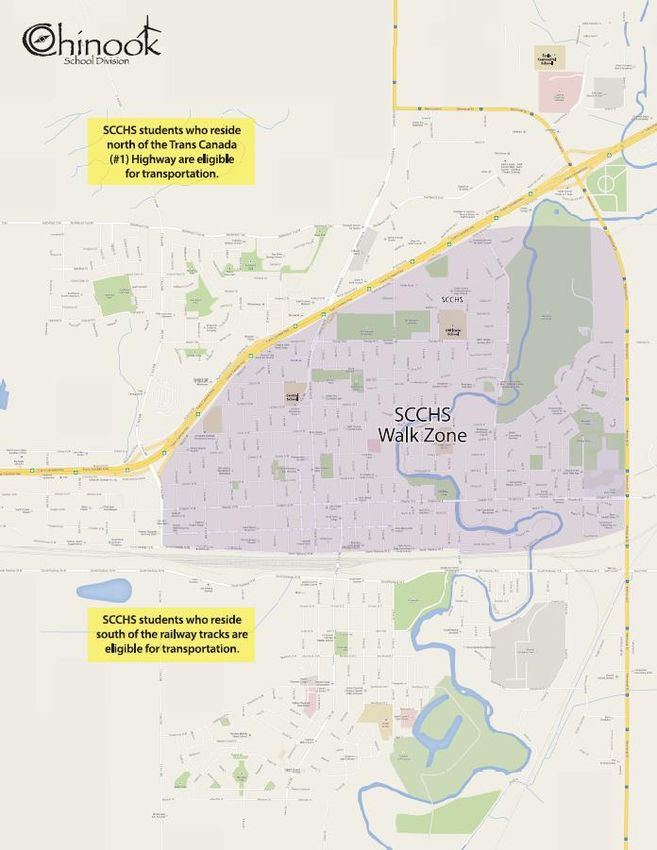
INTRODUCTION

The Swift Current Comprehensive High School prides itself on the academic, technical, vocational, and
extra-curricular activities it offers to its students. Whether you choose to attend university, college,
technical school, or if you choose to enter the workforce, SCCHS offers each student the opportunity to
succeed following high school. SCCHS believes in the concept of life-long learning and in every subject
or activity, this concept is encouraged and stressed. In every learning opportunity at SCCHS, students
will be encouraged to develop their abilities to become life-long learners who will be successful in an
ever-changing world.

SCCHS staff and the Chinook School Division believe in the development of the whole person.
Education is the ability for a person to make him or her whole in today’s very demanding world. As part of
this “whole person philosophy,” the staff at SCCHS works diligently to provide students with a multitude of
opportunities. These opportunities in the classroom, art rooms, shops or gymnasium, offer a student the
chance to discover their skills and aptitudes. These opportunities are meant to engage students in the
high school experience which, will in turn, create a sense of pride in themselves and their school.

In the 2018/2019 school year, the SCCHS Partners in Education (students, staff, parents and community)
will be focussing upon Learning Goals and a Well-Being Goal in order to foster community within our
school.

SCCHS is a great place to be! It is one of the leading secondary schools in the province due to the
students and staff who walk through its doors on a daily basis. Our graduates are successful in their
careers, professions, families and communities due to the efforts of so many students, parents and staff.
2018/2019 will be a great year!! Work hard, have fun, and enjoy the Comp Experience!

BELL SCHEDULE

Warning Bell                    8:45 am

Period One                      8:49 am – 9:51 am

Period Two                      9:55 am – 10:58 am

Period Three                    11:02 am – 12:04 pm

Period Four (Noon Hour)         12:04 pm – 1:10 pm

Responsibility Room             12:10 pm – 1:00 pm

Period Five                     1:16 pm – 2:18 pm

Period Six                      2:22 pm – 3:24 pm

                                                    2
SCCHS INFORMATION
VISITORS
All visitors to the school are expected to enter through the main doors and register at the Main Office
upon arrival at the school. All visitors will be issued a “Visitor Badge”. A visitor is defined as any person
who is not a student of the school or an employee of the Chinook School Division.
FOOD SERVICES
We encourage students to meet their friends in the cafeteria and support the food services.
Cafeteria Regulations:
1. Tables or chairs may not be reserved for other students who expect to eat in the cafeteria at a
later time.
2. Paper lunch bags and similar refuse must be placed in garbage pails located for this purpose.
3. The lower levels must be vacated by 1:30 pm daily.
Students eating lunch at school are expected to use the garbage receptacles for lunch bags or similar
refuse. The cooperation of all students regarding lunch cleanup is essential to our school. Students must
show respect to cafeteria staff and noon supervisors, and abide by their requests for rules and
procedures. Cafeteria staff and noon supervisors act on behalf of the school administration.
Cafeteria staff reserves the right to refuse service to students who consistently refuse to clean their eating
area.
PEANUT/NUT SENSITIVE ENVIRONMENT
For the health and safety of all involved in the learning process at SCCHS, this school is a Peanut
Sensitive Environment. All learners are expected to treat others with consideration and respect by
refraining from having and eating peanut/nut products within the school.
TELEPHONES
Student phones are located outside Student Services, the main foyer or gym hallway. We discourage you
from contacting your child on their personal cell phone during class time, but do ask that you contact the
Main Office if you need to relay a message. Students changing telephone numbers and/or addresses
should notify the office immediately.
SCENT SENSITIVE
All learners are expected to treat others with consideration and respect by limiting the use of products
with strong scents, such as perfume and cologne.
PARKING
We are fortunate to have paved parking for the use of students, staff and visitors. Parking is a privilege
with certain responsibilities. Students who abuse parking privileges risk having their car towed away at
their expense or an extended loss of these parking privileges. The following regulations will apply:
1. Students are reminded that “RESERVED” stalls are off limits from 8:00 am to 6:00 pm Monday to
Friday.
2. Do not park in visitor parking, where curbs are painted yellow, or grassed areas.
3. Do not park in the shop compound north of the school, the east fire lane, the bus loading area
south of the school or the lot on the north side of the gymnasium.
4. Cars must not be backed into parking spaces AT ANYTIME.
35. Administration reserves the right to enter any vehicle that is parked illegally to determine the
vehicle’s owner.
6. The Aquatic Center parking lot is reserved for patrons of the Aquatic Centre and is not available
for student use.
STUDENT TRANSPORATION
For rural bus information, students should contact Chinook School Division #211 @ 306-778-9200.
City Chinook bus passes are available for those in the designated areas. Passes can be purchased at the
Main Office for $100/semester. Pass must be purchased to ride on any City Bus.
Those students in the designated Walk Zone are able to obtain a City of Swift Current Bus pass at City
Hall. Routes are available on the school website and the City of Swift Current website.
*NOTE* Chinook School Division busses do not operate when the temperature is -40o or the wind chill
reaches -45o C. However, if and when these weather conditions exist, the school will remain open.
2018/2019 SCHOOL COMMUNITY COUNCIL (SCC)
4Saskatchewan Learning has initiated School Community Councils as a part of the restructuring of school
division. The council consists of parents, community members, students, teachers and the principal.
Meetings of the SCC are held on the third Tuesday of each month from 11:45 – 1:30 pm at SCCHS with
the annual meeting held each May. Meetings are open to the school community. The role of the SCC is
to work in cooperation with the school staff to develop and to implement the school learning improvement
plan. In addition to this duty, the SCC is a liaison between the school, parents, guardians and community.
Icasiana de Gala Marianne Murray
Teresa Hildebrandt Kim Bilanski
Leanne Sloman Kristen Herman
SLC Representative Mike Hockridge
Larry Kielo, Principal Cindy Gross
Cindy Lowe, Teacher
EMERGENCY MANAGEMENT PLAN
SCCHS has prepared an Emergency Management Plan and has procedures in place in the event of an
emergency. The document is considered “living” and is reviewed and updated on an ongoing basis. To
help ensure our students and staff safety, the school will practice drills for Fire, Shelter In Place, Lock
Down and Duck Cover and hold during the school year.
5STAFF LISTING
Principal Vice Principal Vice Principal
Mr. Larry Kielo Chantie Champigny Lucyk Mr. Duane Regier
Main Office Teaching Staff Teaching Staff
Office Mg. – Mrs. Christiansen Mr. Andrie Mr. Richards
Reception – Mrs. Tschetter Ms. Bailey Mrs. Risdale
Attendance – Mrs. Martens Mrs. Bailey Mr. Rumpel
Facility Rental – Mr. Peifer Mr. Bailey Mr. Sharp
Security – Mr. Reil Mrs. Bender Mrs. Simonson
Mrs. Braun Mr. Spence
Student Services Ms. Breadner Mrs. Striker
Secretary – Mrs. Bredahl Mr. Carnahan Mrs. Targerson
Ms. Cave Ginter Mr. Tollefson
Councillors Mrs. Chalk Mrs. Tsougrianis
Mrs. Martin Mrs. Dash Mrs. Tuplin
Mrs. Pool Ms. Dennehy Ms. Walker
Mrs. Arntsen Mr. Derksen Ms. Waines
Mr. Evjen Mr. Wiens
Mr. Friesen
Mr. Garner
Ms. Gutscher Educational Assistants
Mrs. Hanna Ms. Abdul-Rahman
Mrs. Herrick Mrs. Bennett
Mr. Herrick Mrs. Carlson
Mr. Jackson Mrs. Caulkins
Mr. Judge Mrs. Curry Philip
Mrs. Kohlman Mrs. Fisher
Mrs. Lagendoen Mr. Heinrichs
Ms. Lamont Ms. Gelowitz
Library Clerk Mrs. Lowe Mrs. Jackson
Ms. MacLaurin Mr. MacMillan Mrs. Juffinger
Mr. Marchand Mrs. Mitchell
RCMP Liaison Officer Mr. Martens Mrs. J. Neustaeter
Cst. Curti Ms. McDonald Mrs. L. Neustaeter
Mrs. McIntyre Ms. Peterson
Driver Education Instructors Mr. Millar Ms. Shapley
Mr. Pratt Mrs. Miller Mrs. Walker
Ms. Davidson Ms. More Ms. Weiner
Mrs. Mous Ms. Young
Interns Mr. Murdoch
Mr. Meyers Mr. Nicholson
Miss. Doyle
Miss. Hughie
Mr. Braun
6STUDENT SERVICES
Counseling is located on the second floor directly above the main office. Their role is to assist students to
make the best use of their abilities and interests so they may achieve realistic goals. Services include
personal, educational and vocational counselling. The Career Resource Centre, located in Student
Services, has current information on post-secondary training institutions, scholarships and bursaries,
career and job opportunities.
Students and parents are invited to contact a counsellor whenever they have a concern.
GRADUATION CRITERIA
To be eligible to participate in graduation exercises a student must be in a position to complete the
Saskatchewan Learning minimum requirements for Grade 12 by June 30 of their graduation year.
Students must complete an application for graduation in their homeroom. If SCCHS students, who are
not eligible to graduate, wish to participate in the Grand March and Dry Grad with their peers, they need
to write a letter of application to the Parent Grad Committee by March 31 of the school year.
GRAD INFORMATION
Grad fees are assessed separately from, and in addition to, the SLC Fee.
We welcome back the Graduating Class of 2019! We can use all the help we can get with our
committees. If you want a voice in what happens at any grad activities, join a committee! The grad
committee encourages all grads to come out and make this grad the best it can be!
Amanda Thoreson Grady Rogers
Senior Pin Senior Stick
GENERAL PROGRAM INFORMATION
Core compulsory subjects (English, Social Studies, Science and Math) are offered in three programs.
Regular (Courses are numbered 10/20/30)
These are the courses required for entrance to all university programs and many institute programs.
Modified (Courses are numbered 11/21/31)
Modified courses are intended for students who experience significant challenge with the content or pace
in the regular program. Modified courses are acceptable for entrance to most trades and some technical
programs.
Students require a referral and placement testing before registering in modified programs.
7Alternative (Courses are numbered 18/28/38)
Alternate courses are intended for students who have a need for practical academics as well as
vocational and life skills programs to prepare them for independent living and the world of work.
NOTE: School policy prohibits students from taking more than one English course per semester unless it
is their final semester, in which English A30 and B30 may be taken simultaneously.
School policy prohibits students from taking more than five classes per semester without
approval from the principal.
GRADE 9
Compulsory Courses
English Practical and Applied Arts
Math Health
Science Physical Education
History Arts Education
Options: Band and French
GRADE 10
Compulsory Courses
English A10 and B10 or A11 and B11 Science 10 or 11
History 10 or 11 Wellness 10
At least one math from:
Work Place & Apprenticeship Math 10 or 11
Foundation Math 10 or Math 11
School policy requires Grade 10 students to take five credits per semester.
Eight credits is the minimum requirement for a completed Grade 10 standing.
GRADE 11
Compulsory Courses
English 20 or 21
At least one science, one math and one social credit from:
Physical Science 20 History 20 or 21 Work Place & Apprentice Math 20
Health Science 20 Economics 20 Foundations Math 20
Environmental Science 20 Law 30 Pre Calculus 20
Computer Science 20 Native Studies 20 Math 21
Modified Science 21 Psychology 20
School policy requires Grade 11 students to take at least four courses per semester.
Sixteen credits is the minimum requirement for a complete Grade 11 standing. Of these credits, five must
be at level 20.
GRADE 12
Compulsory Courses
English A30 and B30 or A31 and B31 History 30 or 31 or Native Studies 30
School policy requires Grade 12 students to take at least four credits per semester.
Twenty-four credits is the minimum requirement for a complete Grade 12 standing. Of these credits, at
least five must be at level 30.
8STUDENT LEADERSHIP COUNCIL
The Student Leadership Council (SLC) is designed to involve a larger number of students in the
operations of the council. With the committee structure, any student that wants to join the SLC will be
welcome to do so. We hope that by involving more people, the work load will be divided among more
students. It is our hope that this format will provide students more opportunities to get involved in the
activities at SCCHS!
The SLC format will be:
Two Co-Chairs
Secretary
Committees
(with unlimited membership)
Special Events Coordinators
Spirit Coordinator
Public Relations Coordinator
Charities and Services Coordinator
SLC POINT SYSTEM AND AWARDS
Students earn points for participation in all extra-curricular activities. Points shall be accumulated through
their years at SCCHS and may lead to any of the SLC rank order awards: these being Minor, Major or
Ring Awards.
1. Ring Awards
Two top point getters (1 male, 1 female). (Recipients are no longer eligible to receive a “Major
Award”.)
2. Major Awards
16 next highest point getters, irrespective of gender, after “Ring Award” winners.
President’s Awards: subset of the “Major Award” winners. Recipients of the “President’s Award” are
not eligible to receive either another “Major” SLC Award or the “Ring Award”. These are graduating
students who were recipients of the SLC “Major Award” during their previous school year (i.e. Gr.
11).
3. Minor Awards
16 next highest point getters (irrespective of gender) after the 16 “Major Award” winners.
4. Other SLC Awards
Spirit Award
Upon nomination to recognize outstanding contribution to activities sponsored by the directorates
(chosen jointly by the head and advisor of a given directorate).
Kinetic Award
2 graduating students (1 male, 1 female) as nominated by teachers or directorate heads, etc. –
selected by the SLC Committee. Recipients are eligible to receive other awards.
9Points may be acquired from any of the following categories listed below to their indicated maximums:
CATEGORY 1 – Athletics
Team Points Team Points
Volleyball Wrestling 25
Grade 9 5 Soccer 15
Junior 10 Badminton 15
Senior 25 Rugby 15
Football 25 Junior Curling 10
Senior Curling 15
Basketball Track & Field 15
Grade 9 5 Cross Country 10
Junior 10 Golf - Spring 5
Senior 25 Fall 5
CATEGORY 2 – Councils
Graduation SLC
Senior Stick/Pin (each) 30 Co-Chairs (each) 40
Committee Members 20 Secretary 30
Committee Heads 30
General Members 10
CATEGORY 3 – School Clubs
(Organizers can give an additional 5 points for students in a leadership role in the club)
Outdoor Ed (10) Impact (5) Art(10) SADD (10) Skills(10)
Photography(10) Guardians (5) Cinema Gogo (5) Yearbook(10) Book Club(5)
Peer Support (10) Best Buddies (5)
CATEGORY 4 – Music and Drama
Band and Choral Drama
Gr. 9 Band 5 Major Role 25
Gr. 10 Band 10 Supporting Role 15
Sr. Band 10 Minor Role 10
Jr. Band 10 Full Time Crew 15
Jr. Jazz 10 Part Time Crew 5
Sr. Jazz 10 Pit Band 15
Jazz Combos 10 Extra Skits 5
Vocal Jazz Combos 10 Student Director 25
Directorate 15 Stage manager 25
Meistersingers 5 Directorate 15
Chamber Singers 10
ATHLETIC POINTS AND AWARDS
A Minor Athletic award is presented to a student accumulating 75 points. A Major Athletic Award is
presented to a student accumulating 150 points and an Honour Athletic Award is presented to a student
accumulating 225 points. In addition, four special individual awards are presented: Outstanding male and
female; and Athletic Leadership Awards – male and female.
10Starting Dates for Sports
Football Thursday, August 29, 2018
Volleyball Tuesday, September 4, 2018
Soccer Tuesday, September 4, 2018
Cross Country Tuesday, September 4, 2018
Curling Monday, November 5, 2018
Basketball Monday, November 19, 2018
Wrestling Monday, November 19, 2018
Badminton Monday, February 11, 2019
Track & Field Monday, April 1, 2019
Golf Fall and Spring
SCCHS POLICIES
SCCHS SLC FEE POLICY
All students upon registering at the Swift Current Comprehensive High School will pay a Student
Leadership Council (SLC) Fee of $10. New students will also buy a $10.00 school lock. Lockers are the
property of the school and may be inspected in situations that are deemed necessary by school
administration.
Fees must be paid in full at time of registration.
TUITION FEE POLICY
1. Any student under 21 years of age who does not receive financial support or reimbursement from the
school division in which he/she resides will be assessed a tuition fee.
2. Any student 21 years of age or over will be assessed a tuition fee.
3. The tuition fee for the 2018 - 2019 school year is $600 per credit and is due at the time of
registration. If EAL (English as an additional language) is required, it is reviewed on a case by case
basis and additional fees may be charged.
4. Where a student who has paid fees withdraws from school or discontinues a class, he/she could be
eligible for a refund of fees as follows:
Withdrawal during – Month 1 – 80%
Month 2 – 40%
Month 3 – 0%
OUSTANDING FEES POLICY
Students with outstanding bills for lost texts, lost library book, SLC Fees, etc. will be issued invoices
periodically until these bills/fees have been collected or materials returned.
11DUTIES OF STUDENTS
The Education Act requires that students who exercise the right of access to a school shall:
1. Attend regularly and punctually.
2. Provide themselves with the supplies and materials not furnished by the school which are
considered necessary to their courses of study.
3. Observe standards approved by the Board with respect to cleanliness and tidiness of person,
general deportment, obedience, courtesy and respect the rights of others.
4. Be diligent in their studies.
5. Conform to the rules of the school and submit to such discipline as would be exercised by a kind,
firm and judicious parent.
6. Be accountable to the teachers for their conduct on the school premises during school hours and
while engaged in authorized school activities conducted in out-of-school hours.
SCHOOL ATTENDANCE POLICY
Philosophy
Students of the Swift Current Comprehensive High School are required to attend school regularly and
punctually. Regular class attendance is essential. Irregular attendance will lower a student's chance of
success and disrupt the continuity of the class.
We acknowledge that parent(s)/guardian(s) have the right to permit absences in cases of illness or other
circumstances which they may regard as sufficient reasons for permitting an absence. In making such
decisions, parent(s)/guardian(s) assume responsibility for lower marks or failing grades which may result. It
should be noted that under the semester system, each missed day is equivalent to two days under the year
system. Parent(s)/guardian(s) are encouraged to support the school by promoting a positive attitude
towards regular attendance and punctuality.
Procedures
Absences from classes are either cleared or uncleared.
1. Cleared absences
School-sponsored activities
Absences reported by parent(s)/guardian(s). Parent(s)/guardian(s) will advise the school by
8:30 am on the day the student will be missing by phoning the 24-hour automated
attendance line at 306-773-2801 (option #2) or email scchsattendance@chinooksd.ca. We
prefer parent(s)/guardian(s) report absences on the automated attendance line, as the report
will be entered directly into the computer attendance program. Parent(s)/guardian(s) are
asked to give the relationship of the person calling, student’s name, student’s number, the
date and the reason for the absence. Please refer to Page 15 for excusable absence list.
2. Uncleared absences – Responsibility Room (For students of Grade 9 or 10 age)
Students with uncleared absences can expect their parent(s)/guardian(s) to be called by the
attendance office directly or through the automated Synrevoice System. If a parent(s)/guardian(s)
does not clear the absence, consequences will be determined according to their age and grade.
Grade 9 and 10 students will serve time in the Responsibility Room. The Responsibility Room
works as follows:
It is held in the Lecture Theatre from 12:10 pm – 1:00 pm. Students are to bring their lunch and
their homework to do. The time spent is One (1) for One (1) [One (1) class skipped = One (1)
noon hour], a whole day skipped equals an in school suspension with lunch period privilege being
12determined by Administration. Three (3) lates in a class equals One (1) noon hour to spend.
Teachers and Administration will supervise the room. No cell phones or I-pods are allowed.
If the noon hours are not served by a predetermined day, then time must either be served
afterschool (a time will be scheduled once weekly) or through an in school suspension.
Parent(s)/guardian(s) would be contacted (1) to arrange for an afterschool time or (2) to inform
them of the in school suspension.
If a student has three (3) separate noon hour detentions, a letter will be sent to the
parent(s)/guardian(s) and a referral will be sent to Student Services.
For students in Grade 10, 11, 12 the following Attendance Policy has been developed:
SCCHS High School Attendance Policy
For Students in Grade 10, 11, 12
The Education Act states students and parent(s)/guardian(s) are responsible for regular attendance.
Section 150.3a states, “Pupils shall attend regularly and punctually.”
Section 156.1 states, “Every parent, guardian or other person having charge of a pupil who is of
compulsory school age shall take all the steps necessary to ensure regular attendance of that
pupil.”
SCCHS has a responsibility to:
Monitor attendance and inform parent(s)/guardian(s) of problems.
Provide a process which offers that student a chance to improve attendance.
SCCHS will do this by:
Taking attendance each period
Using the authority Synrevoice Phone System to inform parent(s)/guardian(s) of daily student
absence(s)
Having the subject teacher call the parent(s)/guardian(s) after the student’s third unexcused
absence
Sending a letter home if a student has four (4) unexcused absences in a class or classes
Attendance Contract
SCCHS recognizes only two kinds of absences, “excused” or “unexcused”. When a student is “excused”
from attending class, it does not count against consideration for attendance contracts, credit loss, and
suspension. However, SCCHS reserves the right to seek parent(s)/guardian(s) validation of all absences.
An excused absence is still recorded as an absence.
Disputes about the validities of an absence or absences will be resolved through a consultation process
involving: SCCHS Administration, subject teacher(s), parent(s)/guardian(s), and the student.
For an “independent student”, that is one who is over 16 and lives away from the family home, SCCHS
reserves the right to make the determination as to whether the student is excused or unexcused.
“Excused” reasons for a student to be away from class are:
Excusable Absence Reasons: (examples include, but are not limited to)
a) Illness (written confirmation may be requested i.e. doctor’s note).
b) Hospitalization or confinement at home under doctors’ orders.
c) Medical or dental appointments (written confirmation may be requested).
d) Compassionate or sympathetic reasons (i.e. Funeral).
e) Attendance at a recognized religious observance.
13f) When the student’s school bus does not run.
g) Student participation in a school sponsored trip, competition, or event.
h) Court
i) Meetings with School Administration or Student Services Staff
j) Represents his or her province or country in festivals, athletic events, or once in a lifetime
opportunities.
“Personal” is not an excusable reason and will not be accepted by the office.
Any time a student has not been “excused” he/she will be counted as “unexcused”.
These times out of class without permission carry the following consequences:
1) Teacher shall take daily attendance for each period.
2) The automatic Synrevoice Phone System will be used to inform parent(s)/guardian(s) daily of
student absences.
3) When a student has one (1) or two (2) unexplained (unexcused) absences, the teacher shall
discuss the absence with the student at the earliest opportunity.
4) When a student has three (3) unexplained (unexcused) absences, the teacher shall make contact
with the parent(s)/guardian(s) via a phone call or email (a minimum of three (3) contact attempts).
5) After documenting four (4) unexplained (unexcused) absences, the teacher will refer the student
to Administration using an Attendance Referral Form. A letter informing the parent(s)/guardian(s)
of their son(s)/daughter(s) four (4) unexcused absences and potential future consequences will
be sent home. Administration will interview the student, review the student’s attendance profile,
and take appropriate action.
6) After documenting five (5) unexcused absences, the student will be placed on an Attendance
Contract.
7) A phone call home by Administration at ten 9(10) unexcused absences will occur, outlining
potential future student removal from class.
8) When the student accumulates eight (8) more unexcused absences, the teacher will refer the
student to Administration via an Attendance Referral Form and the student may lose credit for the
class.
9) At a combination of twenty (20) excused and unexcused absences, a review with Administration,
parent(s)/guardian(s), and student may occur.
In each and all of the above, the classroom teacher may require the student, outside of regular class
hours, to undertake some form of supervised activity related to the absence. School Administration
reserves the same right. In extraordinary circumstances the subject teacher, in consultation with
Administration, may waive certain consequences.
Late Policy
Students are expected to be on time for class regularly.
There are two types of lates:
One is an excused late (i.e. appointments, parent cleared, etc.);
Two is an unexcused late (i.e. cookies, smoking, visiting, etc.).
Chronic lateness is unacceptable and consequences will be at the discretion of administration.
Three unexcused lates equals one unexcused absence.
A late becomes an unexcused absence after 15 minutes.
In Physical Education, being unprepared three (3) times equals one (1) unexcused absence.
14Procedure Following an Absence
1) The school is notified by a parent(s)/guardian(s) of their son(s)/daughter(s) absence and reason for
being absent. It should be noted that absences may not be “excused” after three (3) school days
from the date of the student’s absence.
2) Let the school know either on the day of the absence or before, if possible, by phoning the 24 hour
automated attendance line (773-2801 option #2) or email scchsattendance@chinooksd.ca.
3) If there has been no phone call or note received at the office within three (3) school days, the
student will be classified as “unexcused”.
SCCHS LATE ASSIGNMENT POLICY
Philosophy
Swift Current Comprehensive High School values its tradition of academic excellence as students learn.
To support this standard of excellence, SCCHS has a late/missed assignment policy. The policy and
procedures for late assignments is based on the following beliefs:
Good communication between teacher/student, student/teacher and student/parent/teacher is
important.
Consistently completing assignments is critical in the learning process for each class.
Students need to develop a responsible attitude towards their work.
Meeting deadlines is important.
Students need to learn to meet deadlines. Deadlines help students learn time management skills.
There may be extenuating or special circumstances in a student’s life that prevent them from
meeting deadlines. They should be discussed with the teacher before assignment is due.
Adhering to deadlines ensures that all students have their work corrected at the appropriate time
and that feedback is communicated to students.
Parent and student access to gradebooks to view assignment completion.
Due Dates/ Deadlines
It is important that all assignments have due dates. If a due date for an assignment is missed, teachers
will select appropriate interventions to assist with getting the assignment in. At some point a final deadline
for submitting the assignment will be determined by the teacher. If the assignment has not been
submitted by the final deadline, after attempted interventions, a mark of zero will be given for the
assignment.
Communication
Due dates will be clearly communicated to students. Teachers will give a reasonable amount of time for
assignments to be completed.
Parent Involvement
It is important for parents to be actively involved in their child’s education, even for high school students.
Teachers will contact parents to discuss concerns about late assignments, if the teacher feels that the
late assignments are negatively affecting a student’s academic performance. Parent contact and
involvement is an important piece of the intervention process.
Chinook School Division and Saskatchewan Learning Policies
SCCHS late assignment policy aligns with these policies. Therefore, marks will not be deducted if an
assignment is submitted past the due date. However, if an assignment is not submitted before the
deadline, a zero on the assignment will be given.
Student Responsibility
Submitting assignments in an efficient manner; adhering to due dates and deadlines is ultimately the
student’s responsibility. Students are encouraged to speak to their teachers regarding their individual
needs; the hope is to work as a team to ensure student success. Students are therefore encouraged to
15speak to teachers regarding necessary extensions for assignments, which are almost always granted
when students have proven to be responsible (i.e. make plans with teacher(s) for an alternate date and
discuss what can be done differently next time to ensure deadlines are met).
Focus on Learning
Teachers will design assignments that are in line with curriculum objectives and learning outcomes. It is
critical that these assignments are submitted so the teacher can determine how well the student
understands the objectives and outcomes.
Interventions
Teachers will work hard with students to ensure that assignments get submitted. There will be a leveled
approach to the SCCHS interventions:
Level 1
- Discussion with student
- Teachers may request parent emails and phone numbers at the beginning of a course for the
purpose of contacting home in situations where a student has one or more missing assignments.
- Students may be given individual printouts of their marks and assignments prior to reporting
periods. Students will be offered time and encouragement to submit missing assignments.
- missing assignments may be posted in the classroom
- Assignment and exam dates may be written on the chalkboard daily
- Verbal reminders may be provided for students with missing assignments.
- Students create a plan to work on late assignments and/or negotiate extensions.
Level 2
- Administration contact and discussion if late assignments are a chronic problem
- Parent contact by either the teacher and/or the administrator to discuss possible solutions
Level 3
- Possible testing to determine alternative programming such as LAC, Bridging, Modified courses
Procedure
The following procedures may be implemented by all teachers at SCCHS in regards to late assignments:
Students with a missing exam or assignment may ultimately earn a mark of 0%, after any or all of
the classroom interventions below have been attempted. For each reporting period, late
assignments will be assigned a 0 until they are handed in.
When missed assignments have a significant impact on the student’s mark, teachers may make
referrals to admin or student services to develop a plan for greater success for future
assignments.
This policy will be applied in conjunction with teacher course outlines and expectations that are
given at the beginning of each course.
Classroom Interventions
Teachers may implement any or all of the following practices in working with students to meet assigned
due dates:
Teachers may request parent emails and phone numbers at the beginning of a course for the
purpose of contacting home in situations where a student has one or more missing assignments.
When available, students will be given online access to their marks (current grades, missing
assignments, etc.)
Students may be given individual printouts of their marks and assignments prior to reporting
periods. Students will be offered time and encouragement to submit missing assignments.
Students with missing assignments may be asked to take the printout home and have it signed by
a parent or guardian, or they may be asked to sign a contract by individual teachers to complete
late assignments.
Printouts of marks and/or missing assignments may be posted in the classroom with students
identified by student number to honour anonymity.
Assignment and exam dates may be written on the chalkboard daily.
Verbal reminders may be provided for students with missing assignments.
16 Study guides are provided for exams, and may be adapted for individual students as required.
A reasonable time will be given to complete assignments, with assistance from classroom
teachers as an option, both in and out of the period for which the individual class is scheduled.
If a student shows effort in class, he/she may be afforded as much time to complete work with
his/her teacher as can be provided (i.e. through the lunch hour or before/after school).
Students may be encouraged to plan ahead—catastrophe factor may be discussed with individual
teachers—not to wait until the last minute to work on assignments and/or negotiate extensions.
Students may choose to access the Homework Completion Centre in room #261 at noon hour to
complete assignments. In addition, students may choose to work in the library during their free
time for homework purposes. Library hours are 8:00 am – 4:00 pm.
Students are encouraged to speak to their teachers regarding their individual needs; the hope is to work
as a team to ensure student success. We hope to build self-advocacy and negotiation skills in students
to better prepare them for a future outside of SCCHS. Students are therefore encouraged to speak to
teachers regarding necessary extensions for assignments, which are almost always granted when
students have proven to be responsible (i.e. make plans with teacher(s) for an alternate date and discuss
what can be done differently next time to ensure deadlines are met). We hope these crucial
conversations become learning experiences rather than just extensions.
ACADEMIC HONESTY POLICY
Academic Integrity
Assignments, tests, and exams allow students to demonstrate how well they have learned the material
offered in a course. It is important for students to be clear on which ideas and words are their own and
which words and ideas are not their own. The general expectation for students is that they are to do their
own original, individual work, unless asked to do otherwise by a teacher. In those cases, students must
give credit to other people for their ideas or words.
Academic Misconduct
Acts of academic dishonestly go against the general principle of partnerships as defined by SCCHS. All
forms of academic dishonestly are considered serious within the SCCHS community. Forms of dishonesty
include:
1. Cheating: Cheating is dishonest behavior or the attempt to be dishonest on tests or exams. It
includes:
a. Copying the work of another student;
b. Using books, notes, diagrams, electronic devices, or any other unauthorized aides during an
exam.
c. Communicating advance knowledge of an exam to other students (for example, if permitted to
write an exam early);
d. Altering answers on an assignment or exam that has been returned.
2. Plagiarism: Plagiarism is a form of dishonesty in which one person submits or presents the work of
another person as his or her own, whether from intent to deceive, lack of understanding, or
carelessness. In partnership with your teachers you will learn how to examine and refer to the ideas
of others and these ideas must always be clearly acknowledged according to acceptable practices.
Students should ask their teachers or the school librarian if uncertain. Plagiarism includes:
a. Not acknowledging an author or source for one or more phrases, sentences, or thoughts
incorporated into written work.
b. Presenting the whole or substantial portions of another person’s assignment, paper, or report as
an assignment before grading. This includes essays, blended essays, or parts of essays found
on the Internet.
17Consequences for Academic Misconduct
The first occurrence of plagiarism on an assignment may result in a suspension of up to 5 consecutive
noon hours, with an expectation that the plagiarized assignment will be redone and handed in at a
deadline decided on by the teacher for whom the student plagiarized. If the student does not hand the
assignment in by the required deadline, a zero may ultimately be assigned. The consequences for further
academic misconduct may include one or more of the following: the further reduction of grades, the
removal of a student from a course, or the further suspension or expulsion from school, depending on the
nature of the misconduct.
EXAM CONFLICTS
Students anticipating an exam conflict during final exams must complete the Final Exam Reschedule
Form in the Main Office. The student, teacher and Administration will work together to reschedule at a
time jointly agreed upon.
DISCIPLINE POLICY
As partners in the teaching and learning process, the staff and students believe that this partnership is
based on:
Mutual respect
Understanding each other’s responsibilities
Communication
Creating a positive learning environment
SCCHS strives to create and promote a caring and respectful school environment which encourages the
well-being and educational success of every student. Each student and parent should feel welcome,
comfortable and supported.
An important component of a positive environment is having clear behavioral expectations and discipline
policies.
Behavioral expectations at SCCHS are based on three guiding principles:
Respect
Responsibility
Safety
Specific expectations involving respect:
Respectful behaviors include positive, friendly, cooperative attitudes, honesty, tolerance and
conforming to the rules of the school.
Disrespectful behaviors include: rude behaviours, inappropriate behaviours, profane language,
racist behaviors, bullying, harassment, discrimination, vandalism, theft and inappropriate
physical contact.
Specific expectations involving responsibility:
Attend classes regularly and punctually and ensure any absences are cleared with the
Attendance Office.
Come to class prepared.
Complete homework and assignments.
Report any actions which violate the principles of the school.
Assume responsibility for your actions
i.e. If you make a mess, clean it up
i.e. If you accidentally damage something, report it
i.e. If you do something wrong, accept the consequences.
Students are expected to follow school policies as outlined in the Student Handbook.
Students will cooperate with requests/instructions from staff members.
18Specific expectations involving safety:
Unacceptable safety risks include dangerous driving practices, threats to injure other, weapons,
arson, throwing projectiles (stones, snowballs, water balloons).
SCCHS Discipline Policy Consequences
The following is intended as a guide for teachers and administrators in assessing inappropriate behaviours,
assigning appropriate consequences and implementing restorative discipline plans.
Level One Possible Consequences Examples
Any minor disturbances Loss of spares Profanity – warning (if minor), second
that distract from the Noon or after school time loss of spare, third time 1 day in-
learning environment. detention school suspension (served in spares if
Parent/Teacher conference possible)
(classroom disturbances) Hats – remind on first infraction, second
Student/Admin conference time take for a day, third time keep it
(public area disturbances) Dress code – have student change or
turn shirt inside out if suitable (ie. Beer
logo)
Level Two Possible Consequences Harassment/bullying- up to five days in-
Activities and attitudes Student/Admin conference school suspension and counseling
that show a lack of Parent/Student/Admin Fighting – up to 6 day suspension and
respect or regard for the conference counseling
safety or property of Parent/Student/Admin Smoking – 1 day in-school suspension
others. mediation (served in spares)
Frequent and repeated Restitution Theft – RCMP involvement, restoration,
incidents of level one In school suspension with loss of privileges, up to 8 days out of
rules. education and counseling school suspension
Out of school suspension Throwing snowballs, rocks, food, water
Payment for repair costs balloons – one day in school
suspension (served in spares)
Level Three Possible Consequences Disrespectful/refusing to follow
Activities and attitudes Student/Parent/Admin directions of a staff member – one day
that show a lack of conference/mediation in school or out of school suspension
respect or regard for the In school suspension with Profanity towards staff member – up to
safety of school staff. education and counseling 3 days out of school suspension
Frequent and repeated Out of school suspension Possession of weapons on body, locker
incidents of level two or knapsack- 1 to 10 days OSS,
rules. depending of the severity of the
situation, possible initiation of VTRA
protocols
Level Four Possible Consequences Bomb threat, Drug trafficking,
Activities that seriously Up to a 10 day suspension Possession of a weapon to cause bodily
threaten the safety of Potential recommendation harm to another person – 10 day
others or show a gross for expulsion suspension recommended expulsion
disrespect for authority school transfer Gross disrespect for authority or
or property. property – school transfer
Frequent and repeated 2nd possession of weapons or weapons
incidents of level three used to threaten or injure- up to 10 day
rules. OSS and Board Review. Initiation of
VTRA protocols.
19CONTEXT OF BULLYING OR HARASSMENT
Definition
“Bullying is a conscious, willful and deliberate hostile activity intended to harm” (Coloroso, 2002). The act
of bullying or harassment is not acceptable at SCCHS.
The four markers of bullying and harassment
1. An imbalance of power
2. Intent to harm
3. Threat of further aggression
4. When bullying escalates unabated – terror
Types of bullying
1. Verbal Bullying: any exchange of words that are negative (i.e. taunting, name calling, put downs)
2. Indirect Bullying: is hidden and hardest to detect (i.e. kicking, glares, looks, ostracizing, hitting,
pinching)
3. Physical Bullying: any physical contact that has the intent to harm ( i.e. kicking, hitting, pinching)
4. Cyber Bullying: any derogatory text messages sent through cell phones and/or computers (i.e.
internet websites, emails, MSN, text messaging)
Those involved in a Bullying Situation
1. The Bully: a person who chooses bullying behaviours in the intent to harm someone or their
property.
2. The Target (or the victim): The individual who is on the receiving end of the bullying situation.
3. The Bystander(s): These are four main types:
a. Follower(s): actively joins in
b. Passive – watches, but does not take an active part
c. Disengaged Onlooker(s) – watches what happens; is none of my business; don’t take a stand
d. Defender(s) – sticks up for the victim. They are the ones who intervene somehow (i.e.
interrupt the situation, create a distraction, go and get help).
4. The Intervener: a person who chooses to, or is asked to help settle a bullying problem.
Teasing vs. Taunting
This is what Friends do:
Teasing:
1. Allows the teaser and person teased to swap roles.
2. Is not intended to hurt the other person.
3. Maintains the basic dignity of everyone involved.
4. Pokes fun in a light hearted, clever and benign way.
5. Is meant to get both parties to laugh.
6. Is only a small part of the activities shared by kids who have something in common,
7. Is innocent in motive.
8. Is disconnected when person teased becomes upset objects to the teasing.
This is what Bullies do:
Taunting:
1. Is based on an in balance of power and is one-sided: the bully taunts, the bullied kid is taunted.
2. Is intended to harm.
3. Involves humiliating, cruel, demeaning, or bigoted comments thinly disguised as jokes.
4. Includes laughter directed at the target, not with the target.
5. Is meant to diminish the sense of self worth of the target.
6. Induces fear of further taunting or can be a prelude to physical bullying.
7. Is sinister in motive.
8. Continues, especially when the targeted student becomes distressed or objects to the taunt.
20Excerpts from The Bully, The Bullied, and the Bystander, Barbara Coloroso, 2002.
www.kidsareworthit.com kids are worth it, Inc. 800-729-1588 fax: 303-72-1204
Procedure
When acts of bullying or harassment are identified at SCCHS, Administration or Student Services are
informed and the process is as follows:
Investigation/Assessment:
Conducted by administration of SCCHS
During investigation, Administration may choose one or more of the following options:
- The appropriate discipline for that youth.
- Possible referral to Anti-Bullying Program/Student Services
- Possible referral to outside agency (Mental Health, Additions, Justice, RCMP)
Sessions offered include:
Session 1: Why are we here? Harassment is . . .
Session 2: What was incident? What needs were you attempting to meet?
Session3: RCMP, probation, parents and youth meeting
Session4: Setting things straight
Violence Threat Risk Assessment (VTRA)
Threat assessment is the process of determining if a threat maker actually poses a risk to a target or
targets they have threatened. SCCHS has trained individuals that will perform risk assessments when
situations arise. This process has four basic steps:
1. Identify worrisome or threatening behaviour
2. Use a multi-disciplinary team to conduct a violence threat risk assessment. This may include
staff members, law enforcement, mental health, social services, etc.
3. Determine if a threat maker actually poses a risk
4. Intervene appropriately
In, short, the threat assessment involves determining how credible the threat is and whether or not the
threat maker has the resources and motivation to carry out the threat. Once the seriousness of the threat
is determined, the team develops a plan for implementing risk-reducing interventions. The interventions
are designed to protect the threat-maker as well as any potential targets.
At SCCHS, all high risk behaviours will be taken seriously and will be assessed accordingly. Determining
what actions will be taken in any case (legal, disciplinary, mental health evaluation, etc.) will depend on
the context of the incident.
VANDALISM POLICY
Student who are caught vandalizing school property will receive an automatic fine of $100 or the cost of
repair/replacement of item, whichever is greater.
FREE TIME POLICY
Students are discouraged from loitering in school hallways during times when they have no assigned
classes. Students not in an assigned class may access the Resource Centre, the Cafeteria and/or the
area outside Student Services or they may leave the school. This will avoid distractions for other
students who are in class.
21SUBSTANCE ABUSE POLICY
Swift Current Comprehensive High School, acting upon the community’s and parent’s expectations that
the school will provide the most conducive learning environment, believes that unless schools and their
students are substance (drug and alcohol) free, optimum conditions for learning will not exist.
Students may not possess, consume or distribute drugs or alcohol in any form while at school, in co-
curricular program, extra-curricular, on school grounds, at school related functions on, or off campus, and
while coming to and going from school and after school hours where students are responsible to school
authorities. Students may not smoke cigarettes or use tobacco products in any form on school grounds,
in the buildings, on any school bus or in any school vehicle.
Tobacco Replacement Products (Vaporizers and E Cigarettes)
The school policy on tobacco replacement products (vaporizers and E Cigarettes) falls under the same
category as tobacco products. They are not allowed to be used on School property, buses or school
vehicles. If the contents in these devices is determined to be a controlled substance, it would fall under
our Substance Abuse Policy. Student consequences will be determined according to these policies.
Prevention and Education
A. At the start of the school year, and as reasonable necessary thereafter, the administration shall
review with the staff appropriate drug use and intervention techniques.
B. At the start of each school year the administration and staff shall review with the student body the
negative impact of drug use and periodically reinforce this message.
C. At the start of the school year and then as periodically deemed necessary, the administration and
staff shall review this policy with the students. As periodically deemed necessary, the
administration and staff shall review this policy with parents and guardians.
D. At the start of the school year and then continually thereafter, the administration shall inform the
student body about the services available for any student with a substance abuse question or
need for assistance and shall keep that information posted in an area accessible to all students.
Role of the Staff
A. The School Board expects all staff members to assist in the education of students, including this
policy. Subject to their rights and obligations pursuant to employment contracts, all school staff is
expected to comply with this policy.
B. All staff should be familiar with this policy and its impact on students.
C. Whenever a staff member believes a student is violating this policy, the staff member shall take
any action necessary to secure the health and safety of all students.
D. Whenever a staff member believes a student is violating this policy, the staff member has a duty
to immediately report the violation.
E. All staff should be familiar with the resources available to those students seeking assistance with
a substance abuse problem, treat any such request for assistance as a confidential.
F. All staff and administrators are mandated reporters of student abuse and neglect. Violations of
this policy may be reported as such. The police may also be notified.
G. All staff shall report any violations of this policy to SCCHS administration. SCCHS administration
shall report to the superintendent.
22Definitions
Drugs: Any substance considered illegal by Saskatchewan law; any substance for which the possession
thereof is a civil violation under Saskatchewan law; any substance which minors are prohibited from
possessing under Saskatchewan law; and the inappropriate use of any product in an attempt to alter the
student’s mental state. This includes but is not limited to tobacco, alcohol, marijuana and any prescription
medication for which a student does not have a valid prescription.
Substances: Any product used in an attempt to alter the student’s mental state.
Drug Paraphernalia: Includes any instrument or implement or combination adapted for administration of
controlled substances—e.g., hypodermic syringe, needle, metal or plastic (snorting) tube—under
circumstances which reasonably indicate an intention to use such instruments for the purposes of illegally
administering any substance.
Dealing Drugs (trafficking): A person supplying (or intending to supply) drugs to another person. This
includes but is not limited to giving drugs away, selling drugs, looking after drugs for someone else.
Violation: The act of disregarding the policy.
Student: Includes, but is not limited to, any person enrolled in Swift Current Comprehensive High
School; any person attending a school sponsored activity normally intended for Swift Current
Comprehensive High School students, regardless of where this person takes educational classes; and
any person “home schooled” or “alternatively schooled” or otherwise not attending classes at the Swift
Current Comprehensive High School, but who is of student age and on campus or attending a school
sponsored activity.
Attendance at School: Attendance at school includes but is not limited to the following circumstances;
any time a student is travelling to and from school or a school sponsored activity (whether by bus or
private vehicle); any time a student is on school property whether during normal school hours or after
school for a school sponsored activity; and any time a student is representing the school off school
property but on a school sponsored activity.
Co/Extra-Curricular Activities: A co/extra-Curricular activity is one provided by and supervised by the
school. The following is not an exhaustive list of extra-curricular activities covered by this policy:
1. Driving a private vehicle to and from school when bussing is available for school sponsored
activities or co/extra-curricular activities.
2. Seasonal activities such as: soccer, cross country, golf, football, volleyball, basketball, wrestling,
badminton, track and field
3. Yearly activities such as: band, drama, choral, SLC, clubs
School Sponsored Activity: A school sponsored activity includes, whether graded or non-graded, but is
not limited to, any co-curricular event (sports, band etc…), field trips, class trips, dances, and similar
educational and recreational activities.
Expulsion: The removal of a student from school following a proper investigation of student’s behavior
and due process proceedings.
23In school suspension: A one-on-one or small group setting where the student will have necessary
academic support but will not be allowed to socialize with peers for the entire school day. An in school
suspension also requires the parents to provide direct transportation to school as the student will be off
the bus for the duration of the in-school suspension.
Types of Violations
Can occur in the following ways:
1. Use of tobacco.
2. Use or possession of alcohol.
3. Use or possession of illicit drugs.
4. Use or possession of substances for the purpose of intoxication.
5. Being under the influence of alcohol or drugs.
6. Trafficking in drugs or supplying alcohol.
7. Use or possession of drug paraphernalia.
A list of the type of report which the administration may use to find a violation – it is not a requirement that
the administration find a violation.
1. Any student personally observes a violation.
2. Any school employee (staff, administrator or otherwise) personally observes a violation.
3. Any school volunteer, chaperone, coach etc…who personally observes a violation.
4. A police report to the school administration of a violation.
5. A personal confession by the student of a violation.
6. A report personally observed by that student’s parents or guardian.
7. Two out of three SCCHS staff members believe a student to be under the influence.
The following are examples of specific situations, which are NOT considered violations of this policy.
1. Anonymous reports are not considered valid and will not be followed up.
2. Reported conduct, which would otherwise be a violation if not observed by at least one other
person or to which the student does not admit.
3. The unsubstantiated report from another student.
4. The unsubstantiated report from a community member.
General Student Body Consequences and Punitive Measures
1. Student suspected of being under the influence during school hours
a. Notify administration
b. Investigation by two out of three SCCHS staff members
c. Notify parents
d. Notify police
e. Student sent home for remainder of school day.
f. Referral to intervention counseling for a minimum of 1 session.
24You can also read


