The Circle The future of arctic conservation
←
→
Page content transcription
If your browser does not render page correctly, please read the page content below
The Circle
No. 2. 2009
                                                                                            An age of urgency
                                                                                            Resilience-building
                                                                                            Communities and change
                                                                                                                      8
                                                                                                                     14
                                                                                                                     20

The future
of arctic
conservation

              P U B L I S H E D B Y T H E W W F I n te r n ati o n a l AR C T I C P RO G RA M M E
Th e Ci rc l e 2 . 2 0 0 9

 Contents
                     Neil Hamilton: EDITORIAL: Arctic conservation in times of rapid climate change 3
                                        News in brief 4
    Michael Us her, Philip Wo okey: Arctic conservation: An opportunity lost or an opportunity not to be missed? 6
                     Mark Nuttall: Conservation in an age of urgency 8
                     Daniel B. Fagre: Thresholds of climate change in arctic ecosystems 10
                   Sahotra Sarkar: Climate change and the prospects for biodiversity conservation in the Arctic 12
                 F. Stuart Chapin, iii: Resilience-building to conserve a rapidly changing future 14
  Peter O Thomas, Timothy J. Ragen: Ensuring marine mammal conservation in a rapidly changing Arctic 15
                    Ellen Inga Turi: Resilience in reindeer husbandry 18
                Henry Huntington: Communities, change, and conservation: Comparing the Arctic and the Himalayas 20
               Grete K. Hovelsrud: Adapting to climate change: Uncertainty on several levels 21
                Donald McLennan: Protecting biodiversity in a rapidly changing world – issues for the Canadian arctic 22
                         Tom Barry: Biodiversity and the Arctic: CAFF’s view 26
              Jacqueline McGlade: The European Environment Agency and the Arctic 27
                       Miriam Geitz: Arctic conservation – where do we go from here and how fast do we get there? 29
                                        THE PICTURE: Founding fathers of national parks 32

The Circle is published quarterly by the WWF International       Publisher:                            Programme Director: Neil Hamilton, nhamilton@wwf.no
Arctic Programme. Reproduction and quotation with ap-            WWF International Arctic Programme,   Editor in Chief: Clive Tesar, ctesar@wwf.no
propriate credit are encouraged. Articles by non-affiliated      PO Box 6784 St Olavs plass            Editor: Lena Eskeland, leskeland@wwf.no
sources do not necessarily reflect the views or policies of      N-0130 Oslo, Norway
WWF. Send change of address and subscription queries to          Ph: +47 22 03 65 00                   Design and production:
the address on the right. We reserve the right to edit letters   Fax: +47 22 20 06 66                  Film & Form/Ketill Berger, ketill.berger@filmform.no
for publication, and assume no responsibility for unsolicited    Internet: www.panda.org/arctic        Printed at Merkur-Trykk AS
material. Please include name, title and address with all
correspondence.                                                                                        Date of publication: June, 2009.
                                                                                                       ISSN 2074-076X = The Circle (Online)
 the circle 2.2009
Ed i t o r i a l

                                                                Arctic conservation in times
                                                                of rapid climate change
                                                                Conservation is a difficult concept. With nature under pressure and
                                                                limited resources at hand, it implies conscious decisions about what is
                                                                worth keeping, and how this should be done. This process becomes even
                                                                more difficult in an environment which is changing so rapidly that no one
                                                                fully understands what the future will look like. Time could be running
                                                                out for much of what we would like, or indeed need, to conserve.
                                                                   This edition of The Circle focuses on arctic conservation in times of
                                                                rapid climate change. We invited conservation experts from a variety of
                                                                disciplines and organizations to share their thoughts, and are proud to
                                                                present a very distinguished group of authors who,
                                                                thanks to their different perspectives, have a lot of
                                                                inspiring and challenging arguments and opinions.
                                                                   Some ask questions, some propose concrete
                                                                solutions, but common to them all is the fact that
                                                                they highlight the urgent need to rethink the current
                                                                approach to arctic conservation. As pointed out by
                                                                Terry Chapin, ‘conservation’ suggests an effort to
                                                                sustain current species and ecosystems and ‘keep
                                                                                                                              Dr Neil Hamilton
                                                                things the same’.
                                                                                                                              Director
                                                                   A ‘business as usual’ approach when the world
                                                                                                                              WWF International Arctic
                                                                around us is rapidly changing is futile. New ways of
                                                                                                                              Programme
                                                                thinking are needed. There are uncertainties related
                                                                                                                              nhamilton@wwf.no
                                                                to what these new approaches should be, but a rough
                                                                direction and certain elements seem to emerge
                                                                already where the issue is discussed, for example in the jointly organized
                                                                                                         WWF/Royal Swedish Academy of

                                                                “
                                                                                                         Sciences workshop on Arctic Con-
                                                                          We may not be
                                                                                                         servation Science in Times of Rapid
                                                                          able to maintain               Change earlier this year.
                                                                          the status quo, so               WWF is actively redefining its
                                                                                                         conservation agenda in light of
                                                                 our decisions need to be
                                                                                                         these challenges in a manner which
                                                                 based around desirable                  we hope will develop answers that
                                                                 alternatives for arctic                 will have a lasting impact for arctic
                                                                                                         ecosystems. We may not be able
                                                                 ecosystems, including
                                                                                                         to maintain the status quo, so our
                                                                 the arctic peoples.                     decisions need to be based around
                                                                                                         desirable alternatives for arctic eco-
                                                                systems, including the arctic peoples. These desirable alternatives must be
                                                                based on sound principles and values – both for their definition but also
                                                                for the process that will get us there. This publication is part of WWF’s ef-
Polar bears (Ursus maritimus) on ice pack.                      fort to fuel a discussion for a clear and shared understanding of what these
PHOTO: © www.JSGrove.com/WWF
                                                                principles and values might be.
                                                                   On a broader note I would like to thank all of you who have praised the
                                                                first edition of The Circle. It is a big step to change a longstanding and
Cover: Raja Serotetto reindeer herding at the Yamal peninsula
(brigade no. 8 of Yarsalinskoye) in April 2007.                 respected publication like the Arctic Bulletin, and, despite our best efforts
Photo: Ellen Inga Turi.                                         to ensure we ‘got it right’ before publication, it is very reassuring to hear
                                                                that the format and content work even better than we had hoped. Many
The WWF International Arctic Programme gratefully ac-           thanks!
knowledges the financial support of The W. Garfield Weston
Foundation for publication of The Circle.
t h e c i rc l e 2 . 2009 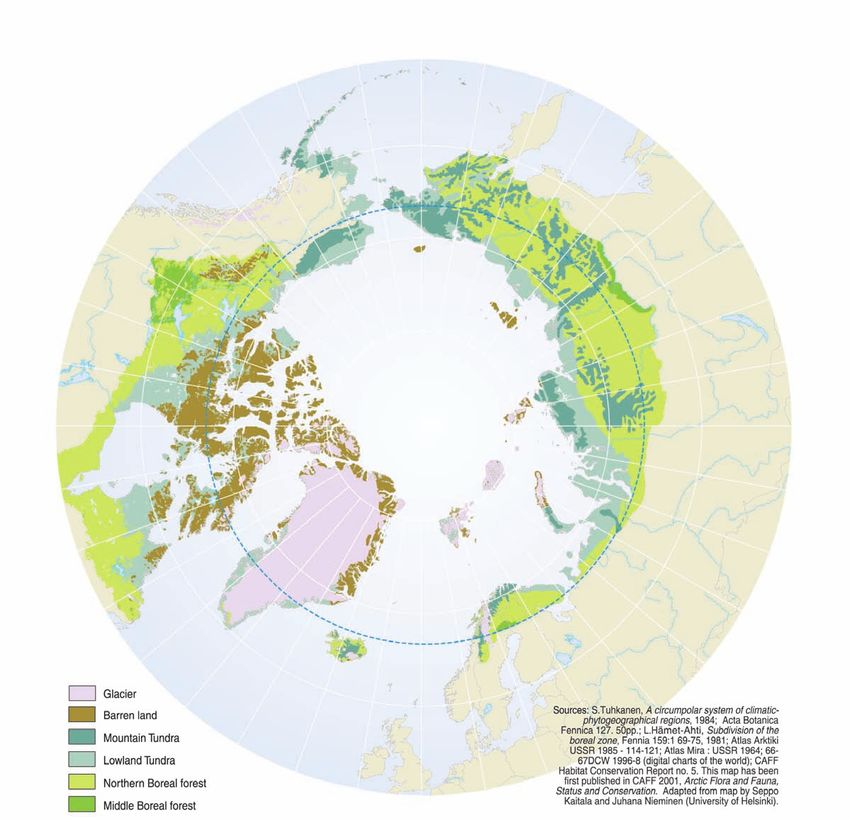
In brief

                                                         Endangered Peoples, Lynge         sneak preview of where his                                                   is called Climate wars,
                                                         wrote: “It is very strange        research is heading, draw-                                                   and details how a warming
                                                         for the Indian trapper in the     ing the attention to the fact                                                world can easily boil over in
                                                         Canadian forests or for the       that climate change is not                                                   series of global flashpoints.
                                                         Greenlandic seal hunter in a      just about disappearing ice,                                                 Projections for a global
                                                         kayak - people who live as        and thinner polar bears, but a                                               temperature increase above
                                                         their forebears did further       global problem that requires                                                 two degrees mean many of
                                                         back in history than anyone       an urgent global solution.                                                   the world’s people will go
                                                         can remember – to hear com-       Huebert detailed the recent                                                  hungry. The temperature
                                                         ments made about the suffer-      build-up of military interest                                                tolerance of the world’s main
                                                         ing of the poor animals. Who      and capacity in the north.                                                   food crops will be exceeded
                                                         cares about the suffering that    While not suggesting that                                                    in tropical and subtropical
                                                         the hunter and the trapper        conflict in the north is immi-                                               regions. “India will lose 25
                                  Photo: Rie Oldenburg

                                                         themselves endure in order        nent, his research shows that                                                percent of its agricultural
                                                         to secure the daily food for      various parties are certainly                                                production at two degrees
                                                         their families? All living        preparing for that possibility.                                              hotter,” says Dyer. He says
Finn Lynge on his way                                    things suffer; it has always        Huebert was joined on                                                      figures published only fleet-
through the Narsaq Strait.                               been this way. Suffering          the stage by Gwynne Dyer,                                                    ingly from China suggest the
                                                         is the price of life, and life    a distinguished London-                                                      giant nation could lose up to
                                                         feeds on death. Have the city     based broadcaster and                                                        38 percent of its agricultural
WWF award                                                dwellers forgotten this truth     author. Dyer’s latest book                                                   production.
                                                         of life?”
to Finn Lynge
Greenlander Finn                                         Arctic                                                                           The end of a ‘gruelling’
Lynge was the recipient of
one of the five WWF Awards                               climate                                                                          expedition
for Conservation Merit given                                                                                                              The WWF-sponsored Catlin Arctic Survey team has
out at this year’s WWF An-                               change and                                                                       returned after 73 days of mental and physical challenges on
nual Meeting. Lynge has had                                                                                                               the arctic ice. “It was a gruelling but successful expedition,”
a long and outstanding career                            security                                                                         said expedition leader Pen Hadow. The survey route covered
as priest, social worker, head                                                                                                            440 km, during which the team captured around 16,000 ob-
of Greenland’s Radio Broad-                              A WWF commissioned                                                               servations and took 1,500 measurements of the thickness and
casting, politician, NGO                                 study to be released later this                                                  density of the ice.
activist, civil servant, author                          year shows that the threat                                                         “The average thickness was 1.77 meters,” said Hadow.
and an active commentator                                to world security from a                                                         “We had been led by scientists to expect a good mix of old
and writer. He is the only                               melting Arctic is prompting                                                      and new ice, but found younger, thinner ice. There is a high
Greenlandic politician to                                widespread international                                                         probability that sea ice will be a seasonal feature only.” The
be elected a Member of the                               concern. The Arctic climate                                                      team is now in the process of analysing the data, and expect
European Parliament.                                     change and security report                                                       the first results to be released in the next months.
   Lynge has worked over                                 is led by Dr. Rob Huebert, a
many years to broaden the                                well-known Canadian expert
understanding and bridge                                 on Arctic security issues. The
the traditional gap between                              report is expected to provide
Indigenous peoples’ hunting                              important additional angles
interests and environmental                              to the climate change debate,
organizations. This award                                besides the environmental
recognizes the role he has                               perspectives.
played in bringing about a                                  At a WWF-sponsored
change in perspective for                                ‘Climate wars 2030’ event
both parties.                                            at the 2030 North Confer-
                                                                                            Photo: Martin Hartley www.martinhartley.com

   In his 1992 book, Arc-                                ence in Ottawa in June,
tic Wars, Animal Rights,                                 Huebert gave participants a

 the circle 2.2009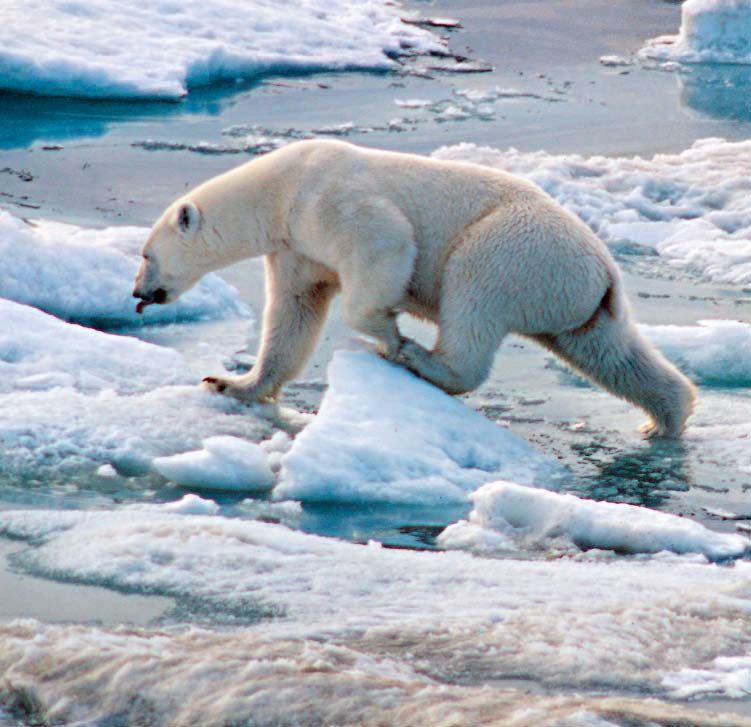
border, and depend upon           village officials have identi-    countries of the world must
                                                             habitats in Russia for critical   fied 31 villages that face        now act to cut their green
                                                             aspects of their life history,    imminent threats.” It adds,       house gas emissions in
                                                             such as maternal denning.         “Since 2003, state officials      order to slow and eventually
                                                             To understand the status of       have identified the growing       reverse the effects of climate
                                                             the entire Chukchi popula-        impacts of climate change,        change.”
                                                             tion and ensure its sound         increasing the urgency of
                                                             management, coordinated           federal and state efforts to
                                                             research programs must be         identify imminently threat-       Closer to
                                                             initiated in both countries, he   ened villages and assess
                                                             emphasized.                       their relocation options.”        Canadian
                                Photo: Eric Regehr, USFWS.

                                                                “This collaboration will       Impacts quoted in the report
                                                             be critical in coming years       include millions of dollars       conservation
                                                             as we try to understand the       of property damage, and in
                                                             current status of the shared      some cases imminent threats       wins
                                                             Chukchi polar bear popula-        to lives and homes from
Nikita Ovsyanikov weighing                                   tion,” said WWF polar bear        flooding and erosion.             Representing a major
a sedated polar bear.                                        coordinator Geoff York.              Of the 31 villages facing      reform in planning approach,
                                                                                               imminent threats, 12 have         and ably helped along the
                                                                                               either decided to relocate,       way by WWF-Canada Presi-
Polar bear                                                                                     or to look at relocation op-      dent Emeritus Monte Hum-

collaboration 31 Alaskan                                                                       tions. However, many of the
                                                                                               Alaskan villages threatened
                                                                                                                                 mel, the government of the
                                                                                                                                 Ontario province announced
                            villages ‘face                                                     are not eligible for federal      its Far North Planning Act,
In M ay, R ussian bi-                                                                          government assistance pro-        outlining the government’s
ologist Nikita Ovsyanikov   imminent                                                           grammes to relocate, because      conservation and economic
participated in polar bear                                                                     federal rules do not recog-       development vision for
research in the Alaskan     threats’                                                           nize their local governments.     Northern Ontario. “This Act
Chukchi Sea led by the U.S.                                                                       “This is a clear exam-         stands to make a precedent-
Fish and Wildlife Service.  from climate                                                       ple of how climate change         setting contribution to fresh-
The scientific exchange was                                                                    threatens to transform our        water conservation, help
sponsored by WWF as a       change                                                             world,” said Bill Eichbaum,       build ecosystem resilience
continuation of the organiza-                                                                  WWF-US Vice President             in a changing climate, and
tion’s support of US/Russian                                 A US government agen-             for marine and arctic policy.     protect huge natural car-
polar bear conservation and                                  cy is recommending more           “The speed and severity of        bon reserves in boreal peat
research efforts. During the                                 concerted action from the         the changes we are now wit-       lands,” said Monte Hummel.
stay, USFWS biologist Eric                                   US government to address          nessing, here in Alaska and       The Act could become the
Regehr familiarized Ovsyan-                                  Alaskan villages threatened       worldwide, both underscore        largest conservation commit-
ikov with the methods used                                   by climate change impacts.        and amplify the profound          ment in Canadian history.
to immobilize polar bears for                                A new report by the Govern-       urgency with which the
research, and the measure-                                   ment Accountability Office
ments, samples, and demo-                                    updates a 2003 assessment
graphic information obtained
from them.
                                                             when it found that most of
                                                             the more than two hundred
                                                                                                 Please help us improve the
   “Ovsyanikov’s knowledge
of polar bear behaviour
                                                             native villages in Alaska
                                                             were affected by flooding or
                                                                                                 distribution of The Circle
brought a unique perspective                                 erosion.                            In an effort to reduce our footprint, WWF is pleased to
to the project, and provided                                   The report says, “While           offer The Circle electronically. If you would like to receive
ideas about how to improve                                   the flooding and erosion            The Circle electronically, or have questions or comments
handling methods,” said                                      threats to Alaska Native            related to the publication, please send us a message on
Regehr. Polar bears in the                                   villages have not been              arcticmedia@wwf.no.
Chukchi Sea move freely                                      completely assessed, since
across the international                                     2003, federal, state, and

t h e c i rc l e 2 . 2009 
Cu r r e n t s tat u s

Arctic conservation:

An opportunity lost or an
opportunity not to be missed?
If we had to define a totally new conservation strategy for the Arctic, would
we be thinking about anything like the policies, structures and activities that
we have now, ask Mi c hael U sher and P hilip Wookey.

Of course this is an unanswerable ‘catch-up’ mode and may not have the                           and mechanisms for the conservation of
question because over the years there          capacity to adapt. Taking just one ex-            biodiversity. The Convention on Bio-
has been activity both in the Arctic and       ample, the tundra biome is being com-             logical Diversity stems from the United
worldwide, and all of this must be taken pressed between the boreal zone, which Nations Conference on Environment
into consideration when we think of the is moving northwards, and the shore of                   and Development in Rio de Janeiro in
future. So, where have we got to and           the Arctic Ocean, which is more or less 1992. The majority of the planet’s na-
where do we want to go?                        fixed (although rapidly eroding in many tions have signed and ratified this con-
   Perhaps the one piece of work that          places through both wave action and               vention, which places responsibility on
has most shaped recent thinking about          the processes of thermokarst; the melt-           individual nations to conserve their bio-
the Arctic is the Arctic Climate Impacts ing of permafrost). Many of the species diversity, to use biodiversity resources
Assessment, ably led by Robert Corell          and habitats are potentially highly               sustainably, and to share the benefits.
and launched in Reykjavík in Novem-            vulnerable to change, especially those            The Convention on Migratory Species
ber 2005. The most important key mes- of the northern tundra, semi-deserts and was adopted in 1979 and entered into
sage from this assessment is that the          polar deserts (see vegetation zones map force in 1983. Many of the Arctic’s spe-
climate of the Arctic is changing and          on the following page), as well as those cies of birds and sea mammals would
that it is changing faster than in most        that are specialists of snow-beds.                be covered by this convention. The
other parts of the planet. A second key           Globally there is a suite of policies          Ramsar Convention, one of the oldest
message is that the Arctic‘s                                                                             of the international biodiversity
climate affects the climates                                                                             conventions (1971), is focussed
of many other parts of the                                                                               on wetland conservation and the
world. The ongoing change in                                                                             delivery of ecosystem services
the Arctic is occurring even                                                                             to human populations, not only
more rapidly than most global                                                                            in the wetlands themselves but
climate models predict, and                                                                              more widely. The Convention
these models already include            Prof. Michael Usher              Philip Wookey is
                                                                                                         on International Trade in En-
an element for polar amplifi-           (OBE, FRSE) is Chair             Professor of Ecosys-
                                                                                                         dangered Species has perhaps
cation.                                 of the Inter-Agency              tem Ecology at the
                                                                                                         not been reflected so much in
                                        Climate Change                   University of Stirling,
                                                                                                         the Arctic, but its growing focus
In constant                             Forum of the UK’s                Scotland. He has
                                                                                                         on invasive alien species could
catch-up                                Joint Nature Conser-             worked since 1991 on
                                                                                                         become increasingly important
Conventional wisdom sug-                vation Committee and             the potential effects of
                                                                                                         in a warming Arctic.
gests that biodiversity should          Honorary Professor               environmental change

increase with warming in the            at the universities of           on the structure and            Protected areas
medium to long term, but the            Aberdeen, Edinburgh              function of terres-             and moni tori ng
rapid rates of climate change           and Stirling. Since              trial ecosystems in
                                                                                                         There are also many legal in-
will mean that ecosystems               retiring in 2001, he has         the Fennoscandian
                                                                                                         struments that apply to just one
(and species) are always in a           worked on reports on             mountains, Svalbard,
                                                                                                         nation or a group of nations.
                                         the effects of climate         northern Iceland and
                                         change on biodiver-            the North Slope of
                                         sity in the Arctic and         Alaska.
 the circle 2.2009
                                         protected areas of
                                         Europe.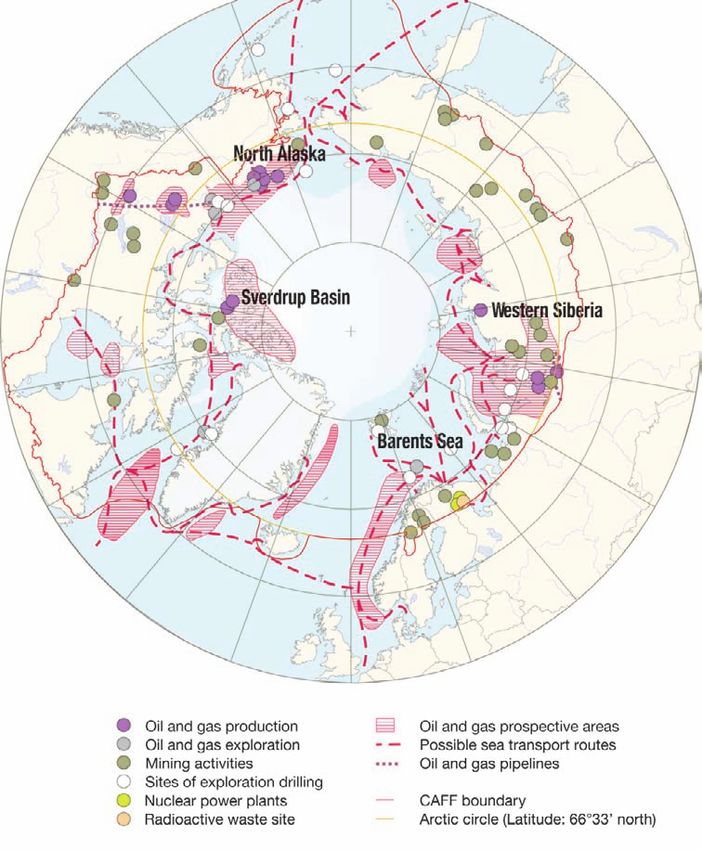
Vegetation zones in the Arctic.
Map: Philippe Rekacewicz, UNEP/GRID-Arendal

  In Europe, the most important would         and reviewed in order to ensure that it       ment techniques are most appropriate
  be the Birds and Habitats Directives of     does actually cover the full range of the     for the long-term conservation of that
  1979 and 1992 respectively. Much of         Arctic’s present biodiversity (terrestrial,   protected area’s biodiversity.
  this legislation, whether it be national,   freshwater and marine). An assessment           As well as protected areas, there are
  regional or international, calls for the    needs to be made for every one of the         two other essential activities. First, and
  establishment of networks of protected      protected areas of the likely effects of      one that has long been used by conser-
  areas. And indeed such networks have        climate change, and other drivers of          vationists, is monitoring (or the terms
  come into being, with the Circumpo-         change, on its biodiversity. In light of      ‘surveillance’ or ‘observatory’ may be
  lar Protected Area Network (CPAN).          these assessments, decisions must be          preferable). In the Arctic this has been
  However, CPAN needs to be completed         made about which adaptive manage-             developed as the Circumpolar Biodi-

t h e c i rc l e 2 . 2009 
Th e c h a l l e n g e

versity Monitoring Program with its as-
sociated Arctic Biodiversity Monitoring
Strategy, both facilitated by The Arctic
Council’s organisation ‘Conservation
                                                Conservation in an
of Arctic Fauna and Flora’ (CAFF).
As well as highlighting what has been
changing, the monitoring data should
                                                age of urgency
assist us in understanding why it has
changed, and, given the sensitivity of the      The world as we have known it will look strikingly different in the
Arctic, is set to provide an early detec-
                                                next century or two. Climate change adds new dimensions of ur-
tion system for the impacts of environ-
mental change on the whole planet.              gency to conservation programmes, says Mark N uttall. New
                                                approaches to arctic conservation need to be increasingly human-
‘Ecosystem ap proach’
                                                centred.
Second, and of more recent origin than
monitoring, is ’The Ecosystem Ap-
proach’, advocated by the Convention
on Biological Diversity. This approach       Climate c hange is not a phenom-             climate change, I am struck by the fact
recognises the importance of uniting         enon peculiar to the end of the 20th         that even fifty years or more ago, sci-
both human (social and economic) and         century and the beginning of the new         entists were sounding alarm bells about
environmental concerns. The inclusion        millennium. In the Arctic, for example,      ecological transformation yet nothing
in biodiversity plans of the Indigenous      we can certainly point to numerous           was acted upon. In Late Lessons from
peoples is central to the ecosystem          examples of past climatic change in the      Early Warnings, a 2002 report by the
approach. Perhaps the Arctic is the          geological and glaciological records,        European Environment Agency (EEA),
greatest geographical area on planet         as well as in the oral history of arctic     a number of case studies were present-
Earth where this overarching approach        peoples. But there are a number of dif-      ed that show how adequate information
to managing our environment for all          ferences between past climate change         was available about potential hazards
species, including the human species,        and that currently being experienced,        long before decisive regulatory advice
can be applied.                              as well as the changes predicted for the     was taken. The information was either
   It must be acknowledged, however,         coming decades. Firstly, our aware-          not brought to the attention of decision-
that the geopolitical climate is com-        ness of the nature, extent and reach of      makers or was ignored or discounted
plex. The wealth of natural resources        climate change is profoundly more so         for many different reasons (skepti-
in the Arctic, as well as the prospect       than a generation or two ago, so that        cism being chief amongst them). Early
of an ice-free Arctic Ocean, will all        our discussion of it is now at the fore-     warnings were also ignored because of
mean that resource exploitation and the      front of debate about how we imagine         political or economic considerations.
development of industrial and transport      ourselves and the planet in the future.      As the world’s leaders prepare to meet
infrastructure will gather rapid pace.       Secondly, scientists increasingly talk       in Copenhagen to thrash out a new
Set against this highly dynamic back-        of ’tipping points’, thresholds beyond       post-Kyoto deal at COP15 in December
ground the urgent need for biodiversity      which ecosystems will change irrevers-       2009, it is to be hoped that they will
action seems obvious, and there is           ibly. We are at the point of no return, it   consider this EEA report, learn from the
scope for CPAN to raise its ambitions        seems. Climate change is happening, it       mistakes of failing to heed early warn-
accordingly. Furthermore, although the       is going to get worse and far more ex-       ings, and familiarize themselves with
terrestrial and freshwater realms might      treme, and the world as we have known        the report’s recommendations.
be recipients of the strongest direct        it will look strikingly different in the        The implications of climate change
impacts of human activity, and to date       next century or two.                         for biodiversity and cultural diversity,
have experienced the greatest amount                                                      for plant and animal species and for
of conservation activity, current protec-    E arly warn i ngs                            human societies, will be significant and
tion of marine systems is trailing far       Both of these aspects of our under-          they present immediate and far-reach-
behind. An international convention for      standing of climate change and its           ing challenges to nature conservation.
the conservation of the Arctic’s marine      impacts and consequences influence           In the Arctic, there is clear evidence
resources is long overdue. These are all     discussion about the urgency of appro-       from both Indigenous/local observa-
opportunities which cannot and should        priate responses in terms of policy and      tions and scientific research to show
not be missed.                               action. When I read earlier accounts of      that animal populations – their habitats

 the circle 2.2009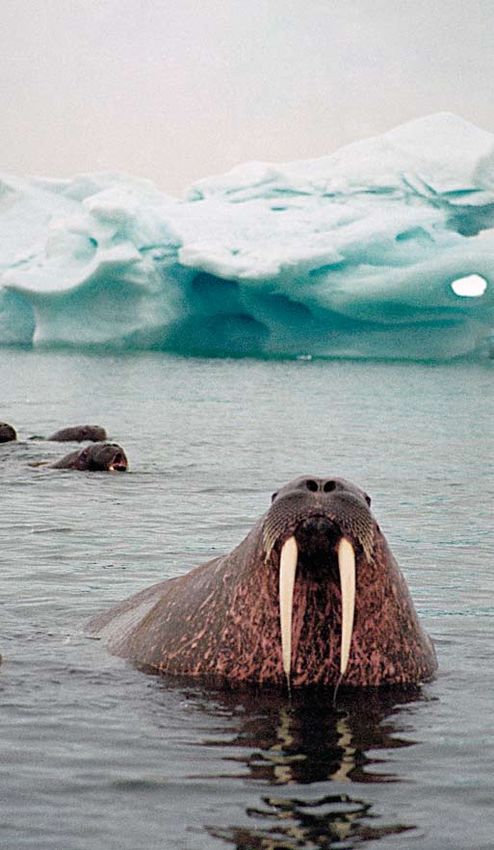
and ranges, seasonal and migration pat-     sive and extreme as the climate of the          Conservation takes the environment
terns and their reproductive behaviour      arctic continues to change. Although         and the ’natural’ world as its focus
– are already being affected by climate     a few animal species will find a niche       – often assuming that it can define it,
change. This and more has been report-      in which to thrive, many will struggle       engineer it, and also mould it in a shape
ed on extensively in the Arctic Climate     to adapt in habitats that have changed       that will enable adaptation. Perspec-
Impact Assessment and subsequent            dramatically. Some will probably face        tives from the natural sciences have
scientific research. In the course of my    extinction or lose genetically important     long dominated biodiversity conserva-
work, I talk with people in Greenland,      parts of their populations. No animal        tion theories, methods and practices.
northern Canada and Finland who             appears to be more iconic than the polar     At the same time, perspectives from
remark how the very taste of animals is     bear in this regard. So what does all this   social scientists are contributing to the
now different. Although all are careful     mean for conservation and its underly-       redefinition of con-
not to attribute this to climate change,    ing ideas, methods and philosophies?         servation as being
they nonetheless see this as indicating                                                  first and foremost a
something is changing in the environ-       Natural sc ience                             thoroughly human
ment that affects the animals they hunt,    dominat ion                                  issue. The reasons
herd and ultimately eat. Such effects are   Climate change adds new dimensions           for putting conser-
likely to become more apparent, exten-      of urgency to conservation pro-              vation measures in         Mark Nuttall is a

                                                             grammes. Globally,          place are because          social anthropologist.

Killer whale (Orcinus orca).                                 extreme, radical con-       impacts leading to         He holds the Henry

                                                             servation strategies        loss of biodiversity       Marshall Tory Chair

                                                             are being considered,       are largely caused         in the Department of

                                                             such as ’managed’           by human activity.         Anthropology at the

                                                             or ’assisted’ loca-         Conservation is            University of Alberta,

                                                             tion, which usu-            also a human issue         Canada, and is also

                                                             ally involves moving        because the admin-         Academy of Fin-

                                                             species – manually          istrative dimensions       land Distinguished

                                                             – into habitats where       of conservation are        Professor at the Thule

                                                             they can thrive. It is a    based on human             Institute, University of

                                                             controversial strat-        decision-making            Oulu, Finland.

                                                             egy, especially given       processes; species
                                                             concern over invasive       and ecosystems are
                                                             species, but only one       often conserved for human use; and
                                                          © Kevin SCHAFER / WWF-Canon

                                                             of many which are           the success of conservation measures
                                                             being taken seriously       rely on human action, politics, cultural
                                                             by some conservation-       attitudes and behaviour.
                                                             ists. Other examples
                                                             of radical conserva-        Conservat i on social

    “
                                                             tion include plans to       sci ence
                                                             establish vast migra-       As we strive to rethink conservation
         The reasons for                                     tory corridors that         science and management in an age of
         protecting polar                                    extend thousands of
                                                             kilometers, preserving
                                                                                         rapid climate change, new approaches
                                                                                         to arctic conservation need to be based
         bears or whales,                                    the genetic diver-          increasingly on conservation social sci-
                                                             sity of threatened and      ence rather than just conservation sci-
    for instance, are very                                   endangered species in       ence. They need to be grounded firmly
                                                             seed banks, fertiliz-       and securely in better knowledge of the
    different to members                                     ing the oceans so that      complexity of social systems and social
    of environmental NGOs                                    they can increase
                                                             their absorption of
                                                                                         relations, the complexity of human-
                                                                                         environment relations and how they
    living in European cities                                greenhouse gases, and       intersect with regional and global proc-
                                                             geo-engineering the         esses, an understanding of the cultural
    and to members of                                        Earth to control rising     importance of what is being conserved,
                                                             temperatures.               and an understanding of the politics of
    hunting households in
    northern Greenland.
t h e c i rc l e 2 . 2009 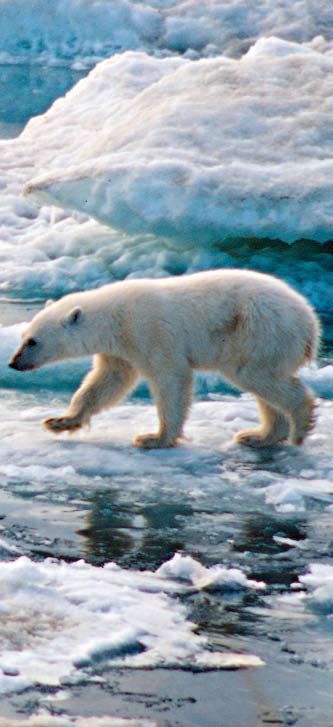
Ti p pi n g p o i n t s

environmental governance. They need
to be attentive to societal inequali-
ties and processes of social exclusion
(for example, what are the impacts of
                                              Thresholds of
protected areas and management re-
gimes on people’s livelihoods?) and be
appreciative of diverse social, cultural
                                              climate change in
and political meanings and understand-
ing of conservation. The reasons for
protecting polar bears or whales, for
                                              arctic ecosystems
instance, are very different to members
of environmental NGOs living in Euro-         Nowhere are the ecological threshold concepts arguably more ap-
pean cities and to members of hunting         plicable than to arctic ecosystems, where fundamental changes seem
households in northern Greenland. But
                                              to be transforming ecological relationships and landscapes at rates
contested ideas of conservation are also
often profoundly local – for instance,        that surprise inhabitants, managers and policymakers, says Da n i e l
as work carried out by myself and col-        B. Fagre. The Arctic is experiencing effects now that are decades
leagues on the conservation of wolves
                                              ahead of those projected for the rest of the globe.
and other large predatory carnivores in
Finland’s southeast reindeer herding
area shows. There, reindeer herders,
farmers, hunters, tourist entrepreneurs,   Many ecosystems have persisted               change with positive feedbacks – chang-
wildlife officials, environmental-         for centuries to millennia with relatively   es that reinforce themselves and ac-
ists, and a range of other local actors    little change and, therefore, appear         celerate the whole process. Nowhere are
all have very different ideas of what      to be stable. Yet ecologists have long       these concepts arguably more germane
conservation actually means. And so a      understood that ecosystems can go            than to arctic ecosystems where funda-
local conflict plays itself out within a   through very rapid change, and even          mental changes seem to be transforming
national context and solutions or even     collapse, when critical tipping points       ecological relationships and landscapes
compromises seem difficult to reach.       or thresholds are reached. New species       at rates that surprise inhabitants, manag-
   Social science approaches to con-       assemblages, adaptations, and even new       ers and policymakers.
servation also recognize the crucial       species often result, depending upon the
importance of involving a range of         length of ecological recovery. However,      Arctic threshold
stakeholders and actors – members of       these threshold events pose very real        changes
local communities in particular, as well   problems for human societies that are        The Arctic has warmed more rapidly
as scientists and policymakers – as        dependent on the natural resources and       than the rest of the planet. In Alaska, for
partners in designing and implementing     ecological services that ecosystems pro-     instance, the warming rate is more than
what are essentially human-centred ap-     vide. History is replete with examples       twice the rate of the rest of the United
proaches to conservation. A fundamen-      of civilizations that largely disappeared    States. The annual average temperature
tal first step for conservation is to be   due to rapid ecosystem change, most          has increased by 1.9°C since the mid-
attentive to ways of improving relations   recently chronicled in Jared Diamond’s       20th century, and the increase is much
between different actors who often have    book Collapse.                               greater in winter (3.5°C). Not surpris-
diverse and contested perspectives. The       As defined in a recent report from        ingly, there are numerous responses to
way we will respond to the effects of      the U.S. Climate Change Science              the warming such as earlier snowmelt in
climate change on arctic ecosystems,       Program, titled Synthesis and Assess-        the spring. However, there are simple
species and habitats – and the prospects   ment Product 4.2 Thresholds of Climate       physical mechanisms that amplify the
for the sustainability of ecosystems       Change in Ecosystems, “an ecological         warming, accelerate the pace and cre-
and human livelihoods – depends on         threshold is the point at which there is     ate a threshold of ecological change.
a critical engagement with conserva-       an abrupt change in an ecosystem qual-       When snow melts earlier, the exposed,
tionist ideas, and a recognition of the    ity, property, or phenomenon, or where       darker land surface absorbs more solar
primacy of community and rights-based      small changes in one or more external        radiation and transfers the heat to warm
conservation.                              conditions produce large and persistent      the local atmosphere, causing further
                                           responses in an ecosystem”. Thresholds       snow melt which, in turn, leads to
                                           can also be described as rapid nonlinear     more land surface to absorb more solar

10 the circle 2.2009
radiation. This positive feedback is in tems such as dramatic changes in the prises if not in their occurrence, then in
addition to the external driver, regional wetlands of interior Alaska and Sibe- their rapidity and scope. Presently, there
warming, which is already among the ria, major increases in the frequency are few indicators as to when an eco-
globe’s strongest. The relatively rapid of large-fire years in interior Alaska, system is near an imminent threshold
change in absorption of heat by the vegetation changes in the tundra, and and there is little collective experience
landscape also leads to more growth ecological changes that are affecting in managing ecosystems while crossing
of shrubs and trees that further absorb fisheries in the Bering Sea. One exam- a threshold. The report on thresholds
solar radiation, increase local heating, ple of potential threshold change that concludes by look-
and facilitate growth of more shrubs and is relevant to both regional and global ing at what can be
trees. In northern Alaska, Terry Chapin scales is the thawing of permafrost. done given that
and others calculated that this positive A documented decrease in the area of climate change is
feedback effect on snowmelt and local closed-basin lakes (that is, lakes without global in nature but
heating was similar in magnitude to the stream inputs and outputs) during the manifests itself at Dr Dan Fagre is
doubling of atmospheric CO2! Thus, the latter half of the 20th century is linked local and regional Research Ecologist for
area is experiencing effects now that are to sudden drainage associated with scales. To improve the Northern Rocky
decades ahead of those projected for the thawing of permafrost in areas where our understanding Mountain Science
rest of the globe. Of equal significance the temperature of permafrost is close of thresholds, one Center of the U.S.
is that the vegetation growth is ‘perma- to melting. As more permafrost area suggestion is that Geological Survey and
nent’ because it will tend to reinforce warms, the decrease in closed-basin interdisciplinary Director of the Climate
earlier snowmelt and local heating that lakes could abruptly accelerate in a models of ecosys- Change in Mountain
are optimal for the vegetation. It can threshold fashion for the entire region. tems be improved Ecosystems Project.
be argued that a threshold of climate With regard to global greenhouse gas but also used more He is stationed at
change in this ecosystem was crossed. emission, the release of methane from interactively. The Glacier National Park,
Several research teams cited in the thawed permafrost could increase aim would be to Montana and is a
report document that there has already warming and, in turn, accelerate more provide a frame- faculty affiliate at the
been a 16 percent increase in shrub permafrost thawing. work to organize University of Mon-
cover and the process is continuing. observations and as- tana, Montana State
The report examines a number of Big challenges sess changes in eco- University, University
other potential threshold changes in Thresholds present big challenges for systems in response of Missouri-Colum-
the arctic environment. These include managers of ecosystems and ecological to management bia, University of
substantial changes in ecological sys- services. First, thresholds are often sur- actions. Another Arizona and several
suggestion is to
The Arctic has warmed more rapidly than the rest of the planet. The map shows improve ecosystem
other universities. He
the significant temperature increase in the Arctic areas compared to the rest of resilience by using
is an author on more
the world. Map: NASA Goddard Institute for Space Studies
existing manage-
than 120 publications
and has co-published
Surface anomaly January 2009 vs 1951-1980 (°C) ment tools more three books recently.
aggressively. These
include restoring
connectivity, protecting refugia for key
species, and reducing other stressors
such as pollution.
Threshold threats to many ecosystems
are threats to long-term sustainability
of human users as well as biodiversity
and biological adaptive capacity. Given
the magnitude of climate change effects
on ecosystems, the added factor of
sudden threshold changes complicates
societal responses. This underscores the
importance of continued integration of
research and management to develop
appropriate strategies for coping with
-8 -4 -2 -1 -0.5 -0.2 0.2 0.5 1 2 4 8
thresholds.
Sources and parameters: GHCN_GISS_1200km_Anom01_2009_2009_1951_1980. Note: Gray areas signify missing data.
t h e c i rc l e 2 . 2009 11N ew c o n s e rvat i o n pa ra d i g m
Climate change and the
prospects for biodiversity
conservation in the Arctic
In the face of climate change, conservation of biodiversity in the Arctic presents formidable
challenges to planners and requires new approaches, says Sahotra Sarkar. Unfortunately,
almost all discussion of biodiversity conservation in the Arctic has been based on species.
In the United States, the polar implemented on the ground as soon as species most economically.
bear has already been listed as endan- possible—before the irreversible results While species, especially at-risk
gered because of climate change but, of climate change make it impossible to species, are important, they are not
globally, every ice- prevent the extinction of a large fraction the only components of biodiversity.
dependent marine of arctic species. Adequate biodiversity Unfortunately, almost all discussion of
mammal species is conservation in the Arctic will require biodiversity conservation in the Arctic
probably equally at three elements: a comprehensive area has been based on species. Conserva-
risk. (In the United evaluation and prioritization exercise tion plans must be supplemented by at
Sahotra Sarkar is States, efforts are to identify those areas that represent least including all habitat types (eco-
Professor of Integra- already under- most biodiversity and are least subject systems) in the networks of prioritized
tive Biology and of way to provide to degradation due to climate change; areas. Tools to identify these based on
Philosophy at the legal protection to transnational planning and implemen- remote-sensed data are also available
University of Texas at bearded, ringed, tation of a network of protected areas but have only been used to a limited
Austin. He is the au- and spotted seals with science-based adaptive manage- extent.
thor of over 100 arti- because of climate ment protocols; and large-scale reduc- Finally, these conservation plans and
cles on environmental change.) Migratory tion of industrial activities. sets of prioritized areas should be re-
conservation and five birds that summer fined to include the effect of industrial
books including Sys- in the Arctic are Area pr iori tization activities likely to occur in the Arctic
tematic Conservation also experiencing for conservation under different regulatory scenarios. At
Planning, co-authored habitat declines There is no comprehensive evaluation this stage our uncertainties about the
with Chris Margules though the extent of how climate change will induce spe- future should be explicitly incorporated
(Conservation Interna- of the declines cies’ ranges shifts in the Arctic. Tools to the extent possible. My laboratory
tional). His labora- remains unclear. to map and model species’ distributions has carried out one such analysis for
tory specializes in the To make matters in the face of climate change do exist, northern Alaska. This establishes that
creation of software worse, in much of as does an adequate knowledge base such planning is scientifically feasible
decision support tools the Arctic, these for their deployment. Unfortunately, but, otherwise, it is of limited signifi-
for the prioritization of problems are so far, no agency or organization has cance in the context of the entire Arctic.
areas for biodiversity exacerbated by oil taken the lead to coordinate the most
conservation. and other mineral rudimentary systematic conservation Transnat ional
exploration and planning exercise: collate all species’ planning
extraction activi- distributional data, model their global It goes without saying that plans to
ties that act synergistically with climate distributions as they shift under climate implement such a network of pro-
change to degrade natural habitats. change, assess the models to the extent tected areas must incorporate political
It is imperative that a plan for possible, analyze the performance of opportunities and address constraints.
conserving and monitoring biodiver- existing protected areas, and prioritize The Arctic includes areas claimed by
sity in the Arctic is formulated and networks of areas that would include all seven countries (Canada, Denmark/
12 the circle 2.2009threat to the Arctic is oil and other
mineral exploration and extraction ac-
tivities. In many of the arctic countries,
there continues to be strong political
pressure to persist in these practices,
perhaps most vividly exemplified by
the conflict over oil and gas exploration
in the Arctic National Wildlife Refuge
in Alaska. There must be a global con-
sensus that all industrial activities in the
Arctic that potentially cause environ-
mental damage must stop. Otherwise,
because of the fragility of many arctic
habitats and the extent and immediacy
of the threats posed by climate change,
the Arctic will disappear as a natural
habitat within our lives.
In much of the Arctic a reduction of
“
Every country in
the Arctic has
the economic
resources to meet
these costs.
further industrial activities will consist
of less fossil fuel extraction. This has
Industrial activities and oil and gas reserves in the Arctic. the added benefit of encouraging less
Map: CAFF (Conservation of Arctic Flora and Fauna) 2001. Arctic Flora and Fauna: Status and Conservation. Helsinki:Edita
fossil fuel consumption and, therefore,
Greenland, Finland, Norway, Sweden, they must also be managed that way. less carbon emissions which will feed
the Russian Federation, and the United Transnational agencies and or- back into efforts to limit the effects
States). Establishing networks of pro- ganizations, including WWF, have of climate change. Yet another added
tected areas nationally (or using even an important role to play in fostering benefit is that a cessation of indus-
smaller planning regions) typically the trust and cooperation between the trial activities will help conserve the
results in sub-optimal plans, that is, arctic countries that will be required to traditional livelihoods of those Indig-
more area is required to meet the same make this process successful. A useful enous groups which prefer to persist in
conservation goals and targets. Moreo- beginning would be the establishment that way. There will be costs, though it
ver, species do not carry passports of a transnational team to carry out the remains open to question whether these
or respect national boundaries which systematic conservation planning ex- have typically been exaggerated. In any
also usually do not follow habitat type ercise emphasized earlier. More public case, every country in the Arctic has the
boundaries. An optimal plan for arctic discussion of goals and constraints for economic resources to meet these costs
conservation must be transnational with the entire region would also help move provided that there is political will.
each species or habitat type protected the project forward. Moreover, if oil extraction in Alaska is
wherever it makes most sense to protect typical, the costs of restoring habitats
it. What makes this process even more Mineral exploration in the future after industrial damage far
difficult is that not only must protected and extraction outweighs the economic benefits of cur-
areas be established transnationally, but Next only to climate change, the main rent exploitation.
t h e c i rc l e 2 . 2009 13Re s i l i e n c e
Resilience-building to conserve
a rapidly changing future
Policy makers face a severe dilemma in addressing conservation issues in a rapidly changing Arctic,
says F. S t ua rt Chapin, III. ‘Conservation’ suggests an effort to sustain current species and
ecosystems and ‘keep things the same’. However, climate change is rapidly altering the biophysical
environment of the Arctic. How is conservation possible in such a rapidly changing world?
Are c onservation efforts mented and likely to continue include the Arctic has changed and is virtually
doomed to simply slowing the loss rates retreat of sea ice, earlier snowmelt, certain to continue changing within
of species and ecosystems, or are there warming of permafrost, wetland drying, our lifetimes. How can policy address
proactive approaches to conservation declining flows of non-glacial rivers, conservation concerns, given this likely
that could bring a brighter future? and more extensive wildfires. These future?
The 2007 assessment by the Inter- changes will not occur every year, but
governmental Panel on Climate Change this trend will likely characterize the Building resili ence
(IPCC 2007) con- Arctic in the coming decades. Resilience is the capacity of a system
cluded that there is These environmental changes already consisting of people and nature to sus-
at least a 90 percent affect and will likely continue to affect tain and shape its fundamental structure
probability that hu- many of the species and peoples of the and functioning in the face of perturba-
man activities have Arctic. Walrus, for example, use sea tions such as climate change. Resil-
F. Stuart Chapin, contributed to cli- ice as a feeding and nursing platform. ience approaches advocate a shift from
III is an ecosystem mate warming, and When sea ice retreated north of the reactive policies to prevent change to
ecologist whose re- that global warm- continental shelf in summer 2007, proactive policies to shape change in
search addresses the ing during the last walrus could no longer reach the sea rapidly changing world. Given that
sustainability of eco- half-century results floor where they feed. Six thousand future changes are uncertain, resilience
systems and human from the increased walrus moved ashore near the vil- places a strong emphasis on building
communities in a rap- concentrations of lage of Wainwright Alaska for the and maintaining a multitude of options
idly changing planet. greenhouse gases first time in recorded history. This and that allow flexibility to adapt to change
This work emphasizes such as carbon similar changes in the ecology of other rather than pursuing what might cur-
the impacts of climate dioxide in the at- ice-dependent marine mammals have rently seem like the single best option.
change on Alaskan mosphere. Because sobering implications for conserva- There are four basic tenets to build-
ecology, subsistence these gases remain tion of both the ecological and cultural ing resilience: (1) Sustain the funda-
resources, and Indig- in the atmosphere attributes of the Arctic. Like it or not, mental ecological and social processes
for a long time, this that have shaped the
“
enous communities,
as a basis for develop- human influence on current system,
ing climate-change the climate system
is certain to persist
Six thousand but allow enough
disturbance for the
adaptation plans.
for at least the walrus moved system to adjust to
next half-century. change. (2) Foster
The last time polar ashore near the social, economic, and
regions showed persistent warming of ecological diver-
this magnitude was 125,000 years ago.
village of Wainwright sity to provide a wide
Ecologically important environmental
changes that are already well docu-
Alaska for the first time range of pathways
for potential future
in recorded history.
14 the circle 2.2009Species
change. (3) Experiment with different
approaches to provide opportunities to
learn what works and what does not. (4)
Adapt governance to allow implemen-
Ensuring marine mammal
tation of potential solutions under novel
conditions. conservation in a rapidly
Resili ence and
conservat ion
changing Arctic
These resilience principles suggest
many examples of policies to address Climate change is already having significant effects on arctic
the changing needs of arctic conserva- marine ecosystems and component species, including marine
tion. (1) Reduce human impacts on the
climate system, so the rates of arctic mammals, say Peter O. Thomas and T imothy J. R ag e n.
change will decline, giving species and Research and monitoring, although important, are not sufficient to
ecosystems more time to adapt. (2) conserve arctic marine mammals.
Broaden the range of habitat opportuni-
ties for arctic species and peoples. For
example, if sea ice continues to decline,
create onshore preserves that partially
protect walrus from hunting and preda-
tion. Establish arctic marine reserves
adjacent to terrestrial conservation
areas to protect fish such as salmon that
are beginning to colonize the Arctic
Ocean. Protect stream gravels from ex-
traction to provide potential spawning
habitat for northward moving salmon.
(3) Encourage local community-agency
initiatives to create novel subsistence
arrangements such as community
quotas for newly arrived fish species or
multi-species harvest regulations that
allow hunters to target marine or terres-
trial game species when they are locally
abundant. Develop a knowledge-shar-
ing network to facilitate widespread
learning from such experiments. (4)
Explore new governance arrangements
at a wide range of scales. For example,
create bridging mechanisms between
pan-arctic conservation strategy bodies,
state or federal regulatory agencies, and
hunter-based community monitoring
programs.
Resilience-based stewardship seeks
no explicit structural outcome but
Photo: © Wim VAN PASSEL/WWF-Canon
fosters the underlying ecological and
social conditions required for conser-
vation. By doing so, it opens multiple
pathways for potential adaptation to
new conditions.
Atlantic walrus (Odobenus rosmarus rosmarus).
t h e c i rc l e 2 . 2009 15M arine mammal spe cies at cessfully, and a few species (e.g., the lems stem from the difficulty of work-
risk include those that remain in the gray whale) may actually benefit from ing in the arctic environment. However,
Arctic year-round (i.e., polar bear, increasing access to ice-free foraging the larger problem is a lack of resources
walrus, ringed seal, bearded seals, areas. Species by species analysis is and commitment on the part of the
beluga whale, narwhal, and bowhead only one part of the story. The reduction responsible management agencies. It is
whale), and those that inhabit the in sea ice has significant impacts on the conceivable that a number of arctic spe-
Arctic on a seasonal basis (e.g., ribbon, basic arctic marine food web, which is cies have already experienced severe
spotted, harp, and hooded seals, and built on ice algae, amphipods, and polar declines that have gone undetected be-
gray, minke, fin, humpback, and killer cod. Loss of marine mammal habitat cause of inadequate monitoring. Better
whales). may therefore be accompanied by a loss research and monitoring, and funding
Climate change is causing a wide of prey, as well. for such, will be essential if scientists
range of physical, chemical, biologi- The effects of physical, chemical, and managers are to identify and miti-
cal, and ecological biological, and ecological changes gate risk factors effectively.
Dr Peter O Thomas changes. The physi- associated with climate change are However, research and monitoring
has a Ph.D. in animal cal effects are most exacerbated by current and increasing alone are not sufficient to conserve
behavior from the evident in the loss human activities. In various parts of the arctic marine mammals. Absent effec-
University of Califor- of sea ice habitat, Arctic, commercial shipping, coastal tive measures to prevent climate change
nia, Davis. He is cur- which is forcing a development, tourism and oil, gas and by reducing emissions of greenhouse
rently International number of biologi- mineral exploration and development, gases, conservation efforts will be
and Policy Program cal and ecological now pose, or will pose, additional risks insufficient to address the physical
Director at the Marine changes. Species to arctic marine ecosystems and marine and chemical changes that are occur-
Mammal Commission that have relatively mammals. Such activities may increase ring now and will continue into the
where he has been fixed life history the threats of noise, entanglement, future. Nor will those efforts address
since 2008. traits and that are disturbance, contaminants, ship strikes, the biological and ecological responses
highly dependent competition for prey, introduction of of arctic marine life. A great deal of
on seasonal sea disease, and loss of essential habitat. emphasis has been placed on adapta-
ice will likely be All of these changes, taken together, tion, but species (which have developed
Dr Timothy J. Ragen the most affected. will result in cumulative impacts that over evolutionary time scales) simply
is a marine mammal The ringed seal, for may be greater than the sum of individ- may not be able to adapt at the current
biologist with a Ph.D. example, requires ual effects (i.e., synergistic). The end rapid pace of climate change. This is
in Oceanography certain ice and result may be a severe decline of some especially true of species like marine
from the University of snow conditions to species, leading to extirpation in parts mammals that have life history traits
California, Scripps In- build lairs where of their range and, possibly, extinction. that lead to slow recruitment into the
stitution of Oceanog- the females give breeding population.
raphy. He came to the birth to and nurse L ack of commitment At present societies are struggling
U.S. Marine Mammal their pups. Polar Scientists’ ability to detect changes to address the underlying causes of
Commission in 2000 bears depend on in the size of many marine mammal climate change in a meaningful way,
as Scientific Program ice as a hunting populations is limited. To date, such re- an effort which requires fundamental
Director and was ap- platform and are al- search and monitoring efforts for arctic re-examination of our overwhelming
pointed to his current ready being stressed marine mammals have been woefully pattern of ever-increasing consump-
position of Executive by the growing, ice- inadequate. In fact, the uncertainty sur- tion, energy use, economic activity and
Director for the Com- free summer and rounding population estimates for many population growth. Societies can no
mission in 2006. seasonal changes species is so great that only
“
in the accessibility a precipitous decline could
of hunting and den- be detected and documented. The reduction
ning areas. Walruses For this reason, manage-
are able to access certain foraging areas ment efforts often have been in sea ice has
only if they can haul out on ice near implemented only after
those areas. The loss of sea ice is there- populations are already se- significant impacts
by reducing their access to prey. Other
species with more flexible life history
verely depleted and options
for recovery are limited (i.e.,
on the basic arctic
traits and habitat requirements (e.g., the a crisis-oriented approach). marine food web, which
bearded seal) may be able to adapt suc- To some extent, the prob-
is built on ice algae,
16 the circle 2.2009
amphipods, and polar
cod.Body condition
Disease
Parasites
Contaminants
tions establishing the above measures
are implemented and enforced
Sound decision making on the
Stock Structure Harvest conservation of arctic marine mam-
Abundance Health Fishing mals in the face of global change is a
Survival status Oil and gas/mining difficult and complex endeavor (see
Reproduction Shipping figure 1). Efforts to monitor marine
Human
Demography Population Development mammal responses to changing condi-
activities/
dynamics
threats
tions, conduct informative science, and
implement essential protective meas-
Species ures will be confounded by consider-
plan able uncertainty in our understanding
of climate change effects. At the same
Habitat
Behavior time expanding human activities will
Movements
Sea ice (and snow) have increasing impacts on arctic
Foraging Trophic Oceanography marine mammals and the health and
stability of the ecosystems upon which
Breeding dynamics Climate/weather
they depend. Arctic countries are focus-
ing a large number of initiatives and
activities on various aspects of monitor-
Diet ing, basic science, management, and
Prey availability governance, but it is not clear that these
Competition efforts are sufficiently well developed
Predation and coordinated to provide the desired
Figure 1: The components of a comprehensive plan for monitoring the status of a level of protection for the arctic envi-
marine mammal species or stock. From: Simpkins, M., K.M. Kovacs, K. Laidre, ronment. Multi-national and multi-dis-
and L.Lowry, A Framework for Monitoring Arctic Marine Mammals – Findings ciplinary communication and coordina-
of a Workshop Sponsored by the U.S. Marine Mammal Commission and the U.S. tion among these efforts are essential
Fish and Wildlife Service, Valencia, March 2007. CAFF International Secretariat, to understanding how ecosystems are
CAFF CBMP Report No. 16. changing and to launching concerted
and effective responses.
longer afford to ignore the consequenc- ■ constrain activities that might result At all levels, from local arctic native
es our socio-economic choices on our in release of contaminants (e.g., oil, cultures to national and international or-
atmosphere and on our ecosystems and gas, or mineral extraction) ganizations, societies must consider the
must change accordingly. ■ confine shipping routes and impose root causes of climate change – that is,
speed restrictions where those ships how we got to this point – and what our
Resili ence tools pose a risk of colliding with whales future will be if we fail to make hard
At the same time, we have a number ■ impose strict regulations on disposal choices in the near future. Reynolds
of tools that must be used to safeguard of debris that might otherwise entangle et. al., in a 2009 article in Endangered
the resilience of arctic marine mammal marine mammals Species Research, wrote “The value of
populations from the effects of human ■ site coastal activities away from ar- conservation must be elevated from an
activities and give them the best pos- eas important to marine mammals (e.g., aesthetically pleasing concept champi-
sible chances of survival in the face of denning polar bears) oned when convenient, to a fundamen-
long-term climate change. Among other ■ maintain vital migration corridors tal construct of our lives and futures.
things, we can: for marine mammals moving between Without the social will to make such
■ identify areas of essential habitat and feeding and reproductive areas changes, the future of marine mammals
zone human activities to ensure that ■ examine the possibility of develop- looks bleak.” We would extend that ad-
they do not destroy or adversely modify ing vaccines for diseases that will likely monition to the future of conservation
that habitat be introduced into the Arctic generally. We are capable of making
■ manage fisheries to ensure that ■ provide response capacity for emer- the necessary changes – that is not the
they neither take marine mammals as gencies (e.g., ship wrecks, oil spills) to question. The question is whether we
bycatch nor threaten them ecologically, minimize their impact are sufficiently inspired to do so.
such as through competition ■ ensure that treaties, laws, and regula-
t h e c i rc l e 2 . 2009 17You can also read


