The Global Financial Centres Index 23 - MARCH 2018 - Financial Centre Futures - Long Finance
←
→
Page content transcription
If your browser does not render page correctly, please read the page content below
The Global Financial Centres Index 23 1

The Global
Financial Centres
Index 23
MARCH 2018

   Financial Centre Futures
2 The Global Financial Centres Index 23

We are pleased to present the twenty-third edition of the Global
Financial Centres Index (GFCI 23).
In March 2007, Z/Yen released the first edition of the GFCI, which
continues to provide evaluations of competitiveness and rankings
for the major financial centres around the world.
In July 2016 the China Development Institute (CDI) in Shenzhen and
Z/Yen Partners in London established a strategic partnership for
research into financial centres. We continue our collaboration in
producing the GFCI.
The GFCI is updated every March and September and receives
considerable attention from the global financial community. The
index serves as a valuable reference for policy and investment
decisions.
Z/Yen is the City of London's leading commercial think-tank. Z/Yen
was founded in 1994 to promote societal advance through better
finance and technology. Z/Yen has built its practice around a core of
high-powered project managers, supported by experienced
technical specialists so that clients get expertise they need, rather
than just resources available. The firm is headquartered in London,
but Z/Yen is committed to the ‘virtual office’ concept and is an
intense user of technology in order to improve flexibility and benefit
staff.
The CDI is a leading national think-tank that develops solutions to
public policy challenges through broad-scope and in-depth research
to help advance China’s reform and opening-up to world markets.
The CDI has been working on the promotion and development of
China’s financial system since its establishment 29 years ago. Based
on rigorous research and objective analysis, CDI is committed to
providing innovative and pragmatic reports for governments at
different levels in China and corporations at home and abroad.

The author of this report, Mark Yeandle, would like to thank
Mike Wardle, Bikash Kharel, Shevangee Gupta, Michael Mainelli,
Carol Feng, Peng Yu, and the rest of the GFCI team for their
contributions with research, modelling, and ideas.
The Global Financial Centres Index 23 1

Foreword
2018 is set to be a year of change in Kazakhstan’s         healthcare facilities as well as lifestyle options bring the
financial landscape as the fully-fledged launch of the     most comfortable conditions and serve the needs and
Astana International Financial Centre (AIFC)               tastes of different people reallocating to Astana from
undoubtedly unveils a new chapter of reform and            around the globe.
modernisation in the country’s financial sector.
                                                           In a short span of 20 years, Astana has already been
Kazakhstan has always been in the forefront of             recognised as a political and cultural centre and now, it
innovations and structural reforms. Within just            is also placed as a new destination in the map of global
a quarter of the century, Kazakhstan has asserted a        financial centres. It is a very important moment for
reputation of a regional leader deservedly achieved        Astana, as today, for the first time, it is featuring in the
through years of political stability and a strong          Global Financial Centre Index, globally recognised
commitment to economic liberalisation in combination       benchmark assessing the competitiveness of interna-
with the immense stocks of natural resources. Since its    tional financial hubs. This milestone is an
independence, Kazakhstan has succeeded in increasing       acknowledgment of our efforts by global financial
its economy five times with total country wealth           players.
exceeding $110 billion. The achievements of the past
                                                          In fact, AIFC has been gaining tremendous response
years laid out a firm and solid foundation to face the
                                                          over the last three years when His Excellency, President
current global economic challenges with confidence
                                                          Nazarbayev has first introduced his vision of building an
and focus on further aspirations to achieve long-term
                                                          international financial centre. AIFC has become an
sustainable growth and maintain its leading positions
                                                          enabling partner to the variety of financial hubs,
on the regional and global stage.
                                                          international organisations, development institutes,
AIFC is the unrivalled financial centre aimed at creating financial corporations and companies of different scale.
uncontested market space for the region of more than Among our most honoured relationships are the
300 million consumers. It is the first and sole financial strategic partnership with the largest world stock ex-
centre among entire CIS counties who pioneered in         changes, Nasdaq Inc. and Shanghai Stock Exchange.
introducing a common-law framework designed to            They view AIX, AIFC’s stock exchange, as the main
bring the favourable environment for business growth. platform for financing the “Belt and Road” projects in
To earn global community’s confidence in AIFC, the        the all Central Asian region. AIX is also missioned to
most trusted, influential and well-recognised judges      host the large scaled privatization program of the
were nominated to the AIFC Court. This is clear           country’s major national companies. The trust and
evidence of Kazakhstan and AIFC’s highest commitment support of our global partners give us confidence that
to the rule of law, transparency and accountability.      we will continue in our mission to develop the
                                                          world-class financial centre for the whole region of
Since inception, we have invested a significant amount
                                                          Central Asia, the Caucasus, Eurasian Economic Union,
of time and effort to create best in the class financial
                                                          the Middle East, West China, Mongolia and Europe.
centre with a most compelling ecosystem. AIFC’s
fundamentals lie within a top-notch legal and             Commemorating a successful launch of AIFC coinciding
regulatory regime, no corporate tax regime, depth and with the 20th anniversary of Astana this year, we are
breadth in financial services and instruments’ offering, honoured to host AIFC’s Grand Opening Ceremony on
highly supportive and flexible environment fostering      July 5th, 2018. It is a historical event for us and will
the long-term growth and innovative development of        allow sharing our plans and long-term vision,
its participants. AIFC is aimed to become a home for      demonstrate our credentials and comparative
the best talents and experts by supporting their career advantages as well as engage global industry specialists
development and promoting the best working                in the most trending topics’ discussions. I welcome the
environment, not to mention a city that offers the very readers of GFCI 23 to share this
high standards of living.                                 historical day with us.
Astana is a young and fast-growing city that has made
its mark on the world map. Astana is often referred as a
                                                                     Kairat Kelimbetov
city of the future. Modern infrastructure and logistics
developed based on smart city concept, futuristic city               Governor of AIFC
architecture representing a miracle of urban
construction, variety of housing, education and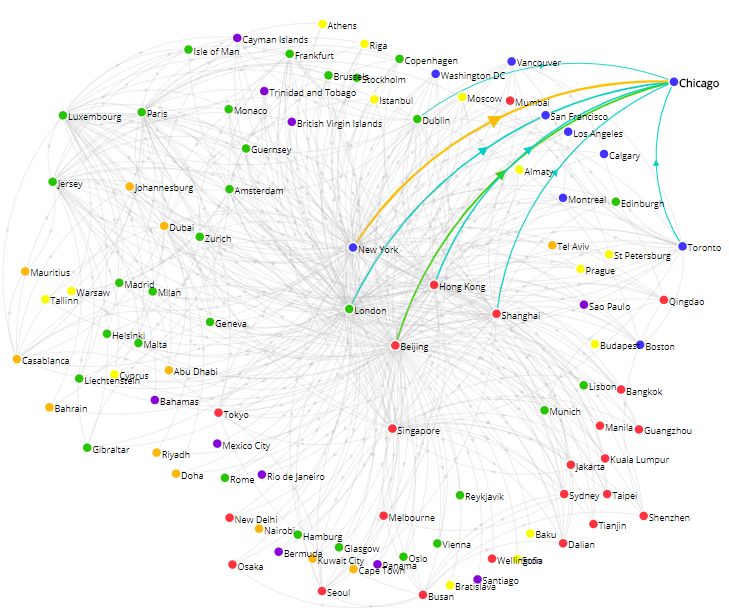
2 The Global Financial Centres Index 23

GFCI 23 Summary and Headlines
GLOBAL FINANCIAL CENTRES INDEX 23                       •   Western European financial centres remain
                                                            volatile. The top five centres rose in the
•       We researched 110 centres for this                  ratings. Most of the lower placed centres
        edition of the Global Financial Centres             lost ground. Hamburg, Munich, Monaco, and
        Index (GFCI 23). The number of                      Madrid, rose strongly in the ranks, with other
        financial centres in the main index has             improvements for Paris, Jersey, Edinburgh
        increased from 92 to 96 with the                    and Lisbon. Hamburg in particular rose 38
        addition of Astana, Baku, New Delhi and             places in the ranks.
        Tianjin from the associate centres list.
        There are 14 associate centres awaiting         •   In the Asia/Pacific region, the leading
        potential inclusion in the main index.              centres improved their ratings. There were
                                                            significant rises in the ranks for Qingdao,
•       GFCI 23 was compiled using 103                      Bangkok, Kuala Lumpur and Busan. Tianjin
        instrumental factors. These                         and New Delhi are new entrants to the GFCI.
        quantitative measures are provided by
        third parties including the World Bank,         •   North American centres generally achieved
        The Economist Intelligence Unit, the                improved ratings and improved their ranks
        OECD, and the United Nations. Details               accordingly. This was a reversal from GFCI
        can be found in Appendix 4.                         22. The exception was Washington DC,
                                                            which dropped 20 places in the rankings.
•       The instrumental factors were combined              Montreal also dropped by one place
        with 28,599 financial centre assessments            (although its rating was 22 higher than in
        provided by respondents to the GFCI                 GFCI 22).
        online questionnaire
                                                        •   All centres in the Eastern Europe and
        (www.globalfinancialcentres.net).
                                                            Central Asia suffered a fall in their ratings.
        Details of the 2,340 respondents are
                                                            However, Cyprus, Istanbul and Moscow rose
        shown opposite. Further details of the
                                                            in the ranks. Tallinn and Riga both fell over
        methodology behind GFCI 23 can be
                                                            30 places in the ranks. Astana and Baku are
        found in Appendix 3.
                                                            new entrants to the GFCI.
                                                        •   In the Middle East and Africa, only Dubai
THE RESULTS                                                 and Abu Dhabi increased their ratings.
                                                            Mauritius, Riyadh, and Casablanca improved
•       There is an overall increase in                     their ranking despite falls in their ratings.
        confidence for the leading centres.
        Signs of a bias towards stronger and            •   All centres in Latin America and the
        more established centres are evident                Caribbean fell in the GFCI ratings except for
        with the top 25 centres all rising in the           the Cayman Islands. Despite the fall in the
        ratings. Ratings fell for all of the lowest         ratings, six centres rose in the ranks with the
        50 centres.                                         Bahamas leading the way rising 22 places.
                                                            The Cayman Islands are now the leading
•       London and New York remain at the top of            centre in the region.
        the rankings and the gap between them in
        ratings closed to one point on a scale of       •   European ‘island’ centres fell back after
        1,000. Hong Kong retains third place.               rising in GFCI 22. The British Crown
        London’s rating rose less than the other four       Dependencies of Jersey, Guernsey, and
        top centres. There is now less than 50 points       the Isle of Man all fell in the ratings.
        between the top five centres. San Francisco
        and Boston moved into the top ten,
        replacing Beijing and Zurich.
The Global Financial Centres Index 23 3

Respondents
Chart 1 | GFCI 23 Respondents by Industry Sector
                                                                        Banking

                                                                        Finance

                                                                        Government &
                                                                        Regulatory
                                                                        Insurance

                                                                        Investment Management

                                                                        Professional Services

                                                                        Trade Association

 Chart 2 | GFCI 23 Respondents by Region

                                                                        Western Europe

                                                                        Asia/Pacific

                                                                        North America

                                                                        Middle East & Africa

                                                                        Eastern Europe & Central
                                                                        Asia
                                                                        Latin America & the
                                                                        Caribbean
                                                                        Other

 Chart 3 | GFCI 23 Respondents by Organisation Size (Number of Employees)

                                                                        Fewer than 100

                                                                        100 to 500

                                                                        500 to 1,000

                                                                        1,000 to 2,000

                                                                        2,000 to 5,000

                                                                        More than 5,000

                                                                        Other
4 The Global Financial Centres Index 23

Table 1 | GFCI 23 Ranks and Ratings

                                      GFCI 23                   GFCI 22            Change in   Change in
         Centre
                               Rank             Rating   Rank             Rating     Rank        Rating
London                           1               794       1               780         0          ▲14
New York                         2               793       2               756         0          ▲37
Hong Kong                        3               781       3               744         0          ▲37
Singapore                        4               765       4               742         0          ▲23
Tokyo                            5               749       5               725         0          ▲24
Shanghai                         6               741       6               711         0          ▲30
Toronto                          7               728       7               710         0          ▲18
San Francisco                    8               726      17               693        ▲9          ▲33
Sydney                           9               724       8               707        ▼1          ▲17
Boston                          10               722      19               690        ▲9          ▲32
Beijing                         11               721      10               703        ▼1          ▲18
Melbourne                       12               720      13               696        ▼1          ▲24
Montreal                        13               719      12               697        ▼1          ▲22
Chicago                         14               718      24               683       ▲10          ▲35
Vancouver                       15               717      18               692        ▲3          ▲25
Zurich                          16               713       9               704        ▼7          ▲9
Los Angeles                     17               712      23               683        ▲6          ▲29
Shenzhen                        18               710      20               689        ▲2          ▲21
Dubai                           19               709      18               691        ▼1          ▲18
Frankfurt                       20               708      11               701        ▼9          ▲7
Luxembourg                      21               701      14               695        ▼7          ▲6
Cayman Islands                  22               700      31               671        ▲9          ▲29
Osaka                           23               692      21               688        ▼2          ▲4
Paris                           24               687      26               680        ▲2          ▲7
Abu Dhabi                       25               683      25               682         0          ▲1
Geneva                          26               682      16               694       ▼10          ▼12
Seoul                           27               679      22               686        ▼5          ▼7
Guangzhou                       28               678      32               668        ▲4          ▲10
Hamburg                         29               676      67               628       ▲38          ▲48
Taipei                          30               673      27               677        ▼3          ▼4
Dublin                          31               666      30               672        ▼1          ▼6
Casablanca                      32               664      35               665        ▲3          ▼1
Qingdao                         33               662      47               649       ▲14          ▲31
Tel Aviv                        34               661      34               666         0          ▼5
Munich                          35               660      50               646       ▲15          ▲14
Bermuda                         36               656      29               673        ▼7          ▼17
Bangkok                         37               643      61               634       ▲24          ▲9
Calgary                         38               642      71               624       ▲33          ▲18
Jersey                          39               637      40               658        ▲1          ▼21
Kuala Lumpur                    40               632      55               640       ▲15          ▼8
Madrid                          41               631      59               636       ▲18          ▼5
Stockholm                       42               629      39               660        ▼3          ▼31
Edinburgh                       43               628      52               643        ▲9          ▼15
Wellington                      44               621      38               661        ▼6          ▼40
Warsaw                          45               620      36               664        ▼9          ▼44
Busan                           46               618      70               625       ▲24          ▼7
Doha                            47               617      45               651        ▼2          ▼34
Washington DC                   48               616      28               676       ▼20          ▼60
The Global Financial Centres Index 23 5

Table 1 (continued) | GFCI 23 Ranks and Ratings

                                      GFCI 23                   GFCI 22               Change in      Change in
         Centre
                               Rank             Rating   Rank             Rating        Rank           Rating
Glasgow                         49               614      49               647            0             ▼33
Amsterdam                       50               613      33               667          ▼17             ▼54
Bahrain                         51               612      51               645            0             ▼33
Johannesburg                    52               610      48               648           ▼4             ▼38
Guernsey                        53               605      41               657          ▼12             ▼52
Monaco                          54               604      68               627          ▲14             ▼23
Oslo                            55               602      46               650           ▼9             ▼48
Mauritius                       56               601      69               626          ▲13             ▼25
Isle of Man                     57               600      56               639           ▼1             ▼39
Copenhagen                      58               599      43               655          ▼15             ▼56
Bahamas                         59               596      81               614          ▲22             ▼18
British Virgin Islands          60               594      37               663          ▼23             ▼69
Milan                           61               593      54               641           ▼7             ▼48
Brussels                        62               592      57               638           ▼5             ▼46
Tianjin                         63               588     New               New          New             New
Vienna                          64               583      42               656          ▼22             ▼73
Rome                            65               579      74               621           ▲9             ▼42
Gibraltar                       66               576      75               620           ▲9             ▼44
Sao Paulo                       67               574      63               632           ▼4             ▼58
Riyadh                          68               573      77               618           ▲9             ▼45
Liechtenstein                   69               570      64               631           ▼5             ▼61
Mexico City                     70               569      73               622           ▲3             ▼53
Prague                          71               567      58               637          ▼13             ▼70
Cyprus                          72               566      76               619           ▲4             ▼53
Mumbai                          73               565      60               635          ▼13             ▼70
Lisbon                          74               564      79               616           ▲5             ▼52
Buenos Aires                    75               563      90               600          ▲15             ▼37
Istanbul                        76               562      78               617           ▲2             ▼55
Malta                           77               561      85               609           ▲8             ▼48
New Delhi                       78               560     New               New          New             New
Tallinn                         79               559      44               653          ▼35             ▼94
Panama                          80               558      88               602           ▲8             ▼44
Rio de Janeiro                  81               557      82               613           ▲1             ▼56
Chengdu                         82               556      86               604           ▲4             ▼48
Moscow                          83               555      89               601           ▲6             ▼46
Manila                          84               554      66               629          ▼18             ▼75
Helsinki                        85               553      83               612           ▼2             ▼59
Trinidad and Tobago             86               552      65               630          ▼21             ▼78
Riga                            87               551      53               642          ▼34             ▼91
Astana                          88               548     New               New          New             New
Budapest                        89               547      72               623          ▼17             ▼76
Jakarta                         90               546      62               633          ▼28             ▼87
St Petersburg                   91               531      87               603           ▼4             ▼72
Athens                          92               525      84               611           ▼8             ▼86
Reykjavik                       93               521      91               598           ▼2             ▼77
Almaty                          94               519      80               615          ▼14             ▼96
Baku                            95               511     New               New          New             New
Dalian                          96               501      92               595           ▼4             ▼94
6 The Global Financial Centres Index 23

Table 2 lists ‘Associate Centres’, which are                 acquire the number of assessments necessary to
included within the questionnaire but have yet to            be included within the main index.

Table 2 | Associate Centres

                                                        Number of Assessments             Mean of
                        Centre
                                                         in the Last 24 months          Assessments
       Cape Town                                                   131                      615
       GIFT City-Gujarat                                           115                      505
       Hangzhou                                                    105                      706
       Barbados                                                    85                       520
       Sofia                                                       79                       443
       Karachi                                                     79                       542
       Tehran                                                      74                       453
       Kuwait City                                                 73                       555
       Nairobi                                                     65                       506
       Santiago                                                    60                       618
       Bratislava                                                  54                       467
       Stuttgart                                                   21                       519
       Andorra                                                     16                       450
       San Diego                                                  New                       New

Chart 4 shows the average rating of the top five             is now ahead of the comparable figure for
centres in each region. This demonstrates that               Western Europe and North America. The top
the historical dominance of the leading centres in           centres in other regions, especially in Latin
Western Europe and North America has been                    America and Eastern Europe and Central Asia have
eroded over time. The average assessment of the              closed the gap on other regions but have fallen
top five financial centres in the Asia/Pacific region        back in GFCI 23.

Chart 4 | GFCI 23 The Mean Rating of the Top Five Centres in Each Region

775

725

675

625

575

                                                                                         Asia/Pacific
525
                                                                                         Western Europe

475                                                                                      North America

                                                                                         Middle East & Africa
425                                                                                      Latin America & the Caribbean

                                                                                         Eastern Europe and Central Asia
375
The Global Financial Centres Index 23 7

 Chart 5 shows the performance of the top five                     York remain in first and second places although
 financial centres over time. There has been no                    there is now only one point (on a scale of 1,000)
 change in the top five positions. London and New                  separating them.

  Chart 5 | The Top Five Centres— GFCI Ratings Over Time
850

800

750

700

                                                                                                                  London
                                                                                                                  New York
650
                                                                                                                  Hong Kong
                                                                                                                  Singapore
                                                                                                                  Tokyo
600

 The GFCI questionnaire asks respondents which                     Table 3 shows the top 15 centres mentioned. Five
 centres they think will become more significant in                of the top seven centres are Asian.
 the next few years.

  Table 3   |   The 15 Centres Likely to Become More Significant

                                    Centre                            Mentions in last 24 months
                    Shanghai                                                        126
                    Qingdao                                                         110
                    Singapore                                                       55
                    Frankfurt                                                       42
                    Casablanca                                                      35
                    Hong Kong                                                       32
                    Beijing                                                         31
                    Dublin                                                          29
                    Astana                                                          26
                    GIFT City - Gujarat                                             24
                    Luxembourg                                                      23
                    Chengdu                                                         22
                    Seoul                                                           21
                    Dubai                                                           18
                    Toronto                                                         17
8 The Global Financial Centres Index 23

Areas of Competitiveness
 The instrumental factors used in the GFCI                                 Human Capital, Infrastructure, Financial Sector
 model are grouped into five broad factors of                              Development, and Reputation. Chart 6 shows
 competitiveness: Business Environment,                                    the GFCI taxonomy:

Chart 6 | GFCI 23 Areas of Competitiveness

                                                                    Areas of
                                                                 Competitiveness

          Business                                                                          Financial Sector
                                    Human Capital                 Infrastructure                                         Reputation
        Environment                                                                          Development

                                                                                               Depth and
       Political Stability            Availability of                  Built                                             City Brand
                                                                                               Breadth of
       and Rule of Law              Skilled Personnel             Infrastructure                                         and Appeal
                                                                                            Industry Clusters

       Institutional and
                                    Flexible Labour                     ICT                  Availability of               Level of
          Regulatory
                                        Market                    Infrastructure                Capital                  Innovation
         Environment

                                                                                                                       Attractiveness
       Macroeconomic                 Education and                  Transport                   Market
                                                                                                                        and Cultural
        Environment                  Development                  Infrastructure               Liquidity
                                                                                                                          Diversity

                                                                                                                       Comparative
        Tax and Cost                    Quality                    Sustainable                 Economic
                                                                                                                      Positioning with
      Competitiveness                   of Life                   Development                   Output
                                                                                                                       Other Centres

To assess how financial centres perform in                                 the five groups of competitiveness at a time.
each of these areas, the GFCI factor                                       The top 15 ranked centres in each sub-index
assessment model is run separately for each of                             are shown in Table 4:

Table 4 | GFCI 23 Top 15 by Area of Competitiveness
                                                                                                  Financial Sector
Rank           Business Environment               Human Capital            Infrastructure                            Reputational & General
                                                                                                   Development
 1                     London                        Hong Kong                London                 New York               London
 2                   New York                           London               New York                 London               New York
 3                   Hong Kong                        New York              Hong Kong               Hong Kong              Hong Kong
 4                   Singapore                       Singapore               Singapore            Washington DC            Singapore
 5                    Chicago                           Tokyo                Shanghai              San Francisco         San Francisco
 6                  Los Angeles                    Los Angeles                Tokyo                   Boston                Boston
 7                 Washington DC                  Washington DC               Sydney                Singapore               Chicago
 8                  San Francisco                     Chicago             Washington DC               Chicago           Washington DC
 9                     Boston                     San Francisco            San Francisco              Tokyo               Los Angeles
 10                    Zurich                           Boston               Toronto                 Frankfurt               Tokyo
 11                   Toronto                           Dubai                Frankfurt               Shanghai               Qingdao
 12                   Frankfurt                       Montreal                Boston               Los Angeles              Toronto
 13                   Montreal                        Shanghai                Beijing                 Beijing              Shanghai
 14                    Sydney                           Osaka                Montreal               Edinburgh               Sydney
 15                   Geneva                         Shenzhen                 Zurich                 Toronto               Montreal
The Global Financial Centres Index 23 9
The top financial centres of the world are well The GFCI questionnaire asks respondents to
developed and strong in most areas. The top indicate which factors of competitiveness
four financial centres overall hold the top four they consider the most important at the
positions in four of the five sub-indices. moment. The number of times that each area
is mentioned is shown in Table 5 below:
Table 5 | GFCI 23 Main Areas of Competitiveness
Area of Competitiveness Number of Mentions Main Issues
Brexit is a major source of uncertainty for all centres - not just London
Business Environment 645 Corruption and the rule of law remain major factors
Protectionism and barriers to international trade are beginnning to worry many
Terrorism, personal safety and human rights are becoming ever more important
Human Capital 583
UK and USA respondents fear restrictions in movement of talented staff
A crack-down on tax avoidance (through domicile arbitrage) is important
Taxation 522
A need for greater harmonisation of tax laws internationally
More promotion of centres is needed for differentiation
Reputation 518
A reputation as a good and safe place to live grows in importance
ICT links and FinTech advances are hot topics now
Infrastructure 503
Great need for increase air travel connectivity in some financial centres
Will London lose its critical mass after Brexit?
Financial Sector Development 498
Fear of clustering being threatened by protectionism
“I wish that the Brexit negotiations would speed up.
We seem to be in the same position of deep
uncertainty as we were a year ago...”
INVESTMENT BANKER BASED IN LONDON10 The Global Financial Centres Index 23
Regulatory Quality
Our research into the competitiveness of Charts 7 and 8 map two factors that relate to
financial centres indicates that the quality of the quality of government and regulation and
regulation in a centre, as well as overall demonstrate the correlation of these factors
government effectiveness are both significant with the GFCI 23 rating (the size of the bubbles
factors in a financial centre’s competitiveness. indicates the relative GDP of each centre).
The quality of regulation, the rule of law and the
implementation of regulation are arguably the
most important factors for a financial centre.
Chart 7 | GFCI 23 Rating against Regulatory Quality (supplied by the World Bank)
London
New York Hong Kong
Tokyo
Singapore
GFCI 23 Rating
Asia/Pacific
Eastern Europe & Central Asia
Latin America & the Caribbean
Middle East & Africa
North America
Western Europe
BE28 Regulatory Quality
Chart 8 | GFCI 23 Rating against Government Effectiveness (supplied by the World Bank)
London
New York
Hong Kong
Tokyo Singapore
GFCI 23 Rating
Asia/Pacific
Eastern Europe & Central Asia
Latin America & the Caribbean
Middle East & Africa
North America
Western Europe
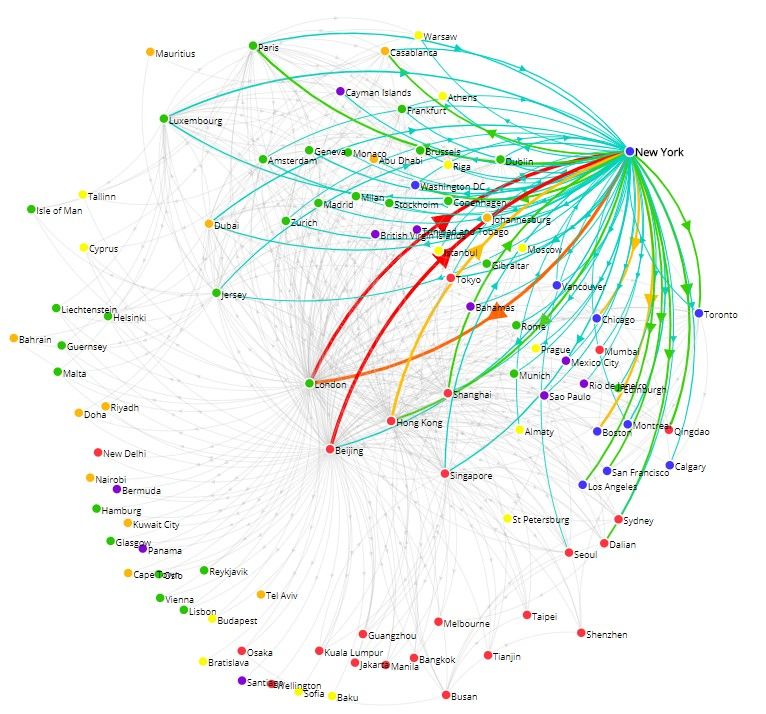
BE18 Government EffectivenessThe Global Financial Centres Index 23 11 Connectivity One of the most important benefits of hosting Charts 9 and 10 use New York and Chicago as a thriving financial centre is connected to other examples to contrast the different levels of financial centres. One way of measuring this connectivity that the two centres enjoy. connectivity is to look at the number of assessments given to and received from other financial centres. Chart 9 | GFCI 23 Connectivity — New York Chart 10 | GFCI 23 Connectivity — Chicago
12 The Global Financial Centres Index 23

Financial Centre Profiles
Using clustering and correlation analysis we            ‘Speciality’ – the depth within a financial
have identified three measures (axes) that              centre of the following industry sectors:
determine a financial centre’s profile along            investment management, banking, insurance,
different dimensions of competitiveness.                professional services, and the government and
                                                        regulatory sector. A centre’s ‘speciality’
Chart 11 | GFCI 23 Profile Elements                     performance is calculated from the difference
                                                        between the GFCI rating and the industry
                                                        sector ratings.
                                                        In Table 6 ‘Diversity’ (Breadth) and
                                                        ‘Speciality’ (Depth) are combined on one axis
                                                        to create a two dimensional table of financial
                                                        centre profiles. The 96 centres in GFCI 23 are
                                                        assigned a profile on the basis of a set of rules
                                                        for the three measures: how well connected a
                                                        centre is, how broad its services are, and how
                                                        specialised it is.
                                                        The 16 Global Leaders (in the top left of the
                                                        table) have both broad and deep financial
                                                        services activities and are connected with
‘Connectivity’ – the extent to which a centre is
                                                        many other financial centres. This list includes
well known around the world, and how much
                                                        the top seven global financial centres. Other
non-resident professionals believe it is
                                                        leading centres are profiled as Established
connected to other financial centres.
                                                        International Centres.
Respondents are asked to assess only those
centres with which they are personally                  Significant changes in GFCI 23 include Dublin
familiar. A centre’s connectivity is assessed           and Seoul becoming Global Leaders, Chicago
using a combination of ‘inbound’ assessment             becoming a Global Diversified Centre
locations (the number of locations from which           (previously an Established International
a particular centre receives assessments) and           Centre) and Milan becoming a Global
‘outbound’ assessment locations (the number             Diversified Centre (previously an International
of other centres assessed by respondents from           Diversified Centre).
a particular centre). If the weighted
assessments for a centre are provided by over
50% of other centres, this centre is deemed to
be ‘Global’. If the ratings are provided by over
                                                    “It seems to me that more
40% of other centres, this centre is deemed to
be ‘International’.                                    of the smaller centres
‘Diversity’– the breadth of financial industry
sectors that flourish in a financial centre. We          would do better by
consider this sector ‘richness’ to be
measurable in a similar way to that of the          specialising in one sector.
natural environment. We therefore use a
combination of biodiversity indices (calculated
on the instrumental factors) to assess a
                                                       Not everyone can be a
centre’s diversity. A high score means that a
centre is well diversified; a low diversity score     London or a New York.”
reflects a less rich business environment.
                                                    ASSET MANAGER BASED IN MONTREAL
The Global Financial Centres Index 23 13
Table 6 | GFCI 23 Financial Centre Profiles
Broad & Deep Relatively Broad Relatively Deep Emerging
Global Leaders Global Diversified Global Specialists Global Contenders
Abu Dha bi Ams terda m Luxembourg Qi ngda o
Bei ji ng Chi ca go Shenzhen
Duba i Mi l a n
Dubl i n Mos cow
Fra nkfurt Wa s hi ngton DC
Hong Kong
London
Global New York
Pa ri s
Seoul
Sha ngha i
Si nga pore
Sydney
Tokyo
Toronto
Zuri ch
Established International International International
International Diversified Specialists Contenders
Geneva Bos ton As ta na Da l i a n
Gua ngzhou Brus s el s Bri ti s h Vi rgi n Is l a nds Doha
International Is ta nbul Bus a n Ca s a bl a nca New Del hi
Kua l a Lumpur Ca l ga ry Ca yma n Is l a nds
Los Angel es Copenha gen Chengdu
Mel bourne Edi nburgh Gi bra l ta r
Montrea l Joha nnes burg Guerns ey
Ri o de Ja nei ro Ma dri d
Sa n Fra nci s co Muni ch
Stockhol m Vi enna
Va ncouver
Wa rs a w
Established Players Local Diversified Local Specialists Evolving Centres
Ba ngkok Athens Ba ha ma s Al ma ty
Ha mburg Buda pes t Bermuda Ba hra i n
Mexi co Ci ty Gl a s gow Buenos Ai res Ba ku
Local
Os a ka Hel s i nki Is l e of Ma n Cyprus
Pra gue Li s bon Jers ey Ja ka rta
Sa o Pa ul o Mumba i Li echtens tei n Ma l ta
Tel Avi v Os l o Ma ni l a Pa na ma
Rome Ma uri ti us Reykja vi k
Ta l l i nn Mona co Ri ga
Wel l i ngton Ta i pei Ri ya dh
Tri ni da d a nd Toba go St Peters burg
Ti a nji n14 The Global Financial Centres Index 23
The GFCI 23 World
93
71
15 13
7
14
10
2
8
48
17
36 32
59
70
22 60
86
80
81
67
75
42 85
55 91
87
49 43 79
58
57
31 50 28
1 62 45
25
16
24
53 39 20
21 35 89
69 71
64
61
54
41 65 76
74
92
77
66The Global Financial Centres Index 23 15
83
88
63 96
94
95 11
26
33 5
46
72 23
82 6
34
47 51 19 33
30 27 18
68 29
78
3
84
73
37
40
4
90
56
52
9
12
44
The numbers on the map indicate the GFCI 23 rankings. Black dots denote Associate Centres:
Broad and Deep Relatively Broad Relatively Deep Emerging
Global Leaders Global Diversified Global Specialists Global Contenders
Established International International Diversified International Specialists International Contenders
Established Players Local Diversified Local Specialists Evolving Centres16 The Global Financial Centres Index 23
Western Europe
Table 7 shows the top 15 Western European The top five European centres rose in the ratings.
centres in the GFCI. Overall assessments for the The German centres of Frankfurt, Hamburg and
European centres continued to fluctuate as people Munich showed strong gains. Other regional
speculate about which centres might benefit from centres fell.
London leaving the EU.
Table 7 | Western European Top 15 Centres in GFCI 23
GFCI 23 GFCI 21 Change in Change in
Centre
Rank Rating Rank Rating Rank Rating
London 1 794 1 780 0 ▲14
Zurich 16 713 9 704 ▼7 ▲9
Frankfurt 20 708 11 701 ▼9 ▲7
Luxembourg 21 701 14 695 ▼7 ▲6
Paris 24 687 26 680 ▲2 ▲7
Geneva 26 682 16 694 ▼10 ▼12
Hamburg 29 676 67 628 ▲38 ▲48
Dublin 31 666 30 672 ▼1 ▼6
Munich 35 660 50 646 ▲15 ▲14
Jersey 39 637 40 658 ▲1 ▼21
Madrid 41 631 59 636 ▲18 ▼5
Stockholm 42 629 39 660 ▼3 ▼31
Edinburgh 43 628 52 643 ▲9 ▼15
Glasgow 49 614 49 647 0 ▼33
Amsterdam 50 613 33 667 ▼17 ▼54
Chart 12 | GFCI 23 Top Five Western European Centres over Time
850
800
750
700
London
650 Zurich
Frankfurt
Luxembourg
Paris
600The Global Financial Centres Index 23 17
Charts 13 to 15 show the mean of assessments by a centre by people based in that centre are
region given to the leading three centres in excluded to remove ‘home’ bias.
Western Europe. Coloured bars to the left of the
The additional vertical axis (in red) shows the
vertical axis indicate that respondents from that
mean of assessments when assessments from the
region gave lower than average assessments. Bars
home region are removed. The percentage figure
to the right indicate respondents from that region
noted by each region indicates the percentage of
gave higher than average assessments. It is
the total number of assessments that are from
important to recognise that assessments given to
that region.
Chart 13 | GFCI 23 Assessments by Region for London — Difference from the Overall Mean of 854
Western Europe (20%)
Asia/Pacific (45%)
North America (10%)
Eastern Europe and Central Asia (4%)
Middle East and Africa (8%)
Latin America and the Caribbean (4%)
Multi-Regional (10%)
-150 -100 -50 0 50 100 150
Chart 14 | GFCI 23 Assessments by Region for Zurich — Difference from the Overall Mean of 755
Western Europe (38%)
Asia/Pacific (32%)
North America (7%)
Eastern Europe and Central Asia (4%)
Middle East and Africa (7%)
Latin America and the Caribbean (5%)
Multi-Regional (7%)
-150 -100 -50 0 50 100 150
Chart 15 | GFCI 23 Assessments by Region for Frankfurt — Difference from the Overall Mean of 735
Western Europe (38%)
Asia/Pacific (36%)
North America (4%)
Eastern Europe and Central Asia (4%)
Middle East and Africa (7%)
Latin America and the Caribbean (2%)
Multi-Regional (9%)
-150 -100 -50 0 50 100 15018 The Global Financial Centres Index 23
Asia/Pacific
Table 8 shows the Asia/Pacific Centres in GFCI 23. showing marked rises. These are largely reverses
The top nine centres in the region rose in the of the losses they saw in GFCI 22.
ratings with Hong Kong and Shanghai both
Table 8 | Asia/Pacific Top 15 Centres in GFCI 23
GFCI 23 GFCI 22 Change in Change in
Centre
Rank Rating Rank Rating Rating Rating
Hong Kong 3 781 3 744 0 ▲37
Singapore 4 765 4 742 0 ▲23
Tokyo 5 749 5 725 0 ▲24
Shanghai 6 741 6 711 0 ▲30
Sydney 9 724 8 707 ▼1 ▲17
Beijing 11 721 10 703 ▼1 ▲18
Melbourne 12 720 13 696 ▼1 ▲24
Shenzhen 18 710 20 689 ▲2 ▲21
Osaka 23 692 21 688 ▼2 ▲4
Seoul 27 679 22 686 ▼5 ▼7
Guangzhou 28 678 32 668 ▲4 ▲10
Taipei 30 673 27 677 ▼3 ▼4
Qingdao 33 662 47 649 ▲14 ▲31
Bangkok 37 643 61 634 ▲24 ▲9
Kuala Lumpur 40 632 55 640 ▲15 ▼8
Chart 16 | GFCI 23 Top Five Asia/Pacific Centres over Time
800
750
700
650
600
550
Hong Kong
Singapore
500 Tokyo
Shanghai
Sydney
450The Global Financial Centres Index 23 19
Chart 17 | GFCI 23 Assessments by Region for Hong Kong — Difference from the Overall Mean of 839
Western Europe (24%)
Asia/Pacific (49%)
North America (9%)
Eastern Europe and Central Asia (3%)
Middle East and Africa (4%)
Latin America and the Caribbean (3%)
Multi-Regional (8%)
-150 -100 -50 0 50 100 150
Chart 18 | GFCI 23 Assessments by Region for Singapore — Difference from the Overall Mean of 856
Western Europe (28%)
Asia/Pacific (43%)
North America (9%)
Eastern Europe and Central Asia (4%)
Middle East and Africa (7%)
Latin America and the Caribbean (3%)
Multi-Regional (6%)
-150 -100 -50 0 50 100 150
Chart 19 | GFCI 23 Assessments by Region for Tokyo — Difference from the Overall Mean of 803
Western Europe (24%)
Asia/Pacific (47%)
North America (8%)
Eastern Europe and Central Asia (3%)
Middle East and Africa (6%)
Latin America and the Caribbean (3%)
Multi-Regional (9%)
-150 -100 -50 0 50 100 15020 The Global Financial Centres Index 23
North America
Table 9 shows that North American centres generally dropped 20 places in the ranks, and Montreal which
achieved improved ratings and improved their ranks fell a single place (although its rating was higher than
accordingly. This was a reversal of the results in GFCI in GFCI 22).
22. The exceptions were Washington DC, which
Table 9 | North American Centres in GFCI 23
GFCI 23 GFCI 22 Change in Change in
Centre
Rank Rating Rank Rating Rank Rating
New York 2 793 2 756 0 ▲37
Toronto 7 728 7 710 0 ▲18
San Francisco 8 726 17 693 ▲9 ▲33
Boston 10 722 19 690 ▲9 ▲32
Montreal 13 719 12 697 ▼1 ▲22
Chicago 14 718 24 683 ▲10 ▲35
Vancouver 15 717 18 692 ▲3 ▲25
Los Angeles 17 712 23 683 ▲6 ▲29
Calgary 38 642 71 624 ▲33 ▲18
Washington DC 48 616 28 676 ▼20 ▼60
Chart 20 | GFCI 23 Top Five North American Centres over Time
850
800
750
700
650
New York
Toronto
600 San Francisco
Boston
Montreal
550
“American centres fell back last year due to concerns
over the Trump administration.
There is a much more positive feeling right now.”
VENTURE CAPITALIST BASED IN BOSTONThe Global Financial Centres Index 23 21
Chart 21 | GFCI 23 Assessments by Region for New York — Difference from the Overall Mean of 865
Western Europe (26%)
Asia/Pacific (44%)
North America (8%)
Eastern Europe and Central Asia (3%)
Middle East and Africa (7%)
Latin America and the Caribbean (4%)
Multi-Regional (8%)
-150 -100 -50 0 50 100 150
Chart 22 | GFCI 23 Assessments by Region for Toronto — Difference from the Overall Mean of 760
Western Europe (23%)
Asia/Pacific (39%)
North America (18%)
Eastern Europe and Central Asia (1%)
Middle East and Africa (5%)
Latin America and the Caribbean (6%)
Multi-Regional (8%)
-150 -100 -50 0 50 100 150
Chart 23 | GFCI 23 Assessments by Region for San Francisco — Difference from the Overall Mean of 766
Western Europe (22%)
Asia/Pacific (41%)
North America (19%)
Eastern Europe and Central Asia (2%)
Middle East and Africa (6%)
Latin America and the Caribbean (2%)
Multi-Regional (8%)
-150 -100 -50 0 50 100 15022 The Global Financial Centres Index 23
Eastern Europe and Central Asia
Table 10 shows the Eastern European and Central Tallin and Riga both fell over 30 places in the ranks.
Asian Centres in GFCI 23. All centres in this region Baku was a new entrant to the GFCI. Astana was also a
suffered a fall in their ratings. However, Cyprus, new entrant having only launched their financial centre
Istanbul and Moscow rose in the ranks. in January 2018.
Table 10 | Eastern European and Central Asian Centres in GFCI 23
GFCI 23 GFCI 22 Change in Change in
Centre
Rank Rating Rank Rating Rank Rating
Warsaw 45 620 36 664 ▼9 ▼44
Prague 71 567 58 637 ▼13 ▼70
Cyprus 72 566 76 619 ▲4 ▼53
Istanbul 76 562 78 617 ▲2 ▼55
Tallinn 79 559 44 653 ▼35 ▼94
Moscow 83 555 89 601 ▲6 ▼46
Riga 87 551 53 642 ▼34 ▼91
Astana 88 548 New New New New
Budapest 89 547 72 623 ▼17 ▼76
St Petersburg 91 531 87 603 ▼4 ▼72
Athens 92 525 84 611 ▼8 ▼86
Almaty 94 519 80 615 ▼14 ▼96
Baku 95 511 New New New New
Chart 24 | GFCI 23 Top Five Eastern European and Central Asian Centres over Time
700
650
600
550
500
450 Warsaw
Tallinn
Cyprus
400
Istanbul
Prague
350
“Astana is set to become an important centre in the
region. It needs to rapidly develop its international
air transportation network”.
ECONOMIST IN SHANGHAIThe Global Financial Centres Index 23 23
Chart 25 | GFCI 23 Assessments by Region for Warsaw — Difference from the Overall Mean of 538
Western Europe (51%)
Asia/Pacific (19%)
North America (6%)
Eastern Europe and Central Asia (14%)
Middle East and Africa (5%)
-238 Latin America and the Caribbean (1%)
Multi-Regional (4%)
-150 -100 -50 0 50 100 150
Chart 26 | GFCI 23 Assessments by Region for Prague — Difference from the Overall Mean of 569
Western Europe (39%)
Asia/Pacific (25%)
North America (10%)
Eastern Europe and Central Asia (10%)
Middle East and Africa (7%)
Latin America and the Caribbean (2%)
Multi-Regional (7%)
-150 -100 -50 0 50 100 150
Chart 27 | GFCI 23 Assessments by Region for Cyprus — Difference from the Overall Mean of 523
Western Europe (37%)
Asia/Pacific (18%)
-317 North America (4%)
Eastern Europe and Central Asia (14%) 170
Middle East and Africa (10%)
- 317
Latin America and the Caribbean (8%)
Multi-Regional (9%)
-150 -100 -50 0 50 100 15024 The Global Financial Centres Index 23
The Middle East and Africa
Table 11 shows the Middle East and African Centres in despite falls in their ratings. Johannesburg and Doha
GFCI 23. In this region, only Dubai increased its rating suffered modest falls in the ranks.
although it fell one place in the ranks. Mauritius,
Riyadh, and Casablanca improved their rankings
Table 11 | Middle East and African Centres in GFCI 23
GFCI 23 GFCI 22 Change in Change in
Centre
Rank Rating Rank Rating Rank Rating
Dubai 19 709 18 691 ▼1 ▲18
Abu Dhabi 25 683 25 682 0 ▲1
Casablanca 32 664 35 665 ▲3 ▼1
Tel Aviv 34 661 34 666 0 ▼5
Doha 47 617 45 651 ▼2 ▼34
Bahrain 51 612 51 645 0 ▼33
Johannesburg 52 610 48 648 ▼4 ▼38
Mauritius 56 601 69 626 ▲13 ▼25
Riyadh 68 573 77 618 ▲9 ▼45
Chart 28 | GFCI 23 Top Five Middle East and African Centres over Time
750
700
650
600
550
500
Dubai
Abu Dhabi
450 Casablanca
Tel Aviv
Doha
400
“Doha is now suffering from the falling out with the
UAE and Saudi Arabia. We cannot do business here
if the situation continues.”
ASSET MANAGER BASED IN DOHAThe Global Financial Centres Index 23 25
Chart 29 | GFCI 23 Assessments by Region for Dubai — Difference from the Overall Mean of 721
Western Europe (32%)
Asia/Pacific (31%)
North America (6%)
Eastern Europe and Central Asia (6%)
Middle East and Africa (14%)
Latin America and the Caribbean (2%)
Multi-Regional (9%)
-150 -100 -50 0 50 100 150
Chart 30 | GFCI 23 Assessments by Region for Abu Dhabi — Difference from the Overall Mean of 656
Western Europe (34%)
Asia/Pacific (34%)
North America (6%)
Eastern Europe and Central Asia (4%)
Middle East and Africa (15%)
Latin America and the Caribbean (3%)
Multi-Regional (4%)
-150 -100 -50 0 50 100 150
Chart 31 | GFCI 23 Assessments by Region for Casablanca — Difference from the Overall Mean of 766
Western Europe (29%)
Asia/Pacific (6%)
North America (27%)
Eastern Europe and Central Asia (2%) 264
Middle East and Africa (26%)
Latin America and the Caribbean (1%)
Multi-Regional (9%)
-150 -100 -50 0 50 100 15026 The Global Financial Centres Index 23
Latin America and the Caribbean
Table 12 shows the Latin American and Caribbean the Bahamas leading the way rising 22 places. The
centres in GFCI 23. All centres in this region fell in the Cayman Islands are now the leading centre in the
GFCI ratings except for the Cayman Islands. Despite region.
the fall in the ratings, six centres rose in the ranks with
Table 12 | Latin American and Caribbean Centres in GFCI 23
GFCI 23 GFCI 22 Change in Change in
Centre
Rank Rating Rank Rating Rank Rating
Cayman Islands 22 700 31 671 ▲9 ▲29
Bermuda 36 656 29 673 ▼7 ▼17
Bahamas 59 596 81 614 ▲22 ▼18
British Virgin Islands 60 594 37 663 ▼23 ▼69
Sao Paulo 67 574 63 632 ▼4 ▼58
Mexico City 70 569 73 622 ▲3 ▼53
Buenos Aires 75 563 90 600 ▲15 ▼37
Panama 80 558 88 602 ▲8 ▼44
Rio de Janeiro 81 557 82 613 ▲1 ▼56
Trinidad and Tobago 86 552 65 630 ▼21 ▼78
Chart 32 | GFCI 23 Top Five Latin American and Caribbean Centres over Time
750
700
650
600
550
500
Bermuda
Cayman Islands
450 Bahamas
British Virgin Islands
Sao Paulo
400
“The Caribbean is not a great place to be at the
moment. Hurricanes and now a loss in confidence.”
INVESTMENT FUND DIRECTOR BASED IN MIAMIThe Global Financial Centres Index 23 27
Chart 33 | GFCI 23 Assessments by Region for the Cayman Islands — Difference from the Overall Mean of 670
Western Europe (30%)
Asia/Pacific (24%)
North America (13%)
Eastern Europe and Central Asia (1%)
Middle East and Africa (7%)
Latin America and the Caribbean (17%)
Multi-Regional (8%)
-150 -100 -50 0 50 100 150
Chart 34 | GFCI 23 Assessments by Region for Bermuda — Difference from the Overall Mean of 661
Western Europe (35%)
Asia/Pacific (18%)
North America (11%)
Eastern Europe and Central Asia (1%)
Middle East and Africa (10%)
Latin America and the Caribbean (20%) 198
Multi-Regional (5%)
-150 -100 -50 0 50 100 150
Chart 35 | GFCI 23 Assessments by Region for the Bahamas — Difference from the Overall Mean of 584
Western Europe (29%)
Asia/Pacific (22%)
North America (12%)
Eastern Europe and Central Asia (1%) 426
-203 Middle East and Africa (4%)
Latin America and the Caribbean (22%)
Multi-Regional (10%)
-150 -100 -50 0 50 100 15028 The Global Financial Centres Index 23 Home Centre Prospects Whilst the GFCI is calculated using only foreign However, the uncertainty created by Brexit has assessments, we ask professionals on their views influenced London based respondents who are about the prospects of the centre in which they significantly less confident about London’s future work (specifically whether their ‘home’ centre will than respondents from Paris and Frankfurt feel become more or less competitive). about their home centres. In general, respondents are far more optimistic about the future of their home centres than people outside that centre. Chart 36 | GFCI 23 Home Centre Prospects — London Chart 37 | GFCI 23 Home Centre Prospects — New York Chart 38 | GFCI 23 Home Centre Prospects — Frankfurt Chart 39 | GFCI 23 Home Centre Prospects — Paris
The Global Financial Centres Index 23 29

                                     Stability
                                     The GFCI model allows for an analysis of the                 The stable centres in the bottom left have a
                                     financial centre volatility of competitiveness.              lower sensitivity to change and have shown
                                     Chart 38 contrasts the ‘spread’ or variance of               consistency in their past GFCI ratings.
                                     the individual assessments given to each of the
                                                                                                  Chart 40 only plots the top 40 centres (for
                                     top 40 centres with the sensitivity to changes in
                                                                                                  clarity) but it is worth noting that most of the
                                     the instrumental factors.
                                                                                                  centres lower in the index would be in the
                                     The chart shows three bands of financial                     unpredictable area of the chart if plotted.
                                     centres. The unpredictable centres in the top
                                     right of the chart have a higher sensitivity to
                                     changes in the instrumental factors and a
                                     higher variance of assessments. These centres
                                     have the highest potential future movement.

                                     Chart 40 | GFCI 23 – The Stability of the Top 40 Centres

                                         Dynamic Centres                                                            Unpredictable Centres
                                                                                                                                Tel Aviv

                                                                                                                    Taipei
                                                                                                                              Casablanca

                                                                                                Cayman Islands
                                                                    Shenzhen
Increasing Variance Of Assessments

                                                        Sydney
                                                                           Melbourne
                                                                                                     Osaka
                                                                                                   Hamburg       Seoul
                                                    Tokyo                                           Guangzhou             Dublin
                                                                                                                                        Kuala Lumpur
                                                                                                                      Qingdao
                                                            Shanghai                  Zurich                                                   Jersey
                                            Hong Kong                                                                     Bangkok
                                                                    Beijing                                                            Bermuda
                                                     Singapore                   Dubai Luxembourg
                                                                                                          Geneva                    Munich
                                                                      Vancouver
                                                            Toronto               Frankfurt
                                                                            Los Angeles Montreal
                                                                                                        Paris                        Calgary
                                                                                                                         Abu Dhabi
                                            London                     Boston
                                               New York       San Francisco Chicago
                                     Stable Centres

                                                             Increasing Sensitivity To Instrumental Factors
30 The Global Financial Centres Index 23
Reputation
In the GFCI model, we look at reputation by respondents’ perceptions of a centre are more
examining the difference between the favourable than the quantitative measures
weighted average assessment given to a centre alone suggest.
and its overall rating. The first measure reflects
the average score a centre receives from Eight of the top 15 centres in terms of
finance professionals around the world, reputational advantage are in the Asia/Pacific
adjusted for time, with more recent
region. Casablanca, New York, and London also
assessments having more weight (see Appendix
3 for details). show a strong reputational advantage. This
may be due to strong marketing or general
The second measure is the GFCI score itself,
awareness. Table 14 shows the top 15 centres
which represents the average assessment
adjusted to reflect the instrumental factors. with the greatest positive difference between
the average assessment and the GFCI rating.
If a centre has a higher average assessment
than its GFCI rating, this indicates that
Table 14 | GFCI 23 Top 15 Centres Assessments And Ratings — Reputational Advantage
Weighted Average GFCI 23 GFCI 23 Reputational
Centre - Top 15
Assessment Rating Advantage
Washington DC 774 616 158
Qingdao 820 662 158
Singapore 851 765 86
Tianjin 671 588 83
Casablanca 737 664 73
New York 860 793 67
Wellington 685 621 64
London 851 794 57
Hong Kong 836 781 55
Sydney 779 724 55
Tokyo 798 749 49
Sao Paulo 620 574 46
Shanghai 786 741 45
Zurich 756 713 43
Milan 635 593 42The Global Financial Centres Index 23 31
Table 15 shows the 15 centres with the centre are less favourable than the
greatest reputational disadvantage - an quantitative measures alone would suggest.
indication that respondents’ perceptions of a
Table 15 | GFCI 23 Bottom 15 Centres Assessments And Ratings — Reputational Disadvantage
Weighted Average GFCI 23 GFCI 23 Reputational
Centre - Bottom 15
Assessment Rating Advantage
Hamburg 636 676 -40
Moscow 514 555 -41
Tel Aviv 617 661 -44
Bangkok 597 643 -46
Copenhagen 548 599 -51
Riga 481 551 -70
Jersey 566 637 -71
Astana 476 548 -72
Riyadh 499 573 -74
Stockholm 554 629 -75
Chengdu 477 556 -79
Warsaw 540 620 -80
Trinidad and Tobago 455 552 -97
Athens 412 525 -113
Dalian 333 501 -168
“Wellington is not often
mentioned as a financial
centre. They seem to be
doing all the right things
at the moment and we
are doing more business
there than ever.”
ASSET MANAGER BASED IN SINGAPORE32 The Global Financial Centres Index 23
Industry Sectors
Industry sector sub-indices are created by Investment Management, Insurance,
building the GFCI statistical model using only Professional Services, and Government &
the questionnaire assessments from Regulatory sectors. Table 13 shows the top
respondents working in the relevant industry fifteen financial centres in these five industry
sectors. The GFCI 23 dataset has been used to sectors.
calculate separate sub-indices for Banking,
Table 13 | GFCI 23 Industry Sector Sub-Indices — Top Fifteen
Investment
Rank Banking Insurance Professional Services Government & Regulatory
Management
1 London New York Hong Kong London London
2 New York Hong Kong Singapore New York New York
3 Hong Kong London London Hong Kong Hong Kong
4 Singapore Singapore New York Singapore Singapore
5 Shanghai Tokyo Tokyo Zurich Zurich
5 Tokyo San Francisco Shanghai Washington DC Washington DC
7 Beijing Toronto Washington DC Tokyo San Francisco
8 Boston Washington DC Boston Boston Toronto
9 Frankfurt Shanghai Zurich Toronto Frankfurt
10 San Francisco Boston Beijing San Francisco Boston
11 Sydney Chicago San Francisco Chicago Chicago
12 Chicago Beijing Los Angeles Sydney Sydney
13 Toronto Vancouver Shenzhen Frankfurt Geneva
14 Los Angeles Zurich Vancouver Shanghai Montreal
15 Shenzhen Sydney Toronto Vancouver Dublin
“Shanghai now has a much broader
offer in financial services. It
can now become a genuine
rival to Hong Kong.”
HEDGE FUND MANAGER BASED IN HONG KONGThe Global Financial Centres Index 23 33
Size of Organisation
It is useful to look at how the leading centres but is significantly behind New York in the
are viewed by respondents working for group of respondents from the largest
different sizes of organisation. New York is organisations (this group is dominated by the
favoured over London in five of the size largest global banks). Many of the largest
categories we use. London has a strong lead global banks are headquartered in New York
from respondents in mid-sized organisations and favour it as their home centre.
Chart 41 | GFCI 23 Average Assessments by Respondents’ Organisation Size (number of employees)
920
900
880
860
840
820
800
London
780
New York
760 Hong Kong
Singapore
740
Tokyo
720
Fewer than 100 100 to 500 500 to 1,000 1,000 to 2,000 2,000 to 5,000 More than 5,000
“It is obvious to me that an investment bank with
global aspirations needs to have a presence in US,
European and Asian time-zones.
New York, London and Singapore are all great
locations.”
INVESTMENT BANKER BASED IN SINGAPORE34 The Global Financial Centres Index 23
Appendix 1: Assessment Details
Table 16 | GFCI 23 Details of Assessments by Centre
GFCI GFCI ----- Assessmemts ----- GFCI GFCI ----- Assessmemts -----
Centre 23 23 Centre 23 23
Number Average St. Dev Number Average St. Dev
Rank Rating Rank Rating
London 1 794 1,321 854 153 Glasgow 49 614 198 552 219
New York 2 793 1,143 865 128 Amsterdam 50 613 448 622 211
Hong Kong 3 781 1,086 839 129 Bahrain 51 612 138 580 207
Singapore 4 765 716 856 136 Johannesburg 52 610 158 604 211
Tokyo 5 749 488 803 149 Guernsey 53 605 223 565 220
Shanghai 6 741 830 801 157 Monaco 54 604 213 611 218
Toronto 7 728 409 760 162 Oslo 55 602 151 562 216
San Francisco 8 726 434 766 160 Mauritius 56 601 89 557 250
Sydney 9 724 352 784 153 Isle of Man 57 600 192 551 233
Boston 10 722 480 753 146 Copenhagen 58 599 245 548 211
Beijing 11 721 849 738 163 Bahamas 59 596 129 584 234
Melbourne 12 720 213 731 177 British Virgin Islands 60 594 172 640 240
Montreal 13 719 221 695 174 Milan 61 593 280 641 193
Chicago 14 718 486 735 155 Brussels 62 592 378 595 205
Vancouver 15 717 246 735 169 Tianjin 63 588 146 661 209
Zurich 16 713 514 755 176 Vienna 64 583 188 540 231
Los Angeles 17 712 394 718 154 Rome 65 579 233 565 215
Shenzhen 18 710 542 758 157 Gibraltar 66 576 176 524 249
Dubai 19 709 478 721 189 Sao Paulo 67 574 131 617 206
Frankfurt 20 708 663 735 196 Riyadh 68 573 81 506 242
Luxembourg 21 701 388 693 212 Liechtenstein 69 570 170 567 248
Cayman Islands 22 700 192 670 231 Mexico City 70 569 131 556 214
Osaka 23 692 157 683 187 Prague 71 567 156 569 208
Paris 24 687 608 689 190 Cyprus 72 566 143 523 225
Geneva 25 682 411 668 194 Mumbai 73 565 220 534 210
Seoul 26 679 342 715 169 Lisbon 74 564 210 553 228
Guangzhou 27 678 353 692 161 Buenos Aires 75 563 76 517 247
Hamburg 28 676 227 626 213 Istanbul 76 562 165 541 222
Taipei 29 673 213 689 168 Malta 77 561 190 545 217
Abu Dhabi 30 669 334 656 219 New Delhi 78 560 193 504 217
Dublin 31 666 467 663 199 Tallinn 79 559 78 531 263
Casablanca 32 664 130 766 212 Panama 80 558 122 545 256
Qingdao 33 662 1,055 826 141 Rio de Janeiro 81 557 92 547 229
Tel Aviv 34 661 104 622 265 Chengdu 82 556 530 492 234
Munich 35 660 239 666 209 Moscow 83 555 330 527 222
Bermuda 36 656 114 661 244 Manila 84 554 163 523 191
Bangkok 37 643 222 598 179 Helsinki 85 553 153 530 210
Calgary 38 642 149 611 194 Trinidad and Tobago 86 552 48 492 240
Jersey 39 637 252 573 213 Riga 87 551 97 498 236
Kuala Lumpur 40 632 232 623 178 Astana 88 548 153 482 255
Madrid 41 631 291 619 186 Budapest 89 547 107 531 196
Stockholm 42 629 186 562 228 Jakarta 90 546 165 566 195
Edinburgh 43 628 376 639 193 St Petersburg 91 531 152 527 241
Wellington 44 621 78 686 186 Athens 92 525 120 407 221
Warsaw 45 620 168 538 230 Reykjavik 93 521 116 516 230
Busan 46 618 150 589 201 Almaty 94 519 121 518 239
Doha 47 617 181 644 216 Baku 95 511 107 461 217
Washington DC 48 616 456 765 173 Dalian 96 501 941 332 176The Global Financial Centres Index 23 35
Appendix 2: Respondents’ Details
Table 17 | GFCI 23 Respondents by Industry Sector
Number of
Industry Sector
Respondents
Banking 714
Finance 99
Government & Regulatory 114
Insurance 218
Investment 276
Professional Services 390
Trade Association 74
Trading 145
Other 310
Total 2340
Table 18 | GFCI 23 Respondents by Region
Number of
Region
Respondents
Western Europe 597
Asia/Pacific 995
North America 220
Middle East & Africa 153
Eastern Europe & Central Asia 92
Latin America & the Caribbean 68
Other 215
Total 2340
Table 19 | GFCI 23 Respondents by Size of Organisation
Number of
Size of Organisation
Respondents
Fewer than 100 503
100 to 500 307
500 to 1,000 319
1,000 to 2,000 234
2,000 to 5,000 179
More than 5,000 781
Other 17
Total 234036 The Global Financial Centres Index 23
Appendix 3: Methodology
The GFCI provides ratings for financial centres • indices should come from a reputable body and
calculated by a ‘factor assessment model’ that uses be derived by a sound methodology;
two distinct sets of input:
• indices should be readily available (ideally in the
Instrumental factors: objective evidence of public domain) and be regularly updated;
competitiveness was sought from a wide variety of
• updates to the indices are collected and collated
comparable sources. For example, evidence about the
every six months;
telecommunications infrastructure competitiveness of
a financial centre is drawn from the ICT Development • no weightings are applied to indices;
Index (supplied by the United Nations), the Networked
Readiness Index (supplied by the World Economic • Indices are entered into the GFCI model as
Forum), the Telecommunication Infrastructure Index directly as possible, whether this is a rank, a
(by the United Nations) and the Web Index (supplied derived score , a value, a distribution around a
by the World Wide Web Foundation). Evidence about mean or a distribution around a benchmark;
a business-friendly regulatory environment is drawn
from the Ease of Doing Business Index (supplied by the
• if a factor is at a national level, the score will be
used for all centres in that country;
World Bank), the Government Effectiveness rating
nation-based factors will be avoided if financial
(supplied by the World Bank) and the Corruption
centre (city) - based factors are available;
Perceptions Index (supplied by Transparency
International) amongst others. • if an index has multiple values for a city or
A total of 103 instrumental factors are used in GFCI 23 nation, the most relevant value is used (and the
of which 48 were updated since GFCI 22 and four are method for judging relevance is noted);
new to the GFCI). Not all financial centres are
• if an index is at a regional level, the most
represented in all the external sources, and the
relevant allocation of scores to each centre is
statistical model takes account of these gaps.
made (and the method for judging relevance is
Financial centre assessments: by means of an online noted);
questionnaire, running continuously since 2007, We
received 3,353 responses to the questionnaire in the • if an index does not contain a value for a
24 months to June 2017. Of these, 2,340 respondents particular city, a blank is entered against that
provided 28,599 valid assessments of financial centres. centre (no average or mean is used).
Financial centres are added to the GFCI questionnaire Creating the GFCI does not involve totalling or
when they receive five or more mentions in the online averaging scores across instrumental factors. An
questionnaire in response to the question: “Are there approach involving totalling and averaging would
any financial centres that might become significantly involve a number of difficulties:
more important over the next two to three years?”
• indices are published in a variety of different
A centre is only given a GFCI rating and ranking if it forms: an average or base point of 100 with
receives more than 150 assessments from other scores above and below this; a simple ranking;
centres within the previous 24 months in the online actual values (e.g. $ per square foot of
survey. Centres in the GFCI that do not receive 50 occupancy costs); a composite ‘score’;
assessments in a 24 month period are removed and
added to the Associate list until the number of • indices would have to be normalised, e.g. in
assessments increases. some indices a high score is positive while in
others a low score is positive;
At the beginning of our work on the GFCI, a number of
guidelines were set out. Additional Instrumental • not all centres are included in all indices;
Factors are added to the GFCI model when relevant
and meaningful ones are discovered: • the indices would have to be weighted.The Global Financial Centres Index 23 37
The guidelines for financial centre assessments by • respondents rating fewer than three or more than
respondents are: half of the centres are excluded from the model;
• responses are collected via an online • respondents who do not say where they work are
questionnaire which runs continuously. A link to excluded;
this questionnaire is emailed to the target list of
respondents at regular intervals and other • financial centre assessments from the month when
interested parties can fill this in by following the the GFCI is created are given full weighting and
link given in the GFCI publications; earlier responses are given a reduced weighting on
a log scale.
• financial centre assessments will be included in the
GFCI model for 24 months after they have been
received;
“Abu Dhabi continues to attract investment
even though Dubai has a stronger reputation
at the moment.”
PENSION FUND MANAGER38 The Global Financial Centres Index 23
Chart 42 | Reduction In Weighting as Assessments Get Older
100%
90%
Percentage Weighting of Assessment
80%
70%
60%
50%
40%
30%
20%
10%
0%
1 2 3 4 5 6 7 8 9 10 11 12 13 14 15 16 17 18 19 20 21 22 23 24
Age of Assessment (Months)
The financial centre assessments and instrumental Or
factors are used to build a predictive model of centre
competitiveness using a support vector machine • If a pension fund manager gives Edinburgh
(SVM). SVMs are based upon statistical techniques and Munich a certain assessment then, based
that classify and model complex historic data in order on the relevant data for Edinburgh, Munich
to make predictions of new data. SVMs work well on and Zurich, how would that person assess
discrete, categorical data but also handle continuous Zurich?
numerical or time series data. The SVM used for the Financial centre predictions from the SVM are
GFCI provides information about the confidence with re-combined with actual financial centre assessments
which each specific classification is made and the (except those from the respondents’ home centres)
likelihood of other possible classifications. to produce the GFCI – a set of financial centre ratings.
A factor assessment model is built using the centre The GFCI is dynamically updated either by updating
assessments from responses to the online question- and adding to the instrumental factors or through
naire. Assessments from respondents’ home centres new financial centre assessments. These updates
are excluded from the factor assessment model to permit, for instance, a recently changed index of
remove home bias. The model then predicts how rental costs to affect the competitiveness rating of
respondents would have assessed centres they are the centres.
not familiar with, by answering questions such as:
• If an investment banker gives Singapore and
Sydney certain assessments then, based on
the relevant data for Singapore, Sydney and
Paris, how would that person assess Paris?You can also read


