The guide to cross compliance in England 2018 - Basic Payment Scheme Countryside Stewardship Entry Level Stewardship Higher Level Stewardship ...
←
→
Page content transcription
If your browser does not render page correctly, please read the page content below
The guide to
cross compliance
in England 2018

Basic Payment Scheme
Countryside Stewardship
Entry Level Stewardship
Higher Level Stewardship
English Woodland Grant Scheme
Contents
Introduction												3
What’s new in 2018? 											4
Key dates in 2018 												5
Meeting the rules 												7
Inspections													10
Penalties 													11

Good Agricultural and Environmental Conditions (GAECs)					                        12
 GAEC 1:    Establishment of buffer strips along watercourses
 GAEC 2:    Water abstraction
 GAEC 3:    Groundwater
 GAEC 4:    Providing minimum soil cover
 GAEC 5:    Minimising soil erosion
 GAEC 6:    Maintaining the level of organic matter in soil
 GAEC 7a:   Boundaries
 GAEC 7b:   Public Rights of Way
 GAEC 7c:   Trees
 GAEC 7d:   Sites of Special Scientific Interest (SSSIs)
 GAEC 7e:   Scheduled Monuments

Statutory Management Requirements (SMRs)							39
 SMR 1:     Nitrate Vulnerable Zones (NVZs)
 SMR 2:     Wild birds
 SMR 3:     Habitats and species
 SMR 4:     Food and feed law
 SMR 5:     Restrictions on the use of substances having hormonal or thyrostatic
            action and beta-agonists in farm animals
 SMR 6:     Pig identification and registration
 SMR 7:     Cattle identification and registration
 SMR 8:     Sheep and goat identification
 SMR 9:     Prevention and control oftransmissible spongiform encephalopathies
            (TSEs)
 SMR 10:    Plant Protection Products (PPPs)
 SMR 11:    Welfare of calves
 SMR 12:    Welfare of pigs
 SMR 13:    Animal welfare

More information												80
The guide to cross compliance in England 2018

Introduction
‘Cross compliance’ is a set of rules which farmers and land managers must follow on their holding if
they are claiming rural payments for:
   •   the Basic Payment Scheme
   •   Countryside Stewardship
   •   Entry Level Stewardship (including Organic Entry Level Stewardship and Uplands Entry Level
       Stewardship) agreements starting on or after 1 January 2007
   •   Higher Level Stewardship (including Organic Higher Level Stewardship and Uplands Higher
       Level Stewardship) agreements starting on or after 1 January 2007
   •   Woodland Management Grant and Farm Woodland Premium elements of English Woodland
       Grant Scheme agreements starting on or after 1 January 2007.

Cross compliance is made up of ‘Statutory Management Requirements’ (SMRs) and standards for
‘Good Agricultural and Environmental Conditions’ (GAECs).
They cover the following areas:
   •   public, animal and plant health
   •   environment, climate change and good agricultural condition of land
   •   animal welfare.

  Which rules apply to you?
  This guide covers a variety of activities. In most cases, these are things that you should be doing
  anyway – under European and UK legislation – even if you do not apply for rural payments.
  Cross compliance does not cover all the things you must do under European and UK legislation.
  Therefore we’ve given details in each section telling you where you can find more information.
  Use this guide to work out which SMRs and GAECs apply to you, and what you need to do to
  follow them. Depending on the type of holding you have, you may not need to follow every SMR
  and GAEC.

  The Farming Advice Service – if you need help
  The Farming Advice Service (FAS) is funded by Defra to provide free,
  confidential advice to farmers and farming industry advisers to help
  them understand and meet requirements for cross compliance,
  ‘greening’, water protection and the sustainable use of pesticides.
  Call their helpline on 03000 200 301 or to find more information on
  GOV.UK, search for ‘Farming Advice Service’.

                                                                                                        3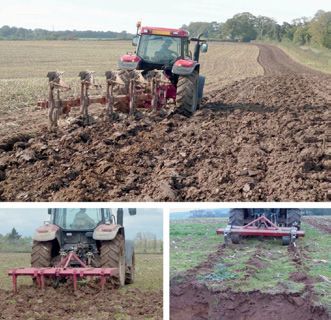
The guide to cross compliance in England 2018

    What’s new in 2018?
    There are no confirmed policy changes to the cross compliance rules in
    2018. However, you should be aware of the information below.

    SMR 1 – Nitrate Vulnerable Zones (NVZs)
    If your land was in an NVZ for the first time in 2017, transitional arrangements were in place allowing
    you to not meet the NVZ rules in 2017. For more information about transitional arrangements from
    2018 onwards read SMR 1: Nitrate Vulnerable Zones on page 39 or ‘Nutrient management: Nitrate
    Vulnerable Zones’ on GOV.UK.

    Inspections – changes to how we check existing rules
    The way RPA checks the following rules is changing from 1 January 2018. These are not new rules but
    RPA must check them differently. Therefore, remember that for:
       •   GAEC 5: Minimising soil erosion - you must make sure you have put in place suitable practical
           measures to prevent soil and bankside erosion, and can show this during any inspection.
       •   SMR 7: Cattle identification and registration, and SMR8: Sheep and goat identification -
           you must make sure that all your cattle and sheep are correctly identified, and that lost and
           damaged ear tags are replaced within the deadlines. You must also make sure that any cattle
           notifications you make to BCMS are made within the deadlines.

  4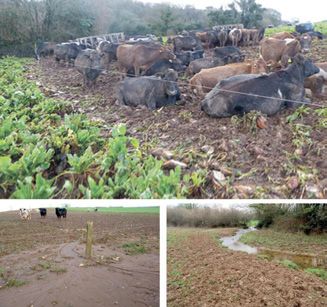
The guide to cross compliance in England 2018

Key dates in 2018
What you should (and should not) do throughout the year to meet the cross
compliance rules.
 January
 1 You must start following the rules in the cross compliance 2018 guide from this date. The Basic
 Payment Scheme (BPS) 2018 year starts.
 1 You can apply organic manure with a high readily available nitrogen content (for example, slurry,
 poultry manures or liquid digested sewage sludge) to grassland and tillage land on shallow or
 sandy soils from this date if conditions are suitable and you adhere to the quantity restrictions for
 application of these manures. (SMR 1)
 1 Beginning of the year for assessing the annual amount of livestock manure applied to your land.
 (SMR 1)
 16 You can apply manufactured nitrogen fertilisers to grassland and tillage land from this date if
 conditions are suitable. (SMR 1)

 February
 1 You can apply organic manure with a high readily available nitrogen content (for example, slurry,
 poultry manures or liquid digested sewage sludge) to grassland and tillage land on all soil types
 from this date if conditions are suitable and you adhere to the quantity restrictions for application
 of these manures. (SMR 1)
 28 End of the quantity restrictions for application of organic manures with a high readily available
 nitrogen content. (SMR 1)

 March
 1 You must not cut or trim hedges or trees from this date, but you can carry out hedge and tree
 coppicing and hedge laying from 1 March until 30 April. Fruit and nut trees in orchards, or trees
 acting as windbreaks in orchards, vineyards, hop yards or hop gardens are not included in the ban.
 (GAEC 7a and 7c)
 31 If you hold a water abstraction licence, expect to receive your annual bill (or first part charge if
 you hold a two-part tariff agreement) for the forthcoming financial year. (GAEC 2)

 April
 1 You must not burn heather, rough grass, bracken, gorse or vaccinium on land, other than in
 upland areas, from this date. (GAEC 6)
 1 If you hold a winter or all year round water abstraction licence (authorising abstraction outside
 the period April to October), the Environment Agency will make actual abstraction return forms
 available to you from 1 April. You then have 28 days to send your readings to the Environment
 Agency. (GAEC 2)

 16 You must not burn heather, rough grass, bracken, gorse or vaccinium in upland areas from this
 date. (GAEC 6)
 30 You must have recorded the number of ‘specified’ livestock kept on your farm during the
 previous calendar year and calculated the amount of nitrogen they produced. You must also record
 the number and type of livestock in a building or hardstanding during the previous storage period.
 (SMR 1)

                                                                                                           5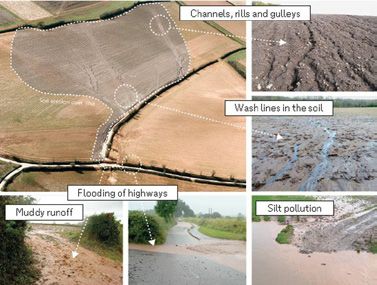
The guide to cross compliance in England 2018

      May
      1 You must not carry out hedge or tree coppicing or hedge laying from this date. (GAEC7a and 7c)
      August
      1 If you have been granted a derogation by RPA, you may be able to cut or trim hedges throughout
      August, to sow oilseed rape or temporary grassland. (GAEC 7a)
      1 Start of closed period for applying organic manure with a high readily available nitrogen content
      (for example, slurry, poultry manures or liquid digested sewage sludge) to tillage land on shallow
      or sandy soils except where crops will be sown on or before 15 September. (SMR 1)

      September
      1 You can cut or trim hedges and trees from this date. (GAEC 7a and 7c)
      1 Start of closed period for applying organic manure with a high readily available nitrogen content
      (for example, slurry, poultry manures or liquid digested sewage sludge) to grassland on shallow or
      sandy soils. (SMR 1)
      1 Start of closed period for applying manufactured nitrogen fertilisers to tillage land. (SMR 1)
      15 Start of closed period for applying manufactured nitrogen fertilisers to grassland. (SMR 1)
      16 Start of closed period for applying organic manure with a high readily available nitrogen
      content (for example, slurry, poultry manures or liquid digested sewage sludge) to tillage land on
      shallow or sandy soils which have been sown with crops on or before 15 September. (SMR 1)

      October
      1 You can burn heather, rough grass, bracken, gorse or vaccinium on land in upland areas from this
      date. (GAEC 6)
      1 Start of closed period for applying organic manure with a high readily available nitrogen content
      (for example, slurry, poultry manures or liquid digested sewage sludge) to tillage land on soils
      which are not shallow or sandy. (SMR 1)

      15 Start of closed period for applying organic manure with a high readily available nitrogen content
      (for example, slurry, poultry manures or liquid digested sewage sludge) to grassland on soils which
      are not shallow or sandy. (SMR 1)
      31 If you hold a summer water abstraction licence (authorising abstraction wholly within the
      months of April to October), the Environment Agency will make actual abstraction return forms
      available to you from 31 October. You then have 28 days to send your readings to the Environment
      Agency. (GAEC 2)

      November
      1 You can burn heather, rough grass, bracken, gorse or vaccinium on land, other than in upland
      areas, from this date. (GAEC 6)
      30 If you have a two-part tariff agreement for your water abstraction licence, expect to receive your
      second part charge after 30 November. (GAEC 2)

      December
      1 You need to carry out your annual inventory of sheep and goats. (SMR 8)

  6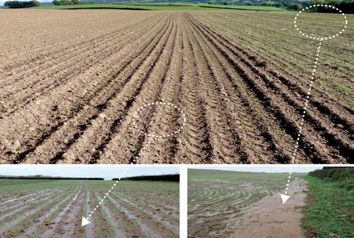
The guide to cross compliance in England 2018

Meeting the rules
Cross compliance rules apply for the whole calendar year, across the whole
area of your holding and to all agricultural activities. However, certain
exemptions apply.
As a claimant, you are responsible for making sure the cross compliance rules are met.
You will be held liable for the actions of employees, workers and family members.
You may also be held liable for the actions of third parties, for example, agents, contractors and
agronomists. This will depend on your actions, such as your choice of third party, the instructions you
give to them and your monitoring of them.
However, for those SMRs about the identification and traceability of animals, it is the person with day
to day responsibility for the animals (the keeper) who is responsible for meeting the rules (even if they
do not own the animals, the land that they graze on or the buildings they are kept in).
Responsibility for the welfare of all farmed animals lies jointly with both:
   •       the person who has day to day responsibility for the animals (the keeper)
   •       the owner of the animals.

  Common land
  You must meet the relevant rules across the whole of your holding, regardless of the amount of land
  you entered into the schemes.
  This includes common land which you exercise or hold rights of common over (including rights
  in gross). It also applies to all land including forestry for which payments are claimed under rural
  development schemes.

  Who is responsible for meeting the rules if land is transferred?
  If you declare land on your rural payments application and then transfer that land to another business
  in the same year, and the business you’ve transferred the land to is:
       •     also a rural payments claimant that year – after the transfer, they are responsible for making
             sure the cross compliance rules are met on the land for the rest of the year (even though they
             did not declare it on their rural payments application)
       •     NOT a rural payments claimant that year – after the transfer, you are still responsible for making
             sure the cross compliance rules are met on the land.
  If land has been transferred to you and you declare it on your rural payments application in the same
  year, and the business you’ve received the land from is:
       •     also a rural payments claimant that year – they are responsible for making sure the cross
             compliance rules are met on the land before the transfer takes place (even if they did not
             declare it on their rural payment application). You are responsible for making sure the cross
             compliance rules are met on the land after the transfer takes place.
       •     NOT a rural payments claimant that year – you are responsible for making sure the cross
             compliance rules are met on the land for the whole year.

Cross compliance and rural development schemes
If your obligations under a rural development scheme conflict with the GAEC standards in this guide,
you should normally follow the rural development scheme rules. You should contact RPA if you are not
sure which rules to follow.
                                                                                                                  7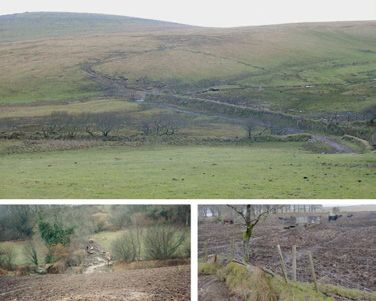
The guide to cross compliance in England 2018

    Exemptions
    Sometimes, you may be exempt from a particular rule. This means you do not have to meet that
    specific part of a GAEC.
    Some examples of when an exemption could be used are if:

       •   there is a risk to human or animal health or safety
       •   you need to prevent or treat serious causes of harm to plant health
       •   you need to prevent or treat a serious pest or weed infestation.

    You do not need to write to RPA in advance to ask for an exemption but if you are inspected you must
    be able to prove how and why you used the exemption.
    Exemptions can also be granted if work carried out under a statutory authority stops you from meeting
    one of the rules. For example, if a pipeline or railway is being built on your land. However, once the work
    on the land that is being carried out under a statutory authority is finished, you must return it to a state
    which meets the cross compliance rules.
    RPA would not expect statutory bodies to have to use their statutory powers to get permission for
    access, or to carry out work, where voluntary consent already exists.

    Derogations
    A ‘derogation’ is written permission to temporarily not meet a rule. You must receive this permission
    before carrying out any work and make sure you follow any conditions. You can ask for a derogation
    from certain GAECs in a number of different circumstances. This guide explains where derogations
    may be available.
    A derogation could be granted for any of the following reasons:
       •   it would enhance the environment
       •   it relates to livestock or crop production
       •   it would improve public or agricultural access.

    To apply for a derogation you must write to or email RPA. You should send all the available evidence (for
    example, photographs or diagrams) and include the land parcel numbers you want the derogation for.
    Correspondence should be clearly marked ‘Cross compliance derogation’. You have to wait for written
    permission before carrying out any work.
    If the derogation request is successful, you will not have to meet the rule in question for a specific
    period of time.

    ‘Force majeure’ and exceptional circumstances
    If ‘force majeure’ or exceptional circumstances means that you could not follow the cross compliance
    rules, RPA may not have to apply a cross compliance penalty.
    In these cases (which RPA considers on an individual basis), you must provide evidence to show that:
        • there were abnormal and unforeseeable circumstances, outside of your control
       •   the consequence of these circumstances could not have been avoided, in spite of all due care
           having been taken.

  8
The guide to cross compliance in England 2018
Some examples of circumstances where force majeure and exceptional circumstances might be
recognised are:
   •   the death or long-term professional incapacity of a claimant
   •   a severe natural disaster which gravely affects the holding, for example flooding
   •   an accident which destroys livestock buildings on the holding
   •   an epizootic disease which affects your livestock
   •   a plant disease which affects your crops
   •   expropriation of all or a large part of a holding if you could not have anticipated this on the day
       of lodging the application.

You (or the executor(s) of the estate) must email or write to RPA within 15 working days of being able
to do so. You must request that ‘force majeure’ applies and provide evidence to show:
   •   what has happened
   •   how the event meant you could not meet the cross compliance rules
   •   how you have taken all due care
   •   how the consequences could not have been avoided.

                                                                                                             9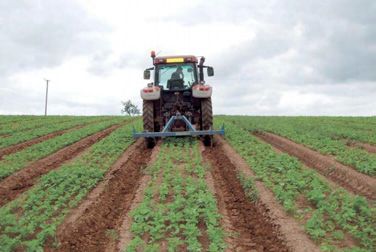
The guide to cross compliance in England 2018

    Inspections
    To check that claimants are following cross compliance properly, RPA and the
    Animal and Plant Health Agency (APHA) must carryout inspections on a selection of
    holdings each year.
    These 2 agencies carry out separate cross compliance inspections on a minimum of 1% of claimants
    for the Basic Payment Scheme (BPS) and/or that have a rural development agreement. APHA only
    inspects claimants who keep farmed animals.
    Cross compliance checks are also carried out during cattle, sheep and goat identification inspections.
    You will not always receive advance warning of these visits and it could happen more than once in a year.
    If RPA does give advance warning, it’s likely to be less than 48 hours before the inspection.
    When an inspector arrives they will tell you what’s involved and what you need to do. You must
    co-operate with the inspector, providing help and equipment to allow checks to be made safely.
    If an inspector finds something wrong, they use a set of standards (called ‘verifiable standards’) to
    assess how serious the non-compliance is based on its severity, extent and permanence.
    To find out how to get a copy, go to GOV.UK and search for ‘cross compliance’, then click the relevant
    scheme year.
    At the end of the inspection, the inspector will explain to you what they’ve found. If they find anything
    wrong, RPA will send more information to you to explain how it affects your claim(s). This will be in
    writing and will be sent within 3 months of the date of the inspection.

       If you refuse to allow an inspector on your land, or do not co-operate, you could lose all of your
       payment(s).

    If RPA receives information following any other inspection or check by APHA, or any inspection or
    check by the Environment Agency, the Forestry Commission, Natural England, or the Veterinary
    Medicines Directorate that also shows a related cross compliance rule has not been met, then RPA
    may reduce the relevant payment.
    The results from cross compliance inspections show the most common reasons why farmers fail to
    meet each SMR and GAEC. To read these go to GOV.UK and search for ‘Cross compliance’ and choose
    the relevant year.

       Watch the ‘Cross compliance inspections’ video
       RPA has produced a short video to give an overview of what to
       expect if you have a cross compliance inspection.
       The video explains that to make sure you’re meeting the cross
       compliance rules properly, an inspector may need to check your
       land and buildings, your animals and/or your farm records.
       To show this, the following icons are used in the video, and included
       beside each GAEC or SMR in this guide.

                                       Animals (including
               Land                                                           Record keeping
                                       welfare and identification)
    For more information about inspections go to GOV.UK and search for ‘Farming inspections’ or ‘farm
    visits regulators’ charter’.
  10
The guide to cross compliance in England 2018
Penalties
You may have your scheme payment(s) reduced if you do not meet the cross
compliance rules which apply to your holding.
If you do not meet (even by mistake) all the GAEC and SMR rules that apply to you, your scheme
payment(s) may be reduced. Penalties will apply to all the schemes affected by cross compliance
which you have claimed for in the calendar year that RPA finds the rules were not met.
Penalties for ‘Negligent’ non-compliances
If you do not meet a cross compliance rule and this falls below the standard of care expected of a
competent claimant, this is a ‘negligent’ non-compliance. As a result you will receive a penalty. You
may get a penalty even if you did not know that you had not followed the rules properly.
For these cases, payments will normally be reduced by 3% (for each non-compliance). However, the
reduction could be either 1% or 5% depending on the extent, severity and permanence of the
non-compliance. Where the extent, severity and permanence are at their lowest and have not caused
a risk to public or animal health, an ‘early warning system’ letter may be issued. This may require you to
take action to correct the non-compliance.
If you break the same rule more than once in 3 consecutive calendar years (known as reoccurrence),
the penalty will get bigger. The second time a rule is broken, the resulting penalty is multiplied by 3.
Any further penalties will be 3 times the size of the previous one.
This will continue to happen if you keep breaking the same rule – until the penalty reaches 15%. After
that, any more instances of non-compliance will be treated as ‘intentional’ (see below).
Penalties for ‘Intentional’ non-compliances
You will get an ‘intentional’ penalty for repeating the same ‘negligent’ penalty (as described above).
You can also get an intentional penalty for breaking a cross compliance rule only once.
‘Intentional non-compliance’ is defined by the European Court of Justice as ‘where a claimant
seeks a state of non-compliance with the rules or, without seeking such a state, accepts the
possibility that it may occur’.
For intentional cases, payments will normally be reduced by 20%. This may be reduced to 15%, or
increased up to 100% depending on the extent, severity, reoccurrence and permanence of the
non-compliance. In some extreme cases, you may not be paid for the Basic Payment Scheme and/or
rural development schemes in the following year.
11The guide to cross compliance in England 2018
GAEC 1: Establishment of buffer
strips along watercourses
Protect watercourses against pollution and run-off from agricultural sources
by maintaining buffer strips.
‘Watercourses’ are all surface waters, including coastal water, estuaries, lakes, ponds, rivers,
streams, canals and field ditches. It includes temporarily dry watercourses.
What you must do and must not do
You must:
• take all reasonable steps to maintain a green cover on land within 2 metres of the centre of a
watercourse or field ditch, or to land from the edge of the watercourse or field ditch to 1 metre
on the landward side of the top of the bank.
• produce and keep a map of your holding if you spread organic manure, which should show:
• all surface waters and land within 10 metres of them
• all springs, wells and boreholes on your holding or within 50 metres of the boundary and
land within 50 metres of them
• update the map with any changes within 3 months from the date of change.
If your land is in a nitrate vulnerable zone (NVZ), you can use the same map for both NVZs and GAEC 1.
You must not:
• apply manufactured nitrogen within 2 metres of surface water
• apply organic manure (which is any nitrogen or phosphate fertiliser derived from animal, plant
or human sources and includes livestock manure) within 50 metres of a spring, well or borehole
• apply organic manure within 10 metres of surface water.
The limit ‘within 10 metres of surface water’ is reduced to 6 metres if you apply slurry, sewage sludge
or anaerobic digestate (which is the product of anaerobic digestion other than from the anaerobic
digestion of sewage or material in a landfill) using precision equipment as follows:
• a trailing hose band spreader or a trailing shoe band spreader
• a shallow injector which injects the organic manure no deeper than 10 centimetres below the
surface
• a dribble bar applicator
However, you can spread livestock manure within 10 metres of surface water if the land is managed for
breeding wader birds or as species-rich semi-natural grassland under certain restrictions. These are:
• the land must be in an agri-environment scheme, or notified as an SSSI
• the manure is not slurry or poultry manure
• spreading takes place between 1 June and 31 October inclusive
• the manure is not spread directly onto surface water, and
• the total annual amount is not more than 12.5 tonnes per hectare.
If you have land in an NVZ and follow the rules under SMR 1, you will automatically meet the rules above
under GAEC 1 on that land, with the exception of the first bullet under ‘You must’.
12The guide to cross compliance in England 2018
Cultivation and application of fertilisers or pesticides
You must not:
• cultivate or apply fertilisers or pesticides to land within 2 metres of the centre of a watercourse
or field ditch, or to land from the edge of the watercourse or field ditch to 1 metre on the
landward side of the top of the bank of a watercourse or field ditch.
Fertilisers include: inorganic and organic fertiliser, organic manures, lime, slurry, sewage sludge,
anaerobic digestate, slag, trace elements, calcified seaweed and human waste (this list is not
complete).
Pesticides mean anything used for destroying pests and include herbicides, fungicides, insecticides
and other biocides.
This rule will not be breached if:
• you have used pesticides for spot application to control the spread of any of the following weeds:
• broad-leaved dock (Rumex obtusifolius)
• creeping or field thistle (Cirsium arvense)
• curled dock (Rumex crispus)
• giant hogweed (Heracleum mantegazzianum)
• Himalayan balsam (Impatiens glandulifera)
• Japanese knotweed (Reynoutria japonica)
• ragwort (Senecio jacobaea)
• rhododendron (Rhododendron ponticum)
• spear thistle (Cirsium vulgare)
• you are establishing a green cover where one does not exist and the land is part of a field which is
being newly created (by merger or division)
• you are establishing a green cover where one does not exist and the land was previously outside
the scope of cross compliance
• you have written permission from RPA to enhance the environment, improve public or
agricultural access or for reasons relating to livestock or crop production. You must receive
written permission from RPA before you carry out this work.
Public rights of way
Public rights of way may form part of the 1 metre or 2 metres ‘protection zone’ margins along hedges
and watercourses. When they do, the rules of this GAEC still apply but should not limit public access.
More information
For more information about written permission read the ‘Derogations’ section on page 8.
To write to RPA for a derogation use the address or email address in the ‘Contact RPA’ section on
page 80.
Advice on locating and managing buffer strips is available from Catchment Sensitive Farming officers,
Natural England advisers, Campaign for the Farmed Environment and other advisers.
Contact
Rural Payments Agency: 03000 200 301
Environment Agency: 03708 506506
13The guide to cross compliance in England 2018
GAEC 2: Water abstraction
Protect inland or underground water sources.
What you must do
• You must have a licence from the Environment Agency (EA) to take (abstract) more than 20
cubic metres (4,400 gallons) of water, from an inland or underground source for irrigation, in a
single day.
• Once you have an abstraction licence (issued by the EA) you must comply with its conditions
when abstracting water for irrigation purposes.
• You do not need a licence if you abstract 20 cubic metres (4,400 gallons) or less in a period of
24 hours, provided your abstraction is part of a single operation. If you abstract from the same
source at multiple points, the exemption only applies if the combined total of all abstractions is
20 cubic metres or less a day.
More information
There is more guidance available online about water management: abstract or impound water.
Contact
Rural Payments Agency: 03000 200 301
Environment Agency: 03708 506506
14The guide to cross compliance in England 2018
GAEC 3: Groundwater
Protect groundwater from harmful or polluting substances.
‘Groundwater’ means all water below the surface of the ground in the saturation zone, that is,
below the water table, and in direct contact with the ground or subsoil.
Examples of hazardous substances:
• used and waste sheep dip
• pesticide washings
• solvents
• mineral oil
• diesel
Examples of non-hazardous pollutants:
• sewage
• trade effluent
• certain biocides.
What you must do
You must:
• get a permit before carrying out, causing or knowingly allowing any activity that pollutes or has
the potential to pollute groundwater with a hazardous substance or non-hazardous pollutant
- unless it is an exempt or excluded groundwater activity. For more information on what an
exempt or excluded groundwater activity is, contact the Environment Agency. You can also
obtain a permit or advice from the Environment Agency.
• comply with the conditions of any permit or notice from Environment Agency.
There are certain exclusions to requiring a permit, which may include:
• accidental or exceptional circumstances
• extreme weather events
• discharges of small amounts of pollutants (such as from disinfectant footbaths).
More information
For more information, read the appendix for groundwater (GAEC 3) on GOV.UK. Search for ‘Cross
compliance 2018’.
To read more information about permits on GOV.UK search for ‘Groundwater protection’.
Contact
Rural Payments Agency: 03000 200 301
Environment Agency: 03708 506506
15The guide to cross compliance in England 2018
GAEC 4: Providing minimum soil
cover
Protect soil by having a minimum soil cover.
What you must do
You must take all reasonable steps to protect soil by having a minimum soil cover unless there
is an agronomic justification for not doing so, or where establishing a cover would conflict with
requirements under GAEC 5 – Minimising soil erosion.
Minimum soil cover must be provided by:
• vegetative cover by all types of crop, grass and herbaceous forage
• cover crops and leguminous and nitrogen fixing crops (green manures)
• game cover and crops planted for biodiversity
• trees, coppice, fruit crops, hops, nursery crops, vines
• overwintered stubble from combinable crops
• other stubbles and crop residues such as vegetable, maize and sugar beet
Agronomic reasons for not providing cover include:
• where doing so would conflict with the requirements to limit or prevent soil erosion
• land that is being managed for pest disease and weed control including, for example, land that
has been cultivated or ploughed to prevent weeds going to seed
• land being used for the installation and maintenance of field drains
• areas created for agri-environment schemes or greening
• establishing conditions for habitats for wildlife or biodiversity
• heathland restoration techniques, such as turf stripping
• heather and grass burning
• where the action of frost overwinter is used to break down soil naturally to create a seedbed for
spring cropping
• where the land is being prepared as a seedbed and the land is sown within 14 days of having
been prepared, or where weather conditions do not allow this, then as soon as reasonably
practicable (feasible)
• peat land that is bare but you did not cause it to be bare
• where the land is used for outdoor pig and poultry production and out-wintered livestock and it
is not possible to maintain cover due to the action of the animals
• land which is bare for the purposes of removing turf for non-fuel purposes
• where RPA has given written permission to enhance the environment, improve public or
agricultural access or for reasons relating to livestock or crop production. You must receive
written permission from RPA before you carry out this work.
For other agronomic reasons not listed here, contact RPA to apply for a derogation.
16The guide to cross compliance in England 2018
You may be at risk of failing an inspection if soil cover has not been provided by one of the cover types
listed above. You will not be in breach where an agronomic justification, listed above, is in place or
where:
• a derogation has been obtained from RPA
• there would be a conflict in meeting your obligations to limit soil erosion
More information
For more information about written permission read the ‘Derogations’ section on page 8.
To write to RPA for a derogation use the address or email address in the ‘Contact RPA’ section on
page 80.
Contact
Rural Payments Agency: 03000 200 301
17The guide to cross compliance in England 2018
GAEC 5: Minimising soil erosion
Limit soil erosion by putting in place suitable practical measures.
To minimise soil erosion you must take all reasonable steps to put suitable practical measures in place
to prevent excessive soil and bankside erosion caused, for example, by:
• cropping practices and cropping structures
• livestock management, including outdoor pigs and poultry, causing overgrazing and poaching
• wind
• vehicles, trailers and machinery.
Where soil compaction may cause soil erosion, you must, where appropriate, cultivate postharvest
land and late harvested crops using primary cultivation methods, such as ploughing.
You could lose some of your scheme payments if you have not taken all reasonable steps to prevent
erosion over a single area of 1 or more hectares, or caused by livestock trampling along a continuous
stretch of a watercourse that is 20 or more metres long and 2 or more metres wide.
At an inspection, you will be asked to show you have put in place suitable practical measures to
prevent soil erosion. This must be according to the risk posed by the soil type, topography, rainfall
levels and windblow. It must also relate to either the cropping or livestock activity for that field
throughout the year.
Any penalty will then depend on the lack of suitable practical measures put in place to limit the soil
erosion and how much soil erosion there is.
Identifying erosion
You can recognise soil erosion by the signs in the following table:
Types Signs
Water Channels (rills and gulleys) in the soil
erosion
Soil wash or sheet erosion where soil is washed but no channels are formed (often seen
as muddy runoff)
Deposits of eroded soil in valley bottoms, adjacent land, roads, watercourses, semi-natu-
ral habitats and/or property
Localised flooding and pollution of watercourses with silt or muddy water
Wind Soil blown over crops, adjacent land, roads, watercourses, semi-natural habitats and/or
erosion property
Minor erosion of less than 1 hectare can be found around gateways, ring feeders and corners of fields
where there is minimal soil loss. Minor erosion resulting in minimal soil loss will not be penalised.
18The guide to cross compliance in England 2018
Signs of erosion
Minimising soil erosion from cropping practices
Soil compaction and capping caused by cultivation
• soil erosion can occur where the soil has become compacted or capped during and following
cultivation and crop establishment
• compaction can occur if the soil is worked when it is too wet
• capping can also occur due to the battering of rain drops, particularly on fine sandy and silty
soils where the seedbed has been worked to a fine smooth tilth. Soil erosion tends to occur
on these soil types when winter crops are established too late in the year, particularly in
high-rainfall areas on steep slopes
• bare soil in worked-down fine seedbeds with an unstable structure can slump and cap, forming
a seal that causes runoff and soil erosion
• particular attention is needed on top headlands. These are a common source of compaction,
runoff and soil erosion further down the slope.
Pressed soil in a seedbed
that is slightly too wet can
cause compaction along
wheel marks and
subsequent runoff and soil
erosion
19The guide to cross compliance in England 2018
You can limit soil erosion by:
• establishing crops early in the autumn during dry conditions that ensure good soil structure and
good crop cover over the winter
• using coarse seedbeds and/or chopped stubbles on the soil surface
• deep cultivation, such as subsoiling, to remove compaction
• removing compaction from headlands.
Soil erosion in row crops
Row crops have an inherently high risk of causing soil erosion.
Soil erosion can occur in crops planted in rows and beds where runoff can be channelled down a slope.
Stone and clod separation, and bed formation in early spring, can destabilise soil structure. This can
cause compaction, increasing the risk of soil erosion, particularly if soils are worked when they are not
dry enough.
Fine, smooth seedbeds are vulnerable to capping on sandy and silty soils, and compacted wheelings
can generate and channel water. Excessive or inappropriately timed irrigation also causes soil erosion.
The problem is most acute in wet summers and with heavy downpours of rain when soils are bare
before crop cover is established.
Polytunnels and vehicle traffic on headlands and tracks are also a common cause of compaction and
runoff which can lead to soil erosion.
Wherever possible, you should choose relatively flat fields for growing row crops.
Capped seedbeds,
polytunnels and
compacted wheelings can
be a source of runoff that
causes soil erosion
To limit soil erosion in row crops you can also:
• plant headland rows and beds across the base of the slope to intercept runoff from high risk
ground
• remove compaction in some wheelings to allow water to penetrate into the soil (although care
is needed not to make the soil erosion worse)
• use specialised equipment to leave ridges and indentations in the soil to trap runoff
20The guide to cross compliance in England 2018
• establish grass strips in valleys or along contours or slopes to reduce runoff
• create banks and diversion ditches within the field to intercept and slow down runoff.
Compacted wheel ruts in
light soil can be loosened
where this does not
interfere with crops
Minimising soil erosion from livestock
Compaction caused by poaching
Compaction develops where hooves press into the soil – this is known as poaching. Where regular
poaching occurs, a compacted layer may form over large areas of a field, causing runoff which can lead
to soil erosion. This is a particular risk where soil cover has been damaged.
Vehicle traffic when supplementary feeding livestock is also a common cause of soil compaction
which can also lead to soil erosion.
Out-wintering and the grazing
of winter forage crops can
cause soil erosion and soil
loss on trampled banks
21The guide to cross compliance in England 2018
To avoid soil erosion when out-wintering livestock, where possible:
• choose well-drained, relatively flat fields
• move stock regularly and use back fencing
• fence watercourses, where appropriate, to avoid excessive bankside erosion
• loosen the soil as soon as conditions allow, for example by ploughing, subsoiling and sward
lifting, to help water to penetrate the soil.
Outdoor pigs and poultry
Pigs and vehicle movement compact soils, particularly during the winter, which can lead to runoff and
soil erosion. Outdoor poultry farming can cause similar problems where there are heavy volumes of
farm traffic.
A combination of sloping land and high rainfall will lead to soil damage, runoff and erosion. The ideal
site for outdoor pigs and poultry is flat or gently sloping, freely drained and in a low-rainfall area. Pigs
and poultry can be kept on sites which are less than ideal, but these will require careful management,
especially for outdoor pigs.
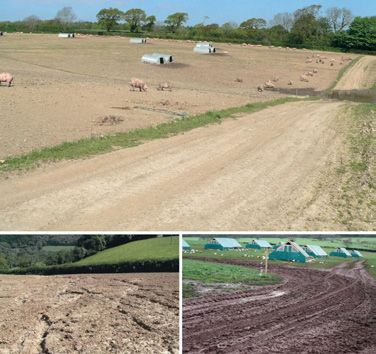
Outdoor pigs can cause
compaction, runoff and
soil erosion. Tracks can
also be a common cause of
soil erosion when keeping
outdoor pigs and poultry
To limit soil erosion you can:
• lay out paddocks so as not to channel runoff
• move pigs onto well established grass
• use large troughs to reduce soil damage
• use grass strips to intercept runoff
• use tracks across the contour where possible
22The guide to cross compliance in England 2018
• regularly divert runoff into field margins or soak away areas to prevent build-up of runoff down
slopes
• locate weaner sites, which have high volumes of farm traffic, away from slopes and
watercourses
• reduce numbers on high risk steep slopes particularly in the winter
• rotate to avoid severe compaction.
Preventing erosion in the uplands
In the uplands, erosion occurs when vegetation is removed, for example by burning,
overgrazing or traffic, and where bare soil is exposed to rain and wind.
Erosion is most severe on peat soils and steep slopes, where it may take years for the vegetation to
recover.
Supplementary feeding and the use of tracks, particularly on slopes and next to watercourses, can
increase the risk of erosion.
Out-wintering,
supplementary feeding of
stock, and use of sacrifice
fields in upland areas can
cause soil erosion.
To minimise the risks of erosion:
• use low ground pressure vehicles and machinery
• use established tracks to avoid vegetation damage
• adjust stocking rates to conserve vegetation cover and to avoid trampling of the soil and
creation of sheep scars
• where possible, carry out supplementary feeding on level, freely drained ground and away from
watercourses
23The guide to cross compliance in England 2018
Choice of well drained, flat
fields for out-wintering
stock reduces the risk of
soil erosion
You only need to take steps to prevent soil and river bank erosion where it occurs due to current
practices and not where it occurs for historic reasons. Historic reasons may include gulleys caused by
old drainage grips and ditches, and peat erosion due to vegetation loss caused by air pollution.
Minimising soil erosion from vehicles, trailers and machinery
There is a high risk of soil compaction causing soil erosion if you:
• harvest crops late in the year when condition are wet
• spread slurry and manure during the winter
• carry out supplementary feeding of out-wintered stock
• use vehicles in wet conditions including non-agricultural use such as temporary car parks.
Where possible, it is best to avoid high risk practices on land at high risk of compaction, runoff and soil
erosion (such as steep land in high rainfall areas).
In many cases, hard tracks with good drainage are needed for vehicle access with use of gates at the
top of the hill.
You can also choose tyres that allow lower pressures, reducing damage to the soil.
Soil compaction can be treated by:
• cultivation to shatter the soil when it is suitably dry
• subsoiling in some cases to shatter deep compaction
• providing land drainage on heavy land to allow water to drain away underneath and avoiding
compaction in the first place.
Digging to look at the soil will help you decide whether subsoiling is needed and whether
shattering has been effective across and down the soil profile.
Cultivating post-harvest land and late harvested crops
Crops harvested late in the year and during the winter, such as maize and field vegetables, are a
common cause of compaction causing runoff and soil erosion.
Where land is compacted with wheel ruts and especially where there is a risk of soil erosion, it should
be cultivated to remove compaction and allow water infiltration into the soil.
24The guide to cross compliance in England 2018
To do this, you can use either mould board or chisel ploughing, deep tines and/or subsoiling, where
conditions allow.
Chisel ploughing (on
the left of the picture) has
been carried out to prevent
runoff following harvesting
of swedes in the winter.
Runoff causing soil erosion in
the centre and foreground is
from compacted wheel ruts
Land with a rough surface can be left over the winter, or another crop established if conditions allow.
However, crops sown late in the year including grass reseeds can be a source of runoff if the seedbed
soil is compacted or becomes capped. Here, it may be better to establish the crop in the spring.
Try and work land immediately after harvesting late crops (or soon after) if possible to prevent erosion.If the
land is too wet for cultivation, you should cultivate it as soon as conditions allow so as to prevent soil
erosion. The worst damaged parts of a field should be dealt with initially and then further treatment
applied under more appropriate dry conditions.
With slow draining, heavy soils on slopes it may be better not to grow high risk crops that will be
harvested late in the year.
Compacted land can be
loosened by mould board
ploughing, chisel ploughing
and subsoiling where
appropriate
25The guide to cross compliance in England 2018
Protecting bare soil from wind blow
Wind erosion can be a problem in some years in the flat, drier parts of England, especially on sandy
and peaty soils.
The risk of wind erosion tends to be high during the spring in crops such as onions, carrots and sugar
beet where the soil is bare for a relatively long period before there is protective crop cover.
Problems occur with fine, smooth seedbeds and loose soils where blown soil can abrade and bury
crops. Soil loss can also affect neighbouring land, roads, ditches and watercourses.
Unstable, loose sandy
soils, with naturally very low
levels of organic matter are
at risk of wind erosion. Dry
peaty soils are also at risk.
Blown soil can affect
neighbouring land, tracks,
roads and watercourses
Wind erosion can be limited by:
• creating coarse seedbeds where possible
• sowing nurse barley crops to protect the soil where appropriate
• using a fleece over vegetable crops
• applying regular applications of organic wastes to improve soil stability
• planting shelterbelts to break the speed of the wind
Sugar beet drilled at an
angle to furrow pressed,
ploughed land can reduce
the risk of significant
wind erosion
Contact
Rural Payments Agency: 03000 200 301
26The guide to cross compliance in England 2018
GAEC 6: Maintaining the level of
organic matter in soil
Maintain soil organic matter through appropriate practices.
What you must do and must not do
To maintain the level of organic matter in soil, you must not burn cereal straw or cereal stubble or
certain crop residues (that is, oilseed rape, field beans harvested dry, peas harvested dry) except for
plant health reasons, where a notice has been served under the Plant Health (England) Order 2005.
The burning of broken bales is allowed, provided arable stubble is not burned as well.
Burning crop residues for plant health reasons
If straw, stubble or crop residue is burned for plant health reasons, there are restrictions on where and
when you can do it:
• the area to be burned must be at least 150 metres from any other area in which crop residues
are being burned
• the crop residues to be burned must be 100 metres or more from any motorway, A-road, dual
carriageway or railway line
• you must not burn crop residues on any weekend or bank holiday or during the period between
one hour before sunset and the following sunrise
• intervening land must be cleared of crop residue or the residues must be incorporated into the
land before burning
You must also meet the rules set out in Schedule 2 of the Crop Residues (Burning) Regulations 1993 if
you burn linseed residues.
Some restrictions depend on the type of crop residue that you are burning, as shown in this table:
Crop residue
Residue of oilseed
Cereal straw or rape, field beans
Restriction
stubble harvested dry or
peas harvested dry
Firebreak Must be at least Must be at least
10 metres wide 5 metres wide
Limit of burning area no more than no more than 20
10 hectares hectares
Minimum distance from the trunk of any tree, At least 15 metres At least 5 metres
any hedgerow, any fence not the property
of the occupier of the land upon which the
burning is carried out, any pole or pylon
which is or may be used to carry telegraph
or telephone wires and any electricity pole,
pylon or substation
27The guide to cross compliance in England 2018
Minimum distance from any building, any At least 50 metres At least 15 metres
scheduled monument which could be
set alight, any stack of hay or straw, any
accumulation of combustible material other
than crop residues removed in the making
of a fire-break, any mature standing crop,
any woodland or land managed as a nature
reserve, any structure containing livestock
and any oil or gas installation on or above the
surface of the ground
At least an hour before burning crop residues, as far as reasonably practicable (feasible), you must
warn:
• the environmental health department of the district council in whose district the burning is to
take place
• the occupiers of all premises adjacent to the area to be burned
• the air traffic control at any aerodrome with a perimeter fence within 800 metres of the area to
be burned
When burning crop residues, you must make sure that you have at least 1,000 litres of water available
in one or more mobile containers and a means of dispensing it in a spray or jet at a rate of 100 litres per
minute. You must also provide at least 5 fire beaters. Any vehicles you use in connection with burning
must be equipped with a fire extinguisher.
All persons concerned with the burning must be familiar with the regulations. Except where
emergency makes this impractical, each area to be burned must be supervised by two responsible
adults, one of whom has experience of burning crop residues.
Ash from burnt cereal straw or cereal stubble must be incorporated into the soil within 24 hours of
starting burning. If this is not possible due to wind conditions or the risk of causing a nuisance, you
should do it as soon as conditions allow.
Burning heather or grass
To comply with the Heather and Grass Burning Regulations (2007), you must make sure that you:
• do not burn specific vegetation (heather, rough grass, bracken, gorse or vaccinium) outside
the burning season. The burning season is from 1 October to 15 April for uplands, and from 1
November to 31 March for land not within an upland area
• have enough people and equipment to control burning
• take all reasonable precautions not to injure or damage any neighbouring land, or to any person
or thing on it
You may need a licence if you want to burn in certain conditions or at particular times of the year. To
apply for a licence on GOV.UK search for ‘Heather and grass burning licence (England)’.
Environmental Impact Assessment (EIA)
The aim of The Environmental Impact Assessment (Agriculture)(England)(No 2) Regulations (2006),
and The Environmental Impact Assessment (Forestry)(England and Wales) Regulations 1999 is to not
plough, cultivate or intensify species-rich and semi-natural habitats so as to keep organic matter and
carbon levels in soils.
28The guide to cross compliance in England 2018
To comply with the Environmental Impact Assessment (Agriculture)(England)(No 2) Regulations
2006 you must not:
• begin or carry out a project to increase the agricultural productivity of uncultivated land or a
semi-natural area (an uncultivated land project) which meets or exceeds the thresholds, or on
land to which a screening notice applies, unless you have a screening decision permitting the
project to go ahead
• begin or carry out a significant project on uncultivated land or a semi-natural area without first
obtaining consent from Natural England
• fail to comply with a stop notice or a remediation notice.
To comply with the Environmental Impact Assessment (Forestry)(England and Wales) Regulations
1999, you must:
• not carry out afforestation on agricultural land or deforestation projects on existing woodland
unless you have permission from the Forestry Commission (FC)
• carry out the project according to the consent
• meet the requirements of enforcement notices.
More information
For more information about Environmental Impact Assessments on GOV.UK search for ‘EIA
(Agriculture) regulations: apply to make changes to rural land’.
For more information about heather and grass burning rules on GOV.UK search for ‘Heather and grass
burning: rules and applying for a licence’.
Contact
Rural Payments Agency: 03000 200 301
Natural England: 03000 200 301
29The guide to cross compliance in England 2018
GAEC 7a: Boundaries
Protect boundary features, such as hedgerows (hedges),
stone walls, earth banks and stone banks.
What you must do and must not do
Hedges
The rules on hedges apply to any hedge growing in, or adjacent to, any land which forms part of
the agricultural area of your holding and which has one of the following:
• a continuous length of at least 20 metres, or is part of any such length
• a continuous length of less than 20 metres where it meets (at an intersection or junction)
another hedge at each end.
Any gap of 20 metres or less and any gap resulting from a breach of the Hedgerows Regulations
1997 will be treated as part of the hedge.
You must:
• take all reasonable steps to keep a green cover on land within 2 metres of the centre of a hedge.
You must not:
• cultivate or apply fertilisers or pesticides to land within 2 metres of the centre of a hedge.
Fertilisers include: inorganic and organic fertiliser, organic manures, lime, slurry, sewage
sludge, anaerobic digestate, slag, trace elements, calcified seaweed and human waste (not a
complete list).
Pesticides mean anything used for destroying pests and include herbicides, fungicides, insecticides
and other biocides.
You will not have broken these rules if you’ve used pesticides for the spot application to control the
spread of any of the weeds listed in GAEC 1, or you’ve cultivated land for one of these reasons:
• to establish a green cover where one does not exist and the land is part of a field which is being
newly created (whether by merger or division)
• to establish a green cover where one does not exist and the land was previously outside the
scope of cross compliance
• you have written permission from RPA to do so, in order to enhance the environment, improve
public or agricultural access, or for reasons relating to livestock or crop production.
These rules do not apply:
• to land either side of a hedge which is less than 5 years old (you’ll need to keep documentary
evidence to prove this)
• to land forming part of a parcel of 2 hectares or less, as measured within permanent boundary
features
• to land on the side of any hedge which is facing a dwelling where the hedge marks a boundary of
the curtilage of the dwelling
• to the casting up of a traditional hedge bank between 1 September and the last day of February
(inclusive).
30The guide to cross compliance in England 2018
Cutting, trimming and removal
You must not cut or trim a hedge between 1 March and 31 August (inclusive) unless:
• the hedge overhangs a highway, road or footpath over which there is a public or private right
of way and the overhanging hedge obstructs the passage of, or is a danger to, vehicles,
pedestrians or horse riders
• the hedge is dead, diseased, damaged or insecurely rooted and because of its condition, it or
part of it, is likely to cause danger by falling on to a highway, road or footpath; or obstructs the
view of drivers or the light from a public lamp
• it is to carry out hedge-laying or coppicing during the period 1 March to 30 April (inclusive)
• it is to trim a newly laid hedge by hand, within 6 months of it being laid
• you have received written permission from RPA to cut or trim during the month of August for the
purposes of sowing oil seed rape or temporary grassland during the same August.
You must not remove all or part of a hedge unless one of the exemptions in regulation 6 of the Hedgerow
Regulations 1997 applies or you have told your local authority (or National Park Authority if your land is in
a National Park) in writing of your proposal, and have either:
• received written permission to carry out the removal
• have received no reply from the authority within 42 days of your notification.
The removal must be carried out in accordance with the proposal specified in the hedge removal
notice and the hedge must be removed within the period of 2 years from the date on the hedge
removal notice.
The cutting, trimming and removal rules do not apply:
• to hedges within the curtilage of a dwelling-house
• to the side of any hedge facing a dwelling-house when the hedge marks the boundary of the
curtilage of the dwelling-house.
Stone Walls, Earth Banks and Stone Banks
Rules for stone walls, earth banks and stone banks must be followed if any of these apply:
• it has a continuous length of at least 10 metres
• it has a continuous length of less than 10 metres which meets another boundary at
each end
• it has a continuous length of less than 10 metres which forms an enclosure
An earth bank is a mound without a hedge, distinct from the surrounding land form.
A stone bank is an earth bank faced with natural stone.
You must not:
• remove existing stone walls, earth banks and stone banks
• remove earth or stone from an existing stone wall, stone bank or earth bank.
Rules for stone walls, earth banks and stone banks do not apply if you either:
• widen an existing gateway in a stone wall, earth bank or stone bank to allow machinery or
livestock access. The gateway should be no wider than 10 metres and the newly created ends
finished to a vertical face
31You can also read


