THE ROLE OF ARTISANS IN THE BATIK DESIGNS DEVELOPMENT AS A TRADITIONAL TEXTILE IN INDONESIA
←
→
Page content transcription
If your browser does not render page correctly, please read the page content below

THE ROLE OF ARTISANS IN THE BATIK DESIGNS
    DEVELOPMENT AS A TRADITIONAL TEXTILE IN INDONESIA

                           Desy Nurcahyanti1, Mulyanto2 and Agus Sachari3

                  1
                     Fine Arts Department, Faculty of Fine Arts and Design, Sebelas Maret University,
                                   Jl. Ir. Sutami 36A, Surakarta, 57126, INDONESIA
          2
            Arts Education Department, Faculty of Teacher Training and Education, Sebelas Maret University,
                                   Jl. Ir. Sutami 36A, Surakarta, 57126, INDONESIA
               3
                 Product Design Department, Faculty of Arts and Design, Bandung Institute of Technology,
                                     Jl. Ganesha 10, Bandung, 40132, INDONESIA
                    desynurcahyanti@staff.uns.ac.id; mulyanto@staff.uns.ac.id; aasachari@gmail.com

      Abstract: This study aims to examine the background and role of artisans in the development
      and visualization of batik designs. This background is related to batik design development’s cause factors.
      The role that becomes a research question is the batik artisan involvement in Girilayu, Karanganyar
      Regency, Central Java, Indonesia. That involvement includes perceptions and participation in adding
      to the batik designs variety as traditional textiles; that attached to people's lives as a complement
      to traditional ceremonies and clothing needs. Data collection was carried out by literature review, interview,
      field observation and interactive methods analysis. The result shows that batik artisans’ role motivation
      as an internal factor contributes to the Girilayu’s batik designs development in Karanganyar. External
      factors that affect, among others, culture, the interaction between a community of crafters in the Girilayu
      region, beliefs, customs, geographical location, and natural conditions that directly affect the visualization
      of batik motifs. Design in that case acts as a mediator of the society’s mindset and reality in producing
      product visualization. The role of batik artisans in design development is to produce contemporary motifs
      inspired by social trends and issues. Batik Girilayu’s development designs are influenced by batik artisan
      ability to elaborate on experiences, insights, sensitivity, functional, contextual expertise and natural
      conditions that directly influence batik motifs visualization.
      Keywords: artisans, batik, design development, roles, traditional textiles.

1    INTRODUCTION                                             of the Inland Batik motif to symmetrical pattern that
                                                              reflects regularity, a motif with the theme of agrarian
A traditional textile from Indonesia that has
                                                              life or peasant society, and the choice of earth color
an exploratory appeal is batik. The development
                                                              that describes modesty [3]. The selection of earthy
of batik designs is an interesting topic to research
                                                              colors is in harmony with the social and cultural life
because there are assimilative and acculturative
                                                              of the Surakarta and Yogyakarta palaces which
elements. Each batik area has its uniqueness and
                                                              have a slow rhythm [4].
characteristics, both in decoration and in color.
Design development equation lies in process and               Batik from the island of Java is known to be smooth
technique; while the differences are in the pattern,          in the manufacturing process, has varied motifs and
motif, color selection and function of the batik cloth.       beautiful colors. Surakarta is one of the locations for
It adjusts the social life order and the natural              the development of batik among batik centers
environment. It is one indicator of the cultural              in Central Java. The two palaces resulting from
dynamics of society. Some changes show creativity             the division of territories stated in the Giyanti
to adapt to society's condition. For example, Coastal         Agreement in 1755 and the Salatiga Agreement
Batik is influenced by social and environmental               in 1757      are    the    Surakarta     Palace    and
conditions [1]. Batik artisans in coastal area in which       the Mangkunagaran Palace. The two places brought
the inhabitants mostly earn from fisheries sector and         cultural influences, including the batik tradition
live in fisheries environment (coastal area) tend             in their respective territories, which is currently
to develop marine-themed motifs as well as bright             known as the Ex-Karesidenan Surakarta [5].
color symmetrical patterns the character of the open          Mangkunagaran is a small kingdom at the level
society [2]. On the other hand, Inland Batik is               of a district full of regional autonomy to manage
influenced by the social and environmental                    government, economy, politics and culture during
conditions of the kingdom with a series of binding            rulers KGPAA Mangkunagara I to VII. The batik
rules and norms. This directs the character                   tradition spreads in Klaten (Bayat), Sukoharjo

Fibres and Textiles 28(2), 2021                             45
(Bekonang),        Sragen    (Kliwonan),    Wonogiri      The form of the artisans’ role is to participate by
(Tirtomoyo) and Karanganyar (Girilayu). The batik         visualizing ideas in the form of batik motif designs.
designs that come from these four regions are             Research, on the artisans' role in batik design
considered        contemporary.     The      resulting    development       as    traditional   textiles,    aims
of contemporary batik design development is               to complement the results of previous studies that
a composition of classic motifs from the palace and       missed the social and economic sphere in its
new creations of artisans [6]. An interesting area        discussion. Those are the main components that
of batik is Girilayu which is located in Karanganyar      support culture sustainability and batik tradition
Regency. Batik Girilayu originated from the batik         as part of the life and livelihood of the Girilayu
activities of Astana Mangadeg’s and Astana                communities.       The     selection    of      Girilayu
Girilayu’s Keymaster. Astana Mangadeg and Astana          as the research        location      was         based
Girilayu are namely the tombs of KGPAA                    on the contradictory character of the region
Mangkunagara I – VIII, their relatives and also           as a batik producing area with contemporary motif
families, except for KGPAA Mangkunagara VI                designs but was strongly influenced by the classical
in Astana Utara, Nayu, Surakarta. Both of the tombs       palace style of batik which tends to be full of rules.
are located on the highest hill of Girilayu and           The results of previous studies have focused on
surrounded by dense forest. KGPAA is stands               aesthetic factors in the decorative motifs of batik and
for Kanjeng Gusti Pangeran Adipati Arya. The title        have not specifically discussed the artisan
is equivalent to the prince and has power under           involvement in design development by involving
the king. Girilayu is currently in the administrative     aesthetic elements. The role of artisan as the first
village form and became a part of the Karanganyar         layer of motif design visualizers uses a consideration
District nowadays.                                        of complex factors.
The development of motif designs began in 1960
when the Girilayu people had a desire to produce          2    METHOD
and wear batik with local cultural characteristics.
The motif     designs     developed    are    inspired    This qualitative research is based on the formulation
by geographical, social, phenomena, trends and            to reveal problems contextually and to obtain a clear
                                                          picture of the artisan perceptions and participation
consumer tastes [7]. Examples of the development
                                                          in the Batik Girilayu designs development.
of contemporary batik motif designs are Manggis
                                                          This qualitative research uses a single case study
and Duren Matesih, which are stylized and adapted
                                                          method to focuses on the target with one
from the shapes of Mangosteen and Durian fruits
which are the leading horticultural products from         characteristic discussion. The intended targets are
Matesih, especially Girilayu. Currently being             places and communities that have characteristics
                                                          role and know the development of Batik Girilayu
developed are icons of excellent tourism potencies
                                                          designs. The study was carried out by observation,
such as the Tri Dharma Monument and the Tri
                                                          literature exploration, and interviews in order
Dharma Gate located in the tomb complex of King
                                                          to obtain complete data regarding the role of Batik
Mangkunagaran I, namely KGPAA Mangkunagara I
or Pangeran Samber Nyawa (Prince of the Soul              Girilayu designs by the community. The single case
Catcher) because he has ability and strategy              study for this research was chosen because
                                                          the research target in the form of a group of Batik
to subdue his enemies [8]. The batik design icon
                                                          Girilayu artisan has similarities in terms of character
of the potential for pilgrimage tourism is a source
                                                          pattern and design motifs development. So, that one
of inspiration based on consumer demand for batik
souvenirs with Girilayu’s motifs typically. Batik         location was determined namely the batik artisan
artisans in Girilayu have a perceptive and                group or the community [9]. Girilayu was chosen
                                                          as the research location with consideration of facts
participatory role in the batik motif design
                                                          and strengthened by data as the largest batik center
development. Based on the latest data collected
                                                          in Karanganyar, which is still running its business
from the batik artisans association in Girilayu,
                                                          activities from the beginning of Batik Girilayu until
namely the Giri Arum community in 2021, there are
12 groups in Girilayu namely Sido Mukti, Mekar Sari,      now.
Giri Wastrapura, Vocational, Kube Kirani, Kube            The research subjects are batik craftsman and
Sekar, Truntum Kuncoro, Wahyu Asih, Mekar Jaya,           the public who can provide explanations and
Puta Kembar, Tresno Dharmo and Wahyu Sari.                understand about the Girilayu Batik design.
All those groups contribute to the batik design           The community includes           community leaders,
development in Girilayu with motif exploration,           experts,       consumers          and      academics.
combination and innovation from design into               The concentration of interview data was obtained
the visualization process. Batik motif designs            from resource persons of batik craftsman in Girilayu
emerged and experienced development because               who have the main role to be fully involved
of community ideas. Batik artisans act as executors       in the batik process and participate in executing
of public perceptions.                                    perceptions, ideas, materials, aesthetics and
                                                          functions.

Fibres and Textiles 28(2), 2021                          46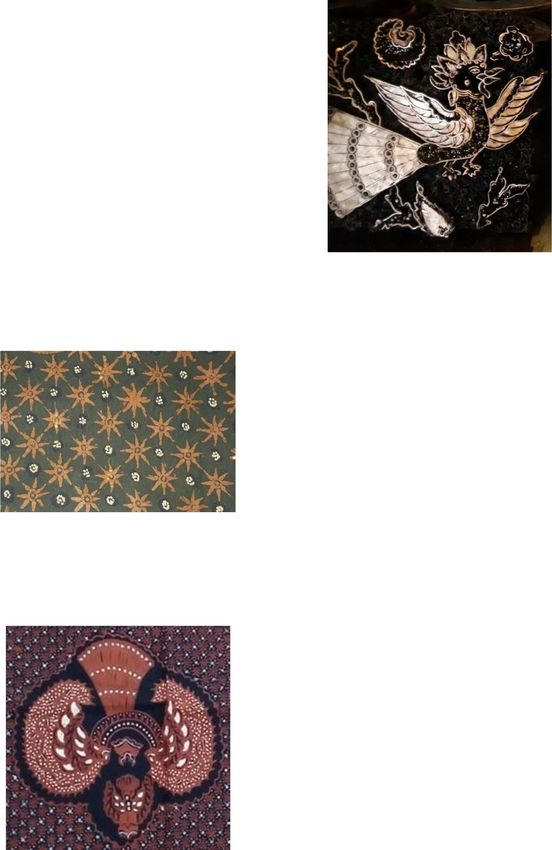
The interview data were completed from outside             3    ANALYSIS
informants from academics and cultural arts experts.
                                                           3.1 Background for design development
The research locations were spread across seven
Batik Girilayu groups, namely the Sido Mukti               Batik Girilayu design development initially started
(Ngadirejo), Wahyu Sari (Seberan), Truntum                 with changes and updates in batik styles and motifs
Kuncoro (Seberan), Tresno Dharma (Wetan Kali),             in 1980 by several batik artisan, after
Mekar Sari (Madang), Mekar Jaya (Plombokan), and           the construction of Astana Giribangun's tomb for
                                                                                        nd
Vocational (Wetan Kali). These locations act               the extended family of the 2 President of Republic
as a place to observe batik activities related to          of Indonesia HM Soeharto and Mrs. Soeratinah
the design process of visualizing ideas and concepts       (Mrs. Tien Soeharto). Craftsman made modifications
in Batik Girilayu. In this case, artisan and designers     by combining some characteristic features
have a reciprocal relationship that affects the Batik      of the prohibition motifs according to the tastes and
Girilayu development designs by criticizing each           demands of the time, with priority for pilgrimage [14].
other and providing input to product visualizing.          The work resulting from changes and renewal
Artisans and designers complement shortcomings             received     appreciation    and     was      accepted
based on each other’s perspectives and                     by the community [15]. Batik figures, entrepreneurs,
experiences. Artisans have perspective and                 enthusiasts, experts and artisans contribute
experience in product visualization, so they know the      to the development of batik designs. Girilayu batik
suitable process and technique description.                after experiencing development becomes rich
Meanwhile, the designer has an imaginative point           with character variations, due to the influence
of view and the final result. The data used                of Pekalongan, Laweyan (Saudagaran) and Madura
for the analysis process comes from the motives            [16]. Design development inspiration comes from
of Batik Girilayu products that are related and            everyday experiences, special events and the tastes
represent problems surrounding the development             of consumers (customers) who are mostly officials
of the design, in the form of recorded images or           through repeated interactions with craftsmen [17].
camera documentation. Selection of batik motifs            An example of a batik motif with design development
based on recommendations from informants.                  is Truntum Gurda which can be seen in Figure 1
The image is used as a result of data collection           and Truntum Sawunggaling hich can be seen
which is then analyzed to obtain conclusions about         in Figure 2.
the aspects that surround it. Data processing uses
interactive model analysis techniques, including data
collection components, data presentation, drawing
conclusions (verification) and reduction [10].
Data reduction was carried out from the time of data
collection related to the Batik Girilayu design.
At the time the data collection took place,
data reduction was carried out by focusing
on the background, identifying, and determining
the formulation     of    the     problem    consisting
of the background of the emergence, the role
of the community and the socio-cultural linkages
surrounding Batik Girilayu design development [11].        Figure 1 The Truntum Gurda motif batik cloth, included
Husserl's phenomenological approach is used to find        in the category of developing classic motif designs
out in-depth the intent of the Girilayu Batik design       by the Girilayu Batik craftsman, Mrs. Maryati, with natural
development activity, especially from the social and       dye of Soga tree wood with the Latin name Peltophorum
                                                           Pterocarpum
economic side [12]. This is reinforced by Mohajan's
statement in his writing on qualitative research
methods that the phenomenological approach
is an effective method to explore social behavior
in organizational development. This research
focuses on efforts to develop batik designs
by artisan groups in Girilayu [13]. In this study,
the data presented in the form of results consisted
of descriptions     and     findings   in   the   form
of descriptions and processes of batik in Girilayu.

                                                           Figure 2 Batik fabric with Truntum Sawunggaling motif
                                                           by a Batik Girilayu craftsman, Mrs. Sri Wahyuni, included
                                                           in the category of classic motif design development

Fibres and Textiles 28(2), 2021                           47
Sawunggaling is a folk legend of the East Java
region.      The      influence    of    East   Java
on the development of Batik Girilayu designs comes
from the tastes of batik consumers from
the Surabaya area. Sawunggaling for the Javanese
is another representation of Garuda which means
heroism [18]. The Truntum Gurda batik motif
is a combination of classic Truntum batik motifs with
Gurda ornaments. The classic Truntum motif
consists of geometric ornaments as a result
of the stylization of the stars scattered in the sky,
which can be seen in Figure 3. Batik cloth with
the Truntum       motif     is   a    garment   used
in the traditional life cycle of Javanese people
in Indonesia,      namely      wedding    ceremonies.
The Truntum motif batik cloth is used by the parents
of the bride and groom. This usage has
a philosophical meaning as a prayer for the bride
and groom to get along with the joys and sorrows                Figure 5 The Jatayu ornament on the copper batik canting
                                                                cap inspired by the Jatayu bird character from
in living a household life, from the origin
                                                                the Ramayana story as a symbol of loyalty and knighthood
of the word tumaruntum in       Javanese    to  grow
a sense of affection [19].
                                                                The Gurda ornament on the Truntum Gurda batik
                                                                motif is a stylization of the mythological bird wing
                                                                of the Javanese people, namely Garuda, which can
                                                                be seen in Figure 4. The Garuda bird for
                                                                the Javanese community is a symbol of strength.
                                                                The mention of Garuda in several ancient
                                                                manuscripts, namely Garudeya and Garudamukha,
                                                                is a character from the Mahabharata story
                                                                as the vehicle of Lord Vishnu and King Airlangga
                                                                as the incarnation of Lord Vishnu. The Garuda
                                                                symbol is also found on the reliefs of temples
                                                                scattered in Central and East Java. Garuda is
                                                                a decorative element and a metaphor for supreme
Figure 3 The classic Truntum Batik motif created                power so that it is used as a symbol of the Republic
by the second consort of Paku Buwono III, Kanjeng Ratu          of Indonesia namely Garuda Pancasila [20]. Kidal
Beruk, inspired by the beauty of the stars in the night sky.    Temple, located in Kidal Village, Tumpang District,
The motive is an embodiment of the empress's love               Malang Regency, is a building decorated with reliefs
and longing for the king who is wandering                       and a Garuda statue. Relief and the statue
                                                                of Garuda in Kidal Temple according to the results
                                                                of the analysis are the forms used to visualize
                                                                the symbol of the Republic of Indonesia, based
                                                                on the position of the beak and grip of the cloth that
                                                                resembles a ribbon that says Bhinneka Tunggal Ika
                                                                on the Garuda Pancasila [21]. The character of bird
                                                                mythology in Javanese society besides Garuda is
                                                                Jatayu, which is also often described as a batik
                                                                motif. Jatayu in the Ramayana story is Garuda's
                                                                nephew. He is a witness to the whereabouts
                                                                of Sinta's location when Ravana kidnapped her.
                                                                Jatayu in the Ramayana story is described
                                                                as a character who sided with goodness [22].
                                                                The illustration of ornament with inspiration from
                                                                Jatayu character can be seen in Figure 5.

Figure 4 Gurda ornament inspired by the wing shape
of the mythological bird character of the Javanese people,
Garuda or Garudeya

Fibres and Textiles 28(2), 2021                                48
of the fragrant smells in various parts of the place
                                                               symbolized by the rose flower representing beauty
                                                               and fragrance. In ancient times, according to
                                                               information from the people of Girilayu, roses were
                                                               planted in the house yard, because they were used
                                                               as flowers for grave pilgrimages and were sold
                                                               to pilgrims. The new rule for grave pilgrims not
                                                               to bring the sow flowers and dangerous thorns
                                                               of the rose plant causes the plant to be cleaned from
                                                               the yard [23].

Figure 6 The lush mountain nature at the foot of the Lawu
Mountains supports the Girilayu people with their
livelihoods as farmers. Vegetable and fruit products
in Girilayu supply the food needs of the people
of Karanganyar Regency and its surroundings

                                                               Figure 8 The batik motif of Tepas Ros by Girilayu Batik
                                                               craftsman, Mrs. Dwi Sunarti, which symbolizes a person's
                                                               fragrant name will be obtained from good and beneficial
                                                               actions

                                                               3.2 The role of artisans in the development
                                                                     of Batik Girilayu designs as traditional
                                                                     textiles
                                                               Girilayu Batik artisans play a role and influence
Figure 7 The view of the mustard garden that stretches         the development of Batik Girilayu designs. This is
out in Girilayu has inspired the development of batik motif    evidenced by the emergence of new Batik Girilayu
designs                                                        motifs by batik craftsman in Girilayu. The batik
                                                               business in the area is located in one village area
Themes or topics used as inspiration and ideas                 and is divided into 7 groups of craftsman, namely
for the development of Batik Girilayu designs are              the Sido Mukti in Ngadirejo area, Wahyu Sari
phenomena of the community and the natural                     in Seberan area, Truntum Kuncoro in Seberan area,
conditions of Girilayu in the form of hills, mountains,        Tresna Dharma in Wetan Kali area, Mekar Sari
forests, agricultural land and plantations. Girilayu           in Madang area, Mekar Jaya in Plombokan area,
in Javanese comes from the word giri which means               the Vocational Group in Wetan Kali area belongs
mountain and layu which means death or the end.                to the village government. The data is the result
Etymologically, it has a negative connotation with             of information and instructions from the Girilayu
the mountain of death, because the village was                 Village     Government,       participation  of   local
chosen by the leader of Mangkunagaran Palace                   governments and government agencies through
i.e. KGPAA Mangkunagara I as the final resting                 the CSR program in providing additional operational
place for himself, his family and his descendants.             capital, training facilities, business support
However, the meaning of the name Girilayu is                   equipment and appropriate technology [24]. Bank
inversely proportional to its lush, green and beautiful        Indonesia as the official bank of the Indonesian
natural situation. Illustrations of the natural and            government is the agency that provides capital
agricultural atmosphere in Girilayu can be seen                support and cooperation through programs
in Figures 6 and 7. These thriving crops have                  on a national and international scale. The support
inspired the development of Batik Girilayu designs             of the Bank Indonesia program is in line with
including the Tepas Ros batik motif which comes                the activities of batik crafters in design development
from the Javanese word tepas which means hand                  through collaboration between batik artisans and
fan and ros means rose flower, which can be seen               Indonesian fashion designers. Community and batik
in Figure 8. The Tepas Ros batik motif means that              artisans are motivated to develop designs to show
a person's good name depends on his actions,                   their identity and bring out the distinctive features
like someone who spreads coolness to other people              of Batik Girilayu which have differences in terms
who symbolized by a hand fan, then the goodness                of decorative details. These characteristics are

Fibres and Textiles 28(2), 2021                               49
a description of the geographical atmosphere,
historical heritage and economic potential that exists
in Girilayu. Batik is for Girilayu communities
the foundation of life. The life that is meant
by the Girilayu community is to live spiritually
as a means of contemplation, become an education
media form, and be economically able to improve
welfare, even though it is not a primary object
needed daily [25].
Figure 10 The designer and owner of the BILQIS
Muslimah Fashion House, Ibu Tuty Adib, along with
the models wearing the collaborative designs of batik
fabrics by Batik Girilayu craftsman, Ms. Reni Suprihatin
Figure 9 The new batik creations are the result
of the development of designs by Batik Girilayu craftsman,
Ms. Reni Supentangin, featuring butterfly motifs with soft
color nuances, portraying a subtle and cheerful female
character
Figure 11 The famous Indonesian fashion designer from
Solo (Surakarta), Mr. Djongko Raharjo, together with
4 DISCUSSION the models wearing his designs using batik cloth by Batik
Girilayu craftsman Mrs. Yuliasih
The development work of the Girilayu Batik motif
design is visualized in various forms of clothing
designed by designers Tuty Adib and Djongko
Raharjo. The works of the craftsman and
the designs of designers Tuty Adib and Djongko
Raharjo can be seen in Figures 9-11 [25].
The collaborative work was presented
in an exhibition and fashion show entitled Pesona
Batik Girilayu which took place on November 20,
2020 at Solia Zigna Hotel, Kampung Batik Laweyan,
Surakarta. At the exhibition, batik products by batik
craftsman from Girilayu were shown which were
collaborated into fashion designs for women who
wear hijab and a market for young women with
an age range of 20-40 years. The event was also
designed as a socialization for the public to be proud
wearing clothes that made by Indonesian traditional
fabric craftsman i.e. batik. Illustration of batik
wearing as everyday clothes can be seen in Figures
12-14. Facilitation support from the government
stimulates Batik Girilayu craftsmen to be more active Figure 12 The use of Batik Girilayu cloth for daily clothing
and motivated to make new designs by adjusting for men consists of a headband, batik shirt and batik
market trends and demands [26]. sarong
Fibres and Textiles 28(2), 2021 50Basic knowledge of batik and carefulness in reading
opportunities and trends are the capital for batik
crafters to work. Indirectly, they have applied
the aspects that must be considered in making
textile designs, namely aesthetic functions,
materials, fashion trends, consumer tastes and
marketing. This can be an indicator of the efforts and
activities of the Batik Girilayu artisans towards
the goals and contributions of the development
of batik designs as traditional textiles which are
described in tabular form (can be seen in Table 1).
Table 1 is a summary of the roles and efforts
of Batik Girilayu artisans who are supported by
the community consisting of figures, government,
consumers, and resellers, forming a support system
and a special network in the development of Batik
Girilayu designs. Braiding boils down to artisan as
the main motor who carries out design development
Figure 13 The use of Batik Girilayu cloth for daily clothing [27]. The role of a figure includes mentoring or
for women consists of batik kebaya and cloth with natural as an advisory body. They consist of senior batik
dyes from Secang wood extract artisans belonging to the maestro category who are
worthy of providing direction and insight into
the traditions in the Girilayu region. The analysis
description aspect explains that the function
of aesthetics, materials, fashion trends, consumer
tastes and marketing based on theories
that emphasize internal and external aspects
of the textile design development [28].
The traditional knowledge possessed by future
generations comes from these maestro figures.
An example of their role is to provide information
about the name of motive, function, meaning and
procedure for its use in every traditional celebration
such as marriage, death and cleaning the village.
The government’s role, consumers and resellers are
to encouraging the artisans to be able to fulfill orders
Figure 14 Fashionable batik clothing without cutting according to the tastes or desires of the order.
the fabric with a wrap and drapery system even though Batik Girilayu design is diverse as a positive impact
wearing classic motifs that are characteristic of Batik on various consumer orders or desires.
Girilayu
Table 1 The role and efforts of Girilayu Batik craftsmen in the development of batik designs as traditional textiles
Aspect Changes in conditions and situations as a result of the development of batik designs by craftsmen
No.
reviewers Before After
As clothing, complementary materials, complementary items for daily
1. Function As clothing
needs and souvenirs
Mangkunagaran Batik classic motifs and colors Motifs and colors are a combination of Pesisiran Batik (Pekalongan)
2. Aesthetics
or Surakarta’s style and East Java batik, especially Sidoarjo and Madura
nd 1st quality cotton fabric, silk fabrics, pineapple fiber fabrics, banana
3. Material 2 quality cotton fabric and natural dyes
fiber fabrics as well as a combination of natural and synthetic dyes
Fashion Patterns and motifs conform to fashion trends directed by the
4. Classic batik patterns and motifs
trends Fashion Designers Association and suit consumer tastes
Consumer For the upper middle class and the majority For the upper to lower class and can be used by ages ranging
5.
tastes used by adults to old age from children, adolescents, adults and the elderly
Individuals, companies, designers, batik entrepreneurs, exclusive
batik material textile shops, national and international scale
Officials, batik entrepreneurs, and individuals exhibitions, imports to the Southeast Asian region, especially
6. Marketing
through direct sales (door to door) Malaysia, Brunei and Singapore as well as for the European region,
especially the Netherlands and France, marketing through online
shops (using social media and official web)
Fibres and Textiles 28(2), 2021 51As the findings are role of the artisans is executor forms. Social and culture are intertwined in the Batik
in an embodiment of design based on personal Girilayu culture which plays a role in
imagination as a result of accumulated experiences, the development bridged by the design of the batik
insights, seeing the natural surroundings, motif. A series of ideas, experiences, needs,
phenomena in society and market trends. elements and aspects that exist in the behavior
The efforts of the artisans to accommodate various of the Girilayu people are directed by design in order
inputs and wishes of various parties for visualizing to produce factual objects called Batik Girilayu.
batik motifs form their position as a key
in the development of batik designs. Girilayu Batik ACKNOWLEDGMENT: The authors would like to express
designs are diverse as a positive impact on various the gratitude to Universitas Sebelas Maret for fully
consumer orders or desires. Government and supporting the research with the UNS 2020 PNBP
designers are the support system that gets Doctoral Dissertation Research funds and the Girilayu
the benefits from batik design development. Batik artisans i.e. Mrs. Dwi Sunarti, Mrs. Maryati,
Their relationship is symbiotic [29]. The government Mrs. Yuliasih and Mrs. Reni Suprihatin, who have been
gets benefits from the increase in the performance cooperative to provide all information and documentation
of the works for this article.
of gross domestic products due to increased sales
and community activities, especially in Girilayu.
The community and artisans also get benefit from 6 REFERENCES
legality and administrative support to strengthen
1. MoussaÏd M., Kämmer J.E., Analytis P.P., Neth H.:
branding as a regional superior product. Designers Social influence and the collective dynamics
get material benefits for their design products of opinion formation, PLOS ONE 8(11), 2013, e78433,
produced by authentic local resources. This provides https://doi.org/10.1371/journal.pone.0078433
a significant advantage in reducing operating costs. 2. Septiana U., Sunarya Y.Y., Haldani A.: Comparative
Community and artisans also get the benefits studies between Bakaran’s traditional batik patterns
of being able to learn to improve the quality and Keraton Surakarta’s batik patterns (Studi
performance of designer-class products that usually komparatif antara ragam hias batik tradisional
have high standards and details. Bakaran dengan ragam hias Batik Keraton Surakarta),
ITB Journal of Visual Art and Design 5(1), 2013, pp.
20-34, http://dx.doi.org/10.5614%2Fitbj.vad.2013.5.1
5 CONCLUSIONS (in Indonesian)
Social and cultural factors in the development 3. Stephenson N.: The past, present, and future
of Batik Girilayu designs become the dominant of Javanese Batik: A bibliographic essay, Art
influence on the visualization of new creative motifs. Documentation: Journal of the Art Libraries Society
This can be seen through the various elements of North America 12(3), 1993, pp. 107-113,
of ornamentation, decoration and design characters https://www.jstor.org/stable/27948560
of the work of Batik Girilayu artisans. Girilayu batik 4. Kusumawati M.D., Hartowiyono E.R.: Philosophy, design
artisans have a lineage of Mangkunagaran’s batik Yogyakarta, and batik Surakarta made in Indonesia,
International Journal of Latest Trends in Engineering and
Keymaster who have premium quality batik skills.
Technology 8(3), 2017, pp. 91-99,
Their ancestors previously carried out batik activities http://dx.doi.org/10.21172/1.83.012
as a means of contemplation and fulfilled requests
5. Kurniadi E., Sarwono, Dartono F.A.: The Dynamics
of court officials for traditional ceremonies and
of Batik Art at Kampoeng Batik Laweyan of Surakarta,
pilgrimages. This influenced the design lines nd
Proceeding of 2 International Conference on Art,
developed by batik artisans in Girilayu. Language, and Culture, Graduate Program
Cultural conditions are related to the development of Universitas Sebelas Maret, November 2017,
of Batik Girilayu designs, reflected in the themes and Universitas Sebelas Maret, Indonesia, Nugraha D.A.,
topics that underlie ideas or inspire artisans. Sulistyo E.T. (Eds.), pp. 451-458
This was stated by the majority of speakers 6. Nurcahyanti D., Sachari A., Destiarmand A.H.:
consisting of batik artisans in Girilayu. Trees, plants, The role of Javanese local wisdom to traditional batik
mountains, hills, forests, nearby objects and daily in Girilayu, Karanganyar, Indonesia (Peran kearifan
lokal Masyarakat Jawa untuk melestarikan batik
activities are ideas that continue in the visualization tradisi di Girilayu, Karanganyar, Indonesia), MUDRA
of batik motif designs. Social interactions that are Jurnal Seni Budaya 35(2), 2020, pp. 145-153,
still maintained based on the values and norms https://doi.org/10.31091/mudra.v35i2.816
of the community have become a phenomenon (in Indonesian)
captured by artisans to become new design motives. 7. Mulyanto, Prameswari N.S., Afatara N., Hartono L.:
The major influence associated with Pattern design and motif placement of batik sanggit
the development of Batik Girilayu designs is in short-sleeve shirt style, Vlakna a Textil (Fibres and
the culture of Mangkunagaran Palace. The journey Textiles) 26(2), 2019, pp. 37-42,
of Batik Girilayu stems from the social and cultural http://vat.ft.tul.cz/2019/2/VaT_2019_2_7.pdf
scope of the palace to the scope of society where
acculturation occurs which results in new cultural
Fibres and Textiles 28(2), 2021 528. Ricklefs, M.C.: The origin of prince Mangkunagara’s I 18. Firmansyah A.Y.: Types and motifs in the folktales
appelation as the catcher of souls, Journal of Sawunggaling in Surabaya, NOBEL Journal
of the Humanities and Social Sciences of Literature and Language Teaching 8(1), 2017,
of the Southeast Asia and Oceania 171(4), 2015, pp.49-59,
pp. 543-548, https://doi.org/10.1163/22134379- https://doi.org/10.15642/NOBEL.2017.8.1.49-59
17104003 19. Priyanto D., Wuryani, S.P.F.: Human fetal
9. Ebneyamini S., Moghadam M.R.S.: Toward development and the ways of asthabrata as an idea
developing a framework for conducting case study in the creation of Sinjang Batik Tulis, Cultural
research, International Journal of Qualitative Methods Syndrome 1(2), 2020, pp. 96-106,
17(1), 2018, pp. 1-11, https://doi.org/10.30998/cs.v1i2.231
https://doi.org/10.1177/1609406918817954 20. Fibiona I.: Indonesiana cultural platform (Indonesiana
10. Hussein A.: The use of triangulation in social science Platform Kebudayaan), Available from
research: Can qualitative and quantitative methods be https://kebudayaan.kemdikbud.go.id, Accessed:
combined?, Journal of Comparative Social Work 4(1), 2020-11-29 (in Indonesia)
2009, pp. 1-12, https://doi.org/10.31265/jcsw.v4i1.48 21. Widianto E.: Terracotta (Terakota), Available from
11. Verdinelli S., Scagnoli N. I.: Data display in qualitative https://www.terakota.id, Accessed: 2020-11-29
research, International Journal of Qualitative Methods (in Indonesian)
12(1), 2013, pp. 359-381, 22. Sugara H.: Study of deconstruction characterization
https://doi.org/10.1177%2F160940691301200117 of Rahwana in Ramayana novel by Sunardi DM
12. Qutoshi S.R.: Phenomenology: A philosophy and related to character education and cultural value,
methodology in social sciences and related subjects, Journal Bahasa 1(2), 2019, pp. 71-85,
Journal if Education and Educational Development https://doi.org/10.26499/bahasa.v1i2.12
5(1), 2018, pp. 215-222, 23. Ismail E.H.: Republika (Republika), Available from
http://dx.doi.org/10.22555/joeed.v5i1.2154 https://republika.co.id, Accessed: 2020-11-29
13. Mohajan H.K.: Qualitative research methodology in (in Indonesia)
social sciences and related subjects, Journal 24. Tilt C.A.: Corporate social responsibility research:
of Economic Development, Environment and People the importance context, International Journal
7(1), 2018, pp. 23-48, of Corporate Social Responsibility 1(2), 2016, pp. 1-9,
https://doi.org/10.26458/jedep.v7i1.571 https://doi.org/10.1186/s40991-016-0003-7
14. Syamwil R., Sugiarto E., Rohidi T.R., Nurrohmah S.: 25. Sachari A., Puspita A.A., Nurcahyanti D.: Girilayu
Weeds as a source of development idea on batik Batik Motifs and their Forms of Symbolic
motive, Vlakna a Textil (Fibres and Textiles) 26(2), Contemplation, Cultura International Journal
2019, pp. 69-73, of Philosophy of Culture and Axiology 17(2), 2020,
http://vat.ft.tul.cz/2019/2/VaT_2019_2_12.pdf pp. 207-216
15. Wardoyo S.: Aesthetics study of Girilayu’s batik motif 26. Hwang J.Y.: How fashion designer think:
in Karanganyar regency (Kajian estetika motif Batik The influence of cultural value in the creative design
Girilayu Kabupaten Karanganyar), CORAK Jurnal process, Journal of Fashion Technology and Textile
Seni Kriya 7(2), 2018, pp. 117-126, Engineering 8(1), 2020, pp. 1-7,
https://doi.org/10.24821/corak.v7i2 (in Indonesian) DOI: 10.37532/jfte.2020.8(1).185
16. Nurcahyanti D., Sachari A., Destiarmand A.H.: 27. Wever R., Vogtländer J.: Design for the Value
Regional potencies as a visual character in Girilayu’s of Sustainability. In: Handbook of Ethics, Values,
batik design (Potensi wilayah sebagai karakter visual and Technological Design, van den Hoven J.,
dalam desain Batik Girilayu), Proceedings of Seminar Vermaas P., van de Poel I. (Eds.) Springer,
Nasional: Seni, Teknologi, dan Masyarakat #4, Main Dordrecht, 2014, pp. 1-31,
Theatre Hall of Institut Seni Indonesia Surakarta, https://doi.org/10.1007/978-94-007-6994-6_20-1
October 2019, ISI Surakarta Press, Indonesia, Guntur
(Ed.), pp. 86-92 (in Indonesian) 28. Valentine L., Ballie J., Bletcher J., Robertson S.,
Stevenson F.: Design thinking for textiles: let’s
17. Nurcahyanti D., Affanti T. B.: Contemporary batik make it meaningful, The Design Journal 20(1),
design development based on regional potential and 2017, pp. 964-976,
local wisdom (Pengembangan desain batik https://doi.org/10.1080/14606925.2017.1353041
kontemporer berbasis potensi daerah dan kearifan
lokal), Jurnal Sosioteknologi 17(3), 2018, pp. 391-402, 29. Temeltas H.: Collaboration and exchange between
http://dx.doi.org/10.5614%2Fsostek.itbj.2018.17.3 “craftsman” and “designer”: symbiosis towards
(in Indonesian) product innovation, The Design Journal 20(1), 2017,
pp. S3713-S3723,
https://doi.org/10.1080/14606925.2017.1352876
Fibres and Textiles 28(2), 2021 53You can also read


