Lao PDR Country Strategic Plan (2017-2021) - ReliefWeb
←
→
Page content transcription
If your browser does not render page correctly, please read the page content below
Fighting Hunger Worldwide

                            Lao PDR Country
                            Strategic Plan (2017–2021)

                                                         April 2017
II
Contents

EXECUTIVE SUMMARY ............................................................................................................... 2

1. COUNTRY ANALYSIS ............................................................................................................. 3
       1.1 COUNTRY CONTEXT ........................................................................................................ 3
       1.2 PROGRESS TOWARD SDG 2 ............................................................................................ 3
       1.3 HUNGER GAPS AND CHALLENGES .................................................................................... 4
       1.4 COUNTRY PRIORITIES .................................................................................................... 4

2. STRATEGIC IMPLICATIONS FOR WFP .................................................................................... 6
       2.1 WFP’S EXPERIENCE AND LESSONS LEARNED ..................................................................... 6
       2.2 OPPORTUNITIES FOR WFP .............................................................................................. 6
       2.3 STRATEGIC CHANGES .................................................................................................... 6

3. WFP STRATEGIC ORIENTATION ............................................................................................ 7
       3.1 DIRECTION, FOCUS AND INTENDED IMPACTS ................................................................... 7
       3.2 STRATEGIC OUTCOMES, FOCUS AREAS, EXPECTED OUTPUTS AND KEY ACTIVITIES .............. 7
       3.3 TRANSITION AND EXIT STRATEGIES .............................................................................. 11

4. IMPLEMENTATION ARRANGEMENTS.................................................................................... 12
       4.1 BENEFICIARY ANALYSIS................................................................................................ 12
       4.2 TRANSFERS ................................................................................................................ 12
       4.3 SUPPLY CHAIN ............................................................................................................ 14
       4.4 COUNTRY OFFICE CAPACITY AND PROFILE ..................................................................... 14
       4.5 PARTNERSHIPS ........................................................................................................... 14

5. PERFORMANCE MANAGEMENT AND EVALUATION................................................................ 16
       5.1 MONITORING AND EVALUATION ARRANGEMENTS ............................................................ 16
       5.2 RISK MANAGEMENT ..................................................................................................... 16

6. RESOURCES FOR RESULTS .................................................................................................. 17
       6.1 COUNTRY PORTFOLIO BUDGET ...................................................................................... 17
       6.2 RESOURCING OUTLOOK ............................................................................................... 17
       6.3 RESOURCE MOBILIZATION STRATEGY ............................................................................ 18

ANNEX I: LOGICAL FRAMEWORK FOR LAO PDR COUNTRY STRATEGIC PLAN (2017-2021)...... 19
ANNEX II: INDICATIVE COST BREAKDOWN ............................................................................ 23
ANNEX III: MAP ...................................................................................................................... 24
ANNEX IV: ACRONYMS ............................................................................................................ 25

                                                                                                                                           1
Executive Summary
Lao People’s Democratic Republic is moving provinces with high levels of malnutrition
towards middle-income country status. Economic meet national targets by 2025.
growth is strong, with reduced poverty and a Vulnerable households in climate-sensitive
decline in the proportion of hungry people. districts are more resilient to seasonal and
However, the country is behind on stunting long-term shocks and stresses.
reduction, and one-fifth of the population National and local governance institutions
consumes less than the minimum dietary energy are strengthened to improve service
requirements. delivery, especially in hard-to-reach areas,
by 2025.
This Country Strategic Plan supports the
Government’s vision of “a prosperous country,
The Country Strategic Plan will contribute to
with a healthy population, free from food
implementation of the Government’s National
insecurity, malnutrition and poverty.” It takes
Socio-Economic Development Plan (2016–2020),
important steps in WFP’s new strategic direction
sector strategies and plans of action and the
for strengthened national and local capacities to
United Nations Partnership Framework (2017–
enable the Government and communities to own,
2021), and to achievement of Sustainable
manage and implement food and nutrition security
Development Goals 2 and 17. It is aligned with
programmes by 2030.
WFP’s Strategic Results 1, 2, 4 and 5.
Lao People’s Democratic Republic is in transition.
This Country Strategic Plan builds on investments
made since 2012 as WFP transitioned from
emergency and recovery to development work,
and entails a shift from direct delivery of
programmes for enhancing schoolchildren’s access
to food, preventing stunting – with a focus on the
first 1,000 days following conception – and
building the resilience of vulnerable communities
towards increased policy engagement, capacity
development and knowledge sharing in
preparation for the hand-over of gender-sensitive
and culturally appropriate programmes.
The Country Strategic Plan is based on
consultations with the Government, development
partners and beneficiaries, contextual and gender
analysis, and gap analysis and recommendations
from the national strategic review on food and
nutrition security.
It seeks to achieve the following strategic
outcomes:
Schoolchildren in remote rural areas have
sustainable access to food by 2021.
Stunting rates among children under 2 in
2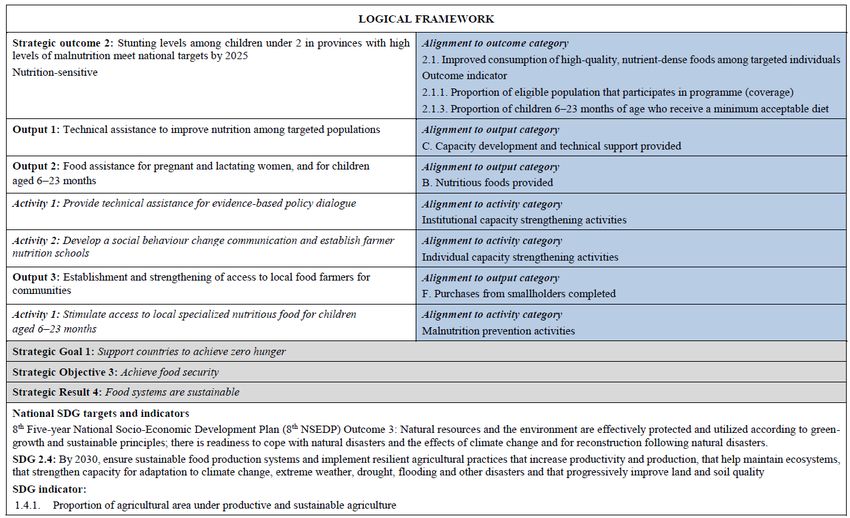
1. Country Analysis

1.1 Country Context                                                           decade,4 the 2015 Global Hunger Index still
                                                                              rates hunger levels in the country as
1.     Lao People’s Democratic Republic (Lao PDR)                             “serious”.6
       is a land-locked and least-developed                           6.      On average, 14 percent of the rural
       country, ranking 141st of 188 countries in                             population is food-insecure. A household’s
       the 2015 Human Development Index.1 The                                 access to food is constrained by poverty,
       country’s population of 6.5 million people2 is                         declining land availability, volatile farmgate
       predominantly rural and ethnically diverse,                            prices and low agricultural productivity.
       with 49 officially recognized ethnic groups.                           Changing climate patterns combined with
2.     Lao PDR ranks as the world’s 73rd most                                 poor access to both markets and diverse
       vulnerable country to climate change3                                  livelihoods worsen the situation in remote
       because of its dependence on climate-                                  upland areas, where 25 percent of
       sensitive natural resources and its low                                households are food-insecure.
       adaptive capacity. It is susceptible to                        7.      Food and nutrition insecurity is closely
       drought, floods and typhoons.                                          associated with poverty and vulnerability. An
3.     Annual growth in gross domestic product                                estimated 30 percent of the population lives
       (GDP) is about 7 percent,4 largely from                                below the national poverty line of USD 1.25
       exploitation of natural resources. This                                per day.1
       growth contrasts with rising inequalities                      8.      Nutrition. Malnutrition remains a major
       among regions and population groups.                                   challenge, with stunting affecting 37.6
4.     Lao PDR ranks 57th of 145 countries in the                             percent of boys and 33.6 percent of girls.7
       Global Gender Gap Index 2015. Based on                                 The annual economic cost of undernutrition
       documents from Lao Women’s Union, it is                                is estimated at 2.4 percent of GDP, or USD
       estimated that only 3 percent of village                               197 million.8
       heads are women, and village committees                        9.      Malnutrition is influenced by dietary
       often have only one woman member. The                                  restrictions during pregnancy and
       adult literacy rate is 77.4 percent for men                            suboptimal child feeding practices linked to
       and 68.7 for women,5 reflecting gender                                 cultural beliefs and taboos. Only 40 percent
       inequalities, which are magnified in remote                            of children under 6 months of age are
       ethnic communities. While the overall                                  exclusively breastfed, and 52 percent of
       primary school enrolment rate is 98 percent,                           infants aged 6–8 months receive
       rates in areas with school meals are up to 8                           complementary feeding.5
       percent higher than those in areas without.                    10.     Causes of malnutrition include poverty; low
       Attendance remains low, particularly in rural                          education levels; insufficient access to
       areas and among ethnic groups.                                         potable water; poor sanitary conditions;
                                                                              geographic isolation; lack of basic health
1.2 Progress Towards SDG 2                                                    care, disease treatment and prevention; and
                                                                              traditional gender norms and child weaning
PROGRESS ON SDG 2 TARGETS                                                     practices.
5.  Access to food. While Lao PDR has managed                         11.     Smallholder farmer productivity and
    to reduce the proportion of hungry poor                                   incomes. Lao PDR is a predominantly
    people from 33 to 23 percent over the past                                agrarian society; 76 percent of households

1 United Nations Development Programme (UNDP). Human Development Report 2015.
2 Of whom 50.3 percent are women or girls, and 49.7 percent are men or boys. Lao Statistics Bureau and World Bank. 2014. Poverty
  Profile in Lao PDR; and Lao Statistics Bureau. 2015. Results of the Population and Housing Census, 2015.
3 Germanwatch e.V. Global Climate Risk Index. 2016.
4 Lao Statistics Bureau and World Bank 2014. Poverty Profile in Lao PDR.
5 Lao Social Indicator Survey. 2011–2012.
6 International Food Policy Research Institute (IFPRI). 2015. 2015 Global Hunger Index: Armed Conflict and the Challenge of Hunger.
7 Ministry of Health and United Nations Children´s Fund (UNICEF). 2015. Lao Child Anthropometry Assessment Survey, add-on to the
  2015 National Immunization Survey, 2015.
8 National Economic Research Institute (NERI), 2013. The Economic Consequences of Malnutrition in Lao PDR: A Damage Assessment
  Report.

                                                                                                                                      3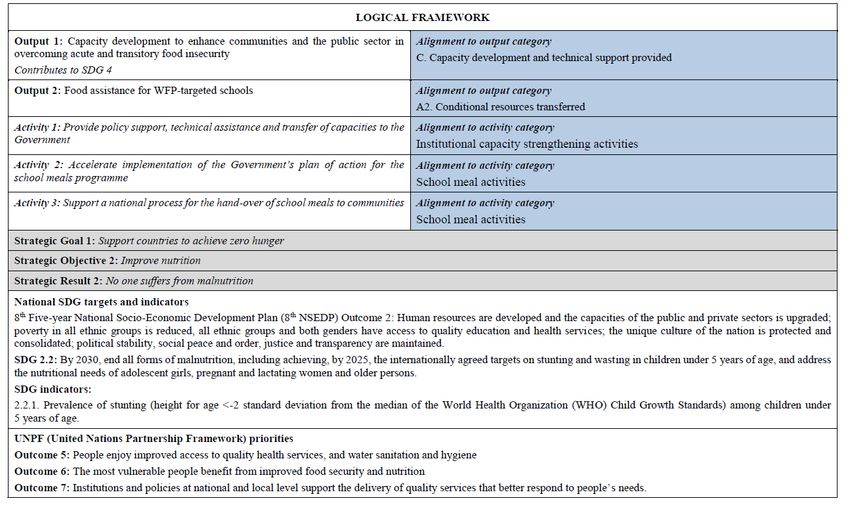
are engaged in agriculture,9 which accounts                           nutrition security carried out in 2015/2016
            for 23.2 percent of GDP.10 Productivity in                            involved consultations with stakeholders at
            the non-farm sector is low.11 Subsistence                             the central level and in 17 provinces,
            farming remains widespread, with 90                                   including the Government, United Nations
            percent of rural households growing rice                              agencies, financial institutions, civil society,
            and 30 percent growing additional crops.                              the private sector, academia and groups of
    12.     Livelihoods are sensitive to changes in food                          women and men in communities. Members
            prices and the availability of land. As there                         of the team carrying out the review visited
            are more sellers than buyers of rice,                                 Viet Nam to learn how it achieved food and
            especially in surplus areas in the country’s                          nutrition security.
            centre and south, an increase in rice prices                  17.     The review identified the following main
            has a net benefit, while a decrease results                           challenges: i) weaknesses in the
            in reduced welfare.                                                   governance structures for addressing the
    13.     Sustainable food systems. Climate change                              complex and cross-sector issues of food
            is a major challenge faced by rural                                   and nutrition security and translating
            livelihoods. Changes in rainfall quantities                           strategies and plans into implementation;
            and the onset of the rainy season affect the                          ii) insufficient budget to achieve SDG 2
            conditions for paddy and cash crops.                                  targets; iii) limited social protection and
            Increases in temperature and shorter but                              safety nets; iv) persistent cultural taboos
            more intense rainy seasons increase the                               and poor nutrition knowledge; v) uneven
            risk of both drought and floods. Only 17                              access to food; vi) low levels of productivity
            percent of cultivable land is utilized, mainly                        among smallholder farmers; and vii)
            for rice. The availability of forest foods is                         increased vulnerability to climate risks and
            declining as a result of deforestation and                            decreased capacity to cope with weather
            inappropriate gathering methods.12 These                              variations among smallholder farmers.
            challenges increase women’s workload and
            reduce dietary diversity for vulnerable
            communities.
                                                                          1.4 Country Priorities

                                                                          GOVERNMENT
    MACROECONOMIC ENVIRONMENT
                                                                          18. Lao PDR has well-defined national
    14. Lao PDR is one of the fastest growing
                                                                              strategies guiding socio-economic
        economies in the East Asia and Pacific
                                                                              programmes. The objectives of the 8th
        region. The economic outlook remains
                                                                              National Socio-Economic Development Plan
        favourable, with GDP growth of about 7
                                                                              (NSEDP) are to graduate to middle-income
        percent expected to continue, supported by
                                                                              country (MIC) status, eradicate poverty,
        the power sector and increasing integration
                                                                              achieve sustainable human development,
        into the Association of Southeast Asian
                                                                              and ensure effective management and
        Nations (ASEAN).13
                                                                              utilization of natural resources.
                                                                          19. The National Nutrition Strategy (2016–
    KEY CROSS-SECTOR LINKAGES                                                 2025) and Action Plan (2016–2020)
    15.  All strategic outcomes will contribute to                            emphasize a multi-sector and cohesive
         Sustainable Development Goal (SDG) 2 and                             approach to reducing all forms of
         be in synergy with the other SDGs,                                   malnutrition. Lao PDR joined the Scaling Up
         particularly SDG 5 on gender, SDG 4 on                               Nutrition (SUN) movement in 2011, and
         education (strategic outcome 1), and SDG                             established a national nutrition committee
         13 on climate action (strategic outcome 3)                           in 2013 to coordinate implementation of the
         and sustainable development.                                         action plan.
                                                                          20. The Agricultural Development Strategy to
    1.3 Hunger Gaps and Challenges                                            2025 focuses on achieving food security
                                                                              through sustainable agriculture and a
    16.     The national strategic review of food and                         strengthened agricultural production

    9     Lao Census of Agriculture, 2010–2011.
    10    Lao Statistics Bureau. 2014. Statistical Yearbook 2014.
    11    World Bank. 2014. Drivers of Poverty Reduction.
    12    Ministry of Agriculture and Forestry. 2016. Comprehensive Food Security Assessment.

4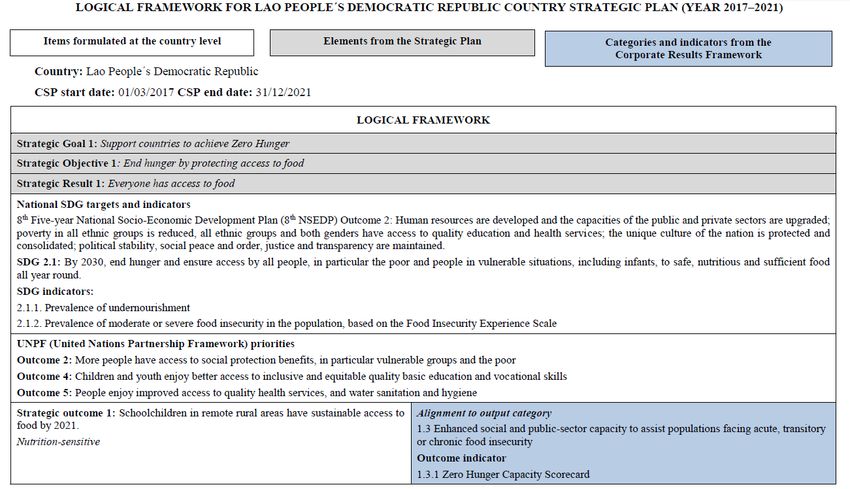
system. The 2010 National Strategy on
      Climate Change reinforces the Government’s
      commitment to climate change adaptation
      and mitigation efforts.
21.   The Plan of Action of the School Meals
      Programme (2016–2020) and the 2014
      Policy on Promoting School Lunch recognize
      that school meals contribute to food
      security.
22.   The National Strategy for Gender Equality
      (2016–2025) includes activities for
      eradicating discrimination against women
      and girls in food and nutrition security and
      providing opportunities for women and girls
      to have the same access to quality food as
      men and boys have.
23.   Finalized with support from WFP, the
      National Disaster Response Plan sets out
      roles and responsibilities for stakeholders in
      coordinated responses to natural disasters.

UNITED NATIONS AND OTHER PARTNERS
24. The United Nations Partnership Framework
    (UNPF) 2017–2021 supports the
    Government in becoming an MIC whose
    people benefit equally from quality services.
25. The UNPF is based on country analysis,
    assessment of progress towards the
    Millennium Development Goals and findings
    of an evaluation of the United Nations
    Development Assistance Framework
    (UNDAF) for 2012–2016.
26. Food and nutrition security is one of the
    outcomes in the UNPF human development
    pillar, which underlines the need to focus on
    the first 1,000-days after conception and to
    transition from subsistence to market-
    oriented agricultural production, adapted to
    climate change and the needs of smallholder
    farmers.
27. Non-governmental organizations (NGOs)
    provide capacity development and policy
    support, and implement food and nutrition
    security projects. Plan International
    coordinates the SUN Civil Society Alliance
    supporting the Government’s nutrition
    agenda.
28. Donors provide multi-year development
    assistance, directly to the Government or
    through international organizations, and
    bilateral technical cooperation.

                                                       5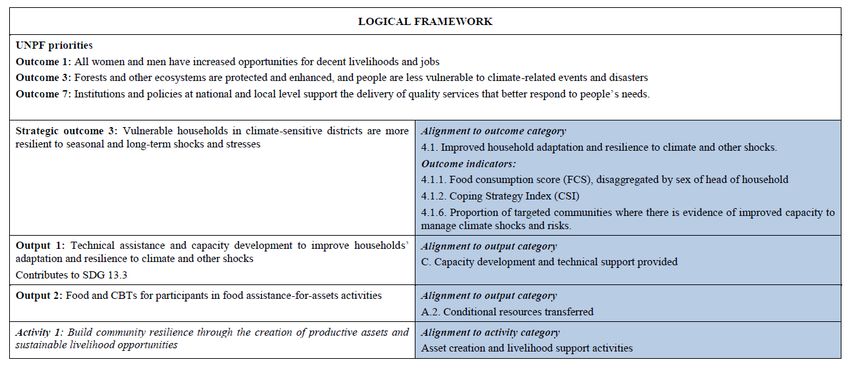
2. Strategic Implications for WFP

    2.1 WFP’s Experience and Lessons                      2.2 Opportunities for WFP
    Learned
                                                          33.   The strategic review identified six priority
    29.   WFP started providing relief assistance in            actions: i) strengthen coordination
          Lao PDR in 1975, establishing a country               mechanisms at all levels and among sectors,
          office in 2000. In 2012 it shifted to a five-         and provide technical assistance; ii) ensure
          year development portfolio providing school           funding and implementation of the multi-
          meals and activities for mother-and-child             sector plan of action for the national
          health and nutrition, asset creation and              nutrition strategy; iii) provide basic social
          emergency preparedness and response. In               benefits for the most vulnerable people; iv)
          view of the changing operational                      promote dietary diversity through
          environment, WFP and the Government are               consumption of locally available nutrient-
          moving towards sustainable outcomes,                  rich food; v) support smallholder farmers
          including through strengthened government             along the value chain; and vi) increase
          systems and institutional capacity at all             farmers’ awareness of climate risks for
          levels.                                               agriculture.
    30.   The 2014 mid-term evaluation of the
          country programme (2012–2016)                   2.3 Strategic Changes
          highlighted the need for: i) enhanced
          sustainability through closer alignment of      34.   The CSP aims to address the challenges and
          WFP’s activities with national plans and              implement the priority actions identified in
          capacity development of government                    evaluations, the strategic review and
          counterparts for gradual hand-over; and ii)           consultations with the Government,
          more comprehensive assistance to address              development partners and communities. It
          stunting and persistently high malnutrition           highlights the need for WFP to continue
          rates.                                                providing food assistance in the short-term
    31.   A 2015 baseline survey of the school meals            while also working to strengthen national
          programme identified the need to address              and local capacities and investing in
          limited dietary diversity, limited access to          sustainable food and nutrition security
          water, poor hygiene practices and low                 programmes to support the country’s
          literacy rates. The 2016 Systems Approach             progress towards MIC status and
          for Better Education Results (SABER) school           achievement of SDG 2.
          feeding analysis concluded that a policy        35.   The CSP builds on WFP’s long-term
          framework for school meals has been                   partnership with the Government, and its
          established, but the financial and                    comparative advantages and
          institutional capacities for coordinating and         complementarities with partners. It is
          implementing school feeding are still being           aligned with the NSEDP, supports the
          developed.                                            resilience and human development pillars of
    32.   An inter-agency simulation exercise                   the UNPF and contributes to WFP’s Strategic
          facilitated by WFP in 2016 identified gaps in         Results 1, 2, 4 and 5.
          emergency preparedness and response
          capacity, needs assessments, response
          planning and coordination arrangements.
          The Government and humanitarian actors
          working in the country have prepared an
          action plan for addressing these challenges.

6
3. WFP Strategic Orientation
3.1 Direction, Focus and Intended 3.2 Strategic Outcomes, Focus
Impacts Areas, Expected Outputs and Key
Activities
36. The national nutrition strategy provides the
framework for WFP’s contribution to the STRATEGIC OUTCOME 1: SCHOOL CHILDREN
achievement of national food and nutrition IN REMOTE RURAL AREAS HAVE
SUSTAINABLE ACCESS TO FOOD BY 2021
security targets. Developed with the aim of
40. WFP will play a leading role in supporting
achieving SDG 2, this strategy uses a multi-
the Government’s goal of improving access
sector cohesive approach with 22 priority
to food and achieving food security, as
interventions. WFP’s strategic outcomes
stated in the National Policy on Promoting
contribute directly to 19 of these.
School Lunch. The Government and WFP
37. Through this CSP, WFP plans to shift from
have designed a school lunch model, which
providing food assistance to engaging in
is coupled with capacity development and
policy and capacity development for gradual
knowledge transfer to ensure sustainability
hand-over, leading to community-run and
and national ownership.
government-financed food and nutrition
41. This strategic outcome contributes to
security programmes in the medium term,
achievement of SDG target 2.1 and WFP’s
with the Government and communities
Strategic Result 1.
independently designing, implementing and
managing their own programmes by 2030.
FOCUS AREAS
38. In alignment with the Government’s
42. This strategic outcome will focus on
strategy and WFP’s commitments to being
addressing the root causes of food insecurity
accountable to affected populations,
and low education indicators in remote and
communities will be at the centre of all
ethnically diverse districts through the
actions, ensuring equitable participation in
implementation of a school meals
and ownership of activities to be
programme.
incorporated into local development plans
and structures. EXPECTED OUTPUTS
39. The plan aims to contribute to the following 43. The food security of pre- and primary
strategic outcomes: schoolchildren will be ensured by providing a
i) Schoolchildren in remote rural areas14 daily snack or meal, with the Government
have sustainable access to food by and WFP investing in communities so that
2021. they can provide local inputs, engage with
ii) Stunting rates among children under 2 farmers and contribute to the school
in provinces with high levels of environment, leading to sustainable
malnutrition15 meet national targets by management of the programme. This output
2025. is linked to SDG 4 in ensuring that girls and
iii) Vulnerable households in climate- boys complete primary education.
sensitive districts are more resilient to 44. Strategic outcome 1 will be achieved
seasonal and long-term shocks and through two outputs:
stresses. i) Capacity development to enhance
iv) National and local governance communities and the public sector in
institutions are strengthened to ensure overcoming acute and transitory food
improved service delivery, especially in insecurity.
hard-to-reach areas, by 2025. ii) Food assistance for WFP-targeted
schools.
14 Attapeu, Luang Namtha, Luang Prabang, Oudomxay, Phongsaly, Saravane, Khammouane, and Sekong provinces.
15 Luang Namtha, Oudomxay and Sekong provinces.
7KEY ACTIVITIES animal protein from school gardens and
45. Activity 1: Provide policy support, technical projects, and cash to procure additional
assistance and capacity transfer. The items from farming families to ensure
Ministry of Education and Sports, WFP and dietary diversity.
Catholic Relief Services co-chair the 50. Given the variations in community resources
coordination group on school meals. This and capacities, WFP and the Ministry of
platform positions WFP as a partner of Education and Sports will develop a tool for
choice in policy dialogue, development of assessing communities’ readiness to manage
legislative frameworks and assessment of school meal programmes, and design
financing solutions. capacity development activities according to
46. WFP will support the Government’s efforts to needs. The tool will be integrated into the
integrate a structure for implementing a national school profiling system, while school
school meals programme into the Ministry of feeding programmes are integrated into
Education and Sports, deploying technical local development plans. As communities
staff to enhance institutional capacity for become ready for hand-over, 500 schools
programme design and implementation, and will be integrated into the national school
a monitoring and evaluation (M&E) system. meals programme by 2019–2020, and the
47. Activity 2: Accelerate implementation of the remaining 936 by 2020–2021. As schools
Government’s plan of action for the school are handed over, the Ministry of Education
meals programme. WFP will transition from and Sports will provide them with cash and
school snacks to the lunch modality, which ensure implementation of activities.
will include inputs grown by schools in 51. The strategic review highlighted improved
addition to food provided by WFP. This will access to diversified food in schools as a
be facilitated through the establishment of priority in promoting basic social protection
school vegetable gardens and fishponds and for children. WFP and partners will support
the raising of chickens, in partnership with the Government in establishing this social
the Food and Agriculture Organization of the protection, using the national school meals
United Nations (FAO) and NGOs such as the programme as an entry point. Once a social
Japan Association for Aid and Relief. protection system has been developed, WFP
48. In line with the Government’s plan of action, will be at the forefront in developing other
WFP will adopt a multi-sector and integrated schemes as part of an integrated strategic
approach with the World Bank, UNICEF, the approach to social protection.
German Agency for International
Cooperation, Big Brother Mouse and Plan STRATEGIC OUTCOME 2: STUNTING LEVELS
International to deliver a package of AMONG CHILDREN UNDER 2 IN PROVINCES
assistance including access to water, WITH HIGH LEVELS OF MALNUTRITION MEET
NATIONAL TARGETS BY 2025
hygiene, literacy and deworming activities,
52. Preventing stunting is a priority in the
and clean stoves to reduce women’s
national development agenda, and WFP will
exposure to smoke and their workloads in
support the Government’s work towards the
collecting fuelwood and water. WFP, UNICEF
target of reducing the malnutrition rate to
and FAO will develop nutrition education
25 percent by 2025, using the multi-sector
materials and advocate for their inclusion in
cohesive approach outlined in the national
the primary school curriculum for girls and
nutrition strategy.
boys. As an incentive to supporting the
53. As recommended by the strategic review,
programme, cooks and storekeepers will
WFP and partners will support the Ministry of
receive transfers of rice.
Health with nutrition-specific and -sensitive
49. Activity 3: Support a national process for
interventions, addressing gaps in policy
hand-over of the school meals programme
frameworks, providing support for research
to communities and the Government. To
and knowledge-sharing and developing
support the transition to a national school
institutional capacity.
meals programme using the community-led
54. This strategic outcome contributes to
and local food-based model designed by
achievement of SDG target 2.2 and WFP’s
WFP and the Ministry of Education and
Strategic Result 2.
Sports, school lunches will include rice
provided by communities, vegetables and
8FOCUS AREAS 61. Activity 6: Develop a social behaviour change
55. This strategic outcome addresses the direct communication strategy and nutrition schools
and underlying causes of malnutrition for farmers. In line with the Government’s
through institutional capacity development, policy for achieving sustainable impact at
coordination, surveillance, analysis of gender scale in improving dietary diversity among
roles and scaling up of nutrition pregnant and lactating women, WFP will
interventions. provide Nutributter until 2019 while
enhancing nutrition knowledge, awareness
EXPECTED OUTPUTS and practices by supporting the national
56. Nutrition among targeted populations will be social behaviour change communication
improved through a multi-sector approach strategy. This strategy covers infant and
that includes education on feeding practices, young child feeding practices, maternal
and nutrition education and social behaviour nutrition components and the inclusion of
change. men and boys in nutrition activities.
57. Strategic outcome 2 will be achieved through 62. To reduce gender inequality and improve
three outputs: dietary diversity, particularly for adolescent
i) Technical assistance to improve girls and women, WFP will work through the
nutrition among targeted populations. Global Agriculture and Food Security
ii) Food assistance for pregnant and Program (GAFSP) with the Ministry of
lactating women, and for children aged Agriculture and Forestry, the Ministry of
6–23 months. Health, the International Fund for
iii) Establishment and strengthening of Agricultural Development (IFAD) and the Lao
access to local food farmers for Women’s Union to support farmer nutrition
communities. schools, and are led by women to enhance
knowledge of and access to nutrient-rich
KEY ACTIVITIES
crops, post-harvest handling, food storage,
58. Activity 4: Provide technical assistance for
safety, processing and preservation. In line
evidence-based policy dialogue. The national
with the WFP Gender Policy, the nutrition
nutrition strategy and the strategic review
schools will empower women by increasing
emphasize the need to invest in
their ownership of and control over
strengthening institutions and human
household agricultural production and
capacities. With partners such as UNICEF,
income. The Government will provide
FAO, the European Union and the World
financial contributions, technical support and
Health Organization (WHO), WFP will support
coordination of activities.
the Ministry of Health by: i) facilitating the
establishment of a SUN Business Network; ii)
supporting the development of a nutrition STRATEGIC OUTCOME 3: VULNERABLE
surveillance system; iii) analysing nutrient HOUSEHOLDS IN CLIMATE-SENSITIVE
DISTRICTS ARE MORE RESILIENT TO
gaps to obtain insights into the drivers of
SEASONAL AND LONG-TERM SHOCKS AND
food choices, food availability and STRESSES
affordability; and iv) assessing national food 63. Given the country’s vulnerability to the
fortification. effects of climate change, and with 70
59. Activity 5: Stimulate access to local percent of the population relying on
specialized nutritious food for children aged 6 subsistence agriculture for its livelihood,
–23 months. To ensure sustainability and adaptation and mitigation actions are
reduce WFP’s reliance on internationally government priorities.
procured Nutributter, WFP will support the 64. The strategic review noted the need to
Government in exploring private sector-led increase awareness of climate change and
supply chains for locally available, affordable ensure appropriate adaptation activities.
nutritious food for children. Working with FAO, IFAD and other partners,
60. To accelerate progress in reducing stunting, WFP will assist communities in building their
WFP will complement the Government’s own resilience to climate change.
efforts by providing Nutributter for children 65. This strategic outcome contributes to
aged 6–23 months, promote good infant and achievement of SDG target 2.4 and WFP’s
young child feeding and hygiene practices Strategic Result 4.
and address the higher prevalence of
stunting among boys.
9FOCUS AREAS climate variations. The current environment
66. WFP will assist vulnerable communities in is not conducive to a weather-based
shock-prone areas in adapting to climate insurance pilot, but WFP will reassess the
change and building long-term resilience feasibility of carrying out a pilot later in the
against climate risks. CSP period.
EXPECTED OUTPUTS STRATEGIC OUTCOME 4: NATIONAL AND
67. This outcome is linked to SDG 13 on climate LOCAL GOVERNANCE INSTITUTIONS ARE
action. The capacity of vulnerable STRENGTHENED TO IMPROVE SERVICE
communities will be strengthened to DELIVERY, ESPECIALLY IN HARD-TO-REACH
AREAS, BY 2025
reinforce their resilience and protect their
71. As highlighted by the strategic review, the
livelihoods through awareness-raising and
Government puts food and nutrition security
education activities, human and institutional
at the top of the development policy agenda,
capacity development and asset creation.
with an extensive range of strategies and
68. Strategic outcome 3 will be achieved
action plans. However, there are challenges
through two outputs:
in implementing and monitoring these plans,
i) Technical assistance and capacity
and governance systems face difficulties in
development to improve households’
addressing the complex and cross-sectoral
adaptation and resilience to climate
issues of food and nutrition security.
and other shocks.
72. WFP and partners will contribute to
ii) Food and cash-based transfers (CBTs)
strengthening central and local governance
for participants in food assistance-for-
and monitoring progress towards national
assets activities.
SDG targets.
KEY ACTIVITIES 73. This strategic outcome facilitates work
69. Activity 7: Build community resilience towards strategic outcomes 1, 2 and 3, and
through the creation of productive assets contributes to achievement of SDG target
and sustainable livelihood opportunities. 17.9 and WFP’s Strategic Result 5.
Based on community-driven, bottom-up,
FOCUS AREAS
multi-sector planning, and complementing
74. The focus of this strategic outcome is on
IFAD’s work through the GAFSP, WFP and its
addressing the root causes of challenges in
partners will: i) enhance agro-ecology and
national governance structures and their
climate-adaptive local food production; ii)
application at the subnational level through
strengthen smallholder farmers’ capacity
a strengthened decentralization policy and a
through improved agricultural practices; and
multi-sector coordinated approach. This
iii) support asset creation programmes to
cross-cutting outcome will facilitate the
provide alternative livelihood options for
achievement of the other three outcomes.
vulnerable communities. As women account
for 54 percent of the agricultural workforce,
EXPECTED OUTPUTS
activities will be designed to increase the
75. This outcome is linked to SDG 5 in
gender balance in control of and access to
facilitating gender equality in participation in
productive inputs. Findings from the 2015
and benefits from development. The
Consolidated Livelihood Exercise for
Government and communities will be
Analysing Resilience will be used to identify
provided with resources and capacity to
the geographic areas that are least resilient
design action plans that ensure household
to climate change and affected by
food and nutrition security.
increasingly frequent natural disasters.
76. Strategic outcome 4 will be achieved
70. WFP will partner the National Agriculture
through one output:
Research Institute, providing technical i) Technical assistance and capacity
support for real-time weather forecasting,
development to improve service
the development of farmer field schools
delivery for food-insecure and
specializing in climate issues, and the
nutritionally vulnerable populations.
dissemination of agroclimate information to
women and men farmers to facilitate their KEY ACTIVITIES
decision-making on mitigating risks to food 77. Activity 8: Invest in national governance
security and livelihoods and adapting to capacity for food and nutrition security. The
10National Nutrition Committee coordinates 3.3 Transition and Exit Strategies
implementation of the plan of action for the
national nutrition strategy. Given the need 81. This CSP represents a shift for WFP from
for a multi-sector approach to achieving SDG country programmes based on direct
2, WFP will deploy an expert to the provision of food assistance to the provision
committee to coordinate among ministries of capacity development, policy guidance and
and provide technical support. support to national- and local-led
78. WFP will also provide technical assistance to programmes as Lao PDR moves towards MIC
the Ministry of Planning and Investment in status.
monitoring and reporting on progress 82. WFP will ensure that activities are integrated
towards SDGs 2 and 17 through regular data into national development plans for gradual
collection and analysis. hand-over, while developing and transferring
79. Activity 9: Enable communities to lead and capacities to the Government and
own food and nutrition security solutions. In communities. Women’s essential role in
support of the Sam Sang16 decentralization communities will be recognized and their
policy – which supports capacity inputs will be incorporated into programme
development at the community level to design, implementation and monitoring. To
facilitate integrated rural development – and ensure sustainability and ownership of
to ensure complementarity with IFAD, WFP programmes, communities will be active
will work through the GAFSP to strengthen partners able to make their own decisions
rural communities’ capacity to prepare and and ensure food and nutrition security with
lead their own three-year community their own inputs and capacities.
development plans. These multi-stakeholder,
multi-sector and nutrition-sensitive plans will
enable communities to use their own
resources and capacity to ensure local food
and nutrition security. To maximize
ownership and mainstream gender equality
and women’s empowerment, village-level
processes will involve both women and men
from different age groups.
80. Activity 10: Enhance the capacity of
government at all levels to prepare for and
respond to natural disasters. As highlighted
by an inter-agency simulation exercise, the
national disaster response plan defines roles
and responsibilities clearly, but there are
challenges in its implementation and capacity
development is needed at all levels to
prepare for and respond to emergencies.
WFP will support the ministries of labour and
social welfare, and natural resources and
environment in: i) facilitating the
establishment of early-warning systems and
drafting a decree creating a fund for disaster
victims; ii) conducting assessments and
integrating the data generated into the
Government’s system, to enhance ownership
and management of food security
information; and iii) coordinating multi-
stakeholder emergency responses.
16 “Three Builds” – province, district and village levels.
114. Implementation Arrangements
4.1 Beneficiary Analysis reducing stunting. The 2015–2016 food
security assessment carried out by WFP and
83. Activities for strategic outcome 1, which the Ministry of Agriculture and Forestry and
supports access to food for pre- and primary the 2015 Consolidated Livelihood Exercise
schoolchildren, will target districts with low for Analysing Resilience will be used to
education indicators and high food insecurity target livelihood activities for increasing
levels. The 2015 Food and Nutrition Security resilience to climate change among
Survey identified areas with high stunting vulnerable communities for strategic
rates, where children aged 6–23 months outcome 3. WFP’s beneficiary and transfer
and pregnant and lactating women will be management platform SCOPE will be used
assisted through strategic outcome 2 on for beneficiary registration.
TABLE 1: FOOD AND CASH-BASED TRANSFER BENEFICIARIES
BY STRATEGIC OUTCOME AND ACTIVITY
Strategic outcome Activity Women/girls Men/boys Total
1 2-3 Provide school meals 82 260 66 240 148 500
5 Provide nutributter for children
aged 6–23 months to supplement 10 140 9 360 19 500
2 complementary feeding
6 Provide nutributter for pregnant
13 000 - 13 000
and lactating women
7 Create productive assets and
3 sustainable livelihood opportunities 9 720 8 280 18 000
to build community resilience
9 Develop capacity of rural
communities in designing and
4
implementing nutrition-sensitive
development plans
TOTAL 115 120 83 880 199 000
4.2 Transfers communities to confirm whether they are
appropriate in all contexts.
FOOD AND CASH-BASED TRANSFERS 85. Food transfer modalities will assist in
84. With the findings of a rapid assessment achieving strategic outcomes 1, 2 and 3,
indicating that CBTs could be a suitable with activities encompassing school meals,
assistance transfer modality, WFP will nutrition programmes and asset creation.
undertake in-depth needs assessments in Throughout the CSP period, food transfers
rural areas with ethnically diverse will gradually reduce.
12TABLE 2: FOOD RATIONS AND CASH-BASED TRANSFER VALUES
BY STRATEGIC OUTCOME AND ACTIVITY (g/person/day)
Strategic outcome
Strategic outcome 1 Strategic outcome 2
3
Activity 2 Activity 5 Activity 7
Children aged 6–23 Vulnerable house-
Pre- and primary schoolchildren months and pregnant holds in climate-
and lactating women sensitive areas
Food and CBTs Food and CBTs
for schools for schools Food CBTs
(snack) (lunch)
Cereals 100
Pulses 40
SuperCereal 80
Oil 15 10
Nutributter 20
Sugar 15
Total kcal/day 497 584 108
% kcal from
11.6 12.5 9.8
protein
CBTs (USD/
0.1 3
person/day)
Number of feed-
175 175 365 30
ing days
TABLE 3: FOOD AND CASH-BASED TRANSFER REQUIREMENTS
Food type/CBT Total (mt) Total (USD)
Cereals 9 108 5 511 315
Pulses 2 702 3 512 432
Oils and fats 779 923 840
Mixed and blended foods 396 280 504
Other 1 106 3 604 740
TOTAL (food) 14 091 13 832 831
CBTs (USD) 9 630 525
TOTAL 14 091 23 463 356
13CAPACITY STRENGTHENING INCLUDING of knowledge and responsibilities to national
SOUTH-SOUTH COOPERATION staff, for nationalization of the country office
86. Capacity development and technical by 2019.
assistance will be provided for all strategic
outcomes as WFP gradually shifts from 4.5 Partnerships
direct implementation. Strong partnerships
with ministries will facilitate the 91. In line with the WFP Corporate Partnership
development of skills and capabilities that Strategy (2014–2017) and the Vientiane
support national ownership and Declaration on Partnership for Effective
sustainability. Development Cooperation (2016–2025),
87. WFP will facilitate exchange of knowledge, WFP will leverage its long-term relationship
skills and expertise through South–South as a trusted partner of the Government to
cooperation with the WFP Centre of achieve maximum impact towards a shared
Excellence against Hunger in Brazil to vision for 2030, together with the ministries
strengthen the capacities of the government of agriculture and forestry, education and
and communities in managing school meals sport, health, labour and social welfare, and
programmes. Partnership opportunities will natural resources and environment.
be explored with centres of excellence for 92. The strategic review positions WFP as a
asset creation in China and for food and generator of knowledge; with the Ministry of
nutrition security in India. WFP will liaise Planning and Investment, WFP will explore
with ASEAN to ensure that emergency the possibilities for periodic monitoring of
preparedness and response systems follow implementation of the review’s
regional standards. recommendations.
93. Through the UNPF, and to strengthen
4.3 Supply Chain synergies, coherence and efficiency, WFP will
expand its partnerships with the other Rome
88. Supply chain networks are well established -based agencies to achieve the strategic
for food commodities that arrive through outcomes by using the agencies’
Bangkok. Local procurement is difficult comparative advantages and
because of high prices and the limited complementarities. Through the GAFSP, WFP
availability of commodities and suppliers will partner IFAD to accelerate
that meet WFP’s quality standards. Food is implementation of the national nutrition
transported overland to warehouses in strategy by developing the capacities of
Vientiane and in the country’s north and rural communities in creating and operating
south. To reduce transport costs, each infrastructure for nutrition-sensitive
delivery provides food for more than one agriculture, and empowering women to
activity. To avoid pipeline breaks, food is pre achieve sustainable improvements in family
-positioned before the monsoon season nutrition. Through a local-level
when access to some areas becomes memorandum of understanding, FAO and
difficult. WFP will collaborate on food security
assessments, nutrition-sensitive agriculture,
4.4 Country Office Capacity and disaster risk reduction and management,
Profile and disaster response. WFP will partner
UNICEF, the United Nations Human
89. WFP will maintain the comparative Settlements Programme and the World Bank
advantage of its large field presence, with on the school meals programme, and will
three suboffices covering northern and explore partnership opportunities with WHO
southern provinces, and a field presence in for improved nutrition service delivery, and
31 districts. with UNDP on livelihoods and resilience.
90. To support the focus on nutrition, country 94. In the enabling environment provided by the
office staff include international and national Vientiane Declaration, WFP will strengthen
nutritionists. Experts in partnerships with strategic and operational partnerships with
government, CBTs, social protection and NGOs and projects, such as the Soum Son
safety nets, climate change and resilience Seun Jai Programme, supported by IFAD, to
will be needed for the new direction of the achieve common objectives and ensure cost-
CSP. A clear road map will guide the transfer effective, sustainable, gender-sensitive and
14culturally appropriate implementation of food
security and nutrition initiatives. As Lao
PDR’s civil society is young, WFP will develop
the technical and organizational capacities of
non-profit associations for implementation at
the local level and will expand its partnership
with the Lao Women’s Union. The value of
these partners includes their presence in
remote ethnic communities with different
languages and cultural practices, and their
capacities in community mobilization and
asset creation.
95. WFP will develop relationships with the
private sector to: i) encourage commercial
supply chains to reach rural communities
with nutritious foods; ii) explore the
feasibility of local food fortification; iii)
mobilize resources to support the initiatives
of WFP and the Government; and iv)
strengthen cooperation and innovation by
establishing a SUN Business Network. WFP
will collaborate with academia and research
institutes to generate evidence for policy
processes and develop social behaviour
change communication strategies.
96. Recognizing the vulnerability and isolation of
the most food-insecure people, WFP will
incorporate protection and gender
considerations – including prevention of
sexual exploitation and abuse – and
accountability to affected populations into all
of its partnerships.
155. Performance Management and Evaluation
5.1 Monitoring and Evaluation account the needs of rural ethnic women,
Arrangements who often do not speak or read Lao.
102. The country office tool for managing
97. Guided by the country office monitoring effectively (COMET) and the Monitoring e-
strategy, and in line with the NSEDP and the Data Collection and Analysis tool will be
UNPF, WFP will develop an M&E system that used to track performance indicators, and
measures progress towards the strategic for planning and managing responses. Data
outcomes, ensuring accountability, providing from the field level will be collected
evidence of results achieved, and informing electronically for real-time submission and
any necessary adjustments. analysis. Financial resources for staff,
98. Indicators are collected by WFP and baseline monitoring and evaluations have
government staff of both sexes, and will be been budgeted.
disaggregated by sex and age, where
possible. Performance will be analysed in 5.2 Risk Management
annual outcome and biannual monitoring
reports. These will be complemented by 103. The contextual risks include: i) localized
food security and nutrition assessments and natural disasters – WFP will assist the
monitoring of market prices. Baseline data Government in establishing an early-
for strategic outcomes will be established in warning system and developing capacity in
2017, a decentralized mid-term evaluation emergency preparedness and response; and
of some CSP activities is planned for 2020 ii) lack of communities capacity communities
and a country portfolio evaluation for 2021. – to be mitigated by the formulation and
99. The country office has a solid M&E and implementation of capacity development
vulnerability assessment and mapping unit. plans.
Nearly 70 percent of staff will be located in 104. The main institutional risks are insufficient
the field, and most will be responsible for national budget allocations for activities
monitoring. Government reporting after hand-over, and limited capacities. WFP
structures will be strengthened and used to will advocate for fund mobilization, explore
ensure sustainability. At quarterly meetings, alternative financing solutions, and develop
WFP and the Government will measure capacities at all levels.
progress and results against established 105. The major programmatic risk is lack of
action plans. funding. WFP will work with current donors,
100. Based on WFP’s Gender Policy (2015–2020), seek to broaden the funding base, and
and in line with the Asia-Pacific Gender strengthen joint fundraising with other
Implementation Strategy, the country office organizations. A prioritized action plan has
has an action plan for gender been prepared for each strategic outcome.
mainstreaming and targeted actions. The 106. The country office has incorporated
plan is reviewed every six months to assess protection considerations into its activities.
how well the needs of women, men, girls All programme sites will have mechanisms
and boys are being addressed. All WFP staff for facilitating accountability to affected
have been trained in gender and protection, populations. Environmental and social risk
and newly recruited staff are also trained in management will be developed through
humanitarian principles. community mobilization.
101. Based on WFP’s Humanitarian Protection 107. Lao PDR is classified as being at the minimal
Policy (2012), a protection action plan United Nations security level, except for one
develops awareness of WFP’s protection area – without a WFP presence – where
programmes among groups of women, men, security is low. WFP offices and operating
girls and boys. The beneficiary feedback procedures are in compliance with minimum
mechanism included in the plan takes into operating security standards.
166. Resources for Results
6.1 Country Portfolio Budget
TABLE 4: COUNTRY PORTFOLIO BUDGET (USD)
Strategic
Year 1 Year 2 Year 3 Year 4 Year 5 Total
outcome
1 9 468 069 10 426 987 9 665 167 10 519 982 8 582 068 48 662 272
2 3 950 446 4 808 024 5 435 435 4 471 560 4 895 138 23 560 603
3 1 765 248 1 907 657 1 621 426 1 667 603 1 468 822 8 430 757
4 1 470 506 852 018 697 291 925 098 745 559 4 690 472
TOTAL 16 654 270 17 994 686 17 419 318 17 584 243 15 691 587 85 344 103
108. The CSP has a budget of USD 85 million, 111. Strategic outcome 3 promotes increased
with annual spending (Table 4) reflecting resilience among vulnerable households in
the shift from direct service delivery towards climate-sensitive areas. In total, USD 8.4
support for policy and capacity million – 10 percent of the budget – is
development, with the objective of achieving allocated to this outcome for strengthening
hand-over by 2021. This approach entails a coping mechanisms and communities’
progressive decrease in food transfers and resilience to climate change-induced shocks
aims to ensure sustainability for each of the and stresses. Food transfers will gradually
strategic outcomes. be replaced by CBTs in 2018, and WFP will
109. The objective of strategic outcome 1 is to provide technical assistance to smallholder
ensure sustainable access to food for pre- farmers.
and primary schoolchildren. This outcome 112. Strategic outcome 4 focuses on capacity
has the largest budget, with USD 48.7 development for improved service delivery.
million or nearly 60 percent of total Activities support governance systems in
resources. A shift from food to CBTs is coordinating and implementing multi-sector
foreseen. The budget for this outcome response plans. This strategic outcome
covers a preparatory phase to transfer supports achievement of the other three,
schools to the school lunch programme, and requires USD 4.7 million.
assessments of community capacities to 113. More than 15 percent of total expenditure
determine the package of support needed, for all strategic outcomes is allocated to
and the shift to a national programme. gender activities.
Significant investments in capacity 114. As the strategic outcomes are interlinked
development at the community level will be and have complementary activities,
made in all five years. responsibilities will have to be clearly
110. Strategic outcome 2 addresses stunting by defined to avoid duplication and ensure that
combining supplementary feeding for expenditures can be linked to outcomes
children under 2 with increasing work in achieved so that assistance is provided
behaviour change, nutrition awareness and efficiently and with accountability.
access to locally available nutritious food.
The phase-out of food transfers for pregnant 6.2 Resourcing Outlook
and breastfeeding women is planned for
2019. At a total cost of USD 23.6 million, 115. The CSP is expected to be funded mostly by
this outcome accounts for 27 percent of the traditional government donors and, to some
budget. extent, the private sector. On average, WFP
17received USD 14 million per year for its
activities in Lao PDR between 2012 and
2016. Contributions have remained stable
and WFP is positioned to maintain similar
funding levels until 2021 as donors are
interested in supporting the country’s
transition to MIC status.
116. It is expected that strategic outcome 1 will
be fully funded throughout the CSP period.
Based on confirmed contributions and
indications from donors, strategic outcomes
2 and 3 will be 50 percent funded and
strategic outcome 4, 75 percent.
6.3 Resource Mobilization
Strategy
117. Resource mobilization and communication
strategies highlight WFP’s new strategic
direction and the support it can provide as
Lao PDR graduates to MIC status and
achieves its national SDG targets.
118. In line with the new strategic direction, a
dual approach will be adopted. WFP will
engage increasingly in policy support,
community empowerment, capacity
development and knowledge generation to
ensure sustainable interventions and hand-
over. Food assistance – through food
transfers or CBTs – will be continued in the
initial years to consolidate the investments
made, and will then be phased out as local
inputs are introduced.
119. WFP will continue its engagement with
donors through briefing meetings in
Vientiane, Bangkok and Hanoi. These
meetings ensure regular communication on
results achieved and constraints, and
increase accountability and transparency,
facilitating opportunities for finding new
sources of funding. WFP also engages with
private-sector donors and has received
positive indications regarding their future
support.
18Annex I
Logical Framework for Lao PDR Strategic Plan (2017-2021)
1920
21
22
Annex II
   Indicative Cost Breakdown

                                 INDICATIVE COST BREAKDOWN (USD)

WFP Strategic
              Strategic Result 1   Strategic Result 2   Strategic Result 4 Strategic Result 5
Results/SDG
              (SDG target 2.1)     (SDG target 2.2)     (SDG target 2.4) (SDG target 17.9)
Targets                                                                                           Total

WFP Strategic
                       1                   2                    3                  4
outcomes
                                                           Resilience-
Focus Area         Root causes       Root causes                              Root causes
                                                            building
Transfer           35 715 353         16 731 606            6 224 727          3 304 568        61 976 254
Implementation      5 114 458          3 029 658             849 959            634 020         9 628 095
Adjusted direct
                    4 648 947          2 257 991             804 526            445 030         8 156 495
support costs
Subtotal           45 478 759         22 019 255           7 879 212           4 383 618        79 760 844
Indirect support
                    3 183 513          1 541 348             551 545            306 853         5 583 259
costs (7%)
TOTAL              48 662 272         23 560 603           8 430 757           4 690 472        85 344 103

                                                                                                          23
You can also read


