Toll Road Operators Strongly committed to safe and sustainable mobility - ASECAP VISION OF SUSTAINABILITY
←
→
Page content transcription
If your browser does not render page correctly, please read the page content below
ASECAP VISION OF SUSTAINABILITY

                                                      © Axel Heise

Toll Road Operators
Strongly committed to safe and sustainable mobility
Content

APRR- De Serres Léonard                                                           Erich Peer

                          Foreword                                          3

                          Introductory statement	                           4

                          Contribution to transport policy and economic
                          development	                                      5

                          Responsible management of the environment	        7

                          Providing a safe road network                     8

                          Offering high level services to customers        10

                          Enhancing human resources                        11

                          Corporate Social Responsibility (CSR)            12

                          Tolling as an instrument for sustainable mobility 13

                          Bibliography                                     15

2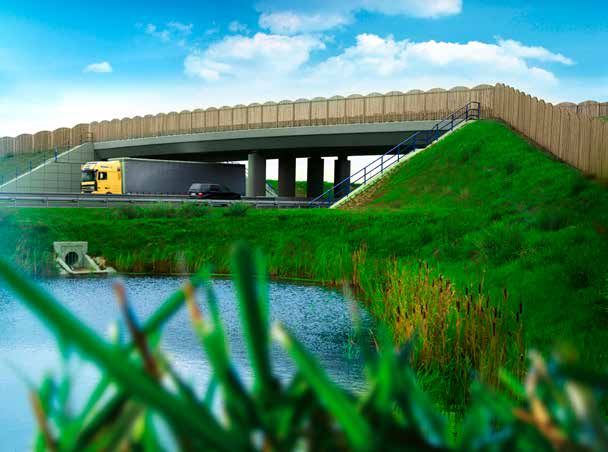
Foreword

ASECAP members                                      cornerstone of
have a long standing                                ASECAP modus
commitment to road                                  operandi. Based on
safety, the environment                             the user pays principle,
and the complex                                     meaning that the cost
ecosystem we all live                               is directly borne by
in. The key challenge of                            the road user, the toll
finding a compromise                                is a resource clearly
between the growing                                 earmarked for the
need for mobility                                   investments needed to
and the fundamental                                 maintain motorways.
responsibility of                                   Indeed, this is a
protecting the natural environment      virtuous and sustainable tool
is a crucial priority for ASECAP.       that ASECAP members strongly
                                        support and uphold.
This paper underlines the
commitment of
asecap members to           I hope that this paper will:
an integrated, efficient       - convince those who are not yet fully aware
and sustainable road              of this powerful tool which could be used
transport network in              to meet current and future mobility needs.
Europe and it sheds           - provide the readers with a comprehensive
more light on the major          picture of the ASECAP “motor-WAY”
efforts and solutions            forward to deliver an efficient, inclusive
undertaken by toll road          and sustainable mobility to the citizens of
operators.                       Europe.

It shows the fundamental role
of the toll system which is the           Jean Mesqui, ASECAP President

                                                                           3
Introductory statement

 Autobahn, Germany

The European road network represents the                  they are willing to make their core business, the
backbone of efficient movement of goods and               “toll”, become the key instrument to achieve this
people around Europe. It is built, operated,              fundamental objective.
maintained and repaired with a long-term vision
that ensures that the highest quality standards           With this in mind, ASECAP members have
are reached. The ASECAP network comprises                 decided to embark upon a gradual process of
more than 48,000 km of toll roads across Europe           exchanging ideas amongst ASECAP members,
managed by 187 companies.                                 building up shared common key reference
                                                          indicators (KRIs) that reveal their progress
Toll road operators, members of ASECAP, would             towards and commitments to sustainability.
like to stress their crucial role in the development      Their first think tank meeting was held in Paris in
of a sustainable transport system in Europe.              November 2012.
They want to highlight their engagement and
commitment to improving the transport sector by              For road operator companies whose business
making it more efficient, socially                                           is the financing, design,
equitable and more sustainable                                               construction and operation of
from different standpoints:                 The toll road network has        infrastructure projects on a
safety, environment, mobility and                                            long-term or even very long-
                                            increased by more than

                                        50%
finance.                                                                     term basis, this sustainability
                                                                             requirement is of high
In their search to improve the                                               importance and remains the key
environmental-friendly aspect                                                priority for the future.
of their activities, and bearing            in the last decade providing
in mind that they represent a               better mobility for goods        ASECAP members are
driving force for the economic                                               shouldering their responsibility
                                            and people across Europe
development of our continent,                                                as nationwide land developers,
toll road operators seek to fulfil                                           playing a major role in the social
their responsibilities through a collective effort           and economic development of the regions they
to foster sustainable development. In particular,            serve and connect.

4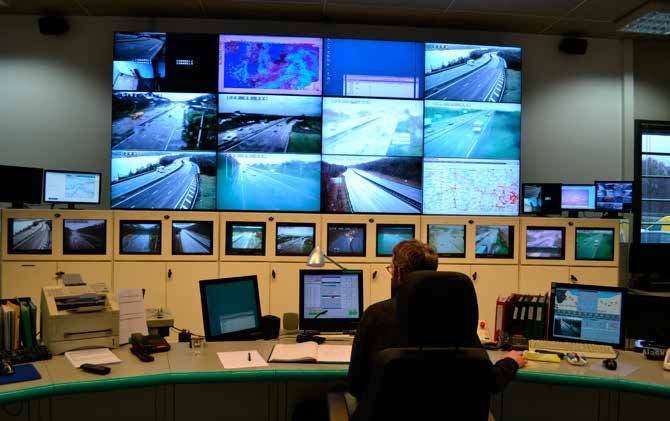
Contribution to transport policy and
economic development

  Viaduc du Millau, France - D. Jamme

The White Paper on transport issued by the                       surrounding communities and ultimately fostering
European Commission recalls that “Transport is                   economic development.
fundamental for European Economy and society.
Mobility is vital for the internal market and for the quality    The construction of motorways financed by
of life of citizens as they enjoy their freedom to travel.       tolls contributes, together with other economic
Transport enables economic growth                                                   advantages, to society as a
and job creation.”1 Economic                                                        whole. The completion of road
observatories provide evidence                 Toll road operators fully            construction works is brought
of this and demonstrate the link               uphold the "user pays                forward by several years as there
between a good road infrastructure                                                  is no longer any need to rely on
                                               principle" enabling them
network and the growth of GDP.                                                      the availability of public funds.
Indeed, when there are robust                  to invest massively in road          The use of private funds secures
toll road infrastructures, these               construction and road                a stable and constant financing of
areas usually grow faster than                                                      new road infrastructure projects
in other regions without toll                  maintenance.                         over the whole economic cycle.
roads. Moreover, companies                                                          Therefore the national and
and businesses tend to expand near a toll road                   European economies find stability during phases of
providing better connections and communication                   economic recession. Private funds in concessions
links, thereby creating new jobs and revenues to the             are levelling out the effects of austerity programmes

1 The White Paper on Transport , whose last edition “Roadmap to a Single European Transport Area” was issued in 2011 by the European Commission, is
   an important political document containing the main principles for undertaking initiatives and activities in the transportation field within the EU, aimed
   at increasing mobility, removing barriers in the EU Internal Market and ensuring growth and employment. In order to achieve its goals, the White Paper
   also sets down specific goals and targets to be reached by either 2030 or 2050.

                                                                                                                                                            5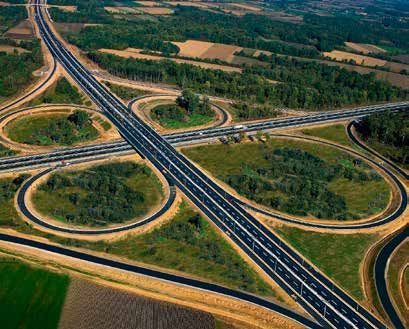
Contribution to transport policy and economic development

                                                         long-term optimisation of new investment and
                                                         maintenance activities. Over the last few years,
                                                         many countries have faced important cuts in
                                                         their public spending due to fiscal consolidation
                                                         processes and as a result, major deficits in road
                                                         maintenance have accumulated. Using tolls and
                                                         earmarking revenues from the road users will
                                                         guarantee the constant investment in the tolled
                                                         road facility during the entire duration of the
                                                         concession.

                                                         In toll concession schemes, the private sector
                                                         takes on important risks, mainly those related to
                                                         construction costs and traffic demand, in favour
                                                         of the public interest.

                                                         Through tolls it is also possible to control traffic
                                                         demand and this leads to a more efficient and
                                                         balanced use of the road network. It is also an
                                                         effective mechanism for internalising external
                                                         costs produced by the transport sector.

                                                         The toll road network supports the daily lives of
                                                         us all. It gives access to the goods and services
                                                         that citizens need. It connects people with their
                                                         families and friends. It is also the life-blood of
                                                         the economy, performing a crucial function in
 Storebæltsbroen, Denmark
                                                         supporting jobs and growth. It provides critical
                                                         connections by linking major economic centers,
that usually lead to cuts in public spending. In fact    and connecting major ports and airports.
the “user pays” principle is the fairest way to
finance Infrastructure projects as tax payers no         Factories and other businesses regularly take
longer have to bear the cost of infrastructure.          into consideration access to good roads and
Public funds are released and can be allocated to        other transport connections when making
other social priorities such as health, education or     decisions about where to relocate.
public transport.
                                                         Toll road operators also make high contributions
Furthermore, the toll revenue can be used to             to national government treasuries since they are
optimise operation and maintenance on a long-            registered for VAT and many other taxes (land
term basis and ensure that the focus is on the           tax, company tax, income tax).

                             Wildlife crossing, Poland               Wildlife crossing, OLYA, France

6
Responsible management of the
environment
                                                                                and efforts have never wavered. Insertion into
                                                                                the countryside, enhancement of the landscape,
                                                                                preservation of biodiversity have become crucial
                                                                                challenges to which satisfactory solutions have
                                                                                been proposed and adopted (eg, noise fences,
                                                                                noise-reducing road surfaces).

                                                                                From now on, and complying with the priorities
                                                                                of EU environment policy, motorway construction
                                                                                will increasingly involve operations to rehabilitate

 Solar Panels on A22, Italy

The Europe 2020 strategy2 aims to promote
growth that is smart, sustainable and inclusive in
order to get beyond the current crisis and create a
more competitive European economy. In fact the
transport sector plays a major role in addressing
the key challenge of reducing through reducing its
greenhouse emissions.

The environment has always been an important
issue for toll road operators in view of the
proximity of our motorways to natural landscapes
and of their impact on the surrounding                                           Wind Turbines, Denmark
environment.

Actions taken by motorway operators are                                         deteriorated natural or urban sites, going even
developed throughout the three successive                                       as far as creating extensive areas offering a new
phases of the life of a motorway: its design,                                   terrain of expression for biodiversity. Important
its construction and finally its operation/                                     environmental upgrading programmes aiming to
maintenance and reinvestments.                                                  rebuild old networks up to modern environmental
                                                                                                     standards (water, noise,
During these different                                                                               biodiversity protection in
phases, the environmental                                                                            compliance with regulations
aspects lie always at the                          More than                                         currently in force) could all

                                                   13 Bn euros
core of every single activity.                                                                       be financed through tolls.

Historically, the initial issues                                                                             Road operators have
confronting road operators                         invested in 2013 for the                                  always been committed to
have always been the                               construction and maintenance                              responsible management
protection of water resources                                                                                of the environment, going
                                                   of road infrastructures with the                          well beyond the legal
and the reduction of noise
pollution. Significant remedial                    highest environmental standards.                          requirements they have to
responses have been made                                                                                     comply with.

2 The Europe 2020 Strategy is a political EU initiative launched by the European Commission and approved by the EU Council in 2010, aimed at achieving
   a smart, sustainable and inclusive growth in Europe by 2020. The Strategy contains a series of objectives and targets to be reached in the next few
   years in the fields of education, employment, energy and innovation. The achievements of the different objectives are closely linked to the need to
   overcome the current financial and economic crisis in order to foster EU competitiveness at global level.

                                                                                                                                                    7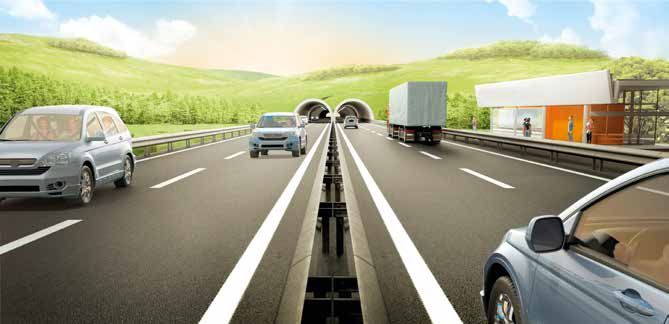
Providing a safe road network

 Traffic control and information centre

One of the most remarkable features of the service             semi-urban stretches, cutting-edge operational
provided by toll motorways is safety. Due to                   and traffic management centres, closed-circuit
awareness of the importance of                                                    television, tra¬ffic data collection

                                           520
preserving differentiating higher                                                 systems, 24 hour customer care,
safety levels than non-tolled roads,                                              SOS posts and meteorological
safety is a deciding factor for every                                             stations, amongst other safety
stage of a motorway’s life cycle. In                                              systems. There are fast road
the planning stage, the motorway             less fatalities between              patrols for collecting lost items,
is designed to reduce the number             2001 and 2012                        providing early assistance and
of accidents as far as possible,                                                  warnings of any incidents/
thereby avoiding situations                                                       accidents and there is an efficient
of risk to drivers. Geometric                                                     winter service based on 24 hour

                                           60%
characteristics guarantee safe                                                    monitoring of road and weather
driving by using minimum width                                                    conditions. Traffic is made safe at
limits for curves, separate roads,                                                road works sites through early and
wide road lanes, cutting out level           reduction of fatalities on           efficient warnings, road marking
crossings and so on.                                                              and the setting up of protective
                                             the ASECAP road network              fences including TMAs (truck
Later in the construction stage,             between 2001 and 2012                mounted attenuators)
high-quality surface materials
are laid to ensure better tyre                                                    Priority is always given to the
adherence and efficient rainwater drainage. Tolled             safety of people and goods travelling throughout the
motorways also have specially designed equipment               motorway concession network. This concerns both
to ensure road safety, such as perimeter fences,               motorists and lorry drivers, who need to be able to
anti-glare panels, lighting at toll stations and               find places to rest in a relaxing atmosphere.

8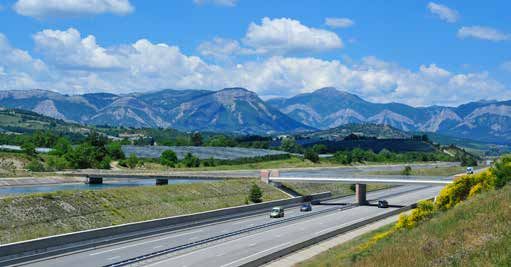
Providing a safe road network

                                                                                 Snowploughs

All these measures covering security, safety
and quality of service must also provide
reassurance to motorway customers and
encourage their good driving behaviour in
order to make motorways a place where
people feel at ease, particularly when using
rest or service areas.

In order to uphold this commitment, ASECAP has
signed the “European Road Safety Charter”3, a
participatory platform, promoted by

                                                                47
the European Commission, where
different stakeholders undertake
positive commitments and carry
out concrete common actions to               lives saved each year
address road safety problems and to
reduce road fatalities across Europe.        between 2001 and 2012
ASECAP is actively committed to
exchanging best practices and information with all
signatories of the Road Charter in order to provide       APRR, De Serres Léonard
the highest standards within the toll road network.

3 The European Road Safety Charter is a broad platform created by the European Commission in 2004 in order to
   exchange information and best practices in the field of road safety throughout the European Union, among a variety of
   people having a direct interest in road safety and being actively involved in promotional campaigns for road safety, such
   as stakeholders, citizens, users, road operators, universities, associations, etc. ASECAP was one of the first signatories
   of the ERSC in April 2004.

                                                                                                                                              9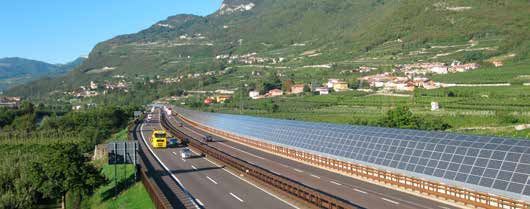
Offering top level services to customers

Service area                                                                              VMS

 Toll collection is not simply a                                                  Road users are constantly
 tool: it is also payment for a                                                   provided with efficient mobility

                                             +200%
 service. This makes the users                                                    information services. Europe-
 of the road concession network                                                   Wide Traveler Information
 the key focus of attention for                                                   Services, made available to
 motorway companies.                        Electronic Toll Collection            motorway users, comprises
                                                                                  comprehensive travel information
 Over and above duty of a toll             subscribers are taking                 with a broad perspective allowing
 road operator as a public service         advantage of this service              for well-informed travel decisions,
 provider, they also have an                                                      both pre-trip and on-trip. The
                                           in the last decade
 obligation to provide customers                                                  key goal is to provide the road
 with a high quality of service                                                   users with relevant information
 (high availability and accessibility                                             in a harmonised manner which is
 of road infrastructure) and                                                      easy to understand and process.
 to ensure the highest possible level
 of security and safety for both people                                    This includes road traffic status, weather
 and goods.                                                                conditions, and warnings of accidents or
                                                                           road works zones. The Europe-Wide Traffic
 The principal purpose consists of offering                                Management Services also give guidance
                                                   Variable-message sign
 the best possible conditions of travel                                    to the European travellers on the condition
 to customers. In general terms, actions                                   of the road network. They detect incidents
 undertaken by toll road operators must contribute                 and emergencies, implement response strategies
 to increasing comfort and safety throughout the                   to ensure safe and efficient use of the road
 customer’s journey since this is the way in which                 network and optimise the existing infrastructure
 toll road operators will best be able to fulfil their             for all vehicles, including those crossing borders.
 essential function of ensuring that travellers                    ASECAP Members, all road operators, work in
 and goods arrive at their destination in the best                 close collaboration to provide consistent and
 possible conditions.                                              seamless travel information across Europe.

 In 2013, along the ASECAP network there are:

               2,465                  1,756                          1,104                           174
       Service areas              Petrol stations                 Restaurants                        Hotels
         700 more                   600 more                       400 more                         60 more
      in the last decade          in the last decade            in the last decade              in the last decade

 10
Enhancing human resources
Motorway concession and toll
companies provide work across
Europe. It is important to
point out that in some regions
the concession company is
the leading employer, and
this confers both rights and
obligations. One of the major
tasks for companies is
achieving harmonious human
resources management.
The sustainability aspect is
also a crucial component
of the internal management
structure of toll companies.
In consequence, actions
have been taken to develop
employee awareness of
sustainable mobility issues
so that they may take this
approach on board. If
required, this action may
be accompanied by special
Training activities
training plans integrating all
aspects related to sustainable
development, with a significant place being motorway operators. Due to the increasing
reserved for the safety of staff working in the demand for real-time communication with the
network. Identifying motivated managers, then customers, new developments that encourage
appointing them to positions interaction with the customers
of responsibility with regard should lead to the development
45,000
to sustainable development, of more customer service tools
constitutes a logical extension of and jobs.
the toll road operators’ policy.
What is more, the demand
people employed
Major training efforts are for safer and more efficient
necessary to meet current operations contributes to better
demand for new skills as our health and safety conditions
professional sectors inevitably evolve to cope for the workers, given that accidents can
with the techniques and services expected by be minimised through improved education
our customers nowadays. Having motivated and training, risk management, technology,
and well-educated employees is a must for toll automation and focus on correct use of
equipment.
ASECAP Members consider it their priority to
ensure the safety of their employees and external
workers in roadwork zones by always ensuring
that signage is sufficient and of good quality and
that there is equipment available for marking road
works zones on motorways. Very often, other
special equipment may be used to guarantee
adequate levels of safety, items such as crash
absorbers (Dumpers), stroboscopic lamps on the
signalisation vehicles at construction sites and
APRR, De Serres Léonard
“smilies” panelling for adequately alerting drivers.
11Corporate Social Responsibility (CSR)
CSR Report
Toll road operators referred to in contracts
recognise the in order to secure a high
importance of their level of corporate social
responsibility to responsibility, including
promote sustainable a commitment to zero
development and tolerance of human rights
observe the universally abuses and any attempts
accepted standards on at bribery/facilitation
environment, human payments.
rights and transparency.
In a globalised world Achieving transparency
corporate social during the contractual
responsibility is process and the
increasingly becoming a subsequent management
fundamental parameter of the motorway
for customers and infrastructure itself
stakeholders. represents a crucial
aspect for toll road
Corporate responsibility operators. It underlines
means compliance with relevant national and their good will and sense of responsibility
international laws and regulations. But it goes towards the good of society as a whole.
further to cover social and sustainable efforts in
the fields of business ethics and strategy. For toll In the past decade, toll road operators have
road operators this means strengthening their established more and more standards and core
focus on safety, environmental protection and indicators for measuring and assessing the
long-term sustainable development. effectiveness and reliability of their corporate
social responsibility policy. This continuous
Toll road operators want to ensure that process of improving ethics and values has been
transparent and efficient dialogue is maintained the driving force for drawing much more attention
between procurement and supply chain to the sustainable development of the toll road
management. Codes of conduct are often transport sector.
12Tolling as a tool for sustainable mobility
No efficient road infrastructure, good services instrument of development and, above all, of
centre or practical positive development would be sustainability. Policy makers should also take into
conceivable without toll collection. If there were account other aspects of tolling which could be
no tolls, the long-term existence of motorway used to finance connected networks linking urban
infrastructure could not be planned with the same roads and interurban roads in places where they
quality levels of service, safety and protection are currently lacking.
of the environment and biodiversity. Long-term
optimisation, maintenance and reinvestments The sustainable development approach cannot be
(keeping the infrastructure at a high functional tackled without considering the major transport
level) are also ensured through tolling. issues pertaining today and also the ever-changing
needs of society. Major questions such as the
By constituting a resource directly charged to the evolution of mobility requirements, long-term traffic
user of the service, toll collection is ultimately the management and multimodality form an integral
best means of collecting the necessary funds to part of the problem that ASECAP is tackling and
maintain the highest standards of services in the where toll road operators wish to contribute with
road network. It therefore represents a powerful their first hand experience and knowledge.
The motorway companies will always maintain that the toll
system is a powerful tool for sustainable development and
mobility that makes possible:
• financing a wide road infrastructure network based on the “user/pays
principle”
• providing innovative and lasting financing schemes
• clearly earmarking the funds necessary to build, manage, maintain and
repair the road network
• providing a reliable alternative to scarce public funds
• building an environmental friendly network
• delivering efficient and reliable mobility services
• offering a safe and secure network with high availability to customers
• ensuring jobs and workplaces that respect human rights and offer good
and secure working conditions
In May 2013 ASECAP and IBTTA (International Bridge, Tunnel and Turnpike Association) signed a Joint
Declaration to promote the benefits of tolling, as a tool to strengthen the already fruitful and active cooperation
between the two Associations, as well as to point out a principle that applies equally worldwide: tolling is
a leading tool in the funding toolbox to finance, build, maintain, and improve safe, smart, reliable highway
infrastructure for the benefit of road users and other citizens.
13Abron
Escota, George Veran
14
Escota, M.Martini D.JammeBibliography
White Paper on Transport:
• http://ec.europa.eu/transport/themes/strategies/2011_white_paper_en.htm
• http://ec.europa.eu/transport/themes/strategies/doc/2011_white_paper/white-paper-illustrated-brochure_
en.pdf
Europe 2020 Strategy
• http://ec.europa.eu/europe2020/documents/related-document-type/index_en.htm
• http://eur-lex.europa.eu/LexUriServ/LexUriServ.do?uri=COM:2010:2020:FIN:EN:PDF
The ERSC
• http://www.erscharter.eu
• http://www.asecap.com/pdf_files/MoU-IBTTA-ASECAP-(EN).pdf
Joint ASECAP-IBTTA tolling declaration
• http://www.asecap.com/english/documents/ASECAP-IBTTAPRonJointTollingAgreement.pdf
APRR Chabert Xavier
Photos crédit: Groupe APRR/Groupe SANEF/Groupe VINCI AUTOROUTES/ Viaduc de Millau – Sund&Baelt – Aiscat – Asfinag – DR Design: inextremis.be - MP4834DE BARENTS
OCÉAN GLACIAL
ARCTIQUE
E
H
C
N
A
BL
R
ME
Asecap Full Member
Asecap Associate Member
ASECAP Network as for 01.01.2013
e
Russie
ASECAP Network in construction
Toll Bridges,Tunnels and Roads
E
Norvège
Moscou
Oslo
U
Q
I
E
U
Danemark Copenhague
IQ
LT
T
MER
BA
R
DU NORD ME
N
Irlande
Dublin
Warszawa
Royaume-Uni
A
Allemagne Berlin
Pologne
Amsterdam
Pays-Bas
L
London
T
Praha
Slovaquie
E République
H Tchèque
A NC
A
M Bratislava
Paris Wien B udapes t
Autriche
Hongrie
MER
MER
NOIRE
France Slovénie NOIRE
N
Ljubljana Croatie Beograd
Zagreb
A
Serbie
M
ER
A
DR
É
IA
Italie TI
QU
E
Roma
C
MER
MER ÉGÉE
Grèce
O
TYRRHÉNIENNE
Portugal Madrid
Athinai
Espagne
Lisboa
E R M
M É D I T E R R A E
N É
Rabat
Maroc
ABOUT ASECAP
ASECAP is the European Association of Operators of
Toll Road Infrastructures, whose members’ networks
span more than 48,000 Km of motorways, bridges ans
tunnels across 21 countries.
ASECAP's purpose is to defend and develop the system
of motorways and road infrastructure in Europe. Tolls
are applied as a means to ensure the financing of their
construction, maintenance and operation.
Design by inextremis.be
Registered Office: 3, rue Edmond Valentin - 75007 Paris • Headquarters: 15, rue Guimard - 1040 Bruxelles
Tél. +32 2 289 26 20 - Fax + 32 2 514 66 28 • e-mail secretariat@asecap.com
www.asecap.comYou can also read


